Lobby Hobby

I can recall a time when hobbies seemed less than threatening. Indeed, the idea was to relax, not to lobby. My hobbies—collecting just about anything you could get without money—didn’t involve going to a store. Stamps (because everybody used them back then), coins (ditto), fossils from the local river bank, bottle caps that we collected while Mom was doing the wash at the laundromat, all kinds of handouts from society’s detritus made for many hours’ entertainment. I also collected Bibles. That was when I was old enough to earn some money and spend it on books. And I read those Bibles until I’d run out of versions, then I’d start over again. Now my hobby has come back to haunt me.

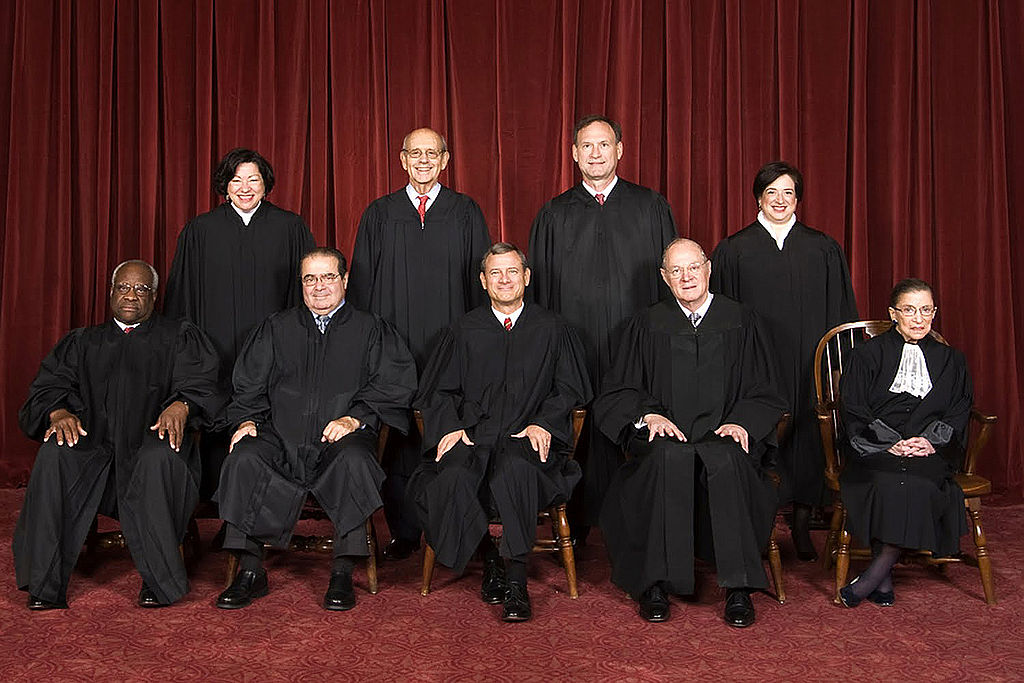
According to the New York Times, the Hobby Lobby family is planning to build a Bible Museum in Washington, DC, prompting fears of evangelization. Right there in the nation’s capital, not far from the Mall, a museum showing the importance of the Bible would indeed send a message. But is it really a threat? We live under the judicial decisions of a Supreme Court weighted towards the literal already. It might not hurt to have a museum dedicated to finding out what’s going through our justices’ minds. Clearly it’s not women’s rights. If we wander those proposed halls, we might see that museums are indeed dedicated to outdated stuff that has some importance. Rare are the contemporary museums that show right where we are at the moment. Rarer still, those that show the future that remains undecided. In many senses, Washington is already a museum.

The secular world seems to fear the Bible. It is, however, not going to go away. Although I left literalism decades ago, I’m still pleasantly surprised how much the Bible has to offer by way of insight into human nature and contemplation. You might even find some workable ethics if you can get away from the non-issues of birth control, stem cells, or same-sex marriage. The Bible doesn’t need to be a threatening book. In the wrong hands, it may at times seem like The Book of Eli had its eyes right on the target, but those who would use the Bible to harm others are those who read without understanding the words. No, I don’t think the Green family’s plans for such a museum are innocent. Neither can I believe that hobbies are a $3 billion industry. Reading books and picking up other people’s cast-offs may be the only hobbies you need.

Engraven images?

Engraven images?


Stratego

lossy-page1-428px-CLiff_being_undermined_by_the_Virgin_River._West_wall_of_Canyon_above_Temple_of_Sinawava._-_NARA_-_520458The idea is a simple one. When someone undermines, the very foundation of an idea is left with no foundation. We are taught not to undermine ourselves; for enemies it’s okay. Encouraged even. The Bible contains the seeds to its own undermining. The claim that it is a sacred book encourages—even demands—serious attention be paid to it. When it is examined closely, however, it becomes plain that the status accorded it as a book undermines its own claims. Believers can respond in several ways. One is to declare the Bible inerrant and to claim that contradictions are not contradictions and that what history has proven false is actually true. The keenest breed of such inerrantists hardly exists any more, since it does require a stable, geocentric view of the universe, if a universe there be at all. On the other extreme there are believers who make sacred writ so highly symbolic that we need not worry about the obvious factual errors—they were never meant literally anyway. And, of course, every position in between.

The Bible is not a unified composition. This was evident to the person, whoever it was, who first joined the Prophets to the Torah. Or even Genesis to Exodus. We have no way of knowing if s/he (mostly likely the latter) really believed that Moses wrote all the stories from the creation of the world through his own death, but the books of the Pentateuch roughly hang together in an extended narrative with plenty of instruction along the way. The “Bible” that Jesus knew had considerably fewer books than our “Old Testament.” And one gets the sense that Paul’s letters were tacked on in a catch-as-catch-can fashion, with everyone knowing (as the letters themselves say) that material is missing. And what Paul authoritatively wrote to the people of Galatia may not have been the same advice he sent to the Corinthians. Tides and times. Bibles and believers.

When scholars began, out of deep devotion, to look closely at the Bible the cracks in this historical facade began to fracture. Once the breach is in the dike, one dare ignore it only at great peril. The first shaft had been dug. By the time of Julius Wellhausen, the undermining was already engineered and well underway. And it couldn’t be stopped. Biblical scholars had choices to make: ignore the evidence and continue to sing the Lord’s song in a strange land, or climb out of that tunnel before it caves in. And the church, unsuspecting of what it means, insisted on an educated clergy. Serious study of the Bible shows what many believers wish it didn’t. And yet we continue to make claims based on evidence that is faulty. Just as long as these supporting pillars hold up we have nothing to worry about. And the undermining continues daily, lest we all find ourselves in the breadline.


High Road

“You take the high road and I’ll take the low road,” starts the chorus of that overused, unofficial national anthem of Scotland. The low road, while offering less spectacular views, is quicker and more practical. At least that’s how it seems to this erstwhile expatriate who spent three bonnie years in that land. Still, we all know the appeal of taking the high ground. In studies of morality, high moral standards are better than low. High income is sought after over low. We are encouraged ever to reach higher, shooting our probes out to the very stars. Who wants to admit to being low? There’s more than a hint of this condescension in the terminology I’ve lately been noticing when it comes to the Bible. Instead of saying that an author of a book is Conservative, it is now common code to claim that s/he has “a high view of scripture.” I guess the rest of us have a low view.

Despite the increasing secularity of culture, there are still many, many books being written about the Bible. In fact, the standard industry rag, Publisher’s Weekly, routinely carries story after story about religion publishing, much of it biblical. But readers want to feel safe when approaching the Bible. New ideas can be dangerous and challenging. So we want to know the perspective of the writer before we crack open the cover. Those who believe, within a reasonable degree, that the historical tales of the Bible are factual have a high view. When the four stories of Jesus contradict one another they can be harmonized. That’s the high view. Saying that the world was created in one day, as Genesis 2 asserts, is tending toward a low view, literal though it may be. After all, didn’t we just read in the previous chapter that it was six days? One can become six with a high enough view. Just stand on your tippy-toes.

A high view

A high view

Now the cynical side of me wants to believe that this coding of the high view of Scripture is willful misrepresentation. The stratospheric viewers may not actually say that the industry standard has a low view—not exactly—but miracles are easier to see from the mountain top. If you want to know who to trust, you rely on those with a high view. In this world the sun can stand still and giants can grow to be nine feet tall. It is a high view indeed. While no one knows the original meaning of the lyrics to “Loch Lomond,” many associate it with the Jacobite rebellions of the eighteenth century. The lyricist may be referring to the heads of the executed exhibited on pikes along the high road from London to Edinburgh while their dispossessed relatives walked on the low road. Neither group devalues its native land where some hope to return and others died trying. So feel free to take the beheaded high road while I take the low, because we’ll all end up at Loch Lomond in the end.


It’s My Body

Those who believe mythology is dead have to look no further than the Supreme Court. Amid pictures of women protesting religious freedom to be told what to do with their bodies, the Court decided that employers may withhold rights to birth control under the rubric of religious belief. The ones who raise the issue, however, biologically never carried a baby to term. One gender making decisions for the other. We all know that the official stance of Roman Catholicism, closely followed by radical Evangelicalism, is that God intended sex only for procreation. Those women who find themselves on the receiving end of unwanted conception are helpless in the eyes of the law, depending on who their employer is. Blind justice indeed. Obamacare is intended to help level the playing field. Too few people have any real control over what medical treatment they can afford. I know more than one fixed-income person who suffers chronic pains due to lack of adequate treatment. I also know people who have used the system for plastic surgery before a trip to the beach. It seems that your employer now has the right to decide—but only if you’re a woman, and only if it involves what might be euphemistically called your “private parts”—what care you deserve.

Legislating morality, we religion majors debated even when I was back in college, cannot be effectively executed. If you presume there is a God, then enforced obedience is no obedience at all. Even conservative undergraduates could see that. Now our “Supreme” Court, with its male majority, has followed the lead of closely held corporations (doublespeak for certain patriarchal, Evangelically based companies) and declared that half the humans in America don’t deserve the same health care as the other half. The reason? Closely held companies don’t want women to have access to birth control. Our courts strike a blow against freedom and justice for private religious interests.

Within days of one Christian denomination declaring that gay marriage will be—should be— sanctioned, our own judiciary sides with the right of upper management in private corporations to discriminate based on gender. At least the owners of Hobby Lobby and Conestoga can sleep better at night knowing that they’ve prevented women from having their basic rights upheld. And metaphorically crawling into bed with closely held corporations are a male majority of supreme court justices who believe one man’s religion (yes, man’s) has the right to overturn the freedom of his employees. With the blessings of a male God. A situation like this prevailed, it seems to me, until 1863, also with the backing of scripture. Only in those days the argument was, I believe, that God is clearly Caucasian.

Looks balanced...

Looks balanced…


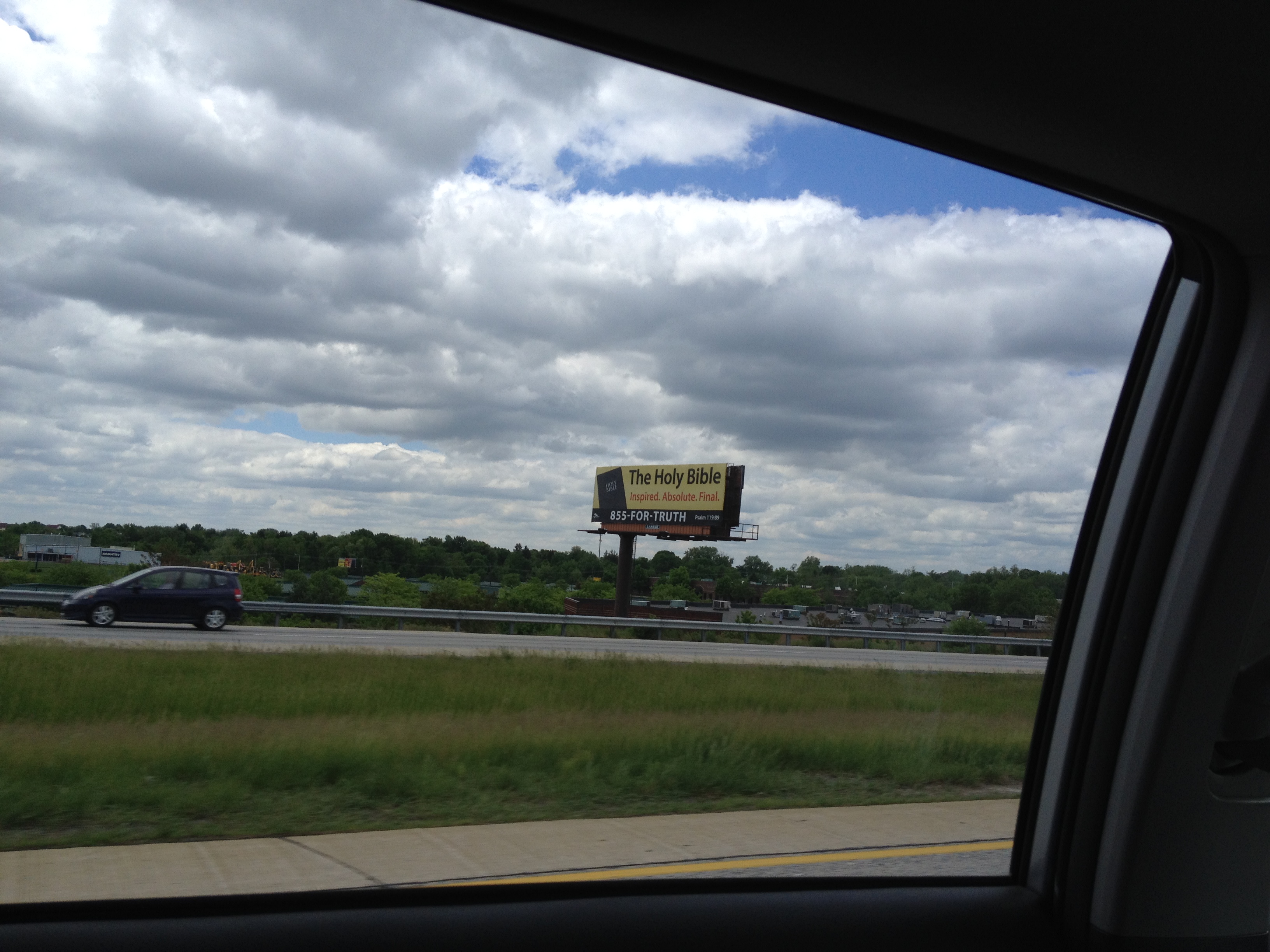
Inspired. Absolute. Final.

IMG_1394Recently I spent some time in my native Pennsylvania. Doing so sometimes makes me believe in a bizarre kind of predestination. I never had any truck with theological fore-ordainment; I’d rather just give up and get it all over with now. Nevertheless, the Bible was very present in the Pennsylvania of my youth and logic dictates that if something is, a priori, more important than everything else, only a fool wouldn’t pay attention. When we’d be driving along a country road and a prominent outcropping of rock was spray painted with “Jesus Saves,” I’d feel a quiet reassurance that my choices had been sound. I started reading the Bible as a child, toughing it through Leviticus and Chronicles, with true Protestant fervor. The Bible, I believed, could never let you down.

On my recent drive down memory lane, I passed a road sign advertising the sacred scriptures. It read “The Holy Bible. Inspired. Absolute. Final.” There was a number to call, ending with the words “for truth” in place of digits. Operator. Information. Get me Jesus on the line. (With apologies to Sister Wynona Carr.) The odd thing is that I always assumed this was normal. Ticking off the miles on Interstate 80, I used to see how many “Jesus Saves” graffiti I could find on overpass pylons. Even in Manhattan I still find the same phrase scrawled in the cement of a grimy sidewalk, and I always look for it when I walk that way. It was all so matter-of-fact that there seemed to be no reason to question any of it. The same held true for most of the faculty at Grove City College. No questions asked. Just read the highway signs.

Ambiguity toward the Gospel truth seemed wrongheaded and foolhardy. It is, however, difficult to take the Bible seriously without at last beginning to ask questions. Even the Bible has a backstory. Be careful how far back you turn the pages. There was a prequel to Genesis, for those who dare to look, just as their is a sequel to Revelation. Inspired—no doubt. Absolute—perhaps. Final—I doubt it. The last word comes only when all has been said and done, and given the signs I see along the road, it looks like this journey is only just getting started.


Missing Apocalypses

Sharknados aside, we seem to be in a lull of apocalypses at the moment. In the run-up to the change of the millennium and 2012, we perhaps had our fill of dire predictions of the end of all things. Funny how the fears seem to run so high when the Grand Old Party is telling us what to believe. When we settle down and try to wrestle with real-world issues with real-world ideals, the need for watching it all burn seems to settle down in the back seat and let the adults drive for a while.

IMG_1309

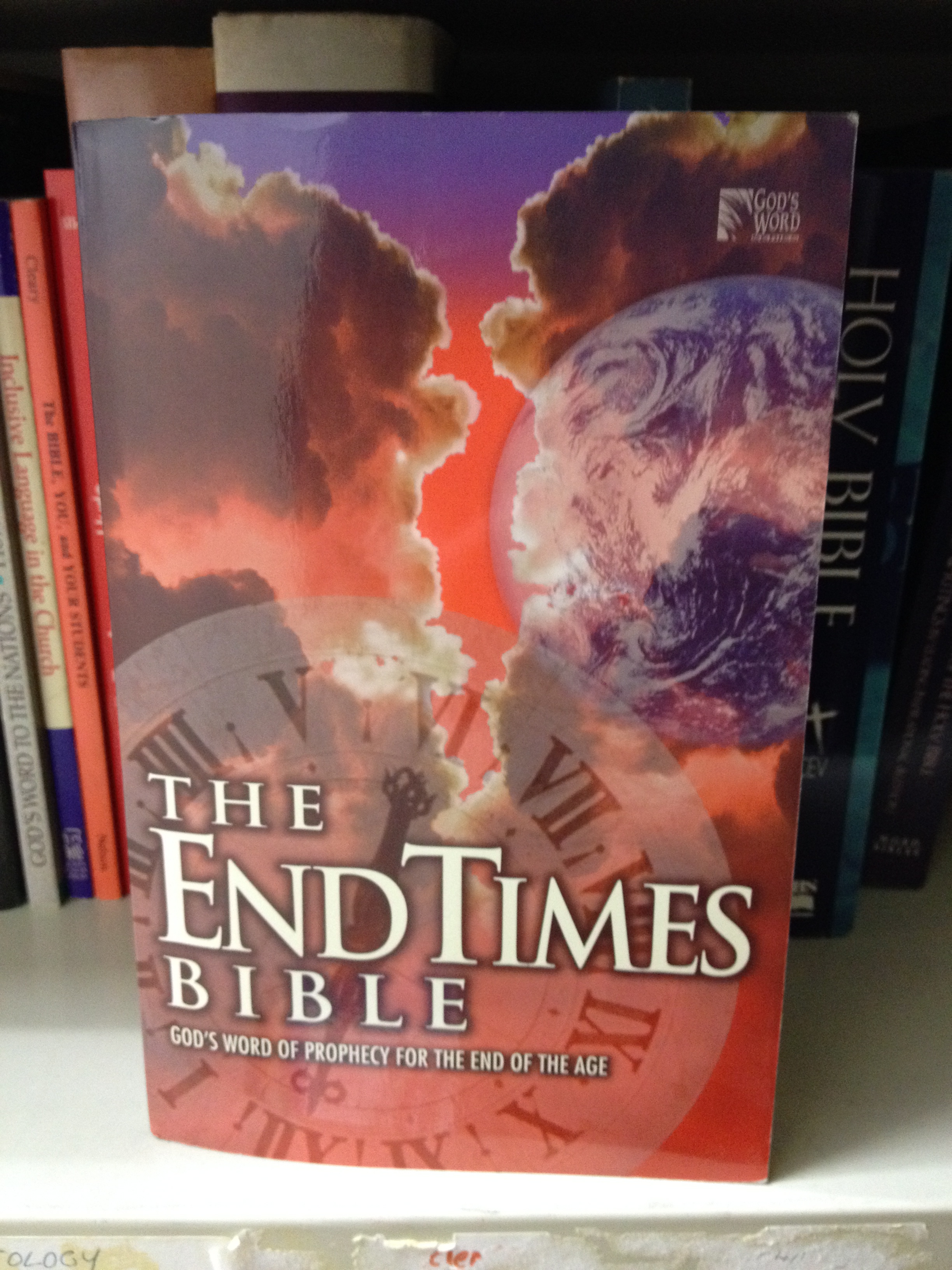
I recently came across The End Times Bible (now out of print). Published in 1999, this Bible had a not-so-subtle message that the end of all things was nigh. As it had been before, and, knowing human nature, will be many more times again. I imagine myself, in a Left Behind fantasy, watching a neophyte trying to make it in the post-apocalyptic world with a Bible. References to the end times are rare in Holy Writ, and dreadfully obscure. Reading Tim LaHaye or Hal Lindsey you might think the Bible has step-by-step directions for negotiating the wrath that is to come. As if the Bible were a recipe book and you wanted chocolate-chip cookies. Ironically the world is full—over-full in point of fact—of people with advanced degrees in Bible who’ve spent years and years of their lives learning to uncover the minutest hints that the Bible gives. Most of these folks are unemployed and wouldn’t mind sharing a bit of that simplistic apocalyptic pie baked up by the premillennialists. And yet, the world goes on.

Even as I was researching The End Times Bible, however, I began seeing references to the next apocalypse. Some are hopefully suggesting 2019, since, apparently, God likes round numbers. The reprieve we’ve been feeling, I have no doubts, is only temporary. In the course of human events we will have alarmists elected to high offices and once again panic will begin to build. The Maya let us down, and Howard Camping up and died. No worries—there are other arcane civilizations and the world knows no shortage of prophets in button-down shirts. Still, I’ve kind of enjoyed this little vacation without having to hush the irrational fears that God’s non-biological clock is inexorably ticking.

The biblical world is a simple one, in its own way. Created in six days just a few thousand years ago, it topples off its pillars and ends in a fiery demise in some millennial scenario, if only it can keep its own story straight. And like any good story, children will come back to it time and again.


Inerrant, Indeed

The other day at work, I discovered a huge Bible. This one was truly massive, in three volumes, almost too heavy to lift. As I pulled down the last fascicle, which weighed more than a newborn, I noticed the sticker on the cover. “Author’s proof.” This gave me pause. Does God read his own material or does he hire out freelancers? Printed Bibles have a long and venerable history of typographical errors, especially in the early days. Speaking in the name of the Almighty does have its risks. After all, little is more persuasive in America than the words, “it’s in the Bible.” I remember kids saying that to me in high school, where I had the reputation of being a walking concordance. More often than not, I had to correct them, since, in fact, the Bible mentions nothing about Popes or guns.

IMG_1389

Prior to the electronics revolution, printing a Bible was a complex process. Typesetting, or compositing, was not an undertaking for the foolhardy. Type has to be set, cast, and molded in order for offset printers to roll. And although page proofs aren’t set in stone, metal isn’t a forgiving medium to manipulate. And let’s face it—the Bible has a lot of words. Some of them very dry. The King James Version has over 780,000 words. Those with any experience in publishing know that’s one big book. Bible proofreaders command a hefty fee. I would be afraid to correct the word of the Lord myself. Reading through holy writ, word-by-word, takes a bit of time. The mind wanders to monks in their scriptoria.

Nevertheless, printer’s errors abound. Growing up as an evangelical, lighthearted entertainment was to be had as we read about the “Breeches Bible,” the Geneva Bible that had Adam and Eve fabricating britches for themselves from fig leaves. Coverdale’s Bible was known as the “Bug Bible” for its translation of Psalm 91.5, “Thou shall not nede to be afrayed for eny bugges by night.” Various versions of the King James have typos including Judas telling the disciples to watch in Gethsemane while he goes yonder to pray, and the somewhat self-serving “Printer’s Bible” that renders Psalm 119.161, “Printers have persecuted me without a cause” (which may be true, but the Hebrew would seem to indicate “princes” instead). The most notorious was the “Wicked Bible” wherein the seventh commandment in Exodus reads, “Thou shalt commit adultery.” All but eleven copies were destroyed and one of the remaining sold in recent years for $89,000. A Bible printed during the First World War, had “Thou shalt kill” as a commandment, Freud be praised. I slip the author’s proof back onto the shelf. I’ll let this be somebody else’s problem.


Transparent

With its endless versatility, gold is many things to many people. Already at the dawn of civilization, both in the old world and the new, it was a valued commodity. It is one of the few things that conquistadors didn’t have to impose on their victims; love of gold was already there. One of the qualities of gold that makes it such a remarkable metal is that a little bit can go a long way. Gold plating, for example, can be accomplished with very thin sheets of gold. This made it ideal for decorating statues of gods in antiquity, or at least the heads of the statues, as reflected in Daniel’s dream of Nebuchadrezzar’s statue. “Thou art this head of gold,” even Daniel obsequiously crows. Today, of course, gold represents commerce and it often sits, unused, in great storehouses heavily guarded, so as to prove a nation’s worth.

Gold still has industrial uses in the book business, particularly with Bibles. A classic Bible with calfskin leather, gold letters stamped on the cover, and gilt-edged pages, can be a luxury item. The gold on the edge of Bible pages is only 1/300,000th of an inch thick, or thin, meaning that a Troy ounce goes a long, long way. Only books with an idolatrous value get this kind of treatment. And they still sell. Somehow an ebook just doesn’t compare. The irony here is that the contents of the Bible suggest that gold is of lesser value than the spiritual truths contained within. Still, we can’t help but smooth the outside with burnished gold. Show and tell it on the mountain.

DSCN4534

Although the populace demanding evangelical standards such as the Scofield Bible are going ever more and more towards the large-print editions, the leather-and-gold crowd is still alive and has the cash to prove it. The same content is available online with just a few keystrokes, but there is no gold coating here. All that glitters is not gold, goes the old saying. As we turn our gaze ever heavenward, the glass visors of space helmets are also covered with a thin layer of gold, as if the deity we might glimpse is best viewed through gilded glasses. From the moon—humanity’s farthest step—back to the early statues of gods whose names have been forgotten, even though it may be the thinnest veneer possible, we look at the world through gold.


The One That Got Away

While looking for reviewers for a book proposal on Jonah, I had a strange realization. Few mainstream biblical scholars are interested in the book. Or at least in publishing on it. The same goes for the Bible’s other great watery adventure, Noah’s story. Ironically, these are the stories we, as children, are weaned on. Kids love animals, right? And both Noah’s ark and Jonah’s great fish mastication involve animals, as well as lots of water. Both stories have more than a whiff of the fantastic about them—the kind of thing children can relate to. And yet, biblical scholars, collectively, wonder why few people are interested in their work as they take on the more heady work of unraveling Isaiah or Romans.

Sistine_jonah

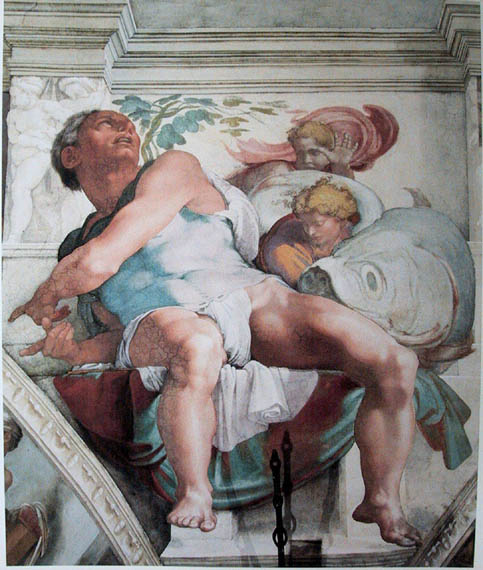
Jonah used to be a test case for the Fundamentalist crowd. You were a “Bible believer” if you could, with steely gaze, claim that Jonah was swallowed by a fish—the Bible doesn’t say “whale”—and survived three days only to be vomited up on the Levantine shore to make his soggy way back to Assyria. Three days swimming in the gastric juices of just about any animal doesn’t do a great deal for a prophet’s credibility. Or physique. And since the story is fantastic, and populist, scholars avoid it like a giant fish. Meanwhile, John and Susie Q. Public want to know about this story—what does it mean? Did it really happen? Why is it in the Bible at all?

My generalization above is somewhat faulty. (What generalization isn’t?) Evangelical scholars still take an active interest in Jonah. Jonah is the stomach-acid test of faith. Since I never really outgrew my love of monster movies and outlandish plot lines (my brothers recently convinced me that I should see Sharknado) I’m fascinated by the tale of Jonah. It is one of the most carefully constructed stories in the Bible, and it clearly has a very counterintuitive message about who is acceptable in God’s eyes—here’s a hint: they live in Nineveh and even dress their animals in sackcloth when they realize they’ve been naughty. The book of Jonah, however, has been condemned for being a puerile tale of a guy who can hold his breath three days, amid chemicals that can dissolve most organic substances, and utter Psalm-like prayers all the while. Fish stories, after all, are something that many folks intuitively know how to interpret.


31 Flavors

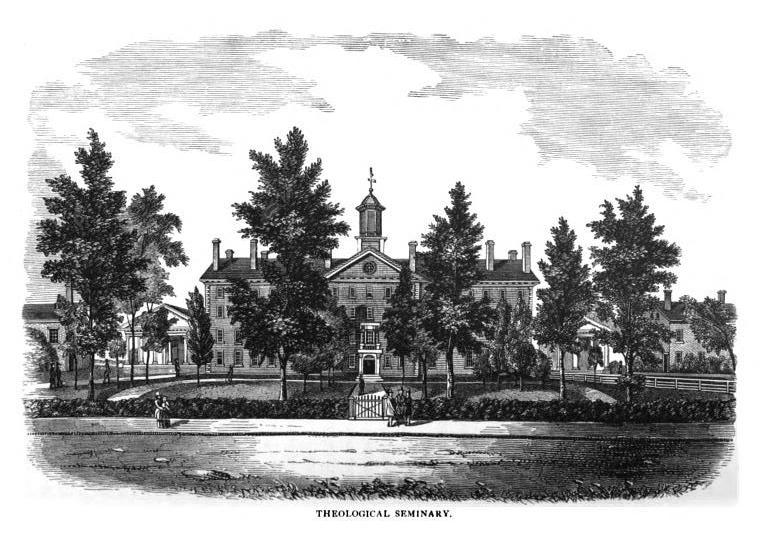
Princeton Theological Seminary, nestled next to its Ivy League sibling university, has never welcomed my advances. Although I’ve long ceased keeping the myriad rejection letters I’ve received over the years and now prefer to throw them in the recycle bin unopened, in my recollection I’ve applied to Princeton Seminary more times than any other school. Given the historic connection between the seminary and my alma mater of Edinburgh University, I often wondered why I never even merited an interview. After all, I live less than 20 miles away and they wouldn’t even have to pay for gas. So it was that I found a recent reference to “Princeton Theology” so interesting. Not every seminary gets to name its own brand of poison.

Princeton_Theological_Seminary

Princeton Theology refers to a movement that helped establish the culture that would give us the dubious gift of Fundamentalism. I have never been a Presbyterian, but I have attended their institutions, and one of the characteristics I’d often noted is that Calvin’s thought, in particular, often left me chilled to the theological bones. Assured of his own place in heaven, his theology seemed designed to keep others out. People, being what they are, naturally want to be on the winning team, especially in the eternity game. Reformed thought, therefore, was often perceived as cold and somewhat unfeeling. Predestination is, after all, determinism. Princeton Theology, beginning in the early nineteenth century, was intended to try to introduce a somewhat cozier evangelicalism to the sternness of Presbyterian theology. You may be condemned to Hell, but there’s no reason you shouldn’t feel good about it. After all, the divine plan trumps human need every time.

The approach of the twentieth century saw an increase in evangelical fervor throughout the United States. The growing number of flavors of Christianity led many to wonder what the true vanilla was. The answer, self-proclaimed, to be sure, was Fundamentalism. If you’ve never attended a gathering of theologians, you might not shudder as much as I do while typing these words, for such a conventicle has enormous power. Indeed, the Niagara Bible Conference was able to do what the Council of Nicaea was not—distill the essence of true Christianity that could be accepted by all believers. Unless, of course, one was raised in a Catholic or Orthodox tradition. Princeton Theological Seminary is not a Fundamentalist institution, but even a well-meaning attempt to make Christianity more palatable might lead to too much vanilla. In a world of 31 flavors, perhaps paradise tastes different to everyone, depending on the formula.


Back to School

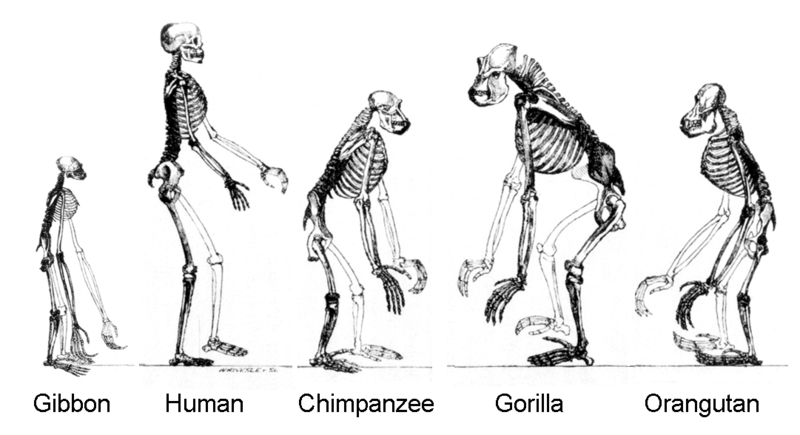
“We want to make certain that we view culture through the eyes of faith, that we don’t view our faith through the eyes of culture.” The words are those of Stephen Livesay, president of Bryan College, according to a recent New York Times article. Bryan College in Dayton, Tennessee, already famous as the school that evolved out of the Scopes Monkey Trial, has been toying with adding a more specifically fundamentalist statement to its panoply of faith. Instead of stating simply that humans (more precisely, “man”) were (was) created by God, Livesay wants to clarify that this means by special creation, no evolution involved. Hey, we’re all thinking it. Why not just say it?

800px-Ape_skeletons

With the characteristic, journalistic eye-rolling that inevitably accompanies stories about creationism, I frequently wonder why there aren’t more calls to try to understand this viewpoint. It’s easier to condemn and say that narrow minds can’t widen out, but some of us who had believed in Bryan’s hypothesis at one time have managed by dint of reading and reason to climb our way out of the slime. If we understood what made literalism so appealing, we might be able to figure out why only America lags behind the developed world in accepting what is otherwise universally regarded as a fact. Instead, faculty members nationwide willing to call this into question are summarily fired and nobody bothers to do a thing to support them. Collateral damage of the culture wars. Perhaps we should add a statement about not letting the door hit you on your way out.

Evolution through natural selection stabs very deeply into the heart of human self-worth. We still refer to other animals as “lower” than us, and we exploit them in any way we see fit. Then we don’t wonder why being told you’re just like them isn’t disturbing. This is trench warfare. Lines in the sand dug deeper and deeper. Those who believe in creationism aren’t simple. Even with all our space telescopes and Mars rovers, we’re told the most complex thing known to humanity is still its own brain. And that brain makes people with Ph.D.s think that they’re special—either a separate creation by an invisible god, or because they can recognize how irrational our own brains make us. No intelligent being would want to understand why this is so by studying it rationally. That would make far too much sense.


The Cow Jumped

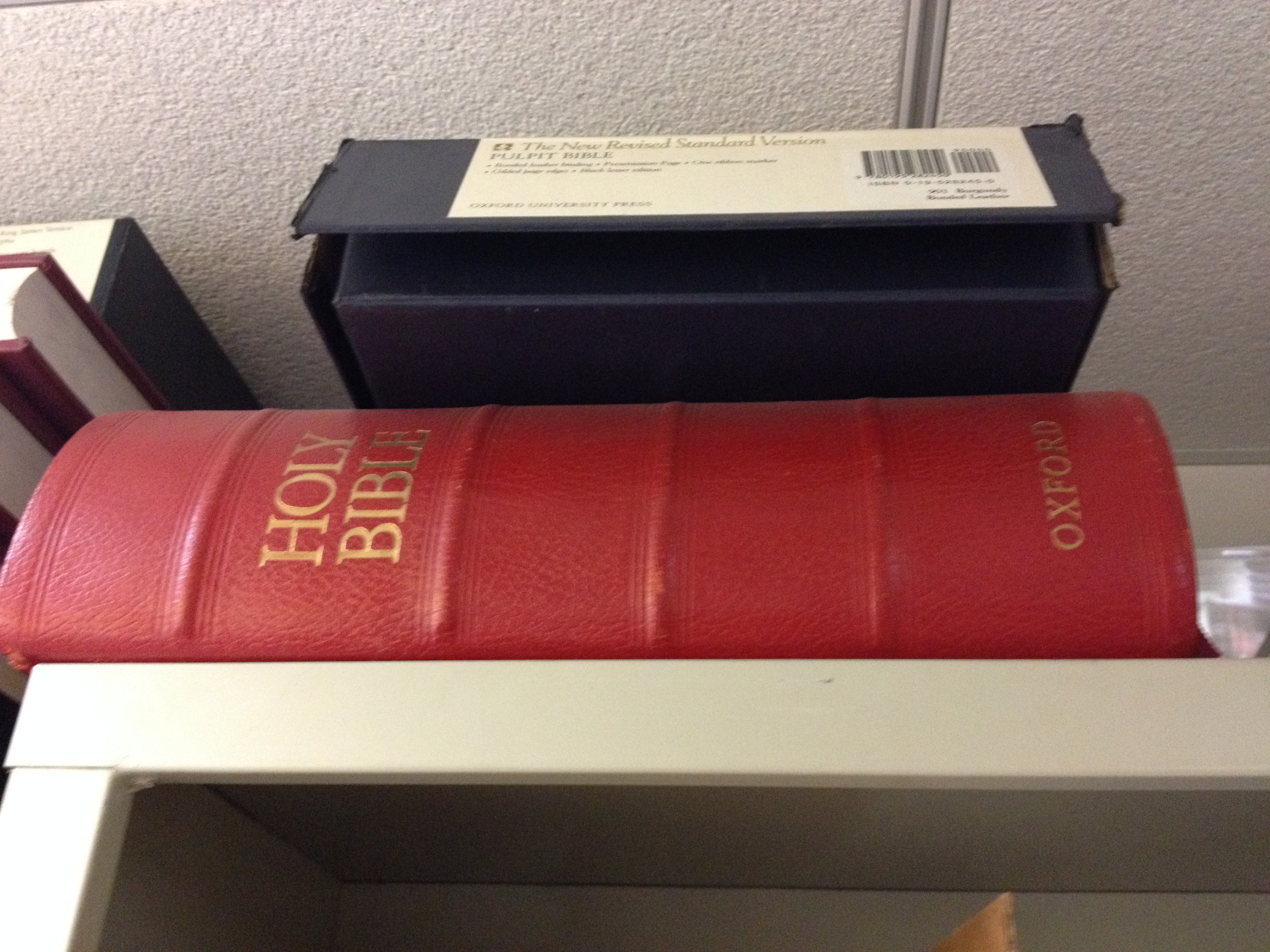
While digging through the attic for some reference material for a colleague this weekend, I came upon a box of Bibles. I actually have many Bibles around the place—often within an arm’s reach—despite the ease of internet biblical access. One thing of which I own few are leather-bound Bibles. Trying to be as vegetarian as I can, I have avoided leather in my apparel as much as possible (sometimes the alternatives are even more expensive), and apart from a rare, old book, I prefer cloth to leather, and, generally, paperback to cloth. Still, working in the Bible industry, I know that among the best selling Bibles are the leather variety—those that involve the ultimate sacrifice, although not of the human kind. Leather as a book-binding material is an early development. Leather is durable, and strong, even if a little kinky. Before synthetics, it was used to protect tomes that had been written by hand, representing hundreds, or thousands, of human-hours of work. You wanted it to last. So kill the fatted calf.

I was amazed, therefore, to discover that most leather Bibles are bound with pigskin. That’s right, the material tossed around the grid-iron Sunday afternoons from September through February is kin to the very binding on your standard Bible. Pig leather (never called that) is cheap and durable and is the routine binding for leather Bibles. You want a kosher holy book, you’ll need to buy calf-skin (one thinks of a savior dying at only 33), and it will cost you. Pigs, generally eaten by Christians, are unclean to Jews and Muslims, and books bound in pig cannot be touched by the most religious of the monotheistic sibling faiths. To me, I just see dead animals all around in any case, and wish we might find some way to protect our pages with something else.

Photo credit: Ben Salter, Wikimedia Commons

Photo credit: Ben Salter, Wikimedia Commons

A larger issue (isn’t there always a larger issue?) is a porcine one. Pigs, we are told, are very similar to humans. We use their organs to transplant for our own, and some scientists think they may have played a role in human evolution (although this is not the conventional view). Although I can’t claim Babe led me to vegetarianism, it certainly didn’t hurt. For that matter, neither did Charlotte’s Web. Still, the idea of swearing atop a deceased pig to tell the truth, or watching a televangelist beat a dead pig, definitely has some theological implications. So as I sit here staring into a Hammermill box full of Bibles, I wonder about the hidden costs. Not just to calves and pigs, but to the species who claim that this box of books contains a truth deeper than the many other tomes all around me. And I wonder just how naive I may have been on the finer points of the religion based on these books as well.


Why Crusade?

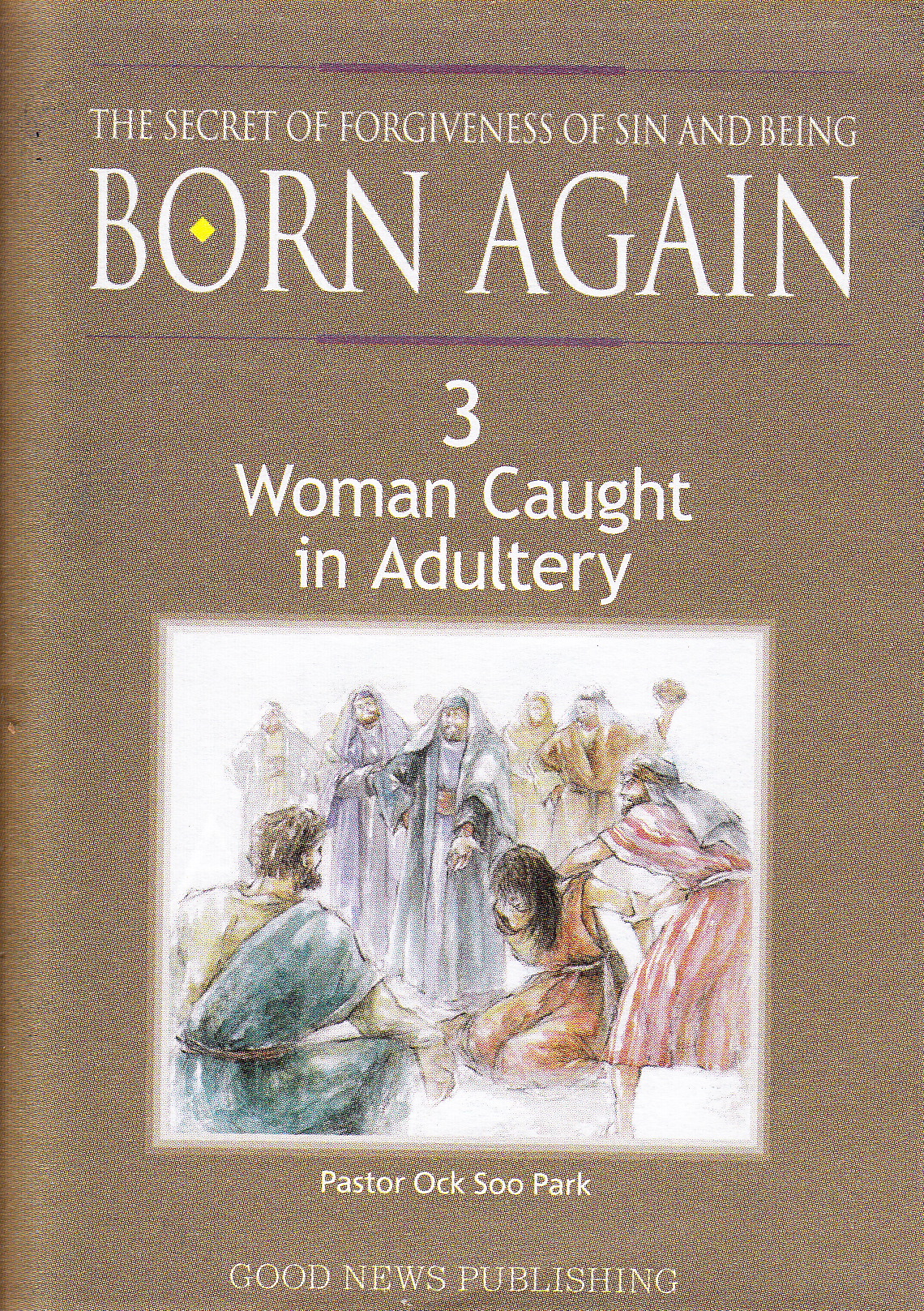
CrusadeAn invitation to join a crusade is a dicey proposition these days.  Perhaps Pastor Ock Soo Park is not aware of the burdensome theological freight the word carries these days.  The Bible Crusade is, nevertheless, coming up on April Fool’s Day, and, I’m glad to see, admission is free.  The tract I clutch in my gloved hand is more like a pamphlet and it is number 3 in a series, “Woman Caught in Adultery,” causing me to wonder what numbers 1 and 2 might have been.  Still, it’s Good News Publishing, so I suppose it can’t be bad, whatever the topic.  The young lady on Seventh Avenue seem surprised when I accepted the booklet she held out with a simple “Bible Crusade?” invocation.  I often accept what the shills hand out; a more thankless job is difficult to imagine.
 
The concept of biblical crusades has a strong resonance with my youth.  Although I attended the occasional revival at our local church, I never actually went to a crusade.  I did watch Billy Graham, however, on television.  I would sit glued to the screen, hanging on every word of the sermon, feeling once again the flush of my sin and the urgent necessity of repentance, then and there.  I was terrified of never giving enough of my life to the Gospel, of backsliding, of hypocrisy, of Hell itself.  As a youth I had no idea of Graham’s political agenda or of the close friendship he had with Richard Nixon.  For me, it was purely a matter of what I had witnessed on the screen as Beverly Shea lead the repetitive chorus of “Just As I Am” that reduced me to tears every time.  When we were asked to list an important person for history class in high school, I felt compelled to write Billy Graham on my slip of paper, and I wondered why people laughed when no one in the room could manage to guess who it was after 20 hints.  As guileless as a dove, but not as wise as a serpent. 

Crusades are all about conquering territory.  Sometimes, historically, that territory is physical and the violence is palpable.  It is charging fully ahead with the conviction that there is no way you could possibly be wrong, even in the face of others from foreign faith traditions willing to fight to the death over the issue.  It is invasion.  Conquest.  In the name of the prince of peace.  Evangelistic crusades are not much different.  The battlefield may be metaphorical, but it is not less real for all that.  The human psyche is not infrequently victimized in the worldview of utter conviction.  Often the driving force is the same as the Templar on his steed—control of the infidel.  With control, as the Templars soon learned, there is great wealth to be had.  As a poor boy in a run-down house, I never questioned that Billy Graham or any other evangelist deserved the money that accompanied such solemn longing of heartsick souls.  It was self-evident.  Now, standing among the crowds on Seventh Avenue, beneath a huge sculpture of a needle sewing on a gigantic button, I have to wonder about the economics of scale.  Reality is seldom what it seems.


The Edge

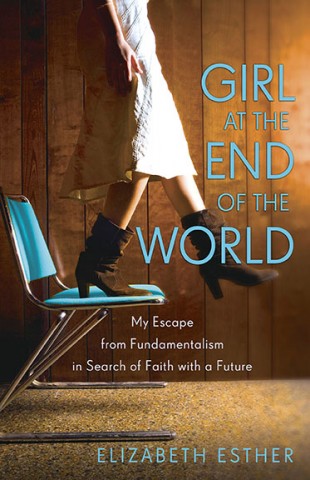
GirlattheEndoftheWorldElizabeth Esther’s Girl at the End of the World is finally out. I can’t remember the last time I read a book within two weeks of its release date. Of course, I have a soft spot for the religious memoirs of women, particularly when they manage to make their escape (I guess otherwise they wouldn’t be writing their experiences) from an unforgiving faith. Reading of the trials they have to go through to get there is far from enjoyable. But necessary. Often Bible-wielding males make the rules with a macho God behind them, and girls are abused in various ways so that the wrathful guy upstairs will be, well, a little less wrathful. I’ve read many of these accounts, and I worry deeply about the state of religion’s soul. Elizabeth Esther was raised in what she calls a cult, begun by her grandfather. This brand of fundamentalist Christianity taught the virtues of daily spankings of children, often beginning at about six months of age. The descriptions of how they used candy to tempt their children so that they could spank them to break their wills made me cringe. Evil wears many disguises, but none so effective as piety.

Religions are able to get away with quite a lot in a land of religious liberty. Elizabeth Esther proves that she’s made of some pretty stern stuff to have come through all of this, although she admits to still having panic attacks all these years later. She calls it Religious PTSD. She is right to do so. Although I grew up in a fundamentalism that scarred me for life, it wasn’t with the physical beatings that members of her grandfather’s religion doled out. When Elizabeth Esther describes the tendencies she has, the hyper-awareness of threat, I know that I am nevertheless still reacting the same way in my own life. After my fundie upbringing, I had the misfortune to be employed by a different kind of literalist religious institution. Faculty whispered about the new malady coming out of the Gulf when we started to develop nervous ticks and odd quirks after being kept under constant threat. When I contact many of my former colleagues I can still tell we were badly damaged there. Some religions, as Nietzsche long ago recognized, are life-denying to the point where a soul death would be more merciful. And yet we carry on.

Elizabeth Esther ends her book with a reluctant escape to Catholicism. She notes that even it doesn’t exist without its problems. We are, however, religiously evolved beings. It is in our constitution to seek the solace of communal worship, or at least a kind of spiritual solidarity. And there are those who will take advantage of people who simply seek their sense of self-worth from authority figures who claim to have it all worked out. Disproportionately those who are made to suffer are women. The Bible, although it cannot be blamed on the abuses heaped upon it in the name of the Judeo-Christian tradition, conveniently emerged from a patriarchal society. In the hands of some men it becomes an implement of torture. And many are left far poorer in life for having encountered this particular form of demon disguised as an angel.


Holy Cows

Back in the days when a book was a luxury item, great care was taken in its production and protection. Having your investment lying around with flimsy paper covers that would begin to grow blunt and roll back even before you finished reading would have seemed irresponsible. To shield the vital contents from the weather and other dangers, leather was used as a kind of skin—come to think of it, it really is skin—and safely the words were housed. Many of these volumes were, naturally, Bibles. Leather and the good book became synonymous for some—even with onionskin paper a book’s not a Bible with just a printed case hardcover. Paperback? How can you take that seriously? To make a Bible authoritative, it seems, cattle must be harvested. After all, sacrifice is at the center of it all.

Being a long-time vegetarian, this often gives me pause. My belt and watch-band are made of canvas, and I try my best to avoid leather shoes (although this is often difficult). I’m pretty sure that my leather Bibles are faux skin. Even though my family respected the Bible to the point of bibliolatry at times, we really couldn’t afford genuine cowhide. Now I take a more circumspect look at the cost of appearances. We’ve outlived the need for animal-bound Bibles. It has become more of an expectation than a necessity. An affectation. There is, however, still a big business in leather Bibles, and Italian leather seems the best fit for a Semitic savior.

What troubles me the most is the idea that animals—deemed not conscious by the very religion that allows their slaughter—are made to pay the cost for human foibles. The whole sacrificial system is built around a radical inequality. Humans domesticated cattle for their own exploitation, and their skins, when no longer needed by their hosts, came to clothe holy books of their masters. In any shade or hue of the rainbow. We can make it less grim by dying it a cheerful color and declaring its progenitor had no thoughts in its vacuous head. It lived a life of servitude and when it paid the ultimate price, it received the martyr’s gift of becoming part of the Bible. The end result? We should feel less qualms about our peccadillos and atrocities. We’ve wired their brains to trust us—we are not the predators to fear. Try not to take it personally. It’s just what our religion demands of us, for we too are a domesticated herd.

From the herd of purple cows...

From the herd of purple cows…