The Varieties of Biblical Experience

Working with Bibles can be a heady experience. I mean, the sheer numbers are staggering. A whole herd of cattle must be slain annually just to manufacture the covers for all the Scofield Bibles in the world. What is it about literalists that demands animal sacrifice to read the words of the Prince of Peace? Bibles, Bibles everywhere, and not a word to read! According to statisticbrain.com, there are over 6,001,500,000 Bibles in print. That’s closing in on a parity with the world population, only one billion to go. There are websites dedicated to selling only Bibles. Nearly any bookstore will have at least a shelf full of them. I even ran across the website of an enterprising individual who seems to have figured out that there’s a market for taking Gideon Bibles from hotel rooms and selling them online. The Bible business, in the words of Big Dan Teague, “is not a complicated one.” And every year more are printed. Full-text versions are freely available online at any number of sites, and still more can be sold.
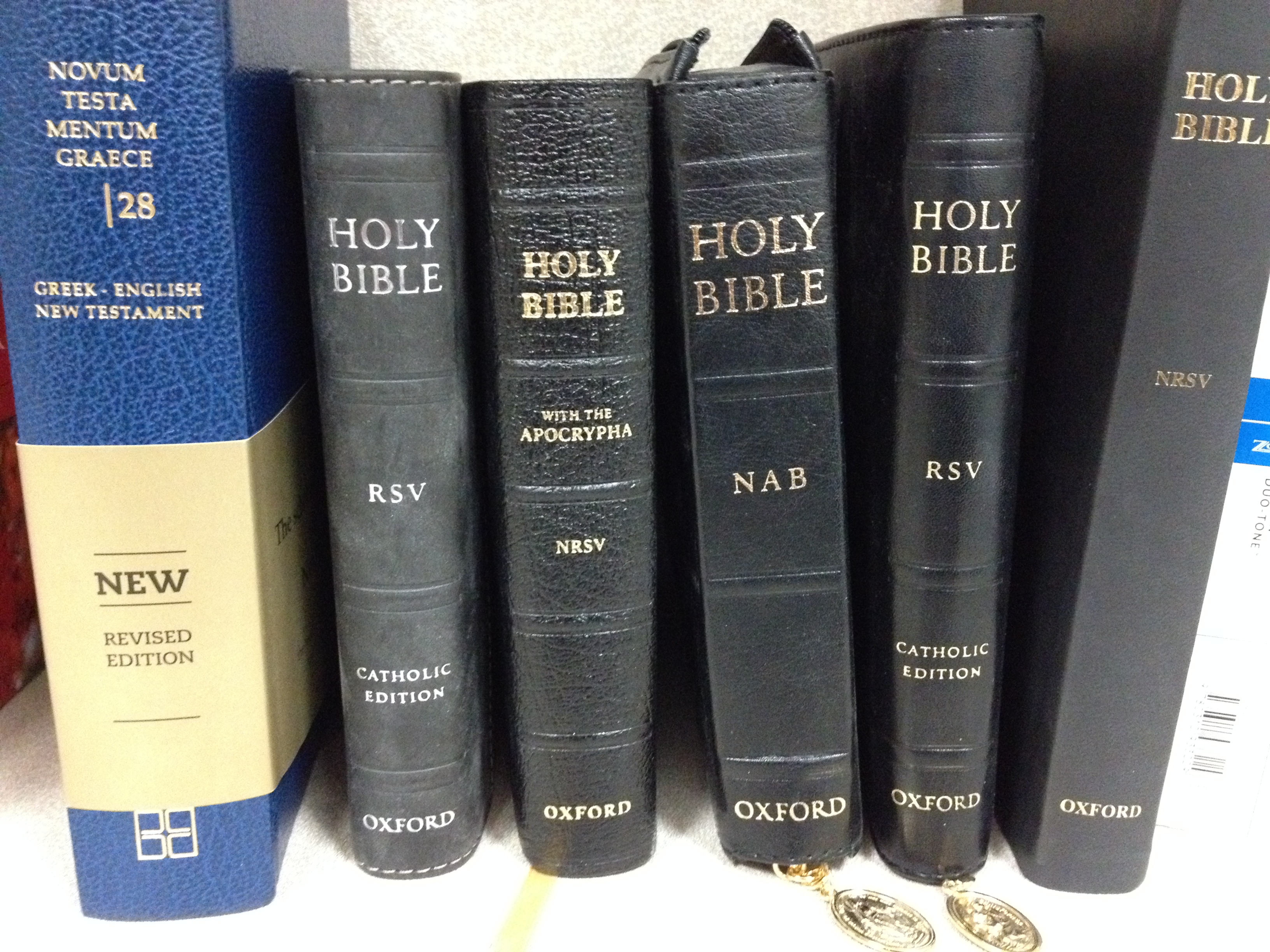
IMG_1235

I often ponder the western love affair with the Bible. My entire career, with all its ups and downs, has been fashioned from an early intrigue with holy writ. In the beginning was the Bible. And culture followed in the footsteps of holy scripture. It’s not difficult to see why. Even further back than ancient Palestine, people worried about dying. Consciousness is funny that way—it has trouble conceiving of the world without itself. The Bible, for many centuries, offered the accepted solution to the death equation. You may have to die, but you don’t have to stay dead. Today we think of zombies as those refusing to remain lifeless. The Bible begs to differ, unless, of course, you’re reading the Zombie Bible. And still the presses roll on.

Considering the profit to be turned by selling Bibles, I wonder that more don’t show the cynicism of Big Dan. Is no one suspicious that printing the Good Book is called an industry? What other book, so freely given away, can sustain such a massive global market? I have to plead guilty myself to having a least a dozen different Bibles within easy reach every day. They even have their own separate labels at Barnes and Noble. So as I sit down planning on how to grow this ever-expanding market even more, I think of the many other industries that rely on mine. We have spun off worlds that orbit around the Bible. It is, despite the many nay-sayers, the cornerstone of modern Western civilization. If a tree falls in the woods, a Bible may be printed from it. Which of the 57 varieties do you take with your daily bread?

Dromedary Dilemma

Photo credit: John O'Neill, WikiCommons

Photo credit: John O’Neill, WikiCommons

This past week two friends have pointed me to news articles about camels. In the modern, western imagination camels are biblical animals, pushing their way onto the ark, carrying long-suffering patriarchs across the desert, and squeezing through the eyes of needles. These news stories indicate that camels were actually not introduced into the Levant until about the tenth century B.C.E., i.e., a few centuries too late for poor Father Abraham, whom, according to Genesis, was a noted camel owner. Of course, the reason that this is news is because Fundamentalist groups insist that every word of the Bible is literally true. If it says Abraham had camels, then, by gosh, camels he had—archaeological evidence or no. One story points out the problems for Zionists, for whom claims on the land derive from the mandate to Abraham (and, presumably, his camels). Biblical scholars have long been aware of the complex methods of scripture writing, and no camels are no problem. The bigger issue, I suspect, is that Abraham has been awol for some time as well.

Abraham, as the progenitor of the three major monotheistic religions, bears a tremendous weight on his weary shoulders. It is the weight of history. Or lack thereof. I may be a few years outdated here, but the earliest figure historically attested in the Bible is (or was) Omri, the king of Israel who spawned the notorious Ahab. Prior to that, historical records are pretty silent. Yes, I know the Tel Dan stele mentions “house of David,” but that is like mentioning Willy Wonka’s chocolate factory—it doesn’t make Mr. Wonka any more real (even though you can buy a Wonka bar at some candy stores). That means that, in the jumble of biblical history, everyone in Genesis falls into the questionable historical category. Even if Moses (himself historically dubious), wrote Genesis (and he didn’t), he wouldn’t have known Mr. Abraham personally. He had been long dead. If he’d ever been born. I’m getting worried about his camels.

Religions have often tied themselves to historical claims. Such claims are always tenuous and negotiable. For instance, I watched a movie about Abraham—Lincoln, it was called—where I learned quite a bit that I didn’t know about a very historical Abraham. At the same time, I knew the movie wasn’t history. When we rely on history to cite our superiority (often one of the functions of religion), we had better be willing to take the risks. The first biblical historical figure is a “bad guy” king of a secessionist kingdom, this time in the north. Even once we learn that the storied characters of the Bible may have never trod the earth, we don’t leave them as camel fodder. They are part of the tradition, whether they participated in history or not. I realize, however, for some it would be easier to swallow a camel than to strain out this particular gnat.


Asp and Receive

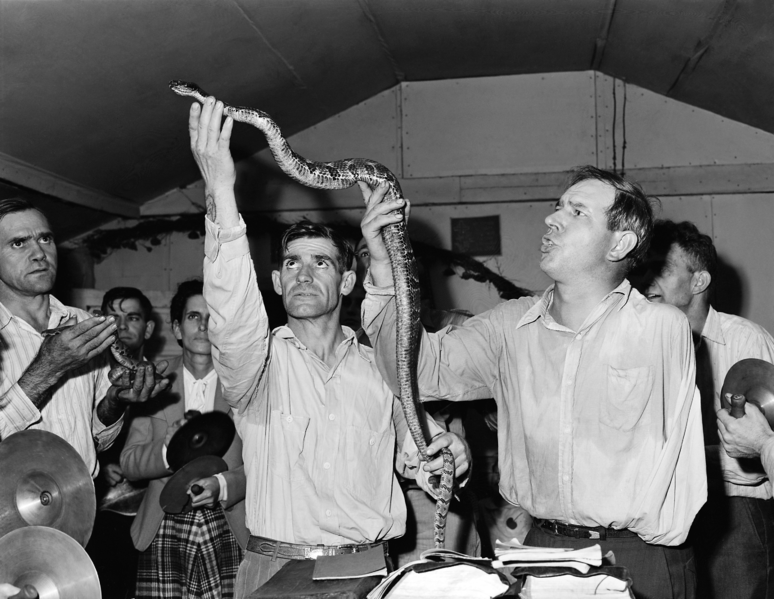
Among the X-Files episodes that bothered me the most was “Signs and Wonders,” where Mulder and Scully visit the snake-handlers. The human fear of snakes is so deep that it reaches back beyond our split from chimpanzees—our curious cousins who also fear serpents. The reality show Snake Salvation, which I’ve only seen once, has lost its star due to, you guessed it, snake-bite. I don’t rejoice in the death of Rev. Jamie Coots; it is tragic when a person with such faith falls victim to it. Nobody castigated Steve Irwin for swimming with rays, however. It comes with the job. Snake-handling tends to be an off-shoot of an extreme literalism. Many of the rest of the Christian mainstream are content to know that the snake-handling passage (note the singular) in Mark is a disputed section of the Gospel. It is likely not original and carries weight only for those who accept the King James without question. It doesn’t command the handling of snakes; it is merely a suggestion.

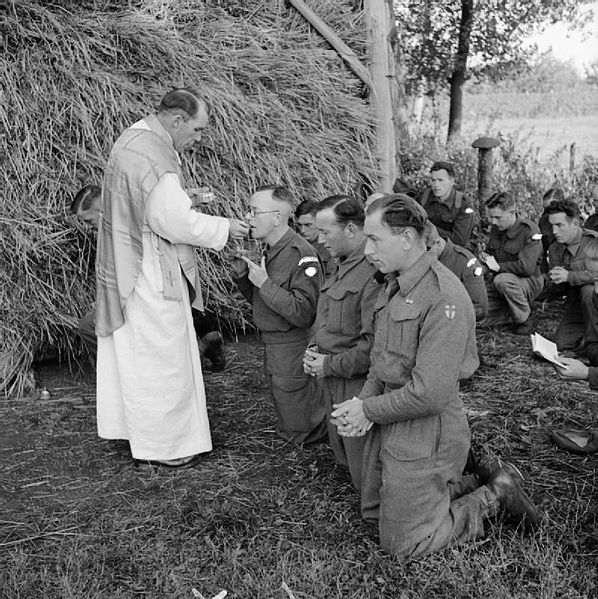
774px-Snakehandling

According to the story on USA Today, Rev. Coots refused medical treatment after his bite and soon died. Snake bites are not as fatal as they once were—with proper treatment they are often survivable. The faith, however, that declares asps risk-free comes with a caveat that doesn’t allow for medical intervention. If it’s your time, it’s your time. If it weren’t for reality television, probably none of us would even know. Snake-handlers do get bitten from time to time, just as surely as Baptists dry out once they get out of the water. It is the way of nature. Religion tends to view itself as capable of overcoming nature in various ways, and that seems to draw in the reality TV crews.

Not only Jamie Coots, but the famed evangelical Duck Dynasty took a hit recently. That’s because the stars are only people. When we put them on the magic box we either worship them or wait for them to fall. Authentic faith, I firmly believe, does not come through television. Shortly after the invention of the tube, evangelists found their way onto the airwaves. But reality television is necessarily about the slightly off-kilter, those who aren’t like the cookie-cutter executives in Manhattan or Los Angeles. Chances are they’ll be from the south and people will watch with incredulity. Isn’t that what belief is all about? Faith is a wonderful thing when it works. Like most non-empirical phenomena, however, it doesn’t always work like view on demand. Snakes evolved to bite, and people evolved to believe.


Ham on Nye

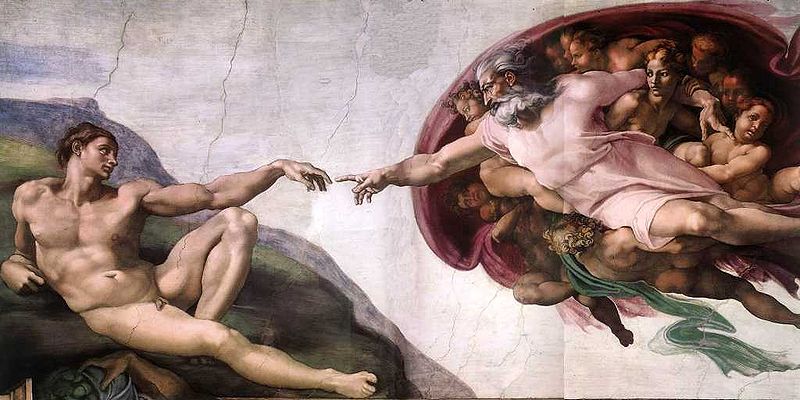
Bill Nye, the Science Guy, comprised a good part of my thirties. My daughter was young and we were living in a religious environment sometimes openly hostile to science. Nye is funny and fastidious, and completely devoted to the empirical worldview. His videos (yes, it was that long ago) were fairly inexpensive in VHS format, and even as parents we learned a thing or two. When Bill Nye came to the New Jersey Green initiative conference (I don’t recall what it was called) we were in the audience to see him live. It was rather like an epiphany. Despite his wit and charm, many of his colleagues are now advising him that he’s made a wrong turn. According to NBC, he is set to debate Ken Ham of Answers in Genesis in a no-win debate, that of creation versus evolution. Some of the top lights of science have been bloodied by lower profile conflicts because—and this is the crucial point—religion and science do not agree on basic ground rules. It’s a schoolyard scrap, and those who try to adhere to laws of reason are often ill equipped.

800px-The_Creation_of_Adam

The debate isn’t really over the question of how we got here. The real prize is power. Creationists cannot win on purely scientific grounds; anyone who’s tried to read Henry Morris’s books knows that you can’t get very far without a curious hand raking your head. The science is flawed but the conviction is solid. Truth, the creationists know, is not open for debate. His scientific colleagues fear for the intrepid science guy, noting that this is just another instance to give creationism faux credibility in what is really a public relations scam. Ham’s creationist museum has dinosaurs on the ark, which, in an unrelated story on NBC, is drawing righteous ire from the self-same Ham. (I’ve posted on the round ark before, and likely will again.)

If I understand the first article correctly, the debate will be taking place tonight. If I understand science at all, the world will continue to evolve tomorrow. Creationism has a curious relationship to the world, viewing it through a Bible-shaped lens. A close look at the Bible reveals that it does not support the creationist viewpoint in any literal way. Too many dragons and contradictions make implausible any but a heavily harmonized version of Genesis 1. Biblical scholars, however, are among the worst of sinners, according to the creationist camp. We might be the very ones exposing their children to Bill Nye and other questionable truths such as television and electricity that don’t even exist in the Bible. I’ve got my fingers crossed for Bill Nye, but then, superstition has nothing to do with it.


Eleventh Hour

Religion, as many a charlatan knows, makes a very good investment. History has demonstrated time and again that the confident huckster can easily siphon the money from the gullible in the name of God. What follows does not make any assertions about the character of the people involved. It is, however, a fascinating story.

Cyrus Ingerson Scofield did not have an exactly stellar career. He was raised Episcopalian (which may explain some of it), but upon being drafted into the Confederacy during the Civil War, deserted to become a lawyer in St. Louis. Scofield was forced to resign from his law post because of “questionable financial transactions” which may have included forgery. He was a heavy drinker and abandoned his wife and two daughters. The year of his divorce he remarried. Then he had a conversion experience. Conversion is the ultimate clean wiping of the slate. Any life of dissipation may be excused following a religious experience, eh, Augustine? And furthermore, in the sanctified state the motives of the former reprobate are never questioned.

Scofield went on to join the Congregational Church and to grow wealthy from his Scofield Reference Bible, still a perennial seller, despite his lack of formal theological training. This notoriety was largely because Scofield had adopted another unlikely scheme, dispensational premillennialism. This end-time scheme grew out of the work of John Nelson Darby and later evolved into what would be called Fundamentalism. The idea was that the Bible contained an esoteric roadmap to the future, culminating in the book of Revelation, whereby the blessed could figure out exactly how the end of the world would unfold. As a child I bought a literal roadmap to the end of the world, but having survived several such putative apocalypses, I have grown a tad skeptical about the efficacy of my chart.

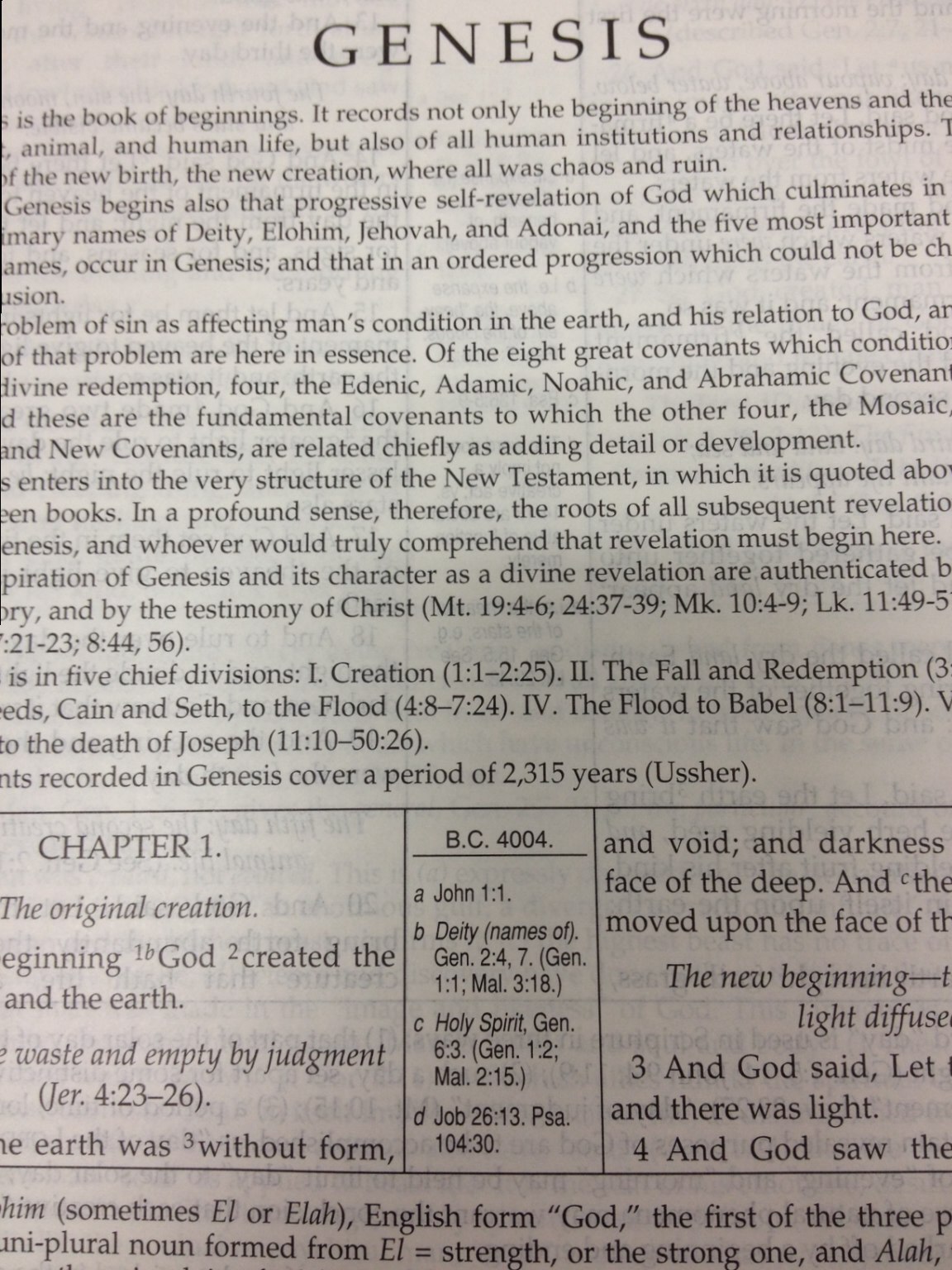
Any number of religious leaders have a background of self-promotion and more than a whiff of Phineas Taylor Barnum about them. A converted soul, however, is never to be questioned. Cyrus Scofield adopted Archbishop James Ussher’s dating scheme for the creation of the world in 4004 “BC” and placed it in his reference Bible, forever putting the cast of scriptural authority to a date that would come up in court cases even through the twenty-first century in Dayton, Tennessee, Little Rock, Arkansas, Dover, Pennsylvania, and Washington, DC, wasting tax-payers’ money on a myth of biblical proportions. Often creationists use “stealth candidates” who don’t exactly tell the truth before school board elections. I don’t doubt the depth of the convert’s belief, but I smell money here. And once upon a time literalists believed that it was the root of all evil.

The reason most Creationists cite 4004 is Scofield...

The reason most Creationists cite 4004 is Scofield…


Religious Education

The elephant in the room is exposed in a New York Times op-ed piece last week. “Indoctrinating Religious Warriors,” by Charles M. Blow, puts a finger squarely on the pulse of the ailing science stance of American religious believers. Noting that the Republican party has made no secret of its attempt to capture conservative votes by touting the religious intolerance of the theological right, Blow points out that more Republicans now believe that humans were created separately from animals than accept the scientific fact of evolution. And not just human origins suffer—our future will as well. The same mentality attends denial of global warming and advocating against fair treatment of committed, loving couples (depending solely on the visible sexual equipment). It is all of a piece. Blow points out that white, evangelical Protestants make up only 18 percent of the US population, but 43 percent of the Republicans who are classified as staunchly conservative. This imbalance leads to one of the world’s wealthiest nations being sidetracked from serious global issues while we continue to debate whether the Bible in inerrant or not.

I would add a further note of concern to what Blow says: higher education refuses to take religion seriously. As a life-long sideliner who has never been permitted fully into the halls of academe, I have watched as business schools have grown from the rubble of religion departments that have at best stagnated—when they have not been actively dismantled. In the worst case scenarios, universities have closed such departments down. With the exception of evangelical institutions. Very large departments of confessionally indoctrinated religionists thrive across the country. I am not the only religion scholar to have been kicked out of the academy for an intellectually honest approach. The wider society, with eyes wide shut, has decided that religion is a passing fancy while statistics indicate the exact opposite. We as a society will continue to be manipulated by religions as long as we continue to pretend they don’t pose a real concern.

Religion serves a purpose.

Religion serves a purpose.

Nor does castigating all religion, as Richard Dawkins, Sam Harris, and the late Christopher Hitchens do/did, solve any problems. Science itself appears to indicate that religion is part of the human condition, as surely a product of evolution as our opposable thumbs. Basic psychology would dictate that such direct challenges to religion will only result in retaliation. In fact, this is something that I recall learning from kindergarten. Until our society learns to go back to school and study the four R’s—yes, religion has to be there among the basics—we will continue to suffer from those who have vested interest in using religion for their own ends while those who could educate us on the subject continue to suffer the cut jobs of those who might be part of the solution. Charles Blow wonders if he is being too cynical. I suggest that he’s not nearly cynical enough.


Utterly Ineffable

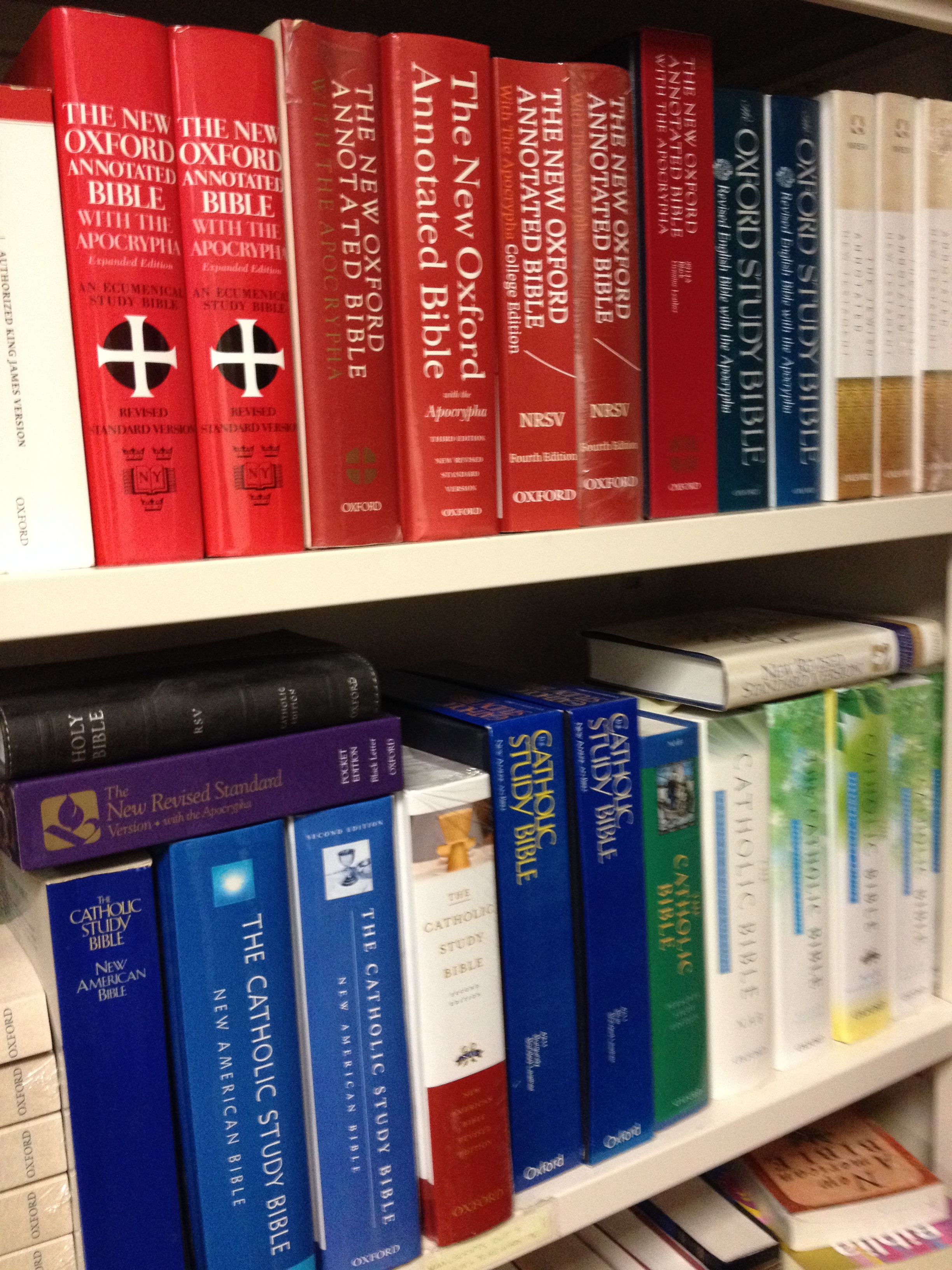
Sitting in an office full of Bibles, I feel well equipped for an apocalypse. At times, however, the irony of editing Bibles is almost overwhelming. Standard publishing contract boilerplate includes the assurance that the work of the author contains nothing “blasphemous.” I once had an author object to this language since just about anything said about religion or the Bible could be considered blasphemous in the right circumstances. In these days when Tea and other parties promote a literalistic reading of Scripture and some of its antiquated perceptions of humanity, I realize that the problem is the strange theological tenet known as “inerrancy.”

IMG_1163

The idea of inerrancy is that the Bible is without error of any kind, itself an errant assumption. Those who hold it do not fully appreciate that we have no original biblical manuscripts at all. The Bibles we read and swear on today are translations of copies of copies of copies in a long regression back to missing originals. Those translated copies have to be typeset and printed, and errors creep in at every stage, as is clear from a glimpse of the manuscript trail as well as many famous misprinted Bibles. Even when the inerrantists are pushed back to the original languages, the problem of not having the autograph remains an unsurmountable barricade to the mind of God. Bibles, like any other books, are subject to human error at each step of the publishing process. On my desk sit contracts where the editor of a Bible swears nothing blasphemous exists in the words. Such contract signers are braver than this tremulous hand.

Once I sent a hastily drafted contributor agreement to a Jewish author with the divine name accidentally misspelled. Within literal minutes of hitting the send button, my phone rang. The contributor was civil but reproving. Did I expect a Jewish man to sign off on a document with the ineffable name misspelled? I apologized but otherwise held my tongue. I had inadvertently blasphemed, perhaps, in my need to get too much done in a day. Now I am editing Bibles. One contributor to a study Bible told me his student evaluations state, “he wrote the effing Bible!” Effing? Ineffable? Inerrant? I’m not sure I have the nerves to handle this kind of pressure. Then there is that box full of leather Bible-binding samples under my desk. Bible-binders sure know their leather. Don’t tell me my thoughts have gone astray yet again.

IMG_1131


Sail Away With Me

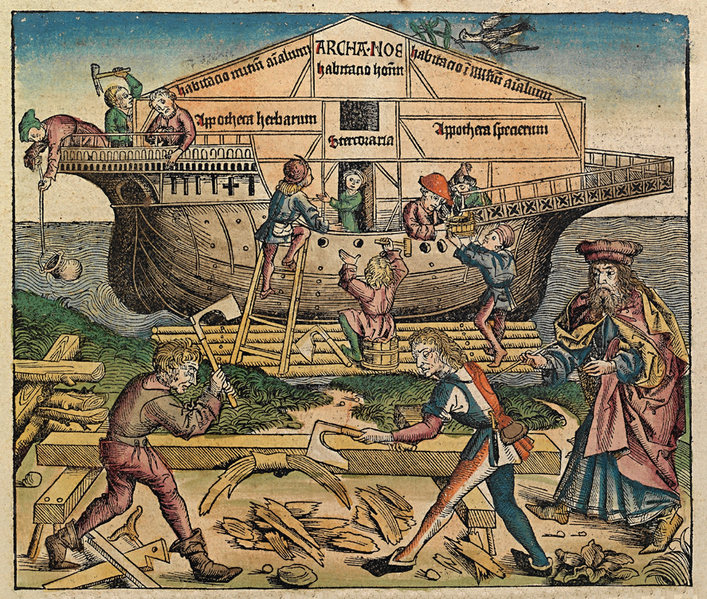
Fascination with Noah’s ark is never-ending. It represents the salvation of life in the face of deadly catastrophe, the concern of the divine for humanity, and cuddly animals we put in our children’s cribs. I suppose, however, I properly shouldn’t call it “Noah’s” ark, because the story predates Noah by some time. The Mesopotamian cultures seem to have been the original flood mythographers; more specifically, the Sumerians first gave shape to the tale. Perhaps in anticipation of his new book, Irving L. Finkel, curator of Mesopotamian artifacts at the British Museum, is quoted as saying the ark was disk-shaped. In a story that is sure to catch the attention of Ufologists, the argument is made that a newly translated text reveals the ark to have been a floating saucer. Why does Styx come to mind?

This past weekend I discovered Ancient Origins, a website purporting to give information about the ancient world. The story of the round ark appeared there recently. The author of the piece, April Holloway, suggests something that has been on some people’s minds all along—maybe the ark was real after all, but we’ve been looking for the wrong thing. Holloway doesn’t outright say that, but the article hints that this may be more than a myth. Usually the dividing line between myth and history is drawn at the biblical borders. According to those bound with faith commitments, pagan myths continue right up until Moses. Once they enter the covers of the Holy Bible they become history. We have known for decades now that the story of the ark was borrowed from other ancient cultures. We also know that the world, physically, in any case, could never be entirely flooded and come out of it looking like our world. Ours is a somewhat drier history, watered by wonderful myths.

707px-Nuremberg_chronicles_f_11r_1

Some Christian groups use the flood story as a paradigm for the rapture—the belief that Christians will be rescued, animal-like, before the worst unnatural disaster ever hits the planet. (Although “planet” may be a misnomer—no biblical writer knew that we orbited the sun on a roughly spherical rock with a molten center.) Earlier Christians saw the ark story as a metaphor for the more spiritual salvation of the faithful in a godless world. There is a strange kind of security in this story, like knowing that you don’t have to go to work for an entire week. And so we can’t let it go, even when we know it’s a myth. “I thought that they were angels, but to my surprise, we climbed aboard their starship, we headed for the skies.” We’ve done a good job polluting our planet and we want to be pulled out of this mess, like the world Wall-e’s people know, to a realm of comfort in the skies. But it is a myth after all, even if I do find myself squeezing my teddy bear and hoping against hope for a happy ending.


The Subtle Elephant

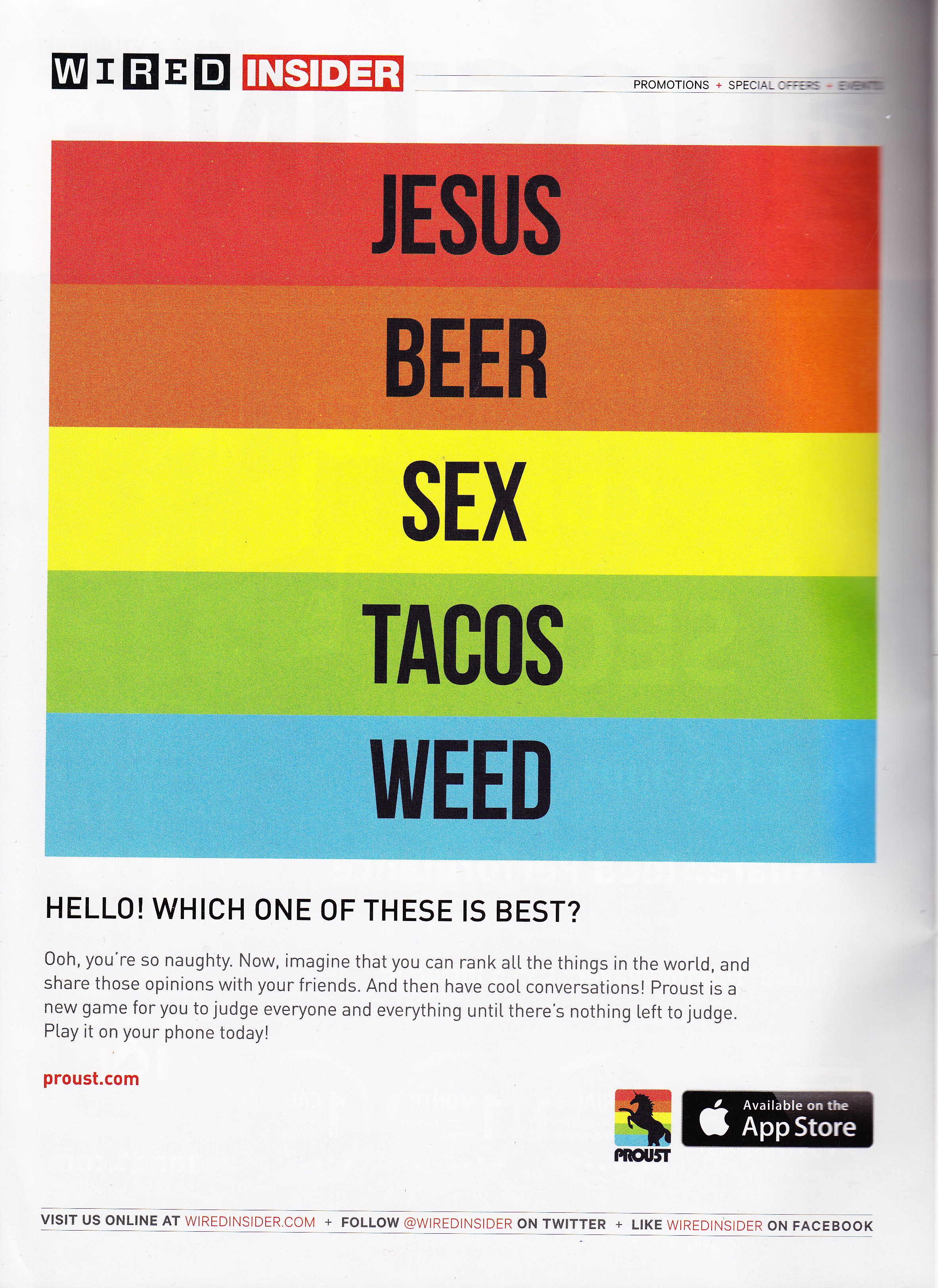
“Beer,” the list reads, then “Sex, Tacos, Weed.” At the top of the list, “Jesus.” “Which one of these is best?” the magazine page virtually shouts. Not Playboy, but Wired. At times I have difficulty figuring out what is an advertisement and what is an article in Wired. It is the future, I suppose. Anything’s for sale as long as there’s lucre to be generated. The page is topped with “Wired Insider,” so I suppose it’s a whimsical pop culture section, but I’m not really sure. The page seems to be promoting an app called Proust. I’m still pondering this list: “Jesus, Beer, Sex, Tacos, Weed.” One of these things is not like the others…

Vices

While there may be nothing inherently wrong with beer, sex and tacos (the jury’s still out on weed), such indulgences are often labeled “vices.” Jesus, until recently, never really populated such lists. Even those who do not claim divinity for Jesus of Nazareth do tend to see his teachings as embodying virtue rather than vice. In the media, however, we often see Jesus turned into a kind of addiction, a vice, if you will. What I mean is that Jesus has become a kind of iconic symbol, emptied of tolerant teachings and benevolence toward all. He has become a “white man,” who does not put up with anyone who deviates from the McCarthy-era lifestyle. He is Ozzie (Nelson, not Osborne). We know so little of the historical Jesus that it is difficult to say anything definitively, but I might suggest that he may have felt more at home at a Black Sabbath concert than watching Leave it to Beaver. There is, after all, value in shock value.

Some scholars now confer about the Iconic Book (i.e., the Bible). The Iconic Book is where the Bible is used not for what it says, but what it represents. Swearing on a Bible means nothing to an atheist, and yet we persist. These hollow symbols become powerful indicators of social norms, while losing their radical content. Many might think the Bible utterly conventional, but there would be weeping and gnashing of teeth on Wall Street if people actually read it and took it seriously. Jesus, it seems, has also become iconic. I don’t mean that icons are painted (although they are), but that he has become a hollow symbol for some. In a world where gaining as much money as possible is called “Prosperity Gospel,” despite what the iconic man in the iconic book supposedly said, I guess it isn’t unusual to find the erstwhile savior among the vices of the world.

“Our dried voices, when
We whisper together
Are quiet and meaningless”

Yes, Mr. Eliot, this is the way the world ends.


Shaky Ground

HigherGroundFor the past few years I have been drawn to the spiritual memoirs of women. I suspect a deep disconnect prompts this interest. Religions—in this case primarily the monotheistic traditions—put a premium on fairness and justice, yet treat women as somehow outside these mandates. Women nevertheless respond to the human religious impulse somewhat more seriously than most men. This leads to a dissonance that surfaces in women’s memoirs. Carolyn S. Briggs’ Higher Ground: A Memoir of Salvation Found and Lost proved somewhat of an epiphany for me. In this story of an Iowa girl’s encounter and seduction into a Fundamentalist faith that never quite managed to smother her rationality, I recognized many aspects of her adopted religion from my own tenure in literalism. The real strength of Briggs’ account is her vivid recollections of how her own Fundamentalist mind worked. For many of us who’ve gone through that spiritual wasteland, dredging up those memories can be a harrowing experience. What shone through in Higher Ground, however, is how the fantasy-prone literalist imagination loses its tenuous hold on reality while promising deliverables that are always pushed off into the future. It is not a faith for the here and now.

The non-denominational, yet Calvinistic, Briggs’ church home convinced the author, for some years, that she was inferior to her husband. There can be no doubt that this is “Bible-based” teaching, for the Bible is the product of a patriarchal age. Literalism grows more oppressive with the passage of time, for despite neo-con posturing, society is better for many than it was in the “good old days.” Fundamentalist traditions seek to reestablish the mores of the first century two millennia later, as if a simple transfer were possible. Society has offered progress for women while literalism is rife with regress. This double standard led to the loss of one of their own because over two thousand years much water flows under the bridge and brig.

Higher Ground is not an easy memoir to read—the accounts of those who experience repression seldom are. Religion is generally a conservative force in society, even if based on radical principles. The sayings of Jesus, for example, remain revolutionary even today, but they are often hidden behind the (male constructed) facades of organized religious movements. In school we teach our children that the sexes are equal, in Sunday school the opposite. Fundamentalism is not, however, in any danger of dying out. As Briggs demonstrates eloquently, the very thought process of a rational person is altered by it. Briggs leaves us guessing at what happened after the story ends but she has nevertheless contributed yet more evidence that demands a verdict. Until the judgment of fair and just can be rendered, religions will repeatedly be called to the witness stand.


God Spell

I had some good news from God recently, if the Jehovah’s Witnesses are to be believed, anyway. It had been a trying week in some ways, and who wouldn’t welcome good news? Back when I was unemployed, I used to natter with the Witnesses when they came around. Like a stray that you feed one time, however, you’d better be expecting them back from time to time. I was reminded of a phone conversation I overheard (in New York City generally everything is overheard by at least someone) where a woman was saying, “I keep praying Jehovah will straighten her out.” I didn’t know who the “her” was, but I did wonder why the Witnesses keep using a name that we know is technically incorrect. “Jehovah” is actually what you get when you read the Masoretic device of using the vowels from “adonai” with the consonants for “Yahweh,” in a Germanic language. Since Jews don’t pronounce God’s name, they used this little symbol to remind the reader to use the sobriquet “lord” (adonai) instead. Some literalists lined the letters up and came up with a Teutonic-Hebraic name that was never historically used for God.

Watchtower

Well, the good news volume of the Watchtower addressed that. Sort of. Chapter 2, “Who is God?” notes “In English it [God’s name] is usually pronounced ‘Jehovah.’ But some people pronounce it ‘Yahweh.’” Historically and critically it is the other way around, but who’s counting? Orthodoxy doesn’t always make somebody a good person. In fact, most of the Witnesses I’ve met have treated me better than the majority of people in my own faith tradition. Familiarity, they say, breeds contempt. Religion often has a way of bringing out the worst in people. Since this was the good news, I decided to accentuate the positive. I turned to chapter 8 to learn “Why Does God Allow Evil and Suffering?” Theodicy is probably the largest generator of atheism that monotheism faces.

“Evil began on earth when Satan told the first lie.” Although, I wonder how you define a lie? According to Genesis 3.17, the conclusion to God’s first word to Adam was, “But of the tree of the knowledge of good and evil, thou shalt not eat of it: for in the day that thou eatest thereof thou shalt surely die.” The last part of the sentence, “surely die,” is an emphatic in Hebrew, the original language of Jehovah. But it doesn’t literally happen. Most literalists allow this infelicity to stand, or explain it away as a “spiritual death,” while the Hebrew is quite plain in its meaning. Thou shalt surely die is non-negotiable. Not exactly true, however. I’m no theologian. I’m just a reader attempting to make sense of the world I see around me. Good news is there certainly, every now and again. But that theodicy question trips me up every time. Until we can face the implications of not surely dying, I’m not sure we’ll ever find out.


Duck, Dynasty

The Fundamentalist mouth has no filter. I’m a bit surprised by the furor raised by Phil Robertson’s comments about race and sexuality. Did A&E not realize that it was dealing with a Fundamentalist family on Duck Dynasty? I’m frequently amazed at how Fundamentalism is exoticised by the media as some quaint, back-woodsy phenomenon. Do they not realize that similar views are held by several members of congress and the pre-Obama presidential incumbent? By the numbers, Fundamentalism is a powerful force, but, like our universities, the media can’t be bothered to try to understand religion until a large demographic is suddenly threatened. A&E supports equality across sexual orientations, and, as it should go without saying in the twenty-first century, races. Prejudices, however, run very deep. Perhaps it’s just not so surprising to me, having been raised in a Fundamentalist environment. There was nothing exotic about it. It was, as we understood it, simple survival.

Phil Robertson has been suspended from his own show for comments made off-air. Wealth does not necessarily make one a better person. In fact, the figures trend in the other direction all too often. If instead of just promoting books written by the stars of the anatine series, the studio executives read those books they might have foreseen something like this coming. The Fundamentalist mind, I know from experience, tends to see things as black or white. Despite the camo, gray is a loathed color. Rainbow is even worse. The Fundamentalist psyche is not encouraged to try to see things from the other’s point of view. There is only one perspective: the right one. And when asked a straightforward question, a straightforward, if misguided answer will be given. It’s the price of fame.

The Robertson family, according to CNN, has closed ranks with their founder, claiming he is a godly man. There’s no irony here, folks. Fundamentalism isn’t into irony or subtle possibilities. Religious rights and freedoms are being press-ganged to the aid of those who long to speak free. Not about ducks, or guns, or calls. But about the naturalness of white skin and heterosexual love. And the Bible as the only possible source of the truth. The media often treats Fundamentalism as if it were a game, turned on or off at a whim. In reality it is a comprehensive worldview in which the inmates are commanded to speak the truth. The filters are not on their mouths, but are in their minds. Until we can learn to take them seriously, no duck anywhere will be safe.

Even the Roman Empire didn't last forever...

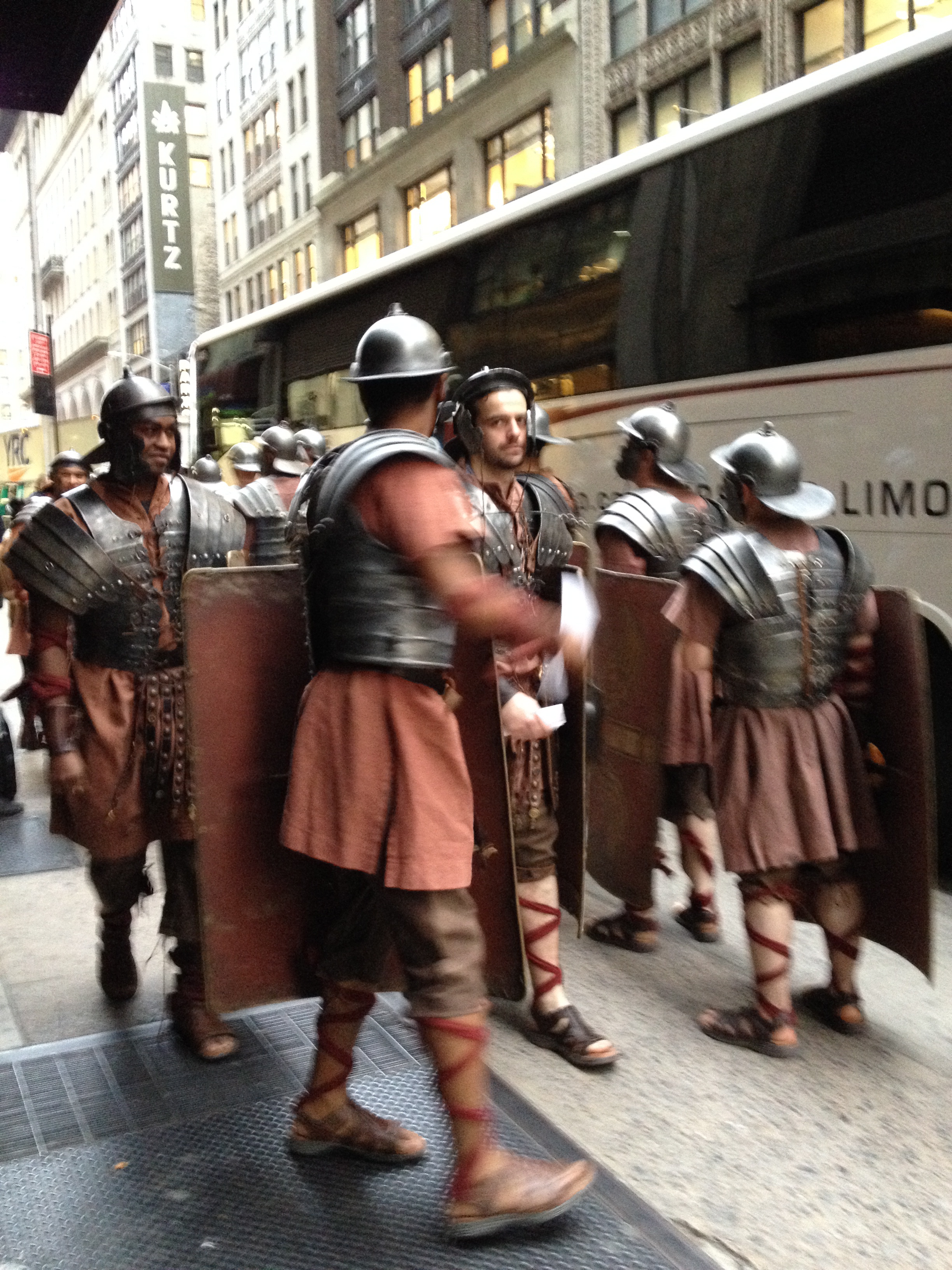
Even the Roman Empire didn’t last forever…


Word of God in Bulk

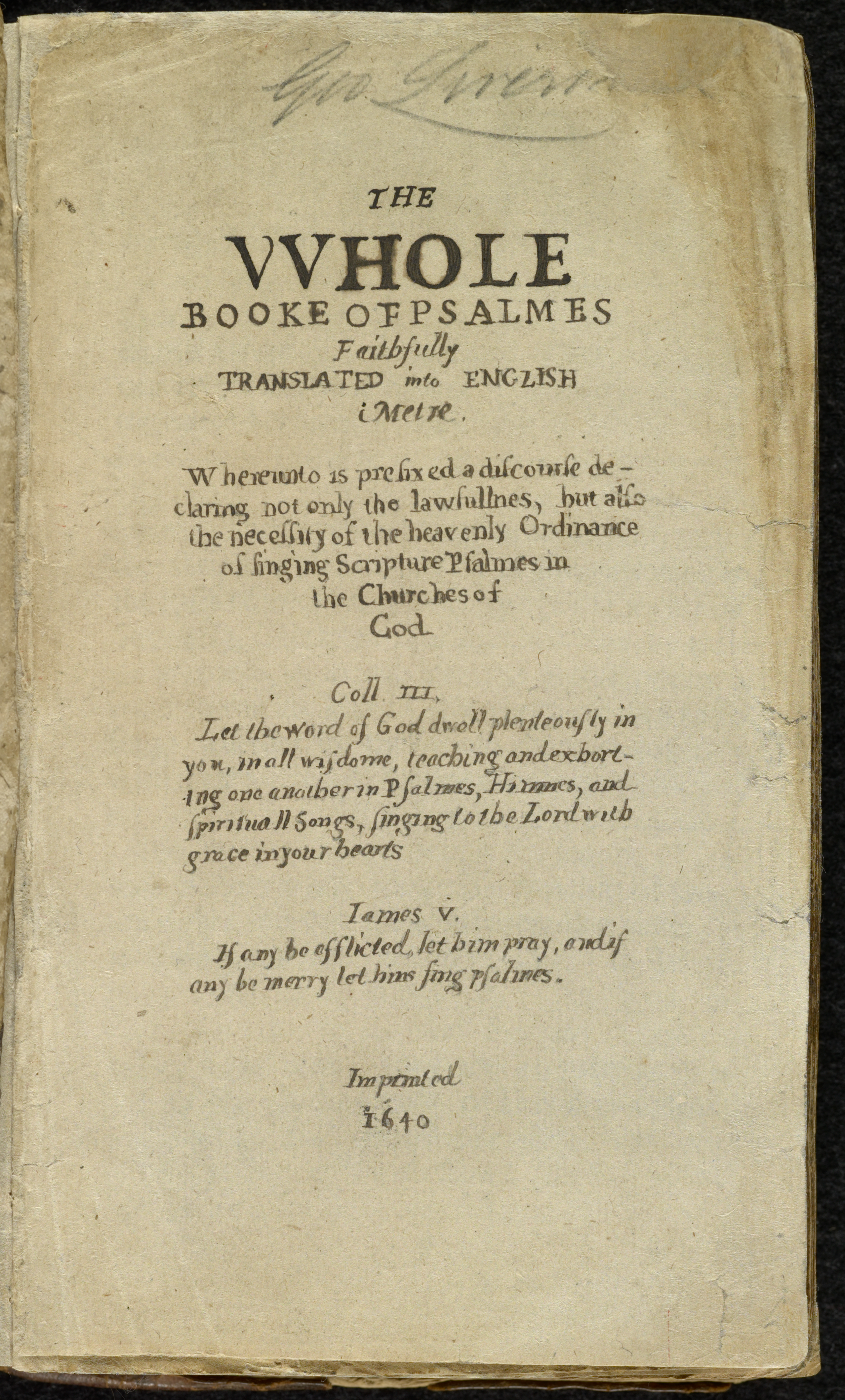
Bay_Psalm_Book_LoCThe Salem witch trials were still half a century in the future. The Puritans, hoping for religious freedom, had come to Massachusetts. Despite prevailing attitudes toward the religious, the Puritans were keen on learning and began printing books. The first book printed in English in North America was the Bay Psalm Book. You see, the Psalms have a particularly important place in Christian (and Jewish) worship. In fact, much of what would later develop into the daily offices in the Church of England, adapted from the breviaries of the Roman Catholic Church, were services that started essentially as vehicles for reciting the Psalms. It is fair to say that Christian worship might have never taken on the elaborate forms that it has without the underlying recitation of the Psalter. The Bay Psalm Book, printed in 1640, is now the most expensive book ever sold at auction. According to the New York Times, one of the eleven known Bay Psalm Books has just sold for over 14 million dollars. The Bible has a way of continuing to surprise us.

As someone who has more Bibles than your average layperson, I find it isn’t difficult to think that Bibles are fairly common. They are. I actually switched to The Green Bible in my classes out of the ecological concern that there have been over six billion Bibles printed. The Gideons give them away, and even the Christian heavy metal band Stryper used to throw handfuls of Bibles into the crowds. Chances are, in the United States, you are not physically far from a Bible at any given moment. So why would someone pay 14 million dollars for one? The answer goes deeper than the suggestion that the Psalms contain timeless truths—you can get those free on the internet anytime—but that it is part of our heritage. We are who we are, in part, because of the “Bible believing” founders of our culture. Survival was not taken for granted in the mid-seventeenth century. The Bible was a pillar of certainty in dangerous times.

Yes, interpretations of the Bible have led to horrendous results. There is no point in denying the guilt. Hermeneutics, however, is a human activity. The Bible gives as well as takes away. Some of us may never have a million dollars to spend. Many people don’t have enough to eat. Specialists tell us that some 45 million Bibles are printed each year. Bibles are big business. In the words of Big Dan from O Brother, Where Art Thou? “Sales, Mr. McGill, sales! And what do I sell? The Truth! Ever’ blessed word of it, from Genesee on down to Revelations! That’s right, the word of God, which let me add there is damn good money in during these days of woe and want! Folks’re lookin’ for answers and Big Dan Teague sells the only book that’s got ‘em!” David M. Rubenstein, the buyer of the book, intends to send it around to libraries to display. Although I’ve spent over forty years studying the Bible, it takes the skills of a man from an investment firm to earn enough money to buy one. And I wonder if that’s Big Dan I hear laughing, or perhaps it’s just the sound of Puritans singing in the wilderness.


The Problem with Apocalypses

Over on The Daily Beast, Joe McLean points out “How the Tea Party’s Apocalyptic Politics Are Destroying the Republican Party.” I say good riddance. Let me explain. It’s not that I have a problem with apocalypses. (Zombie apocalypses are especially fun.) My problem is that the mythology of one religion endangers us all. This is not some leftist-leaning rant, or at least not a leftist-leaning rant that’s uninformed. I grew up in a very conservative, apocalyptic Christianity. I was looking for the end of the world before I considered a college major. Even my (limited) choice of classes in high school were determined by a kind of eschatological laissez faire: the world’s going to end any day now, so why plan for a career? I was a true believer. In my Christian college I majored in religion. If the end is near, it pays to be ready for it. I know this doctrine inside-out. If Christ is returning any day now (can’t you hear the hoof-beats?) then we should pillage this poor old earth for all its worth. That’s what it’s here for. Do we want him coming back and saying we’re poor stewards? Besides, if we can ramp up the crisis in the Middle East far enough, Jesus will have to return. Won’t he? And these are “rational” adults thinking this way.

There was likely a naive cynicism on the part of the Republican Party when it realized that aligning itself with what was considered the religious fringe would boost their numbers. After all, the fringe surrounds the whole of the cloth. Apocalyptic Christianity is very popular because it appeals directly to the emotions. Although our society believes the study of religion is pointless, those of us who’ve persisted have noticed a few things. The religions that are really taking off are the ones that appeal to the emotions. Many Spock-like scientists intone their message of materialism only in the face of massive crowds of true believers. Who do you think is likely to win out? We have had presidents in the Oval Office who believed that triggering the apocalypse was a presidential prerogative. When society finally shook off its goofy grin and slowly pressed the electoral brakes, the Tea Party took off. Guess what? Apocalypses are all about destruction. If you invite apocalypticists to your party, the results are pretty predictable.

In the article McLean uses the word “zealot.” Rationalists might find the use of their dictionaries helpful here. Zealots do not respond to logic. Zealots are driven by emotion. Have you ever tried to argue with one? I have had years of experience teaching religion in a variety of classroom settings. Long ago I learned to lay down the sword when a zealot spoke up. Logic is not spoken here. The media, the scientific, the academic, they scratch their heads. How can any rational person believe this? The answer doesn’t require much effort to find. It might mean consulting someone who understands a bit about religion, though. Otherwise, the smart money is on stocking up on canned goods, gas masks, and a good supply of water. This could take a while.

Mary in the sky with circles, or the apocalypse?

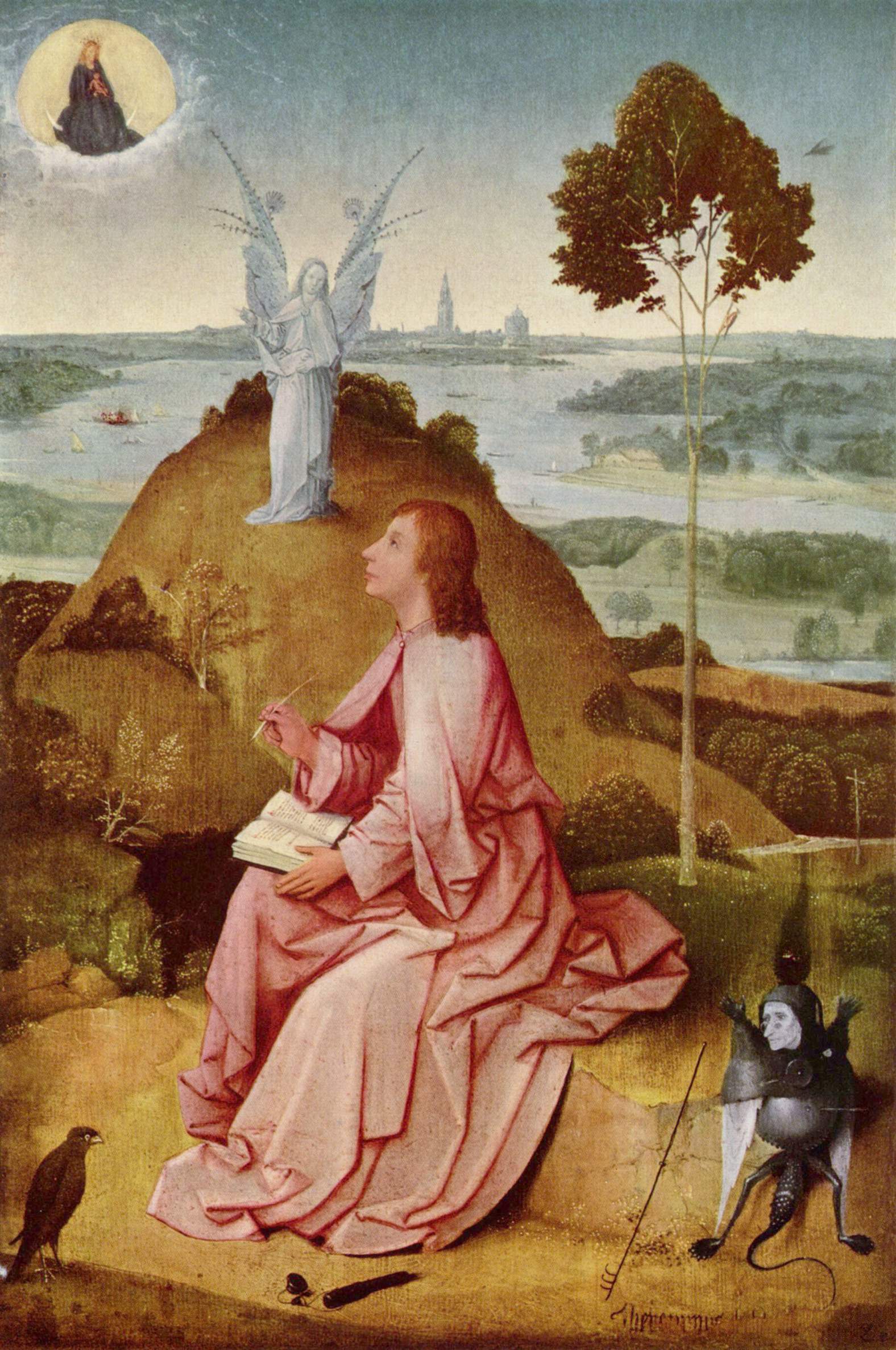
Mary in the sky with circles, or the apocalypse?


Sun Devils

Unbelievable. The unrelenting sun of Arizona is unbelievable. Even a “cloudless day” back east is only an approximation. Here it is literal. And like all things literal, it attracts the Fundamentalists. I spent the day on the campus of Arizona State University, the country’s largest university by enrollment. Outside the student union, a couple of bands were banging away in the heat, but when I passed by in mid-afternoon they’d been replaced by a street preacher. He was nattily dressed and provocative. When I first walked by he was talking about students being either “a wicked homosexual, a wicked pot-smoker, or a wicked feminist” and went on to throw in some choice words such as “Obama-loving sinner.” Nobody seemed to be paying him much mind. I went on to a couple of appointments and when I passed that way again, at least ninety minutes later, he was still at it. Now he had a small crowd. Students virtuously challenged him as he claimed that he was without sin, “yes, I am Christ-like” he said to one question, and proceeded to tell anyone that challenged him that they were not children of God and that they should run to Hell because they would enjoy it so much.

Preachit

The more I watched this charade, the more trouble I had believing that the preacher was sincere. He quoted, out of context, of course, chapter and verse. He literally thumped his Bible. His hatred for anyone who disagreed with him was plainly evident. I felt embarrassed on so many levels. This is a state university, and the man had a clear agenda of hatred and intolerance. I was here to meet the religion faculty. Everything students were being taught in their classes was being shot down by an ancient book that had relevance only by being quoted out of context. And all of this on a campus whose mascot is the Sun Devil. Devils abound on campus, but the worst, it seemed to me, preached loudest.

Somewhere along the way to enlightenment, this kind of Christianity slipped the rails to become its own self-righteous force. What right had this man to tell students they were wicked? To me they seemed hospitable, peace-loving, and kind to the stranger in their midst. The preacher, self-fascinated, claimed to be without sin. I guess that gave him the scripture-sanctioned right to cast the first stone. Good thing he wasn’t in the crowd when Jesus rescued the woman caught in adultery. When a few students pointed out his flaws in reasoning, which were many, others applauded before he flew back to his out-of-context biblical backbone. More quoting, more thumping. The sun was out in full force in Arizona, but somehow it failed to fall on one man who proclaimed himself better than all others.