Voted Off the Island

One of my readers sent me an article about the Church of Sweden. According to this article only about 15 percent of the members of this national church “believe in Jesus.” The question raised by this statistic is a vital one in a world where politics and religion become inextricably intertwined: what is Christianity and who decides? As the recent vote in New York permitting gay marriage (about time!) shows, many who identify themselves as Christians in America equate that religious outlook with conservative political views (even on issues the Bible says little about). It is what the believer says they “believe” that defines the religion. Ancient religions, as I have noted before, show that this outlook on devotional practice is not the only alternative.

Religions began as a matter of praxis—what people did rather than what they believed. What does an almighty deity gain from theological assent in the heads of believers? Is it a warm, fuzzy feeling or something more? Belief, a very strong motivating factor in humanity, is a psychological phenomenon, not a spiritual one. Many religious groups today are reluctant to accept that psychology covers the territory formerly covered by spirituality. Both phenomena (or the phenomenon) occur in the brain. If a brain does not assent to the typical belief structure, is it thereby deported from the gathering of a religious body? Many times in religious history that has been the case, but what do we say to the Church of Sweden? Kick out 85 percent of your members? I can see many unhappy, unemployed clergy in such a future.

What does it mean to be Christian? Is it to deny civil rights to anyone who differs in outlook or lifestyle from you? Is it sleepily to say “yea” when you wake up after a sermon? Or is it following the teachings of Jesus? The same one who once taught his followers to love those who differed from them, to turn the other cheek instead of proactively pulling out their handguns? It seems that in the modern furor to laid hold of claims of absolute righteousness humanity has somewhere fallen between the cracks. I’ve never been assaulted by a Swede, and I don’t recall, in recent years, Sweden invading other countries to further its economic fortunes. Could it be that, to paraphrase a religious thinker of antiquity, a Swede shall lead them?

Contriving the Rapture

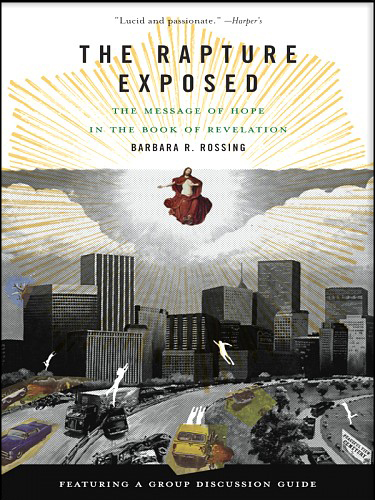
In the light of last month’s failed rapture attempt, I decided to read a book that I picked up some years ago that had been written in the wake of the millennial scare. Having grown up with nightmares of the rapture, I learned during my first college class on the book of Revelation that it was relatively modern meme, invented in the nineteenth century. Barbara Rossing’s The Rapture Exposed seemed a good way to refresh my memory without having to go through all those boxes of books in the attic to find my original textbooks. Rossing, a Lutheran minister and New Testament professor, brings to light some very important facts beyond the historical roots of this theological fabrication—facts that should concern religious and secular alike. The rapture was invented by John Nelson Darby, a founder of the Plymouth Brethren and convoluted biblical scholar. Basing his roadmap of the future singularly on Daniel 9, he concocted the rapture to make sense of his apocalyptic epiphany. Drawing diverse sections of Paul’s letters to the Thessalonians, the Gospel of Matthew, and the book of Revelation together, he mixed thoroughly, half-baked it, and pulled the rapture out of the oven.

The idea caught like wildfire. Today young people who’ve never read the Bible and who’ve seldom attended religious services know what the rapture is. What they do not realize is that nearly all of the Christian tradition rejects it, seeing it for what it is—a Johnny-come-lately of amateur theology that sees the Bible through the lenses of dilettante-sensibilities like those of Michael Drosnin (The Bible Code man). Instead of seriously reading the Bible and trying to understand it, society prefers to see it as a little bit of magic in the midst of our scientific and technical world view. It is a safe place where bits of the supernatural are preserved and that defies rational explanation. Rossing’s book does a good job of exposing the wrong-headedness of LaHaye’s Left Behind conclave, but she overlooks an important feature of this coterie: they have an unconfessed agenda.

The unspoken agenda is best summed up by Lt. Frank Drebin of Police Squad when he says, “blowing away a fleeing suspect with my 44 magnum used to mean everything to me. I enjoyed it, well who wouldn’t?” Rossing misunderstands Fundamentalism when she expresses surprise at the bloodlust present in the Left Behind novels. What she doesn’t take into account is that, as a collective, Fundamentalists thrive on self-righteousness. Feeling the same violent urges that others do—all humans experience violent emotions—they sublimate that aggression and save it for the unrighteous—God’s enemies. When the gloves come off in the apocalypse, that hatred bursts out in good, old-fashioned bloodletting—albeit with combat helicopters and high-tech weaponry. Of the Christians I know who own guns, the Fundamentalists are most avid in their rights to do so. In college I met my first Christian survivalists and I learned that the rapture was a ruse. It is a deadly mix, especially when this warped theology makes it into politics. Although Rossing’s vision of a new earth in the second half of her book may not appeal to everyone, Americans should read at least the first few chapters to learn why the rapture will never occur.


Floods and Fairytales

Never mind that the Bible gives only a cursory description of “Noah’s ark.” Never mind that the story in Genesis is clearly derivative from Mesopotamian originals such as the epics of Ziusudra, Atrahasis, and Gilgamesh (the Utnapishtim version). Never mind that all species of animals cannot survive within a single, extremely limited biosphere without evolving afterward into the diversity that the world currently hosts, even counting extinctions. Never mind that not enough water exists (with apologies to Kevin Costner) to cover all landforms without every mountain being pounded flat and stacked neatly on top of the ocean floor. In short, never mind reality—people will continue to build replicas of Noah’s ark. As a literary trope the ark has proved invaluable; many of my posts demonstrate how it appears and reappears in books and movies as a symbol of human irresponsibility. And yet, in order to demonstrate the veracity of an ancient myth, we continue to build fundamentalist arks.

Yesterday my wife pointed me to a msnbc story of an ark being built—and sailed—in the Netherlands. Certainly those in the “low countries” have global warming to deal with more immediately that those on higher (geologically, not morally, speaking) ground, and the engineer of this particular ark does not strike the viewer as a rabid literalist (he is a little too unkempt for that, and his shirt is not white and he wears no tie). John Huibers, however, worries about a more localized flood in the Netherlands. The ark may be overkill since polar bears, koala bears and panda bears are rare in Amsterdam, at least when one is not medicated. Arks, however, make great tourist attractions.

In Hong Kong the Kwok brothers built an ark replica in 2009. Greenpeace has one in Istanbul. A Christian theme-park featuring a full-size ark is under development in Kentucky, and just two years ago I drove past a roadside ark being built in Maryland. Most of these arks, interestingly, follow the design in the Sun Pictures’ production In Search of Noah’s Ark rather than the more traditional, mythic design in my children’s Bible. It is a natural human tendency to mistake form for substance. The story of Noah is a cautionary tale that has taken on daunting real-life implications in our treatment of our planet. Water is the signature of life, but for us land-dwellers too much is not a good thing. Thankfully, should a flood come, there will soon be enough arks around the world that would-be Noahs may find themselves in a buyers’ market.

Still my favorite ark


Exegesis Dies

One of the time-honored adages among composition primers is that a serious writer will own a well-worn dictionary and thesaurus. In twenty-first century terms that equates, I suppose, to frequently visiting bookmarked dictionary and thesaurus websites. While writing my dissertation I once cited a dictionary—likely Merriam-Webster—only to be told that the definitive dictionary for academic purposes was the Oxford English Dictionary. Copyright laws prevent some dictionary sites from including entries from the OED, and, given the perpetual vicissitudes of streams of income, I really can’t afford to subscribe to the fee-based OED website, much less purchase the physical hardcopy. Dictionary.com remains free and even has a handy thesaurus, so it is my well-worn website. Many electronic wordsmithies offer a word of the day, and so on my morning visit to dictionary.com I found a familiar word awaiting today: eisegesis. Eisegesis, according to the this online dictionary is: “An interpretation that expresses the interpreter’s own ideas, bias, or the like, rather than the meaning of the text.”

In biblical studies eisegesis is utilized like an academic swear word. The true scholar engages in exegesis, the practice that is supposed to reveal what the original text actually meant. The problem, of course, is that what the text originally meant depends on the baggage the reader brings with him or herself. Reader-response theorists inform us that even an author loses control of words once they are scrawled on paper (or electrons, I suspect). The words convey their own interpretation, and, as in any communication system, the transmission must be interpreted through the medium of a receiver. My understanding of the original meaning will depend on what I bring to the parchment. Even the author cannot control the denotation of what s/he has written, for connotation always lurks in the shadowy corners of the room.

The implication of this simply truth for any religious writing should be transparent. We do not control the words—we interpret them. I’ve taught many fundamentalists over the years who bring this weary refrain to the text: “I don’t interpret the Bible, I just read it.” Reading is interpreting. The words on a page (or monitor) are simply a system of ciphers that must be processed. The way your brain processes them will be different from the way my brain does. For the fundamentalist, God wrote the words, but God has no physical brain so how are we to find the true meaning? Exegesis. At the heart of the matter, however, all exegesis is eisegesis. The example I like to give my classes is the word “die” —what does it mean? Most say something like “to stop living.” Those with a background in machining might say die is a noun indicating a mould or tooling device to form an object. Some even know it could be the singular of the word “dice.” Once they’ve exhausted their suggestions, I inform them any of them could be correct, only I had neglected to tell them it was intended to be the feminine singular form of the definite article in German.


Vulcan’s Anvil

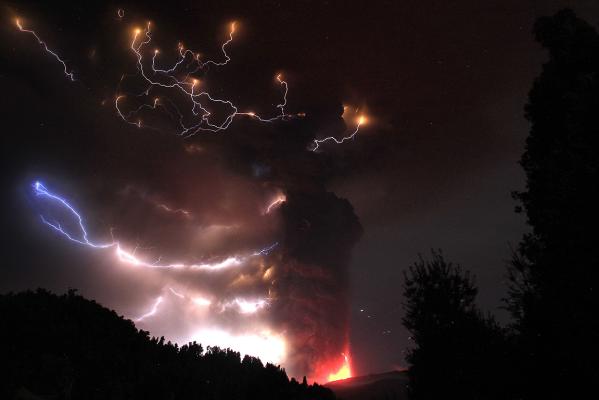
Volcanoes have long been the prerogative of the gods. Saturday’s eruption in the Puyehue-Cordon Caulle volcanic complex in southern Chile joins last month’s outburst from Grimsvotn in Iceland for divine fire-storms. In the days before geology, the only explanation for these impressive explosions was the gods. The concept of Hell was fairly late in the development of ancient Near Eastern religions, otherwise volcanoes might have been labeled as Hell breaking loose, literally. Many historic eruptions have influenced the course of history, most notably Thera and Vesuvius. Ancients would have been hard pressed to see such spectacular—and obviously divine—displays as “natural.” Indeed, the concept of “natural” events was itself slow in evolving since the gods were always lurking in the dark corners of the evolving human psyche.

Fortunately, beyond disrupting some air travel, these two latest outbursts have been fairly benign from a human point of view. This too is an evolved perspective since we tend to see ourselves as the overlords of the natural world. Watching industrialists poke new orifices in the planet’s crust for personal gain even in rare and delicately balanced ecosystems, who can doubt that we are masters of our own domain? Much of the misdirected sense of such entitlement comes from interpreting the Bible as declaring the planet ours from the days of mythical Eden. Some of the more perverse applications of this principle include those who try to force the hand of God into sending the Second Coming due to their creating conditions appropriate to an apocalypse. Others declare that since said Second Coming is nigh, why not trash the environment? We won’t be needing it much longer.

Apart from the obviously failure of logic here, the anthropocentric view is also misguided. The earth was not created for us—we simply evolved on it. The corollary also stands true: long after any human intelligence is here to read these words, our planet will continue on its weary track around the sun until it blossoms into a red giant and consumes our final cinders. There are no horsemen in the clouds, but this planet is all that we have (even the space station depends upon it) and when we grow too arrogant, the planet unconsciously gives us a spectacular display to remind us that we are mere guests upon this globe. We need to treat it with respect.


Malleus Practice

Misfortune takes a quiet seat in the back of the bus for many people, but it is always there riding behind you. My recent trip to Salem is now over, but it has left me with that haunted feeling that sometimes tragedy just won’t let go. Reading up on the history of witches and the belief therein, it is pretty clear that the whole idea began as a form of theodicy. Misfortune happens. When a one-to-one correspondence attends it, people don’t worry too much. (John has a stomachache. We know that John slapped Bob, and Bob punched John in the stomach so there’s no supernatural agent at work here.) When the adversity comes out of nowhere, to all appearances, we naturally look for a cause. As long ago as ancient Sumer, and probably before, the answer was sometimes the baleful influence of enemies with supernatural powers. The witch was born.

This idea has remarkable longevity. Even as the eighteenth century dawned, just a few short years after the tragedy at Salem, Puritans and politicians embarrassingly looked at their feet and admitted this mockery of justice had been an unfortunate error. Yet they still believed witches existed. The concept is alive even today in parts of the world minimally influenced by schooling in science and logic. (I taught at a seminary where various witch hunts still took place; books were even burned.) Who doesn’t know the feeling that a totally natural disaster was in some way targeting them? Whether tornadoes, tsunamis, or rain on your Memorial Day picnic, the normal human response is one of a minor (or major) persecution complex.

To solve the riddle of witches, horseshoes and witch bottles are not necessary, but education is. Witchcraft was not considered Satanic until the late Middle Ages when apocalyptic fever raged through Europe with the Black Death. Not understanding microbes, the populace supposed a great war presaging the end of times was escalating between God and Satan. The minions of the Dark Lord were spawned by witches and demons. (Add Tim LaHaye and you’ve pretty much got Left Behind.) To solve the problems of the righteous, sacrifice a few innocent victims. If we call them witches—actually any undesirable name will do, eh, Senator McCarthy?—we will feel justified in doing so. The real solution, namely, working together to overcome natural and human-made afflictions, is really just too hard.


Lesson of Salem

I married a witch. I suppose I ought to clarify that a bit. My wife is descended from Rebecca Nurse’s brother Jacob. Rebecca Nurse was one of those unfortunately hanged as a witch in Salem, Massachusetts in 1692. My family has been spending the last couple of days touring Salem, seeking to get in touch with our heritage. Yesterday we had the rare opportunity to tour the home of Rebecca Nurse which, remarkably, still stands over 300 years after the tortured events of the late seventeenth century. Our tour guide was impressively knowledgeable about the witch hysteria. She noted that in the Puritan (Reformed) mindset, with no science to speak of, evil could only be explained by the Devil. If misfortune came, the Devil was to blame. Even after the “witches” were exonerated (too late to save 20 lives), it was understood that the Devil incited the girls to make their false claims against their ultimately and penultimately righteous neighbors. Without the Devil none of this made sense.

The Rebecca Nurse homestead

Salem was founded as a utopian community free to live out its Puritan religion. It was named after Jerusalem, a city of peace (!). As our guide noted, religious freedom was not the same as tolerance; the Puritans wanted the freedom to celebrate their own religion, but were extremely suspicious of all others. One of those hanged as a witch, George Jacobs, had nearly beaten a neighbor to death simply because he was a Quaker. Rebecca Nurse, however, at 72 years old, was no threat to anybody. She was a member of a Christian community that turned on her. Condemned for charges the nearly deaf woman could not even hear properly, she was hanged for consorting with a mythical Devil.

Rev. Parris's house, where the witch hysteria began

No doubt the religion of the Puritans was a harsh religion with a God nearly as unforgiving as that of Sweeny Todd. The problems occurred, however, when the law came into the hands of religious leaders. There is an allegory and a moral to this story. Today many of the tourist attractions in Salem focus on the need for true tolerance. They no doubt come closer to the spirit of the founder of Christianity than the Puritans ever did. As I stood looking over the hole in the ground that is all that remains of Rev. Parris’ parsonage—the very location the witch hysteria began as his daughter Betty started to act odd after hearing the stories of the slave Tituba—a profound sadness afflicted me. Twenty people died and many lost all their worldly possessions because of an uncontrolled mythology of a church convinced of its own righteousness. An allegory and moral for the twenty-first century indeed. Have we yet learned the lesson of Salem?


And I Feel Fine

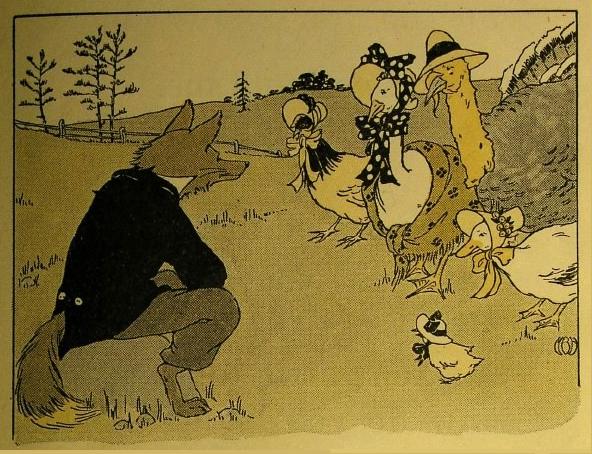
“Is something supposed to have happened?”—Jane Banks in Mary Poppins. The world was supposed to have ended yesterday, but I haven’t yet looked out my windows to make sure. I suspect that everything is pretty much the way it was on Friday. Nevertheless, I have to admit to a tiny bit of relief. I do not believe in a mythic end of the world, and yet there is always that taunting doubt that maybe somebody knows more than me. To calm my jitters, I watched Chicken Little last night. This particular Disney movie has never been one of my favorites, but yesterday it struck me as a parable for our times. Even better, the original folktale is a parable for our times. No one knows when the story originated; it is an example of a folktale that belittles paranoia and the mass hysteria that tends to accompany it. A common ending has a fox eating all the concerned animals as they make their way to the authorities.

Our culture is rife with end-days beliefs. Since this is an idea clearly traceable to non-biblical origins, one might suppose that Fundamentalists would eschew it, but as we have seen the last few days, quite the opposite is true. Those who like Chicken Licken or Cocky Lockey go around declaring the end of all things clearly believe they will be rewarded for their special efforts. Instead, history will class them along with Goosey Loosey and Turkey Lurkey—those who are easily led. Perhaps the oddest result of this recent scare is that many people will not abandon the belief, but will simply push it off. We have another scheduled apocalypse for the end of 2012. Is it because we are now so closely connected by the umbilical Internet that our natural fears have become international?

The claims seem to be arriving thick and fast. I remember the end of the world scare of 1979 when I was in high school. There seemed to be a hiatus until 1999, and since then the dates have begun to bottleneck. What we are seeing is the role-playing of a Christian mythology, and herein is the real danger. A true believer can try to initiate the end times. We only need recall 9/11 to test that. Like most religions, Christianity has developed its own unique mythology that freely borrows elements from both other religions and popular culture. The apocalypse has a history, you know. Overall the false scare of the end of all things has been good for this blog. It was not without irony that I noticed my post for May 21 was number 666. But like the clock that is still ticking, this post will clear that hurdle, and the world will be around for a long time yet to come. Now I need to go and pull back the curtains, just to make sure, and keep an eye out for Foxy Loxy.


Eyre the Apocalypse

Finishing Charlotte Bronte’s Jane Eyre last night proved timely from the point of view of today’s much anticipated apocalypse. (I hate to leave a book unfinished as the final trump begins to sound.) As I stress to my students at Rutgers (when I actually have a class), the Bible surrounds them whether they are aware of it or not. Quite aside from the present rapture-envy—that one’s just too easy—reading literature of the nineteenth century is an excellent way to show the Bible’s influence on western culture. Jane Eyre is suffused with biblical allusions and direct references, even with the faulty theological notions that the Scriptures had hatched in that century. Of course, the Bronte sisters, all successful novelists, were the children of a clergyman, but other writers of the period demonstrate an equally biblical worldview. In fact, much of the dramatic tension in the present novel revolves around distinctly biblical issues.

Interspersed with my reading of classical novels, I read many more recent literary explorations as well. A couple of weeks ago I completed Stephen King’s It, not a particularly favorite novel, but one that at times demonstrated that even masters of the macabre frequently draw on the Bible. For modern literature the Bible is the ultimate foundation. It would be interesting to live long enough to see if it still has any relevancy at the end of the present century. Jane Eyre, perceptive as most nineteenth century novels are, also pressed directly the wound that currently afflicts much of our nation. Cast upon misfortune, Miss Eyre is mistaken for a beggar. Miss Bronte observes, “Prejudices, it is well known, are most difficult to eradicate from the heart whose soil has never been loosened or fertilized by education,” a line that should be emblazoned upon the door of public officials who feel it is their right to withdraw funding from public education. You want an apocalypse? That’s the recipe right there.

Nevertheless, Miss Eyre presses on until she reclaims the man who had once “stood between me and every thought of religion,” dodging an impassioned missionary along the way. In revealing the manipulations of the cousin who dies on the mission fields, enriched by Miss Eyre’s beneficence, once again Charlotte Bronte displays her perception of how the church may ultimately rob a soul of its true potential. Upon learning of his death, the now Mrs. Rochester ends this penetrating novel with his words, strangely appropriate for this day of fictional endings: “’My Master,’ he says, ‘has forewarned me. Daily he announces more distinctly—“Surely I come quickly!” and hourly I more eagerly respond, —“Amen; even so come, Lord Jesus!”’” Of course, St. John is here quoting Revelation 22.20. Since I am scheduled to run a 5-K in a couple of hours, if the second coming is about to happen, it would be convenient should it transpire before I end up exhausted in my own personal apocalypse.

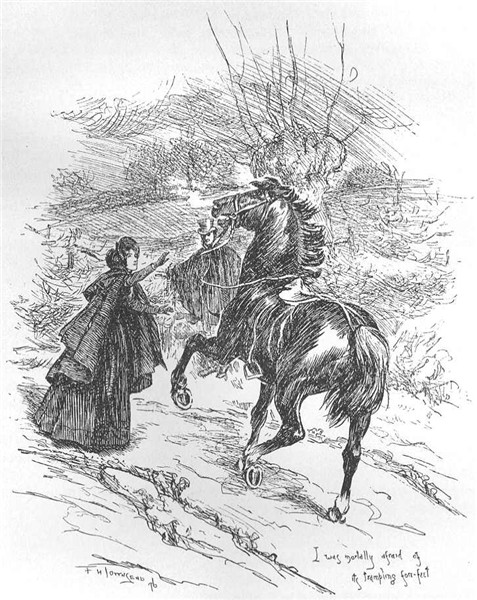
Jane Eyre stopping one of the horsemen of the apocalypse?


Dog Gone Rapture

With the world about to end tomorrow, a friend pointed me to a story of a savvy entrepreneur. The idea is so obvious that I’m completely jealous I didn’t think of it myself. Among the Fundamentalist camp it is widely acknowledged that animals don’t have souls. They do, however, make wonderful companions nevertheless. When their good Christian owners are raptured to the skies, Rover is consigned to a cruel death by starvation if his soulless biological form is left inside. Poor soulless, sinless Rover! Reason (such as any theological thought can be called “reason”) and emotion clash. Bart Centre comes to the rescue. His company will break into the now abandoned private property that God had blessed you with, and rescue your pet. For a reasonable fee. As an atheist, Centre is pretty sure he won’t be going anywhere.

At notable—and even some rather forgettable—points in human history, people have guessed that it is all about to end. This is a strange belief when parsed apart from its original context. Ancient mythical thought tended to be holistic. We humans, with our own cycle of births and deaths, have trouble imagining anything that doesn’t follow the same pattern. All things must have beginnings and ends. Zoroastrianism began as a persecuted sect among the Old Persian religious realm. Persecuted sects tend to want an end to the suffering, and so it is no surprise that Zoroastrians gave us the end of the world. When Judaism was under the severe predation of Antiochus IV Epiphanes, it too looked for a radical change. Christianity under Nero and Domitian looked for a triumphant culmination of a universal purpose. And no end came. Instead, under Constantine Christianity gained a privileged position. With only periodic outbreaks, concern for the end of all things was pacified.

Today with the ease of lifestyle among most American Christians, it is surprising to see such antipathy toward the world. In the words of the Metatron, “Was Wisconsin really that bad?” Or maybe I have read it wrong. Perhaps this is the final culmination of the Prosperity Gospel: Christians have got it so good that the only way to better their lot is to end it all? Religions have always demonstrated their acquisitiveness either in terms of souls or currency. When you’re on top of that world, what direction is there to go but out? But you can’t take it with you, including your soulless friends. Perhaps that’s the real lesson in all of this: humans struggle to mix reason and emotion into one psyche, despite their diverse evolutionary paths to consciousness. We may readily accept the mythical but still wonder who will take Rover for his walk.

Cafe Press's take on the issue


Of the Zombies, By the Zombies, For the Zombies

In what is sure to be a controversial move, the Center for Disease Control has posted an official government blog post entitled “Preparedness 101: Zombie Apocalypse.” (Be warned, if you click on this link it may be considerable time before the page loads—it has been receiving a tremendous number of hits.) Written by Ali S. Khan, the Assistant Surgeon General and head of the CDC, the article is actually about hurricane preparedness, but with zombie furor being what it is, many on the Internet are taking the warning seriously. Literally even. Citing the tsunami in Japan and the concerns for leaking radiation, the article begins with a lighthearted fear-fest that then reveals the actual concern. Humor in the government? This is something we should all encourage!

The analogue with the current rapture fever was immediately obvious. I grew up in terror of the rapture, but when I began to take courses on the Bible from scholars who knew about apocalyptic literature, its context, and what it was intended to do, I realized that the rapture was invented in the nineteenth century by evangelists with no critical training, misreading the book of Revelation. As much as we like to break history into discrete units, time simply keeps flowing and the current of fear generated in the nineteenth gushed into the twentieth century culminating in the birth of the Christian fundamentalist movement. For many people in the twenty-first century, fundamentalism and Roman Catholicism are the two ancient strands of Christianity that legitimately lay claim to the title. At least half of this history is backward.

The Bible itself, when read in context, shows the errors of the rapture-hungry. The idea is a blend of obscure bits of Paul’s letters, mixed into Revelation and stirred vigorously. Then half-baked. The Bible does not give us a rapture. The CDC does not give us a zombie apocalypse. We know where the myth of zombies originates (I have posted on the topic before) and we know zombies are as fictional as griffons and centaurs. Nevertheless, faith springs eternal. Those dissatisfied with all that life has to offer turn to zombies for an equalizingly grim future for all humankind. It’s all gonna rot, baby. Except, of course, for those who’ve been raptured before it happens. When the zombies fail to show up after Saturday’s non-event, all of us will feel pretty silly just looking at each other as Ali S. Khan comes up with his next zinger.

The author, upon reading the CDC blog.


Silver Scream

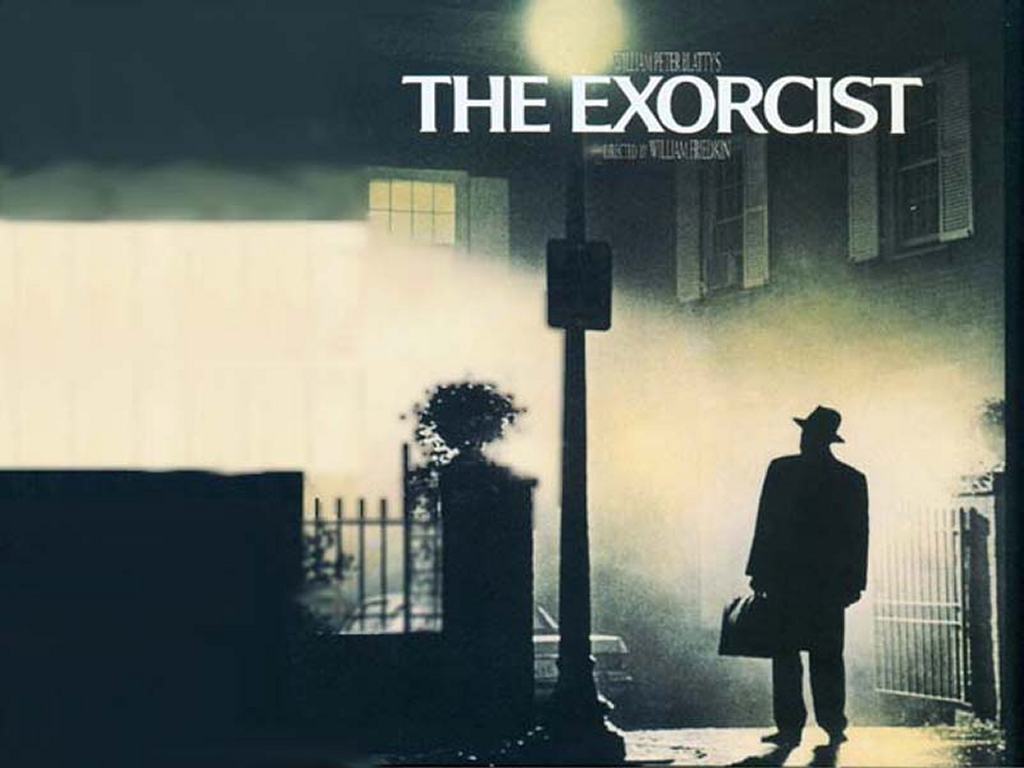
Only within the last couple of decades have movies begun to be taken seriously as expressions of the Zeitgeist. An art form not even 150 years old, commercial movies have been seen primarily as an entrepreneurial exercise—money-making ventures with little serious thought. Now students of society recognize that where our wallets are, there our hearts are also. Even in the depths of recession the entertainment industry maintained its draw. The unemployed could at least watch movies cheaply at home. Yesterday’s newspaper contained an insightful entertainment piece on horror movies by film critic Stephen Whitty. Noting that the film industry began when the Production Code largely mirrored pre-1950’s American cultural values, Whitty observes that clergy were left out of movies, or when they appeared they were strong role-model characters. Then, beginning with The Exorcist, the demonic became a huge theme in movies. As Whitty concludes, “Certainly it’s partly a reflection of a growing fundamentalism” that indicates why such movies are now so popular. Many Americans believe in angels and demons and turn to them to explain the serendipitous or contretemps.

Scary, but not necessary.

Social attitudes help to explain what we see on the big screen. Almost from the beginning religious leaders have castigated the entertainment industry as an unholy counterpart to sanctified living. Theater was earthy and evil, movies immoral, and even the desire to be entertained took away from the struggle for salvation. Ironically, however, movies tend to reflect conservative values. At least when it comes to demons. In the current glut of demonic films—which most Americans rate as the scariest kind of horror movie—the church-sanctioned hero is often the only effective tool against evil. A mythology of a Manichean dimension reigns: good struggles against evil and good will prevail. Unfortunately, this Hollywood scenario falls on the side of simplistic solutions to complex problems. Evil is our own doing—we need no demons to tell us how to be bad. Likewise, help often fails to come from on high.

Over the weekend I watched Dogma once again. Severely criticized as immoral and trashy, the overall message is, however, one of faith and hope. No fundamentalist, Kevin Smith certainly takes his pot-shots at Christianity, particularly Roman Catholicism, but in the end God and angels are real, and demons are defeated. Yes, this comedy is intended to be entertainment, but the audience that views it probably agrees with its core values. As Whitty demonstrates, the past decade has flooded the market with Hell-born foes, and there seems to be no imminent slacking of the pace. People are afraid. Our efforts at free-market Heaven have turned out to benefit too few while too many are still without work or adequate security. No, we need no demons to instruct us in the ways of evil. We are fully capable of initiating our own.


P*ss Says Elijah

As celebrations of the four-hundredth year of the King James Version continue this month, it is time to reflect on how its language has influenced modern-day English. I recently finished my course on the Prophets, and as I was reading the wonderful stories of Elijah, I remembered the shock I first experienced when reading 1 Kings 21.21 as a child. In the words of Elijah: “Behold, I will bring evil upon thee, and will take away thy posterity, and will cut off from Ahab him that pisseth against the wall, and him that is shut up and left in Israel.” I had been raised with the certain knowledge that the “p-word” was cussing, if not downright swearing. What was it doing in the mouth of a righteous prophet? Then I realized even Saint Peter, according to Mark 14.71, “began to curse and to swear, saying, I know not this man of whom ye speak” just before the cock crowed.

The Bible defies expectations. Today it has become a highly politicized document. The “Family Values” camp loves to cite select passages of the Bible but tends to ignore those juicy bits that contradict their 1950’s outlook. The Bible is a book of surprises. It suffers at the hands of its own apotheosis. I know biblical scholars who argue that the Bible should no longer be singled out as a special book, but we do owe it a debt of gratitude. If modern-day people want to revere the Bible, they should do so with an awareness of its context.

Recently a friend posted a comment on Revelation online, wondering why people found it so scary. In the many replies, several worried commenters noted how signs for the apocalypse are beyond ripe and the fruit is ready to fall from the tree. When I interjected that Revelation was a response to first-century Christian persecution couched in the language of apocalyptic literature, I was quickly corrected by others who noted that since Revelation is coming true right now, it must, ipso facto, be a future prediction. We revere the Bible without hearing it. Until we learn to actually read and appreciate the Bible in its context, I’ll have to take my side with the prophets of old. After all, p*ss says Elijah.

Be careful little mouth what you say...


Science of the Bible

It should be a local decision. Science, that is. This straight from the mouth of America’s darling Chris Christie. New Jersey’s governor does not wish to weigh in on this one. His children attend private school. Yes, even New Jersey is under the anti-evolution gun. In the light of the inevitability of Creationism trumping real science, I’ve been working on a sample syllabus for high school science teachers. The way I see it, this new focus in American education should teach science the way the Bible does – no holds barred, no punches pulled. No picking and choosing like Creationists do – Hey! Put that cell phone down, it is a device of black magic! (This will need to be followed up, supernaturally, by a course on how to handle witches in the classroom.) My proposed syllabus looks something like this:

Astronomy: study of that mysterious dome that encircles our earth. It seems to have holes poked through it, or so it looks at night. Science can change depending on the time of day. The sun and moon live in that dome as well, as our astronauts can attest. (Their views that the earth is round, without four corners as the Bible instructs, are, of course, heretical.)

Meteorology: study of the windows of the dome. When God opens these it rains. When God is angry he sends fire down from the dome. The loud sound that follows that is his angry voice. So play nice!

Geology: study of the very center of the cosmos. Our flat earth home, with its four corners and steady pillars reaching down into Sheol, is the exact center of everything. There are no such things as dinosaurs (or cats) since they are not mentioned in the Bible. The layers that you see here and there were all caused by the flood in a matter of about 150 days. The whole thing took only 6 days to make.

Biology: study of the separate kinds God created. Let’s be honest here: the chihuahua and the mastiff share a common ancestor? Preposterous! God made each kind separately and they’ve stayed that way for the past 6000 years. Oh, and yes, animals have telekinetic abilities – that’s how they knew to show up at the ark on time. And when the flood was over the marsupials all knew to swim to Australia. Koalas are surprisingly strong in the breast-stroke category.

Humanology: study of human beings (which are not animals). We were created after the animals (unless you read Genesis 2, where we were created from dust before the animals) and are therefore superior to them. Our natural lifespan is about 600 years, but if you are really wicked you might make it almost to 1000. Reproduction is by means of men planting seeds in women. Females contribute nothing to new children except a womb of their own. We teach these new generations by using the science of miracles, and since there are no schools in the Bible, what are we doing here anyway?


That’s All, Folks

As May is now upon us, in keeping with the spirit of Beltane, we are being warned to make ourselves ready for the end of the world. At Rutgers Day on Saturday, the eBible Fellowship was out in force, handing out tracts declaring in no uncertain terms that this month will see the dissolution of all things. Now is the time to buy things on credit, apparently, but make sure the payments aren’t due at least until next month! I’ve written a few posts on this particular prediction before, but the flyers I received have helped clarify a few things for me. I wondered why the god of eBible Fellowship had chosen this year to end it all. It turns out that this is the 7000th year after the flood! Things have been going swimmingly for seven millennia, so it is time to call it all to a halt.

Reading further, I was amazed at how accurate the reading of the cosmic timeclock has become. According to the pamphlet, the Church Age ended May 21, 1988. At that time I was too busy trying to get into doctoral programs in Bible to notice, I guess. According to eBible, the Bible states that the tribulation began then and would last for 23 years. That does explain my career history. Reading the passages they cite, however, I just don’t see the numbers adding up. eBible claims that God stopped using churches in 1988, so if you’ve been spending your Sundays there, I guess the joke’s on you. It kind of makes me glad that I was never ordained.

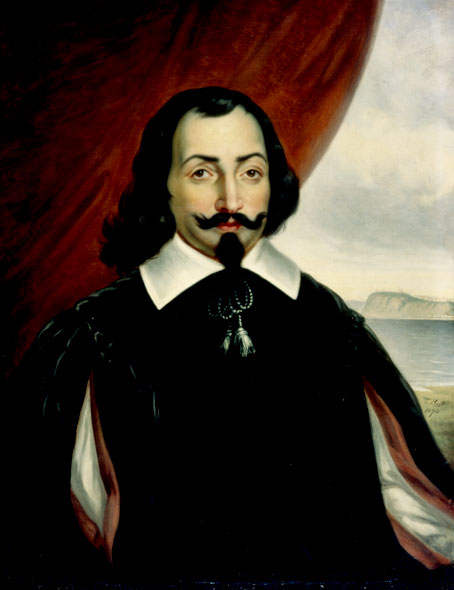
Samuel de Champlain does not endorse eBible Fellowship

Intrigued, I decided to look at their website. For a temporary site there do seem to be a number of incomplete pages announcing that more is coming. There are podcasts about what to do in case you are not raptured on the twenty-first, as well as proof that the world is 13,000 years old, unlike the traditional Ussher date (his name is misspelled on the website). The group, which is based in Sharon Hill, Pennsylvania, states: “We are living at a time when the Bible is being highly exalted by God.” A classic statement of bibliolatry – I was not surprised to note that the King James Version is the one the Fellowship approves. I didn’t see that they calculated the fact that 19 days before the end of the world the KJV would become 400 years old. The only significant event I could find for May 21 of 1611 is that Samuel de Champlain returned to Québec from France. I sure I am missing the hidden meaning of that event, since crossing the sea is almost certainly a metaphor for the flood and Samuel is a prophet in the Hebrew Bible.