Bible, Bible, Who’s Got the Bible?

Rutgers University boasts a truly diverse population. In my fourth year as an adjunct in the Religion Department at the New Brunswick campus, I am continually reminded of the religious and cultural mix of the human race. As I began my twelfth section of Introduction to the Hebrew Bible last night, it occurred to me just how tight a grip Christian-based publishers have on the Bible. I generally spend my first class session on defining the Bible since many students enter such a course (and it is always full) with notions of what the Bible is. In fact, “the Bible” is a difficult document to define.

Binding a book together indicates that what is between the covers belongs together. This is almost a subconscious fact that we pretty much take for granted. If a publisher put all of this in the same place, it must belong together. For the general consumer market, that translates into Bibles that contain the Hebrew Scriptures and the Christian Scriptures. This mix of 66 books satisfies most customers in the United States and Canada, but the Catholic reader expects some 13 additional or expanded books in her or his Bible. Jewish customers expect somewhat less, with 27 books normally in “the Bible” being specifically placed there by a later, revisionist sect. Orthodox Christian Bibles may add or leave out a book or two, depending on the tradition.

The irony of this situation strikes me as we have Bible-thumpers constantly appearing in the news. Their well worn, black leather King James Versions are “the Bible.” For them. Their message to the American public: we must get our lives back in line according to (my interpretation of) this book. What of those in this country who have fewer or more books in their Bibles, or, Yahweh forbid, completely different scriptures? Is there no room in a nation of religious liberty for them? I have a modest proposal. For the politicians who want their Bible to drive our society, stop by my class at Rutgers sometime. I am always glad to see the diversity. And it shouldn’t be too hard to find a section to fit in your schedule – I teach four sections of the class throughout the year, including summer and winter terms.

Faker or Fakir?

An article posted on CNN on Friday, “More teens becoming ‘fake’ Christians,” suggests that many American teenagers aren’t really Christian. Whether that is a bad thing or not I’ll leave up to the reader to determine (Kenda Creasy Dean of Princeton Theological Seminary, cited in the article, has no doubt that it is bad). My concern with the premise and the presentation of Dean’s data is much larger: who has the right to determine what is “authentic” religion? In a world daily faced with the clash of religious views, particularly among passionate believers, most scholars of religion seem to agree that one’s religion is what an adherent claims it to be. There is no way to test the authenticity of a religion empirically. Whose Christianity does Dean mean? That of Jesus? Or of Paul? Or of the Pope? It seems to me that what she suggests is that “true” religion is “passionate” religion.

Religion, however, may extend well beyond belief structures. Religionists recognize many forms of religion that are primarily activity-oriented rather than belief-oriented. Does that mean the adherents of such religions are only half-hearted members of their tradition? Do only passionate believers qualify? Who is it that has the authority to decide what any religion is? If it is seminary instructors, I’d rather face the apocalypse right now. I’ve known far too many of those to trust their judgment on defining authentic religion.

Christianity is perhaps the most fragmented religion in the world, with tens of thousands of different denominations, each declaring itself correct and authentic. What person ever purposefully believes in an incorrect religion? “I know my religion’s wrong, but I think I’ll stick with it…” Who gets to determine which is the real real religion? Passion may not be an adequate measuring stick. The clashes of religious views that leave the highest body counts are between groups equally passionate about their beliefs. In such a world where people need to learn to control their religious passion, it is my hope that mere theological assent might be more than enough in most cases. And only for religions that are belief based.

The only true religion?


Freiheit

This week’s Time magazine has a rhetorical question on the cover: Is America Islamophobic? Not a word need be said. The real issue at stake, the one many Muslims feel the brunt of, is religious freedom. This founding concept of America has been eroding for decades. How many Americans have tried to imagine what it would be like if they were Muslims living in “the land of the free”? For that matter, how many have tried to imagine what it would be like to be Catholic, Protestant, or Unitarian? Certainly, it would seem, Jews know the value of religious freedom. Do we ever really try to feel their experience? It is much more cozy to be part of the religious majority and tell others to step in line.

With great roaring newts and Alaskan beauty queens telling them what to think, Americans are easily stoked to injustice. No, they have no right to worship here, they tell us. The truly frightening part is how easily manipulated the masses are. America a Christian nation? Who can adequately define “Christian”? Those who make such claims tend to be Neo-Cons who assume some fundamental form of Christianity is the default version. The only version. Their goals are not religious, but rather intensely selfish – the antithesis of Christianity. By their fruits you shall know them, a wise man once said. It is easy to forget who.

We live in a nation that since the Reagan years has attempted to privatize industries that had ensured fairer treatment because of government standards, no matter how faulty. Now private companies could run with the basic necessities of civilized existence and grow wealthy on them while those who were poor could be forced to pay more. This was done with the public image of a “Christian nation.” RR, the poster-child of the Religious Right. Laissez faire has come to mean “leggo my Eggo” – let me claim the one true religion and capitalize upon it. One size does fit all as long as the wealthy are left free to grow wealthier. Let’s call it religious freedom, but let’s prevent others from pursuing their religion freely. To me it feels like 1984. And that was decades earlier than 9/11.


Catskill Waiting

Catskills epiphany

We’re back from the Catskills and all they imply. One of the more obvious implications was a lack of internet access – one of the many reasons I like to frequent remote locations. I had planned this little get-away with some vague hopes of enlightenment of some kind. The quote from Melville in my last post is more than just nice prose; it is the essence of spiritual striving. I know those aren’t scientific words, but they embody the spirit of several nineteenth century American novelists I’ve read and reread. I did see a Catskill eagle while there, but I returned home still seeking an epiphany.

While briefly away from the constant demands of teaching, the bigger picture starts to come into focus. We visited Ellenville on the day of their Wild Blueberry and Huckleberry Festival – we’d just picked huckleberries ourselves in the mountains outside town – and religious groups were represented aplenty. I had noticed the many churches in this rural region, and one of the feters handed me a tract that informed me “If you have said ‘Yes’ to these three questions [have you ever sinned, lied, or stolen] (by your own admission), you are a lying, thieving, adulterer at heart; and we’ve only looked at three of the Ten Commandments.” And also, John Lennon is dead. Nothing like a little self-righteous judgment with your blueberry pie. Sirens began to blare and a fair-goer collapsed and had to be airlifted to a regional hospital. It was very dramatic.

This is where the big picture came in. When there is an accident, we take astounding measures to save the injured, suffering, or wounded. A fair-goer flown by life-flight to the hospital. At the same time, our society condones, encourages even, an unemployment scenario where even highly trained individuals are cut off from health care and self-esteem as well as income. Left to die a quiet death of desperation. As long as we don’t have to see it, death by redundancy is sanitary and sanctioned. Has this great society ever sinned, lied, or stolen? I have seen that Catskill eagle and I am still awaiting an epiphany.


Lost Apocalypse

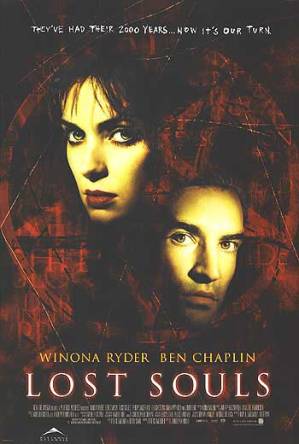
The Bible has many eminently quotable passages. I suspect that is one of the reasons it has the staying power that it does. Many critics of the theologies spun off by the Good Book have turned their vitriol toward the Bible itself, but I believe such hostility to be misplaced. Not everyone enjoys reading the Bible – that much is true for any book. The Bible, however, is foundational for not only our society, but the entire western literary tradition. Its influence on Shakespeare alone, who has, in turn, influenced just about every writer since the seventeenth century, underscores its literary importance. That’s why I’m always surprised with film-makers use concocted verses from the Bible when actual passages would produce the same effect. Granted, few Bible scholars comprise movie audiences and producers and directors seldom worry about writing the story for them. Last night I watched the “horror” film, Lost Souls, released in 2000. I’d read about the movie in Douglas Cowen’s Sacred Terror, so I wanted to see how it rated.

The movie begins with a false Bible quote: “… A man born of incest will become Satan and the world as we know it, will be no more. Deuteronomy Book 17.” Now granted, the movie failed to rock the critics, but the sheer weight of errors from pre-scene one should be the first warning to start from a better script. Beginning with an ellipsis for dramatic effect may be acceptable, but it serves no purpose – and what’s with the misplaced comma? A man born of incest in Deuteronomy is a non-starter because his potential parents could only be found dead, crushed together under a pile of hurled stones before the unfortunate could even be born. Satan as a devil is never mentioned in the Hebrew Bible, let alone Deuteronomy. Deuteronomy is almost never quoted by apocalypticists since it does not predict the end of the world, and Bible books are divided into chapters, not “books.” Well, the biblical illiteracy of Hollywood may be overlooked for a good story, but this is no such thing.

Lost Souls fails on the premise that a biblical “literalism” (and that is only if certain Evangelical interpretations are given unwarranted credence) about the coming of an Antichrist should be shored up by a fabricated quote from the Bible. I’m not trying to be a movie critic here, but a cultural one. The whole “end of the world” scenario held by many Evangelicals is a hodge-podge of biblical verses brought together by clever nineteenth-century clergy with little exegetical training. It is like trying to connect the dots while having to change pages constantly. The idea caught on amid the discarded lives left behind by advancing industrialism and the perceived threat of evolution. Apocalypticism has become its own industry as some otherwise unknown writers can attest. Movies like Lost Souls, or even The Omen, however, pale when compared to the antics of religiously motivated apocalypticists in the real world. Some of the rules in Deuteronomy itself are more frightening, if better written.


The Evil That Men Do

The graveyards of humankind are filled with the victims of religious violence. That fact does not seem to have lessened the impact of religion as a whole on humankind. One reason may be that religion has been a focal point of the good and humanitarian deeds of which people are capable, as well as a justification of the most heinous. The irony is that adherents of a religion claim that a just, true and righteous god is their motivation, for good or for ill. In the same church, mosque, or synagogue, there are widely differing views that live together. Sometime the truce is an uneasy one. Sometimes the adherents are united against a common enemy.

The furor over whether a mosque should be permitted near Ground Zero has become a major political whipping boy. Heavyweights like Newt Gingrich and featherweights like Sarah Palin are quick to fire off their half-cocked mouths about the impropriety of it. Michael Bloomberg, the mayor of New York City has been given the task that kindergarten teachers around the country – around the world – should incorporate in their curriculum, the task of teaching tolerance. In an excellent speech delivered yesterday, the mayor reminded citizens of what many appear to have forgotten: without religious freedom nobody is free.

Muslims are not to be blamed for 9/11 any more than Christians are to be blamed for the Inquisition. Every religion has members that misuse their sacred trust as a vehicle for hate and repression. By forbidding religious freedom to any religious group, America sets a precedent of a growing intolerance that can only lead to more, and greater suffering. Already the Gingriches and Palins of our nation tell us that there are indeed lesser citizens and greater citizens. Those like them deserve freedom of religious expression, of marriage recognition, of family size, of medical care, and those who believe differently and therefore deserve less. Speaking only for myself, I would rather have tolerant Muslims as my neighbors than supersessionist Christians.


Jesus’ Broken Dates

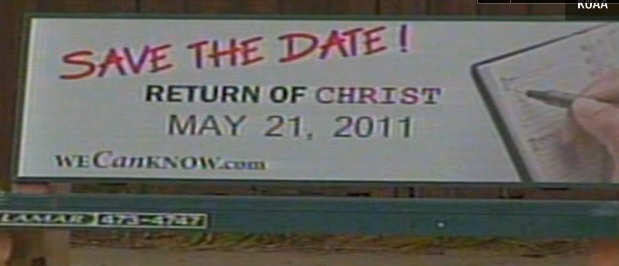
Jesus apparently has his calendar out. Again. This time it looks like May 21 is a red-letter day (he has a predilection for red-letters too). Well, at least it’s penciled in, like many other broken dates. An unemployed woman in Colorado Springs has decided to spend her dwindling reserves on bus bench advertisements reading “Save the Date / Return of Christ / May 21, 2011,” according to CNN. She states in the interview that she believes her job until judgment day is to get the world ready. She will find herself standing in the unemployment line on May 23 (the 22nd is a Sunday), more likely than not. Even more disturbing than the mostly harmless neurotic behavior of the unemployed (who am I to cast the first stone?) is the choice of Jerry Jenkins as an expert witness in the story.

Who questions a bus bench?

Jenkins and perennial Paleo-Con Timothy LaHaye wrote the “Left Behind” series that made more than a cottage industry out of repackaging Christian apocalyptic mythology into slick, science-fictionesque novels. They have more than a vested interest in promoting “and they lived horrifically ever after” scenarios. There is good money to be made by trolling the fears of the gullible. Very good money.

Our Colorado Springs prophet took her date from a billboard in Texas, a leading purveyor of rapture-mania. The thing that’s been left out of this – and many other apocalyptic episodes – is a serious consideration of the Bible. As most biblical scholars know, doomsday predictions generally derive from misinterpretations of ancient metaphors. Jesus, at least according to the canonical Gospels, was much more concerned about fair treatment of the poor and disadvantaged than he was about raining down brimstone on Babylon. Instead of spending money to warn the folks of Colorado Springs about yet another end of the world, why not donate the money to a local food bank and try to make the world a little bit better place?


True Colors

Over the past year several colleagues have urged me to join Facebook. To put this in context, I am one of those dinosaurs who made it through a Master’s program without having touched a computer – all theses and term papers were typed on a typewriter. It was only with the sheer volume of written material for my doctorate that I finally gave in to the technological revolution. Since then I’ve been sucked further and further into it, always a little bit reluctantly. When I read I like to have a book or magazine or newspaper in hand. When I communicate, I prefer a conversation to an electronic chat. Well, there are advantages to the technological world, but Facebook seemed a little too much. Caving to pressure, however, I eventually gave in and became a Facebooker.

One of the things I’ve learned from the daily updates of people – many of whom I’ve not seen since high school – is just how religiously conservative many of my friends are. I get daily, sometimes hourly, news updates about what the Lord is doing. He’s a pretty busy guy. Sometimes these friends look at my blog and wonder what has happened to me. When they ask, I have to wonder how deeply down the rabbit hole do they really want to go. I’ve been a professional religionist for nearly 20 years now – unfortunately several of those years have not included regular employment, but the work it took to get here can’t be undone – and prior to that I spent nearly 10 years in school studying religion. Anyone who makes it through an advanced degree in this field and comes out with the same viewpoint as when they entered it has had their mind firmly closed all along.

Religion is a phenomenon that can be studied, just like pottery or fashion history. Once a genuinely open mind is brought to it, perspectives begin to shift. Some of my friends who are less gracious about this respond by quoting the Bible at me, as if I’ve somehow learned how to forget the Bible while earning a Ph.D. in it. What they don’t realize is that if you want to learn about your religiousness in any serious way, there will be several Rubicons to cross and some pithy snippet from Paul is not going to change that. I don’t use Facebook to announce my religious thoughts to the diverse body of “friends” on my account. I use this blog for that. Those who are truly curious about religion might learn something from someone who’s been in the biz for nearly three decades. Others are content to announce to the world what the Lord is doing through Facebook.


Which Way is Up?

In an article full of rare academic tropes and staid paronomasia, MSNBC announced yesterday, through LiveScience, that what appears to be an ancient “sex toy” has been found in Sweden. The object, of uncertain utility, is made of antler and dates to the Mesolithic era in that region. What has surprised the archaeologists is that the artifact apparently represents a male, rather than the more usual female, image. Two common ambiguities of antiquity come together in such a find: the sacredness with which the ancients seems to have held reproduction, and the fact that the way you look at an artifact is certain to express interpretations in line with the assessor’s.

Scholars of religion have long had to roll their eyes as archaeologists, particularly in Israel and “biblical” regions, unearth artifacts of uncertain function. Not knowing what this item might be, it is common for a find to be labeled as “religious.” This is perhaps a larger issue in “biblical” regions since so many archaeologist, particularly the influential ones of late last century, began their careers as biblical scholars or potential clergy. In the days when academic career mobility still actually existed, they could easily make the jump to archaeology, caring all their biblical baggage with them. Efforts to bolster the historicity of the Bible provide a special impetus to see objects as religious. Their actual function remains lost to history.

Even scholars see what they wish to see. It is a form of pareidolia, the finding of significance in what might otherwise be random noise. Is the Stone Age Swedish antler really a phallus or not? It is unlikely that the answer will ever be known. The context is ambiguous and the object itself is open to interpretation. Modern humans, with our own issues about sexuality, are inclined to snap suggestive objects right into that pattern. Even the specialists admit that maybe it is an object to knap flint, a common use of bone and antler material in ancient times. Or maybe it was intended as a thank you to the gods. Its interpretation may depend on which way you look at it.

Ambiguous artifacts abound


E.T. Go Home!

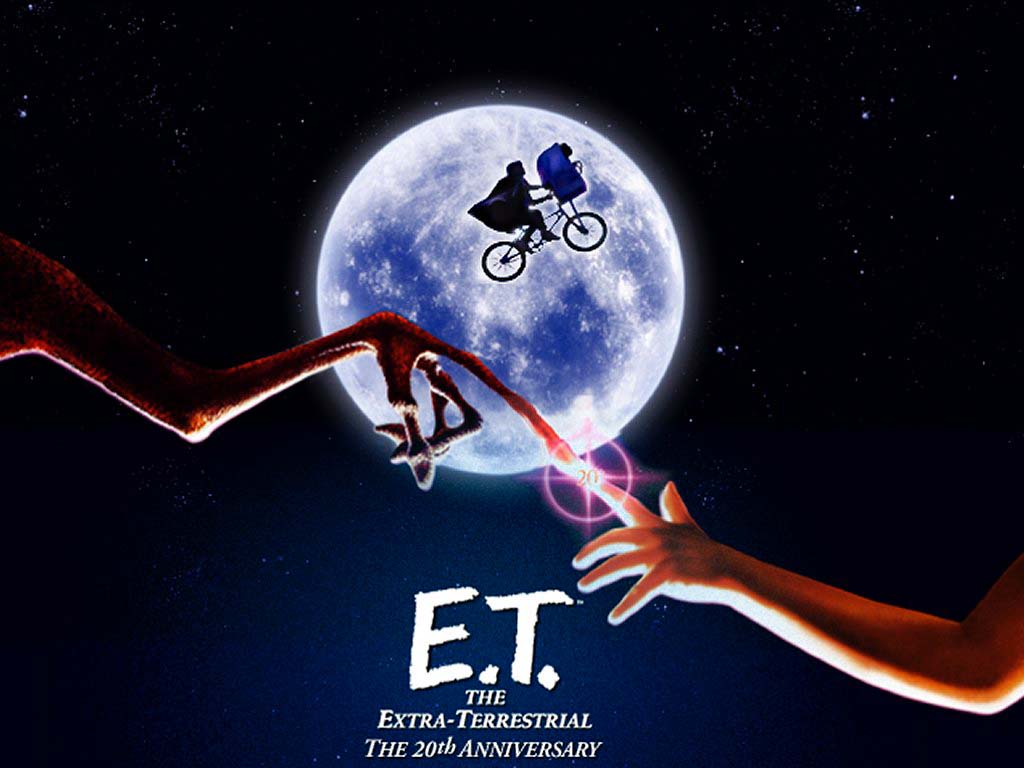
Now that my family is back from vacation, daily life is starting to regain a focus. One of the goodies my wife brought me from out west was an article from the Spokesman-Review, a Spokane, Washington, newspaper. The article is actually a letter to the editor, so it should not be taken as representative of the views of the paper, or of reality, for that matter. Obviously written in response to an article I missed, the letter is concerned that “Conservative Christian” viewpoints towards illegal aliens are being ignored. With a bravado that might be termed Christian jihad, the letter writer claims that “our nation’s laws are based on the laws God has laid down.” The authorities she cites? “Beck and Palin.”

Beck and Palin would make a great comedy team were it not for their crazed intolerance. Although devoted to this dynamic duo, our writer goes one better and cites the highest possible authority, “the Lord God.” Specifically, Numbers 15:15-16: “As for the assembly, there shall be for both you and the resident alien a single statute, a perpetual statute throughout your generations; you and the alien shall be alike before the Lord. You and the alien who resides with you shall have the same law and the same ordinance.” Problem is, this passage doesn’t refer to the state assembly of Arizona, but of an ancient Israel that is largely the creation of the writers. The Torah, explicitly, applies to Israel, not to other nations.

Quite often in my classes I have students claiming that our laws are based on the Bible. To extent there may be a modicum of truth in the claim, but in fact, American law is based on English Common Law, influenced by, yet not taken from, the Bible. I’m no legal expert (I wouldn’t be jobless if I were), but I do take the Bible at its face value. The laws apply to Israel alone. It is a mark of how little our religious leaders have been able to educate the public that we see this ingrained prejudice masquerading as divine truth. Fair treatment is a secular as well as a religious value. In addition to doling out abuse, the Bible itself continues to be a constant victim of abuse at the hands of Neo-Con nonsense.

Isn't God an alien?


Jesus Friends Me

From Jesus' Facebook profile


Jesus has a Facebook page. Given the circumstances it is highly doubtful that he set it up without some help from his friends. I went to the page to check out his friend list, but apparently he’s not accepting invites. Over 125,000 like the page, however. I wondered if it might be a stunt, since when I found Facebook they insisted that you could only sign up with your real name. While there is no doubt that this is a stunt, it turns out that it is considered an evangelistic tool wielded by a John 3:16er. On his info page, Jesus writes, “Please invite your friends to ‘Like’ (love) Jesus Christ,” an upgraded “honk if you love Jesus” if ever I read one. If you read the comments on his wall, it is clear that some people believe Jesus himself really reads his own page. It doesn’t mention the car accident.

A Rutgers student once told me about the “six clicks of separation” phenomenon on Wikipedia. Apparently, no matter how obscure a page you’re on, just six link clicks can get you to the page on Jesus. Don’t get me wrong: with his impact and importance Jesus certainly should have a Wikipedia article. There can be little doubt that anyone else can claim his level of influence in both the Dark Ages and Twentieth Century America, now creeping into the Twenty-First. The sad part is, those who constantly link to Jesus have latched onto a chimera grafted together from disparate sources. And they are his followers on Facebook.

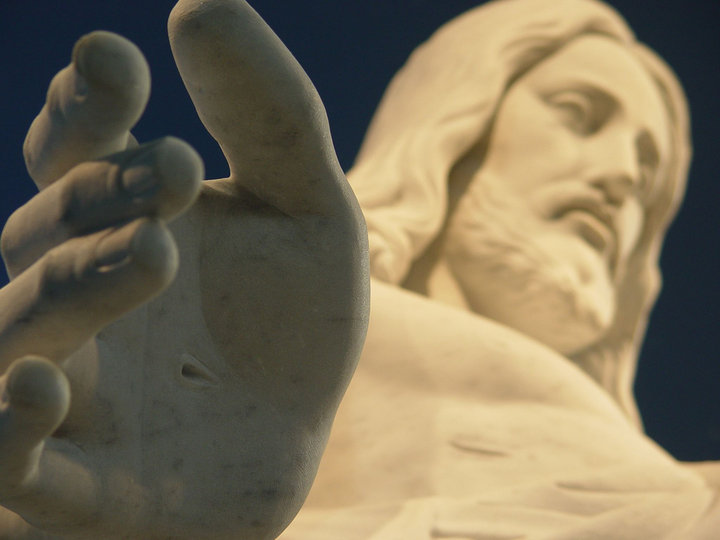
I wonder who has the audacity to speak (type) for Jesus. Who is it that believes they have the deep insight into who Jesus was – deep enough to speak for him? WWJT? Technology speeds along and fans of Jesus fear he may be left behind. By making your Facebook admiration for Jesus public, I suppose, a kind of “witnessing” is going on. It would seem to me that a better way to show support for Jesus would be to care for others, the poor, the disadvantaged, the lonely. Feed the hungry, provide healthcare to the sick, offer justice to those who have been treated unfairly. If a friend invitation came from this faux Jesus, who would be inclined to accept it?


Under God

As one of the more flamboyant of national holidays in the United States nears, there is a whiff of discontent in the air. The North Carolina Secular Association has been sponsoring billboards that provocatively read, “One Nation Indivisible.” Those who, since 1954, have grown accustomed to reciting the “pledge of allegiance” with the words “under God” inserted after the “one nation” bit, grumble that one more icon of civil religion has come under fire. I first became aware of civil religion as a student in a self-identified Evangelical Christian college. I was astonished that the religion faculty, all believers, suggested that civil religion was not true religion at all. True religion was an inner commitment, not social bravado – often in the service of political aims. I was pointed to the writings of Richard Niebuhr and Dietrich Bonhoeffer and told to think for myself.

Since that time, I have kept a wary eye on civil religion. It is a dangerous force in society since few people think deeply or seriously about their religion. It fosters knee-jerk mob mentality. Civil religion is a slurry of a variety of religious outlooks, mostly Christian, predominantly Protestant, but now gaining a dose of conservative Catholicism. No one denomination would accept all its tenets as true faith, but weighed against the “godless alternatives” most conservative believers would much prefer the shallow public display of religiosity to “one nation indivisible.”

The Pledge of Allegiance was first composed in 1892. It read, “I pledge allegiance to my flag and the republic for which it stands: one nation indivisible with liberty and justice for all.” (That flag didn’t have 50 stars.) The North Carolina Secular Association has, arguably, simply reverted to the original formulation. In 1954, with Cold War concerns heating up and decent Americans associating themselves with Evangelical Protestant values, the phrase “under God” was added – take that you godless Communists! That other great icon of civil religion, the United States motto, “In God we trust,” was placed on currency during the battle-torn era of the Civil War. Once again, the Cold War brought it into prominence. In 1956 the Congressional Record noted that “In God we trust” should be designated as the United States motto. With the collapse of many of the Cold War threats, the fully charged civil religion front had to find a new outlet for its excessive energy. One needs only a casual glance at the American political scene to see where this insipid, lukewarm version of civil religion has resurfaced. One nation indivisible?

Does it really stand for freedom of religion?


Misappropriated Prophets

There seems to be a can of worms lying open on my desk, released by the comments yesterday’s post engendered. I thank all my readers and commentators. The issue most pointedly thrust among the worms appears to be that of prophecy. Teaching about prophecy constitutes a large part of my meager income. And since prophecy plays a large role in many Evangelical associations not only with the Deepwater Horizon disaster, but also Hurricane Katrina, 9/11 and just about any other major catastrophe, it is worth exposing. In the Bible prophecy is not about predicting the future.

Prophecy was a widespread phenomenon long before Israel appeared on the scene. One of the roles prophets shared in ancient times was the declaration of outcomes to momentous events. Unfortunately that aspect of their duty easily became equated with predicting the future. Its actual milieu, however, was that ancient people believed prophets to be “effective speakers.” When a prediction came true it was not because a prophet could “see the future,” but because the spoken word of the prophet participated in the reality of the world. The belief was that the effective word came from God/a god, and therefore would be true by definition.

Apocalyptic, the familiar literary form of Daniel and Revelation, is not prophecy. Zoroastrianism, the religion of ancient Persia, had influenced many ancient religions, including Judaism. Apocalyptic, like prophecy, has a predictive element. Like prophecy, however, apocalyptic has a different purpose. The books most heavily farmed for future predictions by Evangelicals, Daniel and Revelation, are both thinly veiled accounts of contemporary events of the authors’ own days. Daniel consoles Jews persecuted by Antiochus IV Epiphanes and Revelation consoles Christians persecuted by one of the early Roman emperors (the jury is still out on precisely which one). Neither book predicts the end of the world. Both, however, declare the comeuppance of the arrogant oppressor. It is here, perhaps, that the true relevance of the Bible speaks to the scars human beings inflict on their own planet and on each other.

sic semper tyrannis


Oil’s Well that Ends

Greed has been on my mind quite a bit lately. I like to think it isn’t petty personal greed, but the insatiable corporate variety of greed. Friends send me links to sad commentaries on the Gulf Oil Spill, an event that severely amplifies the cruelty already inherent in nature, but an event that would have been preventable were it not for greed. My friend James from Idle Musings sent me a compelling story from the UK Guardian that poignantly demonstrates how a shift of worldviews has bestowed divine approval on the rape of our planet. The very religion that began as animism, the belief in the ubiquitous divine in nature, has evolved into a Neo-con Christianity that supports free markets as surely as it believes in resurrection. If a few million animals have to die, well, their invisible, loving God sees far more than our limited sight.

Nowhere is this more evident than in the video link my wife pointed out to me last night. Here an advocate for biblical “prophecy” points out that it can not be coincidence that the day after the United States withdrew unilateral support for Israel in the United Nations Security Council was the very day that Deepwater Horizon exploded. No, the pundit declares, do not be fooled. God is punishing the United States for withdrawing support from Israel. This idea, unfortunately, draws on a morass of sloppy theology that can be historically traced to an evangelical death-wish for the planet. Barbara Tuchman, one of the most respected historians of the last century, objectively traces the story in her classic Bible and Sword. Political support for Israel was perceived as a means of forcing God’s hand into releasing the second coming. So much for human sympathy.

Coincidences continually occur. April 19 is the day that Cardinal Ratzinger was elected Pope just five years ago. It is the day Grace Kelly married Prince Rainier of Monaco. It is the Feast of Saint Aelfheah of Canterbury. It is Patriot’s Day in New England. It is the day The Simpsons premiered. Whether to see God’s hand in any or all of this is a matter of perspective. As is the motivation behind supporting Israel, big oil, or the second coming. If there is any name other than greed for offering political support for a nation of sacrificial lambs and spilling oil in order to hasten the apocalypse, I simply do not know what it might be.

And this was only April


Casting the First Stone

I’m not overly nostalgic for a guy interested in ancient history. I tend to look at the more recent past as a via negativa for the young who might make a difference today. Very occasionally, however, aspects of society were handled better back in the 1960s and early 70s. One of the most obvious instances of a more sane society was the segregation of politics and religion. Prior to the rise of the “Religious Right” as a political machine the religious convictions, or lack thereof, of politicians played little role in their campaigns and American culture itself was much more open. A story from today’s MCT News Service illustrates this all too well.

In an article entitled “In S.C., religion colors gubernatorial race,” Gina Smith reports on the various religious slurs that now pass for political campaigning in that state. “Raghead” (for a former Sikh), Buddhist, Catholic, and “anti-Christian Jewish Democrats” are among the aspersions freely cast by those without the sin of a non-evangelical upbringing. As if only Fundamentalists are capable of making the right political decisions. As if Fundamentalists ever make the right political decisions. Fundamentalism is a blinding force on the human psyche, and those who are misled by religious leaders who claim unique access to the truth are to be seriously pitied. Conviction that those most like you are to be trusted most may be natural, but dogged belief that pristine morals accompany any religion is glaringly naïve.

The American capacity for belief in fantasy worlds is in the ascendant. No matter how many times Fundamentalists or Evangelical politicians are arrested or forced from office for the very sins they rant against, their overly forgiving constituencies come flocking back to them. Commit the sin of being born Sikh, Hindu, Buddhist, Muslim, Jewish, or Catholic and no quarter will ever be offered. No, I have no desire to go back to the 1960s, but I sure wish politics would.