Lying Literalists

“I hate, I despise your festivals, and I do not delight in your solemn assemblies!” The words of some godless communist? A disaffected liberal? An angry atheist? No. These stark words come from Amos, the prophet. Each year when I teach my course on the Hebrew Prophets I am struck by how strident their words are. For Fundamentalists and others who take the Bible literally the words belong to none other than the Big Guy. The Primal Y. G-d. God hates the worship conducted in a land where injustice reigns.

Although the basic principles sound correct, it is clear that America cannot really be considered a just society. There are a few too many families without enough to eat, a few too many homeless on the street-corners of our cities, a few too many unemployed. And a few too few filthy rich. There is plenty to go around, and one might naively think prosperity might trickle down. It doesn’t. I’ve always been amazed to see the girth of many prosperity gospelers who inveigh against the unrighteous. A sturdy measuring tape might tell us all we really need to know about righteousness.

Bible believers do not believe in the Bible. They accept the message they wish to hear, that God loves those who are rewarded with wealth, but the message of Amos they have little time for. They miss the part where the prophet calls them cows of Bashan that are fat for sacrifice. Yet when they flip out their iconic Bibles the theologically illiterate follow them to the polls. The more they pound their Bibles the more they are beating innocent victims. Be careful before becoming a Bible believer – it is not always a comfortable place to be!


Naughty Religion is Bad Science

In the continual struggle of Fundamentalist Christianity against the rest of the world, new Creationist grounds have been made in Connecticut. Connecticut is not exactly the first state to spring to mind when it comes to extremist conservative religion, but Fundamentalism knows no bounds. Perhaps the largest disappointment, from the point of view of a student of religion who knows the Fundamentalists a little too well, is that otherwise intelligent people simply accept what their clergy tell them. Having been a seminary student and professor, however, I know the kinds of training clergy receive and if the whole wide world knew things would be different.

Clergy of all stripes of all denominations of all religions are just as human as the rest of us. They do not have special physiognomic features in their brains or hearts or cellular structures that allow them to receive private messages from God/the gods. Many are trained in special schools where people like myself teach them, often against the blustering of their clergy supporters back home, what we factually know about the Bible and other aspects of religion. Many successfully block out what they are forced to hear and emerge just as ossified, if not more so, as when they entered. In other words, their “education” has been an exercise in learning to ignore the truth. They are then made into clergy who continue the deception. Even worse are the clergy who receive no training at all, frequently fresh from an overly-heavy-dinner-induced religious experience, who claim that the biological responses to overtaxed gastric juices is some message from beyond.

The average citizen naively accepts the religious credentials of their clergy, supposing that this “holy” person has had some special word from on high. That word is often factually wrong, especially concerning evolution and the origins of life, but it is accepted as gospel truth and disseminated among unsuspecting children. Religion is a matter of belief, not of fact. As America lags farther and farther behind even developing nations in science education, Fundamentalist clergy give a self-satisfied smile. They have become the gods of a nation that was once able to land some of its citizens on the silvery moon in that great literal dome that surrounds our flat earth.


Biblical Outlooks and Science Fiction

Alumni magazines depress me. Between my wife and I, we receive a half-dozen every month. I thumb through and see the cheery faces of classmates, most of whom I don’t know, who’ve gone on to great things – writing books, world travel, scientific breakthroughs. They’re not on the couch Saturday afternoons in New Jersey watching 1950’s sci-fi and wandering what went wrong. Especially bad is Bostonia, since I attended Boston University with many noteworthy individuals. Being forced from academia early in my career because of petty religious differences, I just want to bury my head and grab the remote. An article in this month’s BU shame-fest, however, pictured a professor, younger than myself, who joined the school of theology after I left. The title of the piece is “Biblical Sexuality.” Well, the connection with this blog couldn’t be more obvious.

Dr. Jennifer Knust is a professor of Christian Scriptures at BU who has written a couple of books on sexuality and the Bible. I’ve read widely on this topic in the Hebrew Bible, and was curious as to what the post-Jesus crowd was saying these days. The article specifically addresses homosexuality, but I did applaud one of Dr. Knust’s statements: “My main argument is that biblical texts do not speak with one voice.” Amen. Bravo. Goal! Our society is so imbued with the bibliolatry of the Religious Right that it is difficult for most Americans to understand that the Bible was written by many people over a few centuries and these people did not always share the same outlook. The Bible is an exercise in multiple voice-overs. Specific religions, as many denominations of Christianity testify, have harmonized these divergent voices into a coherent, if biblically untrue, theology. Some voices must be stifled so that others may dominate.

We live in a religiously plural world. There are about as many religions as there are believing people. We experience the world through our own lenses and within our own gray-matter. Our perspectives are uniquely our own. And yet religious leaders bend, worry, and force views closer to their own so that they might have a theological quorum, a consensus that one viewpoint is right. They silence the Bible’s divergent voices and claim they do not exist. I wish Dr. Knust well. She’s got the right perspective, in the opinion of my own weary gray-matter. And speaking of gray, where did I put the remote?


Under G-d

In one of the great showcases of civil religion, the Pledge of Allegiance is again in the news for its brash statement, “under God.” Lawsuits have been introduced in California to try to label the statement as unconstitutional – state supported religion, a declaration that the United States is a theistic country. Even as a child, a religious child, no less, I was vaguely disturbed by the Pledge. I am a sentimentally patriotic American, and I begrudge no one that natural feeling of pride in their heritage. We all come from somewhere, and we like to think the best of ourselves, and therefore our forebears. I’ve tried to trace my ancestry and find that with a sole exception on a great, great-grandparent’s exodus from Germany that my roots are hopelessly lost in long generations of northern European expatriates that have been on these shores for well over a century and a half. Some even more. And yet, to pledge allegiance to a flag? As a student of religion, I understand the value of symbols, but I always felt that a hand over the heart while addressing a banner was a little like idolatry.

Well, I’ve grown up since then. I spent three years abroad, and returned with a renewed appreciation of how much this country has to offer. I’m still a little puzzled by the “under God” bit, however. Sure, America’s founders were generally deists (not Christian by any recognizable stretch of the definition), and since God is assumed, why not add him to the books? But God was only added to the pledge in 1954. In the heat of McCarthyism it seemed important to fly our “anti-communist,” theistic colors high for all to see. And yet, we never define who “God” is.

The God of the Bible has a name. Every semester I find students that have difficulty grasping the idea that “God” is not the name of a deity – it is only a generic title. It could be anybody divine. Shiva, Zeus, or even Baal. In the written work of many of my students from the Jewish tradition, the reverence accorded to the deity’s personal name has been transferred to this innocuous title. In essays and papers I frequently find reference to “G-d,” as if the Torah commands never to make reference to deity at all. So, out of reverence to the same divinity we have some citizens leaving out the lonely vowel of a one-syllable deity while others loudly proclaim that he (never “she”) must be kept in the little bit of civil religion we impress on our public school children. We don’t agree, as a nation, on who “God” is. Reading the rantings of the Religious Right with their tea parties and Conservapedias, I’m sure that this is not the G-d of the Bible. What does it mean to be a nation under a deity we don’t recognize?


Emasculating Science Education

American lags behind. Tough words to read, n’est-ce pas? America lags behind in science education. Even nations as “conservative” as Tajikistan teach evolution in their classrooms without question while the United States just can’t seem to accept the facts. The fault, with no question whatsoever, lies with a very narrow Christian interpretation of the irreconcilably contradictory creation stories that open the book of Genesis. This fact has once again come to an ugly head in New Jersey, among the bluest of states. Our, gulp, Republican governor has recently nominated Bret Schundler, a supporter of school’s rights to teach intelligent design, as state commissioner of education. I shudder.

As I teach classroom after classroom of Rutgers students, there is neither biblical nor scientific basis for Creationism. Creationism is a neo-Christian chimera forged together by political pundits who believe that if evolution is stopped in its factual tracks, America will revert automatically to the pre-hippie days of the 1950s where authoritarian dads with conservative haircuts barked out the family marching orders and saw everyone to gospel-hymn-singing churches each and every Sunday. It is a myth, they assert, that is worth believing.

The problem is that facts don’t evaporate simply because nabobs don’t like them. At the FIRST Robotics competition I attended this weekend, facts were presented. The facts are that America has fallen far behind in science education. Decades of fighting the pointless battle of Creationism at the highest political level in this country have weakened us. Those who study the Bible seriously do not question evolution. Those who study science at all cannot seriously question it. Those who do dig trenches of doubt in the minds of generations of Americans with an already inadequate understanding of science and suggest that maybe there is reason to find an atheistic plot behind evolution. There is no plot, only facts. And if New Jersey is about to join the Kansases, Arkansases, and Texases that see big cars, big oil, and big daddies as the solution to our social ills, it may be time to move to New Hampshire.


When Your World Rocks

The prophet Amos famously dates his oracles as “two years before the earthquake.” In ancient times (and some modern, dimly lit regions of some religious minds) earthquakes were thought to be signs of divine displeasure. We lost that naïve, magical view with the discovery of tectonic plates and fault zones, but it is hard not to take earthquakes personally. A third major earthquake of the year hit Turkey on Sunday, leaving further human distress in its wake. While scientists assure us that earthquakes are not increasing in frequency, we nevertheless hear more and more about them.

Although we have the technology to build earthquake-proof buildings, the nations suffering from the recent quakes do not have the luxury of ensuring that those who live around fault zones all have housing to withstand that unsuspected temblor. Those who cannot afford high cost housing are fated to be victims. We don’t cause the earthquakes, but we can ensure that affluent cities will withstand them. Haiti, Chile, and Turkey seem a long way distant.

Whose fault is it anyway?

Scanning the unfair distribution of wealth across the world, it is far easier to see an angry god behind an earthquake than it is to relinquish our personal gain. Perhaps it is a result of our biological urge to survive that we constantly seek to increase our own advantage while shaking our heads sadly as people we don’t know become the victims. Meanwhile neo-cons and prosperity gospelers bray loudly that wealth is their god’s reward for lives of righteousness in this wicked world. It is a scenario worthy of Amos himself.


Religion Embraces Science

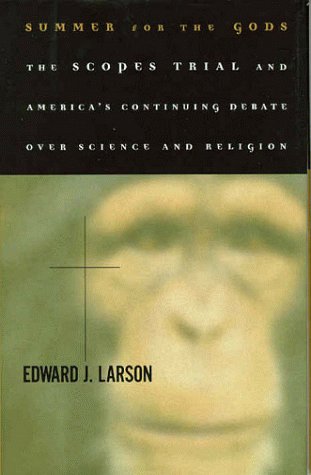
My colleague and one-time dean, Michael Zimmerman of Butler University, has brought his Clergy Letter Project to the Huffington Post. Well, he has written an online piece for the Huffington Post entitled “Redefining the Creation/Evolution Controversy.” His article is clear and to-the-point: the Creation/Evolution debate is not about religion versus science. That has been shown repeatedly for those who care to examine the history of this controversy. Evolution barely caused a ripple among clergy when it was first becoming popular among scientists. Ministers assumed it was just one of God’s mysteries and went about their clerical duties. The issue became a public relations boondoggle with the Scopes Trial of 1925. One of the best books written on that subject is Edward Larson’s Pulitzer Prize-winning Summer for the Gods.

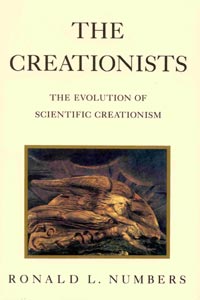
As I have stated in my podcast on this issue, Creationism is a splinter movement within Evangelical Christianity. Over the years it has drawn in members of a wide variety of Christian groups, including Roman Catholics and mainstream Protestant denominations. It has publicized its concerns so well that many people assume that this is the “Christian” viewpoint and that all other views are, by definition, non-Christian. This is the perspective that has driven a wedge between religion and science, creating a false front that has led to many confrontations between Evangelicals and scientists. My favorite history of the Creationist movement is Ronald Numbers’ The Creationists.

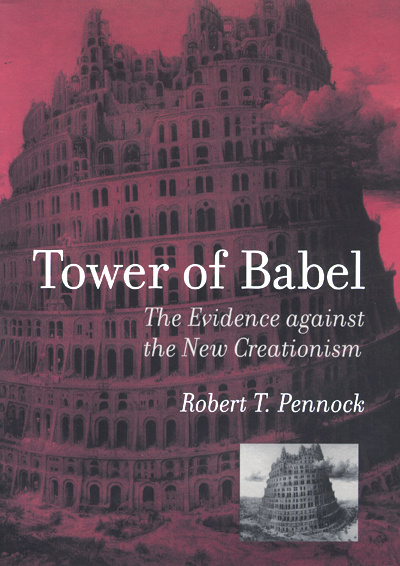
The true motivation of the movement is, without doubt, political. While many sophisticated people scoff at the apparently simplistic machinations of the Creationist movement, what they do not realize is that it is a highly organized and politically savvy alliance of special-interest groups. Robert Pennock’s Tower of Babel was an academic exposé of the inner workings of the Creationist movement. It is perhaps the most important book written on the subject. Published by an academic press, however, it has not found the wide public readership it deserves.

Do yourself a favor: read Dr. Zimmerman’s post. I believe he has framed the dilemma in the correct way: the struggle is one within a specific religion, Christianity, not one between religion and science. The more the public knows about this issue the better off we all will be in the long run.


Neo-Cons and Mockingbirds

Among my high school catch-up reading is one of my favorite novels, required in my own youth, Harper Lee’s To Kill a Mockingbird. While a certain distress accompanies the fact that I read this book over thirty years ago, as I reintroduce myself to the welcoming characters of Scout, Jem, and Dill, I lament that there is so much to read that we can’t simply linger on the great works of literature we’ve loved before. Reading the novel as an adult there is much, I am certain, that I missed the first time around, not knowing what to expect as I approached the story with no preconceived notions.

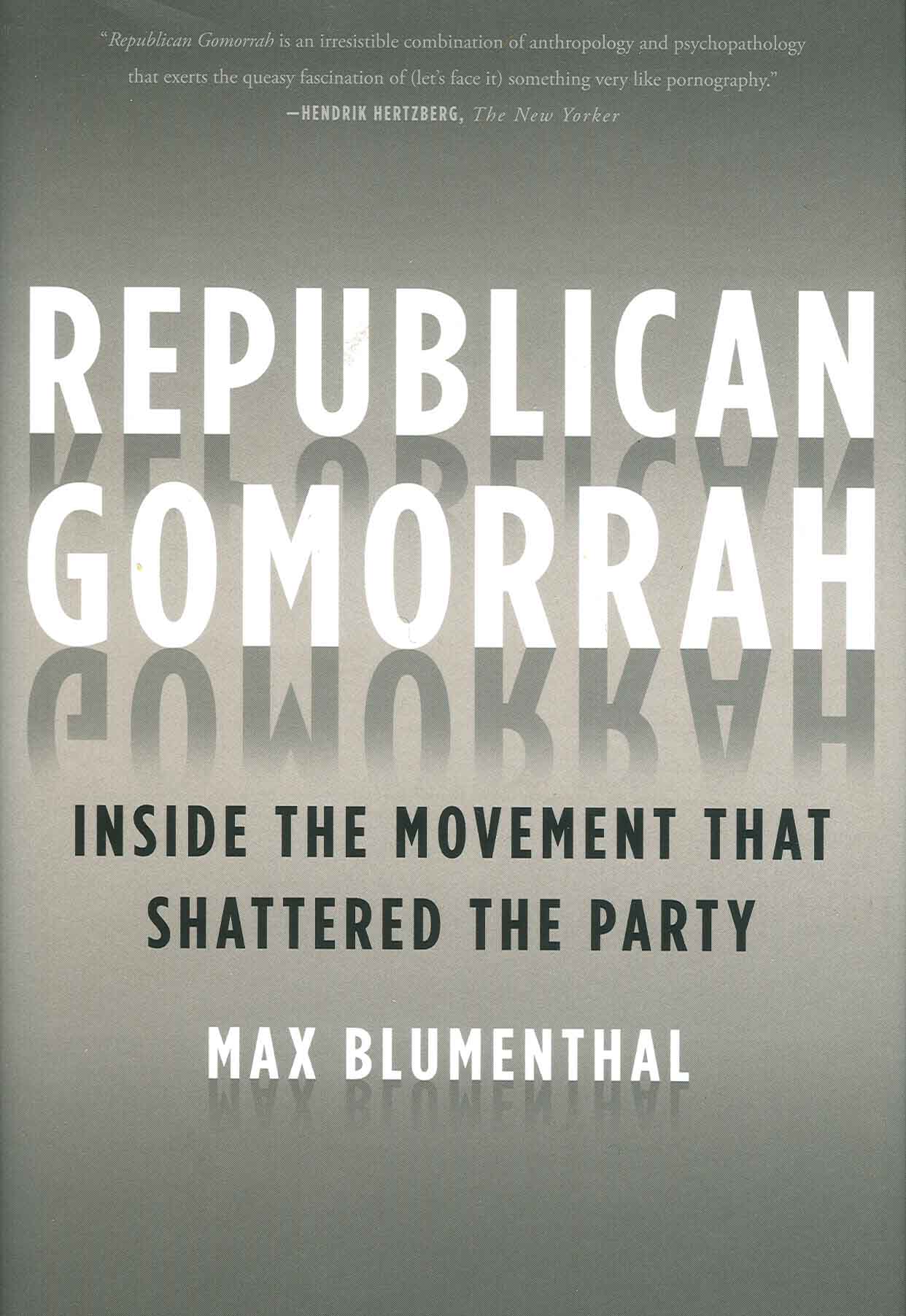
One of the constant stresses I lay on my students is how the Bible utterly suffuses American society. We are bombarded by Bible, whether we know it or not. It was with appreciation, therefore, that I saw the exchange between Scout Finch and Miss Maudie in chapter five. Miss Maudie, complaining that “foot-washing Baptists” take the Bible a little too literally, declares, “but sometimes the Bible in the hand of one man is worse than a whiskey bottle in the hand of – oh, of your father.” (The incongruous image of Atticus Finch drinking whiskey is not lost on his young daughter.) This statement summarizes much that is true in today’s society as is evident in Max Blumenthal’s Republican Gomorrah. Many Americans create an idolized image of the Bible that is used to gain control over others. When such individuals gain political power everyone else is at risk.

In the backlash to having a moderate man elected to the presidency, the news is full of biblically constricted complainers who fear the impotence of the Bible. Their fears are unfounded. Our society has been constructed on foundation blocks of biblical literalism and although the superstructure is unaware of it, the Bible continues to root many Americans firmly to their planet. The “founding fathers” were not Christians, but many of their country-folk, Puritans and others fleeing the formalized religions of Europe, were. The aggregate of their descendants has been tapped successfully by neo-con politicians to win elections and referenda around the nation. There is no end in sight. If only the wisdom of Miss Maudie were taken a little more seriously, we might have a chance to move beyond the illusion of a pristine yesteryear that never was.

Killing me biblically


WWJWF?

On the way to work yesterday, my wife spotted an old billboard ad that read, “My birthday wish: Protect life from conception until natural death. Jesus.” Now, I realize that this is a belated birthday response (or perhaps premature – scholars of the Christian Scriptures tell me Jesus was likely born in April), but I felt compelled to exegete this wish. In the biblical world, which, by definition, includes Jesus, there was no such thing as conception as we know it. Ancient folk did not know about sperm and ova, and so “conception” was simply the act of carrying a child. When it began they did not know. The Bible is pretty clear that breath indicates life, so life begins at the moment of the first breath. Everyone in the first century knew that.

As a good Jewish believer, Jesus also knew that the Bible dictates scores of reasons that life would not end naturally. Many acts considered normal and healthy today were singled out in the Torah as offenses against the almighty, and many were worthy of the death penalty. If natural death is the divine will, well, father and son ought to have a heart-to-heart talk. I will go on the record as opposed to capital punishment. Heck, I’ll go on the record as a pacifist and a vegetarian too. I do so, however, fully aware that the Bible has a different view.

My concern with billboards like this is that they co-opt a figure who cannot correct the human errors of misreading emotion for righteousness. Anyone with money can make up a birthday wish for Jesus and, with a willing vendor, splay it out for all passing motorists to see. I respect the sanctity of life, but I don’t force my wishes into Jesus’ mouth. We have the Bible, we have brains. For those who want to know what Jesus really wished for, it is a simple a matter as reading a book.


Burning Crosses and Aftershocks

In a small blurb I would have missed had my wife not pointed it out, today’s paper carried a brief follow-up on the religious implications of the Haiti earthquake. The story (caption) ran: “A Christian mob circles a burning stack of items to be used for a Haitian voodoo ceremony for earthquake victims while singing church hymns in the Ti Ayiti neighborhood in Cité Soleil. The voodooists were run out of the central pavilion under a hail of rocks, and all the ceremonial items they left behind were destroyed and burned.”

My mind, at seeing burning religious symbols in the picture, turned to the infamous burning crosses used by equally intolerant “believers” in the last century in this country. Perhaps the motivation for burning the symbols is different, but the message is the same – a very narrow band of the wide continuum that is Christianity has decided that another variety of human being must be brought under control or destroyed. I don’t seem to recall reading in the Gospels, or even Paul for that matter, that throwing stones at believers in other faiths was a recommended activity. The voodou service, according to the blurb, was intended to help earthquake victims. Instead, the Christian faction forcibly drove them out and violated their religious symbols. Could they not have been spending helping victims instead?

I am not the sort to throw the first stone, knowing my own faults all too well, but the rampant supersessionism of an entitlement generation Christianity is showing its ugly side in such an instance as this. If religions are not here to improve the lives of others, then what is their purpose? To placate mythical gods to ensure one’s own blessed future, no matter who has to be hurt along the way? It seems to me that less time burning religious symbols and more time helping the needy is a platform worthy of any honest religion.


How Flat is Your World?

I talk so much about lenses in class that some of my students must think I’m a closet optometrist. The lenses I refer to, however, are those that we all wear as part of our culture. We can’t help it – being born into a worldview is part of the human experience. From my youngest days I recall learning that the earth is twirling around at a dizzying rate and we are hurtling through space around the sun so fast that my thoughts can’t even keep up. These are lenses. Then we turn to the Bible (or other ancient texts for that matter) and read about the creation of their world. To understand their worldview we need to take our lenses off.

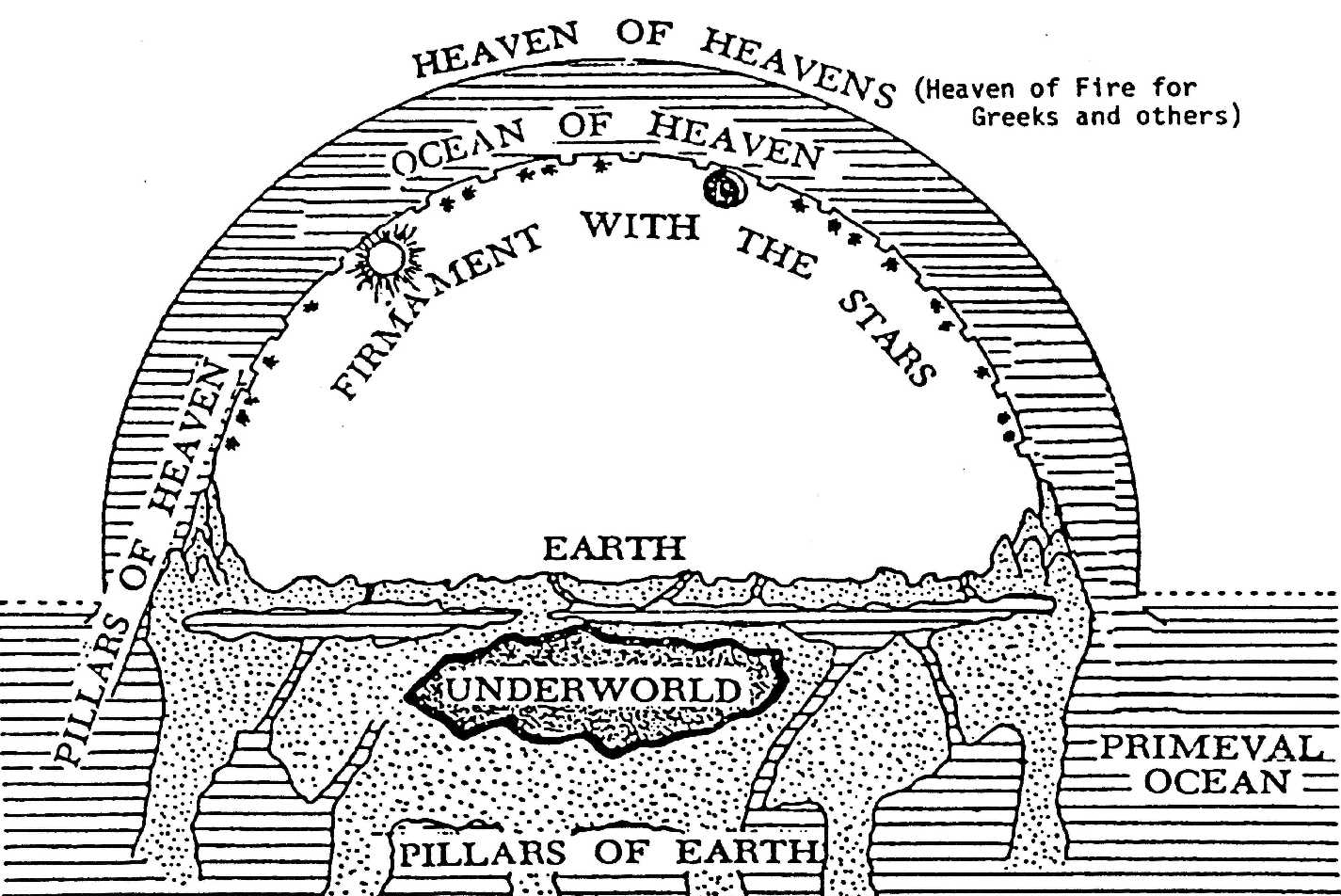
Last night I could see the understanding dawning on some faces in the classroom as I described ancient Israel’s worldview. They were flat-earthers, each and every one. The world that is described in Genesis 1 is flat with an invisible dome over it, a dome that holds back the cosmic waters and provides a living space for the sun, moon, and stars. The flat earth is upheld by pillars that erupt through the surface in the form of mountains, and there is water around all. Genesis 1 does not describe the creation of water; it is already there. You can tell there is water above the dome because it falls on us whenever it rains. Oh yes, and dead people are in Sheol, somewhere under our feet. This is the world that God creates in six days. It is not our world. It was their world.

One possible rendition of an extinct worldview

It is not that the physical world has changed, but perceptions of it have. When I stand outside (this was especially noticeable when I lived in central Illinois), I see the world is flat. I feel no motion – I get sick as a dog swinging my head around too fast, so I would know! The difference is that I understand apparent reality is not the same as physical reality. The writers of Genesis 1 did not anticipate our world, nor did they describe how it came to be. They described the world they knew, a world that does not actually exist. Fundamentalists today claim that the Bible is factual in its description of the creation, and that may be the case. But only if you take your lenses off and admit that the world God created is flat and is covered by a dome. And by the way, it looks like the windows of the sky were left open because it is beginning to snow again.


Prosperity Update

I didn’t have the opportunity to write a post yesterday because my PowerPoint file for my class had been deleted. I still don’t know how. I’ve been using varieties of the same computer I have now for about 20 years and I’ve never lost a file before. I discovered this, of course, just before I began packing the car with the sherpa-load of equipment that I need to haul the 50 miles to Montclair with me to teach my class twice a week. The loss of the day’s lecture notes weighed heavily on my mind as I climbed into my car and discovered a problem with the electrical system – the blinker lights on the right wouldn’t shut off. (They finally started to behave normally half-way to the university.) And a blizzard was on the way. At times like this my thoughts turn to my prosperity cross.

I wrote about the cross in a previous post where I indicated that I was going to try a good-faith experiment to see if God really wants me to prosper. The last 17 years haven’t been good financially, so I tried my best to believe, and I have been carrying the cross around with me for a few weeks now. In that time I have had a publication rejected, did not get a full-time job after a very good interview, didn’t win the lottery (I bought a ticket as an experiment although I never play normally), my wife had more hours added to her job with no increase in compensation, my health insurance company politely declined to pay for an expensive dental procedure, and I have yet to be paid for my four weeks of teaching at Montclair. Oh, and two cars very nearly collided with me yesterday (not because of my blinker! One tried to pass me on the left as I was making a left turn into a parking spot in a parking lot, the other passed me on a single-lane entry ramp onto the Garden State Parkway while I was merging at the posted speed limit). I’m beginning to think they sent me a defective artifact.

In my prophecy class we’ve been discussing divination. From ancient times people have attempted to discern the will of the gods through a wide variety of techniques. Watching birds in the sky, smoke from altars, oil on water (haven’t discovered smoke on the water yet), casting lots, reading animal livers, and having significant dreams – any of these might reveal the hidden will of the gods. And ancients carried talismans at times to hedge the odds in their favor. We like to think of ourselves as more sophisticated than that, relying on more updated and civilized ways of influencing the almighty. My pocket cross is one of those modern means to induce divine favor my way. Perhaps I am reporting too soon, since I’ve got a backlog of nearly two decades of financial woes to overcome. In the short term, however, it looks like a real blizzard is on the way.

Secrets of my sucess


Constantine’s Dilemma

A time-honored adage educates each generation not to discuss religion or politics in polite company. The reasons for this are transparent; both religion and politics tend to be fiercely held belief systems and clashes between differing parties seldom end without scars and regrets. I recently read Max Blumenthal’s Republican Gomorrah: Inside the Movement that Shattered the Party. Initially my impression is that this book ought to be required reading for members of any political party so that they might find documented evidence of whence the real power struggles lie. It is known by anyone with a modicum of political savvy that the past several presidential elections have been decided on the success of courting voters of the evangelical variety of Christianity. What Blumenthal reveals and other sources confirm is just how intermixed religion and politics have become.

One of the most important books of last year

This is a very thorny issue. America was founded as a nation advocating religious freedom and also as a nation that would open its leadership to any qualified (more-or-less) candidate. Clergy have historically served in politics, but presidential candidates who are actively ordained and practicing their office have been rare. Not so rare in recent years, however, are those who forsake the adage and boldly proclaim their faith as a key to garnering votes. This has led to a public interest and scrutiny of what used to be the extremely private life of an individual. Religious beliefs, quietly held, motivate many people – presidents and politicians included. The difficulty Blumenthal highlights erupts when the genuinely religion-driven charge for political office with the hopes of implementing policy based on their personal faith. Americans have taken a new interest in discovering what the Church of Jesus Christ of Latter Day Saints is all about with the recent candidacy of Mitt Romney. We covered that religious landscape in Religion 101. Reading Blumenthal, however, I learned something new about Sarah Palin’s religious convictions.

Deemed “the Third Wave” movement (see also Bruce Wilson’s article in the Huffington Post), Palin’s religion is a variety of Christianity I’d never heard of even with a lifetime in the field of religious studies. What seems clear from the sketchy information available is that the putative wave began in the 1980s (when I was too busy studying religion to notice) with the work of Rev. C. Peter Wagner. Its goal, according to its theologians, is the takeover of first the church and then the world. Not just metaphorically. Since Palin told reporters, according to today’s paper, that she is seriously considering a run for the presidency in 2012, I wonder if it is time for all of us to go back to school and learn a little more about this variety of religious belief. I’m old enough to remember a time when politics was politics and religion was religion, and ne’er the twain did meet. That day is gone, and Americans will find it necessary to learn about religions again to discover the sometimes hidden motives behind politicians’ decisions. Max Blumenthal’s book is an excellent primer, but frankly, I long for the days I still recall when politics and religion had separate, securely locked bedrooms.


Who’s Your Mummy?

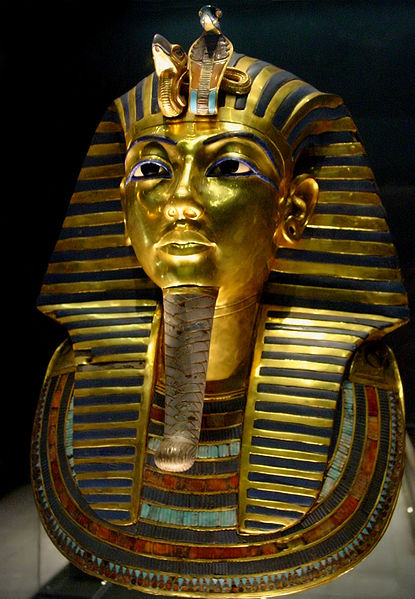
Yet another paternity suit appears in the news as promiscuous fathers try to slink off into the pages of history. This time, however, the kid is famous and his father will bask in reflected glory. Scientists in Egypt have been doing DNA tests on King Tutankhamun, “King Tut,” to determine the father of this most famous of pharaohs. Nor is this an idle bit of trivia, since it may rightfully be claimed that American interest in ancient Egypt was born with the discovery of Tut’s tomb in 1922. Art Deco styles began to emulate ancient Egypt, and even skyscrapers in Manhattan incorporated pharaonic stylings. If it weren’t for Tut’s wealth, this experiment wouldn’t garner any public interest at all.

Tut's famous visage from Wikipedia Commons

In a classic case of ancient meets modern, the paltry wealth of Tutankhamun’s burial dazzled American imaginations. Here was a guy who matched the American dream – young, exceptionally wealthy (by even today’s standards), and powerful. Not just a metaphorical god, but a literal one as well. And yet his kingdom was troubled. Was it his father (Amenhotep IV, aka Akhenaten) who launched Egypt into turmoil with an unwanted religious revolution? The state reacted strongly, foundering under this uniformity of a religion that many couldn’t accept. Young Tut was forced to recant, if he hadn’t already rejected the reforms of his predecessor, back to the “old time religion” of eternal Egypt.

We may not know for sure who his father was, but King Tut remains a symbol of the power of religion. Ancient and modern believers alike ascribe strongly to their perceptions of the true religion. No one knowingly accepts a false religion. The truth claims of religions are sometimes mutually exclusive. What seems to have brought about the collapse of the 18th Dynasty of Egypt was the insistence on a religion not widely accepted, but enforced by the government. Considering the religious outlook of the James Dobsons, Pat Robertsons and Sarah Palins of our own political landscape, such a collapse becomes comprehensible. Religion must be allowed its freedom to be sincere. Those who believe only because forced to do so will soon place their own child king on the throne, regardless of whom his father might have been.


The Truth is in Here?

Constantly trawling for the shattered detritus of truth that rests scattered around our lonely little planet, I have often supposed they were here. I have never seen them, but in the Drake Equation there is a high probability that they exist. And now the newspaper says they may have been here all along. And closer than we thought.

Aliens. These latter-day angels and explorers of the cosmos are often pictured like E-T or the little gray aliens from Close Encounters of the Third Kind. The latest findings suggest they could even be quite a bit smaller than that. Paul Davies, a physicist from Arizona State, believes that life may have developed multiple times on earth, and perhaps some of the googol of microbes on our planet may have their origins in space. These potentially extraterrestrial microbes, he stated could be “right under our noses – or even in our noses.” Yikes! Time to put up the intergalactic “No Trespassing” sign!

Stop the alien menace!

In all seriousness, however, this concept of multiple origins of life, I fear, will be latched onto and misread by our Creationist fellow-life forms. I can see the fingers stiff from grasping at straws claiming that now there is scientific proof that different species do have different origins, thank you Mr. Darwin. The price to pay, if they apply logic, however, is not one evolutionary track, but many.

The movie Creation, focusing on Darwin, opened this past weekend in the United States. Delayed because of concerns that Americans can’t handle the truth, this film about Darwin’s sad voyage to the inevitable truth of natural selection will surely raise evangelical ire. Nevertheless, we did not design this world we evolved into, we simply inherited it. And the closer we peer at it, the more complex it becomes. These multiple evolutionary tracks may also explain the origin of Creationists – could they come from different stock than scientifically minded folk? In any case, the news today provides yet another reason to keep our noses clean and our eyes on the skies.