Dangers of Experience

I’m so used to being behind everyone else that when I turn out to be ahead of the curve it occasions genuine surprise.  That’s the way it appears when I think about the dominance of the far right in American politics.  As an editor I get to read proposals for other editors on the board.  Political scientists are trying to analyze how we’ve come to be a nation of religious far-righters when we seemed so progressive that we put a smart phone in everyone’s pocket and Alexa in everyone’s voice range.  I grew up as a far-righter when it certainly felt alienating.  Apart from people we met at church I didn’t know any others outside my family.  People we knew were, well, just different.  Back in those days we didn’t judge them.  We accepted them for who they were.

One of the aspects of my life to which I’ve grown accustomed is being ignored.  I’m not a big person, nor am I a loud one.  It isn’t unusual for me to be overlooked at work and even at religious gatherings (a field in which I’m a bona fide expert).  Nevertheless, I have a wealth of experience among the far-righters and I think it might help to understand our political climate.  I think I have a pretty good grip on what motivates this crowd.  Since I grew up (serious study will do that to you) and am no longer arrested at that stage, I’ve blended into the crowd as someone just as perplexed as everyone else.  I do, however, have an idea of what they’re after.  Our particular sect didn’t push this—we seemed more worried about our own souls staying out of Hell—but many fundamentalists wanted to take over the nation.  In fact, they have.
The fact that 45 isn’t one of them is immaterial.  Power is the thing.  Power to make others conform or suffer.  This particular faith is built on fear, not love.  It’s as if their New Testament lacks the gospel of John.  You see, I was ahead of the curve.  I was part of it before it took over congress, the White House and the supreme court.  Things move so far these days that thinkers just don’t have time to think about everything.  Work days are long and covid still complicates everything.  Who has the time to seek out those who grew out of the very source that now endangers our democracy?  I think I prefer running a little behind, don’t you, Cassie?

BBW

It’s a measure of how busy I am when Banned Book Week has started before I realize it.  Most years I make it a point to read a banned book at this time, but my reading schedule is so crowded that I seem to have missed the opportunity this year—I didn’t see it coming.   I’ve read a great number of the top 100 banned books over the years, and I’m sure I’ll read more.  I’ve recently been reading about America’s troubled history with free expression.  Probably due to a strong dose of Calvinism combined with Catholicism, many of the books challenged and banned, as well as prevented from ever seeing the light of day, have to do with bodily functions.  Sex, especially.  In American society, as freely as this is discussed, we still have a real problem when someone writes about it.

Why might that be so?  Many religions recognize the privacy aspect of sexuality without condemning the phenomenon itself.  The Bible (which is on the list of Banned Books) talks of the subject pretty openly and fairly often.  Our hangups about it must be post-biblical, then.  Much of it, I suspect, goes to Augustine of Hippo.  Although he had a wild youth, Augustine decided that nobody else should be able to do so guilt free, and gave us the doctrine of original sin.  Add to that the legalistic interpretation of Paul and his school, and soon the topic itself becomes difficult to address.  Victorian values, obviously, played into this as well.  Literature, which explores every aspect of being human, is naturally drawn to what is a universal human drive.

Banned Books also treat race—another topic that haunts America—or use coarse language.  Some challenge religious holy grails, such as special creation or Christian superiority.  It seems we fear our children being exposed to ideas.  The wisdom of such banning is suspect.  The publishing industry has many safeguards in place to create age-appropriate literature.  Banning tends only to increase interest by casting the “forbidden” pall over something that is, in all likelihood, not news to our children.  American self-righteousness tends to show itself in many ways, making much of the rest of the world wonder at us.  We seem so advanced, but we fear a great number of rather innocuous books.  The reasons are similar to those behind why we can support tax-cheating, womanizing, narcissists as leaders: our faith blinds us.  I may be late in getting to my banned book this year, so I guess I’ll just have to read two next time.


Up in the Sky

Superman stands for truth, justice, and the American way.  Or least he did when I was a kid.  One out of three ain’t bad.  Considering the many exposés that have come out about Trump in the last few weeks, many of them by intimate family or very close friends he’s recently betrayed, are a pretty amazing example of a liberal hoax, I guess.  Witness after witness after witness comes out saying that truth, justice, and the American way simply aren’t important to 45, and yet the evangelical bloc insists differently.  They can’t seem to see that those who like Superman don’t object to your garden variety Republican (although we prefer the other alternative), we object to Duperman saying he’s Superman.  When in history have we had several party members advocating that people not vote for their own party’s candidate?  And yet the true follower can’t accept the witness of closest friends and fixers that they’ve been lied to for four years.

Like many people I would rather not be political.  When it becomes an issue of destroying democracy, however, it suddenly seems like I have to add yet another thing to my already full plate.  For four years now I haven’t been able to trust the government to do its job.  Trump admits that he ignored how serious he knew the Covid-19 crisis to be back in the spring.  Six months later and we’re all still confined to our houses and businesses are suffering, and his supporters say he read this one just right.  Over 200,000 of our fellow Americans have died from a virus that our “president” won’t admit is a problem, even as the White House has taken over writing guidelines for the CDC.  Boy, are we ever great hoaxers over here on the left!

I recall Superman flying around Metropolis actually fighting crime.  Ensuring that the truth was upheld.  Justice was essential.  People adored him.  What happened on the way from Super to Duper?  We’ve come to praise a man who is a sworn enemy to justice unless there’s something in it for him.  Whose number of documented lies by any measure staggers the imagination, and yet whom “true Christians” support.  The Superman of the New Testament had quite a bit to say about truth and justice (the American way was a bit beyond his experience).  Those who lived in lies were considered friends of the Devil.  But times have changed since then.  Heck, they’ve changed since I was a kid.  We used to look up to Superman in those days.  Now we apparently prefer lies, injustice and what is apparently becoming the American way.


Laughing Maher

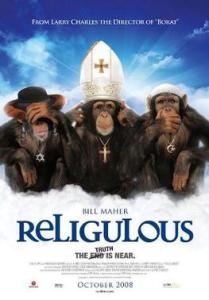
I recently rewatched Bill Maher’s Religulous.  I posted on it some years ago, but time changes perspectives.  Thinking back over the fun he makes against the religious, it is really only the Fundamentalist stripe that he scorns.  Whether Christian, Islamic, or even Jewish, he has little tolerance for those who take their sacred texts literally.  The Vatican scientist he interviews makes it through unscathed, but mainly because he’s arguing Maher’s point that the Fundamentalists aren’t at all stable.  Having noted that, Maher barely scratches the patina of the whole wide spectrum of religious outlooks.  Many of them are quite sensible, and some don’t even rely on the supernatural.  What he seems to have overlooked is that there is a vast complexity to religious thinking and people who believe aren’t always benighted.

Long, hard reflection on religion may be rare, but traditionally the seminary was the vehicle for those with the capacity for such thinking.  (Today seminaries are likely to accept just about any applicant and churches are facing shortages of clergy, making the rigorous thinking an elective course.)  It’s easy to make fun of the monks in their scriptoria, but those who learned to think logically—scientifically even—about matters of belief informed the best philosophers and other ”thought leaders” of the time.  If religion was the inspiration of scientific thinking (which then developed into humanism), it can’t be all bad.  Certainly there are and always have been abuses of the system.  Like science itself, thinking through this is a complex exercise.

Religulous is a fun movie.  Bill Maher is a likable narrator and he admits, at several points, to not knowing whether there is a God or not.  It is pretty easy to spot those whose religious beliefs are really more scarecrows than solid granite.  Literalism is pretty indefensible in the age of smartphones and the internet.  We’ve been far enough into space to know there’s no literal Heaven “up there.”  But this doesn’t mean religion has no value.  Many, many sensible religious people exist.  Most of them don’t cause trouble for society or embarrassment for their co-religionists.  Extremists, however, do both.  Unswayed by the damage they do, convinced with no evidence beyond personal feeling, they are willing to risk very high stakes indeed.  Those are the ones Maher is trying to take to task in his documentary.  On the ground religions are complex and psychologically helpful.  Complex subjects, as any thinker knows, bear deep reflection.


Marching down the Middle

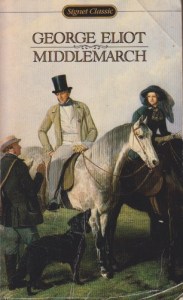
It is true that I have a fondness for nineteenth-century British novels.  Even though they often lack a strong speculative element they tend to be gothic, at least if written by one of the Brontë sisters.  I’d only ever read one of George Eliot’s novels before, and that was in ninth grade.  Middlemarch has been on my list for many years, but due to its intimidating size I’ve kept putting it off.  Now that I’ve read it I feel like I’ve accomplished something.  I had no idea what the story was about in advance, and no idea how it ended.  Unlike many pieces of literature of its time it hasn’t made a huge impact in pop culture, so this was the opportunity to lose myself for a few months in a world completely unknown.

I’m not foolhardy enough to try to summarize an 800-page novel here, but one aspect that the reader can’t help but notice is the prominence of clergy.  And not only prominence, but prestige.  In a world built around the solid belief in different classes of individuals, where pride takes a place in marriages that are supposed to be within class, the clergy are minor nobility.  Since this is the Church of England the vicars can marry and indeed, one such marriage sets off the tension that lasts throughout the hundreds of pages to come.  The clergy of the time were often gentleman scholars—the role that was envisioned for Charles Darwin as a young man.  Eliot plays on that idea with some of her preachers being amateur scientists.

The conflict—that now feels inherent—between science and religion has less to do with older forms of Christianity than it has to do with evangelicalism.  A relatively new expression of Christianity, evangelicalism set itself against modernity and its science.  Quite often today when commentators rail against “religion” it is really evangelicalism that they have in mind.  In the world Eliot sketches, she sees no difficulties between a rational view of things and an ecclesiastical one.  Clergy are often seen at the whist tables and taking long walks down country lanes.  The distinction between them and the average citizen is that they have been to university to study.  Today, in mainstream Christianity anyway, clergy are educated at least to the master’s level.  They’re no longer among the minor nobility, however.  Middlemarch has more than a hint of nostalgia to it, and the clergy roles show that clearly.


Biblical Museum

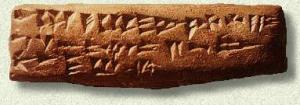
The Museum of the Bible has never successfully steered itself away from controversy.  Just a couple weeks back a story on NPR reported that federal authorities have determined that one of the MOB’s tablets of the Epic of Gilgamesh is a stolen artifact and it must go back to Iraq.  While I don’t question the decision, I was a bit surprised that the Feds knew or cared anything about cuneiform documents.  My academic specialization was Ugaritic, which is a language that was written in cuneiform.  I quickly learned after my doctorate that no jobs exist for Ugaritologists, so you have to style yourself as a biblical scholar.  The Museum of the Bible seems quite aware of the connection, but don’t go there looking for tablets.  They belong elsewhere.

There is a public fascination with cuneiform, it seems.  That doesn’t translate into jobs for those who know how to read wedge-writing since universities have become places of business.  Their product—what they sell—is called “education” but in reality it is accreditation.  Anyone who’s really driven can get a fairly decent bit of knowledge from the internet, if it’s used wisely.  The most reputable sources are behind pay walls of course.  What kind of civilization would give away knowledge for free?  Anything can be commodified, even the knack for reading dead languages.  One of the perks you pick up by studying this stuff officially is that artifacts really belong where they were found.  Unprovenanced pieces are now routinely ignored by specialists because they’re so easily faked.  That doesn’t stop those who can afford to from buying them.  Right, Mr. Green?  You’ve got to beware of the seller, though.

A few years back many of us watched with horror as extremists destroyed ancient artifacts kept in Syria’s museums.  These were objects we’d spent years of our lives studying, and which cannot be replaced.  They were “at home” where they belonged, but where some, at least, clearly didn’t appreciate them.  Those of us who’ve studied ancient history recognized such behavior, I’m afraid.  We’d read about it in documents as ancient as the artifacts being sledgehammered right there on the internet.  Or you can buy such documents illegally sold and put them in a museum dedicated to a book that says somewhere that “thou shalt not bear false witness.”  Such are the ironies of history.  But then, as its provenance shows, that sentiment is apparently a museum piece as well.

Photo credit: Chaos, via Wikimedia Commons


George Floyd

Perhaps for the first time in four years, 45 is beginning to see people are unhappy.  Very unhappy.  The pontiff—excuse me—president wanted a photo-op with the Good Book at a nearby Episcopal Church and had crowds of protesters tear-gassed so the he could make himself look righteous.  My wife pointed out that this was an example of the Bible as a Ding, and she was right.  (If you don’t get the reference, it’s explained in Holy Horror.)  Moreover, it is a clear abuse of power.  Not only have thousands of Americans been needlessly dying from COVID-19, the violence against African Americans is caught time and again on police body-cams.  People are rightfully protesting and the racist-in-chief doesn’t like it.

It doesn’t work unless you open it.

With echoes of Tiananmen Square he’s now threatening to send the military against protestors.  It’s far easier to strike out at people while holding a Bible in your hand than it is to learn empathy.  We’ve been isolating and masking ourselves for over two months now and not one word of sympathy has come from the White House incumbent.  Instead of trying to calm racial unrest, he tweets to conquer, not realizing that divide and conquer is meant to be used against enemies of your nation, not your own people.  Never had we had a president who has so openly played favorites and made not even a pretense of being a leader for the entire country.  He is a figurehead of his base only, which is, it seems to me, a violation of the oath he swore on that selfsame Bible not even four years ago.

Pandering to such a Ding is an abuse of Holy Writ.  After unrest over George Floyd’s murder had entered its third night the response from 1600 Pennsylvania Avenue was silence.  How far is it from here to Tiananmen Square?  Is it not possible to admit error and realize that the economy is going like the Titanic’s maiden voyage and just about everyone knows someone who’s died because of the virus or who’s been racially profiled by one of the “good people on both sides”?  No, grab the Bible and clear the rabble who won’t shout “Hosannah” when he rides his ass outside a church whose door he’s seldom darkened to show his base he really is a Bible-reading man.  Was this some bizarre parody of Jesus clearing the temple or just a mockery of the man who said “By their fruits you will know them”?  There’s only one answer to that.  How different the world would be if Bible-believers actually read the book they love to thump.  


WHO Believes?

These days it’s pretty clear that if you want to listen to anyone for advice it shouldn’t be the government.  I suppose that’s why I spend so much time on the World Health Organization’s page.  I’m no medical person and I certainly don’t understand epidemiology.  Contagion I get, because religion operates that way.  So WHO has been making somewhat frequent references to faith.  A recent status report noted that 84% of the world’s population reckons itself as religious and that many coronavirus outbreaks have taken place because of continued religious gatherings.  To that I suspect they’ll need to add political rallies supporting governments you shouldn’t trust, but what is such blind faith in leaders who don’t know what they’re doing if not religion?  People want to believe.

Religious gatherings also provide crucial support.  The community with which I associate has been using Zoom gatherings since mid-March.  It’s not perfect, of course, but during our virtual coffee hour I’ve been put in breakout rooms with people I don’t know.  I’m starting to get to know people I might be too shy to speak with in “real life.”  More than that, I’m asking myself what real life really is.  Technology has been pushing us in this direction for some time.  We relate virtually rather than physically.  I’ve never met many of the people with whom I have some of my most significant exchanges.  The internet, in other words, has an ecclesiastical element to it.  The words “church” and “synagogue” both go back to roots meaning “to gather.”  Faith, despite the stylites, is not lived alone.

WHO suggests that since religious leaders influence millions of people, if they would turn their message to prevention it could have a tremendous human benefit.  Consider how one man’s personal crusade in the mid-nineteenth century led to elections being decided on the basis of abortion alone.  If faith leaders were to take the good of humankind to heart and spread that message, it could well outstrip the virus.  Alas, but politics interferes.  Many religions also want to determine how people live.  There’s power in that.  We’ve seen it time and again with televangelists.  WHO has faith that these leaders might set aside their scriptures for a moment and read situation reports based in science and rationality.  WHO apparently has faith as well.  Until someone smarter than politicians sorts all of this out we’re probably safest meeting virtually.  Who knows—perhaps there are hidden benefits to that as well?


Denying Reality

The science-deniers in the White House have had to accommodate themselves to evidence-based facts and they look none too happy about it.  Science denial has a long and venerable history in a certain type of evangelicalism.  Science teaches us that most things are more complex than they seem and this is also true of religions.  There are evangelicals all over the board, but those claiming the name most loudly have been outspoken Trump supporters.  The administration has had a three-year spree of decrying science and now that a very real virus is killing us they have no choice but to listen, albeit reluctantly.  So why do certain strains of evangelicalism deny science?  Is it all for profit?  Is there some kind of biblical mandate?

As someone who spent many years making a living as a biblical scholar (and it still plays into my work), I often think about this.  There is the underlying reliance on miracle as opposed to naturalism, for sure.  If God can do anything then science is ever only contingent.  Any moment a miracle (a word that doesn’t occur in the Bible, by the way) could happen and there’d be no way to measure it.  The main reason, however, goes back to Genesis and its creation stories.  When you read a book first impressions are important.  The Good Book begins with a theological account that eventually came to be taken literally.  It’s as if someone decided to live by a poem, taken as fact.  Some things can’t be expressed except with metaphorical language.  But since this creation takes place up front, any challenge to it is an affront to the Almighty.

The antagonism set up by Darwin’s discovery of evolution set the whole confrontation in motion.  Evangelicals in the late 1800s were feeling pushed into the corner by the overwhelming evidence that the creation accounts in Genesis were not factual.  This insult to miracle has simmered for well over a century—the Scopes trial, well into this period, took place 95 years ago.  Fear that the Bible’s loss of science authority might somehow lessen its spiritual message became a ditch in which to die.  Big business learned, back in the seventies, that evangelicals made great followers and could constitute a voting bloc if only a cause could be raised around which they’d rally.  We all know what that was.  That issue has led to the denial of science and the acceptance of anyone ill-informed enough to accept such denial.  Only after learning that you must fight pandemics with science has the White House had to start changing its story.  When it’s all over, however, it will go right back to denying everything.


Disease Divine?

I suspect many religious people are wondering where God is amid the current pandemic.   Theodicy (explaining the suffering of the innocent while defending the goodness of the Divine) has always been the bête noire of monotheistic belief systems.  (Polytheism has the advantage of always being able to blame another god.)   People have been pointing articles out to me that show the religious implications of a crisis.  I’m not at all surprised by the irrationality of the subjects.  The first article was an opinion piece in the New York Times.  It makes a good case that the religious right paved the way for the COVID-19 contagion in the United States.  The religious right is anti-science because they (wrongly) believe the Bible is a science book.  Even a small dose of seminary could cure that ill.  Katherine Stewart nevertheless makes a strong argument that the survivors of all of this will know whom to blame.  Science denial is not the same as authentic religion.

From NASA’s photo library

The other news stories that arise are of evangelical leaders defying government bans or guidance, even when delivered by messiah Trump, to large gatherings.  One of the main reasons for this is that said messiah kept saying the coronavirus was nothing to worry about.  Only when re-election seemed unlikely with all the uneducated dead did he finally start issuing warnings to avoid such idiotic congregating.  In the midst of it all, Jerry Falwell Junior (why did all these evangelists have to propagate?) decided to reopen Liberty University.  No doubt confident that God will keep them from any harm, the university officials decided it would be good to gather students from all over the country and put them together in dorms again.  If you’ve ever lived in a dorm I’m sure you can see why the decision is anything but wise.

It’s sad that evangelicalism has decided to pander to the uneducated.  You can believe in Jesus (many mainstream Christians do) without parking your rationality in the farthest parking spot from the door.  Many of us, huddled in our houses, not having seen other living people for days, are trying to isolate this thing and drive it to extinction.  Meanwhile, those who trust their own version of the supernatural are doing whatever they can to ensure the virus continues to spread.  Why?  They have long been taught that science isn’t real.  Never mind that their cell phones work and they get the news of open dorms through the internet, the science behind it all is bunk.  An entire executive branch administration that doesn’t believe in science is as sure a road to apocalypse as any.


Prophets and Exiles

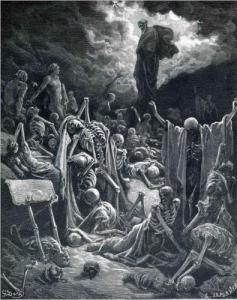
One of the scariest passages in the Bible is Ezekiel 33.7-9.  I first read this before I was a teenager and it scared me deeply.  In case you don’t feel like clicking over to BibleGateway and searching, the pericope is a section where Yahweh is warning Ezekiel about the dangers of giving up hope (in the larger context).  Ezekiel, you see, had lived through the fall of Jerusalem.  Many people of Judah felt that the destruction of the temple was the end of the relationship between Yahweh and the chosen people.  Ezekiel here is being warned to deliver good news.  If Ezekiel doesn’t call out the lie (the sins of Israel weigh it down) he will be punished as if he were the sinner himself.  I knew evangelical friends in college who lifted that verse out of context and said God would punish them if they didn’t warn the people.  They weren’t so worried about the fall of Jerusalem—that was old news by the 1980s—but about some other issue they deemed important at the moment.

Taking verses out of context has a name.  It’s called “prooftexting.”  It can be done to just about any piece of writing, including this blog post.  All it requires is finding a passage that says what you want it to and claim that it means what you say it does.  The Bible’s a big, big book.  Trying to understand its contents in context takes years of dedicated work.  Even then biblical scholars don’t have all the answers because if they did we could all stay home and surf the net for the rest of our lives.  No, engaging with sacred texts is a never-ending task, by definition.  That warning to Ezekiel was for Ezekiel.  What was that message?  Stop saying the exile is the end!  There’s more to the story.  Read the book to the end and see.

The problem with prooftexting, if I might engage in a bit of it myself, is that it takes away from the totality of the Good Book itself.  Not adding too or taking away from the Bible is a biblical command (taken out of context), which means that with the Bible it’s all or nothing at all.  And if it’s the former, it means Ezekiel’s condemnation is contingent upon what follows.  Back in biblical times there wasn’t as much reading material as there is today.  It turns out, however, that there’s a lot more written down than we used to assume.  If we’re going to read it we should do so within its context.  But just in case, please be assured that the exile isn’t the end of the story.


All Been Ready

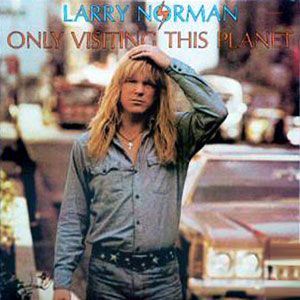
As the pandemic stretches on and getting things in stores—or even from Amazon—isn’t assured, my thoughts go back to Larry Norman.  Specifically to his song “I Wish We’d All Been Ready.”  Made famous for many by its use in the 1972 rapture film A Thief in the Night, the song recounts the state of those “left behind” when a piece of bread could be exchanged for a bag of gold.  The lyrics are haunting in their sincerity.  Here in Pennsylvania, as in neighboring New York, non-essential businesses have closed, per order of the governors.  Periodic forays to the grocery store show the empty shelves of panic buying.  Norman’s song rings in my ears.  Only this isn’t a biblical plague.  We’re just acting like it.

No doubt technology has been of great use in keeping us aware.  I do wonder, however, at how panics seem to come more quickly now.  Slowing down manufacturing will have a knock-on effect for things down the road, of course.  Right now we’re all wondering how we’re going to get through yet another day just sitting in the house.  Meanwhile the lawn is beginning to grow and I’m going to have to get out there with the push mower soon.  I’d been planning on shopping for a better one this year, but plans seem to have suddenly pooled at my feet.  What is essential travel anyway?  Does it count a trip to the big box hardware store to buy a reel mower?  Should I even bother about the lawn when there’s no toilet paper within a fifty-mile radius?  I wish we’d all been ready.

The funny thing about all this is how it makes us focus on the here and now.  While we’re waiting for things to “get back to normal” we’re being told nobody knows how long this might last and we should plan to hunker down for some time.  The International Meeting of the Society of Biblical Literature (being held in Australia this year) was cancelled.  Many of us in the discipline have had our lives revolving around the Annual Meeting in November for all of our adulthood.  If that meeting’s cancelled how will we even know when Thanksgiving comes?  Can it even come without the crowds at the Macy’s parade?  Best not to look too far ahead, I guess.  The rapture is a fictional construct, but the effects of a pandemic are eerily similar.  I do wish all of us had been ready.


Finding Fakes

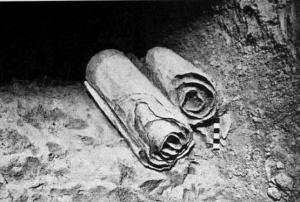
The Museum of the Bible has been a source of controversy since well before it even opened.  Many people don’t understand what biblical scholars actually do, and this leads to misunderstandings and not infrequent accusations.  Turning no basic critical thinking skills toward a museum intended to champion certain social causes (claimed to be “biblical”), those who support it can’t understand why a “biblical” scholar would object.  What do biblical scholars do all day, anyway?  We’ll come back to that in a moment.  The reason I’m writing about the Museum of the Bible in the middle of a pandemic is an article on National Geographic’s website, “‘Dead Sea Scrolls’ at the Museum of the Bible are all forgeries,” by Michael Greshko.  The Dead Sea Scrolls have captured the public imagination for decades now.  Having seen the collection at the Shrine of the Book in Jerusalem, I know it can be an awe-inducing experience.  One thing biblical scholars do is ask questions.

Artifacts are becoming increasingly easy to fake.  Some biblical scholars were fooled by these fake Dead Sea Scroll fragments.  Now, my own specialization was Ugaritic.  Ugaritic is a cuneiform language with clay tablets as the substrate.  One of the things that you learn from looking at a specialized body of material closely and for a long time is how they were written.  Some of the Ugaritic tablets have writing along the edges, like marginal scrawls.  Some are written with large characters in a clumsy hand, while others are clearly done by a professional.  With some practice you can learn to recognize handwriting even in cuneiform.  The Dead Sea Scrolls, mostly written on vellum or leather, are similar: specialists know just how they were written and close examination can reveal if they were made in antiquity or simply made to look antique.

Biblical scholars often get accused of taking the life out of things.  Would it be better to believe in something that is exposed as a fake?  Not exactly debunkers, scholars are those who ask pointed questions of unstated assumptions.  If some antiquities dealer claims to have access to material kept out of official hands, and is willing to charge you a lot for it, it’s best to call in the skeptics.  It works the same in most fields that keep our society going.  We need to trust those who’ve studied a subject in depth for many years.  Devoted their lives to it, in fact.  Many museum items around the world are forgeries and fakes.  It’s not too often, though, that someone specializing in really old stuff gets called in to make an evaluation.  There’s a risk involved—the risk of learning the truth.


CBD

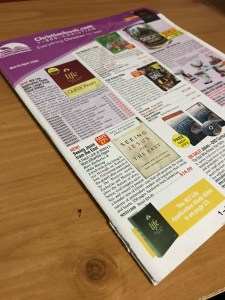
They found me.  I used to call them CBD, but because of the popularity of a certain hemp-based product, Christian Book Distributors changed its name.  Now I knew about them long before they had me on their mailing list when I taught at Nashotah House.  When I was a seminary student in Boston I made occasional trips to CBD’s Peabody warehouse for sales—this was quite a boon to students who never have enough money (little did I know!).  Books you’d heard about in class were there, for a fraction of the price.  At Nashotah I always looked over their bargain page, because, well, professors like books.  I recognized their catalogue in my mailbox instantly.  The name is now Christianbooks.com.  Grab some munchies and sit down.

Not only the name has changed.  Back in my student days I could find academic resources here.  As religion in America has become more and more polarized, what used to be CBD (if I use their current incarnation my computer insists on putting links in) has become radically conservative.  Page after page of study Bibles reveal no hint of the mainstream bestsellers in the genre.  It’s as if they don’t exist.  More than that, if you leave them out maybe people will come to believe they don’t exist.  Even the bargain books are nothing an erstwhile professor would buy.  Instead of academic titles there are all kinds of Barnes & Noble-type gimmicks to get shoppers to spend their money.  Like junk food for the soul.  I look at the books on my shelf.  Some of them were purchased, cash in hand on the ground in Peabody.  Not any more.

There will be those who claim (fake news is the only news now) that what has changed is me, not them.  The fact is places like CBD used to be more open minded.  They admitted the possibility of doubt.  Now your choices are Scofield or Ryrie.  That should be enough for any appetite.  Not only that, but many of the titles now sound militaristic.  Battlefields and all.  Thumbing through, I wonder where Jesus has gone.  The evangelicalism of my youth was clearly Prince of Peace centered.  Now it’s politicized to the point that I’m not sure what it represents beyond GOP values of greed, opportunism, and power.  Anyone who thinks differently need not apply.  How CBD found me after all these years, I do not know.  I wish they’d consider saving the environment rather than printing catalogues to send me.  The climate, despite what they would claim, has changed.


Space Farce

Okay, so “Space Force” sounds like a gimmick that you’d see in a 1950’s ad geared to dungaree-wearing boys.  These boys, who’d be named “Dick” would show the girls, named “Jane,” just how it was done.  So as I read about the furor of dedicating a King James Bible from the Bible Museum as the official Bible for military branches aimed at the stars, I had to think how very small we actually are.  So 45 thinks, like Reagan thought, that we need outer-space defenses.  These guys need to read more science fiction.  Actually, some plain old science would help.  If there are most advanced civilizations out there—and such seems increasingly likely, given that our understanding of science is subject to change—we are nothing more than cosmic mosquitoes buzzing close to our own planet where we can wail on each other in the name of lucre.  And we call it “Space Force.”

An article on NPR points out the hypocrisy of swearing in the military on a Bible.  One guy in there, I’ve heard tell, was called “the prince of peace.”  He’s somewhere near the back.  The public loves a good warmonger, though.  We can send our tentative rockets into orbit where bug-eyed aliens laugh with bemusement, and say “Just you try something.”  Or we can make business deals with Russia with one hand while pointing our missiles in their direction with the other.  Is that a missile or am I misreading something, Dick?  I can’t ask Jane, because she just follows along.  Maybe we’re inheriting the consequences of those who grew up reading Dick and Jane.  Boys with their rockets, girls with their dolls.

Bringing religion into the military is nothing new.  German soldiers marched out into a couple of World Wars with “Gott mit uns” inscribed on their waists.  Millions died.  No lessons were learned.  So now we want to take conflict so far over our heads that we can’t even see.  Ancient people knew the gods were fighting far above.  That’s how they made sense of the world.  Some, like Erich von Däniken took those stories literally and thought our alien observers were the reason.  Now that we’ve got drones we have no need of UFOs anymore.  All that sci-fi I watched as a kid wasn’t wasted after all.  Only I grew up reading that Bible instead of swearing on it.  I was pretty sure that war wasn’t a good thing, as he rode on a red horse with his sword pointing upward.  Time to dust off William S. Gray and get back to watching Space Force. 

From NASA’s photo library