Book or Movie?

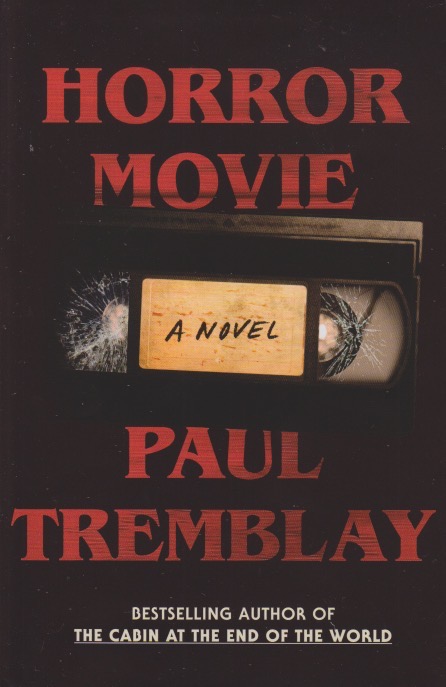
I’ve read a few of Paul Tremblay’s novels.  He’s a horror writer with literary style—often a tough sell (at least in my experience.)  Horror Movie is a compelling read.  The conceit is that a group of young people decide to film, well, a horror movie.  Things go awry, but not in a funny way.  The story unfolds interlaced with the screenplay and with the overlay of the modern remake in the works.  It’s easy to get lost between the narrative account of what happened in the original shoot and what’s happening in the script.  Tremblay uses this technique very well, blurring the reality and movie aspects in a way that’s got to be intentional.  I particularly like his asides about the redeeming value of monsters.  I won’t say too much about the plot since you may want to read it yourself. It does riff on the “cursed movie” trope.

The truly remarkable thing to my regular readers will be that I finished a new book within a month of publication.  Normally I run a couple to several years behind.  And this novel contains several winks and nods to other horror movies.  It pays to know the canon.  In that sense, it reminds me of the movie Scream, one of the more self-aware horror classics.  (I have had Scream out for watching again for several weeks now, but time has a way of slipping away.)  Tremblay, like Stephen King, taught before becoming established as a horror writer.  Maybe there’s hope for some of yet!  I started writing novels in middle school—perhaps there’s still time.  That seems to be one of the themes of Horror Movie, by the way.  It has many elements of a parable.

I found Tremblay’s first horror novel, A Head Full of Ghosts, about four years after it was published.  Indeed, I was working on Nightmares with the Bible at the time, so a book about possession was appropriate.  Horror Movie is more a monster tale but it’s also about movies and reality.  This is territory I often traverse since, it seems to me, movies are more than mere entertainment.  Good ones are, anyway.  And like some other books I’ve read lately, this one is also a reflection on fame (something I wouldn’t know about).  How it’s not what it’s made out to be.  In other words, if you’re willing, Horror Movie is the kind of novel that will make you think.  I appreciate that Tremblay is giving us thoughtful horror and I’m looking forward to trying to keep up.


Life After

Robert T. Bigelow is wealthy enough to speak his mind.  A hotel and aerospace entrepreneur, Bigelow has made no bones about his belief that aliens are among us, for example.  After the death of his wife in 2020 he initiated a contest for essay writers to give their best proof that consciousness survives death.  The results took the form of a five-volume, twenty-eight essay collection that, according to those who’ve read all, is impressive.  Having spent my life studying religion, I can trace my motivation back to this basic concern.  As a child I was terrified of Hell—a fear that has never abandoned me—and consequently studied religion as a means of reassurance.  I’m not alone in this; the whole Methodist movement began because of John Wesley’s similar concern.  Most of us don’t have the money Bigelow has to attempt reassurance.

Having said that, some time ago, the Bigelow Institute for Consciousness Studies—the organization behind the essay contest—offered $500,000 for the first place essay.  The second received $300,000 and the third $150,000.  Those who were selected for publication received a copy of the five-volume set.  Then, the Institute made an announcement: while supplies lasted, anyone with a legitimate interest in the subject could write to them for a free copy.  I’m not of the intellectual caliber of these essayists, but I have studied religion my entire life.  And I am quite interested in what the BICS is calling “absolute proof of life after death.”  All it cost was an email.  They even paid for shipping.

The set arrived yesterday.  The postal worker at the door seemed apologetic (I had to sign for it), noting the package was heavy.  Now, this is going to take some time to get through.  The five volumes are handsomely produced.  The hardcovers are printed in full color (I know from work this is quite costly).  They have gilt edges and ribbon markers.  And a wealth of thought within.  I guess you’ll need to stay tuned here to find out, after I finally finish, if the results are assuring.  Glancing through the table of contents, and having looked over the judges of the contest, I’m optimistic.  Although Robert Bigelow stands at the opposite end of the political spectrum to me, we both understand that deep-seated human need to know physical death is not the end of who we are.  Even the famous skeptic Harry Houdini wanted the answer to this question as he debunked mediums in search of someone legitimate.  In any case, I’ve got years of interesting reading ahead of me.


More Than Dark Shadows

The Television Horrors of Dan Curtis is one of those books that makes me feel less alone.  Jeff Thompson is not only a true fan of Curtis’ voluminous quality output, but he knows more about Dark Shadows than might seem possible.  I knew I wanted to read this book as soon as I learned of it.  As I’ve confessed many times before, although Dark Shadows was formative for me, I’m a mere dabbler.  I saw a fair number of the original run on afterschool television, I read the novels, but I never dove in.  I was more of a wader.  Still, this book demonstrates that many people were influenced by Dark Shadows, some that you might not expect.  But the book is about Dan Curtis and his horror work (mostly).

Dan Curtis went on to a kind of fame for his war epics (considered “serious” work), The Winds of War and War and Remembrance.  Although he directed some theatrical movies (all of which I’ve seen), he mostly stuck to work in television.  One of the results of this is that he never attained the level of appreciation of a number of auteurs who focused on Hollywood.  And it’s also clear that Curtis was interested in more than just monsters.  I personally dislike gangster and war movies (although my great-uncle Melvin Purvis was one of his interests).  Curtis found them worth of his considerable talents.  As Thompson makes clear, however, even as his own death was approaching, Curtis knew that, like Washington Irving, his early work would be that for which he was remembered.  That’s because Dark Shadows went where nobody else dared to go, and it’s memorable even today.

I learned a lot from this book.  Enough to know that Curtis was an enigma.  He remains less recognized as a director and producer than many Hollywood personalities that are household names.  Still, if pressed, a number of people even today would recognize some of Curtis’ work, whether or not they associate it with him.  Dark Shadows went through a short television reboot, for instance, and a second reboot attempt before being made into a movie by Tim Burton.  This book, however, made me watch some movies I had only known vaguely before.  And it has inspired me to watch others as well.  Curtis was an incredibly hard worker, and a man with definite opinions.  It’s perhaps a bit surprising that he never really attained the kind of fame that other “content producers” did.  Even his Wikipedia article is brief.  This book helps uncover a large amount of information behind a person who influenced many people without the glamour associated with that level of impact.


Cryptid Caper

I don’t recall how it got on my fiction reading list—I probably saw it on Goodreads—but I picked it up because it was short.  And surprisingly, multiple copies were in Barnes and Noble.  Since James Daunt bought the chain out it has definitely improved.  In any case, Hunter Shea’s To the Devil, a Cryptid looked like it might be a fun romp, and if it turned out that I didn’t like it, well, it was short.  Ads in the back keyed me in that this was a part of a series of horror novels about cryptids.  Besides, I like to support publishers that aren’t part of the big five.  I’d just finished reading a five-hundred-pager, so something under two was very welcome.  The title seems to riff off the horror flick To the Devil a Daughter.  As much as I try to keep up on my cryptids, I was unfamiliar with the Goat Man.  And I did like it, by the way.

So, the real Goat Man is mostly associated with Maryland, but in Texas, where the novel is set, there is the Lake Worth Monster.  This seems a good fit for the cryptid part (whether intentional or not I don’t know).  A bunch of kids messing around with Satanism decide to sacrifice a goat in the woods where a Goat Man cryptid is said to live.  Something goes wrong and the goat fuses with a guy trying to break up the ceremony and mayhem ensues.  Lots of bodies torn apart in this version of the Lone Star State.  Still, the story is fun.  I’ve been writing cryptid fiction for years, and this may be a targeted demographic, but that doesn’t prevent this from being a good horror novel.  Particularly interesting is the resolution.  I’ll try not to give too many spoilers, but the next paragraph reveals something.

How do you stop a demonic, bulletproof Goat Man?  You call in a priest to do an exorcism.  The truly remarkable part of this is that the priest is treated sympathetically.  None of the characters are religious.  And of the two main young people who survive, you really don’t expect them to be found in church.  The story isn’t intended to be believable, of course.  The Goat Man is an urban legend.  Urban legends are often difficult to tease apart from actual cryptids sometimes.  Cryptids remind us that there’s still more to be discovered in the world.  And I may have just discovered a series of stories that work for a quick fix.


Discovering Ordinary

I wasn’t quite sure what sense of ordinariness to expect from Robert J. Wicks’ The Tao of Ordinariness.  I would say as a whole it is about becoming ordinary you.  I found the whole interesting, but it was chapter four that really caught my attention.  It’s here that Wicks starts to address those whose damaged childhoods have created a false (and frequently re-affirmed) sense of our ordinary selves.  I’ve always known I have issues—it’s pretty obvious that I’m not quite like other people I know.  I often lack confidence and, thanks to my career and publishing history, have had that sense pounded in even as an adult.  (Poundedness is not a protected category, however, and it won’t get you any special consideration.)  Up until that chapter I was thinking, “This is nice, but it just doesn’t match my experience of things.”  Then I learned why.

It is possible to change your outlook, of course.  It’s not an easy thing to do.  Our culture isn’t set up to allow for it, what with 9-2-5s and all that.  You see, my personality really fit the teaching mode and lifestyle.  I loved the work, although it was hard.  And I loved the fact that if you had free time during the day you could, if you needed to, run an errand or two.  I guess I’ve never been one to invest in that capitalistic idea that your employer is buying your time.  For some jobs, yes.  In fact, my first employment experiences were of that sort.  I started at nine, did physical work until five, with a lunch break in the middle.  Now work begins early and doesn’t really end.  Days off are few and they fly by quickly.  Changing your outlook requires time to think.  That, it seems, is what’s missing.  It makes it difficult to find out what my ordinary is.

Wicks’ book is a hopeful one.  His optimism comes through page after page.  He gives practical advice.  The subtitle reveals why the book is important: Humility and Simplicity in a Narcissistic Age.  (That last adjective is so common now that spell-check completes it automatically.)  Politicians have frequently been narcissists, but Trump has made it into a high art—care only for yourself and tell people the lies they want to hear.  You can see the calculating cynicism in every glance and gesture.  And yet, here we are.  Books like this are important.  We need to be told that there’s another way.  If only it were also possible to get your horse to drink.


History Lesson

This blog, which has come to define me in many ways, wasn’t my idea.  A niece started it for me when Neal Stephenson suggested I should have a place for podcasting.  I still have ideas for podcasts, but finding the time to put them together (and a place to host them) has proven quite challenging.  In any case, the title, “Sects and Violence in the Ancient World,” reflected where I was at the time.  I started posting when I was 46, and now I’m over 60.  Things are bound to change a little.  From the start, I wrote about books.  Indeed, for things I’ve read since summer of 2009, I check the blog to find out when.  I also noted significant movies.  In the early days I tried to limit the posts to religion-themed topics since, well, I have three degrees in the field.

As I gradually grew comfortable discussing pop culture (generally horror), I gradually addressed movies and books without a religious bent.  It could be that I didn’t record everything I read or watched here, and that makes things before 2009 kind of a muddle.  While the muddle really began before 2005—my last year at Nashotah House.  That period was a kind of maelstrom of desperation to find a job, teaching classes, pretending to be an editor, making my way in a world unfamiliar to me and certainly unchosen.  Eventually this blog came to focus on horror movies more than religion.  Now, like my life, it’s a jumble of conflicting impulses trying to make sense of the world as an existentialist with a bit of faith.  I’m still aspiring to that mustard seed.

I’m not sure when it was that I began commenting on most movies I watched.  I’ve used movies as therapy since 2005—for some reason horror made me feel better.  Even now, when I want to remember when I saw a movie I check this blog.  Or if I want to know when I read a book.  My wife pointed Goodreads out to me in 2013, and that became another place to post on books, even if they didn’t qualify for “Sects and Violence.”  But that slushy period between 2005 and 2013 was full of books, I know.  In addition to movies, I read incessantly.  If I want to remember when I read what, however, I’ve only got the last decade really covered.  Goodreads says I’ve read about a thousand books since 2013.  For movies, I have no way of knowing how many I’ve seen.  Or where, for the most part.  Maybe I need to start keeping a proper diary.  Maybe one with a lock and a key.


Empowerment

Recommended as a worthwhile contemporary gothic novel, Alix E. Harrow’s The Once and Future Witches is a feminist tour de force.  Set in a world similar, or perhaps parallel, to ours, it follows three witch sisters in 1893.  The sisters are estranged, having been raised by an abusive father, and each has found her own way to New Salem.  The old Salem had been destroyed after the witch trials.  The three find their lives drawn together, not even knowing the others are there.  But there are also still witch hunters.  None worse than Gideon Hill, the leading candidate for mayor.  I’ve long known that books written after Trump are often fairly obvious for the hatred that oozes from political leaders.  This is one such case.  The story is one of female empowerment in the face of constant male opposition.  It goes fairly quickly for a book its size.

It’s an enjoyable read but it grows, well, harrowing towards the end.  You come to like these three very different sisters and appreciate the gifts they offer to their world.  Men, however, make the rules and often they feel that women have no place in making decisions for the public good.  I’m amazed at the number of people who still believe this.  It makes novels such as this so important.  Women with power are crucial examples to present.  The three sisters may cause mayhem, but it is generally good for the city.  When men are in charge, things tend to get repressive.  Sound familiar?

Conveying the gist of a 500-page novel isn’t a simple task so I’ll simply say that this isn’t a conventional witch story.  There’s never a question that witches are good, but capable of doing bad things.  In other words, they are pretty much like all of us.  That’s not to deny that some people become evil and that such people will gain ardent, blind followers.  The characters are memorable and likable in their very humanness.  As far as genre goes, this is a magical realism novel.  As you get drawn into Harrow’s world it becomes believable.  It’s a book that should be widely read and its plea for tolerance must be heard.  I can think of other comparisons—others have also conveyed that an unquestioning religion may become evil unintentionally.  Such conversions aren’t the kind publicly discussed, but they do fit with human experience.  I’ve intentionally left out spoilers since I want to encourage readers.  It certainly has left me thoughtful.


International Standard

Probably nobody gives them much of a thought.  ISBNs, that is.  International Standard Book Numbers.  An ISBN is a book’s unique identifier.  And they cost money.  I’m not sure how self-publishing works, but at some stage, whether it’s obvious or not, you have to pay for an ISBN if you want wide distribution.  And since they cost money, most publishers don’t assign an ISBN until a contract is signed.  If a deal falls through, hopefully they can recycle the ISBN and assign it to another book.  The system only began in the 1960s and not all books printed their ISBNs.  The thing about them is, the best way to find the book you’re looking for is by using the ISBN rather than the title.  Titles can’t be copyrighted, and that’s why you see so many books with the same name.  The ISBN won’t let you down.

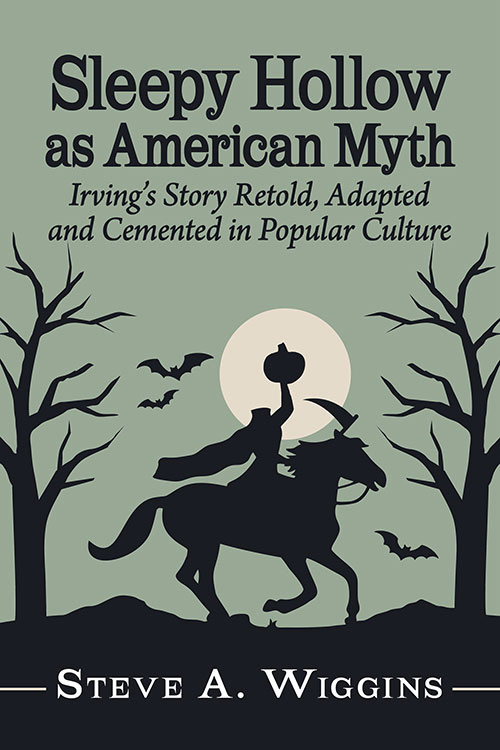
My book, The Myth of Sleepy Hollow, now has an ISBN.  I just found out yesterday.  It’s 978-1-4766-9757-4, in case you’re curious.  It won’t lead to anything on the web yet since I haven’t submitted the manuscript and work hasn’t begun on the title.  It is, however, a step in that direction.  In the past, when I’ve signed book contracts, I’ve always felt a little anxious until the ISBN is assigned.  Is the publisher really sure about this?  Once they assign an ISBN they’ve started to invest in your ideas.  My book has existed in draft form for several months, but I’m going through it again, for the umpteenth time, to make it presentable to the world.

One of my jobs at Gorgias Press, my first full-time publishing gig, was to assign ISBNs.  They had to buy blocks of them and they came in a printout in a large notebook.  If a project with an ISBN didn’t materialize, some White-Out and a pen could save the company some money.  It was all very hands-on.  I imagine it’s gone electronic these days.  The ISBN is a technical code, by the way.  The 13-digit code, which is now common (it used to be ten), has a meaning.  The schematic below explains that.  The “group” section has to do with language and that’s followed by the publisher’s ID.  Simple deduction (and dashes) tell me that 4766 is McFarland.  That’s followed by the title identifier.  I’m not a numbers person, however.  Those of us drawn to the words part generally try to provide the inside content.  And since it’s a weekend I’d better get to it.  I have a submission deadline I’d like to meet. But I’m thinking about the ISBN.

Image credit: Sakurambo; via Wikimedia Commons, GNU Free Documentation License

Number Six

Signing a book contract always makes me happy.  There’s a validation to it.  Someone thinks my thoughts are worthwhile.  And now I can reveal what it’s about.  Regular readers likely already have some inkling, due to the number of times I referenced Sleepy Hollow over the past couple of years.  I’ll provide more details closer to the time, but it struck me back when working on Holy Horror that few resources exist for “The Legend of Sleepy Hollow,” despite its status as such a well-known story.  An agent or two agreed with me that the topic was good but they really weren’t sure it was a commercial project.  This despite the fact that Lindsey Beer is slated to write and direct a reboot of the famous 1999 movie.  It seemed that a book on the topic available at the time might sell.

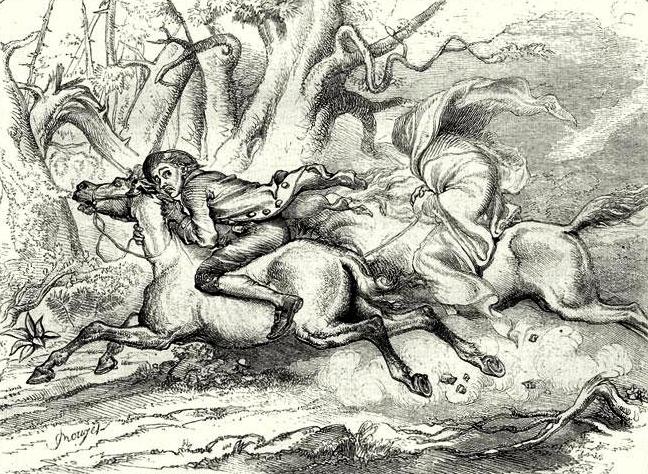
John Quidor, The Headless Horseman Pursuing Ichabod Crane, public domain via Wikimedia Commons

I tried a number of independent publishers that don’t require agents.  I learned that most of them won’t even reply to your emails.  It seems that to get published by any trade publisher you have to be already famous.  Or maybe my idea’s just not good.  Weird.  Finally I found a university press that thought it might be a good fit, and it occurred to me that McFarland, who recently dropped the price on Holy Horror, would be a good press for this kind of thing.  McFarland made an offer first, and yesterday they sent a contract.  Hopefully the book will be out next year.

This is quite a personal project.  The story is one of my early memories—most likely due to the Disney version of the story, and most likely as seen on television.  My treatment is, as in all of my books, idiosyncratic.  I look at things differently than other people do.  And I’ve been looking at Sleepy Hollow for half a century or so, and I’ve read quite a lot about Washington Irving and the Hudson Valley.  I don’t want to say too much since others write more swiftly than I do and some presses speed books along.  For the time being I can enjoy that rare feeling of having a book contract and an editor who’s excited about my project.  I do hope that the next book, number seven, might find a trade publisher.  What’s it about?  Well, I’m working on two at the moment, and it depends which reaches book length first.  And I can’t say anything since someone may scoop me.  So I’ll just bask a little bit before starting another work day.


An Interesting Prize

If you’re born without it, you get by any way that you can.  Capital, that is.  Those of us who inherit nothing but active minds don’t stand a chance, really.  Without connections or the cash to draw others in, we tend to be scrappy.  And cheap.  This is probably the reason I’m drawn to characters like Ed Wood, and those who started American International Pictures.  I get the sense that Mark Thomas McGee must be an interesting guy.  After all, he met some of his idols when he was young.  Fast and Furious: The Story of American International Pictures is available in a second edition, I know, but I tend to find first editions fresher.  They say what’s really on an author’s mind.  Besides, used books have their own charm.

Although American International Pictures (AIP) was early on known for fast shooting schedules and cheap effects, it eventually started to earn some mainstream respectability before the company being acquired by Filmways.  Along the way they engaged some famous champions of cheap, such as Roger Corman.  A number of films discussed in this book were part of my childhood.  And as someone who’s always had to live cheaply (I just don’t comprehend finance), I found this an extremely hopeful book.  Some of these folks never became famous in the lifetimes, but they left a legacy.  And that’s a worthy goal.  I suspect that for those of us who can’t break into mainstream publishing, blogging is about building a legacy.  What some of us want, however, is to appear in print.

And I mean in print.  The book is an object.  I bought this one used.  I sometimes find interesting things in used books.  The former owner of this one (a McFarland hardcover!) carefully glued postcards of AIP movie posters to the covers and endsheets.  They didn’t put their name in it, but they (in pencil) ticked off the movies, presumably that they’d seen, from the filmography.  This is a person after my own heart.  I tend not to write in most books anymore, realizing that someday someone will probably sell them and, hey, it’s hard enough to make money in the book business.  But this personalization is something you can’t find in an ebook.  No, a book is meant to be held and loved.  This one clearly was.  As publishers chase more and more after electronic and audio books (the latter of which are also electronic) and learning moves from reading to watching, we’re losing something.  They’re called books, and they bear their own meaning.


Fear of Big Books

I have to get over my fear of big books (I can’t find an official name for this and so I’ll coin machrysbibliophobia—and why did my autocorrect replace this with machrysbibliophobmia when there’s no such word?  It’s a scary world where my fears go unnamed—go, aporripsophobia!)  I’ve read many large novels with payoff (several by Stephen King and Neal Stephenson) and plenty of nonfiction from which I’ve learned a ton (perhaps literally).  But still, when a book I really want to read is big, I tremble.  I try to decide how to justify the time.  Now, I know I don’t have to justify time reading—that’s a constant activity.  I think it’s more a question of caesura, places to stop and perhaps claim credit for work done.  I’m not a fan of multiple volumes since that drives prices up.  Maybe just say it a bit more succinctly?

In my case—and I can only speak for myself—it’s all about a sense of accomplishment.  The distinct, discrete book that I’ve jammed into my gray matter along with its companions.  Some of us are driven by the shot of joy that accompanies completion.  I have a few compendia of authors/genres I really like.  I dip into them but never quite seem to have the time to finish them.  You see, recently watching the X-Files got me thinking about Charles Forte.  I have a compendium of his four books and I read Book of the Damned right through.  But I’ve got three more to go.  How are you supposed to count that on Goodreads, without its own ISBN?  Or the collected fiction and poetry of Poe.  It’s nice to have it all in one place, but will I ever read it cover-to-cover?  I tried once, really I did.

Scary books

As I write this I just started a big book.  It’s on a topic I really find fascinating but I’d been putting it off for some time because of my machrysbibliophobia.  I’ve been entrenched from before page 1.  I know it’s going to take me quite a long time to finish it—I have a job that takes its pound of flesh daily, and even when I do get a day off, well, mowing season is here.  And the porch needs painting again.  Maybe if non-Catholic monasteries were a thing I’d have time to devote to the reading I really must get done before my time’s up.  I like big books, but I’m also afraid of their ramifications.  Enough so even to name my fear.


Going Once, Going Twice

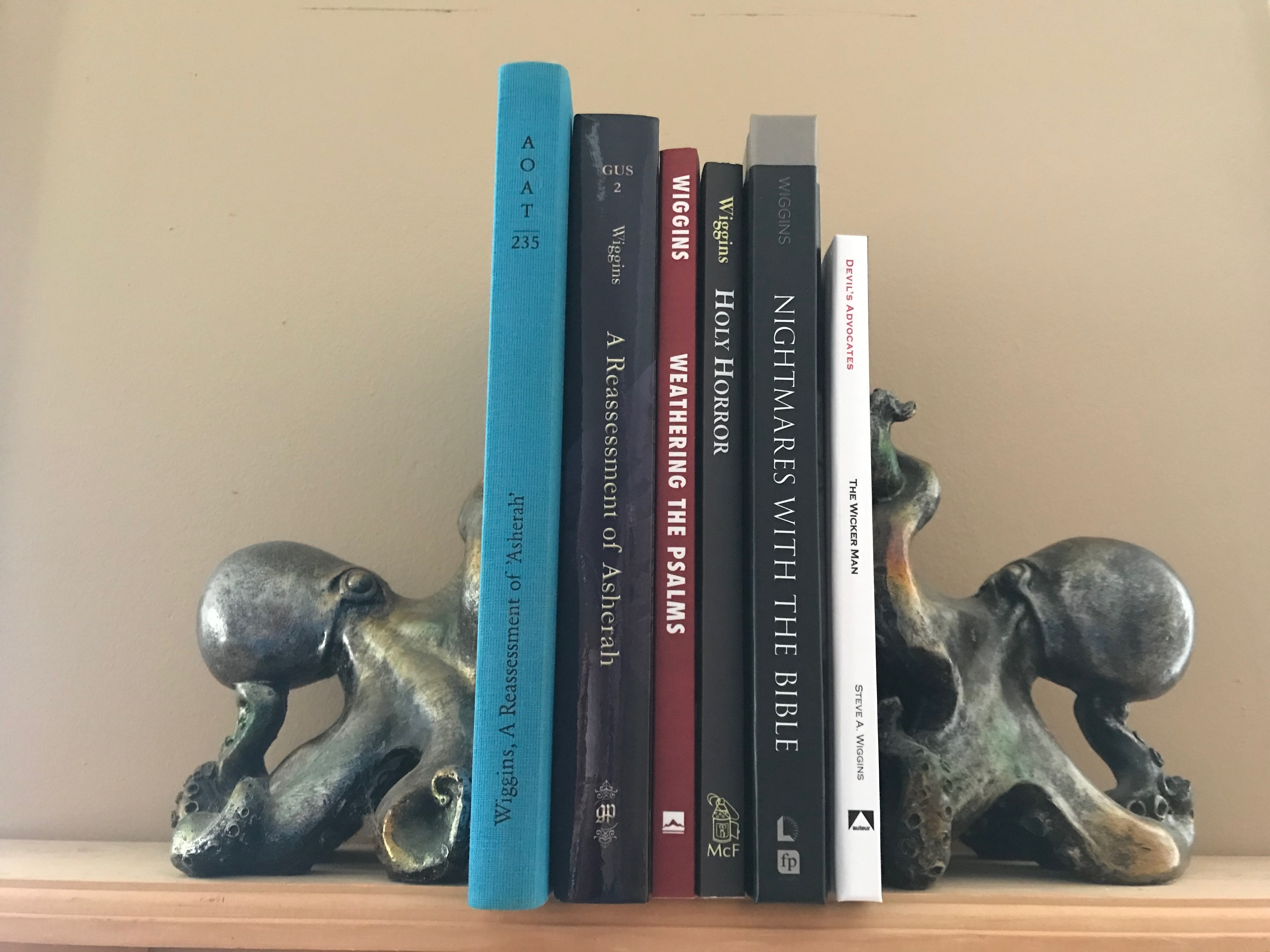
Do you ever get that feeling that you’ve been sold?  One thing I learned early on in academic publishing is that buyouts aren’t that unusual.  I recently wrote about Transaction being acquired by Taylor and Francis, for example.  Just a couple days ago I noticed in Publishers Weekly that Bloomsbury had bought out Rowman & Littlefield’s academic wing.  Then, at a company meeting the buyout was mentioned again.  Finally, I had an email from R & L letting me know.  You see, Nightmares with the Bible was published by Lexington Books/Fortress Academic.  This is an imprint of Rowman & Littlefield.  This means the rights to Nightmares have just been sold to Bloomsbury.  I do hope Bloomsbury has a more progressive idea about paperbacks!  In one of those strange synchronicities (all of this happened on the same day), I’d emailed one of the series editors of Horror and Scripture, asking if the series was still going.

I have no real concerns about being owned by Bloomsbury.  If you haven’t heard of them, it’s probably because they were a small operation until they took a chance on an unknown author by the name of J. K. Rowling.  Suddenly flush with cash, they started buying out smaller presses.  Big fish got to eat too!  Rowman & Littlefield had been buying out other publishers for years.  If you’re an academic you probably remember University Press of America.  Ever wonder where it went?  They bought Rowman & Littlefield in the late eighties and took over their name.  They bought other “assets”: Prometheus, Scarecrow Press, Hal Leonard.  They grew an enormous list of academic titles, now owned by Bloomsbury.

As someone who has knocked around academic publishing for some years now, it seems like this small world is getting even smaller.  Companies buy other companies and sometimes it works out for the benefit of authors.  Sometimes not.  Bloomsbury is only 37 years old.  Rowman & Littlefield was 75.  University Press of America (which first bought R & L, would’ve been 49.)  The younger buying out their elders.  Perhaps it’s because of my career malfunction, but I’ve discovered academic publishing to be a fascinating world in its own right.  Many academics pay little attention to the publisher, especially outside the big-name university presses.  But there are stories here.  I know that before I began working in the industry I’d never heard of Bloomsbury.  Then they bought out Continuum, which had bought out T & T Clark, from my beloved Edinburgh.  Now one of my books is under their umbrella.  And I have to wonder who will be sold next.


Unidentified

Some topics are subject to ridicule.  The poster child for this is UFOs.  What’s so remarkable about Leslie Kean’s book is that she began as a skeptic.  She points out that before a sea change takes place intense ridicule against the new idea is normal.  Then Kean did an extraordinary thing—she actually looked at the evidence.  UFOs: Generals, Pilots, and Government Officials Go on the Record is a remarkable book.  It’s filled with stories of the power of conversion.  Many UFO experts were skeptics at first, completely dismissive of the phenomenon, until they took a close look.  Official government files, even those available to the public, demonstrate the reality of UFOs.    Interestingly, as Kean highlights, the average person now no longer really requires convincing.  The elites (government officials, scientists, and mainstream media) are slow to accept the fact that UFOs/AUPs exist, even if we can’t say for sure what they are.  And they still like to poke fun.

Skepticism is necessary for science.  We can’t simply accept anyone’s word for something.  Kean’s book, which contains pieces written by an international group of high-ranking witnesses, points out that strong evidence does exist.  And it is possible that some group (not “the government”) does have more information than they’re sharing.  I also found it interesting that a number of countries—many, in fact—treat UFO reports from pilots seriously.  In the UK they are required to report them, for example.  In the United States, they are instructed to keep their mouths shut.  They doesn’t stop them from seeing what they do, however.  Still the ridicule taboo remains.

Ridicule of what we don’t understand must be a deeply ingrained defense mechanism.  As Kean notes, it took centuries before a heliocentric model was accepted.  People laughed.  And as recently as the nineteenth century it was considered impossible for rocks to fall from the sky.  Paradigms had to shift.  Meanwhile, people laughed.  We seem to have an aversion to anything in the sky other than God and angels.  Even in current models that assure us that the universe above us stretches on to infinity.  The only one “up there” is divine.  So we laugh at anyone who’s mastered the skies.  Until we catch up.  Heavier than air flight was impossible in my grandparents’ lifetimes.  People laughed at the idea.  It took me over a decade to find the courage to read this book—it made a little splash when it came out, but it didn’t change much.  Until the U.S. Navy fessed up.  Other countries had already done so.  Maybe we should see a psychologist about that laughing reflex, though.


Demons and Gremlins

Gremlins have an ancient pedigree, whether they know it or not.  Credited with airplane problems during the Second World War, these meddlers in technology had an older cousin in the demon named Titivilus.  Titivilus was a demon said to be responsible for errors in the works of scribes.  Long before the printing press hit Europe, manuscripts were copied by hand, of course.  Anyone who works with Bibles, for example, knows that no ancient manuscript exists without errors.  But scribes copied more than Bibles, and anyone who has tried to copy an entire manuscript knows that errors always creep in.  (When I was a college student I tried to get my local church back home to set up a Bible-copying station so that when hungry parishioners were leaving the service they might stop and copy a verse.  This was to show how errors appeared in biblical texts.  The experiment took place but results were disappointing—full of errors but we didn’t get past the early chapters of Genesis).

However that may be, having a demon to blame for things going wrong proved to be mighty handy.  The tradition lasted well into modern times.  In the days of manual typesetting the young printers’ apprentices were called “printer’s devils.”  Demons were blamed for spilled cases—capital letters were kept in the upper case, and minuscules in the lower case—and other mishaps.  It may be a stretch, but such a demon interfering with humans trying to accomplish something important, led to ideas such as gremlins.  Most of us, I suspect, don’t like to confess that we’re sometimes clumsy or sleepy and make errors.  One of my notebooks is all crinkly because I knocked a nearly full water bottle over onto it while trying to catch a bug in my office.  ’Twas no demon, just haste making waste, as it does.

The idea of someone not human to blame is compelling.  All the more so because sometimes we are the legitimate victims of circumstance.  Life offers many opportunities to wander, unknowingly, into situations that might not turn out so well.  We don’t have minds well equipped to see the entire picture.  Even if we could the universe, we’re told, is infinite.  Who doesn’t make mistakes because of limited knowledge?  And sometimes those mistakes can eat up years of your life.  Doesn’t it seem more likely that a demon or gremlin lurks behind an all-too-human error in a judgmental world?  I’m sure that, for most people, if we knew better we wouldn’t have done it.  So we invent our demons.  We sometimes even give them names, and thus Titivilus was born.

Image credit: artist unknown, public domain via Wikimedia Commons

Forgotten Books

Would you rather never write a book or write a book that’s easily forgotten?  This question springs from a recent exercise of trying (unsuccessfully) to count the books I’ve read.  I mean going through and putting a finger on each one and counting, if I’d read it.  I encountered a surprising number of ordinals that evoked a blank stare—I don’t remember the book at all.   Or I remember having read it, but don’t recall what it was about.  (In one instance, the book was one my wife read, and not me.  That explained a lot!)  This got me thinking about what it takes to write a memorable book.  I’ve always been one to prefer either speculative fiction or the classics.  (I’m aware that “classics” are now being dismantled because they don’t represent all groups.  I’d call them “white men’s classics,” but a surprising number of them were written by women.)  If a book has a speculative element strong enough I will recall having read it.  I like weird stuff.

I’ve read books where parts of them, at least, have stayed with me for half-a-century.  I remember specific things I read as a child (and no, I’m not talking about Barney Beagle—although I do remember that too).  I like to believe that even the bits that are hazy indicate that the book isn’t truly lost, but buried somewhere.  The human mind has an amazing capacity to absorb things.  I’ve read at least three thousand books in my life—I have no idea how many, actually, but Goodreads has me at 1,000 and I started using it in 2013.  I’d been intentionally reading for about forty years already, at that point.  Three of them while working on my doctorate.

I recently (within easy memory) read a Doc Savage novel.  I’d read the entire series, or pretty near, as a junior high schooler.   Anyway, there were well over a hundred of them.  I remembered nothing in my recent re-read beyond Doc’s band of five companions.  The story was completely unfamiliar to me.  One of the more recent books I know I read but couldn’t remember the story at all was a New York Times bestseller.  I guess if I’ve forgotten the author he’ll still be okay on Mars in the future since many others must remember something about it.  I’ll be long gone by then, both on Mars and down here, I’m sure.  I do hope even by then something will remain of all the books I’ve read.