Whither Wicker?

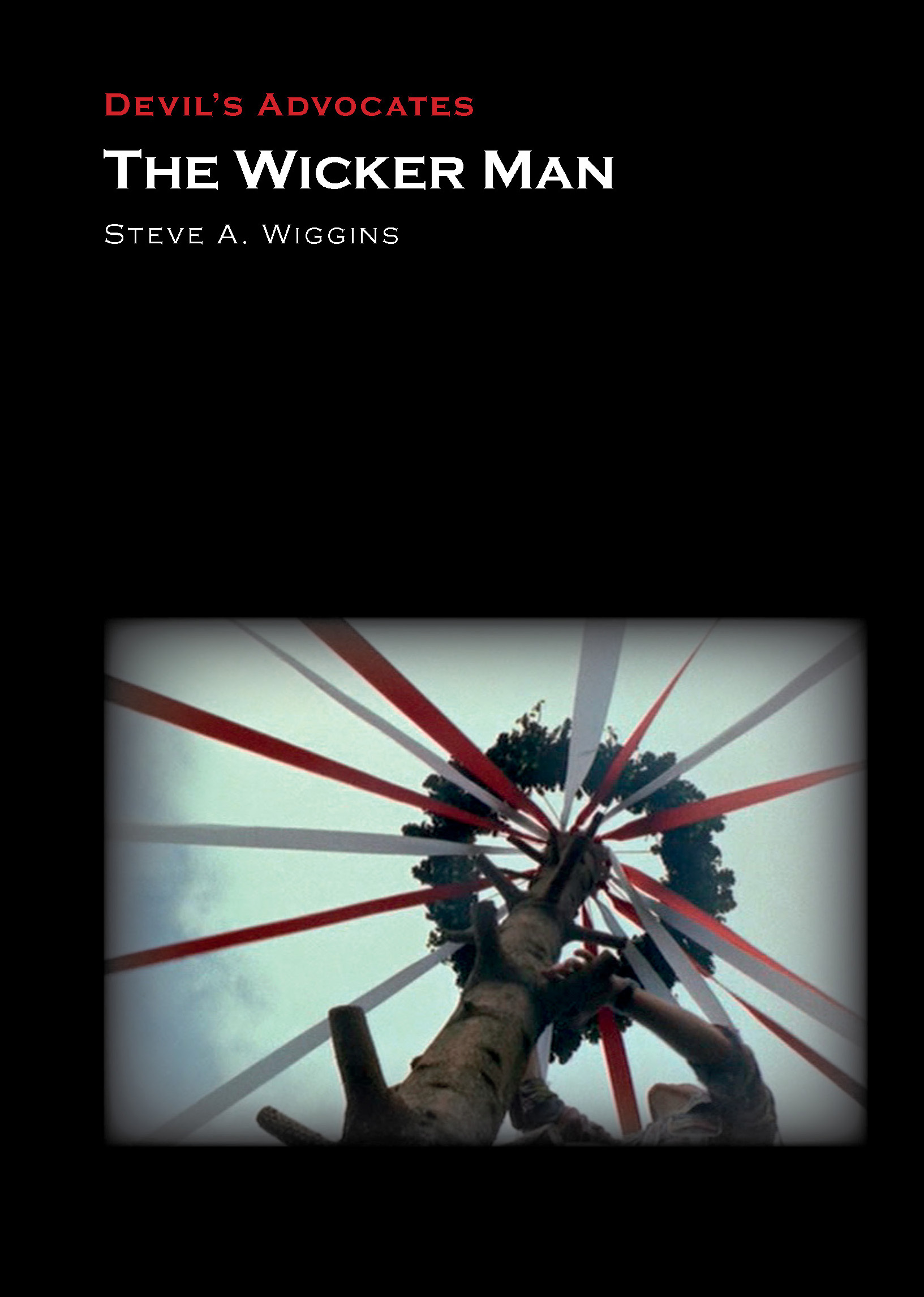
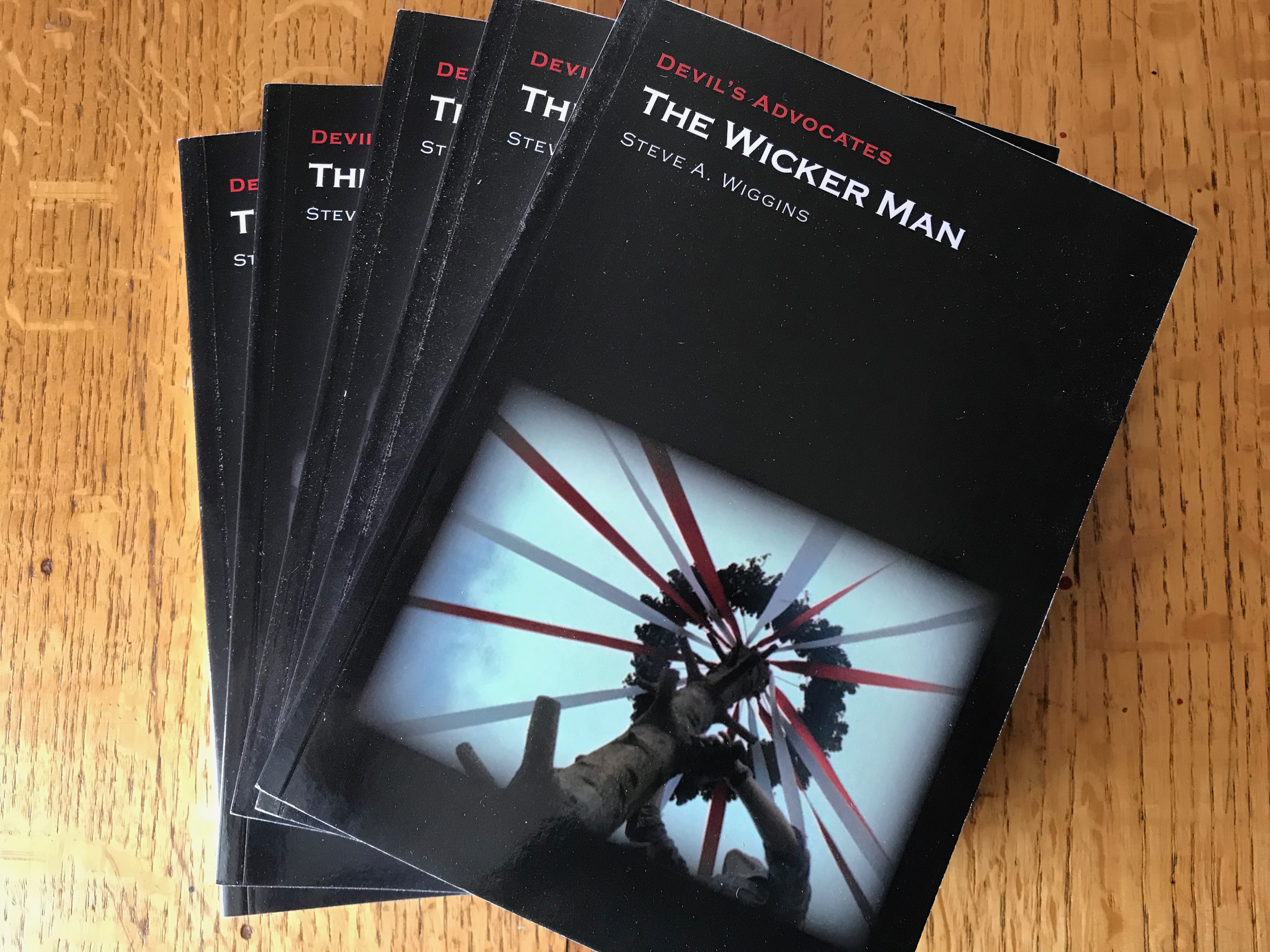
The process of producing a book is a lengthy one.  Even as an author you’re not really ever quite sure when it’s out in the world.  My author copies of The Wicker Man have arrived.  The release date is set for August and the publication date is September 1.  Still, it’s out there somewhere in the world at the moment.  The release date of the book is generally the date that stock arrives in the warehouse.  The book is technically available on the release date, but the publication date isn’t until two-to-four weeks later.  The publication date is when a book is fully stocked at the warehouse and is available in all channels (Barnes and Noble, Amazon, Bookshop, and your independent local bookstore).  Chances are you won’t find this book, being a university press book, in your local, but it can be ordered now.  Even in July.

This is a short book, so I don’t want to write too much about the contents here—then you might have no reason to buy a copy!  In brief, though, I can say that it explores The Wicker Man through the lens of holiday horror.  Not a lot has been published on the sub-genre of holiday horror.  In general publishers tend to be reluctant about holiday books—the perception is that they sell only seasonally (if my buying patterns are taken into account, that’s clearly not true).  Movies, however, can be watched at any time.  The Wicker Man is about May Day but it was filmed largely in November and was released in the UK in December of 1973 (fifty years ago), and in the United States in August of 1974.  People see it when it’s offered.  (Of course, video releases have changed all that.)

The movie has grown in stature over the years.  It appears in many pop culture references and even those who aren’t fans of horror have often heard of it.  There’s been quite a bit of buzz about John Walsh’s book on the movie, to be released in October.  (Of course, it is distributed by Penguin Random House.  I’m learning about the importance of distribution the more I delve into the publishing realm.)  My book has a more modest release and a slightly smaller sticker price (unless you go for the hardcover, then I’m right up there with university press prices).  I thought readers might like to know it now exists.  This writer, in any case, is glad to hold a copy and see the fruits of a few years’ labor, whenever it might come.


Literary Criticism

One of the drawbacks to being an editor becomes apparent with much reading.  Some people have writing skills.  Others don’t.  That’s no reflection on intelligence, insight, or even brilliance.  Good writing is part talent and part hard work.  The drawback is when someone thinks they’ve got what it takes, but they don’t.  I’m a gentle guy.  I don’t like to hurt feelings and yet I have a job to do.  You see, good writing involves a few things—writing for your readership, being aware of what that readership likes, and giving new information without being all technical about it.  I’ve read academics who write very high-level monographs, sprinkled with “wells” and “you sees,” which come off like a guy my age trying to impress a twenty-year old by being groovy.  Just admit you’re writing for other scholars and get down to it.

Then there’s the verbless sentence.  You know what I mean—a literary rim-shot, usually at the end of a paragraph, to heighten the drama.  Solid technique.  This only works, however, if you don’t overuse it.  I’ve read books where nearly every paragraph ends with such rim-shots.  Then the author started writing one-liner paragraphs.  This isn’t a Saturday Night Live cold opening.  The writing has to have a certain amount of gravitas.  Especially if you’re wanting to publish with a university press.  I realize that the dream of many academics is to write for a wider readership, but honesty is still a virtue.  When I wrote Weathering the Psalms I pitched it as for general readers.  Ha!  Not even specialized readers have found it that engaging.  It was a book for specialists.  I see that now.

Don’t get me wrong—I read plenty of good writing.  Some of it’s even beautiful.  Editors, however, have to read an awful lot to be able to pick out the gems.  I remember my volunteer experience on the archaeological dig at Tel Dor.  At the pottery reading sessions, a specialist would quickly sort through a box of four-thousand year-old fragments and say within seconds if there was anything interesting (“indicative” was the term she used) or not.  She did this by reading pottery like an editor reads proposals and manuscripts.  You get to a point when you can just tell.  Writing well can be learned.  Some people have an innate talent for it.  Being a gentle guy, it’s hard to be honest sometimes.  I have to keep reminding myself, however, that it’s still a virtue.


Hidden Wood

Fandom can lead to fame, even if it’s just cult fandom.  The nature of Ed Wood’s films is such that he could’ve been among those forgotten had he not posthumously developed a following.  Unfortunately it didn’t arise in time to ameliorate the tragic final years of his life when he died pretty much penniless, drinking away the pain.  Rudolph Grey’s Nightmare of Ecstasy: The Life and Work of Edward D. Wood, Jr. may have helped rescue him from obscurity.  Of course, Wood had gained a following earlier than the book, but nobody had really thought to document his life.  What I find so compelling is that Wood was like so many of us—trying hard to gain some recognition only to be shut out of what we love by a huge industry that calls the shots.  It’s difficult to get notice as an independent filmmaker, or even as a writer publishing with smaller presses.

Wood lived a most unusual life.  A straight transvestite, he fought as a Marine in World War Two.  He moved to California to try to break into filmmaking and wrote and directed several movies.  When this failed to make enough money to support him, he turned to writing pornographic novels and film scripts.  Wood had, interestingly, befriended a lonely and washed up Bela Lugosi.  His last two movies were Wood’s work.  Wood found camaraderie with other outsiders in Hollywood and he cast them in his low-budget productions.  He would try to shoot his films in less than a week.  Considering the constraints under which he operated, his movies really aren’t that bad.  They aren’t good by conventional standards, but they’re better than many other people could’ve made them in his circumstances.

This book isn’t a conventional biography.  There’s no narrative apart from the recollections culled from interviews of those who knew him and occasional letters and writings of Wood himself.  As with any biography there are gaps and lacunae.  From a writer’s point of view perhaps the saddest part of the story is how Wood and his wife were evicted from their final apartment and he had to leave his papers and manuscripts behind.  These were reportedly thrown into a dumpster and lost forever.  Although his movies may have been bad, Wood was a capable writer.  And like any writer he felt the loss of his work keenly.  He only lived about three more days after that.  His friends had largely abandoned him, alienated by his drinking and its effects on him.  Next year will mark the fiftieth anniversary of his death and, I hope, the commemorative watching of some bad movies that deserve to be remembered.


Outgrowing Fear

A friend, during a time of trouble, quoted from Charlie Mackesy’s The Boy, the Mole, the Fox and the Horse.  I immediately ordered a copy.  The word “magic” gets thrown around a lot, but this book holds real magic.  It is perhaps the wisest book I’ve ever read.  Do yourself a favor—if you haven’t read it, find it in a library, or order it from Bookshop.org or Amazon.  Visit a local bookstore, and if they don’t have it, ask them to order it.  If people read books like this we’d never need to worry about things.  And if everyone read it and took it to heart, we’d never need to worry about anything again.  There’s much to be said about believing in yourself and believing in the power of love.  At the end of the day they speak for themselves.

The book is for any age reader.  Handwritten and illustrated, it’s written at the level of a children’s book that takes less than an hour to read.  Its message feels almost radical, however.  That having been said, the young adult generation, I’m given to believe, grew up with the kind of outlook Mackesy offers.  The book struck me particularly relevant and necessary, something for those of us in the over forty crowd.  I understand the tendency to grow more conservative as we age and I believe it’s because we’re afraid.  Ironically, the book addresses the issue of fear, pondering how life might improve if we could get beyond being afraid of things.

The artwork is beautiful and the words are inspired.  This is an eminently quotable book.  Mackesy has been an artist by trade.  We can learn so much from such humble artists, if we’re willing to listen to them.  Kindness, love, and simplicity are gifts we often wish not to accept.  It’s very easy to hate and selfishness comes naturally to people.  And when we get together we tend to complicate things.  Once in a while we should set aside the complexities of life and make time for a simple story that reminds us of what’s really important.  Of course, those of us who read are prone to thinking of ways the world could be a better place.  Being open to love instead of hate, trust instead of fear, and hope instead of dread doesn’t come naturally.  That’s why it’s so helpful to have books to remind us of this.  Especially when such a book won’t even require an hour of your time.  I’ll be coming back to it time and again.


Early Halloween

Call it seasonal disorientation syndrome, but I’ve been reading about Halloween.  I’m pretty sure I’m not the only one thinking about it.  Stores will begin Halloween displays next month, if the usual pattern recurs.  So why not do a little advanced study?  Although I’ve written about holidays myself, they’re unruly subjects to handle.  Lesley Pratt Bannatyne is a name familiar to many fans of Halloween.  Her 1990 book Halloween: An American Holiday, an American History kickstarted renewed interest in the holiday and has been followed by other studies, even occasionally with academic presses.  Still, holidays are difficult to pin down.  One of the most obvious reasons for this lies in the fact that before the world became über-connected, holidays were largely local celebrations.  Trends traveled slowly and not everybody agreed on which holidays to celebrate.

The early days of Halloween are the most difficult to piece together.  This is clear in Bannatyne’s book also; we simply don’t have the written sources we’d like.  The ancient Celts, although great strides have been made through archaeology and close examination of ancient writings of outsiders, remain poorly documented.  They didn’t leave archives like the classical writers of Greece and Rome did.  And clearly Halloween has its earliest known celebration as Samhain among the Celts.  Once Bannatyne gets to America, however, there’s a trove of information in her book.  Her chapter on the celebrations among the original thirteen colonies is quite good at demonstrating regional differences not only for religions, but for tolerance for something like Halloween.  Fall festivals predated Halloween as we know it (if we really do know it), and she does a good job of demonstrating how the melting pot effect made Halloween national.

One of the problems with any history is that one event can change everything.  This book was written three decades before Covid-19 and the pandemic was one of those events that did change everything.  It makes it seem as if we were much more carefree back in the eighties when Bannatyne’s book was written.  Halloween was just starting to become an adult holiday again back then.  In the ensuing years it has become even more so.  Communities are seldom what they used to be with the extreme mobility of much of our society, but many still find a way to agree to the terms of Halloween.  Historians of holidays have a difficult task, and we’re still learning about ancient cultures and their modern manifestations.  This is a good book to start that exploration—I know it taught me a thing or two.


The Ology

It’s good to refresh yourself once in a while.  I attended a Calvinist college and my doctoral program was in the context of an institution strongly influenced by Calvinism.  I took courses based on Calvinistic theology.  Jon Balserak’s Calvinism: A Very Short Introduction was really a refresher for me and I have to admit that it sparked a pretty strong reaction.  For one thing, many Calvinists unthinkingly accept the tradition in which they were raised.  (Call it indoctrination, literally.  This is true of most religions.)  Those I know seldom believe what Calvinism teaches, for it presents God as a monster. (This is me, not Balserak, and I mean this in the kindest possible way.)  You see, doctrinally Calvinists have to accept Scripture literally and if you do that you come up with all kinds of contradictions.  (The amount of special pleading is mind-boggling.)  The way the Calvinists landed on this was that God created us for his glory, which will be shown in predestining large numbers of people to Hell.  These people can do nothing to change that since God doesn’t really love them.  What would Jesus say?

I argued quite a lot with professors at Grove City College.  I was raised a Fundamentalist, but of the free will stripe.  The Methodist Church, which I eventually joined, was not Calvinistic in outlook.  (Neither are Lutherans or many others.)  Still, Calvinism has unduly influenced American culture—I wish the book would’ve focused more on this.  We are, culturally, heirs of Calvinism.  This little book points out one obvious way this is so, namely, the separation of church and state.  There are many other features that could be pointed out, but the book aims to be universal and this is therefore not a theme.

The book approaches Calvinism theologically.  There’s quite a lot of “shop talk” here that I imagine might put off those who don’t really care to know who said what about a particular point of doctrine.  Balserak points out that Calvinism is complex and there is no one way of looking at everything, but there are clearly some non-negotiables.  These non-negotiables are precisely what prevented me from ever trying Calvinism on for size.  I’ve moved through various religious outlooks on my journey that is geared toward finding the truth.  Calvinism never tempted me, nor did it ever seem to make sense.  It was as if the tradition accepted that Zwingli and Calvin and company had gotten the basics all correct and every act of theology since then involves a casuistry to prove the early teachings correct.  Why not question things?  Well, I guess they’re predestined not too.


Good-Bad

If anybody bothers to follow my movie viewing history, they’ll know that it includes a perhaps disproportionate number of “bad movies.”  In fact, I recently added that as a category for my blog posts.  In need of some reassurance, I read Matthew Strohl’s Why It’s OK To Love Bad Movies.  (As far as I can tell the Why It’s OK series was started by my old boss at Routledge—an inspired idea!)  Strohl is a philosopher, but one who admits to, and even advocates for, loving bad movies.  This book is fun but it does have a serious philosophical underpinning.  I can’t summarize it all here (you need to read the book anyway) but my main takeaways are that ridicule isn’t making the world a better place.  Movies that are so bad that they’re good are definitely a reality.  There’s a community built around it, but I haven’t had many visits from it in my lonely little corner of the internet here.

Strohl points out that not all bad movies are what he terms “good-bad.”  There are certain qualities—aesthetic qualities—that make a bad movie good.  And it doesn’t involve watching the movies to make fun of them.  One of the films that often tops the list is The Room.  When I first saw it I really couldn’t think of anything to write about it on this blog.  It was just another bad movie.  Now I want to see it again.  I do have to say that on my first viewing I didn’t feel like ridiculing.  I was more stunned than that.  And when I watched Plan 9 from Outer Space—another on the list—I felt inspired to learn more about Ed Wood, its famous director.  I’ve since watched a couple more of his movies and I appreciated them.  Now I have a better idea of why.

In addition to discussing the biggies, Strohl also takes forays into some collectives: the Twilight series, for example, and the movies of Nicholas Cage.  These are both often singled out for ridicule, but this book demonstrates that there’s an artistry to such things.  And Bad Movies underscores that not everyone likes the same bad movies.  Strohl also makes the salient point that if we only ever watch great movies we’d have no basis for comparison.  There’s a lot to like in this little book.  One thing it convinced me of (in addition to making me feel a bit better about myself) is that there’s a community out there that I’m missing out on.  Good books bring people together instead of dividing into factions.  This is a good book.


Release the Wicker

One of the many fascinating things about The Wicker Man is that even its release date can cause confusion.  There should be nothing so simple as to look up when a movie first hit theaters, but especially in trans-Atlanic efforts the dates are often different between the UK and the US.  The Wicker Man had a limited UK release on June 21 (quite close to Midsummer, it turns out) of this year.  It’d been released before, of course.  The initial UK release date was December 6, 1973 (twenty days before the US release date of The Exorcist).  Making its way to the US, it was first released on May 15, 1974—not long after May Day.  One of the features of the curious history of the movie is that it lacked support from its own studio.  Not surprisingly, it performed better overseas, particularly in America.

Release dates can be important, and can make a difference in a film’s success.  Again, the quirkiness of The Wicker Man reveals this—although set in late April-early May, it was filmed in November.  Actors had to suck on ice chips to prevent their breath from being visible.  And who’s thinking about May Day when getting ready for Christmas?  All of these factors swirl around in a mythology that the movie has developed.  My book went to the printer yesterday.  It should be out in August-September, hopefully in time to catch the interest of those who’ve gone to see it in theaters again.  I’ve lost track of how many times I’ve seen it.  I’ve watched all three released versions.  It feels like an old friend.

From the beginning, the plan was to release my book this year, due to the fiftieth anniversary of the movie.  It’s funny how simply surviving half a century can make something interesting to people.  There are plenty of 1973 movies that aren’t getting any particular boost this year.  The thing about The Wicker Man is that it became a cult classic.  Although it was never a mainstream hit, it has sent out its tentacles far and wide.  I notice references to it is unexpected places.  If you’re attuned to this you say to yourself, “that movie really made an impact.”  And it did.  When I first pitched this book idea to the editor of Auteur, I told him I’d do whatever I could to make a 2023 release.  Of course, I started writing it before Nightmares with the Bible came out.  My next book after the Wicker Man doesn’t have an anniversary release in mind.  That’s good, because like a moon-shot it’s nerve-racking to aim for such a narrow target, years in advance.


Sleepy and Hollow

There’s a kind of charm to Chronicles.  I don’t mean the biblical book, but rather Chronicles of Tarrytown and Sleepy Hollow, a book published in the 1890s by Edgar Mayhew Bacon.  A somewhat poorly organized volume, you get the sense that Bacon had more curiosity than literary ability, but that didn’t prevent him from leaving a valuable record.  What’s more, other accessible books like it tend not to exist or be easily found.  There’s definitely a reason to write so that the average person can read your work.  I didn’t spring for an original edition on this one, as much as I love old books.  Nevertheless, the material’s still old and that’s what counts.  At least to someone with an historian’s point of view.

What really caught my attention here was Bacon himself.  Who was he?  His book was from that era of “you should believe me because I wrote a book about it,” but modern critics want to see credentials.  Although search engines are often good, if you’re looking for information on an obscure author (such as yours truly) they’re going to try to sell you something first.  Books, in the case of those of us who write.  If you scroll down far enough you’ll learn that Bacon was born in the Bahamas in 1855.  He wrote, it seems, five books.  He doesn’t have a Wikipedia page and I looked him up because (in addition to basic curiosity) he at times appears to be a bit of a curmudgeon.  He was only about 42 when this book was published, however, but writes like a long-time resident, slightly jaded.

Bacon was mostly a place writer.  His non-fiction books focus on places he lived or knew.  His educational history isn’t easily discovered, and again, the modern reader wants a degree (preferably three)  to show that one can be a proper historian.  He lived in an age, however, where gumption to write and complete a book likely meant finding a publisher.  The internet has changed that, probably forever (or at least as far as we can see).  It’s a buyer’s market for publishers.  But still, Chronicles of Tarrytown was brought back into print and was made available again, in an affordable paperback.  It contains some second-person history, closer to the events than we currently are, and a few legends as well.  It can’t be relied upon for history as we know it, but it can still offer a bit of charm for those curious about yesteryear.


Employment Opportunities

It’s important to be reminded that stories can also be told by what’s not said.  Non-narrative fiction can be a little tricky to follow, but often contains admirable aphorisms.  Such as “I believe in the future.  I think you need to imagine a future and then live in it.“  This is from Olga Ravn’s The Employees: A Workplace Novel of the 22nd Century.  One of the many things driving me insane at the moment is where I found out about this book.  I know I ran across a recommendation somewhere and I can’t recall the place.  It would be helpful to know since I wonder what it was about the description that convinced me I had to read it.  In any case, there will likely be spoilers below since it’s difficult to describe the book without them.  I’ll start off by saying it’s classified as science fiction, but it’s not your typical 1950s kind.

The story’s told via a series of employee statements to the company that owns a space freighter.  The ship has a mixed crew of humans and humanoids—androids that aren’t easily distinguished from biological humans.  They discover some mysterious, perhaps organic, objects on a new planet and the humanoids begin to request, or even demand, equal treatment.  The outlooks from the two perspectives, human and non-human, are quite different, but they argue that fair treatment is only, well, fair.  The situation gets out of hand and the company, as such entities often do, decides on the economical solution of killing everyone aboard the ship but preserving the exotic objects.  Though generally described as “comic,” I picked up on the seriousness of the issues of prejudice and inequality.  The quote above is from the very last statement from the ship.

Ravn has established a reputation as a poet and that shows through in this novel.  The quote above is an example.  According to the article about her on Wikipedia, she graduated from the Danish School for Authors.  That made me wonder why we don’t have such things.  This isn’t the same as an MFA program.  Indeed, the nordic countries seem to have abandoned their viking ways for literature.  There’s a deep wisdom in this.  Costs of living are high in such places, but so are happiness levels.  What’s not to like about a school option where budding poets and novelists can become acquainted with one another and imagine a better world?  Writers sometimes give us challenging stories but the reason, I believe, is that we can learn from them, view a better future, and live it.


Liking Everyone

I’m not really interested in politics.  Powerful people deciding the fate of the rest of us seems inherently depressing.  We could use a good laugh.  I’ve been curious about Will Rogers for some time now.  He’s a name that everyone in my generation seems to recognize but few people know anything about him, beyond some of his famous quips.  So I read Gary Clayton Anderson’s Will Rogers and His America.  It was an eye-opening experience.  Rogers died in 1935, the year my mother was born.  What a difference less than a century can make!  At the time of his death he was one of the most famous people in the country, personal friend of U.S. Presidents, an international traveler, and widely syndicated newspaper columnist.  He was also a film actor and comedian.  When he traveled internationally world leaders gladly met him.  Not bad for a poor boy from Oklahoma.

Anderson’s book is a good introduction to who Rogers was, but it does tend to focus on the politics.  Arguably that’s where one’s greatest impact in life might reside.  Still, there’s a lot more to an individual than politics.  I’m curious about Rogers’ career as an entertainer.  He started out as a Vaudeville roper—literally, a rope act.  His noted wit, however, made him famous.  At various points he was one of the highest paid entertainers in the country.  His sympathies, like many of us born in humble circumstances, tended to be with the average person who, it seems, is always struggling against an economy that favors the wealthy.  See?  There I’ve done it myself, gone and got political.  It’s difficult to avoid.

Perhaps the most widely read columnist in the country, who influenced political opinions and could rake in the money at just about any form of comedic enterprise, Rogers nevertheless faded from view after his death in a plane crash.  He was part American Indian.  He never completed college.  He was homespun and yet influential around the world.  Fame comes with no guarantees, of course.  I guess it would be helpful to know what Roger’s motivations were.  Was he, like most people, simply trying to secure his future for himself and family?  Was he trying to change the world?  Can anyone manage to do that for very long before things come along and everything’s suddenly different?  (Think AI, for example.)  I’m glad to have met Will Rogers through Anderson’s book.  Even though I’m not really interested in politics, I learned something about them too, along the way.


More Proof

They’re here!  The second proofs for The Wicker Man have arrived.  Nothing makes you feel like a book will actually happen than seeing the stages unfold.  In the meantime I’ve begun seeking an agent for the next book.  This is always a tricky process—work a ton on a pitch, send it, and try to forget about it because most agents simply won’t respond.  If they do it won’t be for a month or two.  And even then they may not like what you’ve written.  It’s a weird system.  Meanwhile at least I’ve got proofs to read.  Proofreading is stressful enough.  I’ve read my new book proposal lots of times.  It was only after I’d sent it to a couple of agents that I found the typos.  You are your own worst editor.  Even if you’re an editor.

Still, you feel like proofs arriving should be occasion for a day off work.  Like your boss would say, “That’s quite an accomplishment!  Why don’t you take a day off to get started with it?”  I live in a fantasy world, I guess.  The proofs arrive with their shot of adrenaline and then you’ve got to read other people’s ideas for less interesting books (or so it seems).  Maybe this is why not so many editors write any more.  It’s exhausting.  Of course, I’m writing this post instead of reading the proofs.  Every diet should have some variety, even the literary kind.

I’m not a fussy author.  Some turns of phrase I will fight over, but I know copyeditors mean well.  I’ve done some copyediting myself, and I meant well.  Authors are people who are in for the long haul.  From the time you start working on a book (and if finding an agent is part of the process, you need to add several more months) to completion is generally measured in years.  It’s not unusual to get no pay at all for this work.  As Ivan Klima wrote: “A truly literary work comes into being as its creator’s cry of protest against the forgetting that looms over him, over his predecessors and his contemporaries alike, and over his time, and the language he speaks.  A literary work is something that defies death.”  If you can forgive the sexist language, there’s a great deal of truth there.  And part of that process is the effort to locate an agent who shares your vision.  And, of course, getting proofs back to the publisher on time.


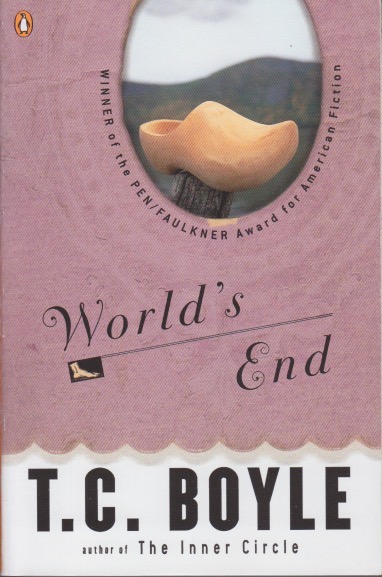
World’s End?

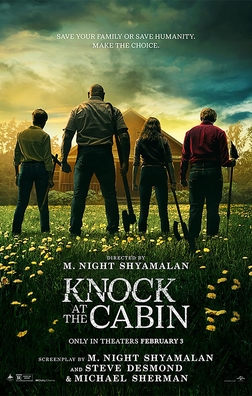
I’ve been writing on religion and horror for quite a few years now.  Sometimes you come across a horror movie, or novel, which addresses this directly.  Paul Tremblay’s The Cabin at the End of the World is one such novel.  A friend strongly recommended this, and indeed, the first half went impossibly fast.  This despite my dislike of home invasion stories.  It nevertheless kept me on the edge of my seat.  I should probably say there will be spoilers here (there will), in case you haven’t read this but intend to.  I’ll hold off on them until the next paragraph, though, so if you’re a faster reader than I am a writer you won’t accidentally run upon them.  So, a family consisting of two fathers and an adopted daughter find the cabin, where they’re vacationing, invaded by four people who believe the world is going to end.  Spoilers follow!

The world is going to end unless the family agree to sacrifice one of themselves to stop the apocalypse.  The strangers are armed while the vacationers are not.  And, as usually happens when those with weapons confront the innocent, the armed prevail.  But.  But the family refuses to sacrifice anyone.  Then the brainwashed four do something unexpected—they kill one of their own.  They continue to do this, attempting to convince the men that if the invaders all die, and neither of the men is sacrificed, the world will end.  Quite a bit of the novel then becomes a theological discussion regarding what kind of god would make such a demand.  Of course, if you read Genesis you’ll already know the answer, right Isaac?

Tremblay knows not to tip his authorial hand as to what’s really happening.  As the cabin becomes a mess of blood and gore, the television seems to be showing predicted apocalyptic events.  The invaders can’t reveal their source of secret knowledge because they receive visions telling them what to do.  The whole thing raises that most troubling of questions: who is really in charge?  Is there a bloodthirsty deity who requires a willing death or are the invaders simply good at acting out their paranoia and interpreting events to meet their expectations?  So it is that Cabin becomes a disturbing story—nearly a theodicy—asking age-old questions of what happens when religious belief conflicts with rational materialism.  There are enough hints of supernatural happenings to make the reader wonder.  And when it ends it affirms something many of us are exploring these days—religion and horror have much in common but neither is clearly understood.


Ultimate Collectables

“Collectible ebook” is a phrase you never hear.  That’s because such a thing doesn’t exist.  Even though I work in the publishing industry, I’m not really a fan of ebooks.  I don’t write my books anticipating pointing to some screen and crowing, “I wrote that!”  No, books exist as entities and there’s a kind of contempt associated with making them disposable by creating them out of ephemera.  I’m not wealthy enough to be a serious book collector, but when I buy used books I notice the rare category of “collectible” with some envy.  This is a book that has been treasured.  You see, I know that when I die I’ll leave little behind apart from my books.  If they were ebooks they’d be worthless.  You can’t sell them or trade them in.  Or even put them into a little free library.

Sometimes buying electrons seems to be more convenient than the alternative.  For example, we’ve pretty much run out of space for DVDs and Amazon seems unlikely to fold soon (like UltraViolet did), so subscribing to a streaming for a movie seems safe enough.  Yes, you can resell DVDs, but often for a pittance and you gain by opening more space.  The space books take up demonstrates their importance.  We bought our house with an eye toward book space, and even though we don’t have many books that would be considered “collectible,” we do have many that are interesting.  Unusual.  They have been conversation-starters when we’ve had the curious over.  (I always look at other people’s books when invited to someone’s place, if they’re publicly displayed.  It’s how people get to know each other.  I’ve never looked at anyone’s ebooks.)

Books are a cultural object.  The big tech companies have been trying to drive traffic to ebooks for years.  The pandemic gave them a leg up, but book sales—print book sales—also increased.  You can watch only so much Netflix, I guess.  I have yet to find a study that shows something read on a screen stays longer, or receives deeper engagement than something in print does.  To be sure, electronic reading has its place, but its place isn’t to replace actual books.  I guess I’m suspicious of the electronic revolution.  It feels fragile and tenuous to me.  If the power goes out we’re left without our gadgets and their contents.  You can still light a candle, however, and read an actual book.  And if bought and treated wisely, you may even find something collectable on your hands.


The Other Mississippi

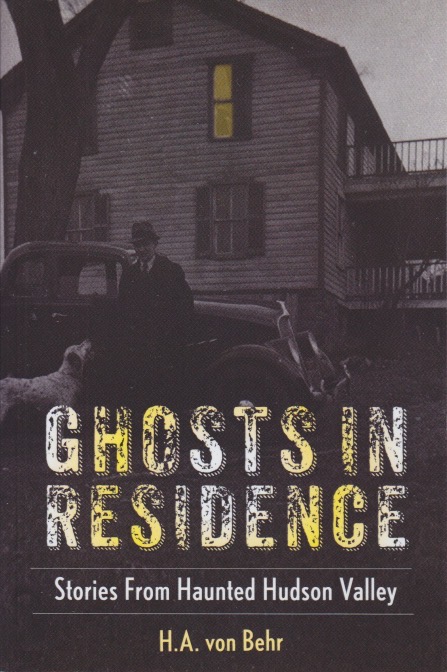
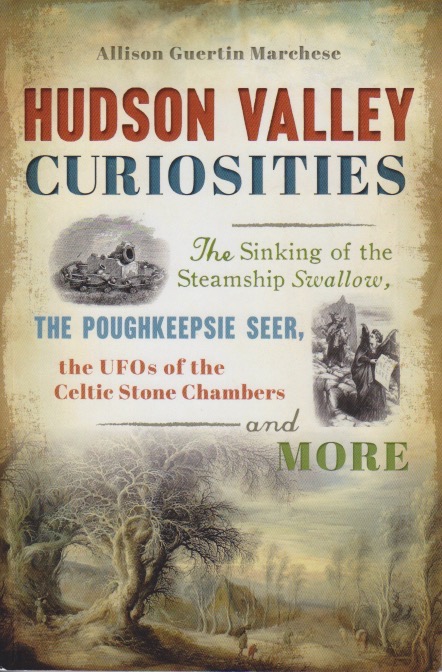
Salmon aren’t the only animals that head back to their ancestral homes late in life.  There’s a draw to where we’re from.  Many humans can’t physically return for socio-economic or emotional reasons, but there’s an urge that may transcend generations.  For me it’s always been traced through my maternal line to upstate New York.  My mother’s [redacted for security question purposes] family had been in the upstate region around Schenectady for generations, as traced back as far as the 1770s.  It was my maternal grandfather, branching off from his father (who made it as far as central New York) who eventually left the state, after teaching in a one-room schoolhouse, for which, in those days, you didn’t need to be a college graduate.  In any case, I have a fondness for the Hudson Valley and an interest in its history.  

Allan Keller was a journalism professor who never became famous.  His Life along the Hudson is one of those charming, dreamy books about yesteryear.  Richly illustrated, it really isn’t a history (Keller wasn’t an historian) so much as a set of vignettes illustrating the role and importance that the river has had not only for New York state, but for the United States as a whole.  There are chapters about famous residents, battles of the Revolutionary War, historic houses, quirky facts, boating, and railroads.  It’s an interesting cross-section of a forgotten part of America.  Today when we hear Hudson River we tend to think New York City.  And while that’s not wrong, it certainly isn’t the whole story.  The Hudson early on connected Albany with Manhattan as they grew to be the two major points around which the Empire State expanded.

The book was never a bestseller.  It’s not particularly rare.  It is, however, a series of snapshots.  One of those was 1976, when the book was published.  The Hudson had become so polluted that major remediation efforts had to be put in place to redefine it from a cesspool to a beautiful waterway that took the breath away from many early travelers.  This valley was once considered one of the truly scenic spaces in the United States.  Now it’s pretty much a suburb of New York City, but it retains much of its earlier appeal, if you know where to look.  I’ve tried to find jobs that would allow me to move back to this region of upstate New York, but I’ve ended up in my own immediate home state of Pennsylvania.  I’d go back a couple more generations, if I could, but even salmon sometimes never make it back home.