Speaking of The Wicker Man

The TheoFantastique website is older than my blog and, I suspect, has more followers.  I was immediately struck when I first found it in my early days of blogging.  Seeing that the fantastic—genres that include sci-fi, horror, and some adventure material—often comments on and often uses religion as its milieu, the site features many posts about topics I find compelling.  Over the years I’ve had the opportunity to get to know John Morehead, the creator and builder of the site and he has kindly agreed to interview me about each of my books that deal with these topics.  The links to those interviews (which can all be found on YouTube) are on the “Social Media & Interviews” page of this blog.  Just yesterday John recorded and posted an interview on The Wicker Man.

There is a small community of us that explore these connections between religion and pop culture.  My interests, as careful readers will know, is really with monsters but I’m still learning how to write about such things and, more importantly, to do so with limited resources.  That often means analyzing films because they are accessible whereas research trips to libraries and locations that monsters dwell isn’t really conducive to a 9-2-5 job with no sabbaticals or even summer or holiday breaks (capitalism is relentless).  I can take in a movie or two over a weekend without leaving home and I can use my writing time to explore them.  Thus Holy Horror, Nightmares with the Bible, and The Wicker Man were born.  And interviews about them can all be found on TheoFantastique as well.  There’s also much, much more there.

By the way, John is also quite a capable author and editor.  He’s got wonderful books to his credit as well.  Some of them appear on this website and the others I haven’t got around to reading yet.  (My “to read” list is about as long as the Burj Khalifa is high.)  I often think that being a full-time reader should be a job.  It is, I guess, if your own books sell well enough.  Otherwise you need to work around the long days at the office to make ends meet.  But I digress.  In this era of information via recorded media, online interviews are key to getting word out about your book.  Coincidentally, quite unexpectedly a single hardback copy of The Wicker Man arrived just yesterday as well.  That always helps when it comes to bookends.  But it may help to watch the interview before just diving in.

Curious Valley

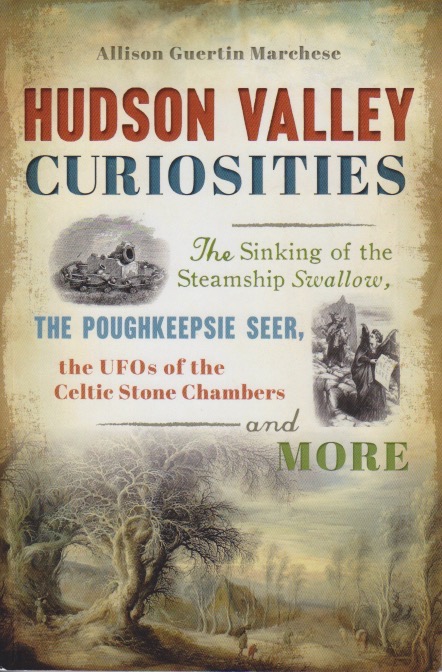
Another of my guilty pleasure reading categories is local history, written by locals.  As a genre these books may not always go back to primary sources, and they may get a fact or two wrong, but still they’re endlessly fascinating and I always learn something (which is the point of reading, after all).  I enjoyed Allison Guertin Marchese’s rambles along the Hudson Valley.  I’d encountered some of these tidbits before, but most of them were new to me and show just how interesting a place this particular river valley is.  Living in a strange world is so much more beguiling than a prosaic, predictable place.  Still, you’ve got to accept that anything can happen.  Unlike many such books, Hudson Valley Curiosities does not focus on paranormal, although ghosts and UFOs turn up a time or two.

Since this region is about 145 miles from end to end, the book divides it into lower, middle, and upper regions and gives about equal time to each.  The curiosities range from mastodons to prohibition busters, from shipwrecks to Shakers.  I’d never made the connection with the Shakers and the Hudson Valley before.  While the Shaking Quakers had their origins in England, they eventually migrated to the New World, settling in the northern end of the Hudson Valley.  The book points out that they were noted inventors, living by their own means as they did, they came up with their own solutions to problems.  Another aspect of these curios is the number of them that involved women who took on the cause of women’s rights.  The first female candidate for President of the United States, Victoria Woodhull, is discussed, as is Deborah Sampson, the woman who dressed as a man to fight in the Revolutionary War.

Marchese provides a helpful bibliography as well.  As someone trained in historical method, I like to go back to the sources.  Of course, that means assessing both publisher and author, and taking into account what passed for facts at the time.  History is an endlessly fascinating enterprise.  Many historians, however, leave out the controversial or questionable materials that a local historian is inclined to leave in.  That’s what makes books like this such a guilty pleasure.  Who doesn’t like to look behind the curtain now and again and see what’s happening out of the public eye?  And it’s helpful to keep in mind that by far the most of history takes place far from the headlines.  That’s where real life happens, no matter how strange.  And it’s a guilty pleasure to read about it from a local who finds, gathers, and preserves the stories.


Ending Worlds

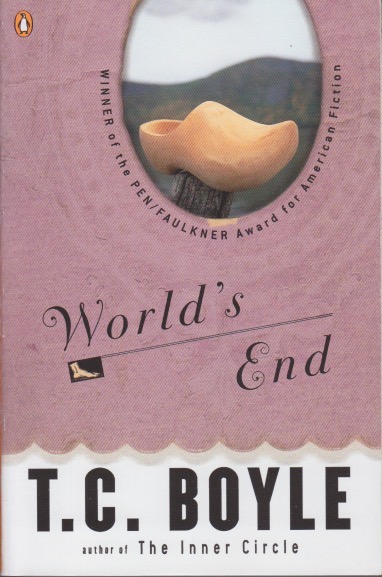
It takes a kind of talent to write a long novel where I don’t have any feelings for any of the characters.  I’ve studied writing enough to know that “Mary Sues”—characters who have no flaws—are to be avoided.  Yet, writing so that no characters over a span of about 300 years seem to be able to garner at least pity (and my therapist tells me I a very sympathetic person) is a feat.  All of which is to say I didn’t much enjoy the award-winning World’s End by T. C. Boyle.  This novel is set in the Hudson Valley, which is one of my current obsessions, and I thought the sense of place would draw me in.  Stories where everyone drinks all the time, and mostly they get high after that, and then wonder why tragic things happen when they drive, really aren’t for me.  I accept and admit that the onus is on me. (I freely confess to preferring speculative fiction.)

Successfully writing a novel that ties several families together over the generations is, however, an achievement of literary architecture.  It’s just that not all novels work for everyone.  There is a sense of maybe a little cosmic justice at the end, but it feels at times almost as if the side that’s being cheered on is the wealthy one.  Maybe it’s reflecting the way life works.  Or maybe I’m not a subtle enough of a reader to understand.  For whatever reason, it really didn’t speak to me.  It could also be that I need to reflect on it more.  Growing up poor with an alcoholic father and seeing firsthand the entrenched ways of the wealthy and how they effectively keep other people down, such tales tend to set me off.  None of this is to gainsay the artistry since it clearly condemns the land theft from American Indians and unrepentant wealth.  

It’s this last point from which the novel really takes its strength—ownership of the land.  As mortal creatures we have a strange idea that we can own something that will outlast us.  In the novel’s resolution that ownership shifts, unbeknownst to the wealthy, back to the original owners through an illegitimate child.  There may be some social commentary intended here and this makes the story less of a justification of white ownership.  I guess many of us are very sensitive to fascist characters since the Trump administration.  Perhaps had I read the novel in the late eighties, when it was first published, this would’ve seemed less troubling because we would’ve thought then that such a thing could never happen.  But three centuries is a long time and we simply can’t tell, although World’s End suggests justice might be served in the long term.


Devil Talk

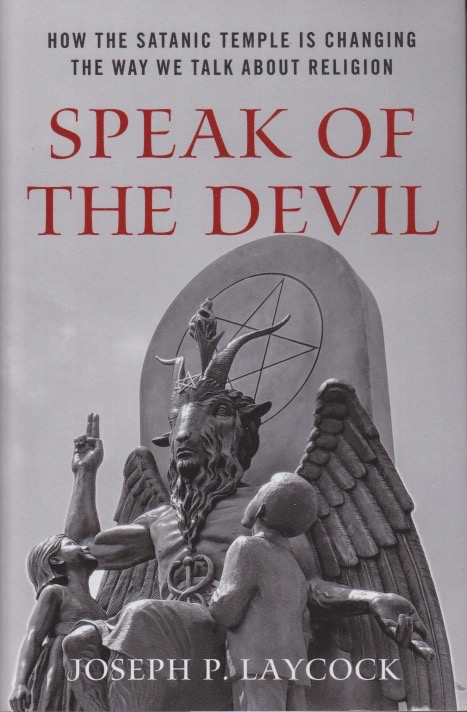
Around here, an after-school Satanic Temple club, prompted by an after-school evangelical club, led to a lawsuit where our tax dollars are being wasted.  Many local people wondered what was going on and I knew I had a book on my shelf that would help to answer that but I had to find the time to read it.  Joseph P. Laycock has been writing fascinating books for a few years now.  I picked up his Speak of the Devil: How the Satanic Temple Is Changing the Way We Talk about Religion just after it was published, but it always takes some time for me to get to books that I know I’ll have to spend time with.  I was right about spending time—there’s a lot packed in here that requires some thought.  I was vaguely aware of what the Satanic Temple is but had difficulty distinguishing it from the Church of Satan.  (I have a book on the latter, but it’s quite big and I haven’t found the time for it yet either.)  Laycock spells it out clearly.

The book begins by discussing how the Satanic Temple entered public consciousness in 2013.  Yes, it’s only been about a decade.  If you think it’s more than that, you may be confusing it with Anton LaVey’s Church of Satan.  They are different organizations.  One thing they have in common is that neither promotes belief in a literal Satan.  Both also rely on shock tactics to get their point across.  The Satanic Temple is a socially conscious organization that reacts to provocations of conservative Christian groups to try to establish their brand of Christianity as the officially sanctioned state religion.  And the evangelical groups have been making in-roads for years.  Playing the innocence card, “We’re just mainstream America saying what everyone’s thinking,” they put religious monuments in public spaces, start public meetings with Christian prayers, and receive state funding for their programs.  Often unchallenged.

Laycock’s not discussing evangelicals, but rather how the Satanic Temple arose in response to efforts to establish one form of Christianity as state sponsored.  There’s a ton of information in this book.  Among the many takeaways for me was the discussion of how good and evil are determined.  This is obviously directly relevant when Satan is involved, especially since the Devil is a post-biblical development.  The Satanic Temple, which doesn’t teach that there’s a literal Devil, attempts to counter the standard narrative by doing good deeds in the name of humanism.  You might be able to guess the conservative Christian response to that.  If you can’t, this book will help to spell it out for you.


Whither Wicker?

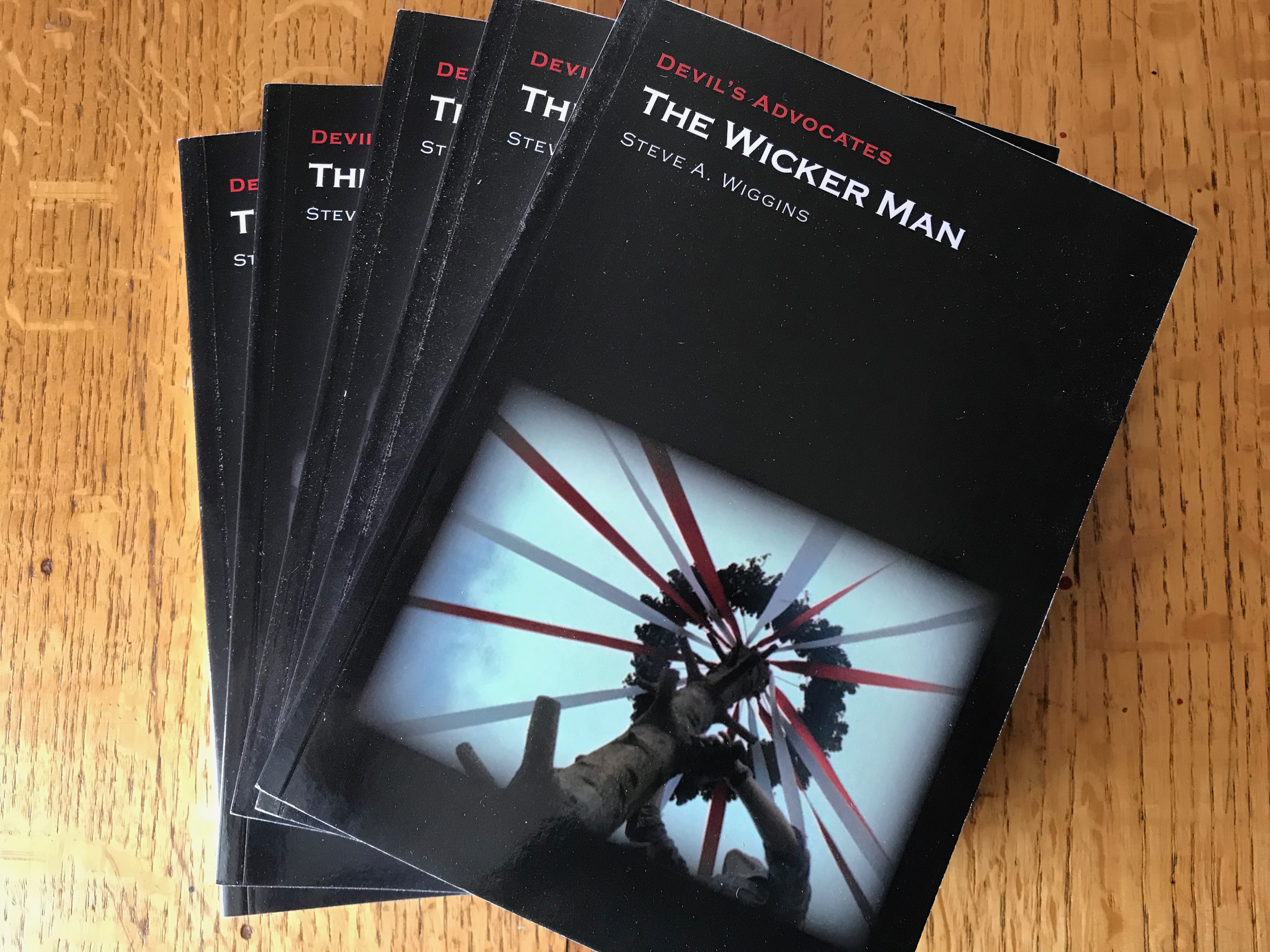
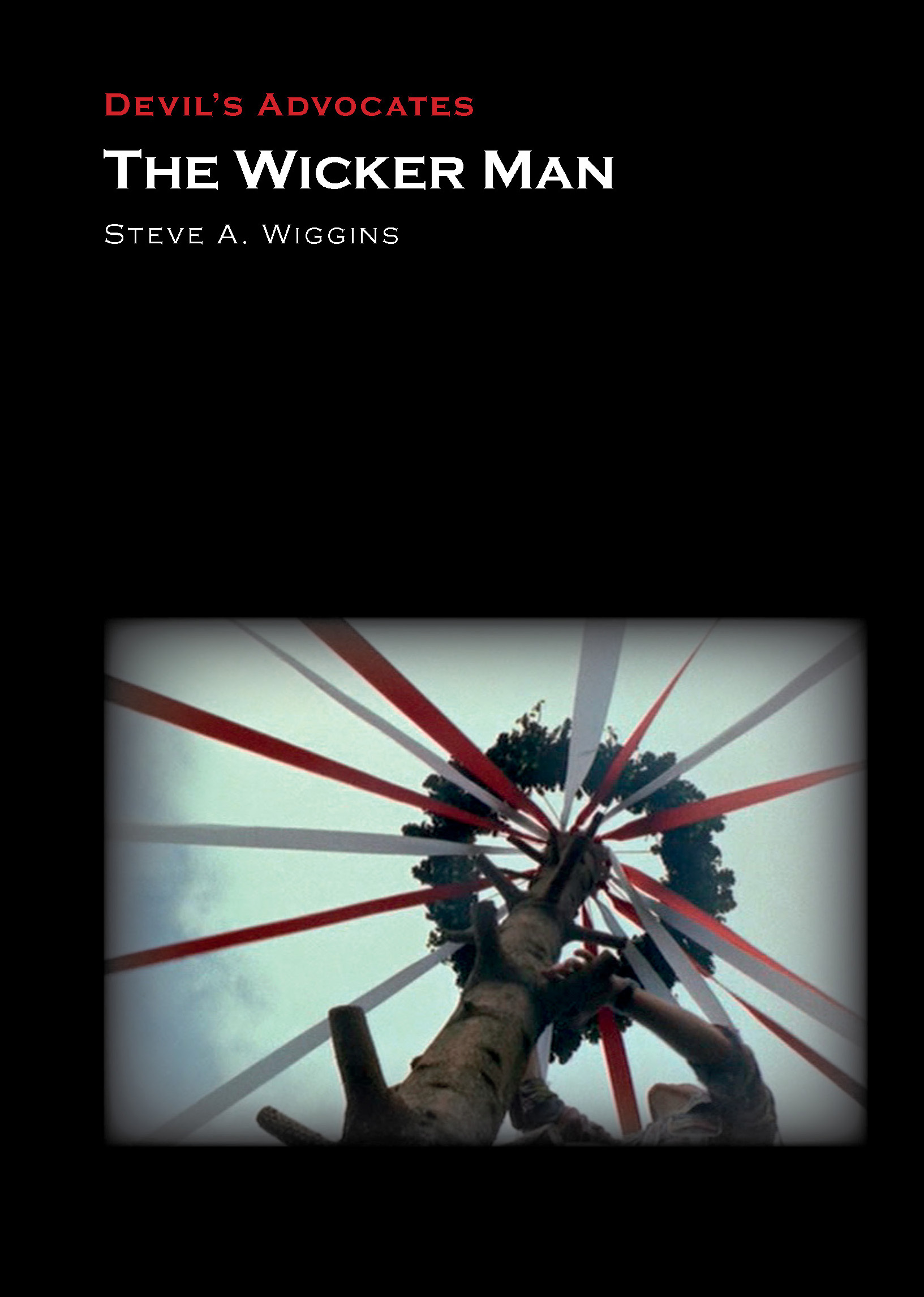
The process of producing a book is a lengthy one.  Even as an author you’re not really ever quite sure when it’s out in the world.  My author copies of The Wicker Man have arrived.  The release date is set for August and the publication date is September 1.  Still, it’s out there somewhere in the world at the moment.  The release date of the book is generally the date that stock arrives in the warehouse.  The book is technically available on the release date, but the publication date isn’t until two-to-four weeks later.  The publication date is when a book is fully stocked at the warehouse and is available in all channels (Barnes and Noble, Amazon, Bookshop, and your independent local bookstore).  Chances are you won’t find this book, being a university press book, in your local, but it can be ordered now.  Even in July.

This is a short book, so I don’t want to write too much about the contents here—then you might have no reason to buy a copy!  In brief, though, I can say that it explores The Wicker Man through the lens of holiday horror.  Not a lot has been published on the sub-genre of holiday horror.  In general publishers tend to be reluctant about holiday books—the perception is that they sell only seasonally (if my buying patterns are taken into account, that’s clearly not true).  Movies, however, can be watched at any time.  The Wicker Man is about May Day but it was filmed largely in November and was released in the UK in December of 1973 (fifty years ago), and in the United States in August of 1974.  People see it when it’s offered.  (Of course, video releases have changed all that.)

The movie has grown in stature over the years.  It appears in many pop culture references and even those who aren’t fans of horror have often heard of it.  There’s been quite a bit of buzz about John Walsh’s book on the movie, to be released in October.  (Of course, it is distributed by Penguin Random House.  I’m learning about the importance of distribution the more I delve into the publishing realm.)  My book has a more modest release and a slightly smaller sticker price (unless you go for the hardcover, then I’m right up there with university press prices).  I thought readers might like to know it now exists.  This writer, in any case, is glad to hold a copy and see the fruits of a few years’ labor, whenever it might come.


Literary Criticism

One of the drawbacks to being an editor becomes apparent with much reading.  Some people have writing skills.  Others don’t.  That’s no reflection on intelligence, insight, or even brilliance.  Good writing is part talent and part hard work.  The drawback is when someone thinks they’ve got what it takes, but they don’t.  I’m a gentle guy.  I don’t like to hurt feelings and yet I have a job to do.  You see, good writing involves a few things—writing for your readership, being aware of what that readership likes, and giving new information without being all technical about it.  I’ve read academics who write very high-level monographs, sprinkled with “wells” and “you sees,” which come off like a guy my age trying to impress a twenty-year old by being groovy.  Just admit you’re writing for other scholars and get down to it.

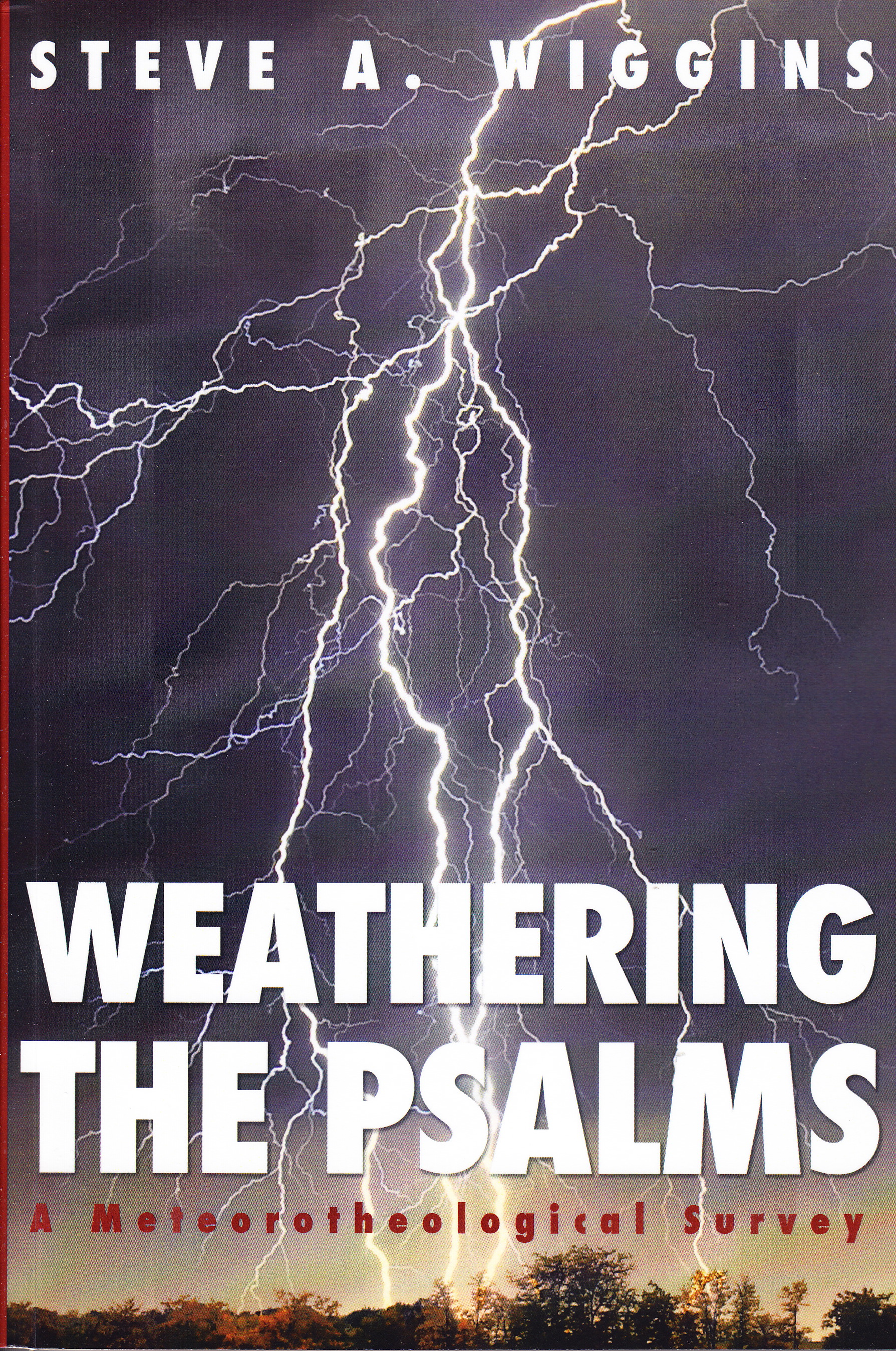
Then there’s the verbless sentence.  You know what I mean—a literary rim-shot, usually at the end of a paragraph, to heighten the drama.  Solid technique.  This only works, however, if you don’t overuse it.  I’ve read books where nearly every paragraph ends with such rim-shots.  Then the author started writing one-liner paragraphs.  This isn’t a Saturday Night Live cold opening.  The writing has to have a certain amount of gravitas.  Especially if you’re wanting to publish with a university press.  I realize that the dream of many academics is to write for a wider readership, but honesty is still a virtue.  When I wrote Weathering the Psalms I pitched it as for general readers.  Ha!  Not even specialized readers have found it that engaging.  It was a book for specialists.  I see that now.

Don’t get me wrong—I read plenty of good writing.  Some of it’s even beautiful.  Editors, however, have to read an awful lot to be able to pick out the gems.  I remember my volunteer experience on the archaeological dig at Tel Dor.  At the pottery reading sessions, a specialist would quickly sort through a box of four-thousand year-old fragments and say within seconds if there was anything interesting (“indicative” was the term she used) or not.  She did this by reading pottery like an editor reads proposals and manuscripts.  You get to a point when you can just tell.  Writing well can be learned.  Some people have an innate talent for it.  Being a gentle guy, it’s hard to be honest sometimes.  I have to keep reminding myself, however, that it’s still a virtue.


Hidden Wood

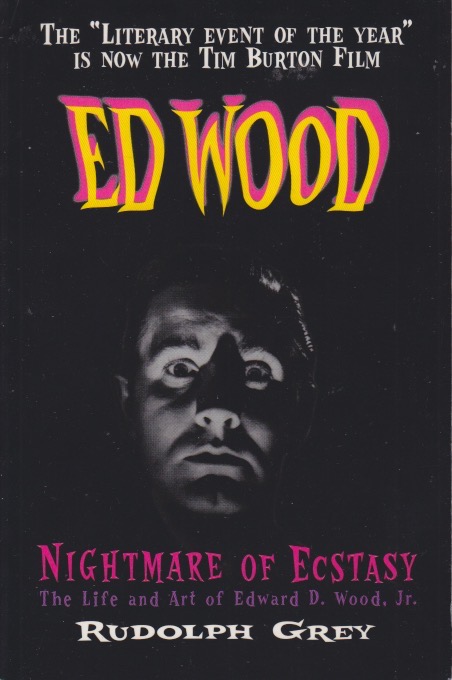
Fandom can lead to fame, even if it’s just cult fandom.  The nature of Ed Wood’s films is such that he could’ve been among those forgotten had he not posthumously developed a following.  Unfortunately it didn’t arise in time to ameliorate the tragic final years of his life when he died pretty much penniless, drinking away the pain.  Rudolph Grey’s Nightmare of Ecstasy: The Life and Work of Edward D. Wood, Jr. may have helped rescue him from obscurity.  Of course, Wood had gained a following earlier than the book, but nobody had really thought to document his life.  What I find so compelling is that Wood was like so many of us—trying hard to gain some recognition only to be shut out of what we love by a huge industry that calls the shots.  It’s difficult to get notice as an independent filmmaker, or even as a writer publishing with smaller presses.

Wood lived a most unusual life.  A straight transvestite, he fought as a Marine in World War Two.  He moved to California to try to break into filmmaking and wrote and directed several movies.  When this failed to make enough money to support him, he turned to writing pornographic novels and film scripts.  Wood had, interestingly, befriended a lonely and washed up Bela Lugosi.  His last two movies were Wood’s work.  Wood found camaraderie with other outsiders in Hollywood and he cast them in his low-budget productions.  He would try to shoot his films in less than a week.  Considering the constraints under which he operated, his movies really aren’t that bad.  They aren’t good by conventional standards, but they’re better than many other people could’ve made them in his circumstances.

This book isn’t a conventional biography.  There’s no narrative apart from the recollections culled from interviews of those who knew him and occasional letters and writings of Wood himself.  As with any biography there are gaps and lacunae.  From a writer’s point of view perhaps the saddest part of the story is how Wood and his wife were evicted from their final apartment and he had to leave his papers and manuscripts behind.  These were reportedly thrown into a dumpster and lost forever.  Although his movies may have been bad, Wood was a capable writer.  And like any writer he felt the loss of his work keenly.  He only lived about three more days after that.  His friends had largely abandoned him, alienated by his drinking and its effects on him.  Next year will mark the fiftieth anniversary of his death and, I hope, the commemorative watching of some bad movies that deserve to be remembered.


Outgrowing Fear

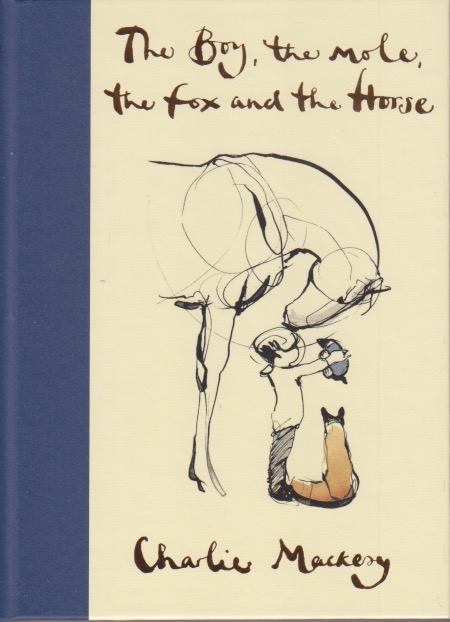
A friend, during a time of trouble, quoted from Charlie Mackesy’s The Boy, the Mole, the Fox and the Horse.  I immediately ordered a copy.  The word “magic” gets thrown around a lot, but this book holds real magic.  It is perhaps the wisest book I’ve ever read.  Do yourself a favor—if you haven’t read it, find it in a library, or order it from Bookshop.org or Amazon.  Visit a local bookstore, and if they don’t have it, ask them to order it.  If people read books like this we’d never need to worry about things.  And if everyone read it and took it to heart, we’d never need to worry about anything again.  There’s much to be said about believing in yourself and believing in the power of love.  At the end of the day they speak for themselves.

The book is for any age reader.  Handwritten and illustrated, it’s written at the level of a children’s book that takes less than an hour to read.  Its message feels almost radical, however.  That having been said, the young adult generation, I’m given to believe, grew up with the kind of outlook Mackesy offers.  The book struck me particularly relevant and necessary, something for those of us in the over forty crowd.  I understand the tendency to grow more conservative as we age and I believe it’s because we’re afraid.  Ironically, the book addresses the issue of fear, pondering how life might improve if we could get beyond being afraid of things.

The artwork is beautiful and the words are inspired.  This is an eminently quotable book.  Mackesy has been an artist by trade.  We can learn so much from such humble artists, if we’re willing to listen to them.  Kindness, love, and simplicity are gifts we often wish not to accept.  It’s very easy to hate and selfishness comes naturally to people.  And when we get together we tend to complicate things.  Once in a while we should set aside the complexities of life and make time for a simple story that reminds us of what’s really important.  Of course, those of us who read are prone to thinking of ways the world could be a better place.  Being open to love instead of hate, trust instead of fear, and hope instead of dread doesn’t come naturally.  That’s why it’s so helpful to have books to remind us of this.  Especially when such a book won’t even require an hour of your time.  I’ll be coming back to it time and again.


Early Halloween

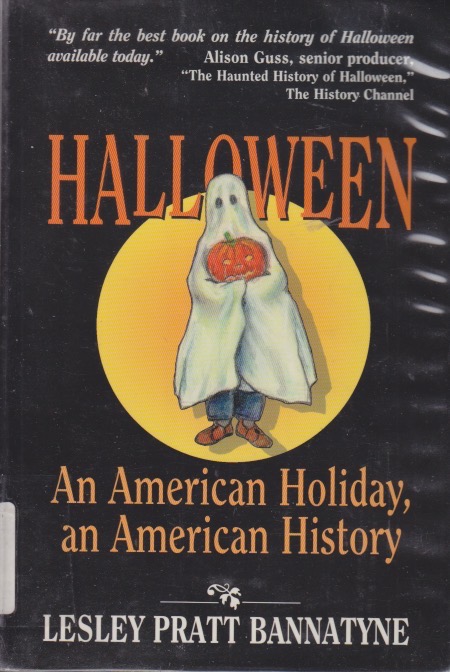
Call it seasonal disorientation syndrome, but I’ve been reading about Halloween.  I’m pretty sure I’m not the only one thinking about it.  Stores will begin Halloween displays next month, if the usual pattern recurs.  So why not do a little advanced study?  Although I’ve written about holidays myself, they’re unruly subjects to handle.  Lesley Pratt Bannatyne is a name familiar to many fans of Halloween.  Her 1990 book Halloween: An American Holiday, an American History kickstarted renewed interest in the holiday and has been followed by other studies, even occasionally with academic presses.  Still, holidays are difficult to pin down.  One of the most obvious reasons for this lies in the fact that before the world became über-connected, holidays were largely local celebrations.  Trends traveled slowly and not everybody agreed on which holidays to celebrate.

The early days of Halloween are the most difficult to piece together.  This is clear in Bannatyne’s book also; we simply don’t have the written sources we’d like.  The ancient Celts, although great strides have been made through archaeology and close examination of ancient writings of outsiders, remain poorly documented.  They didn’t leave archives like the classical writers of Greece and Rome did.  And clearly Halloween has its earliest known celebration as Samhain among the Celts.  Once Bannatyne gets to America, however, there’s a trove of information in her book.  Her chapter on the celebrations among the original thirteen colonies is quite good at demonstrating regional differences not only for religions, but for tolerance for something like Halloween.  Fall festivals predated Halloween as we know it (if we really do know it), and she does a good job of demonstrating how the melting pot effect made Halloween national.

One of the problems with any history is that one event can change everything.  This book was written three decades before Covid-19 and the pandemic was one of those events that did change everything.  It makes it seem as if we were much more carefree back in the eighties when Bannatyne’s book was written.  Halloween was just starting to become an adult holiday again back then.  In the ensuing years it has become even more so.  Communities are seldom what they used to be with the extreme mobility of much of our society, but many still find a way to agree to the terms of Halloween.  Historians of holidays have a difficult task, and we’re still learning about ancient cultures and their modern manifestations.  This is a good book to start that exploration—I know it taught me a thing or two.


The Ology

It’s good to refresh yourself once in a while.  I attended a Calvinist college and my doctoral program was in the context of an institution strongly influenced by Calvinism.  I took courses based on Calvinistic theology.  Jon Balserak’s Calvinism: A Very Short Introduction was really a refresher for me and I have to admit that it sparked a pretty strong reaction.  For one thing, many Calvinists unthinkingly accept the tradition in which they were raised.  (Call it indoctrination, literally.  This is true of most religions.)  Those I know seldom believe what Calvinism teaches, for it presents God as a monster. (This is me, not Balserak, and I mean this in the kindest possible way.)  You see, doctrinally Calvinists have to accept Scripture literally and if you do that you come up with all kinds of contradictions.  (The amount of special pleading is mind-boggling.)  The way the Calvinists landed on this was that God created us for his glory, which will be shown in predestining large numbers of people to Hell.  These people can do nothing to change that since God doesn’t really love them.  What would Jesus say?

I argued quite a lot with professors at Grove City College.  I was raised a Fundamentalist, but of the free will stripe.  The Methodist Church, which I eventually joined, was not Calvinistic in outlook.  (Neither are Lutherans or many others.)  Still, Calvinism has unduly influenced American culture—I wish the book would’ve focused more on this.  We are, culturally, heirs of Calvinism.  This little book points out one obvious way this is so, namely, the separation of church and state.  There are many other features that could be pointed out, but the book aims to be universal and this is therefore not a theme.

The book approaches Calvinism theologically.  There’s quite a lot of “shop talk” here that I imagine might put off those who don’t really care to know who said what about a particular point of doctrine.  Balserak points out that Calvinism is complex and there is no one way of looking at everything, but there are clearly some non-negotiables.  These non-negotiables are precisely what prevented me from ever trying Calvinism on for size.  I’ve moved through various religious outlooks on my journey that is geared toward finding the truth.  Calvinism never tempted me, nor did it ever seem to make sense.  It was as if the tradition accepted that Zwingli and Calvin and company had gotten the basics all correct and every act of theology since then involves a casuistry to prove the early teachings correct.  Why not question things?  Well, I guess they’re predestined not too.


Good-Bad

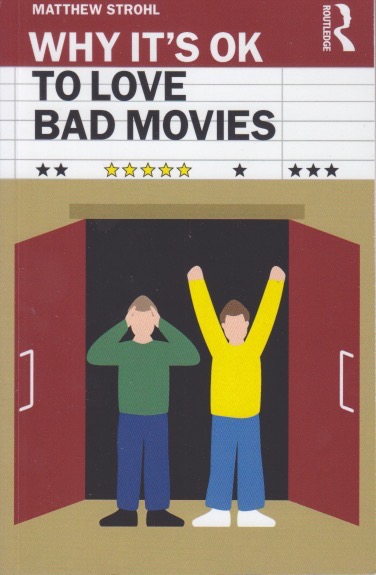
If anybody bothers to follow my movie viewing history, they’ll know that it includes a perhaps disproportionate number of “bad movies.”  In fact, I recently added that as a category for my blog posts.  In need of some reassurance, I read Matthew Strohl’s Why It’s OK To Love Bad Movies.  (As far as I can tell the Why It’s OK series was started by my old boss at Routledge—an inspired idea!)  Strohl is a philosopher, but one who admits to, and even advocates for, loving bad movies.  This book is fun but it does have a serious philosophical underpinning.  I can’t summarize it all here (you need to read the book anyway) but my main takeaways are that ridicule isn’t making the world a better place.  Movies that are so bad that they’re good are definitely a reality.  There’s a community built around it, but I haven’t had many visits from it in my lonely little corner of the internet here.

Strohl points out that not all bad movies are what he terms “good-bad.”  There are certain qualities—aesthetic qualities—that make a bad movie good.  And it doesn’t involve watching the movies to make fun of them.  One of the films that often tops the list is The Room.  When I first saw it I really couldn’t think of anything to write about it on this blog.  It was just another bad movie.  Now I want to see it again.  I do have to say that on my first viewing I didn’t feel like ridiculing.  I was more stunned than that.  And when I watched Plan 9 from Outer Space—another on the list—I felt inspired to learn more about Ed Wood, its famous director.  I’ve since watched a couple more of his movies and I appreciated them.  Now I have a better idea of why.

In addition to discussing the biggies, Strohl also takes forays into some collectives: the Twilight series, for example, and the movies of Nicholas Cage.  These are both often singled out for ridicule, but this book demonstrates that there’s an artistry to such things.  And Bad Movies underscores that not everyone likes the same bad movies.  Strohl also makes the salient point that if we only ever watch great movies we’d have no basis for comparison.  There’s a lot to like in this little book.  One thing it convinced me of (in addition to making me feel a bit better about myself) is that there’s a community out there that I’m missing out on.  Good books bring people together instead of dividing into factions.  This is a good book.


Release the Wicker

One of the many fascinating things about The Wicker Man is that even its release date can cause confusion.  There should be nothing so simple as to look up when a movie first hit theaters, but especially in trans-Atlanic efforts the dates are often different between the UK and the US.  The Wicker Man had a limited UK release on June 21 (quite close to Midsummer, it turns out) of this year.  It’d been released before, of course.  The initial UK release date was December 6, 1973 (twenty days before the US release date of The Exorcist).  Making its way to the US, it was first released on May 15, 1974—not long after May Day.  One of the features of the curious history of the movie is that it lacked support from its own studio.  Not surprisingly, it performed better overseas, particularly in America.

Release dates can be important, and can make a difference in a film’s success.  Again, the quirkiness of The Wicker Man reveals this—although set in late April-early May, it was filmed in November.  Actors had to suck on ice chips to prevent their breath from being visible.  And who’s thinking about May Day when getting ready for Christmas?  All of these factors swirl around in a mythology that the movie has developed.  My book went to the printer yesterday.  It should be out in August-September, hopefully in time to catch the interest of those who’ve gone to see it in theaters again.  I’ve lost track of how many times I’ve seen it.  I’ve watched all three released versions.  It feels like an old friend.

From the beginning, the plan was to release my book this year, due to the fiftieth anniversary of the movie.  It’s funny how simply surviving half a century can make something interesting to people.  There are plenty of 1973 movies that aren’t getting any particular boost this year.  The thing about The Wicker Man is that it became a cult classic.  Although it was never a mainstream hit, it has sent out its tentacles far and wide.  I notice references to it is unexpected places.  If you’re attuned to this you say to yourself, “that movie really made an impact.”  And it did.  When I first pitched this book idea to the editor of Auteur, I told him I’d do whatever I could to make a 2023 release.  Of course, I started writing it before Nightmares with the Bible came out.  My next book after the Wicker Man doesn’t have an anniversary release in mind.  That’s good, because like a moon-shot it’s nerve-racking to aim for such a narrow target, years in advance.


Sleepy and Hollow

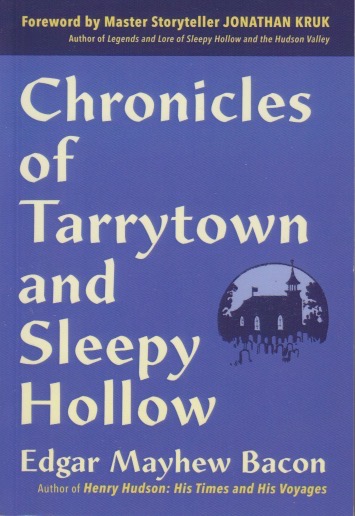
There’s a kind of charm to Chronicles.  I don’t mean the biblical book, but rather Chronicles of Tarrytown and Sleepy Hollow, a book published in the 1890s by Edgar Mayhew Bacon.  A somewhat poorly organized volume, you get the sense that Bacon had more curiosity than literary ability, but that didn’t prevent him from leaving a valuable record.  What’s more, other accessible books like it tend not to exist or be easily found.  There’s definitely a reason to write so that the average person can read your work.  I didn’t spring for an original edition on this one, as much as I love old books.  Nevertheless, the material’s still old and that’s what counts.  At least to someone with an historian’s point of view.

What really caught my attention here was Bacon himself.  Who was he?  His book was from that era of “you should believe me because I wrote a book about it,” but modern critics want to see credentials.  Although search engines are often good, if you’re looking for information on an obscure author (such as yours truly) they’re going to try to sell you something first.  Books, in the case of those of us who write.  If you scroll down far enough you’ll learn that Bacon was born in the Bahamas in 1855.  He wrote, it seems, five books.  He doesn’t have a Wikipedia page and I looked him up because (in addition to basic curiosity) he at times appears to be a bit of a curmudgeon.  He was only about 42 when this book was published, however, but writes like a long-time resident, slightly jaded.

Bacon was mostly a place writer.  His non-fiction books focus on places he lived or knew.  His educational history isn’t easily discovered, and again, the modern reader wants a degree (preferably three)  to show that one can be a proper historian.  He lived in an age, however, where gumption to write and complete a book likely meant finding a publisher.  The internet has changed that, probably forever (or at least as far as we can see).  It’s a buyer’s market for publishers.  But still, Chronicles of Tarrytown was brought back into print and was made available again, in an affordable paperback.  It contains some second-person history, closer to the events than we currently are, and a few legends as well.  It can’t be relied upon for history as we know it, but it can still offer a bit of charm for those curious about yesteryear.


Employment Opportunities

It’s important to be reminded that stories can also be told by what’s not said.  Non-narrative fiction can be a little tricky to follow, but often contains admirable aphorisms.  Such as “I believe in the future.  I think you need to imagine a future and then live in it.“  This is from Olga Ravn’s The Employees: A Workplace Novel of the 22nd Century.  One of the many things driving me insane at the moment is where I found out about this book.  I know I ran across a recommendation somewhere and I can’t recall the place.  It would be helpful to know since I wonder what it was about the description that convinced me I had to read it.  In any case, there will likely be spoilers below since it’s difficult to describe the book without them.  I’ll start off by saying it’s classified as science fiction, but it’s not your typical 1950s kind.

The story’s told via a series of employee statements to the company that owns a space freighter.  The ship has a mixed crew of humans and humanoids—androids that aren’t easily distinguished from biological humans.  They discover some mysterious, perhaps organic, objects on a new planet and the humanoids begin to request, or even demand, equal treatment.  The outlooks from the two perspectives, human and non-human, are quite different, but they argue that fair treatment is only, well, fair.  The situation gets out of hand and the company, as such entities often do, decides on the economical solution of killing everyone aboard the ship but preserving the exotic objects.  Though generally described as “comic,” I picked up on the seriousness of the issues of prejudice and inequality.  The quote above is from the very last statement from the ship.

Ravn has established a reputation as a poet and that shows through in this novel.  The quote above is an example.  According to the article about her on Wikipedia, she graduated from the Danish School for Authors.  That made me wonder why we don’t have such things.  This isn’t the same as an MFA program.  Indeed, the nordic countries seem to have abandoned their viking ways for literature.  There’s a deep wisdom in this.  Costs of living are high in such places, but so are happiness levels.  What’s not to like about a school option where budding poets and novelists can become acquainted with one another and imagine a better world?  Writers sometimes give us challenging stories but the reason, I believe, is that we can learn from them, view a better future, and live it.


Liking Everyone

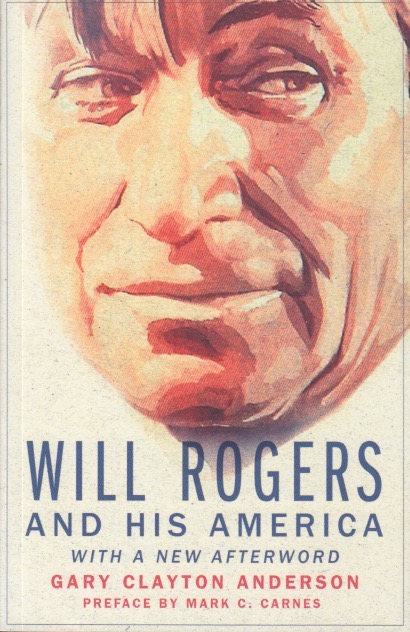
I’m not really interested in politics.  Powerful people deciding the fate of the rest of us seems inherently depressing.  We could use a good laugh.  I’ve been curious about Will Rogers for some time now.  He’s a name that everyone in my generation seems to recognize but few people know anything about him, beyond some of his famous quips.  So I read Gary Clayton Anderson’s Will Rogers and His America.  It was an eye-opening experience.  Rogers died in 1935, the year my mother was born.  What a difference less than a century can make!  At the time of his death he was one of the most famous people in the country, personal friend of U.S. Presidents, an international traveler, and widely syndicated newspaper columnist.  He was also a film actor and comedian.  When he traveled internationally world leaders gladly met him.  Not bad for a poor boy from Oklahoma.

Anderson’s book is a good introduction to who Rogers was, but it does tend to focus on the politics.  Arguably that’s where one’s greatest impact in life might reside.  Still, there’s a lot more to an individual than politics.  I’m curious about Rogers’ career as an entertainer.  He started out as a Vaudeville roper—literally, a rope act.  His noted wit, however, made him famous.  At various points he was one of the highest paid entertainers in the country.  His sympathies, like many of us born in humble circumstances, tended to be with the average person who, it seems, is always struggling against an economy that favors the wealthy.  See?  There I’ve done it myself, gone and got political.  It’s difficult to avoid.

Perhaps the most widely read columnist in the country, who influenced political opinions and could rake in the money at just about any form of comedic enterprise, Rogers nevertheless faded from view after his death in a plane crash.  He was part American Indian.  He never completed college.  He was homespun and yet influential around the world.  Fame comes with no guarantees, of course.  I guess it would be helpful to know what Roger’s motivations were.  Was he, like most people, simply trying to secure his future for himself and family?  Was he trying to change the world?  Can anyone manage to do that for very long before things come along and everything’s suddenly different?  (Think AI, for example.)  I’m glad to have met Will Rogers through Anderson’s book.  Even though I’m not really interested in politics, I learned something about them too, along the way.