The Young and the Headless

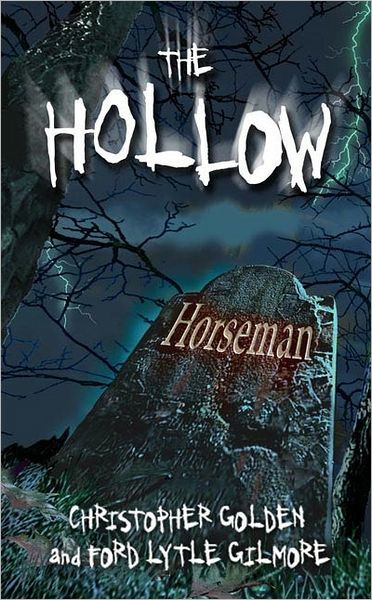
Young adult literature is sometimes fun to read as an adult.  In addition to going swiftly, compared to much “adult” literary literature, it has a way of evoking what life was like when we were younger.  Or at least it can.  Sticking with my Sleepy Hollow kick, I read the first volume of the series “The Hollow” (later “Sleepy Hollow High”) by Christoper Golden and Ford Lytle Gilmore.  This volume, Horseman, posits the return of the headless horseman to Sleepy Hollow in the modern day, triggered by the return of some of Ichabod Crane’s unknowing descendants.  The story follows brother and sister team Shane and Aimee Lancaster, who’ve just moved to Sleepy Hollow from Boston.  Although full of unexplained happenings, the book conjures the emotional turmoil of teenage years well.

While I normally try to read within my usual age level, the occasional foray into tween, young adult, and now, new adult lit is a fun escape.  One of the mysteries of aging—and I certainly didn’t think of this myself as a young person interacting with my elders—is that you remember what it was like to be at the various stages of life you’ve passed.  When you’re young you’re discovering things for the first time and there’s a revelatory aspect to them.  I can’t make universal claims, but in my experience life just gets more complicated the longer you live.  We yearn for the simplicity of younger times when, for example, you just paid the rent, went to work, fell in love, and did your own taxes.  As an adult you find all of these things hide complexities that often hide even more complexities within themselves.  Why not throw caution to the wind and spend a weekend reading a young adult novel?

I’m undecided about reading the rest of the series.  This story quickly drew me in, but the other volumes are now published only in ebook format.  And I suppose I should do some more serious adult reading as well.  Actually, I’ve been plugging away at a novel written for adults by an author my age, but it’s long and, well, involved.  Kinda like life itself, I suppose.  One of the things I’ve noticed about modern engagements with “The Legend of Sleepy Hollow” is that they tend to skew towards a younger crowd.  Maybe I can recapture a bit of my own youth that way.  I’ve known the story since my youngest years but have only recently really began to pay attention to it as, well, I guess I have to admit, an adult.

Have a Little Hope

Optimism is a rare commodity these days.  Reading Scott Edwin Williams’ new book, Lightbulb Moments in Human History: From Cave to Colosseum, served to remind me of that.  The first of a projected three volumes, Williams’ book frames this rather like some of the other big picture attempts to summarize human history in a thousand pages or less, such as those of Yuval Noah Harari or Rutger Bregman.  In outlook he’s closer to Bregman, who unabashedly states that we have progressed—things are better than they used to be.  To explore this, in a (in his own words) smartass way, Williams has divided early human history into four main areas: STEM, religion, education, and culture.  This framing device isn’t heavy-handed, but it is interesting to see religion included, and not always negatively.

We live in an era when those I regularly talk to (admittedly a small group), generally feel pessimistic about where we are.  A good deal of that is because, as Williams rightly points out, we look at the small picture.  Yes, we have big problems such as Trump, Musk, Russia’s ambitions in Ukraine, and global warming.  Yes, people are suffering and dying needlessly.  If, however, we take a step back, things are far better for far more people now than they ever have been.  That doesn’t mean we don’t have big problems to solve—mostly spawned by capitalism and patriarchy—but if people follow historic trends, we may well end up in a better place.  Historians won’t take Williams’ book seriously—and indeed, he tries to inject quite a bit of humor along the way—but books that remind us to compare where we are with where we have been can provide much needed optimism.  Hope still huddles in Pandora’s box.

I was glad to see Williams including religion in his four keys areas to explore.  I am convinced that he doesn’t devalue any people in the world (the book covers prehistory, ancient Mesopotamia, Egypt, China, India, Meso-America, Greece, and Rome) but his chapter on Christianity is a bit of an outlier.  Although it’s not intentional, his “God of the Old Testament” versus “God of the New Testament” paradigm could been seen as antisemitic.  Again, I’m sure Williams doesn’t intend it that way, but those of us who have studied, and continue to study the history of religions realize that that model has been used to justify nefarious plots in the past.  Throughout the whole, Williams pokes fun at Erich van Däniken who influenced a young Williams just like he influenced a young me.  And growing up requires leaving some things behind, while nevertheless learning something from them.


Local Haunts

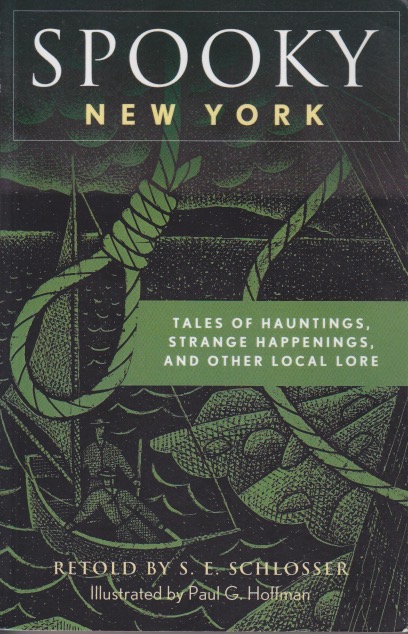
Local color.  It’s what makes travel so much fun, even if not to someplace exotic.  I’ve lived in five different states and two different countries and one thing each place had in common was local lore.  Since I’ve been a stranger in most places I’ve moved, I’ve picked the lore up primarily from books.  Fortunately there are as many people willing to write them for the also many people like me who are willing to read them.  S. E. Schlosser is a storyteller.  We have Rutgers University in common, but her book, Spooky New York, focuses on the state next door.  The book contains retold stories, or as the subtitle states Tales of Hauntings, Strange Happenings, and Other Local Lore.  New York isn’t unique in having such stories, and some of them are clearly regional variants—I heard some of them set in Wisconsin, for instance—but there’s a guilty pleasure in reading such accounts.

Although most of us are raised being told “there’s no such thing as ghosts,” that “truth” doesn’t stick for all of us.  I don’t know if any of the ghosts in this collection are real; folklore deals with that—shall we say—twilight zone that lies between quotidian existence and the weird.  Strange things do happen, but not on any kind of scientific schedule so they can be anticipated and quantified.  And some of them have been seen and reported by many different people.  These stories include such tales.  While they range the length of the state they concentrate in the east.  I’m sure, however, that if you spent enough time talking to the locals you could scare up ghosts from across the Empire State.

Many of the tales are set in New York City.  Having commuted into New York for about seven years, one thing became clear to me.  Even with the tall, modern towers and sophisticated, wealthy trappings, it can be an eerie place.  Around this time of year I would arrive in Manhattan well before sunrise.  Walking the predawn streets to the office showed Gotham in a different light.  Even the few times I went for lunchtime strolls to clear my head, I sensed there were millions of untold stories here.  Some gothic, some haunted.  Schlosser tells several such New York tales.  She includes some from literature but most of those probably go back to stories told by the locals before having been fixed onto paper.  This book will help set the mood, even if you live in the next state over, or anywhere that ghosts roam.


In Praise of Cardboard

There’s an irony to it.  Using single-use plastic bags to ship books.  Now I know better than to stereotype book lovers, but I suspect it’s safe to say that those of us who order books like paper.  And we are probably well aware that paper recycles more easily than single-use plastics with heavy, preternaturally sticky labels attached to them.  You see, much of the clutter about our house is our reluctance to just throw away things that can be recycled or reused.  There are rules for prep, however.  Labels are supposed to be removed from plastics and judging from my experience, I need to be doing more pushups to do so.  Some are stuck on so well that it stretches and distorts the plastic like the face of a movie monster, still without coming off.  What’s wrong with a box?

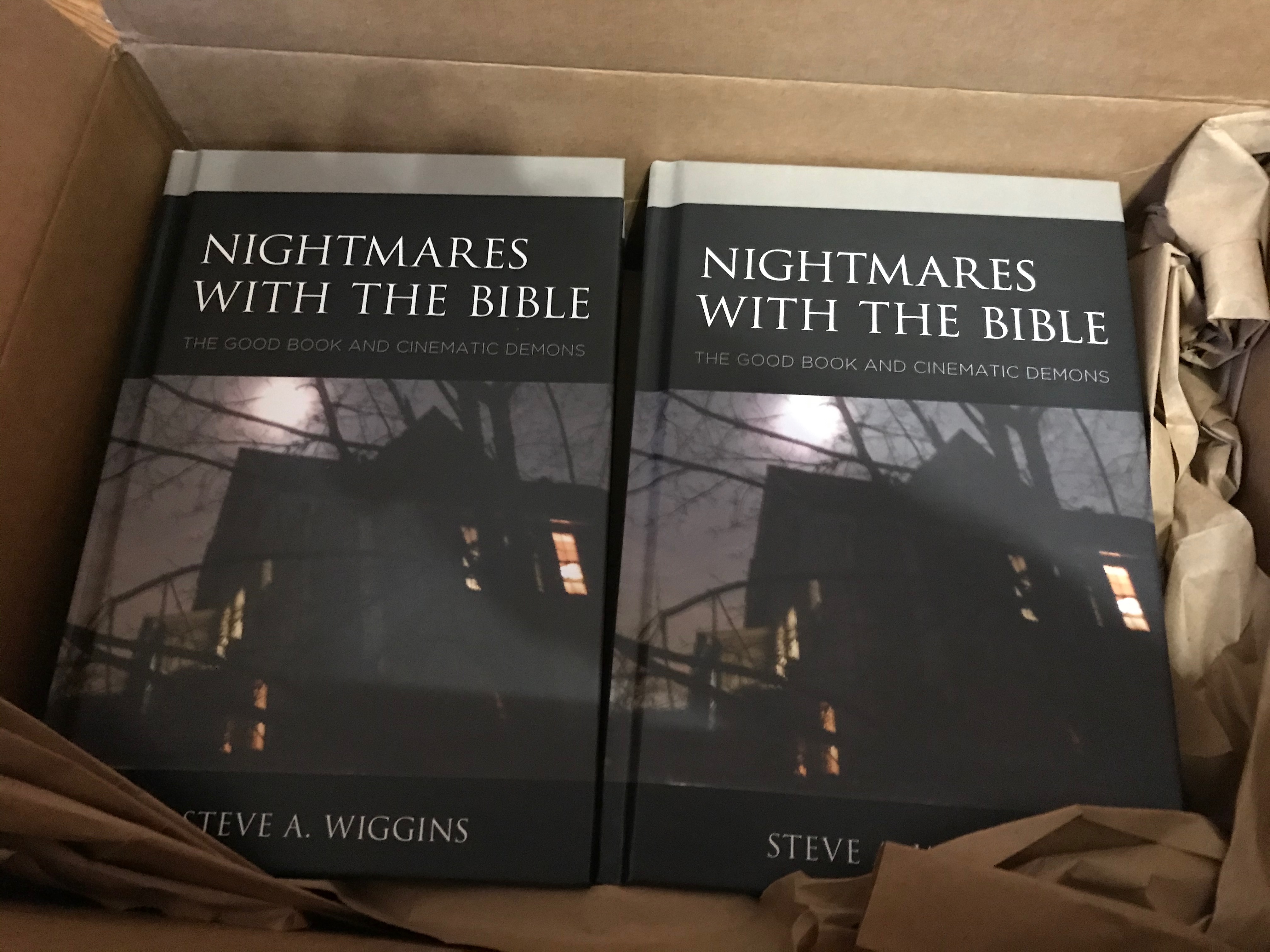
Books arriving, snug in a box

Apart from being easily recycled, boxes prevent books from getting banged up in transit.  I often receive books so tightly cased in plastic that removing them must be like pulling off snug leggings when it’s really humid out.  There’s an almost obscene quality to peeling off something that tight.  And getting the label off?  Forget it.  Boxes are better.  We tend to reuse many of them—they’re good for sending fragile gifts to others.  Or storing other single-use plastic pieces for use in art projects.  (Lids often can’t be recycled.)  As long as the paper’s responsibly sourced, cardboard has environmental benefits.  Besides, I suspect books prefer the feel of paper on their skins.

I’m not a very good consumer, but I do have a soft spot for books.  Even as reasonable grocery chains are phasing out single-use plastics, many book sellers are picking up the slack, it seems.  I know we have developed civilization to such a point that our lifestyle is impossible without plastic.  Indeed, the very keys on which I tap out these thoughts are made of plastic (at least Macs use metal casings for their laptops, or some of them, anyway.)  I have this nightmare that I’ll get something in the mail, or worse, a visitor at the door, telling me that they’ve pieced together, from all the fragments of labels still on plastic bags, that I’m the one who’s been turning them in for recycling without properly removing the sticky paper.  I know that I won’t have any viable defense—I don’t have the time, resources, or tensile strength to do the job properly—and all I’ll be able to say is, “I prefer boxes.”


More Scary Stories

There might be a disconnect.  As a child the stories I had read to me were either Bible stories (Archway Books) or wholesome Easy Readers.  I think that was pretty typical in the sixties.  We didn’t have a lot of money but an abundance of respect for the Bible, so the former by far predominated in my literary experience.  As any kid will do, I thought this was normal.  There was a stir in the kids’ world two decades later, in the eighties, when Alvin Schwartz began compiling scary folklore and retelling it for children.  His Scary Stories to Tell in the Dark series has been challenged or banned from the start.  Most parents don’t want to admit that their kids like scary tales.  We didn’t direct our daughter’s reading much when she was old enough to pick Scholastic Books, and one time she wanted Scary Stories.

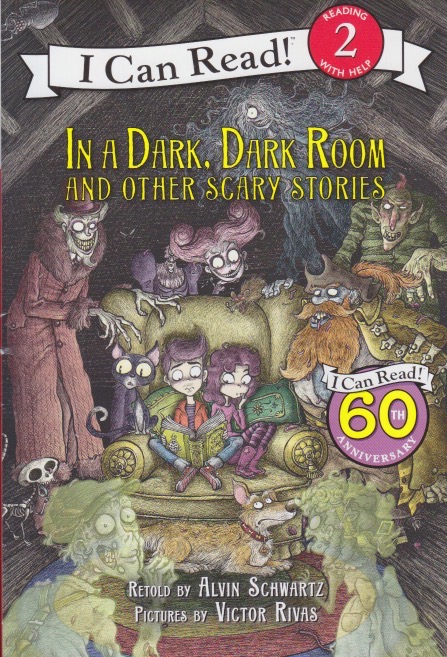
We were a bit shocked, not by that, but when a relative got us started on Roald Dahl.  His somewhat macabre children’s books were fine.  One of them, however—and I can’t recall the title—it’s packed away in the attic—was stories for older kids and it was so gruesome that I had difficulty making it through.  Not for me, but thinking about it from the perspective of a young child.  I recently had cause to read In a Dark, Dark Room and Other Scary Stories, again by Schwartz.  The copy I read wasn’t an original edition, but had illustrations, in color, by Victor Rivas.  I tried to think how scary such tales must be for kids who don’t know them already.  These illustrations were humorous, which helps, and tended toward Victorian or Edwardian style. Encountering such ideas for the first time, however, could leave an impression.

We tend to find olden times scarier than our own, it seems.  Partially this is correct, I suppose.  Science has helped us delay the inevitable by ameliorating many things that were formerly deadly.  At the same time it has helped those interested in such things to develop even deadlier weapons.  Mass shootings have become more common, to be mingled with the quotidian horrors of daily life.  Ghost stories hardly seem to be the most scary thing anymore.  I don’t know the answer to when kids are psychologically ready for scary things.  I still recall our neighbor—she was a few years older than we were—telling my brothers and me scary “true” stories that happened in the woods just across the street.  Those were in the “innocent” days before printed ghost stories for kids, but they gave me nightmares even so.  It was, however, the machinations of “Bible believers” that led me back to horror as an adult.  It’s kind of a disconnect.


Irving the Writer

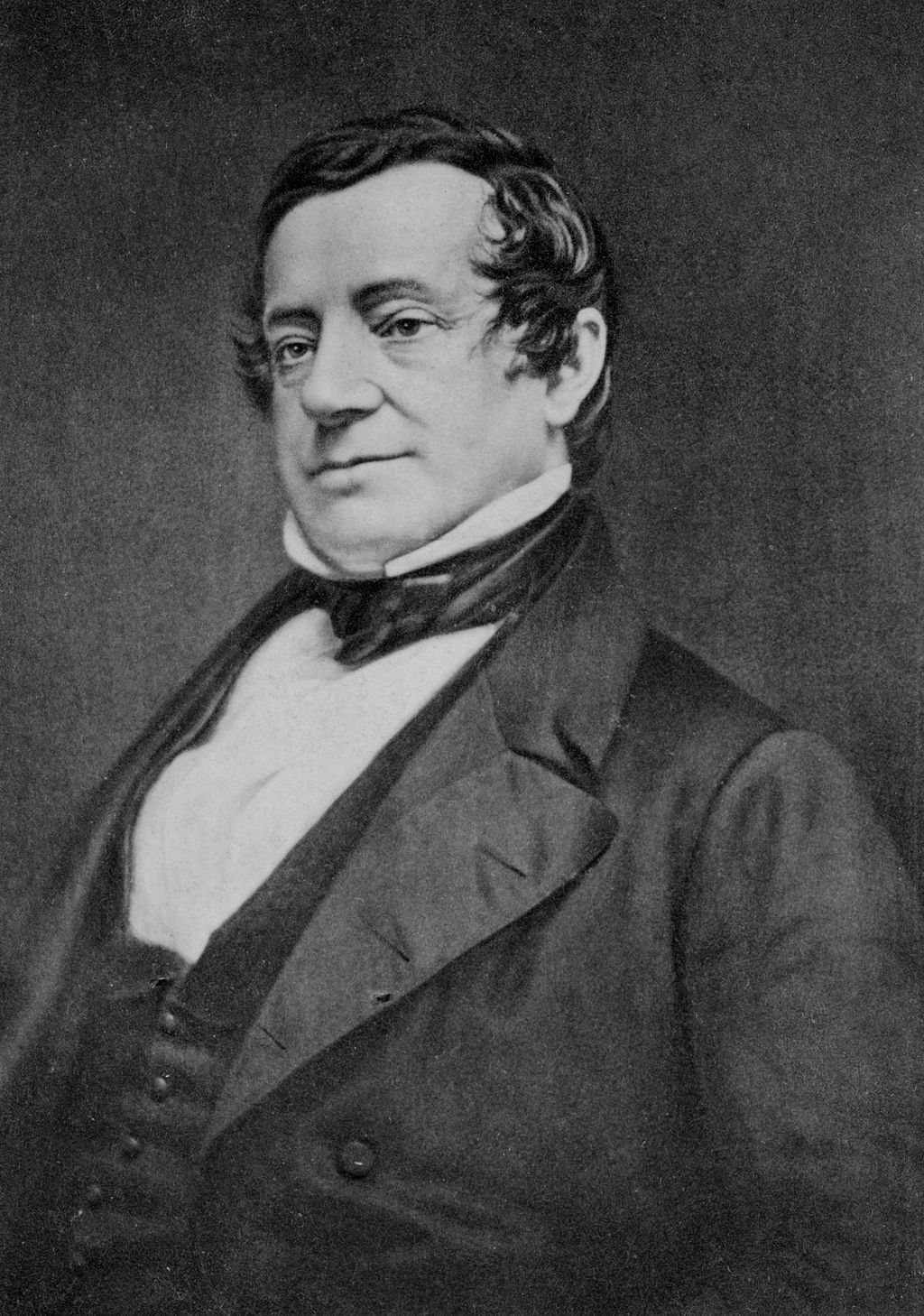
From the Library of Congress, via Wikimedia Commons

No writer is “on” all the time.  I often marvel that, with the busy lives they lead, they manage to finish any books at all.  Even so, not all are uniformly good.  Following up a biography of Washington Irving with a book by that eponymous title, this was my first foray into the Twayne’s United States Authors Series.  Written by Mary Weatherspoon Bowden, this volume (Washington Irving) seems fair-minded and honest about Irving and the irregularities of his writing.  My impression, not having read all his work, is that he started out great and became good further down the line.  Not that I’m in any position to judge.  We read and we like what we like.  Bowden pretty much goes through all of Irving’s writings—sometimes story by story—giving a sense of what they’re all about. (The book was released in cloth with no real cover image, so enjoy Irving’s smile instead.)

As famous and influential as Irving was, his reputation as a writer has been in decline for many decades.  One reason for this is that his first major twentieth-century biographer, Stanley T. Williams, apparently despised him.  So much so that he wrote a two-volume biography demonstrating his faults as a writer.  This demolition job meant that works like Bowden’s had to try to counter the prevailing opinion of Irving’s ability.  Bowden shows how carefully planned out many of his works were without denying that Irving had to try to make money from his writing.  The thought at the time seems to have been that literary pursuits were best left to the wealthy—those with leisure to indulge in letters.  Irving showed that it was possible to write your way to a reasonable living.

Of course, not all of his writing is that good.  And several volumes of it are “history.”  Today you have to earn an advanced degree, or at least a masters, before you can pass yourself off as a historian.  Irving did it the old fashioned way.  He read as much as he could get his hands on and synthesized it.  Today he’s not really remembered as an historian, or as a statesman.  He’s known as the author of a few, mostly brief, American classics.  Even though Bowden writes of Irving appreciatively, she doesn’t really inspire you to run out and read all his work.  He did have a tremendous output for the time and was an extremely influential author.  Nevertheless, others came and surpassed him, even as they were his contemporaries.  Still, it seems there ought to be some credit in being first, and some integrity in actually managing to live by the written word.  Irving is worth another look.


Knickerbocker

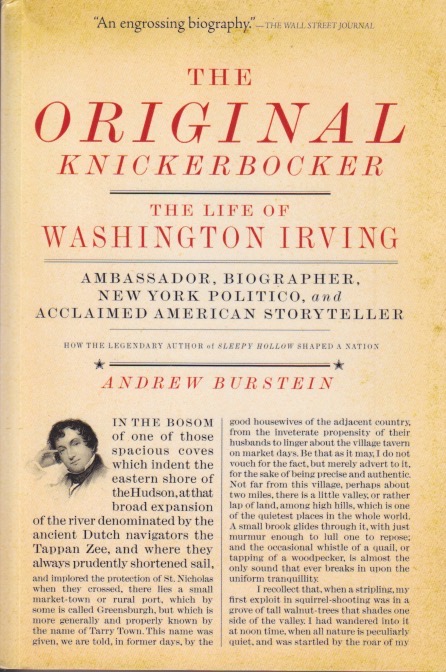
Washington Irving is one of those people with an outsized influence on American history who nevertheless has become ignored.  He met nearly every US president from Jefferson through Franklin Pierce, and what’s more, most of them knew who he was.  Sometimes decried as a less-than-original writing talent, Irving nevertheless led a remarkable life and through it all, treated others with respect and gentility.  He’s also a bit of a mystery.  All of this is captured quite well in Andrew Burstein’s biography, The Original Knickerbocker.  Burstein does go off on some diversions from time to time, but most of them are quite interesting.  One of the facts that astounded me was just how many early American political leaders were writers.

I don’t mean wealthy individuals hiring ghost writers to praise them in their “autobiographies,” but actual writers.  Fiction and all.  These were, pardon the period phrase, “men of letters.”  Writing was a way of not only influencing people, but of improving one’s mind.  Some of these individuals became presidents, others cabinet ministers, or foreign diplomats.  Once his literary star ascended, Irving could get struggling writers a government post by a letter sent to the chief executive.  It was a different day than that in which we live.

In my mind, Irving also stands out in that his fame came early and his later writings, while perhaps selling better, never eclipsed his early fame.  And honestly, never reached his earlier shine.  It began with his satirical History of New York.  This book established him as a wit and a gifted writer.  Since his family ran a secure business, Irving was able to travel without working for several years and didn’t produce his next book for another decade.  The Sketch Book of Geoffrey Crayon, Gent. may not be known to many today, but two of its sketches are still told and retold.  One is “Rip Van Winkle” and the other is “The Legend of Sleepy Hollow.”  This book also helped to establish the American celebration of Christmas, something begun in his History.  Although he would write many more books, he’s still best remembered for two short stories from his second.

Burstein takes his cues in this biography from “Rip Van Winkle.”  This particular story is kind of a parable of Irving’s life.  Irving couldn’t know this, of course, having published the story when he was about 36.  His subsequent books sold well enough, and apart from a stint as American minister to Spain, he was able to make his living through his pen.  There’s quite a lot in Burstein’s treatment that I’ll come back to, I’m sure.  But for the moment, it left me feeling as if I’d met a great, if struggling, writer in person.


Library Respect

I didn’t know what to do.  All my life I’d been told “library books aren’t your books—treat them like they belong to somebody else.”  And here I was with a checked-out library book with uncut pages.  This was in Edinburgh, and to make matters more interesting, it was an interlibrary loan book.  What was I supposed to do?  Finally I found the sharpest butter knife in the drawer and carefully cut the edges.  (This was before uneven pages became trendy again.)  Then, some time later I was reading another library book and I found writing in it.  Writing!  Who did this borrower think s/he was, writing in a book that belonged to someone else?  And what was more, the writing was done in ink.

Perhaps some readers get so caught up in a book that they forget it’s not theirs.  As for me, I’ve never been so bold as to think others would want my thoughts in a library book.  That’s what notebooks are for.  Of course, since that experience I’ve found many library books with writing in them.  These days when I have to buy books for research, not being affiliated any more, I tend to get them used.  From libraries often.  I look for the designation “very good” in the description since this specifies “clean” interiors, generally since they were library books.  I’m guessing that those who classify used books operate under the same delusion that I used to—people don’t write in library books.  The most recent three or four ex-library books I’ve ordered (all “very good”) have had ink writing and underlining in them.  You can see this at a glance.

The most recent one arrived the other day and on my initial thumb-through I found the now expected ink markings, but also two pages stuck together by a wad of gum.  This passes beyond the realm of unthinking behavior to criminal, at least in my mind.  Who sticks chewed gum between the pages of a book?  A book they don’t even own?   I did what anyone would do: I checked the book out on Internet Archive and wrote, in ink, the obliterated words in the margin.  I’m the first to admit I’m sensitive about books.  When I buy a new one I try to finish it with no sign that it’s even been opened.  No creases on the spine, no banged edges.  When I fail in this I feel badly, like I’ve hurt a friend.  At least I don’t have to worry about cutting the pages.  And even if I do, I know that it’s a trendy look these days.


Being Sapiens

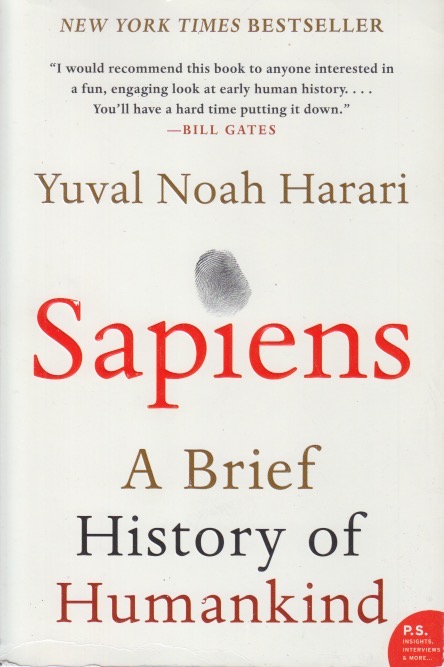
Sometimes you need some distance to appreciate an object.  A telescope may be required if it’s a distant subject, like a rare comet (if the skies aren’t perpetually cloudy).  At other times a microscope is more helpful.  Yuval Noah Harari Sapiens: A Brief History of Humankind made a pretty big splash a few years back.  Big name people, who presumably don’t have the time to get into the historical weeds—and yes, it’s quite overgrown out here—blurbed the book and it made it onto the New York Times Bestseller list.  It’s not a little book, and like most such works it’s  a synthesis that historians approach with trepidation.  Such projects occasionally make great observations, like the astronomer with her telescope.  But those who look up from their microscopes often say, “well, that’s not exactly right.”

How do you summarize 2.5 million years or so?  You have to be very selective and you have to keep backing up to pick out the things that help this story make sense to you.  Harari (my autocorrect keeps wanting to make him Harris, which sort of fits his overall thesis) divides human history into four parts, generally revolutions: the cognitive revolution, the agricultural revolution, the unification of humankind, and the scientific revolution.  Along the way he tries to pick out the major developments.  One of them, of course, is religion.  While some of the details are overstated, his big picture here is helpful to read.  Religion has helped us, but it’s also hurt us.  Perhaps the latter more than the former.  For this we need a microscope.

His part on science and the economy was both insightful and disturbing.  I don’t believe, for example, that capitalism is necessary for advancement.  We too quickly claim that socialism doesn’t work without ever really giving it a fair trial.  Instead we let wealthy industrialists come up with new ways to keep us entertained and compliant while they handle all the money—leave it to the big boys.  The future comes to resemble them.  And we’ve seen where that gets us.  Summarizing a big book like this that covers many thousands of years isn’t a straightforward or easy task, just as trying to pick out the highlights of our history can’t be.  Part of the problem is that we’re still in the middle of it.  Things may happen—the Covid-19 pandemic is a notable example—that change the course of the river.  Since this book was published before that happened, who’s to say that things might not turn out quite differently than anticipated?  This is a provocative book, but I need to get back to my microscope.


Melvillian Thoughts

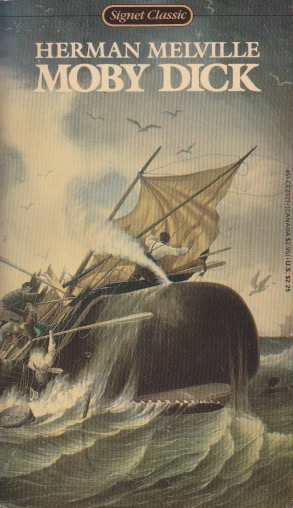
I’ve posted about Moby-Dick a number of times on this blog.  I make no bones about the fact that it’s my favorite novel.  Still, I don’t know much about Herman Melville as I’d like.  Only what you can learn from reading his novel and a few other books.  The thing is, I’m really growing an interest in the literature of the American Renaissance.  While Washington Irving isn’t my favorite writer, he was perhaps the earliest of the Renaissance crowd.  Consider this, these writers all lived during Irving’s lifetime: James Fennimore Cooper, Edgar Allan Poe, Emily Dickinson, Nathaniel Hawthorne, Melville, William Wadsworth Longfellow, Walt Whitman, Ralph Waldo Emerson, Henry David Thoreau, and Louisa May Alcott.  Many others as well, but what heady times!  Can you imagine walking into a bookstore and seeing all the wonders on offer for the first time?

But back to Melville.  I was recently doing some further reading about him—I need a good biography, actually—and learned some things I didn’t know.  I knew he’d gone to sea, but I wasn’t aware that his mother raised him with a strict Calvinism (which explains much in Moby-Dick), but that he eventually returned to his father’s Unitarianism.  Indeed, Melville’s work displays many of the values of the Unitarian tradition.  Moby-Dick is largely his struggle with religion, laid out in terms of Ahab and the great white whale.  Melville spent a period of his life, before Moby-Dick, as a successful writer.  In a way that seems unimaginable to us today, that novel was a flop and he eventually had to take on a pedestrian job, although he kept on writing.  I have to admit that I’ve read none of his other novels.  I’m just blown away with his most famous work that I’m a little afraid of being disappointed in his other efforts.

I know a few novelists.  Of only one of them have I managed to read all their works, and that’s because this particular author only wrote one novel (which made a big enough splash to get reviewed in Time).  My dilettantism has been a characteristic of my life.  I’m too curious, perhaps, and there’s not enough time to read every work of every author I admire, even those I personally know.  I haven’t given up joining their ranks someday.  One of my novels is currently out for consideration, but I have no real expectation of success.  The best I can do in these circumstances is to read the work of those who managed to succeed, even if they didn’t live to see it.  And to wonder what it must’ve been like when so much talent appeared at the same time in a very young country.


Black Sabbath

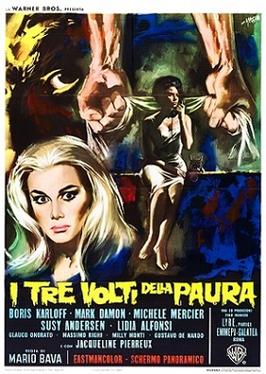
I used to be afraid of them.  The band Black Sabbath, I mean.  I heard the songs from Paranoid wafting from my older brother’s room (separated from mine by only a curtain) and was secretly intrigued.  But the name of the band—wasn’t that satanic?  To a young Fundamentalist there was much to fear in the world.  More than once I bought Alice Cooper’s Welcome to My Nightmare only to replace the copy I’d thrown away in evangelical terror.  I recently learned, however, the the band name Black Sabbath was taken from a 1963 horror movie.  And I also learned that the film was, in part, based on a Russian vampire story by Leo Tolstoy’s second cousin Alexei, titled The Family of the Vourdalak.  And that this story was published decades after Tolstoy’s flop, The Vampire.  That novel was inspired, in turn, by John Polidori’s The Vampyre.

Polidori’s work was inspired by a fragment by Lord Byron, which he contributed to the ghost stories putatively told among friends a stormy night in Geneva that also led to Mary Shelley’s Frankenstein.  Connections such as this are immensely satisfying to me.  Although I taught mainly biblical studies, my training was in the history of religions—it just happened to focus on ancient semitic examples.  Finding the history of an idea is one of the great pleasures of life.  But we’ve left Black Sabbath hanging, haven’t we?  The band realized something that Cooper would run with, namely, horror themed songs and metal go naturally together.  Such dark things led evangelicals to condemn the whole enterprise, claiming the band name was satanically inspired.  (Michael Jackson, raised as a Jehovah’s Witness, was famously fond of horror, although Thriller is perhaps the least scary horror-inspired album ever.)

I’d never seen Black Sabbath before, so now I had to watch it.  Of course, there’s nothing satanic about it.  An Italian, French, American collaboration, it’s a set of three stories bound together by Boris Karloff’s narration, and it’s all in Italian.  One story is about a woman double-crossed but saved by an estranged friend.  The second, the one featuring Karloff, is the one based on Alexei Tolstoy’s Russian vampire tale.  The third is about a poor woman who steals from a dead patron and is haunted until the inevitable happens.  Not particularly scary, the film title was the inspiration for the band, not the content.  They were therefore labelled satanic because of a movie that has nothing to do with satanism.  The song “Black Sabbath” was actually inspired by Dennis Wheatley novels, which do, of course, deal with satanism.  The song itself isn’t satanic.  They decided to make songs like horror films in music.  And it all goes back to Lord Byron and the night near Geneva that inspired both Frankenstein and Dracula.


Sleepy Unhallow

The thing about classics is they’re open to interpretation.  And expansion.  Since taking an interest in Washington Irving’s “The Legend of Sleepy Hollow,” I’ve been reading modern novels based on it.  Several of these are self-published and although they show the distinct signs of that, they are nevertheless creative.  Human beings are a creative lot.  And the basic idea of Sleepy Hollow gives us a lot of material to develop.  Well, not really, I guess.  It’s a rather simple story of a love triangle in a dreamy small town where there’s widespread belief about ghosts, particularly a headless horseman.  You can nevertheless go in a lot of different directions from there.  Especially since we have two centuries since the story was published.

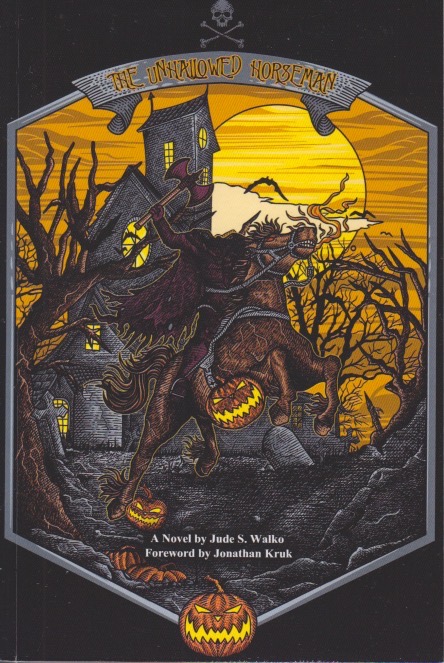
Filmmaker Jude S. Walko has written a horror treatment of the Sleepy Hollow tale in modern times.  The Unhallowed Horseman is graphic and violent and involves the gritty reality of being raised in a broken home.  This isn’t for the faint of heart.  One of the reasons, I expect, that Irving’s tale has survived is that he wrote it, according to the standards of the time, for a genteel readership.  There’s no sex and no violence.  It’s funny rather than really scary.  The characters are likable, if shallow.  There’s the frisson of a ghost but it’s never clear if he’s real or not.  In the end order is restored in the small village and the interloper is gone.  For these very reasons more recent readers are probably looking for something that fits more in our times.

Walko’s version has an emotionally scarred protagonist who is, according to modern practice, drugged into compliance.  He’s smitten by the cutest girl in the school, but the other guys try to take her at will.  The protagonist’s homelife is a shambles.  The sheriff is a descendent of Brom Bones, without any of his good qualities.  And due to a cosmic, astrological sort of event, the headless horseman rides again.  This horseman, however, is described as pure evil.  Almost in demonic terms.  On the night of the annual Halloween festivities this horseman gruesomely kills many of the characters off.  The high schoolers all drink, and the teenage boys have no morals.  At the end there’s a community left in mourning and no real future.  Nihilistic like some modern horror, this version won’t leave you smiling like Irving’s does.  Of course, if you write a classic it can be taken in new directions, and can be made to reflect the realities of new times.  Walko has his eyes open to the era in which we find ourselves.


Feeling Disney

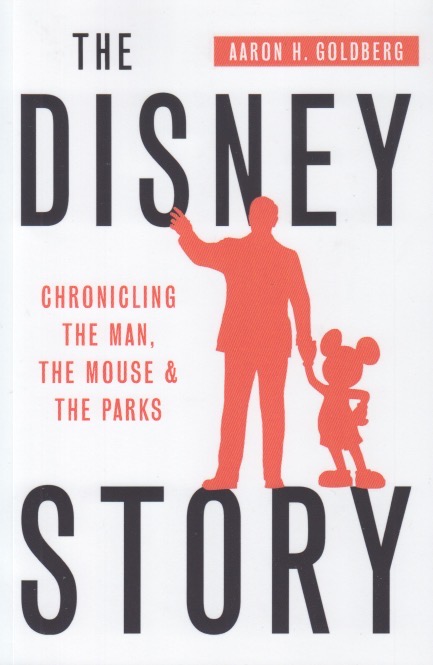
What’s the earliest Disney movie you remember seeing?  If you’re my generation this will’ve likely been in a theater since home recording wasn’t a thing yet.  I suppose it could’ve been on Disney TV, but if it was a new movie you wanted to see it just after it was out.  Mine was The Jungle Book.  Or, at least that’s how I recollect it.  Reading about Ub Iwerks made me curious about Disney so I decided to read Aaron H. Goldberg’s The Disney Story.  The subtitle, Chronicling the Man, the Mouse and the Parks, gives you an idea of what it covers in more detail.  Goldberg’s upfront in letting the reader know that newspapers and period media are his main sources.  The book is arranged chronologically.  It makes for an interesting story but I personally have never been tempted by a Disney theme park—quite a bit of the book discusses these—although there was that one time…

It was back in 1998—what a different world then!  Pre-9/11, pre-Trump, pre-pandemic.  I was still teaching at Nashotah House.  The American Academy of Religion and Society of Biblical Literature held their annual meeting in Orlando, on the Disney campus.  The experience wasn’t a good mix.  Academics and cartoon characters just don’t—wait, maybe they do.  In any case, you had to eat at the Disney estates, although you could sleep in an off-site hotel, that was a considerable shuttle ride away.  And no bars.  I did meet David Noel Freedman there.  It was in a room painted like the inside of a circus tent.  A strange place for a meeting of such gravitas to a still young scholar.

The point is, Walt Disney affects all of our lives.  He was a self-made man, but he had lots of help.  He didn’t live to see Walt Disney World (that’s the one in Florida) open, but he died knowing just about every child in the country recognized his name.  I never considered myself a Disney fan.  Yes, I watched a few of his movies and watched his Sunday evening television show, but I preferred Bugs Bunny and the Warner Brothers’ crowd.  Growing up with television you had your loyalties.  Still, we were well aware of Disney and especially his movies.  We couldn’t afford to see all of them, not by a long shot.  And those we did see were at the drive-in where kids could hide under a blanket in the back seat to economize a bit.  Still, we were infected.  Everyone was.


Reading Prompts

Perhaps it’s because maybe a half-dozen times in the past two years I’ve forgotten to click “publish,” or maybe everyone gets this, but WordPress started giving me daily prompts when I open the new post screen.  Everyday blogging questions such as whether you’re where you’d thought you’d be last year at this time, or what’s your favorite holiday food, or talk about your father or a father figure in your life (a loaded suggestion!).  I appreciate the thought, but I do strive for some measure of depth here.  Believe it or not, many of my posts are metaphorical, written about something that’s not the “obvious” subject of the mini-essay.  (Often when people criticize me it’s because I’m posting metaphorically.  Or maybe I just don’t know what I’m talking about.)  In any case, there have been times when a writing prompt might’ve been useful.  I haven’t used any, though.

Writing is a strange avocation.  These days many people make some kind of living as self-published authors.  The internet offers ways to minor fame—in some cases major fame—for anyone who has the time to put into it.  There’s always the question, however, of what to talk about.  This blog began, back in the days when I was fresh out of teaching religious studies, as a place where I could discuss the Bible and culture, or, more broadly, religion and culture.  That in itself limited the appeal.  People are fascinated by religion but really don’t want to read about it.  So it was that initially I had many followers—particularly among the biblical bloggers set—that eventually dropped off when I began writing about secular subjects.  Mostly I tend to focus on books.

There’s an irony to that as well.  As much as the internet helps some of us learn about books, it’s also a place that has diminished them.  Many people focus on social media to the point that there’s little time left to sit down with an actual book.  Interestingly enough, none of the prompts that WordPress now sets for me daily, has asked about what books I’ve been reading.  Perhaps books are the natural enemy of the online world.  If so, I seem to be caught between worlds.  I set aside time each day for reading, offline.  For those of us who write, reading is our food.  It often gives me the prompts I need for writing daily blog posts.  Even the days that I miss aren’t for lack of content—they’re simply forgetfulness because non-reading events crowd the rest of life.  It’s no wonder, then, that I try to engage others by asking, what books have you been reading lately?


Hidden Talent

It’s difficult to imagine any corporation with a more powerful influence on children than Disney.  It catches us early and forms our first impressions on plenty of things.  And, of course, Disney was started by Walt Disney, right?  Well, partially.  I recently became interested in Ub Iwerks (born Ubbe Iwwerks), the man who originally came up with Mickey Mouse.  Ub Iwerks and Walt Disney got their start in animation together.  They both worked for the same Kansas City ad firm as illustrators and then went into business together.  This was in the early days of film—silent and black-and-white—when few took cartoons seriously (they hadn’t made much money yet, and that’s the true mark of seriousness).  The major studios were starting to come together in Hollywood, so eventually Disney moved to California where, with his brother Roy, they began Disney Studios.  Ub came to work with them.

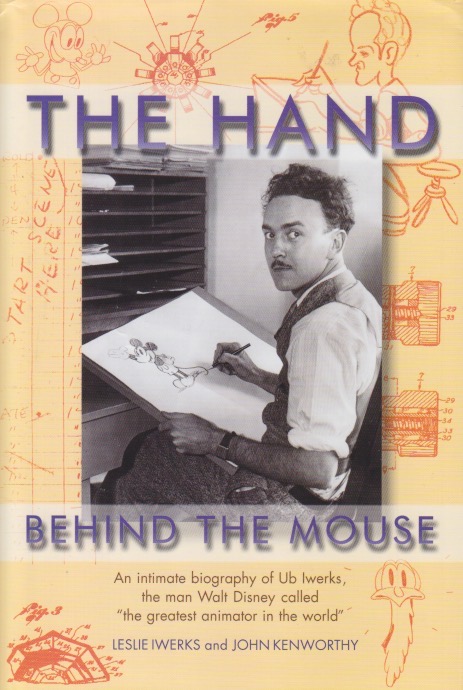
The Hand behind the Mouse, by Leslie Iwerks and John Kenworthy, is a brief account of the life of Ub Iwerks, who was famously quiet but who went on to develop special effects that were far ahead of their time.  Iwerks never really took his deserved credit for Mickey Mouse, noting that what you do with a creation is just as important as coming up with it.  Walt Disney, he opined, was the one who did something with Mickey.  At the same time, Disney claimed that Iwerks was the world’s greatest animator (as the subtitle proclaims).  The two eventually split, with Iwerks forming his own studio and hiring some of the most famous cartoonists of his day.  Hard times came, however, with the Depression and Second World War.  Iwerks closed up shop and went back to work for the by now very powerful Disney.

His move back saw him increasingly in “special processes”—essentially engineering special effects—and he was innovating literally until the day he died.  His imprint on not only Disney, but the film industry (he worked with Alfred Hitchcock on The Birds), was substantial.  He never, however, sought the limelight.  All of this makes him a remarkable individual.  He recognized Disney as the one with a vision and a brand, and also a business-savvy brother (Roy) who could help it all come together.  Walt Disney died at 65, a couple years after I was born.  Ub Iwerks died five years later.  Together they had invented American childhood.  Everyone knows Disney.  It’s the top name in children’s entertainment, a corporate giant.  I’m drawn to those, however, who fall between the cracks of history.  This brief book tells the story of one such individual who should, in all fairness, be better known.