Finally, Therapy

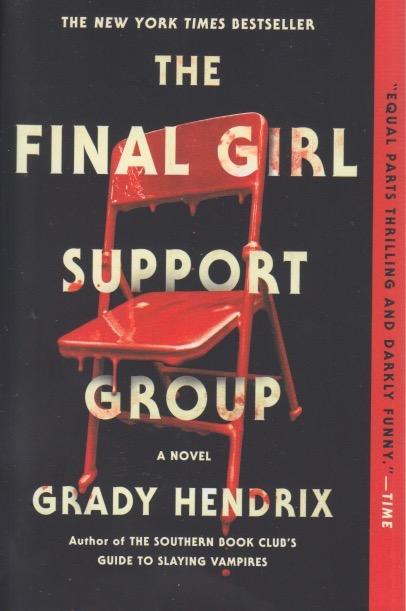
Like religion and horror, humor and horror can also get along well.  As an aesthetic, it’s not for everyone, but Grady Hendrix does it well.  It took some convincing for me to read The Final Girl Support Group.  I’d read one of Hendrix’s nonfiction books and was impressed, and that led me to his fiction.  It also demonstrates how an academic might actually be able to make a difference.  As you might guess, the novel features “final girls” from several fictional events, made into fictional movies, who get together for therapy.  It’s a funny idea and yet it’s not.  Hendrix clearly wants women to be treated fairly, but he’s also clearly a horror fan.  It’s sometimes a tricky balance to hold.  He does it pretty well in this novel.

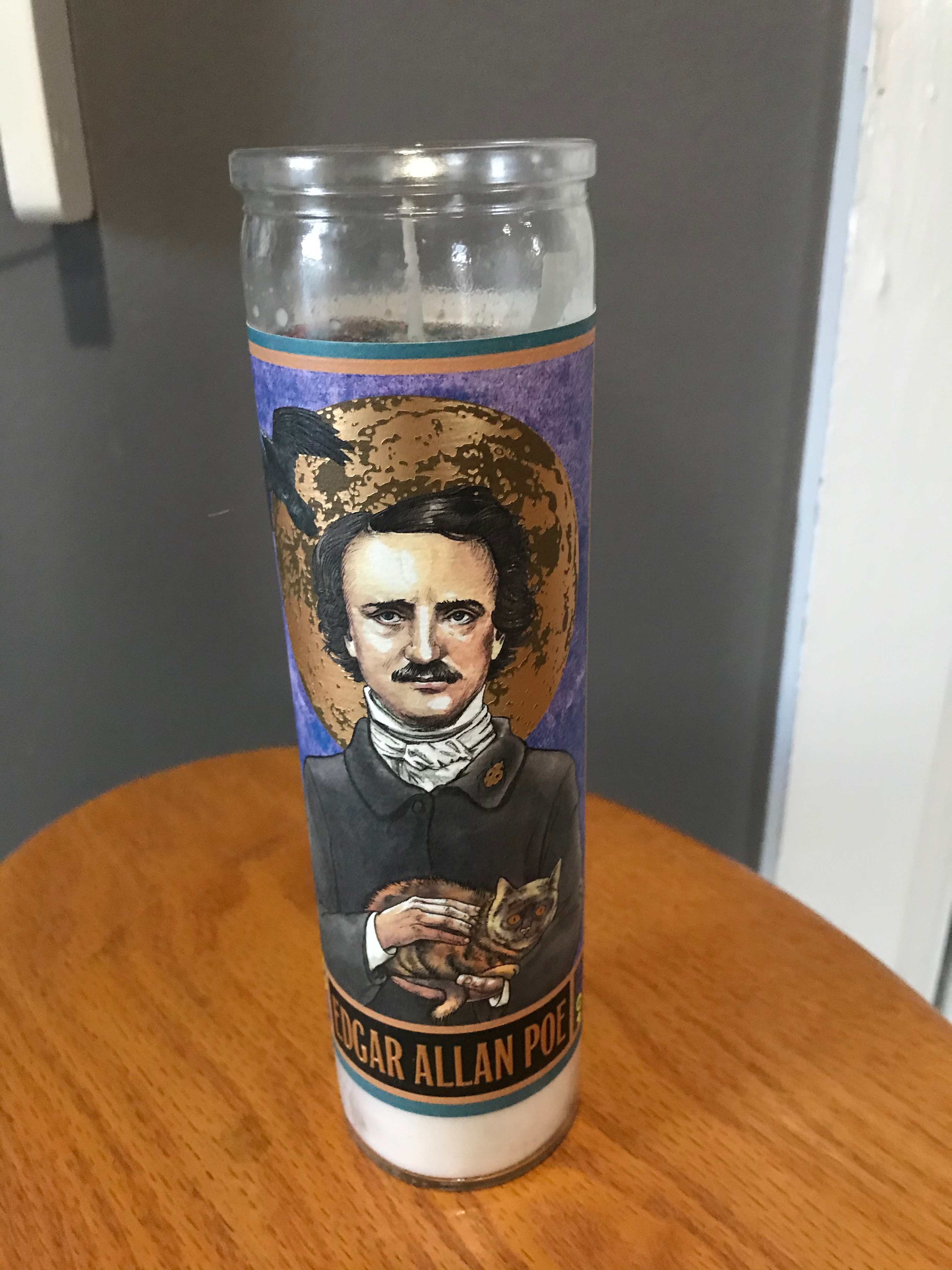
The idea of a “final girl” comes from Carol Clover’s crossover academic book, Men, Women and Chain Saws.  This is the book that introduced the concept to the world.  As with most analytic concepts it’s only an approximation.  Clover noted the way that, in slasher films, the only survivor tends to be the virginal girl who doesn’t join in substance abuse.  Since the slasher genre is usually first credited to John Carpenter’s Halloween (Hendrix suggests in his acknowledgments that it’s Psycho), I’ve always wondered because Laurie Strode does take a toke in the car and we’re not really told much about her dating life.  I’m not a big fan of sequels, so maybe I’m missing something.  In any case, slashers have never been my favorites, and as sexist as it might sound, Poe’s observation about threats to beautiful women is something the “final girl” relies heavily upon.

The novel itself is pretty gripping.  I’m not going to put any spoilers here.  I was reluctant to read it but I’m glad that I did.  It’s classed as “horror” because of the theme but there’s definitely a lot of literary finesse as well.  It’s the kind of thing that doesn’t really seem to be deep, but upon reflection, it has more to say than you think it does.  The resolution of the novel is messy.  I suppose that’s one thing that makes it literary.  The characterization is amazing well done.  I had trouble keeping track of the back stories of all the final girls but that’s part of the fun.  While there are definitely horror moments, Hendrix never lets you forget that you are supposed to be laughing too.  It’s a fine balance and he manages to hold it together throughout while giving agency to final girls.


Eternal Return

Amazon gets a lot of bad press.  For me, anyone that sends me books gets a warm fuzzy association.  Besides, returns are a snap.  Amazon has sent me the wrong item a time or two.  You simply let them know and they’ll refund you.  No fuss, no muss.  Twice recently, in my effort to support both the planet and used book vendors, I have received the wrong item.  Here’s where I praise Amazon.  The most recent vendor (reputable and an old player in the used book market) required a multi-step effort to even make the claim of a wrong item, and then wouldn’t pay for the return.  Let me get this right: it is your mistake and I have to pay for it?  Just because someone who apparently can’t read the title put the wrong book in the bag and it took two weeks for me to receive it?  Is there any wonder people buy from Amazon?

To err is human.  I get that, believe me I do.  But if you make a mistake you fess up, you don’t charge the customer for your error.  Have they not realized that looking at the price tag after a trip to the grocery store is more effective than watching a horror movie?  I can’t afford to pay for their mistakes.  Then my existentialist friends come to the rescue.  Yes, they remind me, this is all absurd.  A world based on inheritance and privilege, where an active and alert mind sees that when an error is made, the one who did not make it takes responsibility.  I’m no fan of capitalism, but Amazon doesn’t make me pay for what I didn’t order.  I guess size matters after all.

Perhaps there should be caveats plastered across the internet: buy at your own risk.  If we make a mistake with your order, you will be responsible for it.  It just kills me to complain about book vendors.  Probably I care for books a little too much.  I try to buy responsibly, otherwise there’d be no house to, well, house the books.  I just don’t like feeling cheated when purchasing a used book.  It’s out of character for book vendors.  They’re the modern saints, those who are looking out for the good of the world.  Eventually the seller relented, but not happily.  My associations of Amazon will always go back to when I first discovered that there was a website on which you could find just about any book and have it delivered, and often cheaply.  I miss those days and their optimism.  I need that warm, fuzzy feeling again.  I need to buy a book.


Literary Detective

A writer’s life can take many forms.  Alexandre Dumas, for example, (the father, just to be clear) had tremendous success with his novels The Three Musketeers and The Count of Monte Cristo.  Due to the politics in his lifetime, he was exiled and repatriated.  Of the upper classes, he had many affairs.  And finally, in 2002, was reinterred in the Panthéon in Paris with the president of the nation renouncing past racism.  You see, his father was a creole born in Haiti and apparently for that reason he’d been denied burial with France’s other luminaries.  I’ve been reading early European and American novels lately.   I just finished Dumas’ lesser known The Woman with a Velvet Necklace, which was originally published together with some other “stories” (this one alone is over 200 pages) in French, of course.

The story itself seems to have been based on a short ghost story by Washington Irving titled “The Adventure of the German Student.”  In brief, a student meets his dream girl in Paris during the revolution.  She wears a cloth necklace and when it’s removed her head falls off.  Tracing the origin of Dumas’ version on the internet took considerable detective work.  It involved learning the book in which it was originally published (long out of print), translating the title into French, and reading the French article in French Wikipedia since there’s no English article on it.  The story was originally published in 1850, some quarter-century after Irving’s tale, and logic compels one to conclude that either Dumas knew Irving or that Irving was using an old French ghost story that was in circulation at the time.

Since few internet sources exist on the novel, its origins remain somewhat of a mystery.  The French Wikipedia article doesn’t address them.  We know that Washington Irving was a writer appreciated both in America and Europe, having spent many of his years living in the latter.  We also know that Irving borrowed the basis of the story from materials he picked up while traveling.  There’s more literary detective work to be done here, but we live in an age when literary scholarship is devalued (it doesn’t bring in money) and until someone who’s an academic gets on this trail, Dumas’ use of Irving will always remain speculative.  The novel itself does reveal, after the first forty or so pages, why Dumas was a popular writer.  He has a way of drawing the reader in.  The story itself is odd and sad but has a message.  And, as it turns out, a mystery as well.


The Importance of Sharing

Growing up with siblings, I remember it well—my mother instilling the message of sharing.  If something good came my way, I could count on hearing “Share that with your brothers!”  These days sharing is easy and it only costs you a click.  And it’s very important.  Especially to those of us with soft voices.  You see, there is another new Wicker Man book coming out this year.  This is the 50th anniversary of the movie and there’s a lot of interest.  The other book is getting quite a bit of free press because the publisher knows the importance of sharing the information.  Click that share button!  Meanwhile I’m watching what we in the biz call the NBA (New Book Announcement) creep very slowly out of its box.

A couple days ago I wrote about how Amazon isn’t aware of the book, and Google can’t seem to find it.  In the intervening days it has now shown up on Lehmann’s bookselling shop in Germany.  You here, reading this, are the only people in the United States (if you are) who know about this book.  My voice isn’t very loud.  I don’t get retweeted and I don’t even have a cover image to share yet.  I’m still waiting for it to appear on the publisher’s website.  (This is one of the reasons I’m (hopefully) moving on from publishing with academic presses—they tend to be a touch slow.)  What can you do to help?  Share this post.  It’ll only take you a second.  Look down below this post and you’ll see this:

Of course, I can accept that you don’t like what I’m saying.  But if you’re on Reddit, Facebook, Twitter, or Pinterest, you can share the misery.  All it costs is a click.  The thing about the internet is that little things can add up to a lot.  That’s the whole idea behind websites that take a small cut to get the item you want out to you.  Life by a thousand cuts.  If enough people share, even those with a “Yop” to utter can save all Whos, right Ted?  I used to think all those YouTubers were a bit gauche with reminders in each and every video to click the “like” and “subscribe” buttons.  Now I’m coming to understand that that’s the way life on the internet is lived.  And May Day is just around the corner. Notice for my book will continue to creep out slowly.  Meanwhile I’ll look at Lehmann’s website and hope for the best.


Philanthropy

I’m sure it’s happened to you.  You’ve driven two or three places, often in different towns, then you simply give up, go home, and order it on Amazon.  I try to support local businesses whenever I can, but if you’re looking for something specific, Amazon can generally find it.  (And despite the advertising hype, eBay does not have literally everything.)  This happens often enough that I’d set up my favorite charity, the Crohn’s and Colitis Foundation, as my Amazon Smile charity.  At least I could feel good knowing that my support of the internet giant was being shared to help find a cure for a major, often unspoken, disease.  The latest stats I’d seen said Amazon had donated, I believe, somewhere around $45,000 to the Foundation.  I felt good.

Then I received a notice that Amazon is retiring the Amazon Smile program.  The notice informed me that they’re focusing on other philanthropic causes.  I have to wonder what they are.  Will they help those suffering from terrible diseases?  I think of the Vlogbrothers (Hank and John Green).  They are internet personalities as well as successful authors and content creators, and they hold telethon-like fundraisers donating all of the proceeds to charity.  They do this once a year and additionally they’ve started several small businesses, again, with all proceeds going to charity.  Like that great Unitarian actor, Paul Newman.  If you have enough money, why not give the excess away?  Both John and Hank have families.  I’m sure they’re fiscally savvy enough to make sure their kids won’t have to struggle.  And yet they give millions away.

Philanthropy makes me smile.  It is the best that humans have to offer.  Those who’ve managed to break through realize that there’s an ethical obligation to give back.  What with political Christianity we’ve generally outlived morals, it seems.  They no longer have the hold on culture that the social contract seemed to dictate generations ago.  So it’s up to those with tons of lucre at their disposal to demonstrate largesse.   It nevertheless makes me happy when I hear of it.  I don’t understand finance and I don’t have a head for numbers.  Instead, I try to support those who believe in giving back.  For books that’s often Bookshop.org.  But time is limited, and weekends are too precious for spending driving hither and thither for something that’s only a click or two away from my restless fingers.  I just hope Amazon’s supporting some worthy charity.  Human need is too great not to. If they are it may make me smile.


Search Your Engines

It’s been fascinating to watch.  We tend to think things appear instantaneously on the internet, and sometimes they do.  Book announcements, however, are less prone to that.  The Wicker Man, my book for the Devil’s Advocates series, was first announced to the world (apart from me) on Oxford University Press’s website because they distribute books by Liverpool University Press.  It took several weeks before it appeared on LUP’s site (I’m projecting here, it still hasn’t showed up there).  Like an anxious father, I checked every few days to see if word was getting out.  After about two weeks it showed up on Barnes and Noble’s website, but not Amazon or Goodreads.  Then it appeared on ecampus, a textbook seller.  Days later it appeared on Amazon’s site in Spain only.  Word gets out slowly.

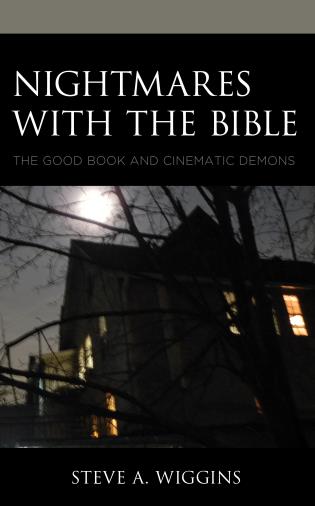
Some things hit immediately, of course.  Everyone in the world knows about them seconds after they happen, whether they should or not.  Some young folks, who grew up with the internet, are having trouble letting go of the, well, troubles of the world that jet through the 24/7 news cycle.  Books by unknowns travel much more slowly.  Of course, I’ve been trying to reinvent myself.  In as far as I’m known, I’m known as an ancient Semitic goddess scholar.  (The ancient part is correct, in any case.)  I turned to writing about religion and horror about a decade ago and if web searches mean anything, my most searched book seems to be Holy Horror.  That makes sense since Nightmares with the Bible is so expensive that I can’t afford additional copies even with the author discount.  The Wicker Man will be up near forty dollars, but that’s cheap these days.  At least it will be paperback.

Maybe I have been checking more than I let on, but I’ve also noticed something else odd.  Ecosia, the tree-planting search engine, comes up with more results (based on the ISBN) than Google does.  That astonished me.  Google apparently isn’t as good at searching as it would have us believe that it is, at least for obscure information.  (In my case, very obscure.)  Ecosia even outperformed Bing.  With this internet full of stuff, you’re obviously missing out if you don’t use multiple search engines.  Yahoo added yet one more site with the book.  I’m wondering when the actual publisher, or Amazon’s main site, will catch up.  Giants do move slowly, I guess.  Maybe once the cover image is released…


Living Through Writing

I’ve perhaps lived too long to be a great writer.  Of course, most of my fiction remains unpublished, much of it read and rejected by editors younger than myself.  I can’t help but notice that Poe died at forty and Robert Louis Stevenson at forty-four.  Emily Brontë at thirty.  All of them today considered literary geniuses, they caught publishers’ attention back when they weren’t such juggernauts as they are today.  Even the humble online literary magazine gets too many submissions and the editors advertise their quirky tastes.  Not that I’m any Poe, Stevenson, or Brontë.  I wonder if their awareness of the greater likelihood of dying young might’ve fueled their work.  Perhaps at a subconscious level.  I know, for example, that the pressure created by having to start work early leads to some of my own best writing, knowing, as I do, that time is limited.

Shortness of time is a great motivator.  One thing authors require is time, however.  If you roll out of bed, scarf down breakfast, then logon to work (how the world has changed!), you may have time at the end of the day but I’m so exhausted by work that I simply can’t produce anything at night.  I have to do my writing before the worries and pressures of work kill the inspiration.  I mean that literally—I can feel it dying as the worries of those seeking tenure, and the issues with which they surround themselves, suck the very vitality of my mind.  Serve and protect.  And although I’m not exactly old, I’m not young either.  I’ve outlived many and, to my way of thinking, it’s because I’m here for a reason.  It seems to have to do with writing.

You see, writing is a main identifier.  I was asked to take a survey recently by a group that wanted to identify people’s main sources of self-identity.  They asked about things like gender, race, sexual-orientation.  The usual suspects.  The survey wasn’t crafted, however, by a writer.  If it had been they’d have known that that is a category unto itself.  Those of us who write know that we are writers, whether published or not.  Whether famous or not.  It’s more than a profession—it’s an identity.  Sometimes we have to keep it quiet since those who hire others want the categories that identify themselves by to be race or gender or social status.  The writer may not be motivated by money.  Many work well but may not identify fully with their “job.”  They may, in fact, be watching the time slipping away and wish they were writing instead.


Becoming American

Image credit: John Wesley Jarvis, via Wikimedia Commons

I love reading literary scholars if they write accessibly.  William L. Hedges did, mostly, in Washington Irving: An American Study, 1802–1832.  There were several moments in my reading when I had to pause and consider the connections he was making.  This was his only book of note, but noteworthy it is.  You see, as a young person I had a difficult time figuring out what I was supposed to be as an American.  I read a lot about Europe and considered the various identities in the long histories there.  I tended to read European literature while having a lifelong soft spot for Poe.  Over time I began to read more American classics—ironically this wasn’t much part of my formal education in rural Pennsylvania.  Mostly I picked things up on my own.

Hedges, nevertheless, ties many of these things together in discussing Irving’s writing.  As he did so I started to realize that an American is a distinct kind of being.  Now, intellectually I’ve known that since childhood.  I was born and raised here, after all, as were the generations before me.  Still, recognizing the guilt of taking someone else’s land, it has taken many years to appreciate the literary accomplishments of the various writers who helped shape our national identity.  Hedges addresses many aspects of this through his analysis of Irving, but he’s at his best when he’s tying him together with Poe or Melville.  These early American literary lights offered a view of a nation haunted by history, but also funny at the same time.

This book was published three years after I was born.  Of course, I really didn’t start reading about Irving until about a decade ago.  You get the sense that he wasn’t sure of himself as a writer, but like many of us he had a thin skin when it came to criticism.  You see, writing is putting yourself out there for others to see.  It’s only worth doing if you believe you have something to say and you want others to hear it.  For many writers that means being discovered after death.  Today many make livings writing acclaimed novels.  They can only do so, however, because Irving and his generation suggested something new: you didn’t have to have a traditional job and just write on the side.  You could, if chance cooperated, create literary works that others would purchase and support yourself that way.  And then, more than a century after you’d gone, someone else would write about what you had written.  Thankfully, sometimes accessibly.


Another Exorcist

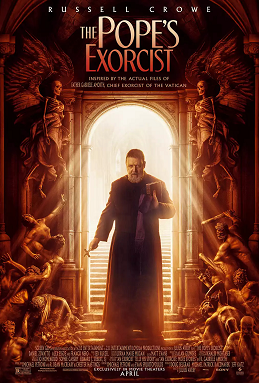
I learned from the wonderful Theofantastique that Russell Crowe’s new movie is The Pope’s Exorcist.  (I guess Crowe hadn’t read Nightmares with the Bible to think to send me a personal notice.)  I knew instantly, from the title, that it had to be about Fr. Gabriel Amorth.  Say what you will about him, he inspired William Friedkin to make a documentary titled The Devil and Father Amorth.  It’s pretty unnerving to watch, no matter what is really going on.  Catholic officials aren’t trilled about Crowe’s movie—I wasn’t impressed with his portrayal of Noah in Darren Aronofsky’s take on the flood story a few years back.  It takes a certain kind of director (like Friedkin) to be able to handle theologically dense material in a believable way.  I can’t say anything about Julius Avery’s The Pope’s Exorcist, of course, without having seen it.

I can say, however, that those who publish books at $100 miss many opportunities.  My book is one of very few written by a credentialed religious studies scholar on demons in movies.  A quick web search will reveal that it remains basically unknown and uncited.  (The only Amazon review is a two-star job by an evangelical who didn’t like what I was doing.)  Pay $100 for a book with a two-star review?  Most people, reasonably, have better things to do.  I once got around this in the past by posting a PDF of one of my book for free on Academia.edu, where, at recent count, it has been viewed over 6,000 times.  Academic publishers don’t realize the appeal of most of the books they publish.  Even demons can’t open a wallet to a Franklin level.

So while I’m waiting for enough royalties to afford seeing The Pope’s Exorcist, I’ll focus on my current book project.  Of course it’s on something completely different.  The Wicker Man should be coming out in September, but my mind will likely be elsewhere.  Those of restless intellect are condemned to wander, it seems.  Of course, I have Theofantastique to keep me busy.  There are other kindred spirits out there.  They don’t know the way to my website, I suspect, but I’m not alone in being excited about a new exorcist movie.  I’m not expecting anything to surpass The Exorcist, however.  Like The Wicker Man, The Exorcist turns fifty this year.  One guess which was the more popular film.  Given Crowe’s profile I’m surprised there hasn’t been more buzz about his new film.  Demons can be funny that way.


Book Writing

Not everyone wants to write a book.  A great number of people, however, do possess that desire.  Or that desire possesses them—that’s often more accurate.  For some it’s because they have ideas that feel compelled to share.  For others it’s the sense of accomplishment of having successfully strung together thousands of words and seen them encased between covers.  For still others it’s economic—books can be sold, and if done well, can become a living.  There are surely other reasons as well.  Since I read a lot, I frequently wonder about other authors’ motivations.  Often, I suspect, it’s because they underestimate how difficult it is to navigate this path to success.  You have to come up with an idea that is unfamiliar to your target readership—free advice: no book appeals to everybody—that has a hook that will make them want to read it.

I’ve read books where this hasn’t been thought through well.  Love them or hate them, this is what major publishing houses do well.  They figure out what likely will have appeal.  They make mistakes, of course.  Everyone does.  Still, they have a solid track record that makes them the hope of writers who have the burning need to, well, write.  One of the cases where this becomes an issue is where an author tries to be funny.  There is a lively market for humorous books, but if you’re trying to convey serious information but you find yourself cracking jokes along the way, you’re going to confuse, rather quickly, your readers.  What are you trying to do?  Make me laugh or teach me something new?  What should I prepare for when I pick up your book?

Don’t get me wrong—I clearly haven’t figured all of this out myself.  I do think that the combination of a doctorate (which teaches advanced research skills), and editorial work (which teaches how publishing works), should be a winning combination.  Ideally, anyway.  What I find is that it does make me approach books critically.  I look at the publisher.  I ask myself, what is this book trying to do?  You see, to read a book is to enter a relationship.  The book has an author.  That person is sharing what she or he has thought about.  By publishing it, they’re inviting you into intimate spaces.  That’s why I tend to be gentle in my book reviews.  I know the hunger.  I too feel compelled to write.  And if I don’t get the mix right, I would hope that any readers might, if they reflect on it, see that this is merely an awkward effort to begin a conversation.


Sleepy Once More

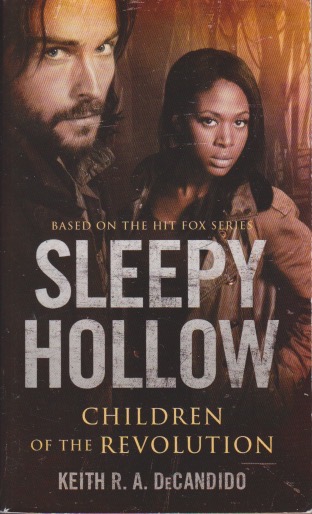
I think this is the last of my recent nostalgia reads for a while.  When trying to recapture the feeling of watching that first season of Sleepy Hollow without actually spending all the hours necessary to do so, the spin-off novels are a quick fix.  Keith R. A. DeCandido obviously has quite a bit of experience of writing novels that tie into pop culture.  Many of us were pretty enthralled and impressed in 2013 (already a decade ago!) when Sleepy Hollow first came on the air.  This literary member of what was an emerging new legend is a novelized episode that is slotted into season one, referring back to what had happened earlier in the season without betraying the cliff-hanger ending for the 2013–14 run. Sleepy Hollow: Children of the Revolution is a guilty pleasure read and a jaunt back to a decade that now seems long ago.

Here the story involves an attempt to resurrect (one of the main themes of the show) the witch Serilda of Abaddon.  Serilda had her own night in the moon earlier in the series (the episode “Blood Moon” was dedicated to her).  This novel asks, what if a coven of her followers, one of them a former policewoman, tried to bring her back?  It does so by using historical scenarios—much like the series—such as Washington’s crossing of the Delaware, and impregnating them with magical subtexts.  Here there are congressional awards that have been secretly engraved with runes.  George Washington knows about them, of course.  When brought together they can transform Serilda into a real monster.  Remember, Moloch was still an active concern in the first two seasons of the show.  In the present day, these artifacts have been regathered by the coven, and you can guess that all Hades will break loose.

I often ponder how, with the series Sleepy Hollow, the story began to fall apart when the Bible fell out of it.  It was in the process of tying together great American mythologies such as Irving, Revolutionary-Era history, and biblical self-identification.  These formed a compelling net that brought in many viewers.  Season one ended with two of the four horsemen of the Apocalypse in Sleepy Hollow, and a third had been nodded toward earlier in the series.  Instead of finishing out that line of thought, the storyline dispensed with Moloch and gave the headless horseman a head.  The plot ran out of steam.  Books like this demonstrate that there was other fertile ground to plow.  Had the original conceit kept intact, we might still be watching it.  Of course, novels like this are good for reliving those days a decade ago.


Wicker Man Comes

Not that I would know bodily, but it seems like a book being published is something like giving birth.  It takes several months (perhaps years, in the case of books) from conception to delivery and there are certain milestones along the way.  And you worry like Rosemary.  Has something gone wrong?  Is this still going to happen?  The book production process is a long and complicated one.  Just this week, however, the next recognizable stage occurred for The Wicker Man.  An ISBN has been assigned and a new book announcement has fed out through various channels.  It’s not on Amazon just yet but a Google search of 9781837643882 will bring it up.  I’d been worried about this because I saw a new book announced on The Wicker Man due out in October.  This is the fiftieth anniversary of the film, and I suspected I wasn’t the only one who’d noticed that.

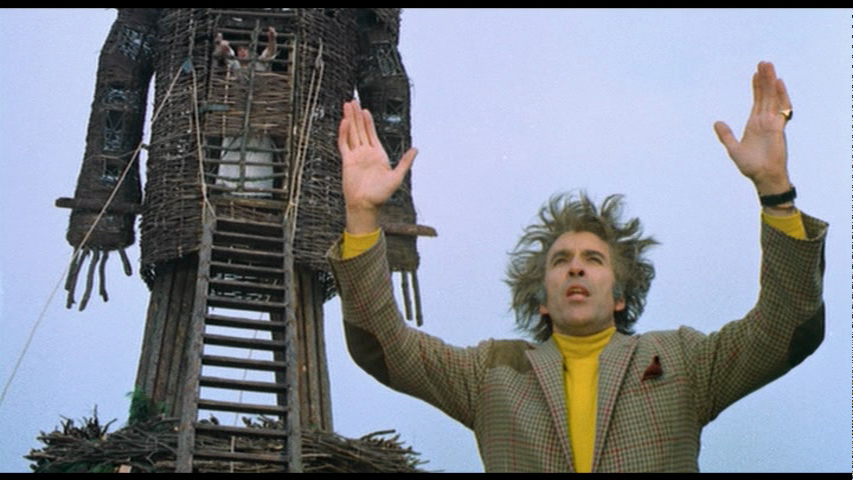
Ironically, another film turns 50 this year.  The Exorcist released in December of 1973 to far greater acclaim than The Wicker Man.  Both films became classics in their own right, but The Exorcist would become a household name.  Even if they’d never seen it, most people had heard of it.  The Wicker Man is more of a cult classic.  It’s known among horror fans and a certain kind of Anglophile.  And those interested in paganism, particularly of the Celtic variety.  Although the cover isn’t available yet, I was glad to see the feed for my book going out.  It looks like I might scoop the other book by a month or so.  If that happens it will be the first time that I’ve actually had a book on horror release before Halloween.  The last two missed the deadline by a couple of months.

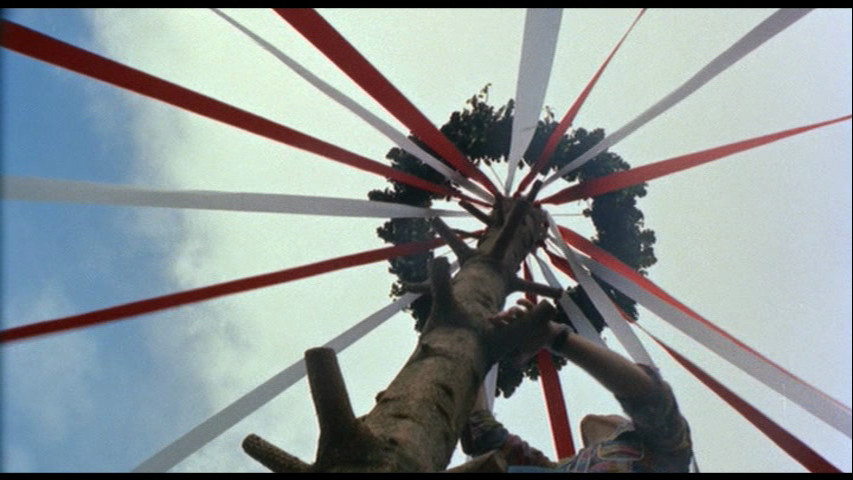
Having said that, if you’ve had your appointment with The Wicker Man you already know, it takes place on May Day.  And you likely know that a large number of people claim it isn’t a horror film at all.  Indeed, the horror element only becomes clear in the last ten minutes or so.  It’s the build-up that makes the movie.  And it was really a one-film wonder for the director, Robin Hardy.  He did other movies, but this was the one that lasted, and spawned imitations and parodies.  It’s exciting to see that the discriminating, or very persistent, searcher can now find the book announcement online.  I haven’t seen much to-do about the 50th anniversary just yet, but now when I do I’ll have something to point to.  More on this to come!


Old Library Books

There’s a quiet joy to it.  Even if they have other people’s markings in them, books I obtain ex libris are among my personal treasures.  They bring back memories of reading library books—learning new things.  For a fleeting moment when reading my current used, ex-library book, I was taken back to a night long ago.  The youth group at my local United Methodist Church had occasional sleepovers in the church itself.  Despite being a small town, folks were okay with mixed genders (with chaperones, of course) doing this.  We were even allowed to go into the sanctuary at night.  Churches are scary places in the dark.  We would sit there and talk about nothing in particular, the way teens do.  And I always brought a book.

On one sleepover I was working on a term paper on—don’t laugh—vampires.  I’d been researching with the limited resources of Oil City High School’s library, supplemented by the Oil City Public Library.  I still remember the exact book I took along.  Although awaking ultra-early only developed with me during my commuting years, I’ve always been an early riser.  (The early teen, or tween, years excepted.)  I remember waking up before everybody else, returning to the sanctuary, sitting in our usual pew, and reading about vampires by the light of dawn coming through the windows (which were only modestly stained with off-whites and yellows).  And feeling profoundly happy.  Friends were asleep downstairs and I was curled up with a library book.  What more could you ask?

Many such memories linger as I age.  But my current reading of a marked-up library book brought something else to mind.  Many such books have marks near the beginning that quickly peter out.  As if most readers never made it past the introduction.  I’ve stopped reading a book or two in my time, but generally I need to get past page 10 or 20 before I’m willing to make that call.  I often find that a book’s introduction is one of the best parts—especially in academic books.  Authors try to draw you in with intriguing ideas and then, at least in my field, get technical once you reach chapter 1.  Honeymoon’s over.  The mind of the person, however, who marks up a library book and then suddenly stops intrigues me.  Perhaps I’m just feeling nostalgic this morning, but reading a withdrawn library book, with its soft pages and old book smell, is one of life’s great gifts.  Even if it’s not about vampires.


Content Creation

Those who know me know my stand on books.  I’m pretty much defined by them.  I hope my blog makes that clear.  I’m always amazed, however, when someone happens across my little fissure in the internet and offers to send me a book, if I’ll mention it here.  That’s happened probably on an average of once a year over the past dozen or so that I’ve been doing whatever it is I do here.  It’s one of the perks of being a “content creator.”  I know it may sound odd, but being a content creator is a viable career these days.  Not for me—I don’t have nearly enough followers—but for the younger, prettier, or smarter, it is a way of virtually being in the world.  Or being in the virtual world.  I don’t think that means that books are passé.

In fact, I turn down offers to read free ebooks.  I spend all day at work on a computer and when I can finally turn it off, I generally pick up a book.  (Unless the lawn requires attention, or it’s garbage day, etc.)  The  thing about reading is that you have to make time for it.  For a “content creator” I’m not in love with spending all my time online.  I don’t use my phone much at all and I find a paper book in hand to be comforting.  I’m glad to write about those I’ve read in my little fissure here.  And since I sit on the editorial side of the desk, I think that increases my appreciation of books even more.  But honestly, I wouldn’t mind making a little income on what I spend so much time doing.  Maybe reading to keep out of trouble could be a job?

Content creation is like a sponge filter feeding.  You suck in the culture around you, drawing what’s useful into your brain.  Then you make it unique to your perspective and if enough people think it’s worth seeing/watching/listening to, advertisers will begin to swarm.  Or, in my case, they might send books with the hopes that someone will actually read this blog.  And the senders obviously have—at least a little bit—so does this make me an “influencer”?  Whether or not it does (or doesn’t) I do end up, when the day is through, one book up in the equation.  And that’s a good thing, given my stand on books.


Love’s Life

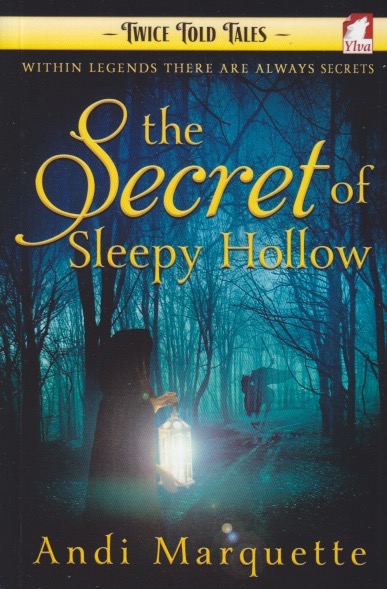
One of the things about literary classics is they open themselves to reinterpretation.  It’s often a lot of fun to trace these.  Andi Marquette is obviously an educated writer.  Her The Secret of Sleepy Hollow is one of those reinterpretations that has a unique take on the tale.  Set in modern times and featuring a member of the Crane family—Abby—as a graduate student, this story brings the tale into a contemporary context.  Abby meets another graduate student—Katie—in Sleepy Hollow and the two fall in love.  It turns out that Katie is a member of the Van Tassel family, thus bringing the two main families of Washington Irving’s “Legend of Sleepy Hollow” together again.  There’s even a headless horseman.

Like the biblical book of Ruth, this is a gentle tale of women’s love.  There’s no overt violence, no heads get chopped, but two women love and care for one another.  Many of the more modern repackaged versions of Sleepy Hollow tend to go for the violent, sometimes drug-fueled tales of bored youth in a small town facing an angry ghost.  Here the interest is more literary, a gothic romance.  The fact that it’s a lesbian love story makes me wonder why so many people have trouble with others’ love lives.  People are prone to curiosity about sex—that’s a simple fact.  What isn’t so simple is that mores based on culturally specific ideas from millennia ago don’t stand the test of time and yet cause misery in modern lives because they can’t accept what we now know—sex and love are anything but simple.

Marquette’s book is marked by that anxiety.  When people discover a love that’s often misunderstood, they face ridicule or worse.  The book of Ruth provides a good guide here—the acceptance of a normally forbidden love can bring good and happiness to people in what is often a difficult world.  There’s trouble enough—there are headless horsemen out there—that we don’t need to be causing more by judging the loves of others.  Even a cisgender heterosexual can understand that.  Life is complicated and we all try to find our way through.  Love is one of those things that can help to make it more bearable.  I found The Secret of Sleepy Hollow compelling in that way.  It may not be a literary classic—few books are—but it takes on a complex topic intelligently and with heart.  It’s a new take on an old story that still fits the modern world.