Drifting

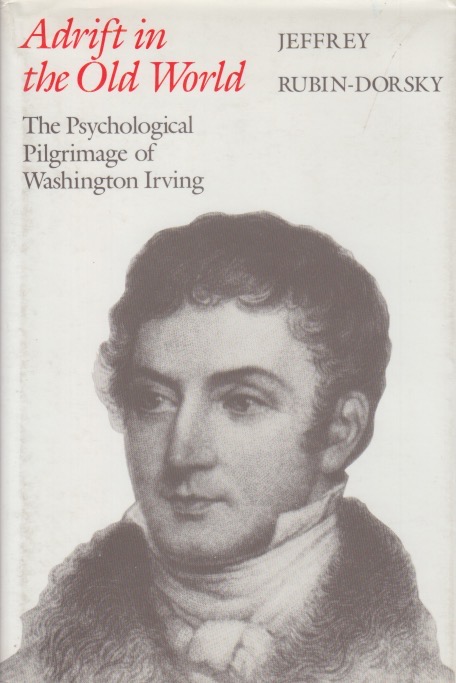
What really goes on in somebody else’s mind?  At best we can guess, and when that person’s been dead for a long time that guessing involves some reasoned speculation.  I enjoyed Jeffrey Rubin-Dorsky’s reasoned speculation in Adrift in the Old World: The Psychological Pilgrimage of Washington Irving.  The book itself is a few decades old now, but it does raise many relevant issues.  For me personally, it was, in parts, like reading my own psychological profile.  Irving is an interesting study.  (Unlike me) he had early success as a writer but he was a continual self-doubter.  He was also a poor investor, making money on his writing only to lose large sums investing in ventures that failed.  He also had a sense of not belonging which would seem strange for a New Yorker today.  Although he finally felt he fit in when he settled, as a famous writer, in Tarrytown, this book really only covers his European years.

While traveling for seventeen years in mainly Britain, France, Germany, and Spain, Irving wrote four very different “Sketch Books.”  These weren’t really short stories as we’ve come to understand them, at least not always, but they affirmed his place in the literary firmament.  Adrift in the Old World covers these four books while bringing incidental mention of several others into the picture.  Irving must be a difficult writer to cover.  He was not only prolific, but he wrote about diverse topics and sometimes at great length.  Of course, he was trying to make a living as a writer and people in those days had more time to read.  Breaking out a set of only four of his books makes this more digestible.

Even though I learned a lot from this book, it wasn’t always easy reading.  It gets a bit academic in parts and the paragraphs are far too long.  Still, there’s good information here.  I’ve been trying to wrap my head around Irving for some time now, as a glance at the books I’ve covered recently ought to suggest.  Although he’s not ignored by literary scholars, there aren’t many general interest books written on him.  There are other writers that more capture the modern imagination.  Still, literary history of the early United States is a fascinating venture in its own right.  For those who like to try to figure out what other people are thinking (and I have to admit to that avocation) this is a good entryway into what may have been the mental world of Washington Irving.


Lost at Sea

Where do books come from?  It still comes as a surprise to many authors, but books tend to be shipped by, well, ship.  When publishers use overseas facilities, it’s far too expensive to send books across the ocean by air.  I had many people express disbelief when I explained their books were delayed by the Suez Canal blockage, but if most of the world’s international goods are sent by ship (and they are) what might seem like a quirky news story has very real ramifications worldwide.  I was reminded of this by a recent NPR story of two new cookbooks having been lost at sea.  The ship from Taiwan, bound for New York, ran afoul of a storm in the Azores, resulting in the loss of 60 shipping containers—including those holding the newly printed books.  There is a worldwide shortage of shipping containers (seriously) and one of the problems is they keep falling off ships.

Photo by Elias E on Unsplash

If you haven’t googled “cargo ships” and looked at the image options, do.  You’ll see astonishingly large ships with what look to be entire cities worth of cargo containers stacked on the deck.  Many of these containers are lost at sea.  Current estimates are that about 1,000 containers fall off of ships per year.  Although the authors of these particular cookbooks took a lighthearted approach to the news, the book that really brought this home to me was Moby-Duck, which I blogged about some years back (you can read it here).  That book was about trying to follow the plastic “rubber duckies” that fell off a ship back in 1992.  This isn’t, in other words, a new problem.

Videos posted of these massive ships being tossed about and losing cargo are impressive in their own right—they make the ocean seem omnipotent.  But the fact is, we’ve littered it pretty badly.  Books, in their defense, will decompose naturally.  We live in a society defined by consumerism.  We see things and we want them.  In order to make them inexpensive, American companies buy the items from overseas where labor costs are much cheaper (and where many nations have socialized medicine, I might add, making employees cheaper to pay).  As ships grow larger we might expect these kinds of accidents to increase.  The older I get, the more I pay attention to economics.  The dismal science does hold a macabre fascination, especially when entire printings of a new book end up at the bottom of the ocean.  Authors, if they’re curious, ought to consider where books come from.


Know Your Books

Used books have many virtues.  They’re good for the environment, being the ultimate primary duo of the triad “reduce, reuse, recycle.”  They feel like handling the wisdom of the ages itself with their brittle pages and scuffed covers.  These books didn’t have a quiet life just sitting on the shelf.  I understand and respect that.  Still, when classifying such books for sale, I often find myself at odds with the sellers’ descriptions.  I wrote earlier of a book that had been listed as “very good” having two pages stuck together by a wad of gum.  What if what I needed to read was beneath that gum?  And no, not all books are available electronically online.  Copyright still exists.  You see, I once toyed with the idea, while trying to live as an adjunct professor, of selling used books.  There are accepted standards for poor, acceptable, fair, good, very good, and like new.

A recent “good purchase” arrived battered and a bit too well loved for my liking.  “Good,” however, indicates that a book is readable—the underlining shouldn’t obscure text, and God help us, there should be no gum.  This one, however, had several ripped pages.  That’s not good.  Then I came across a page where the corner had obviously been dog-eared only to eventually fall off before it reached me, carrying the page numbers with it.  Writing in books I understand, but bending down pages ought to be a crime.  Further along, another dog-eared missing bit took some text with it.  That part, at least wasn’t readable.  This puts us in “poor” territory, in fact.  Then I came to the page that was two-thirds missing, apparently ripped out from top to bottom leaving only a tonsure of text.  Who rated this book?

Those who buy used books can be tough customers, I realize.  Sometimes they are forced to be.  A used book in good condition, by definition, is missing no pages.  Technically I suppose that’s true—a stub of the page is there.  I suspect the real problem, however, is that the seller doesn’t take the loving time with each and every book that s/he should.  Books are meant to be read, yes.  They convey knowledge.  And once you buy one (this was, however, ex libris, and from a university library, no less) you are free to bend, fold, spindle, or mutilate.  Perhaps someone preowned this poor orphan of a tome once it left the library, and if so they were a cruel owner.  If not, libraries, it appears, should be making more aggressive use of fines.  But mostly, sellers should spend some time getting to know their books.


Wicker Wondering

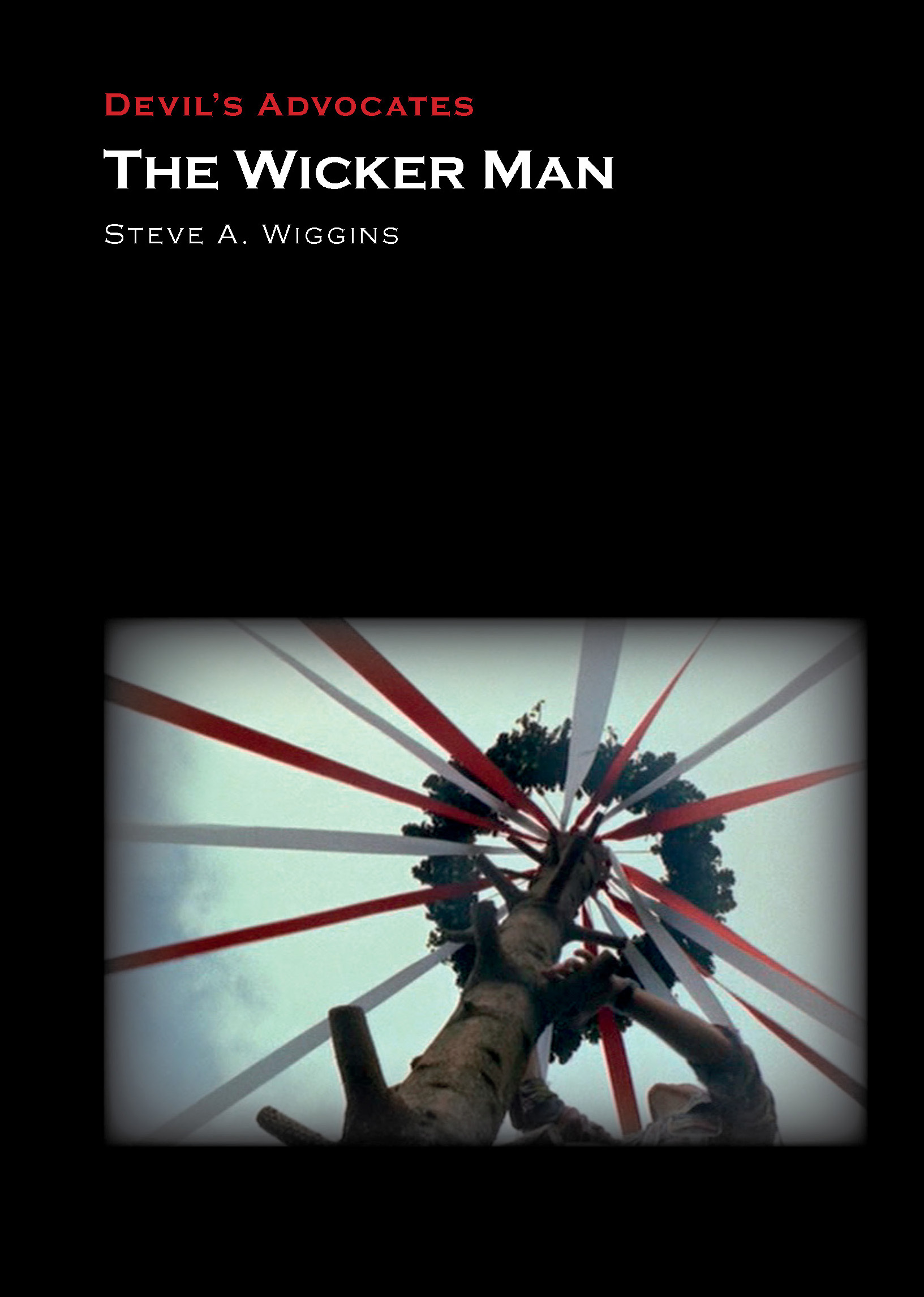
Why The Wicker Man?  It’s a fair question.  My book is now starting to appear on Amazon and other venues (it’s on Goodreads!), so it’s time to try to get the word out.  The BBC ran a recent story, “Why The Wicker Man has divided opinion for 50 years,” and that offers a springboard into the “why” question.  I’m not Scottish, but my wife and I lived in Scotland for a little over three years.  That’s one reason.  While there I did some research into Scottish folklore—historians of religion are curious people—and traveled widely, and that’s another.  As one of those writers who’s never been able to break out of the academic market, the third and most direct reason is that I’d begun a book on holiday horror.  A friend pointed the series Devil’s Advocates out to me.  Back then the series books were priced in the twenty-dollar range, but the pandemic put an end to that!

I’ve always thought The Wicker Man derived its fear from the strangeness of the holiday.  I’ve also often wondered why Anthony Shaffer and Robin Hardy didn’t make more use of “Beltane” in the dialogue.  Maybe the unfamiliar was too unfamiliar?  I suggest a different reason in my book, but I won’t reveal that here.  Writing a book on The Wicker Man would allow me the opportunity to share my thoughts about holiday horror without trying to convince an agent that people actually do like to read about horror as well as reading horror itself.  Come on, agents!  It’s called pop culture because it’s popular!

I pitched the idea and the series editor liked it.  So did the reviewers.  They were tired of hearing/reading about The Wicker Man as folk horror, as if there was nothing more to the movie.  Like most films that grow an afterlife, this one is complex and can be approached from many angles.  In fact, there’s another book, one by John Walsh, coming out on the movie just weeks after mine.  I wasn’t the only one who knew the fiftieth anniversary was on the horizon like a Beltane sunset on Summerisle.  For those who prefer a more television-like explanation, I’ve posted a video on The Wicker Man on my YouTube channel.  This blog, I realize, doesn’t get enough hits to drive traffic that way, but it’s nevertheless part of the package.  Why The Wicker Man?  The answers likely lie in several posts on this blog, a few years in Scotland, and a love of strange movies.


Coronation Bible

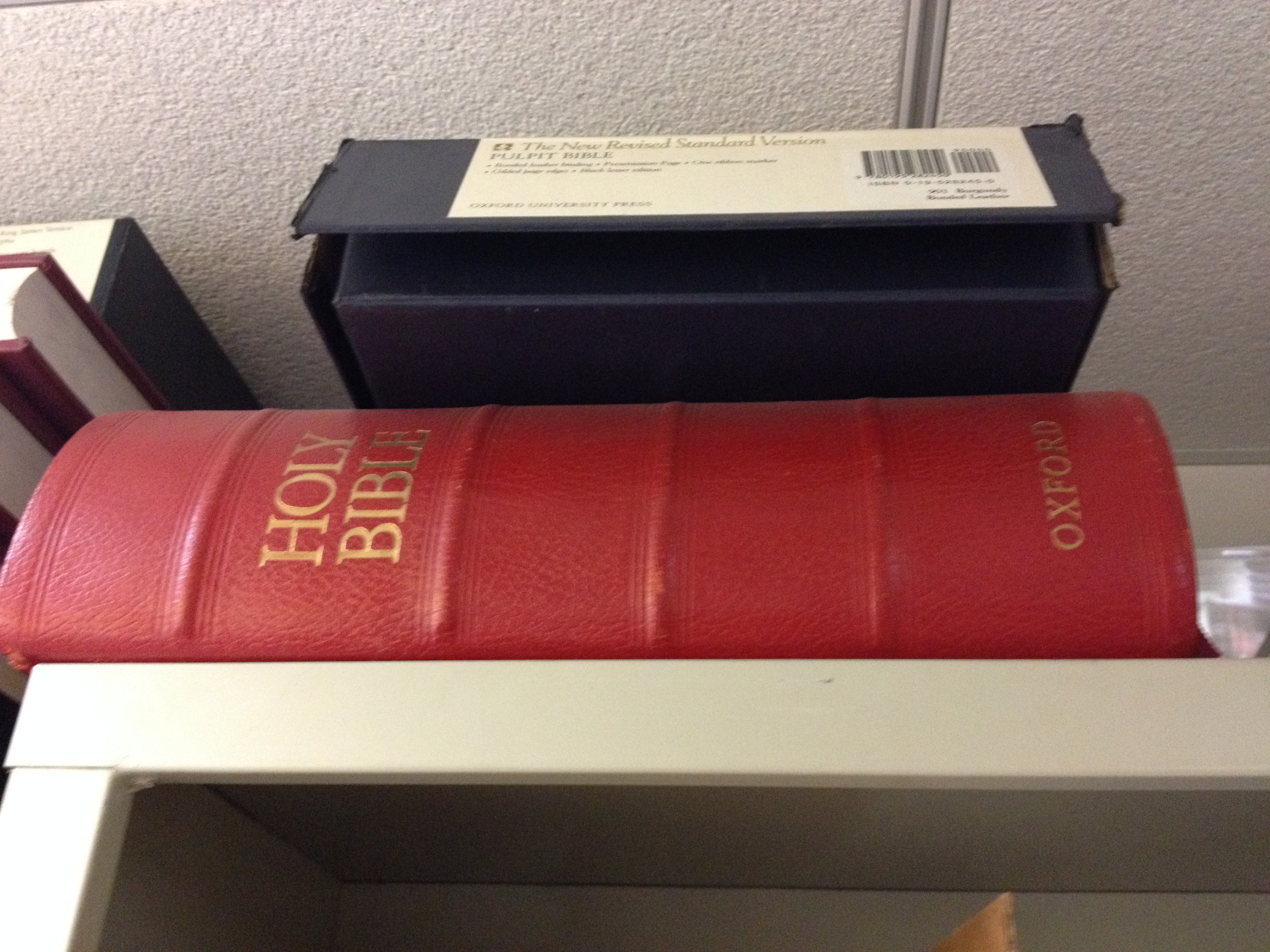
The scene from The King’s Speech doesn’t show it at all, but there was even more drama around the coronation of George VI than the movie reveals.  It may not be obvious, especially to Americans, but there is a great deal of prestige in being the supplier of a coronation Bible.  The two ancient presses in the United Kingdom, Cambridge and Oxford, vie for that honor.  In 1937 Oxford had won out.  Coronation Bibles are works of art and are extremely rare.  You’ll never find one at your local library’s used book sale.  As a recent Oxford University Press blog post indicates, the Bible at George VI’s ceremony was a last-minute replacement.  What could possibly go wrong with a ceremonial Bible, of all things?  Quite a lot, but this one had to do with an aging cleric.

Despite being the eve of war time, an elaborate Bible had been designed and manufactured.  Symbolism is important.  Britain faced not only the aggression of Hitler, but also the abdication of Edward VIII.  Instability was in the air.  In such times, as we’ve seen in American politics, leaders look to the Bible for support.  Printed on special paper, chased with gold on its cover, the coronation Bible was a work of art.  However, the Bishop of Norwich, Bertram Pollock, couldn’t lift it.  At 73 he wasn’t in the best of health, and he had a role in the ceremony.  At the last minute a lighter, replacement Bible was sent.  According to the OUP blog post, the Archbishop of Canterbury issued a rare apology to the press, but also noted “I cannot but wish that you had given some more consideration to the physical infirmities of those who would have to carry it.”

A big Bible

Swearing on the Bible is an archaism that seems likely to persist into the foreseeable future.  The future of the British monarchy (which I do not follow) itself seems in doubt, but to quote the Good Book, “The grass withereth, the flower fadeth: but the word of our God shall stand for ever.”  As long as many people believe this, such swearing will persist.  Even if such belief fades, the solemnity of swearing on a Bible is likely to continue.  The Bible has, in its tangible way, become a stand-in for God.  And as another archaism, a king, is sworn in today, it is to be hoped that the bishops involved have kept their muscle tone intact.  At least to heft, for a little while, a ceremonial Bible.


Insane Illusionist

The Dark Shadows novels supplemented my early watching of the television series.  It’s funny, but when I remember watching the show, in my mind I watched it alone.  During a conversation with one of my brothers recently, he assured me that he had watched the show too, pointing to the selectiveness of memory.  What I do know is that I was the only one who read the novels.  I bought them when I could find them used, and I kept them in an old pasteboard suitcase (we had no bookshelves and my parents didn’t read).  I didn’t have the entire collection by a long shot and I can honestly say I don’t know which ones I read back then.  I am now, however, two novels from finishing the entire series—a project I began around 2006.

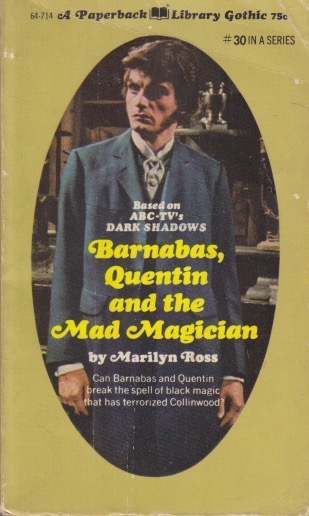
Barnabas, Quentin and the Mad Magician follows the usual formula, although this time around Barnabas is temporarily cured of his vampire curse and Quentin doesn’t turn into a werewolf at all.  They are on friendly terms and both are being set up by the rather obvious antagonist, the mad magician.  I guess you can begin to see the series winding down.  Most of the thirty-two stories are broadly similar and the writing is that rushed, breathless kind that seems characteristic of those who make a living delivering pulp fiction.  There have always been people like me who will buy it.  That’s the reason I typically use the phrase “guilty pleasure” when describing these novels.

As I note in my YouTube video on the phenomenon, Dark Shadows was quite popular in its day.  It’s what we might now call a cultural meme.  Television series, novels, two movies, comic books, lunch boxes—the whole coffin.  The monsters were likable.  That was true of some of the greats—you felt sympathetic toward them.  As horror began to “grow up” the monsters often became entirely reprehensible, with no redeeming qualities.  So as Barnabas and Quentin do their best to expose the true monster, their supernatural powers currently on hold, they have to rely on their money and connections.  Even at the end the “confession” is made suspect by the longer tacked on ending.  If you’ve read enough of these, you grow suspicious when there are ten pages left after the antagonist dies.  Stories such as this aren’t great literature, but they do fill a gap in the world of monsters that nostalgia leaves for those who knew Dark Shadows in the late sixties.


Atomic Apocalypse

Avoiding Apocalypse, as the title suggests, is something most reasonable people would agree is a good thing.  This book by Jeff Colvin, a science advisor in the George H. W. Bush administration’s  Department of Energy, tells the story, in the words of the subtitle, How Science and Scientists Ended the Cold War.  Long time readers of this blog will know a couple things: I only comment on politics when I’m forced to by circumstances, and I’m an eclectic reader.  The latter point led me to this book and led to a bit of the former.  Nuclear war terrifies me.  Growing up in the seventies and eighties, when at times it seemed that we were a hair-trigger away from mutually assured destruction, I wondered why world leaders couldn’t see what all the rest of us did.  There may be some answers to this in Colvin’s book.

He initially makes the point that the only way for science to thrive is to have a democratic government.  (Think carefully, card-carrying Republicans, about running anti-democracy candidates!)  Colvin clearly shows how in the Soviet Union, repression and state-run thought-policing hampered scientific exchange and prevented Russian development.  It was only under the leadership of Mikhail Gorbachev that this connection was realized and dismantling of the Cold War was led by scientists, such as Andrei Sakharov, who was instrumental in the Soviet development of nuclear weaponry, but who was exiled for his activism in trying to prevent the apocalypse of the title.  The Soviet administration had to change enough to permit scientists to speak out before reason could enter the equation.

This is a scary book.  Democracy, which many of us advocate and which seems the best, even if flawed, system of government, is often captive to ideologues.  Even today anti-rational people adore Trump, despite the fact, as this book shows, he brought us dangerously close to annihilation by his sheer incompetence.  Tracing the history of arms control, and its great successes, leads to the little ray of optimism that shines through.  

One of the problems with the publishing world is its inherent slowness.  Although only published this year, this book was written in 2020.  I, for one, would be interested in the author’s take on things over the last year or so.  His understanding of what had been happening in Ukraine would, no doubt, shed some light on the tragedy going on there now.  One thing this important book makes abundantly clear is that democracies only work when, like scientists, people vote rationally, not with some gut feeling that a self-made messiah will lead us to bankrupt salvation.


50 Years Ago on May Day

Word is starting to get out about The Wicker Man.  One of the most intelligent of horror movies, it turns fifty this year.  Aware of the coming anniversary, I pitched a volume in the series Devil’s Advocates on the movie a few years back.  I was delighted that my take on the film was unique enough to qualify and my volume has now appeared on Liverpool University Press’ website.  And, as an added bonus, a blog post I guest wrote on the book will also appear shortly.  And it’s May Day.  The Wicker Man is the third person of the unholy trinity of folk horror.  The other two films are Witchfinder General and The Blood on Satan’s Claw, both of which I’ve reviewed here.  But 1973 was also the year another person of another unholy trinity, The Exorcist, was released.  This other trinity began with Rosemary’s Baby and concluded with The Omen.  If you’re curious about it, I wrote quite a bit about it in Holy Horror.

Fiftieth-year anniversaries are significant, given how young the film industry is.  Depending on the publisher, it may be difficult to get advance notice out.  My colleague Joseph Laycock, along with Eric Harrelson, wrote The Exorcist Effect.  This is a book I’m very excited for, although it’s not yet on its publisher’s website.  Academic publishing can be slow that way.  Another fiftieth anniversary Wicker Man book is coming out in October—John Walsh’s The Wicker Man: The Official Story of the Film.  The publisher, Titan books, not hampered by university press processes, had the book well advertised a couple of months back.  I’m looking forward to reading that one as well.  These fiftieth anniversary books are a boon for those who watch intelligent horror.

Academic publishers, you see, classify books in different ways than trade publishers do.  If you’re not sure what a trade publisher is, it is essentially anyone whose books you see in actual bookstores.  Academic publishers tend to focus on library sales and sales to academics who are willing to shell out fifty, a hundred, or sometimes more, bucks for a book.  (In my teaching days, although we had no expense budgets at Nashotah House, I would occasionally (very rarely), after careful family consultation, shell out the academic press price for a book I needed for research and the library wouldn’t buy.)  My last three books have been written for wider readerships, but have been published by academic presses.  On this fiftieth anniversary year, I’m planning on reading a couple of good books.  And thinking about May Day fifty years ago.


Finding Family

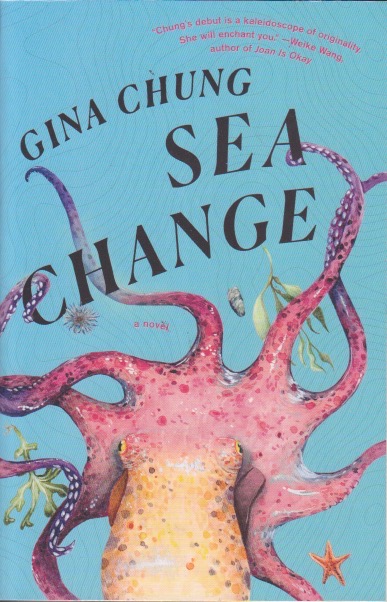
Sea Change is a probing story of learning to live with loss.  Of learning how to say goodbye.  I’m sure that I didn’t catch all that was being offered in this novel, but for those of us who did grow up without a father there’s a kind of therapy here.  I know that I eagerly awaited the end of work each day so that I could pick it up and read a bit more.  Framed as the story of the only child of Korean immigrants, the novel features Aurora (Ro), a young woman who has had to find her way ever since her father has gone missing.  And even before that, actually.  Her father, as a marine biologist, had captured an octopus (Dolores) who now lives in the aquarium where he once worked.  Ro, whose relationship with her mother is strained, takes a job in the aquarium after her father goes missing and befriends the remaining part of him—Dolores.

At the same time Ro’s boyfriend is accepted into a mission being launched to Mars.  (This isn’t science fiction, just to say.)  The loss is another deep cut to a woman who had to deal with the earlier significant loss of her father.  I won’t say much more about the plot since I think you should read the book, but it is a thoughtful, and from my experience, realistic journey through the mental states of those who cope with abandonment issues early in life.  Of course, I can’t speak to the experience of being a child of immigrants, but the novel shows we all deal with the same kinds of issues, no matter where we’re from.  At least we do in modern civilization.

Sea Change made me ponder, however, whether children raised communally would feel the same kind of loss if a parent they didn’t know was theirs left.  The mother-and-child bond is a deep one, so I guess it could be that fathers, after conception, would be expendable in such a situation.  It’s difficult to project how such a society would work.  The family unit is so deeply engrained into our experience that, unless a situation is truly dire, we know we can rely on our parents not to try to harm us, but rather to protect and love us.  Those of us who grew up without fathers (I’m not sure if that’s the case with Gina Chung or not) deal with insecurity issues that never quite go away.  This beautifully written novel was, for me, a healing kind of experience.


How to Write a Book

When I worked at Routledge I was told never to mention William Germano’s name.  I’ve never been one to dabble in workplace politics, but I did wonder why.  Over time, as I tried to commission the kinds of books I knew Routledge for, I was told that they didn’t do those kinds of books.  Not since the Germano days.  Years later I still don’t know what all of that was about, but I do know that Germano wrote a book that would make nearly every academic editor’s life easier if it were handed out at every doctoral graduation ceremony.  From Dissertation to Book is a classic in the field.  Now in its second edition, in it Germano explains, in non-technical language, why and how a dissertation is not a book.  He also explains how to make it a book.

You see, academic editors, such as yours truly, see more dissertations than the most ambitious professor.  The doctoral student, flush with the praise of his or her examination committee, sends off their thesis, largely unchanged, and wants it to be published.  Hey, don’t be embarrassed—that’s what I did too.  The truly amazing thing to me, as someone who’s been both professor and editor, is how little publishing and academia know about each other.  If I had to guess who knows whom better, I’d have to say publishers take an edge over academics.  Their knowledge is far from perfect, however.  Academics have to publish for promotion and tenure, but they don’t bother to learn about how publishing works.  Germano’s book would help them too.

For many years well-known academics have been stating in highly visible places that academic writing is poor writing.  It is.  Germano explains why in this little book.  Better than that, he gives solid advice on how to improve your chances of getting published.  I’ve been working in academic publishing for a decade and a half and I learned quite a lot from this little book.  Dissertations are written to prove yourself to a committee.  Books are written for a wider readership that wants to be able to understand what you’re talking about.  Day in and day out, people like myself read dissertations.  Generally there’s a kernel of something good there.  (Sometimes, honestly, there’s not.  Not all theses are created equal, although that’s not one of the ninety-five.)  Germano’s book offers a way to find and plant that kernel so that it grows into something any editor would be pleased to receive—the proposal for an actual book.  It should be read widely—much more widely than it is.


Golem Events

Public domain, via Wikimedia Commons

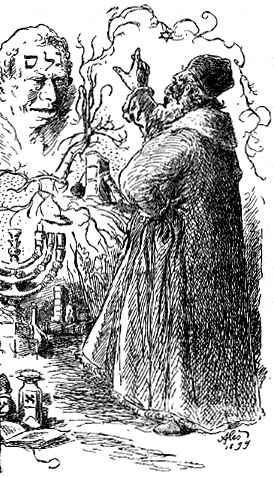
It doesn’t have a title yet.  At least not one that’s announced.  Still, when a friend pointed out this article that Daniel Handler, better known as Lemony Snicket, is writing a horror film about a golem, I sat up straight in my chair.  Since I don’t tend to dwell on children’s topics here, it may not be obvious that I was a real fan of A Series of Unfortunate Events, by Lemony Snicket, back when they came out.  Alerted to this series by a cousin who was my daughter’s age, we made this bed-time reading for a few years.  Handler, in the early days, did a pretty good job of keeping his identity secret.  He’s written some adult fiction, and those of us who write know that readers want more of the same thing from a writer—if you want to survive you do what they ask.

I’m a very eclectic reader—that may be one reason I don’t have many followers on this blog.  People like the same thing time and again.  (I’ve always been suspicious of genres.  One of the reasons, I suspect, that my students found my lectures interesting is that I drew from my eclectic reading, but that’s ancient history now.)  In any case, A Series of Unfortunate Events was formative in my own writing.  The movie remains one of the most gothic available, but it pales next to the novels.  Yes, they’re written for young readers, but they’re also very well written for young readers.  I discovered Snicket, or Handler, was Jewish when he wrote The Latke Who Couldn’t Stop Screaming.  And now he’s turned his attention to one of my favorite monsters.  The golem has been part of horror from the earliest days of the genre (that word!).

Paul Wegener and Henrik Galeen’s The Golem, part of a trilogy, came out in 1915.  Before the Universal monsters.  Even before Nosferatu.  The legend of the golem—which may have inspired Frankenstein—has a long history.  While not biblical, the golem does go back many centuries.  Unfortunately these early horror films are lost, or mostly lost.  The Golem and the Dancing Girl, from 1917, is a lost comedy horror.  The third film, The Golem, How He Came into the World, from 1920, survives and is sometimes called “The Golem.”  I wrote earlier about the excellent 2018 film The Golem by Doron and Yoav Paz, sensitive to Jewish issues in the seventeenth century.  This sub-genre of golem movies may be starting to come into its own.  It remains to be seen what Handler will do with it, but if his previous work is anything to go by, we may be in for a real treat.


Funny about Irving

The successful writer, John Green, has been on a tuberculosis kick lately.  You see, writers swing that way.  As the writer of books few people read, I’ve had my own little Washington Irving obsession lately.  So it is that I read Martin Roth’s Comedy and America: The Lost World of Washington Irving.  Roth knew a lot about comedy and he framed Irving’s early work as burlesque, rather than the more usual categorization as satire.  In doing this, he groups Irving together with other writers in the genre such as Laurence Sterne (who sounds like a fascinating character) and François Rabelais, among others.  (Jonathan Swift and Oliver Goldsmith also make appearances.)  Irving is analyzed in comparison to these other writers and his comic style is considered as polite satire, political satire, and domestic humor, as well as burlesque.

Insightful while occasionally assuming quite a bit on the part of the reader’s background, Roth provides quite a bit of good chewing here.  Roth was, by reputation, an unorthodox thinker.  He sounds like the kind of professor you would’ve wanted to have had in the classroom.  A book trying to parse comedy is a good sign, I suppose.  I learned a lot from reading it, and was pleased to see that I had independently come to some of the same conclusions he had.  That signals to me, anyway, that I’m not too far off track.  The benefit for those interested Irving is that, while critical, Roth isn’t judgmental.  It has always seemed odd to me that the premier biography of Irving had been written by a scholar who really seemed to hate him.  Roth, on the other hand, likes a good laugh.

As a used book my copy had lots of pencil marks in it.  So many that I had to erase them so that I could spot my own.  When I worked in the theology library at Boston University one summer I was introduced to the electric pencil eraser.  This was a device for heavy-duty removing of the marks of thoughtless patrons.  Before working for the library I stared in wonder when I would see students (perhaps not the brightest) sitting in the library, underlining in books they’d pulled off the shelf.  I think I was always too well aware that library books were not my own.  Because such folks, I’m sure, the electric pencil eraser was invented.  None of this took away from my enjoyment of Roth’s book.  I learned quite a bit about Irving’s context and, as an added bonus, got to remember using an electric eraser.

I would like to have had an image of the book cover, but mine lacks the dust jacket and finding it without violating copyright was difficult. I tried to trace this image to its origin, but I found it on Pinterest and the link didn’t take me back to the original poster. If you see and own this and want me to erase it, just let me know.

Female Future

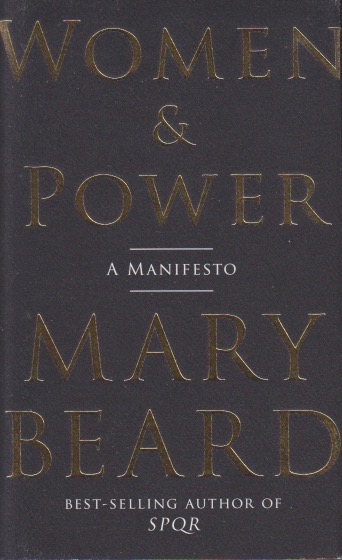
One thing we repeatedly heard during the early days of the pandemic is that people couldn’t wait for things to get back to business as usual (BAU, in corporate speak).  I told others then that we shouldn’t strive for “as usual,” but we should try for something better.  I got that same sense from Mary Beard’s Women and Power: A Manifesto.  Beard is a classicist.  She’s studied ancient Rome and earned her reputation in that area.  Women and Power is the publication of two public lectures on, broadly speaking, why women aren’t ever truly allowed to share power.  The first essay focuses on how women’s voices are routinely silenced, as they have been since classical times.  The second essay, more akin to what I was hoping about the rebuilding of society, is that we need to redefine power and how it is ascribed.

You see, as a society we have the opportunity—mandate even—to decide what’s truly important.  Electing angry old men like Trump only served to set back our progress by refusing to address the problem.  The idea, and this has been true throughout history, is that what men value is more important than what women value.  And we can’t assume all women value the same thing.  In other words, some serious thinking has to be done.  It doesn’t surprise me that some of this thinking has been undertaken by a classicist.  Those of us interested in how ideas began can have insights into why things are the way they are.  That won’t hand us the answer to the dilemma—as Beard says, hard thinking must be done—but it does show that we can begin to understand.  Beginning to understand is the first step to coming up with a solution.

Biology, and the history of biology, has something to do with the dilemma.  Childcare is a necessity and although we might be able to train brains, it does seem that women tend to have more empathy than men.  History tells us that prior to the invention of baby bottles women had to be available to unweaned children to meet their nutritional needs.  Meanwhile, men had to provide  the social structure that made the agricultural revolution possible.  As far as we can tell, hunter-gatherers (and there’s no going back to that) were more egalitarian.  Beard is right—we haven’t hit an impenetrable wall.  There are ways forward.  Equitable ways.  Different ways.  We need to stop longing for “business as usual” and imagine a better future.


What Kind of Night?

“It was a dark and stormy night.”  If you’re like me, this evokes images of Snoopy sitting atop his doghouse, clacking away at his typewriter, trying to write the great American novel.  Many of us have tried a hand at that.  And as a writer, finding that allusive incipit, or opening line, is a major preoccupation.  For many years I believed the sentence “It was a dark and stormy night” originated with Edward Bulwer-Lytton since his 1830 novel Paul Clifford begins with this sentence.  Now considered melodramatic prose of the purplest kind, it may have been serious back then.  1830 was early in the days of novel writing.  Then I found the phrase from an even earlier work, Washington Irving’s A History of New York, from 1809.  Had Bulwer-Lytton read it?  Irving was quite popular in the pre-Dickens days.

This raises a question encapsulated in the other old phrase, “You can lead a horse to water but you can’t make it drink.”  Unless someone tells us explicitly that they read something—journals and footnotes often convey this information—it’s difficult to know.  There’s a whole genre of history books these days that examine the libraries of deceased historical individuals to determine what they read.  I suppose in the days before mass book sales there was a better chance that owning a book meant you’d read it, but not necessarily.  In college I worked as the secretary for the chaplain, Bruce Thielemann.  When he read a book he wrote a category of note in the margin and paid a secretary to go through and write the citation under a heading in a set of looseleaf binders he kept, with several pages dedicated to each category.  For sermon preparation he’d look up his theme and immediately see what he’d read.  I knew he’d read those books.

So, was Washington Irving the origin of the phrase, “It was a dark and stormy night”?  Many websites, many of them authoritatively, insist that the credit goes to Bulwer-Lytton.  I located an edition of A History of New York that replicates, word for word, the 1809 edition.  You see, Irving, like many writers, revised after publication and not all (or even most) modern editions tell you which version they use.  Irving indeed used the phrase in 1809, I confirmed.  The internet is wrongly giving credit to Edward Bulwer-Lytton for a phrase first printed by Washington Irving.  The two were contemporaries and ironically, Wikipedia points out that Irving first used “almighty dollar,” another phrased credited to Bulwer-Lytton.  It doesn’t however, point out that “it was a dark and stormy night” also belongs to Irving.  Something to ponder on a dark and stormy night.


Finally, Therapy

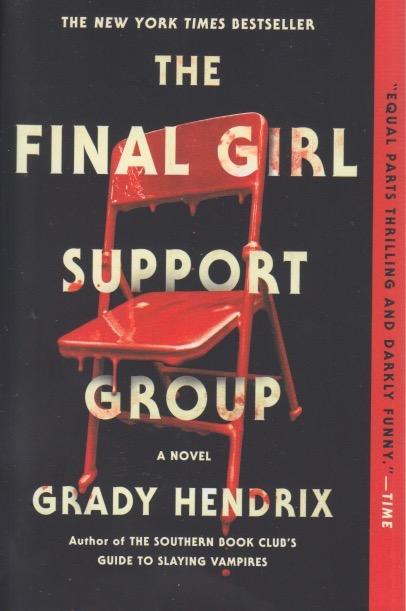
Like religion and horror, humor and horror can also get along well.  As an aesthetic, it’s not for everyone, but Grady Hendrix does it well.  It took some convincing for me to read The Final Girl Support Group.  I’d read one of Hendrix’s nonfiction books and was impressed, and that led me to his fiction.  It also demonstrates how an academic might actually be able to make a difference.  As you might guess, the novel features “final girls” from several fictional events, made into fictional movies, who get together for therapy.  It’s a funny idea and yet it’s not.  Hendrix clearly wants women to be treated fairly, but he’s also clearly a horror fan.  It’s sometimes a tricky balance to hold.  He does it pretty well in this novel.

The idea of a “final girl” comes from Carol Clover’s crossover academic book, Men, Women and Chain Saws.  This is the book that introduced the concept to the world.  As with most analytic concepts it’s only an approximation.  Clover noted the way that, in slasher films, the only survivor tends to be the virginal girl who doesn’t join in substance abuse.  Since the slasher genre is usually first credited to John Carpenter’s Halloween (Hendrix suggests in his acknowledgments that it’s Psycho), I’ve always wondered because Laurie Strode does take a toke in the car and we’re not really told much about her dating life.  I’m not a big fan of sequels, so maybe I’m missing something.  In any case, slashers have never been my favorites, and as sexist as it might sound, Poe’s observation about threats to beautiful women is something the “final girl” relies heavily upon.

The novel itself is pretty gripping.  I’m not going to put any spoilers here.  I was reluctant to read it but I’m glad that I did.  It’s classed as “horror” because of the theme but there’s definitely a lot of literary finesse as well.  It’s the kind of thing that doesn’t really seem to be deep, but upon reflection, it has more to say than you think it does.  The resolution of the novel is messy.  I suppose that’s one thing that makes it literary.  The characterization is amazing well done.  I had trouble keeping track of the back stories of all the final girls but that’s part of the fun.  While there are definitely horror moments, Hendrix never lets you forget that you are supposed to be laughing too.  It’s a fine balance and he manages to hold it together throughout while giving agency to final girls.