Sleepy Unhallow

The thing about classics is they’re open to interpretation.  And expansion.  Since taking an interest in Washington Irving’s “The Legend of Sleepy Hollow,” I’ve been reading modern novels based on it.  Several of these are self-published and although they show the distinct signs of that, they are nevertheless creative.  Human beings are a creative lot.  And the basic idea of Sleepy Hollow gives us a lot of material to develop.  Well, not really, I guess.  It’s a rather simple story of a love triangle in a dreamy small town where there’s widespread belief about ghosts, particularly a headless horseman.  You can nevertheless go in a lot of different directions from there.  Especially since we have two centuries since the story was published.

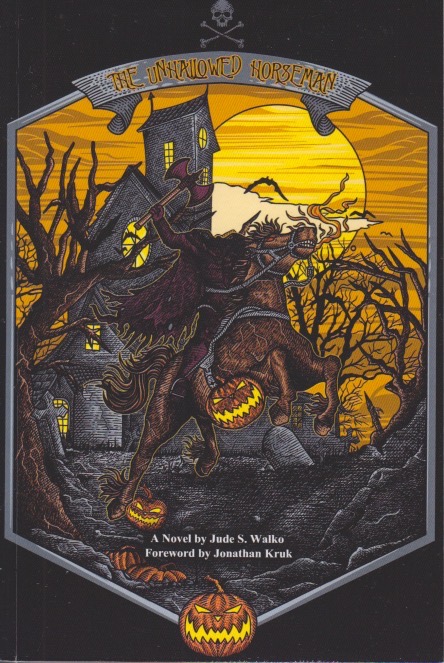
Filmmaker Jude S. Walko has written a horror treatment of the Sleepy Hollow tale in modern times.  The Unhallowed Horseman is graphic and violent and involves the gritty reality of being raised in a broken home.  This isn’t for the faint of heart.  One of the reasons, I expect, that Irving’s tale has survived is that he wrote it, according to the standards of the time, for a genteel readership.  There’s no sex and no violence.  It’s funny rather than really scary.  The characters are likable, if shallow.  There’s the frisson of a ghost but it’s never clear if he’s real or not.  In the end order is restored in the small village and the interloper is gone.  For these very reasons more recent readers are probably looking for something that fits more in our times.

Walko’s version has an emotionally scarred protagonist who is, according to modern practice, drugged into compliance.  He’s smitten by the cutest girl in the school, but the other guys try to take her at will.  The protagonist’s homelife is a shambles.  The sheriff is a descendent of Brom Bones, without any of his good qualities.  And due to a cosmic, astrological sort of event, the headless horseman rides again.  This horseman, however, is described as pure evil.  Almost in demonic terms.  On the night of the annual Halloween festivities this horseman gruesomely kills many of the characters off.  The high schoolers all drink, and the teenage boys have no morals.  At the end there’s a community left in mourning and no real future.  Nihilistic like some modern horror, this version won’t leave you smiling like Irving’s does.  Of course, if you write a classic it can be taken in new directions, and can be made to reflect the realities of new times.  Walko has his eyes open to the era in which we find ourselves.

Feeling Disney

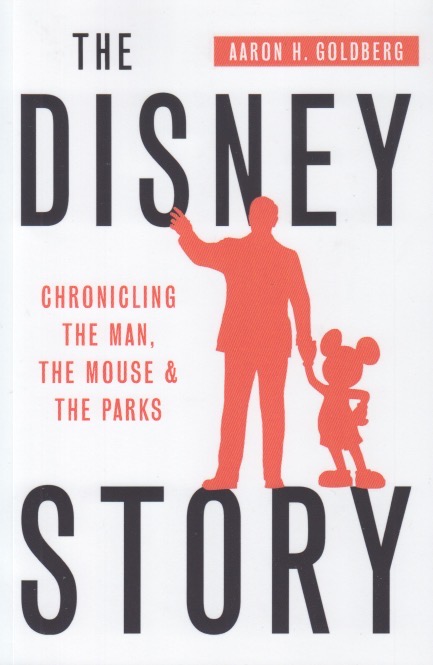
What’s the earliest Disney movie you remember seeing?  If you’re my generation this will’ve likely been in a theater since home recording wasn’t a thing yet.  I suppose it could’ve been on Disney TV, but if it was a new movie you wanted to see it just after it was out.  Mine was The Jungle Book.  Or, at least that’s how I recollect it.  Reading about Ub Iwerks made me curious about Disney so I decided to read Aaron H. Goldberg’s The Disney Story.  The subtitle, Chronicling the Man, the Mouse and the Parks, gives you an idea of what it covers in more detail.  Goldberg’s upfront in letting the reader know that newspapers and period media are his main sources.  The book is arranged chronologically.  It makes for an interesting story but I personally have never been tempted by a Disney theme park—quite a bit of the book discusses these—although there was that one time…

It was back in 1998—what a different world then!  Pre-9/11, pre-Trump, pre-pandemic.  I was still teaching at Nashotah House.  The American Academy of Religion and Society of Biblical Literature held their annual meeting in Orlando, on the Disney campus.  The experience wasn’t a good mix.  Academics and cartoon characters just don’t—wait, maybe they do.  In any case, you had to eat at the Disney estates, although you could sleep in an off-site hotel, that was a considerable shuttle ride away.  And no bars.  I did meet David Noel Freedman there.  It was in a room painted like the inside of a circus tent.  A strange place for a meeting of such gravitas to a still young scholar.

The point is, Walt Disney affects all of our lives.  He was a self-made man, but he had lots of help.  He didn’t live to see Walt Disney World (that’s the one in Florida) open, but he died knowing just about every child in the country recognized his name.  I never considered myself a Disney fan.  Yes, I watched a few of his movies and watched his Sunday evening television show, but I preferred Bugs Bunny and the Warner Brothers’ crowd.  Growing up with television you had your loyalties.  Still, we were well aware of Disney and especially his movies.  We couldn’t afford to see all of them, not by a long shot.  And those we did see were at the drive-in where kids could hide under a blanket in the back seat to economize a bit.  Still, we were infected.  Everyone was.


Reading Prompts

Perhaps it’s because maybe a half-dozen times in the past two years I’ve forgotten to click “publish,” or maybe everyone gets this, but WordPress started giving me daily prompts when I open the new post screen.  Everyday blogging questions such as whether you’re where you’d thought you’d be last year at this time, or what’s your favorite holiday food, or talk about your father or a father figure in your life (a loaded suggestion!).  I appreciate the thought, but I do strive for some measure of depth here.  Believe it or not, many of my posts are metaphorical, written about something that’s not the “obvious” subject of the mini-essay.  (Often when people criticize me it’s because I’m posting metaphorically.  Or maybe I just don’t know what I’m talking about.)  In any case, there have been times when a writing prompt might’ve been useful.  I haven’t used any, though.

Writing is a strange avocation.  These days many people make some kind of living as self-published authors.  The internet offers ways to minor fame—in some cases major fame—for anyone who has the time to put into it.  There’s always the question, however, of what to talk about.  This blog began, back in the days when I was fresh out of teaching religious studies, as a place where I could discuss the Bible and culture, or, more broadly, religion and culture.  That in itself limited the appeal.  People are fascinated by religion but really don’t want to read about it.  So it was that initially I had many followers—particularly among the biblical bloggers set—that eventually dropped off when I began writing about secular subjects.  Mostly I tend to focus on books.

There’s an irony to that as well.  As much as the internet helps some of us learn about books, it’s also a place that has diminished them.  Many people focus on social media to the point that there’s little time left to sit down with an actual book.  Interestingly enough, none of the prompts that WordPress now sets for me daily, has asked about what books I’ve been reading.  Perhaps books are the natural enemy of the online world.  If so, I seem to be caught between worlds.  I set aside time each day for reading, offline.  For those of us who write, reading is our food.  It often gives me the prompts I need for writing daily blog posts.  Even the days that I miss aren’t for lack of content—they’re simply forgetfulness because non-reading events crowd the rest of life.  It’s no wonder, then, that I try to engage others by asking, what books have you been reading lately?


Hidden Talent

It’s difficult to imagine any corporation with a more powerful influence on children than Disney.  It catches us early and forms our first impressions on plenty of things.  And, of course, Disney was started by Walt Disney, right?  Well, partially.  I recently became interested in Ub Iwerks (born Ubbe Iwwerks), the man who originally came up with Mickey Mouse.  Ub Iwerks and Walt Disney got their start in animation together.  They both worked for the same Kansas City ad firm as illustrators and then went into business together.  This was in the early days of film—silent and black-and-white—when few took cartoons seriously (they hadn’t made much money yet, and that’s the true mark of seriousness).  The major studios were starting to come together in Hollywood, so eventually Disney moved to California where, with his brother Roy, they began Disney Studios.  Ub came to work with them.

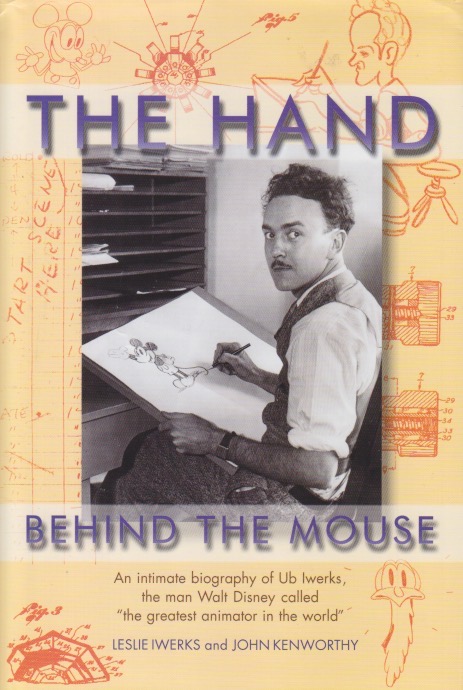
The Hand behind the Mouse, by Leslie Iwerks and John Kenworthy, is a brief account of the life of Ub Iwerks, who was famously quiet but who went on to develop special effects that were far ahead of their time.  Iwerks never really took his deserved credit for Mickey Mouse, noting that what you do with a creation is just as important as coming up with it.  Walt Disney, he opined, was the one who did something with Mickey.  At the same time, Disney claimed that Iwerks was the world’s greatest animator (as the subtitle proclaims).  The two eventually split, with Iwerks forming his own studio and hiring some of the most famous cartoonists of his day.  Hard times came, however, with the Depression and Second World War.  Iwerks closed up shop and went back to work for the by now very powerful Disney.

His move back saw him increasingly in “special processes”—essentially engineering special effects—and he was innovating literally until the day he died.  His imprint on not only Disney, but the film industry (he worked with Alfred Hitchcock on The Birds), was substantial.  He never, however, sought the limelight.  All of this makes him a remarkable individual.  He recognized Disney as the one with a vision and a brand, and also a business-savvy brother (Roy) who could help it all come together.  Walt Disney died at 65, a couple years after I was born.  Ub Iwerks died five years later.  Together they had invented American childhood.  Everyone knows Disney.  It’s the top name in children’s entertainment, a corporate giant.  I’m drawn to those, however, who fall between the cracks of history.  This brief book tells the story of one such individual who should, in all fairness, be better known.


New Horseman

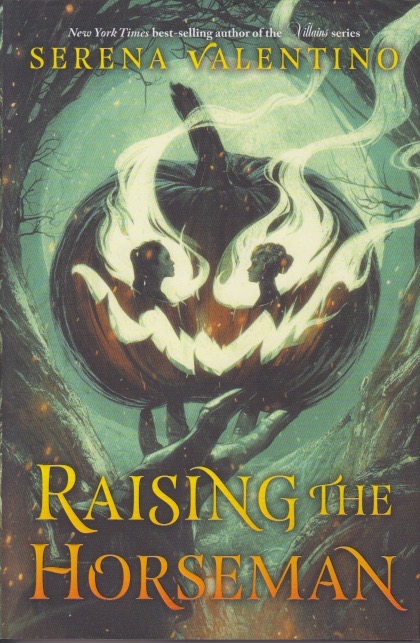
You’d think it’d be obvious, but it took me some time to realize that when a story’s being retold in a literary context, the point isn’t to restate the original in new words.  No, sometimes the vision is quite different and the result is like building a different person from the same skeleton.  I’m still on my Sleepy Hollow kick and I’m interested in what contemporary writers see in the story.  Serena Valentino’s Raising the Horseman is a feminist retelling with sensitivity to LGBTQ+ concerns.  Like some other recent Sleepy Hollow novels—Alyssa Palombo’s Spellbook of Katrina Van Tassel and Christina Henry’s Horseman—she takes the point of view of either Katrina or one of her descendants.  In this case, both, as a present-day Katrina reads the diary of the original Katrina in Sleepy Hollow.

The story is pitched at the young adult level—a literary scene that’s thriving these days—and sets up the story this way:  Katrina Van Tassel married Brom Bones and left her vast estate to her daughter and their daughters, as long as they took her name.  This creates an unbroken succession of Katrina Van Tassels.  As might be expected, the current Kat, as a teenager, wants to follow her own path rather than staying in Sleepy Hollow for the rest of her life.  She meets a new girl in town, Isadora, who encourages her to see how her boyfriend Blake has been keeping her in an abusive relationship.  “The Legend of Sleepy Hollow” is a love triangle, and that develops here as well, moving in new directions.

Valentino has been writing a series called Villains for some time.  That series takes on the viewpoint of the antagonist rather that the hero.  Such tales are quite popular these days as we reexamine dusty assumptions that have been sitting undisturbed for far too long.  Fans of Sleepy Hollow will recognize the base story in this novel, but will be taken along a different path and will be left without a simple resolution.  Younger readers adopt a more open attitude towards life, watching, as they do, the antics of many of their elders (particularly angry white men in positions of power), and they recognize bad behavior when they see it.  The novel is a plea for tolerance, a trait that’s much needed in the world.  The Headless Horseman is still there, of course, but the real villains of the story might not be who you assume they are.


Making Meaning

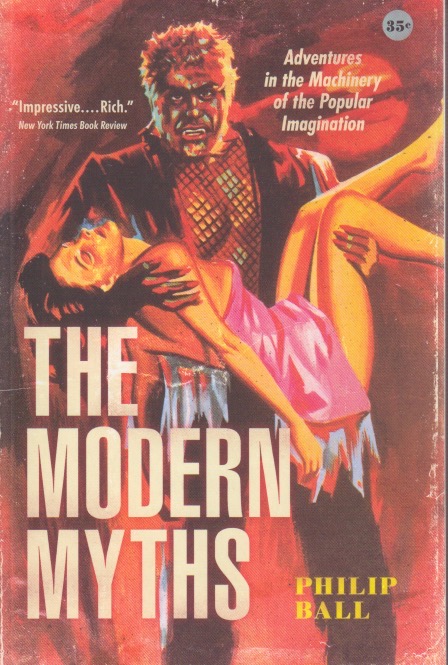
The last book I slipped in under the wire of 2022 was Philip Ball’s excellent The Modern Myths: Adventures in the Machinery of the Popular Imagination.  It would be easy enough, if judging by the cover, to suppose this to be a book about horror, but it’s not.  At least not wholly.  Ball is actually addressing the idea, in his wonderful writing style, that certain myths in modernity can be traced to various speculative tales, mostly from the nineteenth century.  Not intended to be comprehensive, this study makes brilliant cases for several stories that offer meaning, which is what myths really are.  The first such myth analyzed is Daniel Defoe’s Robinson Crusoe.  This novel led to the modern tope of being stranded on an isolated island and we see it everywhere from Gilligan’s Island to Lost.  Ball isn’t offering an encomium to the literature—in fact, he points out the problems with the stories and their writing and indicates that this is part of the mythic process.  Along the way we learn about the authors and their lives, as well as the afterlives of their stories.

Similar treatments are offered for several culturally significant speculative stories that many people have never read but nevertheless know.  Mary Shelley’s Frankenstein, Robert Louis Stevenson’s Dr Jekyll and Mr Hyde, Bram Stoker’s Dracula, H. G. Wells’ War of the Worlds, Sir Arthur Conan Doyle’s Sherlock Holmes tales, and the twentieth-century phenomenon of Batman are all given similar treatment, leading to insight after insight.  The book also gives the reader the distinct sense that ours isn’t the final word on anything.  We’re part of a tradition and those who produce speculative material—future myths may not be anchored in literature—and those who analyze us will also, in their turn be analyzed.

One such mythology currently under development, Ball suggests, is the zombie myth.  Grounded more in movies than any literature, the canonical traits of how it goes are widely recognized and have been taken in several directions, including parody.  Of course, projecting which stories will be future myths, outgrowing their original settings to provide cultural meaning, is something we can’t do with accuracy.  We all know, however, what it means to be a Jekyll and Hyde, or what to expect during a zombie apocalypse.  Such stories tend to come from speculative genres because those are what people tend to like.  We read and gravitate toward science fiction, horror, super heroes, etc.  And we do so, Ball makes a great case for, because they contain the stories that explain our world.  And given this world, some explanation is definitely necessary.


Night Mom

Kurt Vonnegut is one of those tragicomic writers that can leave you reeling.  Mother Night was never on my must-read list, although I’ve read about it many times.  Reading about a novel isn’t the same as reading it, of course.  I picked it up in a used bookstore earlier this year when I didn’t want to walk out empty handed.  I go into such stores with a list and try to limit myself to it.  If they have nothing on the list, I try to find an author I know.  Since I’ve read several Vonnegut novels, I have an idea of what I might find.  This one was pretty bleak, though, but then the subject suggests as much.  Those critics that say it’s funny are made of sterner stuff than yours truly, I guess.  

The story is the account of a Nazi propagandist who’s actually an American spy sending encoded messages through his radio broadcasts.  Throughout the novel he’s conflicted because he wants to be left out of the business of war, and yet he’s aware of the potential for evil on both sides.  It’s a chilling book to read in the light of Trump because American nazis feature pretty prominently in the plot.  Howard W. Campbell, Jr. is on everybody’s hit list—American Nazi haters/hunters, Russian Nazi haters/hunters, and Israeli Nazi haters/hunters, and even on his own hit list.  His role in the war made him look like a Nazi.  Vonnegut has some profound things to say, such as:  “Say what you will about the sweet miracle of unquestioning faith, I consider a capacity for it terrifying and absolutely vile.”

And this: “Where’s evil? It’s that large part of every man that wants to hate without limit, that wants to hate with God on its side.”  The book was published before I was born, and that took place about six decades ago.  The set-backs we’ve seen since then make this one of Vonnegut’s most disturbing books.  I have no doubt that he was a haunted man.  Like many who’ve been through war, he has neither luxury nor appetite for politicians and the immoral games they play to retain power.  Mother Night deals with evil and its ambiguity.  And the sad fact that as much as two people love each other and want to separate themselves from the troubles of the larger world, it’s simply not possible to do so.  The reasons for this are far too obvious but since we have difficulty seeing the obvious, novels like this are necessary.


All Wet

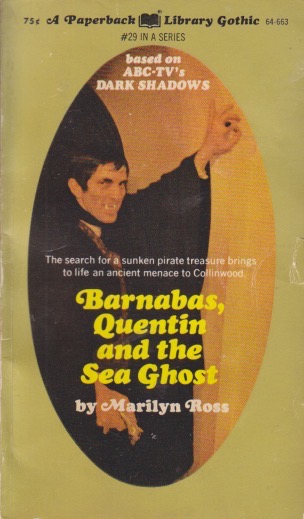
If I keep up this pace I’ll finish next year.  Reading the full set of Dark Shadows novels by Marilyn Ross, that is.  Since they tell me I’m an adult, this might seem a strange avocation.  Driven by nostalgia, and frankly, a love of gothic literature (the latter defined loosely), I’m revisiting my childhood reading.  Long ago I ditched the copies of these books that I originally found in a haphazard way, and it is possible—in this universe of improbabilities—that I have repurchased one of the exact same books I had as a child.  No matter.  I don’t think I read Barnabas, Quentin and the Sea Ghost before.  If I had, no memory of it is within easy recall.  It does seem that W. E. D. “Marilyn” Ross was making some slight progress with his writing as the series went on, but this one isn’t great.

An undersea salvage operation, run by Claude Bliss—accompanied by his daughter Norah (someone has to fall in love with Barnabas, after all)—comes to Collinsport to find the treasure of Jenny Swift, a ship named after its pirate captain.  There is, however, a ghost that haunts any who try to attain the treasure.  In one of the “Scooby-Doo Effect” versions of the Collinwood estate, the ghost turns out to be a man, a neighbor, literally in a rubber mask.  The salvage operation had been a bust from the beginning and Quentin shows up just to stir up trouble and then suddenly leaves before the story finishes.  This particular fascicle feels unfinished to me.  Who was the woman with Quentin?  What happened to the daughter of the man pretending to be a ghost?  Did Norah and Jim Donovan ever get together?  And what of Dr. Hoffman and Professor Stokes?

I’m not naive enough to expect belles-lettres from these books, but the last couple in the series built some hope as they seemed to have been making progress.  The stories were tighter and more innovative, even if still formulaic.  Some seem more cookie-cutter than others.  Since I have only three more novels to go (having read five of them this year), I see no reason to stop now.  I know there are other Dark Shadows fans out there.  I’ll probably put a YouTube video out on the topic down the road.  I did watch many of the episodes, but my memories come primarily from the novels I managed to find back in the seventies.  And like back then, I wasn’t really accurately called an adult, I suppose.


Okay to Look

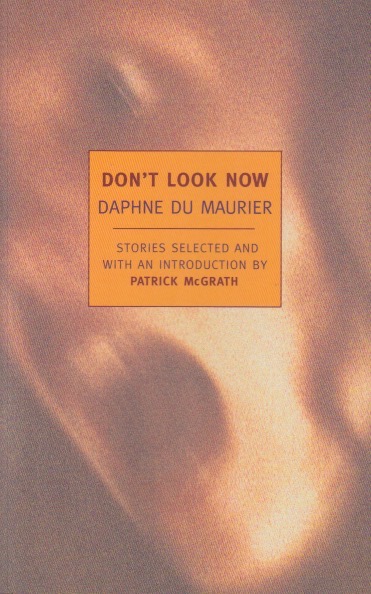
I admit to having learned about Daphne du Maurier from Alfred Hitchcock, and then only after my wife pointed her out to me.  I read our copy of Rebecca with appreciation—a good gothic novel will never steer you wrong.  I saw the movie first, however.  Learning that she’d also written “The Birds” (not the screenplay), I tried to find a book of her stories in various bookshops only to discover that American bookstores tend not to stock her work (beyond, perhaps, Rebecca).  Eventually I started searching online for collections that contained “The Birds.”  I settled on Don’t Look Now, which includes that story as well.  When researching The Wicker Man I learned that Don’t Look Now (the movie) had A billing to the former film’s B place.  I decided I’d read the story first, which I’ve now done.

There are several intriguing tales included in this particular collection.  The one that I found most haunting was the final story, “Monte Verità.”  The narrative of a woman who finds peace in an ancient commune on the titular mountain, it was difficult to read without wanting to find that kind of satisfaction.  Particularly for someone who has had lifelong cenobitic tendencies.  Those of us who struggle against the 925 life, beholden as it is to the great god capitalism, and who require time to think, contemplate, and just to be, this mythic mountain does indeed sound like finding what it is that you’re seeking.  Du Maurier tells the story with such longing that you think she must’ve been there herself.  As a writer I’m sure she had been, in a sense.

Du Maurier was, it should be no surprise, quite a versatile writer.  Some of these stories are gothic and others more naturalistic.  They do tend towards the darkness, but not the kind that leads to despair.  They also reflect a time in publishing when longer short stories were acceptable.  (Most accessible online fiction publishing venues cut their limits far too short these days.)  Some stories really take time to get into.  “Monte Verità” is one such, as is “Don’t Look Now.”  They take time to build up.  “The Birds” isn’t exactly brief either.  The trend these days is for the quick payoff.  We have lost something as a culture with such short attention spans.  This collection of nine pieces provide a good sample of different shades of darkness.  And they encourage further reading.


Best Beasts

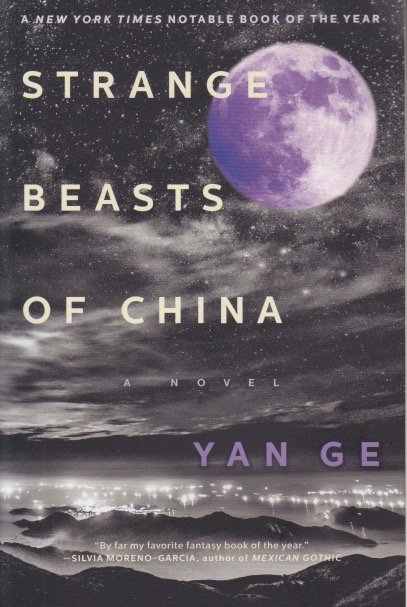
Strange Beasts of China left me strangely affected.  Yan Ge’s novel received quite a bit of acclaim for a book of speculative fiction.  Of course whether or not it is speculative fiction is open to debate.  The narrator, an unnamed former graduate student, makes her living by writing about the “strange beasts” of the fictional city of Yong’an.  Uncertain of where she fits, she’s been researching any number of creatures that resemble humans in various aspects, and who lived often hidden lives among the population of the city.  Her relationships revolve around people who, and this may be a spoiler, often turn out to be beasts.  It could almost be a parable.  I wasn’t quite sure what to expect.  The word “cryptozoologist” occurs in the copy and it was blurbed by a couple of horror writers.

It’s not really a horror novel, though.  There’s some action and even a bit of violence—not too explicit—and some well-executed twists.  I wasn’t sure where the story was going, but I found myself eagerly awaiting the opportunity to pick the book back up again.  One of the truths of our species is that we find ways of othering those who are different than we are.  Othering so that we can fear and mistreat them.  And feel superior.  That’s why this story feels so much like a parable to me.  The beasts aren’t really monsters, but then, monsters are really us.  What matters is how we treat them.  Yan Ge handles them with sensitivity—her narrator, after all, is very interested in these beasts—and our suspicions grow as the novel goes on.  We shouldn’t be judging here.

That this book should come out even as American attitudes toward China veered decidedly toward “othering” (the book was published in Chinese back in 2006, but appeared in English in 2020), is significant.  There are reasons to fear the autocratic government of China, but a significant portion of Americans seem to favor the autocratic style over democracy.  So it is that parables continue to be made.  We live on a planet with billions of other human beings, each with cultures, hopes, and dreams.  They may look a little different and thy may speak in ways that we don’t immediately understand, at least not without some effort, but they are just as human as those who speak English and who live in their own fictional cities isolated by a couple of oceans.  Strange Beasts of China really made me think.


Booking Dreams

There’s a certain kind of person—many of with whom I work—who trade in the currency of books.  These are individuals who would rather be paid in books than in cash, and who worry of book orders shipped that seem to take too long to arrive, as if the rent check will be late because of it.  Who check the tracking number multiple times a day and can’t rest secure until the book is within their doors.  These people tend to be educated, whether formally or on their own, and they often wonder why the world can’t be a more amenable place because reading makes you realize the potential we miss.  My own reading convinces me that capitalism is mostly to blame.  It rewards the greedy and makes them try to fix elections and posture against other greedy leaders.  Books often show a better way.

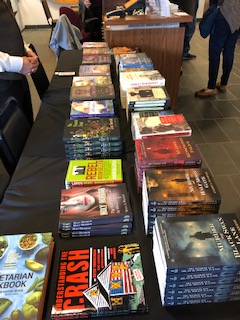
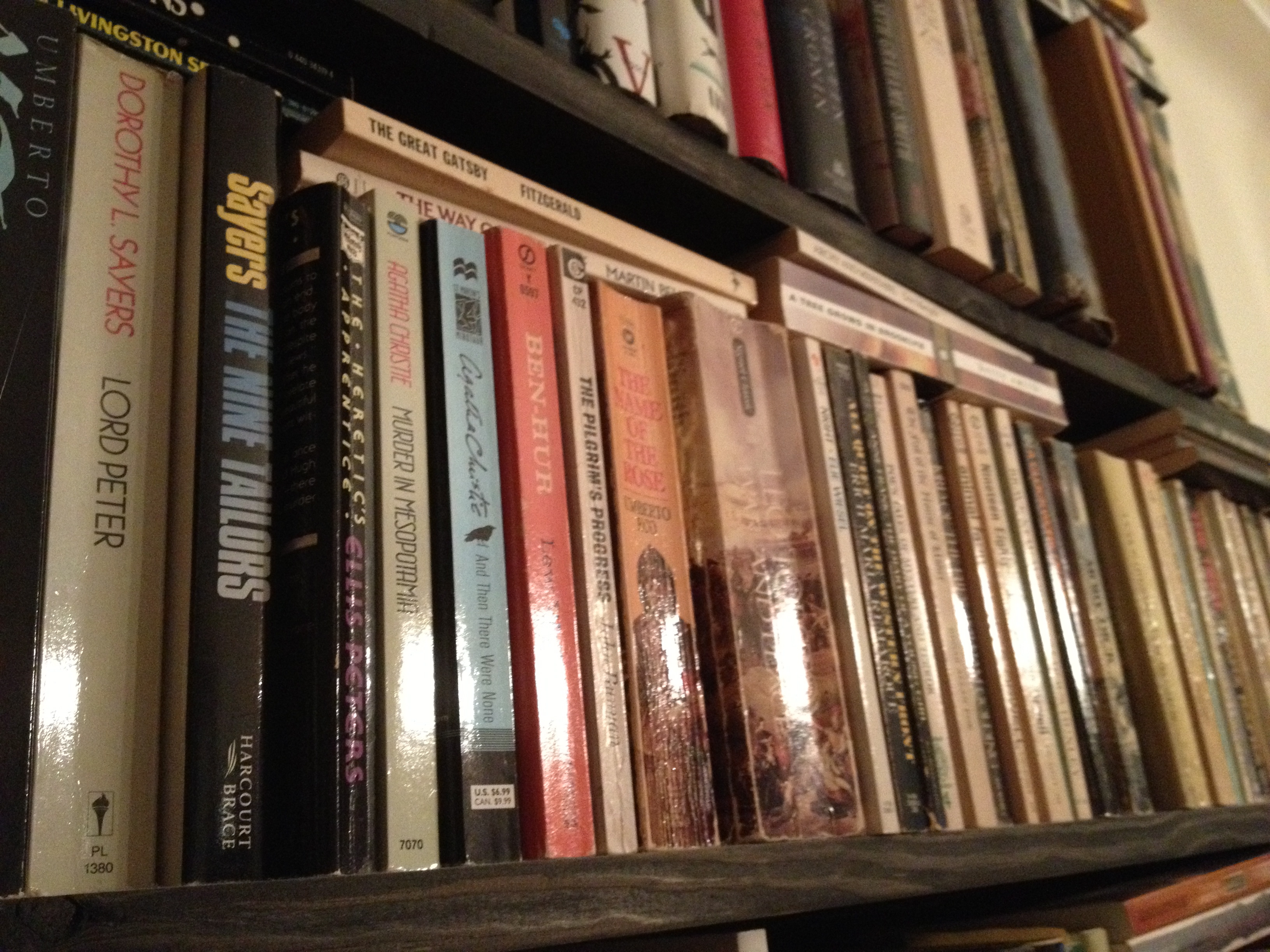
I realize not everyone likes to read.  In fact, if you do so for pleasure you’re part of a minority group.  Those who read, and conduct surveys of those who do, estimate that only about five percent of the population reads and trades in books.  That makes us a very small nation indeed.  But some countries, such as Iceland, have higher proportions of readers, and other nations have lower.  Books, as a whole, saw a resurgence of interest during the pandemic because they are a way of getting together with other people and going to faraway places all within the safety of your own home.  I like to think a book-lined room is also well insulated.  Especially if all those little gaps are caulked with smaller tomes.  Occasionally photos of individual libraries circulate and go viral.  We’re impressed, we bookish folk, by those who read so much.

The book industry’s having a bad economic year.  In my own humble efforts I tend to read more than a book a week, on average.  I do this by reading more than one book at a time.  The amazing thing about that is you can pick up one of the multiple titles you’re reading and resume where you left off.  Very seldom is there any confusion or even forgetting what a book is about.  A physical book has so many tactile cues to remind the reader of things.  That’s why those of us who like to read tend to keep books.  We like to be able to go back and since we can’t predict our future wants and needs with any precision, we err on the side of collecting.  I do give books away but often I come to regret it because I need some unexpected volume again.  Books have their own economy.  If only we could all trade in books, it would be a very different, and I believe better, world.


All About Blurbs

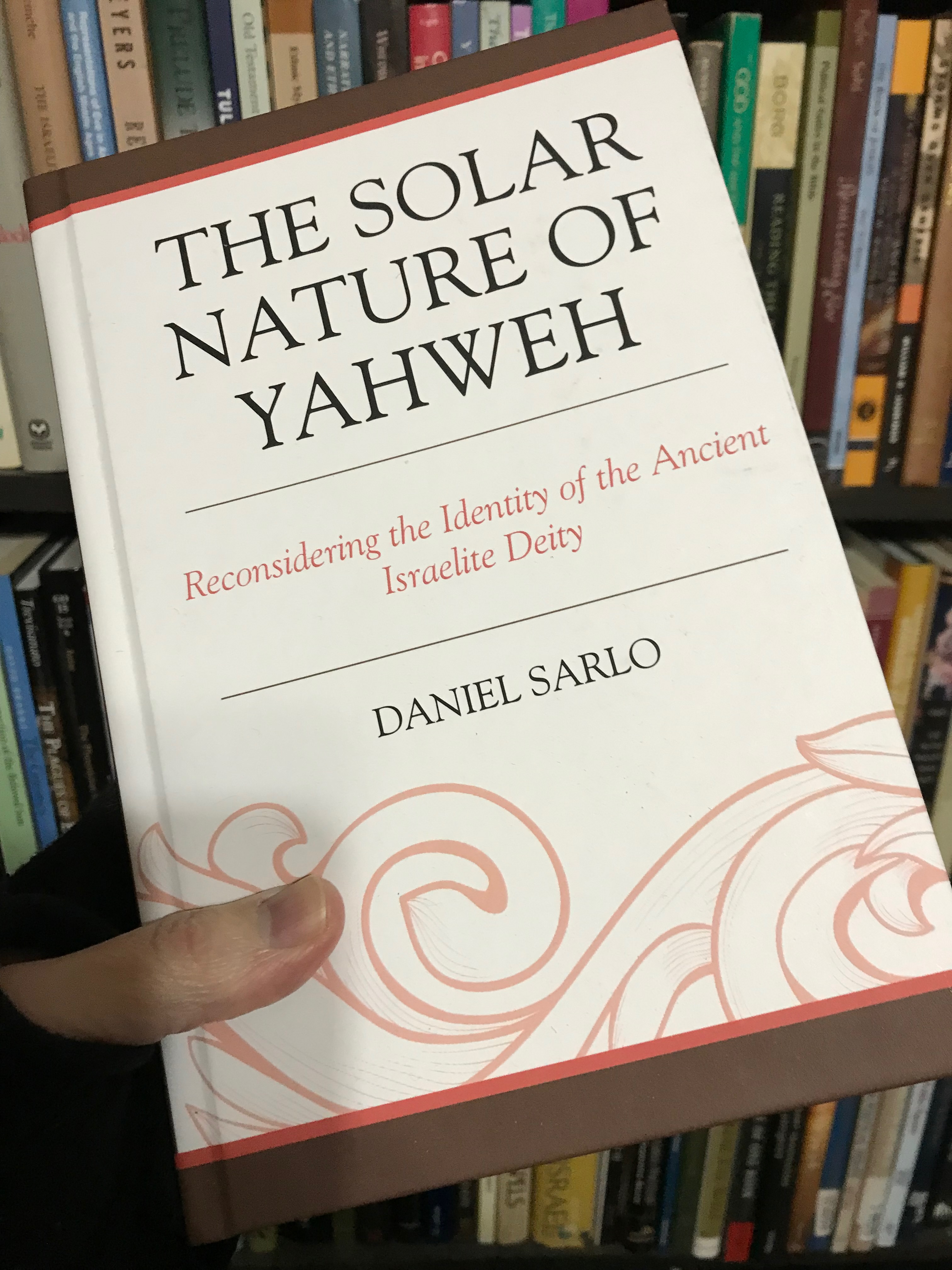
A book recently arrived.  It was unexpected, but when I saw the return address I knew what it was.  My young colleague Daniel Sarlo from the University of Toronto had kindly asked me to blurb his book The Solar Nature of Yahweh.  I’ve known Dr. Sarlo virtually for many years.  He’s engaged me a number of times on issues surrounding my research on solar worship in ancient Israel and Ugarit.  I had a book project in the works on the latter topic when other colleagues suggested going with something biblical for my next book, thus Weathering the Psalms was born.  Books, particularly academic ones, are in constant conversation with one another.  I’ve been writing on horror and religion now for over five years but my material on ancient West Asian religion is just now starting to get noticed.  It’s a funny old world.

One day I stumbled across a blurb lifted off my website for a book from Johns Hopkins University Press.  I was impressed.  First of all, that some author or editor had found my remarks on their book from this blog and that they’d liked them enough to cite them.  Getting blurbs can be a difficult task these days.  Academics are under a lot of pressure and time for such things is at a premium.  The payment is generally a copy of the book.  For some of us, though, it’s a thrill just to see yourself cited at all.  Once you’re no longer an academic you’re easily forgotten.  It has been a number of years since I’ve researched Yahweh and the sun, but someone, at least, still remembers.

Like book reviewing, reading a book for a blurb is one of those things you really can’t talk about pre-publication.  Book production is a slow process.  Like most things in life, it takes a complicated chain of events to lead to something as humble as a printed book.  And you need things like blurbs well before the release date.  As an author you often worry that—even in a field like ancient West Asian studies—your book will be outdated before it’s even published.  Some new find, or new idea might invalidate all that you’ve worked for.  Higher education should be one of the best venues for building humility in a person.  Your great learning is only one example among myriads of other scholars.  It’s a great accomplishment to get a book published in the midst of all that.  And this one, as the blurb indicates, is well worth reading.


Gift Books

The New York Times recently ran a story suggesting that books are not only the ideal gift, but that this has been the case for a very long time.  The article points out that treasured Roman Saturnalia gifts included scrolls, or the books of the time.  Books are the gift of knowledge—who wouldn’t want that?  Also, I’ve been reading about the fact that money can be any medium of exchange as long as it’s agreed upon.  Why not books?  Being an American, it’s often amazed me how intellectuals are held in such low esteem in this country.  We pay our teachers poorly, we mock those who read “too much” (as if such a thing were possible), and we dismiss what experts of many subjects tell us because we don’t like to admit others might be smarter than we are.

Reading, like arithmetic, doesn’t come naturally to people.  We evolved to survive and reproduce and our brains have that prime directive.  Along the way, however, we learned to communicate effectively and cooperate on large ventures.  These ambitions required wrapping our brains around things like advanced math and learning to interpret squiggles written by somebody else.  Kids, full of energy and needing to play, don’t want to sit down to learn these things.  At least most don’t.  In some parts of the world those who do take naturally to such things are celebrated.  Teachers are venerated.  Learning is revered.  Ironically, in this country where some of the best higher education is available, we want to belittle those who attain it.  We prefer to play with our guns.

Now that the holiday season is upon us, however, I think of reading.  I keep a list of books I would like to have.  It’s well over a hundred titles long.  In a good year I can read sixty or more tomes.  It’s an engine that requires a lot of fuel.  Although in all likelihood I’ll never be able to retire, I keep my books against that time when I fear I might become bored.  Or that my mind might start to slip.  Reading is mental exercise.  In my current writing project, I’ve been discovering new connections almost daily.  Often in unexpected places in books I learned about only in recent months.  I write these words surrounded by books.  There are more in the attic, and more in the next room.  I may not ever have enough money to retire, but if we ever decide that books should be currency—and even if we don’t—I’m wealthy indeed.


Haunting Hudson

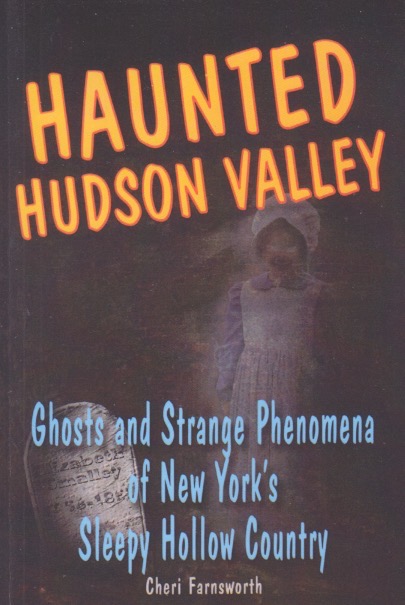
After Maine, the one place I’ve always wanted to live, but never had the opportunity, or could never afford, is upstate New York.  My ancestors were from the state but I just happen to’ve been born in Pennsylvania.  So it goes.  Perhaps it comes with professionally studying mythology, but one of my longterm interests is folklore.  I’m always fascinated by what people tell of their local setting.  Now when I approach books about the paranormal in a region, such as Cheri Farnsworth’s Haunted Hudson Valley, I know to take most of it with a grain of salt.  People love to tell stories and local people like to talk about where they’re from.  The Hudson Valley has had a long history of strangeness and several tales that reflect that are collected here.

I often think of ghosts.  They generally seem to prefer a single place that’s familiar.  And although you can’t take everything everyone says as gospel, there do seem to be regions beset with them.  I wonder if regions early settled by Europeans are particularly prone to haunting.  It’s difficult to imagine that, at the time with the unquestioned rectitude of church and empire, that they ever stopped to think “Hey, we’re stealing land that belongs to someone else.”  Did that idea ever come back to haunt them?  Perhaps such unspoken guilt leads to ghosts.  Or maybe simply dwelling in a place for a long time leaves plenty of opportunity for ghosts to gather.  And, of course, people do stretch the truth at times and misinterpret things otherwise explained.

No matter the reasons or rationale, these kinds of books are always a guilty pleasure read for me.  I don’t expect the get the truth, the whole truth, and nothing but the truth from them, but I enjoy them nevertheless.  Since I can’t afford to live in the Hudson Valley, the other result of such books—and one of the reasons locals appreciate them—is to make me want to travel to the region and see for myself.  For many years we lived not too far from the Hudson while in New Jersey.  Still, we didn’t make it up that way very often.  It’s a bit more of a hike now, but isn’t a hike worth making when you might see something unusual after you arrive?  My ancestors had settled north of the Hudson Valley and eventually migrated further south.  The end up in Pennsylvania, where I find myself.  But I’m still haunted by upstate New York.


Not Sleepy Yet

Working on a doctorate changes the way you think.  Or at least it’s supposed to.  Easy answers have to be examined closely, and sources critically scrutinized.  One of the side-effects of this is that many Ph.D.s tend to think that only others of that status are able to do good research.  An essential piece of research, however, is passion.  This part isn’t always logical and can’t always be explained.  A recovering academic, I first resisted Gary DenisSleepy Hollow: Birth of the Legend because it was self-published.  I’ve had bad experiences with self-published books before but what I discovered here is that Denis is quite a capable researcher, driven with a passion for Washington Irving’s tale.  The execution may be a little rough, but the data-gathering is very good.  He tries to point out where accounts have problems and attempts, where possible, to resolve them.

Denis is driven by the question of what in Irving’s story is factual, if anything?  This is probably not a question an academic would ask, presuming that fiction is fiction.  Still, there is data.  The first four chapters are very good.  Here he lays out the background to the region, Irving, and stories of headless horsemen.  I learned quite a lot from it.  The final three chapters turn to the main characters of the story—Ichabod Crane, Katrina Van Tassel, and Brom Bones—asking who they might’ve been based on.  The best drawn of these is the first and there’s good reason to suppose Irving based Crane’s situation on that of his friend, Jesse Merwin.  The other two, however, are sketched rather hastily and lots of people have suggestions for who might’ve been behind them.

Clearly aware that authors borrow and make things up, Denis knows that Katrina and Brom may well be pretty much imaginary.  He also knows that Irving did indeed borrow much from previously known stories and legends.  Irving’s real genius was in the way he expressed these stories in colloquial English, making American literature a blend.  Although Irving wrote many books, his fame was largely due to two of his stories published early in his career.  One of those stories, “The Legend of Sleepy Hollow,” has left quite a paper trail and Denis leaves no rock unturned in his efforts to collect data on it.  I’ve read a fair number of self-published books over the years—they’ve been easy to produce since the internet began—and I’m wary of them.  This book, however, is one that I’m glad I found and it serves as a useful reminder that good research isn’t limited to the privileged few in the academy.