Looking North

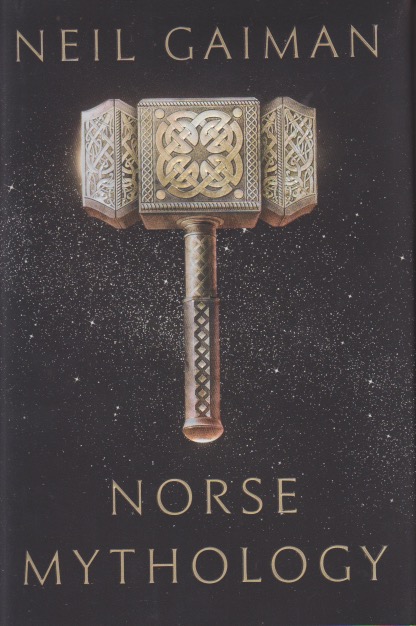
As organized religion continues its slow decline, mythology remains.  Indeed, it seems to be growing in interest.  The problem with many mythologies, for monolinguals, is that they come in languages other than English.  Translation always loses something, which is why, I suspect, Neil Gaiman was tapped to retell the Norse myths.  A very talented story-teller, Gaiman has written about gods before.  He knows their literary potential.  Norse mythology is rather odd in the canon of western thought.  The stories feature gods with as many foibles as humans and with conflicting motivations.  In some ways they are more believable than the monotheistic tradition.  They are both fun to read and poignant.

At the same time Norse Mythology is a somewhat perplexing book.  It’s difficult to tell, without being an expert, what is Gaiman and what is ancient.  In fact, the book sits next to another one with the exact same title on my shelf.  That one is labeled nonfiction, and it’s a bit more academic.  Perhaps it’s an occupational hazard that I tend to want to approach mythology in original languages, if possible.  I’ve never studied Nordic tongues and it would be a little difficult to justify starting now, with all the other things I’ve got to do.  It’s not that I don’t trust Gaiman, it’s just that every retelling is an interpretation.  Still, I’m sure the book gives the flavor of the records that survive.  One of the fascinating features of Norse mythology is that gods die.  Since it ends with Ragnarok, that seems inevitable.

Many mythologies have the world ending with the establishment of the happy reign of a singular deity.  Ragnarok, which Gaiman (and perhaps the originals) sets in the past, sees the gods dying on the battlefield against Loki and the giants.  As the earlier myths make clear, however, death in battle is the most glorious way for the Norse to end their lives.  (And seeing how it has led to a pretty peaceful adult nation, one wonders if the mythology had a calming effect.)  I’ve not read extensively in other versions of Norse mythology so I don’t know if Gaiman’s ending with Balder returning and the world starting anew is his innovation or part of the original.  Having gods who die, however, seems like a potential leveler for humans who suffer from greater powers.  There’s a sobriety to it that lends gravitas to the whole.  And like all good books, Norse Mythology has left me hungry for learning more.
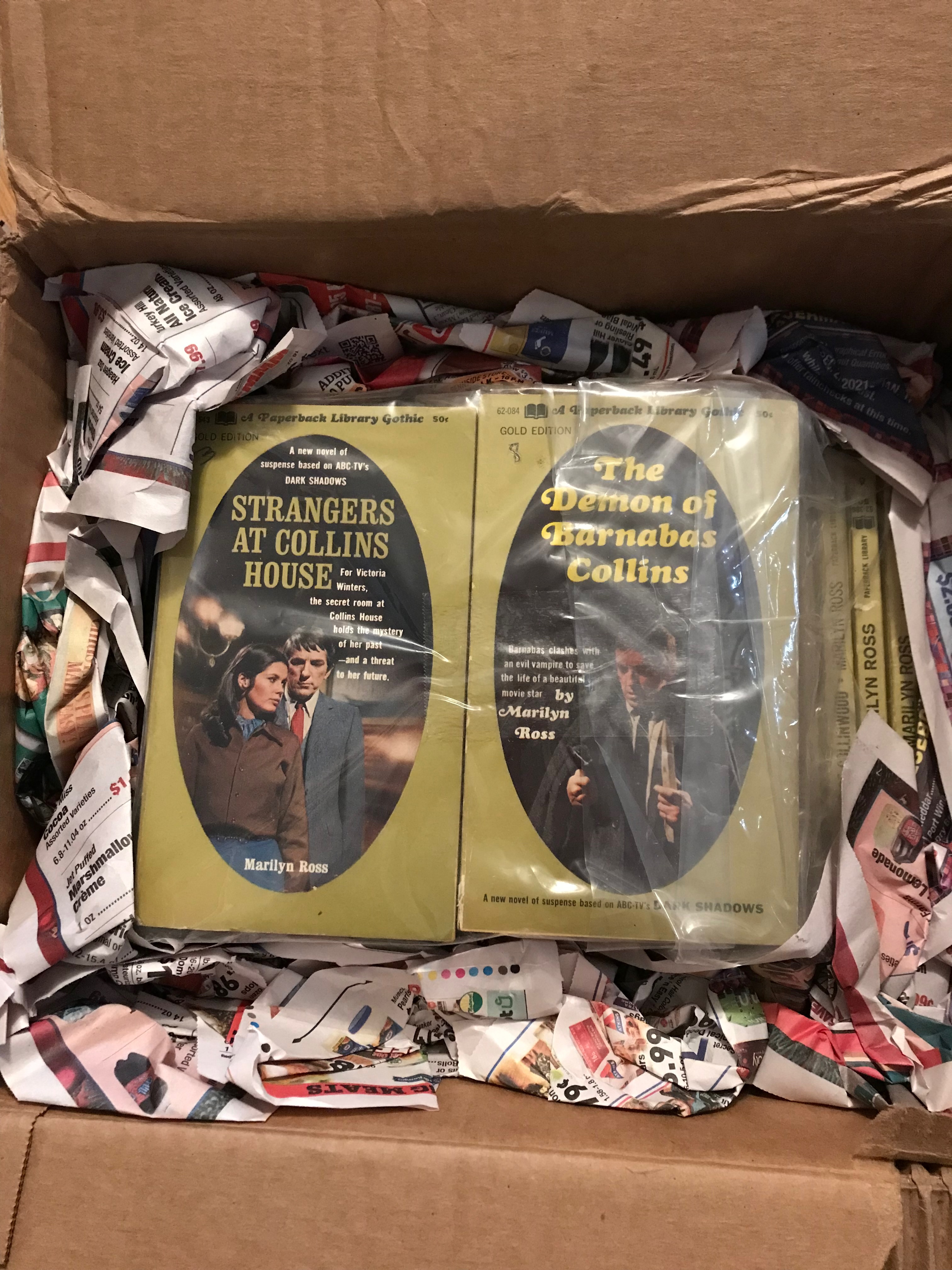

Collecting the Past

Some readers, probably, react with embarrassment when I go on about Dark Shadows.  The fact is, however, that our childhoods somehow define us and mine included frequent doses of Dark Shadows after school.  This was complemented by the series of potboiler novels by William Edward Daniel Ross, writing as Marilyn Ross.  We didn’t have much money when I was a child (some things never change) and the only means I had of procuring the books in our small town was Goodwill.  The novel series ran from 1966 to 1972, roughly concurrent with the television show.  Since I was buying them second-hand I could never tell which, if any, I would find in the book bins.  If I did find any, I’d buy them.  I got rid of them when I “grew up.”

Dark Shadows, however, has come back to me at various points in my life and about a decade-and-a-half ago I began, somewhat shamefacedly, trying to rebuild that earlier collection.  The individual volumes are considerably more than the nickels and dimes I’d originally paid for them.  In fact, the rate of change has been somewhat astronomical.  Some of the volumes are rare.  Given the prices, I suspect I’m not the only nostalgia-poisoned child of the sixties and seventies who’s buying them.  There’s a sense of satisfaction that comes with having finally completed a task years in the making.  When the box containing the last volume arrived, it was a moment of private ecstasy.

All of this has me thinking about other influences Dark Shadows has had on me personally.  It is probably responsible for my lifelong love of Maine.  The television show was filmed mostly in Terrytown, New York, better known by the name given in Washington Irving’s tale, Sleepy Hollow.  I wasn’t aware of this on my visit to Terrytown—which was before the more recent television series based on, but not filmed in that location, aired.  My first publication regarding religion and horror was based on Sleepy Hollow.  There’s a sense of connectedness here.  To get the final volume, which is rare, I had to buy a collection of several of the books.  Like a man who found a pearl of great price went and sold all that he had so that he could buy the field in which the pearl was.  We’re never told what he did with the rest of the field.  If I had to venture a guess I’d say he used it to house his Dark Shadows collection.


Raven about this Book

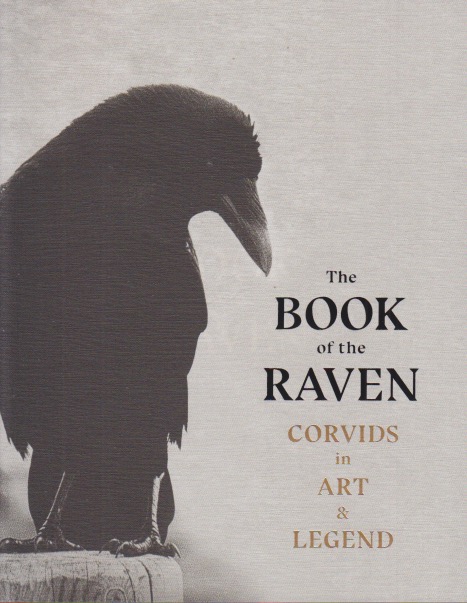
Some books are meant to be looked at.  Being busy most of the time, even on weekends, I’m guilty of not enjoying art enough.  The Book of the Raven: Corvids in Art and Legend is a work of art.  In it Caroline Roberts and Angus Hyland have compiled paintings, photographs, and prints that feature ravens, crows, magpies, and jays, interspersed with facts, poems, excerpts, and bits of lore.  It’s not a comprehensive book, nor is it intended to be.  It is, however, a deeply moving book for a certain kind of person.  It was an accidental find in a visit to The Book & Puppet Company in Easton.  When we’re in town we like to support the independent bookstores.  (I was saddened to discover that Delaware River Books, one of the two used bookstores in town, had recently closed.)

Corvids are, on a scale, about as intelligent as we are.  They think, solve problems, make tools, and recognize human faces.  They remember acts of kindness and reciprocate.  They recognize their dead and they also play.  They’re very much like us.  The book includes, of course, Poe’s “The Raven,” but also other poems that draw inspiration from these smart, magnificent birds.  The artwork is arresting.  One of the great sins of modern life is its busyness that robs us of the time for appreciating art.  And reading.  Learning how to thrive in a world that has become purely about profit and ownership.  Art is intended to be shared.  An artist produces so that others might see.  A author writes so that others might read.  And corvids exist to bring wonder into our lives.

I find the strident call of jays comforting.  I often hear them even on my winter walks.  There are murders of crows in the neighborhood from time to time.  They gather on roofs and in the trees across the street.  Recently I spied a large black bird while on my daily constitutional.  It had left a tree full of crows and was flying straight down the path toward me.  As it flew overhead I had a good look at its tail in flight—one of the best ways to tell a raven from a crow.  It was indeed a raven, and even common ravens are rare in this area.  We live on the edge of their habitat.   I was honored by its momentary attention.  I wished I had more time, perhaps to follow that magnificent corvid and to learn from it.  Instead, I will ponder The Book of the Raven with wonder.


Masking the Devil

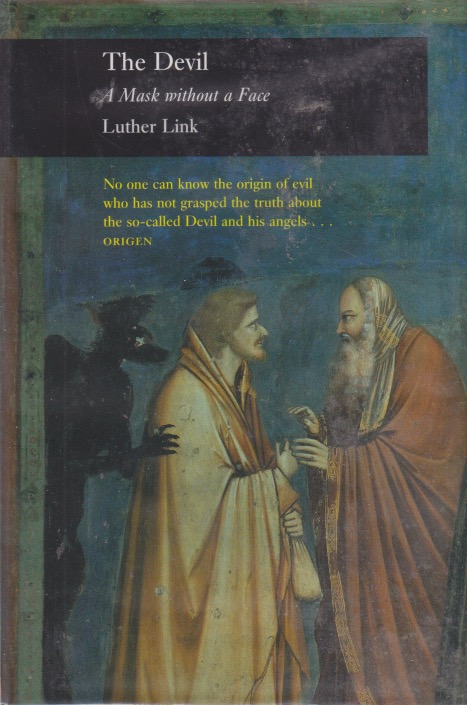
There are many books on the Devil.  In fact, entire horror movies such as The Ninth Gate are based on that fact.  Since writing a book on demons (Nightmares with the Bible), I read a few of the many.  I’ve continued to read some further since, and one of them is Luther Link’s The Devil: A Mask without a Face.  The first thing to note about this book is that it is the same as The Devil: The Archfiend in Art from the Sixth to the Sixteenth Century, as it was published simultaneously in the United States.  (The former was published in the United Kingdom.)  Many authors don’t realize that when you sign a publishing contract you’re selling the rights (the copyright) for your book.  Some publishers or agents will sell the rights in different territories to different publishers.  They don’t have to use the same title largely because, prior to Amazon it was difficult to buy UK published books in the US and vice-versa.  Now a lot of “buying around” happens so books published anywhere can be purchased anywhere.  (Except in authoritarian states.)

In any case, this book is a study of the Devil in art.  The UK subtitle, A Mask without a Face, focuses on the conclusions drawn, whereas the US subtitle is more descriptive of the contents.  There are a number of interesting points made by Link.  One of the most important is that of his conclusion—the Devil, in the biblical and theological worlds of the long Middle Ages, really isn’t so much a character or “person”as a representation of “the enemy.” His looks and actions depend on the circumstances.  As Link points out, to the Pope Luther was inspired by the Devil, to Luther the Pope was inspired by the Devil.  Both, Link concludes, were dealing with a mask without, well, a face. Further, since the Devil does God’s bidding, whether he can be considered evil or not must be questioned.

Another interesting point is the strange continuity and lack thereof that characterize the representations of the Devil.  Some of the continuities go back to an antiquity (such as ancient Mesopotamia) that had by lost by the Middle Ages.  There was no real avenue of transmission since who remembered Humbaba after the tablets of Gilgamesh had been buried for centuries?  This seems to point to what Jung would’ve considered archetypes.  Or it could be that the same things scare people across the ages.  The point of the book isn’t to be comprehensive, but it does make a good point.  Anyone accusing someone of being the Devil opens themselves to the exact same charge.


Leathers

It’s an occupational hazard for the vegan Bible editor.  Leather.  Leather Bibles, although expensive, are popular.  If you want free fetishistic deliveries of colored leather to arrive at your door, well, it’s part of a Bible editor’s life.  Morally I’m opposed to leather and I eagerly await the day when cactus leather is considered a suitable alternative.  Leather began being used in bookbinding early on, when books were treasured possessions.  It was readily available because animal slaughter was a part of everyday life.  It’s also extremely durable.  These days it’s just a status symbol.  When Bibles are produced there’s generally a market for whatever translation in leather.  In my time I’ve seen some well enough used to perhaps justify such extravagance, but not very often.  Usually it’s merely for show.

There’s an entire vocabulary associated with leather bookbinding.  Tooling, or engraving the smooth leather to look like something else, embossing, or pressing a design in the leather, gilding, or the use of gold paint on leather, and dentelle, or having a border run around the outside edge.  All of these were (and still are) signs of the artistry of the binder.  The practice dates back to before the nineteenth century when books were bound by booksellers, not publishers.  Perhaps this is why we shouldn’t judge a book by its cover.  In any case, apart from tradition there’s no need to kill animals to bind books any more.  Law books and Bibles are the major purveyors of leather binding.  It continues simply because it continues.

One term used for traditions unwilling to change is “hidebound.”  While this seems originally to have referred to emaciated cattle, it has come to be associated with codified, as in leather books.  Pigskin, or other cheaper hides, are often used.  Or “bonded leather,” which is as much plastic (if not more) than actual leather.  The Bible isn’t a terribly animal-friendly book.  Dogs are unclean and cats aren’t mentioned at all (except the large, wild kinds).  Yes, there are shepherds—both good and bad—but sheep were kept to be exploited.  And perhaps turned into leather.  There’s something strangely symbolic about this.  And not in a propitious way.  Where does obeying the rules get you?  Sheep are praised for their docility, their willingness to be thoughtlessly exploited, slaughtered, skinned, and eaten.  To do the job, a Bible editor must learn about leather.  Perhaps its a profession best left to carnivores.


Not Really New

It’s called the New Books Network.  I have no idea what its stats are, but it is a place to get word out about your book that the academy has apparently overlooked.  I pitched Nightmares with the Bible to them some months ago and I recently had an interview about it.  I’ll keep you posted when it appears.  I suppose those who read this blog for the horror content sometimes think I may’ve forgotten about it.  The fact is I think of horror every day but there’s more to my psyche than just that.  This blog is a romp through part of what’s on my mind.  Sometimes it’s the quotidian horror of everyday.  At times it’s full of curiosity and wonder.  Sometimes I just trying to figure out how to work this thing.

So with the New Books Network.  I found out about it from an interview I heard with the guy who started it.  Funny—one interview leads to another.  He encouraged those listening to pitch their books.  I don’t have an institution to support mine, or students to have to buy a copy (and I’ve received zero royalties for it), so I figured what’ve I got to lose?  It was quite a nightmare (speaking of which) to arrange a time that worked for both interviewer and interviewee.  I think we rescheduled about half-a-dozen times, but then finally we both had a few free minutes together to chat.  Perhaps it’s a good thing I’ve been reading about the Devil.  

This was actually my third interview about this book.  Perhaps it’s a measure of how small the impact it’s had has been that I can recall each one so precisely.  You’ve got to start somewhere, so why not here?  The last question asked was about the next book.  I do hope I have a few more left in me.  I started writing early but publishing late.  Just because you write doesn’t mean people will read what you produce.  I find writing the most hopeful avocation ever.  Like a sower with his or her seeds, broadcasting them across the air, hoping they’ll land legible.  If there’s anything worth reading here there’s always the possibility it’ll be discovered someday.  That’s optimism with a glass half empty!  In any case, check out the New Books Network.  There are hundreds of books there to learn about.  And, I suspect, many authors who’d like the world to know what they’ve written.


Future Ministry

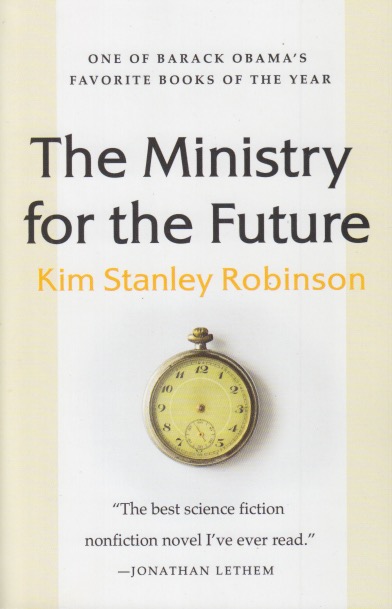
I’ve been on the Green Committee at work almost since I started the job.  Occasionally for Earth Day we’ll have a book discussion.  Usually it revolves around nonfiction books that my press publishes.  This year they selected Kim Stanley Robinson’s The Ministry for the Future.  It’s an environmentalism tale of what global warming may well be like and the political machinations it might take (and the millions of deaths along the way) before we stop burning carbon.  It’s a long and detailed and political story.  Robinson is known as an intellectual science fiction writer and there are sci-fi elements to the book, but its style is realist and its outlook, while ultimately hopeful, is staid.  Even when humans start to move in the right direction.  It’s also a very long book.

Reading it got me to thinking again of a somewhat bewildering truth: environmentalism books tend not to sell overly well and sustained reading, even by supporters, is difficult.  Many of us know that we’re beyond the tipping point for environmental disaster.  The Trump years assured us that it is coming.  One of the elements Robinson makes clear is just how politically entrenched it is.  Perhaps that’s one of the reasons for the despair.  The vast majority of people in the world want a more environmentally conscious government, but plutocracy tends to bring narcissists to the top and the needs of all others are less important.  In Robinson’s version of the story, targeted violence is the only thing that works.  Near the end of the story an interesting idea is raised: the Ministry of the Future (which is a government ministry, not the church kind) concludes a new religion is needed.

The masses of people, you see, are followers.  Religious leaders reinforce the idea that God told their founders—and by extension their followers—the only truth.  Their jobs (and ministries are jobs) include reinforcing those ideas to people who’ve been raised or converted to that particular brand of religion.  A number of New Religious Movements, and even a couple of prescient ancient religions, have been purposely constructed.  The trick is to get followers to accept that the religion is legitimate.  Most western religions around today have been based on the idea that humans can do whatever they want with the planet—even destroy it to force God to return.  I kind of like Robinson’s idea better.  Perhaps that’s why religions form around movies like Avatar.  Not a bad thought, when your job has you reading a sci-fi novel.  A religion saving the earth feels like a novel idea.


D Evil

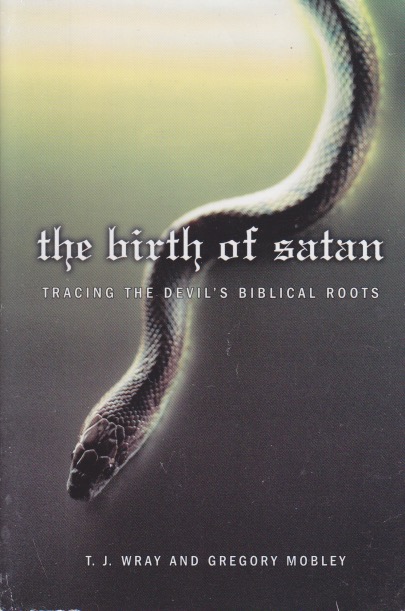
The Devil, they say, is in the details.  T. J. Wray and Gregory Mobley look into those details in The Birth of Satan: Tracing the Devil’s Biblical Roots.  It’s often a surprise to Christian readers that the Devil clearly evolves in the Bible.  From being virtually absent in the Hebrew section, he appears, almost full blown, in the New Testament.  This, of course, flies in the face of the idea that the truth was pretty much revealed from the beginning and that it’s consistent throughout.  The Devil in the details proves that it’s not.  The Bible has multiple suggestions of whence evil arises, God among them.  The Devil came to be one explanation of the origin of evil, but he’s not the only biblical one.

One of the things I found fascinating here, however, was that the authors often refer to popular culture to illustrate their point.  They particularly favor movies.  The authors are biblical scholars and it’s not at all unusual to find movie fans among them.  I suspect that since biblical scholars (apart from the linguists) specialize in stories it’s only natural that movies appeal.  They aren’t given extended discussion here, and indeed, a book about the Devil in the movies would be very thick if it attempted to be comprehensive.  Satan is a movie star.  Since he evolves into the embodiment of evil this is probably not surprising.  A good plot needs some evil in it, and one character in the western canon is the granddaddy of all evil.

Those looking for a fuller biography of the Prince of Evil may be disappointed that this book keeps to its remit—the biblical Satan.  There are, however, many more books about the Devil.  Maybe even more than movies in which he appears.  Scholars and laity both seem interested in this character.  He appears late on the scene, only within the last century or so of the biblical writing period.  His fullest portrait there is the highly symbolic book of Revelation.  And no matter what else you say about it, we can all admit Revelation is tricky to understand.  Since we take the Bible so seriously, one aspect of Satan that isn’t addressed here is his role as trickster.  Folkloric characters who cause chaos (which the Devil does) are often tricksters doing it for no particular reason.  We don’t know why the Devil is bad.  The Bible has no clear origin story for him, since he’s built up from several other cultures’ ideas of bad deities.  To sort it all out requires, well, the details.


Underestimated

Under-printing, ironically, can create great demand.  Books are generally under-printed because publishers don’t see much of a market for them.  Back before the days of inexpensive print-on-demand (POD, in the lingo) books may not have even existed as electronic files.  Often a publisher won’t print a book unless it anticipates that it can make back its costs.  If they think it won’t sell that well, they’ll print just enough.  And they might even melt down the typeset plates to reuse them for other books.  I’m not sure if that happened in the case of a book I’ve been looking to consult, but something has made this under-printed book extremely rare.  It’s not on Internet Archive.  WorldCat shows it in only two libraries world-wide, the nearest one over 3,000 miles away.  Its price used (and there seems to be only one copy) is $46,000. I can’t tell you what it is because you might buy it before I can.

For the purposes of my research, this is actually the only book on this particular topic.  (The subject isn’t even that obscure.)  The book is cited everywhere this topic is mentioned, and at least one person on Goodreads has actually seen a copy of it.  I have to conclude that all those who cite it must live within driving distance of one of two libraries worldwide.  For the rest of us the book is simply inaccessible.  As an author this is one of the worst fates imaginable.  Even if some price-gouger is selling a copy for $46,000 the author gains nothing from it.  Royalties are null and void for used book sales.  The only profiteer is the person who happens to have found a rare book (from the 1990s!) and is determined to ensure only the most wealthy will be able to purchase it.

I’ve known people who sell used books online.  Those who want to move books try to undersell the unfortunate under-printed title by pricing a bit lower than the competition.  There is no regulation, however.  You can charge whatever you like.  The funny thing is, if someone eventually forks over $46,000 for this book, and then has it appraised (it is a paperback from the 1990s), its actual worth is probably at most in the hundreds of dollars.  Back when we watched the Antiques Roadshow we always knew that the poor person who brought in a book would be disappointed in the appraisal.  Last time I was in Oxford I saw rare books from the 1400s for sale for far, far less than $46,000.  I only hope that my books, as obscure as they are, are never deemed that expensive.  And I would encourage publishers to print a bit more generously, for the sake of knowledge.


The Archive

Publishers hate it, but I bless its holy name.  The Internet Archive is a major boon for “independent scholars.”  If you’re not familiar with it, the Archive is a repository of scanned books.  It doesn’t contain everything, of course, and some publishers have tried to sue, but it operates like a library.  You set up a free account, and if you just want to look up a reference in a book they have, you can “borrow” it for a while, check your reference, and then return it.  All without leaving your home.  Internet Archive really took off during the pandemic.  You couldn’t get to the library and some of us research as long as we breathe, so here was a solution without breaking the bank.  The bank, ah, there’s the rub.

The reason publishers hate Internet Archive is that it makes content available for free.  Working in publishing, I understand the concern.  Publishers have to make money off their books—they are businesses, after all.  And if somebody scans it and makes it free online, your sales are undermined.  But are they?  Now, I can only speak for people like myself, but if a book is directly relevant to my research I will buy it.  Reading online is a last resort. My library is full of books bought for that reason.  Once in a while, though, my research leads into areas I don’t intend to come back to.  Or I remember reading something in a book long ago, back when I had library access with interlibrary loan, and I can’t afford to buy the book just to look up that reference.  Well, Internet Archive to the rescue.  Publishers don’t often turn their mind to independent scholars since we’re not prestige authors.  Waifs of the academic world.

That’s one reasons I don’t feel bad blogging about Internet Archive.  Most traditional academics pay no attention to my blog.  If I were hired by Harvard that would change overnight.  Those of us who skulk in the shadows of the ivory tower don’t mind getting by with freebies like Internet Archive.  And some part of us, even if we work in publishing, applauds such ventures as SciHub.  I do not suggest visiting SciHub, however, and I’ve never done so myself.  Its software automatically scans your hard drive for content that it can add to its huge repository.  It’s not safe.  The idea stands behind Open Access as well.  Knowledge should be free.  But even publishers have to eat.  And those in ivory towers have everything to gain by keeping their edifices pristine.


Horror Shortly

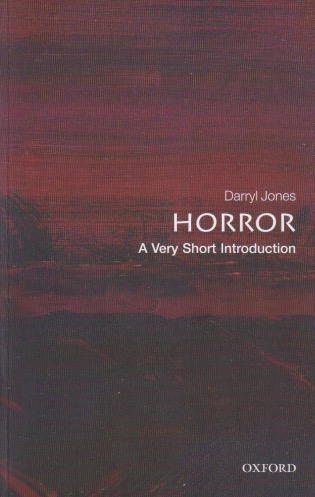
Some short books have an outsized punch.  Especially when dealing with a large topic such as “horror.”  This isn’t just horror movies, which could easily fill such a book, but also literature and other media as well.  Darryl Jones has proven himself on this topic before and this Very Short Introduction is a showcase of what is a fascinating genre.  I’ve read a number of books in this series and this stands out as one that works admirably within extreme limits—they are very short—in making good decisions about representative aspects in what is really a sprawling field of inquiry.  The introduction lays the task out well and I came away from each chapter feeling inspired.  Of course, not all of horror can be covered in less than 150 pages.  Some may find their favorite fear unaddressed, but they’ll learn something nevertheless.

In his first content chapter, Monsters, Jones focuses on vampires and zombies.  These are both forms of cannibals as they’re currently conceived, zombies being relative newcomers to most favored monster status.  His next chapter, on the occult and supernatural, takes on the Devil himself before addressing satanists, demons, and ghosts.  These are, of course, religious monsters.  Although Jones doesn’t dwell on that aspect, the close relationship is nevertheless evident.  For those of us who explore religion and horror this framing proves helpful.  It’s worth pausing here to consider how all of these entities overlap a bit.  As anyone familiar with ghost hunters knows, ghosts and demons may both be found haunted places, and the Devil is the head demon.  Of course, horror is a fiction genre but many people believe in these entities.  That brings religion and horror within the same room.

Body horror occupies the next chapter, and here werewolves come into the picture.  Other aspects of body horror are also discussed, but the painful transformation of the shapeshifter is prime territory.  Horror and the mind brings us to psychological thrillers and the gothic fear of madness.  The topic segues nicely into science, which the next chapter covers.  Not only science itself but the mad scientist.  Finally, the lengthy afterword looks at where horror has gone, and may be going, in the new millennium.  Something that struck me, and which brings this back into religion, is how frequently Darwin and evolution are mentioned.  This concept challenged the human place in the divine hierarchy and led to much of what we think of as horror.  This book is a great resource in a small package.


First Books

It was back in the day when I believed a book was the final word.  Remember those times?  (I have a suspicion that many Republicans really are longing for the days of simple answers: “Smith wrote it in History of Everything so it must be true,” and such.)  You’d read a book assigned in college and assume that since the author wrote a book s/he (but generally he, in my day) must be right.  If college really caught on, however, you’d start comparing sources.  Still, there was that one book that got you started thinking in a new way.  Back in the day when I believed a book was the final word I read J. Alberto Soggin’s Introduction to the Old Testament.  I remember the context well: Harrell Beck’s intro course at Boston University School of Theology.  We were given a list of texts and allowed to pick.  I chose Soggin.

Reading that book I realized for the first time that ancient Israel had borrowed from its even more ancient neighbors.  The fact that I’d attended Grove City College and majored in religion without ever having been introduced to the idea says volumes.  (Some parties, it seems, have always preferred to suppress information.)  I followed it up with Helmer Ringgren’s Israelite Religion.  I was hooked.  If we knew that there were ancient sources, and if we knew their languages and their cultures, why hadn’t it been obvious to the general public?  I started on a doctorate to uncover the truth since I couldn’t find courses on it at seminary.

We didn’t take many books with us to Edinburgh, but Ringgren was one.  By then I’d begun to realize that introductions weren’t really research books.  I spent my years digging deeper and deeper into ancient West Asian culture.  If it’d been possible I’d be there still.  Soggin and Ringgren, I realized by this point, were clearly biblical scholars, and not students of the specialized field that’s still called Ancient Near Eastern studies.  But still, their books had started something.  My copy of Soggin has followed the socks in the dryer, and I now realize the politics of introductory texts (if you believe it’s innocent you may be happier remaining in your bliss).  Still, I owe a debt of gratitude to those scholars who wrote in accessible words aimed at the novice.  Time has passed and nature has begun its own tonsure process, but this fallen monk has learned that many books are the only way of getting to the truth.


Getting Your Goat

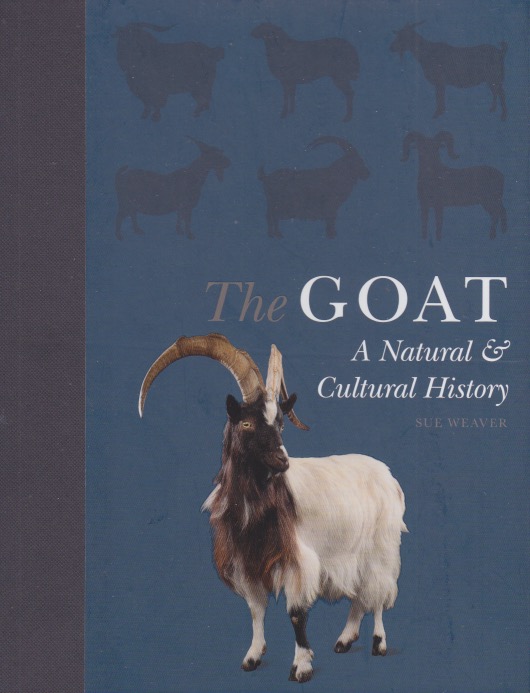
I have to confess to having known very little about goats.  Although one book does not an expert make, I still feel that I know quite a bit more now than when I started Sue Weaver’s masterful The Goat: A Natural and Cultural History.  I can’t convey it all to you here (that’s what the book is for), but I can offer a few highlights.  I do have to say that books that measure animals by the human exploitation of them tend to bother me a bit.  There’s something about reading how they make good pets but then they taste good too.  Especially since one of the takeaways is just how intelligent goats are.  I suspect even smart animals wouldn’t hang around if they knew their owners were licking their chops behind their backs.

Goats were very early among the domesticated species.  People do keep some breeds as pets, kind of like herbivorous dogs.  Goats require stimulation and tend to be playful and curious.  And they put up with humans quite well.  They climb.  You can find goats in trees in some locations since they do like to ascend whatever they can.  I remember seeing goats on the roof of a restaurant in Wisconsin (I can’t remember the name of the place, but I do recall the goats were supposed to be there).  Having not grown up on a farm I’ve never been too close to goats, but this book does make me interested in knowing more.

The book is heavily illustrated and it describes several varieties of goats as well as general goat physiology and behavior.  In fact, it answers that age-old question of how to tell the sheep from the goats.  Behaviorally they’re quite different, with goats being more individually minded and not always acting as a herd.  More individualistic, they nevertheless crave company.  And it is this difference between the sheep and the goats that starts to give the latter a bad name, perhaps because of their willfulness and individuality.  Goats are good followers, but on their own terms.  Sheep apparently don’t think much about it.  They follow any leader.  Historically, and unfortunately still, in some locations, goats have been preferred sacrificial animals.  Indeed, some gods, such as Pan, are portrayed with caprid qualities.  It is the intelligent, it seems, that are often targeted by the gods.  In any case, goats have long had associations with the divine in human minds.  And Weaver’s book parses goats in great detail.


Healing Borders

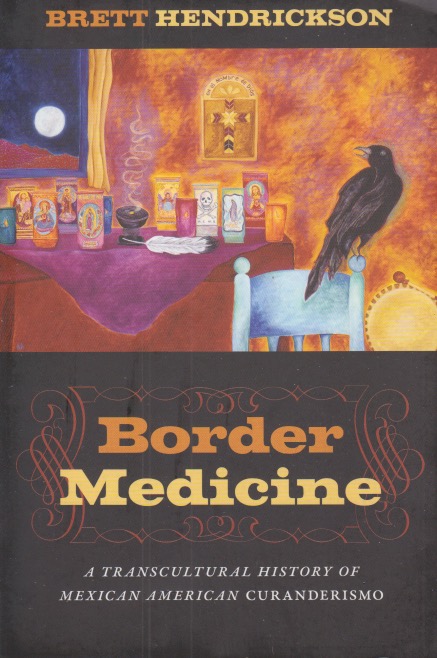
Sometimes you read a book that just gets your head buzzing.  Brett Hendrickson’s Border Medicine: A Transcultural History of Mexican American Curanderismo is one such book.  It brings together so many areas of fascination: healing based on different belief structures than scientific medicine, the role of community in avoiding cultural appropriation, and the cultural blending that takes place at all borders.  The myth of the “pure” has long created problems, particularly in the realm of religion.  Things blend.  They always have.  And this includes belief structures, faiths, religions.  This is most obvious at borders, which makes them very interesting places.  Officially we police them, wanting to keep what is “ours” and keep “them” out.  In reality we are blending with each other and that’s not a bad thing.

In much of educated society, it’s assumed that scientific medicine is the only valid kind.  There are those even among the schooled, however, who pray for the ill.  Curanderismo is a form of folk healing that involves cures that would be rejected out of hand by science.  In a materialist, chemical world, only this can heal that.  Curanderismo looks at things quite differently.  Its practitioners don’t charge an arm and a leg for their work.  They are extremely popular.  And they heal people.  This is part of what makes Hendrickson so wonderful to read—he doesn’t assume up front that this doesn’t work.  Some analysts treat this kind of thing from a perspective of cultural superiority, as if scientific medicine is the only real way to treat illness.  Cultures, however, can heal.

Culture is something we value because it makes us feel secure and comfortable.  We know what to expect.  We speak the language, know the conventions.  (It would help Democrats, I think, to realize that although we’re trying to dismantle xenophobia, it is still very much intact in most of the world.  People follow autocrats because they’re afraid.)  We all live near borders.  Our personal border may be the wall of our apartment or the front door to our house.  It may be the Protestant/Catholic next door (or Buddhist/Atheist/Muslim/Hindu/Agnostic).  It may be the middle class/working class person who lives across the street.  In one town in which I lived it was literally those on the other side of the railroad tracks.  We draw borders for protection, but what Hendrickson shows so clearly is that they can also be places of healing.  


Living Right

Horace Liveright had an outsized influence for his somewhat foreshortened years.  Initially a bond trader, he eventually moved into publishing where he founded the Modern Library as well as Boni and Liveright.  The Modern Library still exists, now as an imprint of Random House.  Liveright ceased publishing operations eventually, but the name was revived as an imprint of W. W. Norton.  There have been many publishing Wunderkindern, including Richard L. Simon, co-founder of Simon and Schuster (and father of Carly Simon), and the Scot William Collins whose name still appears in HarperCollins.  While reading about Liveright recently I learned that he also was responsible, in an unexpected way, for the development of the horror film.

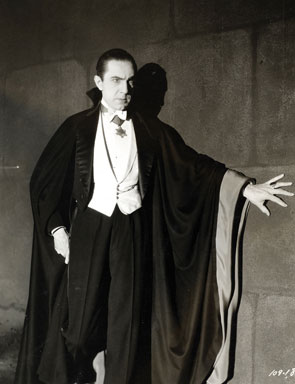
Liveright never worked in the film industry.  He did, however, work as a stage producer in New York in the 1920s.  Among his most successful works was a play titled Dracula.  It starred Bela Lugosi and Edward Van Sloan as Dracula and Abraham Van Helsing, respectively.  The success of the Broadway show caught the attention of Hollywood and Lugosi and Van Sloan were cast in the same roles in Tod Browning’s Dracula, widely considered to be the first horror film, released in 1931.  Van Sloan went on to appear in Frankenstein as well, and Lugosi reprised his Dracula character as well as several other monsters.  It’s possible, perhaps likely, that horror would’ve begun with some other entry into the genre, but as history stands Dracula, based on Liveright’s stage production, started the whole thing.

Unless we work in it, we tend not to think about publishing too much.  We don’t pay attention to the publisher of the book we’re reading, and who lingers over the copyright page?  Giving a thought to these details, however, often adds new stories to the ones between the covers.  A fellow editor is fond of saying that books are as much about the author’s story as they are about the story the author’s telling.  The press, for example, often focuses on the former.  Who is it that wrote this book and why?  The question may be extended further—what publisher took it on and how did they even get into the business of deciding what people will read?  The internet has democratized that quite a bit, of course, and some authors can become their own authorities by knowing how to handle it.  So I’m taking one such opportunity to highlight the work of a sometimes forgotten pioneer who nevertheless began a publishing venture from which we’ve all most likely read.  And he also helped created the horror movie.