The Network

Although it’s not NBC, the New Books Network has quite a reach with academics.  That’s why I was glad they accepted my pitch for an interview about Nightmares with the Bible.  The interview is now live and can be heard here.  The experience of getting the interview made turned into quite a saga with my pitch going back to at least November, and acceptance coming early in January.  The actual interview was over a month ago and it was posted only yesterday.  I’m not naive enough to think it will boost the sales of a hundred-dollar book, but maybe a few more people will become aware of it.  Even in academia there are too many books published for all of them to get notice proportionate to the work that goes into writing them.
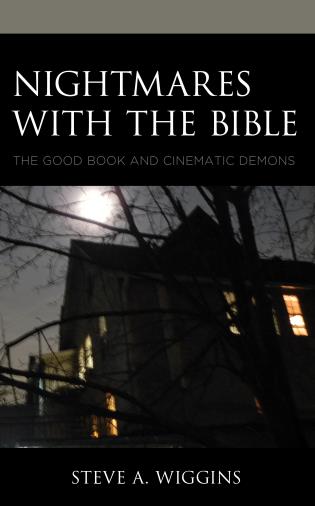
Some publishers are of the opinion that editors shouldn’t try to be authors.  Obviously I disagree on that particular point.  Author-editors share the ups and downs and know what it’s like to put in the work only to have a book disappear.  I haven’t received any royalties at all for Nightmares.  I have no idea how many copies have sold.  Many writers publishing into the teeth of a pandemic fall into the same category.  While trade books—including fiction—did remarkably well during the height of Covid-19, academic books languished.  Nightmares is, of course, its own kind of hybrid.  A monster, if you will.  Written for educated laity it’s packaged and priced for the academic monograph market.  That’s why I pitched it to NBN.  I’m glad to see the recording is now available.

Nobody writes this kind of book to get rich.  I’ve had friends ask me why I bother.  Believe me, that question occurs to me too.  Some of us have something to say but the auditorium’s empty.  The Bible’s at a low point outside a specific cross-section, and that cross-section generally doesn’t pay attention to horror.  Of course, that’s another reason I do this.  Bringing opposites together offers the world, even the staid academic world, something new.  Horror is at last being taken seriously by literary and cinematography scholars.  Some biblical scholars are realizing that apart from comforting words of love, and towering demands for justice, the Bible itself contains plenty of horror.  When unlike things mix, monsters are born.  I’m grateful to the NBN for taking a chance on my book.  If you’ve got some time, and the inclination, you can listen in here.

Smaller Wolves

It was in Maine.  In 1987.  I can’t remember how Paul and I found this place to camp.  I don’t remember making reservations, but we drove along in his 1968 VW Beetle, unpacked a tent along a  rutted logging road, and set up camp for the night.  We were there to try to find moose.  In the middle of the night we were awakened by howling in the woods.  We were many miles from any other humans and nobody knew where we were.  Were there wolves in these woods?  Paul turned to me.  “Wolves don’t attack people, do they?” he asked.  I said no.  He pulled out a very large knife.  “I was in the civil air patrol,” he explained.  “You know what to do with this, right?  If a wolf bites your arm, cut your arm off and run away.” Not the best advice.  As we drifted off to sleep we were awoken again by furious sniffing outside the tent.  The next morning we saw no moose but found tracks all around our temporary home.  We convinced ourselves they were wolf tracks.  They were actually tracks of coyotes.

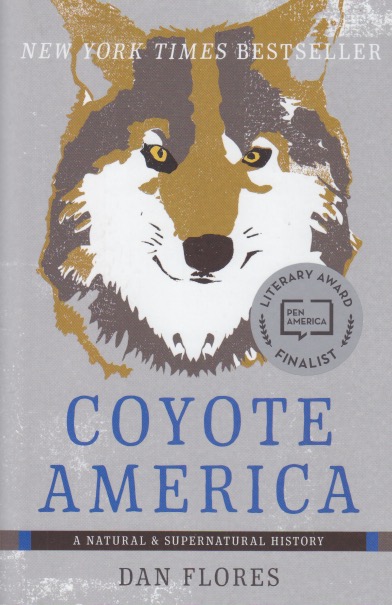
Most people in America have a coyote story to tell.  I can’t recall how I learned about Dan Flores’ Coyote America: A Natural and Supernatural History.  I’ve always been drawn to nature writing, but it was probably the “supernatural” that caught my attention.  This is a fascinating book with a rollercoaster ride through emotional responses.  Flores makes the case that Coyote was the first god of America.  Indian mythology is full of this character and his antics.  But the heart of the book focuses on the many decades of efforts—still ongoing—of the government to eradicate coyotes.  Millions of them have been killed for spurious reasons, largely because the government pays attention to ranchers who pay a lot of money to be minded.  Coyotes naturally find their balance in nature, which we insist on disrupting.  One of their survival strategies has been to move east.  Even moving into cities.

I’ve heard coyotes in Wisconsin, and I saw at least one while out jogging in the early mornings there.  Since moving east I’ve not spotted any, but they are, I know, here.  I’m largely on the side of nature, but the first ever documented adult human wolf fatality took place in another place I’ve camped, Cape Breton Highlands National Park in Nova Scotia, in 2009.  Reading this made my human pride rear up—we don’t face predators well.  The book goes on to touch on how I, and many others my age, learned of coyotes—through Wile E. in animated form.  This book is difficult to read in many parts, but it is an absolutely mesmerizing journey through many lenses of what it means to be American.  Whether you’re canine, or human.


Places and Books

I recently had the opportunity to travel to a new town and spend the night there.  This is a rarity in the days of pandemic and I’d forgotten the magic of waking early in a new place and looking out the windows at the deserted, artificially lit streets.  It’s so peaceful and full of wonder.  The place we were staying was next to a public library and I noticed that there was a light on in the cupola in the pre-dawn hours.  I like the idea of books watching over us in the night.  Often when I’ve traveled to conferences I’ll arise early and look out on that orangey, artificial light while most other people are still asleep.  Even the city in pre-dawn can be a peaceful place.  This is a pleasant displacement since it’s only temporary.

One of the things about the pandemic is that it has accustomed us to life just so.  The controlled environment of home.  There’s a comfort to routine, but there’s wonder in breaking it as well.  When it’s not a conference and still a new city, I begin to look for a bookstore.  One of the common misconceptions—perhaps bolstered by the cookie-cutter experience that has been Barnes and Noble—is that bookstores are all the same.  They aren’t.  Each reflects the minds of the owners.  They reflect their knowledge of their public.  New ways of looking at things.  I suppose this fascination with books has been enhanced by my starting to read some Jorge Luis Borges again.  Those of us who read for pleasure are in the minority and we find the open book to be open arms welcoming us in.  Welcoming us home.

I always travel with books.  My travel bag carries my laptop and my reading.  New technology having to learn to adjust to the old.  I’m not a particular fan of technocracy.  I’ve always preferred paper to plastic.  In a new town I look for authenticity.  We lived for many years in Somerville, New Jersey and one of my concerns was that it couldn’t seem able to support a bookstore in the shadow of that equalizing Barnes and Noble.  The new owner, James Daunt, believes that bookstores should reflect local interests.  His own stores in Britain are cathedrals to books.  Unlike other industries, bookselling isn’t all about the business.  Much of it is about the place.  We travel to see new places, and we read to visit them as well.  And perhaps to reflect in the artificial orange glow before the city awakes.


Body Doubles

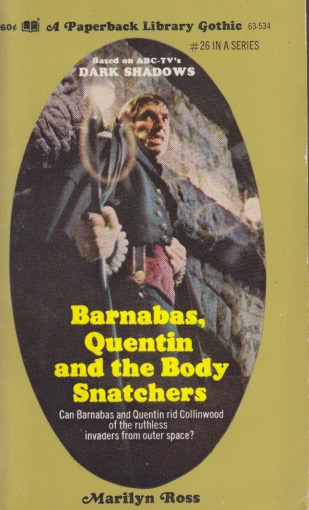
Learning about how Dark Shadows developed has freed me a bit, I think.  The stories between the original program, the novels, and the movies were never consistent.  I’d made that most fundamental of Fundamentalist errors—I’d assumed there was only one story and it went in only one way.  This helps explain, but not excuse, the Burton-Depp version of the story.  In any case, now I can read the novels with minimal baggage.  Understanding childhood is important if we survive long enough for it to haunt us.  Barnabas, Quentin and the Body Snatchers is a departure, even for Marilyn Ross.  Something critics sometimes overlook is just how literate the original, and subsequent, program was.  Ross occasionally attempts to cash in on that without feeling tied to the story line.

This plot relies on the 1956 movie, Invasion of the Body Snatchers.  Indeed, as a daily show Dark Shadows couldn’t really utilize a “monster of the week” format effectively (although it seems to have given the idea to those who later did).  The novels, however, could draw on such cultural tropes.  Both major releases of Body Snatchers (there was a remake after Dark Shadows ceased, in 1978) were considered terrifying by implication: how could you tell if someone took over the body of someone you know?  Who could you even trust, if such a phenomenon were possible?  Since such things aren’t common down here, it’s easier to suggest they come from outer space.  So it is that this installment has the weird juxtaposition of a vampire and werewolf having to outsmart aliens who take over human bodies. Kind of an early monsters vs. aliens scenario.

Again, not to seek too much depth where it doesn’t naturally exist, this scenario raises interesting questions.  How would terrestrial and extraterrestrial supernaturals interact?  I’m not sure W. E. D. Ross was up to this kind of gothic-sci-fi mash-up.  He was, after all, primarily a romance writer.  (Although, a recent trip to a library book sale and used bookstore in the same day led to the realization that paranormal romance is a burgeoning field.)  I recently read an article disputing the “willing suspension of belief” that is said to accompany such ventures.  As an adult I know that these novels are what must be considered cheesy, quick, and formulaic ephemera.  Still, I couldn’t help being pleased to see Barnabas and Quentin cooperating here.  If aliens ever do decide to invade, we’ll need all the help we can get.


Shadows of Childhood

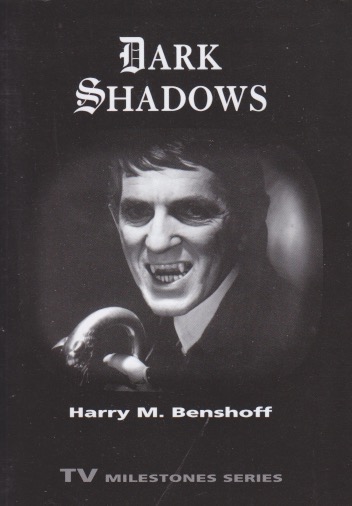
While it may not seem to fit my current re-fascination, I’m not really a “fan”personality.  My interests are far too diverse.  Since I’ve been thinking about Dark Shadows a lot lately I decided to do some reading on it.  There’s a genre of nonfiction that involves small format, short introductions to various media.  I’ve read a few of the Devil’s Advocates series about horror movies and I recently discovered the similar TV Milestones series about, well, TV.  They have a volume on Dark Shadows by Harry M. Benshoff, and I knew it would help scratch my current itch.  You see, I wasn’t really a devoted fan of the show—I watched it after school like a lot of kids did in the late sixties and into the early seventies.  I read a few of the novels.  I never attended any conferences (they exist) and never wrote any fan fiction.  I think my level of engagement was different.

Nevertheless, this is an informative little book.  I found out that there’s even more to the phenomenon than I already knew I didn’t know.  I never really followed the whole plot line.  I didn’t realize just how complex the story is.  Perhaps on some level I knew the series was culturally significant.  As a child I didn’t know much about the wider culture.  We were working class poor, how was I to find out about such things?  For me, Dark Shadows was a kind of escapism, I suppose.  A fantasy that met a need, not a plot to be unraveled.  I wasn’t aware of how sophisticated, if cheap, it was.

By the time I got to college and started to meet different people, it was a moment that had passed.  I really didn’t think much about Dark Shadows again until after my own gothic tragedy of Nashotah House.  During the days of my career malfunction I rediscovered my childhood, perhaps looking for something better.  I started collecting and reading the novels again, and if I’m honest, were it not so expensive I’d consider watching the original series again.  Like all things nostalgic, I know my Rosebud will never be today what it was back then.  My reading sense wasn’t developed enough to see what might’ve been going on behind the scenes.  Benshoff does a good job of bringing much of that to the light.  I’ll likely read more on the series as time goes on, but I now have a better framework for looking at this particular milestone.  Not, however, as a fanatic.


The Campus Library

Perhaps it’s an odd kind of nostalgia.  Many people can’t wait to be done with school and get on with “life.” Some of us remain fixated at the learning stage and society used to shuffle us into colleges and universities where we could be safely ignored.  One of the refrains in the very long song that is this blog has been the lack of a university library.  Although I’ve tried to get to know the academics in the Lehigh Valley really only one has made an effort to befriend me and when I was asking him about library access he actually did something about it.  Such acts of kindness are rare and require a kind of thinking that takes into account the circumstances of the academically othered.  I’ll be forever grateful.

It’s been a long time since I’ve been in a college or university library.  Many are protective and/or restrictive, as if knowledge is only for those academically employed.  I had to look up a couple of references for an article I was writing.  My colleague checked with his institution and yes, I was welcome to come in and use their collection.  The night before going to campus I had a series of nightmares of various librarians barring my attempt to get to the books.  I’d been trying to get there (in real life) for weeks.  Between family work schedules, the occasional weekend blizzard, and the library being closed for spring break, it ended up taking about six weeks to find the time to drive there, negotiate parking, and look up the references.

Everyone has a place they belong.  Mine has unwaveringly been the college campus.  It is home to me, even if it doesn’t recognize me.  I’d almost forgotten the feeling of being let loose in the stacks.  It was a Saturday morning and there was almost nobody else there.  As early as Grove City College I cherished the feeling of spending time in the library.  Few other students were hanging out there, but those of us who belong on campuses know that being surrounded by books is the only place that will ever feel like home.  Having looked up my references I wished that I had more to do.  I’d been to both the Dewey and the Library of Congress sections and, being a weekend, I had much else to do.  Stepping back out onto campus I was filled once again with a poignant nostalgia.  Getting to where you know you belong is a lengthy journey.


Ghost History

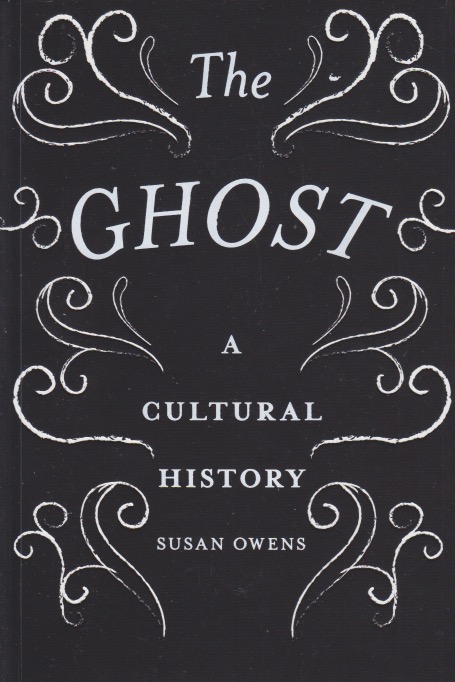
Books on art are often eye-opening to me.  When I was young and trying to escape the working-class hell in which I grew up, I discovered high culture.  This was mostly through local libraries.  I would check out classical music LPs and look at books of classical art.  I did the latter until I could identify several artists by their styles.  (It was probably originally because they’d painted pictures of Jesus and I went to see what else they’d done.)  In any case, I never studied art history.  I recently read an art-historian on the Devil, and now I’ve read one (Susan Owens) on ghosts.  The Ghost: A Cultural History does not address the question of whether ghosts exist, but rather traces the history of how they’ve been portrayed in literature and art throughout time.

Owens quite ably takes us through ancient to modern, pointing out that ghosts change to fit the Zeitgeist—the spirit of the times (not her pun).  In the early modern period ghosts were portrayed as physical revenants.  They were dead bodies that came back to physically harm the living.  We know this fear was widespread because some burials were clearly intended to keep the dead in their graves.  The idea of the physical ghost still comes up in modern horror as the monster you can’t kill because it’s already dead.  It was only gradually that ghosts became spirits and this was largely through emphasis on purgatory, which made it possible for the dead not to be in Heaven or Hell.  Once the idea caught on the literature and art began to focus on the spiritual nature of revenants.  As cultural interests turned towards ruins ghosts inhabited haunted houses.

This is a fascinating study of the way ghosts have evolved over time.  One of the things that struck me was that early commentators often didn’t distinguish clearly between ghosts, demons, and devils.  Demons, as we think of them, really depend quite a bit on The Exorcist.  The use of “devils” in the plural complicates the spiritual geography where we have God v Devil as the main poles of spiritual rivalry.  These ideas, and also those of ghosts, likely blended throughout most of history until a renewed emphasis on literalism came in.  Medieval scholars composed angelologies and demonologies, trying to keep everything straight.  They puzzled over ghosts, however, which don’t fit the scheme very neatly.  They would have benefitted, perhaps, if they had had Susan Owens’ book to help guide them.  It’s an exciting nighttime journey.


Quiet Company

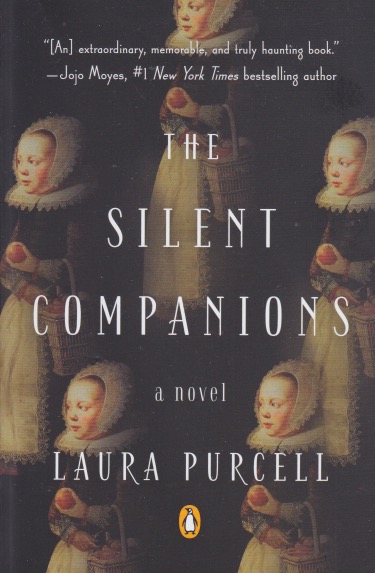
Even as a lifelong fan of speculative fiction, some of the most effective horror is that where a reader is kept guessing.  One of the acknowledged masters of this is Henry James, whose The Turn of the Screw is considered a classic.  There are perhaps too many writers active today to predict who will be considered authors of classics a century or two down the road—writing has to take a long view.  Nevertheless Laura Purcell’s The Silent Companions is, in this reader’s opinion, quite effective.  And ambiguous.  I’m on the constant lookout for gothic novels that work and this is one that surely does.  I’ll try not to give spoilers here, but I do recommend it for those who want a gothic atmosphere.  It is also genuinely scary.  A great deal of this is because the reader is never quite sure what has happened.

The eponymous companions are decorative curios purchased to impress royal visitors in the seventeenth century.  Life-like cutouts of people, they are silent.  Throw in an old, sprawling house in need of repair and a widow who had abusive parents and who’s inherited resentful servants and you’ve got a recipe for an eerie atmosphere.  The novel splits its time between the nineteenth and seventeenth centuries, focusing on the former.  Elsie Bainbridge is a protagonist with many secrets, and not a few skeletons in her closet.  The house she inherited also has a past that included accusations of witchcraft and cruel masters interested in self-promotion.  Told from the point-of-view of the women in a patriarchal society, there is an authenticity to the victimhood even of strong women.

It would be difficult to tell too much of the plot without giving away some of the creepier moments.  There’s a lot going on here and although it’s not a short book it doesn’t drag the reader down with filling too many gaps.  It’s also a novel that allows imagination to outstrip rationality.  Good speculative fiction will do that.  Even some of Poe’s work makes the reader wonder just what is happening—is this in the mind of the observer or is it objectively real?  Think “The Tell-Tale Heart.” Literature takes us into such places and gothic literature does so with more shadows and ambiguity.  Throw in some betrayals, and keep a few well-placed secrets and the recipe is in place for a creepy novel that will keep you reading.


Looking North

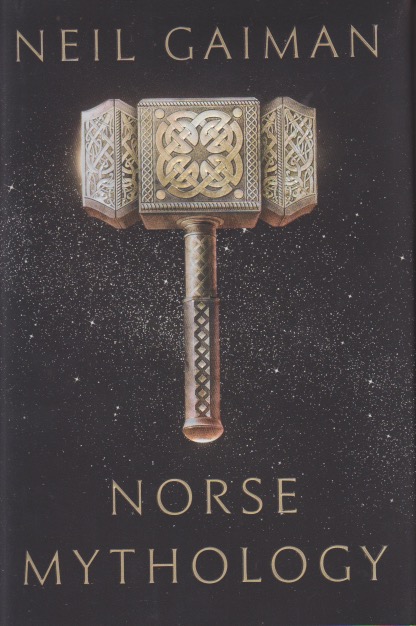
As organized religion continues its slow decline, mythology remains.  Indeed, it seems to be growing in interest.  The problem with many mythologies, for monolinguals, is that they come in languages other than English.  Translation always loses something, which is why, I suspect, Neil Gaiman was tapped to retell the Norse myths.  A very talented story-teller, Gaiman has written about gods before.  He knows their literary potential.  Norse mythology is rather odd in the canon of western thought.  The stories feature gods with as many foibles as humans and with conflicting motivations.  In some ways they are more believable than the monotheistic tradition.  They are both fun to read and poignant.

At the same time Norse Mythology is a somewhat perplexing book.  It’s difficult to tell, without being an expert, what is Gaiman and what is ancient.  In fact, the book sits next to another one with the exact same title on my shelf.  That one is labeled nonfiction, and it’s a bit more academic.  Perhaps it’s an occupational hazard that I tend to want to approach mythology in original languages, if possible.  I’ve never studied Nordic tongues and it would be a little difficult to justify starting now, with all the other things I’ve got to do.  It’s not that I don’t trust Gaiman, it’s just that every retelling is an interpretation.  Still, I’m sure the book gives the flavor of the records that survive.  One of the fascinating features of Norse mythology is that gods die.  Since it ends with Ragnarok, that seems inevitable.

Many mythologies have the world ending with the establishment of the happy reign of a singular deity.  Ragnarok, which Gaiman (and perhaps the originals) sets in the past, sees the gods dying on the battlefield against Loki and the giants.  As the earlier myths make clear, however, death in battle is the most glorious way for the Norse to end their lives.  (And seeing how it has led to a pretty peaceful adult nation, one wonders if the mythology had a calming effect.)  I’ve not read extensively in other versions of Norse mythology so I don’t know if Gaiman’s ending with Balder returning and the world starting anew is his innovation or part of the original.  Having gods who die, however, seems like a potential leveler for humans who suffer from greater powers.  There’s a sobriety to it that lends gravitas to the whole.  And like all good books, Norse Mythology has left me hungry for learning more.


Collecting the Past

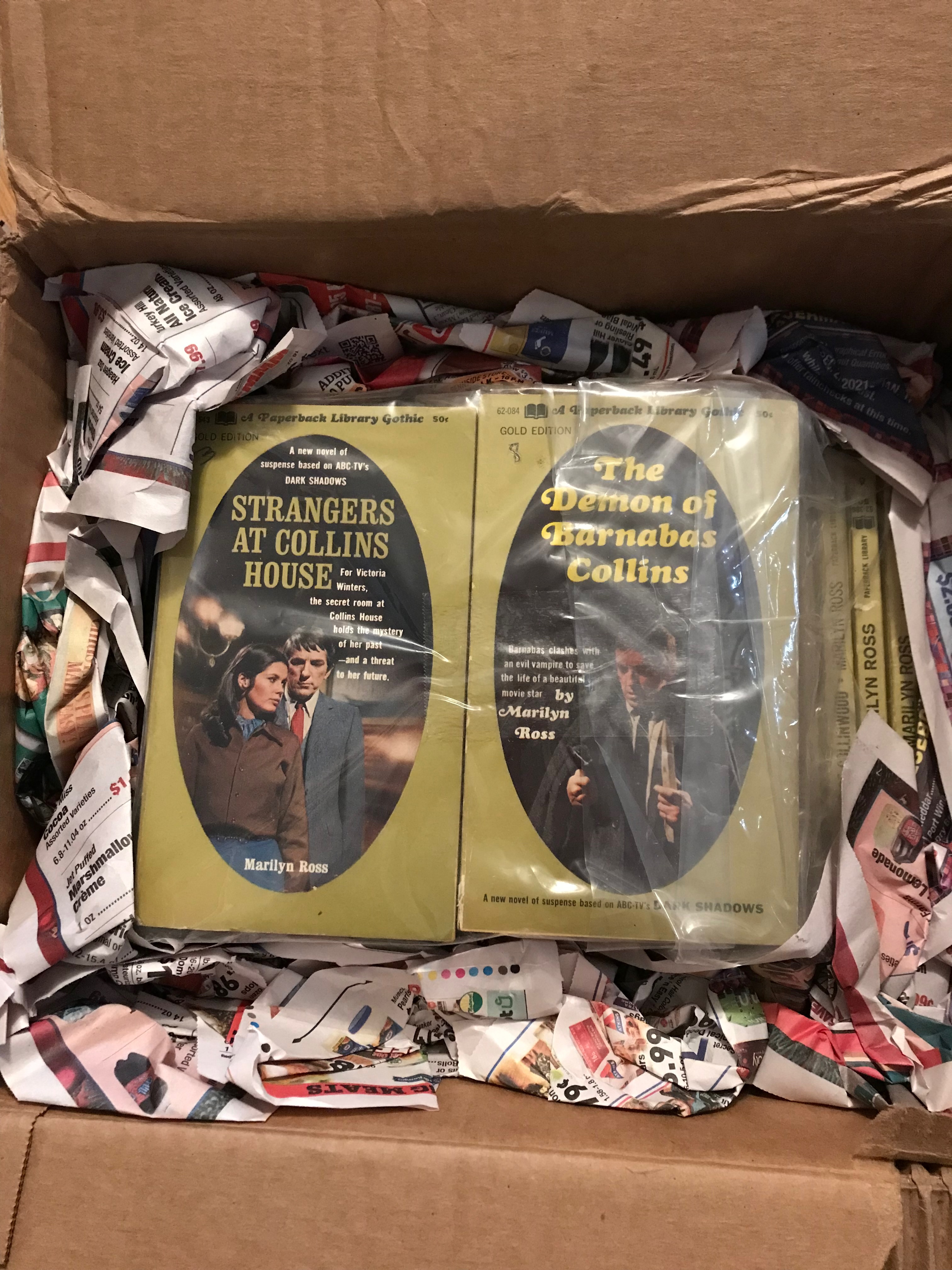
Some readers, probably, react with embarrassment when I go on about Dark Shadows.  The fact is, however, that our childhoods somehow define us and mine included frequent doses of Dark Shadows after school.  This was complemented by the series of potboiler novels by William Edward Daniel Ross, writing as Marilyn Ross.  We didn’t have much money when I was a child (some things never change) and the only means I had of procuring the books in our small town was Goodwill.  The novel series ran from 1966 to 1972, roughly concurrent with the television show.  Since I was buying them second-hand I could never tell which, if any, I would find in the book bins.  If I did find any, I’d buy them.  I got rid of them when I “grew up.”

Dark Shadows, however, has come back to me at various points in my life and about a decade-and-a-half ago I began, somewhat shamefacedly, trying to rebuild that earlier collection.  The individual volumes are considerably more than the nickels and dimes I’d originally paid for them.  In fact, the rate of change has been somewhat astronomical.  Some of the volumes are rare.  Given the prices, I suspect I’m not the only nostalgia-poisoned child of the sixties and seventies who’s buying them.  There’s a sense of satisfaction that comes with having finally completed a task years in the making.  When the box containing the last volume arrived, it was a moment of private ecstasy.

All of this has me thinking about other influences Dark Shadows has had on me personally.  It is probably responsible for my lifelong love of Maine.  The television show was filmed mostly in Terrytown, New York, better known by the name given in Washington Irving’s tale, Sleepy Hollow.  I wasn’t aware of this on my visit to Terrytown—which was before the more recent television series based on, but not filmed in that location, aired.  My first publication regarding religion and horror was based on Sleepy Hollow.  There’s a sense of connectedness here.  To get the final volume, which is rare, I had to buy a collection of several of the books.  Like a man who found a pearl of great price went and sold all that he had so that he could buy the field in which the pearl was.  We’re never told what he did with the rest of the field.  If I had to venture a guess I’d say he used it to house his Dark Shadows collection.


Raven about this Book

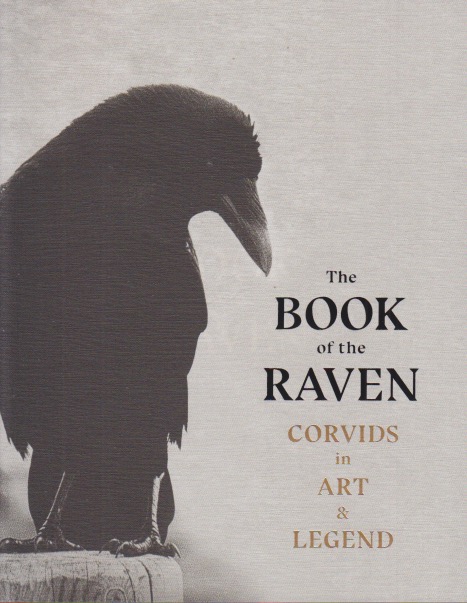
Some books are meant to be looked at.  Being busy most of the time, even on weekends, I’m guilty of not enjoying art enough.  The Book of the Raven: Corvids in Art and Legend is a work of art.  In it Caroline Roberts and Angus Hyland have compiled paintings, photographs, and prints that feature ravens, crows, magpies, and jays, interspersed with facts, poems, excerpts, and bits of lore.  It’s not a comprehensive book, nor is it intended to be.  It is, however, a deeply moving book for a certain kind of person.  It was an accidental find in a visit to The Book & Puppet Company in Easton.  When we’re in town we like to support the independent bookstores.  (I was saddened to discover that Delaware River Books, one of the two used bookstores in town, had recently closed.)

Corvids are, on a scale, about as intelligent as we are.  They think, solve problems, make tools, and recognize human faces.  They remember acts of kindness and reciprocate.  They recognize their dead and they also play.  They’re very much like us.  The book includes, of course, Poe’s “The Raven,” but also other poems that draw inspiration from these smart, magnificent birds.  The artwork is arresting.  One of the great sins of modern life is its busyness that robs us of the time for appreciating art.  And reading.  Learning how to thrive in a world that has become purely about profit and ownership.  Art is intended to be shared.  An artist produces so that others might see.  A author writes so that others might read.  And corvids exist to bring wonder into our lives.

I find the strident call of jays comforting.  I often hear them even on my winter walks.  There are murders of crows in the neighborhood from time to time.  They gather on roofs and in the trees across the street.  Recently I spied a large black bird while on my daily constitutional.  It had left a tree full of crows and was flying straight down the path toward me.  As it flew overhead I had a good look at its tail in flight—one of the best ways to tell a raven from a crow.  It was indeed a raven, and even common ravens are rare in this area.  We live on the edge of their habitat.   I was honored by its momentary attention.  I wished I had more time, perhaps to follow that magnificent corvid and to learn from it.  Instead, I will ponder The Book of the Raven with wonder.


Masking the Devil

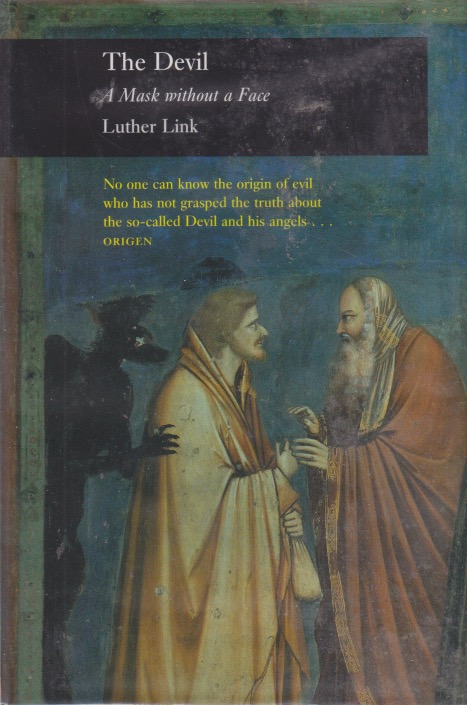
There are many books on the Devil.  In fact, entire horror movies such as The Ninth Gate are based on that fact.  Since writing a book on demons (Nightmares with the Bible), I read a few of the many.  I’ve continued to read some further since, and one of them is Luther Link’s The Devil: A Mask without a Face.  The first thing to note about this book is that it is the same as The Devil: The Archfiend in Art from the Sixth to the Sixteenth Century, as it was published simultaneously in the United States.  (The former was published in the United Kingdom.)  Many authors don’t realize that when you sign a publishing contract you’re selling the rights (the copyright) for your book.  Some publishers or agents will sell the rights in different territories to different publishers.  They don’t have to use the same title largely because, prior to Amazon it was difficult to buy UK published books in the US and vice-versa.  Now a lot of “buying around” happens so books published anywhere can be purchased anywhere.  (Except in authoritarian states.)

In any case, this book is a study of the Devil in art.  The UK subtitle, A Mask without a Face, focuses on the conclusions drawn, whereas the US subtitle is more descriptive of the contents.  There are a number of interesting points made by Link.  One of the most important is that of his conclusion—the Devil, in the biblical and theological worlds of the long Middle Ages, really isn’t so much a character or “person”as a representation of “the enemy.” His looks and actions depend on the circumstances.  As Link points out, to the Pope Luther was inspired by the Devil, to Luther the Pope was inspired by the Devil.  Both, Link concludes, were dealing with a mask without, well, a face. Further, since the Devil does God’s bidding, whether he can be considered evil or not must be questioned.

Another interesting point is the strange continuity and lack thereof that characterize the representations of the Devil.  Some of the continuities go back to an antiquity (such as ancient Mesopotamia) that had by lost by the Middle Ages.  There was no real avenue of transmission since who remembered Humbaba after the tablets of Gilgamesh had been buried for centuries?  This seems to point to what Jung would’ve considered archetypes.  Or it could be that the same things scare people across the ages.  The point of the book isn’t to be comprehensive, but it does make a good point.  Anyone accusing someone of being the Devil opens themselves to the exact same charge.


Leathers

It’s an occupational hazard for the vegan Bible editor.  Leather.  Leather Bibles, although expensive, are popular.  If you want free fetishistic deliveries of colored leather to arrive at your door, well, it’s part of a Bible editor’s life.  Morally I’m opposed to leather and I eagerly await the day when cactus leather is considered a suitable alternative.  Leather began being used in bookbinding early on, when books were treasured possessions.  It was readily available because animal slaughter was a part of everyday life.  It’s also extremely durable.  These days it’s just a status symbol.  When Bibles are produced there’s generally a market for whatever translation in leather.  In my time I’ve seen some well enough used to perhaps justify such extravagance, but not very often.  Usually it’s merely for show.

There’s an entire vocabulary associated with leather bookbinding.  Tooling, or engraving the smooth leather to look like something else, embossing, or pressing a design in the leather, gilding, or the use of gold paint on leather, and dentelle, or having a border run around the outside edge.  All of these were (and still are) signs of the artistry of the binder.  The practice dates back to before the nineteenth century when books were bound by booksellers, not publishers.  Perhaps this is why we shouldn’t judge a book by its cover.  In any case, apart from tradition there’s no need to kill animals to bind books any more.  Law books and Bibles are the major purveyors of leather binding.  It continues simply because it continues.

One term used for traditions unwilling to change is “hidebound.”  While this seems originally to have referred to emaciated cattle, it has come to be associated with codified, as in leather books.  Pigskin, or other cheaper hides, are often used.  Or “bonded leather,” which is as much plastic (if not more) than actual leather.  The Bible isn’t a terribly animal-friendly book.  Dogs are unclean and cats aren’t mentioned at all (except the large, wild kinds).  Yes, there are shepherds—both good and bad—but sheep were kept to be exploited.  And perhaps turned into leather.  There’s something strangely symbolic about this.  And not in a propitious way.  Where does obeying the rules get you?  Sheep are praised for their docility, their willingness to be thoughtlessly exploited, slaughtered, skinned, and eaten.  To do the job, a Bible editor must learn about leather.  Perhaps its a profession best left to carnivores.


Not Really New

It’s called the New Books Network.  I have no idea what its stats are, but it is a place to get word out about your book that the academy has apparently overlooked.  I pitched Nightmares with the Bible to them some months ago and I recently had an interview about it.  I’ll keep you posted when it appears.  I suppose those who read this blog for the horror content sometimes think I may’ve forgotten about it.  The fact is I think of horror every day but there’s more to my psyche than just that.  This blog is a romp through part of what’s on my mind.  Sometimes it’s the quotidian horror of everyday.  At times it’s full of curiosity and wonder.  Sometimes I just trying to figure out how to work this thing.

So with the New Books Network.  I found out about it from an interview I heard with the guy who started it.  Funny—one interview leads to another.  He encouraged those listening to pitch their books.  I don’t have an institution to support mine, or students to have to buy a copy (and I’ve received zero royalties for it), so I figured what’ve I got to lose?  It was quite a nightmare (speaking of which) to arrange a time that worked for both interviewer and interviewee.  I think we rescheduled about half-a-dozen times, but then finally we both had a few free minutes together to chat.  Perhaps it’s a good thing I’ve been reading about the Devil.  

This was actually my third interview about this book.  Perhaps it’s a measure of how small the impact it’s had has been that I can recall each one so precisely.  You’ve got to start somewhere, so why not here?  The last question asked was about the next book.  I do hope I have a few more left in me.  I started writing early but publishing late.  Just because you write doesn’t mean people will read what you produce.  I find writing the most hopeful avocation ever.  Like a sower with his or her seeds, broadcasting them across the air, hoping they’ll land legible.  If there’s anything worth reading here there’s always the possibility it’ll be discovered someday.  That’s optimism with a glass half empty!  In any case, check out the New Books Network.  There are hundreds of books there to learn about.  And, I suspect, many authors who’d like the world to know what they’ve written.


Future Ministry

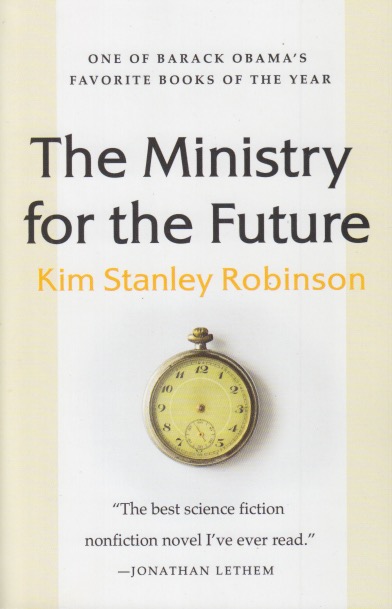
I’ve been on the Green Committee at work almost since I started the job.  Occasionally for Earth Day we’ll have a book discussion.  Usually it revolves around nonfiction books that my press publishes.  This year they selected Kim Stanley Robinson’s The Ministry for the Future.  It’s an environmentalism tale of what global warming may well be like and the political machinations it might take (and the millions of deaths along the way) before we stop burning carbon.  It’s a long and detailed and political story.  Robinson is known as an intellectual science fiction writer and there are sci-fi elements to the book, but its style is realist and its outlook, while ultimately hopeful, is staid.  Even when humans start to move in the right direction.  It’s also a very long book.

Reading it got me to thinking again of a somewhat bewildering truth: environmentalism books tend not to sell overly well and sustained reading, even by supporters, is difficult.  Many of us know that we’re beyond the tipping point for environmental disaster.  The Trump years assured us that it is coming.  One of the elements Robinson makes clear is just how politically entrenched it is.  Perhaps that’s one of the reasons for the despair.  The vast majority of people in the world want a more environmentally conscious government, but plutocracy tends to bring narcissists to the top and the needs of all others are less important.  In Robinson’s version of the story, targeted violence is the only thing that works.  Near the end of the story an interesting idea is raised: the Ministry of the Future (which is a government ministry, not the church kind) concludes a new religion is needed.

The masses of people, you see, are followers.  Religious leaders reinforce the idea that God told their founders—and by extension their followers—the only truth.  Their jobs (and ministries are jobs) include reinforcing those ideas to people who’ve been raised or converted to that particular brand of religion.  A number of New Religious Movements, and even a couple of prescient ancient religions, have been purposely constructed.  The trick is to get followers to accept that the religion is legitimate.  Most western religions around today have been based on the idea that humans can do whatever they want with the planet—even destroy it to force God to return.  I kind of like Robinson’s idea better.  Perhaps that’s why religions form around movies like Avatar.  Not a bad thought, when your job has you reading a sci-fi novel.  A religion saving the earth feels like a novel idea.