Visualizing Twilight

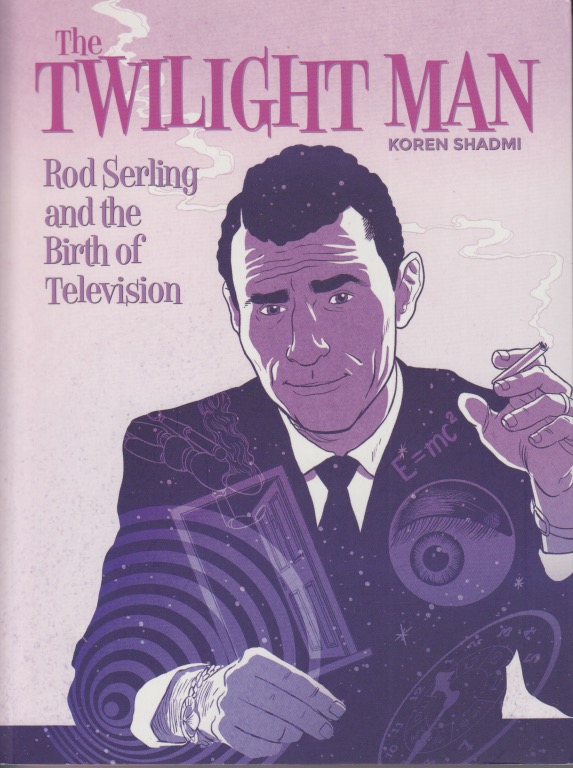
Graphic novels still feel like cheating.  That childhood message that comic books “aren’t really reading” has proven difficult to dislodge.  That, and the fear that we are entering a post-literary world, keep me from reading many of them.  Koren Shadmi’s The Twilight Man: Rod Serling and the Birth of Television, however, caught my attention right away.  Like many other people my age, my thinking was heavily influenced by The Twilight Zone.  As a kid, television had a kind of authority to it.  This is what adults were feeding us.  Although I was hardly intellectual then, I thought deeply about things and one of those things was The Twilight Zone.  The episodes were profound.  The twist endings certainly were among the best on the tube.  Shadmi’s graphic novel of Rod Serling’s life is a tribute to the influence the man had.

For a graphic treatment, The Twilight Man is strangely affective (yes, that’s spelled correctly).  I tend to shy away from hagiographies, and Shadmi’s treatment isn’t one.  It does illustrate, however, how Serling fought against a commercialism that would eventually win out.  Those who control the money control what we see.  Granted, the democratizing influence of the internet has let competition arise from unseen quarters—there are young people who watch YouTube to the exclusion of television altogether—but few shows manage the impact that The Twilight Zone had when there were only essentially three large networks.  Now we have so many choices that cultural reference points are rare.  Those who’ve never seen it, at least for the time being, know what The Twilight Zone is.

This book is biographical, based on published biographies.  There’s something about knowing, however, that the episodes actually happened.  Being in combat (as Serling was) puts some people into their own kind of limbo.  At least one person in my own family was irrevocably changed by fighting in a war.  The remarkable thing is that Serling came out of it wanting justice for all people. The book even points out that he became a Unitarian, although it doesn’t dwell on that point.  Some things, such as spiritual insights, are difficult to illustrate I suppose.  I can  see why Shadmi’s tribute receives good press.  Graphic novels are a means of telling a story that moves people.  I re-learn this each time I read one, which is something I rarely do.  Now that I’m starting to explore this genre I’m perhaps learning to address my own prejudices.  As long as there are still words to read.

Found and Lost

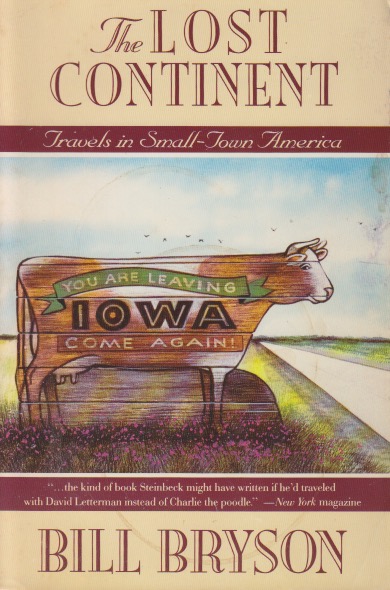
After the year that was 2020, I decided that I needed to read some books that might make me laugh.  That can sometimes be pretty difficult, just as finding books that scare me (unless they’re nonfiction) can be.  Turning to the internet (where else can we turn in these days of rare vaccinations?) Bill Bryson’s The Lost Continent came up more than once.  I think I may have read some of his other work, but this is one of his earliest books.  Perhaps it’s a sign of the times, but much of the humor seemed a bit cruel.  No doubt in America there are lots of things at which fun would be easy to poke, but we’ve become sensitive to others—perhaps overly so—perhaps to the point that even using the word “others” can leave you open to criticism. But still.

Bryson’s book is a classic travelog.  It’s the kind my family kept when we were able to travel.  We’ve still got a printed out copy of our journeys to significant places, stuck in an ersatz binder, awaiting notice perhaps.  We tried to keep it funny.  There’s something about travel that’s great for your sense of humor.  Bryson set out on two wings of a country-wide trip while back from England.  Starting at his home in Des Moines, Iowa, he drove south and east then up north and back to his starting point.  The second half of the trip, obviously, went west, to the south west before angling up through the high plains and back home.  

The book is hard to classify.  The cover on my copy says he was looking for the perfect small town, but mostly it just seemed to be driving around.  And hitting some big cities as well.  There were a few laugh-out-loud moments even for this dour reader, but mostly there were some smiles and a bit of sadness.  I had to keep reminding myself that this was the late 1980s.  In fact, I was living in the United Kingdom when the book came out, which is probably why I never really heard of it before.  I do, regardless of how well the humor works, enjoy a travelog.  You can learn a lot that way.  Many of the places Bryson visited I’d also been, but my impressions were somewhat kindlier.  As a kid I didn’t get to travel much (kinda like now) and seeing new places I was always awash in wonder.  Not everywhere is pristine, of course, but keeping notes always seems like a good idea.  And if you can get them published, you might even be able to make a living out of it. We all remember the freedom of the open road.


Story Over

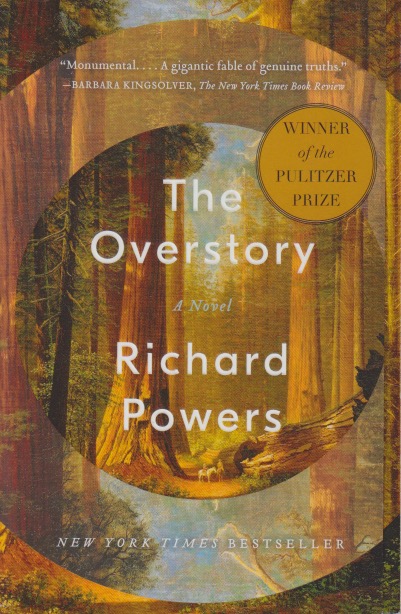
Despite my penchant for speculative fiction I tend to read a lot of what’s usually categorized as literary fiction.  These tales don’t fit into any genre and are often colored with realism.  More than one person had recommend Richard Powers’ The Overstory, not least the Pulitzer Prize committee.  In the style of novels these days it’s pretty long and that meant I had to build up the courage (and time) to get to it.  I support the environment.  I have a great respect for trees and try to support conservation any way I can.  The Overstory is, however, a bleak vision of what we’re doing to the planet and to other living beings.  It certainly helps to have read Peter Wohlleben’s The Hidden Life of Trees first.  It helps to know the main premise of the novel is based on non-fiction.  There may be spoilers below.

The first part of the book, Roots, introduces us to the various characters—most of whom will interact in the remaining pages.  Most of them are marked by tragedy in their lives and come to realize the longevity of trees has a perspective that can make sense of what, to our lifespans, seems inexplicable.  Several, but not all, of them end up in a conservation group trying to defend old growth redwoods from the insatiable greed of lumber companies and politicians.  The novel ends happily for none of them.  Trees, however, have the ability to outlive us.  While we cause real damage, they have the ability to regenerate, but in ways that none of us will live to see.  Trees see beyond the short, tragic lives we lead, into what may be a more hopeful future.

The other sections of the book, Trunk, Crown, and Seeds, follow events chronologically as the people age.  Some notable deaths among the group have a great impact on the small coterie of those protecting trees.  An unfeeling state and the corporate nature of laws are clearly on display.  They serve the will of those who can’t, or won’t, think differently about the world and our place in it.  Although the novel doesn’t ever cite the source, one of the eco-heroes finds a verse from Job to be of tremendous consolation: “For there is hope of a tree, if it be cut down, that it will sprout again, and that the tender branch thereof will not cease.”  I was glad to see the connection made, but the book left me emotionally exhausted.  With speculative fiction at least you can escape the real problems of this world for awhile.


Seussical Thoughts

It seems that Dr. Seuss has fallen on hard times.  His estate is pulling six of his books from production because of hurtful race representations.  This has, of course, sparked the debate between period pieces and the clearly necessary reeducation that has to take place regarding race itself.  I don’t have a solution here, but children raised on these books are among those who realize the dangers of racial stereotypes.  In fact, even those of us who try to keep a weather eye on our own thinking process can at times get caught in the trap of thinking that “white” is “normal” and everyone else is a “variation.”  The truth is we are all variants and political power, with its not-so-subtle adjunct money, have embedded racist thinking throughout our society.

Photo credit:
Photo credit: Al Ravenna, via Wikimedia Commons

Theodore Geisel was a broad-minded individual.  His works often advocate for inclusion.  He was also a product of his time, even as we are.  The struggle to do right in the midst of a corrupt world is constant.  None of us, I fear, have risen to perfection.  The roots of racist thinking run deep and they re-sprout if just a fragment of a rhizome left behind.  We should all know by now that slavery was evil and that a system that devalued other humans for money was clearly wrong.  We should know that government policies that keep American Indians repressed and do so secretly are unethical.  We should know that people from Asia have as much right to opportunity as those whose ancestry lies in Europe.  Why is this so hard to learn?  Why do we still have to fight to dismantle systemic racism in this “land of the free”?

Dr. Seuss has taught generations of kids that “a person’s a person” and that persons deserve fair treatment.  He did it in the language and idiom of his own era.  Those making the decisions for his estate are not trying to destroy his legacy.  They are, however, asking us to look forward and to try to figure out where we go from here.  Half a century ago we knew that civil rights were the only fair way to live.  We’ve experienced globalization since then and we’ve been made better for having done so.  Yet we are mired in preconceptions that can only damage our collective sense of justice, often falling along party lines.  Dr. Seuss taught us well—shouldn’t we implement what we’ve learned?


Werewolves Not Forgotten

Copyright is a strange thing.  Without it there would be no making a living as a writer or artist or even music composer (or so I’m told).  The idea is straightforward enough—someone comes up with a “marketable” idea (how marketable varies widely), and therefore owns the exclusive rights to the expressed form of that idea.  If, for instance, the idea becomes a published book the publisher (generally) owns the rights and pays the writer royalties for the use/ownership of those rights.  Copyright, however, like fresh food, expires.  Written work or music or art becomes part of the public domain and can be reproduced by any with the gumption to do so.  There are publishers, such as Gorgias Press, that got their earlier starts by doing just that—finding public domain material, scanning it, and republishing it for a price.  All above board.

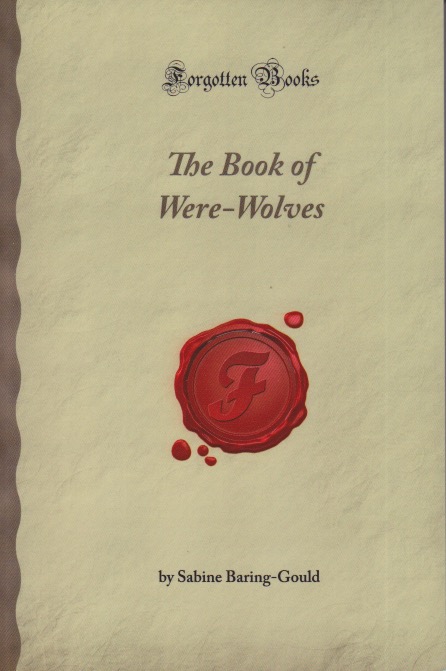
Back before I worked long in publishing I was going through a werewolf phase.  No, I am not a lycanthrope, but I was reading about werewolves.  I knew one of the main sources of folklore was Sabine Baring-Gould’s The Book of Were-Wolves.  Being strapped for cash (some things never change), I bought a copy published by Forgotten Books.  They’re rather prevalent on Amazon.  Although the content is free online, some of us prefer to have a book in our hands and leave the devices aside.  I soon discovered why my Forgotten Books version was so inexpensive.  It is simply a printout of the scanned book, apparently with optical letter recognition software utilized.  No serious formatting or proofreading required, a book is produced, covered, and sold.  It is a disorienting experience reading such a book.

Readers look for landmarks just as surely as a hiker or traveler of any sort.  Old books have layout and typesetting to help the reader navigate.  My copy has “Error! Bookmark Not Defined” instead of notes.  First editions of Baring-Gould, it turns out, sell for upwards of $6000.  So I continued reading.  A lack of italics and the occasional optically misread word make me wonder just how much of Baring-Gould I’m really ingesting.  Any book that begins with a disclaimer regarding possible errors should’ve been assigned a copyeditor.  SBG likes to use lots of foreign words.  They may be spelled correctly or not.  I have no notes to check.  Caveat emptor, n’est-ce pas?  The technology that allows scanned, unread by human eyes products to be sold as books makes me wonder.  No, I haven’t forgotten books.


Horror and Theology

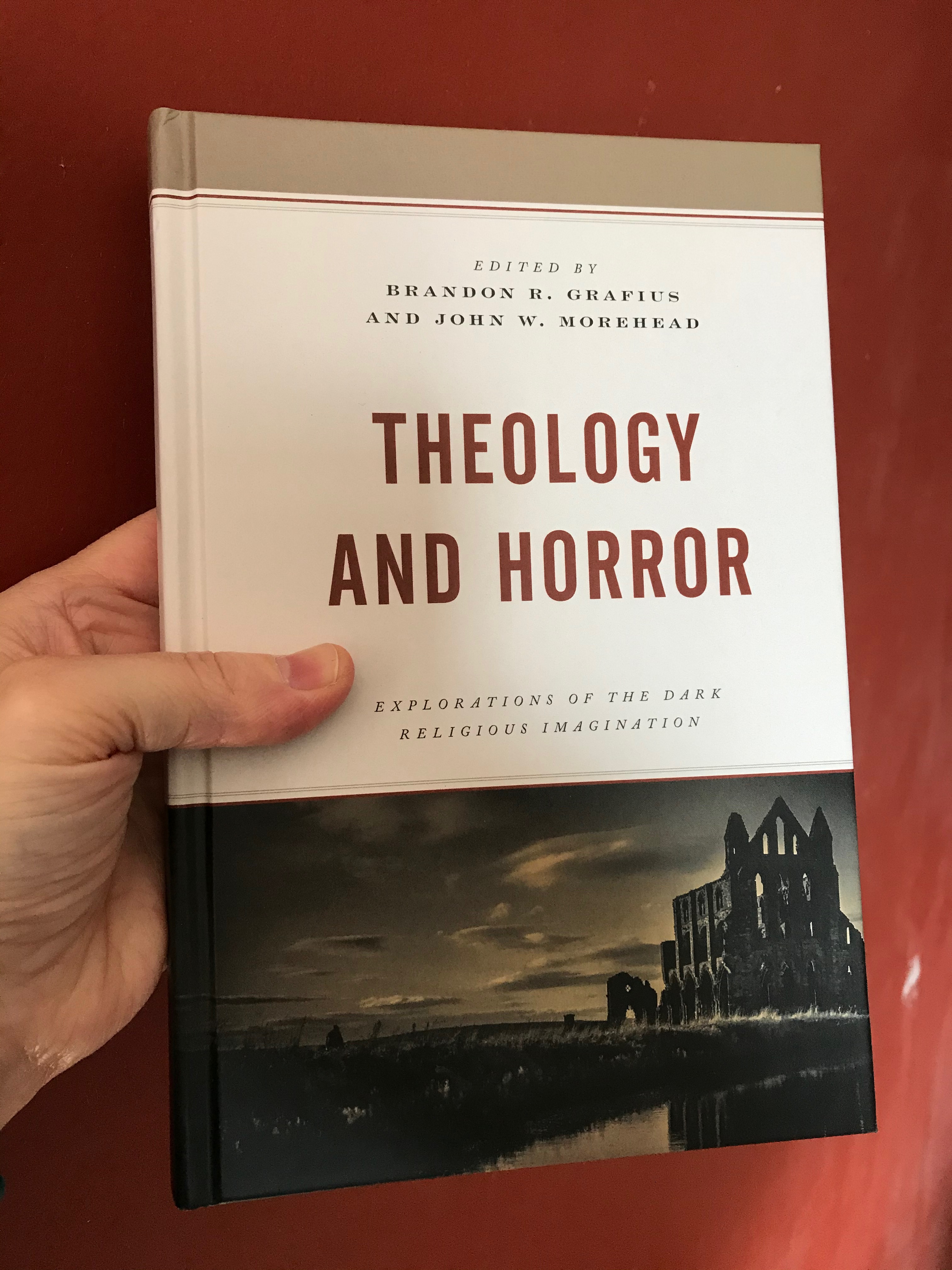
The idea may be catching on. The idea I mean is that horror and religion have something to do with one another. I have to confess that I’ve been one of the (non-academic) explorers of this approach and I was flattered to have been asked to contribute an essay to the just released volume Theology and Horror: Exploration of the Dark Religious Imagination, edited by Brandon R. Grafius and John W. Morehead. My article looks at the origins of horror in biblical (and perhaps pre-biblical) storytelling. In fact it is one of the oldest forms of exploring what it means to be human. Perhaps it began its life as an evolutionary fight or flight response, but it eventually came to represent a way of dealing with the human condition. Horror is generally traced to the gothic novel tradition, but I suggest it goes back much further.

This volume contains twelve essays on a variety of topics, along with an introduction by the volume editors. Since my copy only just arrived in Friday’s mail I haven’t had the opportunity to explore it yet, but I’m looking forward to it. Ironically, it’s an area that I began probing only after the academy no longer required my services. As I reflect on that ubiquitous “why” question I often come back to that fact. Nothing like having your career yanked out from under you makes you consider horror as a kind of therapy. Things could be worse. Besides, horror frequently demonstrates coping skills. And change is constant. Learning to adjust when the monsters of capitalism loom can make you think of religion—trust me.

Individual scholars have examined the connection between religion and monsters before—there’s a pretty obvious connection in that case—but sustained discussion of how horror informs religion is new. The developments are sometimes edgy, but I get the sense that they’re honest. It goes back to that flight or fight response. What happens if you hang around to look? Might not something become clear that was only viewed through a blurred lens before? And the goal isn’t to cause fright. Indeed, it’s just the opposite. Frights will come, and if you’ve anticipated them you might have coping skills at hand. Besides, the frisson can be enticing in its own way. Receiving a new publication can be its own source of thrills. I guess I knew this volume was coming but I’d been busy enough to have shoved the thought aside. I’m delighted it decided to interrupt the mundane, just like monsters often do.


Old Wolves

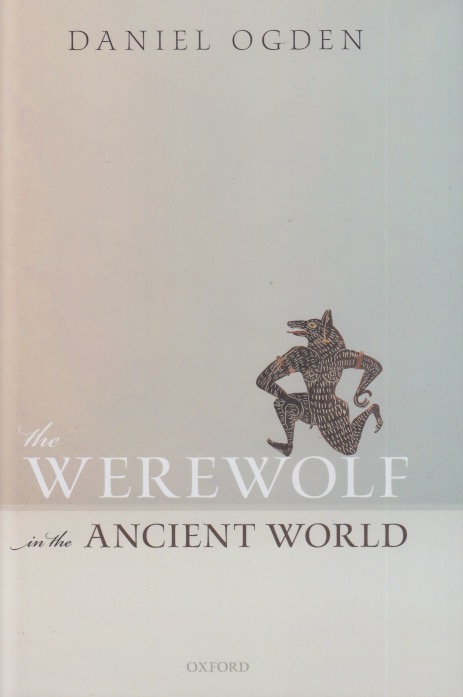
Among the classic monsters, the werewolf seems to suffer from lack of a foundational novel.  Yes, vampires are older than Bram Stoker’s Dracula, and antecedents can be suggested for Mary Shelley’s Frankenstein, but there isn’t a werewolf novel of similar stature.  Daniel Ogden, however, does us a service by providing an extended discussion of, as his title states, The Werewolf in the Ancient World.  His survey is intriguing and informative, and also insightful.  The werewolf is not always what it might seem.  Ogden is an able guide through sources from antiquity through some medieval tales, focusing mainly on the ancient ones.  He extensively explores their associations—witches, sorcerers, ghosts, and the like.  And related tales of human transformation.  He even suggests what some of those transformations may have been seeking.

The werewolf is perhaps the most obvious monster that expresses repressed desire for transformation—a kind of salvation.  Civilization comes with a cost and the werewolf is symbolic of the individual driven by animal desire, unrestrained by human convention.  It’s also an idea of great antiquity.  Although Ogden doesn’t go into it, stories of humans turned into wolves goes back at least to the Epic of Gilgamesh, one of the earliest pieces of literature we have in fairly complete form.  The idea is attested in writers such as Plato and Augustine, if only to refute it.  In other words, it is clearly something people have thought possible from very early times.  Our long association with the wolf, and its domesticated version—the dog—certainly plays a psychological role in such tales.

As Ogden points out, Guy Endore’s novel The Werewolf of Paris, published in 1933, is perhaps as close as we come to a foundational novel.  In the Universal monsters series that developed a canon for monster boomers, The Wolf Man was a somewhat late entry, appearing in 1941—a decade later than Dracula and Frankenstein.  Despite these tardy cultural appearances, the werewolf has been part of our collective psyche far longer.  Ogden shows that clearly.  When you stop to rethink stories like Little Red Riding Hood, the talking, humanized wolf appears so naturally that we don’t often stop to consider the implications.  I certainly hadn’t made the connection explicitly until reading it here.  Ogden’s work is readable but academic, so be prepared for citations and some technical talk.  Nevertheless, this is the clearest guide to lycanthropy and the magical ideas behind it from ancient times to have appeared in recent years.  


Tomorrow’s Brainchild

The voice of one person is very small.  Even a guy like Donald Trump wouldn’t be the terrible threat to this nation that he is if nobody would pass on the nonsense he says.  I often think of this because internet personalities are always have to remind their fans to share their posts.  It’s a simple thing—click “share” and more people find out about something.  What if that something were free?  Isn’t something free worth sharing?  So tomorrow I’ll be participating in Virtual Voices Author Fair: A Day of Nonfiction Books, a small Zoom conference from one to five, to talk about Holy Horror.  Various readers over the years have asked if they can get a discounted copy—like most conferences this one will have a discount associated with it.  Stop by if you have the chance!

The variety of the books being discussed is pretty wide.  Topics will cover many of the areas for which the publisher McFarland is known: television, film, music, politics, the outdoors, and more.  A schedule may be found here.  For those of us who have been (or the lucky who still are) academics, the conference is a sacred cow that has largely been sacrificed to the pandemic.  Getting together with others to discuss ideas is important—the funny thing about ideas is that they often arise from talking with others.  For three years, for instance, the American Academy of Religion offered a session on monsters and monster theory.  That would never have happened if I hadn’t had a discussion with a friend and colleague who shared that interest.  If it’d been only me, it never would’ve transpired.  Sharing is important.

One of the things about generations is that mine (no longer the younger one), is still trying to wrap its collective head around this internet thing.  Now we feel like a bunch of avatars with no onboarding.  We don’t think in terms of clicking a share button.  We still feel like browsing is an individual thing.  They young people I know tend to think of the internet as a place for community.  It’s easier to find like-minded people there.  Unlike school (and often work) where you’re thrown together with people who may or may not share your interests, the web offers places where you can find others who share your interest.  If you’re interested in the kinds of things that you’ll find in the media, and if you have a few minutes tomorrow afternoon, feel free to stop by the Virtual Voices Author Fair.  If you land on their Facebook page, it’d be great if you’d click the share button.


Looking Up

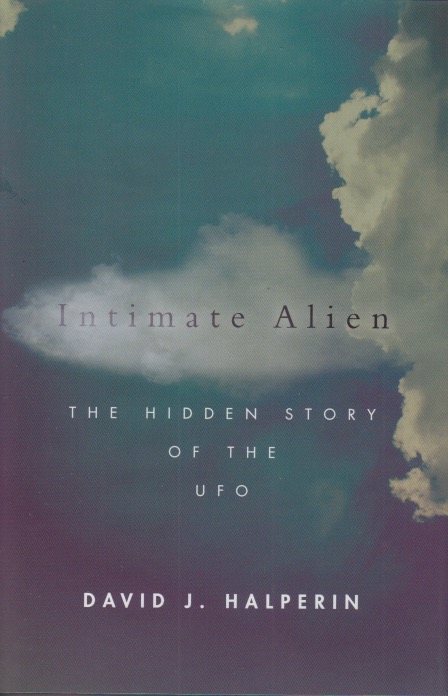
A few days ago—maybe weeks—I posted on discovering David J. Halperin’s website.  His book, Intimate Alien: The Hidden Story of the UFO, had been on my reading list since it came out.  Like Diana Pasulka and Jeffrey Kripal, Halperin is a religion scholar exploring UFOs.  “In its essence,” he writes, “the UFO is a religious phenomenon.”  I would tend to agree although Halperin holds a somewhat different interpretation than many ufologists do.  Noting the deep, Jungian connections with such archetypes as quaternaries, and the profound experiences of death and sex, Halperin builds a case for UFOs as a modern myth.  Myth in the sense that we religion scholars use it, that is.  Myth is not a falsehood, but its exact opposite.  Myth is truth expressed in ways that aren’t, and can’t be, literal.

Using this impressive interpretive matrix he considers some of the classic—and a few novel—cases such as the Socorro, New Mexico case and Roswell.  He traces the phenomenon to its modern beginnings in 1947, but interestingly for a biblical scholar, considers seriously what Ezekiel might have seen.  Here the quaternaries come in quite helpful.  He spends considerable time on the abduction phenomenon, exploring what needs such stories might meet.  Many of them involve individuals in unusual social circumstances and that adds credence to his interpretative model.  He also considers the adjunct Men in Black.  I had been unaware of the Shaver Mystery until reading this book.  He ends by considering John Lennon’s famous New York UFO sighting.

Halperin offers a non-dismissive paradigm that allows for a high degree of rationalism.  Since I’ve suggested elsewhere on this blog that the paranormal is kin to religious studies, I’m always glad to see some validation of this when someone publishes a successful book on the subject.  Outrè topics, if they’re to be considered at all, fall within the open borders of religious studies.  Ironically perhaps the most human of the humanities, it is a field rife with unusual experiences that sometimes lie beyond the reach of empirical measure.  UFOs represent the problem of occasional phenomena.  You can’t get them into the laboratory and they aren’t repeatable.  How are we to study them?  Since several military organizations, including the US Navy, are now taking the subject seriously, it would seem that academic fields should follow.  Most don’t, or won’t.  Religious studies is braver, it seems to me, than many disciplines.  It takes on the unusual and tries to find respectful ways to understand what it finds.


Women’s History

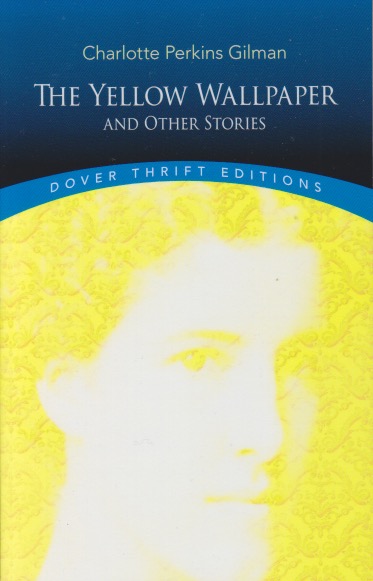
March is Women’s History Month.  My reading of actual history as of late has focused on the ancient Celts, so I confess to falling behind on modern women’s history.  Nevertheless, I came across an often forgotten piece in an unexpected way.  For quite some time I’ve wanted to read some work of Charlotte Perkins Gilman.  Her story “The Yellow Wallpaper” is known as a gothic classic.  Since a short story isn’t enough to make up an entire book, publishers have arranged different combinations of her tales into thin books that can be sold as a unit.  I purchased the Dover Thrift Editions’ version of The Yellow Wallpaper and Other Stories.  It was there that I learned Gilman was an early feminist who seems to have become unsung in more recent times.  Her fiction, at least as reflected in this particular edition, demonstrates the truth of the assertion.

Most of the tales in this little book require only a few minutes to read.  Although written around the turn of the nineteenth century, her stories anticipated many modern developments for women.  Her protagonists see the inequalities between the genders and work to overcome them.  They prove themselves successful at business and setting up their own houses.  There’s a gentleness to these stories that suggests quiet confidence may eventually wear down the often inflated male ego.  I found myself captivated even after finishing “The Yellow Wallpaper” itself.  Gilman isn’t judgmental, but she does note how unfairly the system operates.  She also offers solutions.

In this month of women’s history, it seems appropriate to rediscover one of the female writers who personally worked for women’s rights and expressed herself so fluently in fiction.  Her “If I Were a Man,” although clearly a period piece, takes a woman into her husband’s body.  She walks in his shoes, literally, and sees what “the world of men” is like.  This leads to both understanding and, above all, learning.  This would seem to be the very heart of history.  We read to learn both from what we did correctly to what we did wrong.  We have done so terribly much wrong.  The historical oppression of women is one of the greatest examples of our inability to catch up with our own ideals of justice and fairness.  There were historical reasons for this, yes, but we have moved beyond those times.  If only we’d act like it.  Although my reading doesn’t always keep in sync with the seasons, discovering Charlotte Perkins Gilman at this point in time was somehow more appropriate than anticipated.


Still Standing

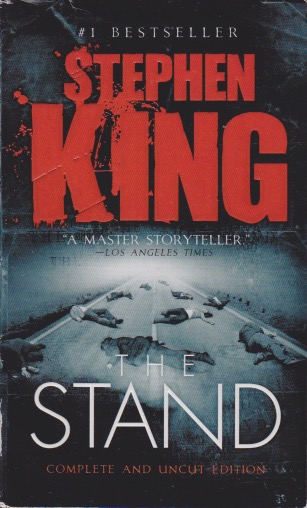
Investment.  Time is an investment, and I recently invested in Stephen King’s The Stand.  You have to realize that I made this decision sight-unseen.  More than one person whose opinions I value told me I should read it.  I had no idea it would be 1,400 pages and would dominate my life for a solid month.  Still, I’m glad I read it.  In case you haven’t, and intend to, there may be some spoilers below.  This is one of the King books I read without knowing the plot or the ending, so if you’re in that boat, skip a paragraph or two.

I hadn’t intended The Stand to be plague reading.  It just turned out that way.  The book is about a variety of flu that kills nearly the entire population of the world.  It’s only at the very end that you learn it’s a parable.  The ending also explains some of the apparently unrelated filler that makes the book so terribly long.  In any case, after wiping out much of the world, the story narrows down to several of the survivors and how they end up dividing into two camps: those who want to cause misery (think Republicans), and those who want to reestablish civilization.  Of course there are several unpleasant instances along the way.  The camp of violent ne’er-do-wells settles in Las Vegas under the demonic leadership of Randall Flagg—his identity only becomes clear at the end—while the good guys, under Mother Abagail, choose Boulder.  A confrontation is inevitable and when the smoke clears we learn that Randall Flagg is, essentially, civilization itself.  Perhaps Christianity.

Of all of the Stephen King novels I’ve read, this one has the most overt Christian imagery.  In fact, in his introduction to the expanded edition he refers to it as a “long tale of dark Christianity.”  There’s quite a lot of theological dialogue along with gruesome deaths.  The pacing often makes the story seem quite long.  Well, it actually is.  I suspect it was this Christian imagery that had friends recommending it to me.  The idea that evil is essentially our culture that comes around and kills us is both profound and paradoxical.  As well as “Christian.”  All along the good guys want to reestablish the cooperation and comforts of civilized life.  It was “civilization” that unleashed the killer virus, however, and herein hangs the tale.  I’m glad to have read it, and I have to confess that I miss the bleak world King created, after living with it for so long.  And it turns out to have been plague reading both literally and symbolically.


What Have Faces To Do with Books?

I don’t write much about it because I don’t understand it.  Facebook, that is.  I’ve had an account there for many years now and with the rapid changes they make it seems you might want to major in it if you want to pursue it even as an avocation.  One of the bits of wisdom I’ve picked up from various marketers and publicists in the publishing biz is that you need to be visible on social media.  (I’ve encountered agents who actually won’t consider your project unless you already have thousands of followers, preferably on Twitter.)  The aforementioned marketers and publicists insist that you shouldn’t do all social media—who possibly can?  Just stick with the big ones, especially Twitter.  Especially Facebook.  If you’re a working stiff, like yours truly, you’re not allowed on these sites during the day, which means building a following is difficult.

The publisher of my third book, Holy Horror, hasn’t done much promotion for it.  (They also priced it higher than most of their books, forever dooming it to the dreaded library market.)  One thing I found in my few pre-dawn minutes on Facebook is a group of other authors who’ve published with this particular press.  We share ideas and ask questions.  We try to promote our work in ways that most publishers wish authors would.  In any case, we are hosting and event on Saturday, March 6, where we’ll be on Zoom talking about our books.  The event will be free and lots of interesting things will be on offer.  If you’d like to attend, you’ll need to see the link in my Facebook feed.  It’s free.  There will be a limited-time sale price on Holy Horror.

Working in the academic publishing world but not being in the academy I’ve learned that you “fall between two stools.”  Nobody quite knows what to make of you.  Editors aren’t supposed to write books, are they?  The funny thing about that way of thinking is that many editors (yours truly excepted) are among the smartest people I know.  Those who don’t have doctorates read more than most of the people who do.  It would seem that if you wanted to get some really interesting books you’d ask editors to write.  Of course, they may not be permitted to use social media during the day.  Falling between stools is a place familiar to me.  Facebook, however, seems more like an impenetrable forest.  It’s a good thing I write about horror movies, I guess.  If you’re interested in hearing more take a look at Facebook and join us on March 6.


The Land

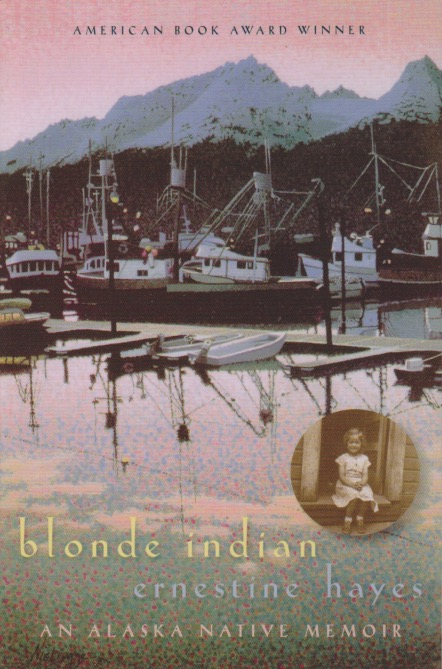
It’s always a pleasure to find an author from whom you want to read more.  It was my wife who told me about Ernestine Hayes’ The Tao of Raven.  We were both so taken by the book that we turned to Hayes’ prior Blonde Indian: An Alaska Native Memoir.  Learning how badly the United States has treated the indigenous population of this continent is one thing.  Learning how badly we still treat them is quite another.  For all of that Hayes writes a memoir that is reflective and perhaps sad, but seldom angry.  The stories told in Tao of Raven start here—we meet the characters who will be further developed in the next installment and become even more curious about them.  The reader wants to reach out and help.  To tell the government, “enough!”

The indigenous peoples of North America (and likely South too, for that is a realm requiring further learning) feel, and have always felt, a close connection to the land.  Europeans see land as a resource for exploitation, not for living in harmony with.  We came, we took, we destroyed.  As if that weren’t bad enough, we left the original inhabitant trapped in grinding poverty, shoving them into places we wouldn’t see.  Until we discovered something we wanted on that land, and then we shoved them again.  The impetus to do this was, unfortunately, Christianity.  I doubt it’s the religion Jesus had in mind, but then he lost control of it millennia ago.  Believing in one’s divine mandate is a sure way of making unwarranted claims on what belongs to someone else.  Remember “thou shalt not steal”?

Hayes’ reflective style is an honor to read.  Feeling a part of a place is a rare privilege.  Born into a mobile society enamored of technology, the modern American has difficulty feeling too attached to any one place.  Of course, many people stay close to where they were born, but to become a “professional” you have to leave.  Blonde Indian is about returning home.  The land knows us.  Many of us don’t know it back.  It’s just a place to set our feet temporarily until a better opportunity comes along elsewhere.  Being tied to no land we lose something of our souls.  Our connection with nature.  With the planet itself.  Hayes is a gifted writer with a story that must be heard.  Wisdom comes through on every page.  We would do well to pay attention.


Many Moons

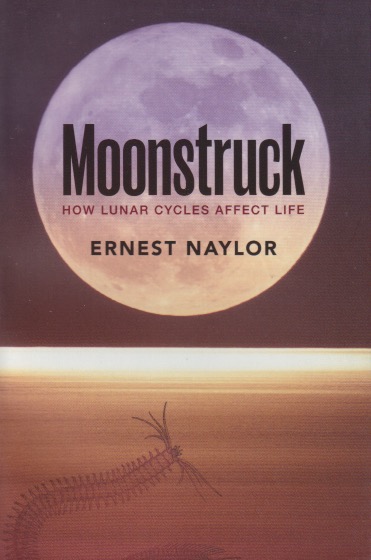
Scientists, often with their base matrix bound up with the local religion, are frequently interested in  myth.  And sometimes religion too.  This is no surprise.  Many of us go into religious studies because of its influence on our lives and scientists, who measure and analyze material realities, must be curious when their results challenge some religious or mythic assumptions.  So it is that Ernest Naylor addresses mythic beliefs about the moon’s influence on animals and what scientific findings on the same show.  Although this book wasn’t exactly what I thought it would be, Moonstruck: How Lunar Cycles Affect Life does address the subtitle assertion quite directly.  Naylor, a marine zoologist, knows about tides—caused by the moon—and their effects on marine organisms.  That connection is the main focus of the book, with occasional forays onto dry land.

What caught my attention right away was that when discussing myth and religious ideas, Naylor describes two stories as biblical: the woodcutter banished for gathering on the Sabbath and Judas’ banishment.  Both of these, he seems to believe, have the Bible banishing the criminals to the moon.  That was news to me.  There may well be folklore with such associations, but a simple opening of the covers of the Good Book would dispel this particular “myth.”  Neither the sabbath wood-gatherer nor Judas were banished to the moon after their deaths.  The former presumably went to Sheol and the latter presumably to Hell.  For me this illustrates yet again how many ideas professional people outside the guild suppose to be “biblical.”  The Bible says very little about the moon.  One New Testament demoniac is described as “moonstruck,” but beyond that the occasional references are mainly just to the moon qua moon.

The Bible’s a big book.  Everyone in western society knows it’s an important book but few read it.  Even fewer deeply engage with it to understand its original context and message.  We hear stuff and we’re told it’s in there, and we believe it.  I first noticed this in high school.  Classmates would tell me “the Bible says…” (you can fill in the blank with just about anything, this isn’t a quiz).  Almost always they were wrong.  By that point I’d read the Good Book many times cover-to-cover.  I owned concordances and knew when foreign matter was introduced.  The thing about the Bible is that it’s fairly simple to look it up.  Moonstruck focuses on marine animals and tells interesting connections to the moon.  It has a chapter on humans and the moon, finding little direct biological influence.  It’s an informative book, just don’t use it to verify what’s in the Bible.


Religions and Horrors

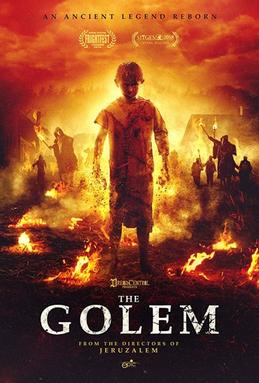
My latest piece on The Golem has just appeared on Horror Homeroom.  It’s free—check it out.  In it I briefly discuss Jewish horror.  I mainly write about Christian horror because that’s my immediate context.  That’s not to say other religions don’t participate in the genre too.  While I worked for Routledge I acquired the book Buddhism Goes to the Movies, by Ronald Green.  Like the title suggests, it’s about movies focused on, or made by, Buddhists.  What sold me on the project was the chapter on horror films.  Much of what’s being called “J-Horror,” or Japanese Horror these days, occurs in a Buddhist or Shinto contexts.  I’m not expert enough in these traditions, however, to spot them with the detail that I do in my own native religion. 

All religious traditions have certain commonalities.  As I’ve frequently discussed on this blog, sex and death are two of them.  Given the powerful ideas that religion trades in, it seems natural that it would appear frequently in the horror genre.  It’s just that modern viewers tend to be somewhat divorced from religion and can’t see it.  Religion is that way—it fills the cracks.  How often do we pay attention to the caulking or grout?  We tend to focus on the tile or woodwork instead.  Religion holds thought systems together, including those of the horror genre.  I just discussed no-go subjects yesterday, but even science shows religion in some of the cracks.  Learning to see it involves learning to shift your focus.

I blogged about The Golem just after I watched it, back in December.  The golem is an original Jewish monster, and Judaism is both a culture and a religion.  It’s difficult to tease them apart sometimes.  The same can be said of many traditions outside Christianity.  In fact, many cultures had no word for religion—the idea of a separate realm of life where you try to please the gods because what you do otherwise is inherently sinful.  (There’s probably a reason that capitalism grew in a Christian context.)  That means that horror particularly welcomes Christianity.  Many of the bases of fear are premised on a religion that, as culturally bound as it is, has always claimed that joining it is a choice.  If you can choose you can choose wrongly.  This is fertile ground for horror, especially when the consequences are eternal.   My Horror Homeroom piece takes a different approach than this, but religion and horror nevertheless find themselves together, often in the same room.