1985

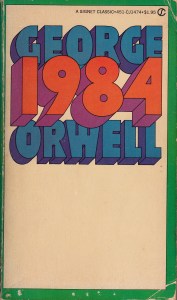
My edition of 1984 contains an afterword by Erich Fromm. I’m afraid I’ve been in publishing long enough to be somewhat cynical about “value-added content” that’s used to sell subsequent printings. Those who buy a book off the shelf want the text of George Orwell’s classic, not the comments of some academic, right? The intended market, however, is for classroom use—the sweet spot for academic publishers. A few adoptions at major university and what is otherwise any old tome from the used book market becomes a profitable venture. My edition of 1984 is a 62nd impression with a copyright of 1961. The class I took where it had to be read was two decades later than that. In any case, Erich Fromm. I first learned about him in college, and given the underlining in his essay I know I read it back when I took the class. In rereading it decades later, an un-remembered point came clearly to me—Fromm’s brief essay is on prophecy.

In the popular mindset, prophecy is predicting the future. While there’s some element of that in the Bible, by far the majority of prophetic texts serve as a warning to change how things are done before it’s too late. There’s a contingency about it. “Or else.” If there’s no possibility of change, why castigate people you’re only going to destroy anyway? Prophecy, despite its often dire outlook, is ultimately hopeful. Wrote Fromm “it was quite obviously [Orwell’s] intention to sound a warning by showing where we are headed.” But more important are the next words: “for unless we succeed in a renaissance of the spirit of humanism and dignity” all will be lost. The spirit of humanism.

Fromm was writing during the nuclear fear that I recall very well from childhood. As soon as I was old enough to comprehend what we had created, I feared we would eventually loose it upon ourselves. I was hardly a humanist at the time, but I was, even in my young days, an unwitting advocate of its spirit. I believed all people had a chance, or should have a chance. Foreign evil, as it was being presented by Ronald Reagan, seemed more fictional than Orwell. The average person didn’t want war. It was the Party that needed our fear. I graduated from college, seminary, and my doctoral program, eventually forgetting Fromm’s words. The Whitehouse had finally found its way out of the Bushes and into moderate humanism. Then Fromm came back.


Editing Sheep

Many academics I know dismiss editors as just another species of laity put on earth to serve the guild. There’s perhaps some truth to that. Without people to write books—and few beyond the professorate are granted the time and leisure to do so—we’d be without a job. One of the more hidden aspects of being an editor is, however, its prophylactic role. One thing that those of us who’ve written books know is that we get pretty close to our subject. We have to. Writing a book while viewing your topic from a distance is possible, but not desirable. Being too close to your subject, however, often leads to extreme myopia. Many are those who are quick to dismiss editorial suggestions wonder later why their books didn’t do better. Think about it. Editors, by definition, read all the latest stuff.

We’re kind of like shepherds, my fellow editors and me. We try to keep the ideas in order. We’re not the owners—the authors are—but without an able shepherd you soon find yourself lacking the sheep that make you wealthy. The benefit of an editor is having dispassionate eyes—often knowing eyes—viewing a nascent book without the love of a parent. Don’t get me wrong—we often have great fondness for those books we didn’t write. We can tell the author something s/he is too attached to the text to notice. We can help the writer avoid mistakes. Not that we’re perfect, but we are critical because we’re rooting for you. Facilitators.

It used to be common for editors to be authors. With the growing atomization of specialization, however, this is fairly rare these days. As a colleague of mine once put it, editors are more like deans than faculty. We look at book budgets and statistics. We face the harsh realities. And some of us were once faculty. I receive dismissive notes now and again, supposing that I’m an English major who made it good. Unlike many editors, however, I write. I’ve sat on both sides of this desk and when I offer advice it’s for your own good. Academics and publishers need each other. For one, without books there’s no promotion. Without books, for the other, there’s no paycheck. Like any shepherd, however, we know that the sheep are the important assets. We shepherd ideas into books. But you have to trust the shepherd to do the job.


Sky Blue

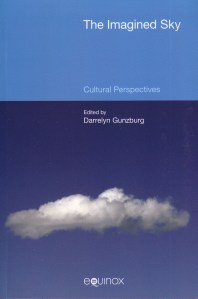
How do you capture a true and abiding fascination in words? That’s a thought that comes to me once in a while when I think about the sky. It’s so hard to define, yet it’s always there. To quote myself: “To understand the weather is somehow to glimpse the divine” (used with permission). I waited for The Imagined Sky: Cultural Perspectives, edited by Darrelyn Gunzburg, for years. I think I first saw an ad for the book two years in advance of publication (yes, scholarly presses can do stuff like that). I kept stopping by the Equinox booth at AAR/SBL to see if it was available. It was the same kind of drive that led me to write Weathering the Psalms. That hope of grasping the intangible. To hold the sky itself. One of my early creative writing club stories was about a boy who wanted the sky. I wanted this book.

Like all books of essays from different authors, it’s a mix of fruits and nuts. There’s some very interesting pieces in here while others seem to have been made to fit only with some difficulty. Still, the sky. I admit to being somewhat disappointed as I read along. This wasn’t for research—my book on the topic is already done—it was for pure intellectual curiosity, what passes for pleasure among academics. Many of the pieces were mired down in detail. Written bout the sky, they refused to soar. Then I came to Tim Ingold’s essay. Here’s what I’d been looking for. Someone who knew the sky could only be approached in terms that contradict themselves at every turn. There is something to say about the daytime sky. It has to do with the nature of light. And of the sky seeing us.

The sky, by definition, is larger than this rocky substrate we call home. It encompasses everything above us. I work in a cubicle with no access to outside windows. I wilt daily like a plant deprived of sun. (Although the wonderful article on light pollution by Tyler Nordgren gave me pause over even that.) I need to see the sky. When clouds block my view, my outlook begins to suffer. It’s that ethereal cerulean I crave. Without it I am but a troglodyte eking out a minimal survival on toadstools and lichen. The sky is our orientation. It is our timepiece. It is eternal. Of the things we do that are evil, polluting the sky is one of the most unforgivable. The key may be in the word “imagined,” but if we could only understand the sky we will have found true religion. They’re called “the heavens” for a reason.


Serpent Number One

I haven’t read The Essex Serpent by Sarah Perry. Yet. My reading list is frighteningly enormous and constantly growing. I just can’t seem to get on top of it. In any case, my wife sent me an NPR interview with Perry that set me to thinking about monsters. (It really doesn’t take much.) One of Perry’s answers in the piece by Ari Shapiro stopped me in my tracks. Perry admits that recent political events have made her question her belief in benevolent humanism. I’d never thought of our current crisis in that way before. This is one example of what happens when it’s—pardon the expression—every man for himself. We’ve stepped away from religion as any kind of public conscience. The religious right doesn’t fit any classification of religion that I know of, so I’m discounting it as a legitimate form of belief. When we look out for number one, a self-appointed number one takes over.

With an insidiousness that can only be called evil, our elected “representatives” tried to sequester away the facts of their healthcare bill that they wanted to ram through in order to give the wealthy serpents tax breaks. The thing about looking out for number one is that you’re only number one to yourself. There can only be one one. Lining one’s pockets with the tax money of others is a trick as old as civilization itself. In ancient times, however, they at least called themselves kings and emperors and made no excuses for what they were doing. We said we were advanced enough to do without the religion that supported these outdated views. We’re back to the days of kings and emperors. Anyone who believes differently is fooling him or herself. There have been snakes in the garden from the beginning. Getting rid of religion won’t clear them from the grounds.

There are many benevolent humanists. There are many more who are suffering under the weight of current political systems. Unhappy people elect dictators. It has happened before—in the current lifetime of many, no less. The warning signs are all there to be ignored. The fruit sure looks nice, hisses our constant companion. Looking out for number two is the first step. Then number three, and twenty, and eight-billion. That’s benevolent humanism. Anything less is, well, a walk down the garden path. We’ve been down that path before. Those who trust serpents must learn to count. To do anything less is less than human.


Media May I?

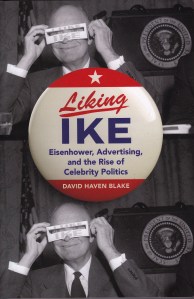
“Television today plays too great a part in our national life for us to allow it to fall into misuse by unprincipled hucksters. We must demonstrate at the polls tomorrow that we will not be treated like suckers at a nation-wide Republican carnival.” The words aren’t mine. Nor are they of this decade. Orson Welles (not the actual source) was reputedly speaking for Adlai Stevenson in the 1956 campaign against Dwight D. Eisenhower. There is a larger context, of course. That context, with a changed cast of characters, reaches right up to this minute and is explored in David Haven Blake’s Liking Ike: Eisenhower, Advertising, and the Rise of Celebrity Politics. In the 1950s Eisenhower disliked and distrusted television as a serious political tool. As Blake traces the story, however, his televised likability led to key components in the elections of John F. Kennedy and the once Democratic Ronald Reagan. Americans, swept off their feet by media advertising, ceased to elect the better candidate, starting over half a century ago.

Don’t get me wrong—Blake is no conspiracy theorist. His book was published before the otherwise inexplicable election of Donald Trump. It is a disturbing thesis to contemplate. The progression is impossible to miss. Eisenhower permitted Madison Avenue ad men to commodify him, reluctantly. John F. Kennedy embraced the media. He was, however, a career politician. Richard M. Nixon tried to play the game, and did so sufficiently to win. Meanwhile, Ronald Reagan, a Democrat inebriated by the money and power of big business, was a B-movie actor cum politician. He won elections like any high school popularity contest. The course was laid. Elections would be won or lost on superficial appeal. No longer would education, intelligence, and the good of the nation be primary in the minds of the electorate. We would vote the way the media decided we would vote.

Blake’s book, as stated, was written before Trump. Many noted last year, although the media was against him, it handed him the election. Front and center in headline after headline, in retrospect how could the election have gone otherwise? His narrow victory (and downright landslide loss in the popular vote) required every bit of energy on the side of reason to combat. Reason, however, is hardly a worthy opponent to media. We want an entertainer, not a leader. After all, that’s what television’s for. Even now the Tweeting’s on the wall. We mainline our news and wonder why things are the way they are.


Science of the Immaterial

One of the truly frustrating things for the honestly curious is a lack of good resources. Specifically here I’m talking about ghosts. More generally, about the supernatural. “Don’t worry,” laugh the reductionists, “there’s no such thing.” But some of us are seriously curious. Those who are willing to admit candidly the events of life will eventually confess to things they can’t explain. People have been seeing ghosts since at least the Stone Age, and yet finding a serious, non-dismissive approach to the topic can be annoyingly difficult. Curious about the background to the film The Conjuring, I wanted some kind of objective treatment to the Perron family haunting. One of the girls involved has written a three-volume treatment, but that will take some time to get through. So I turned to the investigators, Ed and Lorraine Warren.

The Warrens were (Lorraine is still alive) some of the world’s first ghost hunters. Self-taught and deeply religious, they referred to themselves as demonologists. Lay Catholics, they couldn’t perform exorcisms, but they could assist in them. Apart from the Perrons, they investigated Amityville, the haunted doll Annabelle, and the Snedeker house, and many other famous cases. A guilty pleasure read, Ghost Hunters, written by Robert David Chase, along with the Warrens, thumbs through several of the investigations. When all is read and done, however, people who claim to know better accuse the hauntings of hoaxing and since there is no arbiter, the curious are left with that unsatisfying state of “he said, she said,” but no real answers. Ghost Hunters contains a potpourri of cases, mostly of demonic possession. Nothing about the Perron family, though.

No doubt much of the hoopla around reality television ghost hunting is clever marketing and nothing more. Even the acclaimed Ghost Hunters were caught gaming the system a little on their Halloween specials. That doesn’t stop people from seeing ghosts, however. Some academics have attempted to address the issue and soon find themselves in untenured positions (so much for freedom of speech) or mocked by their more “serious” colleagues. What ever happened to old fashioned curiosity? Materialism isn’t the only show in town, is it? We need treatments of the subject that move beyond the anecdotal. It’s difficult to get a ghost into the machine, apparently. Science hasn’t figured out a way to study the immaterial yet. Until it does, those who want to know the truth will be left relying on those who make a living by addressing questions even empiricists fear to ask.


No Explanation

How do you explain that? Everything, I mean. The need to understand “life, the universe, and everything” is as old as our species, and perhaps even older than that. Up until modernity when the limits of physical explanations were reached, gods filled the gaps. Can Science Explain Religion: The Cognitive Science Debate, by James W. Jones, is not an easy book. It demands mental rigor on the part of the reader. It is also a very important book. Mainly addressing the religion debunkers—those who famously declare religion to be pointless and perhaps even evil—the book asks logically, step by step, whether their assertions are rational. Since Jones is, as I once was, a professor of religion, the reader will be forgiven for second-guessing him. Jones makes a very strong case not for the truth of religion, but for its rationality, not its believability.

Beginning with the basics, Jones considers explaining explaining. In other words, can religion be explained scientifically, and if it can what does that logically prove? You need to follow him pretty closely here, but it is worth the journey. Science, as a human enterprise, has its limits. Jones doesn’t disparage science—far from it—just its misuse. The mad passion for a single explanation for everything has led to reductionist thinking. It’s not uncommon for the debunkers to claim everything is physical. Nothing exists that science can’t explain. Jones demonstrates the logical flaws in this approach. Not apologetically, but rationally. Physicalism, like its ancestor logical positivism, runs into serious problems when it comes to explaining much of life. Especially consciousness.

Consciousness remains one of the great mysteries of existence. Nobody knows what it is or where it comes from. Jones isn’t appealing to the “God of the gaps” here, but he is simply taking his own experience as a clinical psychophysiologist and bringing it into the conversation. Mind is not easily explained as a byproduct of matter. The term that has been used in recent years is that consciousness is an emergent phenomenon. Something that is greater than the sum of its individual parts. Jones doesn’t declare science can’t explain this, but rather that when science addresses the question clearly and logically a plurality emerges. One single answer may not be enough to cover it all. I’ve posted many times on this blog about the misuse of Occam’s Razor. Jones here provides a sustained, and rational discussion of questions that have never been answered adequately. Religion doesn’t challenge science, but together they may have more explanatory power than either has separately. Any book that can establish that qualifies as very important.


Gilded Age

What relevance could the Gilgamesh Epic possible hold for contemporary people? Well, one of my colleagues has said that every book is now about Trump. While I resist such thinking, he has a point. Even in reading David Damrosch’s The Buried Book: The Loss and Rediscovery of the Great Epic of Gilgamesh it’s hard to avoid making comparisons. The famous epic is about a bully king who is eventually humbled by the gods. That should make the contemporary association clear enough. Damrosch’s book, however, is actually about how one of the world’s classics—if not the first classic—was lost to the human race and rediscovered only in the nineteenth century. The cast of characters involved in finding the text is colorful and tragic, rather like the epic itself.

Hormuzd Rassam, associate of some of the largest names in Assyriology, was a native Iraqi whose role in the recovery of antiquity was overlooked in his lifetime. Although Rassam did much of the actual finding he was unfortunate enough not to have been born English. While Sir Henry Creswicke Rawlinson and Sir Austen Henry Layard, and even the irrepressible George Smith, gleaned fame over the rediscovery of the glories of ancient Iraq, the very model of a modern Middle Easterner simply didn’t receive his fair share. Rassam wrote books that were essentially ignored. The moving tale of his treatment makes this already gripping story poignant. The Epic, however, not only became world famous—it forced scholars to reevaluate how to interpret the Bible. Although not the earliest flood story, already in the mid-1800s it was recognized that the flood myth in Gilgamesh had more than just a passing influence on grand old Noah.

One of the stories behind the preservation of Gilgamesh is that of Ashurbanipal, the Assyrian emperor. Ashurbanipal believed that to be a world leader one had to be well read. He was the most powerful man in the world in his time. The idea of government is useless without the corrective of history. That doesn’t mean people should only look backward, but those who refuse to look back at all are doomed to make mistakes that go all the way back to the Bronze Age and before. In fact, Stone Age mistakes can (as we are living to see) be repeated even in a nuclear age. That’s part of the charm of Gilgamesh. Reading the classics serves a higher purpose than might be obvious at first.


Making Prophets

I first read 1984 around its eponymous date. The context is informative. I was a student at Grove City College, a conservative, Reagan-esque school of strong free-market inclinations. Being a first-generation college student I knew nothing of choosing a school, and since my upbringing was Fundamentalist, and since Grove City was a place I’d been many times, it seemed the natural choice. As my four years there wore one, my conservatism became effaced before what should be the effect of higher education. I was reading and learning new things—ideas that in the pre-internet days were simply inaccessible to someone from a small town which had no library, no bookstore, and, to be honest, no charm. How was someone supposed to learn in those circumstances? Largely it came down to high school (for those who finished) in a nearby town, and television. George Orwell saw the potential of the latter far too clearly.

It was in this great conservative bastion that I read 1984—I don’t even remember what course it was for. I do remember vividly the discussion of the Appendix on Newspeak—that it was a danger, a very real danger, to engineer language to prevent free thought. That was conservatism in the literal era of 1984. When that year passed we breathed a collective sigh of relief that Orwell’s prophecy hadn’t happened. Maybe Orwell wasn’t a prophet after all. The thing about prophecy, however, is that it unfolds slowly. Trump may have caught the world by surprise, but the evidence is there that the Orwellian groundwork was being consciously laid from the time of the Clinton Administration onward. Those who seemed to think Ingsoc was onto something good began working in local politics—the level of school boards and state elections, to build a strong conservative bloc. How many states have Republican governors? Go ahead and look it up, I’ll wait.

Progressives blithely moved ahead, making real ethical strides. One problem that they’ve always had, however, is believing that Evil is real. It’s an outmoded idea, fit for Medievalist thinking only. There are, however, very real racial supremacists out there. And avowed, unrepentant sexists. They feel that the great white way has been slighted and they are itching for revenge. Don’t believe me? Turn on the news. This is not your father’s Republican Party. In 1984 the Republicans were warning us about 1984. By the next decade they were actively emulating it. Orwell died paranoid and the world was relieved as his prophecy was harmlessly classified as fiction.


Viewing Religion

Scholars employed by the academy sometimes fall under its privileged bubble. In that rarified space, the classics, the Bible, and even serious contemporary literature can be parsed and prodded until it’s no longer recognized and everyone thinks it’s normal. Out on the streets (for some of us taste the outer darkness) people have a difficult time with such minute attention to detail. People like movies. They’re visual, colorful, and they meet deep human needs. Scholars were slow to take cinema seriously, though. It was one of those passing things. Ephemeral. Shadows flickering on a screen. Never mind that the budget for a single Hollywood blockbuster could finance an entire humanities department for years. This is a strange dynamic when you stop to think about it.

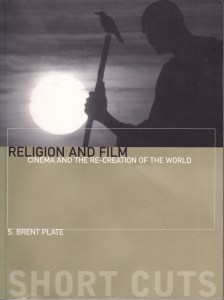
S. Brent Plate, in his book Religion and Film: Cinema and the Re-creation of the World, addresses in a very intelligent way, how film is like religion. Of course, religion is often on the university chopping block these days, so it is perhaps no surprise that among the first academics to pay serious attention to movies in their discipline were religion scholars. What is truly surprising is the depth of that connection between movies and belief. For such a brief book, Plate dives deep and quickly. In a society that seems to have outlived its need for structured religion, movies have managed to hold on through recessions and depressions and terrorist attacks. Indeed, they often provide meaning during those very times. They have a ritual form that meets the kinds of needs religion has traditionally filled. Movies are well worth the time we spend getting to know them.

Sometimes, under the barrage of rhetoric that says all answers are physical, we forget that humans are meaning-seeking creatures. If there’s no purpose to life, our wellbeing suffers. Nobody looking at modern civilization objectively would say that we’re an overwhelmingly happy bunch. One way to understand the popularity of movies is to see them as venues of finding meaning. For 90 minutes to 2 hours we’re shown some version of modern mythology (at least in some cases) that serves many of the same functions as a sermon or scripture. Although Plate hyphenates the word, it is worth pondering that this is for more than mere recreation. The Sabbath idea always involved more than just a day off work. Movies offer us a way toward meaning. So naturally, the academy tends to ignore them. There are, it seems, more important things to do.


Living Challenged

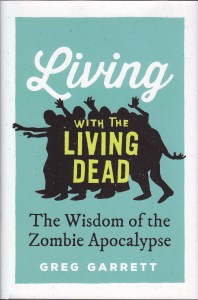
One of the surest signs of hope for the world is that academics are beginning to notice monsters. A trickle began some time ago and it’s probably best to call it a trickle still, nevertheless, the quality of the trickle is improving. Some serious publishers are now counted among the mix of those who pay attention to the lovable unlovable. Greg Garrett’s Living with the Living Dead: The Wisdom of the Zombie Apocalypse is one of the more recent approaches to the undead that looks for religious themes among them. They’ve been there from the beginning with zombies, of course, but few with tenured positions bothered to look. It’s an open question how long the current fascination with the undead might last, but Garrett’s treatment finds them useful sources of theological thought.

Perhaps the aspect of my own fascination that I feel most often compelled to explain is why fear has such an appeal. Garrett makes the point that fear often causes people to make bad choices, and I would have to agree. It is, however, the fear of fear that takes a greater toll. You see, fear is a survival instinct. Without fight or flight we’re all zombie food. Some of us learn this harsh lesson early in life, and if we manage to survive long enough we might even become nostalgic for it. It’s not that I like be afraid, but I do know that if we fear fear—if we avoid looking at what scares us—we put ourselves in danger that the flight response might well prevent.

Garrett’s treatment is helpful in demonstrating that there is a reason for such stories. In fact, according to his analysis zombies can leave you with a profound sense of hope. He uses the living dead as a means of thinking about community, ethics, and apocalypse. Not all end of the world scenarios are that bad. How we treat the living dead may tell us quite a bit about our own rectitude or lack thereof. In other words, zombies are more than their puerile thrills might suggest. There’s something of substance here. I don’t agree with all of Garrett’s conclusions, but he offers a stimulating tour of the current media frenzy around the living challenged and is surely correct that there is more going on with monsters than many of our parents would like to have a religion expert admit. Those childhood years might not have been wasted on monsters after all.


Flat Devils

Fiction is a framework to approach reality. People are drawn to stories because they help us to make sense of a bewildering world which wasn’t, in reality, custom made for us. Marta Figlerowicz’s Flat Protagonists: A Theory of Novel Character explores the types of characters that modern novelists are taught to avoid. She points out, however, that they occur in great novels beginning from the early stages of the category up through fairly contemporary classics. The flat protagonist, in short, isn’t believable. I’m not enough of a literary critic to judge her examples, but I have been thinking of one such character that occurs in popular culture all the time—the personification of evil. In my reading on writing I’ve learned this is to be avoided. Nobody is pure evil. Popular media begs to differ.

Being of working class sensibilities I can’t separate myself from the lowbrow crowd, I’m afraid. My fascination with Sleepy Hollow is pretty obvious on this blog. One of the recurring themes in the series is the antagonist that is indeed pure evil. Whether it’s Moloch, Death, Pandora, or the Hidden One, those who are evil represent the dark side of humanity, or the universe. They glory in destruction. Of course, in late Judaism and early Christianity this was a role taken by the Devil. As a child I was taught that it was wrong to feel sorry for Satan. This clashed in my head with the idea of forgiveness and with the love of all. Could God not love his (and he was masculine) own enemy? How could we hope to do the same, then?

In the most ancient of religions, as far as we know, evil wasn’t personified. Yes, evil happened, but it was simply part of the matrix of being. Some gods tended toward good while others tended the other direction, but a being of pure evil doesn’t seem to have existed. Even Tiamat loved her children, at least until they killed her consort. The stark black-and-white world of monotheism can’t explain evil without an divine enemy. A flat protagonist, to be sure, but one you can always count on to do the wrong thing. The closest we come to that in real life is the Republican Party. Insidious, sneaky, using every possible loophole to shove their agenda through, they are the perfect flat protagonists. No, I’m not inclined to believe in the Devil. Or at least I wasn’t until November of 2016.


Analyze This

Reading other people’s scripture is a privilege. Although somewhere in my long study of the history of religion I must have read excerpts of The Analects, I have not concentrated on reading them through before. Reading other people’s scripture is like being invited into their houses. You can learn a great deal in a little time, but that doesn’t make you an expert. Confucianism is about the same age as classical Judaism. The foci of the belief systems are clearly culturally bound, and those of us raised in cultures heavily influenced by Judaism and Christianity find scriptures like The Analects somewhat bewildering. For those raised in Confucian cultures, the Bible must also be like coming into an unfamiliar country. That’s the way scriptures are, and it doesn’t mean that any are more or less valid than others. That’s often difficult to accept.

I don’t know much about Confucianism, but it is clear that The Analects are intended as a guide particularly for those who seek public office. In Confucian thought, unlike that of the current United States, only the brightest are believed to be worthy of high office. Indeed, it is impossible to read The Analects at this time in history and not see that Trump is so wrong in multiple languages. Master Kong’s description of “the small man,” the petty sort who has no business governing, is the job description of the GOP right now. Is it possible that one political party has ruined two religions? Probably far more.

Learning—even in small increments—of the religions of others takes away the need to feel superior. In fact there are many commonalities between religions, particularly on the ethical front. Reading other people’s scriptures isn’t easy. There’s so much that’s foreign in them. But like the fact that foreign trade brings desirable things from abroad for us, so should be the study of other religions. There is much of value here. I don’t read Chinese. I’ve never been to China. Reading The Analects, however, demonstrates that the noble minds of different cultures have much to learn from one another. No scripture is perfect. All are necessary. It’s only when one faith decides that it alone is true that religious strife begins to replace religious respect. I’m not about to become a Confucianist, but I do have a a slightly better sense of what it might mean to be one. And small steps can lead to impressive places for those willing to learn.


Filmy Substance

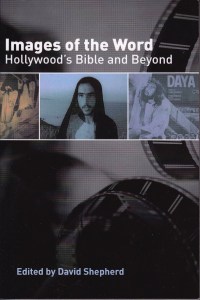
It’s all about Jesus. Well, that’s an overstatement, even in context. One of the amazing things to me about books addressing the Bible in film is just how often Jesus movies come up. If it’s not Jesus movies, it’s movies that have a “Christ figure” or some such Christian trope. Don’t get me wrong—I have no issues with Jesus. It’s just that the Bible and film have so much more in common than this. David Shepherd’s edited collection, Images of the Word: Hollywood’s Bible and Beyond, has some insightful pieces in it and some of what has become “standard fare” already in a field that’s so new. I found Richard A. Blake’s response fascinating. Maybe this was because he doesn’t approach the topic from a biblicists’ point of view.

I’m not really complaining about scholars who look to cinema for a rich source of reception history. I do it myself from time to time. Most of the books on this topic are collections of essays and collections are, by default, uneven. There’s an amazing amount of biblical material in movies that simply goes overlooked. Also, I would suggest, movies offer valid interpretations of the Bible. Somewhere along the development of the discipline we seem to have slipped into thinking that only certain people can legitimately interpret the Good Book. If it is a sacred text, however, it is as much in the public domain as any text can be. And texts in the public domain can legitimately be interpreted by hoi polloi. That’s the nature of being a text with universal assertions, I suspect. Directors and writers, therefore, are legitimate interpreters. We could learn a lot about the Bible from going to the theater.

Like many who’ve taught Bible to undergrads, I sometimes discussed films with them. I always believed students were legitimate interpreters of Scripture, too. This is a dialogue. One of the more interesting aspects of Shepherd’s collection is the pieces that focus on non-Hollywood movies. I don’t see a problem discussing Hollywood since we can assume a larger body of those who’ve seen the film. It is nice, however, to be reminded that “foreign” films also delve into what is sometimes treated as propriety material by Christians. Hindu representations of the life of Jesus? That’s a very interesting idea! Of course, not everyone likes to know how “outsiders” see them. That’s one of the beauties of using cinema as a means of interpreting the Bible. Those of us who study it don’t have the money to influence movies enough to make them in our image. It’s fun to watch someone else’s interpretation.


Sea Around Us

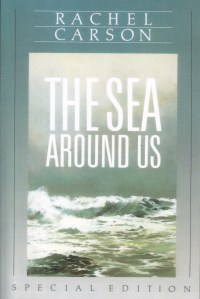
Re-reading books is something I do somewhat too infrequently. One of the obvious reasons is that I won’t possibly finish everything I want to read in my lifetime as it is, and once something’s in the vault I tend to move on. I keep books, however, because I frequently go back to them to refresh my memory. Wholesale re-reading takes commitment. I just finished re-reading Rachel Carson’s The Sea Around Us. It’s difficult to describe the impact this book had on me when I first read it, years ago. Even though modern editions state that it retains its authority (broadly it does) I couldn’t help but be struck by a number of things this time through. Carson thought of herself as a writer. In her day that meant adhering to the conventions of language, which was, I admit, embarrassingly masculine. The assumptions of the 1940s and ‘50s against which Carson struggled set the very frame for the discussion. I recall being told in school, by female English teachers, that the only proper pronoun to use when the subject was of indeterminate gender was the masculine. I raised my eyebrows, but being good at following rules, I didn’t raise my hand.

Not that this takes away from the poetry and mastery of The Sea Around Us. It is a wonderful book. It also made many people stop and think about the ocean for the first time. Really think. And that’s a second observation about my re-reading. Hearing the recitation of how, historically—or prehistorically—the oceans covered much of North America. Thinking about how my hometown, far, far inland would’ve been underwater for eons really made me ponder. We’ve built our coastal cities rapidly, and with typical human short-sightedness. Even without our generous input, global warming has been ongoing for centuries. Sea-levels have been rising. Our desire for wealth, settling as close as possible to the water to facilitate trade, didn’t take into account what would happen in the perhaps foreseeable future. Even now when the warning is loud and clear the businessmen of the White House are in full denial.

There’s a kind of strange justice to this. You see, one of the other features of The Sea Around Us, and one of the most compelling aspects of the book, is Carson’s narrative of how we came from the sea and our desire is to return to the sea. Our blood evolved from ocean water. We rely constantly and in significant ways on the oceans. They, for example, are the powerhouses and condensation points for almost all of our weather. They separate us and bring us together. The very origin of life itself basks in pelagic profundity. Indeed, the ocean supplies the very concept of “profound.” The deeps. Although it had a beginning, it seems the world ocean will outlive our tribal little race. Damaged and poisoned by our greed, in eons it will recover. And those beings that survive will find their own wisdom beneath the waves.