Cuckoo’s Roost

John Wyndham is someone I discovered through movies.  Often considered a science-fiction writer, his works cross over into horror, particularly on the silver screen.  Many years ago I read Day of the Triffids and, having seen Village of the Damned, wanted to read The Midwich Cuckoos.  It was a pretty long wait.  I kept thinking I might find a copy in a used bookstore, but it never happened.  When I saw a reprint edition I ordered it with some Christmas money.  There are some horror and sci-fi elements to the story, but there’s also a bit of thriller, as it’s called now, thrown in.  The book is quite philosophical because of the character Gordon Zellaby, a Midwich resident who keeps thinking about what is happening in terms that don’t match the expectations of other, more prosaic thinkers.  In case you’re not familiar:

Midwich becomes unapproachable for a period because an alien ship (the sci-fi part) has covered it.  Everyone in the village is asleep for a couple of days.  When they awake, generally no worse for wear, they soon discover that all the women of childbearing years are pregnant.  They all give birth about the same time to children that look eerily alike and have bright golden eyes.  The officials know this has happened but adopt a wait-and-see attitude.  Meanwhile, the locals get on with things but they discover these new children develop about twice as quickly as humans do and they can control people with their minds.  They also have collective minds so that their brainpower is quite above that of Homo sapiens.  Zellaby makes the connection with cuckoos—birds that lay their eggs in the nests of other birds and after they hatch shove the other chicks out of the nest.  Indeed, this is a story about what if cuckoos were humanoid aliens who tried the same thing with people.  Told with a British stiff upper lip.

The story slowly unfolds and gets scary as it grows.  I saw the movie quite a few years ago and the details were lost on me, so I was learning as I read.  I suspect that it differs from the book quite a bit.  Perhaps it’s the Britishisms that make this story less of a horror tale.  There’s a kind of jocularity to the style, at least for a good bit of it.  The serious issues of how governments and individuals interact is raised and discussed to a fair extent.  Even though the book is fairly short, there’s a lot going on here.  But now I need to watch the movie again.


Release Date

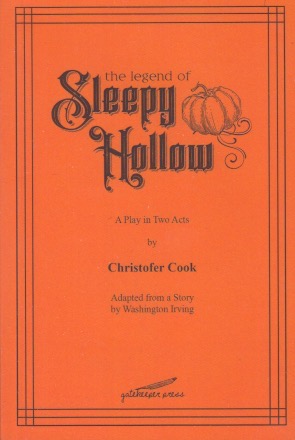
July 16.  That’s the release date for Sleepy Hollow as American Myth.  If you’re so inclined, preordering helps to earn a book attention.  (I know it’s pricey, but thanks for considering it for a second.)  This book has been, like most books, a long time in the making.  As my wife will attest, reading the proofs nearly sent me into a spiral this time around.  It wasn’t because they were bad (I only found 7 mistakes) but it was because of my own doubt about how well I’d done this one.  I found myself between elation at some parts, and dread at others.  I really like this book but I spent my proofreading journey anticipating what critics would say.  I do take a few chances in this one and it has what I believe to be an important message.

Writing books is like walking into a library naked.  There may not be many people there, but those who are can see more than you want them to.  I love the Legend of Sleepy Hollow.  I learned a lot about Washington Irving doing this research.  I learned a lot about Halloween—that’s one of my favorite chapters.  I also like the conceit I applied to the book itself as a labyrinth.  And I’m already looking forward to reading more renditions of the myth once the dust settles a little.  Reading the proofs took a good portion of the weekend, as well as after-work time the previous week.  I could focus on little else.  Books, you see, are parts of their authors.  I feel a little bit crazy for even writing them in the first place.

That having been said, I’m chuffed with a July publication date.  The best time for Halloween books to be available is the summer.  My last two Halloween titles (Holy Horror and Nightmares with the Bible) both came out in November or December.  Not that there were angry mobs at Barnes & Noble demanding them at the end of October.  The other deadline I’d set myself was to have this published before Lindsey Beer’s reboot of Sleepy Hollow hit theaters.  I seem to have managed that one by quite a margin; there’s still been no release date announced.  For her, that is.  I just received mine yesterday.  I guess it’s time to start touching base with those good folks in the Hudson Valley who expressed an interest in the project when I first told them about it.  I’m anticipating Halloween already.


Therapy with Books

I’ve been doing this for years and just found out there’s a name for it.  Bibliotherapy is a treatment method that uses reading to deal with anxiety.  It is closely related to writing therapy, which I also use.  Both have been self-moderated, in my case, and both have been part of my way of coping for decades.  I was actually surprised to learn that these are valid methods of treatment that some therapists use.  I knew about journaling (I suppose blogging counts), but the larger picture was never in focus.  We live in stressful times.  We went through a very stressful four years about, let’s see, eight years ago.  This time I’m intentionally using bibliotherapy.  Reading a book (eyes off the screen, please!) is a way of entering another reality for a while.  Already this year I’ve stepped up my reading, as much as work will allow.  (And now, proofs.)

Writing is therapeutic as well.  Both reading and writing engage your mind.  And can remind you that there are other things to life besides headlines.  I’ve been writing a lot of fiction lately.  That doesn’t mean I’ve been publishing a lot of it—that part’s still very difficult for me—but writers do it because that’s what writers do.  And it makes me feel better.  More balanced.  One of the truly difficult things in my life is when I’m on a roll, particularly with fiction, then I have to stop for work.  The whiplash is almost too much some days.  I realize that you can’t make a living out of pouring your soul into words, unless you’re very lucky.  And even then I suppose it might soon start to feel like work.  Maybe some day I’ll find out, but until then reading and writing will see me through.

I know I’m not alone in this.  There are other people out there who spend as much time as possible between the pages and/or with pen in hand.  There’s nothing like it.  These therapies can change your mood.  Give you hope.  Make you feel complete.  And this can happen whether something you’ve written gets published or not.  I admit to having seen therapists from time to time; I probably should do it more.  None of them, however, have suggested bibliotherapy.  It’s something I stumbled onto myself.  That’s probably no surprise.  I bumble my way through life most of the time.  We all know, I suspect, when our brains are firing properly, what makes us feel better.  The shelves that surround me most of every day certainly know.  And there is a name for it.


Cloistered

Free will.  I’ll go on the record as a proponent.  Any kind of determinism gives me the willies.  At times, however, it does feel as if we’re merely pawns.  Katy Hays deals with the concept of fate, and the occult world of tarot, in The Cloisters.  The writing is quite compelling and the story moves along at a good pace.  It follows Ann, a graduate from eastern Washington who wants to get away from the town where her father was killed.  She accepts the offer of a summer program at the Met in New York City, but because of a mix-up ends up at the Cloisters instead.  I’ve never actually been to the Cloisters, but this novel makes me want to go.  At this museum of Medieval and Renaissance art, Ann works with Rachel, another assistant, Leo, a gardener, and the curator, Patrick.

Rachel has been at the Cloisters for some time and Patrick, her boss, has become enamored of tarot decks and their history.  He’s been seeking perhaps the oldest complete deck known and has come to believe that perhaps the cards do have the ability to tell the future.  Ann befriends Rachel.  The two begin to make discoveries, particularly Ann, but Rachel, who is independently wealthy, manipulates her, taking advantage of the fact that Ann never wants to return home.  Then Patrick is poisoned.  I won’t reveal whodunnit here, but the last half of the book has several twists that make you reassess whatever conclusions you may have drawn.  It’s a fascinating story, well told.

This novel is another example of dark academia.  Much of it takes place in the library of the Cloisters and Patrick holds a Ph.D. while Rachel is a graduate student.  Ann is about to enter a doctoral program.  All of them have some fairly dark secrets in their lives.  And all of them are driven.  The story has elements of social commentary as well, particularly concerning how life in New York City will drive people to extremes when the competition makes this necessary to survive.  Although three of the four commit crimes, they are all likable people.  Three of them are academics as well.  All four are quite intelligent.  I was drawn into this tale from the start and even as the darkness was revealed couldn’t bring myself to dislike any of the characters.  Some novels have antiheroes that you just can’t feel for.  The Cloisters moves in the other direction, and it does make you wonder just how much choice you actually have and how much is left to fate.


Proofing Yourself

Some publishers give you advance warning.  Many do not.  As a struggling writer, after I submit one manuscript I move on to the next project, knowing proofs will eventually come.  The thing is, I’m obsessive.  When I’m in the middle of a project I can think of little else, thoughts of it leaking into other activities throughout the day.  I’m in the middle of one such project, as I have been for at least three months now.  Then the proofs came.  If you write books you know that proofs always come with deadlines.  You need to drop everything and prioritize them.  I read many academic books with tons of errors, and I think I know why.  If proofs come at an inopportune time, you read them as other required activities (I’m looking at you, 9-2-5) permit.  For me, it’s difficult to let go of my present project.  My current fascination.

The proofs for Sleepy Hollow as American Myth arrived yesterday.  I’m excited for this book.  I have hopes of reaching out to local magazines and pitching stories about the Legend this autumn.  But I’m red hot into a new project.  My mind is of an age where there’s no guarantee that I’ll remember precisely what I was thinking if I lay aside my present project for a week to read the proofs.  Indeed, the last two weekends have been so busy with other things that I haven’t had time to watch any horror movies at all.  Just yesterday I awoke at 4 a.m. feeling hopelessly behind already, a feeling that lasted all day.  Then at 4 p.m. the proofs arrived. ( For context, 4 a.m. is late for me.  I’ve been waking up later due to that pointless ritual of annual time changes which, like everything else, the government can’t seem to get right.  In any case, proofs trump all.)

My time is extremely regimented.  I had to drop all committee work at our local faith community because the meetings were all in the evening, scheduled for after when I’d normally be asleep.  I wake early to write and read before the snowplow of the 9-2-5 throws me off the road for another day.  Everyone who talks to me feels that they don’t have time for what’s important any more.  The proofs are here and I’ll get them back by the deadline.  I’ve never been late once told when they have to be in.  My accountant tells me that anything that leads to royalties, no matter how small, counts as a second job.  I hope this one sells well enough to make it feel like that.  In the meantime, please don’t come knocking because I’ll pretend I’m not at home.


More Than It Seems

One of the most fascinating mystical concepts is the idea that words and individual letters have some kind of magical power.  This is perhaps illustrated by the way certain words gather an aura of mystery that can be quite unlike their original denotation.  “Kabbalah” is one such word.  The reason I read Joseph Dan’s Kabbalah: A Very Short Introduction is that I’d found myself growing increasingly confused by the usage of the word.  Given that this is me writing, it was a horror movie that got me wondering.  In one of the movies discussed on this blog (happy hunting and viewing!) one character tells another something like, “It’s the Kabbalah.”  This is said in reference to an ancient and mysterious book.  There is not ancient and mysterious book called The Kabbalah.  So what is it?

I’m not going to be able to give a satisfactory answer to that here.  Dan has about 30,000 words to describe it and he admits that’s not really sufficient.  Sometimes I think, if one could make a living doing it, I’d have been content to sit at the feet of rabbis to learn the depths of the many ancient books Judaism has given the world.  I first became aware of some of them in college, majoring in religion.  At each step of my education and career I’ve uncovered more and more.  Reading this little book added yet further examples.  Judaism, and its direct descendant Christianity, were full of books.  They still are.  And books are full of words and perhaps these words have some kind of mystical power.  But wait, the point of this brief tome is to suggest the word itself isn’t just about mysticism.

Kabbalah can refer to many different things, some of them hardly mystical at all.  For the modern usage of the word, which includes Christian as well as Jewish Kabbalah, we have to get to, well, modernity.  The concept stretches far back in Judaism and means basically, “what is received.”  The initial reference is to Moses on Mount Sinai.  Then there’s the oral Torah, codified in Mishnah and Talmud.  And books, so very many books!  The rabbi is one of those permitted to, and sometimes expected to, come to know these ancient texts and their modern applications.  That’s not to suggest Judaism is particularly mystical.  It can be, just as Christianity can be, but isn’t necessarily so.  It’s complicated.  If you’re curious, whether because of a horror movie or not, I can recommend this book.  It’ll give you plenty to think about, and even more to read and learn.


What You Believe

This is an important and frustrating book.  I just can’t figure out if the black-and-white thinking is disingenuous or if it was really believed.  I don’t mean about the subjects of Daniel Dennett and Lisa LeScola’s Caught in the Pulpit.  I wonder that about the near-arrogance of the model they propose while exploring the very real problem of, as their subtitle says Leafing Belief Behind (for clergy).  You see, I’ve read, and even walked a little way with the “new atheists” (my private beliefs are private but one thing I will say is that beliefs constantly change for anyone who seriously seeks the truth.  If you want to know them, get to know me).  This book, which explores clergy and other religious folk who’ve lost their faith, addresses something very real and very important.  It’s just that the framing feels wrong.  I appreciate that the authors exhibit such sympathy for their subjects—it is difficult to change the religion in which you were raised.  But it it’s not black-and-white.

Apart from the “either/or” outlook, there’s also the fact that what many people interviewed lost was not so much a belief in God as it was a belief in the Bible.  These are different things.  No doubt, our love of Bible has caused quite a lot of damage.  Since many believe the Bible to be a magic book, losing that particular lens can make things blurry.  I guess that’s what I missed in this book—a sense of blurriness.  Scientism is a belief system just as fundamentalism is.  Interestingly, I keep coming back to something that should be obvious to scientists—our brains did not evolve to learn “the truth.”  Our brains evolved to help us survive.  There is much we still don’t know.  What’s wrong with being humble about it?  Perhaps it’s sour grapes since I was ousted from a religious career just when this study was taking place, but I didn’t qualify because I believed.  Not that they’d have found me, in any case.

Many clergy, I know, do not believe what their congregations think they believe.  As you go into theological education some things are revealed that it is in nobody’s best interest to broadcast.  It might be good, however, if it weren’t atheists trying to lead the charge.  I was pleased to see Dennett himself suggest this in the book.  I was also glad to see him admit that “the new atheists” do not struggle with the very real issues raised by theological education (whether in formal settings, or through private reading).  There is a very real disconnect here, and this book serves a valuable function in bringing it to public attention.  What’s missing is a solution.


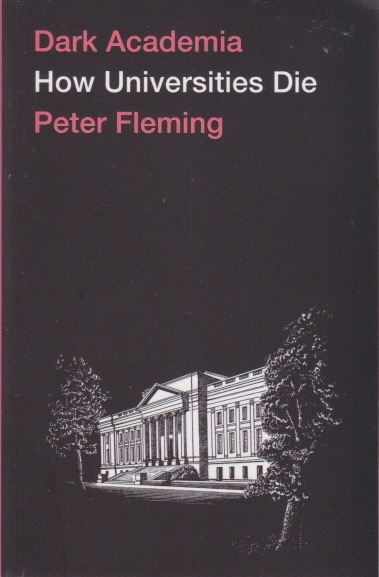
Contours of Dark Academia

As I attempt to trace the contours of dark academia, I’m learning that much of my reading has been classified that way by others.  My main engine for discovering this is Goodreads, making me think I should shelve my own books more.  Also, I recently visited a local Barnes and Noble where one of the front tables was dedicated to dark academia.  Looking over the titles gave me fiction reading ideas for months.  In any case, apart from classical dark academia, where the setting is an institution of higher, or specialized learning, the category for many includes books about books.  This would pull in titles such as Carlos Ruiz Zafón’s The Shadow of the Wind, which I read before my current conscious interest in the genre.  I think I was looking for gothic books back then.  I include, on my personal list, books about students with dark experiences, such as Familiar Spirit by Lisa Tuttle.

The books about books category does shed some insight.  I love Italo Calvino’s If on a Winter’s Night a Traveller, but it’s not really dark enough to be, well, dark academia.  I understand the critique that dark academia tells stories of privilege, but that dissipates somewhat when including books about books.  Higher education is, and remains, a domain of privilege, but it is possible for those raised poor (such as yours truly) to break in.  I enjoyed higher education throughout the eighties and into the aughties.  After that it began to get far too political and business-oriented.  (Not that I wouldn’t go back if I had half a chance.  Or even a quarter.)  My point is, dark academia can deal with those who lack privilege, but I also believe there’s no point in denying privilege does exist.  And opens doors.

Dark academia is new enough that its parameters are permeable.  To me the real draw is that a fair bit of sculduggery really does exist in higher education.  The reading public seems eager for it.  Thinking of all the odd, somewhat tenebrous things that occurred in the course of my couple of decades in academia, the genre rings true to me as well.  As I think back over the books I’ve read, I think maybe I should build a shelf especially for dark academia.  I’m trying to read in it more intentionally now, but I’ve been unintentionally exploring it for decades.  When you add books about books, Umberto Eco’s The Name of the Rose joins the crowd, and I read that one all the way back in seminary.  I tried to be part of academia, but there’s a darkness about an unrequited love, and so it just makes sense to me.


and Seek

I’m afraid there may be spoilers—but not for the ending—below.  Discussing this story will be difficult without giving some things away.  Kiersten White’s Hide has given us an imaginative world with masterful misdirection.  Fourteen people a bit down on their luck, and strangers to each other, are offered an opportunity to win $50,000.  They have to hide in an abandoned amusement park for a week where two of them will be caught each day and the last person remaining wins.  The novel mostly follows Mack, a woman whose father killed her family while she survived by hiding.  Not only does she have survivor’s guilt, but she’s been homeless and the shelter director thinks she’ll have a chance at winning the prize.  There is a lot of social commentary here, as well as a monster.  Okay, spoilers below.

The minotaur is a most useful monster.  The backstory here isn’t in Greece (well, the deep backstory is, but that is only played out partially here) but in Asterion.  No state is given for the town, and the contestants can’t be given that information.  They’re locked in the park, with supplies, but very little information.  Then the contest starts.  After a couple of days Mack and a couple others begin to suspect that something’s wrong.  Those who get caught while they’re hiding leave personal effects behind, and since they all need the money that seems unlikely.  Then their host stops coming, leaving the bewildered contestants on their own.  Mack and those she’s befriended come to understand that being “out” is really being eaten by the minotaur.  Well, they don’t realize it’s the minotaur.  The one who does gets eaten before he can tell.

In any case, this is a tense horror story based on a classic tale.  There is, of course, a rationale for the murderous behavior in a modern setting.  White keeps you waiting quite a while to learn what it is, and there are plenty of places where I thought I’d figured out how it’d end only to be proven wrong.  And she gives believable character sketches and explores the kinds of motivations that drive different people who find themselves needing an income.  (One of the characters was raised in a religious cult—bonus!)  Those who are poor aren’t always at fault, but those who are wealthy will do anything to preserve their excess.  We see that playing out in daily life, even as it’s being explored in fiction.  The minotaur isn’t always what we think it is.  And the more you think about its insidious origin story provided here, the scarier it becomes.


Deep Backlist

It’s kind of a personal archaeology.  Exploring the terrain of one’s own mind, that is.  Back in January, I mentioned my “deep backlist,” which is actually my “to read” list stored on an online book vendor site.  When it comes time to buy (or provide a gift request for) a new book, this list is my first stop.  I started the list in 2010.  Since I’m cautious about book buying (believe it or not), there are many items on that list that never got purchased.  And if I go back far enough, I have to confess to myself, there are books I really don’t want to read anymore.  At least not at this time.  That list, however, is a snapshot of my interests at the time an item was entered.  I don’t delete things from it unless I actually get them.  Life has taught me that when interests fade it’s usually not permanent.

Sometimes I think I should be more intentional about my reading.  When I was writing Sleepy Hollow as American Myth, I was adding lots of books related to the subject.  Many of them came off the list as I purchased and read them, but not all.  Although I’m currently involved in my next writing project or two, I don’t remove the remaining Sleepy Hollow-inspired books because I may well, depending on length of life, come back to them.  The same is true of all my books from Holy Horror on.  Depending on where I am on that list, I can tell what book I was working on, and not a few that never got finished.  An accountant once told me that if you are writing books to earn money (as paltry as those earnings may be), the books you buy may be tax write-offs as business expenses.  Such is the mind of capitalism.

My wishlist is a personal archaeology of some poignancy.  It took me many years after being shunted out of academia (no matter how dark) before I found employment stable enough to allow for me to start writing books again.  Weathering the Psalms was started around 1997 or 1998.  It was published in 2014.  Even after that it took a couple years to realize that I could write Holy Horror.  And there are other books that, if I’m honest with myself, I know I won’t have time to write or finish.  I find scrolling through my “deep backlist” an inspiring but melancholy exercise.  We all have layers, and strangely enough, even the books that we wanted to read, or just remember, can speak volumes about who we are.


Indigenous Gods

Engulfed by capitalism, it is too easy to ignore the indigenous population of this country.  I grew up thinking, in some way, that American Indians were extinct (this was small town America, after all).  Then we visited a place—in upstate New York, I think, but the recollection’s hazy—where there were real Indians.  This was before exoticism was a bad word, and I thought them quite exotic.  Maybe it was the way I was raised, but I’ve never thought of myself as better than anybody else.  Certainly not on the basis of race or gender, or even personal worth.  In any case, there were still Indians.  I’ve always been an admirer of their culture.  Jennifer Graber’s The Gods of Indian Country is an informative monograph on, as the subtitle says, Religion and the Struggle for the American West.

My interest in American history is relatively recent.  Growing up, I always found European history of greater interest, and then, for many years, the ancient history of the states along the eastern coast of the Mediterranean.  It was the antiquity of it all.  History feels safer when it’s at a great distance.  American history is not old.  When hearing that some of the events discussed by Graber took place in the 1910s, I kept thinking, “were we really that naive just over a century ago?”  Or was our nation willfully blind to the plight of the people who lived here before the Europeans arrived?  The narrative has changed.  And if it hasn’t, it must.  How would we like it if, say, aliens landed and assumed the right to take over capitalistic America?  It’s only our arrogance that prevents us from treating Indians better.

Religion, particularly Christianity, fueled many interactions with the Indians, as Graber ably demonstrates.  The assumption was that Indians had to assimilate to capitalistically-fueled Christianity.  Private ownership.  Free trade.  Otherwise the cultures could not share the land.  Treaties were broken because the “Christian” rules of the new overlords demanded it.  Graber also explores some Native American religious practices as well, chiefly among the Kiowa.  Since the book is fairly brief, it doesn’t include any kind of comprehensive coverage of Indian religion, nor, of course, of early American settler religion.  What happened is that religion and politics joined forces to justify stealing what belonged to someone else.  Those who study the history of religion recognize this pattern.  It isn’t a rarity, unfortunately.  Although my interest in American history is recent, it is growing.  What happened in your own backyard determines so much of how we’ve become who we are.


First Tower

In these days when daring to think feels dangerous, R. F. Kuang’s Babel: An Arcane History feels dangerous to read.  Good literature is like that, even if it’s uncomfortable to read as a “white” man.  A fantasy largely set in Oxford, it’s based on the premise that languages, when placed next to one another, engraved in silver, have enormous power.  The power to run an empire.  This is a post-colonial story, and I took comfort in the working class support, for their own reasons, of exposing the very dangerous world of capitalism.  With its “human capital” as we’re now being called by businessmen.  But I digress.  Four students, three from abroad, are brought to Babel, a tower in Oxford that houses the Royal Institute of Translation.  Their use of their native tongues helps build immense power in this Oxford tower.  Power that fuels Britain’s imperial goals.  But all is not well in academic paradise.

Slowly three of the four scholars come to realize that their home countries are being exploited for purposes of yet further exploitation.  The wealth always flows back to England, and even the small emoluments it offers to those other nations cannot negate the fact that the end goal is British superiority.  The protagonist is Chinese, taken from poverty to live in academic luxury, in exchange for what was his birthright—his linguistic ability.  It doesn’t end well.  This is not a happy novel.  But it does highlight something we seldom consider; our language ability is truly an amazing thing.  We try to convey a fraction of what’s going on in our heads to another person, and that person has some ability to understand it.  And languages are ways of thinking.  I used to tell my students that all the time.  It’s more than just words.

This is also a fairly long book.  As with most fairly long books, you’re left feeling it once the story concludes.  Even though language allows us to communicate, it’s sometimes uncomfortable to hear what someone else is thinking.  We don’t have to be woke to realize that Black, or Asian, or indigenous experience is quite different from what we call “white.”  And such voices deserve to be heard.  We live in a time when white men don’t like to be told that they’ve participated in oppressive behaviors.  Probably most of them (for I believe people are generally good) are not intentionally evil, but they participate in a system which can be.  And often unthinkingly so.  Thus these days thinking feels dangerous.  And this book will make you do so, nevertheless.


In Praise of Paper

I write quite a lot.  I’ve done so for decades.  As I’ve tried to carve out a writer’s life for myself I noticed a few things.  I’ll start a story or novel and put it aside.  Sometimes for a decade or more, then come back to it.  I recently found what looks to be a promising novel that I began writing, by hand, back in the last century.  As electronics forced themselves more and more into my life, I began writing it on my computer.  I must’ve picked this story up a few years back because I clearly began revising it, but I ran into a problem.  The program in which I’d written it—Microsoft Word—was no longer supported by Apple products.  I eventually found a workaround and was able to extract a Rich Text Format from files that my computer told me were illegible.  If you want illegible, I felt like telling it, go back to the original hand-written chapters!

I dusted this off (virtually) belatedly, and started working again.  Then I reached chapter four.  That’s where I’d stopped my most recent revision.  Then I discovered why.  Near the end of the chapter were two paragraphs full of question marks with an occasional word scattered in.  A part of the Word file that the RTF couldn’t read.  Frustrated and heartbroken—there’s no way I can remember what this said some thirty years after it was initially written—I simply stopped.  This time I went to the attic and found the hand-written manuscript.  I went to the offending chapter only to find that the corrupted passage was missing.  It was what we used to call a “keyboard composition” and it was eaten by the equivalent of electronic moths.

Photo by Everyday basics on Unsplash

Now, I’m no techie, but I just don’t understand why a word processing file can no longer be read by the program in which it was written.  Publishers urge us to ebooks but how many times in my life have I seen a new system for preserving electronic files fold, with the loss of all the data?  It’s not just a few.  And they’re asking us to make literature disposable.  If I have a book on my shelf and I need to look up a passage, I can do so.  Even if I bought the book half a century ago and even if the book had been printed a century before that.  I’m aware of the irony that this blog is electronic—I used to print out all of the posts—and I have the feeling that my work is being sacrificed to that void we call electronic publication.  That’s why I keep the handwritten manuscripts in my attic.


Staunching Stigma

Independence Day is not a great movie.  As my readers know, that doesn’t stop me from watching.  I’ve seen it a few times.  Watching it post-UFO/AUP disclosure via the New York Times, I was struck by something.  Even in the diegesis of the movie, where alien craft, clearly visible, hover over major cities, when Russell Casse tells the military he’d been abducted, people roll their eyes.  Of all the stigmas our culture has invented that of the “crazy people” who see “flying saucers” is one of the deepest and most persistent.  Even after the Times, and the US Navy admitted they were real, and their tech is not of human origin, people refuse to believe.  I’ve followed this for some time.  I read a book by Donald Keyhoe before I was old enough to drive.  Like most thinking people on the topic, I kept quiet about it.  Stigma.

When I received Luis Elizondo’s Imminent for a Christmas present, I was secretly very pleased.  You see, the evidence has been in plain sight (Poe nods knowingly) for decades, for those who don’t accept ridicule as an immediate response.  The Keyhoe book I read was published in 1955.  It was my grandfather’s book.  For sure, the stories casting doubt on Elizondo’s reputation and sanity began almost immediately after he cooperated with journalists in 2017 when a fraction of the truth made the New York Times.  Between Keyhoe and Elizondo, many insider, “death bed” books had revealed that this was something we should pay attention to.  People laughed.  Oh, we love to laugh.  Imminent, however, is quite a sobering book.  I’m not sure full disclosure will ever happen, but it’s trickling out and a finger in the dam can’t hold forever.

Stigma as a means of social control is unfortunately effective.  I’ve always felt that mocking what you don’t understand is a poor way to get smarter.  Still, for those willing to consider the evidence over the years, there’s been plenty to study.  Either there’s something to this or our government and military are filled with pathological liars (outside the Oval Office, I mean).  It seems far more reasonable to examine the evidence, when it becomes available.  There are contractors in the military-industrial complex (Eisenhower warned us about this decades ago) who benefit from keeping secrets.  Imminent is an eye-opening book.  Hopefully it will be widely read and the implications taken seriously.  It’d be too bad if a catastrophe were necessary to stop the stigma, after it’s too late to do anything about it.


A Plea

One literary Saturday recently I found myself in the attic.  When we first moved to this house I sometimes wrote up there but I quickly learned that with no heating it was intolerably chilly on autumnal mornings, and that didn’t speak well for the coming winter.  Nevertheless, I set up a shelf with my fiction writing on it.  I was looking for something on that shelf when I discovered many things I’d forgotten.  Novels mostly.  I don’t know how many I’ve started, but I have completed six (now close to seven).  Going through the papers and folders on that shelf I found about 250 handwritten pages of another novel—one that I’d completely forgotten.  There were stacks of short stories, also handwritten, awaiting some recognition.  I haven’t had a ton of success in getting fiction published—the current count is 33 short stories—but I was inspired by what I found.

When my wife and I visited a lawyer some years back to make out our wills, I kept trying (unsuccessfully) to interject a literary executor.  At that point I had published only three books and two of them were academic.  Besides, there’d probably be an extra charge for adding that codicil.  I guess what I fear is that all of this work will just get dumped when I die.  Retirement doesn’t look like a realistic possibility for me, and what I need is time to sort it out.  Some of the novels aren’t good.  I know that.  Some are.  One was actually under a book contract for a couple of years before the publisher decided to kill it when the acquisitions editor left.  I haven’t found a replacement publisher yet.  Then, a few years back, my laptop started complaining about the amount of writing I was asking it to remember.  I had to buy external hard drives to store some of my writing.  Even I forget it’s there sometimes.

Graphomania should have its definition expanded to include those whose thoughts overflow to the point that they’re constantly writing.  There’s a reason I get up so early in the morning every day.  Up there in the attic I found what I was looking for and pulled it off the shelf.  A half-written novel that I had, unwittingly, started to write again presuming that the original had been lost.  All of the writing has been done while trying to hold down a demanding 9-2-5 with no sabbatical and few vacation days.  Not all of it is finished.  Not all of it is good.  But someone, I hope, will stand in front of the dumpster on some future day and say, “This doesn’t get thrown away.”