United We Fly

IMG_0563

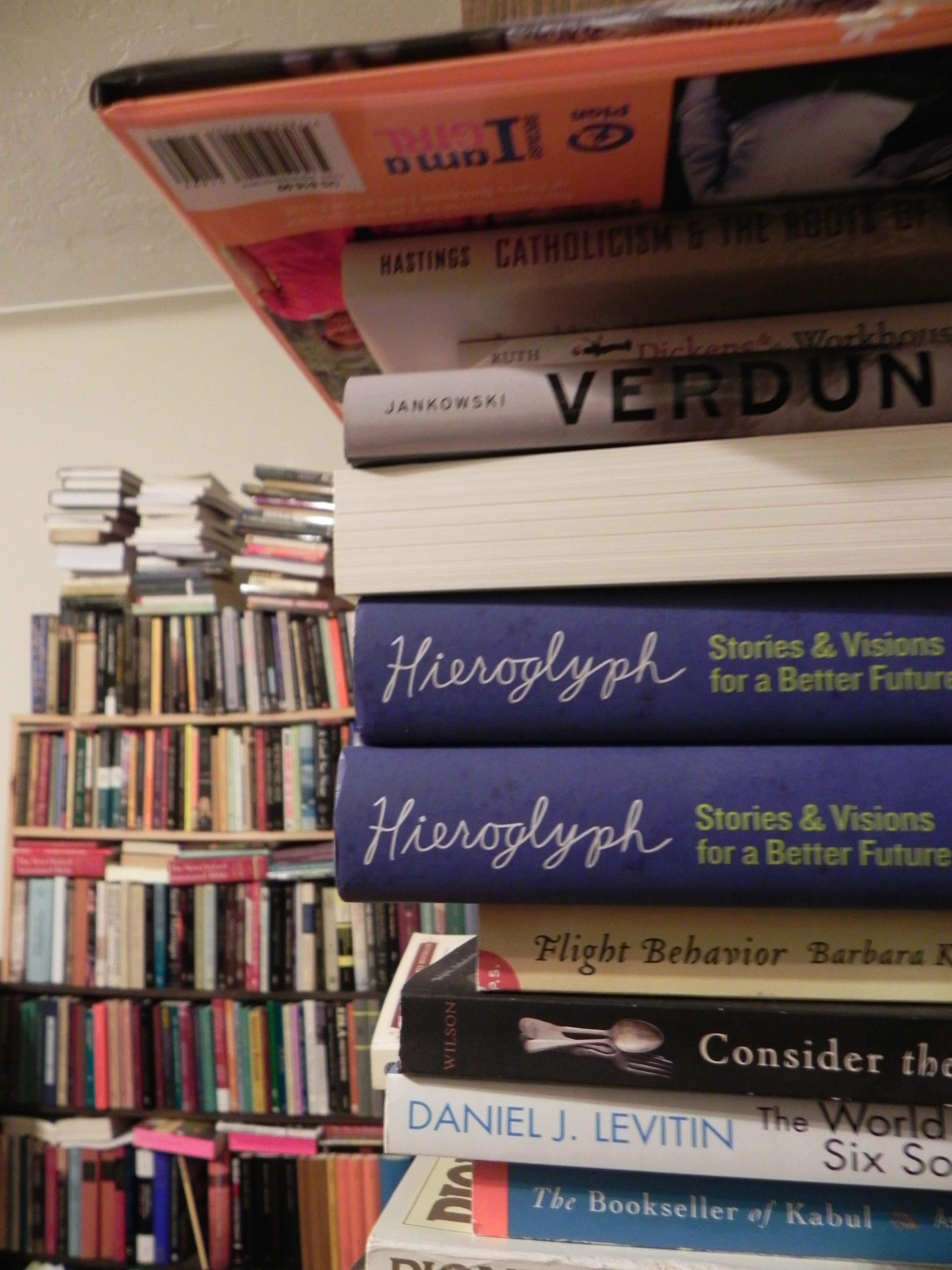
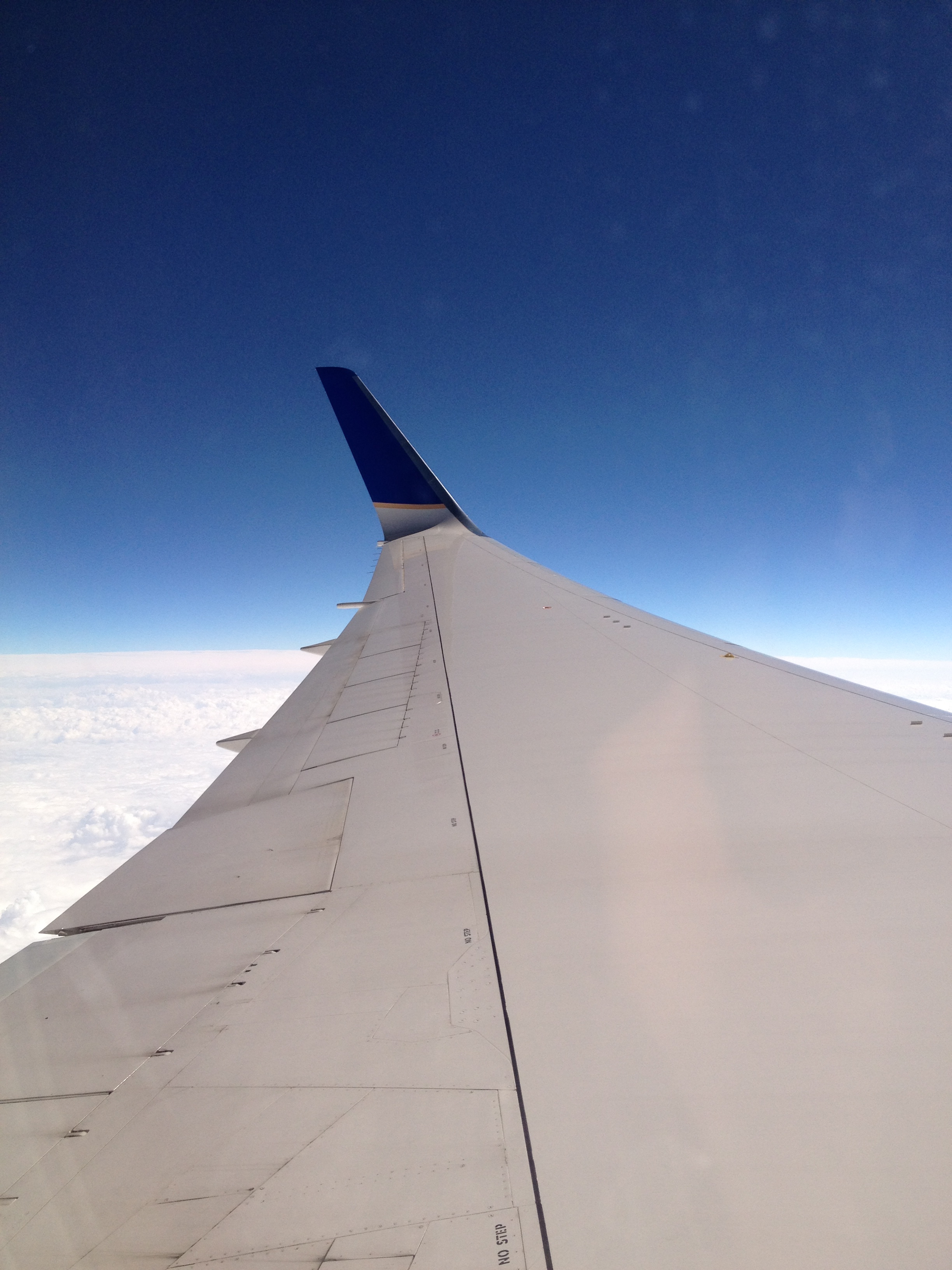
I’m on a flight from New York to London. This wasn’t a trip I particularly wanted to take (what business trip ever is?). I don’t like flying, and changing time zones takes days off my life. Bowing to the inevitable, I dutifully checked in yesterday. However, that didn’t go quite as planned. I’m flying United. I generally take United since they offer many destinations out of Newark, and who wants to cross Manhattan to get to JFK or Laguardia? I’ve actually become rather fond of United’s snack boxes. Since I’m so 1990s, I decided to check in on their website. Two or three pages in, they stopped me and suggested I should use my cell phone. This is much preferred, I’m told. Well, I do have a cell phone, but I’m not sure if I’ll be able to access it in the UK. Still, this is the way things are done these days. I had United’s app on my phone from a previous flight, so I happily typed in my confirmation number, to fly the friendly skies. Since this is an international flight, I have to scan in my passport. That’s a bit worrisome, but the app says to do it and who can argue with an app? Click. My passport is being encrypted and verified. I’m free to go. Then the message pops up. I can’t check in.

I’m old enough to know how to use a landline. I called United. The agent was very friendly, just like the skies, but clearly couldn’t comprehend the complexity of my issue. One, I couldn’t check in. Two, my passport had been sent to somebody, but who was it? United? Some foreign government? James Bond? I didn’t mean to make the guy nervous, but this is my passport we’re talking about! He said he would transfer me to tech support. The call was transferred. The cheery female robot asked me if I wanted a $100 Wal-Mart card. I should press one. I don’t support Wal-Mart so I didn’t press one. She cheerfully insisted. I resisted. She came back on and said that I could press any button for a Wal-Mart card. When I didn’t comply, she hung up on me. I called United again.

This time the agent assured me I would have a human response at tech support. I heard the two tones connecting me with a guy who sounded surprised to hear a voice from the outside world. It was like he was speaking from a dank basement somewhere. He had no idea where my passport scan went either. He suggested deleting the app and then downloading it again. Start the process over. Reboot, as it were. I know the reboot drill, but I was worried about my passport scan. Where had it gone? If his solution worked, at least one problem would be solved. I could check in and reserve my place on the flight (ironically, buying a ticket isn’t enough to do that). I confirmed the instructions with my light-deprived docent. I asked, in parting, what I should do about my missing passport scan. His advice was the very image of an ouroboros. “You might try calling customer service,” he said. I don’t like flying.
Happy Disruption

IMG_1567

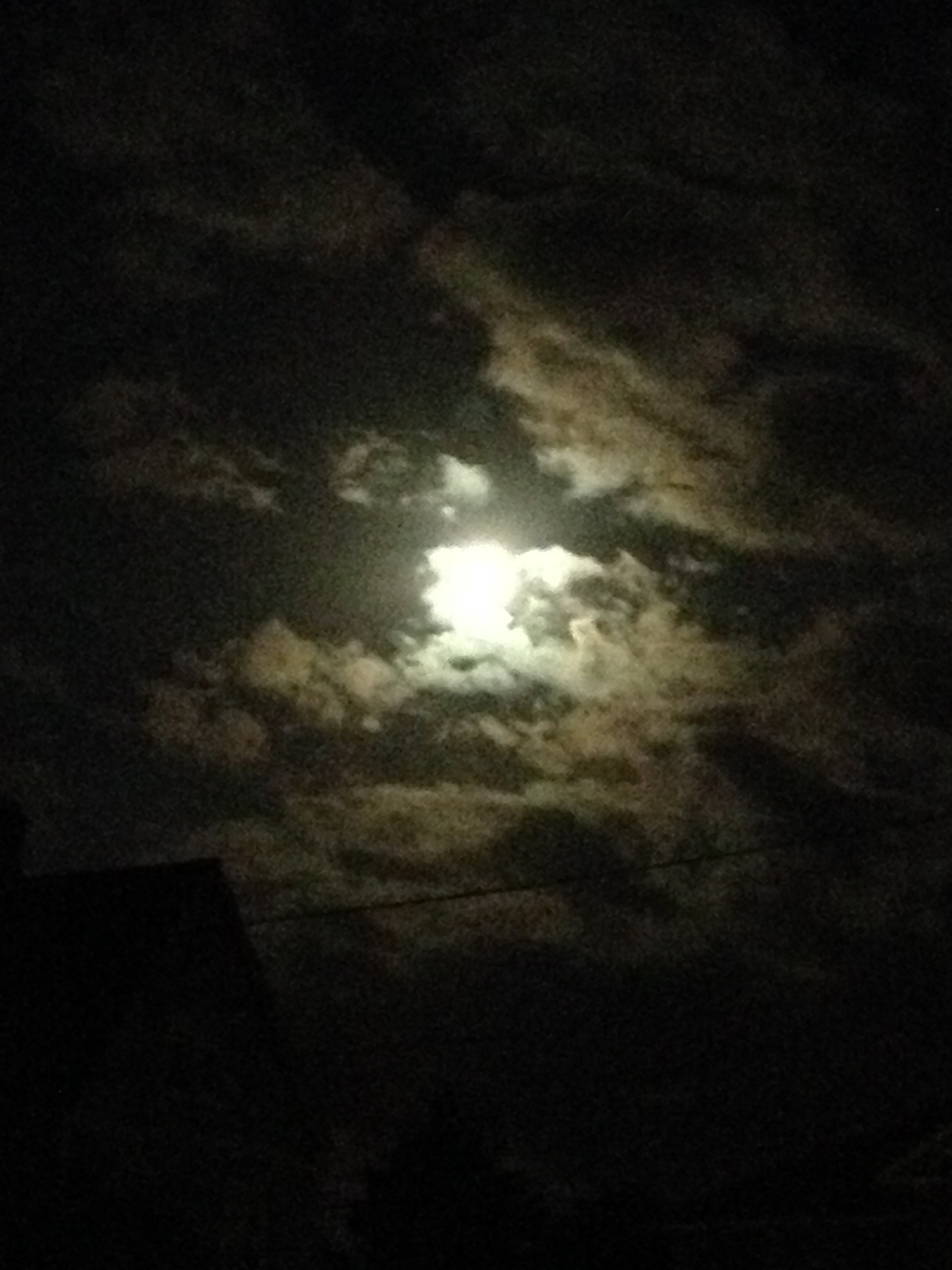
Last night’s full moon shone brightly, announcing the grounding of the date of Easter, obviously associated with Passover. Unless one has a natural sense of the progressions of the lunar calendar, Easter can always seem a matter of guesswork. It fall on the first Sunday after the first full moon after the vernal equinox. It is one the many transitional season holidays. All holidays are intended to be disruptions from the normal flow of time. Of course, business is the natural enemy of holidays, except for Christmas, and, increasingly, Halloween. The usual business calendar eschews disruption, and there are no days off associated with the Passover-Easter complex. A little thing like death and resurrection shouldn’t stand in the way of turning a solid profit. Still, the point of holidays is their disruption of normal time.

My own time faces disruption this week with a business trip to England. Funny how often these seem to be demanded about this time of year. My usual blog posting patterns will surely be disrupted as time zones zip up across the Atlantic. Disruption will become endemic. Disruption without the celebration. Ritual experts tell us that Passover, the basis for Easter, was a development from an even earlier pre-biblical rite. People have always found a way of marking the more obvious transition of seasons, the planned disruption of daily life.

Routine becomes comfortable, no matter how inherently uncomfortable it may be. I awake before 4 a.m. each day with many others whose lives are dictated by bus schedules and economic necessity. No matter how many years I’ve been doing this my body objects to the early hour that draws me from the comfort of sleep. It is a disruption. Now my disruption is about to be disrupted and I’m wondering what is holy about any of this. Time, which always comes in limited quantities, seems best spent with those we wish to celebrate. Our own private holidays. But business and resurrection don’t sit comfortably together. True religion and money are, it seems, inherently at odds. As I pack my bag and turn to the east, I look at my calendar and wonder when the next true holiday will arrive.


To See the Sky

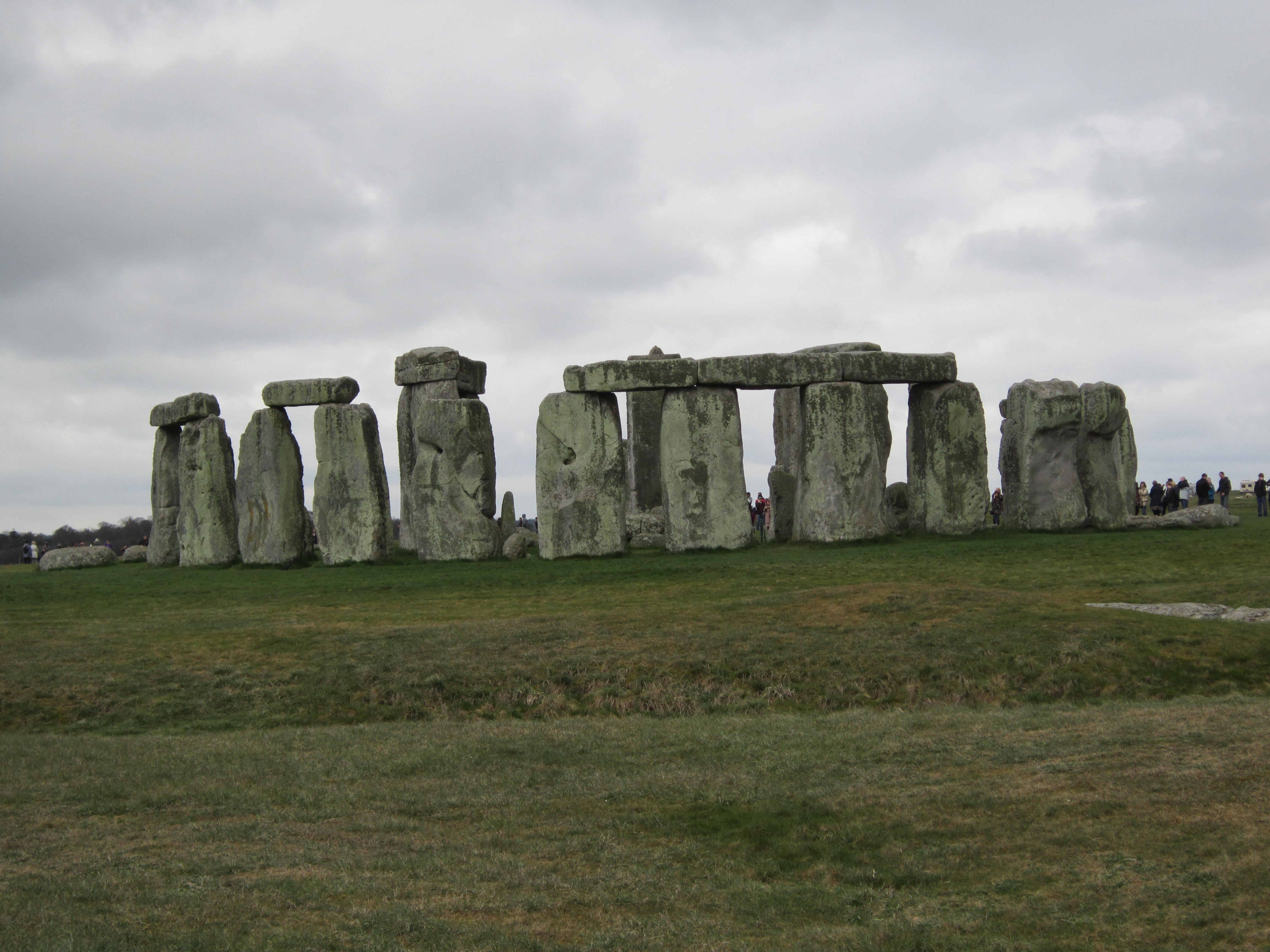
Stonehenge. The very name evokes mystery and myth. Although archaeology has revealed more about the monument than any mere visual survey, we are still very much in the dark about its origin and purpose. With one exception: we know it was something religious. When we discover artifacts that required a tremendous outlay of human effort in pre-industrial periods, the motivation, according to our current understanding, is almost always religious. Modernity has come to us with a cost. In any case, a recent story in The Guardian highlights the view of Julian Spalding, erstwhile museum director, that Stonehenge might have housed a platform on top of which the real action took place. As might be expected, experts disagree. With its precise solar alignment, one wonders if a roof might have been superfluous, but then again, there is the sky.

IMG_0129

When I begin to feel depressed working in the belly of a concrete bunker with no windows, indeed, no view of the sky at all, I find my way to a room with a view of the outside. I’ve always had a celestial orientation, and looking at the sky—especially on a day with some blue showing—can cure my sadness in a way almost supernatural. I suppose that was part of the reason I wrote Weathering the Psalms; there is just something about the sky. In that book I couldn’t really verify what it was. I still can’t. I know it when I feel it, however, and this perhaps the feeling the Julian Spalding is asking us to explore at Stonehenge. Ancient people directed their worship upward, not toward the ground.

Like all universal statements, however, there are exceptions. Some ancient religions recognized our place as children of the earth. The celestial sphere, however, is part of the package. Our atmosphere makes our world habitable. While the moon is beautiful and Mars inspires wonder, their lack of air spells their hostility toward those who need to breathe deeply and look up into the blue once in a while. Almost Frazerian in its archetypal view, Spalding’s idea has a beauty of its own, whether or not the evidence bears it out. People of ancient times had a talent we lose in our cubicle-infested, results-obsessed world. We all exist because of the atmosphere above us. And when modern views become too much for me, I head outdoors where, sun or not, I find my solace in the sky.


Music Alone

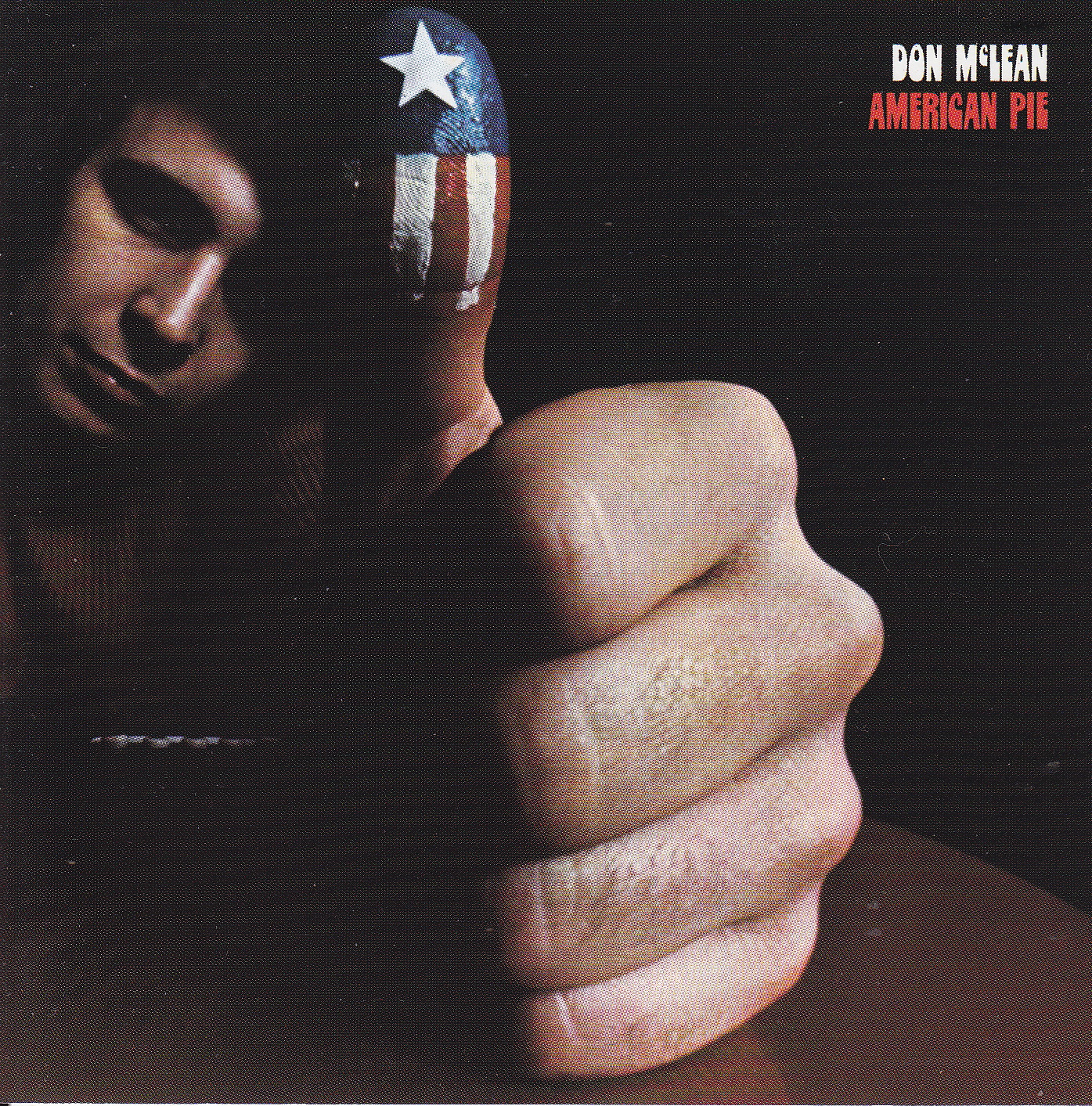
Thinking back to our days in Edinburgh, I had a song come to mind. I could remember only a word or two, but the tune and the cadence were still there. Not a singer, nor even a hummer, the best I could do was ask my wife if she remembered the song based on the two words I could recall. Amazingly, she did. When I went to download it on iTunes, I learned that it isn’t available in the US. Probably copyright laws—these can be quite bizarre. Music has a way of staying with you and one of the songs unforgettable to those of us growing up in the ‘60s is Don McLean’s “American Pie.” In a recent Bloomberg View piece, Stephen L. Carter, a professor at Yale, laments the fact that McLean’s original notes for the song are going up for bids and, after five decades of guessing, we may finally learn what the cryptic lyrics mean. Or will we?

AmericanPie

A colleague of mine used to say, “words don’t have meanings, they have usages.” In the literary technique known as reader-response criticism, it is the reader who has the final say in what a passage “means.” An author may intend one thing, but who is the author to control the meme once it’s out? (You can see why some biblical students get upset by such things since the same thing applies, even if the author is God.) While I’m not po-mo enough to accept this completely, it has introduced an edge of caution to my reading. After all, if an author is dead (ahem) we can’t question him or her to find out what they meant. Even if they remember. “American Pie” is notable for its lyrics with religious imagery which, fairly clearly, are not really religious. Or are they?

Carter laments the coming unveiling. The mystery will be gone. Don McLean, the ultimate one-hit wonder, will walk away with the goods yet again. I have no doubt that there will be analyses and hermeneutical disquisitions. The learned will claim that we finally have the answers. I’m not so sure. What if the “Father, Son, and Holy Ghost” turn out to be Buddy Holly, Big Bopper, and Richie Valens? What does that mean? Perhaps Don McLean, like any old prophet, was merely a vehicle for a message received from elsewhere. The questions go back in an endless regression, and no answer will ever be final. We all know the song is about “the day the music died.” As the old camp song says, “music alone shall live, never to die.” And as I sit here trying to remember how a song I last heard two decades ago goes, I’m pretty sure that the camp song is right, whatever it means.


British Libraries

Quintessentially intellectual, the mental image of the British goes, they are often the sophisticated, educated, literate, worldly individuals. I know I’m stereotyping, but play along a minute. Perhaps Americans and other colonials feel a sublimated respect for the nations that gave us our start, and even today the major academic publishers are British companies. Think about it. So when we ponder the United Kingdom, we conjure images of the pinnacle of urbane, cultured, society. Perhaps this is one reason that I decided to study in Edinburgh. One of my memories of being in that fantastic city is going to a library book sale. I’d never seen inoffensive old ladies throwing such hard elbows before. The hunger for books was palpable. So it is with dismay that I read John Harris’s Guardian piece, “In a country like Britain, obsessed with the now, libraries are a political battleground.” (Did I mention that Brits are also loquacious?) The article, however, has a disturbingly American feel to it. We live in the now, not in the past. Libraries (and museums) are the repositories of thousands of years of human wisdom and achievement. Who needs them?

Harris is concerned with the trend of libraries discarding books. After all, publishing is an industry, and if industry is anything it is about producing more. More books are now being published than have ever been since our human ancestors crawled from the primordial soup. Some are purely electronic, but as survey after survey shows, the majority of readers still appreciate a book in the hand. One might say that a book in the hand is worth two in the Kindle. But libraries, desperate for both funding and space, are resorting to throwing out books. They will be replaced with books, and who will miss them? I can’t help but think of Ray Bradbury. Do authors’ souls perish when their books are destroyed? Where will we go to find out, if our libraries have weeded their gardens too thoroughly? My biggest obstacle to continuing research as an independent scholar is the lack of a good university library. I agree with Harris, without our past, our now is but a passing fancy. When tomorrow becomes today, will we wake up and realize what we have discarded? Will we have to start from the beginning again?

Over the weekend I went to a local Barnes and Noble. I’ve never been a fan, but now that Borders is gone, B&N is the only show in town. (I visit the independent shops far more frequently, but this is winter and I don’t want to venture far.) I read about a newly released novel, still in hardback, and wanted to see if they had it. Amid the toys, videos, and puzzles, I stumbled upon a rack of books. New releases. The shelf of hardcovers wasn’t very large, so I stepped around back thinking there might be more. How naive I am. The store was nevertheless crowded. Those checking out weren’t buying books. The book bags, almost apologetically, bore quotes about how books change the world. I look down. I’ve got a puzzle in one hand and a game in the other. The world has only so much space. With what we choose to fill it says volumes about who we are. Our only hope is that our now contains those who, at least in the future, will live to read.

DSCN5025


Are You Fey?

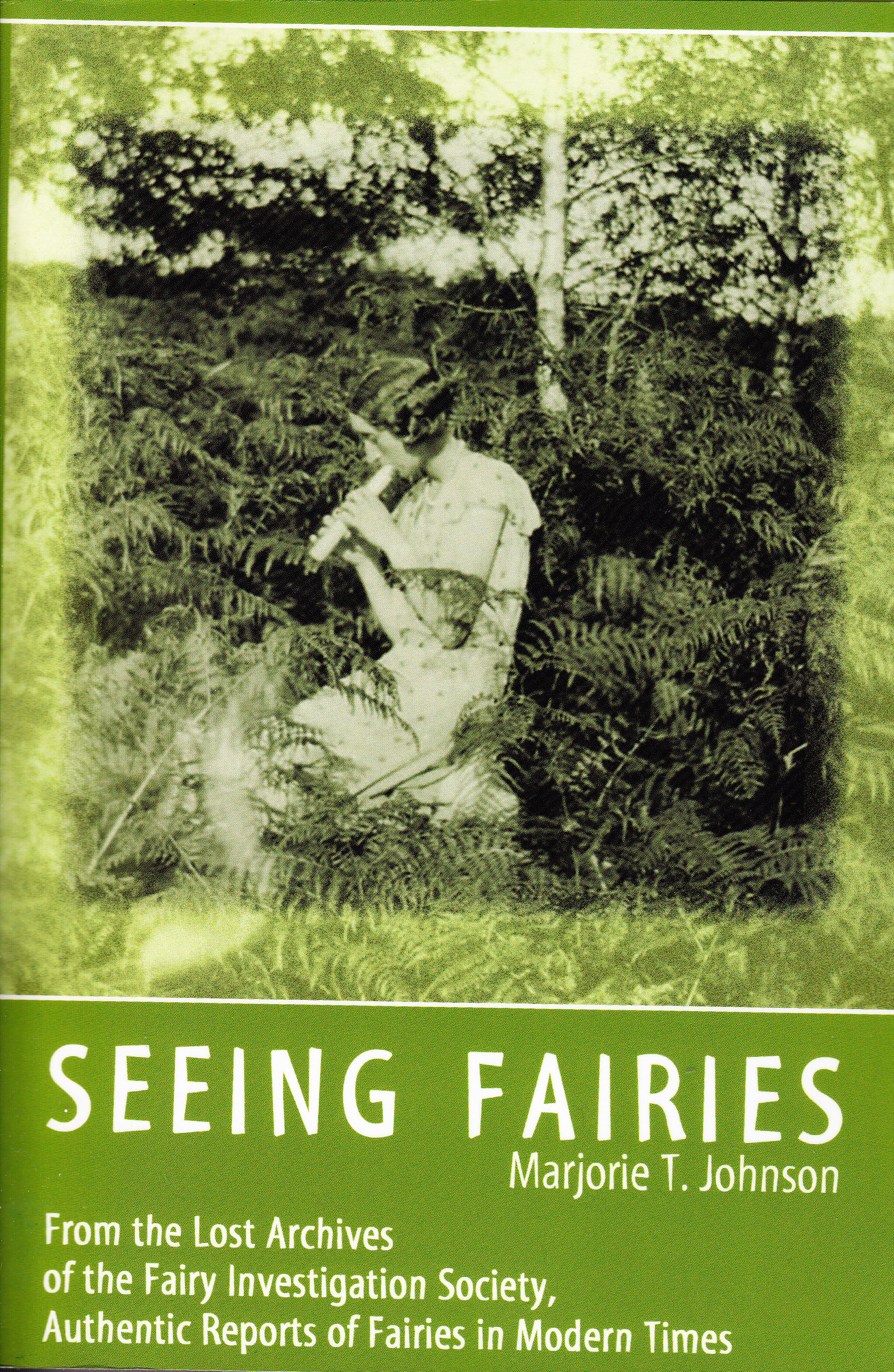
SeeingFairies‘Tis is the time of year that one might make inquiry into elves and the wee folk without being thought too strange. Santa has his cadre of mythic diminutive helpers and even the shepherds have their angels. The two, it seems, are not unrelated. Marjorie T. Johnson’s Seeing Fairies is, in many respects, a charming book. Compiled by the author during a lifetime of corresponding with people who claim to have seen fairies, elves, pixies, sprites, brownies, gnomes, and even angels, the stories—as parsimonious as any sermon—do create an aura of mystery. It is clear that Johnson believed (the book is posthumous) sincerely in the unseen world. As the preface makes clear, she was influenced by Theosophy, and the majority of the material dates from the 1950s and earlier. There is an almost childlike credulousness to the accounts, with Johnson not questioning psychic dreams or astral projection, placing them side-by-side with eyewitness accounts. This is a good example of what an editor might have done for the book.

Many people assume a doctorate in the humanities is a soft thing—pliable in a way that the hard sciences are not. The point of advanced study, however, is to ingrain habits of critical thinking. Nothing is taken at face value. For those of us who study folklore’s first cousin, religion, the task is often to set aside belief in the light of evidence. What can we know about the unknowable? Of course, psychologists and sociologists and anthropologists are now supposed to be better equipped to answer religious questions. Religion, after all, is something people think and do, and what can we really learn from studying it per se? We need an interpretative device—an hermeneutic filter (or pneumatic hammer)—to guide us toward the reality of the thing. And yet science itself is based on observation. Accounting for what our senses reveal about the world around us.

Some people, it is clear, find the world around them filled with wee people. Recently a major road construction was halted in Iceland out of fear of disturbing the elfin habitat. And Icelanders are some of the most literate people on the planet. Johnson’s accounts (some clearly hard to swallow) range across the earth, but center in the British Isles and Celtic lands. Perhaps the light is somewhat different there. Perhaps nearing the North Pole things really do change. What becomes clear from Seeing Fairies is that some highly credible and educated people see, from time to time, what they allow their eyes to see. Believing is, after all, seeing. Johnson ends her book with a chapter on angels, beings she clearly views in continuity with fairies. The difference is that the monotheistic religions allow for, and perhaps even demand, angels. When they become travel-sized, however, the only evidence is that of those with very keen eyesight.


Angels We Have Seen on High

Humans have always ascribed significance to what they see in the sky. Evolution, I suspect, has a great deal to do with it, but so does religion. As I suggest in Weathering the Psalms, the sky is the barometer where we seek the temperament of the divine. The weather is an indication of what God might be feeling, in the pious mind. Of course, as a child I used to lay back and look at the clouds to see what messages I might find there. Pareidolia makes the process good fun, and lots of random “noise” can be interpreted as “signal.” It’s all done in a light spirit. Still, if the internet is to be believed, many people take images in the clouds much more seriously. Apropos of the holiday season, a story in The Telegraph tells of a woman from Lincolnshire who, on her way to a Christmas gathering, saw an angel in the clouds. Or more properly, an angel of clouds. Being the anniversary of her father’s death, she saw this as a sign from above that left her in tears. Others would call it matrixing.

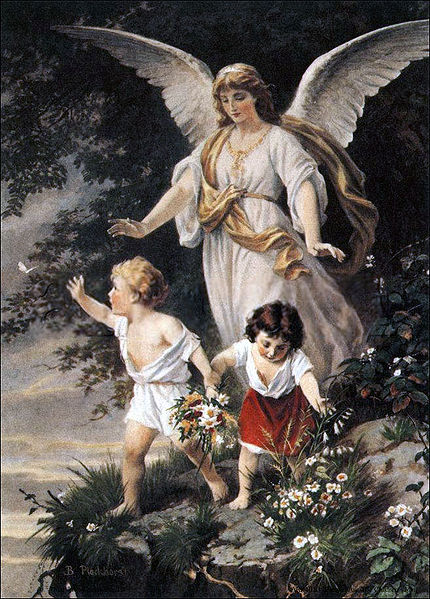
The photo the woman’s daughter took as they were driving is impressive (click the link above to take a look; I’ll wait). I understand how it could be interpreted as an angel. Or even a bird. The feathering on the left wing, along with the wing structure itself, is stunning. And of course, given the time of year, angels are much on the minds of many. What would any manger scene be without them? Although pareidolia is not a religious phenomenon by nature, it nevertheless is frequently interpreted that way. We certainly don’t take much personal comfort in a mechanistic universe. When a loved one is gone, we would rather consider the more human (and perhaps supernatural) aspects.

430px-Bernhard_Plockhorst_-_Schutzengel

Interpretation of information is a constant activity of sentient beings. We don’t want to miss anything that will be of survival value. In the case of the angel in the clouds, the survival is beyond that of every day. We are constantly reminded that death is the final word, and yet we can’t quite bring ourselves to believe it. Whether it is shepherds on a Palestinian hill in the first century or a woman motoring along A17, the sight of an angel is something that stops the viewer and inspires an openness that we otherwise have been taught to deny. It may be that all she saw was a pattern of water vapor in a December sky. But even water vapor can mean much more than two hydrogen atoms binding to one of oxygen. It can be part of the breath of life itself.


When Darkness Reigns

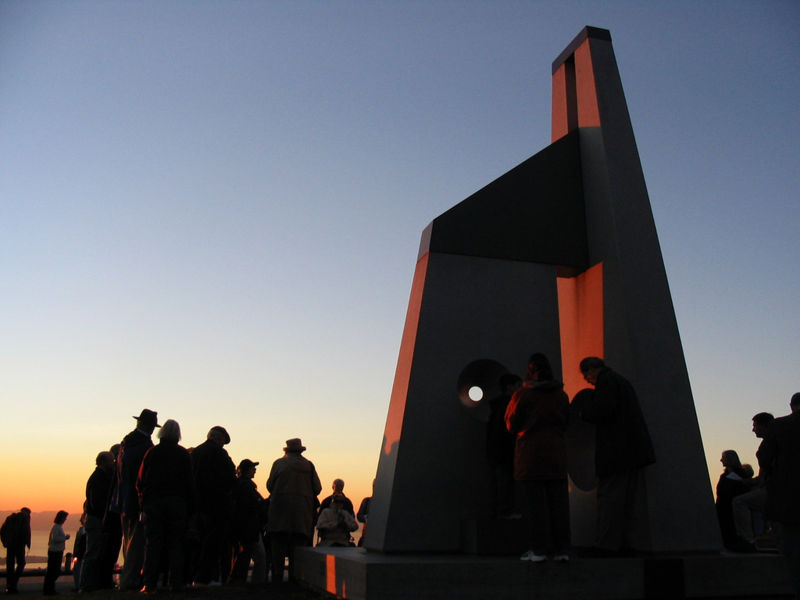
I recently read an article about the Druids. The fact is, historically speaking, we know little of them. They are mysterious and silent and irrevocably linked in the imagination with the solstices. Cultures throughout the northern climes of the northern hemisphere have always treated the winter solstice with an extreme reverence. It is the day of the year when it seems like light just can’t come in any shorter supply. In the depths of that desperation, offerings are made to ensure that tomorrow, if only by the merest moments, the day will be longer. And so we begin the lengthy climb through frigid days to the point six months from now when light will reign supreme. We don’t know, historically, if the Druids gave the great significance to equinoxes and cross-quarter days that the Celts eventually incorporated into their religion, but we do know that much of the monumental architecture of the United Kingdom and Ireland is oriented toward the sun’s feeblest rays at the winter solstice. Stonehenge, New Grange, Maes Howe, and the list could go on and on. We are waiting for light.

Lawrence Hall of Science; photo credit: Tim Ereneta (Wikipedia Commons)

Lawrence Hall of Science; photo credit: Tim Ereneta (Wikipedia Commons)

The solstice seems to creep up on me these days. I work in a cubicle with no outdoor light visible. I leave for work in the dark and arrive home in the dark. I’m inclined to offer up prayers to Odin while I while away the hours before an unresponsive computer monitor. Business has already shut down in all but the greediest minds by this time of year. It is time to hibernate and await a brighter tomorrow. Even in the darkness there can be light. This weekend I attended a Hanukkah celebration, and looking at the menorah I was struck once again how fervently we seek light this time of year. Of course, Hanukkah is connected with the rededication of the temple after the desecration of the Seleucids, but is it coincidence that the candles are lit near the solstice? Perhaps I’m getting too old to believe in coincidences.

In the ancient apocalyptic mind, light and darkness were bitter enemies. Of course, today we recognize that people generally use eyesight as a primary way of interacting with the world—of keeping us from danger. With our diminished senses of hearing and smell, we feel vulnerable when we can’t see our potential predators. Light is the key to our successful preservation. Today technology has taken the place of ritual. We have artificial lights to help lengthen our working hours. We eschew the limitations of being associated with the earth’s rhythms. We are the masters of our own domain, and we can keep the forty-hour work-week going on all but the most insistent of holidays. Perhaps the wisdom of the Druids needs to be rediscovered. Perhaps only then will natural light really return.


Thank You

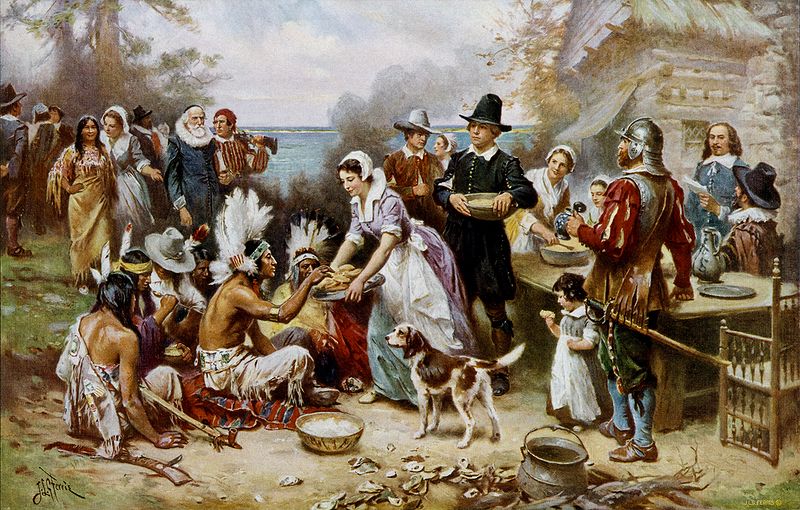
Comments being rare on this blog, I do read them when they come along. Recently I had a reader comment, in the form of a question (as sometimes happens): “Do Native American Indians do ‘Thanksgiving’?” Although I’m fairly certain this was intended as a rhetorical question, I was raised a literalist and couldn’t help trying to formulate an answer. Although I can make no claims to know Native American culture well (I wish I did) it led me to ponder the concept of Thanksgiving. No doubt the idea had at least informal religious beginnings. Even with the early European settlers, a religious diversity was already appearing. Still, although the Native Americans lost pretty much everything, they were still involved, at least according to the early accounts. The great spirit they thanked was not likely conceived of in the way that the god of the pilgrims was, and yet, thankfulness is a natural human response. Writers, often fully aware that their work deserves publication, frequently thank an editor for accepting it. It’s a deeply rooted biological response.

800px-The_First_Thanksgiving_cph.3g04961

For some of us, Thanksgiving is more about having time to recuperate after non-stop work for about ten months. The standard business calendar gives the occasional long weekend, but after New Year’s the only built-in four-day weekend is Thanksgiving. It is that oasis we see in the distance as we crawl through the desert sand. Time to be together with those we love rather than those we’re paid to spend time with. To rest and be thankful.

Among the highlands of Argyll, in western Scotland, is the picturesque Glen Croe. Years ago, driving with friends through the rugged scenery of boulders and heather, the little car struggled with its burden of four passengers. We stopped at a viewpoint known as “Rest and Be Thankful.” The name derives from an inscription left by soldiers building the Drover’s road in 1753, at the highest point in the climb. The Jacobite movement and the Killing Time had instilled considerable religious angst to the Scotland of the previous century and led to the calamity of Culloden less than a decade before the road was laid. These religious differences led to excessive bloodshed throughout a realm supposedly unified by the monarchy. Even though no natives protested displacement, religion led to hatred and mistrust, as it often does. Is not Rest and Be Thankful, however, for everyone, no matter their faith or ethnicity? And in case anyone is wondering, yes, this rhetorical question contains a metaphor to contemplate. Rest and be thankful.


Windmills of My Mind

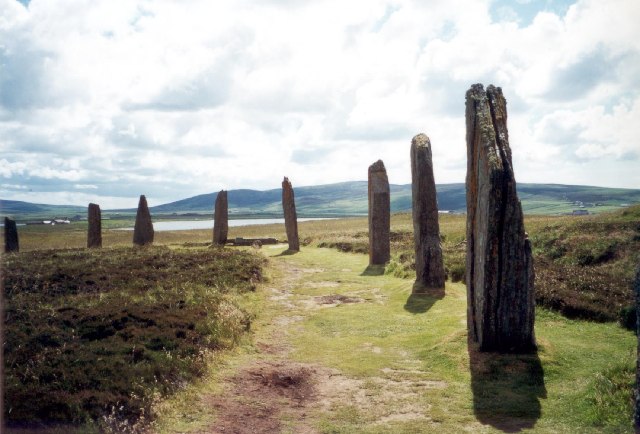
Stonehenge may be the best known stone circle in the world, but it is by no means the only one. Not too many miles from its more famous cousin lies Avebury, a village that is built on the site of an ancient stone circle and henge. Far to the north, in the Orkney Islands the impressive Ring of Brodgar stands sentinel over Stromness on Mainland. My students were sometimes surprised to learn that the Middle East also has its ancient stone circles. Some speculate that the town of Gilgal in the Hebrew Bible derived its name from such a circle. In the 1920s a series of large stone circles were discovered in what is now the kingdom of Jordan, and these circles are back in the news as archaeologists try to decipher the purpose of these huge rings. Unlike their European relatives, the Jordanian circles are only a few feet high, but they are about 400 meters in diameter. Eleven are known. Clearly not high enough to pen animals, the circles remain a mystery even today.

Ring of Brodgar, Photo credit: Alex Cameron, WikiMedia Commons

Ring of Brodgar, Photo credit: Alex Cameron, WikiMedia Commons

Most ancient circles have uncertain functions. We don’t really know what they were for, but considering the tremendous amount of labor involved at such sites as Stonehenge and Avebury, clearly they were considered extremely important. Likely religious. Circles, of course, are an embodiment of mystery—they have no beginning or ending. Even pi, a necessary figure in circular calculations, seems to be an infinitely non-repeating decimal value. Adding to the questions of the Jordanian circles is the lack of a decisive date. They seem to be a couple of millennia old at least, perhaps significantly older.

Like the lines on the plains of Nazca in Peru, the significance of the circles can only be fully appreciated from the air. People have long left drawings for the gods, it seems. Circles, however, suggest a kind of utility as well as just a pleasing shape. One of the problems of archaeology, however, is that it can’t always tell us why people built unconventional structures. Archaeologists are sometimes left guessing just as much as the rest of us. The stone circles of antiquity are, in their way, humbling feats for us to ponder. If they were religious features of the landscape, their construction in an the neolithic period points to a significance beyond the level of the great medieval cathedrals of Europe. It seems no wonder, then, that religion has been with us ever since, despite its frequently announced demise. What are the Jordanian circles? Religion often steps in to explain what reason cannot. Given what we know, this guess may be the best solution.


Keeping Time

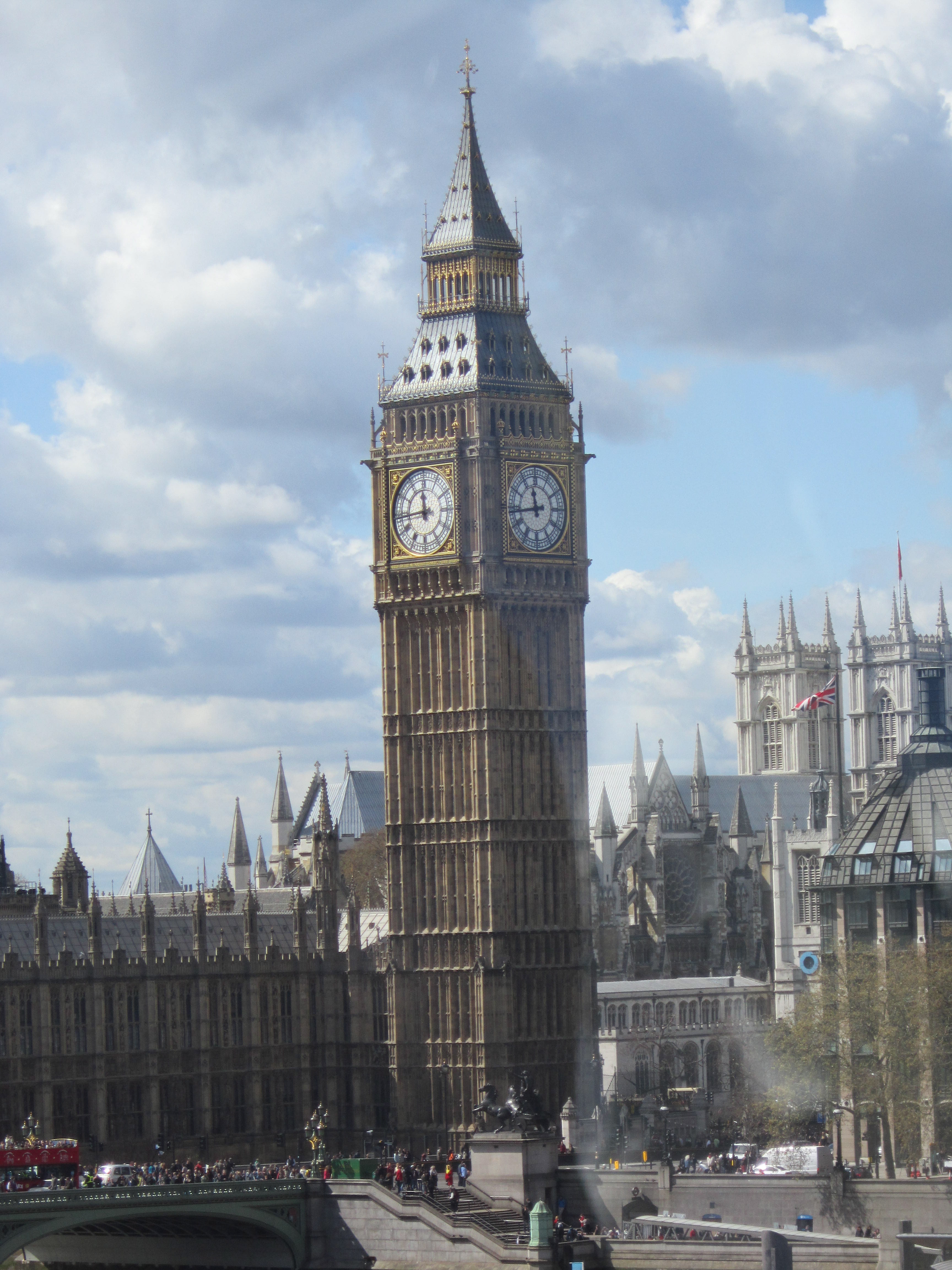
Did you remember to set your clock back? Depending on where you are (and this presumes there are any people reading this at all) it might have been a mistake. When I worked with Routledge, we had weekly trans-Atlantic meetings via conference calls. I remember the general confusion of what time it was where, and how that effected meeting times. The UK sets its clocks back at a different time then many states do this side of the ocean. As much as it is nice to have an extra hour of sleep (next weekend for most Americans, this morning for the British Isles) it really never seems worth the disruption on the other end of “standard time.” In the spring it will take several weeks to adjust to disrupted sleep patterns after long winter naps—for those who are able to sleep in, in any case. I’ve long thought it is time to do away with this practice: if daylight savings time is a good idea, why don’t we just keep it that way all year around? Greenwich Mean Time, however, could never admit to being wrong.

IMG_0320

I was always told daylight savings time was because of concerns for children walking to school in the dark. An article in The Guardian, however, gives the real reason. It was war. During the First World War (which impacted so many aspects of life that we’re still sorting them all out), Germany implemented daylight savings time to conserve fuel to support the war effort. Squeezing a few more minutes of daylight from a slumbering public meant more resources for the engines of destruction. Other nations soon followed and when we turn our clocks ahead in the spring and yawn wicked yawns all day at work and stumble about for lack of sleep, we wonder if that extra hour’s snooze in the fall was really worth it. Because of my commute, I rise early. If everyone awoke around 4 a.m., daylight savings time would quickly become moot. It does nothing to help. I already catch the bus in the dark and arrive home after dark, as I will until well into spring. It is a holiday with no meaning.

Religions have been, historically, the clock keepers of humanity. Our hours were regulated for prayer, our weeks divided up for a day of worship or rest, our years punctured by holy days. All of this was done for the sake of religion. In our secular world, there would be no reason beyond the recognition that people are more productive when they can rest to give them one day off in a week. Seven days corresponds to no natural division of time, unless you consider a quarter of the moon’s phases for 28-day months to be significant. Religions have been our time-keepers. Daylight savings time, however, was the child of war. This week our UK colleagues will be well rested and content. Next weekend the US will join them. But the second horseman of the apocalypse has sanctioned this unholy day, and when the spring rolls around, he will exact his toll. We’d better rest up in the meanwhile, and I, for one, say let’s banish the horseman all together.


Viking Trail

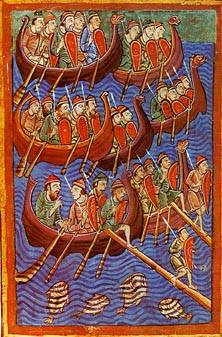
History is a powerful elixir, capable of transforming sinners to saints with the mere passage of time. Well, calling Vikings saints may be a bit of a stretch, but still, they have become some of the sexy bad boys of the Middle Ages, and with the finding of a Viking horde in Scotland last month, they are in the news once again. Vikings and monks were kind of like medieval dogs and cats. Monasteries, located in lonely regions, often amassed wealth and Vikings, looking for loot and less scrupulous about bloodshed, were eager to take it. The give and take (literally) of this violent lifestyle involving seafaring, battles, and churches, makes for good ancient drama and much of it took place along the coasts of Scotland. Our Scandinavian scourge, however, didn’t stop there. It is well established that the Vikings made it to North America well before Columbus. Those who don’t dismiss the Kensington Rune Stone also claim that the Vikings reached Minnesota long before football ever did. Whatever the reason, we are fascinated with Vikings.

Wikinger

Perhaps they are the ultimate autonomous self-promoters. We all would secretly, at least, enjoy being able to set our own standards so that they favored us and our loved ones. The Vikings represent the flaunting of the rule of law, traveling far to take what they want by force. And, perchance, leaving a bit of treasure behind as well. The Vikings became Christianized and the slave trade (long before the New World caught hold of the idea) was effaced to the point of becoming uneconomical to them. Nobody is certain why, but the Vikings, probably for a variety of causes, ceased to be the terror of the seas. Now the Scandinavians are considered among some of the most literate peoples of the world.

Along with the decline of the Vikings, however, also came the fading of the monastic cultural hegemony. To be sure, there are monks and nuns still today, but the force with which they gripped the medieval imagination began to decline with the Protestant Reformation and the recognition that vast wealth, even if cloaked in poverty, is still vast wealth. Now the finds from both monasteries and Viking sites constitute historical treasure. Information about a world long gone. The underlying idea, however, is never very far from the surface. We may lay claim to post-colonialism, but powerful economies have a way of getting what they want in the way of trade treaties and tariffs in any case. When a Scot finds a Viking these days, it is a cause for celebration as we let bygones be bygones and cut the humanities curricula nevertheless. The Vikings never really disappeared.


Sects for You

Oxford University Press has a religion blog. (Well, who doesn’t these days?) Apart from being jealous about their numbers, I find some of the posts fascinating. A recent entry by Linda Woodhead on the approval of women bishops in the Church of England was particularly well done. Woodhead is known for her in-depth knowledge of religiosity in Britain, and she begins her post with a distinction between two types of churches that I find most helpful. She mentions the “church type” that embraces society and tends to have less trouble keeping up with social changes, and the “sect type” that insists on keeping a long distance from the evils of society. She points out how the Church of England went from the former to the latter and how its numbers have subsequently declined. Her article made me realize that for much of my life I’ve found myself among the “sect type” believers. Fundamentalists, among whom I grew up, are naturally suspicious of the world. Grove City College, where I cut my critical teeth, was dead-set against change. And Nashotah House—need I utter more than its very name?

Sects are indeed concerned about being right. Not only being right, but being the only ones who are right. I recall a New Testament class in seminary at Boston University where an unnamed professor said, “If anyone can join, what’s the draw? Barriers are important.” Christianity, he claimed, grew strong by excluding others. This professor would have a difficult time being retained by many seminaries today. The “church type” church realizes that without embracing society it will embrace empty collection plates. Unless, of course, you court conservative political causes, for which there seem to be bottomless pockets of money available. Sects thrive on the feeling of superiority. Knowing that we got it right and everyone else got it wrong is cause for great rejoicing. Others are encouraged to join, just as long as they jettison their point of view. We are the Borg.

It is no wonder that religions struggle in a world with the Internet. Too much information, 24/7. Religions you’ve never heard of are suddenly right there at your fingertips, and the believers are sincere and convinced. Some are sects and some are churches. Some are open to any belief system while others have just what the (church) doctors prescribed. To me this raises a fundamental question of religion: what is its purpose? Is it to seek the truth, or is it to exclude others and make members feel special? Truth is an expensive commodity. Indeed, nobody has a universally accepted version of it yet. While some religious believers will not rest while the search continues, others made up their minds centuries ago. And those believers use sects to get what they want.

Photo credit: Peretz Partensky, Wikimedia Commons

Photo credit: Peretz Partensky, Wikimedia Commons


Pagan Paean

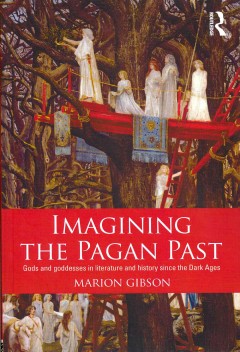
ImaginingPaganPastThe old gods still live. In literature. The modern world with its open spirituality has continued the process of rediscovering ancient deities. Marion Gibson’s Imagining the Pagan Past: Gods and goddesses in literature and history since the Dark Ages offers a glimpse into how British writers since the earliest days have wondered about the gods. Of course, many of those early writers were already Christianized, and treated the old gods as curios that might be placed on an intellectual shelf of bygone days. Some, however, came up with an idea that can still be found, on occasion, among dwellers in the British Isles—the idea that the original British religion was monotheistic. Indeed, some believed that the religion of Noah made its way to Britain, establishing a debased, but yet roughly correct worldview that was only contaminated by Roman polytheism. There are books suggesting, a la Latter-Day Saints, that the lost tribes of Israel found their way to Britain. Joseph of Arimathea planted his staff at Glastonbury, after all. Nothing satisfies like being the chosen people.

Gibson explores both the Celtic gods and the Norse gods. British literature has drawn upon both deity pools to populate a literature with colorful, if sometimes dark, deities. Beyond the literary, many of these gods survived in popular culture throughout the ages. Some of my fondest memories of the UK are driving to prehistoric sites with friends and finding the gods alive and well. As the sun, feeble at best in a British December, sank one afternoon we pulled into Wayland’s Smithy, a neolithic long barrow. I’d never heard of Wayland before. Gibson reveals the story of Wayland, as well as Woden and Thor, as the gods jumble in a Gaimanesque celebration of cultural diversity. Even on hikes to obscure sites the locals often knew the stories of the gods that had once passed this way.

There’s a virtual Sutton Hoo’s trove of information in Gibson’s brief study. At many points I found myself pausing to think, “that’s where that idea came from” as I followed the trajectory of her explorations. Even some of the deities she does not explore found their place in my three short years in the enchanted countryside where pagan Celt met pagan Saxon met pagan Roman, leading to a heady brew from the well-known Diana to Julian the obscure (there is some witchery afoot here). Even that Anglicanism that once circled the globe did not rid itself of this great cloud of witnesses. We keep our deities alive by preserving them in scripture, whether sacred or secular, and we have done so for hundreds of years. And the old gods, in this monochromatic world of science and industry, remind us where the rainbow really originates. Imagining the pagan past is sometimes the most human thing to do.


Equal Measure

Far off in the woods of Wisconsin sits a seminary. In these woods, I’m told, wolves eat little girls. That seminary has for decades distinguished itself by its stance against women priests. I knew of, and respectfully disagreed with this policy when I was hired to teach there in 1992. I didn’t make waves, but rollers have a way of finding you nevertheless. It doesn’t take much to capsize an unstable boat. Within my first year a student challenged me, “Did your life change forever on July 29, 1974?” I was unfamiliar with the code and asked what happened on that date, vaguely thinking perhaps it had something to do with the run-up to the Bicentennial. On that date, it turns out, Barbara Harris was ordained among the first female priests (the Philadelphia Eleven) in the Episcopal Church in the United States. I suppose my life should’ve changed—for the better—but I was a Methodist at the time. Perhaps my life changed then, for I was 12, but that change had little to do with what the student intended. Or maybe everything. I wouldn’t have had a problem with a woman priest in any case. In 1989, Harris was elected bishop, the first woman to hold that title in the Anglican communion. Just three years later I found myself in the lion’s den.

When I asked male students what their problem was with women priests the answer invariably pointed to three factors: Jesus had no women disciples (wrong, according to a certain sacred book they claim to have revered), the Roman Catholic church did not ordain women, and the Church of England did not ordain women. The problem with backing and filling is that filling always overtakes backing. By 1994 the Church of England was ordaining women. Yesterday, at long last, the General Synod approved of female bishops. Welcome to the twentieth century. Now only Rome stands in the way. I am confident, despite the certitude in the eyes of my Nashotah interlocutor, that Rome will eventually come around. I may not live to see it, but justice will be served.

Photo credit: ChrisO, Wiki Commons

Photo credit: ChrisO, Wiki Commons

There is good evidence that most religions, prior to the monotheistic triad, had women priests. Something about the singularity of deity seems to have contraindicated a protective mother in the psyche of male clergy. Ironically, the same day that the C of E decided to do what was right, Oxford University Press’s blog ran a post on Mormon women bloggers. Among the newest monotheistic faiths, like the traditions before it, the Church of Jesus Christ of Latter Day Saints has not recognized the sacerdotal role of women, leading some to be excommunicated for speaking out. We are told that God is a jealous god. This is, after all, the wilderness. After yesterday’s long-awaited decision the woods seem a little less dense, and the threat of the wolves may have been exaggerated all along. If religions would only see people as people all our lives might just change forever.