High Road

“You take the high road and I’ll take the low road,” starts the chorus of that overused, unofficial national anthem of Scotland. The low road, while offering less spectacular views, is quicker and more practical. At least that’s how it seems to this erstwhile expatriate who spent three bonnie years in that land. Still, we all know the appeal of taking the high ground. In studies of morality, high moral standards are better than low. High income is sought after over low. We are encouraged ever to reach higher, shooting our probes out to the very stars. Who wants to admit to being low? There’s more than a hint of this condescension in the terminology I’ve lately been noticing when it comes to the Bible. Instead of saying that an author of a book is Conservative, it is now common code to claim that s/he has “a high view of scripture.” I guess the rest of us have a low view.

Despite the increasing secularity of culture, there are still many, many books being written about the Bible. In fact, the standard industry rag, Publisher’s Weekly, routinely carries story after story about religion publishing, much of it biblical. But readers want to feel safe when approaching the Bible. New ideas can be dangerous and challenging. So we want to know the perspective of the writer before we crack open the cover. Those who believe, within a reasonable degree, that the historical tales of the Bible are factual have a high view. When the four stories of Jesus contradict one another they can be harmonized. That’s the high view. Saying that the world was created in one day, as Genesis 2 asserts, is tending toward a low view, literal though it may be. After all, didn’t we just read in the previous chapter that it was six days? One can become six with a high enough view. Just stand on your tippy-toes.

A high view

A high view

Now the cynical side of me wants to believe that this coding of the high view of Scripture is willful misrepresentation. The stratospheric viewers may not actually say that the industry standard has a low view—not exactly—but miracles are easier to see from the mountain top. If you want to know who to trust, you rely on those with a high view. In this world the sun can stand still and giants can grow to be nine feet tall. It is a high view indeed. While no one knows the original meaning of the lyrics to “Loch Lomond,” many associate it with the Jacobite rebellions of the eighteenth century. The lyricist may be referring to the heads of the executed exhibited on pikes along the high road from London to Edinburgh while their dispossessed relatives walked on the low road. Neither group devalues its native land where some hope to return and others died trying. So feel free to take the beheaded high road while I take the low, because we’ll all end up at Loch Lomond in the end.

They Call it Civilization

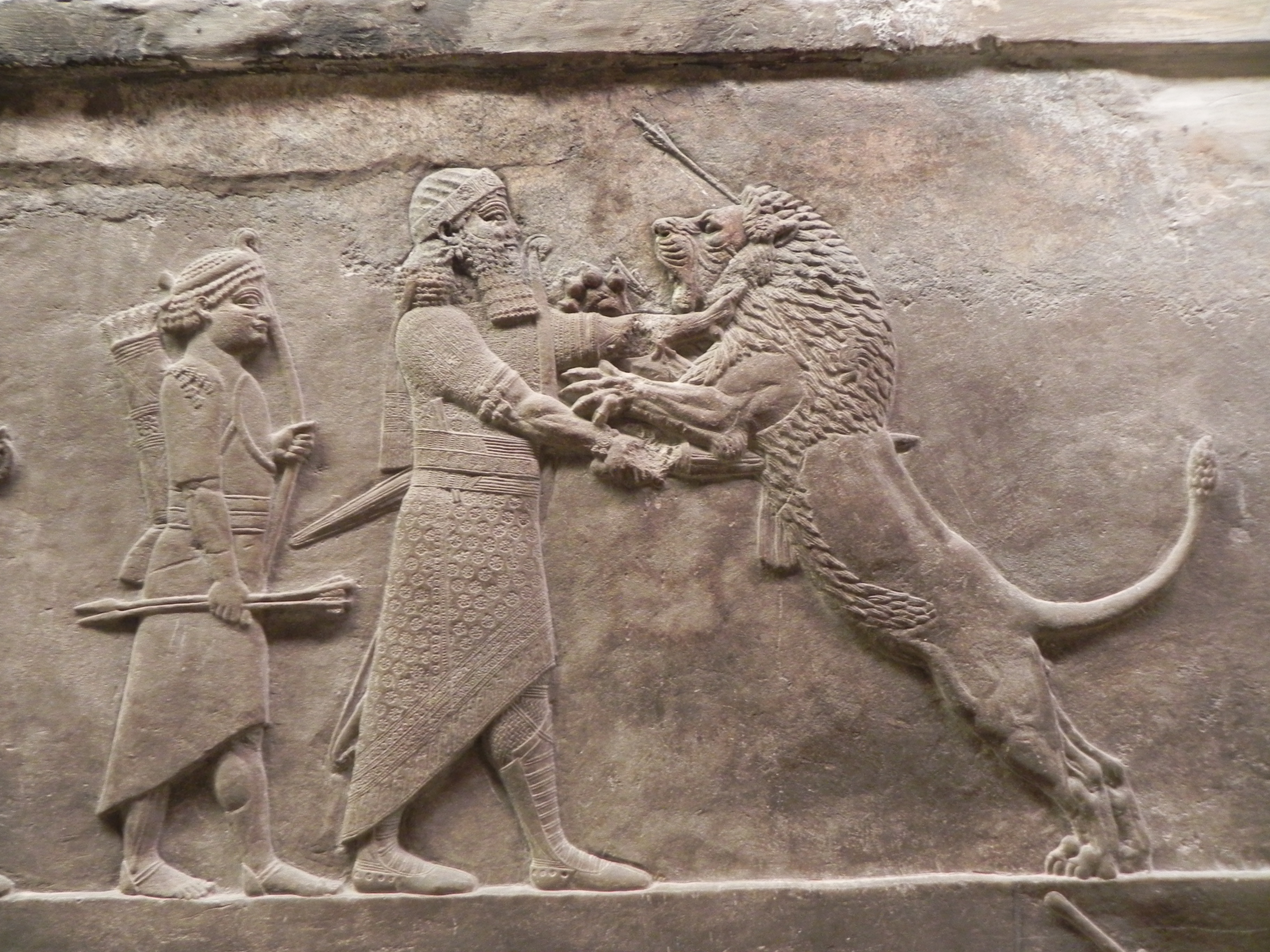
An interesting article about the Assyrians appeared in last week’s Guardian, On Art blog. The piece by Jonathan Jones, describes a piece of ancient Assyrian art on auction that the British Museum is not interested in buying. Having toured the Assyrian galleries a time or two, more’s the pity, but Jones puckishly suggests that the museum may be afraid of the curse inscribed on the piece. We all know of the story of ancient artifacts that come with value-added supernatural attributes—it’s a standard staple of Hollywood horror. Jones knows, however, that the museum isn’t really afraid of a curse, but he does display an interesting attitude toward the Assyrians. You see, the Assyrians were conquerors. They knew how to intimidate potential enemies long before their armies ever set out on the move. The imagery displays powerful men, ripped and ready, killing lions in hand-to-claw combat. Jones rightly points out that some of this is disturbing. What strikes me as interesting is a probably unintended subtext.

DSCN1837

“Assyrian art is certainly awe-inspiring – but perhaps not civilised,” Jones writes. As if civilization necessitates politeness. Perhaps it should, but civilization began in the very region south of ancient Assyria, among the Sumerians who were a culture emulated by later Mesopotamians. There is no doubt that the Mesopotamians gave us many of our beloved Bible stories, in their original, unedited form. They gave us organized religion, writing, and the wheel. Comparing the Assyrians to the Egyptians and Greeks, Jones suggests they were uncivilized. I would beg to differ. The Egyptians and Greeks could also be quite violent. The Assyrian aesthetic was a bit different, to be sure, but there is a raw beauty to it. And I have to wonder why, from our western perspective, what comes out of Iraq seems to hint at something insidious or sinister.

I’ve always been a fan of the Mesopotamians. Since a Ph.D. program only lasts so long (for those of us perpetually struggling to make ends meet), I did not have time to indulge my Assyriological fantasies once I learned of them. I was deep into Ugarit, and although I loved the tales of Asherah and Baal, there was something more ancient, more powerful, lying to the east. I often thought that if I could’ve had more time, my interests would’ve definitely drifted toward the progenitors of civilization. Yes, some of the art-work is deeply troubling, but the Assyrians, indeed, the Babylonians and Sumerians, looked at the world from the viewpoint of cultural creators. Civilization involves violence, no matter how we try to hide it. When I stand in London, taking in those Assyrian reliefs I see an honesty that is carefully hidden by the Egyptians and Greeks. And I think I prefer to know the truth of the situation, curse or not.


Prehistoric Steps

Britain has always had a share in the great events of the past (speaking strictly from a western hemisphere point of view). Not only did the ten “lost tribes” of Israel end up there (according to some, with apologies to Joseph Smith), but young Jesus traveled there with Joseph of Arimathea (according to others, with no apologies). While these stories are obviously non-historical, Britain does have an illustrious heritage that has left Stonehenge and the Cerne Abbas giant in its wake. It is thrilling to read, then, that fossilized footprints from some 850,000 years ago were recently discovered. Coastal erosion, similar to the event that revealed Skara Brae to the world, uncovered the footprints for a short time in Happisburgh, near Norfolk. About 50 footprints were discovered, according to The Independent, with a group comprised of women, men, and children. They were walking alongside a stream, apparently looking for the Pleistocene version of carry-out fish-n-chips at least 844,000 years before Adam and Eve.

The British landscape boasts an ebullient antiquity. Our years spent in the British Isles involved exploring everything from Lanyon Quoit in Cornwall to the Ring of Brodgar on Mainland, Orkney with our friends. It is a land where the past lives on into the present. No wonder some speculated that the biblical past made its way here as well. At least now we know that some very early humans did as well. Homo antecessor, the makers of the prints, visited a Britain replete with elephants, hippopotami, rhinoceri, and hyenas. It is speculated that they may have domiciled on off-shore islands to keep safe from the predators that roamed pre-Roman England. One thing we know for certain about people is that they do get around.

Chirotherium storetonense  trackway, photo credit: Ballista

Chirotherium storetonense trackway, photo credit: Ballista

Homo antecessor is an extinct species. Many of the hominids that contributed in some way to the possibility of our existence are long gone, creating endless headaches for scriptural literalists. Their lives, as The Independent speculates, may have involved being preyed upon by large predators and the constant search for food. They also liked to walk on the beach. I wonder how far they had come on the road to religious belief. Constant fear of predation must surely have played into it. We don’t know how far back the evolutionary chain religion goes, but we do know that it is a profoundly human outlook. You can’t stand beneath the towering Neolithic menhirs of the Ring of Brodgar and not feel it. Sometimes a walk along the shore is all it takes.


Oxford’s Hire

In 1478 the first book printed in Oxford heralded the eventual founding of Oxford University Press. Just two years earlier Vlad III, the Impaler, had been assassinated. In 1478 the Tribunal of the Holy Office of the Inquisition was established in Spain. Just over a century earlier, the Black Death decimated the population of Europe. Things looked a bit dark at that time. Nicolaus Copernicus, however, was five years old in 1478 and the Enlightenment was just around the corner. The printing press had been, well, hot off the press for just a couple of decades at the time. The University of Oxford had been around for nearly four centuries already, making it one of the oldest and most prestigious centers of learning in the world. Oxford University Press early on began the business of printing Bibles and shedding light on a world where things were somewhat dim. Progress often brings misery with it, but the idea that a literate public stood a better chance of improvement bore an optimism that has occasionally been realized, even in free market times. I’m very glad for Oxford University Press.

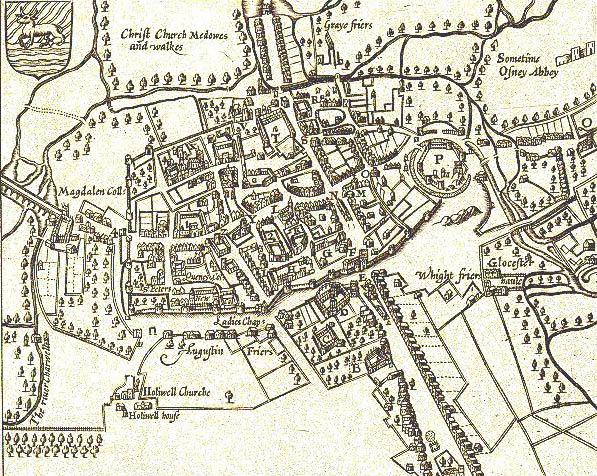
These are among my thoughts as I prepare for my first day as Associate Editor for Bibles and Biblical Studies at Oxford University Press. It is a heady sensation. Bibles were among OUP’s first printing projects. As part of an increasingly secular society in an increasingly religious world, I’m aware of the power the Bible has had and still has. Love it or hate it, it has shaped this thing we call modern culture in ways both profound and facile. The opportunity to work in this division is sobering. A little unnerving, even.

John_Speed's_map_of_Oxford,_1605.

Ironically, my career has largely been Anglo-oriented. Perhaps it is because those based in England appreciate the solidity of a degree from Edinburgh University, although this is only speculation. Nashotah House was a profoundly anglophile institution, at least once upon a time it was. The founder of Gorgias Press had studied in both Oxford and Cambridge. Routledge is a British-based publishing house. Ironically, British culture is not as prone to Bible-reading as that of the United States. My jobs, which have largely focused on the Bible, have been British-oriented. I try to add it all up but get lost in the midst of the numbers. Call it first day jitters. Twenty-five years ago at this time I was preparing to get married and to move to Scotland. Little did I suspect that a quarter-century later I would be coming back to an ancient university of the United Kingdom again.


Voting Vicissitudes

“Remember, remember, the fifth of November, the Gunpowder Treason and plot. I know of no reason, why the Gunpowder Treason, should ever be forgot.” Election day fell on November fifth, and as I watched V for Vendetta again, I was reminded how true it rings. Religious leadership takes over government, the common person becomes an enemy of the state, and criticism is treason. Tea, anyone? I’ve always had a soft spot for dystopias, but the world of V is entirely too plausible at times. I have watched rational people transformed by fear and the certainty of religious dogma into those who will do what they are told without question. The movie always gives me a profound hope that the human spirit is larger than the powers that be. V can also stand for Vote.

I cast my ballot knowing that a vote against a governor who enjoys the bully image was indeed close to a lost cause. People are enamored of power. In my deepest Jedi dreams, however, I know that the most powerful moment in Star Wars is when Obi Wan turns off his light saber to allow himself to be struck down. There is a power, one upon which entire religions are premised, in the self-sacrificial act. It’s not that I have anything against Parliament; I saw it just this past year and enjoyed the experience in a way that Guy Fawkes could perhaps not have appreciated. As Evey says, “this country needs more than a building right now. It needs hope.” I guess we can hold on another four years. V can also stand for five.

“He’s a deeply religious man and a member of the conservative party. He has completely single-minded convictions and has no regard for the political process. Eventually, his party launches a special project in the name of ‘national security’.” So V tells Finch concerning a dictator who could be wearing any number of political masks in our world. We hand power over to those who encourage our fears rather than those who inspire our imagination. Camelot died in 1963. It is not so difficult to imagine a world so much better than the one we’ve constructed, but plutocracy does prevail when people do not take the implications of their religion seriously. When we only glance at the surface, the deeper message gets lost in the mythology of it all. November fifth is a myth that still has the potential to change the world. If we would allow it.

VoteV


The Tell-Tale Telegraph

Steampunk CityThere’s a guy next to me with a robotic arm. Women with lace umbrellas and aviator googles walk by on the arms of Victorian gentlemen with walking sticks. A couple have an effervescing water-cooled device on their backpacks. I must be in Steampunk City. The forecast had predicted rain, but it is a beautiful October day in Speedwell, New Jersey. Steampunk City, an event dreamed up by Jeff Mach to make money for local museums, draws in a good crowd of the garishly bedecked, causing my wife and me to feel desperately underdressed. I’ve read my share of steampunk fiction, and I am really thrilled to see so many people taking an interest in such a literary event. I did wonder, however, what demonology had to do with it. Kevin Meares of Delaware Valley Demonology Research is giving a talk on demons, and it’s interesting to notice how the light laughter of customers from the booths outside wafts through the door where stories of possession are being told.

It is difficult to listen to Mr. Meares and believe that he hasn’t seen some pretty strange things. A practicing demonologist rather than the armchair variety, he has accompanied priests on exorcisms and is utterly convinced of the reality of the entities. When asked where demons come from, he relies on the Bible and Bible lore. Either they are fallen angels, remnants of a prior creation (thus the discrepancy between Genesis 1 and 2), or the offspring of the Nephilim of Genesis 6. Whatever they are, he has seen them in the dark, and people have died because of their activity. Being somewhat of a skeptic, I still find myself a little creeped out, kind of wishing I was outside with the laughing, costumed fiction readers.

Steampunk is often about alternate realities. A world where technology developed in the fog of steam rather than the neat circuitry of electricity. Speedwell, ironically, (and probably intentionally) is where the telegraph was invented and first demonstrated. It is a key site in the Industrial Revolution, the development that made the modern world what it is with smart phones, air-light laptops, and iCloud. I’m in the basement of an historic building having my rational worldview threatened by stories of demons. Although I’m wearing my nonplused face, I know that things will be different in the middle of the night. I’ve got brass gears in my pockets and supernatural entities in my head. I’ve met a watch maker outside who translates Aramaic manuscripts. What hath God wrought indeed, Mr. Morse? Yes, I’m in an alternate universe, and I may decide not to come back to the work-a-day one after all.


Human, All Too

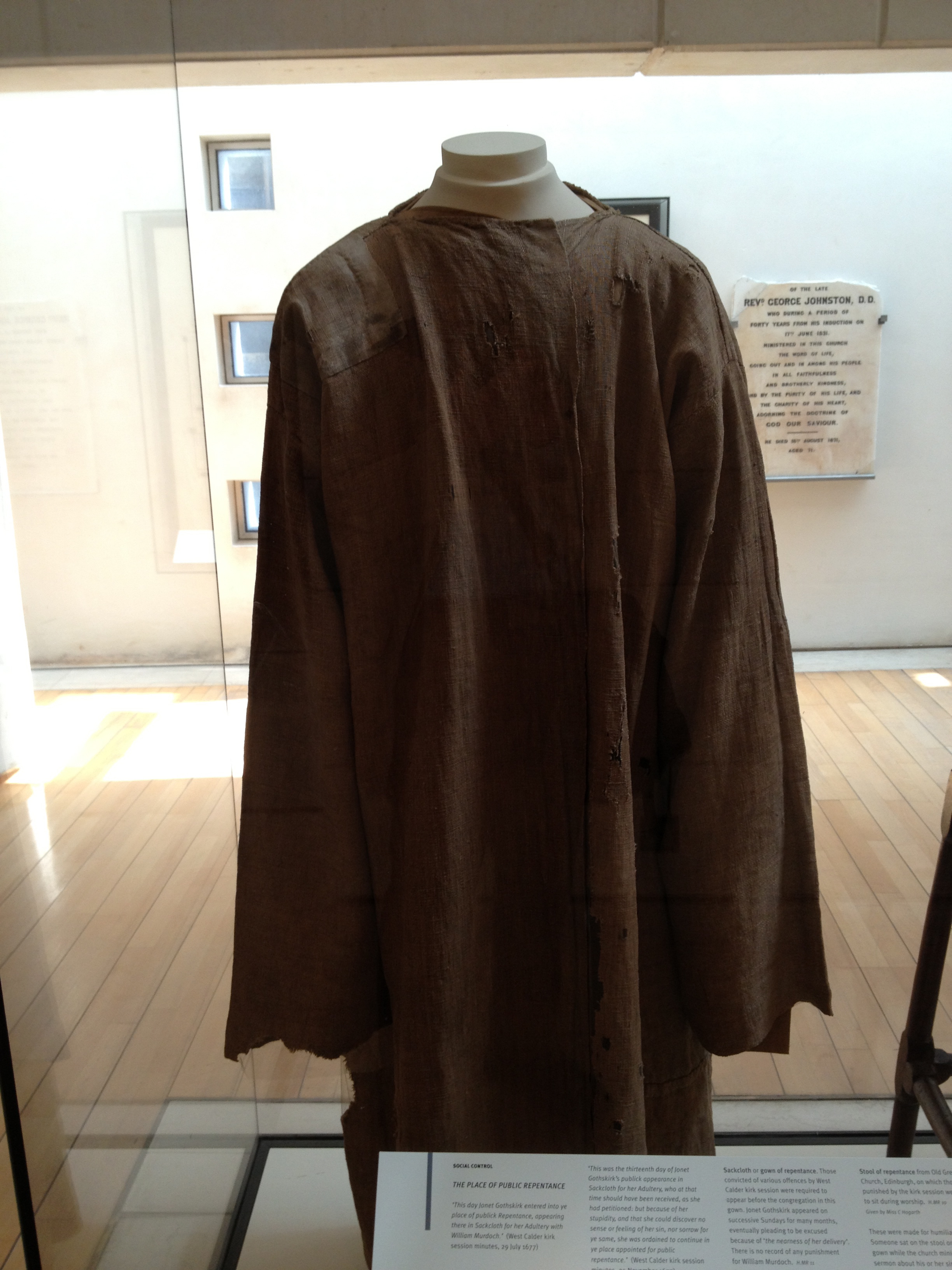
Back in the days of The Scarlet Letter, and before, an even more egregious double standard afflicted the sexual practices of women and men. Our primate nature promotes two conflicting principles: disgust at cheating and the desire to get away with what we can. Unfortunately, biology has often showcased female infidelity with the “illegitimate” child, and religions have stood in line to condemn the behavior that led to such circumstances. I was reminded of this while looking at a “gown of repentance” at the National Museum of Scotland. The Scottish Reformation led to an unusually severe kind of Schadenfreude when it came to pointing out the faults of others. Janet Gothskirk, spiritual kin to Hester Prynne, was convicted of adultery and had to wear a “gown of repentance,” literal sackcloth, to humiliate herpublicly. Her partner in crime, William Murdoch, is not recorded as having received any punishment for the affair, according to the placard.

IMG_0845

Thus it has always been: boys will be boys, but girls will be good. And when it comes time to dole out the blame, well, boys sometimes just can’t help themselves. This double standard is still in widespread practice throughout the religious world today. It shares roots with the same thinking that leads to many major religions denying sacerdotal leadership to women, and to the unfair punishment doled upon women in cultures where their behavior “dishonors” that of the men-folk. And we have all seen where male leadership has steered this ship.

What struck me hardest, staring at the dirty, ratty garment of shame, was that forgiveness seems so far removed from the religion of the Reformation. Christianity has always claimed a basis in the concepts of love and forgiveness, but when it comes to the very real circumstances of human failings, the animal tendency to attack the weak is often the driving force. We deflect because deep down we know that we all have failings. Clergy and braggarts may sometimes claim otherwise, but we share this very common liability of humanness. We should try to help each other through it. We should remember the golden rule. We should remember that sackcloth was meant to be self-inflicted and that the role of the church was to absolve the guilt, not to showcase it. Janet Gothskirk is forgotten to history, save for the garment she once wore to display her weakness for all to see.


Cultural Religion

IMG_0825

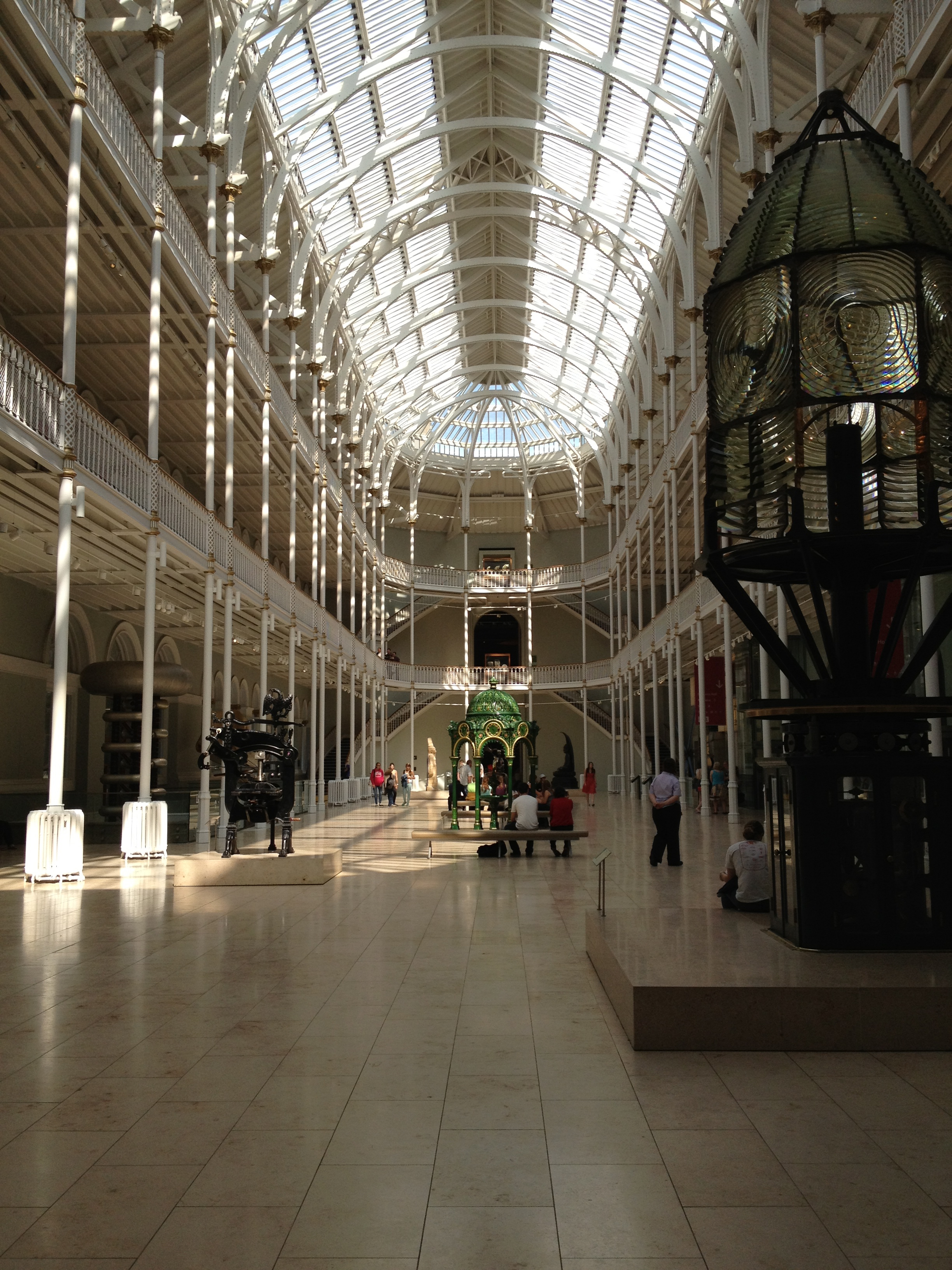
The National Museum of Scotland, like many museums in the British Isles, is free to visitors. Such museums are repositories of national pride and provide a sense of the scope of a nation’s history. While penurious grad students (as opposed to plain penurious, as best describes those long unemployed), my wife and I would wander over to Chalmers Street and pop in for an hour or two of inexpensive culture. During the last minutes of my recent trip to Scotland, I ducked into the newly—well, it has been nearly two decades, I have to admit—expanded museum for a gander. I was naturally drawn to the history of Scotland section—you can see dinosaurs and robots in the US, after all—and was struck at how very religious it was.

IMG_0857

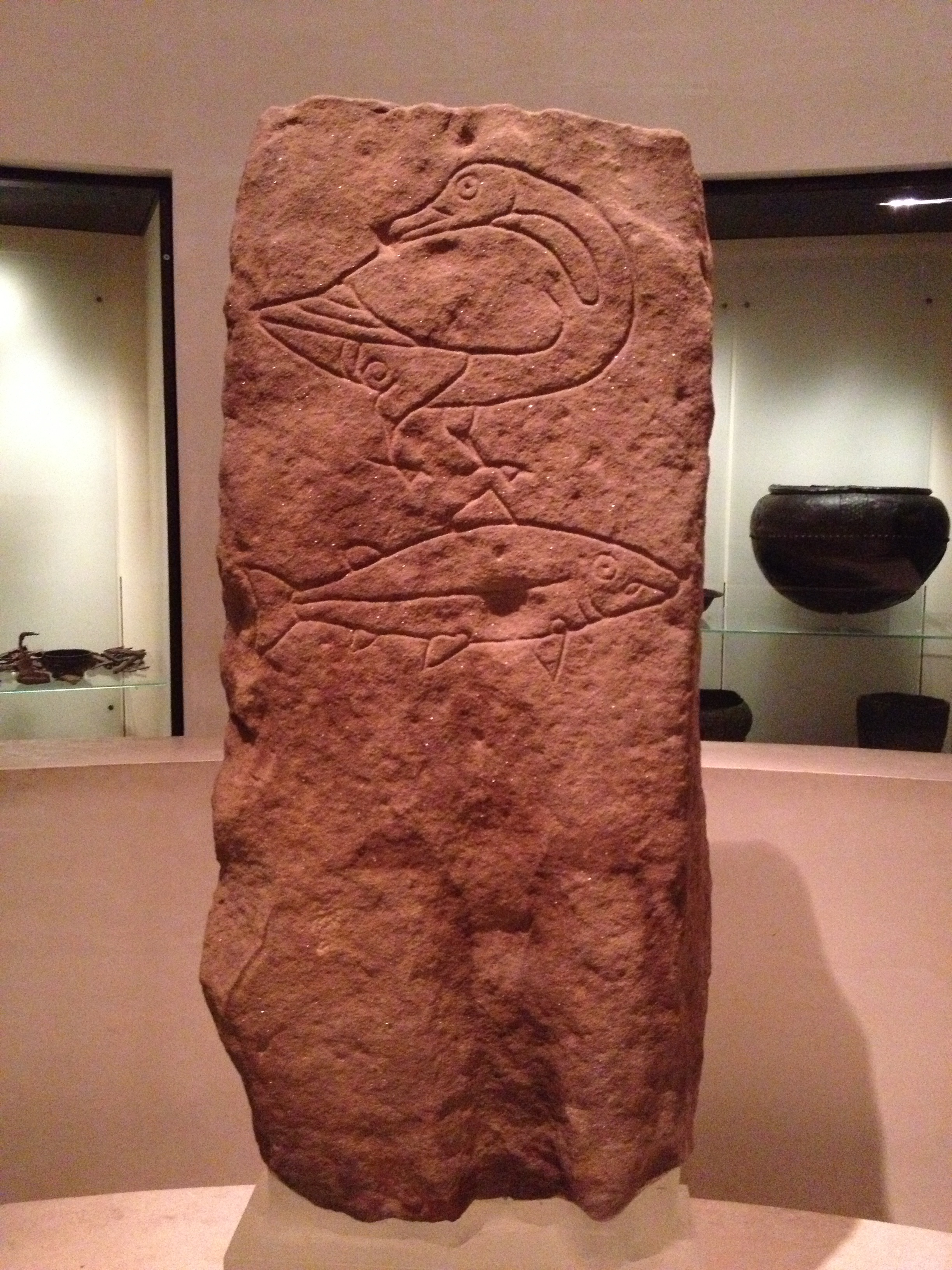
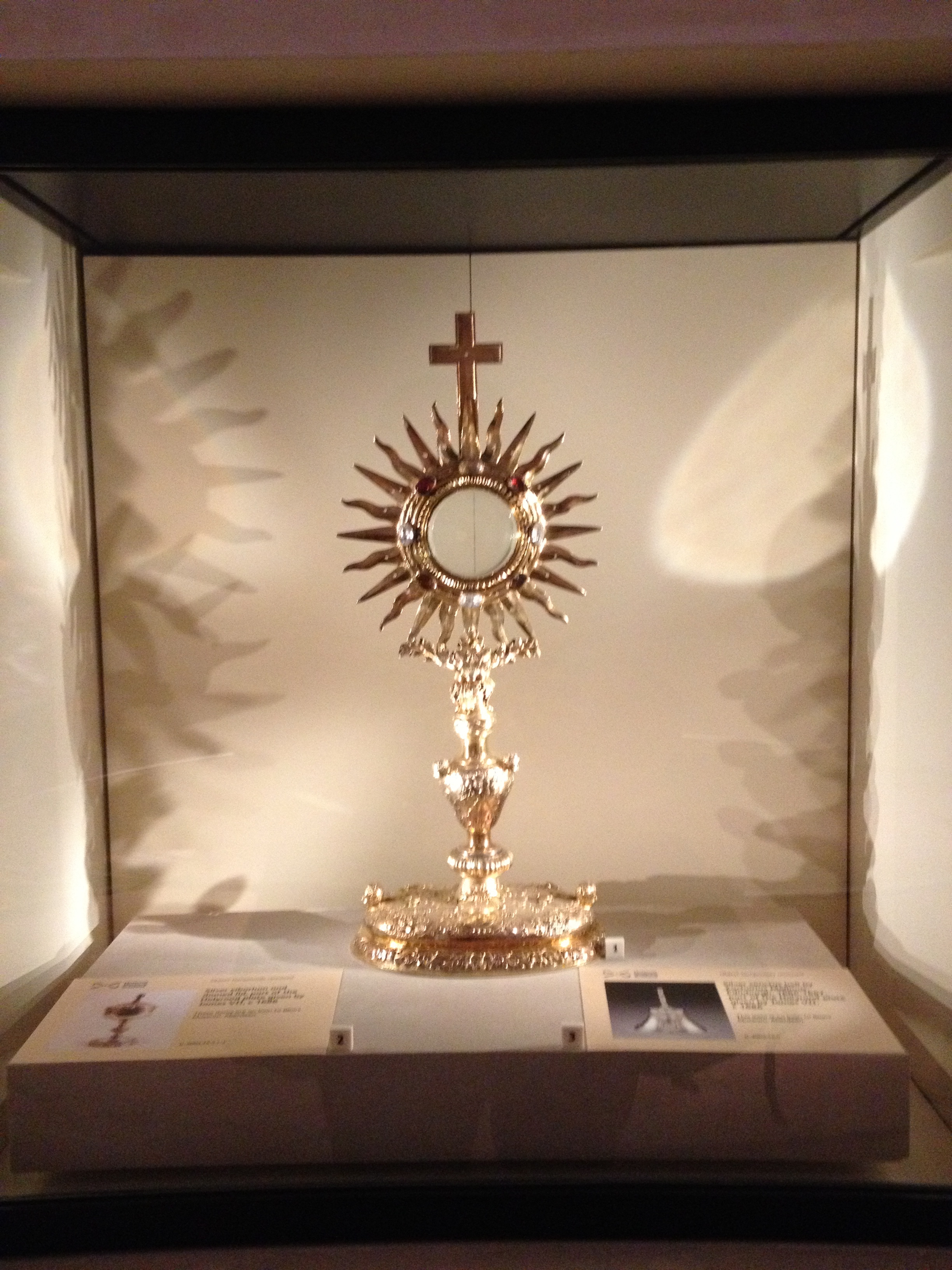
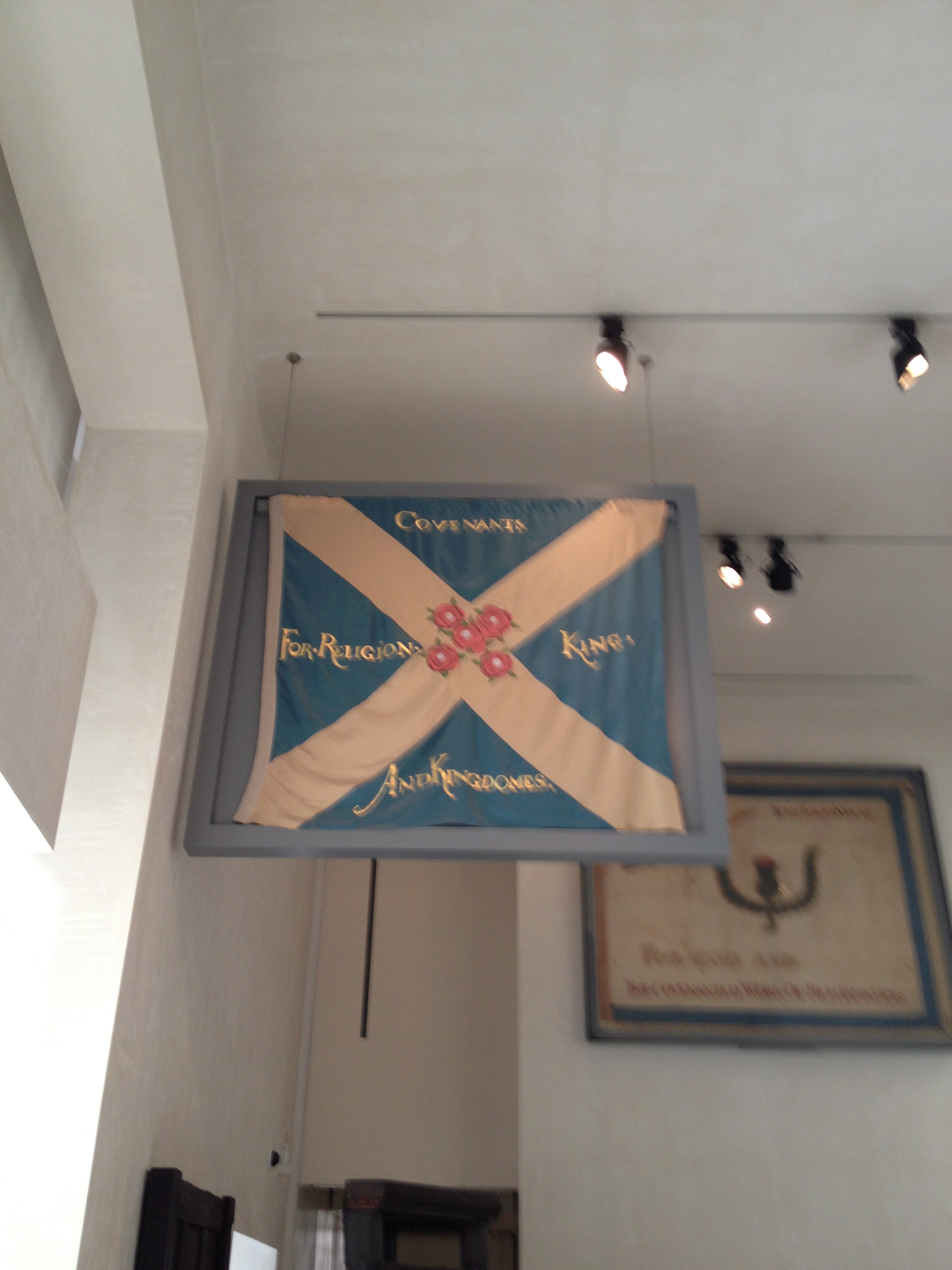
It’s not that the Scots are any more pious than other peoples, but it is the nature of religious artifacts to receive special treatment, and therefore, to survive time’s greedy decay. No one dares to anger the gods. Beginning with the Stone Age Picts, and flowing through contact with the Romans and eventually to the Celtic culture now associated with Scotland, religion is obviously preserved. Prehistoric Picts, by definition, didn’t leave written accounts of their religion, but the treatment of special artifacts in a gritty, harsh world shows where social values were to be found. Christianization, with its apocalyptic earnestness, only accelerated the process. Celtic crosses, case after case of precious metal sacramental artifacts, and a large display of the Reformation denominated the more secular displays, or so it seemed. (The working steam engines and large looms, however, gainsay a bit of my enthusiasm. And swords seemed to be everywhere.)

IMG_0837

While there is a genetic base for some sense of nationhood, it is not unusual to hear a person of African or Indian heritage speaking with the familiar Scottish brogue. Surely they are Scottish too. Culture clearly ties disparate peoples together into a “nationality.” In this museum that reaches back to the dinosaurs and beyond, a great deal of the history involves people of similar ancestry who come into contact repeatedly with those of other heritages. What gets left behind after those encounters, when it’s not swords, is religious. The religions themselves then clash, fracturing into a new stage of cultural development. Even in today’s secular Europe, some of the most notable buildings are the cathedrals. And in its own way, the National Museum of Scotland is a cathedral to all who wish to understand what makes us human.

IMG_0838


Monument to Madness

Reflections on the implications of my recent trip to the United Kingdom will likely continue to filter into conscious expression over the next few days. Jet lag will inevitably fade, and some concepts will shake down and settle into place as the reality known as work once again demands its pound of flesh per day. One of the realities that struck me during my time in St Andrews was how violent the Reformation was when it came to Scotland. Truth holds the world hostage, since everyone wants to believe they own it. And it’s my word against yours unless one of us can pull in a larger authority—and who is larger than God? There was a lot of credibility riding on the Reformers’ certitudes. And resistance was strong. Fatal even.

Reform is nearly never gentle, especially religious reform. After the Society of Biblical Literature’s meeting disbanded last week, I wandered around the old, medieval section of St Andrews, trying to get a sense of what such conviction must have been. One of the participants narrated to me more of the stories of those who’d died in the course of conversion. Patrick Hamilton, it turns out, may have been the first victim of the Reformation, but he was not the last. Walking along on a sunny afternoon in a country where several religions consciously coexist (I was, as an American, surprised to see so many large mosques in the UK), it seemed difficult to believe that humane individuals would torture someone to a horrendous death by burning just because of religious differences. The killing times seemed so long ago. Or perhaps our killing has just become more subtle.

IMG_0814

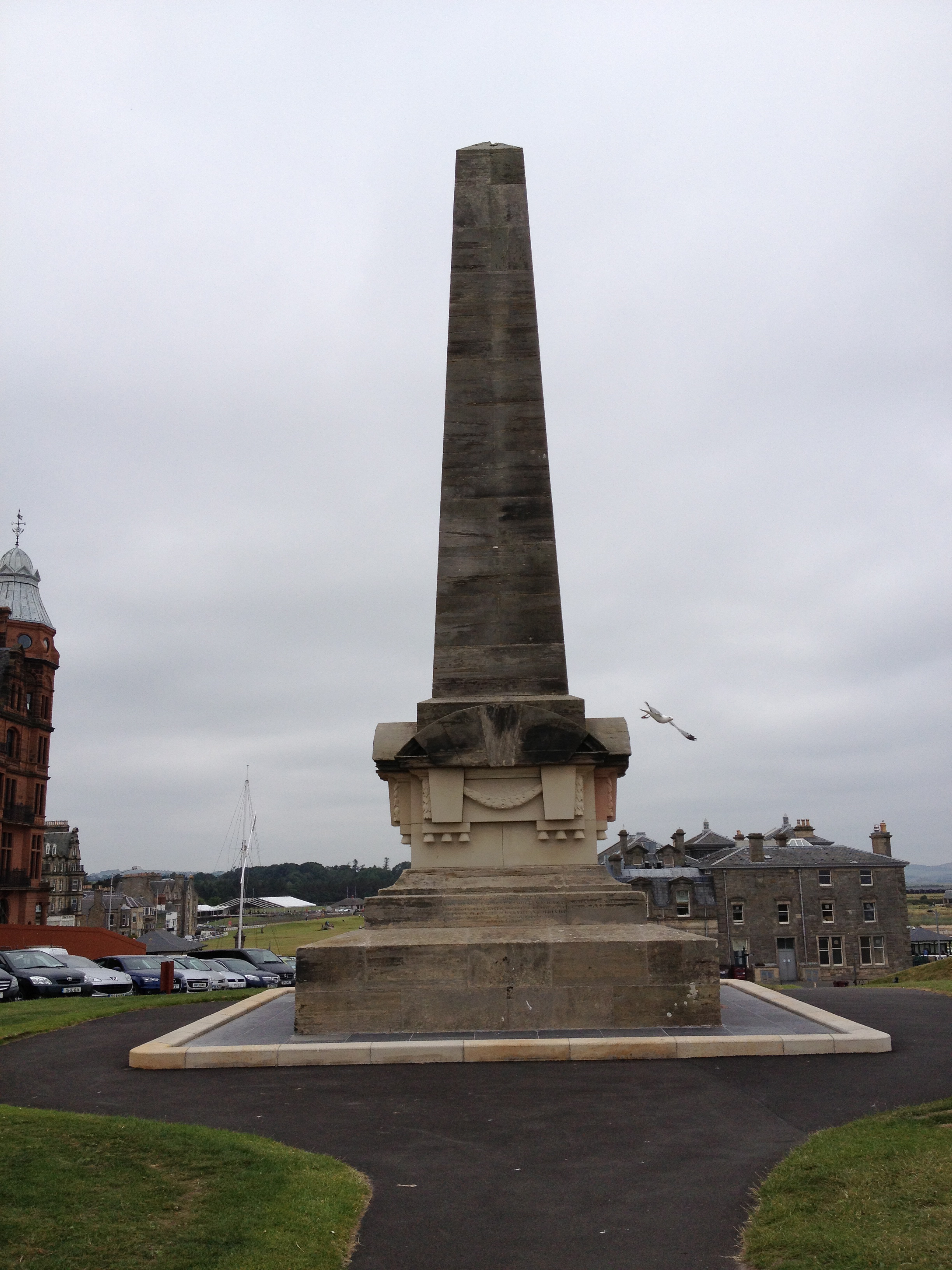
Following the directions I’d been given, I came upon the Monument to the Martyrs. Not wishing to belittle the atrocity of undeserved deaths, I could not help thinking of the pillar as a Monument to Madness. Is the need to feel right so great that others must be made to die for it? After all, among those generally considered to be sane, we all believe that we are right. Who consciously accepts untruth as reality? In such circumstances the best, the only reasonable response is to agree to disagree. I can let you accept your truth, if you’ll let me accept mine. And perhaps such tolerance would serve our planet well. Even the number of trees spared had autos-da-fé been forbidden provides a silence to the wisdom of allowing difference to thrive.


Before Twilight

Despite the summer with its long, languid days, The Telegraph reported on vampires last week. In an article entitled “Polish archaeologists unearth ‘vampire grave,’” Matthew Day narrates how archaeologists have uncovered skeletons buried with their heads—decapitated, obviously—on their legs. This was apparently a not uncommon medieval practice for ensuring that suspected vampires stayed safely in their graves. Interestingly enough, Day comments that the practice mainly began after the Christianization of the pagan cultures that had preceded them. Even pagans, he suggests, ran the risk of being accused of vampirism, a broadly defined threat in the Middle Ages. Of course, the Twilight series had not been written then so that the safe, Mormon cast of vampire was unknown.

Vampires represented a couple of concepts terrifying to people before the scientific revolution: they were a source of draining an individual of some life essence, and they were the problematic undead. The decapitation, in Tim Burton-Sleepy Hollow style, was intended to prevent the vampire from being able to locate its head after death. Unable to find the business end of its vampiristic corpus, the undead might remain just plain dead. Of course, staking works, if the tales of the Highgate vampire, near whose grave I recently stayed while in London, are to be believed.

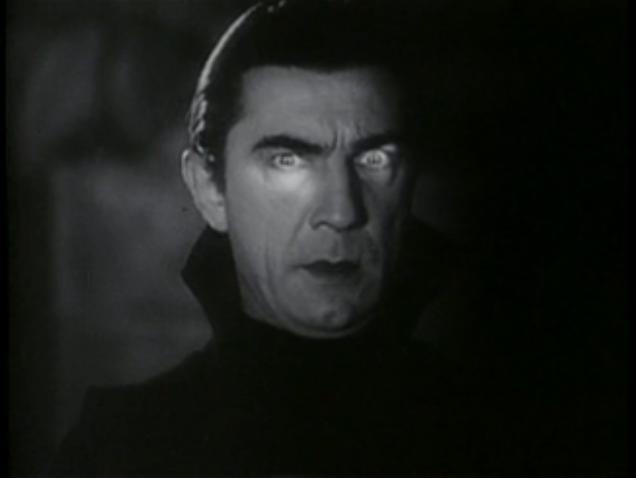
The belief in vampires, or at least fascination with them, has been very hard to shake. One of the earliest horror films made was Nosferatu, a rip-off of Bram Stoker’s Dracula that was nearly obliterated because of copyright violations. Nosferatu continues to be ranked among the scariest of horror movies, and the Werner Herzog’s 1979 remake is a classic in its own right. The Shadow of the Vampire was an even more recent movie about the filming of the F. W. Murnau original. Among the earliest of the Universal monster movies was Tod Browning’s Dracula, which forever identified the face of Bela Lugosi with the infamous Count. No matter how deeply we bury them, the vampires keep coming back to stalk our nights and nightmares. When future archaeologists uncover the detritus of our civilization, no doubt they will conclude that we too, in a secularized world, feared the undead.

Bela_lugosi_dracula


Check Mace

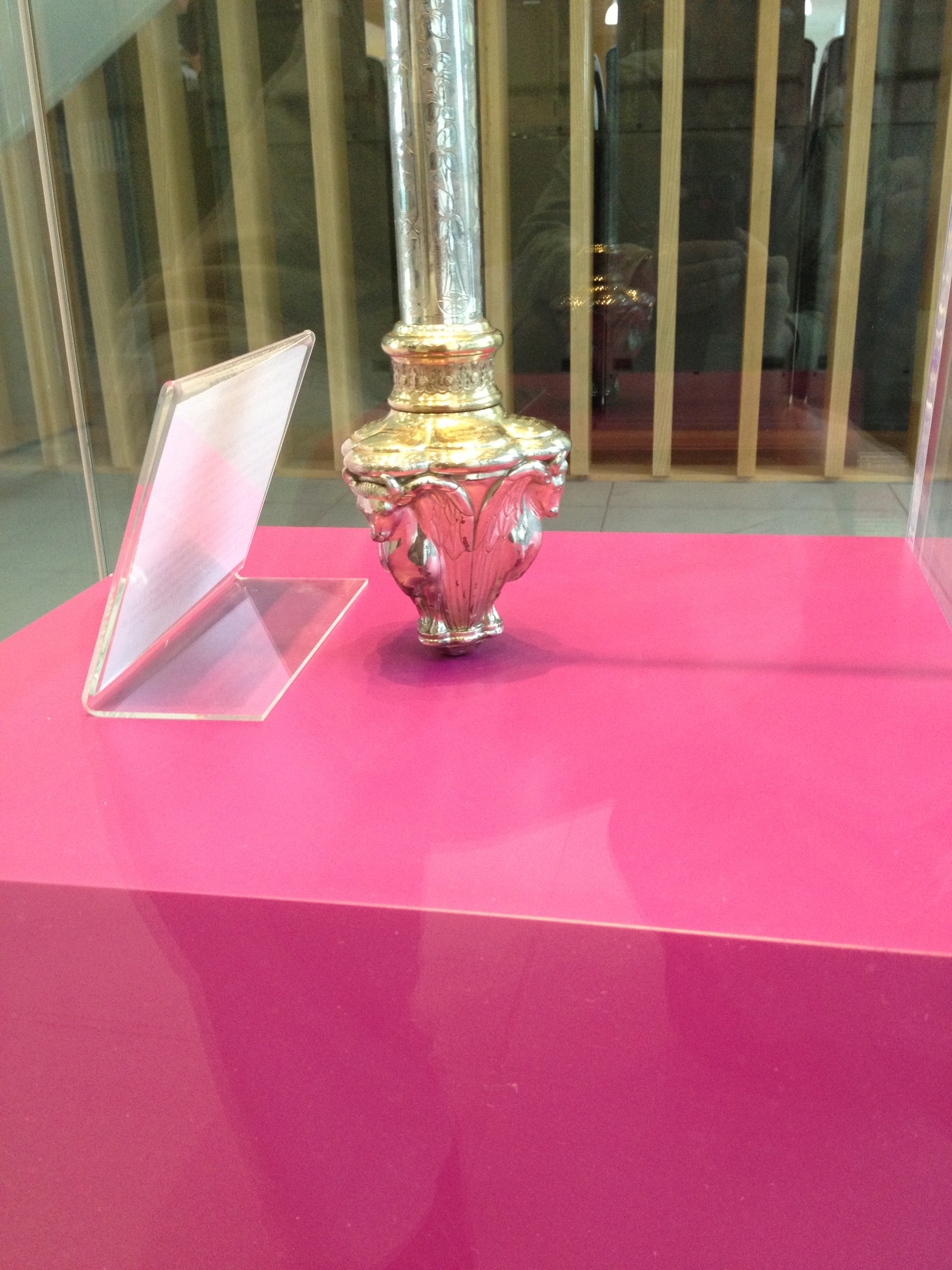
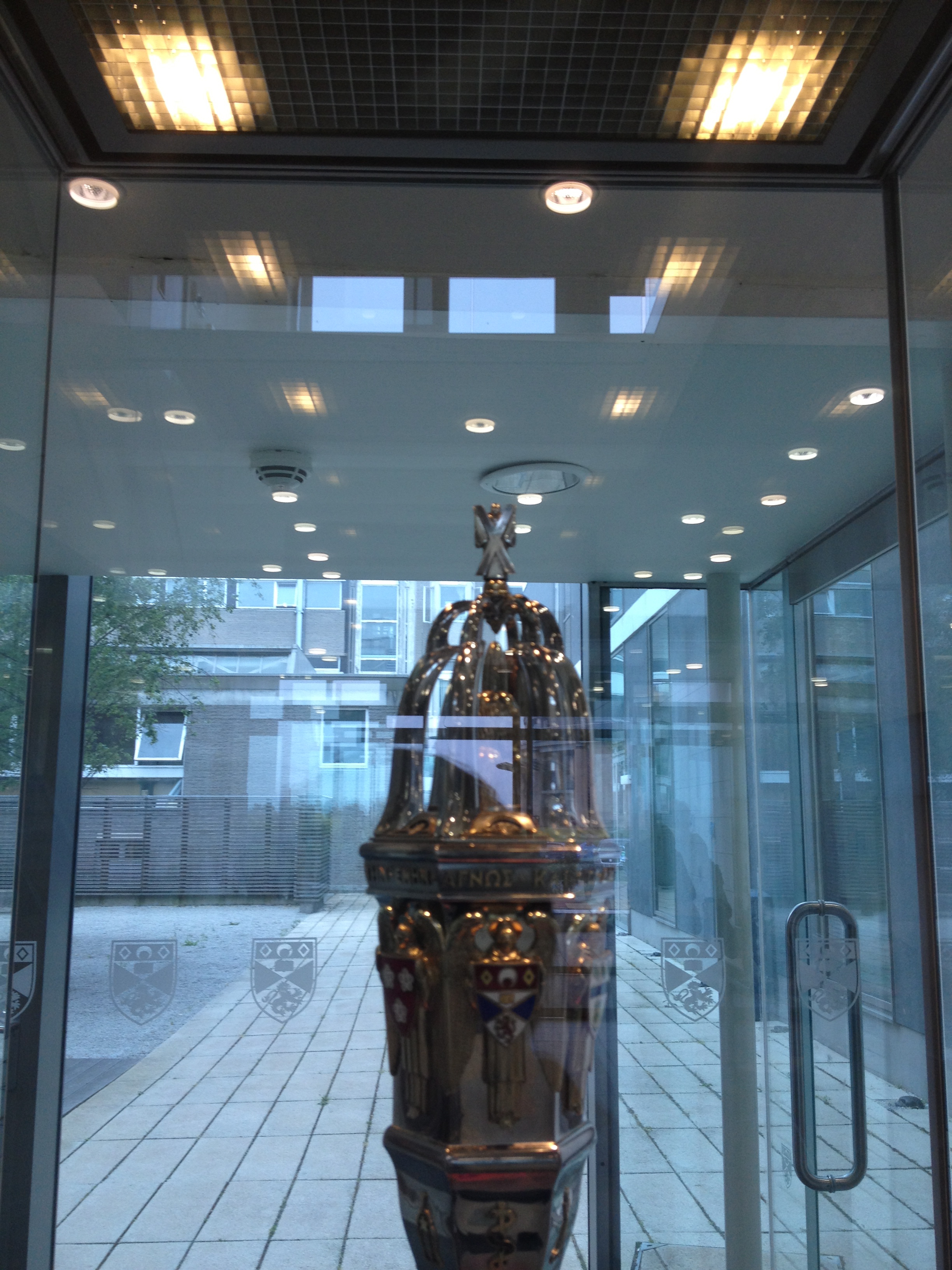
In the medical sciences building of the University of St Andrews stands a glass display case cradling a mace. The mace, a symbol of smiting authority that goes all the way back to Old Kingdom pharaohs, has a long tradition in academia as well. In all the pomp and glitter of an academic processional, a dean, provost, or chancellor carries a symbolic mace, as if to keep an unruly faculty in order. (I am sure that most of them have wanted to use that mace a time or two in reality, but have been constrained by both convention and the rule of law.) Medical science is among the fields of research quickly moving away from the spiritual mumbo-jumbo of medieval superstition. We are, after all, simply soft machines, doing as nature has programmed us. What more could there be to it?

IMG_0778

Looking more closely at the mace, I see on its ornate base, a flanking ring of winged oxen. Perhaps obscure to medical students, the winged ox is the symbol of the putative Gospel writer, Luke. Each of the Gospels emphasizes different aspects of Jesus, and the symbol assigned to Luke has been the ox. If the wings didn’t give it away, the explanatory placard on the wall nearby confirms my analysis. Eyes traveling up the silver shaft, the crown of the mace houses yet another saint, this one an apostle. St Andrew (of course) tops the mace, holding his X-winged cross. Underneath is an amorphous structure for which I need to turn to the placard to have explained. The fountain of healing waters, it tells me.

IMG_0779

From tip to tale, then, the mace of medical science is inherently religious. My reading of late has been from scientists claiming that, in the words of the old commercial, “parts is parts.” There is no underlying life-force or animating principle. Life is biological robotics, so I’m told. So as I stood in St Andrews last week, considering this metallic mace, I was poised on the edge of science and symbol. There is no biological need for such symbols—indeed, the mace was originally a weapon to inflict grievous bodily harm. Now, chased with silver, intricately ornate, it begins and ends with religious implications. I can’t help wonder what the robots make of that.


Caledonia Dreamin’

“Edinburgh is a mad god’s dream.” So penned poet Hugh MacDiarmid with sentiments that could’ve been composed by H. P. Lovecraft. My association with Edinburgh seems accidental, but there is little in my life that compares to this mad god’s dream. The Gnostics used to believe that there was nothing in divinity that precluded a kind of divine madness. Philosophers, back when they still considered god a postulate, argued about whether the deity was good or evil. If they’d come to Edinburgh, I suspect, the debate would’ve taken on a whole new cast. In his poem “Edinburgh,” MacDiarmid captures the untamed nature of a city that has never been given the accolades of Paris, London, or New York, but is just as edgy and twice as beautiful.

Dreaming gods, of course, are nothing new. Vishnu, according to some strains of Hinduism, is the god whose dream is the universe. In the Ugaritic Baal Cycle, it is a dream that reveals to the ancient god El that Baal has returned from the land of death. And, of course, Cthulhu lies dead but dreaming in the city of R’lyeh. To me, Edinburgh is a wonderful alchemy of divine dreams. I was a young man, still so very naive when I moved here. Looking back at those old photos, I see a much younger face from the past, telling the camera that yes, he’d found paradise, the very place of God’s dreaming. Our human politics, however, trump divine dreams every time. Although I never wanted to leave, I was not permitted to remain. Yes, the camera does, at times, capture the soul.

DSCN3490

I am on the train that will take me from Edinburgh, having seen it anew through my daughter’s eyes. I came here penniless some twenty-four years ago, but with a head full of dreams. Life has taught me the cost of dreams since that time, and I have had to pay with wrecked careers and uncertain futures, trusting that the god who is dreaming all this is mad indeed. Nevertheless, like the gods, I refuse to stop dreaming. As much as Hugh MacDiarmid captures the spirit of Edinburgh, as I sit here, with a wee bit of mist in my eyes, my mind is on the words of another poet, Baroness Nairne. To her I will have to leave the last words, from this south-bound train. “Fareweel, Edinburgh, where happy we hae been.”


Reflections on a Ruined Cathedral

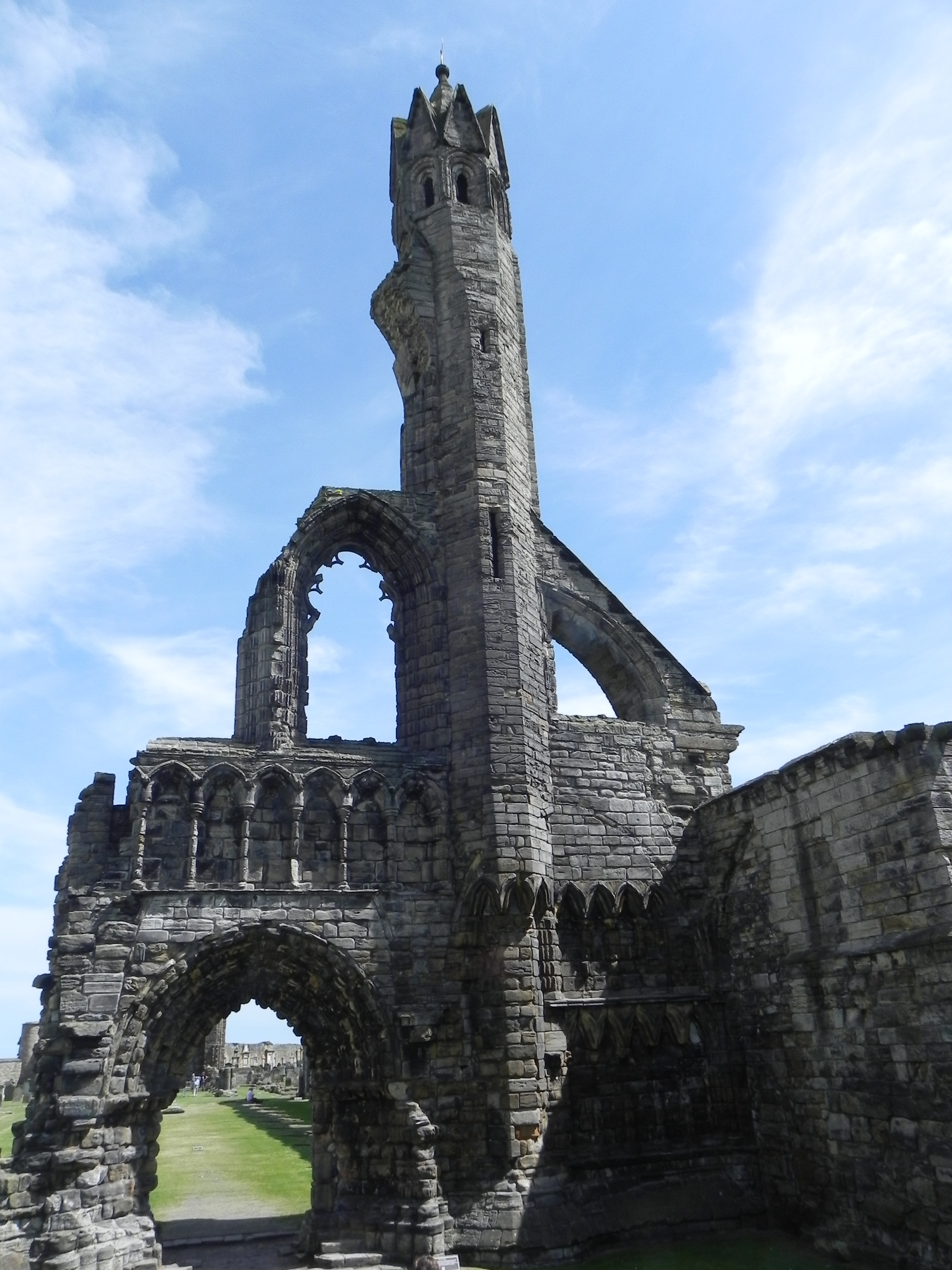
On my final day in St Andrews, the symbol of its ruined cathedral weighs upon my mind. In a world both increasingly secular and religious, it is the latter that led to the fall of this house. I’ve toured many impressive cathedrals in my time, from Chartres in its gothic splendor to the plain majesty of Durham. These engineering feats of medieval “superstition” still draw theists and atheists alike, in wonder. In crass terms, they represent a large economic investment. It terms of spirit, they are sublime. Under the duress of ecclesiastical prestige, those who couldn’t really afford the resources nonetheless stretched their stonework toward God. In secular Europe, some of the best known sites are sacred.

St Andrews Cathedral fell victim to the Reformation. Religions are notoriously selfish in this way. When a new divine regime takes over, the wonders of the previous god become spoils. Hagia Sophia (which I’ve never seen) went from basilica to mosque, and Roman Catholic St Andrews became an eviscerated shell at the hands of Protestant thinkers. Even in ancient Israel the temple of Jerusalem was build atop a site of even more ancient heathen shrines. We conquer to stoop.

St Andrews, named for the patron saint of Scotland, is better known for its golf than its god. The divine may have built this city, but the divot has captured its heart. Priorities change with time—we call this progress. Not far from the crumbling cathedral lies a ruined castle. Not the haunt of royalty, the castle was build to house powerful bishops and archbishops. Some of these were the warrior bishops who were knights as well as prelates. Some, like Alexander Stewart, led troops to war. And yet the cathedral could not survive the change of religious climate. If we can’t have it, then it must be destroyed. The great cathedral, once the largest church in Scotland, and among the largest in Europe, perhaps represents the fate of all acts of faith, when something more insistent comes along. Or maybe I just don’t want to leave.

DSCN3593


Whose Reality?

It was a groggy, foggy morning when I stepped off the bus in St Andrews. I’d been here before, but it had been over two decades ago, and with my wife, who is my navigator. I knew the International Society of Biblical Literature meeting was here, but I didn’t know where. Instinctively, I headed toward the medieval part of town. A religion conference, I reasoned, would best fit there. Seeing no signs of the inimitable professorate that I associate with the Society, I finally stopped into a university office where a dubious-looking receptionist peered at the conference letter and shook her head. The she spied a familiar address on the letterhead. “Ach, that’ll be doon this way, past the second roond-aboot.” Having lived in Scotland for over three years, I understood. I suppose if I’d just read the materials sent ahead more closely, I would’ve known that we were meeting in the newest part of Scotland’s oldest university.

A religion and science reunion came in the form of the physics and maths building where the meetings were being held. Science grad students, somewhat bewildered by so many biblical scholars, pushed open their lab doors with a sense of wonder—and perhaps disbelief. Could so many educated people seriously spend their time on the Bible? Science, after all, now has cornered the market on truth, hasn’t it? What hath Jerusalem to do with St Andrews? Ancient universities were generally founded to study theology. In 1413, when St Andrews opened its academic doors, God was the undisputed arbiter of truth. Now high-tech fighter jets scream overhead in nearby Leuchars, and we are secure in the ability of science to save us. And still biblical scholars, like the horseshoe crabs, come together in huge numbers on the beachhead of the human psyche every year.

To the student trained in the sciences, I have no doubt that we appear superfluous. Nevertheless, without religious belief, or the Bible, our society would not be where it is today. Although now it seems that science and religion bear deep hostility to one another, they actually grew from the same root and have a similar goal—to discover the truth. Science finds no evidence beyond the material, but religion declares the material as the perennial under-achiever. Scholars of the Bible from around the world, many of them not religious believers, expend their limited resources to come to one of the more inaccessible tourist destinations of Scotland and meet in a clean, modern, comfortable sciences building. Across town, in the heart of the old, medieval district, stand the remains of a once grand cathedral. Still majestic in its glorious decay, the church towers over a town once ruled by religion where now science and golf define the new reality.

DSCN3582


Burning Faith

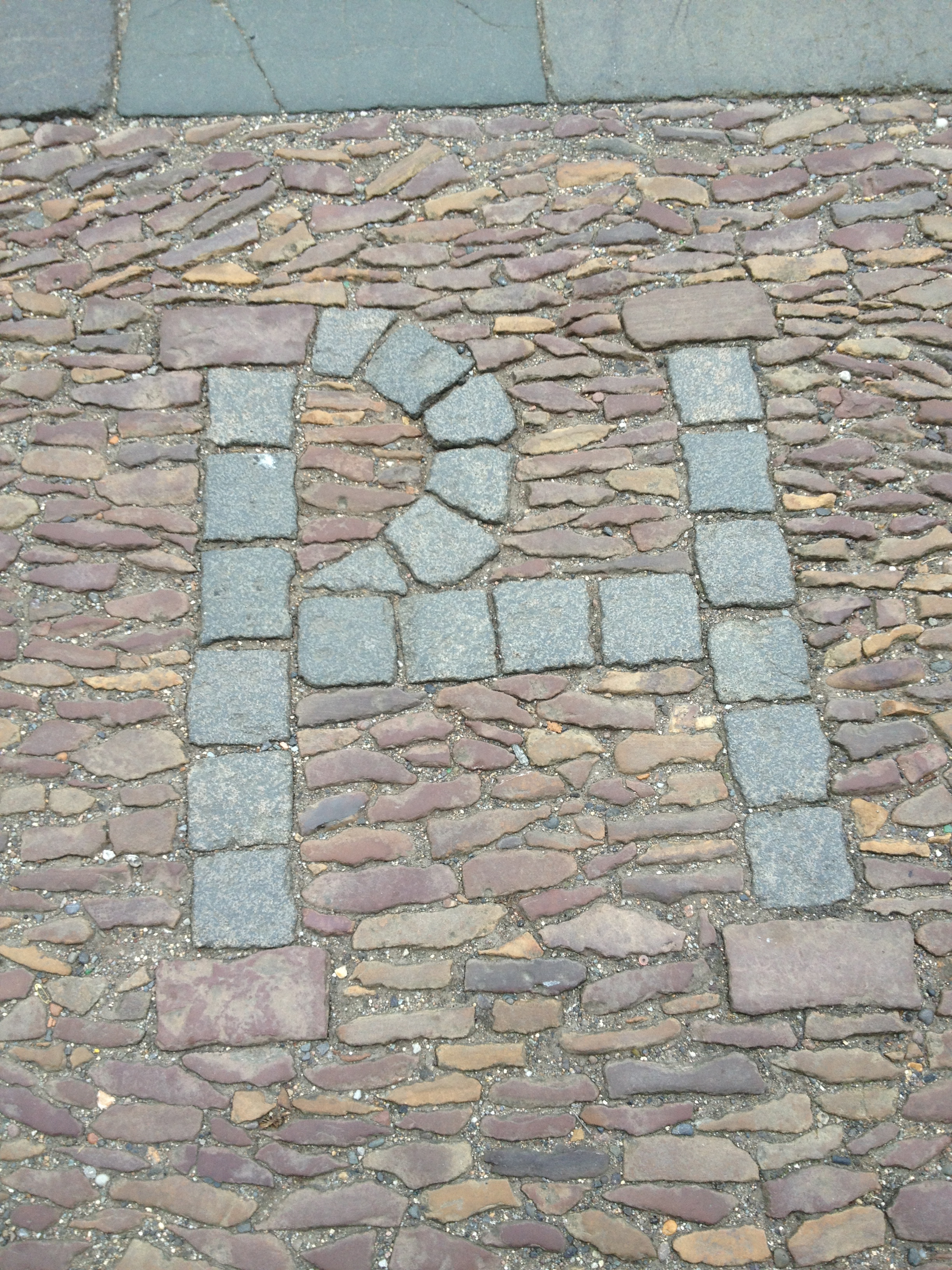
1528. February 29. St Andrews, Scotland. 24 year old Patrick Hamilton was burned to death for espousing the teachings of Martin Luther. St Andrews University is the oldest of Scotland’s four ancient centers of higher education. Heterodox religious teaching was considered a very dangerous thing in those days, especially in the halls of academe. Once infected with Lutheranism, like a zombie, you had to be burned so that the rest of the world could be safe, the virus contained. Only the problem in this case was an all too human one—difference of opinion regarding religion. The Thundering Scot, John Knox, would’ve been all of about 14 at the time, and reformation for the Catholic Scotland was still years in the future. Now, one of the largest European cathedrals, in St Andrews, lies in ruins because of that very reformation.

Religious bickering has a tendency to move beyond the ridiculous to the insane. Burning young men, after decades of burning hundreds of young and old women alike throughout Europe, was one of the most heinous symptoms of a horrid madness that had grown from religious fervor and fear. Religion itself is not to blame as much as the human tendency to use it as a weapon against those who are perceived as different. Some five centuries later and the physical stakes are gone but the fervor and fear are as strong as ever. As we hear politicians and televangelists lash out against those of whom God disapproves, the smoke still rises from the spot where Patrick Hamilton, late of the University of St Andrews, was sacrificed for his faith.

IMG_0729

Ironically, as I sat on the quiet morning train from Edinburgh to Leuchars, from the headphones on the young man behind me wafted AC/DC’s “Highway to Hell.” Was Patrick Hamilton aware that he was on a literal highway to hell as he returned home to Scotland? Did he have an inkling that his own people would torture him to death because he taught such dangerous ideas as salvation by faith alone and Scripture as the instruction for that salvation? Could anyone have guessed that the then teenaged John Knox would introduce what was to become an even less forgiving form of Christianity to Scotland by the time young Hamilton should’ve reached his dotage? Religion is funny that way. Even those who give their all to defend it easily become its victims. And a few yards down the road the Society of Biblical Literature meets in a university building dedicated to the sciences. History’s ironies never end.