Auld Reekie

DSCN3452

Those of us who once tried to storm the walls of academe from humble beginnings soon learn our lesson. This is a guild meant only for those whose parents knew enough to suggest an Ivy League education. Those whose parents have never heard of Harvard (they exist!) and who don’t know what an Oxford is aren’t really well-placed to give advice on these matters. At a small-town high school you couldn’t count on a guidance counselor noticing your academic prowess as anything more than a statistical blip in a non-challenging career. I learned about the Ivy League too late. It was, therefore, a very pleasant surprise to have an Edinburgh colleague ask me to write a piece for a Cambridge Companion. I don’t have the contract yet, but even the invitation made my day. Maybe my month. Or career.

I spend my days commissioning just such works for a different press. I know hundreds of colleagues. Only one ever said, “would you consider writing…” I’m not being entirely fair here. I’ve been asked to contribute to Festschriften. Such volumes are the highest praise an academic can be given. John C. L. Gibson, of blessed memory, was the first honoree. Nick Wyatt was the second. Simon Parker, also departed, whose Festschrift is currently in the works, was the third. I’ve been asked for others, but regular research is beyond my reach with my current schedule. I can churn out an original article once a decade, it seems. The ideas are still there, alive and popping. The time, alas, is not.

So I’m happily sitting here thinking of how to write a Companion article. The colleague who asked me is someone I recently met. He found out that I had attended his alma mater and wondered why I hadn’t landed a regular teaching post. Edinburgh University, in the larger world, is a recognized name. I can’t see through the ivy to discern it on this side of the Atlantic, but I’m assured it’s still there. Recognizing that those who fall between the cracks can still sink a taproot and make a contribution, he asked me if I might consider it. He had me at Edinburgh. School loyalty still counts for something, I’m glad to learn. For once I feel that I don’t have to apologize for having ventured to Scotland with only my transcripts and high hopes in my pocket (and with an indulgent wife by my side). Now I’ve been asked to write. I’ve gone all red, and I hide my face behind my hand. Of course I’ll do it.

Biological Imperative

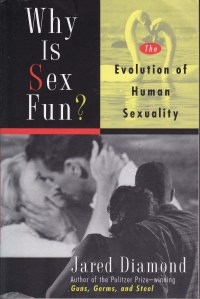
DiamondNothing used to make you feel smarter than being in a British bookstore. With that curious blend of proper, insane, and bawdy, books are displayed that you might find surprising. Alarming, even. Last year as I strolled around Blackwells in Oxford, I spied Why is Sex Fun?, by Jared Diamond. I mean, it was sitting right there, face-up, on a table with perfectly respectable, straight-laced books. Curious, but not curious enough to pick it up in a public place, I remembered the title so that I might find it on Amazon, where it could arrive in a nice, safe, opaque box. I finally stored up enough points on Amazon to get it, but then the problem was how to read it. I do a great deal of my reading on public transit—a place where you inordinately care what others might think of you. Finally, planning a seating strategy that would hide the cover by sitting on the left-hand side, next to the window, I took the book along, hoping it would keep me interested to and from work.

Subtitled The Evolution of Human Sexuality, the book isn’t salacious at all. It is scientific, but not clinical. I’ve mentioned before that all religions have something—quite a lot, usually—to say about sex. While religion doesn’t play into Diamond’s book, morality does. What I found interesting is his use of the phrase “God or Darwin,” which comes up a few places in the book. Diamond is a witty writer, and he explains that not all his phraseology is to be taken literally, but I appreciated his hedging his bets, nevertheless.

This book isn’t really titillating. In fact, it’s somewhat depressing. Perhaps it’s just phrasing again, but the production of offspring is described in economic terms. Resources, investment, efficiency, and the like. I think back to being a child. My family life wasn’t ideal, but I never thought of myself as anyone’s resource or investment. I was just me. That delusion stayed with me until I started working in the corporate world. I quickly discovered that others considered me a resource. “Human resources,” we call it. An investment. My efficiency was valued. Was it God or was it Darwin? Although I learned a lot from this little book, I wonder if it was worth the effort of having to hide the cover on the commute. After all, we’re all stuck together on this bus, units of investment, born to yield a profit. Why not have a little fun on the way?


Commander in Heaven

I pity the nation that doesn’t have divine founders. Origin myths help to orient our thoughts about where we belong in the order of things. Given enough time, any national founder will become a god. When a friend recently shared a blog post about Gogmagog, I had to dust a few cobwebs from my memory to place the mythic founding of Britain. During our years in Scotland my wife and I read about the heritage of the British Isles, according to bards before the Bard. Bede, Geoffrey, and the anonymous author(s) of the Mabinogion. Long before the Romans arrived on those islands, there had been gods, demons, and giants. The Medieval writers, of course, were drawing from the Bible. Gog and Magog are figures from Ezekiel, borrowed by Revelation. Sacred writ says enough about them only to make them mysterious. Their combined role in British myth makes one think they might be giants.

The founding of Israel, of course, is treated as history by many. I don’t mean the recent founding of the political state, but rather the biblical version of things. Moses leading the Israelites out of an oppressive Egypt, miraculously through divided waters. Foundation myths are that way. We can watch the process unfolding, even after just a few centuries. George Washington’s literal apotheosis is virtually certain. Even Alexander Hamilton experienced an unlikely resurrection when he was in danger of being removed from the ten-dollar bill. For nations to thrive this kind of transformation must take place.

6082318543_90e9752777_o

This is perhaps easier on states whose origins are lost in antiquity. There was nobody there to see the general fall off his horse or the commander in chief inhale. This was what folklorists call illud tempus, the time of events unlike those of today. Quotidian time has become profane—just look at the headlines if you don’t believe me. Those who are gods today are only those who make themselves so. We can see it happening all the time, if we pay attention. The implications should give us pause, when we consider those we think of as heroes or giants. Time makes gods. And it is just possible that we might be better off without a pantheon so terribly large.


Avoiding Ritual

IMG_0100

While on my current British kick—not really intentional, but sometimes life gives you limes—I thought I’d mention another piece sent to me by a friend. This one falls under BBC Earth, and it’s about “Why Ancient Brits threw out their most valuable possessions.” You can find the story by Amanda Ruggeri at the link. The basics are pretty simple: some people with a metal detector discovered what turned out to be a Bronze Age “hoard” in Lincolnshire. You have to understand that, in a way that makes me totally jealous, the United Kingdom has tonnes of ancient artefacts still undiscovered. While my wife and I lived there it wasn’t unusual to read about such finds in the newspaper. (Newspapers still existed then.) People had been smelting in the British Isles for a long time. The Phoenicians actually popped round the pub to get their tin—which can be one of the main ingredients for Bronze. What the article somewhat embarrassingly addresses is the nature of the hoard.

Hoards are where a large number of (usually metal) objects are discovered, after having been deliberately buried. These are not uncommon, what with Phoenicians, Romans, Angles, Saxons, Franks, Vikings, and others invading all the time. The issue that embarrasses is the “r word.” Ritual. While we don’t know the reason, the fact that people deliberately deep-sixed their valuables, routinely, suggests a ritual. As the article makes clear, professionals try to avoid the r word. Ironically, such deliberate burials, often with items purposefully broken, is also known from the ancient Levant, often predating the hoards of the prehistoric UK. Intentionally broken items—often of clay, and not infrequently depicting perhaps deities—were buried in biblical times. We don’t know why, but scholars suggest they could’ve been offerings. After all, breaking something potentially useful is an act of faith.

I’m not suggesting a direct connection here. I took a sound scholarly thrashing some years ago for suggesting a tale I heard on the streets of late twentieth-century Scotland had its origins in ancient Sumer (grad students are prone to such thinking). Still, it might not hurt anthropologists to cast a wider eye now and again. People had similar rit— well, let’s just say strange habits, in a land far away. Just cross the Channel and make a left. When it starts getting arid head south. The ancient world may have had more of an “internet” than we think. While that pathway may not always be marked by material remains, we now know ideas travel fast. Even something such as putting a daily post on a blog might become a ri—, strange habit.


Latin Lessons

IMG_1134

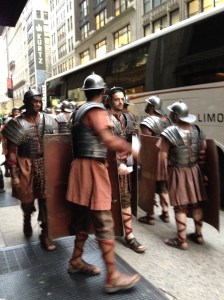
The Romans are coming! The Romans are coming! No, wait. They were already here. Here, that is, if you’re European. And more specifically, a Londoner. The Guardian recently posted a story about the oldest writing in the United Kingdom being unearthed as Roman missives—originally written on wax that overlaid boards, Roman style—are being unearthed at the site of the new London headquarters of Bloomberg. Having spent many years of my life learning to specialize in ancient writings on original media, it always does me good to see hoi polloi getting excited about old texts. These Roman notes are so old that the marks on the wax have only survived by etching faintly onto the underlying wood, the wax having long ago deteriorated. The mundane writing wouldn’t have lasted had it relied on the original medium.

Even with their penchant for irony, the British don’t seem to have made much of the fact that the oldest writing in the UK has been located beneath what will become the headquarters of the media giant, Bloomberg. We will pay handsomely for good media. Anybody can coat a piece of wood with wax and scratch away. Almost nobody will read it. If it survives long enough after you die, it becomes a media treasure-trove. All the sudden we can’t wait to find out what Londinio Mogontio ate for dinner last night. Such mundane things we write about. Just to clarify, I’m talking about the Romans, not Bloomberg. Trenchant media information is, after all, what we live for. We must know what others think this commodity is worth. They’ll pay good money for that.

Tibullus will repay Gratus—it’s right there on wood. These guys were also worried about the exchange of commodities, it seems. And while nobody gives a Roman denarius anymore, we can get people’s attention by saying yes, the Romans were here. Sitting in this very spot before the cross has grown cold, making sure that accounts have been settled. The last thing you want is a Roman at your door demanding restitution. One does have to wonder what Junius the cooper thought about all this. Junius is the one with an office across from the house of Catullus. His barrels may have been broken down to make more planks for writing. The fourth estate gone wild. All that hard work would’ve gone unnoticed too, had not a major media giant decided, literally, to rake the muck under old London where before even the original tower was built friends, Romans, and countrymen were lending each other denarii. And one suspects, their beers, if Domitius Tertius Bracearius is who we think he is.


Man’s Best Fiend

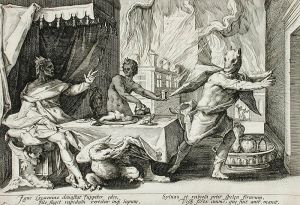
While reading the Hull Daily Mail (don’t ask), I came across an article entitled “Rock legend Alice Cooper ask questions about the Beast of Barmston Drain.” Apart from that lovable Britishism of making groups into grammatical plurals, this brief article gave me much to wonder about. After all, Paul Simon’s most recent album features a song entitled “The Werewolf,” (about which I recently wrote) and here is another rock performer from my youth raising the question about a similar beastie. According to the piece by Amy Nicholson, the Beast of Barmston Drain is a new urban legend about a creature half-man and half-dog. No doubt, werewolf reported sightings have been in the ascendent over the past few years, but how such an insignificant beast drew the attention of Alice remains unknown.

800px-Lycaon_Transformed_into_a_Wolf_LACMA_M.71.76.9

Many who know me—and those are few—are shocked to learn that I grew up listening to Alice Cooper. A fundie kid listening religiously to the father of shock rock? Songs about monsters, spiders, female maturation, and necrophilia? Perhaps it was because Welcome to My Nightmare just summed my childhood up rather nicely. Whatever the reason, to this day Alice Cooper is the only big name rock act I’ve even seen in concert. And that was only about six years ago, when I was still teaching at Rutgers. I had trouble hearing student’s questions in class on the next Monday night. Alice and werewolves in the same headline feels so much like yesteryear that it makes me want to believe in shapeshifters all over again. No wonder Hull is set to be the City of Culture. (Hey, Glasgow had it’s turn, so fair’s fair.)

To me, werewolves reveal much about a culture that strives to be far too civilized. We suppress our inner animal to become tie-wearing, wine-swilling sophisticates only to wonder where the wonder’s gone. And we start seeing werewolves lurking in culverts and drainage ditches. At least people are getting out at night. I’ve followed American tales of the dogman for years now, reading all of Linda Godfrey’s books on the subject. Even if it doesn’t exist, we stand to learn much of the creature that just won’t go away. Of all the transformations people talk about, that to the wolf is the most compelling, and among the most ancient. It may only be a dogman that people are seeing at the moment, but given some time it will evolve back into the wolf from which the story had its very beginnings. The answers, as always, probably lie in our childhood.


Mythisotry

Positivism takes no captives. I’m not talking about the philosophical system—not necessarily—but about the phenomenon of assuming absolutes are available for human consumption. Some physicists, for example, assume that because our five senses can detect reality only the perceptions of those senses can be considered real. Material. Nothing more. Nothing less. A similar view plagues those who believe history is the telling of “what actually happened.” No historical event has ever been fully explained. All stories are told from a perspective. This is particularly dangerous when religions get involved. Many mistake historical veracity for “truth.” If it didn’t occur just as “the Bible says” then we should throw out the whole shebang. No point in believing in half truths. This is a myth.

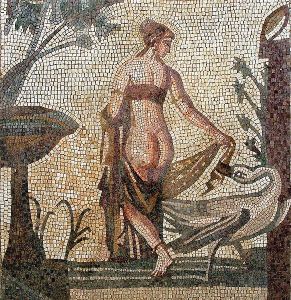
This point was reinforced when a friend send me an article about the production of “The Hollow Crown” on the BBC. Apparently a local politician tweeted that having a Nigerian of Jewish descent (Sophie Okonedo) play Margaret of Anjou, a French queen, didn’t match history. As proof he provided a downy white Medieval illustration of the queen. In a rare moment of academic cool, an historian quickly pointed out that the illustration came from a manuscript that claimed Margaret descended, Leda-like, from a swan. Her whiteness, thus, belonged to her avian DNA. As the story makes clear, history is the modern mythology. We assume we know what happened, but we will only ever have part of the picture.

582px-Leda_mosaic_crop

Prejudice seldom worries about historical accuracy, unless, of course, it helps to uphold the bias. I used to caution my students about taking history as a statement of fact. Certainly there are events with factual elements, but when everything is interconnected we can never untangle precisely what happened. When we “believe” history, we are choosing to accept a certain viewpoint of things. One person’s manifest destiny is another person’s genocide. Peculiar institutions are very peculiar indeed. History, as we’ve come to know, reflects the point of view of the historian. It must be read and evaluated as the opinion of the writer and not as the absolute truth. For me, I rather like the idea that some people are descended from birds. It certainly helps to make more sense of what I see in the behavior of those who claim to be making history today.


Being Humanity

KindnessOfStrangersWhat do you want to be when you grow up? The question kept recurring as I read The Kindness of Strangers. The name Kate Adie may be more familiar to readers from the UK than to those from the US. While spending three years and a bit in Scotland, my wife and I grew accustomed to hearing her name as a reporter with the BBC. I’ve just finished reading her memoir and it brought to mind several points that hit quite close to home. Apart from being engagingly written, her biographical essays highlight the difficulties women still face in much of the world. As a journalist, Adie traveled to many vexed locations where some expressed surprise that a woman would have such freedom as to run around with men, investigating, reporting, and being seen by many, many viewers. Meanwhile, those she sojourned among had to deal with oppressive regimes, low standards of social justice, and, not infrequently, the fear of rape. It is a poignant and at times maddening account. Men the world over seem to share a horrid, deeply ingrained and reinforced concept that women are somehow there to serve them. Here we are in the twenty-first century and we’re still struggling with basic biology.

If I might tear myself away from that particular observation for a moment, I also found Adie’s firsthand accounts of the atrocities she witnessed deeply troubling. In this day of Holocaust awareness and the belief in human dignity, it is distressing to see how cheap life is under many governments in the world. How humans can be so inhumane boggles the mind of those with any sense that we’ve somehow evolved. Often the hatred is based in differing religious outlooks, but often religion is only an excuse. The offending religions that are touted almost all teach the descent treatment of your fellow human beings. Sadly, nothing appears to have been learned from the all-too-intentional violence of the past century. The real issue, reading between the lines, is power, not faith. It is easy to have a scapegoat, and some analysts (not Adie, I would emphasize) like to suggest a simple solution by placing their hands on the head of religion and confessing the deadly sin of being human over it.

The book, I should add, is not all gloom. Adie is witty, sophisticated, and a charming writer. One of the positive takeaways I had from her life story is that the question “What do you want to be when you grow up?” is all wrong. Adie never wanted to be a journalist, but through a series of circumstances eventually found herself one. A much decorated and honored one, no less. This is a lesson for our time. The old stabilities of choosing a career and staying with it seem to have eroded from beneath us. It is increasingly difficult to plan ahead for an uncertain future. Adie is a fine example of how to adapt along the way. More than that—and men pay attention here—she’s an exceptional example of what it means to be human. This is what we should all strive to be when we grow up.


Same Old Story

Once upon a time fairy tales were considered appropriate only for children. Unlike myths, fairy tales are frequently oral (yes, there are oral myths but this is not the place to discuss technicalities) and have origins that are obscure. A friend recently sent me a story entitled “Phylogenetic analyses suggests fairy tales are much older than thought” by Bob Yirka on phys.org. Using phylogenetic analysis, researchers have traced some fairy tales back thousands of years, into the Bronze Age of the ancient Near East. This will no doubt surprise some analysts who supposed fairy tales were a more recent, European invention. The tales change with time and distance, no doubt, but the basic story is very deeply rooted in who people are. Fairy tales are adult fare, after all.

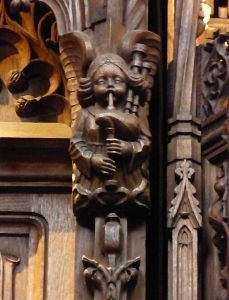
I tried to make this point in an academic article that was rudely rejected by the journal Folklore some years back. I mean “rudely” literally. I’ve had academic articles rejected before—many of us have—but the letter that came with this one was insulting. My “error”? Suggesting that the story of the musician who travels to the underworld came from ancient Sumer. The article had its origins in my wife’s reading of the Mabinogion. The story of Bran’s head being washed down the river still singing reminded me of an Edinburgh ghost story the tour guides used to tell right outside our window. You’ve probably heard similar: a tunnel is discovered, a musician (a bagpiper, since this was Scotland) is sent down while playing so that those above can follow the sound, but the musician never emerges. I traced the story through the Celtic tradition of Uamh ‘n Òir, the cave of gold, through Bran, Orpheus, and finally back to Ishtar’s descent into the underworld. It was a fun piece, but serious. It ended up published in a Festschrift to a scholar with a noted sense of humor.

Photo credit: Kim Traynor, Wikimedia Commons

Photo credit: Kim Traynor, Wikimedia Commons

The fact is, traditional stories often go back very far in history. We haven’t the tools to trace many, nor can the results be taken for Gospel, but the implications can. People are storytellers by nature. We find meaning in what would today be called “fiction.” Too often I’ve had to hang my head in embarrassment when admitting to a fellow academic that I read (and sometimes write) fiction. It is something, however, that ancient mythographers and folklore singers would have understood. We can be academic some of the time, but we are human full-time. And telling stories is something that predates even the Bronze Age. Of that we can be completely certain. And they lived happily ever after.


Not Camelot

In the English imagination the Arthurian legend is deeply connected with the Christian myth of Britain’s founding. This may not be on the surface, of course, but the places associated with King Arthur (as well as the tales themselves, such as the Holy Grail) overlap with sacred locations. I was reminded of this by a recent Guardian article about Tintagel Castle. Back in the day when my wife and I visited Tintagel with friends, I was still shooting film. Slides, no less. Some wonderful images came out, the way that only Ektachrome delivers, but I haven’t been able to convert them to digital. I guess you’ll have to take my word for it. Tintagel is in the news because English Heritage, the owner of the property, is developing it to make it a larger tourist draw. According to Geoffrey of Monmouth King Arthur was conceived at Tintagel. Not in the castle—now in ruins—that was built centuries later, but on the island that is accessed by footbridge over a dramatic cove on the Atlantic Ocean. It’s enough to make you drop your pastie.

Our own little Merlin

Our own little Merlin

Locals, according to The Guardian, protest the dressing up of the historic site. A bas relief of Merlin has been carved into the living rock, and this is hoped to draw the Glastonbury crowd to the southeast. Glastonbury, upon our visit, was already the home of New Age vendors. It too has connections with Arthur. The staff of Joseph of Arimathea can be seen, still growing after all these centuries. The Holy Grail—likely from Celtic mythology of the cauldron—is also associated with Glastonbury. Oh yes, and also King Arthur’s grave. Even apart from Monty Python, the legendary king has captured the imagination of thousands across the centuries. There’s something about Arthur.

The historicity of the king, however, is vigorously debated. The same is true of many religious founders. Those around whom legends grow become more and more inaccessible with the passing of the years. England was Christianized in the seventh century as part of a political expansion. If Arthur ever lived, it was after that period, perhaps in the days before Beowulf. We just don’t know. It is clear, however, that his legend is intertwined with that of those early Christian days. There never was a Holy Grail—of that we can be fairly certain. In the service of myth-making, it is nevertheless indispensable. Staring out over the Ektachrome sea at the ruins of the island castle of Tintagel, it is only too easy to believe. If only I had the pictures to prove it.


Durable Goods

CharingCrossThose who love books share a soul. A weekend never feels complete to me without at least an hour spent in a bookstore. On one such weekend a clerk in our local indie recommended Helene Hanff’s 84, Charing Cross Road. The recommendation was actually for my wife, but knowing me, she said I’d like it. What’s not to like about a set of revealing letters between a struggling, New York-based writer and a London used bookstore clerk? Books tell the story of a person’s life. If I’m invited to someone’s house, I look at their books. I would expect the same if they ever came to see me. Kind of like dogs sniffing each other out. Books reveal the inner person. They also give me ideas of more things to read.

I can’t help but think we’ve lost something intangible in the world of ordering books online. Don’t get me wrong, I appreciate Amazon maybe more than is proper, but how many treasures have I found simply by browsing? The days are well past when a single person could claim to have read every book (and really, who would want to?) so there’s always something undiscovered lurking at the bookstore. And these days used bookstores have the most character. In Milwaukee I used to frequent a used bookstore that could have passed the building inspectors’ visit only by bribery. I spent happy hours there. You see, books are durable goods that can outlast their owners. Can anyone really ever own a book?

84, Charing Cross Road was an unexpected delight. A quick web search reveals that Marks & Co. Is no longer with us. It is now a McDonald’s. Helene Hanff is gone too. And she thought she was born a century too late! Yet here we are in the twenty-first century and books are still with us, despite our losses. They have something of eternity to teach us. The ebook has not yet managed to kill off print. Our local used bookstore closed some years back. I confess to visiting a Barnes and Noble in a state of desperation. There a guy, older than me, was talking to a clerk. I couldn’t help but overhear when they mentioned the used bookstore, now long gone. Even the clerk sighed that they were the only show left in town. Although they were strangers I knew that we somehow share a soul. So it is with those who love books.


Under the Weather

A friend, knowing my penchant to watch the skies, sent me a story about the British and the weather. The story by Alastair Sooke on the BBC’s cultural page is discussing Alexandra Harris’s book Weatherland. I have to admit that I haven’t read the book (yet) but the report of it appeals to someone who’s written a book on the weather, but for a much older timeframe. According to Harris, according to Sooke, the British are rumored to be obsessed with the weather. While living in the United Kingdom, my wife and I observed this. It is not merely casual conversation when someone discusses the weather. It is a serious topic. For a nation so accustomed to rain and gloomy skies, the weather has a religious import. It rarely goes without comment. I suppose that’s the point I was trying to make in my book. The weather is important. Vital, in fact, to human survival.

What really caught my attention here, however, was Harris’s observation that weather is used to characterize mood. Sooke mentions ice and snow and melancholy. The image is vivid: early Anglo-Saxons turing a wary eye to a winter sky with its low clouds and preternatural chill. It is so universal, it seems, not to require comment. Yet at the same time, weather can be a great trickster. C. S. Lewis once wrote that the image of the Arctic north filled him with an inexplicable joy. Winter can be fickle that way. In the world of the Psalmists, rain was a blessing and a weapon. How you look at it depends, well, on your mood.

DSCN0904

The British may take their weather more seriously, on a day-to-day basis, than those of us across the Atlantic. We tend to treat the topic casually. In reality, it is just as serious here. Drought, which has gripped the western half of the country for about half a century now, is a serious concern. Winter storms, hurricanes, tornadoes. A lightning storm can still be a theophany. (One awoke me in the middle of the night, just hours ago.) Weather impacts our bodies as well as our moods. It is all-pervasive, but we generally don’t like to articulate it. I suspect our understanding of the weather says more about us than we’re willing to admit. Our British colleagues, however, are less squeamish about the topic than we tend to be. There’s more to the sky than it might appear.


Commitment

Marriage is a human institution. As those who invented it, we should be able to define it. Biology may not help here, since animals become mating pairs in many different ways. Besides, we’re selective in our application of science to the question. Not only that, human views of marriage have changed quite a bit over time, and the practice of marriage is still not uniform today. Back in biblical times, for example, polygamy was more or less normal. Marriages were arranged for tactical and economic reasons, and bonding for love had, one can only guess, very little to do with it. It was practical, pragmatic, and of use to the state. Prior to that, if the evidence is to be believed, “marriage” was a communal practice among groups of maybe 150 individuals. The purpose was the same: social harmony and cooperation.

An article on The Wild Hunt has me thinking about this again. (And you thought I was going to be discussing gay marriage, didn’t you?) According to a recent piece by Christina Harrington, handfasting, the marriage among pagan communities, has now been legally recognized in England and Wales. As far as we can tell, again delving back to the Bible, marriage was not considered a religious matter in antiquity. Part of life, it was handled by families who were witnesses to the promises made. Over time, various religious bodies came to give their blessings to people pledged to each other. In fact, for some religions marriage is perhaps the most important sacrament. Once this happened, however, dominant religions became jealous of their right to declare a marriage binding or not. Even as a child I remember a stigma attached to a merely civil wedding. It is, however, the state the declares a marriage binding.

Photo credit: the ShahMai Network (from WikiMedia Commons)

Photo credit: the ShahMai Network (from WikiMedia Commons)

Marriage is a convenient method to sort out tax statuses among genders with earning disparities. A government has no interest in whether a couple marries for love or not. Even gender doesn’t really matter. Can you tick that “married” box on your tax form or not? So it is that recognizing handfasting is likely, on some level, politically expedient. Meanwhile, those who marry for love have the added benefit of being with someone they chose and having a friend at hand. Tax season is upon us. Valentines Day will soon be here. And in some parts of the world the government is catching up with the times and realizing that marriage is what people make it.


Long Revision

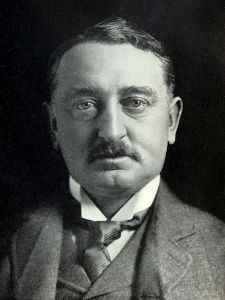
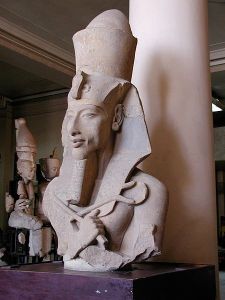
Cecil_Rhodes_wwThose of us who write know all about revising. You go back to a piece you wrote, maybe even just days ago, and you see all the things you want to change. Corrections, improvements, deletions, retractions. Histories are particularly prone to being viewed in new ways with the passing of time. I once thought histories were factually true, but in this postmodern age we’ve learned that while histories contain some facts, they are largely interpretations of those facts. Even the Gospels are interpretations. Recently I’ve been reading about student movements wanting to efface some facts of history because they make current-day people feel bad. A piece in The Guardian, for example, explains how some students want to remove the statue of Cecil Rhodes from Oriel College, Oxford, because Rhodes was an imperialist and a racist. A similar movement is afoot at Princeton University to give Woodrow Wilson the old Akhenaton treatment for similar reasons. Student interest groups, as The Guardian points out, don’t want to be reminded of their once marginal status. Removing Rhodes (or Wilson) from his pedestal, however, won’t change history.

I wonder if those in these special interest groups have enough experience to realize the implications of their complaints. What if, for the sake of argument, one of these student leaders became a national leader? What if her (or his) nation became oppressive during her or his lifetime but s/he didn’t see it because it was the operating milieu of the age? And what if their nation later repented and brought those from their former oppressed colonies to their homeland and those who came turned against that past leader? The point of this scenario is to suggest that none of us—or at least very few of us—have the ability to think beyond our age. Can we be blamed for being children of our time? Will removing our mementos change the facts of history that will have transpired? Will it make us feel better to bury the truth of what happened?

What's behind that self-satisfied smile, Akhenaten?

What’s behind that self-satisfied smile, Akhenaten?

An issue that often weighs upon my mind when I hear of these groups of the marginalized is that there is a very large, and very diverse marginalized class that has no voice, even today. The poor. Sure, some of us raised in poverty can claw our way to a descent living, but succeeding in a world where you need connections and favors owed and special knowledge of how a system works will be forever beyond our grasp. I knew a refugee, once upon a time, who was a student of mine. He used to complain to me of the costs of having his shirts sent out to be laundered. His clothes were tailor made. He refused to use a washing machine. He was also quick to point out that I was the oppressive race. This he did without a nanogram of irony. Cecil Rhodes may have been as evil as some say he was. His money, however, made it possible for some of the heirs to his oppression to study in his shadow. And I write that with a heavy dose of irony. Do they not realize that Akhenaton is now considered by many to be the most interesting Pharaoh of them all because he was erased from history?


Feasting

In addition to music, Christmas has also been associated with seasonal foods. Unlike today, when we think of foods primarily in terms of either fast food or culinary sophistication, Christmas dishes of yesteryear often had religious symbolism. While singing an English carol, for instance, you might hear of figgy pudding. I tried my first when living in the United Kingdom and it was nothing like the images its name conjures. It is more like a dense cake made of raisins and dried fruit, set aflame to burn off the brandy. Sometimes it is topped with holly. According to an interview on NPR, the Christmas dessert, in addition to taking weeks to make, contains thirteen ingredients, to symbolize Christ and the apostles. The holly is to represent the crown of thorns, and the flames the passion. That’s a lot of theology to stomach. (In seminary I had friends who used food analogies for theological purposes, but I suspect they didn’t know it was such an ancient tradition.)

Christmas cheer, I would’ve been shocked to learn as a child, generally involved spirits. For example in A Christmas Carol, Charles Dickens reverses his entrepreneurial relationship with Bob Crachit over a bowl of smoking bishop. I had always supposed this was a kind of soup or stew, but, again NPR comes to the rescue with a piece about Christmas drinks. Smoking bishop was made of port, and, according to the NPR story by Anne Bramley, is of the class of Protestant drinks called “ecclesiastics.” These were various alcoholic drinks named after Catholic church offices that Protestants used to poke fun at the ecclesiastical hierarchy of the Catholic tradition.

Christmas

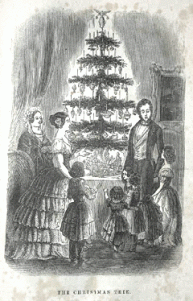
A Christmas Tree primer

It is difficult to conceive of anything more basic than food and drink. All living things require nourishment. It stands to reason that when religious sensibilities began to appear that they would certainly be associated with the necessities of life. Holidays, as necessary breaks from the mundane, offer opportunities for bringing theology to the table. The most basic of ingredients, as any observer of biblical holidays knows, can contain more than just nutrients and roughage. There is a symbolism in what we eat. In these days when it is fashionable to declare religion nothing but stuff and nonsense, it can’t hurt to stop and look at what might be on our plate or in our cup before declaring it to be mere animal nourishment.