Cat Curse

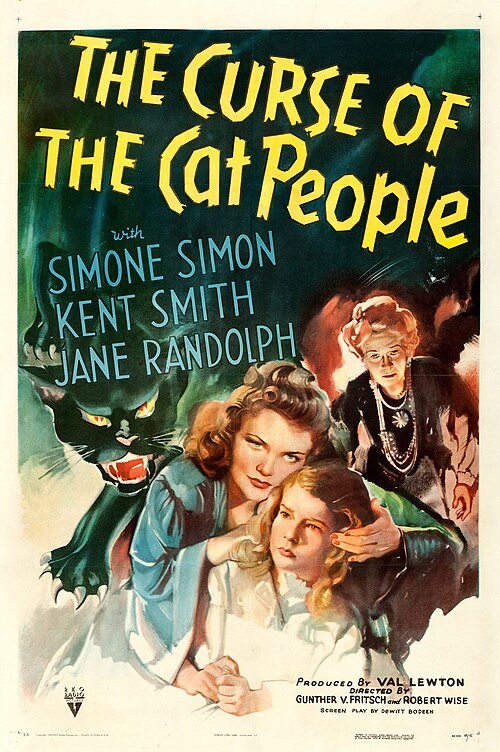
In researching Sleepy Hollow as American Myth, I watched every feature-length movie of “The Legend of Sleepy Hollow” that still exists.  I also watched many other productions, based, however loosely, on the Legend.  I was unaware that The Curse of the Cat People should’ve been included.  There is no database of all cultural references to Sleepy Hollow, and although Curse of the Cat People has many fans, nobody advertises it as related to the Legend.  But it is.  I happened to watch this 1944 film because I’d been thinking about Cat People.  My jaw dropped when the film opened with a teacher taking her children on a walk and explaining that this was Sleepy Hollow.  My book had been published just last month and I was discovering new material!  The movie is a bit disjointed, apparently because studio executives wanted new material added and some of the edited pieces explaining the story were lost.  Still, it is well worth seeing.

Six-year-old Amy Reed has no friends.  A daydreamer who has a rich fantasy life, she frightens her father, Oliver, who had been married to Irena—one of the cat people.  Oliver never believed Irena was really a cat person and is afraid his daughter is suffering under similar delusions.  This is because Amy is given a ring that grants wishes by an old widow who tells her a version of the Legend of Sleepy Hollow.  The wish Amy makes is for a friend and Irena, the ghost of her father’s first wife, shows up.  There are no cat transformations here, but there is a great deal of psychological subtlety.  Is Amy really seeing Irena or is her loneliness filling in the voids in her life—her father is distant and refuses to accept what his daughter tells him. Instead he punishes her for it.

When Amy gets lost on Christmas Eve, Irena saves her from the murderous daughter of the widow who gave her the ring.  It’s clear that some of the connective tissue is missing, but the story is sincere and smart, even if only very loosely a sequel.  The story of the headless horseman, pre-Disney for those of you who’ve read my book, presents the horseman as collecting unwary wanders on the bridge and compelling them to ride with him.  He’s not after anybody’s head.  Indeed, this is the way he’s described in Irving’s story.  Just as I’ve begun collecting films for Holy Sequel, it looks like I should begin keeping a list for Sleepy Hollow as American SequelCurse of the Cat People will be first on the list.


Cat Tales

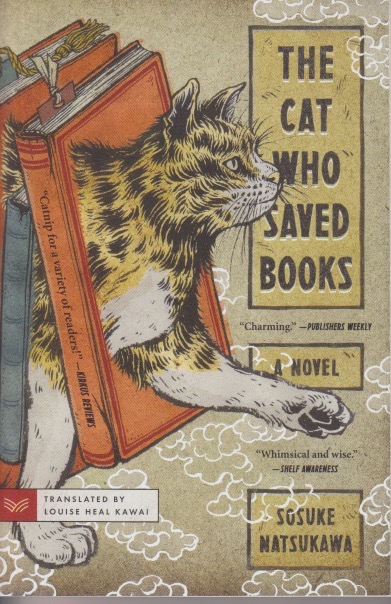
Sometimes I go into an independent bookstore and just look what’s on the shelf.  Often this ends up being an attempt to find a book that isn’t monstrous in length.  Much of what’s currently on offer is long, but I grew up reading 128-page paperbacks (not great literature, granted) that set my expectations.  Now, I do read long books.  Since books and movies are staple topics for discussion on this blog, however, I need to keep things moving in both kinds.  All of which is to say that I picked up Sosuke Natsukawa’s The Cat Who Saved Books because it was short.  This particular bookstore was one where I know and trust the owner’s taste.  I’d bought Haruki Murakami’s works there before.  I really didn’t know what I was getting into this time, though.  I like cats.  I like short books.  I like the Japanese authors I’ve read.  So.

The BISAC code on the back of this one didn’t state that it was fantasy.  I like some fantasy fiction, but my tolerance is limited.  The fault is mine entirely; I own that.  I enjoy speculative fiction and a book with a talking cat felt like it might fit that niche.  I thought the story of The Cat Who Saved Books was good, and the message was sound.  But it felt a bit trite.  The previous Japanese author I’d read was Murakami, and he’s pretty incredible.  I can give you a taste of this book, however, and raise a question about it.  A teenage boy is left taking care of his grandfather’s bookshop after his guardian dies.  A talking cat appears and leads him to four labyrinths where the boy has to rescue books that are being misused.  His arguments to save them don’t seem profound, but something might’ve been lost in translation.

The question is that one of the characters claims to be a book almost two-thousand years old that has had more influence than any other book. Was this the Bible?  Interestingly, nearly every book mentioned in this novel is from the “western canon.”  I have to wonder if this particular book, which is a rather severe character, is the Good Book.  I don’t suspect there’s any way to find out, really.  Still, it seems to fit the sense that Natsukawa uses.  This is an innocent enough fantasy novel.  I guess I prefer my fantasy to have solid rules laid down so that I have an idea what to expect.  But then again, my perspective is that of a primarily western reader, and one who craves short books now and again. I’m open to learn.


Not Schrödinger’s

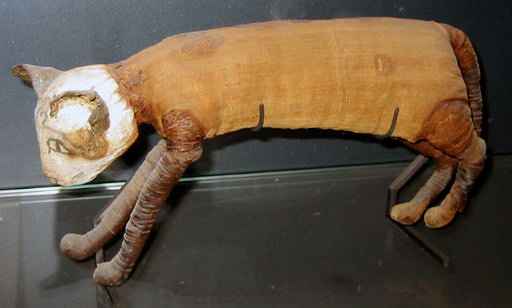
It’s quite a dilemma.  It’s Schrödinger’s cat without the box.  Well, it’s a dead cat in my yard.  It’s not my cat and I only know about it because the next-door neighbor saw it while out mowing.  (It’s on the thin strip between our houses and we seldom make our way over there.)  Death is always a problem.  I don’t want to bury it since it looks like it was a pet.  Said neighbor is the only one I know around here but I know some pets have tracers/implants to help owners know if something happens.  So I tried calling the local animal control companies.  They don’t deal with cats.  There is a county service, in the next town over, but we’re across the border in a county that doesn’t deal with cats or dogs.  The DOT won’t get involved unless they’re on the street.  The local municipality also handles them only on the street or sidewalk.

Now, I own a shovel and I’m not afraid of hard work.  I am a bit squeamish, though.  I’ve handled half-squirrels from some hawk with eyes bigger than its stomach.  I also have to take care of dead birds and squirrels that get into the garage.  This is a bit bigger than I’m used to.  I’m not even entirely sure if it’s a cat, really.  Once an opossum got into our compost bin and the fur looks like it could be an opossum.  It doesn’t smell bad, though, and possums don’t have the most pleasant bouquet even when they’re alive.  The flies seem to like it okay, however.  The space between our houses would be challenging for the turkey vultures I see around daily.  They must be mad with frustration circling up there.  If it’s somebody’s pet I’m sure they’d like to know, but it’s looking like I’ll be digging—but you’re supposed to call Angie first, right?  In case of buried cables?

Death is entirely natural.  Ironically, I live two blocks from a pet crematorium.  I wonder if they make house calls?  Then again, it wouldn’t be cheap.  We expose ourselves to loss when we bring pets into our families.  My own beloved childhood beagle was hit by a car.  Meanwhile, I know that we shall all meet on that beautiful shore, by and by, and when we do I hope someone recognizes their cat from this side of the vale of tears.  Or at least outside of Schrödinger’s box.

Image credit: Greudin, public domain, via Wikimedia Commons

Leopard Spots

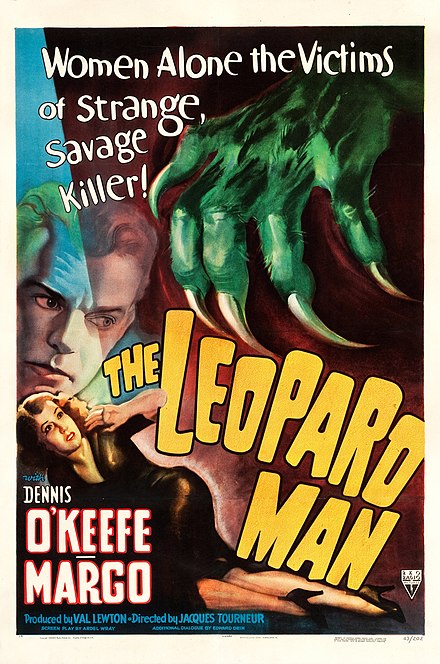
There’s always a dilemma involved.  Rent or buy?  Libraries face this when deciding on a subscription or perpetual access deal—is this something you’ll need for a long time?  More than once?  So also with movies.  Do you rent, watch, and forget or buy, supposing you’ll need to go back?  This plays out in my head when there’s a movie I want to see in these days of streaming.  The Leopard Man wasn’t a big hit when it came out in 1943.  There wasn’t really much of a taste for horror during the Second World War anyway.  In retrospect, however, it’s one of those films that has appreciated with age.  Apart from its effective use of the Lewton bus, the movie was well written.  It retains ambiguity and suspense throughout.  And if there is a leopard man who shapeshifts, we never see him doing it.  Spoilers follow!

Following on from his better known Cat People the previous year, Jacques Tourneur kept with the large cat theme in this film.  A publicist who (apparently) has no scruples, encourages his client/girlfriend to upstage a fellow performer by taking a leopard into her act.  The stunt backfires, however, when the frightened cat escapes.  Then mauled women are found and a hunt is on for the leopard.  If you’re adept at this kind of set-up you’ll figure out who the killer is—it’s not the leopard, except in the first case.  It’s implied that, rather like Cat People, the religion of the ancients, as Dr. Galbraith points out, might have some effect on modern people.  His dispassionate remarks about serial killers provides a clue, however, to who’s really behind it.

Religion runs like a thread throughout the movie.  The processions intended to alleviate the guilt for the treatment of the Indians, the ancient religion of those who made the museum pieces, and the Catholicism of the locals all play a part in this.  The question of whether Galbraith really becomes a leopard or not remains unanswered, but I sense it’s strongly implied that he does.  He had no intention of murdering the young woman in the cemetery and certainly had no time to premeditate the carrying of leopard hairs and claws to cover his tracks.  This is a man of science caught up in the spell of a forgotten religion.  Or so it seems to me.  In any case, it’s time to dust off this old gem and bring it back to the light.  It’s probably worth buying just to see it again.


Cat Nipped

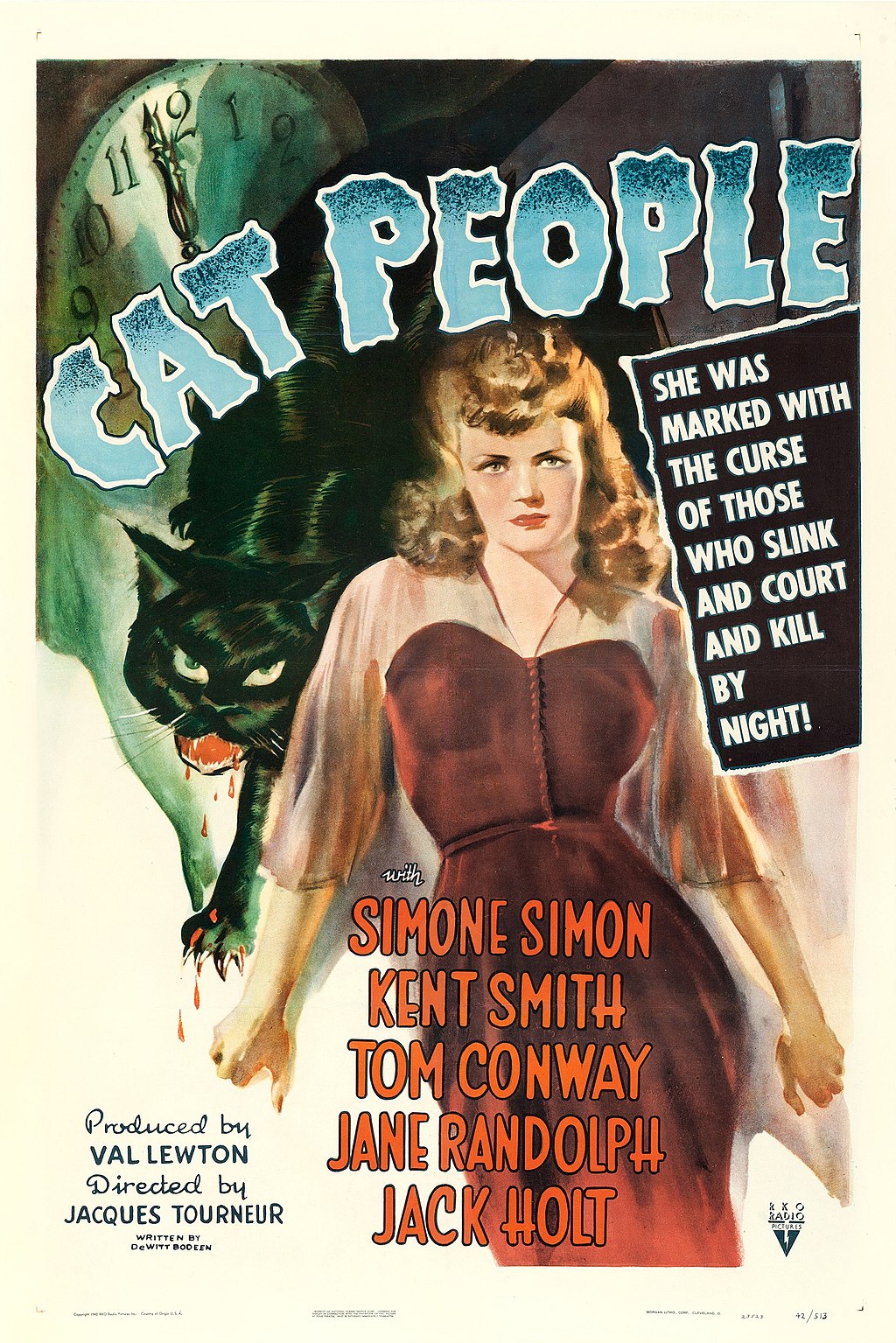
Holy Horror began with movies from 1960 on.  You see, I had watched the 1982 remake of Cat People without ever watching the original from 1942.  The remake has Paul Gallier, the brother of Irena, as a religious leader.  He doesn’t cite the Bible, so the movie fell outside the limits I set for that particular book.  I recently watched the 40-year older original version and was surprised to find not only the religion intact, but also the Bible as part of the story.  Both versions integrate religion and horror and some of the scenes are very close between the two.  The original centers around Irena Dubrovna, a Serbian immigrant.  In addition to originating the The Lewton Bus technique, the film also introduced a religious origin for the horror.  When Irena meets Oliver Reed, she explains to him that in Serbia, in her home village, some witches were driven out into the woods of the surrounding mountains by the Christians.  There they formulated a curse leading to becoming cat people when aroused.

Irena, fearing sexual arousal, spends time apart from Oliver after they marry, mainly watching the black leopard at the zoo.  One of the custodians warns her it’s an evil animal, a monster as described in the book of Revelation, which he quotes.  Of course, this leopard is an ordinary big cat, and the woman to whom he quotes Scripture is a cat woman.  Irena knows inside that she’s one of the cat people, but nobody will believe her.  The film also makes use of a quote from John Donne regarding sin.  Indeed, the film makes it clear, even after Irena dies, that she had never lied.  While she’s stalking Oliver and Alice in their office one night, Oliver pulls down a T-square, the shadow of which forms a cross on the wall, and he abjures her, in the name of God, to leave them alone.  Religion, the clash of religions, makes the monster.

Cat People, despite having had a mixed reception, was an influential movie.  Like much of early horror, it’s tame by today’s standards.  And yet it’s aged well.  I didn’t expect to be drawn in as much as I ended up being.  After all, I’d seen the remake first.  America at the time had a fear of the Balkan region, where mysterious eastern Europeans still had tales of vampires, werewolves, and cat people.  Of course, the last of these was invented for the film.  The director, writer, and producer wanted to create an intelligent horror film, which they did.  Moody, atmospheric, and based on religious tension, it is worthy of a Holy Horror sequel.


Moments of Happiness

“When happiness shows up, give it a comfortable seat,” Fezziwig says.  I wonder just how much like old Ebenezer Scrooge I am—apart from the abundant money, of course.  This isn’t going where you expect, I promise you!  I don’t come across as a happy person.  I was forced out of my ideal career many years ago by Fundamentalists, and I struggle to keep my writing going.  That old rabbinic adage that you can’t be both wise and happy probably doesn’t help.  So I sit here worrying about the everyday cares and concerns of a sexagenarian (not as sexy as it sounds) and watching horror films to help me cope.  That doesn’t mean, however, that moments of happiness don’t appear.  When they do they shine bright and hot and shed enough light to help me make it to the next beacon that some thoughtful lamplighter has set ablaze.

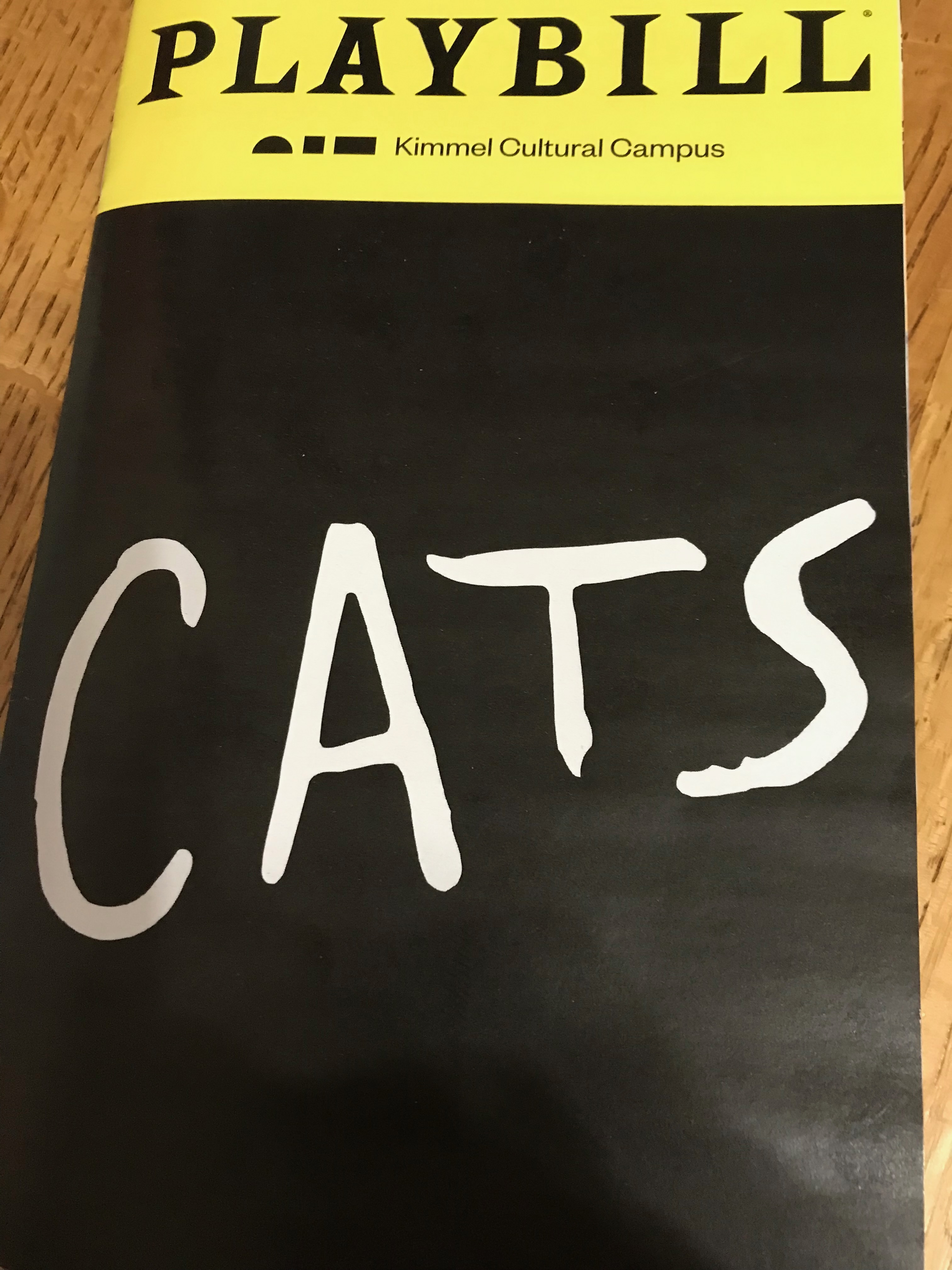
For a birthday gift, we gave a family member a trip to see Cats live in Philadelphia.  Everything about that day comes back to me through rose-tinted lenses.  The worry and stress of driving in Philly—I’ve done it a few times and it’s always nerve-wracking.  Finding the theater, negotiating parking, finding a place to accommodate a vegan, a vegetarian, and an omnivore for lunch.  Locating seats only to discover they’re further back than they looked on the schematic map, and then the lights dim and the music begins and you’re in a different world.  All the worry and fear melt away.  Happiness has appeared and you know she’s sitting right next to you.  Even with evening Philly traffic still looming ahead and a drive when I’m beginning to feel drowsy, I’ve had an experience almost of a religious nature.

It’s no wonder that many early evangelical Christian leaders warned about the theater.  Live performances reach that spiritual place that weekly Sunday services only wish they could.  Of course, it helps that Cats is my favorite show—I’ve seen it live five times over the years.  It’s a show about happiness and finding redemption.  I’ve written before about the religious undertones to the musical, but here I’m thinking about how the day after always has a special glow.  Yes, the quotidian worries are still there.  The attempts to grow wiser and stay solvent.  The difference is that something transcendent—all the more valuable for being rare—has happened.  It has shaken me out of my comfort zone and my daily routine.  And I can’t wait for happiness to come knocking again.


A Day with Books

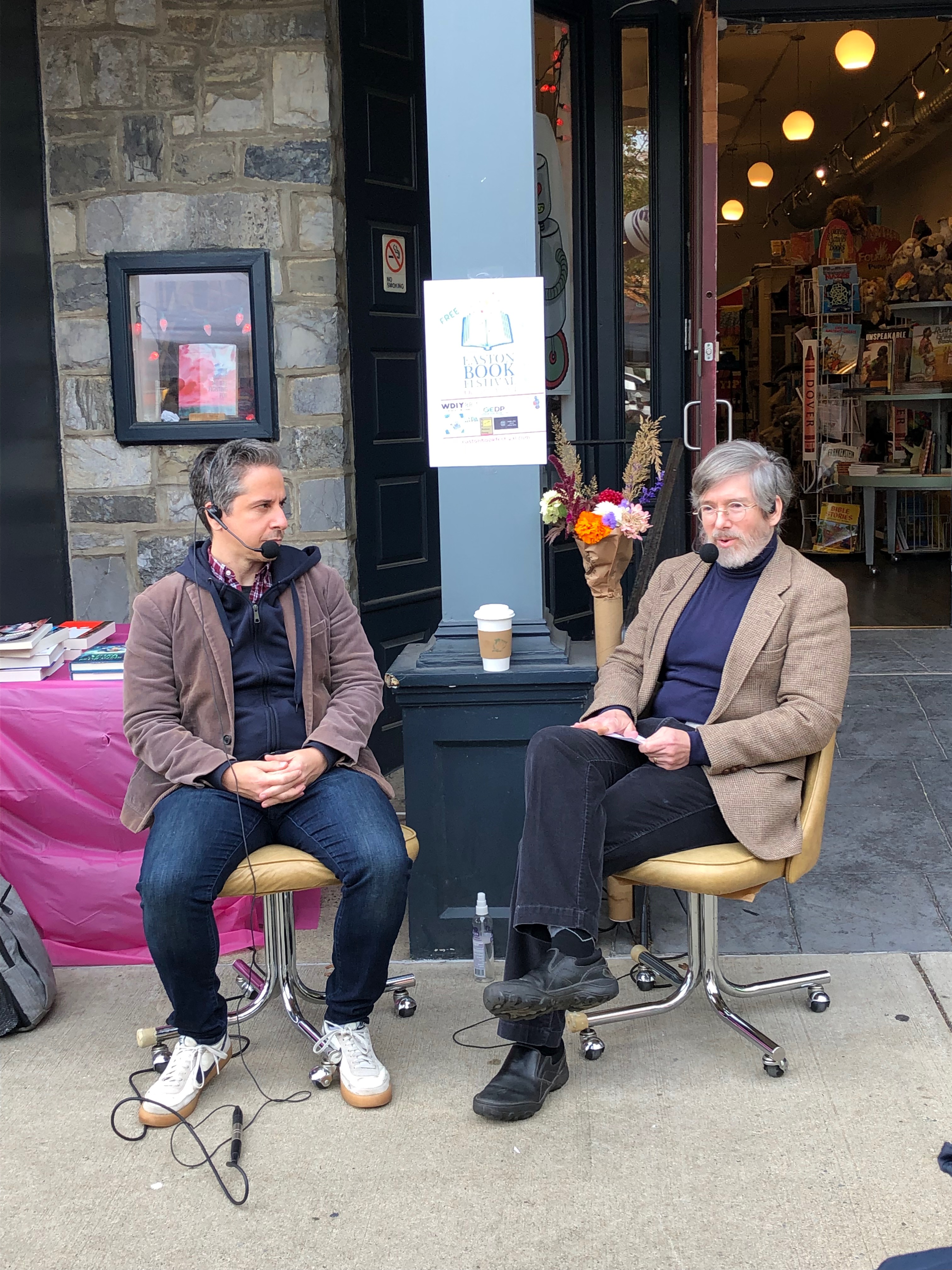
A day with books.  Is there any better kind of day?  Before I lapse into poetry I want to put in one more plug for the Easton Book Festival.  Today is the last day for this year, but keep an eye out for next October.  And you can still catch the videos from this year’s session on the Festival website.  Writers can be skittish creatures, you see.  We spend time alone and try to get our thoughts into words.  We don’t always have regular gatherings.  That’s what makes book festivals, well, festive.  I didn’t want to appear in person to plug Nightmares with the Bible—it’s too expensive.  As a friend said, “What’d you do to make it that expensive?”  I was glad, however, to be in person to interview my friend and colleague Robert Repino.  The interview will be posted on the Festival website.

An unexpected pleasure is finding acquaintances that you didn’t know were writers.  As I said, some of us spend most of our time alone.  And even for someone who spends so much time with words it’s difficult to describe the species of euphoria that talking about books evokes.  It makes me wonder why we don’t do it more often.  Since the pandemic is still with us—the pandemic that interrupted the natural progression of the Book Festival, which began in October 2019—in person events were held outdoors.  It was a bit on the cool side yesterday, with some sprinkles of rain, but few sensations match spending a day outdoors in October.  If you’re not in this area, please support your local book festival.  If you don’t have one, maybe talk with your independent bookstore owner.  It can happen.

As I’ve mentioned before, many of us who write make very little money at it.  When people ask why we do it, pointing to events like the Book Festival supply the reason.  Call it fellowship, or communion, or just a gathering of the hive mind, but finding the other book lovers in your community is a worthy way to spend a Saturday.  Book and Puppet has the distinction of hosting the event, with support from Lafayette College and a few local sponsors.  It’s also the only bookstore in which I’ve seen my actual books on the shelf.  I know it’s a sacrifice to order stock that moves slowly.  Halloween, however, is nearly here and that’s the crowd for whom I tend to write.  Why not spend a day with books?  It’s the best kind of day.


Which Wednesday

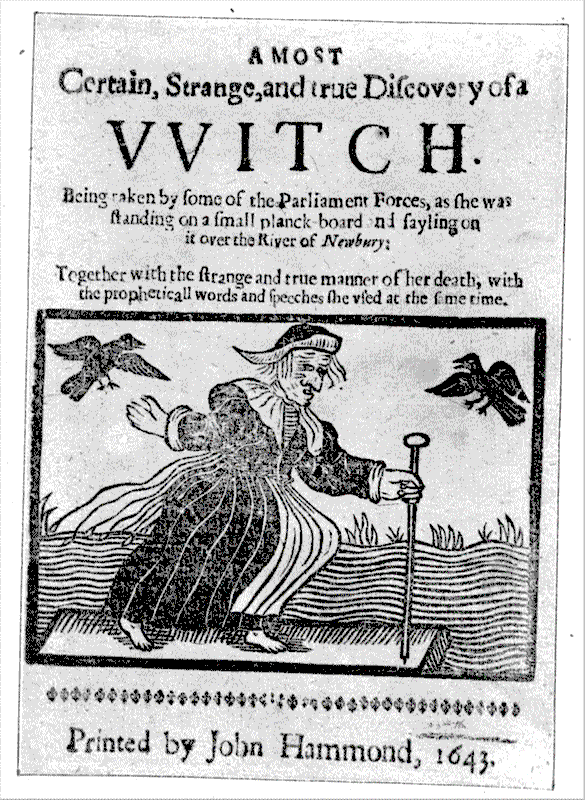
I’m not superstitious but it’s still pretty dusky when I go for my constitutional on cloudy days.  I was walking along thinking about Cernunnos, the way one does, when a black cat darted out of the underbrush and across my path.  My thoughts turned to witches.  Then a large toad jumped out in front of me in the half-light.  Perhaps it was because I picked up a booklet about witches recently, but this felt very uncanny to me.  There’s a place where the woods close in on both sides of the path.  The sun wasn’t yet up, and the clouds meant it wouldn’t have much mattered anyway.  When the bird calls stopped I began thinking about turning around and going home.  Nobody else was out this morning and although I don’t mind starting my day with the weird, I was thinking “not on a Wednesday.”

A thick mist lay over part of the path and I realized just how uncomfortable we tend to be when we can’t see clearly.  Despite that, and the black cat and the toad, I’ve never really been afraid of witches.  I guess I try to please people too much to think that someone might want to harm me supernaturally (at least among those who know me).  I recently found a booklet on witches—one of those strange impulse buys after being mostly house-bound for the better part of a year-and-a-half—that perhaps prompted my thinking this morning.  Although it seems to be most interested in earth-centered religions, it has an article about Salem.  Despite the more modern embrace of witchcraft in Salem, historically it had to do with human fear and hatred, a combination that is scary indeed when applied by those who are superstitious.

Cernunnos is a Celtic god generally portrayed with deer antlers.  Although lack of literature means we know little about him, he’s been adopted as the male counterpart to the female earth-goddess in some traditions.  Modern witchcraft is based on an orientation toward nature.  It’s kind of a ground-up religion rather than a top-down one.  Christians traditionally labelled it “Devil worship,” as they tended to do with anything they objected to.  Such demonizing helps no one, of course.  And when these ideas grow into superstitions people get hurt.  So I’m out here in the half-light because in the mornings days are shortening quickly and I have less and less time before work begin after the sun rises.  And I have witchery on my mind.


Nature’s Bible

When you’re writing a book, many strands in your mind are weaving their way into what you hope will be whole cloth.  Well, at least if you write books the way that I do.  In writing Weathering the Psalms, for instance, one of the threads was the question of science and religion.  I was teaching at Nashotah House at the time, and I read a lot of science.  As I told colleagues at the time, if science is how we know things, shouldn’t what we know of the natural world apply to the Bible?  I don’t claim to be the first to ask that question—back in the days of exploration there were many people (mostly the genus “white men” of the “clergy” species) who went to what is now and had used to be Israel, to find out what the world of the Bible was actually like.  Their books still make interesting reading.

Quite unexpectedly a colleague, Dalit Rom-Shiloni of Tel Aviv University, told me she’d just ordered my book.  She’s leading up a project called the Dictionary of Nature Imagery of the Bible (DNI).  Over a decade after my teaching career ended, someone had deemed my work relevant.  Dr. Rom-Shiloni recently sent me the link to the project website where there is a video of her interviewing three Israeli scientists about the possibility of lions, leopards, and bears living in Israel.  They’re all mentioned in the Bible and no longer exist in the area.  The video is on this link and won’t take half an hour of your time.  It’s quite interesting.

One of the surprising facts to emerge is that leopards, in small numbers, may still exist in Israel.  This assertion is based on lay observation.  I contrasted this with the United States where, no matter how often a cougar (aka mountain lion, puma) is spotted in a state where it’s “known” to be extinct, it is claimed to be mistaken observation.  A departed friend and mentor of mine once saw a mountain lion in West Virginia.  I’d grown up in neighboring Pennsylvania where they are officially extinct, so I wondered if said beasts knew to observe the Mason-Dixon line.  The fact is, despite all our best efforts to destroy our environment, animals often find a way to survive.  Growing up, one of my cousins in Pennsylvania (now also unfortunately deceased) showed me a puma print in the snow behind his rural house.  Now Pennsylvania is a long way from Israel, and this topic is a long way from the DNI, but remember what I just said about how my books are written.  Tapestries only make sense from a distance.


Panthers and Prophets

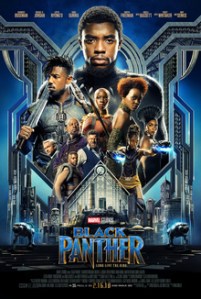
Prophetic is a word I seldom use for movies. Prophetic, by the way, doesn’t mean predicting the future. Prophecy was about establishing rightness on the earth. Dress it up with God or dress it down to a girl being shot for wanting an education, prophecy is a necessary ingredient in being human. Black Panther is a prophetic movie. I don’t keep up with comic books, and many regions of the Marvel Universe are unexplored by me. I have no idea if the comics bear the strong message of social justice that this film does, but I left the theater blown away. If those who have the power could only be interested in good rather than personal gain, what a world we could have.

The message of not making race, but humanity, central is one that we have yet to learn. It is so basic, so simple that a child understands it. Somehow world leaders don’t. Any secret advantage is kept in order to make things better for ourselves. To make us feel more secure. To put us in the place of making decisions for others. In Black Panther even the enemy isn’t evil. Humanity is it’s own enemy. We sometimes forget that we have it within our ability to make life fair and equitable. We can share what we have and end jealousy. The Gospel of Adam Smith, however, has supplanted that of Jesus Christ. Just ask the one-percent. The one percent who haven’t most assuredly seen this movie.

I had no idea what to expect when I walked into that theater, but it was nothing short of an epiphany. As it has been from ancient times, one can always tell when they’ve been in the company of a prophet. We’ve come to dislike prophets because they make us uncomfortable. They possess something we can’t have. Integrity. The dignity of the conviction of what anyone can see is rightness. Such things can’t simply be taken, crammed onto a boat, and sold. Prophets bear the burden of speaking the truth. Black Panther may be unlike most prophets in that it is reaching a huge audience. And rightfully so. It is the antidote to the poison that’s surging through the veins of this country for far too long. Even those who will dismiss it simply as another fantasy—it’s a superhero movie—need to see this vision of what a world can be. It’s not very often that a prophetic movie appears, but the days of prophecy, it seems, aren’t over yet.


Let the Memory

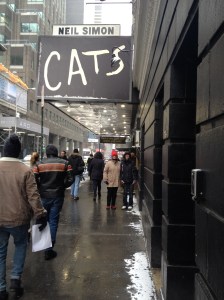
One of the rare and long-anticipated treats of being near New York City is the prospect of a live show. For practical reasons we don’t go to shows very often—years separate the occurrences—but once in a great while we manage to afford such a boon. Yesterday we attended the penultimate performance of the Cats revival on Broadway. The experience was transcendent. I’ve seen the movie version a number of times, and over the years I’ve caught a few live performances here and there. For whatever reason, this musical speaks to me. Although it doesn’t really have much of a plot—it’s more a series of vignettes—it is about redemption and being comfortable in one’s own skin. T. S. Eliot was a poet who knew spirituality intimately. Andrew Lloyd Webber, no one needs me to say, writes stirring music.

Cats, unlike many shows I’ve seen, requires athleticism as well as vocal ability. The performers are in nearly constant motion as they play out their roles, often with acrobatic flourishes. Most of the parts are for the young, while those dwelling on the experience of older characters—Gus, Grizabella, and Old Deuteronomy—tend to be recollections of youth as a commodity that slips away leaving as residue the wisdom that comes with age. It’s quite biblical in that respect. Even the old can appreciate back flips and double cartwheels and the grace of ballet. For this particular production the lighting stood out as an integral part of the story. Illumination, I might add, is a powerful metaphor.

In our family discussions afterwards, comparison with other versions dominated. Although my wife and I saw a community theater production long ago (placing us, I reluctantly suppose, in the ranks of the older characters), our main introduction was through the filmed adaptation. Again, like the Bible, we tend to think of canonical versions. This is how it should go. Because of both its running time and its demands on the players, not all vignettes are included in each production. The character who narrates the story may change. Choreography is adjusted. Each show, as is the case with live theater, is a little different. Standing in the snow on a cold, New York City December afternoon awaiting the opening of the doors, we wondered what would be changed. The original Broadway run had ended while we lived in the Midwest, so this was both our first exposure but also our fourth rendition over the decades. None, it turns out, could be called canonical. That, however, took nothing away from the inspiration of the event unfolding before our very eyes.


Animal Form

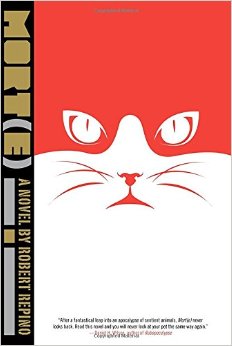
Mort(e)The fear of insects is fairly common among people. It is difficult, however, not to appreciate the “hive mind” and how insects in colonies work for the betterment of all, often at the expense of the individual. Now imagine that the hive mind resents what humans have done to insects over the millennia. And suppose that their massive mind allows them to develop a hormone that transforms animals into partial humans with consciousness and, for the most part, workable hands. Then you’ve got the premise of Mort(e) by Robert Repino. A debut novel about a cat (Mort(e)) and his desire to find a friend in the fog of war that follows the transformation of animals into people, the story is as compelling as it is creative. Add in a strong dose of religious concepts (Mort(e) is considered a messiah among the battered human population, and he has a prophet) and you’ve got a captivating story perfect for comment on this blog.

While not all novels I read have a religious element, a surprising number do. And this isn’t because I pick stories with religious themes. It is because religion pervades the human outlook on life. Repino’s novel, however, does go beyond a casual mention of religion. It turns out to be central to the plot in a way that, were I to describe it here, would constitute a spoiler, and since I want to encourage reading of Mort(e), I don’t want to reveal too much. Suffice it to say, without religion a large part of the story would be missing. No matter whether you believe religion is good or bad, you’ll find plenty to think about here.

These days I read novels liberally mixed in with non-fiction reading. Sometimes I’m disappointed after I spent a few hours on a book and find it to lack substance. (Sure, I do read as a guilty pleasure from time to time, but here I mean the kinds of books you invest in.) Mort(e) is a substantial story. The world in which the protagonist operates can be described as apocalyptic, and end-of-the-world scenarios have a way of raising questions about what we believe. The time spent reading Mort(e) is a good return on investment. And once it has been out there long enough, I’ll want to return to that plot spoiler to investigate it further. It’s that kind of book.


M Is for Mary

While pre-celebrating Christmas with some friends recently, the topic of cats came up. This really isn’t surprising since two of the families present had been members of the local 4-H cats club. For a while cats were ubiquitous on the internet, but since I have so little time to browse the web anymore, I’m not sure if that’s still the case. Nevertheless, being near Christmas, someone narrated a story I’d never heard before. Tabby cats (like many jungle cats) have a distinctive marking in the form of an “M” on their foreheads. The legend suggests that on the first Christmas a tabby cat was in the manger. Seeing a mouse trying to crawl into the trough were baby Jesus lay, the cat killed the mouse, earning the thanks of Mary, who kissed it on the forehead, bestowing her characteristic M. It is a nice story (apart from the point of view of the mouse, I suppose)—an etiology to explain an evolutionary development in fur patterns.

Blessed is M...

Blessed is M…

Shortly after that my wife sent me a story on the BBC about the oldest inscribed human artifact. Zigzag marking found on a fossilized clam shell from Indonesia suggest that Homo erectus was an abstract thinker, I’m told. The markings, which must at least be 430,000 years old, predate the earliest known human markings by 300,000 years. If accepted by anthropologists this evidence could rewrite all of human history. We had no idea that Homo erectus had time to doodle on shells. Looking at the photos accompanying the BBC article, I couldn’t help but notice they’re in the shape of an M. Perhaps Mary kissed these shells too? So etiologies begin.

If you’ll pardon me for attempting to brush off my training in ancient languages, Mary of Nazareth was likely born into an Aramaic-speaking family. Her name, Mariam, would have been spelled with mem, which, although representing water is some scripts, took roughly this form: מ (assuming the Imperial Aramaic alphabet). If Mary were both historical and literate (the latter, at least, is doubtful) she would not have recognized the tabby’s distinctive mark as part of her name. It would have been an abstract symbol. Of course, God, being a natural lover of cats, may have had the Greek alphabet in mind, where the letter mu gives us our classical capital M. Mary, however, would probably still not have known what to make of it. We love to attribute significances to perceived patterns. The tabby’s distinctive M, as well as Homo erectus’s early exercises in penmanship present us with opportunities to continue making myths. And we should keep the myths in Christmas.


Christian Computing

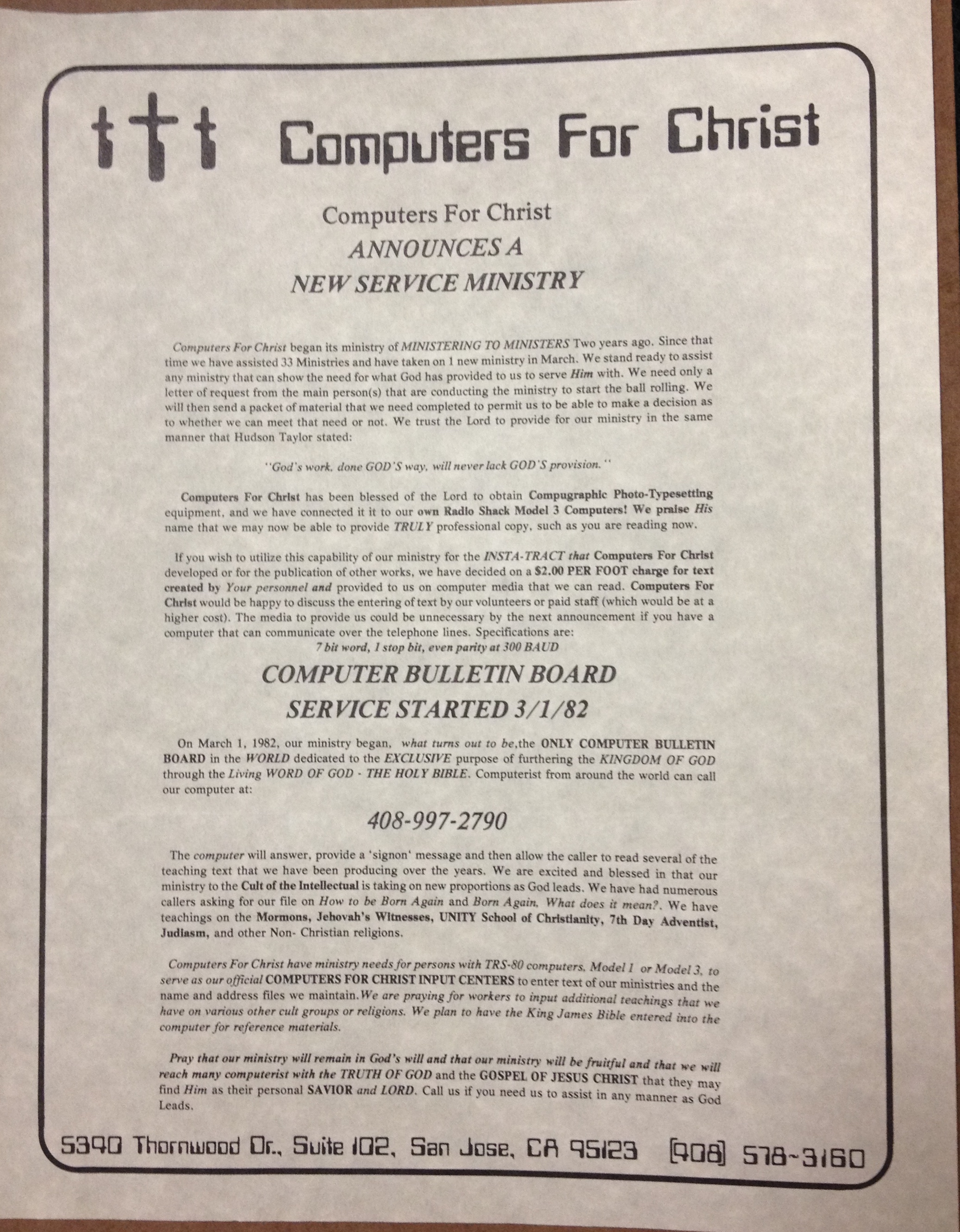
Science and religion are often portrayed as fighting like dogs and cats. Both claim superiority and a comprehensive worldview that should make sense of everything. With reality television probing deep into the lives of rural folk who still hold to the old ways, it is easy to think that religion is awkward and backward and an embarrassment to the technologically sophisticated. In electrons we trust. As with most simplistic views, however, this dichotomy is overly dramatized. I recently found a flier for Computers for Christ. I didn’t have time to read it carefully, but the space-age font immediately told me that this was vintage 70s or 80s, back when computers were still so new that most of us had never seen an actual exemplar and we had to guess what the future might hold. Would these things catch on or not? A little closer reading revealed the date of 1982, back when I was a college freshman. I had, by that point in my life, never knowingly glimpsed a computer.

IMG_1644

Sitting here with a computer on my lap, and another in my pocket, I wondered what ever happened to Computers for Christ with its space-age crosses and early embracement of technology. I didn’t find anything that really matches it with a half-hearted web search, but it did make me realize that some enterprising Evangelicals had latched onto computers long before I ever did. I recall making a pact with a couple of friends my senior year in college that we’d never give in and use computers. Since I can’t find them online, my guess is that they kept their end of the deal. As usual, I caved. By 1985 computers had found their way even to Grove City College. A strange thing called a “server” allowed people to access it via multiple “terminals.” The computer science professor wore a large cross around his neck. I would go on to seminary and graduate with a second degree not ever having used such a device.

Dogs and cats are both mammals, and neither regularly preys upon the other for food. Although Computers for Christ may no longer exist, the internet has been fully exploited by some of the religious. Jesus was an early meme. I remember when “the winking Jesus” was all the rage since an image on screen was actually animated! The savior virtually moved an eyelid! Now we can find Jesus doing everything from walking on water to riding on dinosaurs. The son of God has adapted to life on the web quite well, and often with a sense of humor. There are those who would argue that this is a travesty of true faith. There are others who would argue that it is a silly use of serious technology. I grew up with both dogs and cats and learned that when domesticated together they seldom fight. As I file away this aging paper, I wonder how the world might change if people behaved so sensibly.


Rocket Cats

Franz_Helm_rocket_cat_full_page_1

A few weeks ago the Internet’s attention was captured (if such a thing is possible) by rocket cats. Apparently the brain-child of sixteenth-century artillery expert Franz Helm, the story raised outrage and some giggles and then faded from view. In a recent Chronicle of Higher Education, however, the issue jetted back to life in an academic forum. The article by Steve Kolowich helpfully pointed out that the idea isn’t exactly new. My regular readers know that I advocate for animal rights and I believe most animals are far more intelligent than we deign to admit. In other words, I consider this an inherently bad and distasteful idea. Nevertheless, to look at it academically—Steve Kolowich was referring to the fact that the manuscript, being digitized from Penn University’s library, had been known previously. It went viral when the Associated Press decided to make something of the story. The Internet took an old idea and made it current.

The idea goes like this: a city is under siege and you’re getting impatient. What to do? Strap incendiaries to cats and birds and send them into the city that is guarded against human-sized invaders. Although this does have an evil genius quality to it, I wonder if Franz Helm didn’t get the idea from the good, old Bible. In the commentary on the rocket cats I’ve seen, nobody is giving credit where credit is due. Samson, according to Judges, was fond of the ladies. Not just any ladies, but Philistines in particular. Prior to his wedding he set a riddle for the Philistines to solve and when they pressed the bride-to-be for the answer, Samson ended up owing the Philistines a fair bit of cash. Samson simply killed some Philistines, took their goods, and paid those he owed. Meanwhile, his father-in-law supposed, reasonably enough, that Samson no longer loved his daughter, and gave her to another. In a fit of rage, Samson caught three hundred foxes, tied torches between they tails of each pair, and sent them out to burn up the crops in the field. Substitute city for field and you have Helm’s idea. With steampunkish add-ons.

In an era when the Bible is treated as increasingly irrelevant, the media (and scholars) frequently overlook how important it was to people in the past. You might even say it was inspirational. Despite all that, I’ve met a fair number of clergy who’ve never read the whole thing (it is a big book, after all) and meddlesome laity like yours truly often point out the more uncomfortable aspects of scripture. But even Samson may have to give a nod to the Hittites. Before Israel showed up on the scene, the Hittites, if i recall correctly, had figured out that it you sent a diseased donkey into an enemy’s city, the contagion would do the gruesome work for you, killing of people and well, the donkey was dead anyway. There was no Internet to spread the idea, but it was quite literally viral. Ancient manuscripts can teach us quite a lot, if we can take our eyes from the more questionable bits long enough to read the rest.