Dark Pliny

My current dark academia kick has me looking at the Classics again.  I taught Greek Mythology for three semesters as an adjunct at Montclair State University.  In the course of my New Testament studies I’m sure I encountered some of the classical Greco-Roman writers, but being focused on the Bible at the time, I never really followed through.  Then my doctorate got me interested in even earlier classics.  In any case, I’ve been trying to self-educate myself about Pliny the Younger.  To be honest, this is because he wrote one of the most famous Roman ghost stories.  Pliny wasn’t some guy into woo-woo subjects.  He was a magistrate and a lawyer and a noted orator.  His most famous work is the collection of his letters.  One of those letters tells his ghost stories.  Others describe Mount Vesuvius’ eruptions.  So, Pliny.

Image credit: Daderot, Angelica Kauffmann’s Pliny the Younger and his Mother at Misenum, 79 A.D. (detail), public domain via Wikimedia Commons

My fully-loaded bookshelves don’t have any Pliny.  I’m sure he’s mentioned in many of the books on these shelves, but I don’t have a copy of his letters.  I used BookFinder.com to search for used copies only to discover that the Loeb Classical Library divides his letters into three volumes, which feels like too much for casual reading.  Then I realized that most editions are edited, leaving out some of the, I suspect, less interesting missives.  Even as an editor, I don’t trust editors.  What if they left out the ghost stories because, well, serious scholars pay no attention to such things?  I discovered that Penguin Classics has an edition and from what I can tell, it seems to be complete.  I mark books that I want to remember on Amazon because they have pages even for the obscure stuff.  I try to buy the actual books from Bookshop.org.

What makes all of this noteworthy is that as I was on the Amazon page I noticed that you can “follow the author”—Pliny the Younger himself!  He must be a ghost by now.  So what the heck?  I clicked “Follow.”  I’m not in the habit of following authors on Amazon; I find my books in many different ways and most authors I know don’t like to talk about their writing, so why add another social media commitment?  I’m hoping that Pliny will be more willing to chat about writing.  He may be dead, but I’m not a prejudicial sort of individual.  I won’t hold it against him.  Who knows, maybe in addition to ghosts, I’ll learn something about Vesuvius?  And if he ghosts me, well, at least he’s a professional.

Name Your State

My grandfather’s name was Homer.  I’ve often wondered about that since he was from a long line of uneducated farmers.  Since he was born in Bath, New York, and since I’ve poked around upstate for genealogical purposes, I noticed that there were several place names derived from the classics, including Homer.  I suspect that’s where his name came from.  His ancestors had biblical names.  This got me to wondering about the many upstate classics town names of Utica, Syracuse, Ithaca, Corfu, Palmyra, and more.  A little (very little) research led me to Robert Harpur.  Harpur was a one-time clerk in the New York State Surveyor General’s office, and he assigned names to several towns, using classical sources.  I haven’t found a comprehensive list, but all of this makes me homesick for upstate, a place I’ve never lived.

My Homer

My mother’s paternal line had deep roots in New York state.  Nobody in the family went to college, although my grandfather did take a couple of courses at Cornell to qualify as a country teacher.  Then, many years later, my daughter moved to Ithaca.  We spent many fine weekends there and would’ve moved there had we been able to afford it.  It was a kind of homecoming.  But the connections have a way of wending their way around, as they often do.  Robert Harpur settled in Binghamton, New York.  Harpur College, now Binghamton University, State University of New York, was named after him.  Not aware of any of this, my daughter attended Binghamton University.  (There was even a picture of me on their website for a while, a photo snapped by someone as I sat in the financial aid office one parents’ weekend, begging for more money.)  I have no way of proving this, but it seems that Harpur’s interest in the classics may have led to my grandfather’s unusual Christian name.

Here’s where it gets interesting.  Homer had a sister named Helen.  Of Troy?  (There’s also a Troy, New York.)  Perhaps a family name?  My records don’t really answer that for me.  And they had a brother named Ira.  Ira is a biblical name, but it also may be a variant of the name Hera, the wife of Zeus.  This had nothing to do with my writing my dissertation on Asherah, who is perhaps the namesake of Hera, or at least it has been proposed.  I doubt my ancestors would’ve named a son after a Greek goddess (the family was of Teutonic origins).  Or maybe great-grandpa Adam was more educated than he let on and had read the Iliad?  If only I could afford to get back to Ithaca I might just go on an odyssey of my own.


From the Grave

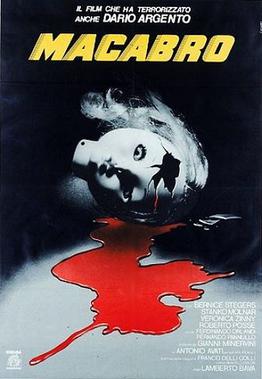
“Macabre” is a word of uncertain etymological origin.  One of the most convincing arguments that I’ve read is that it derives from Hebrew qbr, a root associated with graves.  The “m” prefix would be the preposition “from,” making the phrase miqqeber, or “from the grave.”  It has been decades so I don’t remember where I read that, but it made sense to me.  In any case, this is a fairly common word for titles, it would seem.  I recalled Stephen King noting Macabre among the scariest films up to 1980, so I thought I’d try to find it.  A simple IMDb search showed it streaming for free on a couple of platforms, so I clicked on one of them.  At about halfway through, I paused the movie to see if maybe I’d got the wrong one (I had).  But I decided to finish it out in any case.  There will be spoilers below.

What I’d found was the 1980 Lamberto Bava movie.  Bava’s name was familiar to me from his famous father, Mario Bava, an Italian horror movie innovator.  There was a family resemblance.  So, what’s it about?  A woman with two children is having an affair.  Her somewhat unstable daughter decides to drown her brother to get her mother to come home.  On the way, her paramour, who is driving, runs into a guardrail and is decapitated.  After being released from the mental hospital, the woman moves into the apartment where the affair had been taking place.  The house is owned by a blind man who knew about the affair.  It sounds like, however, the affair is still continuing although said man is dead.  

When the daughter, who is trying to get her parents back together, confesses that she drowned her brother, the woman drowns her—echoes of Medea here—but the blind man kills the woman when he tries to save the daughter.  What makes this even more macabre, is that both the blind man and the daughter had learned that the woman was keeping the head of her lover in the freezer—echoes of Alice Cooper as well—to stimulate her as she continues the affair without her former lover.  It’s not a horror classic.  Titles can’t be copyrighted, so some repetition is bound to occur.  The Macabre I should’ve watched was the one from either 1958 or 1969.  Apparently this is a popular film title, as there was another released in 2009.  I can rule out the last one, but to find out what I should be looking out for, I’ll need to dig out my copy of, well, Danse Macabre.


Naming Names

I recently saw a story suggesting that Elon Musk was named after the leader of a Martian colony in an unpublished novel written by none other than Wernher von Braun.  Now, I don’t know if this is true or not, but it did get me to thinking about names.  The awesome responsibility that parents have in naming their kids.  I suppose many people don’t think much of it, but I remember asking, at a young age, why I was named “Steve.”  (There’s no “n” at the end, despite what people throughout my life have tried to “correct.”)  An old belief suggests that children might emulate those they’re named after.  Of course, some of us just can’t let things go.  Nobody else in my family was named “Steve,” and being very Protestant, I wasn’t named after no saint.  (Besides, he was Stephen.)

My mom told me a couple of things.  First of all, she wanted to name me after her father, Homer.  As an adult I think it might’ve been worth the childhood beatings I’d have to have taken, but my father vetoed it.  “Steve” was taken from a character in a Dick Tracy cartoon.  Mom liked the sound of it and my father didn’t object.  I’ve never read Dick Tracy—I’m not much of one for newspapers in general—but I did see that Warren Beatty movie back when it came out.  Once I tried to find a character named Steve in the cartoon line-up and I did find that there was a criminal by that name at one point.  Mom never told me this and I only found it as an adult, after I’d already decided against a life of crime.  But still, names sometimes inspire behaviors.  Influence choices.  Don’t they?

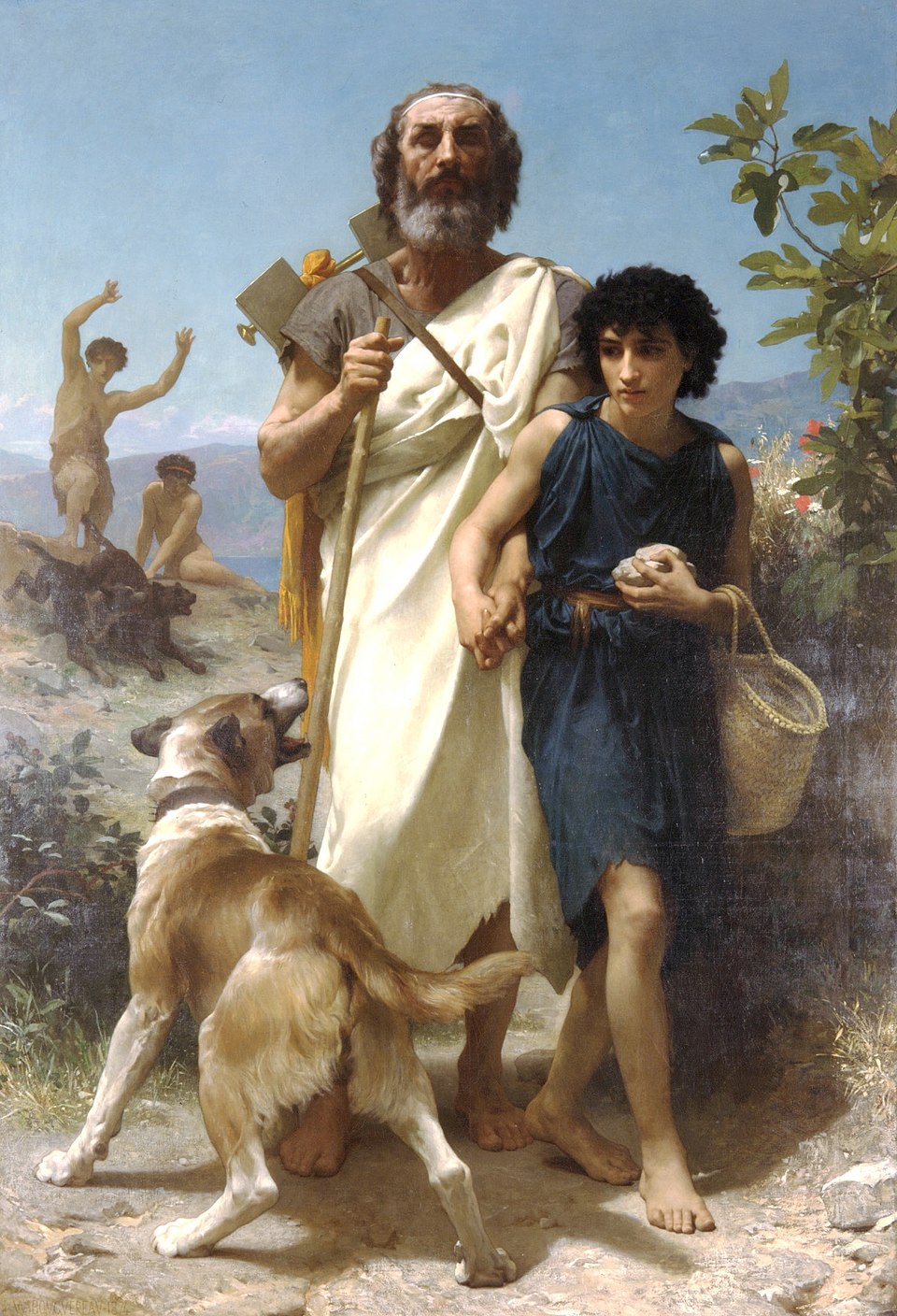
Homer and His Guide: Image credit: William-Adolphe Bouguereau, public domain, via Wikimedia Commons

Children named after their parents sometimes follow in their footsteps.  Or those named after a great person in history use that in their internal monologue as they try to attain similar things.  Now, I haven’t researched this—I’m just guessing here.  But for many years it was unusual to find a German boy named Adolf.  There are also names that are retired for someone being, say, the son of God.  Mom swore it was wrong to name a boy “Jesus,” even in admiration.  She didn’t know that the Anglicized Hebrew name was actually “Joshua,” common then as it is today.  Homer was a pagan, and I wondered how my great-grandparents came up with that name.  The best I can figure is that they were from upstate New York and there’s a town called Homer in Cortland County.  And I wonder if he ever asked his parents why he was named that way.


and Seek

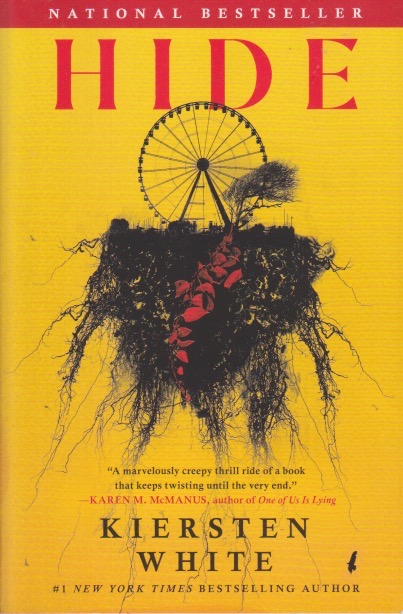
I’m afraid there may be spoilers—but not for the ending—below.  Discussing this story will be difficult without giving some things away.  Kiersten White’s Hide has given us an imaginative world with masterful misdirection.  Fourteen people a bit down on their luck, and strangers to each other, are offered an opportunity to win $50,000.  They have to hide in an abandoned amusement park for a week where two of them will be caught each day and the last person remaining wins.  The novel mostly follows Mack, a woman whose father killed her family while she survived by hiding.  Not only does she have survivor’s guilt, but she’s been homeless and the shelter director thinks she’ll have a chance at winning the prize.  There is a lot of social commentary here, as well as a monster.  Okay, spoilers below.

The minotaur is a most useful monster.  The backstory here isn’t in Greece (well, the deep backstory is, but that is only played out partially here) but in Asterion.  No state is given for the town, and the contestants can’t be given that information.  They’re locked in the park, with supplies, but very little information.  Then the contest starts.  After a couple of days Mack and a couple others begin to suspect that something’s wrong.  Those who get caught while they’re hiding leave personal effects behind, and since they all need the money that seems unlikely.  Then their host stops coming, leaving the bewildered contestants on their own.  Mack and those she’s befriended come to understand that being “out” is really being eaten by the minotaur.  Well, they don’t realize it’s the minotaur.  The one who does gets eaten before he can tell.

In any case, this is a tense horror story based on a classic tale.  There is, of course, a rationale for the murderous behavior in a modern setting.  White keeps you waiting quite a while to learn what it is, and there are plenty of places where I thought I’d figured out how it’d end only to be proven wrong.  And she gives believable character sketches and explores the kinds of motivations that drive different people who find themselves needing an income.  (One of the characters was raised in a religious cult—bonus!)  Those who are poor aren’t always at fault, but those who are wealthy will do anything to preserve their excess.  We see that playing out in daily life, even as it’s being explored in fiction.  The minotaur isn’t always what we think it is.  And the more you think about its insidious origin story provided here, the scarier it becomes.


Thinking about Vampires

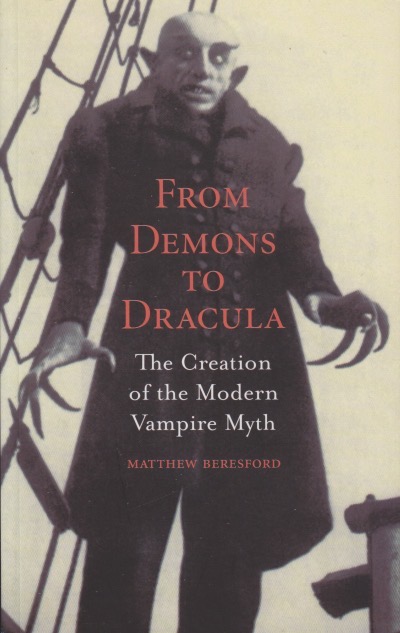
Any book on vampires has to be limited.  I first read Matthew Beresford’s From Demons to Dracula: The Creation of the Modern Vampire Myth back in 2009.  It has lots of information, but it was long enough ago that much of what I’d learned had grown fusty with age.  I began re-reading it as Halloween approached, and am glad I did.  The thing about vampires, however, is that you do have to compare sources.  Like many explorations of the vampire, Beresford’s notes that there are ancient analogues, but nothing precisely like we think of vampires today.  From my own perspective, I tend to think that our modern vampires, like our demons, come from movies.  Starting with F. W. Murnau’s Nosferatu, but more clearly from Tod Browning’s Dracula, our idea of what vampires are have been mediated by the silver screen.

This book ranges widely across time, region, and genre.  It discusses early reports that clearly considered vampires an actual threat, as well as movies made purely for entertainment.  One thing that I noticed this time around is that the author, being British, seems not to have noticed the tremendous influence Dark Shadows had on the popularity of vampires prior to Anne Rice’s Interview with the Vampire.  I suspect that soap operas were not widely known internationally, and even if they were, they were likely not taken too seriously.  Dark Shadows was different, however, and it made vampires chic in a way they simply weren’t before the early seventies.  At least in the United States, Barnabas Collins helped define the vampire.

Beresford makes the point that there is no single defining characteristic that applies to all vampires.  Early European vampires didn’t necessarily drink blood—they were revenants (they’d returned from the dead) but they weren’t always after blood.  In the nineteenth century bloodlust became the defining feature of vampires.  There are historical points on which to quibble with the argument here, but overall this book is a good overview of how ideas like vampires have been around for quite some time.  As someone who specialized in ancient literature for a good part of my life, I would not have called the various ancient analogues pointed out “vampires.”  Beresford is making the case that they lay the groundwork for what later became vampires.  And Vlad Tepes of Wallachia played his part as well.  As did the ancient Greeks.  It seems to me there’s more rich ground to explore here and this book provides a very good starting place.


Pan Pandering

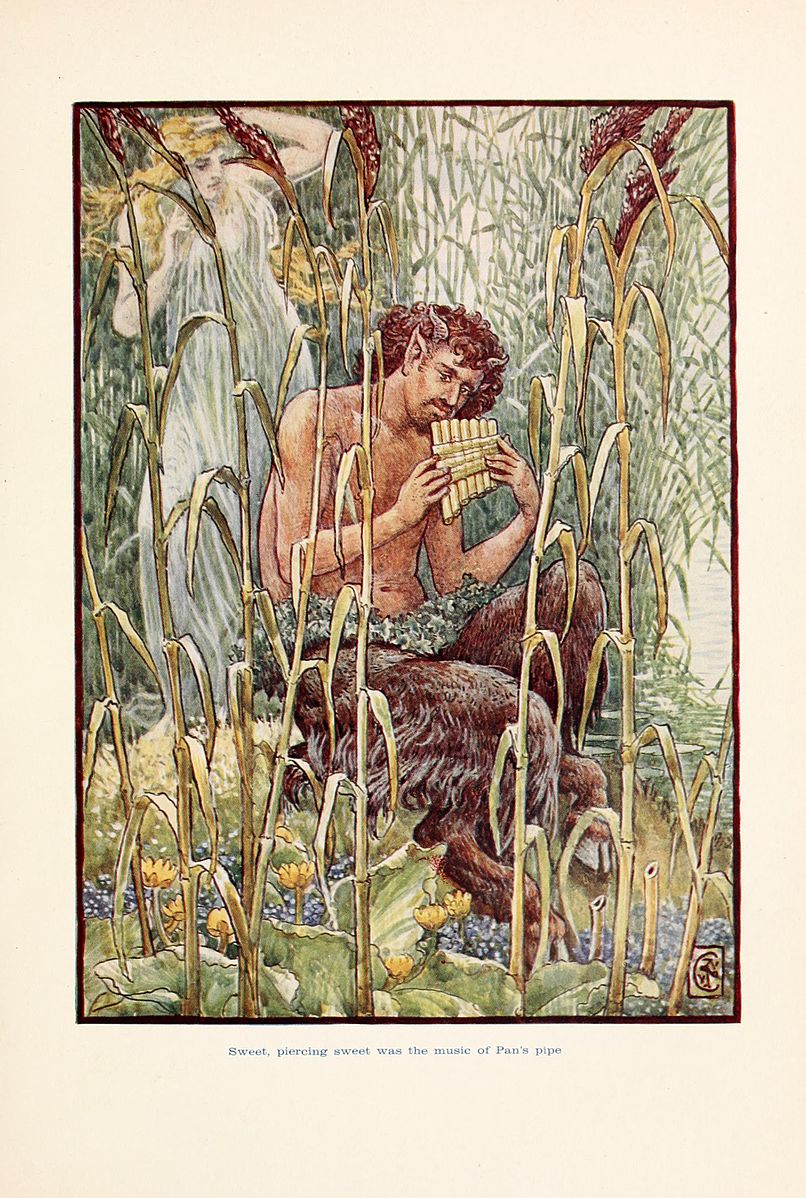
The Greek god Pan has had a rough go of it.  And I don’t mean that his name is a homophone for an essential kitchen item in English.  No, Pan was mistreated by early Christians, made evil, and then good, before finally being largely forgotten.  We’ll start with the bad and move to the good.  As I discuss in one of my publications, Pan was considered evil by medieval Christians for a few reasons, apart from being a “foreign god.”  First, he was associated with nature.  Early Christians weren’t naturalists.  They were looking to escape the world (a trait that continues to be manipulated by politicians even today).  Not only that, but Pan had goat legs and horns.  While horns could be used to represent any deity, including Yahweh, the combination with goat legs suggested Pan might be demonic.

Image credit: Walter Crane, public domain via Wikimedia Commons

Nobody knew what demons looked like.  They are incorporeal, after all.  As I point out in Nightmares with the Bible, the fact that the rarely used Hebrew word for demons is roughly translated to “hairy ones” added to Pan’s sins.  This was a common Hebrew phrase for goats, and over the course of many centuries, when people had the irresistible urge to draw the invisible, they gave Satan the Pan treatment.  Goat lower half and horns on his head.  In many esoteric groups the goat, i.e., Pan, became a symbol of demons.  All of this has a rich and detailed history and it literally demonized Pan.  Yes, he was all for free love, but he was a musician, after all.  Then something interesting happened.  

When the King James Version of the Bible was first printed, the biblical books each began with an illuminated letter.  The book of Psalms began with an L.  This letter was inscribed with an image of Pan.  What the devil was he doing in the Good Book?  Well, by 1611 Pan was considered a type (or foreshadowing, if you will) of the good shepherd.  And we all know who the Good Shepherd is, right?  Not only that but his name, “Pan,” translates to “all” in English.  Since Jesus is “all” to Christians, it was appropriate that he be symbolized by Pan.  This ancient force of nature had gone from being the Devil to representing God.  Indeed, he could, at the same time, be symbolic of both.  Now this is quite an accomplishment for any entity, let alone a rustic god who was never an Olympian.  Pan isn’t much discussed in Christianity today, but he had a fascinating place in its view toward goats, both bad and good.


Good Timing?

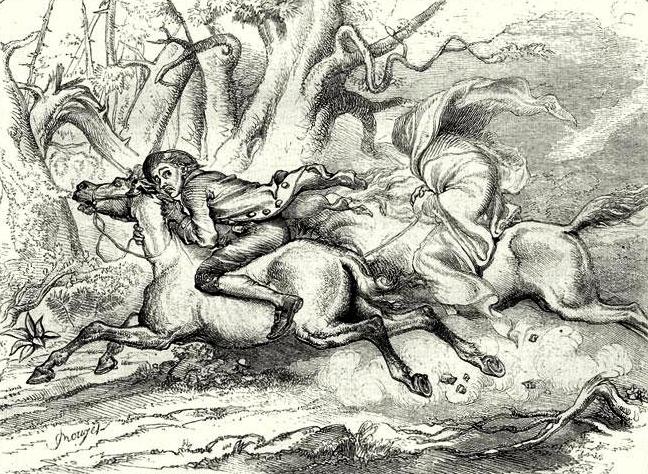
Timing is important.  I hope I have a sense of it, but it doesn’t always work out the way you hope.  My last book, The Wicker Man, was released on the fiftieth anniversary of that cult film.  A bigger publisher with better reach published their own Wicker Man book that year, and mine garnered no attention.  I decided to turn to Sleepy Hollow instead.  This is a story that has been quite well known since 1820.  Although the Fox television series ran out of steam in 2017, I wrote the book when I did because Lindsey Beer has been tapped to direct a reboot of the Tim Burton film of 1999.  Looking for books on the “Legend of Sleepy Hollow” I found very little.  This is what is known of in the biz as “a gap.”  I decided to try to fill it.  Fandom helps in situations like this.

I’ve been trying to find the Sleepy Hollow fandom and engage with it before Sleepy Hollow as American Myth comes out.  I am confident that there are fans out there.  The tragic collapse of the Fox series didn’t lead to lack of love for the tale.  Indeed, further renditions have continued to appear.  Some have gained considerable attention.  The online fan base, however, seems to be, ah, sleeping.  I’m not sure when the Beer movie is slated for release.  It was announced in several media outlets but now we’ve come to the lull where updates have ceased to surface.  I’m certainly no Hollywood insider and I generally don’t even find out about movies until after they’ve left theaters (unless they’re very big).  I hope the timing is right this time.

It takes a couple years, at least, for me to write a book.  I’ve been working on this Sleepy Hollow project, in some way or other, since before Holy Horror came out in 2018.  I sure hope I got the timing right on this one.  The many trade publishers and agents I approached didn’t think so.  Maybe it’s just that people aren’t curious enough to read a book about Washington Irving’s story.  I try to make the case in my book that it has risen to the level of an American myth.  The story’s known world-wide, but its largest fan base is here in the States.  Had the Fox series been handled a bit better, keeping both people of color and the apocalypse in the foreground, it might’ve run a couple more seasons.  The underlying story’s not quite dead in the grave yet, I hope.  But then, timing hasn’t always been my strong suit.

F.O.C. Darley, from Le Magasin pittoresque, public domain

Two-Eyed Cyclops

You can probably tell, if you read me regularly, that I’ve been going through an older movie kick.  A lot of these are easier to find for free on streaming services, so that’s been the path of least resistance.  So it was that I came to watch Doctor Cyclops.  I’d completely forgotten that I’d watched it about fourteen years ago.  In any case, a kind of precursor to The Incredible Shrinking Man, it’s the story of the deliberate shrinking of five people by a mad scientist with an endless supply of radium at hand.  The movie made a splash because of the use of Technicolor in a horror film (with no blood, however).  The story is a touch dull and the shrunken people (three scientists among them) spend most of their down time running around and saying very little.  They do face an alligator, which is kind of fun, and the big hand that holds the pompous Dr. Bulfinch is distinctly unnerving.  The movie received an Oscar nomination for visual effects.

There’s something distinctly enjoyable about these early sci-fi horror films that don’t explain much but nevertheless manage to employ some impressive cinematography.  The use of oversized props and forced perspective make much of this possible, perhaps making up for the simplicity of the tale.  Even by 1940 the “scientist goes mad and must be stopped” narrative was getting old.  The Second World War was underway but nuclear power wasn’t yet harnessed either for bombs or energy.  Interestingly, the source of the mad doctor’s radium is pitchblende, which one of the characters notes, is a source of uranium.  Of course, many movies were to follow where radiation mutated life forms in various ways, including shrinking them.

Coincidentally—it was a rainy Sunday afternoon—I watched the Twilight Zone episode “The Little People” later in the day.  Here was another story about the large oppressing the small.  This one, however, has a stranded astronaut who discovers the little people thinking that he is their god because he has the power to harm them.  The message here is much more profound, even if told with more brevity.  No clear motive is given for Dr. Cyclops’ work beyond his interest in pure science.  By the way, his real name isn’t “Cyclops.”  That refers to his being a giant with one eye—the latter because one of his glasses lenses gets broken.  Don’t worry, the shrunken people learn that the effect is temporary—their brush with radioactivity leaves no lasting harm.  There is, however, a decided danger to desiring to return to a “simpler time,” as Mr. Serling steps in to remind us.


Bugging Out

There’s a scene in Disney’s Hercules where Thebes has just been through a bunch of unnatural disasters sent by Hades to lure Hercules into the open.  The people, visibly shaken by the tragedies are talking about their need for a hero.  Then a locust hops in.  An old man says that does it, he’s moving to another city.  So with yesterday’s super soaker around here—we’ve had our roof completely replaced—water was still getting in.  I’m no expert, but it looks like it was condensation rather than roof leaks proper.  The air was saturated and cold, while inside it was at least a few degrees warmer.  I got up to find buckets scattered around that my wife had set up after I’d fallen asleep.  Then a boxelder bug appeared on the curtain in my study.  The insect on top of other misfortune.  It’s classic.

That’s because insects swarm.  We live in an older house (the only kind designed with space that can be used for books).  It doesn’t have wooden siding, but boxelder bugs like to overwinter in the walls.  I really can’t figure out why because in nature they winter in, well, boxelder trees.  Or a maple.  There are no boxelder or maple trees near our house, but they seem to like it nevertheless.  The problem is they get inside, in numbers.  We try to run a catch and release business.  It seems decidedly unfair to kill a harmless bug for doing what human-altered climate tells it to do.  When the heating kicks on, their insectoid brains tell them it’s spring and they crawl out looking for food.  Well, we don’t have any trees they like growing inside, so they wander about aimlessly.  I catch them and take them outside, figuring maybe they can find, I don’t know, a tree?

Usually when winter’s serious chill sets in, they go dormant.  This year we’ve been hovering between freezing and not, and when the sun comes out—which it sometimes does—they awaken.  They must be confused.  Somehow they don’t realize that the world has changed around them.  Going about their daily bug business (nothing seems to eat them—apparently they taste bad) the climate has broken their hibernation into segments of a few days at a time.  Perhaps they’re cranky when they crawl up the curtains, or across my desk (they pretty much stay in my study).  At least they don’t sting.  They’re not bad enough to make us leave Thebes, but it would be wonderful if they’d wise up to global warming, and maybe plan in advance.  Or maybe they’re waiting for a hero.


Dryad?

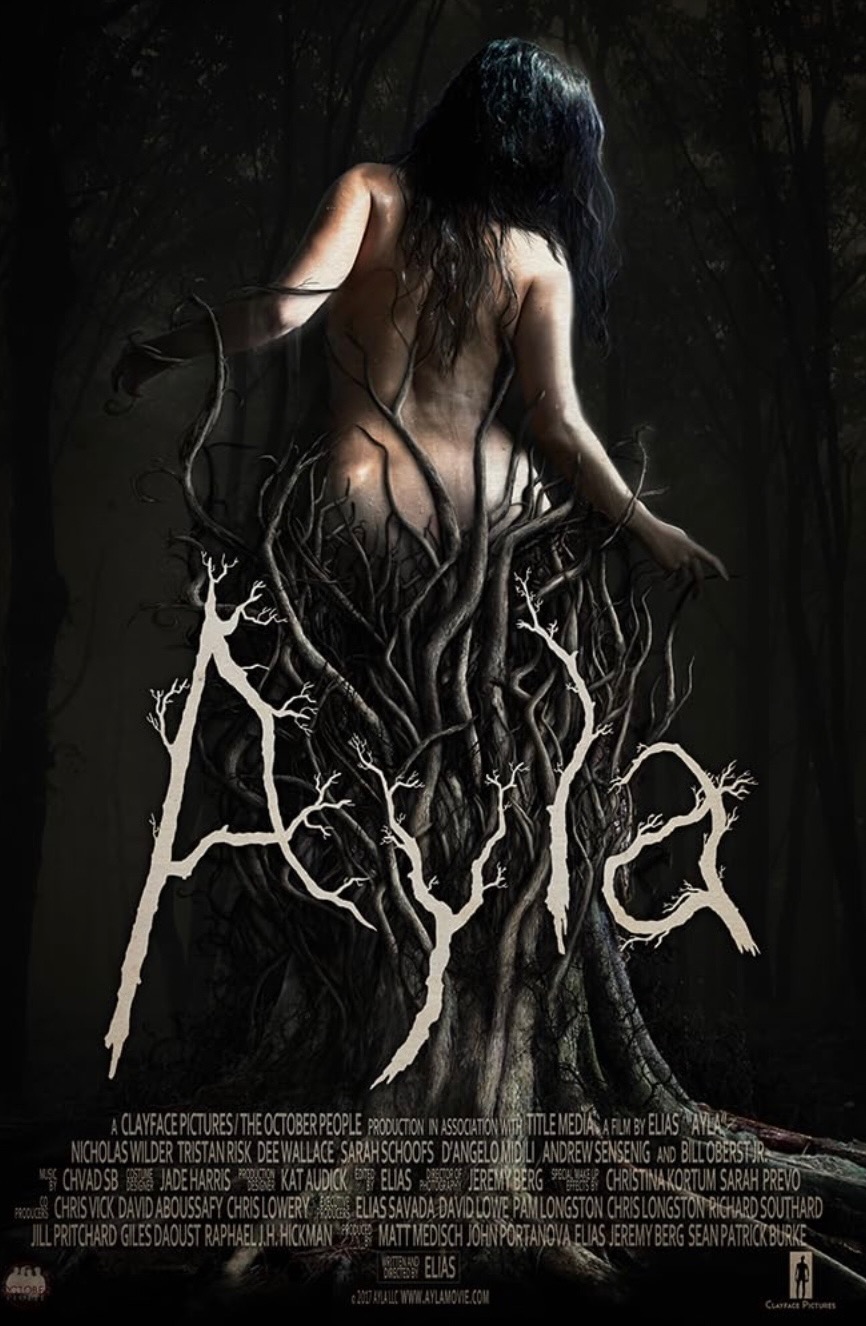
There are so many movies out there.  The prudent horror fan knows not to be nickeled and dimed to death by renting/buying everything available, so you stick with a streaming service and take what they offer.  That’s how I find many of the movies I discuss on this blog.  It’s how I found Ayla.  You won’t find much information on this indie, art-house horror beyond IMDb, and it doesn’t say much.  Although the ratings are low the premise is good and it is beautifully filmed.  It is a little weird, though.  Elton, a mentally disturbed man, has never gotten over the death of his sister when she was four.  He supports himself by working in a bookstore and has a regular girlfriend, Alex, but he hasn’t let his sister go.  Going to a remote, dilapidated house that Alex showed him, he digs under a tree until he finds an adult Ayla.

Ayla’s alive but she doesn’t talk and can’t tolerate solid food.  She seems to be part of the tree where Elton found her.  His brother and mother tell him this woman isn’t his sister.  Alex, who lost a brother when she was a child, doesn’t say whether Ayla’s Elton’s sister or not.  Accepting that this woman now lives with him, she’s just not sure if the dead do come back.  Elton quits his job and tries to move home with his mother, but it doesn’t work out.  While driving at night, Ayla, ahem, distracts him, and his car hits a tree.  Elton understands that Ayla has returned to the tree and begins digging for her, but doesn’t find her.  Alex finds evidence that Elton has begun to turn into whatever it was “Ayla” is.

Apart from being a study of grief—very much like A Ghost Story in that way—Ayla also explores mental illness and incest.  This is done with a high degree of artistry, however.  Those who rate the movie poorly probably haven’t considered metaphors much.  To me, there’s a lot going on in this film.  It’s the kind of movie where you want to talk to somebody about it after it’s over.  Was Ayla really a dryad?  She’s found in a nymph (insect variety) state and quickly transforms to, apparently, Elton’s missing sister.  Meanwhile, his family doesn’t give him the affirmation he requires.  Metaphorically, it seems, like Outpost, to be a movie about dealing with trauma.  Such films are well worth watching and pondering.  And they make me thankful for streaming services that occasionally bring good, if obscure, movies to light.


Optimism

On the homepage of my website (of which this blog is a part) is the statement that jaded optimism lurks here.  I’ve been thinking a lot about optimism and hope lately.  Trying to change the way you think is difficult.  Musing with my wife the other day I realized—and this should’ve been obvious—that my optimism became “jaded” when I lost my job at Nashotah House.  You see, our lives have been uncertain since then.  The steady income of an academic job with a retirement plan, a future mapped out (at least a little) with summers free for research and travel, the flexibility to have time to contemplate; all of this fits my neurodivergent way of thinking.  Having suddenly to cope with finding an apartment, finding jobs (not vocations), losing retirement options, all of this has led to a turmoil that has lasted going on two decades now.

I need to challenge my jaded optimism into becoming real.  I keep coming back to Mark 9.24, “Lord, I believe; help thou mine unbelief.”  I’m not a materialist, although academia led me close to it a time or two.  The universe, however, is an untamed place.  We don’t know the trillionth of it, let alone the half.  We’ve figured out a good bit of the physics of this world and think that it applies the same everywhere in this infinite, expanding space-time.  Then we discovered quantum physics and quantum entanglement which looks more like religion than science.  It seems to me that optimism—hope—lies in a combination of what science tells us and what is traditionally called religion tells us.  You may call it “belief,” “intuition,” or “hope.”  Yes, when Pandora’s box was opened, only hope remained.

John William Waterhouse, Pandora (1896), public domain, via Wikimedia commons

There’s a parable in the story of Pandora.  As told by Hesiod, Pandora’s jar contained the gifts of the gods which escaped when Pandora opened it.  Thereby evil entered the world.  Yet one gift of the gods remained for humankind, and that was hope.  Arguably the most valuable gift of them all.  I have been letting my career malfunction at Nashotah House dominate and drive my outlook for far too long.  It will never cease to hurt, I know, but it’s time I learned the meaning of what the Pandora myth teaches us.  Myth, please understand, functions like religion.  It provides insight and guidance.  And the tale of Pandora, especially when things turn unexpectedly frightening, reminds us that hope is the only necessary gift of the gods.


Roman Mythology

A recent game of Redactle led to a family discussion of Roman mythology.  I had to flex some muscles unused since my last full semester at Rutgers, but I was pleased that the old learning is still there.  One of the first things people notice about Roman mythology is its lackluster nature.  Rather like current-day politicians, the Romans mostly lacked imagination when it comes to compelling stories.  Roman religion consisted largely of cult—that is the enacting of sacrifices and learning how to read omens.  They had no “Bible” and really no other collection of myths, apart from what they borrowed from the Greeks (who borrowed, in turn, much from Semitic mythology).  They mapped their various gods—some from the Etruscans—onto the Greek pantheon and made do with other peoples’ stories.

Rome’s native myths largely focused on their own history and human characters—again, the parallels with Republican sanitized American history are apt—but also deal with serious issues.  In the words of T. P. Wiseman, “How does well-meaning authority turn into murderous tyranny?”  (I resist footnoting blog posts, but this is from the preface of his book The Myths of Rome.)  Like modern politicians, they believed their origins were divine.  The gods had chosen them to be a superpower.  We might scratch our heads and ask ourselves where the Roman Empire is today, even as Italy elects hard-right leaders.  We learn nothing from history.  Nothing.

So let’s turn to mythology instead.  Or at least religion.  Roman religious writing was often kept secret—the purview of priests only.  Some of this survived into early Roman Catholic ideas about keeping Scripture to the priests.  Religious writings are dangerous if they get out there among hoi polloi (or “hot polo” as my autocorrect suggests).  Ironically, those of us sent off to specialized schools to learn this stuff are, in these days, generally ignored.  Roman officials were often anxious to know what oracles said.  Today televangelists and their ilk seem to be the ticket.  Anyone can be an expert if they talk loud enough.  And yet the Romans admired the Greek intellectual life.  The creativity with which they handled their gods.  There was much to be emulated there.  Roman Jupiter was the protector of the military (budget, one is prompted to write—forgive me if my Muse is a little unruly this morning).  And yet it was the Roman authorities who crucified Jesus.  We may indeed still learn something from Roman mythology.

Hebert James Draper, The Lament for Icarus, public domain via Wikimedia Commons

The Persistence of Streaming

I’ve had to start keeping a list.  If I don’t I’ll forget which movies I’ve streamed.  I suspect I’m not alone in this.  Electronic information is vapid and eminently forgettable.  If you go see a movie in a theater, you’re likely to remember it.  Memory of place and occasion aid the memory of plot and effects, I suspect.  To my knowledge I’ve never had anyone ask if I’ve seen a movie that I didn’t remember, if I saw it in a theater.  Streaming—maybe yes, maybe no.  A few weeks back I found myself streaming a film and thinking “this looks awfully familiar.”  The longer I watched the more convinced I was that I’d seen it before.  When it was over I checked.  I had watched it only a few months earlier.

When you buy a DVD or Blu-ray (or even a VHS tape), the physicality of it serves as a reminder.  Unwrapping the package, handling the case, loading it into your player—these are all keys, hooks upon which memories hang.  As I’ve intimated before, movies are, I believe, our modern mythology.  The idea’s not original with me, but think about how movies are often our frame of reference around the water cooler or with friends.  What did you think of Nope?  It’s a safe way to express our beliefs and aspirations.  Even if it’s not great, it’s helpful to be able to remember it when you want to.  Streaming, it seems, often lacks commitment.  Particularly if it’s from a free site.  (I use such only when the media are otherwise unavailable.)  Maybe there’s a reason it’s free.

Streaming asks little by way of investment, financially or psychologically.  It costs time, of course, and perhaps that’s the greatest siphon of all.  If you’re a busy person time is a commodity.  Spending some of it watching a movie—depending on who you are—isn’t simply entertainment.  Mythology gives us meaning.  I suspect that’s why we value those auteurs who break through the noise and manage to stand out in our minds.  Those who know what it is to captivate an audience.  Those who are really invested in their projects.  Like most books I read, the movies I watch come from a list.  I have a reason for watching them, often related to research.  And if you put the time into it, you want to remember it.  For that, I recommend keeping a list. (Have a written a post like this before?)


Beastly Story

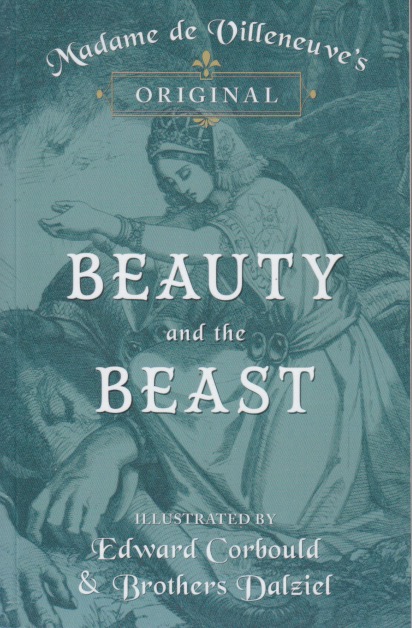
You think you know a story.  You know, you’ve heard it before, or seen it in a movie, so you think you know how it goes.  I’m not the biggest Disney fan in the world, but I have seen many of their movies.  Occasionally those movies are my first introduction to a story.  That was the case with Beauty and the Beast.  I saw this when my daughter was young, and in general found it a good story.  I’ve seen it a couple of times since, and I thought I knew how it went.  I got curious, however, regarding the origins of the tale.  Was it Grimm?  Other ancient folklore?  The reimagining of a classical tale like Pygmalion?  Well, it turns out it was a story from the eighteenth century written by Gabrielle-Suzanne Barbot de Villeneuve.

I decided to read it.  The story is quite different than the Disney version, as is to be expected.  To begin with, Beauty has eleven siblings.  Her father is a merchant rather than an inventor.  The beast is described as having an elephant’s trunk and scales, not fur.  Once Beauty agrees to move into his palace in place of her father Beast is nothing but polite, if somewhat dull.  In broad outline the same action takes place—beauty falls in love with the beast and magically he transforms to a handsome prince.  Any story, as it’s retold, is re-envisioned.  There’s no such thing as the literal retelling of any tale.  As the Italians say, “translators are traitors.”  (Of course, I didn’t read the story in its original French, having had the aid of a traitor.)

As was perhaps the style back then, once the happy ending came the story had to be fully explained.  Indeed, this constitutes half its length, telling, not showing, the backstory.  To Disney’s credit, they do all this in a minute or two of animation time.  The modern reader, unless obsessed with the rules under which fairies operate, and the power struggles among them regarding those rules, will likely find this add-on a bit tedious.  But that’s often the way with original texts.  Think The Iliad.  Think the Bible.  Modern writers seldom explain things fully.  Ambiguity is valued among the literati.  Still, stories have origins.  They start someplace.  Those of us who are curious about those origins are inclined to dig, it seems.  Disney has become our storyteller for children.  It’s a good idea to look behind the curtain now and then, just to see what the original creator wrote.  To see how the story really goes.