Religious Raven

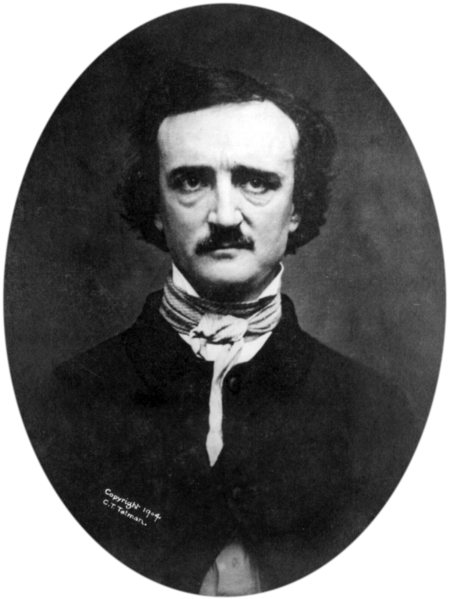
Having seldom achieved any sort of public recognition in my youth, I have been gratified to observe the approbation my daughter frequently earns. One such instance occurred yesterday as she won an Outstanding Presenter award at the state level of 4-H. For her presentation she introduced and recited Edgar Allan Poe’s “The Raven” from memory. As much as I like to take credit for some of her taste in literature, her remarkable memorizing ability that has impressed several judges and parents along the way is the result of her own determination. “The Raven” has always been among my favorite poems. As I listened to my daughter’s recitation yesterday, once again the wealth of religious and biblical images stood out.

Starting subtly with the perching of the raven on a bust of Pallas, Athena, the protective goddess of Athens itself, Poe adds the supernatural to his lamentation on the death of his wife. The bird’s origins on “the night’s Plutonian shore” also point the reader to the classical underworld toward which the poem inevitably points. The last five stanzas, where Poe’s verse turns directly toward his black thoughts at the decline of his wife, introduce the presence of seraphim—the turning point in the poem—angelic beings mentioned as attendants to God’s throne in Isaiah. The divine presence, however, offers Poe no comfort as the raven refuses to relinquish his memories of his love. Asking with Jeremiah (and citing the bird as prophet) if there is balm in Gilead, the poet is informed no such comfort exists. Calling God in Heaven as witness the bereaved asks if in Eden (Aidenn) he will be reunited with his bride, only to be informed such will not be the case. The raven, compared to devil, thing of evil, and a demon, represents for Poe the ultimate reality.

“The Raven” is a dark poem, tinged with religious imagery that was freely drawn upon in the nineteenth century. Having heard it recited many times over the past few months, I have come to believe that Poe would have been in accord with my belief that religion and fear are close siblings. When the climax of the author’s pain and sorrow is reached, the religious imagery predominates. This is a paradigm of many human lives. How many non-religious folk seek to make their peace with the supernatural when death is imminent? “Eleventh hour conversion” may be a trite trope, but it does point to something that Edgar Allan Poe recognized long before me—when we find ourselves most afraid religious impulses are frequently at hand.


Dusting the Lilim

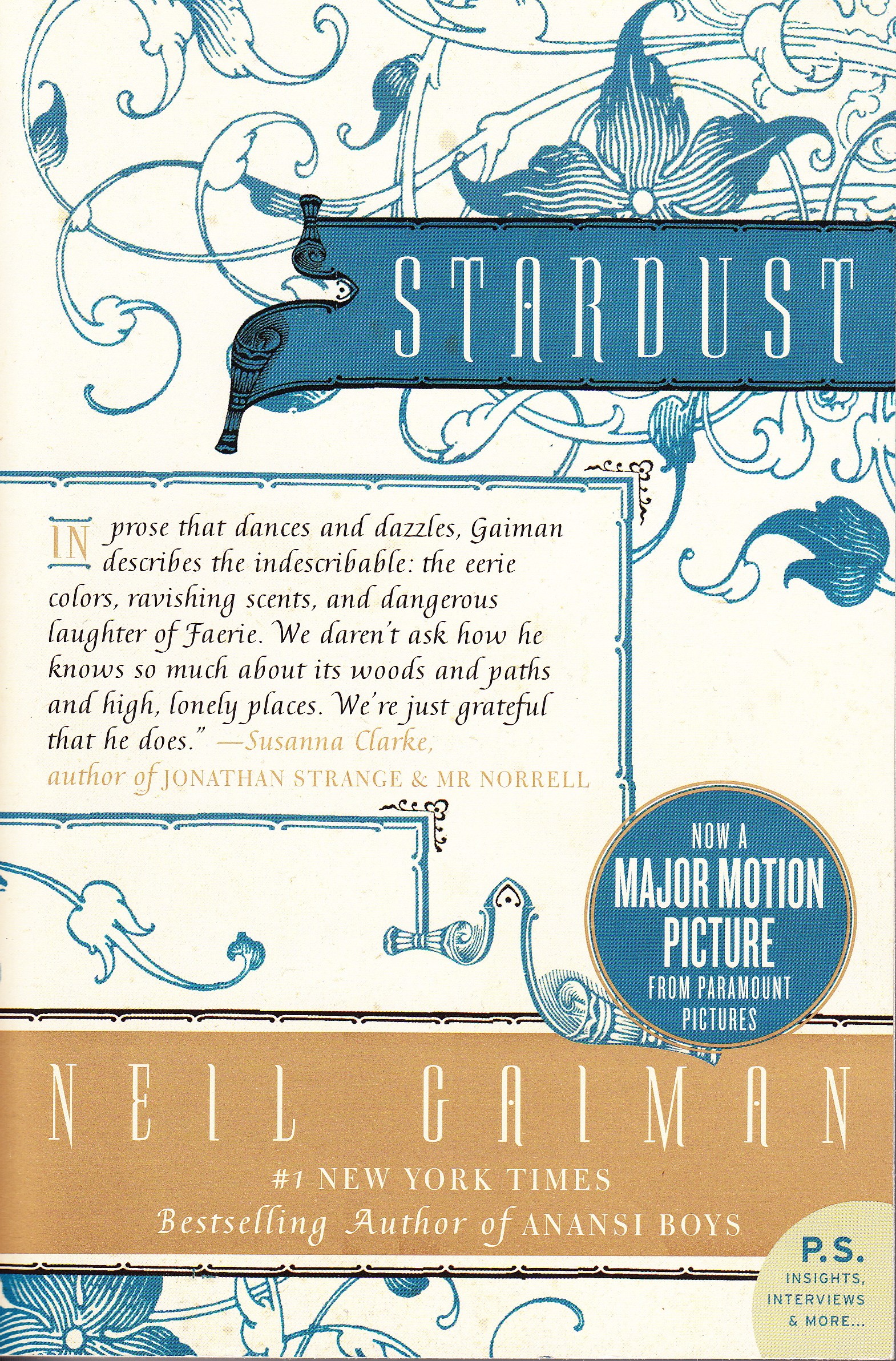
Having grown up on a literary diet of comic books and Doc Savage novellas, I have always had an appreciation for the fantastic. Since our town was relatively dull, it helped to have flights of imagination within the price range of those with humble means. I discovered Neil Gaiman (it seems that many profound writers are named Neil or Neal) through the machinations of one of my Rutgers students. After reading American Gods, which was an obvious starting place for someone of my erstwhile profession, I have sampled a bit more of his fare. I long ago gave up on comic books since I prefer the pictures I make in my own head, although I must admit that the few graphic novels I’ve tackled have required considerable thought. So it was that I came upon Stardust, a graphic-turned-prose novel.

Stardust serves up a number of folklore themes with the charm and wit that Gaiman generously doles out. It is a story replete with witches, fairies, and storm gods. A figurative smorgasbord of the mythical. What particularly arrested my attention was Gaiman’s use of the title Lilim for his witches. Lilim (or lilin) are mythical creatures of Semitic pedigree related to the (in)famous Lilith. Some traditions make the Lilim her children, and it has been suggested that they also put in an appearance or two in Mesopotamian mythology. Gaiman’s portrayal is fairly accurate here with the Lilim being selfish thieves of the night, but not entirely evil.

Beyond the escapism of relatively happy endings, this mix of evil tinged with the helpless inevitability of aging speaks paradigmatically of mythical ambiguity. Many modern-day religions tout the answers, but mythology parades the possibilities. The mythology of old continually returns to us in new forms. Using a mix of fantastical creatures from various eras of human story-telling, Stardust is a gentle fairytale for adults. Like the book of Ecclesiastes the story has a fatalism to it, no real happy ending but no hair-rending tragedy either. Turning the classic quest for the father into an unwitting search for the mother, the novel offers seemingly endless potential for hope. Although penned a few years ago, that message is still desperately needed today.


Metamorphoses

“When Gregor Samsa woke up one morning from unsettling dreams, he found himself changed in his bed into a monstrous vermin.” I borrow the opening words from Franz Kafka’s The Metamorphosis since upon rereading it yesterday I found it consonant with much of mythology. Even the title chosen by Kafka resonates with Publius Ovidius Naso’s (Ovid’s) Metamorphoses. Transformation at the hands of the gods. The idea lives on in the concept of conversion, the religious experience of profound change at the behest of God; some claim a willful hand in their conversion while others simply give God the whole credit. Kafka, one of the great existentialist writers of the twentieth century, considers the transformation without the gods and the terrifying results.

Having discovered the existentialists in high school, I was immediately taken by their writings. Characters find themselves cast into a world devoid of meaning, a world that they can’t understand and in which they often suffer unusual consequences. Little did I know that I was in training for my own experience in the academic world. Academia involves a major metamorphosis, one from which the victim cannot return, and after which she or he will find him or herself ineligible for employment. Reading The Metamorphosis as an often displaced instructor who’s only ever received positive evaluations, I saw much in the novel this time that I could not appreciate last time I read it. In short, I had metamorphosized.

Gregor Samsa, discovering he is now a bug, immediately worries about how to get to work. The painful description of his financial worries and ultimate rejection resonated a little too clearly. Is conversion a positive phenomenon? It is difficult to evaluate. In my experience, those who’ve converted tended to have been pretty decent people in the first place. As Ovid notes over and over again in his lengthy epic poem, when the gods make you into something else a sadness will pervade this new existence. If you survive. As Gregor slowly starves to death (in a fate hauntingly similar to Kafka himself) he finds no divine consolation. The situation is absurd—best just come to terms with that. Kafka could have been a struggling academic in the century after his death and he would have found the same situation applies.


My Myth is Bigger

“Do some people still worship those gods?” That is the question my daughter asked on the way home from seeing Thor yesterday. I had to staunch my immediate “no,” and qualify it. Revival movements exist for most ancient religions, although it is difficult to gauge how serious they are. Then I open this morning’s paper and see that conservative Muslims have been attacking Copts (by definition conservative) in Egypt again. Religion foments hatred more effectively than just about any other aspect of culture because it concerns belief. Beliefs must be held with conviction, we are constantly reminded, and conviction means convincing others that you are correct. This is the devolution from mythology to religion.

Mythology is a meaning-seeking system of stories that are true but not factual. The modern religious (and scientific) mind has difficulty accepting something that is true and false at the same time. No one requires convincing that life harbors plenty of difficulties. Even in this softer, technologically sophisticated environment we’ve created for ourselves, disappointments and difficulties abound. Religions often promise paradises that they just can’t deliver, and so true believers often grow frustrated. The myths, however, remind us that struggle is part of existence even for gods. For every Thor there is a Loki. The simplistic nicety of one God padding a harsh world with a comfortable lining simply does not match reality. Mythology has an answer for that, an answer which is more honest than many “sophisticated” religions.

In ancient times it really did not matter what you believed. Gods don’t really care what you think of them as long as you provide what they require. Offer your sacrifices, do your duty, and get on with life. Religion today is a matter of correct mental assent. If in my head I agree that this particular deity is the only one, and I love that deity, all will be well. Funny thing is, even monotheistic religions can’t figure out that if there’s only one God than everybody is worshiping it (him, according to many) already. Better to kill off those who don’t agree, just to make sure. All gods, after all, demand sacrifice.

Even scientists honor the gods: the Thor Delta


Thor’s Day

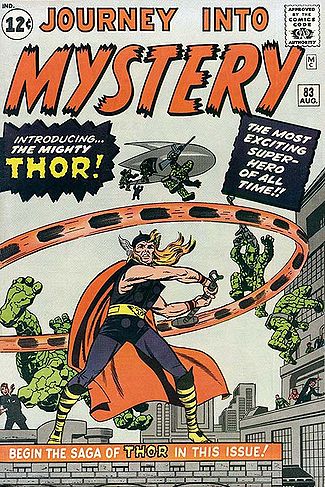
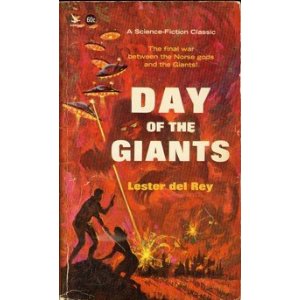
Mythology has visited the big screen in many guises, but among the current spate of superhero films a god may rival mere mortals and mutants. Thor opens in theaters today, bringing a Norse god back into the public eye. Like many young boys I owe my early reading predilection to comic books. One of my favorite heroes was Thor (our birthdays were very close) but I couldn’t quite make out how he was a superhero with the unfair advantage of being a god. Why weren’t other gods down here with us? At some level I sensed Thor’s rage, and perhaps even his estrangement from his father. Was there a sadness to this mighty wielder of thunder? When I was a little older Lester del Rey’s Day of the Giants became one of my favorite books. Norse mythology is plaintive compared to the world of the jovial Greek gods. Even the beloved Balder dies.

Thor is the embodiment of one of the most ancient principles of divinity: control of the storm. A generation after Odin, Thor also experiences that generational divide that all ancient people felt marked the lives of the gods. Zeus likely developed as a more civilized form of Hadad (Baal). In Ugaritic mythology Baal is the lord of the storm; he bears a mace where Thor will grasp a hammer. Baal, however, is often described as the son of Dagan, likely an early Mesopotamian storm god. Back to the earliest levels of civilization miniscule humans have quaked in wonder at the power of storm gods. Making Thor into a superhero humanized him a bit, and with classic comic-book biceps he was sure to be a hit among scrawny boys with dreams of grandeur. We would never have been allowed to read comic books featuring Baal.

The salient point, I suppose, is what makes a god a god? In the mythological mindset, deities are quite human except for their immortality and their strength. The might of gods clashes with the might of other gods. Omnipotence takes the fun out of the equation, for a truly all-powerful deity has orchestrated this whole cosmos and we are just pathetic players on the stage. Thor rages against the machine. If a god cannot be defeated, there is no story to tell. It may be difficult to predict how well Thor will perform on the big screen, but if I am not alone in my fascination of watching gods struggle against even greater gods, this may be like the Day of the Giants for grownups and kids alike.


Blue Monkey God

A friend of mine pointed me to the following YouTube video:

Having spent many years in Wisconsin, I have to admit that this isn’t the weirdest thing I’ve witnessed. Not even the weirdest thing in the name of religion. Nevertheless, the fact that grown adults are running around the Wisconsin woods dressed as Na’vi and throwing toilet paper onto innocent trees shows just how diverse religions can be. My ears perked up at about the 3:50 mark on the video where Tsu’tey says “I didn’t believe in God before Avatar” – a statement that catapults James Cameron into the role of father of God, I guess. What will it take to make some people believe?

I have said for years that movies are the new mythology. At the risk of showing my age, and blowing my coolness factor, I recall the episode of Northern Exposure (“Rosebud”) where Leonard Quinhagak, a Native American shaman, tries to discover the healing myths of the Caucasians. The inhabitants of Cicely simply don’t know any myths. Meanwhile, in a separate plot, Ed Chigliak attempts to make a movie. The juxtaposition illustrates quite nicely how movies are indeed modern myths. The sense of transport many viewers reported upon seeing Avatar (critics, be quiet) also illustrates this phenomenon. Movies take us outside ourselves in a way most religions would kill (some literally do) to achieve.

Donning a blue body suit and freezing your tail off in Wisconsin may not be everyone’s favored form of religious expression. It is healthier than much of the religion I saw expressed at Nashotah House. In fact, when Tsu’tey and Eytukan are shooting arrows at the manikin of a woman I thought I had slipped back into my accustomed pew for a spell. The myth of Avatar is that peace, love, and tolerance may indeed coexist without the greed of the sky people who only want the money. There is a truth deeply buried here. If a few more cassocks could be shed along with a few more human tears perhaps we could embrace the contents of Pandora’s box unafraid.


Make Mine Myth

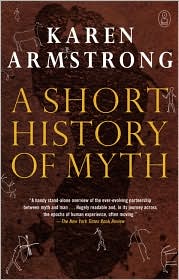
As a best-selling non-fiction author, Karen Armstrong needs no introduction. A recognized authority (some of us are mostly unrecognized) on religion in its broad sweep, she is an insightful writer and is worth paying attention to. I just finished reading her A Short History of Myth. The book does bear the marks of a religionist who hasn’t specialized in many of the materials she discusses, but when she reaches the time periods she knows, she comes alive. The book is a little unusual in that Armstrong believes myth began in the Paleolithic Period. I don’t doubt that early hominids who’d developed vocal skills probably told stories, but to be able to guess which ones in this first pre-literate period becomes rather speculative. The same applies to her treatment of the Neolithic. Still pre-literate, the people undoubtedly told religious stories but we will never know which ones.

Her discussion of the Axial Age considers mostly east Asian innovations, after acknowledging that distinct changes had also appeared in the Levant and Greece. It is, however, in her chapters on the Post-Axial Age and the Great Western Transformation that she demonstrates her craft fully. The western world, she argues, has lost something vital with the increasingly complete dismissal of myth. Those who see human history on an upward climb (mostly those who do not read or watch the news) are pleased to watch the demise of the non-rational. As Armstrong makes clear, however, pure reason comes with a very high price. The neurosis of the western world may be labeled “Exhibit 1.” Religions, institutions that evolved to improve the human lot in life, have turned destructive. Roping themselves in with a logic that doesn’t match their myth, they strike out at any who dare point out the inconsistency. Many of us have been on the receiving end of their lash personally.

Myth is where we seek meaning. Human beings are meaning-seeking creatures. While science and technology may see us safely to Mars and back, once the colonists start to arrive chapels will appear. We find ourselves lost in a meaningless world. Religions have tended to cast their uneasy lot with rationalism. What is left? Mythology. Mythology was never intended to be a literal account of “what actually happened,” but instead it was to explain what it all means. In these days when religious leaders are as likely to lob a high explosive in your direction – or engage in the Schadenfreude of watching you squirm before an overfed lawyer while being deprived of a livelihood – as they are to offer you a “hale and god-be-with-ye,” maybe what we all need is a stiff shot of mythology.


Ice Father in Heaven

The Internet can be a window into the collective consciousness of a nation. In a world where even the Weather Channel invites comments on its forecast page, the outlook of many Americans is laid bare. This latest shot of winter weather on the northeastern quarter of the country is an excellent example. It is still March, the tempestuous month of the war god, so a little snow in the northern latitudes should come as no surprise. An unnamed dean at a state school here in New Jersey had just sent out an email blast the week before stating, with decanal authority, that there would be no more weather delays this year. Yesterday there was still snow on the ground after the storm. Frustrated citizens cursed – actually cursed – the winter on weather.com.

For years I have maintained that the weather is key to understanding the human perception of the divine. From ancient Sumer’s An and Enlil through classical Greece’s Uranus and Zeus, the gods unquestionably in charge are the sky gods. The guys who control the weather. In Israel Yahweh took that job description from a reluctant Hadad – aka Baal – and many people considered this a serious mistake. Don’t mess with the weather god! As the snow begins to melt once more, even those of us in the enlightened twenty-first century should be reminded that our sense of what the world should be is an illusion. Nature evolved our brains, and now our brains think they have the right to take over.

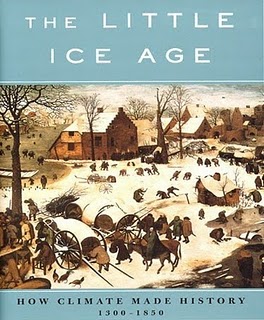
Once, back in Wisconsin, I stepped outside on a chilly June morning and saw flecks of snow in the air. It wasn’t “snowing” – it doesn’t snow in June – but there was definitely a frozen sort of precipitation hanging tentatively in the air. I was teaching at the most self-righteous of seminaries at the time, and it became clear to me, once again, that we are not in control. Among the scariest books I read in Wisconsin was Brian Fagan’s The Little Ice Age. I was at work on my book on weather language in the Psalms (still unpublished) and the unsettling truth drifted around me like this winter’s snows: if a new ice age settles in, there is nothing we can do to stop it. Geologists still can’t state what triggers these periodic events, or even what their timetable might be. If earth’s ice caps again begin to grow, however, I am certain that we will also see a dramatic increase in religiosity. For the gods, we all know deep down, are in the skies.


Holy Matrimony

BBC Two is currently airing a series entitled The Bible’s Buried Secrets, unfortunately not yet viewable in the United States. The episode “Did God Have a Wife?” is presented by my colleague Francesca Stavrakopoulou, who did, no doubt, an admirable job. So once again Asherah finds herself in the news. The issue of monotheism is intricately tied up with how gods related to one another in the ancient conceptual world of Israel and its neighbors. Since the gods were modeled on humans, their behaviors could be embarrassingly human as well. Myths of actual divine marriages are rare, and extra-consortial affairs seem to have been pretty common. This aspect survives in the classical Greek world where Zeus’ many trysts are among his most notable deeds.

In a society like ancient Israel where marriage was a regular expectation of all young people who survived to marriageable age, an obvious mystery attends a single god. If Yahweh is male – and the Hebrew Bible seems not to dispute this point – would he not require a spouse as well? The well known Kuntillet Ajrud and Khirbet el-Qom inscriptions appear to suggest that Yahweh had a wife, and if he had the Religious Right should only rejoice since that would seal their definition of marriage forever in this literalist nation. And yet, the Bible remains decidedly mute on this point. In the end, it is interpreted that male is superior to female, again, pleasing certain religio-political factions.

Marriage in a human institution. It is a practice concerning which the Bible is strangely taciturn. In ancient times marriages (unless among the gods) were secular, not sacred ceremonies. Among a human population in danger of dying out through attrition, marriage ensured prolific reproduction. According to Christianity, even God had a kid. In a world that has changed in ways that biblical writers could never have imagined, marriage as a source for an increasing population is more problematic than it is essential. It seems that the jealously guarded definition of marriage is really just another green-eyed monster lurking in the Neo-Con closet. Maybe once Yahweh’s marriage certificate surfaces the issue of what marriage is really about will be discussed rationally.


The Ides of March

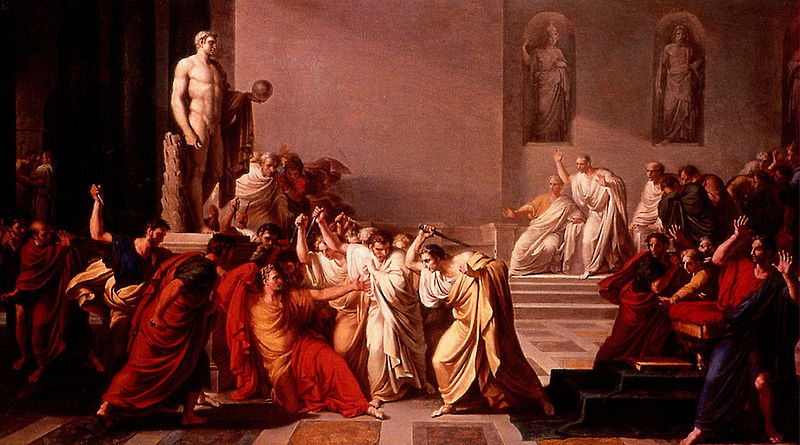
In the days of ancient Rome, politicians as well as plebeians feared the interference of the gods. Auspicious days were ignored, even by emperors, at their own peril. In my Mythology class the concept of hubris frequently emerges. Generally thought to be excessive pride, hubris can take many forms. Whenever a mere mortal strives for godhood, however innocently, it must be punished. Julius Caesar, declaring himself emperor, had to face the wrath of the gods. The ides of March kept in check the ambitions of the powerful. In a world where the political become too powerful, the very phases of the moon step in to restore balance.

The ides seem to have their origin in the date of the full moon. The month of March, named after the god Mars, featured a military parade on the ides. Then, as now, political power is simply the form of government backed by the military. The history of human unrest, especially notable since the American and French revolutions when the common people shouted, “Enough!”, is where might is shown not to equal right. Pontiffs and presidents, enamored of firepower and its blandishments, appear like Caesar before their populaces, confident in their wealth and military backing.

The concept of hubris might once again be meaningful to a culture under siege. As pundits and politicians make bids for places of abusive power, confident that there is no one above them, ethics are reformed in their own images. Have they not become their own gods? We the people bow to their vision of what should be. How many political leaders retire to uncertain futures because their own pensions have been slashed and healthcare diminished? Those who care for them in their dotage are the very children whose educational funds they’ve slashed. Hubris? It behooves all of us to beware the ides of March. Most, like Caesar, will ignore the warning and don the purple. Those who read, however, will not anger the gods.

Et tu, Brutus?


In the Beginning FIRST

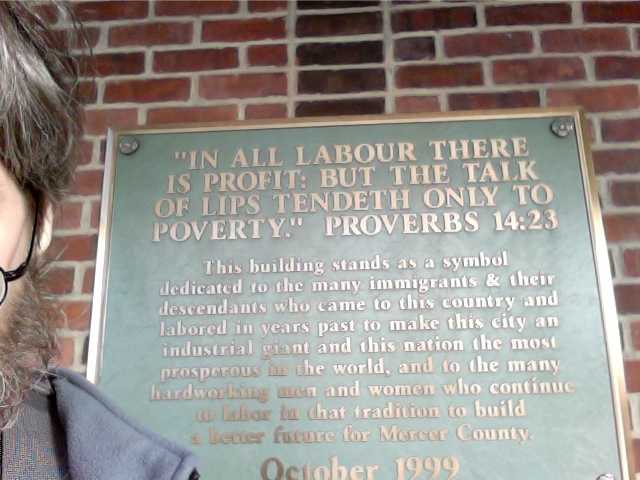
Robots can be strangely emotional. Partly it’s that Colosseum atmosphere of a FIRST Robotics event, partly it’s being reminded of the vitality of youth, partly it’s hope for the future, and partly it is being part of something larger than yourself. Sounds religious. All that and lack of sleep. Yesterday was the culmination of the New Jersey Regional competition of this year’s FIRST Robotics season. As a non-scientist/engineer wannabe parent, I attend the competitions I am able to and I always leave deeply conflicted. There is a strange disconnect between science and religion that maintains an uneasy peace in many educated minds. My malaise began when I saw the following plaque, quoting the Bible, outside the Trenton Sun National Bank Center. In a state where labor is constantly under attack by its aristocratic government, it was a poignant reminder that such events as this celebration of science would not be possible without the efforts of laborers.

Bible lesson before the games

Emulating sports events, FIRST Robotics begins its events with a ritual. This in itself goes back to classical religions where competitions were dedicated to the gods. As a local speaker stood before the crowd of several hundred youth, mentors, and advisors, he reiterated the commitment the FIRST program has to service. To make his point, he began speaking about what he’d learned in church. It was here that the conflict settled home. For many years I taught (still do, in a less direct way) those who were training for careers in the church. I am committed to teaching them that religious reactions against a scientific worldview are misguided and bound to collapse. And yet here was a highly educated scientist simply accepting the teaching of a minister. There is a deeper issue here.

I know many clergy, perhaps too many for the good of one layman. And I know that many of them are far too busy to sort out the detailed intricacies of how science and religion interact. In fact this may be the only truly honest way to engage our world. As I listened to excited kids making announcements about the millions of dollars available for budding science students in college, I reflected on our treasure lying where our hearts are. Looking around at the mess the world is in, I see religion often taking a leading role in violence and distrust, reaping the benefits of science for evil purposes. I see scientists attempting to instill a rational worldview on societies deeply mired in unreflective religion. And I find them mixing at the fringes. I salute FIRST Robotics, but I wonder if we can ever truly escape the wrath of the gods.


Flaming Chariots

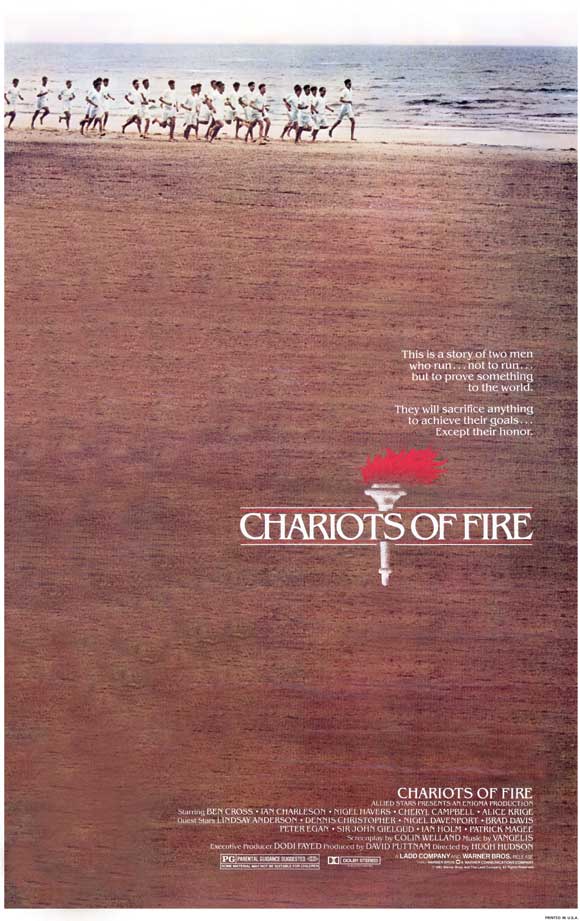
Religion is a demanding taskmaster, often completely at odds with the lifestyles of even its most staunch practitioners. Having spent my entire lifetime trying to understand it, I marvel at its imperiousness. In a story reminiscent of the unlikely hit film of 1981, Chariots of Fire, a recent Verizon human interest story highlights how religion sometimes impedes people, particularly children, from achieving what they may believe God put them here for. The story focuses on aspiring gymnast Amalya Knapp, yet to see 10, who has been prevented from full competition potential because of observing the Sabbath. As the article points out, this is not an issue limited to Orthodox Judaism, since “She isn’t the only young athlete faced with reconciling her passion for sports with religious obligation. Experts say the issue arises in all faiths, in nearly every sport, and at all levels of competition.” In one of the great ironies of human psychological development, we have engineered religions to prevent us from reaching our full potential.

In a way that few can appreciate today, the Sabbath rest was originally an unexpected gift. Ancient people had no concept of a weekend, a harrowing thought for most frantic people today who live their lives for the brief respite from insanity that the weekend offers. The recognition that a mandatory day off might actually improve the human condition was as prescient as it was radical. Time off to improve productivity? Today we know it to be true. But the more a religion gives its adherents, the more it seeks to take away. The God who gives you that free time wants to take it back. It is not really your time after all. “I believe God made me for a purpose, but he also made me fast. And when I run I feel His pleasure.” So says Eric Liddell in Chariots of Fire. He will also refuse to feel his pleasure on the Sabbath.

Religions disagree on the fine details of why the divine put us here. They are united in the belief that such a reason exists, but the terms of the contract differ widely. For reasons that the divine alone can comprehend, many human activities are subject to heavenly hegemony. The classical Greeks called it hubris when a mere mortal excelled to a point that embarrassed the gods. In response a human who wanted the most out of life knew not to show the gods what you are truly made of. For even the kindest of gods are jealous of divinity. And as all religions repeatedly demonstrate, despite divine demands for us mortals to share, gods are in no way obligated by their own rules.


Not the Oscars

I could blame this week’s Time magazine for declaring that one thing we don’t need to worry about is an end to the zombie craze, but in truth I really have no one to blame but myself. Having watched White Zombie a few weeks back, I decided to see Revolt of the Zombies, its sequel, this weekend. With holes in the plot large enough for a small planet to pass through, it leaves a great deal of creativity – and imagined continuity – up to the viewer. It’s a movie bad enough to make you want to slap the television in frustration, but it did bring a number of my standard (read “tired”) themes on this blog together.

In this confused romp through sci-fi horror, excused only leniently for having been filmed in 1936, the terms robot, zombie, and automaton are used interchangeably. This is one of the technically redeeming features of the film. The term “robot” was coined to indicate a mindless servant, and in their religious origins zombies shared exactly that function of the automaton. Today’s robots are machines, and the future of the Singularity (posted on a couple weeks back) revolves around this very point: machines will complete the degenerating biological frame. Somehow the zombies will save us.

The zombies of 1936 were surrounded by swaggering, stereotyped caricatures of the helpless female who has very little mind of her own (perhaps less than the zombies who actually do something to better their state). Racist images including a wizened Scot called MacDonald and subservient Asians make the film uncomfortable for present day viewers. One glimmer of intelligence in the film, however, comes from an awareness of the classics. After a rat’s nest of a plot that is essentially one man wanting another man’s girl, old MacDonald gives a commentary on the assassinated master of the zombies. He takes his line from Euripides’ play Medea – an original strong female that the Greeks so feared. “He whom the gods destroy, first they make mad.” Second, I would add, they make watch Revolt of the Zombies.


Be Neith It All

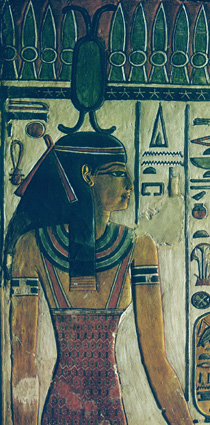
Goddesses have lately been on my mind. Both an occupational hazard and an avocation, study of the divine feminine deflects the trajectory that traditional monotheism traced and places us in the realm of the empowered female. This week my mythology class considered Athena, perhaps the truest embodiment of divinity in classical Greece. I regularly mention that in the ancient world even Plato suggests a connection between Athena and the Egyptian goddess Neith, one of the most ancient of the gods of Lower Egypt. When a friend coincidentally emailed a question about Neith, I realized the goddess was calling out for a blog post.

Neith is difficult to define partially because of the nature of Egyptian religion and its evidence, but also because of her great antiquity. She is a predynastic goddess, dating from before the founding of a united Egypt (back in the days when Egypt was united). She is represented by symbols of both weaponry and weaving (thus associated with Athena), and since she is so ancient, she became a creator. She is occasionally regarded as the mother of the gods. A question that naturally arises for all creators is from whence did they come – the classic chicken-or-the-egg conundrum. Mythology offers a number of options for self-generation, but most often creator gods simply bring themselves into being without many details being supplied. After all, no one was there to witness the miracle of the first birth.

Like most Egyptian creator gods, Neith represented preexistence and creation. She is occasionally androgynous – a necessary precondition for being an initial creator – and is said, by Proclus to have claimed, “I am all that has been and is and will be.” In short, nobody knows where she originated. Like many pre-biblical gods, Neith practices creation by speaking aspects of the world into existence, a technique called creation by divine fiat. This is something that Yahweh will later borrow in Israel. Although the Egyptian myths do not directly address the coming into being of Neith, she represents what every observer of nature knows: monotheism loses an essential element when it supplants one gender instead of embracing both.


Fruits of the Dearth

Religions developed out of universal concerns. While I can’t hope to compete with the masterful insight of Pascal Boyer, I do have a gut feeling that as soon as humans evolved the ability of foresight we began to worry. Where is that next meal coming from? Will we survive another day? Is there any way to hedge our bets? In ancient times mortality’s unblinking stare would have been much closer to our faces. Even as recently as the Middle Ages death was much more on the mind, much more frequently seen.

One way to ensure survival is to propitiate those gods who control the productivity of the soil. Long before Demeter lost Persephone ancient people mourned the death of gods who ensured fertile soil, hoping against hope that they might come back each spring. I recall the seriousness with which Rogation Days were taken in the Midwest. At Nashotah House the earth itself was blessed. I recall a priest from Central Illinois who gleefully recounted that the University of Illinois crop experiments were always a little skewed because each year he blessed them on Rogation Days, giving Ceres a boost. CPR for mother earth; give us our daily bread.

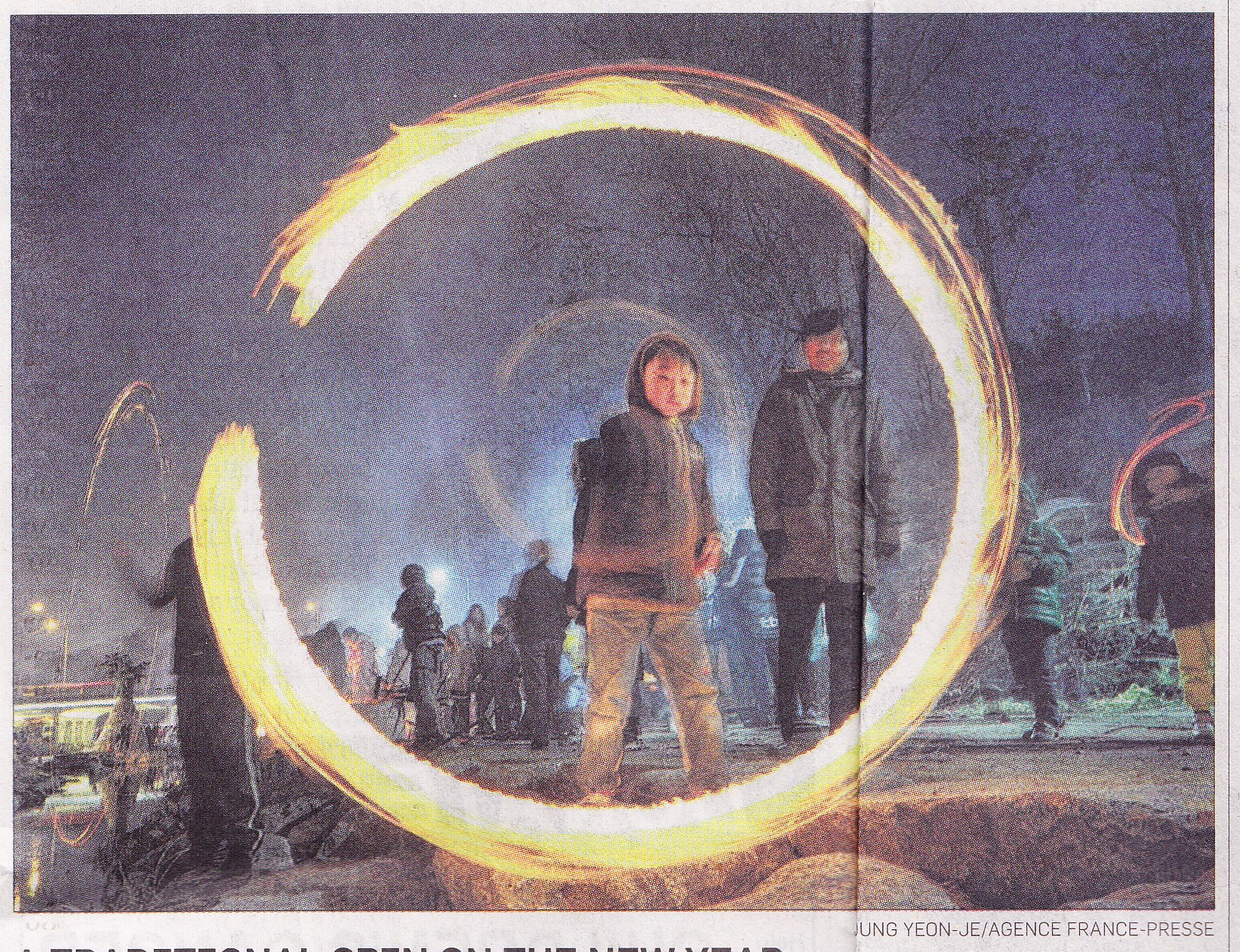
The picture of a South Korean boy spinning a can filled with glowing embers over a field on the first full moon of the Korean New Year reaffirms that concerns are the same everywhere. In our sterilized, indoor, urbanized lives where food is grown, harvested, processed and packaged by others for simple consumption of the vast majority, we have lost one of the most poignant aspects of religion. People pray for survival against the devious plans of terrorists, or the insidious diseases that threaten those who make a living simply moving electrons from place to place. Meanwhile somewhere in a country teetering on the brink of nuclear winter, a young boy swings a bucket full of hope.