Remembering to Forget

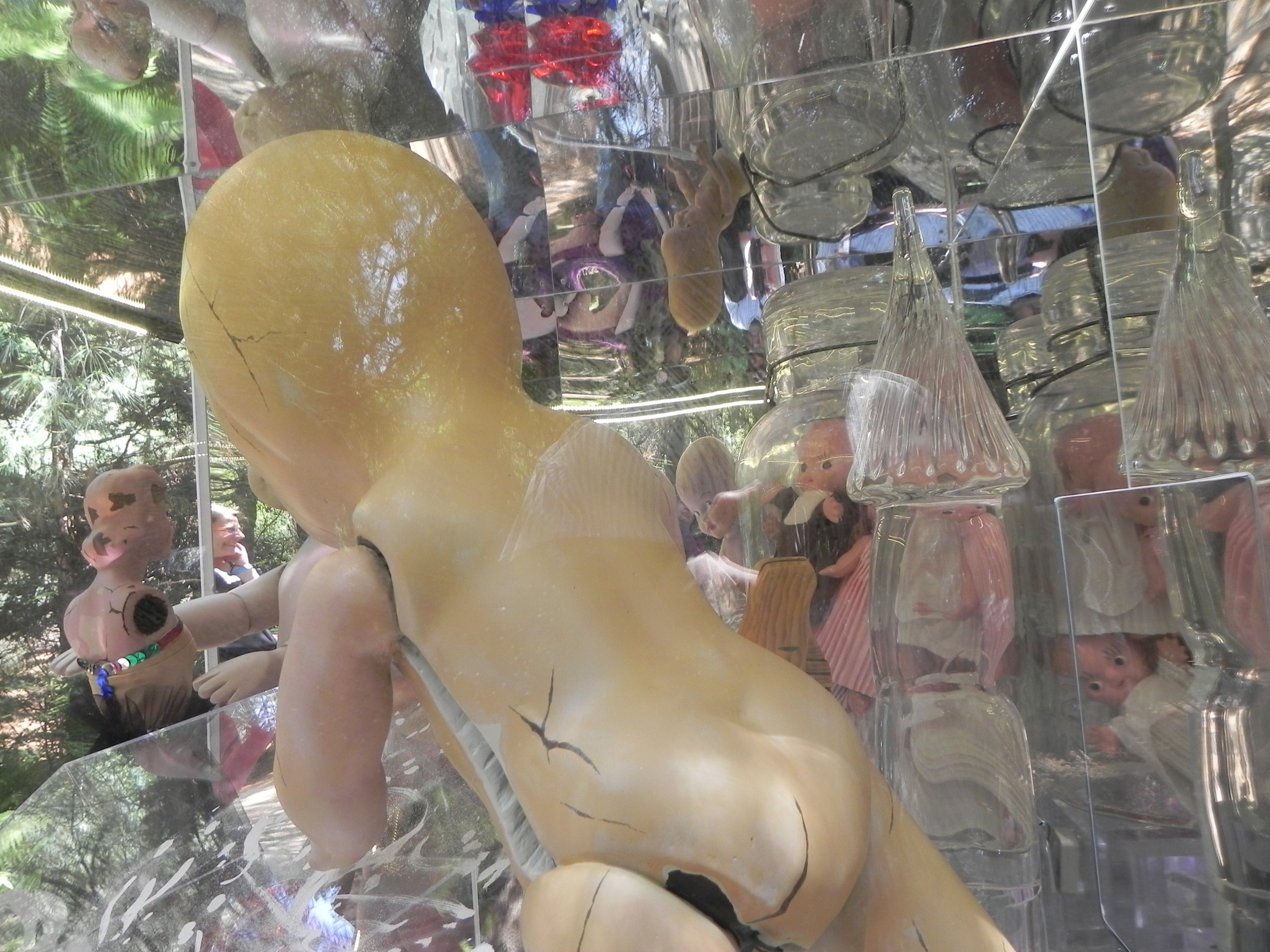
I think I’ve discussed memory before.  I forget.  Anyway, I recently ran across Ebbinghaus’ Forgetting Curve.  Now, I’ve long known that when you reach my age (let’s just say closer to a century than to 1), your short-term memory tends to suffer.  I value my memories, so I try to refresh what’s important frequently.  In any case, Ebbinghaus’ curve isn’t, as far as I can tell, age specific.  It’s primarily an adult problem, but it also resonates with any of us who had to study hard to recall things in school.   The forgetting curve suggests that within one hour of learning new information, 42% is forgotten.  Within 24 hours, 67% is gone.  This is why teachers “drill” students.  Hopefully you’ll remember things like the multiplication table until well into retirement age because you had to repeat it until it stuck.  Where you put the car keys, however, is in that 42%.

I’m a creature of habit.  One of the reasons is that I fear forgetting where something important might be.  The other day it was my wallet.  In these remote working days you don’t need to put on fully equipped pants every day.  Pajama bottoms work fine for Zoom meetings and if you don’t have to go anywhere, why fuss with the wallet, cell phone, pocket tissues-laden pants?  You can put your phone on the desk next to a box of tissues.  The wallet gets left in its usual pocket.  One day I pulled on the pants I last wore and as I was headed to the car noticed my wallet was gone.  Fighting Ebbinghaus, I tried to remember where I’d last used my wallet.  We’d gone to a restaurant the previous weekend that seemed the most likely culprit.  It could’ve fallen out in the car, or maybe down a crack in an overstuffed chair.  I couldn’t find it anywhere, swearing to myself I was going to buy one of those wallet chains if I ever found it again.

(I did eventually find it, in the bathroom.  Apparently this has happened to others as well.)  In this instance, my memory was not to blame.  It had been right in the pocket where I last remembered putting it.  But other things do slip.  Think about the most recent book you read.  How much of it do you remember?  That’s the part that scares me.  I spend lots of time reading, and more than half is gone a day after it’s read.  Unless it’s reinforced.  The solution, I guess, is to read even more.  Maybe about Ebbinghaus’ Forgetting Curve.


Mexican Philosophy

Once upon a time, I applied for a teaching post at Syracuse University.  (Actually, twice upon a time, but that’s a longer story.)  I was able to gather that one reason I failed to merit an interview was that the religion department prided itself on its dedication to continental philosophy.  Lacking imagination, I couldn’t see how that might apply to teaching Hebrew Bible but then again, I don’t know much.  I’m starting off with than anecdote because it is in keeping with the spirit of Carlos Alberto Sánchez’s excellent Blooming in the Ruins: How Mexican Philosophy Can Guide Us toward the Good LifeI recently wrote about how reading philosophy is something I enjoy when I can find the time, but what really struck me about this book is that Mexican philosophy is a counter to continental (i.e., European) philosophy and it is much closer to my own outlook.  I’m not in any danger of being offered a new job so it’s safe to say so.

I actually picked up a copy of Sánchez’s book because of a chapter that I’d read.  Much of the work begins with anecdotal accounts, followed on by something original, amplified, and solid (you’ll need to read the book to flesh that out).  Mexican philosophy rejects the idea of universals because each of us is socially located.  What may have seemed universal to European philosophers of the seventeenth through the nineteenth centuries, many of them quite privileged, simply doesn’t apply to a person raised poor in Mexico.  (Or Pennsylvania, for that matter.)  I read the continental philosophers in school, but they had not had my experiences.  My traumas.  And yes, Sánchez emphasizes that trauma is part of the picture.

While I can’t summarize this wonderful little book here, I can recommend it.  If you have an interest in the larger questions, and if you want some philosophy that doesn’t try to impress you with big words and complex grammatical formulations, this may be for you.  Sánchez writes as if he’d be willing to sit down with you and discuss the matters that make life worth talking about.  The chapter that sold me on his book was the one on the Mexican view of death.  It is only one of several that deserve a bit of your time to chew over.  So I was not welcome among those who specialize in continental philosophy.  Maybe I was looking in the wrong place.  Maybe those who are open to homegrown thinkers of sometimes deep thoughts live south of the border.


Non-Saints

It was an epiphany.  My wife has, on more than one occasion, accused me of playing the martyr.  I know very well that I let other people step all over me.  The epiphany came when I was reading about Stephen’s martyrdom in the Acts of the Apostles (in the New Testament).  Unbidden by me, a memory—more of a distinct impression, a deeply planted feeling—arose.  I started reading the Bible at a young age.  The story of Stephen is disturbing to a child.  The thought of being stoned to death for saying what you believe is a species of horror.  The memory, or impression, was of my mother pointing out how good it would be to be like Stephen.  He is not technically my namesake, but since there were no male role models in my family, I subconsciously made the connection: Stephen the martyr, Steve the martyr.

Giovanni Battista Lucini – Martyrdom of St. Stephen, public domain. Source: https://artsandculture.google.com/asset/martyrdom-of-st-stephen/twGNCf3waLKDvA via Wikimedia Commons

It’s strange to realize this suddenly after half a century of not consciously recollecting it.  What we teach our children stays with them.  If we tell them that it’s good to die for your beliefs, well, we shouldn’t be surprised when they grow up with strong convictions.  (My brother tells me that Virgos think they’re always right and that’s why we’re stubborn; is it the stars or is it the Good Book?)  The Bible puts a positive spin on Stephen’s death.  Formal sainthood isn’t a biblical concept, but he dies forgiving his murderers.  It struck me there in the middle of a working day.  Some of my subconscious personality traits floated to the surface.

My deep desire to avoid Hell also formed my young outlook.  Although my beliefs have to be held accountable to what I’ve learned over decades of study, that fear never departs.  This too was planted in me before I had any real concept to absorb it.  When I grew old enough, the horror became academic, but nonetheless real for it.  I’d studied the history of Hell and I knew New Testament secrets.  To avoid the bad place, be like Stephen.  The dilemma is that as life goes on, we continue to learn.  Young parents don’t know as much as old ones do.  And since we have to teach our children not to run out into the street, or not eat that thing they found, we cast ourselves as The authority.  And that includes things religious.  If we live an examined life, we see shades of nuance where once there was only certainty.  And sometimes we have epiphanies.


End of the Story

You know that feeling?  Like when you’re driving in thick fog and you know you should stop but you’re late and you have to keep going?  There comes a moment as you’re driving when you know that it’s going to end, and probably badly.  Yet you keep on going.  Trump has me thinking of the end of the world quite a bit.  I know there are many evangelicals out there praying for it fervently while the rest of us would like a little more time on this beautiful planet.  I’d be lying if I said I didn’t understand this outlook, because I do.  I grew up with it and I’ve never forgotten the sensation it caused.  And then I pondered that we are story-telling, and story-thinking creatures.  Perhaps other animals don’t think this way, but we constantly tell ourselves stories.

A story has a beginning, a middle, and well, eventually, an end.  We all know, at some level, that we’re mortal.  Life will end, and every completed story has an end.  Why not the world?  It’s a strangely haunting idea, the world continuing on without us here to make it interesting.  Plants will grow in any soil they can find, even microscopic cracks in the pavement.  Every year it’s like one day everything is suddenly green where only the day before we could see the sky through the branches.  And animals continue their quests for food, mates, and shelter.  Some live to hide while others strut.  Each has a role to play and if you watch them closely you’ll find yourself narrating their stories.  That rabbit.  That bluejay.  That fox.  They have a beginning, middle, and end.  If they can’t tell it, we can do it for them.  It comes naturally to us.

Long ago I learned how one version of Bible interpretation came up with the end of the world as we know it.  I also learned that this was contrived, just as all interpretations are.  This particular one has landed, like a seed, in the cracks of our mind.  It grows, just like that weed in the pavement.  This story must have an end.  We can imagine it no other way.  Even when we grow up and realize that the story was only one we told to children—children old enough to handle it, of course—we still have this certainty that an end is coming.  Like driving in the fog, we just know it.  Even when we realize that in reality we should be putting on the brakes.


Sad Joy

I sometimes make the mistake of thinking a short book will be a quick read.  Melancholic Joy is a case in point.  Every time I indulge in a book of philosophy I wonder if I missed my true calling.  As my wife is well aware, I’m prone to philosophical musings about the meaning of life although I tend to place myself among the existentialists.  As soon as I saw the title of Brian Treanor’s book it went on my reading list.  It’s short and I thought maybe a week would be enough.  But it wasn’t.  I do hope I can remember much of it.  A word to the wary, the first chapter is very depressing.  Treanor doesn’t sugarcoat the world in his quest on a Life Worth Living.  Those of us who ponder things deeply tend toward melancholy, in my experience.  But stick with it.  There is gold in this book.  Starting with chapter two I was reminded why I took so much philosophy in college.

The world is full of depressing facts.  By the time I was born we’d already devised ways to wipe out the entire human race.  Many, far too many, people live lives of suffering, much of which could be prevented if we didn’t have people like Donald Trump running things.  The political situation is so bad that I’ve disengaged.  Yet still, amid my melancholy, I do feel joy.  You need to parse words carefully here.  Treanor knows that joy and happiness aren’t the same thing.  For those of us predisposed toward melancholy, joy is probably much more common in our lives than happiness.  This book is one that led me to start underlining again.  I do hope to come back to it when my outlook becomes too bleak.  Treanor interacts with both other philosophers and other writers, even some who aren’t always classified as philosophical.  It is a nepenthe.

Some of us think incessantly and can’t help doing so.  It’s a bit difficult to be cheerful if that’s the case.  Melancholic Joy, if I can keep it in mind, may help with that.  There are sections where I had to go back and re-read because my attention had wandered (it happens to us all), but to do so was rewarding.  For anyone who finds many aspects of the world oppressive, and depressing, and who has a philosophical bent, this book is for you.  Just be careful with that first chapter.  Whatever you do, don’t stop there.


Alchemy

While reading about alchemy (surprised?  Really?), I found myself learning about Jakob Böhme.  His name was familiar—he’s one of those many people I know vaguely about but having been raised in an uneducated household really knew nothing concerning him.  In any case, Böhme is considered a mystic who began as Lutheran, but who came to trust his own spiritual experience (the latter being more or less the definition of a mystic).  I read about how one day he experienced a vision while staring at sunlight reflected off a pewter dish.  Now, I have had visions but you’ll need to get to know me personally if you want to hear about them.  But at that moment Böhme believed the spiritual structure of the world had been revealed to him.  I couldn’t help but think of what had happened to me at the foot of the Mount of Olives.

It was 1987 and I was a volunteer on the dig at Tel Dor.  Visiting Jerusalem one weekend with friends, we came to the Church of All Nations, built around the traditional garden of Gethsemane.  It was hot and I was feeling tired and I went inside the church to sit.  I spied a purple stained-glass window high overhead with the sun shining through it, in a shadowy alcove.  In an instant of rapture, everything made sense to me.  It was as fleeting as it was shocking and to this day I cannot articulate the certainty I experienced in that one brief moment alone in a church.  It was an assurance that, despite all outward appearances, this does indeed make sense.  This experience has never been precisely replicated in my life, but those who know me know that there is a certain color of glass that, if I see the sun through it, instantly brings me serenity.

Sunlight can do such things.  One morning while out jogging at Nashotah House, the rising sun struck me directly in the eye.  Immediately stopped running, holding my head against a migraine that had suddenly developed.  I was sick the rest of the day, lying in a dark room with a damp washcloth over my eyes, head splitting apart.  I’ve been cautious with the sun ever since.  Some things are so full of glory that to see them directly is to invite danger.  Yet we’re compelled to look.  I felt that I understood Böhme.  And I know that if the sun is right, and a certain color of glass is at hand, and if I’m brave enough, I can almost get back to that place.


Just Trust Me

When I google something I try to ignore the AI suggestions.  I was reminded why the other day.  I was searching for a scholar at an eastern European university.  I couldn’t find him at first since he shares the name of a locally famous musician.  I added the university to the search and AI merged the two.  It claimed that the scholar I was seeking was also a famous musician.  This despite the difference in their ages and the fact that they looked nothing alike.  Al decided that since the musician had studied music at that university he must also have been a professor of religion there.  A human being might also be tempted to make such a leap, but would likely want to get some confirmation first.  Al has only text and pirated books to learn by.  No wonder he’s confused.

I was talking to a scholar (not a musician) the other day.  He said to me, “Google has gotten much worse since they added AI.”  I agree.  Since the tech giants control all our devices, however, we can’t stop it.  Every time a system upgrade takes place, more and more AI is put into it.  There is no opt-out clause.  No wonder Meta believes it owns all world literature.  Those who don’t believe in souls see nothing but gain in letting algorithms make all the decisions for them.  As long as they have suckers (writers) willing to produce what they see as training material for their Large Language Models.  And yet, Al can’t admit that he’s wrong.  No, a musician and a religion professor are not the same person.  People often share names.  There are far more prominent “Steve Wigginses” than me.  Am I a combination of all of us?

Technology is unavoidable but the question unanswered is whether it is good.  Governments can regulate but with hopelessly corrupt governments, well, say hi to Al.  He will give you wrong information and pretend that it’s correct.  He’ll promise to make your life better, until he decides differently.  And he’ll decide not on the basis of reason, because human beings haven’t figured that out yet (try taking a class in advanced logic and see if I’m wrong).  Tech giants with more money than brains are making decisions that affect all of us.  It’s like driving down a highway when heavy rain makes seeing anything clearly impossible.  I’d never heard of this musician before.  I like to think he might be Romani.  And that he’s a fiddler.  And we all know what happens when emperors start to see their cities burning.

Al thinks this is food

Storytelling

Those who know me personally say that I’m a good storyteller.  My own head houses, however, my harshest critic.  Since I tend to work alone this creates an inherent conflict.  This is most evident in my fiction.  I finished a draft of my eighth novel earlier this year, but it still needs work.  (No, really it does—not just harsh critic speaking.)  Part of the problem is obviously time.  My morning writing period is frequently held hostage by my moods.  Some of my past novels are, I think, publishable.  I’ve tried repeatedly with one of them, getting as far as having a signed contract, but things collapsed after that.  It sits brooding on my hard drive.  Another—I think it may be number four or five—seems publishable but it requires reworking with magic pixie dust.  Sometimes my supply of it runs low.  (Moods again.)

I sometimes wonder if I read too much nonfiction.  I’m a curious sort of chap, interested in the world around me.  When that world seems to be falling apart, however, fiction is my friend.  I’ve been reading a lot of novels and I’m often struck by the beauty of the prose.  Head critic says, “why can’t you do that?”  Then I recall the writing advice that I picked up from Stephen King’s nonfiction, On Writing.  Adjectives may be bad for your health.  Just tell the story.  With style.  My current novel (eight) tells an interesting story, I think.  If I’m honest I’ll say that I started working on this before any of the other completed novels (except number one, and that was a throwaway).  It was an idea that just wouldn’t go away.  I knew the beginning and the ending, and part of the middle.  I even found a potential publisher, but it has grown too long for them.

About three chapters from the end I realized that I hadn’t tied things up as well as I’d initially thought.  What I need is time away from work to think about it.  Thinking time is rare, even in the time I manage to wrestle from the 9-2-5.  There’s always more to be done, trying to stay healthy and out of the weather.  And really, maybe I should be reading even more fiction.  But what about the “real world” out there, which requires nonfiction to face it boldly and with informed decisions?  It’s dramatic, isn’t it?  Like a protagonist (hardly a hero) on the edge of a cliff.  How does the story end?  Perhaps an actual storyteller might know.


Nanowrimo Night

Nanowrimo, National Novel Writing Month—November—has been run by an organization that is now shutting down.  Financial troubles and, of course, AI (which seems to be involved in many poor choices these days), have led to the decision, according to Publisher’s Weekly.  Apparently several new authors were found by publishers, basing their work on Nanowrimo projects.  I participated one year and had no trouble finishing something, but it was not really publishable.  Still, it’s sad to see this inspiration for other writers calling it quits.  I’m not into politics but when the Nanowrimo executives didn’t take a solid stand against AI “written” novels, purists were rightfully offended.  Writing is the expression of the human experience.  0s and 1s are not humans, no matter how much tech moguls may think they are.  Materialism has spawned some wicked children.

Can AI wordsmith?  Certainly.  Can it think?  No.  And what we need in this world is more thinking, not less.  Is there maybe a hidden reason tech giants have cozied up to the current White House where thinking is undervalued?  Sorry, politics.  We have known for many generations that human brains serve a biological purpose.  We keep claiming animals (most of which have brains) can’t think, but we suppose electrical surges across transistors can?  I watch the birds outside my window, competing, chittering, chasing each other off.  They’re conscious and they can learn.  They have the biological basis to do so.  Being enfleshed entitles them.  Too bad they can’t write it down.

Now I’m the first to admit that consciousness may well exist outside biology.  To tap into it, however, requires the consciousness “plug-in”—aka, a brain.  Would AI “read” novels for the pleasure of it?  Would it understand falling in love, or the fear of a monster prowling the night?  Or the thrill of solving a mystery?  These emotional aspects, which neurologists note are a crucial part of thinking, can’t be replicated without life.  Actually living.  Believe me, I mourn when machines I care for die.  I seriously doubt the feeling is reciprocated.  Materialism has been the reigning paradigm for quite a few decades now, while consciousness remains a quandary.  I’ve read novels that struggle with deep issues of being human.  I fear that we could be fooled with an AI novel where the “writer” is merely borrowing how humans communicate to pretend how it feels.  And I feel a little sad, knowing that Nanowrimo is hanging up the “closed” sign.  But humans, being what they are, will still likely try to complete novels in the month of November.


A Father’s Day

Some thoughts I hope I’m allowed to share on Father’s Day: I recently saw a review of The Wicker Man that pointed out (rightly) that my treatment of gender was outdated.  Similarly, the (few) readers of Nightmares with the Bible make a not dissimilar observation about my use of Poe’s formulation of women in danger.  I am very much aware that gender studies (which wasn’t even a potential major when I was in college) have done much needed work in clarifying just how complex a phenomenon it is.  I have posted several times on this blog about precisely that.  Still, we all write from a position.  My training is not in horror studies, and it’s not in gender studies.  My writing, despite the price, is intended for non-academic readers, but I too may be between categories here.  I’m trying to escape the academy that has already exiled me, but the framing of my questions is too academic.  I get that.

I also write from the perspective of a man. There’s no denying that I write as a straight, white male.  This is how I experience the world.  And how I experience horror.  Returning to Nightmares, I think my point might’ve been better expressed as noting that writers, directors, producers, and others in the film industry understand that viewers of their particular films may be more moved by a female possession than a male.  Or, in Wicker, that publicly expressed concerns about rape and sexual violence are more commonly expressed by women.  Statements can always be qualified, but that happens at the expense of readability.  There’s no such thing as a free lunch after all.

Academics can’t be blamed for doing what they do.  They critique, poke, and probe.  My books since Holy Horror have been intended as conversation starters.  But they’re conversation starters from the perspective of a man who watches horror and tries to understand why he reacts to it the way he does.  There is an incipient ageism, I fear, that sometimes discounts how people raised to use “man” when referring to mixed or indeterminate genders—taught so earnestly by women who were our teachers—sometimes take our earliest learning for granted.  Those early lessons are often the most difficult to displace.  I try.  Really I do.  I’ve had over six decades looking at the world through a straight man’s eyes.  I welcome comment/conversation from all.  Of course, my intended readership has never been reached, and they, perhaps would have fewer concerns about my view.  Romance (hardly a feminist-friendly genre), after all, is one of the best selling fiction categories, even today.  And many of the writers—generally women—express the gender-expected point of view. That’s a genre, however, outside my (very limited) male gaze.


Dream Machine

I’ve reached the age where, instead of how well you slept, it’s the nature of my dreams that is more reliable projector of productivity.  You see, after a night of bad dreams I often wake up drained, lacking energy.  Entire days can be cast into this state of lassitude.  The only thing for it is to sleep again and reset.  The next day I can wake up after positive dreams, bursting with ideas and creativity.  New ideas come so fast that I can’t get them down in time.  Dreams. 

My entire life I’ve been subject to nightmares (no, it’s not the movies).  I still wake up scared at least once or twice a week.  More positive dreams have been struggling with these nighttime frights, and when they win, I have a better day.  I know, I know.  I should be in regular therapy.  The problem is time.  I see notes in papers and elsewhere of people younger than me dying.  On a daily basis.  The problem is I’ve got so much that I want to accomplish that I don’t have time to locate, pay for, and drive to see a therapist every week.  (The bad dreams come that frequently, so it stands to reason that weekly appointments should be on the script, right?)

The thing is, there’s no predicting these dreams or their timing.  My wife and I live a life of routine.  I awake early (anywhere from 1 a.m. To 4 a.m. these days) and begin writing and reading.  I jog as soon as it’s light and start work when I get back.  The 9-2-5 insists that you answer emails until 5 p.m., which can make for some very long days, depending.  After that we have dinner while watching some show we missed when it first aired, and then I go to bed.  That’s been the pattern ever since we bought this house nearly seven years ago.  Before that, we didn’t always watch things in the evening, but that doesn’t seem to make a difference in the dreams.

So I get up early and write down my thoughts for this blog, work on the books I happen to be scrawling at the moment (both fiction and non) and anxiously watch for sunrise, that ever shifting foundation.  And then work.  Always work.  But how well I work will depend largely on what was in my subconscious mind before I wake.  I have no idea if this is normal.  Knowing myself, it probably isn’t.  But I’ve reached the age where it at least starts to make sense.


Split Decision

Sometimes advertising and packaging can make you ill-prepared for a movie.  I know that M. Night Shyamalan’s Unbreakable, Split, and Glass are considered a trilogy.  Without knowing the story, I saw the first film and discovered it was a superhero movie.  That’s fine, of course.  It’s not really horror much at all.  That’s maybe the reason Split caught me off guard.  It is brought into sequel territory right at the very end, but the story is tense and scary.  Kevin Crumb is a man with DID, dissociative identity disorder—what used to be called a split personality.  Quite apart from the inherently fascinating phenomenon (and the criticism the movie received for misrepresenting it), the idea that a person shifts and you don’t know who s/he is, is frightening.  A couple of those personalities have teamed up and become criminal.  Kevin abducts three teenage girls for a purpose that only becomes clear later.  Their efforts to escape create a great deal of the tension, and the quick shifting of identities that Kevin displays makes any kind of reasoning with him impossible.  

There are any number of avenues to discuss here.  One is that Kevin’s disorder stems from how his mother treated him as a child.  (Unintentionally I’ve been watching movies that trigger me that way lately.)  He developed personalities to protect himself from the pain and they continue to multiply.  Meanwhile, the kidnapped girls can’t figure out what’s going on but Casey (Anya Taylor-Joy—my first clue that this was horror instead of a superhero movie—)realizes that she has to treat the different identities in different ways.  Another avenue is to consider what “the beast” (one of the personalities) asserts: only those who’ve been broken are truly evolved.  Some children make it through difficult childhoods by becoming resilient while others don’t.  Casey, it turns out, also had an abusive relationship in her childhood.  Movies like this always make me reflect on how difficult being a good parent can be.

The person not in control of their own actions (ahem) is among the most frightening of human monsters.  Those with mental illness, however, seldom fall into this category.  I understand why mental health providers found this film problematic, but it showcases Shyamalan’s horror chops.  It was the scariest movie that I’ve seen in quite some time.  After I ejected the disc I felt bothered (and trapped) for quite a few minutes.  And I realized that if this is a trilogy then superhero and horror combined await in the third part.  We shall see.


Framing

Have you ever gone into one of those art museums where the frame of a painting is so lavish that you notice it almost more than the art it contains?  It certainly says something about me (or where I shop), that I prefer simple frames.  Those that ideally pick up and emphasize something in the picture.  I recently critiqued a book on this blog because the framing seemed off.  Not a week afterwards I found myself going down an internet rabbit hole (the topic isn’t important) because someone had framed a speech so that it seemed to be reading things one particular way.  With that framing, I watched the speech and was astonished.  Then I sent it to one of my brothers and he pointed out that it could be understood a different way.  At first I was embarrassed and defensive (to myself), but I went back and listened again and realized he was right.  I’d accepted the framing uncritically.

We are incapable of seeing everything.  From the shape of our eyes to the limits on our distance vision, we can only take in so much.  That’s what frames are for.  We put them around paintings, photographs, posters, windows, and mirrors.  The demarcate the limit of something.  This image goes only so far.  Televisions used to do that, although now they seem to take up a wall instead of a framed corner space.  But even so.  Movie screens too.  They provide important context.  We know, looking at that screen, that something limited to that screen will appear.  We know that what’s caught in the picture frame can’t reach beyond it, physically.  (I am excluding some modern art, of course.)  Framing is important.

I am glad for this recent object lesson.  I was letting myself get worked up over something I may have viewed the wrong way because I had been primed to do so.  It involved one of my deepest wishes, so emotion definitely played a part in it.  Critical thinking involves looking at the frame and thinking about it as well as what’s inside.  Those who excel at creating content make you forget the frame is there.  The artist isn’t painting to fill a frame, the frame contains the art.  We all know this on some level, I suspect.  Nevertheless, when someone presents us anything with the interpretation built in, we need to ask ourselves if that interpretation is inherent in the object or is it simply part of the frame.  And if it’s the frame, no matter how fancy, we need to remove it and look from a different angle.


Night Fears

Have you ever had one of those dreams?  The kind where your subconscious turns on you brutally?  I’ve often said I’m my own worst critic but this one took it to a whole new level.  In real life I’m working on novel number eight.  One through seven haven’t been published (and at least two don’t deserve to be).  I’ve kind of been thinking that this one might see the light of day.  I finished a very rough draft about a couple months ago and I’ve been working on revisions since.  Meanwhile I keep reading novels and seeing how well they flow compared to my story.  That must’ve been on my mind because in my dream I was in a room with five or six publishing moguls.  In the way of dreams it seems that perhaps an agent had arranged this.  I was in the room with them and when they finished, each took their turn telling me how awful it was.  Their critique was brutal.  So bad I couldn’t get back to sleep.  I found tears on my cheek.

Of course, my writing time is early morning.  Work is uncompromising.  So I had to get up and work on what my subconscious had just told me was, in the words of Paul, skubalon.  (Look up the commentaries on Philippians 3.8, if you dare.)  Like any writer, I have my doubts about my own work.  This particular novel I’ve been working on, off and on, for almost three decades.  It’s an idea I can’t let go.  Just a couple months back I was proud of myself for finally finishing a draft of it, and this morning I’m tempted to delete all the files.  Why does one’s subconscious do this to a person?  My very first attempt at a novel, as a teen, was torn up by my own hands.

The other dream that has been recurring, in various forms, is where I’ve been hired back by Nashotah House.  I taught there for a decade and a half, and I wasn’t very happy toward the end, but I did my job well.  In real life I wouldn’t go back, but in my dreams I’m always overjoyed.  I wake up happy and optimistic.  Some version of that dream comes to me at least once a year, I suppose.  Sometimes several times.  Dreams are mysterious.  They’re telling us something, but they’re coy about exactly what.  That’s what made last night’s dream so bad.  There was no ambiguity.  This was pure, unadulterated self doubt in the room with me and it gave me no quarter.  I got up and continued work on the revisions anyway.  Who’s afraid of omens?


Little Things

Those on anti-clutter campaigns (whose lives I can’t imagine) claim that we have too much stuff.  That may be true, but when you reach a certain age these realia can serve to remind us where we’ve been.  How we’ve become who we are.  We moved to our house in a whirl.  Neither my wife nor I had enough vacation days to take any time off and we had to move 55+ years of stuff over a weekend.  Lately I’ve been going through some of the boxes of little things you keep.  They were generally mixed in with papers I didn’t have time to file, bits of hardware, and a few things I’m not sure why I kept.  In the archaeology of my life, the layer labeled Nashotah House retains a prominent place.  It took many years before I could look at my little Nashotah House things without being overwhelmed by emotion.  Nearly twenty years on, I hope I’m beginning to get over it.

One of the little things I unearthed was a pepper shaker.  One of my students (now sadly departed) had made a label to express her frustration and humor at trying to learn Hebrew as a mature woman.  I’m probably now the age she was then.  This little artifact has been with me through a great number of momentous changes in my life.  It can still bring a little smile, however.  I see it and I remember Judy giving it to me with a laugh.  I probably shared it with the class.  Even now it has two-decade-old pepper in it.  The declutter experts would say it belongs in the dumpster.  They’re wrong.

Nashotah House was the only job on offer following those intense Edinburgh years.  As all of these things recede further and further into the past, they become more valuable.  No matter how small, these objects played a part in what I remember and rubbed me in a way that influenced my shape.  I don’t know what that final shape will be, but I jealously guard my little things, these boxes of years.  They are points of contact between my life and those of others.  I found many other pieces of myself in these miscellaneous boxes.  I know that someday, all things being equal, this stuff will probably end up in some landfill somewhere, waiting for some future archaeologist wondering what realia we kept back in the years when the world went insane.  And if s/he is really brave, they might even try some of the pepper on their future lunch.