Dream Machine

I’ve reached the age where, instead of how well you slept, it’s the nature of my dreams that is more reliable projector of productivity.  You see, after a night of bad dreams I often wake up drained, lacking energy.  Entire days can be cast into this state of lassitude.  The only thing for it is to sleep again and reset.  The next day I can wake up after positive dreams, bursting with ideas and creativity.  New ideas come so fast that I can’t get them down in time.  Dreams. 

My entire life I’ve been subject to nightmares (no, it’s not the movies).  I still wake up scared at least once or twice a week.  More positive dreams have been struggling with these nighttime frights, and when they win, I have a better day.  I know, I know.  I should be in regular therapy.  The problem is time.  I see notes in papers and elsewhere of people younger than me dying.  On a daily basis.  The problem is I’ve got so much that I want to accomplish that I don’t have time to locate, pay for, and drive to see a therapist every week.  (The bad dreams come that frequently, so it stands to reason that weekly appointments should be on the script, right?)

The thing is, there’s no predicting these dreams or their timing.  My wife and I live a life of routine.  I awake early (anywhere from 1 a.m. To 4 a.m. these days) and begin writing and reading.  I jog as soon as it’s light and start work when I get back.  The 9-2-5 insists that you answer emails until 5 p.m., which can make for some very long days, depending.  After that we have dinner while watching some show we missed when it first aired, and then I go to bed.  That’s been the pattern ever since we bought this house nearly seven years ago.  Before that, we didn’t always watch things in the evening, but that doesn’t seem to make a difference in the dreams.

So I get up early and write down my thoughts for this blog, work on the books I happen to be scrawling at the moment (both fiction and non) and anxiously watch for sunrise, that ever shifting foundation.  And then work.  Always work.  But how well I work will depend largely on what was in my subconscious mind before I wake.  I have no idea if this is normal.  Knowing myself, it probably isn’t.  But I’ve reached the age where it at least starts to make sense.


Split Decision

Sometimes advertising and packaging can make you ill-prepared for a movie.  I know that M. Night Shyamalan’s Unbreakable, Split, and Glass are considered a trilogy.  Without knowing the story, I saw the first film and discovered it was a superhero movie.  That’s fine, of course.  It’s not really horror much at all.  That’s maybe the reason Split caught me off guard.  It is brought into sequel territory right at the very end, but the story is tense and scary.  Kevin Crumb is a man with DID, dissociative identity disorder—what used to be called a split personality.  Quite apart from the inherently fascinating phenomenon (and the criticism the movie received for misrepresenting it), the idea that a person shifts and you don’t know who s/he is, is frightening.  A couple of those personalities have teamed up and become criminal.  Kevin abducts three teenage girls for a purpose that only becomes clear later.  Their efforts to escape create a great deal of the tension, and the quick shifting of identities that Kevin displays makes any kind of reasoning with him impossible.  

There are any number of avenues to discuss here.  One is that Kevin’s disorder stems from how his mother treated him as a child.  (Unintentionally I’ve been watching movies that trigger me that way lately.)  He developed personalities to protect himself from the pain and they continue to multiply.  Meanwhile, the kidnapped girls can’t figure out what’s going on but Casey (Anya Taylor-Joy—my first clue that this was horror instead of a superhero movie—)realizes that she has to treat the different identities in different ways.  Another avenue is to consider what “the beast” (one of the personalities) asserts: only those who’ve been broken are truly evolved.  Some children make it through difficult childhoods by becoming resilient while others don’t.  Casey, it turns out, also had an abusive relationship in her childhood.  Movies like this always make me reflect on how difficult being a good parent can be.

The person not in control of their own actions (ahem) is among the most frightening of human monsters.  Those with mental illness, however, seldom fall into this category.  I understand why mental health providers found this film problematic, but it showcases Shyamalan’s horror chops.  It was the scariest movie that I’ve seen in quite some time.  After I ejected the disc I felt bothered (and trapped) for quite a few minutes.  And I realized that if this is a trilogy then superhero and horror combined await in the third part.  We shall see.


Framing

Have you ever gone into one of those art museums where the frame of a painting is so lavish that you notice it almost more than the art it contains?  It certainly says something about me (or where I shop), that I prefer simple frames.  Those that ideally pick up and emphasize something in the picture.  I recently critiqued a book on this blog because the framing seemed off.  Not a week afterwards I found myself going down an internet rabbit hole (the topic isn’t important) because someone had framed a speech so that it seemed to be reading things one particular way.  With that framing, I watched the speech and was astonished.  Then I sent it to one of my brothers and he pointed out that it could be understood a different way.  At first I was embarrassed and defensive (to myself), but I went back and listened again and realized he was right.  I’d accepted the framing uncritically.

We are incapable of seeing everything.  From the shape of our eyes to the limits on our distance vision, we can only take in so much.  That’s what frames are for.  We put them around paintings, photographs, posters, windows, and mirrors.  The demarcate the limit of something.  This image goes only so far.  Televisions used to do that, although now they seem to take up a wall instead of a framed corner space.  But even so.  Movie screens too.  They provide important context.  We know, looking at that screen, that something limited to that screen will appear.  We know that what’s caught in the picture frame can’t reach beyond it, physically.  (I am excluding some modern art, of course.)  Framing is important.

I am glad for this recent object lesson.  I was letting myself get worked up over something I may have viewed the wrong way because I had been primed to do so.  It involved one of my deepest wishes, so emotion definitely played a part in it.  Critical thinking involves looking at the frame and thinking about it as well as what’s inside.  Those who excel at creating content make you forget the frame is there.  The artist isn’t painting to fill a frame, the frame contains the art.  We all know this on some level, I suspect.  Nevertheless, when someone presents us anything with the interpretation built in, we need to ask ourselves if that interpretation is inherent in the object or is it simply part of the frame.  And if it’s the frame, no matter how fancy, we need to remove it and look from a different angle.


Night Fears

Have you ever had one of those dreams?  The kind where your subconscious turns on you brutally?  I’ve often said I’m my own worst critic but this one took it to a whole new level.  In real life I’m working on novel number eight.  One through seven haven’t been published (and at least two don’t deserve to be).  I’ve kind of been thinking that this one might see the light of day.  I finished a very rough draft about a couple months ago and I’ve been working on revisions since.  Meanwhile I keep reading novels and seeing how well they flow compared to my story.  That must’ve been on my mind because in my dream I was in a room with five or six publishing moguls.  In the way of dreams it seems that perhaps an agent had arranged this.  I was in the room with them and when they finished, each took their turn telling me how awful it was.  Their critique was brutal.  So bad I couldn’t get back to sleep.  I found tears on my cheek.

Of course, my writing time is early morning.  Work is uncompromising.  So I had to get up and work on what my subconscious had just told me was, in the words of Paul, skubalon.  (Look up the commentaries on Philippians 3.8, if you dare.)  Like any writer, I have my doubts about my own work.  This particular novel I’ve been working on, off and on, for almost three decades.  It’s an idea I can’t let go.  Just a couple months back I was proud of myself for finally finishing a draft of it, and this morning I’m tempted to delete all the files.  Why does one’s subconscious do this to a person?  My very first attempt at a novel, as a teen, was torn up by my own hands.

The other dream that has been recurring, in various forms, is where I’ve been hired back by Nashotah House.  I taught there for a decade and a half, and I wasn’t very happy toward the end, but I did my job well.  In real life I wouldn’t go back, but in my dreams I’m always overjoyed.  I wake up happy and optimistic.  Some version of that dream comes to me at least once a year, I suppose.  Sometimes several times.  Dreams are mysterious.  They’re telling us something, but they’re coy about exactly what.  That’s what made last night’s dream so bad.  There was no ambiguity.  This was pure, unadulterated self doubt in the room with me and it gave me no quarter.  I got up and continued work on the revisions anyway.  Who’s afraid of omens?


Little Things

Those on anti-clutter campaigns (whose lives I can’t imagine) claim that we have too much stuff.  That may be true, but when you reach a certain age these realia can serve to remind us where we’ve been.  How we’ve become who we are.  We moved to our house in a whirl.  Neither my wife nor I had enough vacation days to take any time off and we had to move 55+ years of stuff over a weekend.  Lately I’ve been going through some of the boxes of little things you keep.  They were generally mixed in with papers I didn’t have time to file, bits of hardware, and a few things I’m not sure why I kept.  In the archaeology of my life, the layer labeled Nashotah House retains a prominent place.  It took many years before I could look at my little Nashotah House things without being overwhelmed by emotion.  Nearly twenty years on, I hope I’m beginning to get over it.

One of the little things I unearthed was a pepper shaker.  One of my students (now sadly departed) had made a label to express her frustration and humor at trying to learn Hebrew as a mature woman.  I’m probably now the age she was then.  This little artifact has been with me through a great number of momentous changes in my life.  It can still bring a little smile, however.  I see it and I remember Judy giving it to me with a laugh.  I probably shared it with the class.  Even now it has two-decade-old pepper in it.  The declutter experts would say it belongs in the dumpster.  They’re wrong.

Nashotah House was the only job on offer following those intense Edinburgh years.  As all of these things recede further and further into the past, they become more valuable.  No matter how small, these objects played a part in what I remember and rubbed me in a way that influenced my shape.  I don’t know what that final shape will be, but I jealously guard my little things, these boxes of years.  They are points of contact between my life and those of others.  I found many other pieces of myself in these miscellaneous boxes.  I know that someday, all things being equal, this stuff will probably end up in some landfill somewhere, waiting for some future archaeologist wondering what realia we kept back in the years when the world went insane.  And if s/he is really brave, they might even try some of the pepper on their future lunch.


Making More Monsters

It’s endlessly frustrating, being a big picture thinker.  This runs in families, so there may be something genetic about it.  Those who say, “Let’s step back a minute and think about this” are considered drags on progress (from both left and right), but would, perhaps, help avoid disaster.  In my working life of nearly half-a-century I’ve never had an employer who appreciated this.  That’s because small-picture thinkers often control the wealth and therefore have greater influence.  They can do what they want, consequences be damned.  These thoughts came to me reading Martin Tropp’s Mary Shelley’s Monster: The Story of Frankenstein.  I picked this up at a book sale once upon a time and reading it, have discovered that he was doing what I’m trying with “The Legend of Sleepy Hollow” in my most recent book.  Tropp traces some of the history and characters, but then the afterlives of Frankenstein’s monster.  (He had a publisher with more influence, so his book will be more widely known.)

This book, although dated, has a great deal of insight into the story of Frankenstein and his creature.  But also, insight into Mary Shelley.  Her tale has an organic connection to its creator as well.  Tropp quite frequently points out the warning of those who have more confidence than real intelligence, and how they forge ahead even when they know failure can have catastrophic consequences for all.  I couldn’t help but to think how the current development of AI is the telling of a story we’ve all heard before.  And how those who insist on running for office to stoke their egos also play into this same sad tale.  Perhaps a bit too Freudian for some, Tropp nevertheless anticipates much of what I’ve read in other books about Frankenstein, written in more recent days.

Some scientists are now at last admitting that there are limits to human knowledge.  (That should’ve been obvious.)  Meanwhile those with the smaller picture in mind forge ahead with AI, not really caring about the very real dangers it poses to a world happily wedded to its screens.  Cozying up to politicians who think only of themselves, well, we need a big picture thinker like Mary Shelley to guide us.  I can’t help but think big picture thinking has something to do with neurodivergence.  Those who think this way recognize, often from childhood, that other people don’t think like they do.  And that, lest they end up like Frankenstein’s monster, hounded to death by angry mobs, it’s better simply to address the smaller picture.  Or at least pretend to.


For the Camera

Smile 2 is getting some good critical notice and I hadn’t seen Smile (1) yet.  Psychological horror often bothers me, but I figured I’d grin and bear it.  I’m glad I did.  The ideas in the film, which participates in “the stigma trope,” are disturbing because it’s unclear if Rose (the protagonist) is mentally ill or not.  The stigma trope posits that something has infected someone either by having seen something they shouldn’t (as in Ringu) or by physical contagion (It Follows) and the victim can’t shake it.  Smile may trigger viewers with suicidal phobias since the premise is that an entity feeding on trauma passes from person to person by having the new victim witness the previous victim’s suicide.  Rose is a therapist who hasn’t gotten over the trauma of her mother’s death.  Rose witnesses a patient die by suicide, and who smiles just before she does it.

The patient told Rose that she’d watched one of her professors die by suicide.  Rose subsequently learns that the professor also witnessed a suicide and so on and so on.  Each prior victim had watched someone else die.  Now Rose has to figure out how to break the cycle, otherwise she’ll perpetuate it.  The idea of inadvertently obtaining a “sticky” entity is pretty scary, and a very human concern.  One of the more frightening aspects of possession movies is the belief that now that demons know that you know, they will target you.  Interestingly, what makes this film provocative is that the victim has to have suffered trauma before.  As such, it is a study of trauma and its lasting effects.  I suspect most people don’t intentionally traumatize others (world leaders excepted).  Trauma can be dealt with (or not) in very different ways.

Smile did quite well at the box office.  I suspect there are a lot of us traumatized people around.  Capitalism encourages traumatizing others through slow violence, if not the more obvious quick way.  People don’t easily walk away from events that scarred them, particularly if they happened at an early age.  Such people, if experience is anything to go by, find themselves in vulnerable positions in life and rather thoughtless people, often for religious reasons, end up traumatizing them even further.  I have to admit that there were triggers for me in Smile.  I still struggle with a few of my own traumas that were never resolved.  Like Rose, I sometimes don’t know who can really be trusted with such things.  This is a perceptive movie.  I guess now I can put on a happy face and see Smile 2.  But first I’d better talk to my therapist.


Remembering Consciousness

I recently inadvertently read—it happens!—about anesthesia.  I’ve been relatively healthy for most of my adult life and have experienced anesthesia only for dental surgery and colonoscopies.  I’ve actually written about the experience here before: the experience of anesthesia is not like sleep.  You awake like you’ve just been born.  You weren’t, and then suddenly you are.  This always puzzled me because consciousness is something nobody fully understands and there is a wide opinion-spread on what happens to it when your body dies.  (I have opinions, backed by evidence, about this, but that’s for another time.)  What I read about anesthesia made a lot of sense of this conundrum, but it doesn’t answer the question of what consciousness is.  What I learned is this: anesthesiologists often include amnestics (chemicals that make you forget) in their cocktail.  That is, you may be awake, or partially so, during the procedure, but when you become conscious again you can’t remember it.

Now, that may bother some people, but for me it raises very interesting issues.  One is that I had no idea amnestics existed.  (It certainly sheds new light on those who claim alien abduction but who only remember under hypnosis.)  Who knew that even we have the ability to make people forget, chemically?  That, dear reader, is a very scary thought.  Tip your anesthesiologist well!  For me, I don’t mind so much if I can’t remember it, but it does help answer that question of why emerging from anesthesia is not the same as waking up.  Quite unrelated to this reading, I once watched a YouTube video of some prominent YouTubers (yes, that is a full-time job now) undergoing colonoscopies together.  They filmed each other talking during the procedure, often to hilarious results.  The point being, they were not fully asleep.  The blankness I experience after my own colonoscopies is born of being made to forget.

I think I have a pretty good memory.  Like most guys my age, I do forget things more easily—especially when work throws a thousand things at you simultaneously and you’re expected to catch and remember all of them.  Forgetting things really bothers me.  If you haven’t watched Christopher Nolan’s early film Memento, you should.  I think I remember including it in Holy Horror.  In any case, I don’t mind if anesthesiologists determine that it’s better to forget what might’ve happened when the last thing I remember is having been in an extremely compromised position in front of total strangers of both genders.  My accidental reading has solved one mystery for me, but it leaves open that persistent question of what consciousness really is.


Craving Enchantment

I really want to know, but just can’t figure out, how to write like Katherine May.  My wife and I read her book Wintering and now have added Enchantment.  In many ways I seem to be like May; we may be different shades of neurodivergent, but I understand what she says.  Indeed, at one point in Enchantment she talked me down from a writer’s dilemma that had me worked up for days.  But I can’t write like her.  I have times when my rhetoric for a blog post or two might come close, but I have tried to sustain it for an entire book, so far without success.  My background was perhaps too sullied by academic writing, although May is also an academic, so I may simply be making excuses for lack of talent.

That’s too bad because Enchantment is meant to improve your outlook.  Subtitled Awaking Wonder in an Anxious Age, it consists of life lessons the author learned during the pandemic.  I often, if I allow myself in this constant struggle for my time, experience the sense of wonder May describes.  I enjoy walking in the woods, watching heavenly bodies, staring into a river or pond, and trying to draw lessons from such things.  Lately, however, I find myself rushing through them because I have something else I have to do.  Daily, it’s the 9-2-5, of course.  That schedule overloads my weekends with things that have to be done even if I want to spend time appreciating the enchantment I can find, if I have the time.  Sorry, I’m letting the anxious part take center stage.

This is a wonderful book.  I admire the way that May is able to face down her own struggles with grace and remain open to possibilities.  I found such things much more readily when I was at Nashotah House.  There were moments between classes and there were semester breaks.  We lived in the woods.  By a lake.  There was wonder there, for the taking.  Having a young child to introduce to the wonders of nature definitely helped as well.  Children force you to see through new eyes (it’s not a surprise that May has a young son when writing).  Too quickly we grow up and let capitalism tell us what to do.  It takes so much from us and gives so little.  I’m looking out my window at nature, as I write this.  I know it has enchantment to offer.  I also know that work begins in fifteen minutes.


Think

Those of us who write books have been victims of theft.  One of the culprits is Meta, owner of Facebook.  The Atlantic recently released a tool that allows authors to check if LibGen, a pirated book site used by Meta and others, has their work in its system.  Considering that I have yet to earn enough on my writing to pay even one month’s rent/mortgage, you get a little touchy about being stolen from by corporate giants.  Three of my books (A Reassessment of Asherah, Weathering the Psalms, and Nightmares with the Bible) are in LibGen’s collection.  To put it plainly, they have been stolen.  Now the first thing I noticed was that my McFarland books weren’t listed (Holy Horror and Sleepy Hollow as American Myth, of course, the latter is not yet published).  I also know that McFarland, unlike many other publishers, proactively lets authors know when they are discussing AI use of their content, and informing us that if deals are made we will be compensated.

I dislike nearly everything about AI, but especially its hubris.  Machines can’t think like biological organisms can and biological organisms that they can teach machines to “think” have another think coming.  Is it mere coincidence that this kind of thing happens at the same time reading the classics, with their pointed lessons about hubris, has declined?  I think not.  The humanities education teaches you something you can’t get at your local tech training school—how to think.  And I mean actually think.  Not parrot what you see on the news or social media, but to use your brain to do the hard work of thinking.  Programmers program, they don’t teach thinking.

Meanwhile, programmers have made theft easy but difficult to prosecute.  Companies like Meta feel entitled to use stolen goods so their programmers can make you think your machine can think.  Think about it!  Have we really become this stupid as a society that we can’t see how all of this is simply the rich using their influence to steal from the poor?  LibGen, and similar sites, flaunt copyright laws because they can.  In general, I think knowledge should be freely shared—there’s never been a paywall for this blog, for instance.  But I also know that when I sit down to write a book, and spend years doing so, I hope to be paid something for doing so.  And I don’t appreciate social media companies that have enough money to buy the moon stealing from me.  There’s a reason my social media use is minimal.  I’d rather think.


Therapy with Books

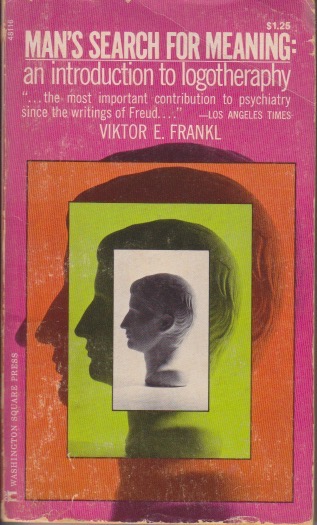
I’ve been doing this for years and just found out there’s a name for it.  Bibliotherapy is a treatment method that uses reading to deal with anxiety.  It is closely related to writing therapy, which I also use.  Both have been self-moderated, in my case, and both have been part of my way of coping for decades.  I was actually surprised to learn that these are valid methods of treatment that some therapists use.  I knew about journaling (I suppose blogging counts), but the larger picture was never in focus.  We live in stressful times.  We went through a very stressful four years about, let’s see, eight years ago.  This time I’m intentionally using bibliotherapy.  Reading a book (eyes off the screen, please!) is a way of entering another reality for a while.  Already this year I’ve stepped up my reading, as much as work will allow.  (And now, proofs.)

Writing is therapeutic as well.  Both reading and writing engage your mind.  And can remind you that there are other things to life besides headlines.  I’ve been writing a lot of fiction lately.  That doesn’t mean I’ve been publishing a lot of it—that part’s still very difficult for me—but writers do it because that’s what writers do.  And it makes me feel better.  More balanced.  One of the truly difficult things in my life is when I’m on a roll, particularly with fiction, then I have to stop for work.  The whiplash is almost too much some days.  I realize that you can’t make a living out of pouring your soul into words, unless you’re very lucky.  And even then I suppose it might soon start to feel like work.  Maybe some day I’ll find out, but until then reading and writing will see me through.

I know I’m not alone in this.  There are other people out there who spend as much time as possible between the pages and/or with pen in hand.  There’s nothing like it.  These therapies can change your mood.  Give you hope.  Make you feel complete.  And this can happen whether something you’ve written gets published or not.  I admit to having seen therapists from time to time; I probably should do it more.  None of them, however, have suggested bibliotherapy.  It’s something I stumbled onto myself.  That’s probably no surprise.  I bumble my way through life most of the time.  We all know, I suspect, when our brains are firing properly, what makes us feel better.  The shelves that surround me most of every day certainly know.  And there is a name for it.


Call Me AI

Okay, so the other day I tried it.  I’ve been resisting, immediately scrolling past the AI suggestions at the top of a Google search.  I don’t want some program pretending it’s human to provide me with information I need.  I had to find an expert on a topic.  It was an obscure topic, but if you’re reading this blog that’ll come as no surprise.  Tired of running into brick walls using other methods, I glanced toward Al.  Al said a certain Joe Doe is an expert on the topic.  I googled him only to learn he’d died over a century ago.  Al doesn’t understand death because it’s something a machine doesn’t experience.  Sure, we say “my car died,” but what we mean is that it ceased to function.  Death is the overlay we humans put on it to understand, succinctly, what happened.

Brains are not computers and computers do not “think” like biological entities do.  We have feelings in our thoughts.  I have been sad when a beloved appliance or vehicle “died.”  I know that for human beings that final terminus is kind of a non-negotiable about existence.  Animals often recognize death and react to it, but we have no way of knowing what they think about it.  Think they do, however.  That’s more than we can say about ones and zeroes.  They can be made to imitate some thought processes.  Some of us, however, won’t even let the grocery store runners choose our food for us.  We want to evaluate the quality ourselves.  And having read Zen and the Art of Motorcycle Maintenance, I have to wonder if “quality” is something a machine can “understand.”

Wisdom is something we grow into.  It only comes with biological existence, with all its limitations.  It is observation, reflection, evaluation, based on sensory and psychological input.  What psychological “profile” are we giving Al?  Is he neurotypical or neurodivergent?  Is he young or does his back hurt when he stands up too quickly?  Is he healthy or does he daily deal with a long-term disease?  Does he live to travel or would he prefer to stay home?  How cold is “too cold” for him to go outside?  These are things we can process while making breakfast.  Al, meanwhile, is simply gathering data from the internet—that always reliable source—and spewing it back at us after reconstructing it in a non-peer-reviewed way.  And Al can’t be of much help if he doesn’t understand that consulting a dead expert on a current issue is about as pointless as trying to replicate a human mind.


Dangerous Driving

It reminded me of the time my manager fell down into the basement.  It also makes me think I must be neurodivergent.  Yesterday we were helping my brother in New Jersey get some things in order in his house.  He lives about an hour and a half from us and when the GPS showed us our options to get home we decided to go shunpiking.  I find something atmospheric, and maybe a little haunted, about driving along roads next to a river.  We crossed into Pennsylvania just north of Trenton and followed “River Road” home.  This stretch of road, mostly highway 32, is almost impossibly quaint.  I’d driven sections of it before, but not the whole stretch.  It was a pleasant day but we’d just come off of a period of rain and high winds.  The winds were still up, and have been gusting for about a week now.

After somewhere over an hour on this pleasant drive, we saw a motorcycle stopped in the road.  I slowed way down, unsure of what I was seeing (this starts the neurodivergent part), and I saw a man staggering across the road to lay down on the berm.  I could see branches on the road.  Unsure what to do, I pulled up next to him and offered to call 911 (my wife actually suggested that, since I didn’t know what to do. She’s better in a crisis than me.).  By then the people in the cars behind us had gotten out and one of them indicated they had medical training and that help was on the way.  The man indicated he’d been driving his motorcycle and the branch came down on him, or right in front of him—he was pretty dazed and confused.  Not wanting to throw my own ignorance and ineptitude into the mix, I pulled over, and my wife and I got out of the car and started clearing branches from the road.  Kay and I, and by now others, had pretty much cleared the road and, unsure what to do, and since there were many people attending the man, I drove off.

Image credit: Doug Kerr, Attribution-ShareAlike 2.0 Generic license, some rights reserved, via Flickr

That incident made me very reflective.  When I worked at Ritz Camera in Brookline, Massachusetts, one day my manager didn’t see that the cellar door (inside the store) was open.  We heard a scream and a thud and I ran to the door and pulled it back open.  The door had to be held by a hook and eyelet being joined and while I was trying to do that, one of my coworkers brushed past and down the stairs to help our manager.  Later, my co-worker ribbed me for being more concerned about the door than the person.  I was actually trying to help our manager, but in my mind, going down the stairs only to have the door fall on my head made no sense.  It turned out the manager was fine; a trip to the ER showed nothing seriously wrong with her.  I don’t know about that man by the side of the road.  I was only glad that, as my wife noted, so many people had stopped to help.  I just hope he, like my manager, was okay.


Major Drum

We don’t get out much.  Live shows can be expensive and these cold nights don’t exactly encourage going out after dark.  Living near a university, even if you can’t officially be part of it, has its benefits, though.  Over the weekend we went to see Yamato: The Drummers of Japan.  Our daughter introduced us to the concept while living in Ithaca, a town that has a college or two, I hear.  These drummer groups create what might be termed a sound bath, that is profoundly musical while featuring mainly percussion.  Now, I can’t keep a beat for too long—I’m one of those guys who overthinks clapping in time—but that doesn’t mean I can’t appreciate those who can.  The timing of the members of Yamato was incredibly precise, and moving.  At times even funny.  It’s a show I’d definitely recommend.

This particular tour is titled “Hito No Chikara: The Power of Human Strength.”  Now this isn’t advertising their impressively well-toned bodies, but is a celebration of human spirit under fire from AI.  The program notes point out some recurring themes of this blog: to be human is to experience emotion, and to know physical limitations, and to be truly creative.  Would a non-biological “intelligence” think to wrap dead animal skins around hollowed out tree trunks, pound them with sticks and encourage hundreds of others to experience the emotions that accompany such things?  I live in a workaday world that thinks AI is pretty cool.  Humans, on the other hand, can say “I don’t know” and still play drums until late in the night.  We know the joy of movement.  The exhilaration of community.  I think I can see why they titled their show the way they did.

Bowerbirds will create nests that can only be called intentionally artful.  Something in biological existence helps us appreciate what they’re doing and respond in wonder.  Theirs is an innate appreciation for art.  It spans the animal world.  Japan is one of many places I’ve never been.  I’ve never played in any kind of band and you don’t want me setting time for your pacemaker.  If a computer keeps such precise timing we think nothing of it.  It’s part of what humans created them to do.  When a group of people gets together, stretching their muscles and working in perfect synchronicity, we sit up and take notice.  We’ll even pay to watch and hear them do it.  Art, in all its forms, is purely and profoundly biological.  And it is something we know, at our best, to appreciate with our emotions and our minds.


Steve or Stephanie

I know gender is a construct, and all.  I even put my pronouns (he, him, his) on my work email signature.  I haven’t bothered on my personal email account since so few people email me that the effort seems superfluous.  But I’m wondering if the tech gods, aka AI, understand.  You see, with more and more autosuggests (which really miss the point much of the time), at work the Microsoft Outlook email system is all the time trying to fill things in for me.  Lately Al, which I call Al, has been trying to get me to sign my name with an “@“ so people can “text” me a response.  No.  No, no, no!  I write emails like letters; greeting, body, closing.  People who email like they’re texting sound constantly disgruntled and surly.  Take an extra second and ask “How are you?”  Was that so hard?  But I was talking about gender.

So Al is busy putting words in my fingers and every time I start typing my closing name it autosuggests “Stephanie” before I correct it.  It’s starting to make me a little paranoid.  It does seem that men and women differ biologically, and I identify with the gender assigned to me at birth.  I’m pretty sure Dr. Butter said “It’s a boy,” or something similar all those years ago.  Now I’m not sure if Al is deliberately taunting me or simply going through the alphabet as I type.  Stephanie comes before Stephen (which isn’t my name either) or Steve.  The thing is, I type fairly fast (I won’t say accurately, but fast) and Al has trouble keeping up.  But still Al is autosuggesting Stephanie for me every time.  I’ve been using computers since the 1980s; shouldn’t Al know who I am by now?

Of course, when Al takes over such human things as gender will only get in the way.  I guess we have that to look forward to.  Gender may be something socialized, I realize.  For those of us approaching ancient, we had gender differences drilled into our heads growing up.  I recently saw one of those cutesy novelty signs that resonated with me: “Please be patient with me, I’m from the 1900s.”  I’m not a sexist—I have supported feminism for as long as I can remember.  But I don’t like being called Stephanie.  What if my name was Stefan?  That isn’t autosuggested at all.  I know of others whose names are even earlier, alphabetically.  Maybe Al is overreaching.  Maybe it ought to leave names to humans.  At least for as long as we’re still here.