Dreaming Reality

The problem with monsters is that they’re not easily reduced to a lowest common denominator. This becomes clear in an article about the under explored (from a western perspective) monsters of Australia. Christine Judith Nicholls, in “‘Dreamings’ and place – Aboriginal monsters and their meanings” (sent by a friend), describes many of the scary creatures of the outback. The article title references Dreamtime, a kind of aboriginal journey that ties into indigenous Australian religion. The division between imagination and reality isn’t as wide as we’re sometimes taught. (More on this is a moment.) Nicholls’ article demonstrates that many of these monsters impress on children the dangers of wandering away from parents. Indeed, that is clearly part of the socializing function of monsters. The question, however, is whether that’s all there is to monsters or not. (Nicholls doesn’t use reductionistic language—she does note this is a psychological explanation.)

In an unrelated article in The Guardian, by Richard Lea—“Fictional characters make ‘experiential crossings’ into real life, study finds”—researchers suggest that fictional characters seem to appear in “real life” from time to time. All those who read fiction know this phenomenon to a degree. Just because someone is completely made up doesn’t mean that s/he doesn’t exist. Since our minds are the ultimate arbiters of reality, fictional characters and monsters may indeed be “real.” This isn’t to suggest that physical, flesh-and-blood imaginary beasts lurk in the dark, but it isn’t to suggest that they don’t either. Reality is something we haven’t quite figured out yet. The more we think about it, the more it appears that both hemispheres of our brains contribute to it.
monster

When the morning newspaper raises alarm after alarm about the frightening tactics of the Trump administration the temptation is to give up to despair. That’s not necessary, actually. Reality requires our consent. Imagination can be a powerful antidote to the poison spewed by politicians. What fictional character—or monster—might step into a situation such as this to make it right? If the power of millions of smart minds were concentrated on such a being, would it not become real? Friends have suggested over the past four months that the arts—creativity—are going to be especially important in the coming years. If we are to survive evil we’ll have to use our imaginations. That’s something that the aboriginal peoples can teach us, if only we’re willing to believe.
Unseen Worlds

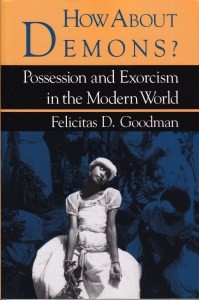
howaboutdemonsA few weeks ago I wrote about re-watching The Exorcism of Emily Rose. In anticipation of the inauguration I was in the midst of a spate of possession movies. I watched several others, including The Rite and The Possession. This got me thinking I should read Felicitas D. Goodman’s book How About Demons? Possession and Exorcism in the Modern World. Goodman was an anthropologist who’d done fieldwork among groups that practiced possession—keep in mind that many religions believe in good spirits as well as evil ones. Her book is one of the few that takes the larger picture seriously. Many writers simply dismiss the “demon haunted world” as naive and superstitious, but Goodman makes the point that possession is a real phenomenon and we don’t know the cause of it. Indeed, it’s impossible to say with certainty what the agency is because spiritual causes can’t be studied empirically. That said, science deeply informs her analysis.

I’ve observed people speaking in tongues before. It’s an uncanny experience. No matter what you decide the origin might be, it’s strange and not a little unsettling. It’s related to possession, as Goodman shows. So is multiple personality syndrome. Unlike most scientists, however, she doesn’t make the unwarranted leap that since these are all related they’re all the same. Speaking in tongues is usually considered a good thing while demonic possession is not. Interestingly, recordings of glossolalia—speaking in tongues—show the same pattern globally. This indicates that whatever it is, it originates biologically from human brains in a mostly predictable way. Many world religions allow for possession by good spirits or gods and alternate states of consciousness are accessible by learning how to reach them. Anyone can do it, but some have the gift of doing so easily. Those who do overlap with the pool of the possessed.

As the White House shows, we like simple answers. Possession, however, is a complex phenomenon. Throughout, Goodman refuses to equate it simply with the physical manifestations that have been observed and recorded. She was a true scientist. Reductionism is related to our love of simple explanations. I wanted to read How About Demons? because it contains one of the few serious academic studies of the case of Anneliese Michel, the young woman on whom The Exorcism of Emily Rose is based. I was expecting, since this is an academic treatment, that the cause would be nailed down simply and efficiently. I was pleasantly surprised when it wasn’t. Well before the movie Goodman interviewed those involved in the case and wrote an entire book on it. Although she clearly believed in science to explain our world, as this book demonstrates, she didn’t give it more explanatory power than it actually has. In a complex world we need as many subtle minds as we can get.


Illusions Incorporated

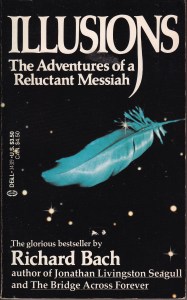
illusionsFiction and fact aren’t so different. Long before the Wachowski Brothers came up with The Matrix, Richard Bach wrote Illusions: The Adventures of a Reluctant Messiah. I was in seminary when I read it and it seemed, at that time, to change my life. Fiction, or fact, has a nasty habit of getting into the way of things and over the course of decades I forgot. The Matrix reminded me—reminded me multiple times—but Illusions sat on the shelf, gathering dust. I was reminded of this book that refuses to be categorized when playing a family game. Like many games these days it’s a set of pre-printed cards and what makes the fun is the context in which you put the words. In this particular game you have to find the suggested idea in the book you have at hand.

I have to confess that this is just a touch artificial at our house. We don’t have much in the way of things, but we have books. Lots and lots of books. When we play this game, we think ahead of time what books we might bring to the table. You never know what the cards will ask, so books with diverse ideas are a good choice. I saw Illusions on the shelf. As I thumbed through, it was as if the decades were wearing thin. I knew I had to read it again.

Stubbornly refusing to classify itself as fact or fiction, the narrative of what it’s like to meet a messiah is inspirational. I can’t claim to have come to the conclusion on my own—I’ve read Illusions before, and I have seen The Matrix many times—but I recollect the realization coming to me on the streets of Manhattan. This is not real. Standing in the shadow of the tallest buildings in this country, that’s not a comfortable realization. Nobody said reality was comfortable. We easily let ourselves accept what we can’t do and what’s impossible. It’s far more rare to consider what is truly possible. What we can do. These ideas will be a hopeful ebenezer over the coming months. We choose to elect reality. Despite what the loud and angry say, the mind is the arbiter of truth. I read the book before I knew much about the world. If I’d had the good sense to believe it, it might not have taken me decades before pulling it off the shelf to remind myself of what I already knew.


Wild Things

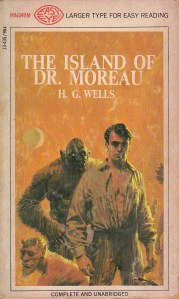
islanddrmoreauLast year my wife suggested we each do a reading challenge for the year. The one we selected was Modern Mrs. Darcy’s, which, with only a dozen books, seemed doable. What makes it a challenge is that to meet Mrs. Darcy’s expectations, you have to read certain types of books, not just go through the stack beside your favorite chair than never seems to get any smaller. I finished the challenge in October or November and posted on most of the books on this blog. This year’s challenge includes a book you’ve read before. Since I’ve been reading about horror movies I decided to reach back to childhood and once again read H. G. Wells’ The Island of Dr. Moreau. It was a timely choice.

For anyone not familiar with it, the story concerns a mad scientist (Moreau) who experiments on animals, making them “men” on an isolated island in the Pacific. These creations aren’t fully human and most of them are blends of different animals as well as part human. They can talk, and they can reason, in a rudimentary way. To create them without anesthesia, Dr. Moreau subjects them to tremendous pain and to prevent them from attacking him, he establishes a basic religion where they obey his rules or he will subject them once again to the “House of Pain.” The narrator, victim of a shipwreck, ends up on the island and has to come to an uneasy peace amid these very strange circumstances. The heart of the book is the chapter where Moreau explains what he’s doing and to justify it he makes a secular theodicy. He is, after all, god to these poor creatures. The book has been made into a horror movie or two over the years, but I’ve never seen any of the cinematic treatments.

What struck me as particularly interesting, revisiting this book some forty years after I last read it, was how easily Wells slips into theological thinking. This is a book unafraid of implicating the Almighty in the troubles of an island that clearly stands in for the world. I wouldn’t have noticed that as a tween. I don’t think there even were tweens when I was one. In any case, the story ends in chaos, rather than creation. What makes it such a timely choice? I suppose the arrogance and entitlement of Dr. Moreau suggested themselves as analogues to our current situation here in the US. Only Moreau is clearly intelligent as well as deranged. This little book is a cautionary tale of what happens when a strong will has its way, unimpeded. It might be a good time for all of us to pick up a copy.


What Democrats Don’t Understand

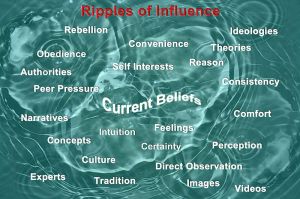
Human evolution (while it still legally exists) tells us a considerable amount about belief. Brain science (while we still have it) has long indicated that our noggins evolved to help us survive, not “to figure out” the world. Along its long and torturous path to modernity, the human brain has developed the ability to believe what it knows not to be true. This doesn’t just apply to the study of religions, but, in reality, primarily to psychology. Patients with split brains have shown a mastery of rationalization that should make any Republican jealous. So far the Dems are with me. What Democrats don’t understand is that you can’t change beliefs with reason. I grew up a Fundamentalist. That past still continually haunts me. What brought me out of it wasn’t thinking. It was experiencing. Specifically, experiencing in the course of education.

Recent polls show that well over 50 percent of Republicans believe Trump won the popular vote as well as the electoral vote. You could show this 50 percent as many statistics as you like and you won’t be able to convince them. Belief doesn’t work that way. In my experience, higher education (typically characterized as liberal) doesn’t really care about understanding belief. They hire professors recommended by establishment friends, very much like cabinet posts are now being filled. They still believe if you talk at someone long enough with reason, they will change their minds. I can’t change that belief of theirs—I have an idea how belief functions. We’ve all seen how the system works. Not every 1930s German was a Nazi.

In other words, it is very easy to believe a lie is the truth. In the words of Jim Steinman, “everything’s a lie and that’s a fact.” Education may help you spot the contradiction there, but it won’t help you unbelieve it. The truth is power can’t be taken, it must be given. If people do not believe what the media tells them, it isn’t true. As someone who’s spend a half-century trying to figure this out, I’m always amazed that my own party can’t see what’s so obvious to a reformed Fundamentalist. Until the day comes when avowed rationalists admit that emotions matter just as much as orthodox reason we will all be at a loss to explain how otherwise intelligent people will insist that what they know to be lies are indeed the truth.

Source: Lbeaumont based on image by Mila / Brocken Inaglory, Wikimedia Commons

Source: Lbeaumont based on image by Mila / Brocken Inaglory, Wikimedia Commons


Whose Story?

nikolaos_gyzis_-_%ce%b7istoria

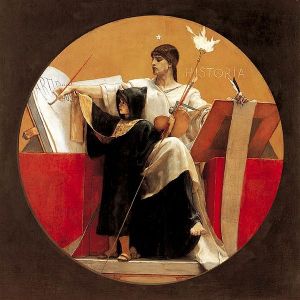
What really happened? I grew up thinking that reading history gave the answer to that question. In fact, it is a viewpoint that I still struggle against. You see, historians try to marshal as many facts as they can to support their reconstruction of events in the past. Somethings, clearly, “really happened.” What those things are, however, depends on your point of view. For example we know that the twentieth century was dominated by wars and economic crises. Apart from a few periods when things seemed largely okay, it was a century of leapfrogging crisis after crisis. Historians pick a set of circumstances in this mix—let’s say the Second World War—and try to explain what led to certain results. But what if we stop to think about such events from another point of view? What if we think about it from the perspective that “nations” are purely fictional inventions? Who wins such a conflict?

This is more than an idle thought-experiment. We, as people, base our self-perception on how we view our personal histories. It can be quite jarring to have someone contradict our own personal narrative of “what really happened.” I’ve run into that from time to time—my reconstruction of events is not the same as someone else’s reconstruction. Who’s right? There’s no objective history. There are only events viewed from multiple angles. Turn the clock back a few centuries—was Jesus of Nazareth a political criminal (the Roman point of view), or a great sage out to save the world (a Christian point of view)? And these are only two out of many possible views of a political execution.

As we enter an era of post-truth politics, we’re going to find more and more historical events questioned. Facts have lost the anchoring functions they used to have. Historians built narratives by stepping from fact to fact, like using a series of stones to cross a river. They can’t tell us what really happened, but they can make sense out of an otherwise confusing stream of chaotic events. The thing about history, however, is that you have to read it to understand. Certain things we’ve pretty much all come to agree upon are now being questioned by those who see everything through the lens of capitalism. Money changes history. It is a narrative of great power as long as everyone agrees it’s true. What really happened? I think we may have all been too quick to accept what economists have told us and we have fabricated a fictional story that we can all believe.


Possessed by Work

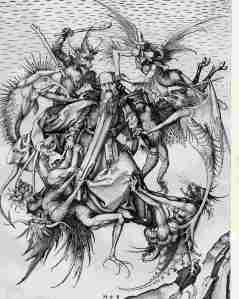
Now that I’m safely ensconced back in the daily work routine, I spend some time thinking of the scary movies I had time to watch during my “free time.” Well, I actually thought about them then, too, but I had so many other thoughts to write about that I kept putting it off. That, and the fact that some of the movies were about demonic possession and the juxtaposition of holidays and demons just didn’t seem to fit, kept me from expounding. Why watch such movies at all? It’s a fair question. I tend to think of it as part of a larger thought experiment—wondering what such movies might tell us about being human.

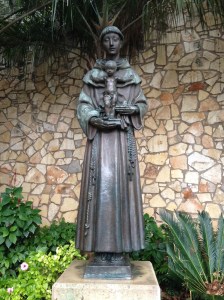
stanthony

A few weeks back I wrote about The Exorcism of Emily Rose, based on the true tragic story of a young woman who died after a prolonged exorcism. After that I watched The Last Exorcism, The Rite, and The Possession. (I’m such a cheerful guy, as you can see, and this may be why I inhabit an isolated cubicle at work.) This array of movies, held together by the common chord of the reality of demonic possession, also brought together the standard sociological division of Protestant, Catholic, and Jew. The Last Exorcism is a Protestant-based treatment of what is generally considered to be a Catholic subject. That connection is affirmed in The Rite. The Possession, however, gives us a Jewish demon and a rare representation of a Jewish exorcism (acted by Matisyahu, no less!). What emerges from watching all of these films together is that demons are an inter-denominational problem, even in a scientific world. Carl Sagan wrote about the demon-haunted world, and it continues to exist, it seems.

But these are movies we’re talking about. Not reality. Nevertheless, The Rite and The Possession are also said to be based on true stories. We do live in a mysterious world. Evolution has developed reasoning as a practical way of dealing with life in a complex ecosystem. It is a survival mechanism. So is emotion. We sometimes forget that both thought and feeling are necessary for survival in our corner of the universe. Neither one is an end in itself. We can’t quite figure out how these two features of the human brain work together. There are, in other words, some dark corners left in our psyches. I suspect that’s why I find such movies so interesting. They’re not my favorites, but they do serve to remind us of just how little we know. And that’s a scary thought, given how we’ve learned to possess this planet.


Lap of Luxury

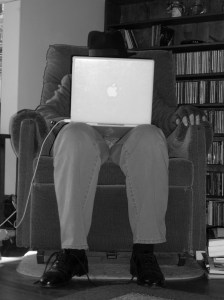
How terribly rude. I was right in the middle of a sentence when my word processor shut down. Then my computer. A system update. It’s 4:00 a.m., the time I usually upload my blog post. You have to understand that I get up at 3:30 so that I have time to write. My laptop assumes nobody is working “in the middle of the night.” I would’ve thought my fingers on its keys would’ve given it a clue. Now it tells me I’ll have access, new upgraded system installed, in 25 minutes. Doesn’t my laptop have all my personal details when it comes to shopping? You’d think it would know all my personal habits by now. I mean, this is the way I do it every day. Right now my concerns are secondary. This system update can’t wait. I wasn’t even given a choice. Power nap for Apple.

What disturbs me most is that my computer reads every word I type, yet it still thinks I’m just like everybody else. Who’s awake and writing at 4:00 a.m.? And I thought we had a rapport, my laptop and me. I was the Skipper to his Little Buddy. The Agent 86 to her 99. The Will Robinson to its Robot. I guess I had it backwards all the time. The brain on my lap doesn’t agree with the brain in my head. If I can’t get my writing done now, it won’t get done at all because at ten minutes to six I’ve got to be on that bus. New Jersey Transit doesn’t offer working overhead lights much of the time, let alone wifi. It’s now or never. My coffee’s already gone and the next thing on my daily agenda is the shower. I always come up with ideas in the shower—I need my Little Buddy waiting for me when I rush out to write them down.

newchair

Who’s sitting on whose lap? How could I have gotten something so very basic so terribly wrong? In ancient times the one sitting was superior to the one standing. When the computer’s sitting on the one sitting we know who’s really in charge. Let the one with eyes to read understand. I’m a busy man, but my Little Buddy—my Skipper—is busier. When’s the last time I read a paper map? Opened a phone book? Wrote an actual letter? I can hear those bus wheels rumbling. Excuse me, but my master is calling.


Solstice Blues

The relief is so real that you can feel it with your fingers. Or brushing your cheek. The feeling of being done with another semester, and knowing you’ve got some time for recovery after the intensity of going flat-out for months at a time. I miss that feeling. As a guy who has often been accused of being “too intense” I tend to run pretty near the red line all the time. Pit stops are few and very far between. Once this vehicle’s in drive, there’s no stopping until the destination is reached. What do you do when there’s no clear destination? That’s what working for mere money is like. How do you know when you have enough? Just ask Mr. Trump. Too much is always too little. That’s the kind of world we live in.

Higher education, it used to be, was a place for people who believed in higher values than mere lucre. There was a time, historically, when we took transcendence seriously. The price (if you’ll pardon the analogy) that we’ve paid for letting transcendence go will become apparent. Those who believe only in what they see miss most of reality that swirls by them like a river under the ice. Yes, it still flows. Just ask the fish. There’s a wisdom outside our paltry economic efforts, if we’d only just get out to inquire of it.

Work is built around the foolish concept that you can never have enough. I have to think that our fear of a year of drought has deeply impressed itself on our psyche. Back in biblical times and up until just a couple of centuries ago people considered work to be farm work. Growing your own food. Building your own house. Knowing what to do in an emergency. If nature didn’t cooperate with that scheme what choice had you? Now, however, we labor for a concept as abstract as transcendence. When’s the last time you were paid with actual cash? What wouldn’t you pay for a little more time off? Time to stay in your pajamas all day and ponder what’s really real? Perhaps sleep until you’re not tired rather than awaking at the sound of a factory bell? The sun hasn’t risen by the time I reach my windowless office. When I step out again it’s already set. The solstice reminds me of the semester break that no longer exists. I have to believe, however, that under the ice the river’s still flowing.

dscn5944


Making Believe

Sanity is always temporary. I can say that because we all know that no one acts rationally all the time. Our brains evolved (or were created, if you roll that way) for the simple purpose of survival, not reason. Reasoning, no doubt, helps with survival, but so does feeling. Emotions may be harder to control, and they often take charge despite what we know to be true. When we do something in passion that we can’t justify, our logical brains have developed rationalization to explain it. I’ve been hearing a lot about rationalization lately. Many people who disagreed with just about everything that Trump said still voted for him. Their reasons are various shades of rationalization, but they generally come down to emotion. That’s not to say Hillary supporters didn’t also vote with their feelings. Her historical win of the popular vote demonstrates that very clearly. We didn’t want a demagogue, but we can rationalize our stupidity after the fact.

img_2986

I wonder if we haven’t entered an era of international madness. Brexit was an example of what happens when emotion trumps reason. As much as I like the idea of a Pirate Party, when it wins actual Icelandic elections one has to wonder what’s in those volcanic fumes. Talks are underway elsewhere about departing the European Union. Instead of working together it’s each man (literally) for himself. We used to think about politics and leave emotions for our personal lives. Mr. Spock, I’m sure, is somewhere shaking his head. “Illogical,” I can hear him saying.

As a creative person I value the emotional response. Who can say that falling in love is ever rational? There may have been a time when procreating enough to keep the species going may have applied, but we’ve far surpassed that goal and yet we keep on going. In fact, in much of life emotion is far more important that reason. The question, however, as to whether it makes for good government is one with a clear and salient answer. We must elect with our heads, not our hearts. Some will accuse me of playing favorites—after all I’m a bleeding heart liberal. But I’m writing this with reason on my side. Did I think that Ronald Reagan with his trickle-down oppression was a better, more rational leader than Walter Mondale? Have you ever listened to any of Reagan’s speeches? There’s a time—perhaps much time—for emotions to take control. Elections, however, are not one of those times. Anything beyond that is pure rationalization.


Fear of the Artificial

As someone who dedicated four years—particularly long winter nights—to the cause of high school robotics, I found myself knowing quite a bit before I walked into the room. Now let me post a disclaimer here: I’m no techie. I’ve studied the humanities throughout my education and although I’ve been able to engineer a bookshelf or two, and even the occasional project with moving parts, the technical eludes me. I claim absolutely no expertise in it. So where was I going that robotics came to mind? A lecture on Artificial Intelligence. AI. You see, I’ve been a bit concerned about it for some time because I’ve seen what robots can do. A friend recently showed me some episodes of Battle Bots on YouTube (the relative who started this blog for me was doing quite well in the competition last season), and from my own experience watching hours of FIRST robotics competitions, I know enough to be afraid.

What could possibly go wrong? (DARPA photo)

What could possibly go wrong? (DARPA photo)

The lecturer assured us that we had nothing—or next to nothing—to fear. Artificial Intelligence, he assured us, is a misnomer. Machines have no will. No mind. There’s nothing they want. They do as they’re told. You write a program and feed it to your bot and your mechanical friend can do only what it’s told to do. This sounds uncomfortably like slavery to me and although I know I’m projecting, I have to wonder if robots think the same way about it too. No, the lecturer assured us, they do only the tasks assigned. They don’t think at all. Then he said something that made me shiver. That wasn’t his intent. He said something like, “We don’t even know what consciousness is, so how can we replicate it?” That was meant to be reassuring.

I took this idea and flipped it over in my head. Rotated it. Ran it through my own programming. If we don’t know what consciousness is, how can we be sure we haven’t accidentally created it? Herein lies the heart of fear. Scientists have been trying for decades to define, to explain empirically, what consciousness is. We simply don’t know. We all recognize it when we see it in other humans. We’re finally starting to recognize it in animals (long overdue). How do we know that it isn’t a function of complexity? And when does something become complex enough to qualify? I don’t know about you, but videos of swarm robots send me hiding under the bed. Not that it will do me much good. They’ll know where I’m hiding. Maybe I could use some intelligence right now. Even something artificial might help to stop me from shivering.


Post Post-Truth

One of the benefits of working with words is that you get to participate in reality. George Orwell famously wrote that if people didn’t have the words to express concepts the government didn’t like, those concepts would cease to exist. At least as long as they allow us to have the internet, concepts may survive. Oxford Dictionaries’ word of the year reflects just this. The word is “post-truth.” Post-truth is a word of hard currency in the political marketplace. It essentially means that objective facts no longer outweigh emotion and personal belief in establishing reality. Think “global warming isn’t happening because it cuts into my bottom line.” Think “humans didn’t evolve from a common ancestor apes because an outdated book doesn’t say they did.” Think “Donald Trump won the election.” Truth is no longer truth without “post” in front of it. Believe what you will. No, I mean that. I choose to believe Trump was not elected. Post-truth cuts both ways.

In a world where reaction has replaced dialogue and where you win arguments by revealing your NRA card, truth is merely the first casualty. Already mainstream media, who told us the post-truth that Trump, according to the polls, couldn’t win, are now telling us it’s all politics as normal. This will be a simple transition of power. Pay no attention to the man behind the curtain. There is no wizard in Oz. Politicians lie. Only those born without a brain stem don’t realize that objective fact. We can be sure that even George Washington lied from time to time. There was no cherry tree-gate. Unless you choose to believe there was, then I guess it has to be okay. Your truth’s as good as mine.

img_3044

Over the past several years some prominent scientists have been saying philosophy is but misguided navel-gazing. It tells us nothing of reality. Truth, however, is a philosophical concept. Post is something to which you tie people before a firing squad. Truth has, until recent days, been considered that upon which all reasonable people could agree. The earth is not flat. We are flying around the sun so fast that it makes me earth-sick. We were able to put people on the moon. All of these are now post-truths. Along with the fact that every vote counts. In this slurry of fear, hatred, and distrust, who has time to worry about objective facts? Lexicographers do. And I praise them for giving us the most relevant word since Moses stumbled down the mountain with a tablet that read, “Thou shalt not bear false witness.”


Identity Crisis

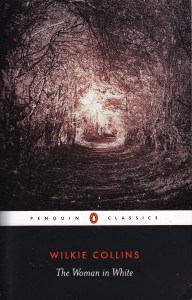
womaninwhiteSince at least my middle school days I have been in search of the great Gothic novel. I can’t claim to have found it just yet, but I’ve read many notable samples along the way. Somehow Wilkie Collins’ The Woman in White remained completely unknown to me until earlier this year. The title was evocative enough to make me pick it up, daunting though its 600 pages might be. Like many novels of its period it was serialized, which likely accounts for its length. Honestly, it took a while to get into it fully. Once ensconced, however, it kept me reading for over a month. (I took some breaks for work and sleep.) I wouldn’t say it was my ideal of the great Gothic novel, but the character of Count Fosco is amazingly drawn and seriously compelling. As the huge man lets mice run over his massive body and treats birds with conscientious gentleness, he is plotting ruin to his fellow human beings to benefit himself. He is an accomplished egotist.

What makes the novel so profound to me is the question of identity. One of the characters in the novel, the eponymous woman in white, has a double in the love interest of the protagonist. Doubles are common in Gothic tales, but in this instance when the woman dies and others believe her double to be her the question of identity is raised. Who am I, really? In the day before DNA evidence, it was impressively difficult to prove you were who you said you were, if your appearance was altered. Emaciated, abused, and drugged, Laura doesn’t look like herself and even her own uncle doesn’t recognize her. In the end her identity is established by legal testimony alone, without benefit of any biological proof.

Identity has been on my mind lately. Especially on a national scale. Brexit and Trump were both movements fueled by distrust and distorted notions of national identity. In short, Britain and the United States, so the reasoning goes, should belong to white men. As Monty Burns famously said, “Well, for once the rich white man is in control!” I personally like a little color in my field of view. I value deeply those I’ve met whose experiences and skin tones don’t match my own pallor. I want our national identity to include more than just fifty shades of white where women are objects and men are some kind of noble studs. Back when I started to read this novel I had a grip on that view of reality. Now that I’ve finally finished it, I wonder who we really are.


Rule Book

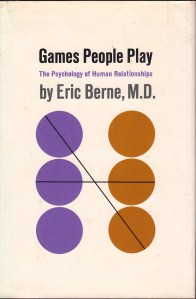
gamespeopleplayMirrors can be such deceptive things. In my head I’m a much younger man than the one I see staring at me. And I have to remind myself that other people see what the mirror sees, and not what I really am. Things age. A friend who aged so much that she’s no longer alive recommended to me years ago Games People Play, by Eric Berne. Of course I’d heard of it before—I wasn’t born yesterday. I do enjoy reading psychological books. Psychology like having a window in someone’s forehead. If you could really master it you’d understand so much of what seems a mystery to people like me. But it is an old book. When Berne casually cites the year he was writing it as the year I was born, I began to suspect that some of the data might be outdated. The guy in the mirror certainly seems to be.

We still play games, though. The hope Berne expresses in the last chapter is that we might get beyond this endless game playing to true awareness, spontaneity, and intimacy—the things psychological games are meant to mask. I also have to confess to recognizing myself at several points and then reading that games are played by disturbed people. “So that’s why I x, y, or z,” I found myself thinking. Disturbing thought. And these ideas are as old as I am. Probably older.

Reading this book from ‘60s, I noticed a strong sense of certainty that is now lacking. I can’t imagine too many psychiatrists or psychologists making quite so many declarative statements these days. I know it’s a classic in the field, and I know there are some valuable insights here, but we don’t call people “squares” any more, and a good deal of the analyses point to assumed gender roles that we now know are as much fabrications as the games themselves. I was looking for a game that my departed friend had pointed out to me. We both knew a man who was apparently picking fights because he wanted to leave his job but he couldn’t bring himself to do it. “Stamp collecting,” she called it. She may have been right, and I have to wonder if many of us really know why we do the things we do. Maybe I could use a window into my own forehead. Of course, I would need the mirror to see it. It’s a little game I play.


Reveries of the Fall

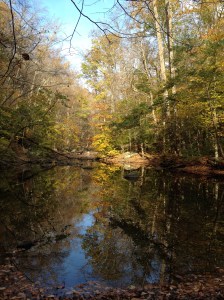
Just a quarter of an hour, studies show, of time in the woods can reduce stress. I suspect that if those fifteen minutes are spent running from a bear the opposite might result, but in general time in nature is an incredible solace. The weather hasn’t been particularly cooperative for October walks in the woods around here, but yesterday my wife and I managed to spend some time, along with many others, in Hacklebarney State Park, one of New Jersey’s gems. Living in the most densely populated state, to gather from the number of hikers we saw, encourages time in the woods. It was good to be reminded of the compelling scent of autumn leaves, the wonder of seeing their colors in the daylight when daily commutes begin and end in the dark. When work days are spent in the grayness of the city. Being out with nature, to borrow words from the Good Book, restoreth our souls.

img_2989

I suppose there’s nothing really logical about it. We’ve built civilization to protect ourselves from nature. Solid walls to keep predators out. Heat, running water, and electricity so that we can surf the internet without ever going outdoors. Permanent settlement always within reach of cell phone service and work email, we are the scions of civilization. Being unplugged just for an hour or two—even fifteen minutes—can feel like salvation. If that fifteen minutes is spent among rocks, trees, and the peculiar light that reflects off a lazy river. The internet will always wait, won’t it? Thoughts of work can be suspended until Monday, can’t they?

Hiking among the other expatriates of civilization in what used to be the Garden State contrasts so sharply with the image we project to the world. The Chris Christies and Donald Trumps who bluster that nature is there to be exploited. They may not say so with words, but lifestyles speak so much louder than syllables. Gaining wealth requires putting one’s own agenda first. We’re out here picking our way carefully over a rocky path. We have to stop frequently to let others go by the other way, or to let those faster than us pass by. But we’re all out here for the same reason. It’s a beautiful autumn day and spending it indoors feels wrong. I know that even getting online now feels like my time is being demanded by a million distractions. Unplugging, walking at a moderate pace, feeling the cool air and breathing the aroma of fall deeply into tired lungs, I can feel the stress draining away. If only for a day.