Photographic Evidence

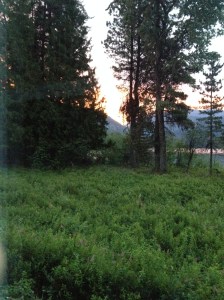
All photographs are lies. That moment preserved, formerly on celluloid but now with electrons, is gone for good as soon as the shutter is snapped. The camera doesn’t see as the eye sees. I was reminded of this during a mountain thunderstorm. I awoke early, coated with jet lag and the residue of my regular early morning schedule. It was still dark, but the reddish sunlight soon wrestled through a valley fed by a creek across the lake. The color was impressive, but my camera washed it out to a diluted Creamsicle orange. In reality the clouds were roiling overhead and lightning was streaking through a thunderhead like synapses firing violently in a massive brain. Thunder in the mountains can’t be photographed. Nor can it be forgot.

My work used to require quite a bit of travel. Before I would visit a campus I would spend some time on faculty pages, trying to put faces together with names. Impressed with how young these professors were, I’d knock on doors armed with foreknowledge of who might greet me. I wondered who these older people were when the door actually opened. It’s disconcerting to see someone age before your eyes. I would think back to the photographs online that had assured me this person would be much younger. The picture was a fossil. A moment frozen in time. The very next second after the photo capture that smiling face had changed. The best that we can hope for is a gross approximation.

Perceptions of reality, as all religions teach us, contain a healthy dose of illusion. While it contains ethereal beauty, this vision I’ve captured in my lens is only part of the picture. There is something deeper, more meaningful behind it. Photographs enhance memory. In the days before Photoshop they could be submitted as proof of an occurrence. They are a form of art. Whatever else they may be, they are also lies. Lies need not be of evil intent. Religions try to explain what some privileged individual realized was the truth. These who found a way of looking behind the photograph. The streaking lightning outside evades the slowness of my finger on the button. The thunder rolling and re-echoing through these valleys will remain in my head long after the sound waves cease to reverberate. Reality is more than it seems. Even my experience of this mountain thunderstorm is that of a single individual seeking enlightenment. Elsewhere others are up early, observing it too. What they experience may be something very different from me indeed. I have a photograph to prove it.


Pagan Values

“Pagan” used to be a pejorative term. If we’re honest we’ll have to admit that it is still used that way by many people. All the term really denotes, however, is a believer in “non-Christian” traditions. The classical pagan was someone who’d “never heard of Jesus,” and therefore hadn’t bowed to the obvious truth. In the current religious landscape a pagan is someone who makes a conscious choice to follow different gods. Looking over history, there are plenty to choose from. If you don’t limit yourself to monotheism, there’s no compunction to stop at just one. Paganism is a flourishing religious choice today. Getting over the stigma will require effort for a long time to come, as a video a friend sent me from Heat Street shows.

This video show pagans in the US Army at Fort Jackson. It’s worth the three minutes of your life that it’ll take you to watch it. Pay special attention to what the chaplain says. We’ve been acculturated, through monotheistic lenses, to ridicule those who believe in many gods. We’ve also evolved beyond the stage where E. B. Tylor could inform us that the most natural form of religion is animism and we have to be taught to unlearn it. We’ve also had the natural human tendency to believe in magic laughed out of us. We can’t accept that anything could exist that doesn’t conform to the laws of physics as we currently understand them. One size fits all. And many think even one god is one too many. As the chaplain says, religion takes on a whole new meaning when your job is asking you perhaps to sacrifice your life for others. You need to allow belief to thrive. The military is coming to grips with paganism.

Belief systems aren’t necessarily rational. I’m reminded of this whenever someone comments that, Mormons, say, believe strange things. I think of what Christianity asks of us and realize it’s only a matter of distancing. All religions ask their adherents to accept the unbelievable. To the great frustration of materialistic reductionists, it is human nature to accept a spiritual world. We are conscious beings and we see intention in the world. Apart from the Whitehouse, the universe seems to be filled with intelligence. We may call it different things. The labels may come in foreign languages. Deep down, however, we all know the feeling. We can teach ourselves to ignore or deny it, but believing is as natural as breathing. If the Army allows pagans—and there’s more than just a few—we should open up both our eyes and our minds. Entire worlds await those willing to do so.


Clean Sweep

The other day I was reading about cleaner wrasses. These are the fish, usually in coral reef community, that establish a place of business, and other fishes who want to be rid of parasites come onto location to be cleaned. They allow the wrasses to nip them all over to get the pests taken care of, even allowing the smaller fish to swim into their mouths to work their specialization there. Kind of a mix between a visit to the dentist and the car wash. Documentary makers have filmed the process multiple times, and, being humans, we project onto the piscine scene a kind of business template—an exchange of goods for services. Then we turn back to our own lives and forget the underwater world.

Image credit: Robbie N. Cada, courtesy FishBase, courtesy Wikimedia Commons

Still, I have to wonder about what’s going on here in the realm of consciousness. We do not yet know what consciousness is, but we all recognize it in ourselves. We know we’re alive and conscious—except when we’re dreaming when we don’t seem to realize what’s going on in our brains isn’t really happening. Most of the time, however, we set our goals, have our intentions, and go about our business accordingly. What is the motive force that drives a fish to the cleaner wrasse’s studio? Isn’t there a level of consciousness involved to know that this fish’s house is where you need to be for this kind of treatment? Don’t the larger, predator fish know that if they eat the wrasse in their mouth they’ll have to find a new service provider? Are they aware of this or are they, as some scientists like to tell us, simply biological machines following their programming?

I’m not a scientist, but I see consciousness all around me. I watch the interactions of land animals—I generally don’t take trips under the sea, no matter what Sebastian says—and they are anything but simple. The birds on the wire and in the chokecherry trees have complex interactions. All you have to do is watch a single individual for a few minutes. They make decisions—the sky is a vast, open template with no obstacles, surely they have to decide why they want to go this direction and not that! And bowerbirds build nests as elaborate as Victorian mansions. Not that there are bowerbirds at my bus stop, or even in New Jersey. There are limits to how far even nature will go. As I stand here, waiting for my bus, I can’t help but think how like a cleaner wrasse I am. And I’m sure they must be conscious of what they’re doing since life’s all about the exchanges of goods and services.


Science of the Immaterial

One of the truly frustrating things for the honestly curious is a lack of good resources. Specifically here I’m talking about ghosts. More generally, about the supernatural. “Don’t worry,” laugh the reductionists, “there’s no such thing.” But some of us are seriously curious. Those who are willing to admit candidly the events of life will eventually confess to things they can’t explain. People have been seeing ghosts since at least the Stone Age, and yet finding a serious, non-dismissive approach to the topic can be annoyingly difficult. Curious about the background to the film The Conjuring, I wanted some kind of objective treatment to the Perron family haunting. One of the girls involved has written a three-volume treatment, but that will take some time to get through. So I turned to the investigators, Ed and Lorraine Warren.

The Warrens were (Lorraine is still alive) some of the world’s first ghost hunters. Self-taught and deeply religious, they referred to themselves as demonologists. Lay Catholics, they couldn’t perform exorcisms, but they could assist in them. Apart from the Perrons, they investigated Amityville, the haunted doll Annabelle, and the Snedeker house, and many other famous cases. A guilty pleasure read, Ghost Hunters, written by Robert David Chase, along with the Warrens, thumbs through several of the investigations. When all is read and done, however, people who claim to know better accuse the hauntings of hoaxing and since there is no arbiter, the curious are left with that unsatisfying state of “he said, she said,” but no real answers. Ghost Hunters contains a potpourri of cases, mostly of demonic possession. Nothing about the Perron family, though.

No doubt much of the hoopla around reality television ghost hunting is clever marketing and nothing more. Even the acclaimed Ghost Hunters were caught gaming the system a little on their Halloween specials. That doesn’t stop people from seeing ghosts, however. Some academics have attempted to address the issue and soon find themselves in untenured positions (so much for freedom of speech) or mocked by their more “serious” colleagues. What ever happened to old fashioned curiosity? Materialism isn’t the only show in town, is it? We need treatments of the subject that move beyond the anecdotal. It’s difficult to get a ghost into the machine, apparently. Science hasn’t figured out a way to study the immaterial yet. Until it does, those who want to know the truth will be left relying on those who make a living by addressing questions even empiricists fear to ask.


No Explanation

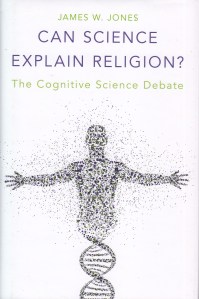
How do you explain that? Everything, I mean. The need to understand “life, the universe, and everything” is as old as our species, and perhaps even older than that. Up until modernity when the limits of physical explanations were reached, gods filled the gaps. Can Science Explain Religion: The Cognitive Science Debate, by James W. Jones, is not an easy book. It demands mental rigor on the part of the reader. It is also a very important book. Mainly addressing the religion debunkers—those who famously declare religion to be pointless and perhaps even evil—the book asks logically, step by step, whether their assertions are rational. Since Jones is, as I once was, a professor of religion, the reader will be forgiven for second-guessing him. Jones makes a very strong case not for the truth of religion, but for its rationality, not its believability.

Beginning with the basics, Jones considers explaining explaining. In other words, can religion be explained scientifically, and if it can what does that logically prove? You need to follow him pretty closely here, but it is worth the journey. Science, as a human enterprise, has its limits. Jones doesn’t disparage science—far from it—just its misuse. The mad passion for a single explanation for everything has led to reductionist thinking. It’s not uncommon for the debunkers to claim everything is physical. Nothing exists that science can’t explain. Jones demonstrates the logical flaws in this approach. Not apologetically, but rationally. Physicalism, like its ancestor logical positivism, runs into serious problems when it comes to explaining much of life. Especially consciousness.

Consciousness remains one of the great mysteries of existence. Nobody knows what it is or where it comes from. Jones isn’t appealing to the “God of the gaps” here, but he is simply taking his own experience as a clinical psychophysiologist and bringing it into the conversation. Mind is not easily explained as a byproduct of matter. The term that has been used in recent years is that consciousness is an emergent phenomenon. Something that is greater than the sum of its individual parts. Jones doesn’t declare science can’t explain this, but rather that when science addresses the question clearly and logically a plurality emerges. One single answer may not be enough to cover it all. I’ve posted many times on this blog about the misuse of Occam’s Razor. Jones here provides a sustained, and rational discussion of questions that have never been answered adequately. Religion doesn’t challenge science, but together they may have more explanatory power than either has separately. Any book that can establish that qualifies as very important.


Keeping Pace

I had no idea my life was in danger. I was out for a weekend walk with my wife, when suddenly, there they were. Snails. In case you think I’m over-reacting, take a look at Christopher Jobson’s piece on Colossal titled “Why Knights Fought Snails in the Margins of Medieval Books.” One of the main points is that the snails were symbols. We tend to forget the power of symbols today. Even modern vampires no longer react to crucifixes—what are we supposed to do? For those who are willing to linger a moment instead of rushing on immediately to the next thing, snails give us quite a bit to contemplate. In a world that hates slow-pokes, “consider,” as my friend Ecclesiastes might’ve said, “the snail.”

As highly evolved cousins of the snail, we suppose we were cut out for greater things. We build towers. We make new nations. We watch them both crumble. On the ruins of those walls we find snails. They have very little to do and expend no worries about getting there on time. Nobody emulates them, although some masticate them. They tend to disappear when the sun is hot. They don’t like the limelight. Yet snails contribute to our world in ways we simply don’t take the time to contemplate. Our time has been commodified. We’re told when to sleep and when to wake for our jobs. Then we’re told none of it matters anymore since 45 has decided to change the rules with his latest tweet. And still the snails crawl.

Before I learned to fear them, I remember happy childhood moments finding snails. This was generally not at home since we rented even then, and landlords have a weird compulsion about landscaping. When wandering far enough from home I’d find snails crawling on stalks of damp grasses early in the morning. They fascinated me. If I plucked them off, they’d pull in their eye-stalks and retreat into their shells. So secure. So symbolic. Eventually I learned that I was obligated to move fast. Keep pace. Be measured by my productivity. Pharaoh’s watching, after all, and that quantity of bricks required isn’t getting any smaller. Not many, I would learn, share my appreciation of snails. It takes a great deal of confidence to go slowly. Those who routinely ignore speed limits won’t understand my symbolism here, I know. Still, I can’t help but think we have a great deal to learn from our cousins who remind us that time isn’t everything after all.


Hex Marks the Spot

Public versus private has been on my mind quite a bit lately. Partially it’s because I’ve been reading about magical beliefs and their persistence. It always amazes me how publicly we declare ourselves rational and uninfluenced by the supernatural. Once we get behind the closed doors of our domiciles, however, a transformation takes place. Our insecurities and uncertainties surface. Given the right circumstances we might even confess that we believe in magic. I know I’m generalizing here, but private space does allow for private thoughts and getting out with others can bring a much-needed relief. I was reading about Hex Hollow in an article a friend sent me from Roadtrippers. Hex Hollow is a small town in my native Pennsylvania where a murder took place over witchcraft. I won’t go into the details here—the Roadtripper story is quite brief and tells the tale—but it turns out a man was killed for being a witch. His murderer was also a witch who’d been sent to him by yet a third witch. The crime took place in 1928.

Think about the timeframe for a second. It was between the World Wars. Technology was fairly advanced. Witch trials had ended centuries ago. Still, some people believed enough in witches to kill for their conviction. Historians of religion have pointed out that Americans have never really outgrown the belief in magic that we deny so assiduously. I’m not trying to single out one nation here—there is widespread evidence that magical thinking is endemic to the human thought process. We aren’t so quick to let something go that, according to reason, has served us well. Had magical thinking been purely detrimental it should’ve died out long ago. We need our magic.

As yesterday, so today.

I’m not suggesting witchcraft is real. At the same time I know that it’s natural enough for thoughts to move into familiar terrain when stressed out. In Hex Hollow the man who did the murdering was convinced he’d been hexed by his victim. Perhaps he’d climbed the ladder of inference (what we tend to call confirmation bias) to a rung where the only way down was a criminal act of desperation. That’s no excuse to kill someone, of course, but it fits with what we know of an all-too-human form of stress relief. Nor is it rustic rubes to blame. Psychics in New York City are abundant and even US presidents have been known to consult the stars a time or two. Of course, once I step outside that door I’ll say it’s all nonsense.


Ellis Island

A few years back we made a trip to Ellis Island. This is a common field trip here in New Jersey, although none of my immediate family passed through this portal. The most recent immigrants in my own heritage seem to have arrived by the early 1800s. In any case, Ellis Island is an impressive location. Now a museum, you can wander through the rooms and get an idea of what newcomers faced after a long and trying ocean voyage. What struck me the most was that large numbers of people were turned away for mental problems. I suspect mental illness of one sort or another is unnervingly common among human beings, and our current frenetic pace of life probably only exacerbates the situation. Still, I wonder if we really have a clear grasp on what is “normal.”

As humans become more adept at understanding their own brains, a need for more precise definitions asserts itself. A friend recently sent me an article suggesting “Neurologists Have Identified Brain Lesions That Could Be Linked to Religious Fundamentalism” on Science Alert. The article my Mike McRae ultimately doesn’t suggest that brain damage is the answer to Fundamentalism, but the story reminded me of an unscientific observation by one of my seminary professors decades ago. Harrell Beck once said something along the lines of Fundamentalism isn’t a theological position, it’s a psychological problem. Indeed, those who fall into the literalist camp have a preternatural urge to see things in black and white. Rules that can’t be violated, even if it means your deity’s an angry old God. With literally Hell to pay if you’re wrong, the right course of action is strikingly clear. Only life’s seldom so simple.

We study our brains but we don’t have a baseline for normal. I can’t believe that waking before dawn to catch a bus to work a job that pays less than a successful high school degree in other states is a good bet by anybody’s standard measure of normalcy. Those who read probing biographies find that even our brightest and best have quirks they didn’t wear in public. Surely the physicians on Ellis Island had some guidelines in mind when they were turning away those who didn’t measure up to the standard of what an ideal American mentality should be. Although Ellis Island shut its doors over half a century ago, it’s clear that even if we kept some unstable candidates out, we’ve done a stellar job of growing our own. And that can be taken as truth by faith alone.


Human Omniscience

This might take some thought, but please bear with me. I’ve been reading about how some scientists are eager to promote rationality only as the true understanding of the universe. The flaws in this logic are immense. The greatest gaff here is assuming that evolved biological creatures with only five senses have come to comprehend the vastness of a universe in which we matter very, very, very, (and some scientific notation may be helpful here) very little. And we assume that’s all there is to know. Consider that when you want to spot the Pleiades in the nighttime sky, the best way to do it is not to look directly at the constellation. Our rods, which are far more sensitive than our cones, are not concentrated in the center of our field of vision. That means, in some circumstances, you see something better by looking slightly away from it. Don’t take my word for it, test it yourself on a clear night.

We also know that some animals have senses that we don’t. When’s the last time you picked up the earth’s magnetic field? We know it’s there and we know that some animals sense it. We don’t. Or consider the ant. If ants make you itchy, any hive mind will do. There are creatures right here on earth that think collectively, not as individuals. As humans we’ve evolved to think that our limited experience tells us everything there possibly is to know about truth. We don’t know how living under water influences perceptions because we can’t do it. No, we’re a race of surface dwellers. (There’s a metaphor there for those of you who believe in such things.) We’ve learned some basic laws of physics and suddenly we preside over the courtroom of the universe since our evolved logic is the only and the best the cosmos has to offer.

Evolution, however, also made us religious. If logic is at all what it seems we have to admit that study after study has shown the benefits of religious belief to the beleaguered human psyche. If we try to measure it empirically it crumbles in our fingers. Only logic would tell us simply to ignore it then. I’m no enemy of reason. It’s the best way we have of getting along in this world. I love science and support its evidence-based health. It’s just that as I’m standing here in the dark wondering where the seven sisters are, I sometimes have to trust my rods instead of focusing on what I can see plainly with my everyday sight. Logic tells me there are other things outside my sensory range as well.

Photo credit: NASA


An Elephant’s 100 Percent

When I walked out of that dissertation defense, still a little unsure whether I’d passed or not, I thought my testing days were over. My early memories of struggling with exams—I wrote that a sphere was a kind of weapon on one vocabulary test I recall—made me anxious for an end of the process. Hadn’t I proved myself time and time and time again? People are funny that way. We’re suspicious of those who pass. Are they really as smart as that, or have they learned to game the system? (Admittedly, with what’s going on in Washington these days doubts about intelligence have definitely earned their keep.) Tests, however, have become less common these days, at least in the fearful exam room context. Now we’re giving them to animals.

It has long been clear to me that animals are quite intelligent. When that mouse, cat, squirrel, or robin pauses in front of you, looks you in the eye, then decides its course of action, it’s clearly thinking. Of course, some animals are more on the GOP scale of intelligence, such as deer that bolt out in front of cars, while others—ironically including elephants—show up 45 in tests we assign. An article in The Independent describes how elephants are far smarter than we’ve given them credit for being. Jealousy, perhaps, makes the elephant’s own party withdraw protections from endangered species. We’ve got to be sure nobody shows us up. At least not while we’re on camera.

Animals have greater thinking abilities than we’ve been willing to admit. For being so highly evolved, we’re an awfully petty species. We don’t want to share our great accomplishments with others. We’ll call the amazing architecture of the bowerbird “instinct” rather than admit they can build homes better than many in the Appalachians can. We’ll kick over anthills rather than face the fact that a hive mind is a terrible thing to waste. We’ve known for decades, if not more, that all life is interconnected. Because we’ve got opposable thumbs and reasonable cranial capacity, we’re the best thing this planet could hope to evolve, so we tell ourselves. What has made us so insecure? Why do we find the prospect of animal intelligence so frightening? It’s terribly hard to give up the role of being lord and master, I guess. Or if we were to switch it to a classroom analogy, we always want to be the teacher, never the student. But after walking out of that dissertation defense twenty-five years ago I learned that the testing had only begun.


Trusting Truth

How do we know what’s true? For many the answer is what your experience reveals. If that experience involves being raised as a Bible-believer, that complicates things. A friend recently sent me a New York Times piece entitled “The Evangelical Roots of Our Post-Truth Society,” by Molly Worthen. For those of us raised in Fundamentalist conditions, this isn’t news. Then again, those raised Fundamentalist assume that everyone knows the truth but others have blatantly decided to reject it. It’s a strange idea, inerrancy. It’s clearly a form of idolatry and its roots can be traced if anyone wishes to take the time to do it. Inerrancy is the belief that the Bible is correct, tout court. It’s right about everything. If it contains one error, so the thinking goes, it topples like a house of cards. (Cards are sinful by the way, so get your hands off that deck!) If that’s your starting point, then the rest of the facts have to fall into place.

As much as I wish I could say that this simplistic outlook may be corrected by education, that’s not always the case. Many children of inerrantists are raised to question what they learn in school. Worse, many are home schooled so that they never have to be exposed to the sinful machinations of others until they try to enter the job market and are utterly perplexed by the fact that they don’t even speak a common language with the rest of society. Key code words don’t mean the same things outside that safe, withdrawn community where everyone knows the Bible and understands that to know it is to love it. Science doesn’t love the Bible, they’re taught. So science is wrong. It’s quite simple really. You already have all the information you need in one book. If science disagrees, then, well, you already have all the information you need.

There’s an internal logic to all of this, and dismissing the heartfelt beliefs of Fundamentalists only gets their backs up. It’s not about logic, but the emotion of belief. Some neuroscientists have been suggesting that we reason not only by logic but also with emotion. That complicates things, for sure, but it also explains a lot. For example, in a world where religion drives nearly all the major issues facing society, logic would dictate that universities would build up religion departments to try to understand this very real danger. Instead we find the exact opposite. Withdrawing into your own little world occurs on both ends of the spectrum. Dr. Worthen is to be applauded for bringing this out into the light. If society wants to benefit from this knowledge, it will need to stop and think about what it really means to be human. Fundamentalists, for all their foibles, illustrate that nicely.


Dog Daze

I read quite a bit about animals. One reason is that when you’re counting all the species on the planet we’re pretty clearly among the animal part. Having grown up with many pets, the dogs particularly stand out. We tended to have only one dog at a time and they were so full of personality that it obviously wasn’t a matter of projecting to understand that one was more or less optimistic or joyful than another. Some could be mean while others were loving. There was quite a bit of buzz about W. Bruce Cameron’s A Dog’s Purpose back in January. For Modern Mrs. Darcy’s 2017 Reading Challenge the book fit one of the categories for me, and so I found myself reading about animals again. The thing about buzz is that I listen with only half an ear. I didn’t know much about the book except that it was a novel narrated from a dog’s point of view.

A couple of things struck me as I got into the story. One was that the protagonist ended up still believing that humans were more important than dogs. I suppose there’s some kind of evidence for that, from a dog’s viewpoint, but it doesn’t seem very strong to me. After all, we’ve bred wolves into pugs and cockapoos with an intentionality that even Mr. Darwin would’ve recognized as unnatural selection. Left to their own wolves would’ve adapted, but they’re pack animals and while dogs may think us the alphas, they’re each an important part of the group. They are giving, but that’s the nature of being in a pack. It’s also something that elected officials in Washington could stand to learn. When there aren’t rifles and traps, pack animals prosper.

The second thing that stood out about A Dog’s Purpose was reincarnation. The idea scares me. Life’s been a long challenge this time around and, unlike Nietzsche I’m not sure I could face it this exact way again. In any case, reincarnation only works if there are souls to pull it off. Cameron posits that for Toby to become a fully developed Buddy four cycles of reincarnation are needed. Like a good Platonist, our protagonist recalls the important lessons from each previous life and is able to develop into a more fulfilled dog each time around. The karma here is good. Cameron does seem to “get it” from a human-projected dog’s point of view. It can be fun, and it can be sad. The important lesson, for me, is that animals are who we are and to be a successful pack we need to look out for the good of each other.


Occam’s Beard

Skeptics can be so much fun. We really do need them, otherwise we’d likely still be living with notions of medical science being attributed to four humors, none of which were that funny. Still, sometimes it gets tiresome to read endless references that take Occam out of context. You see, one of the foundations, if not the very keystone, of modern scientific method is that of parsimony, aka Occam’s razor. The idea is simplicity itself. If there are multiple possible explanations for a phenomenon, then the simplest is most likely correct. But only if it supports your biases. The reason I raise this question is the materialistic dismissal of “consciousness” as merely a by-product of having a brain. The reasoning goes like this—nothing exists that can’t be measured by science. Since that which isn’t material can’t be measured, the most parsimonious explanation is that it doesn’t exist. QED.

This way of looking at the world has become so common that those of us who question it are given a condescending smile and a paternalistic pat on the head. But my thinking about this goes back to Occam himself. William of Occam (or Ockham) was a late medieval churchman and thinker. As a scholar he possessed a sharp mind. As a friar he also possessed a soul. There was no disconnect in those days. His observations of the natural world led him to the reasonable conclusion that if a simpler solution sufficed, a more complicated one need not be posited. So far, so good. This is not, however, to suggest that more complex things may not be going on. Quantum physics, for example, suggests that things aren’t quite so easy to explain. And what about poor Occam’s soul? This very component that made William William has been dismissed as mere illusion. Did it therefore not exist?

Is it more parsimonious to suggest that “mind” (or soul, or consciousness, whichever you prefer) is mere illusion, electro-chemical signals flitting between highly specialized cells just happen to give off a fiction of consciousness, or would the simpler answer be, as Occam himself believed, we have souls? We have no way to measure such things, but to claim they don’t exist is to rob a great thinker of his very mind. Any of us who experience consciousness know that it’s no illusion. We feel the pains and joys of this same body day after day and, if we’re honest, we believe that we’ll continue even after this fleshy substrate wears out. There’s a profound logic here. Science doesn’t know how mind affects matter—how I can decide to type and my fingers move. The most parsimonious answer, they claim, is that it only seems to be so. A far more honest answer would be that mind is real. And I’m sure Occam himself would agree, even if he preferred to call it a soul.


Death Challenged

Long before the Walking Dead, and even before Twilight or Buffy the Vampire Slayer, people took the undead seriously. Now, I know ratings are important (they attract advertisers and their money, after all), but when the fear is reality the stakes are upped a bit. Two readers sent me a Guardian story this past week of Yorkshire villagers mutilating the dead. In the Middle Ages, that is—it’s perfectly safe to die in Yorkshire now. The story by Maev Kennedy describes how archaeologists have been studying deliberately defiled corpses, well, actually the bones from those corpses to be precise, to solve a centuries-old mystery. Their conclusion? Medieval folk really did fear the dead coming back from the grave.

Now, Easter’s just around the corner and resurrection’s on a lot of minds. Outside the context of the Bible, however, resurrection of the dead is one of the most ancient and persistent of human fears. Nobody’s quite sure why. Dreams and visions of the recently departed are extremely common. Belief in ghosts is ancient and fairly universal. The destruction of the bodies of people already dead is not. We treat our gathered ones with respect. To me it seems to come down to the puzzle of consciousness. Call it a soul if you like, but I have a feeling things would be getting rather crowded in here if too many distinct entities claimed this body as home. Mind, soul, spirit, psyche, consciousness. We don’t know what it is because it can’t be studied empirically. We know that something like it exists and opinions of what happens to it after death vary. The body, we can all agree, has a more prosaic end.

That’s what makes fear of the undead so fascinating. They are only bodies. Bodies without souls. Rather like leaders of the Republican Party. We fear them because when we look into their unblinking eyes we see no vestige of human warmth or sympathy. Those who walk among us and who don’t care about those of us not yet undead remain a perennial fear. In the case of the Yorkshire corpses these were people already buried. Putting them back in their graves seemed kind of pointless when they would only climb out again. We don’t know what it was like on the ground in the Middle Ages. History, however, has an ironic way of repeating itself. We’re entering a new age when I suspect we’ll want to make sure the remains of some remain well and truly gone once they’ve finally given up the ghost.


Universal Growth

Maybe the universe isn’t expanding, maybe it’s growing. Always tinged with a healthy dose of pantheism, I’ve often opined to those who will listen that life might be more than animals and plants and microorganisms. But then again, I don’t have the numbers to back me up. These aren’t just the ravings of a guy who wanted to be a scientist but whose religion prevented him, they’re also pretty close to those of a scientist who became a religious guy. When more than one person sends me the same article I figure I’d better comment on it. Those who used to be professors can’t help but professing, after all. So I read Meghan Walsh’s Ozy story, “Jeremy England, the Man Who May One-up Darwin.”

England spent his education on science only to turn to religion along the way. That’s pretty unusual, according to the standard social discourse, but I suspect it’s more common than we’d like to let on. There’s no clause in science that says you can’t believe in anything. Even Richard Dawkins has beliefs. Many scientists have been suggesting, of late, that perhaps physics and religion are converging. (Some of us from the other side of the equation have been saying so for years, but who believes a religionist?) Before I’m misunderstood, I’d hasten to add that I don’t mean religion as in literal trumpets sounding as a white horse and rider descend through the atmosphere. Nor do I mean in the sense of the minutiae of the Talmud. What I mean is the symbol systems that religion has long used may have been in some sense in line with what science has been trying to tell us.

According to the story, England thinks that matter may be self-organizing. That means life occurs where matter exists. Before I become too close a friend with my sofa I have to remind myself that this doesn’t mean everything’s conscious. Although my reading of Thomas Nagel does have me wondering even about that. You see, religion has historically been one of those disciplines where imagination has had a valued role to play. Those who accuse it of being doctrinaire and evil need to talk to a few more people. Religion has always claimed there’s more to life than what the senses reveal. Science professionally limits itself to the inferences of those senses. And you can get away with paying religion specialists a lot less. What’s not to like about this situation? If the universe is growing, there’s room for us all.