Time in a Museum

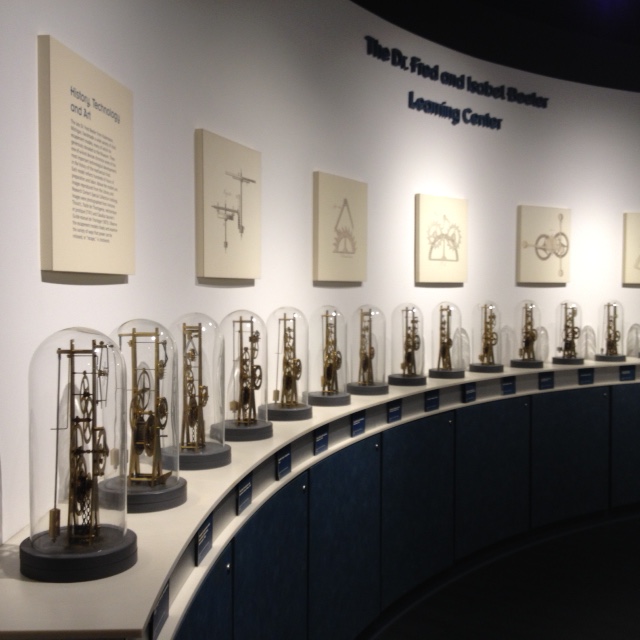
Over the weekend we visited the National Watch and Clock Museum in Columbia, Pennsylvania. I became aware of the museum during one of my steampunk phases, and since we were running out of summer, it seemed the ideal time to go. I didn’t know what to expect, but it certainly wasn’t anything quite so profound as what we actually found. Time, as we now know, is relative. In fact, up until just two centuries ago, nobody really knew what time it was. Well, maybe those people in Greenwich did, but the average person, even if s/he owned a watch, lived on approximate time. Try telling that to any boss today! The need for people to meet trains at various stations led to the standardization of time in the United States. Now the government declares official time, kept by atomic clocks. You could be a billionth of a second late for work and Uncle Sam would know. What happened to the days of looking for when the sun was directly overhead and guessing from there? Greenwich Mean Time indeed.

Time in inherently religious. For human beings, conscious of its passage, it is a limited commodity. Our concerns for our personal A.D. (“After Death” as the misnomer used to go) have led to religions suggesting that God, or gods, take a special interest in the passing of time. That became clear from the first display in the museum. Hardly a placard existed without some reference to the gods—people knew that time was somehow divine. Not only that, but the passage of time was punctuated by religious observances. Even such things as deciding when to harvest your crops could lead to religious revelations. Besides, time was set in motion by those ageless beings known as gods, and they mandated on-time performance. The ability to influence time was far beyond human capacity, thus deities informed us how to handle it. Into the Medieval period clocks maintained a regular array of religious imagery, reminding the user that this is the ultimate non-renewable resource.
IMG_2453

It was almost overwhelming, being surrounded by so many clocks. I remember being a young man—indeed a little boy—when time seemed to be in infinite supply. Religious observance was always a large part of that pool. Here I stood, a middle-aged man, spending my time pondering time. All the while, it was passing. Time is measured by regularity. Uniformitarianism is the geologic principle that informs us of the age of the earth itself. Beyond that, we’re told, the universe—so long ago—had its own beginning and anything that has a beginning will inevitably have an end. Such sobering thoughts amid the beautiful timepieces that so many spent their lives crafting. Now we only need glance in the corner of our computer monitors, or pull out our phones to glance the time. Taking a bit of it is wise, it seems to me, to explore our fascination with time itself. There is an air of eternity about the very enterprise itself. Well worth a summer’s day when forever is in your rear-view mirror on the way home.

Eternal Huckleberries

It began as a quest for immortality. Sometimes, however, you don’t recognize something even when it’s all around you. As an historian of religion, the quest for immortality is a familiar one. Certainly the ancient Egyptians believed they had found the keys, at least for royalty, and most religions haven’t given up trying since then. Some clonal plants have achieved extreme longevity. Since they grow by extending their roots, rather than by sexual reproduction, a single plant can remain alive as long at, at least 8,000 years. The specific plant to which I’m referring is the box huckleberry. I first learned to pick huckleberries for food in the Pacific Northwest. In that part of the country, I’ve learned to identify the plant from a distance and have spent many contented hours picking berries. Time, however, is something always endangered for those of us aware of its passing.

The box huckleberry colony in the Hoverter and Sholl Box Huckleberry Natural Area in Pennsylvania is about 1,300 years old. Summer is waning and my family wanted to see it. Indeed, for this particular colony, development probably destroyed parts of the system and so it has to be preserved. With that strange east-coast worldview, “just over there in Pennsylvania” comes to mean things are closer together in the imagination than they really are. Driving three hours just to see a huckleberry colony became more appealing when we combined it with the idea of visiting the National Watch and Clock Museum in Columbia, Pennsylvania. Both concepts were obviously related to the theme of time. They aren’t quite as close together as they look on a map. Map, after all, we are told, is not territory. The museum exists in a fixed location marked by a street address, so we went there first. There will be plenty to write about that later. As, ironically, we didn’t allow as much time as we should have for the museum, we had to head out further west and north to find the elusive huckleberry. All we had were the GSP coordinates and the name of a local town.

From the length of the line of cars behind me, the locals preferred to travel faster. Knowing only the relative direction and an approximate mile count, we stumbled upon Huckleberry Road and knew we must be close. Off into the woods we drove. As onetime manic geocachers, we had learned to both trust and distrust a GPS, but there was a trail head out here and a single parking spot. No one else was around. The signed indicated we were in the right place, but where were these ancient huckleberries? The ones we generally harvest grow knee-to-waste high with distinctive leaves. We walked the entire nature trail in frustration. How could a 1,300 year-old plant hide so well? Frustrated, we went back to the start. Fortunately, there were brochures. We found the box huckleberries. Indeed, they had been all along the trail, but we didn’t know what we were seeking. Just a few inches high, they cover the ground like a carpet. A few ripe berries poked through. We were in the presence of an entity that was older than Beowulf. Indeed, in the Middle Ages, this plant had been alive. Without the guide we’d never have realized we were standing in the midst of a kind of immortality.

DSCN5969


Brains and Selves

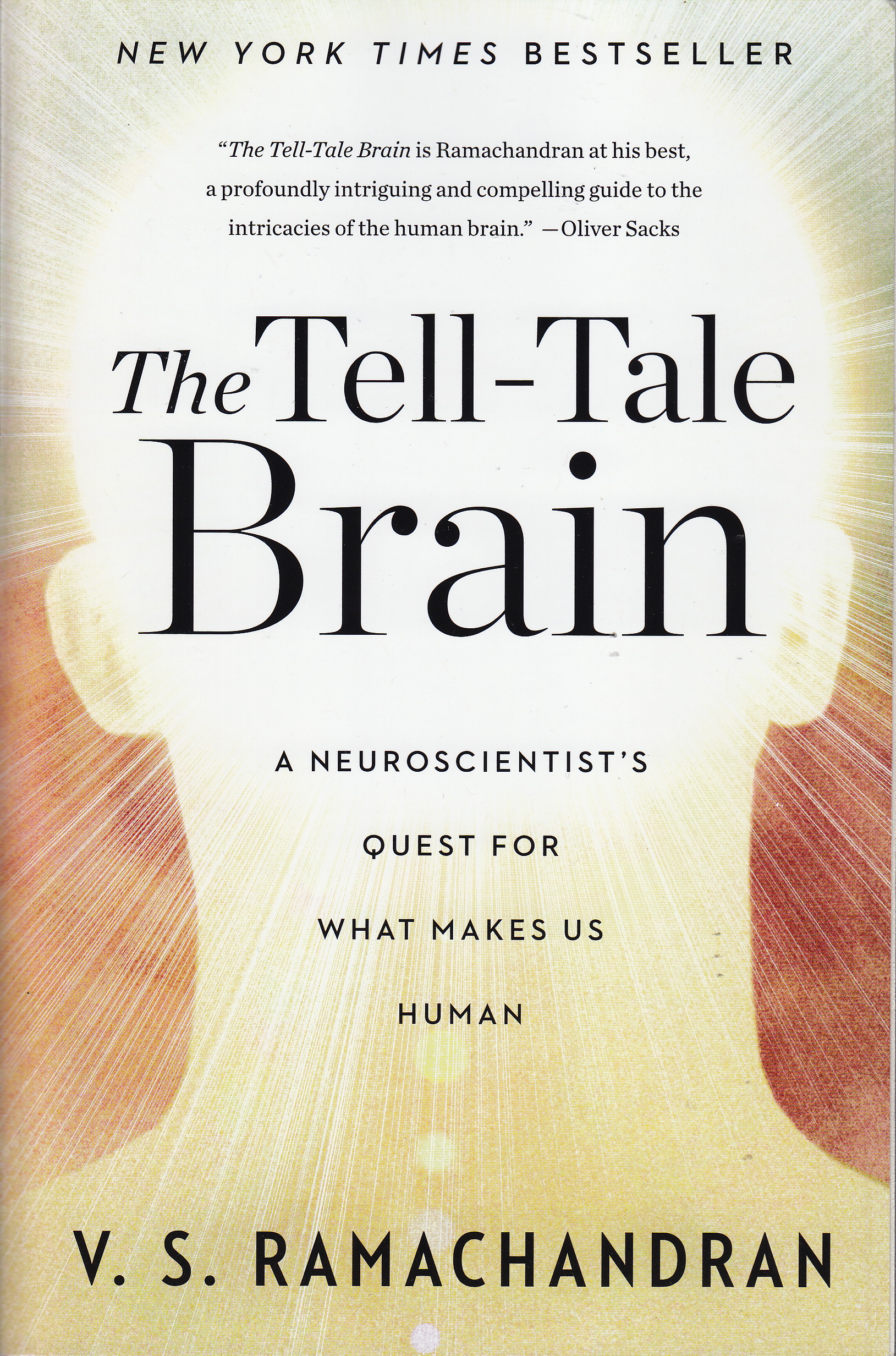
TellTaleBrainThe Tell-Tale Brain is an ambitious, yet humble attempt to find the self. V. S. Ramachandran is a neuroscientist with considerable psychology experience who is well equipped to take on, as the subtitle puts it, A Neuroscientist ‘s Quest for What Makes Us Human. The book will take you to some very strange places. And although he’s a scientist, Ramachandran keeps an admirably open mind. Right at the start he notes that he sees no reason for using “merely”s and “only”s when discussing brains and their realities. In fact, he knows that scientists aren’t qualified to answer the question of whether there is a god. Having grown up Hindu, he used to pray to many gods. A true scientist has no need to belittle beliefs. Belief, as Ramachandran demonstrates, is far more complex than most pundits would suggest. This is based on his close study of the brain and those to whom it has been less than kind.

Already in the first several pages it becomes clear that Ramachandran finds religion a useful trope. It illustrates something we all know. That doesn’t mean he (or you) has (have) to accept it, but we all recognize it. Studying how the brain works, in this book, means looking at patients with various disorders, most of which have tongue-twisting names, that are inherently fascinating. Phantom limbs, people who see the colors of numbers or feel the emotions of fabrics, or who can’t recognize their own mothers—all of these things really happen in the brains of intelligent people. For them these are reality. For Ramachandran, they can frequently be chased down to a neurological cause. And sometimes people even really think they’re God. One of the treasures of this book is to experience the non-normativity of western culture. The use of Indian art and religion as illustrations of what humans believe is refreshing.

Anyone who fears the loss of self take warning; we may not be who we think we are. Brain studies show that, in certain circumstances, brains can contain more than one self. Memories can be fabricated and the continuity that we call our life stories may well contain a healthy dose of fiction. Experiments on brains can change who we think we are. Descartes would, perhaps, go insane. Ramachandran doesn’t claim to have figured out the self, or consciousness. He may have ruled out some options, though. At the end of the book, however, he reintroduces the concept with which he started: science and religion. Quoting Darwin he shows that the main mind behind evolutionary theory refused to make an absolute declaration about the divine. Humility, it seems, may be just as effective in making converts as a Bible in hand. And to figure that out will take some brain power.


Being Sheepish

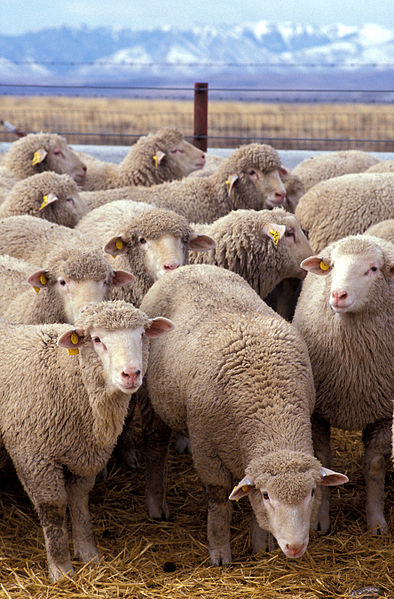
Being among the animals at the fair, you begin to notice things that are foreign to those of us with exposure only to the house-pet variety of fellow creatures. Up close, for example, sheep are bigger than you might think they are. Since they’re domesticated and wooly, I tend to think of them as little—maybe knee-high—and in need of constant attention. The truth gives the lie to such false constructs. It was in the course of seeing sheep that I found out about Shrek. Shrek the sheep, now unfortunately deceased, has his own Wikipedia page. This was a single-minded ungulate who decided that the ’70’s lifestyle wasn’t truly over. The New Zealander took off from his heard, to avoid shearing, so the story goes, and hid in a cave for six years. With echoes of Odysseus, the ruminant survived just fine without human help and grew a serious coat of wool. When finally discovered and, of course, sheared, he gave enough wool to make suits for twenty men. Shrek had to be euthanized four years ago.

The story might have ended there. Shrek, however, fueled the imagination of several Christian writers who saw all kinds of parables in the lifestyle of this prodigal sheep. After all, in the pastoral culture of first-century Palestine, sheep suggested themselves as the fodder for the original set of Christian parables. Sheep wander, get lost, and get saved. They need someone to look after them. A good shepherd, preferably. In fact, sheep tales go further back in time, even to the Hebrew Bible. Perceptive prophets noticed how similar we are to our distant, quadruped cousins. It would be very odd, in hindsight, if nobody had picked up on the story. The mental picture is simply too appropriate.

394px-Flock_of_sheep

Metaphors, some have argued, are what make us human. We can see ourselves projected into just about any part of nature, and looking at nature, we can spy ourselves. Parables, by their definition, are never literal. We have to peer into them and find truths that gainsay the obvious. If we’re honest, we’d have to admit to being very much like Shrek. Who doesn’t want to run away and hide from what “the man” instructs us to do, against our own will? Yes, sheep have wills. Like any sentient creature, they have a sense of what they want and the best way to survive. With our fancy neocortex, we’ve domesticated sheep and bred many of their natural tendencies out of them forever. Still, I’m heartened to learn of Shrek the sheep. The lesson I draw from his story may not be the same as many Christian websites, but it will be no less true, I should think, for being such.


Shooting Stars

One of the professions I used to consider as a child, before I had any real concept of the way the world works, was a scientist. I wasn’t sure what scientists did, beyond a broad idea of learning about the world though close observation. I was too young to see that it would likely conflict with the Fundamentalism in which I was being raised, and I suspect the same is true of many who become scientists and never stop to question the religion in which they were reared. Although religion, as a profession, won out in my case, I was, I recognize now, motivated by a deep and undying desire to know the truth. I still am, although you couldn’t tell that from my career path. In fact, rationally, it is the most important thing to me. What is truth?

Science has become extremely complex. The average citizen can’t afford the kinds of equipment needed to unravel the fabric of reality. A cyclotron wouldn’t fit in my backyard, and, besides, I rent. When I sat outside this morning looking for the Perseid meteor shower, I didn’t see a thing due to the ambient light. Even looking through a telescope, I know I don’t have the calculus to explain the things I see. Given all this, the average person requires a scientist to explain. But scientists are only human. We know that we haven’t evolved to discover the truth. Evolution favors survival, not philosophy. We also know that we don’t perceive everything. Some animals have senses that we humans lack. Still, we suppose through our use of our five—obviously the best—we can come up with an explanation of everything. The truth will be ours! Or will it? Even thinkers of such stature as Richard Dawkins and Stephen Hawking make mistakes. They’re only human. When we idolize them, we make them gods.

Back in seminary I learned about the three-legged stool. The basis of authority, in the church, rests on three legs (four if you were Methodist): Scripture, Reason, and Tradition. Methodists added Experience. There were checks and balances here. Well, Scripture seems to have fallen out of the running with the Enlightenment, and nones don’t much value Tradition. Experience is subjective, so we’re left with Reason alone. And yet, reason leads to paradoxes such as if the universe is infinite, how can it be expanding? In classical theological terms: can God make a rock so heavy he can’t lift it? Add to that the fact that some neuroscientists are now suggesting that emotion may be the seat of thinking rather than reason and you might begin to wish you had some tradition to guide you. In my experience, I’ve seen, I suppose, my fair share of shooting stars. I sat outside in the predawn hours this morning and saw nothing. Perhaps I should have had a three-legged stool upon which to sit.

Photo credit: Nerijp, Wikimedia Commons

Photo credit: Nerijp, Wikimedia Commons


Sickness unto Death

It’s like Nightmare on Elm Street, as my daughter suggested: if my laptop falls asleep, it dies. Actually, that only happens if it turns off. As much as I rail against technology, I have to admit that I get a little choked up thinking about it—my laptop has had its final reboot. Finally back home from a trip where my MacBook died in transit, the local Genius Bar genius told me the frank truth. The on-off switch has stopped working. He was able to take it in the back and get it started with a “hard reboot” and I can’t help but imagine that it involved tiny little defibrillator paddles and a techie with a trendy haircut shouting “Clear!” before jolting the little guy back to life. If it turns off again, though, they can’t guarantee that they’ll be able to bring it back to life. At five years it’s suffering the effects of old age. Planned obsolescence means that you shouldn’t get too close to your machine. Still, with all this talk of artificial intelligence, I wonder if we haven’t given this laptop life. It sits right on my lap every day. It has for five years. It keeps me warm in winter and too warm in summer. It knows my deepest thoughts.

Like Logan, however, it was only planned to live for a few years. Its crystal is flashing, and I’m getting kind of emotional. Yes, it’s been running slower and slower. Sometimes it doesn’t hear my commands. It takes its time waking up in the morning. Still, it has become like a friend. So when the disciples came to Jesus in a panic saying Lazarus was dying, he replied that the sickness was not unto death. Lazarus died nevertheless. And Jesus wept. I wonder if he would’ve felt the same about an old laptop. This machine has been with me through several jobs—it was purchased to help with my teaching at Rutgers, but it has kept me company on many long flights and lonely nights traveling for publishers and trying to remain sane when there was only a whiff of a wifi scent to latch onto. We’ve done a great deal together.

IMG_2398

It can be fixed, the genius said. I have to send it to the iHospital where a new switch will be installed. It will cost a lot of money and if it goes bad again, Apple won’t be able to replace the parts because they don’t keep them on hand all that long. The best solution—buy a new laptop. Spoken like a young man without a child in college. I’m dithering here. I can keep this computer running for a long time without shutting it down. Still, it’s borrowed time. The genius helping the next customer over said, “It’s not a matter of if a hard drive goes, it’s a matter of when.” We’re living on borrowed time. Our devices are meant to be tossed, but my gray matter understands things differently. I like my old laptop, and when Freddie Krueger comes for its soul, I know I’ll be wide awake.


Death, Technically

Those of you who punish yourselves by reading my posts regularly may wonder at how different my last couple of posts have been. “Vacation” in and of itself is sufficient explanation for the out of the ordinary—different time zones, unreliable grammar, a certain dreaminess of topic (this is why we should all take plenty of time off work). In this case, however, there’s more to it. My wife injured herself the night before our early morning flight, and although she’s recovering well, another traveling companion is moribund. My faithful laptop that has traveled the country, indeed, crossed the ocean a hextad of times, died in its sleep on the flight over. I shut it down before climbing aboard the plane, and when I tried to boot up after that, nothing. Not friendly Apple starting tone, no wink from the camera, no sign of life from the screen.
I pulled out my phone as soon as I landed and asked Siri if there was a Genius Bar nearby. I was headed into remote parts, where shotguns are far more common than laptops. I had projects to accomplish in the rainy moments. I had a couple of readers to keep updated. Could the geniuses perform a miracle? Alas, the schedule was unforgiving. I hadn’t made an appointment and even though I’d been pouring money into Apple products while the genius before me was in still in diapers, I was up a proverbial (as well as literal) creek without an Apple. He halfheartedly gave my keyboard some kind of Vulcan finger combination pinch, but the look in his eye was definitely more Klingon.
I remember coming to this remote cabin before cell phones were invented. People were just beginning to whisper about this rumor called the Internet. People still wrote each other letters. And here I am in downtown Spokane, weeping over the dead device in my lap. It had its limits, in any case. I can’t take it into the lake with me. It needs, at its age, never to wander too far from a power outlet. And yet, it holds all my darkest secrets and most enlightened ideas. And my thumbs are too fat for typing on my phone. Looking out over the mist dancing wraith-like across the Saran-Wrap early morning surface of the lake, I see two bald eagles fly by. Surely I wouldn’t have seen them had I been behind the large screen of my departed friend. These are, after all, communications from the very edges of civilization, and technology may not, all things considered, save my soul.


God’s Wormhole

Can God and science mix? I suppose that the third season of Through the Wormhole would be the place to look. The entire season has a distinctly metaphysical feel to it, so it is no surprise that the final episode is entitled “Did We Invent God?” It’s also no surprise that, like the other metaphysical issues explored, no resolution is really offered. Interviewing psychologists and neurologists, the show attempts to parse how scientists might address the question of God’s reality. God, of course, being immaterial, is normally understood not to be a subject discerned by science. So instead of putting God under the microscope, human perceptions of God will have to do. Everything from theory of mind to magical beliefs are probed to find hints of whence this strange idea of God might have come. The answer: we don’t know.

The more I pondered this, the more the same result reflected on science itself. When I was growing up I thought science was the truth. If science “proved” something, there was no arguing the point. I have come to realize, however, that science must be falsifiable to be science. That means it is potentially wrong. Not that it goes as far as Creationists take it to say that something is “only a theory,” but rather that science is the best explanation that we have at the moment. Future discoveries could falsify what we now know and the science textbooks would have to be rewritten. The difference here with religion is that most belief systems do not admit of this possibility. The truth has already been revealed, and there is no adding to or taking from it. God is not falsifiable. As stated above, God is not subject to science.

I don’t expect these observations of mind to change anybody’s ideas of the world. I do hope, however, that they make clear that science and metaphysics find themselves in similar situations. Both strive to know the truth. Neither can know if they’ve arrived. Both can believe it. The final episode of the season raises this point starkly. People are hardwired to believe. What they believe in is open to many possibilities, but believe they will. From my earliest days I have taken belief very seriously. What I have believed has changed over the decades, but at each step along the way I believed it was the truth at that time. I don’t know the truth. Nobody does. We all, whether scientist or religious, believe that we have found it. At the moment.

Image credit: CorvinZahn, Wikimedia Commons

Image credit: CorvinZahn, Wikimedia Commons


Night Terrors

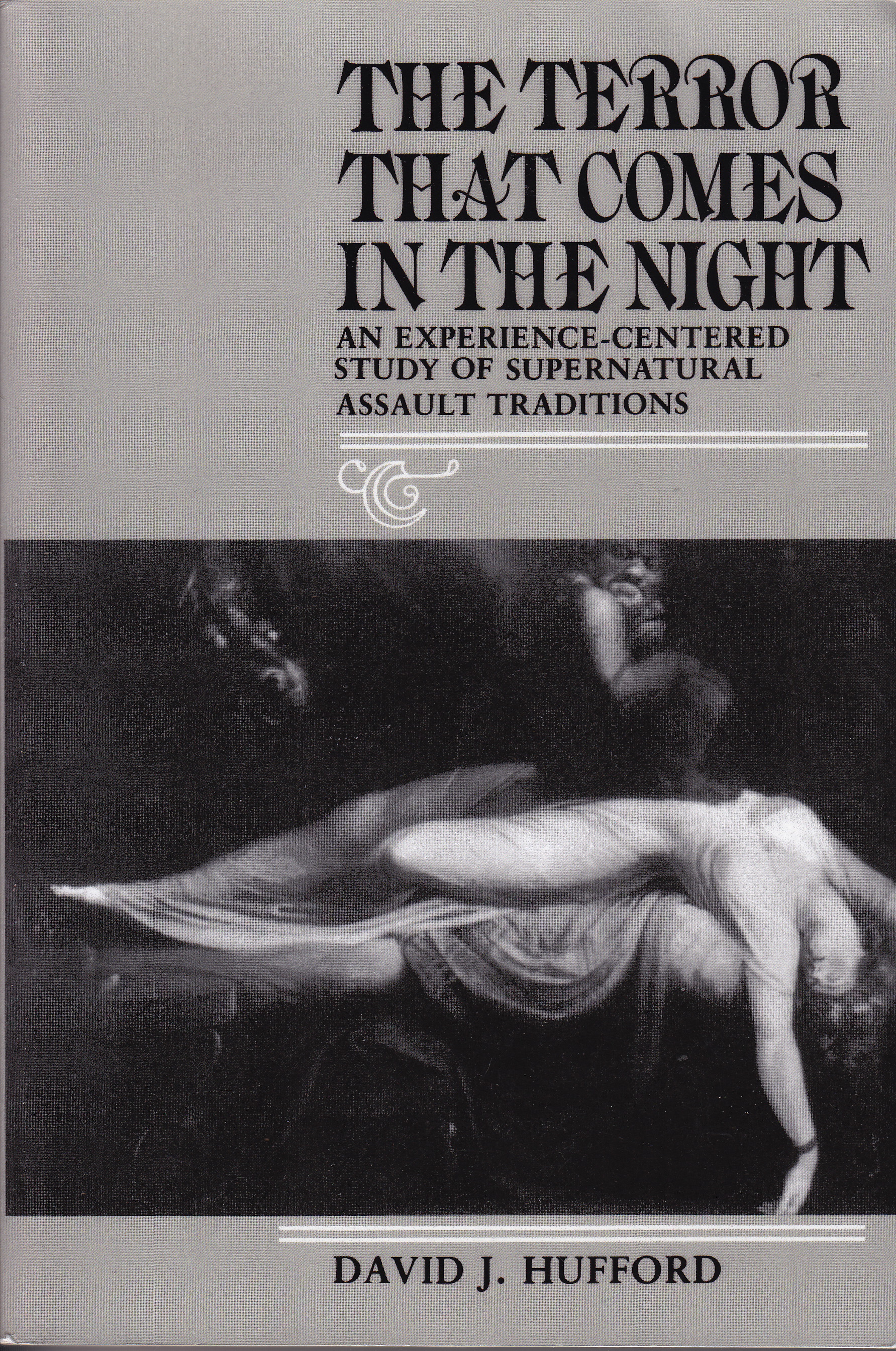
TerrorInTheNightNightmares are the stuff dreams are made of. Or maybe I’ve got that the wrong way around. Having grown up subject to frequent nightmares, I still occasionally have them. I suppose it is easy enough to assume someone who reads about monsters and watches horror films should not find this unexpected, however, I’m not sure they’re related. My nightmares visit issues that horror films avoid, and most of my monster reading is, well, academic. Surely the scientific study of nightmares has advanced since David J. Hufford’s The Terror That Comes in the Night: An Experience-Centered Study of Supernatural Assault Traditions, but it remains a very important book. As someone familiar with the phenomenon, I found Hufford’s study somewhat therapeutic, and it certainly does raise some interesting questions.

Apart from the unfortunately, inherently sexist, folk-title “the old hag,” Hufford is addressing a universal experience of people of all ages. Using his original setting in remote Newfoundland where his work began, Hufford collected tales of what might technically be called sleep paralysis with a specific hypnogogic hallucination of being attacked. A designation, he acknowledges, that is quite awkward for repeated use. Back in the early 1980’s, when the book was published, these accounts of nighttime attacks—a person waking up, or not having yet fallen asleep, sensing a presence in the room, finding her- or himself unable to move, and sometimes seeing or hearing an entity and feeling it on his or her chest—were rarely discussed. Especially in scientific literature. They seem a kind of embarrassing medievalism related to the ancient concepts of incubi and succubi, and even vampires. Having “the old hag” (a moniker relating to witches) is what the experience is known as in Newfoundland. Hufford, taking these accounts seriously, investigated what the sufferers had experienced. Unwilling to judge whether the event “actually happened,” Hufford’s scientific objectivity is truly admirable. Since the time of his book, the concept has become widely known and the argument is often made that having heard of sleep paralysis episodes feeds those with hypnogogic hallucinations the idea of a supernatural oppressor. In other words, now that we know about it, we don’t have to take it seriously.

Hufford is one of a small number of academics that is willing to engage with the supernatural on its own terms. Religion scholars do, of course, but we are generally dismissed from the starting block anyway. Most scientists disregard the possibility of anything beyond deluded brains and say nightmares are normal. Just deal with it. Those who’ve experienced the nighttime attack know that it feels very different than a garden variety nightmare. You can tell when you’re awake. Of course, we’re of the generation who’ve seen The Matrix and Inception, and we know that, at least in popular thought, reality has become negotiable. Nobody is much surprised any more by the idea of such an attack in the night. Waking nightmares have become as common as the headlines. If only more scholars would take human experience as more than just “old wives tales” we might all be surprised at how just rolling over can change everything for the better.


Detoxing God

There’s some pretty weird stuff in the Bible. Those who are only familiar with all the “thou shalt not”s are missing a great deal. Some of the material is strange enough to rival Alice’s tumble down the rabbit-hole (Charles Dodgson was, after all, a deacon). Anyone who’s read Ezekiel, or Daniel, or Revelation, knows the feeling of having been slipped into some kind of alternate state of consciousness. As students of the Bible have been saying for decades, “What was Ezekiel on?” I’ve always tried to put these unusual writings into context for my students. Nevertheless, some scholars still explore the possibilities that something more than revelation was going on in the desert. A friend of mine pointed out the website Time Wheel, which has a story about Moses and his experience of the burning bush. Time Wheel is an artistic collective, and the story about Moses is richly illustrated. The title, however, is the attention-grabber: “The Bible’s Moses Was On DMT Says Hebrew Professor.”

The article explores the thesis of Benny Shanon, who suggests Moses may have found DMT in the natural store of psychedelics available in nature. As the piece suggests, you have to accept a literal Moses for this to make any sense. Nevertheless, it does raise an interesting question: did ancient people use hallucinogens for religious purposes? We do know that cultures throughout the world have found alternate states of consciousness to be religious in nature. Before the days of controlled substances certain plants and fungi were known to distort reality. Alcohol was one of the earliest inventions of civilization, or perhaps even predating it. When other views of the world are available, it is possible to say that one is by default the true one? It’s a question we face every morning, to some degree. The dream, another biblical favorite for alternate realities, can be just as real as waking.

Controlled substances are dangerous in large groups of people. Not only have modern scientific techniques refined the active ingredients, but we live very close to one another and erratic behavior, perhaps fine isolated in the desert with a cognizant adult, can lead to problems when other people live right next door. Anthropologists assure us that the use of natural “drugs” is/was not uncommon among many peoples who don’t fall under the rubric of powerful centralized government. But was Moses among them? To me, the burning bush hardly seems fantastic enough to require a chemical explanation. In fact, detailed study of even such books as Ezekiel and Revelation often reveal a much more mundane reality behind the writing. Still, imagination is often the key to unveiling realities left hidden to more prosaic minds. So why not see what might happen when the religious are left to their own devices in the desert? The results could change the world.

278px-William_Blake_-_Moses_Receiving_the_Law_-_Google_Art_Project


Forest of the Subconscious

The mind is not the brain. This isn’t mystical mumbo-jumbo (although there’s nothing wrong with mystical mumbo-jumbo either). We’ve been bombarded with the message that we are meat machines for many years now. Those who have studied physics and plumbed its depths often tell us that if we had all the bits of information involved, we could figure out anything. Our minds are our brains and it is merely electro-chemical signals that form a kind of operating system for this biological computer. The idea that we have a separate mind, we are told, is an illusion. Interestingly, studies of the subconscious mind raise significant questions regarding this interpretation. The subconscious, it is generally acknowledged, was discovered by Sigmund Freud. Prior to Freud many people did things and didn’t know why. Now we know, despite debates about the details, that we have to consider the subconscious mind as well as the more familiar conscious one.

I’ve been on a Through the Wormhole kick lately. Since we don’t have television, I have to watch the episodes after they air, but at least I have the option of doing this when I have some time. I recently watched the subconscious episode. The truly amazing takeaway from this was that our minds often, daily, in fact, operate on a level that we know nothing about. There are ways of tapping into the subconscious mind—meditating, as I mentioned earlier this week, is one way. Others are more scientific. Stimulating areas of the brain with small amounts of electricity can enhance abilities that we never knew we had. In fact, we might even be able to enact a Matrix-like download of information. I think I may have swallowed the blue pill after all.

DSCN2021

Call it a gut-level reaction, but I have always had a strong resistance to the idea that we are mere automatons. Consciousness, which, increasingly we’re discovering, involves a dose of subconsciousness, doesn’t feel at all like a we’re programmed. Theologically, I always objected to the strange notion of predestination. It made no sense, theologically, or experientially. One very wise professor once told our class, “If you want to test this, tell your spouse that you’ve got her or him completely figured out. They will do something you don’t expect.” Our minds are perhaps the most miraculous parts of human beings. The concept that we are merely following the pre-determined laws of physics makes no sense unless we believe in a literal Hell that we’ve made of this world. Are we programmed to self-destruct? I believe not. Whether in my conscious mind or in the true mind that lies underneath it.


God on the Brain

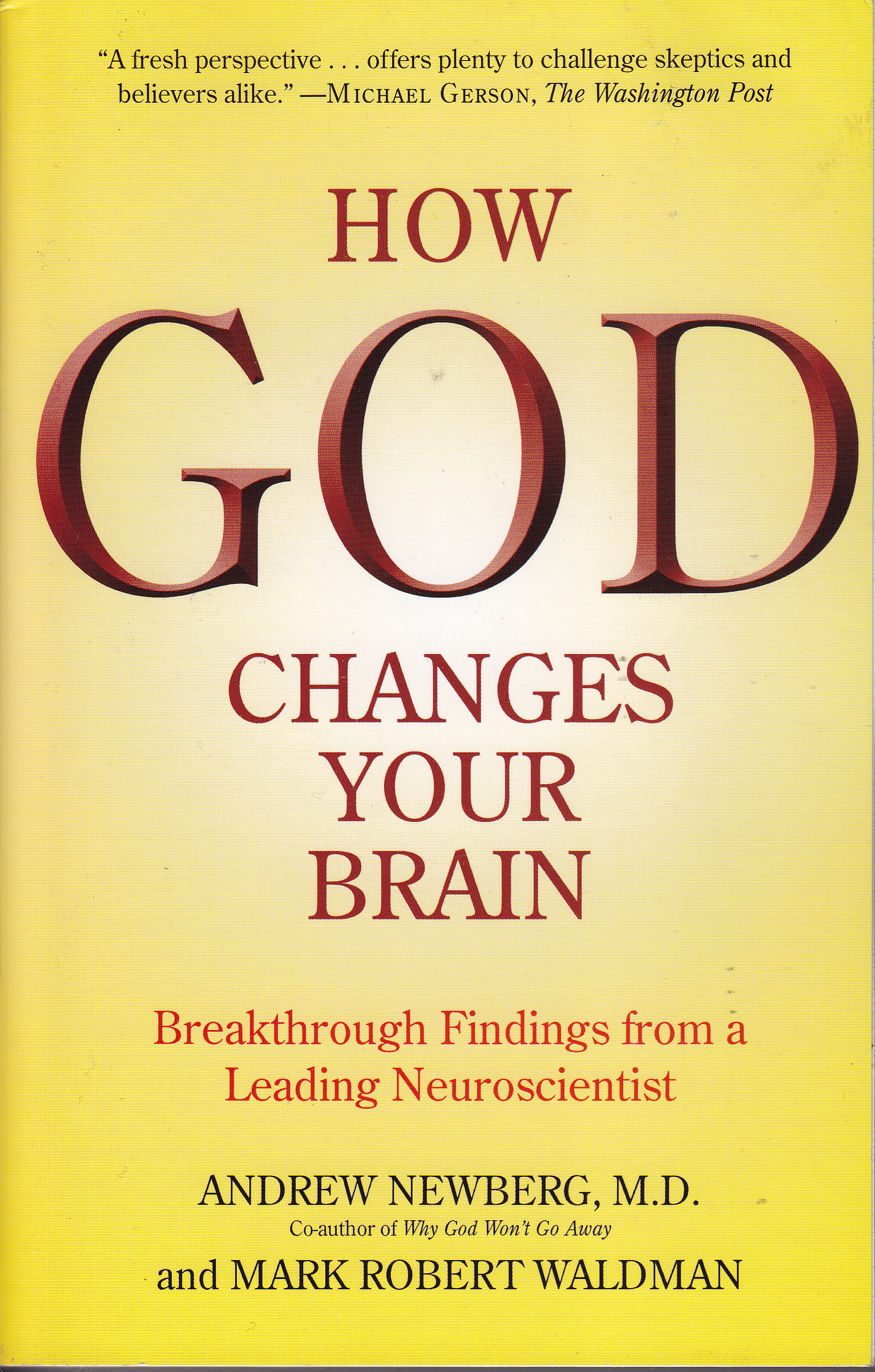
HowGodChangesBrainThose of us with scientifically oriented minds, but with affinity for the less quantifiable aspects of life, tend toward academic study of the humanities. It is not unusual for someone with a background in the hard sciences to dismiss such “softer” fields as less rigorous at best, or, at worst, a sheer waste of time. Many people in the humanities cower under this cloud of being considered somehow inferior for not being able to put numbers to everything. I suspect that’s why I find neuroscience so fascinating. While still teaching at Nashotah House, I would prompt students to think that whatever decisions they made about ancient texts, those decisions were mediated, in a very real way, by their brains. We don’t understand brains completely, but I’m amazed at what we have discovered so far. Years ago I read the book, Why God Won’t Go Away. It was an eye-opening study of what brain mapping reveals during states of religious inspiration, or at least, intense meditation or prayer. We can, to an extent, see inside someone’s head while they are communing with the other.

I recently became aware of the new book by Andrew Newberg (lead author on Why God Won’t Go Away) and Mark Robert Waldman, How God Changes Your Brain: Breakthrough Findings from a Leading Neuroscientist. I was a bit nervous at first, since I couldn’t recall how reductionistic Newberg was in his initial book on the subject. Neuroscientists sometimes perceive the world as being, in a sense, as all in our heads. I was pleased to see that Newberg and Waldman recognize that the “God question” is an open one. They address it right up front. I was drawn to the book because of one of their conclusions that had leaked into the footnote of something else I’d been reading: the brain changes as soon as it is introduced to the concept of God. Brain wiring is continually changing, but the takeaway here is that as soon as we introduce our children to the God concept, their brains will not unlearn it. It stays with us for life. Changing concepts about God is therefore quite difficult. Few even try.

This book, however, doesn’t see this as necessarily negative. In fact, the authors challenge the horsemen of atheism in that all studies seem to indicate that religion is actually good for you. Particularly meditation. In a world that is increasingly run on stress (just ask any business-person) this is an important reminder that prayer, or meditation, can actually heal some of the brain damage caused by life in a stressful environment. The nice thing about this is that the empirical evidence seems to be pretty strong. Our brains seem to be telling us to relax, step back, and not take all of this so seriously. Those are layman’s terms, of course, filtered through my brain. Even reading this book made me feel much more relaxed. It reminded me why, for much of my life, monastic living has seemed so very appealing. Instead, I live in the secular world with its many rewards and stresses. If I learned anything from this wonderful little book, I will be spending a bit more quiet time each day, and won’t be feeling guilty about it at all.


Science v. Evil

Can we eliminate evil? More than a question of metaphysics, this is also the title of an episode of the third season of Through the Wormhole. I’ve noted before that this particular season has been delving more profoundly into areas once reserved for religious thought. Evil is perhaps the most religious of topics, as distinguishing good from evil is at the heart of many religious traditions. Fast forward from the founding of your favorite religion to today. In order to answer the question of whether or not we can eliminate evil, we turn to neuroscience rather than any sacred book. Looking at brain scans, the scientists of Through the Wormhole have isolated areas that indicate who might be a sociopath—a convenient measure of evil—and also who might be less empathetic than whom. Perhaps drugs could be developed to inhibit sociopathic behavior and tendencies. As always, these episodes leave me somewhat distressed.

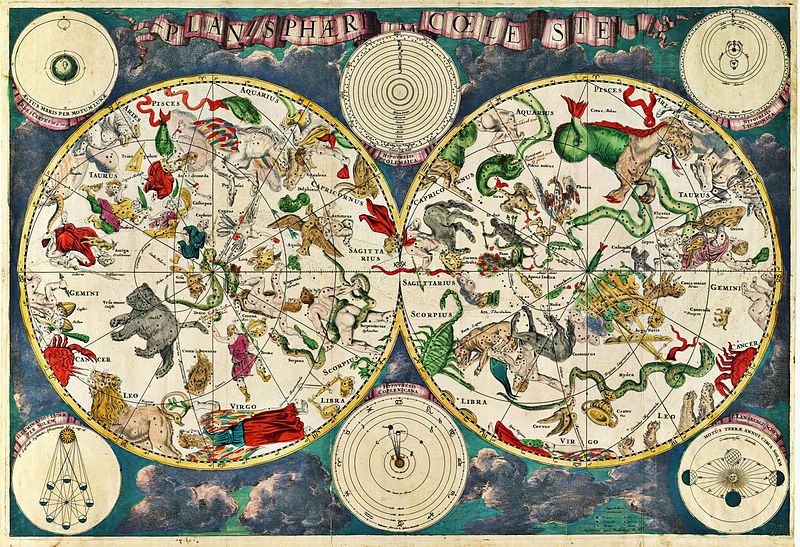
800px-Planisphæri_cœleste

Losing my long-term position in higher education “without cause” threw me into mental turmoil. Never one to use medications for a long term, I was shattered when my doctor suggested anti-depressants. Would this chemical, designed to “correct” my brain chemistry change who I was? The morning the treatment began, I hesitated to take the first pill, staring long at it and wondering if the person I’d been would be lost forever. I hated being on the prescription. Worse, it was a medication that you couldn’t simply stop. The drop in anti-depressants could bring me dangerously low. Although my employment situation hasn’t radically improved since then, I eventually weaned myself from the prescription. Looking back now, I see that time as an interlude in who I was, depression and all. Mine was, thankfully, a mild case. It has, nevertheless, left me wondering about the nature of evil.

Extremely empathetic, I have never had sociopathic tendencies. I care for insects and amphibians, as well as my fellow humans. I react to the emotions of others. Yet, like all people, I suspect, I know that I’ve got my own personal evils with which to struggle. I wonder if it is a matter of degree. Religions often suggest that the solution to evil is repentance and taking the decision to live a new life. What if one’s brain, however, prevents that? Would the administration of a drug amount to a kind of salvation? And what of those theologies based on concepts of human depravity—can neuroscience prove them wrong? When the moral questions are raised, the physical solutions offer answers. Can we ever reconcile belief and biology? The jury may never come back with a verdict on that one.


Life as we Know it

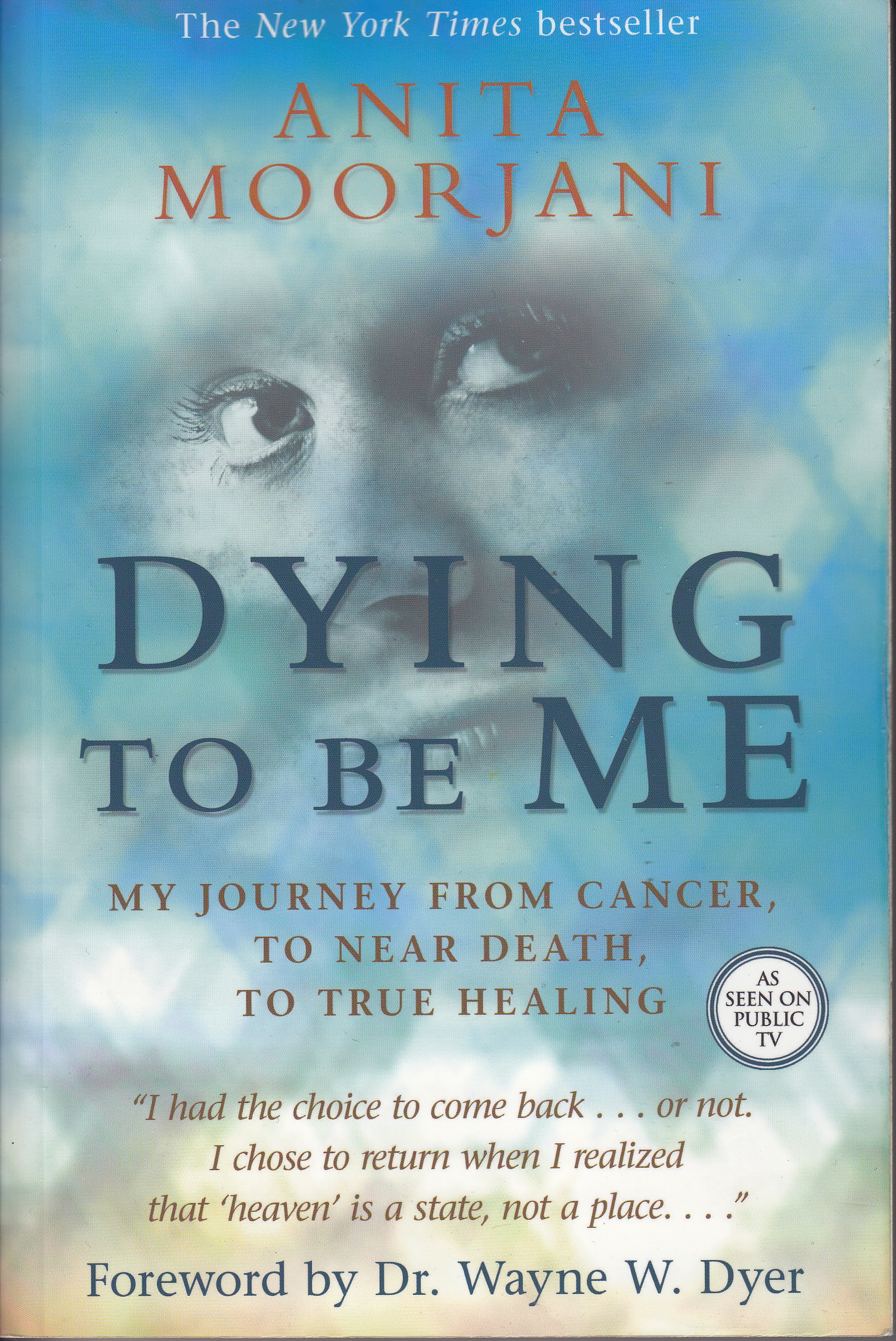
Dying2BMeA friend asked me for a book. Since my life has mostly been about books, I’m generally happy to supply what I can. This friend is a cancer survivor and wanted to read Anita Moorjani’s Dying To Be Me. The last time I saw this friend, she handed me the book, saying she didn’t care for it. Although the author tells of her dramatic Near Death Experience, and is very optimistic about all that we can improve by loving ourselves and others, she isn’t a Christian. Raised as an Indian living in Hong Kong and sometimes attending a Catholic school, Moorjani is conversant with several religions but doesn’t favor one above the others. Her experience of being in a coma with very advanced cancer and having a prognosis of days, at most, to live, yet coming out of the coma and being completely healed of disease within weeks could be overlooked on the basis of a belief system. I decided to read her account myself.

Ironically, Moorjani directly describes why she can’t accept any single religion in her book. Her reason is because religions tend to block being open to possibilities that fall outside of doctrine. Her Near Death Experience, described in great detail, doesn’t fit any particular religion very well, including her native Hinduism. It led her to believe in a kind of universalism with everyone ending up realizing their own divinity and loving all others unconditionally. Even though many of her interpretations of her experience are a bit too New Agey for me, I have a deep appreciation for her advocacy of trying to understand others and loving everyone. I saw nothing incompatible with Christianity there. Or any other ethical religion.

Religion can divide as much as, if not more than, plain common sense. Those who think deeply about it realize that religion should make life better for all. That seems to be its evolutionary purpose, apart from personal survival. Of course, some religions also reject evolution as well. When missionaries reached far shores and found good people living ethical lives, they feared for their souls, thinking only one religion could fit all. Many of us are heirs of such missionaries, being taught from our youngest days that living in fear and self-abasement is the loving, Christian way. It may be that a Hindu who learned to trust herself by nearly crossing the brink of death has something to teach the missionaries as well. If only they could listen.


Scientific Voices

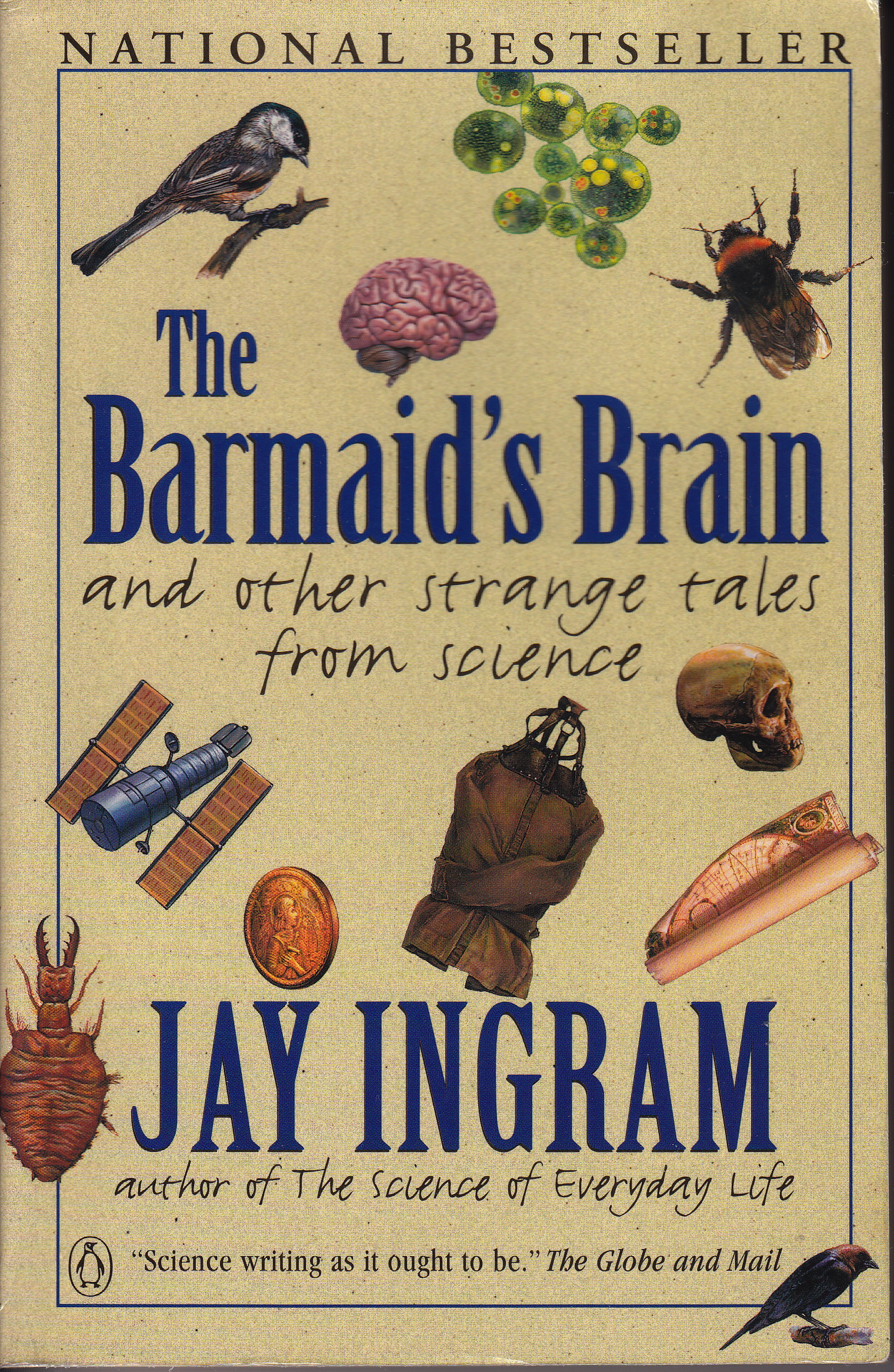
BarmaidsBrainScience requires translation. Even very intelligent people in other fields of study have trouble understanding what scientists have been saying. That’s why science writers are so important. They can distill the heady knowledge that empirical method produces into a palatable tipple for the laity. Jay Ingram’s The Barmaid’s Brain is one such digestible report. As the subtitle (And Other Strange Tales from Science) indicates, this book is about the weird world of science’s often hidden charms. We all pretty much know that quantum mechanics has turned conventional wisdom on its head. We also know (courtesy of the media) that science and religion fight like cats and dogs. What we don’t see is that scientists often disagree on how to interpret data, particularly on the weird end of things. Ingram tells many such interesting tales from nature, psychology, and technology.

The essays in the book are loosely grouped into areas with some common theme. The psychology story that struck me as being particularly appropriate for this blog was the one about Joan of Arc. Joan, as most of us learned from history, was a prodigy. Illiterate, female, and poor, she nevertheless displayed a military genius that led her to the head of a French army trying to hold off the advances of the English. When turned over to the enemy she was treated as a witch, tried for heresy, and burned at the stake. Later she became a saint. The reason that she’s in a book of science essays is that Ingram wonders what exactly was going on when she heard voices and saw visions. Neuroscientists have devised ways of peering into the brain during religious experiences, and psychologists have constructed theories of why otherwise sane people hear voices. Joan doesn’t fit into the category that used to be called schizophrenia, nor does she appear to have been in any way insane. She was religious and her religion spoke to her.

When I was growing up, it wasn’t unusual for scientists to be believers. Nothing was wrong with believing in a god and studying the physical world. Indeed, the idea went back to Isaac Newton and other scientists of the first generation of the Enlightenment. Implications eventually led to the utter absence of deity from the world. People such as Joan were understood as sadly misled by a religion that could not be distinguished from magic. Yet Joan, as Ingram well knows, would hardly be a household name without her visions and her faith. At the end of the analysis, Joan rises from the couch still a mystery. An enigma to science, and suspect to many religious. She was, it seems to me, quintessentially human. We are all, it seems, whether saints or scientists, subject to what empirical evidence will allow us to believe. Most of the time, anyway.