Watchers and the Holy One

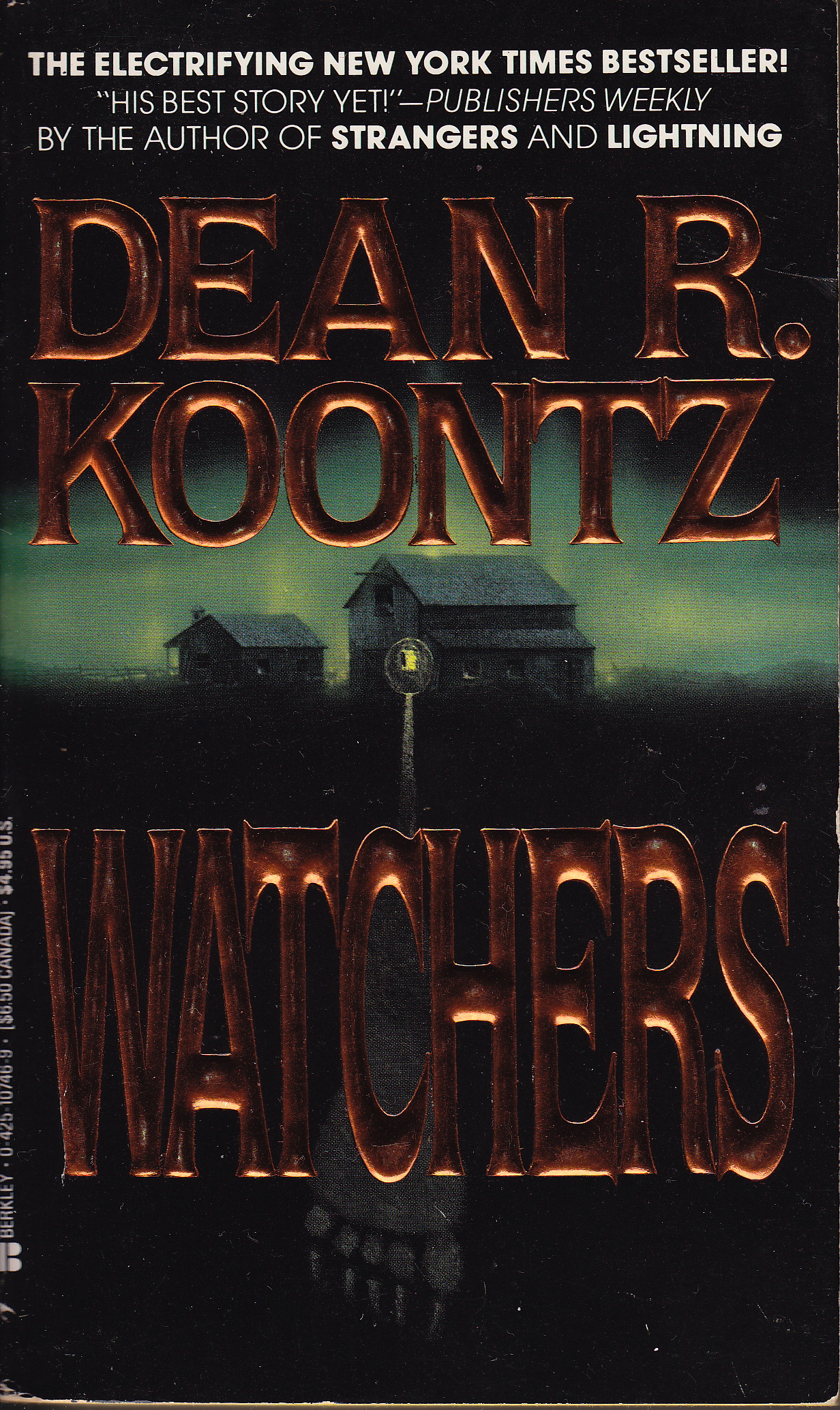
WatchersI’m not really a fan of Dean R. Koontz’s thrillers, but I do find myself turning to them from time to time. Like Stephen King’s, Koontz’s books are easily found at book sales, but you don’t always have your choice of which titles. I picked up Watchers because it had a vaguely biblical sound to it. The title seems to fit the story only loosely, but there are a number of points where God is invoked in the tale. Watchers is a book about genetic engineering, both the good and the bad aspects of it. Scientists have produced a dog as intelligent as a human being, and a monster that kills indiscriminately; a Cain and Abel. As this is being explained to one of the characters, he says “If we can do this, we have the power and, potentially, the wisdom of God.” Here, in a nutshell, is the debate about intentional genetic modification. We don’t have the ability to see ahead very far, and although we like to think ourselves god-like, we could very well be creating catastrophes. At least, in this story, God is deemed wise.

Some time later another character in the story opines that when humanity can create an intelligent species, it is our responsibility to act, in a sense, as its deity. “If we’ve come so far that we can create as God creates, then we have to learn to act with the justice and mercy of God.” Interestingly, there is no question of theodicy here. The justice and mercy of God are assumed, despite the many wakeful nights and unsettled days of the theologians. Casting God as the “good guy” is not as easy as it used to be, and our own “engineering” isn’t always assumed to be for the good of our own planet.

Finally, as some of the characters are discussing who has the right to own this super-intelligent dog, God is invoked once again. The qualities of the dog (a golden retriever, since, one presumes, a Rotweiler, for instance, might have different qualities), its courage, ability to distinguish right from wrong, ability to love, and selflessness, make it more in the image of God than human beings. Again, God here is unquestioningly assumed to be the great good, the advocate of humankind. I realize novelists are under no obligation to be theologians, yet it is difficult to tell a tale of genetic tampering without invoking the Almighty. What I find so interesting here in Koontz is that despite the evil of some of the characters, the goodness of God is never called into question. It is assumed that the evil we create is our own while the good in the world belongs to God. It’s a view of the world that could be called almost biblical. Those who professionally reflect on these things, however, often come to a different conclusion.
Different Bites

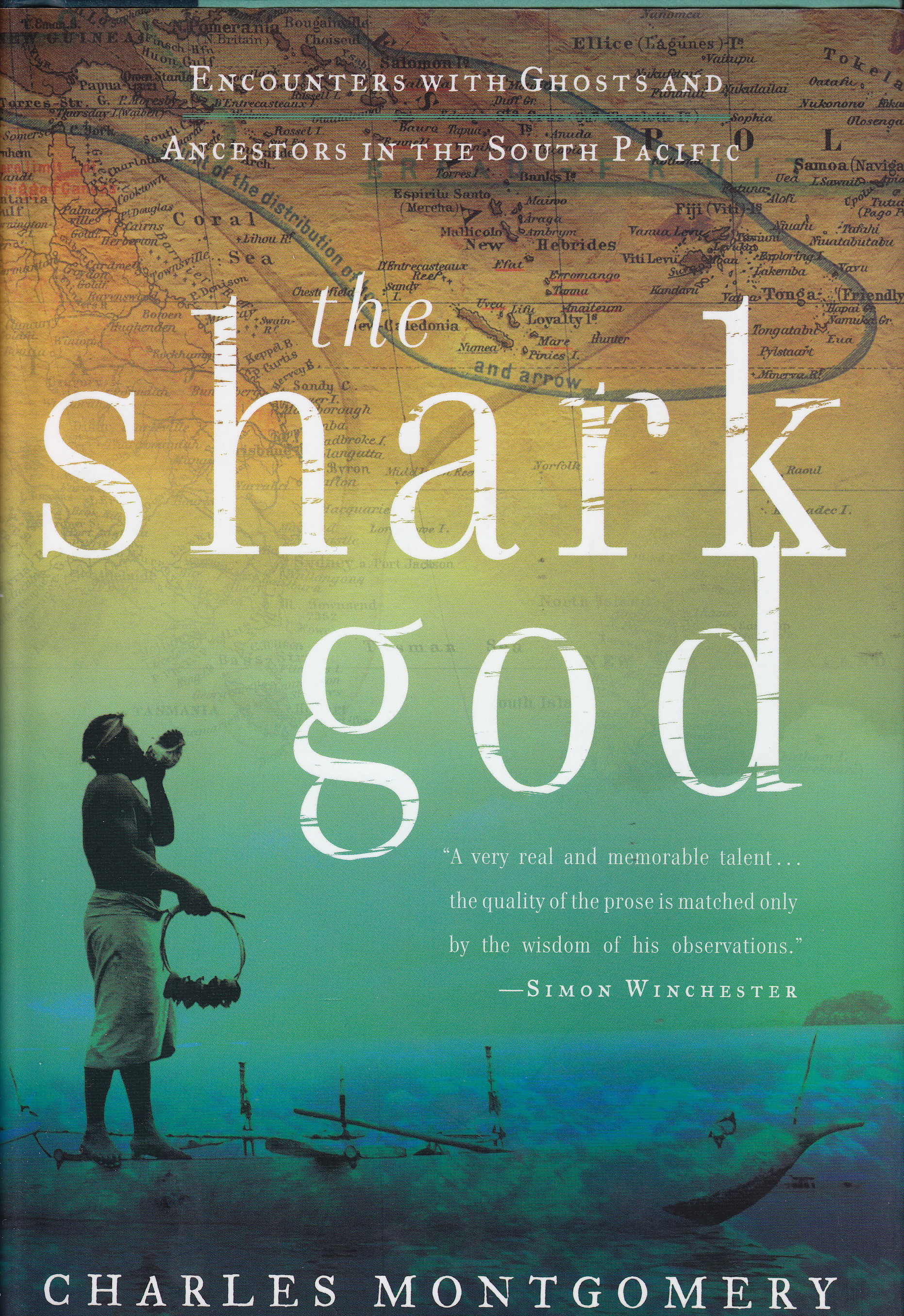
SharkGodThe South Pacific brings to mind light-hearted musicals, uncomplicated lifestyles, and Gilligan’s Island. For those of us born in the eastern parts of North America it can seem pretty exotic. Especially since we can seldom afford to go there. Since my income has wavered around the subsistence level of a reluctant urbanite, I instead travel there in my mind. I came across Charles Montgomery’s The Shark God at a recent book sale. I generally scour the anthropology tables since I find the belief systems of others so fascinating. Montgomery, a journalist, traveled to Melanesia to trace the route his great-grandfather took as a missionary. A non-believer himself, Montgomery wanted to see the magic that a former generation believed in firsthand. Noting that missionaries often despoil the cultures they are trying to “convert,” his tale is full of insights and observations and disappointments. My kind of book.

Montgomery is remarkably open minded. Like many of our generation, he outgrew the religious fervor that seemed so strong just a few decades ago. Still, he is open to the possibilities in the lesser understood cultures of the South Pacific. He notes that E. E. Evans-Pritchard, the famous anthropologist, opined that non-believers made poor anthropologists. Even missionaries might make better, he suggested, since at least they know what it is to believe. And here is the driving tension of Montgomery’s narrative. Sometimes you simply have to be open in order to see. Not all evidence is empirical. He recounts little “miracles” that he later reflects may have been mere diversions. Nevertheless, the world opens up when it is seen through native eyes.

Missionaries, although they may be better equipped to understand foreign (or native) believers, nevertheless try to change them. What I found most fascinating is how even those who fully identify as Christians in the south seas have combined that belief with their indigenous religions. Christianity, even among the clergy, is an overlay for culture. In ways that shock and frustrate missionaries, those converted maintain elements of their culture that fit uncomfortably with doctrine. How do you convert the converted? Or maybe the word is more properly “pervert.” Belief systems grow in cultures and tend to introduce high moral standards, no matter the deities (or non-deities) known. The Shark God is a wonderful window open on the South Pacific, a place to which some of us will only ever be able to travel in our limited minds. We are, after all, products of our culture.


DOA

Wormhole3Perhaps it’s just me, but the third season of Through the Wormhole has taken a dramatically metaphysical turn. I always run behind the time when it comes to media; I know that the season is long passed. I started watching Through the Wormhole shortly after the first season became available on DVD. Science has always been an abiding interest of mine, and I face it as someone raised religious and wondering whence lies the truth. (“Through the wormhole,” for the record, is where it might be found according to Morgan Freeman in the opening voiceover.) The third season, through which I’m currently making my way, has begun to raise disturbing questions about life and mortality that start to highlight some of the more Frankensteinian aspects to human curiosity. I recently watched the episode “Can We Resurrect the Dead?”

In the world with which I am familiar, resurrection has always been a religious issue. I grew up with a strong notion of the afterlife, and it was suggested to me that survival beyond death was assured. But the resurrection that various scientists are now exploring is of a different order. For those who can afford the increasingly astronomical costs of top medical care, resurrection is not such an unusual thing. Only, when your body is resuscitated, you wake up the the same weary body that just died. So some of the scientists interviewed suggest that if we can reverse the death “mechanism” that is apparently built into our own mitochondria, we might be able to bring back the dead. Even more bizarre are those called “life loggers” who wear devices to record their experiences in life so that they can be uploaded and preserved. A consciousness digitized and stored on a hard drive heaven for all eternity. Meanwhile a scientist smoking a cigarette in Japan shows us a robot straight from the uncanny valley that looks almost like him and is sent to do some of his lectures in his place.

Maybe it’s just me, but it seems that resurrection used to be somewhat simpler. It was a matter of following the right doctrine and living a life worthy of being continued after this one ends. Now it is a matter of peering through a microscope, or trying to capture on mere devices the multitude of experiences that flood us daily, making us human. Can our future, digital selves really experience human emotion? All those pictures taken while riding a bike—will they convey the effort of balance learned as a child, the sensation of a self-generated breeze on my face, the wonderful weary sensation in my legs upon stepping off? What of that hint of lilac in the air that I picked up momentarily on the wind? Will eternal life, missing the actual life be worth it? I think Victor Frankenstein discovered the answer to that almost two centuries ago.


Useful Fantasy

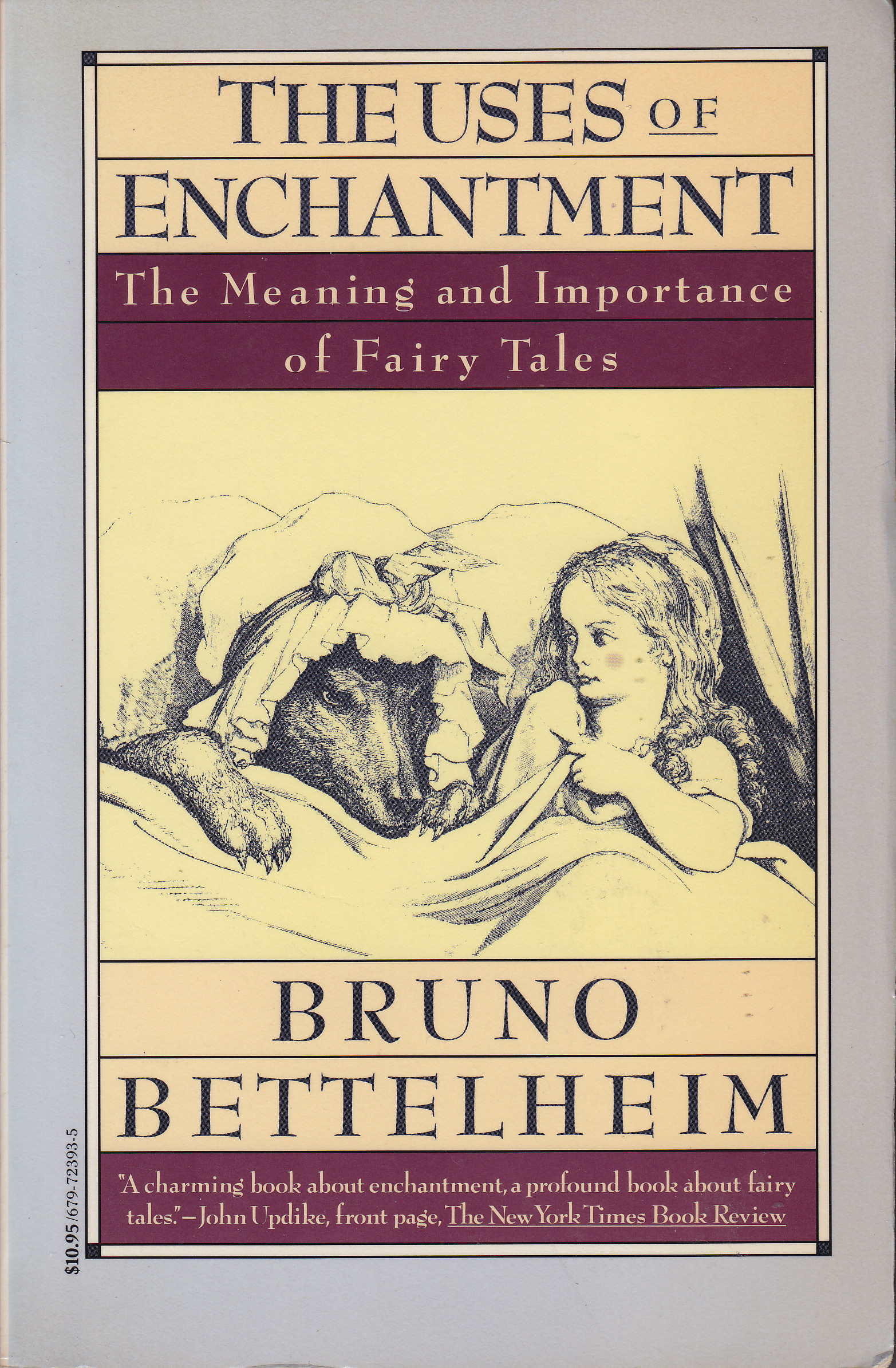
UsesOfEnchantmentOnce upon a time, I heard about a book called The Uses of Enchantment. During my doctoral studies it was recommended to me, and I put it on my to read list. That list is quite long, and I don’t follow it in any kind of order. Like life, it is chaotic and ever changing. Now, some decades later, I have finally read Bruno Bettelheim’s classic, and I wish I’d read it when I first knew of it. Originally published in the 1970s, The Uses of Enchantment was one of the few serious books that suggests fairy tales are important. Bettelheim was an unapologetic Freudian and in reading his book I found the origin of many of the observations I’d read about fairy tales through the years (what does Red Riding Hood’s wolf represent?) owed their origins to this tome. The book is important even for non-Freudians because it takes great care with a subject that clearly deserves it—our imaginary tales are more than simple entertainment.

Fairy tales are part of a long continuum in human thought. Bettelheim shows that they are very closely related to myths, although mythology is clearly something different. Similar, but not equal. Even more intriguing is the fact that fairy tales are closely tied to religion. Bettelheim notes that several biblical stories could almost be classified as fairy tales. The intellectual life of the child, he notes, for much of history depended on religious stories and fairy tales. The very unrealistic nature of both are intended to speak to children in a way that facts can’t. Indeed, the hardened rationalists sometimes seem to lose sight of the fact that we all need fantasy to keep us going from time to time. Bettelheim suggests that biblical stories help children to cope with things on a symbolic level that creates a sense of security.

Already in the 70s, however, many were suggesting that we, as a species, had outgrown our use for fairy tales. Indeed, it is not difficult to find many academics in the humanities who hear the same refrain—we don’t need this fluff. Science, numbers, technology—these are the keys to the future! But what future, I wonder? What kind of world would we have to face without literature, movies, and music? We need our myths still. Despite Disney’s take on them, we need our fairy tales as well. A world without imagination may be efficient, but it is no livable world at all. Bettelheim’s personal demons sometimes cast a shadow over his work. He was a concentration camp survivor, however, and early trauma has a way of staying with a person throughout life. Those with fairy tales to fall back onto may be those best set to survive in the deep, dark woods.


The Eerie

Those who have trundled alongside of this blog for any length of time no doubt know of my interest in weird fiction. Somewhere in the mists of my youth this led me to one of the few venues in which a person can get a hook on the eerie, namely, horror films. I am, however, no fan of violence, and quite sensitive to the human condition. What I have always sought is hauntingly summarized in Robert Macfarlane’s Guardian article sent to me by a friend, entitled “The eeriness of the English countryside.” Horror has become, in keeping with the dullness imbued by a society of constant diversion, aggressive and shocking. New levels of nauseating cruelty are required for generations raised with graphic computer games and an internet that is like the subconscious completely unleashed into the waking world. You need more items jammed under the fingernails to elicit any reaction. That’s not what I’m here for. Whatever happened to the uncanny?

As Macfarlane notes, there is a natural eeriness to the landscape left by human activity. Not just in England, but wherever we set foot. The innocent-looking countryside is seething with undisclosed atrocities. It is no coincidence that in America the “Indian burial ground” motif took off for explaining the haunting of the landscape. The eerie is often our retrospective on what we know we really shouldn’t have done. Macfarlane is writing for those who’ve experienced the English countryside and its secrets, but no matter where we look we can find the uncanny cast into the scenery by our selfish actions. There is horror here, but it is subtle. You have to sit quietly and listen to hear it, but it can, like a good eerie novel, induce shivers without a drop of blood being shed. (Well, maybe a drop, but seldom more.)

Many doubt the soul exists. Others of us take a broader view of the question. Our view of the world is colored by what has brought us to where we are. As someone who has been repeatedly passed over for jobs because of the excesses of the white male society in which my ancestors happened to have tacitly participated, I rest on the horns of this dilemma. All of my conscious life I’ve supported equal rights for all races and genders. The landscape I inhabit, however, is haunted. There have been dark deeds undertaken on this soil, and the soul is that which remembers. Macfarlane is no doubt correct that even the eerie can be politicized. Those of us who daily experience it, however, know that England hosts only one of many, many tainted shores.

DSCN0216


Two Outlooks

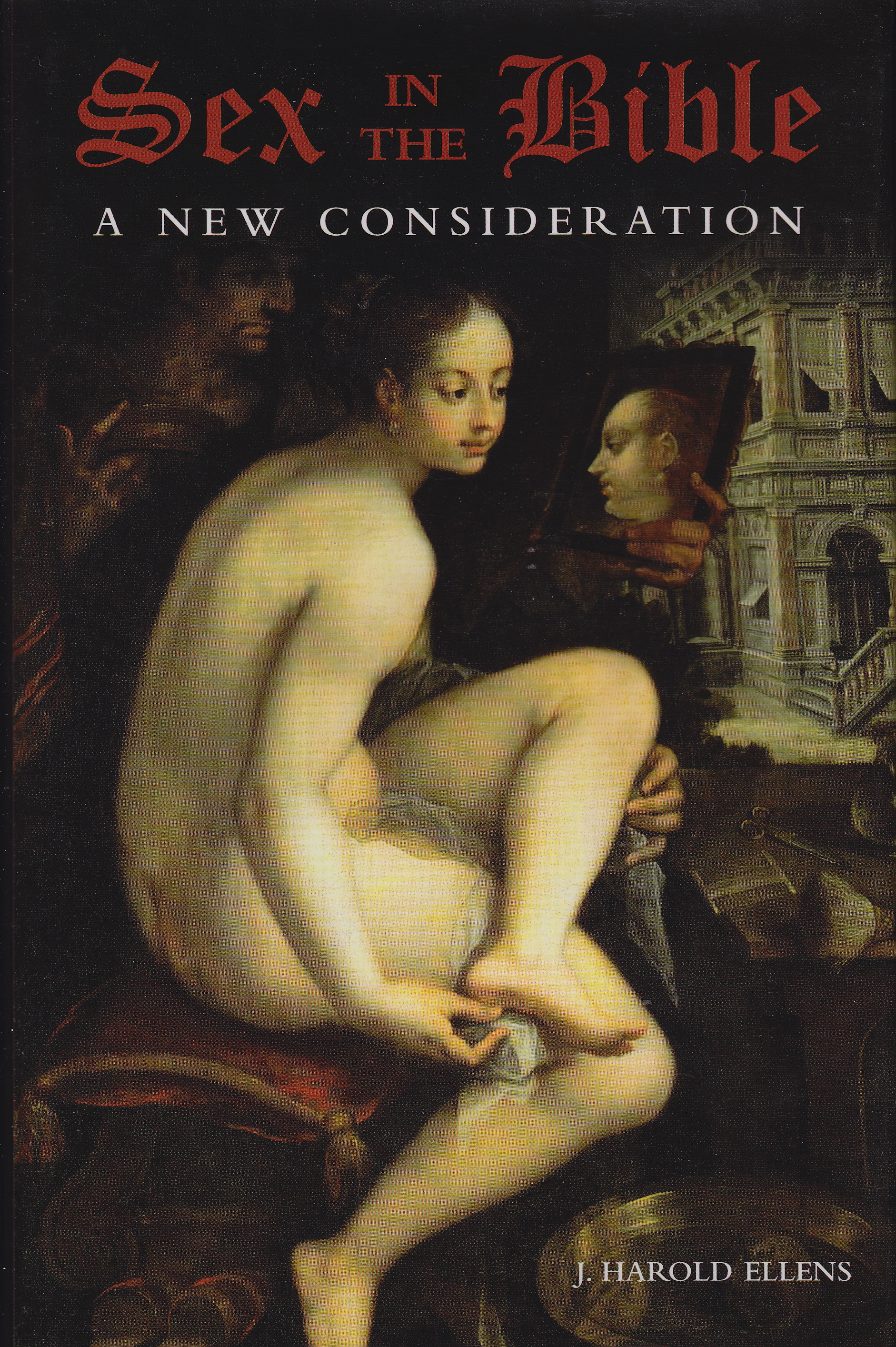
SexInTheBibleThe word polymath used to be applied more easily. In these days of highly specialized training, it is difficult to have expert knowledge in more than a couple of areas. The two areas, sexuality and scripture, dealt with in J. Harold Ellens’s Sex in the Bible: A New Consideration, are such zones of specialization. Students of the Bible have recently begun an intensive exploration of how sex fit into the ancient worldview. Ellens’s book surveys all of the biblical legislation about sexual matters and a fair number of the stories involving the same, with the sensitivity of a professional counselor. Indeed, his practical knowledge of human sexual development and psychological needs based on it should inform society’s understanding of scripture. The Bible is no pristine book. Neither is it a romance novel. Still, ancient people were not as shy about sex as post-Victorians tend to be. The Bible is often frank on the subject.

The main danger of a project like this is trying to decide where to take the Bible literally and where not. Ellens, while he has some training as a biblical scholar, falls into a familiar trap. He assumes, as parts of the Bible do, that Israel’s neighbors were sexually depraved. Not only did they condone things like bestiality, according to Ellens, but they incorporated sexual deviancy into their worship. Ancient records, readily available for decades, give the lie to that outlook. Ellens makes the case that biblical writers had no way of knowing, however, that homosexuality, for example, is a biological predisposition that can’t be changed at will. Other sexual practices that are now considered normal and healthy were perversions in the biblical period. Medical science should inform our understanding of Holy Writ.

This is an argument Ellens can’t win. Passionate though he may be about how all of this just makes sense from a scientifically informed point of view, the fact can’t be changed that the Bible does condemn some sex acts outright. Even more damaging, in my opinion, is that the Bible clearly views women as the sexual property of men, and men regulate the sexuality of their females. Anyone arguing that the Bible is a moral guidebook in regard to sexual mores must face this issue head on. There’s no tip-toeing around it, even with verified psychological pedigree. The Bible is the product of a patriarchal structure that did not tolerate sexual practice outside prescribed limits. We now understand the same behaviors from a scientific point of view, but the written text doesn’t change. It is just that dilemma that makes it very difficult to be an expert on two fields so diverse as sexuality and biblical studies.


Brain Dead

I’ve been thinking about brains (is there any more existential thing to do?). Reading a book this week about the mind (see Thursday’s post) probably has something to do with it. And also having finished a book on zombies maybe contributes as well. You see, I find it strange when scientists assume that we can figure out all the answers with our limited brains. Although we are endlessly fascinated by them, neuroscientists have long noted that they do have weaknesses—they (brains) are easily fooled, and, for those who find no room for the mysterious in the universe, we’ve made up gods to keep us company. We know that relative brain size—relative to body mass, that is—is a large factor in intelligence, but we seem not to imagine the possibility of larger brains than those we carry around. I suppose it’s not without reason that alien brains are disproportionately larger than our own, according to the standard image of the “grays.” We don’t like to think there’s something smarter than us hanging around. It’s a frightening thought.

Screen Shot 2015-05-02 at 5.35.48 AMOn the more earthy side, brains have been the usual fare for zombies in one sub-division of the zombie movie neighborhood. George Romero gave us flesh eating as a paradigm, but eventually zombies settled on brains. This was on my mind as I finished the epic Strangers in the Land that Stant Litore kindly sent me in Kindle form. I’d read What Our Eyes Have Witnessed on my own, and the author wanted me to read more. Litore’s zombies are more in the canonical Romero sector—they eat flesh and their bite conveys zombiehood. Strangers in the Land takes its base story from the book of Judges. Only Deborah becomes a zombie slayer. Brains aren’t eaten here, but they must be destroyed for a zombie to—what? Redie? Full of colorfully drawn characters, the story rambles through the countryside of ancient Israel, plagued with zombies. It is the brain that keeps a zombie going.

While I have to stand by my recurring assessment that the zombie is a hard sell in novelistic form (here goes my mind again! Reading a book gives your brain too much time to focus on the utter impossibility of bodies missing organs or vital tissue to move, or “live,” even with a brain) Litore is onto an interesting idea here. Looking at it metaphorically (as surely he intends it) helps. Perhaps I just miss the lumbering revenants of Return of the Living Dead calling out “Brains! Brains!” The Bible, however, is endlessly open to reinterpretation. What Our Eyes Have Witnessed was post-biblical. This current installment moves us into the realm of reception history. I’ve been researching reception history and the undead for a few months now. I have some conclusions to share in an academic paper a few months down the road, but for the time being, I’m still trying to figure out brains. Or maybe I’m just out of my mind.


Mind the Gap

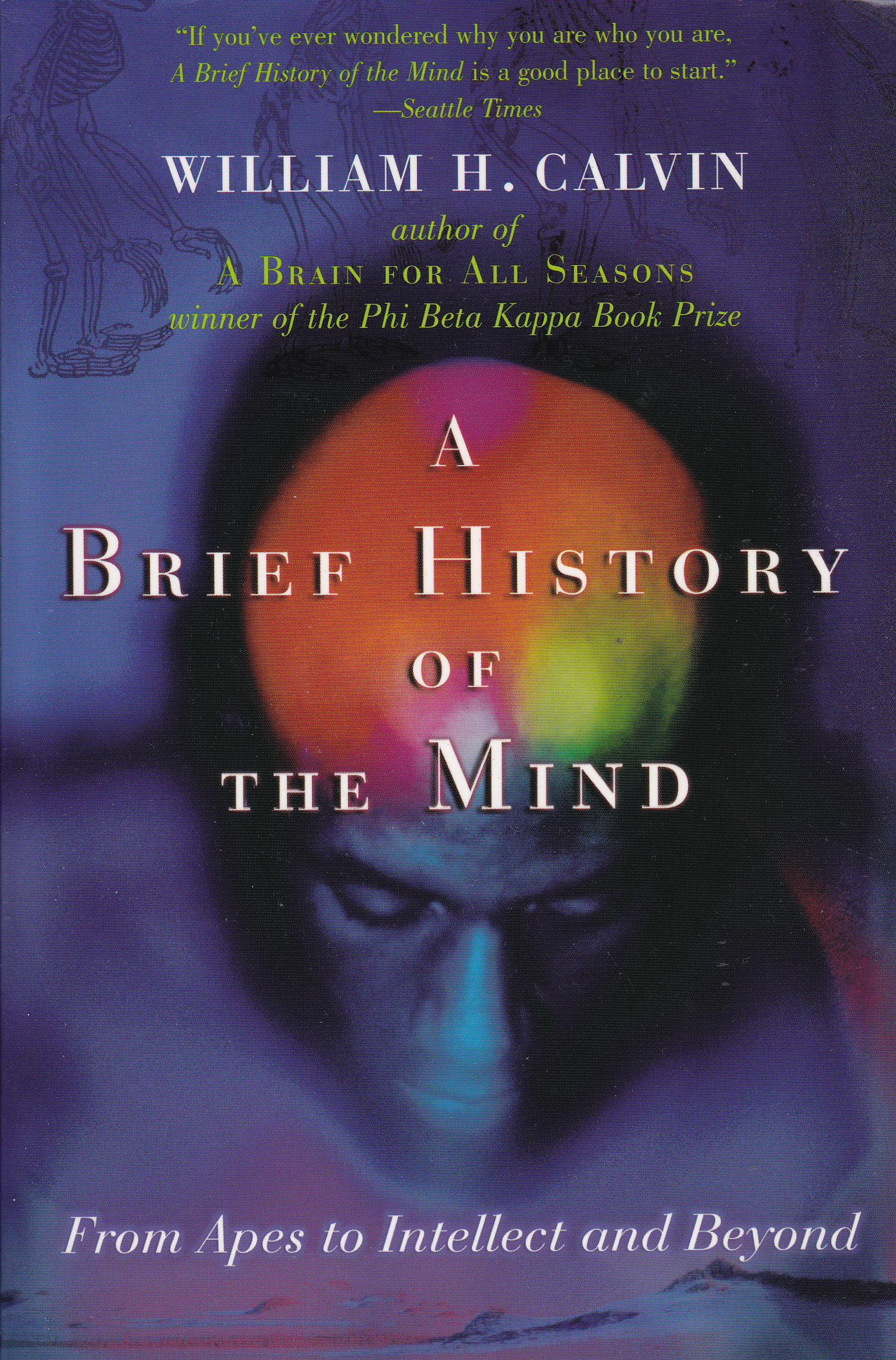
HistoryOfMindThere’s something on my mind. I guess that’s the normal state of a conscious being. William H. Calvin’s A Brief History of the Mind might clarify that a bit. Although I have trouble accepting Calvin’s belief that mind is the same as brain, he does allow, in this wonderful little book, for a somewhat more expansive view. Subtitled From Apes to Intellect and Beyond, the story is more than just a survey of archaeological finds and their physiological counterparts. This is a story. It is a story of how we developed minds. Calvin approaches the topic with the realization that others will have different stories, and that future discoveries (some of which may have already been made in the decade since the book was written) may change it a bit. The book ranges from the quasi-technical (at least from the perspective of sitting on a bus) to the amusing, but always keeping in sight of the fact that this is of human interest.

Particularly compelling is Calvin’s consideration that we may have, at least from our modern perspective, gotten ahead of ourselves a time or two. In discussing the migration of hominids from Africa, he makes the brilliant point that perhaps we weren’t quite ready for that adjustment at that time. We seem to have perhaps driven other hominids to extinction. Our technology might have been outracing our conceptual knowledge of how to handle it. When he returns to this theme later in the story, the results are even a little frightening. We do sometimes get to the point where we can do things that we shouldn’t do. Before our minds have realized the full implications. Atomic bombs, anyone?

Unlike many scientists who believe in materialism, Calvin does not ridicule religion. He notes that it can be taken too literally, but does not suggest we are fools for believing. In fact, he discusses a couple of sects that have turned dangerous over time. He shows how they acted logically, following their thought process in an orderly, if clearly wrong, direction. Some would use this as a cudgel to bash religion in general. Instead, Calvin seems to suggest that we might learn from all of this. Minds, while impressive, are not perfect. Logic can have its flaws. We can, despite the tragedy, learn valuable things about how the mind works. This is an open-ended story; the future of mind is being constantly disclosed. If there is a future for us, we can perhaps prepare a bit better by understanding what’s on our minds.


Plainly Ghosts

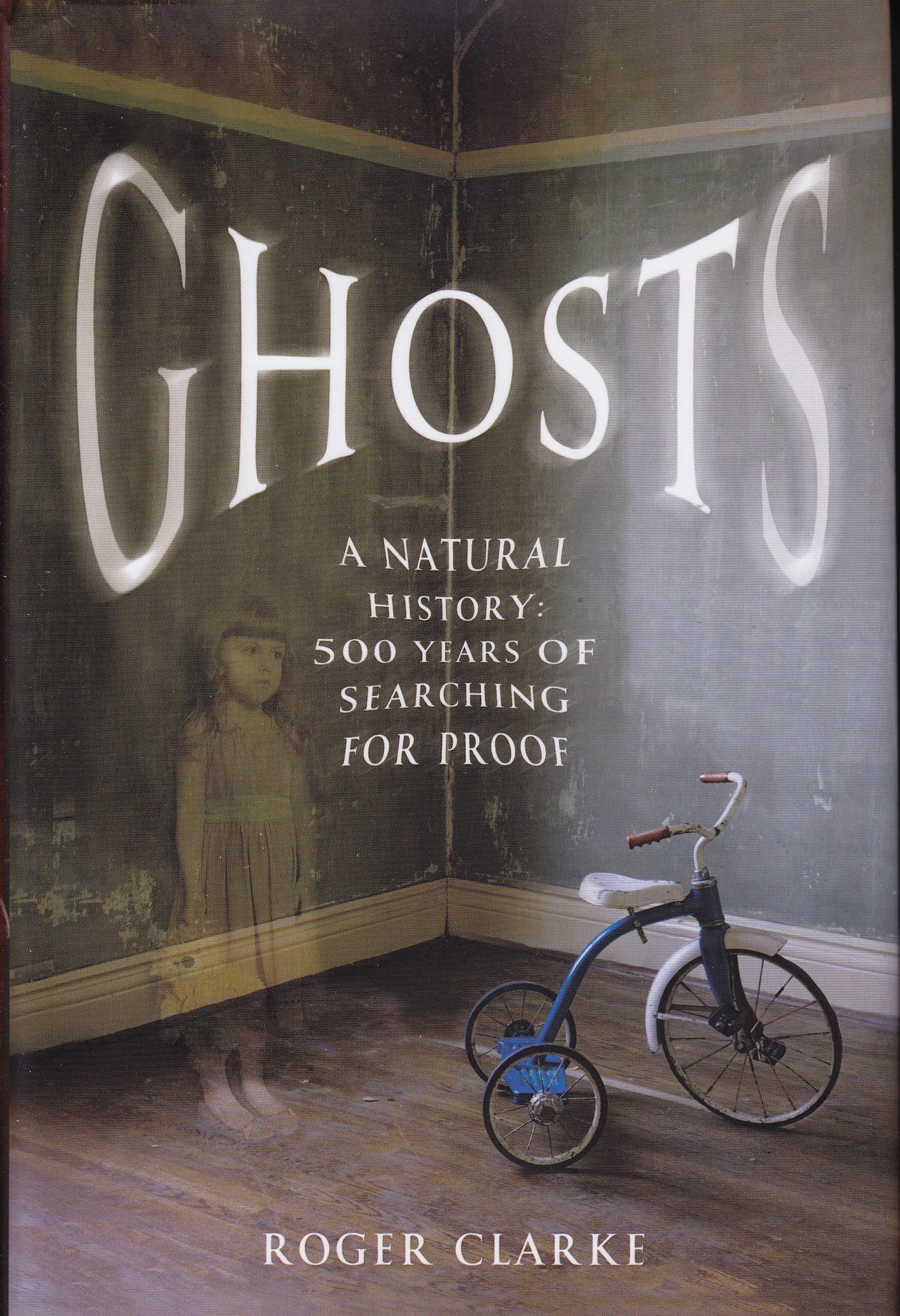
GhostsSometimes I’ll buy a book and secret it aside to read later as a kind of reward for making it through some heavier material. Research monographs don’t always do the job for which they are required in the commuter’s life—keeping me awake on a long and tiresome bus ride. I look forward to the book that has more appeal, and I don’t want to rush through it right away. I picked up Roger Clarke’s Ghosts, A Natural History: 500 Years of Searching for the Truth in Princeton’s wonderful Labyrinth just after Christmas (the traditional time, I learned, for telling ghost stories). Now that spring is more or less firmly in place, and I’ve gotten through some erudite studies that I might use for an academic paper or two, I picked it up to pass the time on my weary ride. As regular readers will know, ghosts have long been a preoccupation of mine, but one on which I’ve always been ambivalent. Clarke doesn’t set out to prove anything here. His book is more experiential than agenda-driven. He begins with the simple observation that people do see ghosts.

Lamenting that he himself has never seen one, Clarke sets out upon a partially autobiographical explanation of where this fascination began. Being from the United Kingdom—often cited as the most haunted country in the world—he goes through some of the more famous accounts with a sharp eye. Crying shenanigans when they’re obviously there, he questions how one can claim that any one country is more haunted than another. More importantly, he notes how seeing ghosts is a marker of class. Historically, the rise of the middle class led to the death of the ghosts. The rich and the poor see ghosts more often. Those in the middle associate such sightings with poor education, while those who are most educated and refined take ghosts for granted. It is only with the rise of reality television, the true opiate of the middle class, that ghost belief has become acceptable in the broad center.

Clarke also frames his work against the religious background that Catholics, with their belief in purgatory, had room for ghosts in their theology. Protestants tended to see anything reported as a ghost as a demon, since the soul either went to heaven or hell after death, meaning that there’s no ghost left to wander around. While doubtlessly skeptics exist, I have always been intrigued that even hard-nosed scientific views of the paranormal world tend to go a bit softer on ghosts than they do on cryptids and aliens. I suspect that’s because ghost reports have been around as long as written records and, presumably, long before. People have always seen ghosts, and in such large numbers that it is difficult to simply call them names and say they’re foolish. Yes, we may be a credulous lot, but we can still find books like Ghosts at a reputable bookstore. And we can tuck them away as guilty pleasures to take the chill off an otherwise very dull ride.


Three Thoughts

If it weren’t for friends sending me little nuggets they find on the internet, I might be uninformed about much of the weird and wonderful world unfolding around me. With hours not spent at work being laid out on spartan public transit, I don’t have much time for surfing. So it was that I watched this video of St. Patrick trying to explain the Trinity to a couple of normal Irish blokes. Of course it’s funny, but as I watched it, a thought occurred to me. I used to think what a waste it was for learned minds to sit around arguing the fine points of theology. The Trinity is a prime example—three is one but not really one. Form, substance, essence, accidents or effects? What is it that makes them distinct yet not? It is, of course, a logical impossibility. Yet hearing words like modalism and arianism made me realize that these were highly sophisticated concepts. They were developed in Late Antiquity in a world with quite a different frame than our own. Atheism probably existed then, but it was very rare. What we might call naturalism did not exist. Some kind of deity or force was obvious behind the natural world.

To be sure, some thinkers had already suggested that the earth was round and that laws of mathematical precision governed aspects of nature. The frame of the human mind, at the point when engineers can construct pyramids and ziggurats, had already reached the point of science. What do you do with science when gods can’t be dismissed from the picture? Naturally, you turn your science on the gods. Although many today would argue that if God exists, the deity is a being (or concept) outside the realm of science. Science deals with the material world, not with supernatural possibilities. Dividing a single deity into three persons without making yourself a polytheist is a real mental puzzle. The concept of the Trinity isn’t biblical, although the basic ideas are derived from the Bible. It is a purely theological construction to explain how Jesus could be God and yet die. Well, it’s more complicated than that.

One of the great joys of the angry atheists is to point out the obvious frippery of theological discourse. How many angels can dance on the head of a pin? Why would anyone waste their time on such nonsense? Yet, the thinking behind early theology was exquisitely rational and highly developed. One might almost say “scientific.” The people of antiquity were not stupid. Our mental picture of the Middle Ages is often of unwashed louts chasing witches and hiding from dragons. Their society, however, was advanced by the standards of hunter-gatherers. The technology of the day may not have reached down to the level of the everyday worker, but human thought, ever restless, was working its way toward a scientific revolution. And God tagged along. Even Sir Isaac Newton gave a nod in that direction. While theological arguments may have outlived their usefulness in a society such as ours, they did represent, in their day, the best of rational thought. And in their own way, likely contributed to the birth of what we know as science.

The fate of heretics

The fate of heretics


Getting Exorcise

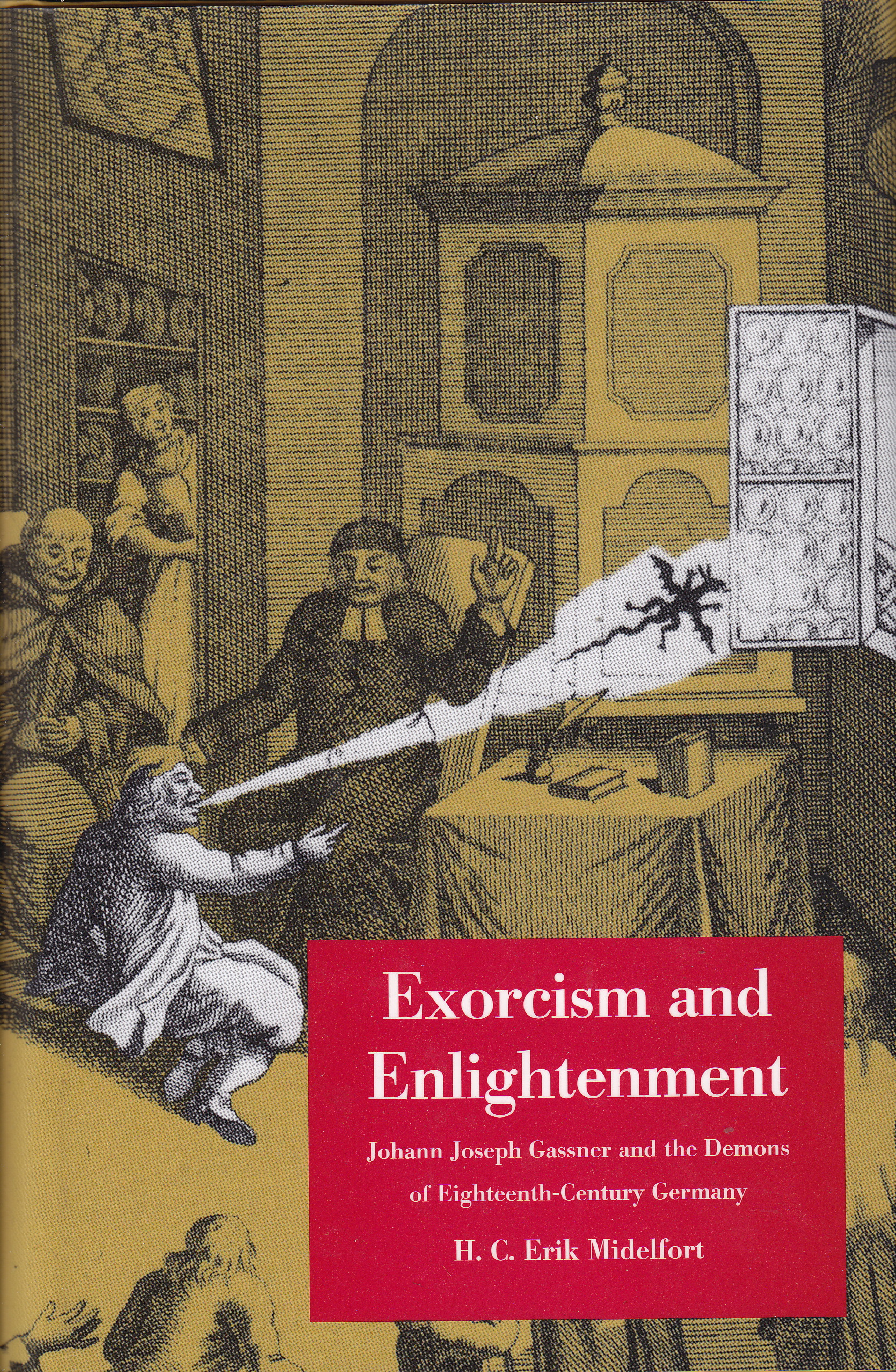
ExorcismTo be honest, I can’t recall having heard of Johann Joseph Gassner before. Given his role in the European witch-hunting culture, however, I must have read his name a time or two. As with most names out of context, it was quickly forgotten. H. C. Erik Midelfort, therefore, is to be congratulated with bringing out not only Gassner’s name, but his remarkable career. Exorcism and Enlightenment: Johann Joseph Gassner and the Demons of Eighteenth-Century Germany, like so many other books, came to my attention in a bookstore. Books on demons have a strange kind of draw to someone interested in both religion and monsters, and since it was on an overstock shelf, I found it impossible to let it lie. This proved to be a wise decision.

Midelfort proves himself one of the rare academics who doesn’t talk down to his readership, yet makes what could be a complex topic understandable. Complex is about the only word to describe what would become Germany in the Eighteenth Century. The remnants of the Holy Roman Empire left a divided region with prince-bishops—clerics with political control outside their own dioceses—vying for all kinds of authority. Although the Enlightenment was well underway, the region was embroiled in the controversy of a priest by the name of Gassner. Gassner was a healer, but also an exorcist. Believing that many torments suffered by the populace were demon-spawned, he used highly public and, to some, incredible exorcisms before healing those in need. His success was unquestioned, but the church, struggling between Catholicism and Lutheranism, as well as struggling to find a place in the Enlightenment world, found Gassner a bit of an embarrassment. What do you do with demons in a world where science says they don’t exist?

One of the most notable takeaways from Midelfort’s book, for me, is that the Enlightenment did not suddenly change the world. Even fully aware of empirical experimentation and the use of reason, the scholarly world did not utterly acquiesce to a subdued materialism. It still hasn’t. As the case of Gassner demonstrates, our comfortable, physically predictable world holds some surprises for us yet. At least for Gassner, believing demons don’t exist doesn’t stop them from tormenting people. As he cured his thousands, skeptics gathered (including his contemporary Franz Mesmer) to explain away what was happening. Even today, as Midelfort points out, we can’t explain the placebo effect. There’s no question, however, that it works. As does, if the media is to be believed, the occasional exorcism in the twenty-first century.


With My Luck

I wish I didn’t believe in luck. I guess I’m just not lucky that way. And I’m not alone. Of all the “superstitions” that haunt the human psyche, luck is among the most pervasive. We either have windfalls that make our lives easy, or, like many of us, a series of unfortunate events against which we constantly have to struggle. We call it luck. But is it real? William Ian Miller wrote an intriguing piece called “May You Have My Luck” for a recent Chronicle of Higher Education Review. There’s nothing as mysterious to me as the hapless professor. I mean, they have it all, right? Educated at fine schools, cushy jobs that pay reasonably well, interviews on documentaries, jobs that among the rarest on earth? Who wouldn’t want that kind of luck? (I am also a believer in myth, so that also must be taken into account.) The reason I raise luck here, however, is that Miller’s article again and again returns to religion. I don’t think it’s intentional. It’s just unavoidable. Luck, no matter how we define it, goes back in some way to the favor of the gods.

We all know people that we think of as lucky. Success seems to follow on success for them. They are at the right place just at the right moment, and their lives seem to be easy and not so full of stress as those of the rest of us. Most people, as Miller observes, have middling luck. Things go our way sometimes, and then they don’t go our way at others. My fascination, however, lies with those on the other end of the spectrum. There are those who seem to get very few breaks. They may do all the right things, follow all the wisest advice, work harder than anyone else, and still end up on the bad end of luck’s roulette. Ironically, they may be religious people to boot. Their deity, according to their sacred traditions, is the most powerful entity in the universe. And yet things don’t go their way. We call it luck. Is it more powerful than the divine?

This question, or more properly, conundrum, lies behind any concept of luck. Shifting to the paradigm with which I’m most familiar, does God direct luck or does luck exist independently of God? Does luck even exist at all? Is it just the name we give to a series of random happenings in retrospect and which have no inherent meaning? Ah, that seems to be the very point! Meaning. What do these things that happen to us mean? Whether or not we believe that life has any meaning, our minds are biologically programmed to seek it out. Very few of us are content to find only food, shelter, and air to breathe. We want something more out of life. We may not be able to name it, but whatever it is, we could conceivably call it meaning. We are looking for a purpose to our mere existence, even if we don’t believe in it. Gods or no gods, we are left trying to discern what they require of us. And whether we find it or not, it seems, is purely a matter of luck.

Photo credit: Joe Papp, Wikipedia Commons

Photo credit: Joe Papp, Wikipedia Commons


Scientific Belief

AtlanticThe human brain is a marvelous thing. Neuroscientists find all kinds of surprises as they probe the gray matter in our heads. One of those findings is that we don’t always believe what we say we do. Some time ago I read Matthew Hutson’s Seven Laws of Magical Thinking. Scientists didn’t like the book too much since it caught them with their empirical pants down. Really, there’s no shame in that. We are at the mercy of our own minds. In this month’s Atlantic magazine, Hutson has a brief piece entitled “The Science of Superstition.” In the space of just over two columns he runs down the evidence that even those who claim materialism is the answer to all life’s mysteries, even those scientists can’t escape superstition. Friday the thirteenth, a couple of weeks back, I walked under a ladder on my way to work. What happened? I had to go to work. Is that bad luck? I suspect it’s a matter of opinion. I’m the first to admit, however, that I did have fleeting reservations.

Study after study, as cited by Hutson, shows that physiological measures indicate anxiety when those who don’t believe in God say bad things about him/her. We all attribute cause to natural events, even those steeped in the hard sciences. Thinking about death reveals subconscious beliefs about God. It’s the way we’re hardwired. Hutson himself, if I recall correctly, doesn’t really attribute much credence to the supernatural. This is all a matter of what our material brains believe. Interestingly, we are evolved to be open to religious ideas. Many choose to believe, despite our brains, that we are evolutionarily deceived. Screwed by natural selection, as it were.

Far more interesting, in my deluded opinion, is that we don’t really choose what to believe. At least not at first blush. Our brains tell us to believe in the invisible causation that just doesn’t fit in a material world. To get beyond that takes some effort. It does give one pause, however, to consider that blind evolution has puckishly kept all this in the mix. Does evolution have a sense of humor? Perhaps we are all taking all of this far too seriously. Or maybe, just maybe, our brains are smarter than we think.


Our Gods, Ourselves

The near-death experience, made popular by Raymond Moody in the 1970s, has hit the cultural mainstream with movies like Heaven Is Real. The now-familiar scenario of going through the tunnel toward the light and meeting something like God is so widespread that mention of “staying away from the light” can be a metaphor for remaining alive. Although experts (one of which I’m decidedly not) disagree on interpretations, nobody doubts that the dying often report such things. Some say it is the impression left on an oxygen-starved brain about to implode, while others postulate a soul has made an actual bid for freedom only to be returned to sender. No matter what you believe, it’s hard not to be intrigued. Not all the experiences are identical, however. A friend recently sent me a story from World News Daily Report that headlines “Catholic Priest Who Died for 48 Minutes Claims that God Is a Woman.” The story by Barbara Johnson, which ran earlier this month, is an interesting variation on the standard. Often the “being of light” met at the end of the tunnel is kind of asexual. After all, there are no physical bodies there.

This story has me thinking. Traditional Christian, indeed, Judeo-Christian thought posits that God is neither male nor female. Of course, given human experience, many people find that difficult to conceive. It does occur in intersex persons, and it is actually pretty widespread in nature where some animals change gender over their lifespans. Still, when it comes to the Almighty, people want to know with whom they’re dealing. Think about it. When you walk into a doctor’s office and meet a physician for the first time, your response will differ depending on their gender. The same is true of going into a car dealership, or a daycare facility. We use gender to give us the first hint on how to respond. A genderless God, let’s admit, is somewhat disquieting. What is the message you want to send to a person without knowing their gender? Or maybe like me you’ve read a book and discovered halfway through that you had the gender of the author wrong. Doesn’t it impact how you read the rest? So, what if God is a woman?

Interestingly, the case of Father John O’neal comes from a Catholic context. Along with Evangelical Christians, Catholics are among the most likely to hold a residual maleness to God’s identity. Theology of the Trinity, always beginning with “the Father” makes it hard to escape. Perhaps what Fr. O’neal unexpectedly encountered was a God-concept without judgment. That would certainly be disorienting to a faith that has a multi-layered afterlife including limbo and purgatory as well as heaven and hell. A deity who decides the fate of souls must be a judge, and although Judge Judy rules daytime television, the church still has a traditional mensch on the bench. What if Fr. O’neal really did get to heaven? What if he found God really was female? Could human religions ever recover? I, for one, am intrigued. Still, I’m content to wait another few decades before finding out. And maybe for the time we have down here we should all start practicing by realizing that gender is always far less important than the personhood that we all share.

IMG_1858


Parallelism?

An article in Mother Nature Network that a friend sent me suggests that “Parallel worlds exist and interact with our world, say physicists.” The article, by Bryan Nelson, discusses quantum mechanics and the many-worlds interpretation that suggest that these worlds interact. Perhaps they explain the anomalous happenings so often reported in this world. I find the “many interacting worlds” idea compelling. We all know, whether or not we’ll admit it, that strange things sometimes happen. It may be that interacting multiverses can explain some (although I somehow doubt, all) of this. Everything I read about quantum physics suggests that it is weird and we just can’t understand how it’s possible. That’s the kind of universe I’m glad to live in. Still, I wonder.

The many interacting worlds hypothesis suggests that at every juncture, every decision, in some universe we went a different way. Should I go right or left? And as I made that left turn, some me somewhere else went right. The problem is perhaps the sheer number of variables. The many decisions I’ve made, and I’m just one person, have multiple possibilities. Each of these possibilities links and intertwines with even more possibilities. It’s not hard to believe that this universe revolves around me and my petty problems. Add to this the variables of the billions of others who share the planet and soon I start to grow dizzy. Does each and every one of these take place somewhere, somewhen? And who are we to think that we even know what two possibilities might be? What if I type an e instead of an i? What will my post say in an alternate universe? At what level of insignificance do I finally admit utter ennui and say that life in this universe I know is just too full to admit of any others? Of course, anyone looking at my bank account knows I have no experience with large numbers.

Parallel worlds have always fascinated me. I suspect that deep down I know this can’t be all that there is. In some universe my Ph.D. led to a real teaching post. I wrote all those books that are rattling around inside my head. I attained tenure and showed the world that a kid from a blue-collar family with no connections can actually make something of himself. In another world I’m the one laying in the cold on the streets of Manhattan begging quarters from the other me, looking worried as he races to and from work every day. Or maybe this whole thing is just a dream I’m solopsistically having. Of course, if you’re reading this you’re welcome to my dream. Or any other universe that you might choose. I only ask that if you allow me into yours, may I please have tenure? I’d really like that universe best of all.

IMG_1577