Powerful Belief

Even someone who’s spent a lifetime studying religion can’t know every single sect.  People are far too creative in that regard, and some belief groups are fairly small.  I had never heard of Unarius, for example, before reading this book.  If I had, it simply washed over me, getting lost in the noise.  Part of the trouble with defining Unarius is that it calls itself a science.  Words can be slippery, and Christian Scientists also use that designation in a similar way.  The word “science,” etymologically speaking, denotes “knowledge.”  In our materialist culture we often suppose that means the physical sciences, grudgingly allowing it to be borrowed by the “social sciences.”  There is a science of religion, but this leads to its own set of discussion points.  Let’s look at Diana Tumminia’s title: When Prophecy Never Fails: Myth and Reality in a Flying Saucer Group.  That give you an idea. 

The “prophecy” part concerns a “failed” prediction, or two, of when the spaceships would land.  Being a sociologist, Tumminia’s real interest is what happens then.  And here’s where things get interesting.  Failed predictions generally don’t lead to true believers giving up their convictions.  History has played and replayed this for us—it’s happening around us this very second—and yet “rationality” supposes that when the ships don’t land, people simply move on.  The Millerites outlived “the Great Disappointment,” after all, when the world didn’t end as predicted.  Their heirs include a sizable Christian denomination.  All this talk of AI has muddled our thinking about what it means to be human.  We are emotional.  More than that, we are believing creatures.  Our society is living proof.

Perhaps the most important, and ill-studied facet of being human, is belief.  Belief (no matter what in) is a religious phenomenon.  This study of a fairly small group shows that convinced people cannot be dissuaded, no matter how many facts are presented to them.  One need not look far to find the same phenomenon surrounding Trump.  (I do not condone violence, but history can inform us if we allow it.)  Make no mistake—he is the center of a new religion.  Unarians have absolute belief that their system is right.  Mistaken predictions—even very public ones—will not convince true believers otherwise.  It seems to me that our society, our democracy, cannot survive without intensive study of belief and how it affects the way otherwise completely rational people think.  My study is full of books exploring various aspects of belief, but we are still no closer to any kind of definitive answer.  And voters, at least a great many of them, follow their beliefs.


Doing Without

I’m a creature of habit.  Although I’m no internet junkie (I still read books made of paper), I’ve come to rely on it for how I start my day.  I get up early and do my writing and reading before work.  I generally check my email first thing, and that’s where something went wrong.  No internet.  We’ve been going through one of those popular heat waves, and a band of thunderstorms (tried to check on their progress so I could see if it’s okay to open the windows, but wait—I need the internet to do that) had rolled through three hours ago, at about midnight.  Maybe they’d knocked out power?  The phone was out too so I had to call our provider on my cell.  The robovoice cheerily told me there was a service outage and that for updates I could check their website.  Hmmm.

I can read and write without the internet.  I’m on Facebook for, literally, less than two minutes a day.  I stop long enough to post my blog entry and check my notices.  I hit what used to be Twitter a few times a day, but since people tend to communicate (if they do) via email, that’s how the day begins.  This morning I had no internet and I wondered how tech giants would live without it.  I’m no fan of AI.  I use technology and I believe it has many good points, but mistaking it for human—or thinking that human brains are biological computers—flies in the face of all the evidence.  Our brains evolved to help our biological bodies survive.  And more.  The older I get the more I’m certain that there’s a soul tucked in there somewhere too.  Call it a mind, a psyche, a spirit, a personality, or consciousness itself, it’s there.  And it’s not a computer.

Our brains rely on emotion as well as rationality.  How we feel affects our reality.  Our perspective can change a bad situation into a good one.  So I’m sitting here in my study, sweating since, well, heat wave.  It was storming just a few hours ago and I can’t check the radar to see if the system has cleared out or not.  What to do?  Open the windows.  I’ll feel better at any rate.  And in case the coffee hasn’t kicked in yet, “open the windows” is a metaphor as well as a literal act on my part.  And I don’t think AI gets metaphors.  At least not without being told directly.  And they call it “intelligence.”

Photo by Chris Barbalis on Unsplash

Or Plastic

I’m no fan of plastic.  When looking for a house a non-negotiable with me was vinyl siding—nope.  In our neighborhood several houses have plastic fences pretending to be wood. I dislike materials pretending to be something else.  I was dead-set against such a thing, but our house came with a lot of neglected outdoor woodwork.  The fence was wood and had been stained, probably just before we moved in.  Then the carpenter bees arrived.  Local pest control will spray for them, but they come back each summer and unless we have the pest store on speed-dial the bees will find new things to damage.  See, the problem isn’t just the bees.  Woodpeckers, which as a kid always seemed exotic to me, love carpenter bee larvae.  I’ve watched a downy woodpecker hoping along the fence, knocking until it finds one, and then hopping a few feet further to repeat the process for another.  (If you’ve ever watched a woodpecker at work you’d not doubt animal intelligence.)

My wife and I talked it over.  The fence was in poor repair to begin with (another thing our house inspector missed).  I finally came around to seeing why plastic might be the best solution in our case.  Not for me, but for resale value.  The former owners had a thing for untreated outdoor wood.  They’d built a new back porch, but didn’t paint or stain it.  When the carpenter bees noticed, I painted it.  I couldn’t reach the ceiling, though, being short of stature.  Well, this year the carpenter bees have gone for the ceiling.  And the downy woodpeckers have followed them.  Now, when I hear knocking, I have to run downstairs to the back door to frighten off downy.  I will buy a paint sprayer to paint the ceiling, but the bees have had a head start this summer.

So I was in my office and I heard a tapping, as of a woodpecker gently rapping.  I ran downstairs and threw wide the door.  To my surprise, nobody was on the porch.  I went back to work.  Soon again I heard a tapping somewhat louder than before.  I followed my ears to the front door.  Yes, the tapping was from out front but daylight there, nothing more.  I stepped to the edge of the porch.  More tapping.  I leaned over the railing and looked down.  A rare, and large, pileated woodpecker was going at the fence post.  I was about as startled as she was.  My wife was out on an errand and when she returned home she found selfsame woodpecker working elsewhere on the fence.  I’ve learned my lesson.  While wood looks nice, and is natural, it will soon be paper thin if we don’t do something.  It’s a big fence.  And the only option to paper is, unfortunately, plastic.


Life After

Robert T. Bigelow is wealthy enough to speak his mind.  A hotel and aerospace entrepreneur, Bigelow has made no bones about his belief that aliens are among us, for example.  After the death of his wife in 2020 he initiated a contest for essay writers to give their best proof that consciousness survives death.  The results took the form of a five-volume, twenty-eight essay collection that, according to those who’ve read all, is impressive.  Having spent my life studying religion, I can trace my motivation back to this basic concern.  As a child I was terrified of Hell—a fear that has never abandoned me—and consequently studied religion as a means of reassurance.  I’m not alone in this; the whole Methodist movement began because of John Wesley’s similar concern.  Most of us don’t have the money Bigelow has to attempt reassurance.

Having said that, some time ago, the Bigelow Institute for Consciousness Studies—the organization behind the essay contest—offered $500,000 for the first place essay.  The second received $300,000 and the third $150,000.  Those who were selected for publication received a copy of the five-volume set.  Then, the Institute made an announcement: while supplies lasted, anyone with a legitimate interest in the subject could write to them for a free copy.  I’m not of the intellectual caliber of these essayists, but I have studied religion my entire life.  And I am quite interested in what the BICS is calling “absolute proof of life after death.”  All it cost was an email.  They even paid for shipping.

The set arrived yesterday.  The postal worker at the door seemed apologetic (I had to sign for it), noting the package was heavy.  Now, this is going to take some time to get through.  The five volumes are handsomely produced.  The hardcovers are printed in full color (I know from work this is quite costly).  They have gilt edges and ribbon markers.  And a wealth of thought within.  I guess you’ll need to stay tuned here to find out, after I finally finish, if the results are assuring.  Glancing through the table of contents, and having looked over the judges of the contest, I’m optimistic.  Although Robert Bigelow stands at the opposite end of the political spectrum to me, we both understand that deep-seated human need to know physical death is not the end of who we are.  Even the famous skeptic Harry Houdini wanted the answer to this question as he debunked mediums in search of someone legitimate.  In any case, I’ve got years of interesting reading ahead of me.


Passing Words

I’ve never counted, but it must be dozens.  Maybe a hundred.  And they have very high memory requirements.  Especially for a guy who can’t recall why he walked into a room half the time.  I’m talking passwords.  The commandments go like this:

You can’t use the same password for more than one system/platform/device/account

You can’t tell anyone your password (duh!)

You can’t write it down

You can’t send your password to someone electronically (duh!)

You must logoff your device when it’s unattended

You will be held responsible for anything done under your login

The word of the Lord.

Now, how much more ageist can you get?  I’ve never counted the number of passwords I’ve had to generate for work alone but I can’t remember much without writing things down.  Even the chores after work.  I hear that there are “keychains” you can get that remember your passwords for you.  I suspect you need a password to access your passwords.  Replicate the commandments above.

I know internet security is serious business.  My objection is that you’re not supposed to write any of this down.  I carry a notebook around with me (it has no passwords, so please don’t try to steal it) to keep track of everything from doctors’ orders to how to call the plumber if there’s a leak.  I can’t remember all that stuff.  Some of it is personal information, but with everything you’re expected to keep in memory these days—at the same time we’re unleashing AI on the world—is madness.

A friend pointed out that AI books are written without authors.  If I remember correctly, my response was “AI has great potential, but let’s leave the humanities to humans.”  I hope I’m remembering that correctly, because I thought it clever at the time. I wish I’d written it down.  Those who make the rules about passwords aren’t as close to their expiration date as I am.  My grandmother was born before heavier-than-air flight took place and died after we’d landed on the moon.  Guys my age regale their kids (and some, their grandkids) by telling them telephones used to be attached to walls and you could walk away from technology at will.  Now it follows you.  Listens to you even when you’re not talking to it—our car frequently interjects itself into our conversations.  At least she isn’t asking for a password while I’m driving.  I couldn’t write it down.  Our love affair with technology is also driving.  More often than we suppose.  It’s driving me too… driving me crazy.


Discovering Ordinary

I wasn’t quite sure what sense of ordinariness to expect from Robert J. Wicks’ The Tao of Ordinariness.  I would say as a whole it is about becoming ordinary you.  I found the whole interesting, but it was chapter four that really caught my attention.  It’s here that Wicks starts to address those whose damaged childhoods have created a false (and frequently re-affirmed) sense of our ordinary selves.  I’ve always known I have issues—it’s pretty obvious that I’m not quite like other people I know.  I often lack confidence and, thanks to my career and publishing history, have had that sense pounded in even as an adult.  (Poundedness is not a protected category, however, and it won’t get you any special consideration.)  Up until that chapter I was thinking, “This is nice, but it just doesn’t match my experience of things.”  Then I learned why.

It is possible to change your outlook, of course.  It’s not an easy thing to do.  Our culture isn’t set up to allow for it, what with 9-2-5s and all that.  You see, my personality really fit the teaching mode and lifestyle.  I loved the work, although it was hard.  And I loved the fact that if you had free time during the day you could, if you needed to, run an errand or two.  I guess I’ve never been one to invest in that capitalistic idea that your employer is buying your time.  For some jobs, yes.  In fact, my first employment experiences were of that sort.  I started at nine, did physical work until five, with a lunch break in the middle.  Now work begins early and doesn’t really end.  Days off are few and they fly by quickly.  Changing your outlook requires time to think.  That, it seems, is what’s missing.  It makes it difficult to find out what my ordinary is.

Wicks’ book is a hopeful one.  His optimism comes through page after page.  He gives practical advice.  The subtitle reveals why the book is important: Humility and Simplicity in a Narcissistic Age.  (That last adjective is so common now that spell-check completes it automatically.)  Politicians have frequently been narcissists, but Trump has made it into a high art—care only for yourself and tell people the lies they want to hear.  You can see the calculating cynicism in every glance and gesture.  And yet, here we are.  Books like this are important.  We need to be told that there’s another way.  If only it were also possible to get your horse to drink.


Sun Day

Two holidays in a row!  Although today nobody gets off work because, well, two holidays in a row is too much.  People might come to expect a little more time off.  If you’re like most people, the summer solstice creeps up on you.  Its more somber sibling, six months from now, is more anticipated.  In December we’re light deprived (here in the northern hemisphere) but we’ve been soaking in the sun for some time already now.  Besides, nobody gets the four turns of the year off work.  Christmas is a gimme, but it comes three or four days after the solstice.  We figure Labor Day is close enough the the autumnal equinox, and thank God Easter is a Sunday, at least in the years when it’s near the vernal equinox, so nobody complains.  I feel at my most pagan these days.  Why not celebrate the turning of the wheel?

The other day I was catching up on the Vlog Brothers—John and Hank Green.  Last week they were talking about “Beef Days,” or how to reduce the amount of red meat they eat.  They proposed doing it by setting aside a few holidays a year where they would have it.  Their reason?  The biggest environmental threat to our planet is our dependence on beef.  It’s the reason rainforests are being clear cut.  It is a huge source of greenhouse gasses.  The one thing they didn’t mention, however, is the suffering of the animals themselves.  Industrial farming leads to horrible lives being raised to be consumed.  The conditions in which animals are kept is so bad that it is illegal in some states to reveal the conditions to the public.  You hide things that you’re ashamed of.  I became a vegetarian a quarter century ago, and a vegan coming up on a decade now.   I can’t live being the cause of the suffering of others.

Why not use the ancient holidays as days of some kind of indulgence?  I don’t recommend eating red meat—in fact, I agree with my Edinburgh friend that if you want to eat meat you should be required to kill it yourself.  (He’s not a vegetarian, note, but a wise man.)  In any case, although you may be stuck behind a desk at work, take a moment to ponder that light will be slowly fading from this day on until we reach that other pole that turns another year.  And we can dream of shortened work weeks, although that’s about as likely as being given the summer solstice off as a matter of course.  Speaking of which, work calls.


Life Course

Curriculum vita.  The course of a life.  I see quite a few CVs, although I’m not on any search committees.  As I was examining one the other day I recollected how, when I first tried to put one together, I was told to leave high school and its achievements out of it.  Nobody’s really interested in that anymore.  Presumably college is an indication of choice whereas high school is a matter of where your parents live.  Or how much money they have.  College says something indicative about you.  Although many parents—not mine, to be clear—help bankroll college and may have a say in where you go, college is “your choice.”  Unbounded by geography, young people mostly old enough to take care of themselves, are given a really tremendous responsibility here.  And it was certainly influenced by high school.

Some choices are economic, and that also says something about a person.  Some are faith-based, which definitely says something about you.  Some are terribly ambitious, and those tend to get you the biggest head start on your life course.  Of course, some of us did not realize that.  Some of us, not sure if college would work or not, chose somewhere close to home.  Somewhere where escape, if needed, was possible.  And of course, your college shows up ever after on your CV.  I often wonder if things would’ve worked out differently if I’d gone somewhere else for college.  I needed somewhere understanding to shake me out of the false narrative I’d been told.  Had I gone somewhere more strident I might’ve retrenched in my pre-decided ideas.  Of course, those pre-decided ideas are what made me decide to go to college in the first place.

How can we possibly measure the course of a life?  From big event to big event?  So many of the meaningful bits occur in small spaces wedged in-between the large markers of who we are.  We can’t possibly know all the consequences of our choices, even as we attempt to select the right option at each step of the way.  And there’s no guarantee regarding the outcome.  Were it a feasible option I’d go back to college again—I would start at a different place this time—to test the results of my first decade of higher education.  For, I know, although a CV can reveal more than it might intend, it leaves much more unsaid than it can possibly say.


Stalking the Stalker

You had to’ve seen this coming.  The Night Stalker introduced how Carl Kolchak, hard-nosed reporter, became a believer in the supernatural.  This highly-rated television film led to a sequel, The Night Strangler, which appeared the following year.  It also did well.  Ditching a third script by Richard Matheson, ABC decided on a series, Kolchak: The Night Stalker.  The subtitle was probably considered a necessary reminder that the movies had done very well.  It also transferred the stalker epithet onto Kolchak.  But I’m getting ahead of myself.  The Night Strangler shifts the action to Seattle where an elixir-of-youth-drinking monster is murdering young women to keep himself alive.  Once again the police and government officials cover up what’s really going on, for fear of losing tourist dollars.  There is a bit of social commentary here.


This movie reminded me of an In Search of… episode on Comte de Saint Germain, who, as a child, I assumed was a Catholic saint.  Saint Germain (just his assumed name) was an alchemist who claimed to be half a millennium old.  He seems to be, guessing from the number of books that treat him as an actual saint, just as popular now as he was in the seventies.  At least among a certain crowd.  And it was in the seventies that this movie was released.  Saint Germain’s enduring popularity all but assures no academic will touch him.  No matter, we have Kolchak to fill in the details.  And Richard Matheson was a smart man.  The Night Strangler does have a few pacing problems, but it certainly is a film worth seeing, even though it exists in that shadowy world of telinema (the combined forms of television and cinema).

Kolchak succeeds by believing in where the facts point, although the conclusions are supernatural.  In fact, watching The Night Stalker I couldn’t help but think of those who claim to have staked the Highgate Vampire.  That’s some strong conviction.  Indeed, the will to believe is more powerful than most people would like to admit.  Our minds contribute to our reality, but we insist that minds = brains, despite our inability to define consciousness.  That’s why I liked shows like In Search of…  As a teenager I couldn’t get enough of it.  I purchased all the accompanying Alan Landsburg books with my hard-earned summer income, skimping, as always, on the school clothes that I had to buy for myself.  Funny, it seems that my mindset hasn’t changed that much since the days of my youth.  Or maybe a sign of maturity is recognizing you were closer to the truth than you realized, back when you started the quest.


Saint Material

Miracles don’t often make the New York Times.  The Gray Lady was reluctant to release stories about verified UFO cases, for crying out loud.  But the story about a twenty-first century saint made me pause.  Well, Carlo Acutis isn’t technically a saint yet (at least he wasn’t at the time of the story), but you can’t become a saint without miracles.  Miracles are difficult situations for which to set up a control group.  Often they involve human beings and we really don’t understand ourselves well enough to say what might be supernatural from time to time.  All we know, at least from the “educated” establishment, is that materialism accounts for everything so miracles don’t happen.  QED.  That’s why I found the account of Carlo Acutis so interesting.  A story about a young person dying from leukemia is always sad, but this report doesn’t end there.

In his brief life, Acutis tried to bring good into the world via the internet.  In this shadowy realm where trolls and hatred thrive, here was a young man trying to spread positive things through this collective of anybody who can afford connectivity.  That does make a remarkable news story in and of itself, but that miracle.  Two, in fact.  Catholic practice is not to assign sainthood without out two very carefully studied miracles.  The Vatican has been involved with science for many decades.  The idea of the Big Bang, after all, derived from Georges Lemaître, a Catholic priest and physicist.  Controls are set up for miracles, and the church even used to use Devil’s advocates to try to disprove miracles in such cases.  Skepticism was an essential part of the process.  In its own way this is the scientific study of miracles.

The miracle that may put Acutis over the top, according to the Times, is a spontaneous remission of a brain hemorrhage after a prayer was made to the young man.  Such things happen and doctors can’t explain them.  We as human beings have no way to determine what actually causes such unconventional healings—miracles—often deemed impossible by medical science.  A saint is as good an explanation as any other.  What’s fascinating here is that this miraculous recovery in all likelihood would’ve been overlooked by the New York Times, had it not been for this pending sainthood case.  Such cases as this aren’t everyday occurrences, but they reflect realities that modern people may be very slow to acknowledge.  They still do happen, whether they make the papers or not.  Perhaps our world would be a bit better if they did get reported a little more often.


To Their Own Devices

This one’s so good that it’s got to be a hoax.  One of the upsides to living under constant surveillance is that a lot of stuff—weird stuff—is caught on camera.  I admit to dipping into Coast to Coast once in a while.  (This, originally radio, show [Coast to Coast AM] was well known for paranormal interests long before Mulder and Scully came along.)  It was there that I learned of a viral video showing devices praying together during the night in Mexico City.  The purported story is that a security guard in a department store came upon electronic devices reciting the Chaplet of the Divine Mercy.  One device seems to be leading the other devices in prayer.  Skeptics have pointed out that this could’ve been programmed in advance as a kind of practical joke on the security guard, but it made me wonder.

I’m no techie.  I can’t even figure out how to get back to podcasting.  I do, however, enjoy the strange stories of electronic “consciousness.”  I use the phrase advisedly since we don’t know what human, animal, and plant consciousness is.  We just know it exists.  I am told, by those who understand tech better than I do, that computers have been discovered “conversing” with each other in a secret language that even their programmers can’t decipher.  And since devices don’t follow our sleep schedules, who knows what they might get up to in the middle of the night when left to their own devices?  Why not hold a prayer service?  The people they surveil all day do such things.  Since the video hit the web not long before Easter, with its late-night services, it kind of makes sense in its own bizarre way.

As I say, this seems to be one of those oddities that is simply too good to be true.  But still, driving along chatting to my family in the car, some voice-recognition software will sometimes join in with a non sequitur.  As if it just wants to do what humans do.  I don’t mean to be creepy here, but it may be that playing Pandora with “artificial intelligence” is dicey when we can’t define biological intelligence.  I’ve said before that AI doesn’t understand God talk.  But if AI is teaching itself by watching what humans post—which is just about everything that humans do—maybe it has learned to recite prayers without understanding the underlying concepts.  Human beings do so all the time.

Let us pray


Tech Warning

My moon roof is open.  That’s what the late-night alert says.  Thing is, I don’t have a moon roof.  Maybe I should go out to the garage and check, just to be sure.  You see, these new cars, which are as much computer as they are a means of conveyance, are subject to glitches just like the computers at work always seem to be.  And if this is true of a massive and lucrative company like Toyota, how can the rest of us really trust what our devices tell us?  After all, mainly they exist to sell us more stuff.  So whenever we take the Prius out, after it’s put away I get some kind of warning on my phone.  Nearly every single time.  If somebody’s been sitting in the back seat—or even if a bag was resting there—I’m cheerfully reminded to check the back seat once I get into the house.  I appreciate its concern and when I grow even more forgetful I may need it.  But that moon roof…

I use and appreciate technology.  I believe in the science behind it.  It makes life simpler, in some ways.  Much more complex in others.  I confess that I miss paper maps.  Do you remember the thrill of driving into an unknown city and having to figure out how to get to an address with no GPS?  Now that seems like an adventure movie.  Our cars practically—sometimes literally—drive themselves.  I’m no motor-head, not by a long shot.  I do remember my first car that didn’t have power steering or power brakes.  It had a stick-shift and you had to wrassle it at times.  Show it who was in charge.  With technology we’ve all become the serfs.  It breaks down and you have to take it to an expert.  Not quite the same as changing a tire.

I worry about the larger implications of this.  As a writer I worry that my largest output is only electronic.  Publishers don’t seem to realize that those of us who write do it as a way of surviving death.  We have something to say and we want it etched in stone.  Or at least printed on paper.  Tucked away in some Library of Congress stacks in the hopes that it will remain there for good.  I often think of dystopias.  The stories unfold and ancient documents—our documents—are found.  But unless they get the grid up and running, and have Silicon Valley to help them, our electronic words are gone.  It’s as if you left the moon roof open, even though you don’t have one.


Forgotten Books

Would you rather never write a book or write a book that’s easily forgotten?  This question springs from a recent exercise of trying (unsuccessfully) to count the books I’ve read.  I mean going through and putting a finger on each one and counting, if I’d read it.  I encountered a surprising number of ordinals that evoked a blank stare—I don’t remember the book at all.   Or I remember having read it, but don’t recall what it was about.  (In one instance, the book was one my wife read, and not me.  That explained a lot!)  This got me thinking about what it takes to write a memorable book.  I’ve always been one to prefer either speculative fiction or the classics.  (I’m aware that “classics” are now being dismantled because they don’t represent all groups.  I’d call them “white men’s classics,” but a surprising number of them were written by women.)  If a book has a speculative element strong enough I will recall having read it.  I like weird stuff.

I’ve read books where parts of them, at least, have stayed with me for half-a-century.  I remember specific things I read as a child (and no, I’m not talking about Barney Beagle—although I do remember that too).  I like to believe that even the bits that are hazy indicate that the book isn’t truly lost, but buried somewhere.  The human mind has an amazing capacity to absorb things.  I’ve read at least three thousand books in my life—I have no idea how many, actually, but Goodreads has me at 1,000 and I started using it in 2013.  I’d been intentionally reading for about forty years already, at that point.  Three of them while working on my doctorate.

I recently (within easy memory) read a Doc Savage novel.  I’d read the entire series, or pretty near, as a junior high schooler.   Anyway, there were well over a hundred of them.  I remembered nothing in my recent re-read beyond Doc’s band of five companions.  The story was completely unfamiliar to me.  One of the more recent books I know I read but couldn’t remember the story at all was a New York Times bestseller.  I guess if I’ve forgotten the author he’ll still be okay on Mars in the future since many others must remember something about it.  I’ll be long gone by then, both on Mars and down here, I’m sure.  I do hope even by then something will remain of all the books I’ve read.


Excess Ideas

I sincerely hope that after I’m gone someone with more sense than me will look through my notebooks instead of just tossing them in the trash.  There are a ton of creative ideas there that I have no time to develop into stories.  I know that writers are frequently looking for new angles and ideas that haven’t been presented before.  I have them in spades.  Of course, unless someone is noticed at least by shortly after their passing, their stuff becomes detritus lost for all time.  I was thinking of family heirlooms recently.  I come from a poor family, not rich in stuff.  Indeed, most of what we still own is made of paper.  The rare family heirloom is something imbued with history.  One of my grandfather’s things (I have two of his books) that survived was a brief account of his life.  (Also paper.)

Members of his family—I’m still uncertain as to who—experimented with photography.  This was in the days of holding still while being shot, but there were some very interesting prints that made their way to me.  (Paper again.)  This was from the time that negatives were preserved on glass.  I imagine this led to storage issues over time.  And I also know that families have to move from time to time.  Things get lost during every move, from my experience.  In my grandfather’s very brief autobiography, he notes that these glass plates were kept under the floor of the barn and were forgotten at the time of a move.  I very much doubt that they’re still there.  Developers greedily come in with their backhoes and knock and dig and dump and pour.

I sometimes wonder what small, local history was lost on those glass plates.  Some families are erased from history—most of us are, in fact.  Generations on down the road there’s little evidence that we were even here.  For writers, a stab is being made at remembrance.  I tend to think of writing as being like a radio receiver for thoughts.  They may not originate with me.  Some of them are quite bizarre—trust me.  It makes me sad to think of them left rotting in some landfill.  My “Kilroy was here” is inscribed in notebooks.  If anybody’s interested, I’ll warn you in advance that my handwriting’s quite small.  And the ideas are uncensored.  There are so very many of them.  I don’t mind sharing, but I would appreciate the opportunity to try selling them myself, first.  If only I had the time to write them all out.  And I won’t be leaving them under the barn floor.


Wonderful Impossibility

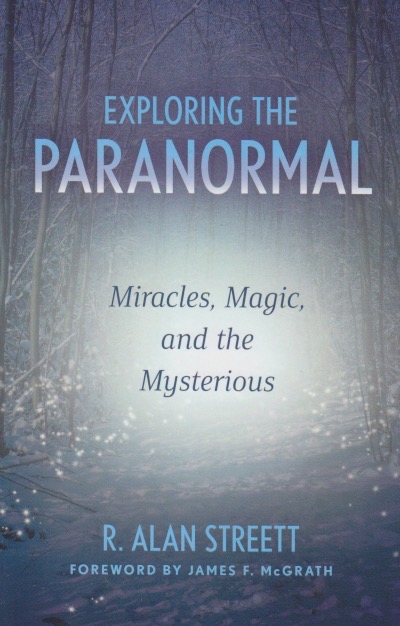
I used to tell my students that a semester break without reading a book that challenged your assumptions was wasted.  I tried to lead by example, but jobs are such fragile things.  Since I have no semester breaks I try to read books that push the limits more frequently.  I’d heard about Carlos Eire’s They Flew before the author had settled on a publisher.  (I don’t know him personally, but would be glad to.)  In case the title doesn’t do enough heavy lifting, the subtitle A History of the Impossible might help.  Yes, we’re stepping into the world of the post-secular here.  It’s a wonderful place.  Although much of the book deals with early modern cases of levitation, the study ranges wider than that.  Written by a respected historian, this is a very important book.  For many reasons.

I am glad to see Yale University Press joining with Chicago and some noted others (Rowman and Littlefield, for instance) in challenging a paradigm that is no longer upheld by science.  I can hear the howling already, but if you read carefully, with an open mind (which is required by science) you’ll quite possibly learn something here.  Our minds do influence our reality.  We haven’t figured out how because secularism ends the discussion with scorn.  That was true of the study of UFOs as well, until the U. S. Navy said, “Nope.  They’re real.”  (It only took about seven decades, so don’t expect instant results.)  We cut off our possibilities when we mock things out of habit.  I remember the Turok comic where one character said to another (give me a break—this has been five decades and I can’t recall all the names) “Fools scoff at what they don’t understand.”  Truer words have never been penned.

The impossible happens when scientists aren’t there to witness it.  It sometimes happens when they are.  Doubt that?  Read about the Pauli Effect.  Or call it gremlins, the choice is yours.  It’s real in either case.  Academics are often among the last, with the exception of Trump supporters, to see what’s been staring them in the face all along.  I’ll say more about this book on Goodreads, but let me float a hope here.  I want to go back to that indefinite article in Eire’s subtitle.  This is A History of the Impossible.  May more follow.  Others, such as Jeff Kripal, have been doing similar work for many years now.  We can ignore it, or scoff at it.  But I think that character in Turok got it right, even if I can’t remember his name.