Read Until Ragnarok

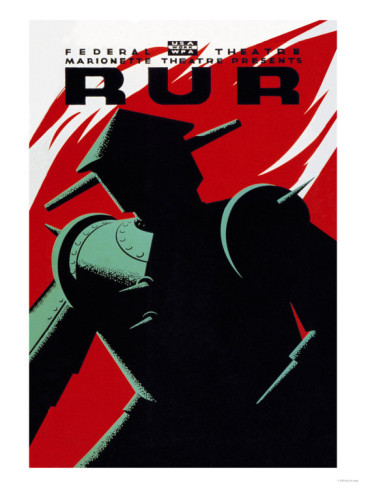
Wpa-marionette-theater-presents-rur“The play’s the thing. Wherein I’ll catch the conscience of the king,” quoth Hamlet. Shortly after the Velvet Revolution, my wife and I were shown about Prague by a friend who’d grown up in Communist ruled Czechoslovakia. As we watched the changing of the guard, he told us how Václav Havel, the final president of Czechoslovakia, had been a playwright and appreciated the need for pageantry in such civil ceremonies. I remember being impressed with what this playwright had accomplished while America had just survived being ruled by a lackluster comedic actor whose major contribution had been the myth of trickle-down economics. Havel was at one point selected as ranking high among the world’s top hundred intellectuals. Somehow Bedtime for Bonzo just didn’t seem to be worth bragging over.

Within another year or two, Czechoslovakia would dissolve, but the world would remain impressed by the Czech playwright. Karel Čapek was another Czech author and playwright of considerable import. Čapek, “public enemy number two” of the invading Nazis, died before the National Socialists could reach him. His brother died in Bergen-Belsen. Čapek is the author of the play R.U.R., or Rossum’s Universal Robots. Indeed, he coined the term “robot,” around which this play revolves. Over the holidays I finally had a chance to read R.U.R., and I was immediately struck by how prominent the meme of God appeared, and also how prescient Čapek was. Like his contemporary Franz Kafka, Čapek had an unsullied vision of human propensities. Not having seen a production of R.U.R., or knowing how it would play out, I was nearly buried under the layers of meaning that such a brief piece could convey. Harry Domin, the general manager of R.U.R., supplies the world with robots for the easement of human labor. These robots eventually acquire souls, through human tampering, but also rely on humans for their reproduction. All of humanity, save a sole survivor kept alive to make new robots, is destroyed. Alquist, the last man alive, realizes when one robot will lay down its life for its mate, they have become a new Adam and Eve, and humanity’s existence is truly at an end.

Although I’ve read about robots since I was a child, I didn’t know about R.U.R. until my daughter joined her high school robotics club. Robots have, in many ways, dominated my life since. Although Čapek’s play is funny in parts, it is dystopian and profoundly troubling. Our robots have evolved since the period of World War I, just after which the play was written, but our moral sensibilities have not kept pace. Helena, the eventual wife of Domin, feels that robots should be given a soul. At first they feel no pain, mental or physical. Once they acquire these, however, they begin their inexorable march to the elimination of humankind. Reading of how technocrats believe that our true function is now to service the robots who do much of our work today, while unemployment just won’t release its grip on the flesh, my thoughts go back to Karel Čapek, Václav Havel, and William Shakespeare. The playwrights create, but the actors just ape.

Not Knowing

WhatIDontKnowAboutAnimalsBegin with a basic premise: we cannot know what a creature without language thinks. Add in the thoughtful anxieties of a post-domestic writer who knows about animals and you have What I Don’t Know About Animals, by Jenny Diski. Part biography, part science, part philosophy, wholly human. I knew from the day the book was released that I would read it since, like the author, I am one haunted by the relationship between the exploited and the exploiter. Diski’s confessions are difficult to read at times, veiling herself, as she does behind the curtains of one’s most private experiences, but she reveals plenty to those who read on. We can’t know for certain what another person thinks, so how can we know what a sentient animal thinks? Some, following Descartes and Skinner, would declare that animals don’t think, they simply do as programmed. The rest of us know that they are wrong. The evidence accumulates more each year that animals think and feel, but, as Diski repeatedly points out, we need to drive with the brakes on. We can’t get inside them to actually know if human experience corresponds at all with animal experience. We’ve shared the planet for millions of years, but we’ve lost track of our common origins.

As I suspected, the Bible came into the discussion. The book of Genesis lurks in the background of most human-animal rationalizations. The divine division into separate “kinds” must be kept discrete at all times. The problem is, nature won’t always play along with that game. One type slowly morphs into another and some biologists are even questioning the usefulness of “species” at all. Fear of bestiality, as Diski points out, is found already in the Bible. Best to keep everything in its proper pigeon-hole, whether that’s where it belongs or not. Genesis gives us the right to exploit, and so we continue to use animals for our own purposes. Although the feline, it turns out, may have figured out how to set this order on its head. In some cases.

What I Don’t Know About Animals is not a defense of vegetarianism or of radical, thoughtless abandon. Diski writing on spiders will cause many heads to nod in agreement, and her rage against the loss of the common lady-bug struck an amazingly responsive chord with this reader. The lady-bug’s demise came at human tampering, importing asian beetles as pest control—beetles that eventually edged out the harmless lady-bug, replacing the Volkswagen of beetles with a biting, omnivorous, massing pest. In Wisconsin the southern side of our faculty house was literally blanketed with them in the spring. Diski uses the same word I did then: biblical. Swarms seem to be the way that the Almighty has of telling us too much of even a good thing will go bad. Although I couldn’t agree with every statement Diski makes, I have the feeling this is a book I will reread more than once. Wisdom often comes in the form of admitting just how little we know.


Nothing Unusual

WhyDoestheWorldExist“Is this a world?” Ranger Tom asks seriously, “And if it is, am I in it?” On the lips—or fingertips—of some, this set of questions appears profound. Although I’m not technically a philosopher, I find it impossible to walk by a book with the title Why Does the World Exist? and not pick it up. I am not familiar with Jim Holt’s other work—I engage a little too heavily with books to spend much time with magazines—but the question of the title is one I’ve often pondered. It is right up there with “Why can some people get published and others can’t?” Holt is, however, on a serious quest. Not surprisingly, religion features prominently in the discussion. For the usual existential reasons, including a couple of significant deaths in the family, Holt asks perhaps the most basic of all questions and engages a number of prominent philosophers on the issue. Why is there something rather than nothing? For some in the western world such a question appears a non-starter, because our culture is biblically suffused. Whether we want to admit it or not, our social ocean veritably bobs with the basic belief that God created the world, end of story. We don’t need to ponder it, we just have to accept it. For those who look deeper, however, the answers aren’t that easy.

Holt goes through some serious computation in various forms of logic to try to arrive at a schematic demonstrating that the world is a surprising place. Not trained in such rigorous logic, I was interested to notice how the language occasionally slipped from “world” or “universe” to “reality.” Reality is perhaps the slipperiest concept of them all. Many simply accept their own experience as real, a position known as “naive realism.” Others probe somewhat deeper, seeking to verify reality. How do we know what is really real? It is, however, a different question than the existence of the world. Reality has the distinct ability to haunt with its half-answered questions and surfeit of ambiguity. Every time I wake from a dream I ask myself what is really real.

Once the divine is removed from the equation, why the world is here becomes a much more complex issue. Holt engages the new atheists as well as the neo-orthodox. It turns out that God may not help as much as we generally assume: whence God? Or, in its more childlike version, where did God come from? Once brute fact is ruled out, this becomes a tangled problem indeed. Faced with an endless regression, logic quails. Perhaps, however, we have reached the limits of rationality—even Einsteinian physics breaks down at the Big Bang. No matter what scientists or philosophers may tell us, we will always wonder, “and before that, what?” I put Holt’s book down with a sense that I’d spent a few pleasant hours considering the possibilities, but I still wonder, with Ranger Tom, if this is a world. And if it is, am I in it?


A Dog’s (Inner) Life

Last week’s Sunday Review in the New York Times included a piece tucked under Opinion entitled “Dogs Are People, Too.” Gregory Berns, the article’s author, a professor at Emory University, describes how he trained his dog to enter and remain still inside an MRI machine long enough to scan brain activity. The results, repeated on other trained dogs, indicated that dogs share the same level of sentience as a human child. Berns’ conclusion: dogs are persons. I tend to agree. Although I’m no longer a pet “owner,” I grew up with dogs (and cats, birds, reptiles, and hamsters). There was never any question in my mind that our dogs could think. The also shared emotions with people—as Holmes would say, it’s elementary. Obvious. Staring at you with puppy-dog-brown-eyes-right-in-the-face obvious. Science, however, has always had an uneasy relationship with consciousness, the ghost in the machine. Dogs, many declare, are just machines. They salivate at the sound of a bell, for goodness sake!

Berns, however, has found the holy grail of scientific proof. The brain scan is accepted as a measure of human conscious activity. It is difficult enough to lure a human into an MRI and have her or him hold still. Dogs, however, are smart. They can be trained to do this too. Berns has succeeded and now has evidence that the emotional centers in dogs’ brains respond much like human brains. If they are emotional beings, as many of us knew all along, they are persons. Berns points out that this has legal implications. We make laws about unborn humans, but we treat fully alive canines like, well, dogs. Consciousness is part of the animal, and perhaps even the plant world. That stands to reason, if not scientific proof.

Christianity is largely responsible for advocating the concept of human superiority. We are, after all, made in the image of God. The Bible tells me so. Although scientists tend to abandon the Bible, they retain the myth of human superiority. Some concepts are just too convenient to relinquish, even in a rational world. We assume, since animals don’t talk the way that people do, that they are not thinking creatures. Even scientists appear afraid, at times, to take on the immaterial concept of thought. If the materialistic view is correct, thoughts are only electrochemical signals. Only this, and nothing more. As time nears to get dressed for work, I’d like to send my electrochemical signals out to get the paper. If I do the paper will still be on the lawn when I get home at the end of the day. I’ll have to fetch my own slippers, I guess.

Need I say more?

Need I say more?


Cave In

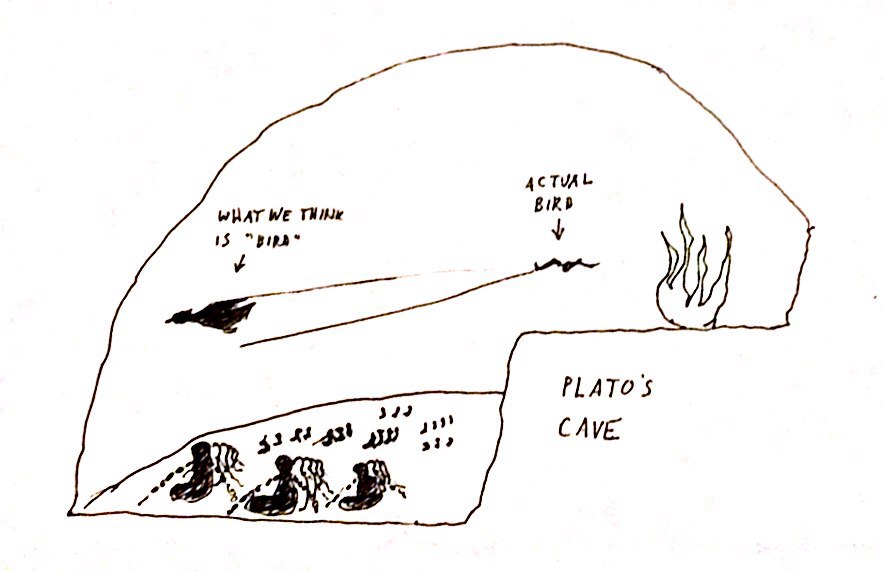
The conversation began, as conversations often do, with Plato’s allegory of the cave. The nature of reality was the topic of a chat I had with a very intelligent undergrad the other day. Plato believed in a realm of ideal forms. What we experience in life is not the actual forms themselves, but a reflection of them sufficient to alert us to what it is we encounter. Humans are sitting, as it were, in a cave. We are chained so that we face the inside wall of the cave and can’t look around. Behind us there is a fire and the ideal forms pass between the fire and people, throwing their shadows on the wall. Not having ever been outside the cave, we suppose the shadows are reality. We are, however, deceived. This led, naturally enough, to a discussion of Aristotle’s counter-argument that the “essence,” or entelechy, of things is something inherently within it. No need for an alternate realm of reality. And so, I asked, what is reality? What is truth?

PlatosCave

My young interlocutor said that reality is what we perceive. It is different for every person, and therefore there are a multitude of realities. Truth is simply the term we apply to our experience of reality. I began to feel as old as Plato. When I was young I believed, not exactly in a realm of ideal forms, but in a universe that contained abstracts. Abstract concepts objectively existed, and in a kind of neo-Platonism, we recognized them when we encountered them. Love, for instance. We may not be able to define it precisely (although materialists claim it is just a pretense to get sex), but we sure know it when we feel it. Or consciousness. What is it? No one reading this doubts, however, that it exists. And truth. I had always assumed that there was Truth with a capital T, objectively floating around out there. Perhaps, if the undergrad is right, there are multiple truths around. We chose the one that fits our experience of reality. Q.E.D.

C.Q.D.! C.Q.D.! Worldviews are in the process of changing. I tend to think the internet has democratized truth. Religions have tended to play their trump card—revelation—at this point. The unambiguous input from the divine should end all questions. But it only requires a moment’s reflection to realize that there are multiple religions and multiple revelations. Which one are we to believe? Some scientists claim there is no need for philosophy, religion, or the humanities. Objective facts, however, are interpreted subjectively. To privilege one reality above others is a kind of intellectual fascism. Perhaps my reality is different. We all sit in the same cave watching the same shadows play in front of us. We then decide what is real. Perhaps we need to get outside for a breath of fresh air. Even Plato knew, however, that that is against the rules.


Alien Jesus

While trawling the internet over the weekend, I came upon an interesting article that ties together religion and paranormal belief. According to ADG, a unnamed woman (already the question marks erupt) in Galilee in 1967 was visited by aliens. Instead of photographing them, as most unnamed women would, she followed their instructions to point her camera at the lake (Sea of Galilee) and snap one for the album. When she turned back around the aliens were gone, and when she had the film developed there was a picture of Jesus and a disciple or two, walking along the sea in earnest conversation. Well, one doesn’t have to be a scholar of Tobit to spot the apocryphal, and this obviously bogus story received far more hits than any of my posts do. People are fascinated by the concept, even though most of the comments show some healthy skepticism.

To me the fascinating aspect is that religion and paranormal topics hold hands so easily. That is not to suggest they are the same thing, but rather that they are both perhaps directed toward a similar goal. We find ourselves in a cold world, often. There are cruelties, atrocities, and a disheartening lack of care for others. We want to believe that somebody out there has got our backs. Is it so different to believe that God dwells in the sky than to believe that aliens do as well? What is more important than the putative fact of such celestial dwellers is the belief in them. Our minds, no matter how we may protest otherwise, are perfectly well aware of their own limitations. We can’t know everything, and so we must believe.

Many of us find ourselves in an uninspiring cycle of work, sleep, and work. Sometimes we actually even do sleep, too. Cogs in a capitalistic money machine, we leave our weekends free (sometimes) to pursue a little meaning. As much as some may castigate religion, we should not forget that without it we would not have the weekend! For a little while we can break the meaningless cycle, the treadmill upon which we heavily thump our way through five days out of every seven. Is it any wonder that so many want to believe that, like Calgon, aliens might come to take us away from our drudgery? If that doesn’t work, there’s always religious services. All you have to do is point your camera and believe.

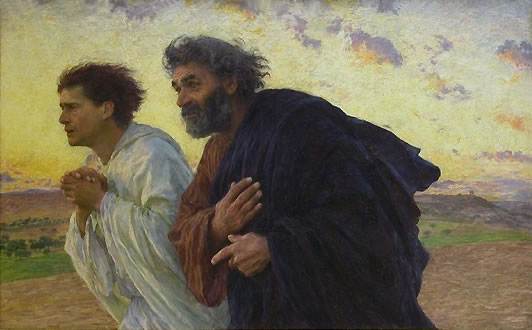
BurnandJeanPierre


Do You Mind?

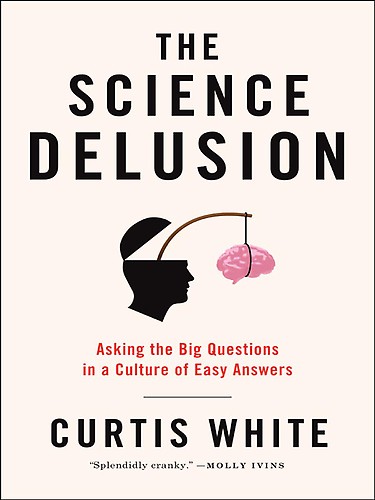
TheScienceDelusionSeems a lot of people are deluded these days. I know I am. Still, every great once in a while I read a book that helps me cope with the morass of everyday life in a way so profound that I feel elated. At least until I get to work. One of those books I cannot commend highly enough. Curtis White’s The Science Delusion: Asking the Big Questions in a Culture of Easy Answers is epiphanic. Not your typical (generally faith-based) objection to the New Atheist phenomenon, White asks more fundamental, and indeed, logical, questions. And he’s incredibly fun to read. Starting with the conundrum that often goes unspoken, White demonstrates that even the scientists among the New Atheists ascribe to immaterial value judgments without thinking through the implications. Having jettisoned religion, philosophy—the whole of the humanities, in general, as pointless, non-empirical window-dressing, even the greatest lights still claim their tenets. As White illustrates, stars cannot be beautiful without a concept of beauty. Beauty cannot be quantified, and is therefore beyond the empirical method. One could say it’s in the eye of the beholder, but science is uncomfortable with metaphors as well.

Materialism, often in league with politics and power-mongers, fails to account for much of human experience. The real danger, as White demonstrates, is when society simply accepts it because it comes from a white lab-coat. White, along with most of non-materialists, is not anti-science. Science clearly describes, in a pretty close approximation, the physical world we know. At least in the New Atheist camp, however, it doesn’t stop there. The take-no-survivors attitude causes problems because it is hoisted on its own petard of logic. The mind that is attempting to puzzle out science is immaterial. Mind does not equal brain. The cause and the result are easily confused. Flush with neuroscience’s success of describing the brain, we assume that science can also explain things as inexplicable as the nature of light, quantum mechanics, black holes, or the Tea Party.

White is not shy of talking about the elephant in the room. Consciousness is not a material phenomenon. If you are reading this, you know what I’m talking about. We are self-aware creatures. So seem to be some other primates, cetaceans, and corvids. If our minds could be quantified a lot of psychologist’s couches would be empty. Chemicals may affect the working of our brains and influence the performance of our minds, but when they wear off, it is still yourself staring back from the mirror the morning after. Those of us who spend our lives pursuing the humanities generally don’t try to take over science. It is very good at what it does. The world as we experience it—even the use of the word “experience” itself—is, however, more than physical. Even the New Atheists dream, and hope, and love. No matter what they may say, there is an inherent beauty in that.


Grendel’s Gods

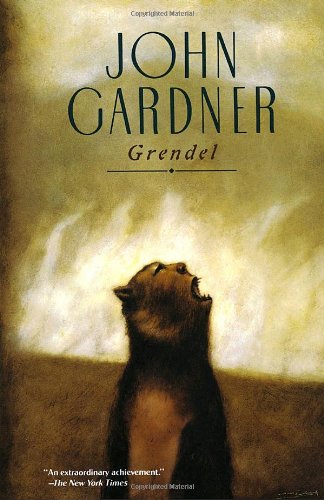
GrendelGardnerSometimes I think that if I had to do it all over again, I might’ve chosen Beowulf instead of the Bible. Let me define “it” here: if I had to pick a vocation that would lead to personal fulfillment and personal penury, that is. Beowulf is the earliest written story in English and, it’s a monster story. What’s not to like? In honor of Banned Book Week, I decided retroactively to read a banned title, John Gardner’s Grendel. An early parallel novel narrated from Grendel’s point of view, we are introduced to the introspective, existentialist monster who is really just wondering, like the rest of us, what the point of it all is. Not surprisingly, the protagonist often addresses the question of religion—indeed, it might even be at the heart of the story.

In chapter nine, Grendel sits in the darkness in the ring of wooden gods of the Danes when Ork, the great, blind priest stumbles in and believes the monster is the Destroyer god. As Grendel toys with his theology, the old priest understands this all as a revelation, and although Grendel gives him no answers, the words are taken as divine utterances. The other priests, finding their leader out on a winter’s night, insist that he has gone senile, that gods do not reveal themselves like that. The old man, however, is unshakeable in his faith. As in much of the novel, there is more going on here than meets the eye. The deluded priest believes a monster is his god.

The question of theodicy (literally, the judging, or justification of God) is never-ending for theists. The world is a problematic place (made so, I must note, by human consciousness) for the creation of an omnipotent deity who is good. Too much suffering, Grendel, too many failed expectations. Clergy and theologians have, for centuries, tried to frame a convincing answer to the dilemma. The tack they all studiously avoid is that God is a monster, although some posit that as a straw hypothesis quickly to be knocked down. Gardner, although not a theologian, was the son of a lay preacher and farmer. One suspects that elements of that childhood crawled out through the pond with Grendel. One of the truly tragic characters, a “son of Cain,” Grendel still has an immense power on the imagination. And that power, at times, might even appear godlike.


Crowing Up

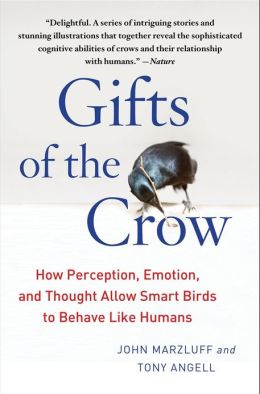
GiftsOfTheCrow Whether we climb up or down the evolutionary scale, one factor remains constant—our human sense of superiority. Despite the castigation of biblical-era thinking in the eyes of many scientists, few are willing to relinquish that Genesis-bestowed sense of being the pinnacle of nature. We know the universe is vast, but we assume we’re the best and brightest in it. Climbing down the ladder a bit, we like to distance ourselves from our fellow creatures because of our superior mental capacity. That is why I am so engrossed by scientists who explore animal intelligence. We find we are not so different after all. Gifts of the Crow: How Perception, Emotion, and Thought Allow Smart Birds to Behave Like Humans, by John Marzluff and Tony Angell is such a book.

If you’re like most people in this electronic age, you probably haven’t given much thought to corvids. Corvids are the members of the crow family: ravens, jays, magpies, and, of course, crows. Scientists have long known that these birds are exceptionally intelligent, and Marzluff and Angell have written a spell-binding little book that shows a remarkable level of intellect among the birds. Documented cases of tool making and use, conscientious interaction, and perhaps even language, have occurred among the corvids. We try to shoo them from our crops with “scarecrows” and we poison them en masse when they become “pests,” but when we take the time to understand them, we find that we may be far darker than the crows.

Not that Gifts of the Crow is all that easy-going. There is plenty of brain physiognomy and quite a bit about brain chemistry here as well. Knowing that not all of us are scientists, though, Marzluff and Angell include a generous portion of narrative description of what corvids have been observed to accomplish. For three days in a row I climbed off the bus stunned, scanning the skies for crows, just to see for myself. In this suburban jungle outside the New York City metropolitan area, crows aren’t so abundant as they were when I lived in the Midwest. They will, however, serve to remind me, when I see one, that our privileged place in nature has more to do with our thumbs than with our intelligence. When I saw a solitary crow atop a tree during a neighborhood stroll after finishing the book, I stopped, smiled, and bowed. Nature belongs to each and every creature, and there sat one intelligent enough to appreciate it.


Dangers de la nuit

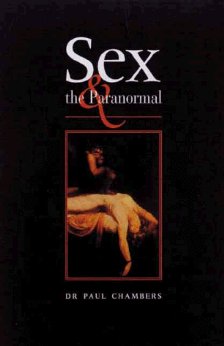
Sex&Paranormal Some books require extra clothing on the bus. When I saw the title of Paul Chambers’ Sex and the Paranormal, I noted the juxtaposition of two aspects I’ve frequently argued are intimately related to religion. There can be no question that religions in some way attempt to regulate sexuality. Those forbidden topics loosely collected under the sobriquet of “the paranormal” tend to be only a baby-step or two away from religious beliefs. Often those who are open to religious acceptance also allow for the possibility of the paranormal. So what did these two quasi-religious phenomena have to do with one another? How was I going to read a book with a title like this on public transit? How would I plumb the depths of its wisdom without feeling like a pervert? I found an unused book sock, a kind of colored condom for textbooks, and wrapped in around my questionable interests and read as discretely as possible.

Chambers, a member of the Society of Psychical Research, as well as a scientist, starts the reader off with what he is surely correct in identifying as a combination of sleep paralysis and hypnopompic hallucinations—the feeling of being violated by demons or ghosts in the night. While the reasons are poorly understood (beyond our latent sense of vulnerability while asleep), the fact of sleep paralysis is well documented. As Chambers points out, our over-active, often religiously fueled, imagination fills in the blanks for those who wake up unable to move, feeling a presence in their darkened rooms. This leads Chambers into a discussion of Lilith and succubi and incubi, the molesting demons of ancient lore. Witch-hunts and amorous aliens are strange bedfellows in this volume as well.

Studies like this daringly bring together subjects that have been parsed apart by conventional society. They are also deeply relevant. Many of us remember the (largely mythic) Satanic worship scares that plagued pockets of America, and then Europe, in the 1990s—latter day witch-scares, as Chambers points out—the tremors of discontent that rumble through societies struggling for an overly rational explanation for human behavior. They are present-day reminders that no amount of fiscal solvency and empirical data will ever banish the deep fears from the human mind. Our emotions have often served us very well, and have sometimes abused us, for the entirety of our evolved existence. And although we can hold them at bay in the clear light of day, at night we are surprised to discover that we really believe in monsters after all.


Hemlock and Crucifixion

Rhetoric is dying a slow, painful death. In this world where literalism reigns, the use of words to elicit an illicit truth deeper than the factual is no longer recognized. We see it both in the humorless antics of the New Atheists and in the ravings of the Fundamentalists. Writers have always known—serious writers at least—that truth is so much more than an objective ticking off of what really happened. The post-modernists may seem insufferable at times, but they have taught us that true objectivity is false, a mythic holdover from imperialistic thought processes that believed here, in this single mind, bias does not exist. We all have biases. Except me, of course. Rhetoric again.

I do not get many comments on this blog. Usually it takes someone to disagree with my ramblings to gussy up the energy to dispute what I write. I try not to distort facts, but facts are rare commodities these days. George Orwell is not really dead, I mused as I stood by his gravestone in Sutton Courtenay. Should someone deny that I was there how should I prove it in this day of Photoshop and pixelated truth? And that wasn’t even his real name.

When I regularly taught, students would ask me what I believed. What I believe, I would respond, is not important. I am teaching a subject, a field of study. When is the last time you asked your chemistry professor what she believed? Would it matter? Of course, thoughts, I’m told, are only chemical reactions that lead to electrical charges. Miniature storms inside our skulls. Literally. Rhetoric folds its hands across its metaphorical chest and lays quietly, awaiting the pall.

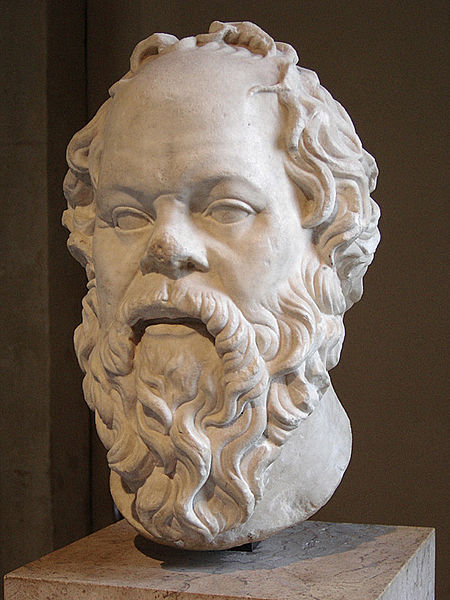
Socrates had his method. He ended up an enemy of the state. Jesus told parables. He also ended up an enemy of the state. Rhetoric, make no mistake, is a dangerous game to play. The hearer, or the reader, hears or reads what s/he wants to hear or read. And in a literal world, people would rather not have to read too deeply, for truth, it is believed, lies plainly upon the surface. There used to be a word for such a surface reading, but should I write it here I would be guilty of using rhetoric. And rhetoric awaits the delivery of the flowers but few are the black-garbed mourners. It is best not to disturb the dead.

Photo credit: Eric Gaba, Wikicommons

Photo credit: Eric Gaba, Wikicommons


Hair to the Throne

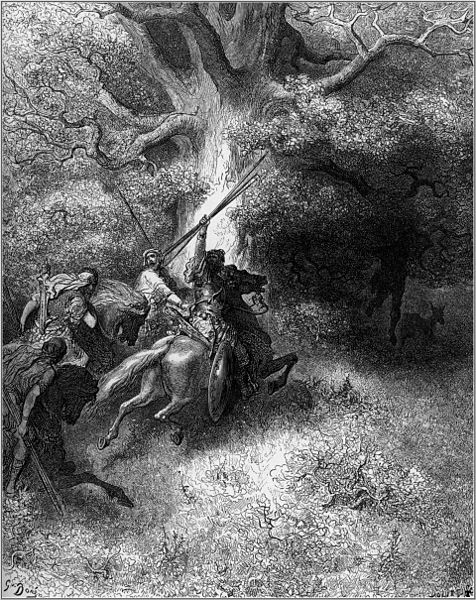
Absalom was the first of the big-hair rock stars. According to the book of 2 Samuel, his hair was so luxuriant that he had it cut once a year and it weighed two hundred shekels (about five pounds, not sterling). This little bit of foreshadowing in 2 Samuel 14 will appear again in the story of Absalom’s demise, as he is caught in a great oak tree by his untrimmed hair. I’ve always related to Absalom on the coiffure issue—I don’t like getting my hair cut. In my more self-analytical moods, I relate it to having stepped on a bee’s nest as a child and having received multiple stings on my bare legs. That horrible buzzing of bees in my ears stayed with me, and whenever the girl at SuperCuts grabs the clippers and the bee-like drone nears my ears I flinch in terror. Like Absalom I have rather an abundance of hair, and so when I’m shorn, it is easily noticeable. I don’t like people to comment on it, however. One of the most banal phrases, not to mention an utter tautology, is when someone smartly observes, “you got a haircut.” With what am I to follow this up? “Yes—I was feeling a bit too much like Absalom in the forest of Ephraim where Joab found him dangling in the tree after David followed the advice of Hushai instead of Ahithophel”?

Gustave_dore_bibel_death_of_absalom

While walking through a mall recently, I commented to a friend how all the stores seemed to be clothing and shoe stores. You never find a bookstore any more, or museum shops, or anything approaching profundity. People really mostly care about what they look like on the outside. I’m more of an interior guy. Not among those generally cast among the hunky, good-looking examples of masculinity, I’m small, bookish, and still wear clothes that I’ve owned for two decades. My hair is usually out of control as well, but not in a fashionable Einsteinian way. I am, I fear, the heir of Absalom.

Religion used to be a source of profundity. It was, once upon a time, the queen of sciences, and philosophy was her handmaid. Seeing the way that religion appears in the media today, however, I’d have to guess she’s been shopping at the mall. Those who measure religion by the cut of her hem rather than by how deep her thoughts may be, have brought her into the limelight of popular culture. She used to be all about the meaning of life and offered a reason for many of us to get out of bed in the morning. Absalom’s trouble started out when he fell in lust with his half-sister Tamar. His addiction to appearances led him to bad decisions that ultimately divided David’s kingdom and cost him his very life. And I guess that’s the price you pay for not getting a haircut on a regular basis.


The Power of Magic Again

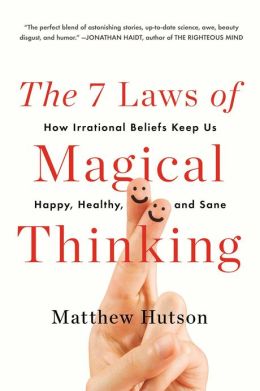
7laws Magic is everywhere. It may not be real (or it just might). There’s no doubt that Matthew Hutson believes the supernatural has nothing to do with it. The 7 Laws of Magical Thinking is a provocative book in that regard. An atheist who argues that we shouldn’t discourage magical thinking because it is so darned human, Hutson is a rare kind of treasure indeed. The 7 Laws of Magical Thinking begins by pointing out that we can’t psychologically accept what is really real. Reality always eludes us. Our brains are hardwired to accept what Hutson calls magic (including what I call religion). Those who enjoy provocation can take some satisfaction in knowing that either side can add another layer to the shell: physics explains everything, but maybe magic is responsible for making the universe conform to the laws of physics. And so it goes.

Although I enjoyed Hutson’s book–and he’s clearly a gifted writer—I couldn’t help but wonder at a very deep parity between the determinism he believes is really real and the magical view that is implied by such self-help manifestos as The Secret—the things that happen to you are meant to happen. I know, I know—Hutson’s point is that there’s no agency involved in determinism, but my point is that the end result is still the same. You end up where you are. I’m not so sure. Determinism has always left me cold. But since I’m no God I guess I can’t change that, yet I wonder if there might not be something outside this closed system after all. No one can peek and tell.

Neurology may tell us more than we want to know about the mechanics of the brain, but consciousness is reality. Science may some day lay its cold hands on consciousness, but it will always be someone else peering into my head wondering what I’m thinking. I’d have it no other way. I was strangely cheered to note that Hutson ends his whimsical study with a “stab at a secular spirituality” (a good stab, that is—not the malicious kind). I’m sure that many materialists will find such an a gesture as pandering to the masses. I think Hutson is sincere, however. Even the über-rationalists, as he points out in the book, slip into magical thinking and metaphors. It is the human condition. Those who watch Star Trek (original series, please!) know that the most tormented crew member of the Enterprise is Mr. Spock. The rationalist who can’t connect with emotion is a soul in torment. Even if that soul is a myth. The rest of the crew, I am certain, believes in the power of magic.


Resurrinception

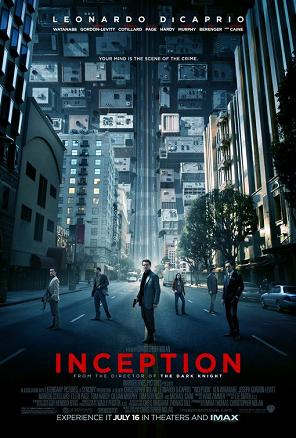
Inception_ver3Like most profound movies, Inception keeps me coming back repeatedly. I’ve already written a post on how the Theseus and minotaur myth lurk deep within the labyrinths of this film, but upon my most recent viewing a new angle caught my attention. In the first level down into Fischer’s dream, when Saito is unexpectedly shot, Eames asks Cobb, “What happens when we die?” It could be the question of a child faced with a dead pet for the first time. Of course, Eames refers to death in a dream under sedation, and limbo is the closest thing to spiritual death that a person can experience. The timing of that question, however, triggered in my head the number of resurrections that take place in the movie. I have frequently noted here that resurrection is a standard part of the tool kit for western movies, particularly American ones. We expect resurrection. So, finally, three layers down, a dream within a dream within a dream (even Poe would be proud), Saito dies. He is lost in limbo.

Limbo is a fuzzy theological construct thought up by the church for those who don’t deserve Heaven, or Hell, or even Purgatory. Some, it seems, end up in limbo. In Inception limbo is unconstructed sub-conscious, an area even Freud would fear to tread. Saito dies and goes to limbo. Fischer, meanwhile, also ends up in limbo because Mal shoots him dead in the third-level dream. Mal is already in limbo because she killed herself in real life—or was it a dream? Cobb, of course, must die to return to limbo to retrieve Saito so that he won’t be arrested when the plane lands. In limbo, three of the four escape, riding the kick back up to consciousness. Only after baptism in the first level dream, when the van plunges into the river, do the lost souls emerge. What happens after we die? Resurrection.

I’m not suggesting that Christopher Nolan planted a Christian idea in the viewers’ subconscious mind. Resurrection is part and parcel of our culture. Perhaps, however, this helps to explain the durability of some religious concepts. We long for resurrection on such a deep—maybe subconscious—level that we want to see it on the big screen. Even ghosts, we’re told, haunt because of unfinished business. It is Saito, the Japanese business mogul, however, who undergoes the most resurrections. He dies in the van underwater, in the fortified mountain hospital, and in limbo (perhaps in the elevator as well, but this is uncertain). His is a regular reincarnation of resurrections. Inception, I’m sure, will keep me coming back for more. One of the questions that none of us escapes while alive, is that uttered at the level of the dream.


Gnostic Agnostic

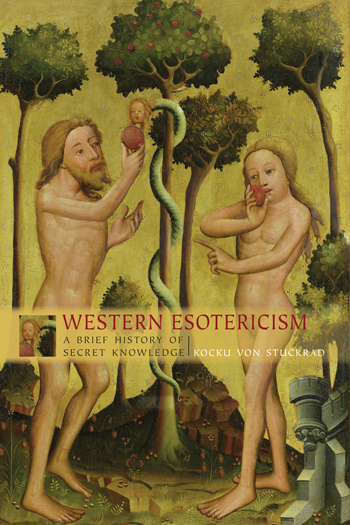
ACU-Stuckrad-WesternEsotericism-COVER.indd Hidden knowledge is sweet. Belief in it is very old. Kocku von Stuckrad’s Western Esotericism: A Brief History of Secret Knowledge offers its own kind of hidden knowledge—well, it’s not so much hidden as it is simply ignored—that even science owes a debt of gratitude to the draw of the esoteric. We are trained to treat such “New Age” ideas with contempt from our tender years, and we are assured that the light of reason has dispelled the gloom of occluded wisdom. Von Stuckrad, however, clearly demonstrates that the desire to explain our world streams from the same font as the belief that a larger, if hidden, reality lies behind what our senses perceive. Such ideas originate in antiquity and continue in various forms up to the present. The impetus to explain it all shows in Galileo’s belief in astrology as well as astronomy and Newton’s fascination with alchemy as well as calculus. Great minds have always been willing to be stretched.

In more recent, and self-assured, days vocal spokes-folk have declared a single way of knowing, and it is empirical and imperial all at the same time. That which cannot be explained rationally cannot be explained at all. Still, our experience of life often suggests otherwise. Sometimes it feels as if science overuses the coincidence excuse, and maybe there is something more going on. The esoteric, without fail, has been assigned to the category of religious thought because, in the current paradigm, the only real opponent to science is religion. If it’s irrational, it must be religious.

Ironically, von Stuckrad’s research demonstrates that the culture that led us to science, in many ways, has its basis in esoteric beliefs. That gnawing suspicion that not everything is explained by numbers and experiments has been with us since the days of Gobekli Tepe, the pyramids, and Stonehenge. Each of these monuments (and many others besides) were astounding feats of engineering—and engineering is applied science—while all being profoundly religious. Science in the service of the unknown. Such complexity need not be considered naive; even scientists can be subject to religious ways of thinking. Von Stuckrad does not advocate esotericism in his book; he merely documents it and treats it non-judgmentally. There is perhaps a hidden lesson here for all of us as well. Instead of declaring a single heavyweight champion of all the world, perhaps true wisdom lies in being fully human with all its complexity and contradictions.