Religion Embraces Science

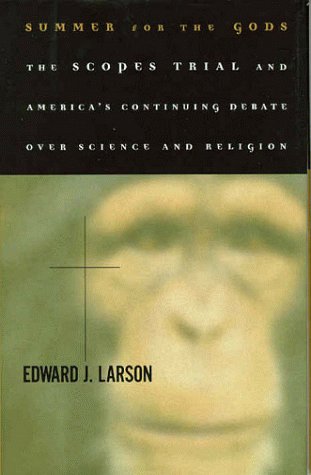
My colleague and one-time dean, Michael Zimmerman of Butler University, has brought his Clergy Letter Project to the Huffington Post. Well, he has written an online piece for the Huffington Post entitled “Redefining the Creation/Evolution Controversy.” His article is clear and to-the-point: the Creation/Evolution debate is not about religion versus science. That has been shown repeatedly for those who care to examine the history of this controversy. Evolution barely caused a ripple among clergy when it was first becoming popular among scientists. Ministers assumed it was just one of God’s mysteries and went about their clerical duties. The issue became a public relations boondoggle with the Scopes Trial of 1925. One of the best books written on that subject is Edward Larson’s Pulitzer Prize-winning Summer for the Gods.
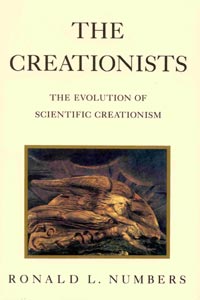
As I have stated in my podcast on this issue, Creationism is a splinter movement within Evangelical Christianity. Over the years it has drawn in members of a wide variety of Christian groups, including Roman Catholics and mainstream Protestant denominations. It has publicized its concerns so well that many people assume that this is the “Christian” viewpoint and that all other views are, by definition, non-Christian. This is the perspective that has driven a wedge between religion and science, creating a false front that has led to many confrontations between Evangelicals and scientists. My favorite history of the Creationist movement is Ronald Numbers’ The Creationists.
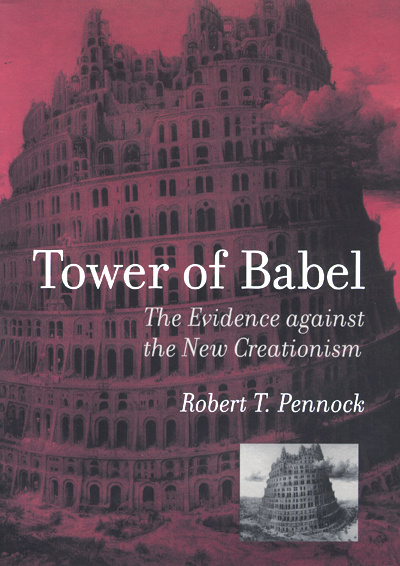
The true motivation of the movement is, without doubt, political. While many sophisticated people scoff at the apparently simplistic machinations of the Creationist movement, what they do not realize is that it is a highly organized and politically savvy alliance of special-interest groups. Robert Pennock’s Tower of Babel was an academic exposé of the inner workings of the Creationist movement. It is perhaps the most important book written on the subject. Published by an academic press, however, it has not found the wide public readership it deserves.
Do yourself a favor: read Dr. Zimmerman’s post. I believe he has framed the dilemma in the correct way: the struggle is one within a specific religion, Christianity, not one between religion and science. The more the public knows about this issue the better off we all will be in the long run.
The End of the World as We Know It

Well, that may be a bit dramatic, but my whole family is scratching its collective head over the news that our time on this planet has been foreshortened by the Chilean earthquake. Yes, scientists from NASA announced yesterday that Saturday’s 8.8 magnitude earthquake actually shook the earth three inches off its axis and has led to a loss of 1.26 milliseconds of time. Even for the gods this seems to be playing against the rules!

I wonder what the Fundamentalists are thinking about it? I do know that some extremely conservative types mess with time when trying to explain how the 4.5 billion-year-old world could have been manufactured in just 6 days — they call it the “day-age theory.” Or that the globe stopped spinning for 24 hours to give Joshua and his invaders more time to kill the Canaanites. I’ve even had students tell me that this latter case was scientifically proven. Time, however, ticks on despite our concerns with it.

It was my daughter who suggested the title for this post. After she said it, however, she noted, “Well, actually the world as we know it ended with the earthquake.” The world as we knew it. Radical changes have taken place with stunning rapidity on this old globe we call home, and some days the whole world changes. In 1815 the eruption of Mount Tambora led to the “year without a summer.” Wayward space rocks sometimes wipe out over 90 percent of all species on the planet. We live in a constantly changing environment. And it is my hunch that when that final disaster comes, those who’ve spent all their energy climbing the money mountain in the company of financial wizards, bank presidents, insurance profiteers, and oil company gods will come running to those who’ve spent their lives learning about religion seeking comfort in the face of the inevitable. We know we live in a temporary world; the wise spend their time contemplating the implications of that fact.

A little more to the left...


How Flat is Your World?

I talk so much about lenses in class that some of my students must think I’m a closet optometrist. The lenses I refer to, however, are those that we all wear as part of our culture. We can’t help it – being born into a worldview is part of the human experience. From my youngest days I recall learning that the earth is twirling around at a dizzying rate and we are hurtling through space around the sun so fast that my thoughts can’t even keep up. These are lenses. Then we turn to the Bible (or other ancient texts for that matter) and read about the creation of their world. To understand their worldview we need to take our lenses off.

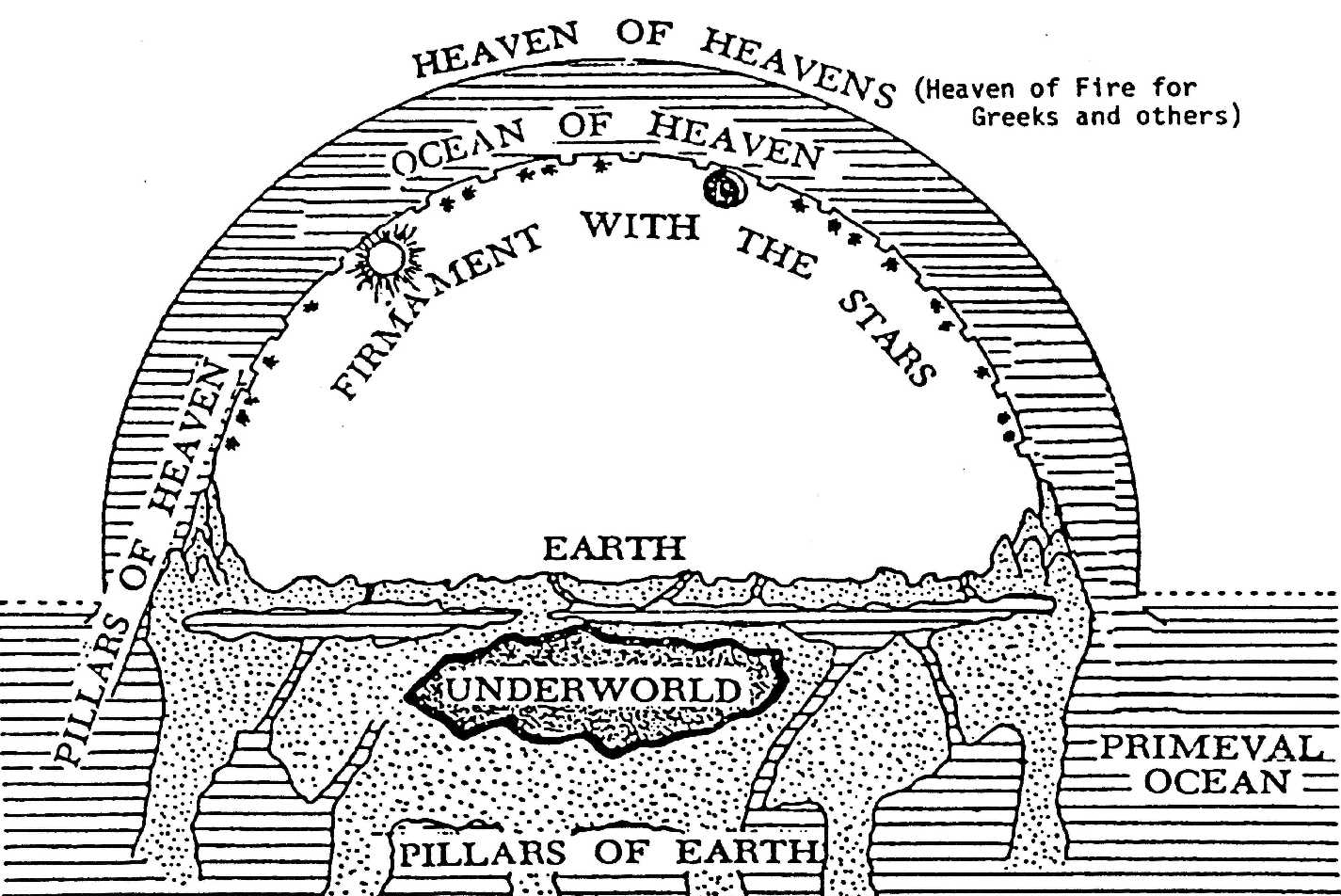
Last night I could see the understanding dawning on some faces in the classroom as I described ancient Israel’s worldview. They were flat-earthers, each and every one. The world that is described in Genesis 1 is flat with an invisible dome over it, a dome that holds back the cosmic waters and provides a living space for the sun, moon, and stars. The flat earth is upheld by pillars that erupt through the surface in the form of mountains, and there is water around all. Genesis 1 does not describe the creation of water; it is already there. You can tell there is water above the dome because it falls on us whenever it rains. Oh yes, and dead people are in Sheol, somewhere under our feet. This is the world that God creates in six days. It is not our world. It was their world.

One possible rendition of an extinct worldview

It is not that the physical world has changed, but perceptions of it have. When I stand outside (this was especially noticeable when I lived in central Illinois), I see the world is flat. I feel no motion – I get sick as a dog swinging my head around too fast, so I would know! The difference is that I understand apparent reality is not the same as physical reality. The writers of Genesis 1 did not anticipate our world, nor did they describe how it came to be. They described the world they knew, a world that does not actually exist. Fundamentalists today claim that the Bible is factual in its description of the creation, and that may be the case. But only if you take your lenses off and admit that the world God created is flat and is covered by a dome. And by the way, it looks like the windows of the sky were left open because it is beginning to snow again.


Out of Reach

Last weekend I had hoped to see the movie Creation: The True Story of Charles Darwin. This is a movie that has had trouble in the United States since distribution companies felt it would be too controversial for American audiences. Believing that evolution is still a taboo topic in the most “advanced” nation on the planet is a peculiar conundrum. Why are we so sensitive concerning our natural pedigree?

Primatologists are constantly discovering new and unexpected connections between the great apes and homo sapiens. We share biological, and as we are increasingly aware, cerebral traits. Empathy and xenophobia, two features once believed unique to humans, are in evidence among our great ape cousins. We are on a continuum rather than a segmented train.

Bearing these provocative thoughts in mind, I was ready to head out to the theater, even if I had to go alone, to see the story of Darwin. I’ve read enough biographies to know there are some heart-rending moments in the story, situations that I would not be able to face – but it is a story of truth. It is ironic that we sometimes fear the truth, since religion is our effort to find exactly that. So, resolve firmly in hand, I searched for New Jersey theaters showing the film. None. The nearest show was in Midtown Manhattan. Add a twenty-dollar train ticket to the cost of admission, and to an underemployed academic the price was out of reach. Perhaps some day the movie will become available for general public consumption. Until it does, however, I’ll just have to lament my frustration to a local empathetic ape.

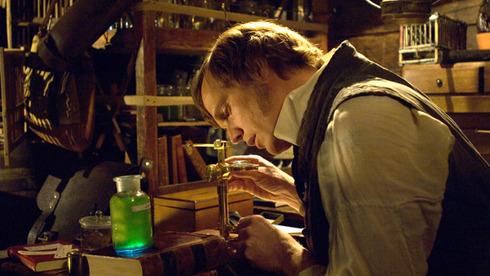
A scene from the movie, so I'm told


The Truth is in Here?

Constantly trawling for the shattered detritus of truth that rests scattered around our lonely little planet, I have often supposed they were here. I have never seen them, but in the Drake Equation there is a high probability that they exist. And now the newspaper says they may have been here all along. And closer than we thought.

Aliens. These latter-day angels and explorers of the cosmos are often pictured like E-T or the little gray aliens from Close Encounters of the Third Kind. The latest findings suggest they could even be quite a bit smaller than that. Paul Davies, a physicist from Arizona State, believes that life may have developed multiple times on earth, and perhaps some of the googol of microbes on our planet may have their origins in space. These potentially extraterrestrial microbes, he stated could be “right under our noses – or even in our noses.” Yikes! Time to put up the intergalactic “No Trespassing” sign!

Stop the alien menace!

In all seriousness, however, this concept of multiple origins of life, I fear, will be latched onto and misread by our Creationist fellow-life forms. I can see the fingers stiff from grasping at straws claiming that now there is scientific proof that different species do have different origins, thank you Mr. Darwin. The price to pay, if they apply logic, however, is not one evolutionary track, but many.

The movie Creation, focusing on Darwin, opened this past weekend in the United States. Delayed because of concerns that Americans can’t handle the truth, this film about Darwin’s sad voyage to the inevitable truth of natural selection will surely raise evangelical ire. Nevertheless, we did not design this world we evolved into, we simply inherited it. And the closer we peer at it, the more complex it becomes. These multiple evolutionary tracks may also explain the origin of Creationists – could they come from different stock than scientifically minded folk? In any case, the news today provides yet another reason to keep our noses clean and our eyes on the skies.


Missing Links

Dinosaurs hold a fascination like few other creatures. Perhaps it is because of their exotic and tragic rise to dominance and their meteoric plummet to obscurity. Maybe it is because of their impossibly creative adaptations to their environment leading to frills, fans, and pointy bits in unexpected places. It might even be that they reveal our own future to us. Whatever the reason, dinosaurs still rule.

In the news yesterday, a man was arrested for stealing a dinosaur. Not a Jurassic Park living model, but a fossil excavated from private land in Montana. A few years back I took my family on a dinosaur-based trip to the west. Trundling across the endlessly flat eastern half of Wyoming, I insisted that we turn down a rutted and washed out dirt road to an obscure site where dinosaur footprints had recently been discovered. Rolling into Red Gulch (seriously!), we were, surprisingly, not the only people there. Staring down at my feet next to the fossilized prints of some ancient carnivore was like feeling the very pulse of evolution. There was no fear of divine retribution here, just a sense of tangible continuity with a long and very distant relative on the tree of life. Creationists insist that dinosaurs and other creatures were each separately created, fearing, I suppose, an interspecies miscegenation, in keeping with their overall fear of sexuality. I was envisioning myself shaking claws with cousin dilophosaurus.

There be monsters here

Over the years we’ve made many dinosaur trips, stopping at dinosaur museums in North and South Dakota, Montana, and Colorado. Once, at Makoshika State Park in Montana, where you can walk along and see dinosaur fossils in situ, we heard a couple exclaim to the flustered park ranger, “but how can that be when the world is only 6000 years old?” Dinosaurs are symbols. They represent the ultimate in stature and environmental dominance, while at the same time hosting brains that struggled to rival a humble grapefruit. As I read the other, more serious, headlines I realize how much we are like our very distant cousins.


Noah in the Underworld

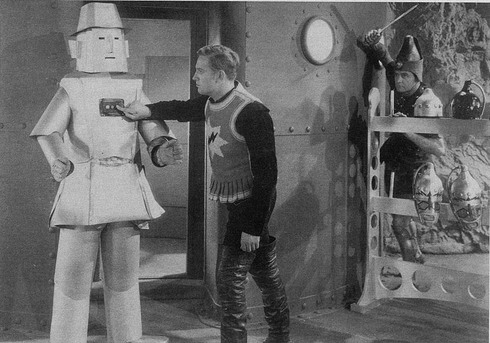
I recently was subjected to the 1940 sci-fi/western film Radio Ranch (a compilation of the series Phantom Empire). This happy-go-lucky story with Gene Autry in his first starring role is a romp through the unbelievable in just about any sense of the word. Based on the premise that there is an underground world called Murania, the film pits Autry against evil scientists who want to get a “bushel load” of radium from Murania, the “Thunder Riders,” or national guard of Murania, and indeed, against his corporate sponsors who will cancel his contract if he ever fails to get to Radio Ranch by 2 p.m. for his singing broadcast! This creative approach to early science fiction will be reincarnated more successfully in The Mole People, a movie that I wrote about a few weeks back.

The connections between the two films do not stop at an underground world with humanoids wearing Egyptian costumes (there is an unmistakable uraeus on the helmet of Argo in Radio Ranch), but go as far as the associations with the Flood Myth. I pointed out the flood connections in my post on The Mole People, and it was startling to note that Radio Ranch begins (and ends) with Gene Autry singing “Uncle Noah’s Ark.” That coincidence is, in itself, barely worth noticing. When the evil scientists invade Radio Ranch, however, they are shown an artifact from the Thunder Riders (whose thunder-producing horses are, admittedly, pretty cool) and they immediately identify it as an “antediluvian” idol. At this point it became clear how deeply embedded the biblical flood story has been in our culture, and how freely it was used in early science fiction films.

At a guest lecture in the Middle East Studies Program at Rutgers on Friday, I mentioned that the flood story goes all the way back to Sumer, making it among the earliest religious stories in the world. Several students had difficulty with this and began asking, “but when was Noah actually alive?” These college students, well educated in science, engineering, or political science, can’t get beyond the biblical literalism they were raised with. It is no wonder that America is falling behind much of the world in science education: we haven’t moved beyond Gene Autry’s overly cheerful belief in a deluge that never occurred.


Eager for Eden

In a recent email from the Clergy Letter Project, Michael Zimmerman reports that the movie Creation is shortly scheduled to be released in the United States. To quote from the Project newsletter:

“You may have heard that the film, Creation, about Charles Darwin and his struggle with his faith after his daughter, Annie, died had trouble finding a US distributor because it was seen as being too controversial for the American public, particularly after being attacked on Movieguide.org, an influential site which reviews films from a supposedly ‘Christian perspective’.”

It is disturbing that a non-fiction film has been blocked from American viewers because distributors found the content too controversial. The controversy has nothing to do with sex or violence, but an assault on the fantasy of a literal interpretation of Genesis. Disturbing fact challenges comfortable fantasy.

In a related story, an article on CNN.com explores the sense of depression that several viewers of Avatar felt after the movie ended. While the reasons are deep and complex, the overall theme seems to be that these viewers can’t shake the image of a pristine world that seemed so real for two-and-a-half hours. They long for a paradise that doesn’t exist. A paradise that has never existed. I am not unsympathetic. Although I could not view the film, I left from the theater with a similar, if less intense, feeling. It is a similar emotion to that when a truly special event takes place and the mind plays it over and over like a new and significant song. Impressions and hazy images and euphoria wash over you, and a longing for a moment that can never be recaptured consumes your consciousness. These are some of the most bittersweet moments of life. They are the very heartbeat of fantasy.

There never was an Eden. Human existence has been brutal and harsh since we first stood upright and wondered why we could think. America is a nation in deep denial about this harsh reality. We would rather believe the biblical Eden is a literal paradise and that our aching imaginations are somehow giving us glimpses of a fabled utopia where life was perfect. Well, almost perfect. The movie Avatar presents a paradigm that many Americans can relate to: an electronic world of endless possibilities shielding us from the stark realities of illness, pollution, tragedy, and death. We are insulated in our surreal environment that we have created for ourselves.

The human capacity for wonder is perhaps the greatest asset that consciousness has deigned to bequeath us. We can imagine a world where all creatures live in harmony with their environment and love and peace flourish. But that is not our world. A good corrective to these tempting fantasies is to read some good old classic Greek tragedies. These imaginative explorations of the human condition are as true to life as dreams of utopian worlds are removed from it. It is all a matter of perspective. And the Greeks were writing B.C.E. — Before the Computer Era — when reality had not been hidden behind a haze of ephemeral electrons.


Bible Lite

Over the holiday weekend I listened to an amusing recording my wife gave me as a holiday gift. A comedy troupe known as the Reduced Shakespeare Company produced a recording of their sketches entitled The Bible: The Complete Word of God, abridged. As might be expected from a comedic treatment of sacred writ, there were a few moments that were calculated to make those who take their religion very seriously tremble a bit, but overall the recording was quite funny. While listening to it, however, I became aware of just how much time the Company was spending on Genesis.

Not a sophisticated, exegetical approach to the Bible, a comedy album is not the place to assess the status of serious biblical study. Nevertheless, a deep truth emerges from this lighthearted treatment of the Bible — people today tend to focus too much on the beginning. Every semester I ask my students, “What is Genesis about?” and inevitably the answers begin with, “the creation of the world.” Genesis is not about the creation of the world, despite its unfortunate title. Genesis provides two of the many biblical creation accounts, but its primary purpose is to introduce the Israelites and the special relationship Yahweh has with them. Nearly four-fifths of Genesis deals with Abraham and the next two generations of proto-Israelites. Once Exodus is reached, we are fully within the realm of Israel’s story.

This misunderstanding of how to read the Bible has led to countless uninformed attempts to make the Bible into a narrative of the science of cosmology. Nobody was present for the creation of the cosmos, and the point of Genesis is not to state what actually happened. In borrowing mythic themes from Mesopotamia and Egypt, at the very least, the biblical writers start their account of Israel’s origins with a “a long ago in a land far away”-style introduction. Modern-day readers are trained to latch onto first sentences for vital clues as to what happens further along in the story. The Bible was never intended to be read this way. When we mix ancient ideas of setting the scene with modern attempts to understand our world, it might be better to listen to the Reduced Shakespeare Company than to pundits who claim that earth’s light was created before the sun.

In the beginning was a laugh


Compassion Divine

A very generous relative graced this holiday season with the gift of the first season of Star Trek, the original television series. I am not now, nor have I ever been, a “trekkie.” I did, however, enjoy the show as a child and have come to appreciate it even more as an adult. I can’t cite episode and scene like a trekkie can, and a surprise FBI raid would not turn up any pointy Spock ears or a model phaser (although my wife’s cell-phone looks like a sophisticated communicator). As a child the show appealed to my love of science fiction, and as an adult the morality play aspect of the original series fascinates me. Yesterday we watched an early episode where a crew member has his mind boosted by a trip beyond the edge of the galaxy (a la Forbidden Planet). As this character becomes more and more omniscient and powerful, he refers to himself as a god. Captain Kirk, in his attempt to stop his old friend calls out that gods are marked by compassion rather than strength.

I have been rereading Homer’s Iliad in preparation for a course on mythology. Quite apart from the fact that Star Trek borrowed heavily from classical mythological themes, one of the features I have especially picked up on in this reading has been the appeals to the compassion of the gods. As Diomedes, Odysseus, and Ajax (and finally Achilles) battle Hector and Paris both sides call out for the kindness of Zeus, appealing to his compassion (as well as to his baser instincts). Reflecting the ancient perception of the world, Zeus’ responses are fickle.

Biologists have been probing the origins of human sympathies ever since Darwin. Creationists used to argue that compassion, altogether lacking in the animal world, could not have evolved naturally. Many recent studies, however, have demonstrated a naturalistic base for our altruism and compassion. These traits are certainly displayed in a number of animal species, particularly mammals. The ancient Egyptians believed animals to be superior to humans in many respects, lacking our weaknesses and being more adept at survival. It seems that they were right and some of the nobler human traits evolved from our animal milieu. If so, what is divinity beyond the gospel according to Star Trek — compassion to those in need by those who find themselves in positions of power?


Birds of a Fang Suck Together

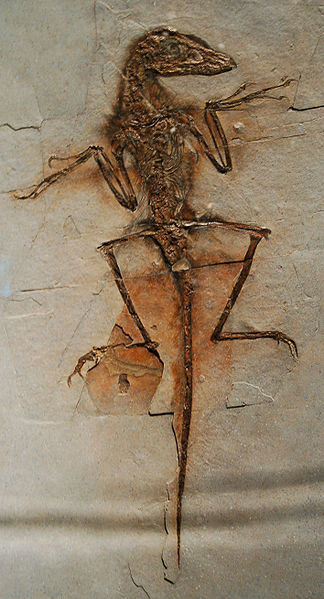
It reads like a cross between a Hitchcock movie and a Lovecraft story — paleontologists have unearthed a fanged bird fossil from the Cretaceous Era. Despite the cartoonish images this news flashes into my head, the startling find also suggests that this turkey-sized predator was also venomous. The first known ancestor to the avian family that used poison to immobilize its victims. A venomous bird.

Don’t let the cherubic Sinornithosaurus fool you! (From Wiki Commons)

Martin Luther is rumored to have said that you can’t prevent birds from flying over your head, (but you can prevent them from nesting in your hair). This new discovery suggests that there might be poisonous birds hovering around out there. And of course, Creationists must make room on the ark for this extraordinary creature. Since all critters, according to Genesis, were on the ark, our Sinornithosaurus must have lurked in some dark corner. I wonder how old Noah classified them — were they nestled among the birds or were they roaming about in the dinosaur wing? These toothy pterosaur wannabes were closely related to the velociraptors and microraptors that once served as the tetrapod mosquitoes of the Cretaceous Park world, stealth biters who’d glide down upon you undetected. The Creationists railing against transitional forms are scratching their theologically inclined heads.

I welcome the discovery like an early holiday gift. Although no one will ever see a living poisonous reptilian turkey soaring down from a Cretaceous canopy, we can all wonder and imagine. Fangs bared, venom dripping, it drops into our comfortable world and makes us reconsider. Apparently poisonous birds did not make the evolutionary cut, but I, for one, will be keeping a closer eye on the sky when I’m out in the woods or jogging around town early in the morning.


What Would Dinos Eat?

A recent edition of Science Illustrated ran an article about a potentially revolutionary understanding of mammalian evolution. Reponomamus robustus, a large mammal from the Cretaceous Era has been found with dinosaur bones in its stomach. The implication, of course, is that this early mammal may have eaten dinosaurs instead of the conventional reverse of the scenario. Science is open to such radical ideas, but my thoughts turned to the culture war being waged on automobile bumpers across the United States.

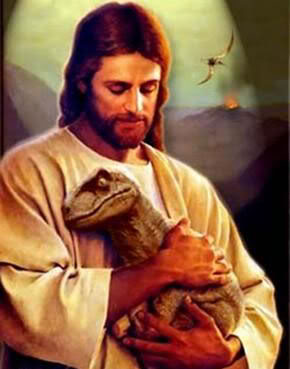
Several years ago the Jesus Fish or ichthus symbol began appearing on the backend of cars in what seemed at first to be a “baby on board” tactic with a don’t-ram-me-I’m-a-Christian subtext. Some drivers, however, associated the Jesus Fish with an evangelical power play, a showing of numbers that indicted all other drivers as “non-Christian,” and therefore, by implication, accident-worthy. The Darwin Fish showed up soon thereafter, a counter-symbol for those who seemed to be declaring that Christians could be evolutionists as well. Sensing a challenge — which always appears as a threat in neo-con eyes — the Jesus Fish or Truth Ichthus swallowing the Darwin Fish swam onto car posteriors. Then the dinosaur eating a Jesus Fish came out, and I am certain that I once saw a Jesus Fish eating a T-rex on some oversized vehicle hind-end.

A friend once asked me why I spent my time arguing with those who are so obviously wrong (the anti-evolutionists). The unfortunate answer showed up in the White House at the turn of the millennium and the radical restructuring of society encouraged by the “religious right” gains credibility from the sheer number of people willing to adorn their cars with Jesus Fish. The real victim in this volley of statements in chrome is a guy who said nothing about evolution and who, I’m sure, would be amazed at how misrepresented he is. As the love-hate relationship between Jesus and dinosaurs continues to wax and wane, I’m staying out of it, but I’m more frightened by the fish than by the dinosaur.


Make Room on the Ark — Another New Dinosaur!

Enter Aardonyx celestae! A new dinosaur announced yesterday in South Africa is being hailed as a missing link in the sauropod chain of development, much to the chagrin of Creationists. I have to admit that I never outgrew my childhood fascination with dinosaurs, and when we purchased the life-like models for my daughter as she was growing up I secretly coveted them for myself. The rate of discovery among new genera of dinosaurs is between 10 and 20 per year, meaning that the maybe 20 different dinosaur types I knew as a kid has ballooned into well over 500 different species and 1,800 genera. Late at night I still hear the call of paleontology and I slip Jurassic Park into the DVD player and weep.

With each new dinosaur discovered Noah’s ark must evolve into a larger boat for some among the Creationist camp. After all Genesis says “two of every kind” lumbered aboard. The newbie this time is a proto-sauropod, a missing link between bi-pedal herbivores and their earth-shaking descendants who required four tree-like legs to support their immense weight. It seems that Noah must have been quite the engineer to handle all this displacement. And it is a good thing too — scientists predict that the new genera to be discovered represent only about 30 percent of the total, and the number will likely continue to climb for a century and a half yet.

Dinos

Wikipedia proto-sauropods race for the top deck

So it seems that the God-of-the-gaps grows smaller while the ark grows larger. Of course, the dinosaurs might have evolved into all these different genera over time, but then, Creationists can’t allow for that, since it would admit room for evolution. And that seems about as likely as the Church of Jesus Christ of Latter-day Saints backing anti-discrimination laws against homosexuals!


Let’s Do the Time-Warp Again!

Yesterday MSNBC reported that the Vatican has again called for a conference involving serious scientists to discuss the implications of astrobiology — life in space. Despite the mocking sneers of the media, growing numbers of serious thinkers are doing the calculations and scratching their heads. When I was a child, I was assured that earth-like planets elsewhere in the universe were virtually impossible, statically. Now we know of several rocky orbs circling distant suns. Our own sudden advances in technology have started some to think that if we raced from heavier-than-air flight to the moon in only 66 years, and from landline to audio implant in about a century, maybe other intelligent life could do the same? What would the implications be for the geocentric world of Genesis and the Gospels?

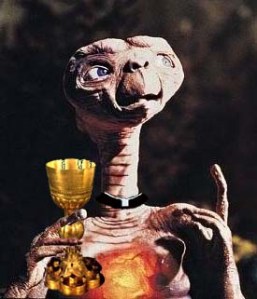
The Catholic Church and Science are hardly best buddies; frequently they are not even on speaking terms. No, the tide did not change to a warm embrace with the (centuries late) apology to Galileo or the sudden realization under John Paul II that evolution is “more than just a theory.” All one has to do is think of the issue of stem-cell research and the eagerly offered hand is suddenly withdrawn. But on the issue of aliens, perhaps the church can race ahead of the projected God-of-the-gaps, do an end-run, and be ready to embrace E.T. when he finally makes himself known.

Don’t get me wrong, I am grateful that the Vatican has embraced evolution and thumbed its Roman nose to the creationists. (They deserve even more than that!) I am glad they are considering the possibilities of extra-terrestrial life. There is, however, a nagging doubt in my mind that they may be coming to the conclusion that the late Larry Norman once did that “if there’s life on other planets, then I’m sure that he must know, and he’s been there once already and has died to save their souls.” What good is advancement in science if mythology refuses to budge? What would an extra-terrestrial priest look like? What if they don’t have blood to fill their chalices? Do they have trumpet-horns on their saucers to announce the second coming? Yes, let’s explore our universe, but let’s not forget to update our credibility meters as well.

ETpriest

Our father which art in heaven?


Picturing Genesis

genesiscr

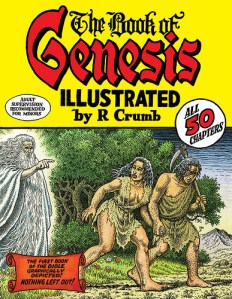
The book of Genesis is elusive and evasive, telling stories that have been read as both science and fiction, but never revealing its own deepest secrets. For over two decades I have been researching the book, never publishing my work since there is so much more yet to read on it. Many truly bizarre interpretations on the introductory section of the Bible have appeared with the proliferation of publication — Robert Capon’s Genesis the Movie and Harold Bloom’s Book of J come to mind — even by otherwise careful scholars. Nobody seems able to get to the essence of the book while everybody thinks he or she already understands it. As a piece of literature it is perhaps the most influential ever penned since it is the basis for so much of the world we’ve constructed around it. Maybe the reason we can’t understand it is that we don’t have it in pictures. Now that’s all changed: R. Crumb’s (serious) comic book version, The Book of Genesis Illustrated, is finally available.

R. Crumb is well regarded in the comic book world, but less recognized in the biblical academy. He is not the first to storyboard sacred writ, nor will he be the last, but he is grappling with the same material that defies definition. Creationists can’t live without the assertions of Yahweh’s creatio ex nihilo, that they read into Genesis (for those who are willing to read what’s there, chaotic water is pre-existent, not created), and many biologists wish that J and P had shown a bit more discretion and humility before setting the framework that dogs their each and every evolutionary observation. Those who take Genesis too seriously will likely be offended by a comic-book version, but the text is based on the revered King James Version and Crumb said in an interview that he had “no intention to ridicule or make visual jokes.” The problem is, the text is full of its own riddles and jokes, along with serious assertions of the superiority of Yahweh over Marduk and Baal and Teshub.

Unlike many Bible readers, Crumb does not stop his Genesis with the Flood or the Tower of Babel. Instead he takes his readers through the entire book where “iron-willed Old Testament matriarchs” are presented in his characteristic muscular style, perhaps recalling She-Hulk more than Sarah. The images may be unfamiliar and a little frightening, but I applaud Crumb for taking on the patriarchal chokehold over shy, hand-wringing wives wondering why they can’t seem to take the biological package their virile husbands send their way. The Bible was written in a man’s world, but it is now ensconced in a more enlightened age and it is ready to benefit from a new, and unfamiliar reading.