Ravens and Autumn

In need of some diversion, and seeking some way to celebrate the equinox, we made our way to Mount Gretna.  With a population of less than 300 souls, Mount Gretna is remote and an area of natural beauty.  But that’s not why we’re here.  Each year the Mount Gretna Theatre—housed in an open-air playhouse—puts on an Edgar Allan Poe performance in the autumn.  I’m not sure if it’s always titled “Nevermore,” but it is this year.  And it’s a fine evening for an outdoor performance.  The show is a walking tour of seven Poe vignettes.  A guide starts the evening by telling us a murderer is on the loose and Dupin (for Poe invented the detective story genre) warns us to trust no one.  I’m thinking this will be a murder mystery, but the first vignette is adapted from “The Fall of the House of Usher.”  My favorite short story, I smile at the choice.

The next venue—we’re walking around the parameter of the playhouse now—is from “The Masque of the Red Death,” which has taken on new significance with Covid.  These, by the way, are single actor vignettes.  We’re then led to a saucy woman who performs “The Black Cat” with a subtle humor.  As she’s led away, a madman leads us to a corner of the building where he retells “The Telltale Heart,” and you begin to realize just how much Poe wrote about revenge and guilt and murder.  We’re then led to the only two-person vignette for a retelling of “A Cask of Amontillado.”  A haunted young man crying “Lenore” next recites “The Raven,” from which the evening takes its name.  The final vignette is the only unfamiliar one in the lot, based on Poe’s humorous—if politically incorrect—stories, “How to Write a Blackwood Article,” and “A Predicament.” (Set in Edinburgh, no less.)

It’s a beautiful September night in a delightful wooded setting.  The fact that it takes some effort to get here is part of the draw.  The actors clearly enjoy themselves and the stories are told in such a way that it doesn’t matter that we’ve read them all before.  Once back home, I learn that the playhouse is in a borough founded by the Chautauqua Society.  I think how times have changed and that it was quite a world that supported adult education institutes.  Chautauquas are found around at least the rural parts of the country.  Founded by a Methodist minister, Chautauqua was a wholesome competitor to Vaudeville, offering entertainment as well as education.  I feel I’ve been both educated and entertained as we climb back in the car in a Pennsylvania night on the eve of the autumnal equinox.


Rocks and Philosophs

Porphyry is, apart from being a cool word, a kind of purplish stone that was prized for statue-making in antiquity.  It is also the name a Syrian philosopher gave himself in the third century of the Common Era.  Now, if you read widely about antiquity, as some of us have done, you’ll encounter the name Porphyry from time to time, but those of us who focused on older materials don’t pay him much mind.  I was reading about Porphyry recently, however, and did a little poking around to discover that he’d written a book called, in translation, Against the Christians.  Some historians speculate that Porphyry may have once been a Christian himself, but whether or not that’s true, he developed an antipathy to the sect.  I was curious about what his beef may have been only to discover that this book is lost.

Now lost works in antiquity are the rule rather than the exception.  Literacy may not have been widespread, but those who could write did write, and often prolifically.  Human history was very well documented.  But tonnes of it went missing.  Wars have been part of that history and wars are notorious for destroying written records.  Also, much writing was on perishable materials that, well, perished.  That wasn’t the case with Against the Christians, however.  Porphyry’s work was purposefully destroyed.  By this point Christianity had taken over the Roman Empire.  Rather than accepting the challenge of a philosopher, officials censored and destroyed his work.  Ironically, all that survives are quotes from books of theologians who were trying to refute him.

This made me reflect on the book bans that are currently all the rage among some “Christian” politicians.  Such rearguard actions belie the confidence that imperial religions showcase.  A religion that’s afraid others might see the holes raises many questions, does it not?  It seems to come down to the idea that nothing has changed in two millennia, even though Jesus didn’t have a cellphone—not even one of those old flip-open kind—and much of what we know of nature was still many centuries in the future.  The fact is that we only try to silence those who disagree when we fear them.  Book bans pretend that they can hold the hands of the clock still and that all will remain as it was decades ago.  Learning, however, is a genie let out of the bottle.  Back in Porphyry’s day powerful bishops and emperors ordered his book banned and destroyed.  And we are all the poorer for it.


Not for Profit

Non-profits are the backbone of our society.  In a world measured by “net worth” some of us are aware that people are more than figures, ciphers on a ledger.  Honestly, I’m impressed by plans for a universal basic income, which seems more humane to me than brutal capitalism with its new first estate.  Since that’s not likely to happen here, however, I look to non-profits and I’m impressed.  Despite the distorted narrative that states those who struggle to get by are lazy (hey, I don’t know many rich people up as early as I am daily!), our economy favors the greedy and the graspy.  That’s why non-profits are so important.  These are corporations or companies that work for something other than making money for themselves.  They have a more civil goal in mind.  They are, in a word, civilization.

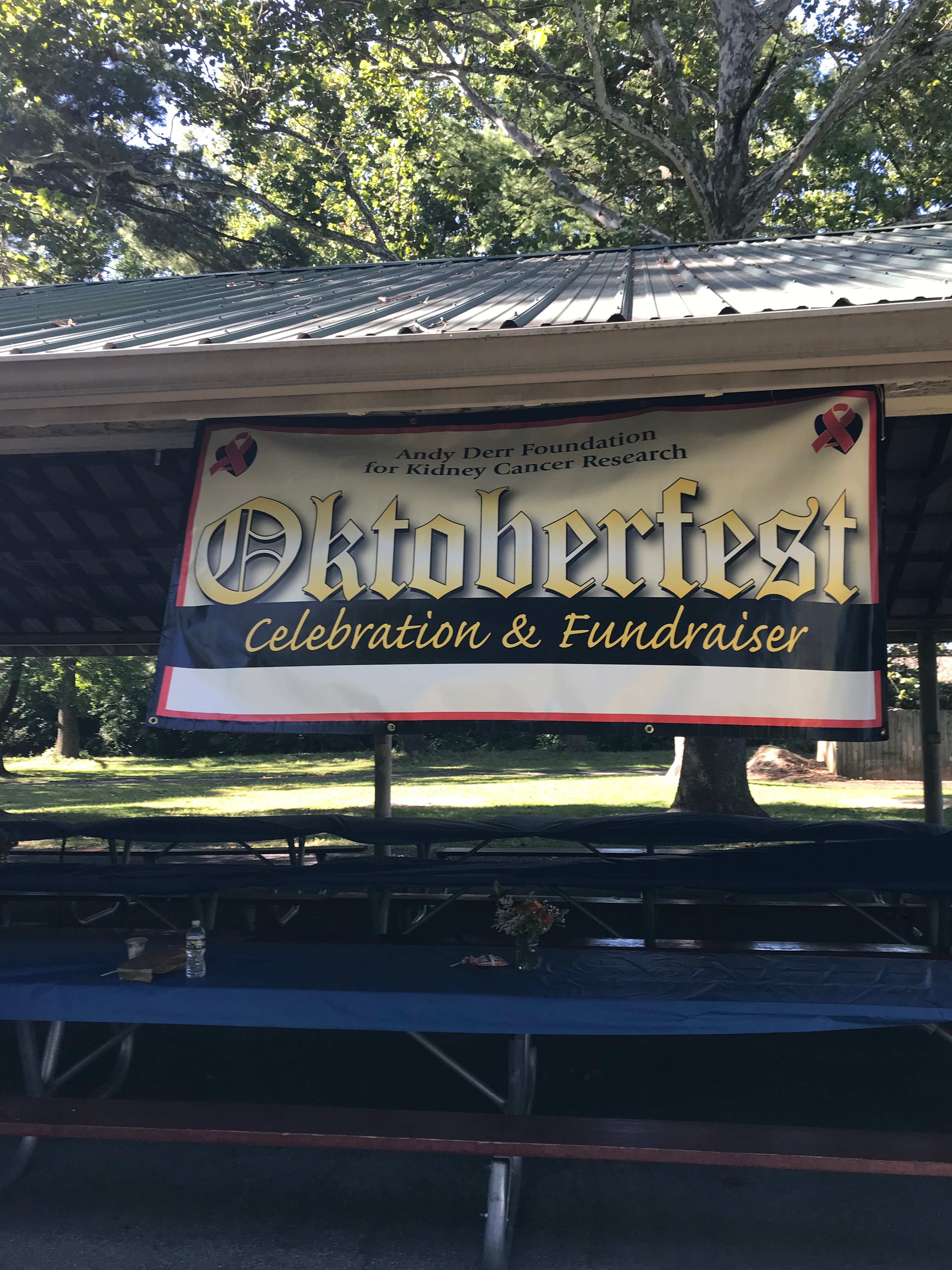
I recently attended a cancer research support organization Oktoberfest.  It’s for a small non-profit foundation, local to the Lehigh Valley, but it was amazing how much money it has been able to raise for research.  Like many such foundations, it was born of personal loss and the desire to prevent others from experiencing such loss.  Compare that, if you will, to a company whose business is, well, making money for itself.  See the difference?  One you can feel good about.  The other makes you feel like you should take a shower after work to wash the grime of selfishness from you.  I have worked for profit-making companies and non-profits and there’s no comparison.  Those with money as the only goal tend to be heartless.  If you ever want to feel like chattels, apply here.

Non-profits have to think quite a bit about money, of course, but there’s always more to the picture.  There are discussions of the larger goal, which is generally something for the good of society.  To help people.  I’m not naive enough to think that non-profits can’t get corrupt (lucre corrupts everything), particularly when they get large, but without them there would be so much more suffering in the world.  Becoming “civilized” has been a fraught exercise from the beginning, but it was an effort for individuals who are very different from one another to learn how to live together and cooperate for the good of all.  Capitalism is a means whereby some game the system for personal gain and the rest envy them and want to try too.  Thankfully into this moral morass non-profits have arisen, like oases in the desert.  They are the hope for our society.  Indeed, for civilization itself.


End the Stigma

I’ve been a lifelong fan of Edgar Allan Poe.  I bought books about him (and by him) from a young age, fascinated by a person who expressed himself so beautifully in the face of trauma.  Of  a different era, and mindset, was Rod Serling, creator of The Twilight Zone.  Another childhood hero of whom I made the assumption of some trauma.  One thing interesting about both of these influential writers is that relatives have written about them claiming that they weren’t as haunted as they seemed.  I wonder, however, if they write such things because we still, we are still stigmatizing trauma.  We’re great victim-blamers.  Perhaps it’s because we want to distance ourselves from the scary forces at play.  We fear that unhappy master, whom, in Poe’s words, “Unmerciful disaster followed fast and followed faster.”  We don’t want to attract such things to ourselves.

Reflecting on my father recently—I didn’t know him well at all—I was thinking about his experience in the Korean War.  I don’t know what happened to him there and I never had the opportunity to ask him about it.  But I do believe that, like Rod Serling, he may have been traumatized by combat.  War leaves trauma in its wake.  Few, I suspect, come out of such situations without deep scars that haunt them the remainder of their lives.  And still we fight.  I knew, already at a young age, that I could never be a soldier.  This despite growing up with G. I. Joe.  Some of us spend our lives trying not to harm others.  Trauma follows on from that since the world has its share of unmerciful disasters.

There are those who claim Poe wasn’t the experiencer of doom and gloom about which he wrote so eloquently.  He lost those close to him to disease.  Even now there are many stigmatized diseases.  That’s one of the reasons employers are insistent that conditions suffered by employees not be revealed.  Our whole medical privacy mindset plays into the stigmatizing those who face illness.  Tuberculosis was only one of many widespread diseases during Poe’s life, and it’s still widespread in parts of the world because companies like Johnson & Johnson and Danaher price gouge the well-understood cures to maximize profits.  And we blame the victims.  I return to Poe at intervals in my life.  I also watch episodes of The Twilight Zone.  And I think of my father.  There is trauma in the world, and some of it, at least, is preventable.  We must stop blaming the victims.


Dials and Destinies

Indiana Jones and the Dial of Destiny didn’t do well in theaters.  I’m afraid that Indy fans, like Harrison Ford, may be aging out.  Although anthropologists are loathe to admit it, Indiana Jones was a boon for archaeology.  He made it cool, back in the eighties.  We’re four decades older now and for some of my generations, Indy’s still a draw.  The energy of Raiders and Final Crusade, however, has dissipated a bit.  I don’t watch trailers, so I learned that the eponymous Dial of Destiny was the Antikythera mechanism, curiously called “the Antikythera” in the film.  Or Archimedes’ Dial.  The film starts off with a religious artifact, the lance of Longinus, but it’s a fake.  The Dial, however, is real, if broken.  In order to make the Indy magic work they had to make a remarkable scientific device into something occult.

While I watched I thought about how the move away from religious artifacts into secular is a sign of our times.  The original trilogy involved Christian and Hindu symbols.  (It was only a couple years back that I realized Temple of Doom was set before Raiders, when Ford was young enough to pull that off.)  Crystal Skull was a mix of religious and secular.  We don’t know, historically, what the crystal skulls were for, but clearly they could have had religious significance.  The film spun them all widdershins into paranormal playthings.  The Dial, as it’s called, has no religious implications at all in the current film.  The 1960s Nazis want to travel back in time, which is what the Antikythera, we’re told, predicts (letting interested parties know the time and place of time fissures).  A Hitler wannabe plans to do World War II right, so that Germany wins.  They end back at Archimedes’ time, however, and the world is saved.

As I’ve noted with other pop culture franchises, when a series begins with a religion plot and then drops it, things start to unravel.  I suspect many screenwriters and directors underestimate the power of religion for generating compelling stories.  Belief changes things.  Dial of Destiny demonstrates that substitutes really don’t engage viewers to the same level.  This is a perfectly serviceable Indiana Jones movie.  Lots of adventure and PG 13-level violence.  Getting the girl may not have the same urgency with an octogenarian archaeologist, and Helena seems undecided what she wants, in any case.  What’s really missing, however, is the pizazz that religion brings to stories of finding ancient artifacts.  Archaeology, embarrassingly for some, began in West Asia for religious reasons.  Acknowledging that is simply staying true to history.


Friendly Bug

The Beetle and I go way back.  I’m unapologetically a child of the sixties and I’ve always loved Volkswagen Beetles.  My second car was a used Beetle, one of the older kind before they were discontinued.  I had to sell it to pay for seminary.  Since things tend to happen in cycles, I was teaching in seminary when we could finally afford car payments and we bought one of the New Beetles before they discontinued them.  That was back in 2003.  I mentioned in a previous post that I had to trade in a twenty-year old car for a new one.  That was the Beetle.  Cleaning it out was an exercise in history.  And it brought a few tears.  We’d only put 113,000 miles on that car—it had electronics issues that kept it in the shop a lot—but it was more the years than the distance.  There were memories.  It wasn’t unlike having your dog die.

I remember buying the Beetle on Blue Mound Road.  This was back in Wisconsin.  Waiting for it to arrive (only a matter of days instead of months).  Driving a stick-shift again.  It was basic driving.  Each little artifact I pulled out from under the seat, or tucked away in the trunk, triggered another memory.  A tear or two escaped, I confess.  We were unaware that just a couple short years after buying it that Nashotah House would turn savage and we would have to drive the Beetle halfway across the country to find work.  Registering a car in New Jersey is a surreal experience.  I used it for commuting to Gorgias Press until that ended, then commuting to Rutgers and Montclair State.  Then came the long, long years of commuting by bus to New York when the Beetle sat mostly neglected in the driveway.  All those trips up to Binghamton, then Ithaca.

The move to Pennsylvania involved yet more paperwork, since cars are more complicated than any other commodity.  The Beetle became our short-trip car.  I love shifting gears manually.  Feeling a sense, however illusory, of control.  Of longevity.  We kept the car for two full decades, making memories along the way.  It was alas, aging.  At twenty it was like fifty in dog years and the check engine light was on again although it just passed inspection.  It felt wrong pulling all the accoutrements out, getting ready to hand an old friend over to a stranger’s care.  We’d been the car’s only owners in three states.  Through four presidential administrations.  There was a lot of personal history there.  It’s the end of an era.  Goodbye, old friend.


Driving Complexity

It should be a pretty straightforward thing, buying a car.  Unless you live in a city like New York you need one, so the process should be simple since it affects many.  But no.  Nothing is simple any more.  We had a two-decades old car that had quite a few health issues in its long life.  Besides, we wanted a hybrid to help with the environment and to cut down on gas costs.  A Toyota Prius seems a good choice so we tried to buy one in February.  We had to wait, however, since dealers can’t keep them in stock.  Initially they estimated three or four months, which turned into eight.  When it arrived unexpectedly we had to drop everything to go get it because they don’t want them sitting around on the lot.  Fortunately the day was Saturday, when schedules are a bit more flexible.

Unlike other stores, where you walk in, hand over your money, and walk out, the car dealership involves immense complications, too great to comprehend.  Insurance is a big part of that.  It turns out that now they want you to go with their insurance.  And since car insurance is bundled with homeowners’ insurance you have to answer questions about when your house was last roofed when you buy a car.  Facts and figures that I don’t keep at my fingertips were necessary.  And you have to download apps because they want you to do everything by phone.  If you’re buying a Prius they want to tether your phone to the car, like a Navi to its beast, and you have to let it monitor where you are at all times and how you’re driving, otherwise your rates will go up.  Driving a Prius is like steering a computer on wheels.

You see, I get overwhelmed.  My mind evolved for a simpler world.  Finally arriving home after several hours in a bustling showroom, I had a dozen emails about this and that related to changing insurance and registering for new systems so the car can take to me, and all I want to do is run to the store to pick up some groceries.  There are no entanglements there.  Pay for your goods and walk out of the store.  No insurance, no requirements to change anything.  Not to mention that Saturday’s the day for mowing the lawn and the hundreds of other chores you can’t get done during the work week.  I’m sure I’ll enjoy my new wheeled computer.  It is much better for the environment.  It may take a few years, however, before I find the time to learn how to drive it.  And to disentangle myself from all the other complications involved.  Pardon me, but I’ve got more car-related emails to read.


Modern Work

The entertainment industry has proven itself, time and again, resistant to recessions.  It says something about our lives that we need that outlet no matter what.  The New York Times has been looking at the writers’ and actors’ strike in Hollywood as a piece of what they are calling the “fractured work” puzzle.  Noting how inequality inevitably increases in a capitalistic system, they put the screenwriters into a situation with which I am unfortunately familiar—that of the adjunct professor.  Adjunct professors now make up some three-quarters of the teaching force in higher education.  In case you haven’t had the misfortune yourself, an adjunct gets paid by the course (not very well, by the way) and has no benefits—medical or, often, retirement (some state schools are required to offer the latter, but you’ll never be able to retire on the pittance you receive).  The idea is that work is being broken into smaller chunks so that entrepreneurs can pay less for work done.

Everyone knows such a system isn’t sustainable.  It will crash.  Unless it’s reformed.  Some people have asked me about becoming a copyeditor for a job.  The thing about copyediting is that it’s freelance work.  Publishers generally don’t hire copyeditors full-time.  You can make a living at it, but it’s self-employment.  You need to set aside the money for retirement and health insurance.  As well as taxes.  And you have to work long hours to make it pay off.  I tried it for a year, but I’m a slow reader.  It was clear that I didn’t have the right literary stuff to make such a living, so I had to move into acquisitions instead.  If you know me personally you may find that ironic.

Those of us who’ve always sought a spiritual existence, however defined, often don’t fit into a capitalistic system.  Especially if you question doctrine.  That’s why I became an academic—or at least tried to.  It’s one of the few places where people with my skill set can thrive.  Work often defines who we are.  Usually one of the first questions to arise when you meet someone is “what do you do?”  Specialists often suggest dissociating our selves from our jobs—I suspect that’s more necessary in positions in which a person is unwillingly being taken over by a position that’s not fulfilling on some level.  Wouldn’t it be better, since we’ve opted for fractured work, if we made it something you could do for a career?  The New York Times suggests specializing, but be careful, dear reader, in what you decide to specialize.  The “market” may well dry up on you and striking may not even be an option.


Little Bang

I’ve always been interested in the sky.  At times it feels like I’m in love with it.  Having attended a Sputnik-era high school—a rural high school with an actual planetarium!—I took the offered astronomy course.  Buoyed up by this, I also enrolled in a college astronomy class only to discover that that career track involved far too much math for my humble abilities.  Still, I learned a lot about the nighttime sky.  I’ve also been a lifelong reader of lay science.  I very much appreciate scientists who write so that nonspecialists can understand them.  So it was that I was glad to see a New York Times letter by Adam Frank and Marcelo Gleiser titled “The Story of Our Universe May Be Starting to Unravel.”  I’ve mentioned Gleiser here before because I’ve read a couple of his wonderful books.  But this article was mind-expanding.

Frank and Gleiser suggest that the Big Bang Theory may, eventually, need to be replaced.  They point out that small inconsistencies have crept into it over the years (keep in mind that it was really only “confirmed” within my lifetime, back in the sixties).  Most of these have been patched up with quilt-work astrophysics, but the James Webb Space Telescope is making some of those past patches strain a bit at the seams.  Fully formed galaxies are being spied too far back in time (for stargazing is looking into the deep past) for the standard model.  They shouldn’t be there, but they are.  The letter interestingly raises the point that the scientific study of quantum physics, as well as that of consciousness, also strain the standard models.  Perhaps it’s time for a rethinking of reality?

Image credit: NASA, public domain

Isn’t this breathtakingly exciting?  To be alive when a major leap of understanding the universe we call home may be discovered?  The authors point out that cosmology and philosophy often have to interact.  Our understanding of the universe is a human understanding, not sacred writ.  The scientific method is built to be falsifiable.  If it’s not, it’s not science.  (This often separates it from some religions which declare themselves unfalsifiable, and therefore likely wrong.)  New scientific discoveries are made daily, of course, but new paradigms only tend to come on the scale of lifetimes, or several generations.  We don’t see them all the time.  I guess it’s heartening to see that the system works.  When science becomes orthodoxy, we run into similar problems that we encounter with religions.  A bit of humility and a ship-load of wonder can go a long, long way.


Consider the Ant

Ants, the Bible suggests, are worth both watching and learning from. I was reminded of this while at the Easton VegFest a couple weeks back. The VegFest is an annual event promoting vegan food in a riverside park. I’d given someone a ride and ended up finishing earlier. I could either walk all the way back to the car or spend the time outdoors. It was a pleasant enough day and there were places to sit (with no back support, however). One such sitting venue is a concrete retaining wall about 12-feet high, that borders a walking trail along the river. Since there’s a lively inner tubing business along the Delaware and Lehigh Rivers, you could watch groups float by, looking very relaxed in the way that only being on the water can make you. It was while sitting along the top of this wall that I realized I was on an ant highway.

Image credit: Fir0002/Flagstaffotos, under CC BY-NC license, via Wikimedia Commons

While individual ants don’t live very long, colonies (and their lives are very interconnected) can last several years. Some queens even make it to 30, which is impressive for an insect. As I was sitting (more like leaning, since the wall has a rounded top and I have a fear of falling) I’d notice some larger ants approaching with great determination. I would stand to let them pass. They weren’t in a close line or anything, so if I didn’t notice one in time, I became part of the trail. Looking confused—if an ant can look confused—at missing the chemical trail, they’d nevertheless continue in the same general direction unless some microscopic bit of a dropped piece of lunch on my lap caught their attention. Their determination was a lesson. They simply don’t give up.

Although the wall predates any of their individual lives, it has become their highway just as any interstate becomes ours. They didn’t build it, but it has become their recognized and known pathway. This was clear because in the course of my hour there, several members of what I presume was the same hive came by. I suspect the writer of Proverbs wanted readers to notice their busyness, but what I saw was their marked will power. Not even a giant wearily resting on their road deterred them. There was an utter conviction about what they were doing. Obstacles were simply climbed or gone around in the assurance that the trail would resume on the other side. Their sense of hope was admirable and, in its way, contagious.


Fear and Reviewing

I have a confession to make.  I don’t always read reviews of my books.  I’m always a little scared, even though they made it through the review process and were accepted for publication, there will be those who don’t like them.  I’ve only seen three full reviews of Nightmares with the Bible and two of them were negative.  Eventually, however, I generally come around to taking a look.  Yesterday I found the first review of The Wicker Man on FilmJuice.  It took some time before I could settle down to read it, and to my great relief it was a positive review.  You see, I knew I was taking a chance by writing this book because I was approaching the movie from an unexpected angle.  That often makes fans uncomfortable.  I’m glad that at least one reader found it worth his time. (By the way, I tried to leave a thank you but WordPress, ironically, wouldn’t let me log in—hey guys, I’ve been blogging here for 14 years!)

I’ve watched horror movies since I was a kid.  I started writing about them in 2009, back when I started this blog.  It was tentative at first, being trained as a religion scholar as I was.  I think many of my early readers didn’t know what to make of it when I wrote about horror—wasn’t this a blog about religion?  Well, actually it’s a blog in the old sense of the word, a log.  Ship logs and diaries both depend on what’s going on at the time.  I still work with religion for a job, but I rely on horror films to help me make sense of life.  Since I watch them, I write about them.  Holy Horror was a bit of an experiment for me.  It didn’t exactly become a best seller, but it brought me into the conversation.

Holy Horror was the first book where I discussed The Wicker Man.  I’d discussed it many times on this blog, of course, but having a book published means that somebody’s invested in your thoughts, or at least thinks they can make a buck or two from them.  (This blog is entirely non-profit.)  I knew the Devil’s Advocates series was lacking a volume on The Wicker Man so I asked the series editor if he’d be interested in a new angle.  That set the direction for the next couple years of my life.  Despite my skittishness, I’m delighted to have a positive review on my reading of the film.  If negative reviews come (and they likely will) I’ll at least have the satisfaction of knowing one reader gets what I’m trying to do here.  And I confess that it feels good.


Middle Ground

It’s the real poison Trump baptized.  Polarization.  The idea that there is no middle ground.  It’s a shame since the middle ground has been what’s kept America stable over the years.  Now it seems to be eroding rapidly.  While my sympathies have always been on the left, I realize that radical change tends to dirempt societies.  As much as I deeply desire justice and fairness for all, I know it will take time.  In my way of thinking that “all” includes animals.  That’s why I’m vegan.  Now, I know being completely vegan is likely not possible since who knows what everything is made of, and who has the time to find out?  I do the best I can and I don’t eat animal products and I try not to wear them either.  I know there are those who don’t share my outlook and they’re entitled to their point of view.

For nostalgia’s sake, and to get out of the house, we attended a 4-H county fair.  An annual event when we lived in New Jersey, it’s now a rarer treat.  So I put on that scarce recording of Bruce Springsteen’s song “County Fair,” not on any of his studio albums, and headed for New Jersey.  This county fair is the kind with animals rather than rides, and we stopped in to see the sheep, goats, cows, and alpacas.  It was in the cattle tent that I saw the following poster, claiming “There’s no such thing as vegan.”  Well, I don’t go around saying there’s no such thing as omnivores (thus the polarization) but this poster convinced me that we need to try even harder to stop raising animals to exploit. I understand, I think, the intent of the poster—cattle aren’t just meat.  The thing is, I think of them as conscious beings.

I miss the middle ground.  People no longer want to compromise or negotiate.  Since Trump it’s become “my way or the highway.”  I think I prefer the highway.  That highway takes me far from industrial feedlots where it’s illegal to document the cruelty that these animals undergo daily.  It’s quite a different thing for Bessie to lay down with a fan blowing on her under a tent with a small farmer caring for her, but that won’t feed a nation.  Small farms aren’t the problem. I don’t insist everyone be vegan.  I would like it if we could sit down and talk about it, however.  Cattle raising is the industry that generates the greatest amount of greenhouse gases that are causing global warming.  If we keep dividing ourselves and refusing to change we’ll be having this polarizing argument under water before too many years have gone by.  My highway is middle of the road.  Even slow change can benefit many.  The goal is to get “many” to “all.”


Geography Quiz

With my daughter’s encouragement, I’ve taken an interest in geography.  While not exactly an isolationist, I’ve often thought that America trying to impose its will on foreign nations is generally wrong-headed.  Still, when I read histories of the early United States, it appears that the desire to own and organize everything from Atlantic to Pacific makes sense to a particular outlook.  Taking the land from its rightful owners was clearly wrong.  It seems that wherever there are borders people fight.  I’ve been quizzing myself on geography and I’m getting fairly decent at identifying countries (not all of them, and not always correctly).  Doing so has led to some learning opportunities.  Africa was, of course, heavily colonized even into my own lifetime.  Only recently have we begun to realize that people should have the right to independence—sounds familiar, right America?

There are lots of quiz games available on the internet that help making these identifications fun.  I’ve learned that the newest country recognized is South Sudan, in Africa.  It became independent just twelve years ago, breaking away from Sudan.  South Sudan is one of the least developed nations in the world—I suspect that some of these conditions contributed to the desire for independence.  Another thing that becomes evident in learning geography is just how much disputed territory there is.  Thousands, probably millions, of lives are lost over border disputes.  This seems like such a testosterone-driven form of politics that patriarchy ought to be thoroughly ashamed of itself.  The United States still plays these games as well, backing our favorites, despite the will of the people.

One nation that consistently shows up in these quizzes is Western Sahara.  Apparently this is still a disputed territory, colonized by Spain but released from its control in 1975.  Immediately fighting broke out between Morocco and Mauritania, its neighbors.  Both wanted control of the region.  The territory is one of the most sparsely populated in the world, being mostly Sahara, but even so it’s worth fighting over, in the strange geography of the human psyche.  I often ponder our apparently insatiable urge to fight and control.  As if we can really control anything.  All it takes is a thunderstorm to park over an area for four hours and any house will begin to feel the damage.  Nobody’s really in control, as you’d think events in Russia might underscore.  It seems unbelievable to me that a world so connected—entangled even—with the internet would still insist on disputing who owns this rock or that.  Just think how much we could accomplish if we’d even allow for a little leeway in our geography.

Remember this?

America the Religious

One of the truths that doctoral work teaches you is that if you look closely at something, minute differences appear.  Those interested in historical subjects write up syntheses that cover over many of these minute differences until somewhat of a false impression might occur.  Consider Puritan New England.  The image is a familiar one to the American imagination.  Rigid, pious, fearful church-goers predominated.  Stern, often acerbic, ministers were voices of authority.  But in actual fact, maybe a third of those eligible to be so in Puritan New England were church members.  Many lived in remote locations and used folk traditions (what the church would condemn as “witchcraft”) to meet their spiritual needs.  This was DIY religion.  And yet, the overall picture is of an uptight, strict, Calvinistic world.  That’s only part of the story.

Controlling the narrative is a powerful thing.  For example, the religious right has often flouted the idea that America was very religious from the beginning.  The “falling away” from the church is only the result of modernism.  Before that, they claim, pretty much everybody was religious.  This is patently untrue.  But if the narrative is believed, it becomes powerful.  Historians face a dilemma here.  Not every single little detail can be written about anything.  If you read a history of, say, the United States, do you think everything is in those thousand pages?  No, not by a long shot.  Entire books written about a single individual don’t cover everything.  The temptation is to present an approximation that covers the general trends.  Those of us who study religious history have an extra hurdle—what people say they believe and what they actually believe might be quite different.

Demographic studies that show only a third of New Englanders were church members indicates that two-thirds of the story remained untold.  The city on a hill may have been an ideal, but most of the people lived in the valley.  People prefer a happy story, of course.  That’s natural enough.  When we look for facts sometimes the story can grow a little confused.  Shrink that history of the US down to a single state and it’s still unwieldy.  Even a single city.  Choices have to be made and approaches have to be decided.  What really happened?  You can bet your bottom dollar that it was a lot more complex than any history book indicates.  People prefer mythological national narratives to naturalistic ones.  When we buy into simple materialism we often mistake our mythic past for a factual one.


Seminary Daze

It’s surprisingly easy to throw away an expensive career that once held much promise.  It really involves just a two steps: spend thousands of dollars earning a Ph.D. in religious studies, and take a job in a seminary.  It’s disheartening to watch colleagues going through this as seminaries contract, then close.  I know how it feels personally.  You’re suddenly aware that your years and years of training have made you practically unemployable.  If you do find a job it won’t pay as well.  Chances are you won’t enjoy it either.  Having taught in a seminary will mark you in academia as one of those “uncritical believers,” and, well, nobody wants to touch one of those.  While I would’ve taken a regular seminary job after my doctorate, my wife remembers me lying awake at night asking “Am I cutting off my career if I take a job at Nashotah House?”  The answer: yes.

I’ve been watching colleagues have their worlds torn apart as seminaries try to figure out how to stay open when institutional churches are dying.  Megachurches don’t require a seminary degree to run—natural grifters do it quite well with no advanced education, thank you.  But mainstream churches have been losing members, and therefore financial support, for years now.  And seminaries supply a commodity no longer in demand.  This may have been a trend when I started out back in the eighties.  If so, nobody told me about it.  I walked into this career naive and came out jaded and cynical.  My motives were to help other people.  It’s getting harder and harder to find jobs where you do that any more.  At least while being able to keep body and soul together.

Thing is, it takes years to earn the degrees you need to teach in a seminary. You have to think ahead.  When I started out, trends suggested a huge glut of jobs in the teaching market.  That never panned out, of course, as human predictions seldom do, and the decline in jobs has been pretty steady over the past thirty years.  Back in the eighties seminaries were doing okay.  Growing, even.  I do hope it didn’t have anything to do with me, but I hit this surprisingly fragile market at just the wrong time.  After having been overboard without a life preserver myself, it pains me to watch colleagues facing the same fate themselves.  Religion hasn’t disappeared—it’s simply taken on new forms.  Those forms don’t require seminary. Those of us who followed the rules on how to teach religious studies, however, somehow find ourselves in disposable careers.