For the Love of Gold

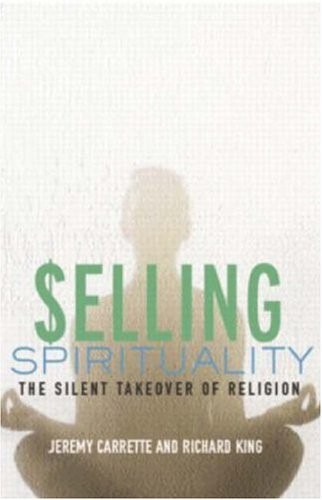
Do you ever get that feeling that you’ve been led along by a false premise that has gotten out of hand, like a practical joke that has gone too far? If I had to rate the books discussed on this blog in terms of urgency, Jeremy Carrette and Richard King’s Selling Spirituality: The Silent Takeover of Religion would top that list. I’ve felt for a long time that something’s been wrong, but I didn’t possess the training or resources to discern what it might be. I think Carrette and King may have named it. Just a few pages in and I knew there was profound insight here. Religion has been taken over by capitalism and the result is that alternatives to the godless, sanctified free market are rapidly disappearing. In a truly Orwellian sense, we have been taught the language of capitalism and have lost the ability to frame our ideas in any other way. Free markets take no prisoners—one must assimilate or die. Religions, which had traditionally served as correctives to selfishness and greed, have been co-opted into the forces of unbridled gain for the few. Amorphously marketed as “spirituality,” what sounds like religious conviction now lives in the service of consumerism.

By slowly shifting all our language and metaphors into those of Reaganomics (the very fact that you know what that means shows how far gone we already are) the capitalist machine, supported by the flaccid terms of spirituality, has established a new god—capital—and has pilloried any who dare question it. Think of the trashy phrase “prosperity gospel” for just one minute and you’ll see what I mean. Those of us who disagree with the orthodoxy that meaning can be found in money have become the resistance in a war we did not start. The twin hellions of privatization and corporatization have sunk their fangs deeply into the jugular of society and its old-fashioned value of caring for others. People are, like strangers in a strange land, just marks for the powerful. We’ll buy anything if it looks attractive enough.

The problem with consumerism is that it is easy. We all love to play along because—who knows?—we might end up getting rich in the process. We have gained the world and lost our souls. Carrette and King show clearly how entrepreneurs have learned to market the language of religion while divesting it of its venom. Go along, it urges, everything is fine. Even the economic collapse brought on scarcely two decades after Reaganomics has failed to convince the average citizen that they are but a petroleum bi-product to grease the unrelenting gears of commerce. Anything, even salvation, can be sold. Back in April I stood beside the graves of Eric Arthur Blair (George Orwell) and Karl Marx. And maybe in an unguarded moment I shed a tear or two that critical thinking seems to have been buried along with those who were brave enough to state the obvious.


Scotland’s Cryptic Evangelist

Many years ago it was now, on a Victoria Day bank holiday weekend, my wife and I were on a camping trip with friends in the Scottish highlands. Pitching our tents on the banks of Loch Ness, we joked about the potential danger—after all, Nessie had reputedly attached St. Columba, therefore even the pious had no refuge. Early the next morning, our party still intact, we drove to Urquhart Castle, arriving before it opened. Out on the loch we saw something moving through the water, leaving a wake. It was breaking the surface but was too small to be a boat and it was not a bird. It moved at constant speed until it was out of sight. This was in the days of actual film, and slide processing was “dear” as the Scots say, but I snapped off a photo anyway. The slide is too indistinct to make a diagnosis, but our friends, who had a better camera, came to the conclusion that it was a small boat. After looking at their enlargement, I still have my doubts. I’ve always sat on the fence for the Loch Ness monster. Certainly it seems improbable, but we have only a cursory knowledge of sea creatures and Loch Ness is deep and long and isolated. Is there a Loch Ness monster? Maybe yes and maybe no.

Of course, Nessie has been in the news, as my wife pointed out, backed by the considerable creativity of the creationist camp. Seizing a living dinosaur as the death knell of evolution, Fundamentalist schools in several states are using textbooks that argue Nessie’s existence proves that dinosaurs didn’t evolve and that they still walk (or at least swim) among us. An excellent corrective to this “either evolution or special creation” is Victor Stenger’s book God: The Failed Hypothesis, that I reported on a few weeks back. With apologies to the late Stephen Jay Gould, this tactic puts an entirely new spin on the concept of the hopeful monster theory.

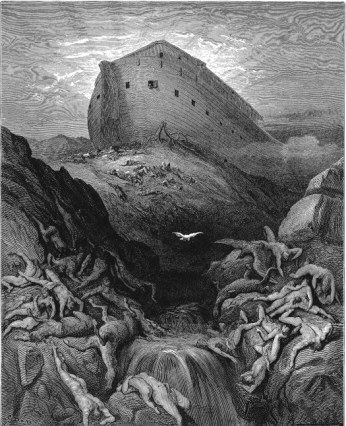
Religion and monsters are thoroughly intermeshed. Often this intermingling comes as the result of revulsion against the unclean or impure aspects of life that monstrosity represents. Numerous analysts have shown that monsters tend to be unholy mixes of elements that religions prefer to keep widely separated—animals that would never have made it onto the ark, yet somehow have arisen since the deluge. Human fear at contamination has an excellent basis in evolution; those who never developed the sense to stay away from the sources of contamination grew sick and died off. Monsters, in this sense, serve as useful reminders for avoiding the “strange fire” that so displeases the Lord. Reading how good Christians are now reaching out the right hand of fellowship to their monstrous brethren, I wonder if a long-held belief is being imperiled. Those who would swim with monsters must be very cautious indeed, for above all things, monsters are notoriously unpredictable.


Double Exposure

Back when I was teaching full time, one of my favorite television shows was Northern Exposure. In fact, the fictional town of Cicely, Alaska, had quite a lot in common with Nashotah House. Both were populated by quirky characters in a relatively remote location. Both were small, insignificant places with visions of grandeur. Both were effectively run by conservative forces that liked to imagine themselves as benign or downright noble. Both distrusted outsiders with ideas that might challenge the status quo. One of my favorite characters was Maggie O’Connell, the woman in a man’s world who refused to let the male establishment set the limits to what she could do. A strong woman character whom the men all respected served as an antidote to daily life at the seminary. My wife and I liked the program so much that we even stopped in the town of Roslyn, Washington, where the outdoor scenes were shot, a couple of times on our way out west.

We don’t have television now, so we have to watch Northern Exposure on DVD. While at a hotel recently, however, the name of Janine Turner on the television made me look. I had known that the actress portraying Maggie O’Connell was a political conservative in real life, but here she was advocating an “anyone but Obama” type campaign or some such nonsense. I felt as if I’d been sold a false bill of goods for all these years. Like Margaret Thatcher, Turner believes in socially conservative causes. Margaret Thatcher, that contradiction of a woman who felt that females belonged in the home, had undue influence on a once great Britain. Where was the woman who played such an ardent feminist in a male world? How could anyone pretend that kind of passion in front of a large audience for six years and spent her real life trying to deconstruct a cause that has everyday ethical implications? It’s all an act.

Women have been relegated to positions of lesser prestige for millennia for the crime of caring for their offspring. Men have been free to abandon responsibility and seek selfish ends, if so inclined. No matter what our gender, we pursue in life what is most meaningful to us, and it amazes me when strong women support a structure that has consistently shown itself interested in keeping them down. Vaunted as a show where diverse characters come into constant conflict but always “strive to accept their differences and co-exist,” Northern Exposure displayed depth without eschewing what is laughable about the human condition. Real life, I suppose, it is much more like the small town of Rosyln, Washington. For a few years it was an out-of-the-way tourist stop where actors could play characters they really didn’t believe in while living in a fictitious town where everyone at least attempted to tolerate everyone else.

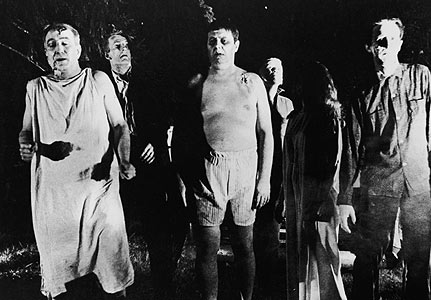
Do you recognize this character?


The Idea of a University

I have to admit that my sense of justice has been a bit offended by the loss of reputation of my chosen field. Seeing how universities are fast becoming job-training institutes, I fume about what once had been and no longer shall be. History is the lens through which I view the world (a subject many industrialists consider “useless,” but to their cause actually “dangerous”). Historians dispute which university was the earliest, although something similar to the idea of a university was developed in Bologna, Italy, around 1088.  The University of Paris was also very early, as were Oxford and Salerno.  While “business” as it was then known could be studied to some degree, a primary function of early universities was the training of clergy. No doubt, paranoia concerning heterodoxy and heresy helped spur on the idea that future clergy required extensive training. As universities caught on, many centers for the studying of theology (indeed, a branch of religious studies) sprang to life.  It could be argued that this was a “trade mentality,” but very quickly this became an academic point.  Who else but a theologian would every worry about how many angels could dance on the head of a pin?

Science was incorporated into theological studies from the beginning.  We all know about the antagonistic relationship between the Church and Galileo, but less often do we hear about the religious thinkers who were trying to put it all together into a workable system.  Often the university was among the few places where such abstract and critical thought could occur. Some of the great universities in the United States began as seminaries: Harvard, Yale, Boston University—they started as places to train clergy. How often do graduates of the Harvard Business School toot that particular horn? Permit me the privilege of a mournful sigh as I watch the torch pass from abstract thought to the abstract symbol of the gold standard. Money only possesses the value we assign to it.  Currency can be measured in less material avenues as well—the ability to think clearly and precisely and compassionately; these abstractions, I would lament, have inherent value.  Alas, the heart of the university has gone another direction. I have undergone the heartache of breakups before, and always one needs a little time to adjust to the loss.

The University of Virginia’s recent object lesson to higher education should perhaps serve as a warning tap on the brakes to those who would see higher education kneeling abjectly before the towering statue of commerce with its head of gold.  Maybe there is more to life than money?  Maybe education for its own sake is what sets civilization apart from life in the savage jungle.  Those who castigate our great institutions of learning seldom turn down the offer of an honorary degree.  While these academic niceties require neither coursework nor dissertation, they do offer a kind of credibility that the rich seldom find on their own.  So what is the idea of a university? Is it a place to learn a trade?  Sometimes.  The humble request those of us deemed useless make is that the university not forget its humble origins as a place of speculative thought in the service of religious thinking.  Critical thinking. Otherwise it will be more than irony that the city that gave us higher education is also the one that also gives its name to baloney.

from Wiki Commons


Just You Wait, Professor Higgs

They finally found him. Peering deep into the invisible world of the sub-atomic universe, his hiding place has practically been discovered. I knew that when it happened my alma mater, Edinburgh University, would be part of the equation. That’s just the kind of thing you know deep down in your sub-atomic parts. Scientists are now coming very close to announcing definitive proof of the “God particle,” or Higgs boson. Named for theoretical physicist Peter Higgs, who predicted the particle, this elusive piece of physics has been nicknamed the “God particle” by journalists who want to express just how great its explanatory value is. The average citizen knows very little about the inner workings of science—thus we have Creationists and Tea Partiers—so we require striking neologisms to help us comprehend that this is not only important, but really, really important. For explaining the way the universe works, the Higgs boson has been likened to Newton’s discovery of gravity, although apples had always fallen from trees even before he learned why.

I have always found it curious that when we need a superlative we dash back to the biblical worldview. As John Heilprin and Seth Borenstein of the Associated Press make clear, “God particle” is not utilized by physicists (although coined by one), but is used “more as an explanation for how the subatomic universe works than how it all started.” To get us to read about science they have to use mythology. The more we understand about science and the way our minds work, the more perplexing it becomes. Humans are meaning-seeking creatures and we often find story more meaningful than fact. Facts, however, determine what actually happens or what actually is. The Higgs boson is getting close to facticity. We whimsically call it the “God particle.”

Could the great gulf between science and religion, I sometimes wonder, be bridged by good, liberal arts education? The liberal arts, particularly the humanities, are all about understanding what it is that makes us, well, human. They aren’t precise like science, or profitable, like business. At the end of the day, however, in those few quiet moments, don’t we dwell among the realm of humanity? When we stop posturing for our co-workers, the media, or our neighbors, when we are who we truly are—then we are engaging in the humanities. Education can be in the service of becoming human as well as becoming rich. In one of its latest triumphs, it has produced physicists who have discovered the footprints of the Higgs boson, potentially revolutionizing the universe as we know it. And many of us would have never even heard if they hadn’t called it the “God particle.”

Like atoms over our heads


Burned Over

Western and central New York State, in any religious history of America, have acquired the nickname, “The Burned-Over District.”  This graphic metaphor arises from the constant evangelizing and, more importantly, the fertile soil for new religious movements left in its wake.  This region could claim to be the home of Seventh-Day Adventism, Spiritualism, the Oneida Society, and the Latter-Day Saints.  It was also an early home of the Shakers and the land chosen by the Publick Universal Friend for her new Jerusalem.  The sense of place is important to religions.  The Latter-Day Saints, however, grew restless in this region where Joseph Smith translated the Book of Mormon and began a torturous trek that would land the Mormons in Utah.  Joseph Smith never made it that far.  Religious leaders being persecuted are nothing new; Smith had been tarred and feathered, was wanted on charges of fraud, and was eventually murdered for his beliefs.  He was also one of the most intensely creative individuals America has produced. His extraordinary creative venture is often overshadowed by the religion that grew out of it.

With Mitt Romeny’s campaign stoking up steam, many people find themselves wondering about Mormonism.  I first learned about the Latter-Day Saints from a rather biased World Religions course at Grove City College.  One aspect which was true in that course, however, was the great secrecy surrounding Mormon teachings. Of course, the Book of Mormon is in the public domain and is easily available to those who wish to read it.  Official Latter-Day Saint beliefs, on the other hand, are frequently inscrutable.  For all its problems (and they are sometimes significant), mainstream Christianity is very open (and often vocal) about its belief system.  The same holds true for Judaism (mostly) and Islam.  If you want to know what they believe, just ask.  Americans tend to be a little perplexed by the Latter-Day Saints because there is always a feeling that there is something they’re not telling you.  It goes all the way down to the underwear.  All religions are concerned with sex.  Some may not disclose the details in public, but they all deal with it somehow.  Latter-Day Saints have rules about underwear–I’m sure other religions do too.

If Americans are really, seriously curious about the religious heritage of a potential president, a great way to find out is to read a bit of our own history.  I learned about the Burned-Over District back in college and have periodically read about it several times since then.  It is no secret.  Our society is not likely to expend the energy needed to learn about its own heritage.  As several of my recent posts have intimated, even higher education has no time for the study of religion (or history, or anything that doesn’t make money–Romney surely does!). Instead we will charge fearlessly ahead into the dark.  And when we are in the dark we may start to wonder why we’re wearing this unusual underwear. Wondering about religion is far easier than supporting those who study it.

Have you seen this man?


Lost Professors

In front of my desk at home sits a chair.  That chair came to me when Gorgias Press was subleasing some of its office space and was necessarily divesting itself of unnecessary furnishings. Gorgias Press came to inherit the chair with the closing of the for-profit Katherine Gibbs School of Business, a branch of which leased half of the building.  I sit in that chair, contemplating the future of education.  I have just finished reading Frank Donoghue’s The Last Professors: The Corporate University and the Fate of the Humanities (as recommended by my friend Marvin).  Despite the fact that it is the first academic book I can recall leaving me in tears, it is a book every Ph.D. and potential Ph.D. in the Humanities should read and/or be forced to read.  Buck the trend!  Buy a book!  Donoghue is a rare individual who actually takes time to research what is going on in higher education and who has the courage to report it directly.  My regular readers will know that for nearly two decades I worked in higher education, spending every one of those years hoping that the next year things would get better.  Thank you, Dr. Donoghue, for speaking the truth.

I didn’t enter higher education as a child of privilege.  My career ambitions in high school were to be a janitor.  Encouraged along the way by well-meaning teachers and professors, I eventually found a job (lackluster as it was) in higher education.  What I didn’t realize is that the game had been rigged.  I recall being told with crystalline clarity that college and university positions were headed for a vast turn-over in the 1990s and jobs would be abundant.  Donoghue heard that story too.  His research shows that the writing had been inscribed on the wall as early as the 1970’s (before I reached high school) that this would not happen.  This is not hindsight either; studies were already indicating that higher education was going after the vaunted business model of the glitzy for-profit world.  Shiny baubles.  Worse yet, the roots of this inevitable transformation reached back to the Civil War and the nation that emerged from it—replace the dead on the battlefield with the dead in the factory.  Only only method of judging value existed: money.

The most disturbing aspect of all of this is the irreversibility of this trend: in today’s world only one value system is admitted, and it is purely material. No other way in higher education is capable of assessing worth. Rather, the alternate ways are being ruthlessly silenced by the transformation of university to corporation. That transformation was well underway long before the 1970’s, of course.  I had recognized at a young age that capitalism is a cancer that eats away the soul of people, convincing them that financial success is the only goal worth pursuing. I protested.  I spent years earning a doctorate in the Humanities to show that other values still throbbed away in the hearts of those who weren’t taken in by shiny baubles.  If you have any interest in resuscitating the human spirit, read Donoghue and weep with me.  The only consolation that I have is that I am sitting on a chair of a for-profit school that fell victim to the value system it once supported.  Capital and cannibal are too close for comfort.


Help from the Friend

Being unconventional does carry certain risks. I first learned of the Publick Universal Friend, born Jemima Wilkinson, from Mitch Horowitz’s Occult America. There are many things, I imagine, worse in life than being labeled “occult,” but the Publick Universal Friend seems to have been more eccentric than occult. The “Friend” of her chosen moniker was a mark of her Quaker roots. The Quakers, while never among the most numerous of Christian sects, are infrequently considered occult. Two U.S. Presidents were Quakers, as is that friendly face smiling at you from your breakfast cereal box. What Jemima Wilkinson did that pushed her over the edge into the unconventional was actually the fault of her father: she was born female. In the 1770s religious leadership was nearly unanimously male. 

Wilkinson underwent a near-death experience that, like John Wesley some 70 years earlier, led her to believe that she was born to some higher purpose. Quakers, or Friends, generally eschewed excess showiness and the Publick Univeral Friend liked to make her presence known. She rode a white horse into Philadelphia and rode around in a carriage with her own logo, a kind of evangelical branding, if you will. Eventually tiring of the criticism of city folk (Publick Universal Friend was strictly platonic, advocating absolute celibacy), she moved to a region of New York that would eventually become the birthplace of several distinctive American religions. She settled near Keuka Lake and formed a community called Jerusalem.  New York and Pennsylvania would eventually harbor many utopian groups.  Both states were (and are, to a large extent) rural and it was a fairly easy matter to locate unclaimed real estate and establish a little bit of heaven here on earth. 

The message of Publick Universal Friend was peace and friendship, nothing too radical.  If preached by a male it would have been considered gospel. In fact, in a less darwinian world it might actually work.  The pull of nature on some people is too strong.  On others it is too weak. Maybe it is the legacy of having been born in a state that began as a “holy experiment” by William Penn, but I find it sad that the Publick Universal Friend has been nearly forgotten. Perhaps the Friend will have the final laugh. It seems that a young man named Joseph Smith might have been influenced by her in the days before writing up the Book of Mormon. As I’m sure Joseph Smith learned in the town of Carthage, we can all use a Friend who encourages us all to get along.


Civil Rites

Sundays’ op-eds often have sensitive fingers on the pulse of the American religious scene. A piece by Tom Deignan in Sunday’s New Jersey Star Ledger raised a very interesting point about civil religion. Civil religion is, loosely defined, the acting out of religion in a civil-political forum as a cheap form of nationalism. We do it because it works. Noting that a presidential candidate denying the divinity of Christ in the twenty-first century would be engaging in political suicide, Deignan rightly points out that many earlier “Protestant” presidents would—and did—do just that. He notes that Taft, a Unitarian, came outright and said it. No matter the protestations of the Neo-Cons, the founding fathers were Deists, not believers in Christ’s divinity. Thomas Jefferson went as far as to excise all the miracles from his version of the New Testament. The idea that religio-politicking is business as it’s always been done is a myth.

And what a persistent myth it is! Many Protestant denominations trace their ancestry back to founders who believed that they were closer to the apostolic faith than the next guy. They legitimately believed their faith was the original, intended by God, Christianity. Thus it was in the beginning, is now, and forever shall be. Only it’s not true. Religion was purposely written out of the Constitution of the United States with the Bill of Rights declaring its freedom the ideal. What presidents believed hardly played into the concept of their fitness for national leadership in the early days. Now little else seems to matter. Deignan rightly wonders why Mitt Romney is so tight-lipped about his Mormonism. Could it be he fears what critics might say about devising a national budget through rose-colored glasses? Surely his vast personal wealth belies that concern.

So what was the original Christianity? On this point the Bible is amazingly unobscured; early Christianity was Judaism. Jesus was called “Rabbi,” and his teachings weren’t too far distant from Hillel and others near his generation. Paul of Tarsus, who pointed the nascent religion towards its evolution into Catholicism, was also Jewish. Following his faith in resurrection, some early Christians moved into the direction of eventual ritualism. The fancy hats of the papacy, it is fair to say, were never in the minds of Jesus or Paul. Not even Peter. Modern religions, even the primitivist movements, cannot reclaim the Christianity of the first century. That religion does not fit into a world of Internet, cell phones, and automobiles, let alone presidential candidates with wealth befitting King Herod. Let’s just grow up and admit where we are.


Buying the Truth

Every now and again the Chronicle of Higher Education dips its trowel into the biblical archaeology debate. Those of us who’ve made extensive arguments based on ancient texts and artifacts know the territory a little too well. Archaeology, which largely grew out of biblical scholars attempting to “prove the Bible,” eventually started on its own track of scientific respectability with the predictable result of distancing itself from the Bible occurred. So far, so good. Then biblical criticism took a turn towards post-modern sensibilities. The truth cannot be known, and therefore the safest approach is to stop seeking any truth at all. Archaeologists in the know joined this venture (biblical scholars and archaeologists often cross borders in this exotic land), and began to deny historical Israel, as well as the rightly dismissed historical Abraham and Moses. Once you’ve walked a few leagues down that path, however, it is difficult to turn back. This is, of course, an over-simplified account of a complex dynamic, but the issues raised, as seen in the Chronicle, are real. Our perspective flavors our interpretation. If you don’t believe in a historical Israel you’ll never find one, no matter how hard you look. (A similar dynamic is at work in studies of religions and “paranormal” phenomena.) The word “evidence” is finessed as readily as fine hair treatments and the kinds of evidence that convince vary depending on the scholar. It is safest to admit we don’t know, sometimes.

The more troubling aspect, as far as I’m concerned, comes when the Chronicle introduces the concept of corporate sponsorship to archaeological digs. As an erstwhile volunteer on a dig (somewhere back in the Iron Age, it feels like now), I know that archaeology is frightfully expensive. There’s nothing like being on a dig to witness firsthand the amount of labor that goes into removing all that dirt–carefully! Carefully! Universities can’t afford it (stadiums don’t come cheap, you know!), so many digs rely on corporate donors–often television and film companies. And if you’re paying for footage, you want something to bring in watchers. An unnamed archaeologist quipped honestly in the Chronicle, “I don’t agree with everything they say in the films, but they pay me an awful lot more than I could ever earn from writing or teaching.” There it is, staring us straight in the face. The truth goes to the highest bidder.

That may sound benign enough, but in Israel especially, archaeology has high political stakes. You see, politicians are easily swayed by the “we were here first” argument. To get an idea of its specious nature, just ask a Native American! Proving the veracity of a David or Solomon no longer just gets God off the hook, it also builds the basis for claims against people who’ve been here an incredibly long time. The sad reality is that in archaeology, as in higher education, money speaks with an inordinately loud voice. As an agreed means of exchange, money is certainly important, but is it “true”? For those who’ve stopped short of the post-modern abandonment of that great philosophical ideal of Truth, we should be wary of allowing lucre to decide the issue. Those with money already help to decide what courses will be taught and what tels will be excavated. We run a real risk when we let those same people decide what will be considered the truth. In a society enamored of media and its ease of use, the truth is sometimes what comes across the television. There is another way, but it involves heavy digging and lots of reading. Maybe next time—but for now just pass the remote.


Faith Falls

Niagara Falls, despite the crowds and commercialization and the diminished flow of the Niagara River to serve hydro-electric dreams, is nevertheless impressive. It is also one of those landmarks from my childhood since I had a great-aunt and cousins who lived in the town of Niagara Falls. That was back in the days when you could cross between the United States and Canada without a blink of a sleepy customs officer’s eye. Perhaps it is the nostalgia of a guy who’s not quite young any more, and maybe it is the sheer intensity of the negative ions released from all that falling water, but Niagara Falls remains one of my favorite places to visit. It is one of those places that you leave feeling like maybe you’ve been touched by something divine. At the office yesterday when talk turned to Nik Wallenda’s tightrope walk across the Falls last night, memories began to surge. I didn’t watch the live broadcast (I don’t have television service and with my commuting schedule I can’t stay awake past nine p.m. most days), but reading about the successful crossing this morning, I again found something divine.

When reporters asked Wallenda how he’d accomplished the feat he replied, “a lot of praying, that’s for sure.” Here’s where I had to stop and pause. Prayer is a common response to stress. Those moments when people face something that is beyond human capabilities—be it illness and loss in the family, financial ruin, or almost certain death—we often reach out for that which we hope will help us. When Wallenda stepped off that rope, his experience validated his assumptions that God helped him to do what is, in any rational universe, a very foolish thing. At the same time, he asked for divine aid in facing what must be, in that universe, a divine death-trap. Anyone who has stood close to Niagara Falls, or walked the wooded trail along the class five rapids of the Niagara River has come as close to the divine as humans are ever likely to get. To believe that prayer gets you through is to believe that God defies God.

Daredevils live for a thrill that transcends the comfort zone of most religious folk. I grew up during the days when Eval Knievel was a household name and his insane stunts drew millions to their televisions. Surrounded by television cameras, just nine months before his death he undertook his most dangerous stunt. He was baptized at the Crystal Cathedral, spawning hundreds of copycat baptismals. His death, it is generally acknowledged, resulted from complications of his many lifetime injuries. I remember his failed Snake River Canyon jump in 1974. Years later, staring out over the Snake River Canyon for the first time, I felt just a little of that transcendence that draws people to dramatic places. A friend tells me that whenever she goes to Niagara Falls she feels the urge to jump in. She is a very religious person. Hearing her remark about doing a Wallenda without a tightrope, I think she might be the most truly religious person I know.


Varieties of Non-Religious Experience

The New York Public Library is an icon of rationality. Daily tourists throng by—some inspired by Ghostbusters, others by Between the Lions. Nestled in among some of the tallest buildings in New York City, it is a symbol of culture amid its antithesis, business. Nearing its last days is a small display in the library entitled “Shelley’s Ghost.” Containing handwritten manuscripts and a few artifacts from Percy Bysshe Shelley’s cradle to his grave (literally, his baby-rattle and fragments of his skull), the display celebrates one of England’s most famous and short-lived poets. Shelley, although his life was scandalous at points, was no doubt an idealist. A vegetarian, advocate of “free love,” and protestor, he would have fit well into life a century-and-a-half after he died. He was also an early atheist.

“If ignorance of nature gave birth to gods, knowledge of nature is made for their destruction,” he wrote in The Necessity of Atheism. Not quite the angry atheism often found today, but then, despite his obvious spirituality, Shelley was a rationalist. Born during the English Enlightenment, be was a strange mix of the alchemical and the reasonable. To his young mind the truth was self-evident: the belief in gods grew from nature and therefore the study of nature would reveal those origins. Today the origin of gods is still up for debate, as is the nature of the human animal. It is routine for scientists to claim that our brains are simply processing electro-chemical signals that have no reality beyond this physical world in which they occur. To be a human, however, sure feels like more than that. Shelley was a writer at this nexus. No one writes poetry like that who believes their brain to be full of only electrons.

Reductionism often gets us into trouble. The problem has always been that humans are myopic; we can only see so far and yet assume we have all the data. This myth persists despite the fact that we know some animals pick up on environmental factors that we as humans miss. It need not be supernatural to claim that there is more to the world than we can perceive. This is a double-edged sword. Many of the absolute pronouncements of religions simply don’t match our experience of the world. We find ourselves bombarded by authoritative statements by experts who know as little as we do. I have yet to hear a televangelist who can claim on any intellectual basis any reason that anyone else should pay attention to his raving. Perhaps what the world needs is a few more like Shelley’s ghost—rationalists who still recognize the necessity of poetry.


Lies, Damn Lies, and Statistics

“The fear of the Lord is the beginning of wisdom,” so the books of Psalms and Proverbs agree. It must be true. Religion and fear walk happily along hand-in-hand. Some have suggested that religion began as a human response to fear. So this week I felt a little conflicted as I read Daniel Gardner’s The Science of Fear: How the Culture of Fear Manipulates Your Brain. The book had been recommended to me by one of my brothers. As a child fear defined me—it seemed that in a world where God was meant to be feared (for I was a literalist) that fear was the basic operating system for life itself. Gardner’s book is a fascinating exposé of the culture of fear. Gardner doesn’t really suggest that fear should be eliminated, but he does show how many of those in power manipulate fear into a faulty perception of risk management, for their own advantage. Beginning with 9/11 he demonstrates how the irrational responses of people to the tragedy led to even more deaths that quickly became buried in the white noise of everyday society. Comparing Bush’s response to FDR’s “the only thing we have to fear is fear itself,” Gardner demonstrates that the United States emerged from the depression and Second World War weary but confident and strong. After Bush’s two terms, the country is cowering and weaker. Why? The Bush administration heavily mongered fear.

Funnily enough, the release from fear comes from two main sources: statistics and psychology. Statistics reveal the true odds of common fears—these can be inflated so as to create an atmosphere of threat. People, as herd animals, will gladly give more power to the alpha male when serious treat is perceived (don’t kid yourself, politicians have long known this). Psychology enters the scenario because people think with both reason and emotion. Our immediate, visceral response (the “gut reaction”) is instantaneous and powerful, developed from millennia of evolution. It is, however, irrational. Reasoned responses, often better for us, take longer and people do not like to force themselves to think hard. We have a whole educational system to prove that. Faced with hard thinking or quick solving, which do you prefer? Be honest now!

Ultimately The Science of Fear is an optimistic book. Being made aware of the problem is half the struggle. Garden-variety fear is fine. Systemic fear paralyzes. Religion is often defined as one of the building blocks of culture. Instead of offering release from fear, religions frequently add their own ingredients for recipes of even greater fear. The concept of Hell is a great example: think of the worse thing you possibly can. Multiply it by several orders of magnitude. Repeat. And repeat. You’re still not even close to how bad Hell is. There’s your motivation right there. Place that religion in the midst of a society rich with natural resources and led by schemers who know that xenophobia increases power, and voila! Paradise on earth for some, a life of fear for the rest. Manipulation characterizes both the evolution of religions and societies. Gardner doesn’t directly address the religious side, but that’s the beauty of reason: he doesn’t have to. The cycle can be broken; think of Mark Twain’s words I’ve selected as a title. Think hard.


Adult Reading

Book Expo America is porn for readers. I couldn’t believe how large a space was dedicated to literacy, even if only for a week. It is cheering to see what seem to be so many people flocking to the support of the written word, until one steps outside. The city is busy, fast-paced, and frenetic. Books have almost no place here—in fact, bookstores are increasingly difficult to find. This is the world of finance and action, not quiet, reflective thought. Stepping back into the Javits Center what do I find? As a long-time attendee of academic conferences, I am no stranger to book stalls. In religion conferences one expects to find hundreds of religion titles. Thousands even. One of the surprising aspects of the Book Expo, to my eyes, was the volume of religion titles there. To be sure, they were not the erudite, and recondite tomes that populate religion conferences, but there were many Bibles and many books on faith. The religious, it seems, have always loved their books.

Books offer a stability that is not unlike the ideal of religious teaching. One of the main reasons for the plague of fundamentalisms the world is experiencing is the obvious disconnect between the world of ancient books and a culture that refuses to stand still. Once words are laid down, they have a way of becoming stable, apparently written in stone. To borrow a phrase from those long nights playing hearts or gin rummy, a word laid is a word played. Thus Scriptures, with all their foibles, are born. Even in a world increasingly tied to electronic devices, the written word still voices an air of authority. They may be merely electrons projected onto a glowing screen, but words tell us what we need to know. Some of them may become future bibles.

At Book Expo I found Bibles in child-friendly form. In a world where vegetables are the purveyors of the Gospel truth, and we can’t believe anything that hasn’t been animated by a major corporation, the Deep Blue Kids Bible caught my eye. Based on the Common English Bible, it is not the work of amateurs, but it did bring to mind a scary story I read long ago. (The story and this Deep Blue Kids Bible are only related in the labyrinth of my gray matter, not in any business sense whatsoever.) The story was in a children’s Christian magazine and it still evokes a shudder forty years later, when I recall it. An unthinking parent, it seems, decided to keep rat poison in a peanut butter jar. I really need recount no more of the story than that—as the child lay dying the moment of spiritual crisis came to make that decision for salvation upon his deathbed. I started reading the Bible (KJV, of course) before I was a teen. The Bible is not a children’s book. As I walk through BEA on weary feet, I am very glad for the books, but part of me is somewhere between the devil and the deep blue sea.


The Illustrative Man

To a young boy growing up in an economically depressed small town without money to buy fancy things, escapist reading is a natural hobby. As with many boys, science fiction held my undying attention. My favorite writer was Ray Bradbury. His stories were short enough to consume in a single sitting, and they were full of wonder, and imagination, and possibility. I had nearly all of his books. So today, when I learned that Ray Bradbury had died, it felt as if another author’s works had been burned and the great man himself simply disappeared. Along with Edgar Allan Poe—whom I discovered early—and H. P. Lovecraft—whom I discovered late—Ray Bradbury represented what I believed a short story should be. I began writing short stories when I was in grade school. I still have a few of them, and the influence of Bradbury is most profound. At times it feels like the world is running out of dreamers.

Instead of churning out young people eager to explore the possibilities—and even the impossibilities—of the world, our educational system has become much more prosaic. We teach our young how to find jobs. Walking across Manhattan in a weary mood one morning it occurred to me: we go to college and we receive specialized training to make us fit for more cerebral jobs. We work those jobs in order to make corporate executives wealthier. Work benefits the one-percenters most. All the way to the office I dream of a life where I might have pursued creativity and exploration. I still awake before 4 a.m. every day to scrape together a few fragments of a moment to write before heading off to work in the big city. The characters I invent live in my head and die a subtle death as email and book proposals force their bossy way into my consciousness.

The worlds Ray Bradbury imagined were places where the familiar and the strange easily mixed. Many of his tales would be categorized as fantasy rather than science fiction today, but they manage to instill an almost religious reverence among those who believe paradise might be just over on that next unexplored planet. Or perhaps it will never stop raining there and the universe will drive us mad. When I “grew up” and needed to liquidate my juvenile assets, I sold most of my Ray Bradbury books to a used book dealer. Rarely a day passes when I don’t regret that impetuous move. And some days, such as today, I feel it especially deeply. One commodity that our fumbling world simply can’t afford to lose is its dreamers. On an unexplored planet somewhere out there, I know Ray Bradbury agrees with me.

From Wiki Commons