Just Justice

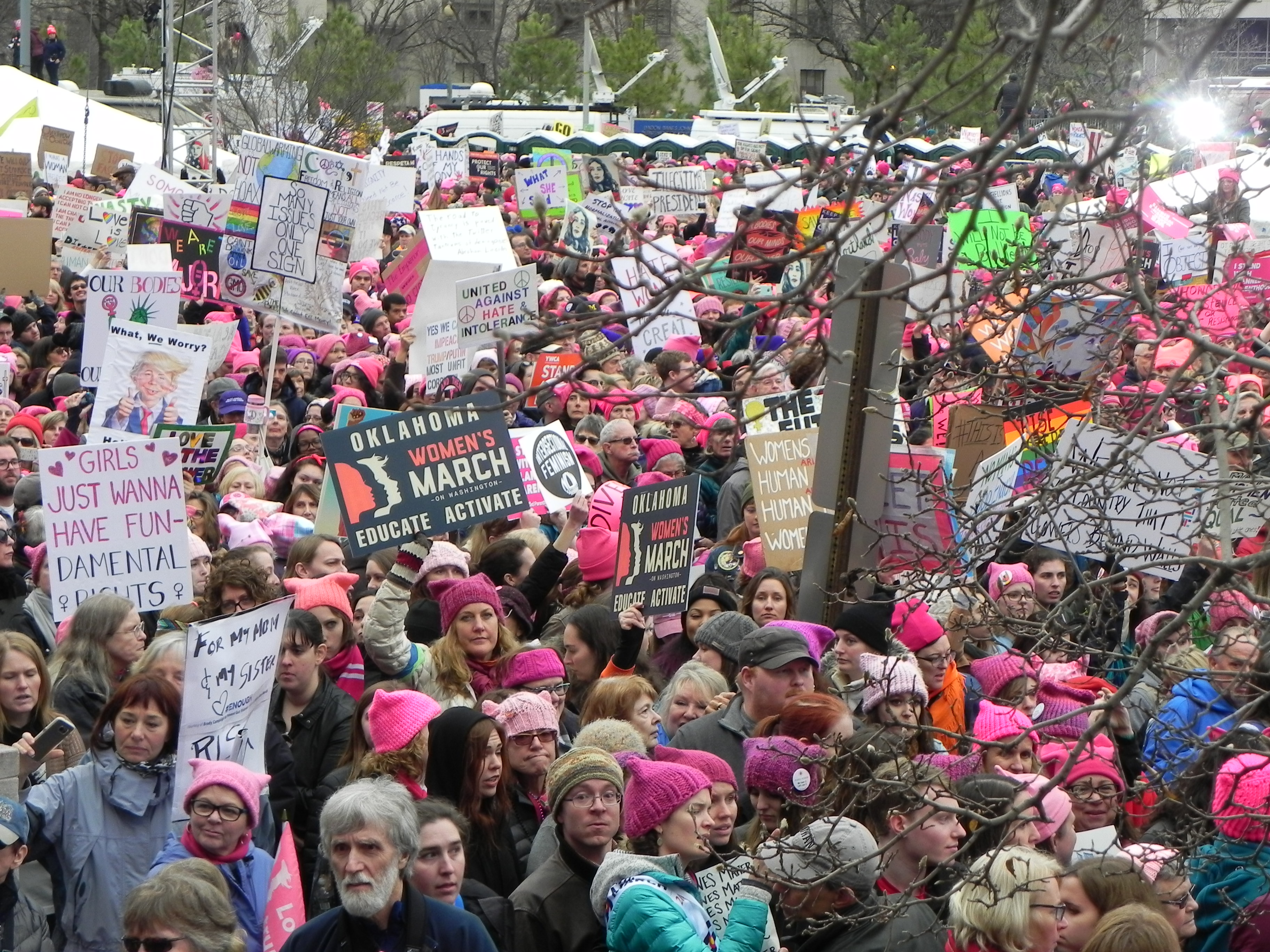
I don’t mean to be insensitive, but there’s so many injustices to address.   We need better vocabulary for the victims of patriarchy.  And patriarchy tends to be “white” in color.  February is Black History Month and March is Women’s History Month.  These are important reminders, but I have trouble focusing on an entire month, let alone a day—particularly if it’s a work day.  That doesn’t mean I don’t support my fellow human beings.  So today’s International Women’s Day.  I frequently wonder why it’s so hard for a particular type of man to see and treat women as equals.  I’m afraid that it often comes down to might making right, which we all know is wrong.  While power may not be inherently corrupting, many people are weak and are too susceptible to its blandishments.  And power likes nothing better than similar people and sycophants.  Women remind us that we can do better.

We don’t see those women elected to high political office grasping for the power to be queen for life (except queens, but that’s a different story).  Instead we find a spirit of cooperation instead of this constant atmosphere of competition that seems so testosterone-driven that it ought to be X-rated.  I don’t stereotype women as docile, but female leaders aren’t known for starting wars.  And none of us would be here if it weren’t for women.  The spirit of the times is one of wide representation—the principle of hearing all voices instead of only those of the powerful and ultra-wealthy.  I’m not sure why men feel so threatened by women that they try to deny them a place at the table.  Or pay them less for the same work.

Perhaps we fear societal change, but change finds us no matter what.  We now know that sex, gender, and race don’t make any person inferior.  Indeed, the struggle to be dominant often creates these categories in order to assert oneself over others.  As any mother of multiple siblings knows, teaching children cooperation leads to much better results than setting kids off against each other.  It’s a lesson that politics has yet to learn.  Culturally, it seems, this is well accepted.  People deserve to be treated equally.  That concept is called “justice” and our entire legal system is based on it.  Why don’t our politics match our culture?  I don’t want to stereotype, but it seems to me that far too many men are involved.  It’s International Women’s Day.  Let’s take the opportunity to rethink how half the human race is treated.


Pentagrams

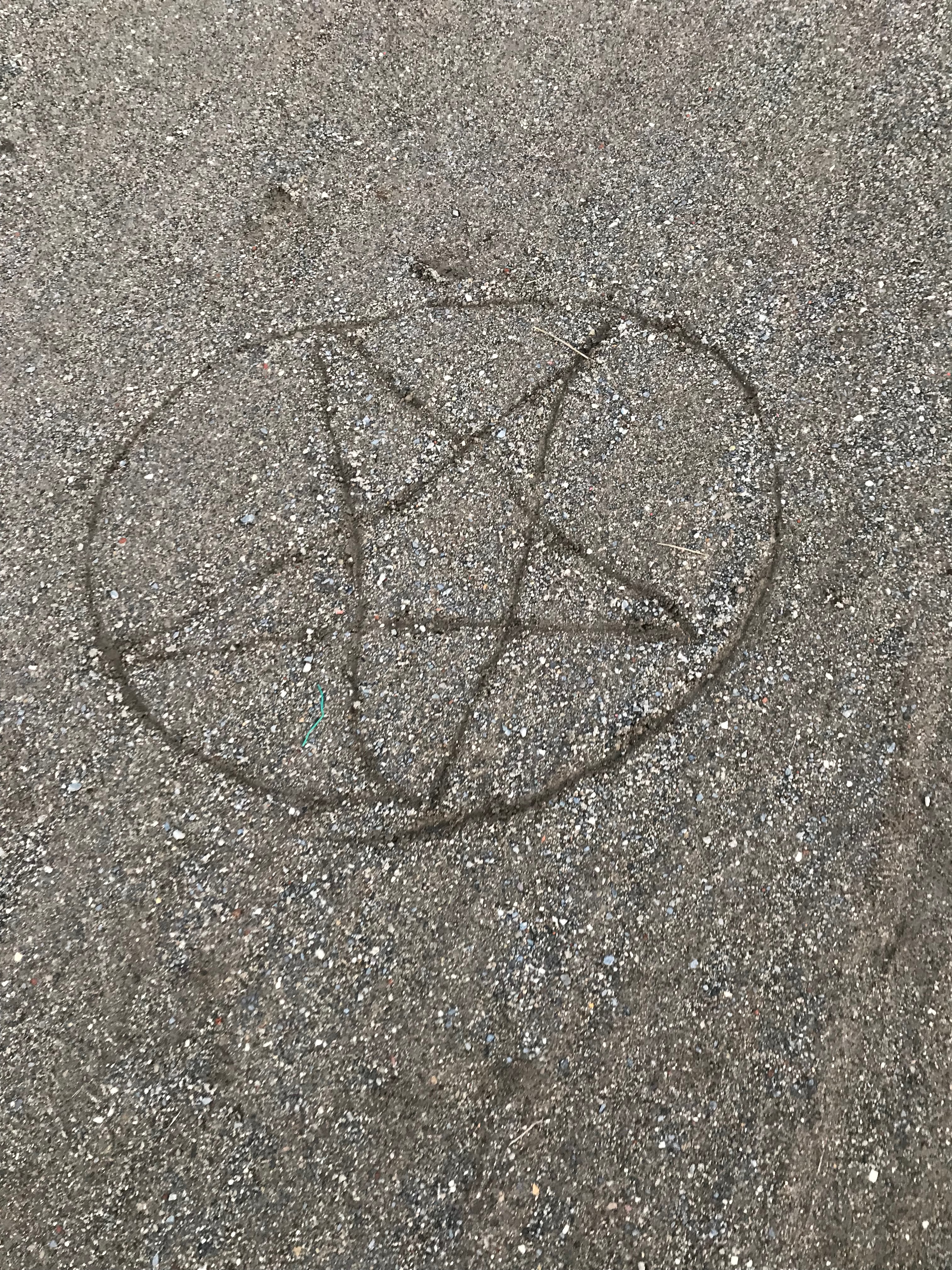
Not to dwell on Satanism, but the morning after my last post on the topic, while out on my morning jog, I came across a pentagram incised in the pea gravel of the bike path.  Then another.  Lest there was any lingering doubt that this had to do with the local school’s Satan club, a few feet further along a 666 appeared.  None of this was there the day before and, given that folks my age are too busy to be out scraping sigels in the sand, I suspect that it might’ve been someone younger.   Dare I say, school-aged.  Protesting or promoting I couldn’t tell.  As I jogged, I fell to thinking about pentagrams.  They’re not inherently evil and actually have an interesting history.  For most of that history it was morally neutral, if not a positive sign.

In the 1800s, during Romanticism’s heyday, it was supposed that an inverted pentagram—one with two points up instead of one at the top—was a sign of evil.  It was also in the 1800s that the contemporary king of outrage, Aleister Crowley, began what would eventually morph into modern Wicca.  Crowley liked to refer to himself as “the wickedest man on earth,” at least among his friends.  The upside-down pentagram was seen to represent a goat’s head, and if you’ve read my book you’ll know that some groups have long associated goats with demons.  Ironically, during the Nixon Administration the Grand Old Party began to use inverted pentagrams on their elephant logo.  Evangelicals who otherwise object to this “Satanic” symbol seem quite okay with it branding their political party.  Truth in advertising, I guess.

The thing about symbols is that they only have the power we give them.  The five points of a star symbol match well the pentagonal symmetry that we often see in nature: sea stars, sand dollars, strawberry flowers, and eucalyptus seed pods.  It’s pleasing to the eye for creatures with five fingers and five toes.  There’s a rightness about it, even if it doesn’t look a thing like the stars in the sky.  Is it Satanic?  No, only to those who believe it to be so.  Are there Satanists trying to take over public schools?  No.  That doesn’t mean people don’t think they aren’t.  (That last sentence is all tied up in nots, I guess.)  Symbols, by their nature, contain the meaning we assign to them.  They say to me that kids pay attention to what adults do,  so if we act grown-up perhaps—just perhaps—they will aspire to do the same.


Satanic Struggle

Around these parts folks are in an uproar about an after-school Satan Club.  The idea is an action to get Evangelical undies in a bunch, and it’s only proposed when a school system supports an overtly Christian club.  Reaction more than action, really.  Right now Nextdoor.com is bursting at the seams with indignation about something most people don’t understand.  I can’t claim to be an expert, but I’ve read plenty of books about Satan and many of them deal with Anton LaVey’s Church of Satan.  The Church of Satan believes in no literal Devil or Hell.  It was established to draw attention but also to make a statement when Christian Nationalists start to get too pushy.  Still, people are afraid of Satanism as the numerous international panics about it have shown.  And conspiracy theories don’t help.

It seems to me that the solution to all of this is education.  People, naturally enough, react to things emotionally.  I do it all the time.  (This is one reason that Artificial Intelligence will never be truly that—humans think with their emotions as well as with reason.)  The sad thing is, there are many easy ways to correct mistaken assumptions.  The information is out there and it’s easily found.  It’s easier, however, to spout off on social media like you’re an expert on something you know nothing about.  Trump introduced a culture of outrage—did his supporters suppose nobody else was capable of doing the same?  The Church of Satan was established as such an outrage.  In a nation of literalists, they hit a nerve.

The Church of Satan does not worship the Devil.  It supports social causes and it cooperates with law enforcement when some unbalanced individuals think it means something that it doesn’t.  To my way of thinking, this creative endeavor, despite getting the attention it sought, might’ve been better thought through.  Although extremism appeals to those who, like Herostratus, crave fame at any cost, does it really move us any closer to where we want to be?  Part of the problem is that many outspoken political figures want us all to be the same as them.  White, Christian, male, heterosexual.  I really can’t imagine a worse kind of nightmare.  Humans crave variety and new ideas.  As I sit here watching a new, uninformed Satanic Panic developing in my own backyard, I wonder if we all wouldn’t do our blood pressure a favor by sitting down with a book.  And maybe learning what this really is about.  Shoving matches seldom end well.


Valentines and Bombs

So what was I thinking, posting about bombs on Valentine’s Day?  Regular readers know my fascination with holidays.  Valentine’s Day is another one of those that simply gets plowed under by the sharp shares of capitalism.  We work on Valentine’s Day, of course, after waking to news of yet another multiple shooting at a university.  Is it any wonder that we think about bombs on Valentine’s Day?  As Tina asks, what’s love got to do with it?  In 2016 we were taught that the politics of hate is how elections are won.  Surveys consistently show Americans favor stricter gun laws but congressmen love money more.  Maybe love does have something to do with it after all, Ms. Turner.

Love, it seems to me, was the best thing Christianity had going for it.  While the Gospels aren’t entirely consistent on this point, the figure we call John (not the Baptist) focuses on it.  Jesus spoke of, indeed, insisted on love.  “God is love” some radical went so far as to write.  But love gets in the way of selfish agendas.  We can wave Bibles around, and hold them up for photo ops, but they do no good that way.  Besides, love might, in some instances lead to sex.  And we know that Augustine won that argument centuries ago.  We don’t have a widely recognized holiday celebrating that dour saint, however.  Perhaps we should take a cue from the fact that nobody knows which Valentine yesterday really commemorates.  Isn’t love best when it can even be anonymous?

Photo by Jamie Street on Unsplash

I often ponder why it seems so difficult for people to love universally.  Yes, we do annoy each other.  Yes, we have conflicting agendas.  If, however, we pause for a moment and consider we’ll see that other people have feelings just like us.  They too want to be loved and appreciated, and held by those closest to them.  This is not a bad thing.  What’s so wrong with love, after all?  We pour money into the military industrial complex and try to regulate who can love whom.  And we say we’re living the religion touted by the New Testament.  I always try to keep Valentine’s Day special.  It can be tricky on a Tuesday when work will bear its inevitable load of problems to solve.  Still, if we all paused when we faced a people-related frustration on Valentine’s Day, and said to ourselves (saying it aloud would only cause problems) “I love you” to the person causing our frustration, I wouldn’t have been thinking of bombs on Valentine’s Day.


How To Build a Bomb

We see footage of the tragedy in Ukraine.  Or the miles and miles of film documenting World War II with its hell from the skies bombings.  Bomb after bomb after bomb.  I recently wrote of how tragic this is in the light of the Turkey-Syria earthquake.  Just a few days before that, the New York Times ran an interest piece on how bombs are made.  Now, there’s no excusing it, but boys seem to like explosions.  Although I’m a pacifist, I was fascinated by how long the process is and how specialized the work, to make a bomb (technically a shell, but the result’s the same).  And then we see the footage and realize all this time, money, and technology are going into objects to be shot at other human beings.  Rise and kill.

It is an indictment of our species that we spend so terribly much on destroying others of our own kind.  Some of this is evolution, surely, but some of it is consciousness gone awry.  Nobody wants to be the victim of somebody else’s bombs.  At the same time, there are different political philosophies in the world and our history has made us distrust, and maybe even hate, one another.  I think of Putin and his hatred of the west.  And then I think how close we are.  From mainland to mainland, Russia and Alaska are only 55 miles apart.  If you include the islands, that figure drops to 3 or 4 miles.  And an entire ideological world.  This is such a strange fiction we’ve created.  

Some experts tell us that our systems of allowing strong men to rise to the top (and note, female belligerent national leaders are quite rare) will inevitably lead to war.  Of the making of bombs there is no end.  These guys in the news story require bomb making to take home paychecks to support their families.  Even now there are war zones throughout the world where it’s not safe to wander because of ordinance.  Some of them are even here in the United States.  On a visit to a friend in West Virginia we went to Dolly Sods Wilderness area.  It’s rugged and wild and beautiful.  Once used as an area for military training, unexploded ordinance still exists there.  Visitors are warned of this, of course.  But there are other mined and fought-over areas where the innocent are still killed long after the war has ended.  As an adult boy I’ve become less impressed with explosions.  If you live long enough, ideally, you should begin to understand life is a gift, and not something to be thrown away.  Or taken by someone else’s bombs.


Natural Disasters

Like many, my heart goes out to those in Turkey and Syria suffering through the destruction and aftermath of a major earthquake.  Such natural disasters often bring out the best in people—empathy, love, and offers of support.  They lead to both tragedy and human warmth.  They also give us pause to reflect, if we will, on our worst behaviors.  Rescue efforts have been hampered, in Syria especially, by a weakened infrastructure, caused, at least in part, by foreign bombing.  And yes, the United States was part of that.  People who now feel our sympathy only months before faced death from us.  What is it about our species that makes us want to destroy one another through our own technology but then turns and wants to help when a “random” act of nature occurs?  We must prefer death on our own terms.

Image credit: Luca Comerio (1878-1940), Corpses of victims of the earthquake in Messina, via Wikimedia Commons

For me, part of this is reflected in how the so-called “culture of life” treats liberal social causes as the “culture of death.”  Those groups that support “the culture of life” are against abortion but desire no controls on gun ownership.  This is the same basic principle—we want to cause death on our own terms.  We want to play God and decide who is worth saving and who should be destroyed.  I have no doubt that if, say, a tornado destroyed an entire city block outside a convention center where the NRA was meeting that those at the conference would rush out to try to help find survivors.  When they reconvened, they would try to figure out how to protect their “right” to own and collect assault rifles.  Is this “culture of life” really worth preserving?

Meanwhile the people of Syria and Turkey are suffering.  Thousands are dead, winter is setting in, and Covid is still out there.  They need our help.  The amount we spend on aid will, however, pale next to the amount we spend on bombs, drones, and missiles.  I have to wonder if we never really stop to think about what we’re doing when we engage in behaviors that destroy others.  That weeping mother outside an earthquake-collapsed building could be the same mother outside a missile-collapsed structure.  With natural disasters we know that we all stand a chance of being victims.  We feel for those caught in the way.  Once politics enters the picture, however, and we have the ability to control who lives or dies, everything changes.


Columbo

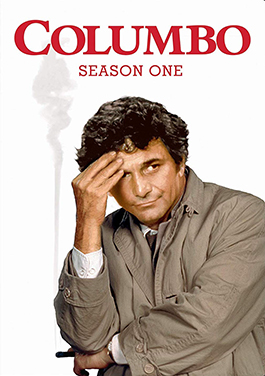
I liked Columbo.  Peter Falk was an award-winning actor, and his working-class detective character was always entertaining to watch.  Unlike other TV cops, he didn’t carry a gun.  Hearing the tragic news from California where yet another shooter killed multiple people before himself, I think about the proliferation of guns.  The New York Times runs story after story showing that nowhere else in the developed world are gun deaths remotely anywhere near what they are in the United States.  Not only do we have a super-abundance of firearms, we have politicians on the dole from the NRA who simply won’t take action because they personally stand to lose money if they do.  And apparently they can sleep at night.  As a nation, our guns outnumber people.

Estimates for the number of guns in America stand at around 466 million.  98% of them are in civilian hands, as opposed to the military.  And we have multiple mass shootings per year.  Is there any chance that these facts might be related?  Ironically, many firearms are owned by those who loudly proclaim they hate the “culture of death”promoted by those who try to make gun ownership more difficult.  I’ve written on this topic so many times before that I really don’t know what else there is to say.  Perhaps it’s time to just give up and weep.  Last year, excluding suicides, there were over 20,000 gun deaths in this country.  There have been 15,000 or more per year since 2016.  Approximately 120,000 gun deaths in just six years.  And yet nothing is done.

The public strongly favors stricter gun laws.  Government officials do not.  In fact, some Republicans are now attempting drive-by shootings of suspected Democrats.  I’m not anti-gun.  I am anti-insanity.  You see, that was the thing about Columbo.  He never pulled a gun, but he doggedly pursued those who did.  The culture of hate that has swept this country since 2016 needs to be reminded of Columbo’s message.  Guns aren’t the answer.  Pursuit of the truth is.  How a purportedly Christian movement does nothing but support the gun lobby is a mystery requiring investigation.  It has to be asked where in the Bible does this idea of arming yourself come from.  It has to be asked which commandment declares obtaining deadly force and making guns easily obtained by the mentally unstable is God’s will.  I guess that about wraps it up.  Just one more thing—what would Jesus do, really?


The Point of It

It’s not difficult to feel overwhelmed by the scope of the problem.  Race was a construct developed to oppress.  The intention was to keep those of non-European, especially non-northern European, ancestry in servitude.  The rationale for doing so was part capitalistic, but also largely religious.  Convinced that Jesus was white, and that the “New Israel” had passed to Christianized Europe, it didn’t take much theological maneuvering to get to the point that others can be—in that mindset, should be—brought into line.  And since this religion comes with a built-in body-soul dualism, it’s not difficult to claim you’re trying to save a soul by destroying a body.  That way you can still sleep at night while doing something everyone knows is wrong.

Martin Luther King, Jr. stood up to such ideas.  His understanding of Christianity was more in alignment with what Jesus said and that threatened those in the establishment who found any challenge to profit heresy.  There can be no denying that racism is one more attempt to keep wealth centralized.  It’s something not to share, which, strangely enough, is presented as gospel.  There are many people still trying to correct this wrong.  It is wrong when a religion distorts its central message in order to exploit marginalized people.  The key word here is “people.”  Black people are people.  Their lives matter and every time this is said others try to counter with “all lives matter, ” a platitude that misses the point.  We need Martin Luther King Day.  We need to be reminded that we’re still not where we should be.  We’re still held in thrall to a capitalism that rewards those who use oppression to enrich themselves.

I was born in the civil rights era.  I suppose I mistakenly reasoned that others had learned the message as well.  All people deserve fair treatment.  Today we remember a Black leader, but we still have the blood of many oppressed peoples on our hands.  Those who first came to live in this country, whose land was stolen in the name of religion.  Those whose gender and sex put them at threat by those who believe control of resources is more important that care of fellow human beings.  It’s easy to feel overwhelmed, but in King’s words, “the arc of the moral universe is long, but it bends toward justice.”   If we believe that, and if we can act on it, there remains the possibility that we might actually achieve the reason we set this day aside to reflect.

Photo by Katt Yukawa on Unsplash

New Horseman

You’d think it’d be obvious, but it took me some time to realize that when a story’s being retold in a literary context, the point isn’t to restate the original in new words.  No, sometimes the vision is quite different and the result is like building a different person from the same skeleton.  I’m still on my Sleepy Hollow kick and I’m interested in what contemporary writers see in the story.  Serena Valentino’s Raising the Horseman is a feminist retelling with sensitivity to LGBTQ+ concerns.  Like some other recent Sleepy Hollow novels—Alyssa Palombo’s Spellbook of Katrina Van Tassel and Christina Henry’s Horseman—she takes the point of view of either Katrina or one of her descendants.  In this case, both, as a present-day Katrina reads the diary of the original Katrina in Sleepy Hollow.

The story is pitched at the young adult level—a literary scene that’s thriving these days—and sets up the story this way:  Katrina Van Tassel married Brom Bones and left her vast estate to her daughter and their daughters, as long as they took her name.  This creates an unbroken succession of Katrina Van Tassels.  As might be expected, the current Kat, as a teenager, wants to follow her own path rather than staying in Sleepy Hollow for the rest of her life.  She meets a new girl in town, Isadora, who encourages her to see how her boyfriend Blake has been keeping her in an abusive relationship.  “The Legend of Sleepy Hollow” is a love triangle, and that develops here as well, moving in new directions.

Valentino has been writing a series called Villains for some time.  That series takes on the viewpoint of the antagonist rather that the hero.  Such tales are quite popular these days as we reexamine dusty assumptions that have been sitting undisturbed for far too long.  Fans of Sleepy Hollow will recognize the base story in this novel, but will be taken along a different path and will be left without a simple resolution.  Younger readers adopt a more open attitude towards life, watching, as they do, the antics of many of their elders (particularly angry white men in positions of power), and they recognize bad behavior when they see it.  The novel is a plea for tolerance, a trait that’s much needed in the world.  The Headless Horseman is still there, of course, but the real villains of the story might not be who you assume they are.


Night Mom

Kurt Vonnegut is one of those tragicomic writers that can leave you reeling.  Mother Night was never on my must-read list, although I’ve read about it many times.  Reading about a novel isn’t the same as reading it, of course.  I picked it up in a used bookstore earlier this year when I didn’t want to walk out empty handed.  I go into such stores with a list and try to limit myself to it.  If they have nothing on the list, I try to find an author I know.  Since I’ve read several Vonnegut novels, I have an idea of what I might find.  This one was pretty bleak, though, but then the subject suggests as much.  Those critics that say it’s funny are made of sterner stuff than yours truly, I guess.  

The story is the account of a Nazi propagandist who’s actually an American spy sending encoded messages through his radio broadcasts.  Throughout the novel he’s conflicted because he wants to be left out of the business of war, and yet he’s aware of the potential for evil on both sides.  It’s a chilling book to read in the light of Trump because American nazis feature pretty prominently in the plot.  Howard W. Campbell, Jr. is on everybody’s hit list—American Nazi haters/hunters, Russian Nazi haters/hunters, and Israeli Nazi haters/hunters, and even on his own hit list.  His role in the war made him look like a Nazi.  Vonnegut has some profound things to say, such as:  “Say what you will about the sweet miracle of unquestioning faith, I consider a capacity for it terrifying and absolutely vile.”

And this: “Where’s evil? It’s that large part of every man that wants to hate without limit, that wants to hate with God on its side.”  The book was published before I was born, and that took place about six decades ago.  The set-backs we’ve seen since then make this one of Vonnegut’s most disturbing books.  I have no doubt that he was a haunted man.  Like many who’ve been through war, he has neither luxury nor appetite for politicians and the immoral games they play to retain power.  Mother Night deals with evil and its ambiguity.  And the sad fact that as much as two people love each other and want to separate themselves from the troubles of the larger world, it’s simply not possible to do so.  The reasons for this are far too obvious but since we have difficulty seeing the obvious, novels like this are necessary.


Word of the Year

I still have to look up “goblin mode” each time I read it.  I’ve been reading it quite a bit because it was Oxford University Press’ word of the year for 2022.  Throwing voting open to the public for the first time, goblin mode was overwhelmingly chosen, edging out my personal favorite, “metaverse.”  (It’s not every day that a word your brother-in-law invented gets that kind of accolade!)  But goblin mode is in the Zeitgeist.  It means to live an unkempt existence, perhaps hedonistically, without caring what others think.  It is, of course one of the offspring of the Covid-19 pandemic and its lock-downs.  Like social distancing, it’s something some of us had done before we knew what it was called.  But only partially.  I have a mental self-image that I don’t allow myself to show because I don’t like being judged.  I’d be safer in the metaverse, perhaps.

Image credit: Goblin illustration by John D. Batten from “English Fairy Tales” via Wikimedia Commons

Somewhat a natural hermit, I do crave human company and, like most people, I worry about what others think of me.  The thing is, people are natural actors.  We keep our goblins well hidden, usually.  Social life is quite different from the moments we spend alone.  Goblins are, of course, a type of monster.  Somewhat undefined and malleable, they can be compared to demons or fairies.  They do tend to be associated with households, which may make their use with this phrase appropriate.  Goblins tend to be thought of as ugly, thus goblin mode is letting your “ugliness” take over, no matter who may see.  You could be in permanent goblin mode in the metaverse, though.

I have to admit that such things make me feel my age.  The lessons of conformity, even though I was born in the sixties, were pretty deeply impressed.  “Do you want other people to see you like that?”  I wonder if we’re not all insecure at some level—it’s our primate inheritance.  Going into goblin mode, then, is striking back at the natural human acting ability.  It comes at a time when the message of not judging is also prevalent.  In the metaverse, as it was first used in Snow Crash, you chose an avatar that could look like anything you wanted.  I suppose that’s a form of goblin mode too.  We are natural actors.  Watch people in a crowd sometime.  Or at the office.  Or even at home, if they’re not alone.  If other eyes are watching the question always remains “do you want others to see you like that?”  And what we see is probably not authentic.


Ideal Christmas

This blog is even open on Christmas.  I’m enough of a pragmatist to realize that few read it today, but even Carl Sagan knew that launching the Pioneer plaques into the void was the smallest spark of hope.  A quark in a universe so vast that we suppose it infinite.  And even so, it makes room for us.  So, if nobody reads this on Christmas I’ll certainly understand.  If you do, and if you celebrate Christmas, a merry one to you.  Thanks for stopping by.  For some folks, I know, Christmas is a time for gathering together.  A British colleague recently remarked to me, “But Thanksgiving is the big American holiday.”  I think he meant both for family gathering and for time off work—it’s the only regular four-day weekend capitalism deigns to give to those who live between the anvil and hammer of nine and five.  But today’s Christmas, we don’t have to think about that.

For me the ideal Christmas is one hunkered down with my family and when we don’t ever have to get out of our pajamas.  A bohemian holiday when you don’t have to go outside to check the mail.  As cold as it is this year, that’s really a relief.  And it’s also a time for stories.  Most of the Christmas gifts I give require explanation.  Even if they don’t, I like to tell stories about them.  That’s the way writers roll, even us obscure ones.  Holidays are based on stories and are made up of stories.  Those we tell only to our families are the most intimate kind.  You see, the brain doesn’t stop working just because it’s a holiday.  So all the books bear witness.

Although it’s too early to tell (the sun isn’t up yet), we might just eke out a white Christmas around here.  In eastern Pennsylvania we managed to avoid the worst of the massive storm that ruined holiday plans for many.  At the tail end of the rain, and at the knife’s edge of the frigid air, come a dusting of snow.  The temperatures have kept low, so if the sun hasn’t managed to warm the still green grass enough, we may see some white today.  It seems we have Bing Crosby to blame for this particular dream.  Christmas isn’t predictably white around here, and global warming only makes it less so.  But this is a holiday, and we don’t need to think about that.  I know not many will read this post, but if you are one of the few, and if this day is special to you, celebrate it for all it’s worth.


Space Ads

So, I’ve got enough stuff to worry about down here—the chimney needs some attention, that backyard gate still doesn’t hang right, and Giant keeps on running out of the cereal I buy—to have to turn my attention to space.  I love outer space, although, unlike some people I’ve never been there.  One of the simple pleasures in life is to be outdoors at the lake and watching the night sky where there’s no light interference.  Then I learned about space advertising.  You see, as an editor you get to read about all kinds of topics, and this came up in a proposal one time.  I had no idea that companies had been proposing billboards in space to fly across our nighttime skies.  It’s hard enough to use the internet anymore without hacking your way through a jungle of ads, and now they want to clutter our view of the nighttime sky so there’s no escaping capitalism.

“Space, the final frontier.”  This is a mantra that many of us grew up with in the sixties.  Most of us can’t afford to, and really have no desire to, go into space.  Born down here, we’re content to stay down here.  That doesn’t mean we can’t look at the sky with wonder.  Already you can’t go to the beach or a stadium event without planes flying banners trying to draw your mind back to the commercial world.  Even in remote forests you can find litter stamped with some company’s logo, trying to sell you more.  It’s enough to make you want to get to space to get away from it all.  Now that companies can afford to fly people to space as tourists—this is pretty strictly limited to the top one percent, of course—they feel they have the right to clutter the nighttime skies so that you’ll have that midnight urge to go buy a Tesla.

The original space advertising?

At this time of year we look to the nighttime sky in hopes of seeing a special star.  People with too much money cause so many unnecessary problems for the rest of us.  This has been apparent throughout history, but has been brought into sharper focus in the days of late capitalism.  Having too much only makes you want more, it seems.  And since other people have some you need to flash your company in their faces constantly.  From what I’ve read the only reason space advertising hasn’t really taken off is that it costs millions to get your ad up there.  Despite inflation it seems that these kinds of costs always come down.  And yet you can’t even get a contractor to come out and do something about that deck that’s falling apart.  And I do hope that they’ll have my cereal at the store this week.


Yule Tidings

Happy Yule!  One of the things my British colleagues find hard to believe is how Dickensian American employers are about days off around the holidays.  Corporations tend to give one day for Christmas, and you can hear them grumbling, “I suppose you must have the whole day?” even as they give it.  Christmas is, however, a season.  The twelve days begin on the 25th, but Yule starts today.  Yule marks the solstice—the fewest hours (minutes) of daylight occur today.  Tomorrow daylight will start to grow longer, although it will take many days before we begin to notice any difference.  I know this reflects a northern hemisphere bias, but having read about how less time is necessary for work, given technology, I wonder if there might not be a more equitable solution to this hemispheric focus.

What if we regularly gave generous time off around the holidays to recharge our batteries—renew our spirits—for both hemispheres?  What if we gave our southern neighbors the benefit of, say, a week off in June, after the summer solstice?  And what if we joined them as well?  Only the most uninformed believe that Jesus of Nazareth was born on December 25.  The best that those facile with calendars and history  can do is that he was likely born in the spring, so why not split the difference and offer rest and respite in both December and June?  Bean counters who equate every second in front of the screen as adding to the bottom line (a fable as sure as anything the brothers Grimm recorded) might need to be the ones leading the way.  Rest is important.  Time to think about something else.

Yule is an ancient celebration.  We don’t know how far back in history it goes because there are no records of its earliest celebration.  Before computers, before the industrial revolution, it was recognized that little truly productive outdoor work could be done during the winter months.  Obviously we can’t sit around and do nothing all the way til March, but these very short days bridging the end and beginning of what we now recognize as the new year, are custom-made for reflection and renewal.  Why not encourage it?  Perhaps the bean counters could use it to read A Christmas Carol.  Maybe they could set aside their abacuses and reflect on the wonder of the seasons that suggest to us that now is the time to rest and wait for the light to return.  Let’s truly celebrate Yule.


Best Beasts

Strange Beasts of China left me strangely affected.  Yan Ge’s novel received quite a bit of acclaim for a book of speculative fiction.  Of course whether or not it is speculative fiction is open to debate.  The narrator, an unnamed former graduate student, makes her living by writing about the “strange beasts” of the fictional city of Yong’an.  Uncertain of where she fits, she’s been researching any number of creatures that resemble humans in various aspects, and who lived often hidden lives among the population of the city.  Her relationships revolve around people who, and this may be a spoiler, often turn out to be beasts.  It could almost be a parable.  I wasn’t quite sure what to expect.  The word “cryptozoologist” occurs in the copy and it was blurbed by a couple of horror writers.

It’s not really a horror novel, though.  There’s some action and even a bit of violence—not too explicit—and some well-executed twists.  I wasn’t sure where the story was going, but I found myself eagerly awaiting the opportunity to pick the book back up again.  One of the truths of our species is that we find ways of othering those who are different than we are.  Othering so that we can fear and mistreat them.  And feel superior.  That’s why this story feels so much like a parable to me.  The beasts aren’t really monsters, but then, monsters are really us.  What matters is how we treat them.  Yan Ge handles them with sensitivity—her narrator, after all, is very interested in these beasts—and our suspicions grow as the novel goes on.  We shouldn’t be judging here.

That this book should come out even as American attitudes toward China veered decidedly toward “othering” (the book was published in Chinese back in 2006, but appeared in English in 2020), is significant.  There are reasons to fear the autocratic government of China, but a significant portion of Americans seem to favor the autocratic style over democracy.  So it is that parables continue to be made.  We live on a planet with billions of other human beings, each with cultures, hopes, and dreams.  They may look a little different and thy may speak in ways that we don’t immediately understand, at least not without some effort, but they are just as human as those who speak English and who live in their own fictional cities isolated by a couple of oceans.  Strange Beasts of China really made me think.