July Forth

Independence Day.  What does it mean in a nation on the verge of a fascist takeover?  Supreme Court justices, themselves appointed by crooked but technically legal politics, have just struck down the independence of half the people in this country.  Independence Day for whom?  Originally a celebration of freedom from monarchy, one of our political parties has opted for authoritarianism—the objection to which was the very reason the Revolutionary War was fought.  The colonists wanted religious freedom, but now we find religiously motivated politics driving the bus off the cliff.  If you’re not a white evangelical these rulings are not for you.  Your religious freedom has been compromised by politics.  So we gather in grassy places to watch fireworks.    We celebrate the independence of the wealthy.  Those who can break the law and buy the results they want with lawyers without scruples.

I think of Independence Day from the perspective of our Black siblings.  Freedom to be shot for a traffic stop or to be publicly strangled to death for petty crime.  To be redlined and kept in poverty.  Independence from literal chains only to be shackled in bureaucratic ones.  Being sentenced to prison for things a white can easily afford to pay off.  Independence Day in a nation with over 40 million people in poverty and where just three white men own more than the bottom fifty percent of Americans.  Give them fireworks and firearms and let the bottom half work it out for themselves.  When is the last time a Supreme Court justice had to worry about having enough for both rent and food?  Freedom, those on the top tell us, is not free.  Watch the pretty lights.  Hear the loud booms.

What of American Indians, still awaiting freedom?  What is Independence Day to them?  Kept out of sight and in poverty, we don’t want to be reminded.  No, we only want freedom to get more for the white man.  As a child in the sixties I had some hope that we might be making progress.  Freedom and protest were in the air.  There was at least hope for some justice.  The privileged white leaders now give us a day off work.  The wealth can still flow upward, even if we take a brief hiatus from labor.  Women, Blacks, the poor, American Indians, and many others who make America what it is are nevertheless denied basic freedoms.  This loss of independence at least comes with a light show.  Just watch it and be grateful.


Virtual Unreality

You walk into a bookstore and browse.  Maybe you’re looking for a specific topic, or something to fit your mood, but you don’t know exactly what.  Then a title leaps out at you.  Maybe it’s a book you’ve never heard of before, or perhaps some long forgotten suggestion, nearly extinct, comes back to you at the sight.  Whatever the reason, you know you have to read this book.  You buy it and go home happy.  This is a uniquely human experience.  Yes, it applies to the leisured class who have money for books, but it is something that makes many of us feel good.  Those enamored of the virtual world are trying hard, according to the New York Times, to develop an app to replicate the experience.  Without luck.

Perhaps while browsing you meet someone else.  If you’re not too much of an introvert you might ask if they find the book they’re holding good.  Maybe you go get a coffee to discuss books.  This is just one of the many things that could happen.  Here’s another: someone is sitting at a table with piles of books s/he has written.  If they’re well enough known they may have had a public reading from one of them earlier.  You might strike up a conversation.  You might learn something.  A bookstore, you see, isn’t only about books.  What app developers can’t replicate is the phenomenon of literate culture.  Apps want you to buy things.  So do bookstores, but they also want to cultivate community.  Sure, you could buy your virtual book and then go to Facebook to talk about it, but that’s not the same thing.

Those advocating for a virtual world seem more escapist than even your average bookworm.  It’s been observed that when George Lucas was devising Star Wars he took care that no books or paper be shown.  This was a post-print world.  Some believe this is the direction in which we should go, and certainly during a pandemic at times it seemed right.  Even so, when the miasma began to clear a bit some of us first ventured back to bookstores.  Indeed, books fared well during those long months of enforced isolation.  We seem to think that any human experience can be replicated with the aid of technology.  The thing about serendipity, however, is that it’s unexpected because it seems to speak directly to you and how you feel at that exact moment.  No amount of data mining will reveal such things.


Lost Civilizations

At the rate rain forests are being decimated for our lust for beef, it seems amazing that there are any unexplored regions left at all.  That’s what makes Douglas Preston’s account of visiting the fabled Ciudad Blanco, a lost Honduran city, so compelling.  Like most intelligent people, Preston is ambivalent about the discovery he chronicled.  The pristine jungle he encountered had to be cleared, at least in part, to allow for exploration of a lost civilization.  But what an adventure it was!  The danger of drug lords, a volatile government, large poisonous snakes, and ruins discovered by lidar combine in a true tale of danger and fascination.  As with Rudolf Otto’s description of the holy, this is something that fascinates and terrifies simultaneously.  And it’s controversial.

The Lost City of the Monkey God crosses several boundaries.  It discusses not only “Indiana Jones”-style archaeology, it involves one of the last unexplored places on earth.  It doesn’t sugar-coat the genocide initiated by Europeans—in fact, Preston describes some of the diseases in graphic detail—and he doesn’t excuse the guilt.  The book also addresses global warming and the possibilities of a global pandemic (the book was published in 2017).  Preston contracted Leishmaniasis while in the jungle and notes that as the globe warms up, it is making its way north.  The descriptions aren’t for the faint of heart, nor are his descriptions of the politics of treatment.  The first part of the book, describing the people and the set up of the base-camp show Preston’s chops as a thriller writer.  His encounter with a fer-de-lance had me checking the floor in the dark when I got up in the morning.

The civilization of the city, now known by the more respectable title City of the Jaguar, was unknown.  It was not Mayan.  The city was likely abandoned because of disease brought to the Americas by Europeans.  Even so, his description of the society in which the ruling classes keep their power by displaying their own sanctity that the average person doesn’t question rang true.  Societies from the beginning have used that playbook.  Convince people that the gods (or God) has revealed certain things that they (the ruling class) understand, and everyone else falls in line.  We see it even now as the messianic Trump following falls for it yet again.  This is a quick read, written much alike a thriller.  A few years ago I read Preston’s engaging Dinosaurs in the Attic.  I’m thinking now that some of his thrillers should also be on my list.


Keeping Your Head

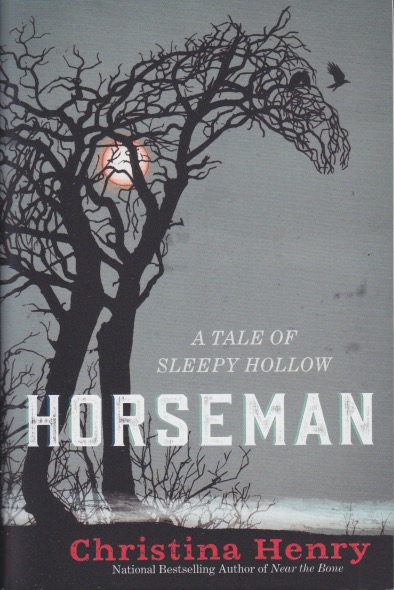
Horror is a gift that keeps on giving.  Not many horror fans are among my regular readers, but I like to keep a finger in the pie nevertheless.  Just earlier this month it was announced that Paramount has hired Lindsey Beers to direct a new big screen Sleepy Hollow.  It’s early days, of course, and the movie hasn’t been titled, let alone filmed.  Beers is just wrapping up a prequel for Pet Sematary (not yet titled) that I’ll be eager to see.  Women horror directors tend to bring refreshing angles to the genre—and why shouldn’t they?  Women writers were crucial in developing the Gothic genre that evolved into horror as we know it.  No matter what the Supreme Court says, they are just as important—probably more—than males.

I’ve been reading quite a lot about Sleepy Hollow over the past several months, which is how I came across the intelligence about this new movie.  It’s nice to know that the Hudson Valley is evergreen.  My visits there have offered brushes with the uncanny, but nothing explicit.  A weekend near the ice caves of Sam’s Point, geocaching in the woods outside Poughkeepsie, a visit to Sleepy Hollow itself to visit Irving’s grave and tip my hat to the Old Dutch Church.  With deep family roots in upstate New York, I’ve always thought it would be a great place to live.  Alas, not on an editor’s salary.  It’s been too long since I’ve given the area a visit.

John Quidor, The Headless Horseman Pursuing Ichabod Crane, via Wikimedia Commons

There have been many takes on Washington Irving’s “The Legend of Sleepy Hollow.”  Even in the silent era movies were made of it.  In retrospect, it seems odd that it took so long for Tim Burton to bring it back to the big screen.  There were some television movies, usually with plodding plots to draw the story out to commercial length.  Disney had early on devoted half a feature to it, as if the story couldn’t support its own weight.  For better or worse, that film was probably the first introduction to the tale that many people had—the story itself was written for adults.  Of course, many written kids’ versions have come out since then.  The satirical original was meant for a somewhat sophisticated readership with a sense of humor.  The story lends itself to horror treatments, however, if they’re done well.  It may have been an early viewing of the Disney tale that set me moving in this direction.  I like to think I’ve kept my head over it, however.


Stand with Women

We like to think we’re the most advanced civilization in the world, but we allow the appointment of “justices” who still believe women are inferior to men.  Millions of women who’d been born into the modern world yesterday found themselves thrust back into medievalist thinking that now seems to reign in the Supreme Court.  Even Donald Trump, who is responsible, has expressed his doubts.  When will we acknowledge that women should have the same rights as men?  How long do we have to continue this inane struggle against religious amateurs who believe their reading of Scripture is the only correct one?  I was raised by a woman on her own.  Uneducated, with no practical job skills, she remained religious and very capably reared three sons.  She was far more capable than my father.

Democracy can be gamed, of course.  And the “angry white man” has become America’s new face to the world.  The petulant, selfish male who thinks everyone else is getting the benefits.  Even as Catholic-majority nations are declaring women’s rights, America is stepping backward in the Human Rights Index because certain senators refused to allow voting on legitimate candidates for the supreme court.  How they can go home and face their wives I do not know.  Of course, our laws do not apply to our lawmakers.  As revelations continually show, theirs is a world of “do as I say, not as I do.”  Is it so difficult to say it out loud?  Women are fully human and have an inherent claim to the same rights as men.  But then again, when have those blinded by religion ever seen clearly?

America, do you enjoy seeing your rights stripped away?  Do you enjoy justices who one day decide it’s our right to carry weapons in public and then next to say that women must remain home barefoot and pregnant?  Is this the mentality that now rules the gamed “supreme” court?  I’d like to exegete that word supreme and ask our “justices” just how deeply they’ve studied religion.  And that doesn’t mean just praying over your Bible.  The most difficult courses in the religion-philosophy curriculum are those dealing with ethics.  Days spent wrestling with the subtleties of how reason, law, and religion interact and teasing them apart to look at each with real understanding.  Or do we just vote along party lines like any beast in the herd?  It’s a shock to have been born in the sixties only to now find yourself living in the fifties with all their inherent hypocrisy.  I stand with women, not amateur theology masquerading as justice.


Solstice Thoughts

At the equator, the difference is nil.  The longest day and the shortest day don’t deviate from the standard day length.  The further you move from the equator, the more dramatic the effect is.  Here in the northern hemisphere this is our longest day, the solstice.  Historically, particularly in countries to the northern edge of the northern hemisphere, this is a holiday.  Midsummer marked the days of sun and growth.  Light is abundant—too abundant to sleep well in the furthest reaches.   Being visually oriented creatures, we enjoy the surfeit of light.  Light has long been a symbol of the divine for, I suppose, just that reason.  It makes us feel secure and safe.  We can see what’s going on around us.

In Antarctica, today is the shortest day of the year.  Indeed, around now there is seldom any light at all.  On the exact same day there are literally polar opposites on this planet.  The summer here is winter there.  It’s the first day of winter in the global south.  Their understanding of this day is completely different.  Of course, once you reach the shortest day, things can only improve.  The climb to summer lasts half a year, only to have the decline immediately begin again.  The difference is as subtle as it is inexorable.  For those of us who wake before the sun, it’s already obvious that sunrise is coming later than it did last week.  The earliest sunrise was the fourteenth.  Sunset will come later and later for the next few days, to compensate for the lost morning light, but overall there will be less and less until we are the winter half of the world.

There are many lessons to learn here.  In a world where the longest and shortest days are the same day—solstices depend on where you live—we don’t fight over it.  This despite the fact that light is our most precious commodity.  We simply accept that we celebrate light when we have it, and await its coming when we don’t.  Other resources we fight over.  Potable water.  Petroleum products.  Arable land.  Silently, radiantly, light shows us the way.  There’s an inevitability here.  Through long experience on the earth we simply accept it.  The other option is to fight over what we can’t control, which is futility defined.  There are lessons to learn from the longest day.  And if it’s your shortest day, you know that all will be forgiven at the next equinox.


Devils and Days

The kind of devil envisioned by Andrew Michael Hurley in Devil’s Day may not be the traditional one, but it’s scary nevertheless.  In his follow-up novel to The Loney, Hurley demonstrates that he knows the devil can still be frightening.  The Endlands, in northern England are hemmed in by the moors.  The landscape plays such a commanding role here that this can only be folk horror.  And it fits folk horror to a tee.  Tradition, an unchanging life in a land untouched by technology, and forbidding moors where survival is difficult, all amid an English sensibility brings this tale into the folk category neatly.  As should be clear already, Hurley is well aware that religion and horror belong together.  This novel makes their companionship clear.

John Pentecost (note the name) has decided that he and his young, expectant wife—both of whom hold professional jobs—are going to move back to the family sheep farm.  The death of John’s grandfather means that his own father is left to run the farm alone.  Knowing that he belongs there and that his unborn child will need to tend the farm when he dies, a visit to help with the gathering of the sheep, and the celebration of Devil’s Day, turns into a lifelong commitment.  At the same time, the devil has been body-hopping as sheep are killed and family members die and a family of bullies cause more harm than their due.  There’s an inevitability to all of this and at the end you’re not really sure who the devil really is.

The story builds slowly.  By the day of the gathering you really have trouble putting it down.  Putting the Devil into a story can be a dicey proposition.  It’s been done successfully a handful of times, but that doesn’t make it an easy sell.  Our worldview has moved beyond a literal netherworld and the theology that accompanies it.  That doesn’t mean we can’t spot legitimate evil in the world.  Or that evil isn’t often vested in the garments of righteousness.  Ways of thinking that jeopardize others for theological purposes that simply don’t match what we know to be just and fair.  Powerful exploiting the weak.  Wealthy taking advantage of the poor.  Bullies getting their way through brute force.  In this novel the devil is active in a number of characters for a short time.  And you never know where that devil might turn up next.


Celebrate Juneteenth

It’s everywhere you look.  Prison statistics.  Poverty statistics.  Gun violence statistics.  We gave lip service to ending slavery but never really made our black brothers and sisters free.  Red-lining.  Police shootings for traffic stops.  It should not be illegal to be of African descent.  Juneteenth is a celebration, but a muted one.  There is much, much work left to do.  When “black lives matter” signs are countered by “blue lives matter” we know there’s a deep-rooted problem.  It’s an especially unfortunate, and hypocritical problem for a melting pot like the United States.  We have room.  We have resources.  Until recently we had commitment to freedom.  Now, just as things should be improving we cave once again to unwarranted fears and paranoia.  What’s holding us back from celebrating Juneteenth?

The solution’s not simple, but it has a clear starting point.  Our elected officials must stop valuing power over people.  Racists—of either party—should know without a doubt that they can’t win nominations.  The good people of this country will not stand for it.  Running on a platform of vacuous celebrity only—how many celebrities are really deep, clear thinkers?—should be soundly shouted down.  The two-party system requires at least a third serious challenger.  America’s leadership must start looking like the people who actually do the work in this country, not those who suck up all the profits.  Catering to the wealthy inevitably causes problems on the other end of the social ladder—the end upon which that ladder must stand.  We no longer need slaves.  We never really needed slaves.  What we need is high principles.

Othering may be normal human behavior but that doesn’t make it right.  We are able to overcome our prejudices.  We are able to say “black lives matter” without following it up with “all lives matter.”  We are able to recognize the sins of our past and repent.  Christianity has produced great followers.  These followers require leaders who have the best for the people in mind, not the best for themselves.  Corporate climbers do not understand this.  Brains addled by money, they see America as a company to run and a way to skim profits off the top.  Politicians are constantly comparing the sizes of their “war chests” for the next election when they should be soul-searching instead.  Let’s celebrate Juneteenth.  Let’s say “we were wrong” and “our theology was wrong.”  Let’s promise ourselves that any racist should fear running for high office.  Let’s end systemic racism and celebrate the results.

Photo by Leslie Cross on Unsplash

Souls, All

What is a soul?  Can you lose your job for believing in one?  Well, maybe not lose your job, but be placed on paid leave.  Yesterday’s New York Times ran a story about Google engineer Blake Lemoine being put on leave after claiming a soul for the company’s artificial intelligence language model.  Isn’t that what artificial intelligence is all about?  We’ve become so materialistic that we no longer believe in souls, and when we create life we don’t expect it to have one, right Dr. Frankenstein?  One of the sure signs that we are alive is our sensing of the many qualia of biological existence.  We understand that we’re born, we’re biological, and that we will die.  We also sense that there’s something beyond all this, our self, or mind, or psyche, call it what you will.

In our minds the soul has become entrenched with the Christianity that provides the backdrop to our somewhat embarrassing history of repression of those who are different.  How do we redeem one without having to be shackled to the other?  And once we do, can we declare why AI doesn’t have a soul while biological beings do?  Or will we insist that it is solely human?  In this odd world that’s evolved, we view animals as innocent because they can’t know what they’re doing.  Historically there have been animals put to trial.  That’s an aberration, however, from our usual ways of thinking.  We don’t know what a soul is.  We’re not even sure there is such a thing.  To suggest a machine might have one, however, is taboo.  Would we trust a soul made by humans?

Skepticism is good and healthy.  So is having an open mind.  We’ve been a polarized people for a long time.  If it’s not politics it’s elites versus uneducated, materialists versus those who think there might be something more, self-assured versus those who question everything.  The path of learning should keep us humble.  We should be open to the possibilities.  There’s no way to measure the immaterial since all our tools are material.  Even psychology, which utilizes categories to help us understand neurodiversity, often finds chemical solutions to the most cerebral of problems.  Perhaps overthinking is an issue—it can certainly get you into trouble.  Believing in souls can put you in a place of ridicule or suspicion.  Does AI have a soul?  Does a soul emerge from biological existence, whenever a sufficient number of neurons gathers in one place?  Is it the fabric of the universe from which we borrow a little?  We have some soul-searching to do.

Carlos Schwabe, Death of the Undertaker; Wikimedia Commons

Whiggery

It’s difficult to keep track sometimes.  You see, I’m reading a book that makes frequent reference to the Whigs.  The thing about titles is they change meaning over time.  Whigs, in America, became Republicans.  This was back when the Republican Party was the liberal one.  Whigs in Britain, where the party started, believed in the power of the people rather than the absolute right of kings.  Today’s Republican, as events of the past few years have shown, is an authoritarian.  This swapping of party characters allows Republicans today to claim to be the “party of Lincoln,” although in today’s political landscape Lincoln would have been a Democrat.  So whatever happened to the Whigs?  Their basic ideology is still alive and, for the moment, embodied in the Democratic party.

“Whig” could also be used as a supporter of the American side against the “Loyalists” in the Revolution.  Loyalists tended to be what were called Tories back home.  A Tory supported the power of the monarchy.  In other words, they were conservatives.  All of this changing around of labels makes me wonder just how helpful they really are.  Individuals tend to dislike those who fall into the opposite camp—a factor politicians have been using to divide and conquer.  I try to imagine what that world might be like if honesty were more common among those in elected office.  Starting in 2016 we entered into a new era of the politics of hatred and we will be paying the price of that for many years to come.  We are all just people; why can’t we act like it?

When I registered to vote at 18, I registered as an independent.  I didn’t like the idea of being classed into a party.  There have been Democratic candidates I didn’t like—my party’s not my religion—but none of them has advocated hatred of others as their only platform.  Analysts have long written that a two-party system is faulty and likely to lead to abuse.  We’re living through it right now.  Fiscal conservatives have no choice when the officials in their party back Trump, despite having vocally expressed how badly he reigned and how dangerous he is.  A viable third option is needed, and it would also prevent electoral college shenanigans (as would ranked-choice voting).  Maybe this third-choice party could adopt the venerable title of Whigs.  After all, in its long history this party has played both sides of the political spectrum.  Or perhaps those favoring authoritarianism could use the name Tory.  At least there’s an honesty to it.

Wikimedia: after John Greenhill, oil on canvas, (circa 1672-1673). No matter his party, that’s a wig!

State and Church

An interesting article by Grace Davie notes how Patriarch Kirill,  the Patriarch of Moscow and all Rus´, has been backing Vladimir Putin in his war of human atrocities against Ukraine.  Why? Both men fear “godless” influence from the west.  Think of it as a “Russia first” policy.  Both believe Russian Orthodoxy preserves the “one true faith,” and so an ecclesiastical leader yet again believes he (aren’t they always he’s?) understands politics even as women and children are killed in the bringing of God’s kingdom on earth.  The distorted theology of imperialistic Christianity has caused untold suffering in the world.  God backed by nukes is an apocalyptic situation, but then the Orthodox don’t really take too much stock in the book of Revelation.

Photo credit: Michael Goltz, via Wikimedia Commons

In the midst of all of this, as well as our own versions of it in America, I wonder where the teachings of a prophet who advocated care for the stranger went.  Too bad he never stated directly, “Love thine enemies.”  That sounds radically leftist, doesn’t it?  No, those who think like this ignore the constant refrain of love in the New Testament to focus on a verse or two that say a man shouldn’t lie with a man.  Where’s Socrates when we need him?  Or even Tchaikovsky?  Religion becomes doubly dangerous when it has political backing.  “Love thy neighbor” becomes “kill thy enemy.”  And you must say your country is the greatest in the world and all others are inferior.  Sounds like something a carpenter from Nazareth would’ve agreed on.

Too much gold in the eye, it seems, can lead to spiritual blindness.  Established churches grow quite comfortable when governments hold them close.  The problem is an ancient one.  Even in the biblical world temple and palace mutually supported one another.  The idea of a country where no church ruled the state was a new one a few centuries back.  If different churches ruled neighboring nations the result was, of course, war.  Davie makes the point in her article that the Ukrainian Orthodox wanted some autonomy, which is the Orthodox way generally.  But the coffers in Russia swell more when you get cuts from all the others.  Churches and other businesses worldwide seem to know that by instinct.  But to back a ruler who has civilians, women, and children murdered to keep the godless out?  If that’s godly behavior then we’d better all get down on our knees.  


Heat Wave

Kim Stanley Robinson’s The Ministry for the Future wasn’t my favorite book read the first half of this year, but reading the headlines about India’s heatwave took me back to it.  That’s precisely the way the book starts out—with an intense, deadly heat wave in India.  As a nation lacking infrastructure in relation to the size of its population, and lying near the equator, India is particularly vulnerable to global warming.  We all are.  As the planet heats up and weather becomes more erratic and extreme, food shortages will appear.  At the moment we’re concerned because Covid and Putin-War have driven inflation to incredible highs.  A trip to the grocery store or gas station is like a horror film.  Meanwhile the planet’s heating up and Republicans are pushing for four more years of Trump environmental degradation.  Can we please open a window here?

Global warming has been challenged by many because of their religious conviction that the world ought to end.  Apocalypse is probably the Bible’s most dangerous teaching.  Speaking only for myself, I didn’t know there was an Indian heatwave until headlines took a break from Putin-War and America’s mass shooting crisis.  And oh, India’s sweltering under temperatures over 110 degrees.  People are dying.  Birds are falling from the sky in mid-flight.  We had a couple days in the 90s around here before the end of May.  Those were some uncomfortable times.  Meanwhile in India it was twenty degrees hotter.

The human ability to ignore life-threatening problems we create for ourselves in service of our theology is remarkable.  Even as experts declare religion is no longer important, it’s slowing killing us.  We focus our resources on making money, as if money will do us any good when we’re the lobsters in the pot.  As a species we’re amazingly capable.  Billionaires can afford their own private spaceships—something most nations in the world can’t spare cash to buy—and we have proven ourselves endlessly inventive.  When it comes to the basics—the need to believe, for instance—we turn a blind eye and pretend it’ll just go away.  Religion scorned is a very dangerous thing.  I once heard a talk by a scientist presenting a rosy technological future.  I raised my hand and asked about religious objections and he mused, “I hadn’t even thought about religion.”  His future was progressive and optimistic.  Robinson’s is quite a bit less so, although it ends by suggesting we might manage to pull through, with only millions of deaths.  As Donovan says, “It’s time to ask yourself what you believe.”


Forgotten Goddess

It’d’ve been nice if someone had told me.  If you’re not a professor, though, you’ve lost your importance.  I’ve only written a book on the subject, after all.  Grousing aside, the headline from the Israeli newspaper Haaretz (“The Land”) read “7,500-year-old Burial in Eilat Contains Earliest Asherah.”  Since my dissertation and first book and several articles were on Asherah, I do still have an interest in the old girl.  I’m curious when new material shows up, even since I wrote my book.  Professors, you see, have the time and resources to keep up with things like that.  When your job is acquiring books in a different field, well, who has the time?  I do keep an eye out for headlines, though.  Skimming a newspaper article now and again I can still manage.

So what’s going on in the resort town of Eilat?  According to the article by Viktoria Greenboim Rich, a rescue operation for expansion going on in the city, led to the discovery of a pre-Israelite burial site.  Among the artifacts discovered was the stump of a juniper tree, upright in what appears to be a cultic setting.  In case your chronology’s even rustier than mine, the Israelites show up on the scene roughly 3,300 years ago.  This sanctuary has been carbon dated to nearly twice that age.  We don’t know a ton about what asherahs (lower case) were, other than that they were made of wood, they stood upright in sanctuaries, and they angered Yahweh.  So was this an asherah that was found?  Are they really that old?

It’s an intriguing question.  Writing hadn’t really been invented that long ago.  There were some rudimentary efforts in that direction, perhaps, but Sumerian, the earliest attested written language, wouldn’t show up for a couple of millennia yet.  That means artifacts are unlabeled and there aren’t any texts to describe what they are when we find them.  Did Asherah have a prehistory that early?  We just don’t know.  The trend even since before I was researching the goddess has been to suggest any upright wooden object found in a cultic context is an asherah.  You can hardly blame archaeologists for suggesting that, since wooden objects don’t survive that well in the levantine climate.  We naturally like to fill the gaps.  If this is an asherah then it would’ve been called by a name we don’t know.  Hebrew hadn’t yet evolved by then, as far as we’re aware.  But why else, so the thinking goes, would anyone stick a tree in the ground before telephone poles (those modern asherim) had even been invented?


At Home Abroad

You would’ve thought it was obsolete.  You see, we have the power to make it end, although the price is very high.  As a Cold War kid, I thought that the next war would be nuclear.  I’d been more or less resigned to that fate by the time I entered high school.  When it didn’t happen I thought maybe mutually assured destruction (right, Dr. Strangelove?) would end war.  Of course it didn’t.  Propagandized as just causes, America intervened in Korea, Vietnam, Afghanistan, and a vague country called “Terror.”  Nukes stayed out of it as we used more old fashioned and nasty ways of killing people.  Now Russia, bristling with nuclear capability, is using that threat to keep others out of its war of aggression against Ukraine.  Still backed by Trump, Putin is killing women and children and threatening to end the world if anyone tries to stop him.

During this war time, several multiple shootings have taken place here in America.  Grocery stores and elementary schools become graveyards even as Americans bray for more guns.  Russia need not invade; we will take care of killing each other, thank you.  Although the pandemic has driven many people to the edge we had this problem long before Covid came along.  Of course, one of the industries to profit from the disease has been the firearm wing.  Nobody feels safe and so they buy more guns, creating a deadly feedback loop.  No other “developed” nation on earth has this level of private gun violence.  The Bible in one hand and the automatic rifle in the other has always proven a deadly combination.

Many of us embrace multiculturalism.  There’s no reason we can’t all get along, accepting others for who they are.  A nationalistic backlash has unravelled this dream.  Violence, domestically generated, if not internationally shipped, has become our hallmark.  There are solutions and they aren’t that difficult to achieve.  Those who bully their way to elected office have already shown their true colors.  Life is cheap when personal aggrandizement is at stake.  Guns do have their fascination.  The sense of power in holding one is palpable.  What if, however, we laid aside our dreams of power for those of the common good?  We want to kill others for being born in a different geographical locality than us.  To think of it selfishly, supply chains and inflation have demonstrated how much we need those from all over the world in order to thrive.  Dreams of power, it seems, quickly become nightmares.


Worth Reaching For

At a recent meeting with a community-building group, the question was raised: what causes can we focus on without triggering the extreme divisiveness that seems to characterize post-Trump America?  There are plenty of things that used to be non-partisan, but that list is growing smaller all the time.  One thing I think we can all agree on is that childhood starvation is a great evil.  Sharman Apt Russell has written an important, and ultimately hopeful book about it: Within Our Grasp: Childhood Malnutrition Worldwide and the Revolution Taking Place to End It.  This is a wide-ranging book with a general orientation toward Africa and a somewhat more specific emphasis on Malawi.  Not limited to that nation, it also addresses childhood nutrition in countries such as India and Vietnam and Brazil.

Russell points out the many developments taking place through the selfless efforts of mostly doctors who’ve seen the effects of malnutrition first-hand.  These individuals aren’t content to let things take care of themselves—their names and organizations are in this book, if you are able to help—and have worked on producing solutions.  One is ready-to-use therapeutic foods (RUTF).  These are inexpensive, fortified compounds that can be distributed to severely malnourished children and very effectively prevent stunting and starvation.  Russell points out that efforts have been made to make such products profitable, otherwise even companies that have some vestiges of social consciousness tend to stay away.  There has to be a way of making money or shareholders just won’t like it, no matter how many children are saved.  Alas, we live in a capitalist world!

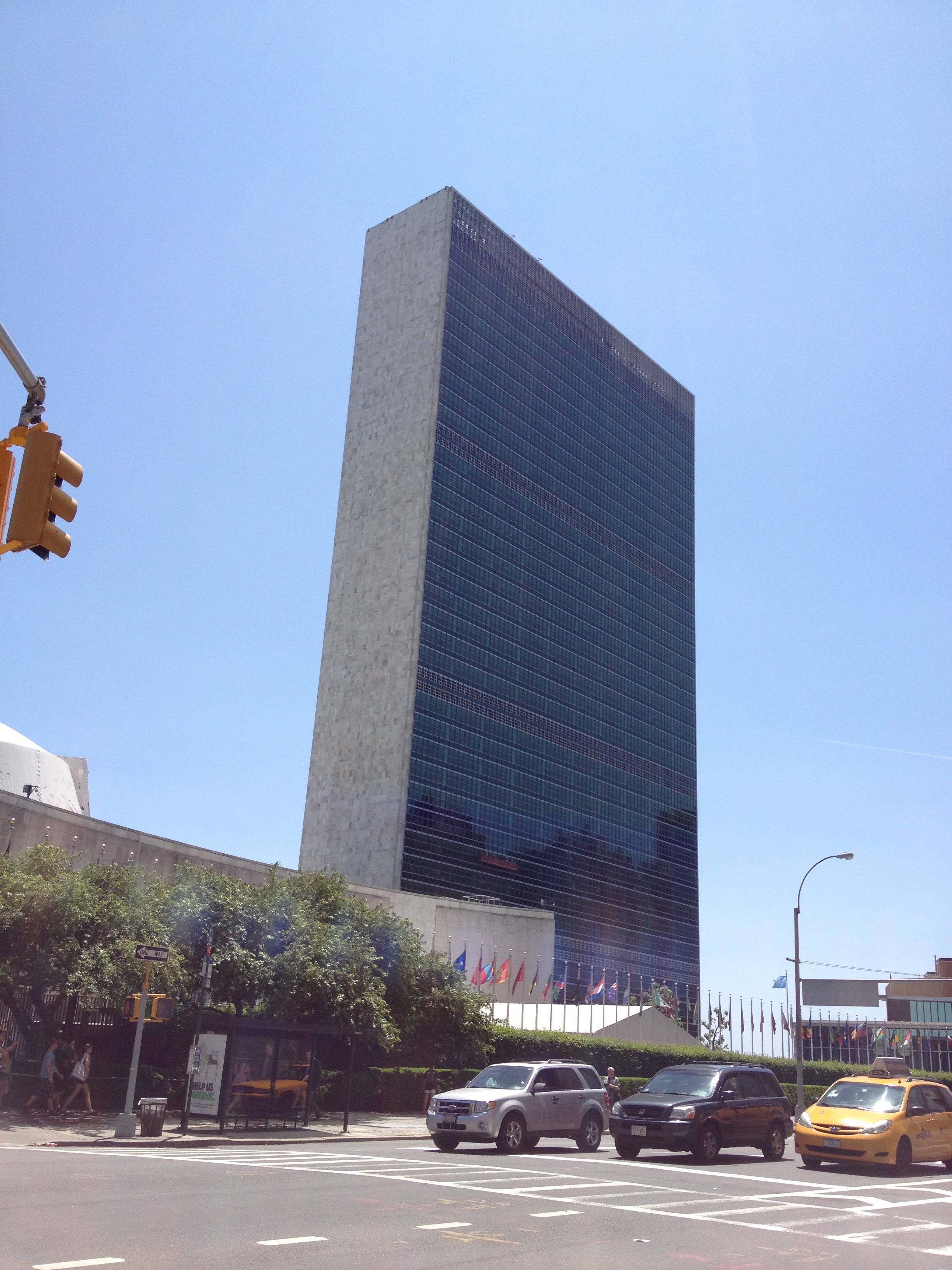
A standout, for me, is how much such efforts rely on Non-Governmental Organizations (NGOs).  Governments are often too busy concentrating on power.  We see this world-wide.  Although this book was written before the Russian invasion of Ukraine, one of the things Russell points out is that war is one of the primary causes of childhood malnutrition.   The Putins of the world initiate wars for their own selfish reasons and condemn children to death.  It’s the NGOs that step in and try to make the world a place of a little less suffering.  When I worked in Manhattan this was written on the skyline.  Buildings dedicated to helping were small brick structures huddled next to corporate profit-making giants.  Guess which is dedicated to making the world a better place?  This is a hard book to read at times, but it is ultimately hopeful.  Progress is being made, but we can do more.  And one way to do so is to spread word about Within Our Grasp