Intensity

It was the biggest excuse for breaking up with me.  “You’re too intense.”  I lost track of the number of times college coeds told me that.  At the same time, the same adjective was whispered in awe when applied to professors in class.  You wanted intense professors, but not intense boyfriends.  Was “intense” bad or good?  I don’t deny being intense.  Some of us are just that way.  In personal relationships I’ve often managed to keep it under control.  It was one of the reasons, however, that I was such a good professor.  Students seem to have responded well, even if academia had no permanent home for me.  Thus, dark academia.  Which tends to be intense.  When I throw all my energy at something, it can become intense.  But it’s also true that I’m on the receiving end of it.  My mental mapping, especially in the fallow times, means that I must try to make sense of it all.

Some periods in life are intense.  I’m sure that’s true for everybody.  Or most people.  A concentration of events when time itself seems to have collapsed on top of you and you still have a 9-2-5 for five long days before you can start to deal with the residue.   So far, since the end of November many months ago, I’ve been in an intense zone.  So much is happening that I have trouble keeping up.  Unlike a dating relationship, I can’t beg off with intensity as an excuse.  A big part of it has been the calendar.  Thanksgiving fell late and January with its cold felt like it would last forever.  Both Trump and AI simmered in the background.  And, of course, 9-2-5.

Two major snowstorms were separated by only a few weeks.  As the second was tuning up, a death in the family.  The third in three years.  A novel was finished.  As was a nonfiction draft.  Two orders from Amazon went awry.  Who has time for returns?  Because of the storms, things became double-booked.  Preparations for the 2026 Lehigh Valley Book Festival.  With my expensive books.  I really didn’t think they’d select me as a participant, but was committed.  Or should be.  My wife’s 9-2-5 also hit an intense period.  We had to deal with two major household repairs simultaneously.  An unexpected auto repair.  I checked another website (No Kill Switch) to help define intensity.  What he has to say makes a lot of sense, but the question remains.  Is intensity good or bad?  It does seem to be the opposite of boredom, when you get time to deal with things, after work.  


Row Your Boat

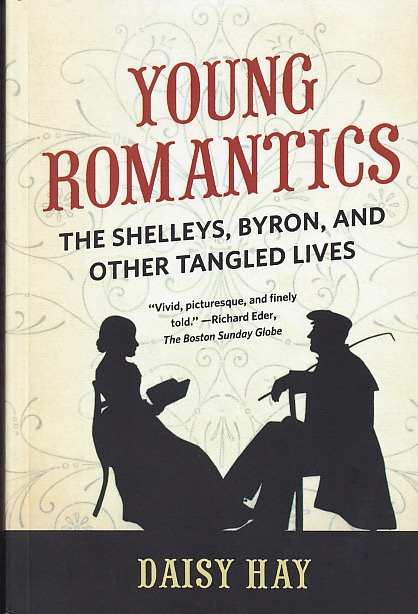
I’ve long wondered about what appear to be coincidences.  Specifically, about movies on the same topic that seem to come out at around the same time.  I saw Gothic about a year after it was released in 1986.  In 1988 two other versions of the Shelley-Godwin-Byron-Polidori-Clairmont meeting came out.  I’ve already written about Haunted Summer.  The third of these films was a Spanish production, Rowing with the Wind.  It is the most poetic of the three.  The dialogue is often poetic and it pulls out several historical details—some of which the other two films leave out.  Mary Godwin and Percy Shelley decide to elope, taking Claire Clairmont with them.  Lord Byron does not wish to see them.  He and John Polidori, his physician are out on a boat.  Boats play a large part in this movie.  Byron, played by Hugh Grant, soon comes to like Shelley.  Polidori’s role is underplayed and he dies by suicide before the party leaves Villa Diodati.

Mary Shelley’s monster, however, follows them.  Back in England it leads both Mary’s sister Fanny and Shelley’s wife Harriet to suicide.  Extending beyond the summer of 1816, the film follows the Shelleys and Clairmont to Italy.  They have their children with them.  When they come to Venice, they once again meet Byron, but Mary’s monster kills William Shelley (their son) and Allegra (Claire’s daughter).  Obviously, death is a major theme, along with boats.  (Historically, all of these people died, but not in such close time, but close enough to be tragic.)  The Shelleys stay with Edward Williams, a friend Percy met in Italy.  The monster then leads to Shelley’s death by drowning.  Byron’s death in Greece somewhat later is narrated by Mary but not shown.

The film is framed with a fictional arctic journey by Mary to pursue her monster.  Interestingly enough, no mention is made of Polidori’s story “The Vampyre.”  There’s not even any suggestion that he set out to write it.  Movies of this meeting often point out how the vampire and Frankenstein became famous because of it.  Rowing with the Wind is an arthouse movie rather than a studio blockbuster.  It isn’t a bad story.  It tries to tap into the sorrows of Mary, and again, historically she did suffer loss.  Her mother died shortly after she was born.  A child died before the first visit to Byron.  Percy’s first wife Harriet and Mary’s stepsister Fanny both died by suicide in 1816.  William died in Italy, as did her third child with Shelley.  Polidori poisoned himself.  Allegra died at five.  Shelley drowned in a storm at sea.  Byron died while trying to fight in Greece.  This film is a fitting tribute.


Confidential Hazing

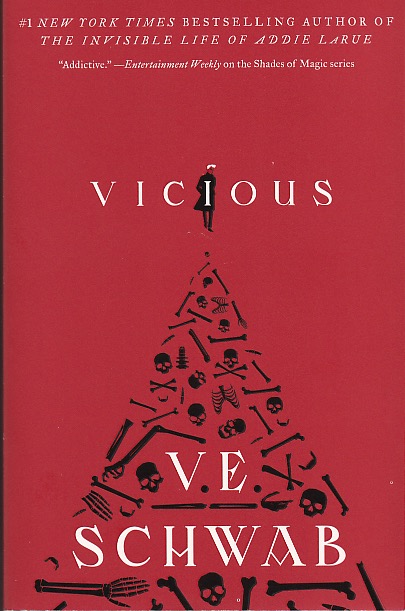
Set in a Long Island prep school, among a somewhat secret society called the Players, this is a dark academia tale of murder and discovery.  The Players, usually numbering eight in the senior class at Gold Coast Prep, are down to six.  One of their number was murdered and the one who confessed to that murder has been jailed.  Most of the students are extremely wealthy, but Jill Newman isn’t really rich.  This is what lies behind They Wish They Were Us by Jessica Goodman.  Although technically a young adult novel there are several disturbing elements here, some worthy of Lord of the Flies.  For that we need to dig a bit deeper.  To become a member of the Players, hazing is involved.  Since this isn’t an official program of the school, the hazing is entirely controlled by the seniors who are Players, to initiate their underclassmen into the club.

Some of the hazing is pretty intense, even for an adult reading the novel.  Kids aren’t always good about thinking through the consequences of traumatic activities on other kids.  People tend to be resilient, but at the same time scars heal in different ways.  In the course of one of the hazing tasks, something goes wrong and one of Jill’s friends, her best friend, ends up dead.  Since there’s a lot of drinking and drugs involved, it isn’t always easy to piece together what might’ve happened.  The crisis occurs for Jill when her younger brother joins the Players.  She has to watch him face the hazing, and at the same time comes to have suspicions about what really happened to her best friend.  Things get pretty tense.

As adults we can easily place ourselves, in our minds, back to our teenage years.  This is something that we didn’t appreciate as teens, and even now most teens don’t realize this about adults.  Wisdom, hopefully, comes with age.  In this fictional setting, rich adults are seldom around.  Their kids, with access to nearly unlimited money, can set their own rules.  Even the police treat them differently.  I’m deliberately not saying too much about the story since it would be too easy to give away the ending.  The school officials in the book care more about preserving the reputation of Gold Coast Prep than they do about the welfare of their students, even if this leads to blackmail to maintain its good name.  And this is something that teens will come to understand only once they start to work for a company with its own secrets.


Cool Book Festival

So yesterday I was at the Lehigh Valley Book Festival.  (It occurs to me know that I should perhaps post such notices in advance, but I know few people in the area where I live.)  I was there displaying my books.  I have participated in the Easton Book Festival for at least four years now, but I had only recently learned about this event held in Bethlehem.  The weather was clear, but cold for an outdoor event that involves a lot of sitting—it put me in mind of having to put on gym shorts and tee-shirts to go outside one November in college to have the coach lecture us about football, with no moving or actual playing involved.  It turned out to be an endurance test.  Not quite of the Shackleton magnitude, but I am sensitive to cold and it was struggling to reach 40, and this on the 28th of March.  At least there was a cool breeze.

Several lovely people stopped to talk and showed some interest in my work.  I’m grateful to all of them.  As an author you often wonder if you really are alone in your interests.  Since my table was next to a run of three tables of children’s books—when those authors decided on an unauthorized move of their tables into the sun (we were on the shaded side of the building), they did not invite me to join them—I was a bit self-conscious.  Parents hurried their kids past my modest display.  I took a quick swing through the other stands and I think mine was the only one for adults.  Many people glanced and frowned as they walked by, but several people got it.  I know there are local horror fans out there, but I have trouble finding them.

The Lehigh Valley Book Festival isn’t huge and several people just happened upon it, asking why we were there.  It was held at the main branch of the library and it is fairly centrally located in town.  Also, there was a cherry blossom festival taking place on the other side of the library.  I couldn’t be certain but it seemed that many more people were headed for that.  And honestly, I’ve lived in this area for going on eight years and I just learned about the festival last fall.  And I’m a book guy.  Not too connected locally, I’ll admit.  There was enough interest that I might consider it again next year (if selected again).  Especially if the temperatures are back towards the seasonal norm.


Still Haunted

Having watched Haunted Summer, I was curious about the origin of the screenplay.  I’d read that the movie was based on a screen treatment by Anne Edwards, a screenwriter and novelist, but that it had been rejected.  Edwards then transformed her screenplay into a novel that was published in 1972, over a decade before the film came out.  It’s sometimes easy to forget that movies spend quite a long time in development.  For example, about four or five years ago it was announced that Lindsey Beer was going to write and direct a new Sleepy Hollow movie.  That was the proximate cause for my writing Sleepy Hollow as American Myth.  I wrote the book, found a publisher and then watched as sales only bumped along the bottom and still no Beer film appeared.  Timing isn’t always my strong suit.  In any case, I decided that it would be good to read Edwards’ book as a follow up to the film.

Marketed as a gothic novel, it came out in my beloved mass market paperback form.  It’s now not easy to find.  The story is well researched, but fictionalized, of course.  The five Regency Era creatives—Lord Byron, Percy Bysshe Shelley, Mary Godwin, John Polidori, and Claire Clairmont—had gathered near Lake Geneva in the summer of 1816 (the “haunted summer”).  Famously, the idea for Frankenstein came out of ghost stories they told each other to pass the time during a rainy summer.  Polidori’s story, “The Vampyre,” also traces its origins back to that night.  Edwards’ novel focuses on Mary, making her the narrator.  Since it is a novel some fictional elements are added to what happened that summer.  To me, the most obvious was moving the ghost stories from Villa Diodati to Castle Chillon.  This allows Edwards to introduce Ianthe, a tragic keeper of the castle.

The story focuses on Mary as a strong woman very much devoted to Percy Shelley and standing up to Lord Byron.  Her lack of regard for Polidori was a little jarring since, it seems, historically, she felt sorry for him.  In any case, other than the changes Edwards introduces, the plot largely follows what happened during that summer.  The climax of the book is Mary’s telling of the  basic story of Frankenstein in Chillon Castle.  I found the Author’s Note of particular interest; novelists are also researchers, even if not always treated as such.  The historical incident of this meeting drives my interest, and this largely overlooked novel is a piece of a larger puzzle.


The Vampire’s Father

I’d been very curious about D. L. Macdonald’s Poor Polidori for several years.  This is not an easy book to find.  (I have noted before that I find university press book pricing illogical and unconscionable.)  John William Polidori was, as the subtitle states, the man who wrote “The Vampyre,” treated sometimes as a novel, at other times a short story.  Polidori, apart from being treated as a fictional character, is a difficult man to get to know.  This critical biography contains much useful information.  There are sections, however—and probably the reason for the pricing—, that interest only scholars of literature looking to find an exegesis of works of Lord Byron and Polidori himself.  My curiosity about him derives from the fact that “The Vampyre” was a very influential story and yet its author is somewhat consistently considered insignificant.  This seems to have predated his association with Byron; Macdonald points a finger at his father.

So who was Polidori?  Born in England of an Italian father and English mother, he was raised with literary aspirations but his father (who was a writer) had other plans for him.  Catholic in a period of strongly Protestant sentiments, John was sent to Catholic school and considered the priesthood.  His father eventually sent him to Edinburgh University to become a medical doctor.  Clearly this wasn’t John’s interest, but he complied.  Finishing his qualifications, he found setting up practice difficult because of both his foreign-sounding name and his Catholicism.  Lord Byron, about to exile himself from England because of scandals, wanted a personal doctor and settled on Polidori.  He knew of Polidori’s literary ambitions and frequently belittled them.  Polidori was present in the summer of 1816 when Percy and Mary (soon to be) Shelley visited Lord Byron along with Claire Claremont, Mary’s half-sister pregnant with Byron’s child.

Famously, the group read ghost stories and at Byron’s suggestion each started writing their own.  Byron’s fragment led to an idea Polidori later wrote out, after Byron had dismissed him, as “The Vampyre.”  Mary Shelley’s story, of course, everybody knows.  “The Vampyre” was published without Polidori’s knowledge and was attributed to Byron.  Even Goethe read it and thought it Byron’s best work.  Polidori was eventually credited with the story and tried to make a living as a writer.  He produced other works, but no real success.  He decided to become a lawyer.  Unable to establish his independence from his father, he died at 25 by ingesting prussic acid.  Even during his life, which was quite interesting, he was called “Poor Polidori” by more than one acquaintance.  His literary output isn’t bad, according to critics.  To me, he’s a kind of patron saint of those who would write but who are overshadowed by Byrons and Shelleys.


Vengeance Is Hers

A Lesson in Vengeance, by Victoria Lee,  is a novel with some twists that I’ll try to conceal.  It is a kind of young adult horror-themed dark academia novel.  I really enjoyed it although there are a few improbable events.  That’s the way of fiction with an unreliable narrator.  Felicity Morrow, a girl from a wealthy Boston family, is enrolled at Dalloway School.  Dalloway is a girl’s prep school in upstate New York.  Felicity had to take some time off, during which she was institutionalized, after the death of her best friend, and lover, Alex.  Now that she’s back at school she feels the ghost of her friend coming back for vengeance.  She lives in Godwin House, which only has space for five.  It’s also part of the story of the Dalloway five, girls accused as witches when the school was founded, who all died there.

A new girl is starting at Dalloway this year.  Ellis Haley has already written a published novel and is working on a second.  She lives in Alex’s old room.  In spite of their rocky start, Ellis and Felicity become friends.  Then more than friends.  Meanwhile, they’re both working on their senior projects but Ellis wants to form a fictional coven and replay the way the Dalloway five died, for her novel.  Things grow tense as Felicity begins to remember more and more about what happened to Alex.  Then a murder takes place.  I won’t say more about the plot.  The last several chapters are ones where putting down the book is a real struggle.  You want to know who did it.  And since Felicity is the narrator, you gather that she must survive.  But this isn’t without danger.

The horror elements involve ghosts and witches.  Since Felicity is revealed to be an unreliable narrator it’s unclear whether the ghosts are real or not.  Most of the events are revealed to have had naturalistic answers, but one remains as either a real ghostly visitation or a delusion on the part of Felicity.  I read this book as part of my ongoing fascination with dark academia, and I’m glad I did.  It’s quite a well-told story.  Enough information is held back and revealed in moments of insight as the story unfolds that I was kept guessing until very near the end.  And the final realization only hits at the very end.  This is a good entry into dark academia for anyone wondering where to start, at least in my opinion.


Talking Tolkien

I read The Hobbit and The Lord of the Rings back in college.  Although I enjoyed them a great deal, they weren’t enough to swing me into high fantasy.  I do sometimes think I should go back and re-read them, but with so many books on my to read list, it’s a matter of time.  In any case, I’d read that the movie Tolkien was a good example of dark academia, cinema-style, so I finally got around to seeing it.  Although I learned quite a bit about Tolkien’s life from it, as a movie it really never soars.  The academia part is pretty straightforward as King Edward’s School and Oxford University play a large role in Tolkien’s life, and in the movie.  As does World War I, which is where the darkness comes from.  That, and being an orphan.  And also a guardian priest who prevents you from being with the girl you love.  The movie stays with Tolkien until he begins writing The Hobbit.

The difficulty with biopics of writers is that trying to portray where they get their ideas is a fraught business.  Those of us who write fiction know that inspiration comes in many forms, from dreams, to real life events, to the visit of an unusual shop.  Travel, intriguing people, and ideas out of the blue can all trigger a story or novel.  How do you capture inspiration on film?  A love story is, believe it or not, somewhat easier.  The film portrays Tolkien’s early fascination with Edith Bratt, whom he would eventually marry.  One thing that I’ve learned from psychology and those who teach storytelling is that certain narratives more or less play automatically in people’s minds.  Now, this cannot be asserted universally, but if you introduce a young woman and a young man in a story, many people’s minds naturally begin to bring them together romantically.  Showing how a writer goes about their craft is different.

Many biopics of writers are considered examples of dark academia.  Probably one of the reasons is that no lives are lived without loss and trauma.  People handled traumatic events differently.  Many writers use their art as a coping mechanism.  I can’t know, but I suspect that such things often lead people to become writers.  Poe, for example, keenly felt the loss of his mother at a young age, a trauma that would lead to a lifetime of writing.  I hadn’t known, until watching this movie, that Tolkien had become an orphan.  I knew little of his life; I’d read his books, and even walked by his house in Oxford, but this movie did provide a bit of context.  I’m glad, for that reason, to have seen it.


The Black Monk

Back at Nashotah House the local ghost was called “the Black Monk.”  A plausible origin story circulated with the name; a student broke through the ice on the lake one winter night and met his demise.  Some even claimed to know which was his gravestone in the cemetery on campus.  I really didn’t give much thought to any of this until I learned that Anton Chekhov wrote a short story titled “The Black Monk.”  Now, I don’t know if some literate Nashotah student was referencing Chekhov or if the color was just fitting for a cassocked community of quasi-monks.  In either case, I decided to read the story.  The Russian tale involves a man named Kovrin.  He holds a Master of Arts degree, in the way that degrees in Russian stories bring the holder a great deal of respect.  He was raised by a wealthy farmer who owns extensive orchards, and, needing some time to relax from his city schedule, goes to stay with his former guardian and his daughter.  While there he relates the tale of the Black Monk, who was seen all around the world, and maybe even in space, from where he walked in Arabia or Syria, a thousand years ago.  It was rumored that he would return a millennium later, and, as it turns out, Kovrin sees him.

G.K. Savitsky’s illustration “The Black Monk,” public domain via Wikimedia

Kovrin is a successful, bright, and cheerful scholar.  He begins to see the phantom and have conversations with him.  The monk assures him that he (Kovrin) is extraordinary, a genius even.  That other people, satisfied with mediocrity, melt into the herd.  True genius, however, is often perceived by others as madness.  They have long conversations.  Kovrin marries the farmer’s daughter but their relationship is troubled.  One night she awakes to find him speaking to an empty chair—nobody else sees the Black Monk.  Convinced that he is mentally ill, she and her father put him in a doctor’s care and his new regime of lifestyle changes prevents further visits of the Monk.  Kovrin, however, grows sullen and dull.  He realizes that his genius is gone and that he has become ordinary.  His marriage falls apart and when he goes on a vacation to the Crimea, he once again sees the Black Monk.  His feelings of being extraordinary begin to return, but he dies that night.  His corpse wears a smile.

This tale had me thinking.  It’s not clear that Kovrin was really mad but no doubt he’d been quite intelligent.  He was given a university chair and received the praise of others.  It was the cure that destroyed him.  It robbed him of his enjoyment of life and also led to the downfall of the farm since his father-in-law died and his daughter, now separated from Kovrin, writes to curse him for his insanity.  The farmer and his daughter aren’t always sympathetic characters, but until his dying day (literally) Kovrin had lost all that made his life meaningful.  The Black Monk admits he’s an apparition, but Kovrin was clearly brilliant while he met and conversed with him.  I’m not sure of any parallels with Nashotah House, but it has a character in common with Chekhov’s story.


Life’s Work

Here’s the thing: religion (or philosophy) is my life’s work.  By that I mean that I can’t just casually encounter an important idea that impacts larger life and just let it go without wrestling with it first.  As a professor that was expected.  As a paid seeker of the truth, you dare not ignore new information.  When I found myself unemployed with a doctorate in religious studies, the only jobs I could find were in publishing.  Now, publishing is a business.  And since I was a religion editor (still am), that meant that I had (have) to encounter new and potentially life-changing ideas and simply let them lie.  I assess whether they might make a good book, but I’m not supposed to ponder them deeply and incorporate them into my outlook on life.  Problem is, I can’t not do that.  It’s an occupational hazard.

Some presses, I understand, won’t hire an editor with a doctorate in the area s/he covers.  I think I can see why.  It’s maybe a little too easy to get overly engaged.  I work with other editors with doctorates in their areas.  I don’t know if they have the same troubles I do or not.  The fact is, other than religion/philosophy there aren’t many other fields that qualify as dealing with ultimate questions.  History, for example, may be fascinating, but it’s not generally going to change your outlook on life, the universe, and everything.  And so I find ideas that I need to keep track of since they might have the actual truth.  But that’s not what I’m paid to do.  I sometimes wonder what would’ve happened had I been successful in becoming clergy.  They too are paid to wrestle, but they are expected to always end up on the side of the organization.

There are people cut out for a very specific job.  No matter what else I do, I think about ideas I encounter.  Especially the big ones.  In the academy this was applauded.  Elsewhere, not so much.  The possibility of ending up in the job you’re made for isn’t a sure thing.  It seems we value economics more than dreams.  Or than systems that help people fit in with their natural inclinations.  Then again, should I really be thinking about things like this when work is about to start?  I should be getting my head in the game, shouldn’t I?  But here’s the thing: religion (or philosophy) is my life’s work.


Gothic Dreams

I love this book.  Roger Luckhurst understands that the gateway to horror is the gothic.  In Gothic: An Illustrated History he offers a world-wide, luxuriantly illustrated tour of both classic and contemporary gothic.  As a category, it’s difficult to diagram precisely.  Luckhurst does it through a series of themes: architecture and also form, various landscape settings, how the four cardinal directions appear in the gothic imagination, and, of course, monsters.  Each of these themes is divided into four or five chapters.  Not wanting to rush, I limited myself to a chapter a day, but I’m sure I’ll be dipping back in again.  This is the kind of book that both gives you ideas of new books to read and movies to watch, and affirms the choices that you’ve already made in those regards.  In other words, this is a place horror fans would naturally feel at home.

The gothic entered my life at a young age, partially because I was living it (unwittingly) but mostly because it appealed to me.  It made me feel good watching monster movies and Dark Shadows with my brothers, and later, reading gothic novels.  There’s definitely a nostalgia to it.  I loved gothic architecture from the moment I first saw it.  Not that Franklin had soaring cathedrals, but there were some very nice Victorian houses in town.  And when I saw cathedrals I felt a strange stab of joy.  Although I sublimated my love of gothic while working on my academic credentials, I couldn’t stay away from ruined castles and abbeys  in Scotland.  Although I was trying to be a scholar, I knew what secretly inspired me was made of coal-blackened stone.  Even if I didn’t say it aloud, the monsters of my imagination lurked there.

The narrative accompanying the wealth of images in this book probes what makes gothic tick.  It would be impossible to cover it all in one tome, of course.  My current fascination is with dark academia (an aspect perhaps too new to be in Luckhurst).  Dark academia’s draw is that it revels in the gothic, placing it in educational settings.  But it can occur anywhere, as Luckhurst clearly shows.  Anywhere that there might be shadows or reflections.  Anywhere that experiences nightfall and autumn.  Anywhere people must face their fears.  While my usual avocations always please me, when I see the gothic addressed directly it takes my breath away.  No doubt, mine has been a strange life.  One in which, even before I reached my first decade, I found the gothic vital and necessary to an odd kind of happiness. This book brings it clearly into focus.


Dark Dreams

I’ve been pondering the role of religion in dark academia.  While not a major element, it’s certainly present in Ashley Winstead’s In My Dreams I Hold a Knife.  There are plenty of plot twists, and I’ll try to avoid giving away whodunit, at least ultimately.  The basic idea is that a group of seven students, the “East House Seven,” band together at Duquette University, a near-Ivy League school in North Carolina.  They get into some college hijinks, but things turn dark when one of them (Heather) is murdered their senior year.  Jessica Miller, one of the seven, has become a corporate climber, despite her family background, and ten years later she goes to Homecoming to show off her accomplishments.  But things don’t work out as planned.  Heather’s younger brother, who works at Duquette, has been doing some detective work and uses Homecoming to confront those who remain about the murder.

The seven (which actually involves an eighth student) pretty much date among themselves.  Some of them, including Heather, are quite wealthy, but not all.  Jessica isn’t among the affluent, and another of the seven, Coop, ends up dealing drugs to make money on the side.  Heather’s boyfriend was suspected in the murder, but had to be released for lack of evidence, and he decides not to attend Homecoming.  Those present for the event are confronted by Heather’s brother and the story is told as flashbacks from the Homecoming to events that took place during the college years of the seven.  As I say, I won’t reveal who did it, but each of the remaining seven is suspected until the reveal comes near the end.

For me, these kinds of stories are a little difficult to follow because of the number of active players.  Jessica reveals herself to be an unreliable narrator, and although the story felt long to me, it takes quite a bit of space to get to know all the characters well enough to understand their motivations.  Two of them were raised religious, which is what ties this theme into the novel.  The wealthy students aren’t exactly the kinds of people to emulate, and those raised religious end up being the good ones at the end, although they do participate in Greek life with its parties and other activities that college encourages.  (Sorry about the long sentence.)  Overall, this is a good story, but it’s hard to give too much sympathy to the group as they do have shifting alliances and are mostly power-hungry.  Yet, isn’t that like life itself?  It is dark academia. 


Virtues of Fiction

So, my first royalty statement for Sleepy Hollow as American Myth arrived.  It is my poorest selling book ever, not even notching up to Nightmares with the Bible, and that one was twice as expensive.  A couple things: I know that nonfiction books had a hard year last year.  Also, “academic” books tend to do better in the subsequent years after their initial release, for those of us with no name recognition.  In any case I’ve decided to try focusing on fiction.  The compulsion to write is deep-seated in me.  My nonfiction books are creative explorations of ideas neglected or never before brought together.  They’re also priced too high for the trade market.  I was pleased to see, recently, that The Wicker Man is now in over 400 libraries, according to WorldCat.  That makes it my second best-selling book, after Weathering the PsalmsA Reassessment of Asherah has been viewed over 9000 times on Academia.edu.

So, fiction.  I write my fiction under a pseudonym.  I currently have one novel out for consideration and another very close to being ready.  I have several in the wings.  What strikes me as crazy about all of this is that I’m told (as I have been since high school) that my writing is quite good.  I’m not the one to assess this claim, since I’m far too close to it.  It does make me wonder, however, what it takes to earn a little cash at it.  My last royalty check for a new book was half of what they usually are.  Good thing inflation is under control and the economy booming.  So I hear.  I do believe that the most impactful books tend to be fiction.  People like a good story.  And they can last for many decades.  The nonfiction that stands the test of time is a very narrow shelf indeed.  At least compared to our fictional siblings.

For fiction you need to keep at it to improve.  I think of all the years I’ve poured into my last four nonfiction books.  The only real critique I’ve seen of Holy Horror was that it was “too well written.”  When’s the last time someone said such things about fiction?  Oh, I’ve got three nonfiction books underway as well.  One of them I’m quite excited about.  But then I take a look at this royalty slip sitting in front of me and wonder if I’ll ever learn.  I have to write.  I’ve done that since fifth grade as a means of coping.  Here I am at over half a century at it.  There’s no danger of giving it up now. But the form it may take, well, that’s up for grabs.


Murder in Oxford

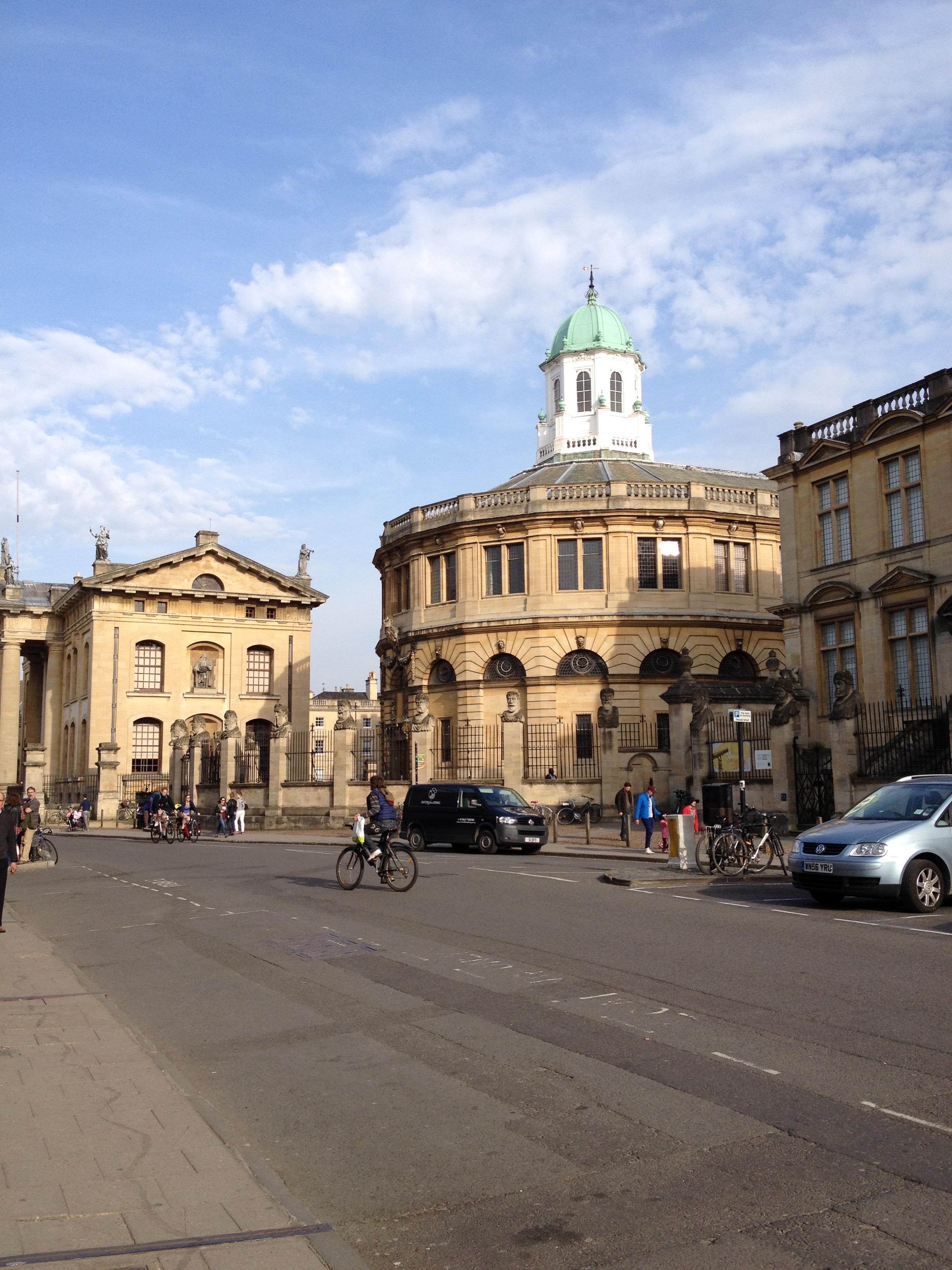
The Oxford Murders isn’t a bad effort as a thriller, but where it works is as dark academia.  This 2008 movie didn’t have significant box office take, so it may be one rather unknown.  Nevertheless, it is erudite, involving considerable debate about logic (including Wittgenstein) and higher math.  So much so that some might get lost.  Set in Oxford (and filmed there), it has the dark academia atmosphere down.  Since it’s so complex there will be spoilers here, so if you intend to watch it, best do that now.

Here’s a spoiler: the elderly widow of a famed mathematician is murdered by her daughter.  The reason for this is that the young woman has fallen in love with an American boarder at their house, but her mother, who has outlived her expectation with cancer—for years—is interfering.  Meanwhile, the border (Martin) is obsessed with Arthur Seldom, a brilliant Oxford mathematician.  Seldom was in love with the girl’s mother and decides to protect her by making the murder look like the work of a serial killer leaving Pythagorean symbols on the murder notes.  Since Seldom isn’t a murderer, he chooses as his “victims” people who’ve already died, making their natural deaths look like murders.  This throws suspicion off of the daughter, but when the code and the motivation is published in the newspaper, a man struggling with sanity because his daughter requires an operation, finishes the Pythagorean sequence by killing ten special needs students in a bus crash.  Seldom didn’t technically kill anyone, but when Martin confronts him Seldom points out that if he hadn’t boarded with the old woman, her daughter wouldn’t have fallen in love with him and killed her.

The movie is a little clunky, but I think it’s been underrated.  There are lots of ideas here that beg to be discussed.  Like many murder-mysteries, it has subplots meant to throw you off, one involving a disgruntled mathematician, and another involving a nurse who hooks up with Martin, but who has previously had an affair with Seldom.  None of this detracts from the movie as dark academia—something has definitely gone wrong in Oxford.  The widow’s murder was a crime of passion, leading to the deaths of innocents, rather like the butterfly effect that the movie discusses.  The problem seems to be with the writing.  It was based on a novel by Guillermo Martínez, which, I suspect will be added to my reading list.  As a movie it’s not great, but it is good for a dark academia fix.


Unsolved

Strange as it may seem, the world of academic religious studies can have high drama.  On May 21, 1991, Ioan Petru Culianu, a professor of religion at the University of Chicago, was followed into a men’s room and shot through the head.  The murder was never solved.  Culianu was protégé and, many thought, successor to Mircea Eliade, perhaps the most famous religion professor of the last century.  Eliade was a Romanian American, and in his youth supported a fascist political movement, his connection with which he later covered up.  A bit of necessary background: the University of Chicago is a powerhouse school of religious studies.  Its graduates are nearly as influential as those of Harvard.  And Eliade trained many of them.  Including Bruce Lincoln.  Secrets, Lies, and Consequences is a fascinating book, even if it gets into the weeds.  You’ll learn a lot about early twentieth-century Romania if you read it.

Like many Chicago grads, Lincoln has had a distinguished career.  Even though I worked in different areas of religious studies than he does, I knew his name.  I read this book because it is full of intrigue, but also because, until I heard of it, I’d never known anything about Culianu or his unsolved murder.  A scholar’s scholar, Lincoln taught himself Romanian to be able to write this book.  (This is what I miss about being a professor, the freedom to undertake such Herculean tasks and have it be considered “normal” on-the-job behavior.)  The end result is a brief, complex, and wonderful book.  This isn’t a proper whodunit, though, and although Lincoln has some suspicions about what might’ve happened to Culianu, there is no smoking gun.  His murder took place while I was a doctoral student in Edinburgh, whence, as far as I could tell, the news never reached.

Eliade was a towering figure.  He wanted to put Romania on the intellectual map and he succeeded.  His work is still studied and analyzed.  He wrote novels as well as monographs, and some of his ideas have become standard fare in religious studies.  Few figures in the discipline cast a longer shadow.  I was in seminary when he died, but some of his works were recommended reading by that time.  This little book got me thinking about at least two big things: how some people become academic superstars, and how cancel culture sometimes brings them under the microscope.  Humans are raised in a culture and sometimes our young ideas, not fully formed, come to define our entire biological trajectory on this planet.  And sometimes we have regrets.  This is a fascinating study of one such case.