Material Whirled

With the moon and Jupiter waltzing slowly so high in the sky, radiating such brilliance early in the morning over this past week, it is understandable how ancient people came to see the gods as material objects. The course of progression seems to have been physical gods to spiritual gods: the earliest deities ate, drank, made love, fought. They were of the same substance as humans, or at least of the same psychological makeup. The Egyptians, Zoroastrians, and Greeks all toyed with ideas of beings of “spirit”—non-corporeal entities that did not participate in our material world, but were able to influence it. In the world but not of it. The tremendous gulf between great goddess and material girl was born. Today that concept is taken for granted, especially in western religions. We are locked into physicality while God is free to come and go.

Many religions respond to this by suggesting that we should look beyond the physical to the majesty hidden from biological eyes. And yet, physical creatures that we are, we are drawn back to material means to demonstrate our spirituality. One of the perks of working for a publisher is the constant exposure to new ideas. At Routledge I have been learning about the rising interest in material religion: the manifestation of religion through physical objects and rituals. This aspect of religious life easily devolves into a cheapening of faith into mass-produced, religious knickknacks and kitsch. Some mistake this for the real thing. While living in Wisconsin, my family used to visit the spectacular Holy Hill, the site of a Carmelite monastery atop a large glacial moraine. On a clear day you can see Milwaukee from the church tower. It is a large tourist draw.

No visit to such a shrine would be complete without the obligatory stop at the gift shop. Even the non-believer feels compelled to buy some incredibly tasteless artifact to keep them grounded in reality. Many of the items—giant glow-in-the-dark rosaries, maudlin mini-portraits of the blessed virgin Mary (BVM as the insiders call her, not to be confused with BVD) and the crucified Lord on all manner of crosses, line the walls and shelves. This commercialization is not limited to the Catholic tradition. Evangelical groups realize the importance of branding as well, passing out cheap merchandise (or better, selling it) with Bible verses emblazoned on it. These signs of faith sell themselves, but they blur the sacred distinction between human and divine. Does religion point to a reality behind the physical? This is its claim, but what is the harm in making a bit of cash on the side, just in case?
A Peculiar Resurrection

Although it is not my regular practice to splash melodrama across my blog, my recent experience with losing the Internet for four days prompts me to consider resurrection. After consulting with three technical agents and giving my laptop a kind of electronic enema, I am now once more able to access that mysterious nirvana called the world-wide web (and even the www2, whatever that is). This experience has taught me something about the human craving for resurrection. I began this blog in July of 2009. Since then I’ve added new entries almost daily. Even in places as remote as the northwoods of Idaho, if my laptop receives a signal, I can post my unorthodox thoughts for the world to read (at least the very small cross-section of the world that stumbles upon my pages). Being forced to go without Internet connectivity in New York City, of all places!, was itself a surreal experience. I literally wept in frustration. No one could help. This morning the Verizon tech assistant had me connect via an Ethernet cable and with his omnipotent hand remotely guiding my cursor, brought these dry bones back to life. Praise the landline!

The writers of the Hebrew Bible did not believe in resurrection. The book of Daniel, written just before the death of Antiochus IV Epiphanes (“the manifestation” as he humbly called himself) in 164 BCE, is the earliest hint that Jewish thinkers were beginning to consider the resurrection concept. The Egyptians had, many centuries earlier, played with the idea. They eventually developed it into a national pastime—building pyramids to ensure the king got to live again—but other ancient people were more pragmatic. Death was the end, so live this life to the fullest. As far as we can tell, Jesus taught his followers about the possibility of life beyond life. Some take that to mean a literal reconstituting of life after death while others understand it metaphorically. Both ideas can be, broadly speaking, labeled “Christian.” Some Jewish thinkers accept resurrection, others do not. Other religions, as mentioned earlier this week, go for the cyclical approach of reincarnation.

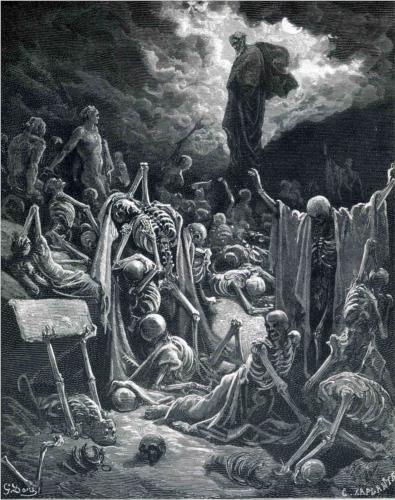
Ezekiel, according to chapter 37 of his surreal book, saw a valley of dry bones. These people were, as the Munchkin coroner croons, “really most sincerely dead.” Ezekiel did not believe in resurrection. If he had the miracle would have been lost on him. Reviving the dead was considered the most extreme, impossible feat in his entire (if limited) universe. The people of Judah, defeated by Babylonia, carried into exile, their temple—God in their midst—destroyed, believed it was all over. There was nothing to bring home into such a desolate landscape. Some suggest Ezekiel was schizophrenic or perhaps addicted to psychedelic mushrooms. In reality, I believe, he owned a MacBook that could not connect to the Internet. Once that divine signal from on high penetrated the arid air of exilic lassitude, he rebooted and without the aid of any drugs, saw God in all his/her glory. (Ezekiel refuses to give God a gender, but that is a topic for another post.)


A Summer Fright

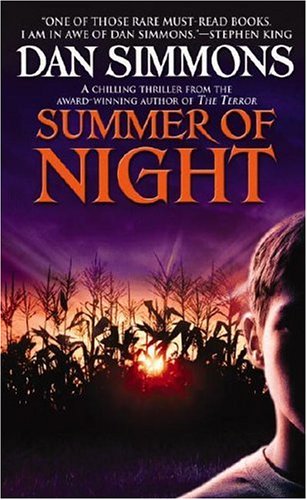
Although primarily known for his science fiction, Dan Simmons has also strayed down the dark path of horror fiction as well. During the depths of winter I found Simmons’s A Winter Haunting a moody and appropriate concomitant to the season. Not realizing that it was a sequel, when I saw his Night of Summer while at a Borders going out of business sale, I wondered if the same effect might work in warmer times. Both books rely on Egyptian funerary cult to move the story along, although in Night of Summer it is difficult to determine if the real menace is Osiris or the Judeo-Christian devil. Simmons has characters refer to Osiris as the power behind a haunted bell, but the climax of the story bears little resemblance to Egypt and quite a bit to standard monster flick tropes. “The master” of the reanimated dead is not explicitly identified. The use of Anubis in A Winter Haunting is quite effective, but the infernal characters were intermixed a little too much for my liking in Night of Summer. Better the devil that you know…

Perhaps it is simply that summer represents a time of relative ease and recovery from the frenetic pace of the remaining three quarters of the year. Although the heat and high humidity often make the season feel unbearable, the blush of abundance is all around. It is not easy to be afraid. When the air begins to chill and nature seems prepared to shut down production in the autumn, we naturally turn towards the desolate and constant struggle that will see us through the winter. Ancient people needed reassurance that warmth and relative ease would return. New Year’s rituals frequently marked autumn or spring, sometimes both. The death or life of the crops symbolized things to come.

Osiris, the god of the dead, also served as a god overseeing the renewal of crops for the ancient Egyptians. Death and life were knotted so tightly together that to unravel them was to fray the essence of the divine world itself. Among the cultures of the ancient world the Egyptians boasted the most developed concept of an afterlife. Even Paleolithic human burials contain grave-goods, demonstrating a belief in some kind of continuity beyond death. Simmons plays on that primal fear by resurrecting the dead in his novel. Beliefs about death and what might come thereafter have been one of the constant identifiers of religion from antiquity to the present. When evil pollutes the process the genre shifts to horror: witness the current fascination with vampires, zombies, and other undead entities. Religion and death are inextricably bound. Although Night of Summer may not live up to its sequel, the correlation between religion and fear meets the expectations of the genre, even during the long days of relative ease.


Zombies of Harare

In a tale that would have Edgar Allan Poe turning in his grave, a news article from Zimbabwe narrates the darker side of resurrection. In a July 26 story entitled “Schoolgirl ‘rises from the dead’News Day online reports that a sixth form girl, after falling into a coma (the article says she had “fallen into a comma”-embarrassing enough under any circumstances) was pronounced dead and taken to the morgue. Her coughing, possibly from the cold, caught the attention of an attendant and she was rescued. Her schoolmates feared her until school authorities “assured them it (the mishap) was normal.” Even more disturbing is the sentence, “Cases of people gaining consciousness in the morgue after being certified dead are quite common and in most cases doctors would have erred.” The story serves a grim reminder of how in many parts of the world what is taken for granted in developed nations is still a desideratum.

The fate of the dead is a major preoccupation of religion. Certainly among the most famous African outlooks on the subject, the Egyptians possessed a highly refined view of the life beyond. Having just covered Egyptian funerary beliefs in Ancient Near Eastern Religions class, the connection between this chilling story and an ancient optimism among the Egyptians is worth noting. Initially life after death was limited to the king in ancient Egypt. Over the centuries, a kind of democratization of the afterlife took hold and the chance for renewed life was open to us regular sorts as well. In a snapshot of how religions work, this transformation holds the keys for further religious developments. The benefits trickle down from the elite to the peasant. Those who awake in the morgue may count themselves lucky since Osiris demands their presence only at a later date.

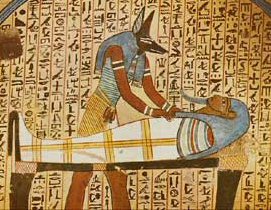
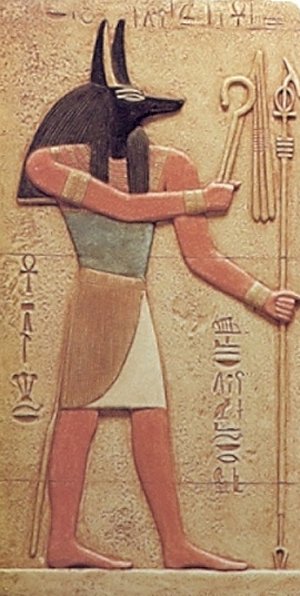
When Anubis comes knocking, don't answer.

Modern ideas of resurrection are great motivators for religious belief. The fact that Paleolithic burials sometimes include grave goods demonstrates that some kind of afterlife hope predates civilization itself. It is one of the formative elements of religion. In a world where death may not be the worst possible fate, however, such an afterlife may eventually lose its drawing power. For Egyptian peasants, the afterlife was pretty much a continuation of peasant life. I suspect that those who wake up in a morgue have a new perspective on life after death that most of us, thankfully, never have to face.


In Our Image

Preparing course notes on Ancient Near Eastern religions often sheds light on the religions we practice today. Religious beliefs are organic and, although many religions claim special revelation, their basic components have been around for millennia before they appeared. In the broad sweep of ancient times it becomes clear that religions evolve to fit the viewpoint of the power structures of society. The favorite god of a puissant sovereign became the chief god of a nation. When rulers change, gods sometimes change with them. Without doubting the sincerity of ancient believers, the truth is that gods serve the needs of the state as long as the state upholds the monarch. When gods become too sympathetic to the working class, well, it’s time to shuffle up the pantheon a bit. The story of Akhenaton’s advocacy of Aton worship is a case-in-point.

Somewhere along the way to modernity, symbolism became literalism. Anyone who follows the news of the various theocracies of modern history can see this pattern endlessly repeating itself. Politicians need a power-base and religious believers are often natural followers. By wedding gullibility to expediency a religious right is born. Akhenaton would have been proud. Of course, the message repeatedly doled out by our rapidly evolving, technical society is that studying history and religion (among other arcane subjects) is a waste of time. Look! New toys! We set ourselves up to fall prey to the unscrupulous.

How else do we explain the revelations of hypocrisy that spring up like toadstools whenever an über-religious candidate claims public office? Thank goodness modern religions teach forgiveness! In the empires of days long gone, kings lived a life out of touch with the common worker. They enjoyed luxuries that the laborer couldn’t even conjure. When a challenge arose to that power, all you need to do is bring the gods onto your side and even the most stalwart peasant will back off. When Akhenaton’s young son Tutankhaten inherited his shaky throne, the populace demanded the old gods back. Tutankhamen acquiesced and the balance of power was restored. The gods, apparently, did not seem to notice.

The wise say nothing.


Internet Asherah

Things represented on the Internet are not always what they seem. Removed to the back-bench of academia, I don’t have the opportunity for research that I once had. Every now and again, however, I still like to see what people are saying about Asherah. When I check the popular goddess books available off the shelf, my book on the subject is not often mentioned. At least on the Internet some researchers seem to have noticed it. A recent search for Asherah on Google, however, brought some surprising results. The first item of interest was a quinoa-based, organic veggie burger from Asherah’s Gourmet. The Asherah in question here, however, is simply a woman’s name. As a vegetarian I thought I would put a word in for the product, in any case. I found this brand at a health food store last week, but miles from home and with an air temperature of over 100 degrees, I was afraid the frozen products wouldn’t make it home without half baking in the car.

My next stop on the web was Sacred Suds. This New Age-themed site offers hand-made soaps, many of them associated with goddesses. The product entitled Asherah is named for “the Canaanite mother goddess” and is made with milk and honey. The website doesn’t actually state anything about washing away sins, but it seems difficult to go wrong by washing with a goddess. Another selling point—also not on the website—might be to point out that Asherah is known as the one who “walks upon the sea.” There is even a scene in the Baal Cycle from Ugarit where she is presented as doing her laundry in the sea. Asherah and soap, it seems, are a natural match.

One final product seems to be biding its time, although I suspect there is a market for it. The Asherah action-figure, privately made, does not appear to be commercially available yet. Garbed in an Egyptianizing cobra headdress, armed with a cobra staff, this heroine looks to be a suitable partner for Captain America, bringing the United States and Middle East together in an attempt to bring peace to a troubled region. Maybe heroes can accomplish what gods apparently can’t.

Not exactly big business yet, nevertheless Asherah appears to be on the move. Maybe once she breaks into the big time, those of us who’ve tried to make a living on her cape-tails might be dragged out of obscurity as well. In the meantime, it is about time for a veggie burger and a luxuriant bath.


Oh, Eye

As a frequent user of dictionary.com, I note the daily blog-post headlines as I look up my various words throughout the day. Yesterday’s article promised to be a good fit into this blog as well: “Why are zero and the letter ‘O’ both circles? The answer involves both science and mysticism.” The title is a bit wordy, but this is a dictionary site, after all. Each semester I briefly encapsulate the history of writing for my students. Since the Bible is a written document, it stands to reason that its origins reside within the sphere of writing. Many letters of our alphabet are pictographic in origin. Often as the initial letters of a word beginning with their sound, our letter-forms are mostly borrowed from the Greeks, who, in turn, borrowed most of them from the Phoenicians. The pictographic origins of all current ciphers in the alphabet are not known, but some have stories behind them. O is one such letter. As the article explains, O derives from the Semitic letter Ayin, a consonant that has no regular English equivalent. My late doctoral advisor at Edinburgh, Professor J. C. L. Gibson, delighted in saying it was the sound a camel made when overloaded. I have never forgotten how he rolled his eyes and stuck out his tongue while trying to replicate it. The shape seems to derive from ayin’s original meaning of “eye.”

The zero is more metaphysical. As the article at dictionary.com states, its premiere was attended by philosophical and religious arguments. The concept of nothingness still disturbs many people, and its early history was filled with debates about the divine implications of nothing. (Some things never change.) How could such an abstraction fit into a divinely planned and ordained world? Does it not imply that God left a few cracks in the joinery? Debate as they might, eventually the utility of zero was forced upon human thinkers. Its shape, apparently, derived from either the sun or the moon, but not the eye.

In ancient Egypt, however, possibly where the round ayin shape originated, the sun and moon were sometimes equated with the eyes of Horus. Horus is a benevolent god, overseeing the fortunes of the king, and thereby the nation. His wounded eye, damaged in his combat with Seth, has the power to heal as it cycles through its stages as the moon. His solar eye, necessary for life, can be harsh and unblinking. Today O is the fourth most used letter in our alphabet. It has its origins among the powers attributed to eyes in the ancient world. Perhaps if we learn the art of truly seeing, along with Horus, we might discover how to bring peace to those who gave us the gift of writing.

Somebody's eyes


Right by the Numbers

Reading about ancient religions helps to focus the long view. I’m brushing up on ancient Egyptian gods for my Ancient Near Eastern Religions class. Seeing how various gods rose to prominence with the fortunes of their patron kings or priesthoods suddenly struck a chord for modern-day religions as well. Many of society’s most conservative like to think that this is the day of Yahweh (or, not to put too fine a point on it, Jesus). This pre-biblical god has come into his own with the rise of the Catholic Church, following on from the conversion of Constantine, into the post-Reformation development of Evangelicalism. With the superiority of numbers and fiscal wealth, there is no disputing the one true god, is there?

What happens when the ultra-selfish free market consumes itself to a point that other cultures rise above it? Already outnumbered in souls by China and India what will Americans say when Buddhism or Hinduism outstrips Christianity? Is religion proven correct purely by the numbers? Cultural dominance has become inseparable from religious truth for many brands of Christianity. If in doubt, check out Andrew Schlafly’s Conservapedia (if any state would like to take him off New Jersey’s hands, you are certainly welcome). Being the right religion means being the might religion. Somewhere along the way it seems that the message of Christianity has become equated with bullying others around. I think Jesus must have gotten pushed around quite a bit as a kid on the playground.

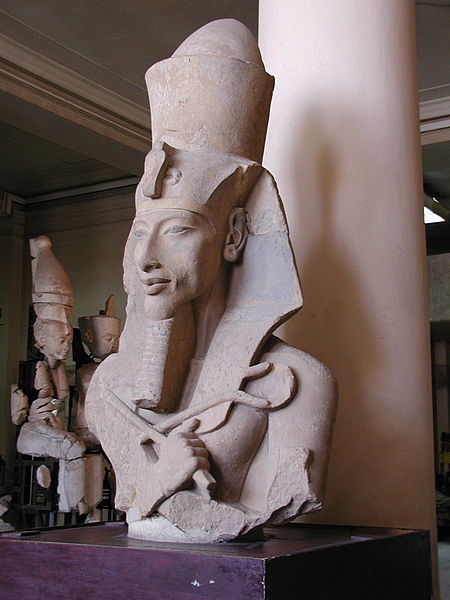
What's behind that self-satisfied smile, Akhenaten?

When Amenhotep IV became king of Egypt, the priesthood of Amun had grown very strong. Probably in an effort to suppress this powerful rival, the king changed his name to Akhenaten and promulgated the sole worship of Aton. Some like to give Akenaten credit for being a monotheist. To me it seems more likely that the old pharaoh was attempting to show intolerant bullies the way to behave: use religion to political advantage. If the opposition disagrees, shut them down. Problem is, this doesn’t work well over the long term. As soon as the unpopular king died, the former religion reasserted itself and things went back to the way they had been. Tut, tut. Seems like religious bullies never learn.


God’s Guards

That past informs the present in an oblique way. As religions continue to evolve they often depart from their original purposes. In preparation for my one surviving summer course, Ancient Near Eastern religions, I’ve been reviewing textbook choices. The procedure has reminded me of the unusual nature of ancient Egyptian religion. I have long contended that the environmental and social circumstances of a people determine the character of their religion. In Mesopotamia and the Levant, where rain is not always cooperative and impressive storms roll in, the gods often represent the awesome power of the atmosphere and the unpredictable will of the divine. In Egypt the fertility of the soil is assured by the regular flooding of the Nile. Rain does not play the same role in agriculture in such a system. Whereas the gods of the Mesopotamians are often stormy and violent, those of Egypt are generally peaceful and serene.

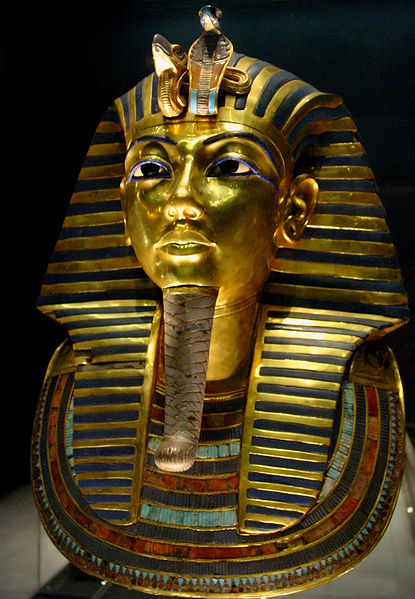
Egyptian religion developed independently of ancient Asia. Relatively isolated in the narrow strip of rich soil along the Nile and in the wave-dominated fan of the delta, Egypt reached an early cultural apex. Their religion emphasized the balance and continuity of life. Of course, it helps when your king is a god. This religion was based on the premise of an afterlife, the very fire-insurance that lends urgency to many Bible-thumpers today. Instead of believing the short, and often harsh life experienced by earth-bound mortals was the full picture, those placid eyes of stone pharaohs stare off toward a continued existence beyond that of life in the desert.

This tranquil religion did contain violent elements as well, but overall stability was valued and change unwelcome. Now as we see violence erupting in Egypt as the great ethical monotheistic religions clash for superiority, it is legitimate to wonder what has gone wrong. When did benevolent Ra become subject to the combating ideologies of Yahweh and Allah (who are, in terms of pedigree, the same deity)? Religion has become a tool in the utility belt of political power players. Since no one steps down willingly, the gods must duke it out. Even within Christianity, as is evident in America, multiple gods claim the title of creator and master. Perhaps it is the price of democracy. Otherwise we might experience the fact that even those pharaonic eyes did not always smile.

You wouldn't like me when I'm angry.


My Myth is Bigger

“Do some people still worship those gods?” That is the question my daughter asked on the way home from seeing Thor yesterday. I had to staunch my immediate “no,” and qualify it. Revival movements exist for most ancient religions, although it is difficult to gauge how serious they are. Then I open this morning’s paper and see that conservative Muslims have been attacking Copts (by definition conservative) in Egypt again. Religion foments hatred more effectively than just about any other aspect of culture because it concerns belief. Beliefs must be held with conviction, we are constantly reminded, and conviction means convincing others that you are correct. This is the devolution from mythology to religion.

Mythology is a meaning-seeking system of stories that are true but not factual. The modern religious (and scientific) mind has difficulty accepting something that is true and false at the same time. No one requires convincing that life harbors plenty of difficulties. Even in this softer, technologically sophisticated environment we’ve created for ourselves, disappointments and difficulties abound. Religions often promise paradises that they just can’t deliver, and so true believers often grow frustrated. The myths, however, remind us that struggle is part of existence even for gods. For every Thor there is a Loki. The simplistic nicety of one God padding a harsh world with a comfortable lining simply does not match reality. Mythology has an answer for that, an answer which is more honest than many “sophisticated” religions.

In ancient times it really did not matter what you believed. Gods don’t really care what you think of them as long as you provide what they require. Offer your sacrifices, do your duty, and get on with life. Religion today is a matter of correct mental assent. If in my head I agree that this particular deity is the only one, and I love that deity, all will be well. Funny thing is, even monotheistic religions can’t figure out that if there’s only one God than everybody is worshiping it (him, according to many) already. Better to kill off those who don’t agree, just to make sure. All gods, after all, demand sacrifice.

Even scientists honor the gods: the Thor Delta


Palm Versus Palm

“Mankind [sic] has managed to accomplish so many things: We can fly!” The words are not mine, but, depending on whether he was standing or sitting when declared, the Pope’s or God’s. In his Palm Sunday sermon yesterday the Pope addressed the issue of technology. Acknowledging flight a mere century after it began is breakneck speed for the Roman Catholic Church, but the concern behind the sentiment is real enough. Can religious systems survive the full onslaught of the technological revolution? As one small sample of the larger picture, ethics must react to increasing advanced technological scenarios. Raymond Kurzweil’s proposed Singularity where human and machine are fully integrated is perhaps an extreme example, but by no means the most extreme. Without fully understanding the context, our technical ability has soared way beyond our capacity to foresee implications. Believe it or not, many people alive today cannot use personal computers, have no palms, no cells. Sounds like they might be living free.

Palm Sunday is a day of tradition, heavily freighted as the start of Holy Week (in the Western tradition; of course, many Christians think it is a little too early some years, but that’s for a different post). Fronds from actual trees are waved as the Pope speaks. In the crowd palms are also being utilized to send the news home that one is waving a palm in the presence of the Pope. Traditional Christianity can survive with only the most rudimentary of tools. Religion, from the available evidence, began in the Paleolithic Era – earlier, I am pretty sure, than even the first integrated circuit. With its iron grip on the human psyche, religion is not about to disappear. Instead, technology is either ignored or embraced by it. As long as religions rely on human participation, however, technology will need to be reckoned with.

It's still a date (or palm)

The fact is technology has changed the perception of the world for many, especially in the western world. Even the revolution in Egypt earlier this year was conceived on the Internet. All the indications point to increased usage of technology rather than its imminent demise. Yet religious leaders still enjoin us to wave palm branches. Virtual Church websites abound where the faithful can wave electronic fronds and nary a tree will be harmed. Sermons, discussion groups, Bible readings, prayers – they can all be dispensed through wireless networks and modems. While many traditionalists turn from such ideas in disgust, it would behoove us all to pay attention. With the Vatican now onto the fact that we are flying, within mere decades we might receive a divine message on – oh, wait a minute – I’ve got mail!


Anubis Rising

As if reality weren’t haunting enough, I’ve been continuing my quest to find the scariest fiction book written. I’ve borrowed suggestions from others, but it seems that the fear factor is a decidedly personal thing. Nevertheless, the suggestions are often enlightening as well as provocative. I recently finished Dan Simmons’s A Winter Haunting. Simmons’s work had previously been unexplored by me, so this was a foray into the unknown. Of course, I read horror with an eye toward the sacred and I’m seldom disappointed. In A Winter Haunting the sacred appears in the form of Egyptian religion. Simmons makes very effective use of hellhounds, tracing them back to Anubis.

Now Anubis lays me down to sleep

The religion of ancient Egypt had a morbid preoccupation with death – or maybe it was just a healthy recognition that it is inevitably coming. Many of their gods eventually ended up patronizing the dead in some way. Andjety, Ptah, Min, Osiris, Isis, Nephthys, Maat, and Thoth, as well as Anubis, regularly appear in the cult of the dead. And, of course, pyramids represented the stairway to heaven long before Page and Plant. Death and its psychological angst have been crucial to the development of religion from the beginning. The Egyptians honed it to a fine art.

Anubis was likely associated with the dead because of the scavenging of wild canines at shallow graves. Magic, a phenomenon anthropologists have difficulty distinguishing from religion, dictates that the source of the problem should be appropriated as its cure. To protect the dead, the scavenger of the dead transformed into Anubis. Simmons did his homework, for this transformation is well represented in A Winter Haunting. Without knowing this particular plot device, I had been reading about Egyptian funerary cult independently of the novel and this coincidence proved entertaining as well as informative. I won’t be sleeping with the lights on, though. The search continues.


If You Ash Me

It was a familiar British voice on the BBC that first introduced me to the concept of Dismal Days. As a very frugal couple newly married and living abroad for the first time, my wife and I had little entertainment other than the radio. Doctoral candidates didn’t have time for television, and besides, in Britain you had to pay for a television license in addition to the electricity it would cost to watch it. We didn’t even use our pathetic wall heater in winter. When the BBC 4 announcer mentioned that it was a medieval dismal day, my wife and I exchanged bemused glances. The concept has become part of our mental warehouses. Today is not a medieval dismal day in that sense, but Ash Wednesday brings a dreariness all its own. As a young Fundamentalist I didn’t know about this particular day, but when I attached myself to the local Methodist congregation I learned a history lesson.

Methodists descended directly from Anglicans (Church of England). And as I learned in my ill-fated Nashotah House days, some Anglicans believe they never really separated from Rome. Ash Wednesday has now become a widely recognized day of mourning and repentance (as if all days weren’t such) and for many years I submitted to the ashes. It was always with wonder, however, since Jesus purportedly said not to show any outward signs when you are lamenting. I wondered where the tradition began. The earliest references to Ash Wednesday date from the papacy of Gregory the Great, in the eighth century of the Common Era. It is just like the Middle Ages to add drear to an already dark and cheerless season. Lent was originally intended for reflection, but in the macabre mind of the Dark Ages it became an excuse for utter misery.

Dismal Days are actually far older. In origin we again have the Romans to thank, although they blamed the Egyptians. In Roman society two days each month were deemed infortuitous to begin important ventures. In fact, the word “dismal” derives from the Latin for “evil days.” The idea that certain days are especially gloomy is a hangover from superstition that many rational people have now completely disregarded. Many of those rational people, however, will be spotted today with ashes on their otherwise hygienically cleansed foreheads.

Why not buy in bulk?


Be Neith It All

Goddesses have lately been on my mind. Both an occupational hazard and an avocation, study of the divine feminine deflects the trajectory that traditional monotheism traced and places us in the realm of the empowered female. This week my mythology class considered Athena, perhaps the truest embodiment of divinity in classical Greece. I regularly mention that in the ancient world even Plato suggests a connection between Athena and the Egyptian goddess Neith, one of the most ancient of the gods of Lower Egypt. When a friend coincidentally emailed a question about Neith, I realized the goddess was calling out for a blog post.

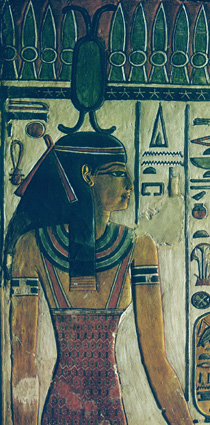
Neith is difficult to define partially because of the nature of Egyptian religion and its evidence, but also because of her great antiquity. She is a predynastic goddess, dating from before the founding of a united Egypt (back in the days when Egypt was united). She is represented by symbols of both weaponry and weaving (thus associated with Athena), and since she is so ancient, she became a creator. She is occasionally regarded as the mother of the gods. A question that naturally arises for all creators is from whence did they come – the classic chicken-or-the-egg conundrum. Mythology offers a number of options for self-generation, but most often creator gods simply bring themselves into being without many details being supplied. After all, no one was there to witness the miracle of the first birth.

Like most Egyptian creator gods, Neith represented preexistence and creation. She is occasionally androgynous – a necessary precondition for being an initial creator – and is said, by Proclus to have claimed, “I am all that has been and is and will be.” In short, nobody knows where she originated. Like many pre-biblical gods, Neith practices creation by speaking aspects of the world into existence, a technique called creation by divine fiat. This is something that Yahweh will later borrow in Israel. Although the Egyptian myths do not directly address the coming into being of Neith, she represents what every observer of nature knows: monotheism loses an essential element when it supplants one gender instead of embracing both.


Everlasting Life

From WikiCommons

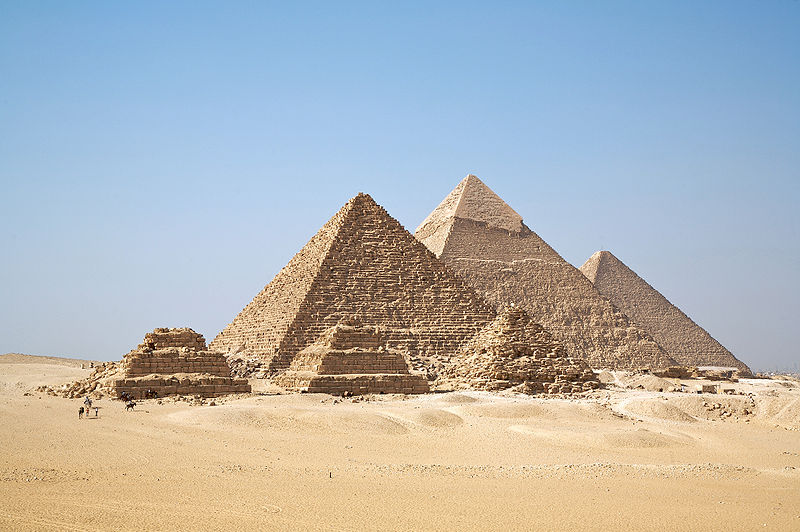
In the 27th century BCE, the Egyptians began building pyramids. These monuments, testaments to the belief in an afterlife for the king, are among the most easily recognizable structures in the world. Shaped to reflect the primordial mound that first emerged from the watery mass that existed before the world, the pyramid was more than a tomb. Pyramids were the key to everlasting life. In the Old Kingdom of Egypt this was limited to the king, but since the king represented Egypt nobody seemed to mind too much. Inside the pyramids were spells and incantations to help the king make it through to the next world. His success in this venture was of national importance.

During later periods of Egyptian religion, notably during the breakdown in centralized authority during the First Intermediate Period, the idea of an afterlife became democratized. Citizens who could never aspire to kingship desired an afterlife as well. The official theology of the day bent to the will of the masses and allowed a “ba” or, very loosely considered “soul,” to be assigned to each person. Those who could afford mummification and a Book of the Dead could make it to the afterlife as well. The preserve of the royalty had been breached, and the afterlife was open to all. Interestingly, the Israelites, many centuries later, did not seem to accept this idea. It is only very late in the Hebrew Bible before we get inklings that an afterlife was being anticipated. Living la vida Torah was reward enough.

It seems almost impossible in today’s world of religion for eternal consequences to realize that the original monotheistic religion was largely unconcerned with the afterlife. Once the idea caught on, however, there was no turning back. What is the motivation for religious belief if an eternal reward is lacking? Metaphorical pyramids continue to be erected. Would monotheistic religion still exist if it returned to its original outlook? Would politicians, television stars, and sports players give God the glory if it all ended at death? It hardly seems likely. Once a pyramid has been constructed, it is almost impossible to take it apart again.