The Very Blustery Day

What is it with car service and religion? After a long drive to and from Montclair yesterday to teach my mythology classes, I realized the poor car was due for an oil change. I try to be religious about auto service since the gods of mechanics seem to have bypassed me when handing out their gifts. I am pretty good at taking things apart, but when it comes to reconstructing them, well, they seem to work in new and interesting ways when I’m done. I don’t trust too much auto repair to myself. At the same time, Jiffy Lube is not my favorite hangout. I always take a book along, but the waiting area always has a television going and stale coffee perking, and other people chatting. It is sometimes hard to concentrate. A Friday afternoon seemed like a good time to go since weekend warriors would not be spending their first free hours at the Lube.

I had a choice of seats. I sat behind a Plexiglass divider from the television, figuring it might muffle the sound a bit, and began trying to focus on my work. The TV was on ABC, an early news show was running. I hadn’t been reading ten minutes when I heard the Bible mentioned on the news. I scrunched forward to peer around the windshield wipers suspended from the rack on the other side of the Plexiglass. An official looking authority named Carl Druze of the National Center for Atmospheric Research was explaining to an unseen journalist how he’d discovered the miracle of the Exodus! The government scientist explained, with a fancy graphic illustration, how if the wind blew all night the Red Sea would part into a marshy bit of mostly dry land for up to four hours, giving the Israelites an opportunity to walk right out of Egypt. The woman tending the register was so curious about my bent-over posture that she came around to see what the story was about. When she saw, she gave me a doubtful smile. The story concluded by mentioning that Carl Druze is a devout Christian, but that had nothing to do with his research.

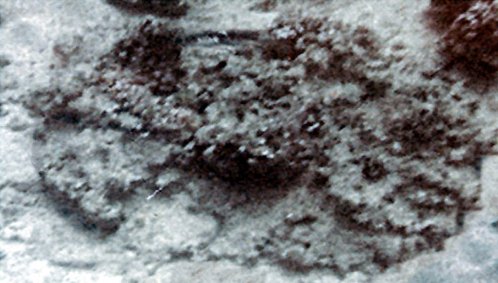
Scientists have long tried to explain mythological episodes. Over the years I have read many implausible conjectures of “perfect storm” conditions that could lead to a dried sea bed, a series of horrific plagues, a world-wide flood, or even the earth itself holding still on its axis for 24 hours. While clever, these scientific fictions miss the point. The Bible is presenting miracles as unaccountable acts of God. No formulas or figures can explain them. I was bemused since four hours would hardly be time enough for the (at least) three million Israelites cited by Exodus to have made it across marshy swampland with their considerable material goods. The fact remains that no archaeological evidence for the exodus exists, claims of chariot-wheel shaped coral in the Red Sea notwithstanding. If the Bible had been intending to be literal here, it would have been the end of Egypt since the army was completely wiped out. And this was on the eve of the invasion of the Sea Peoples. There is a reason I let automotive experts work on my car. It is always interesting when scientists tinker with the Bible, but I’m glad that such tinkering doesn’t involve a half-ton of metal that is capable of racing down the highway at speeds the fleeing Israelites would have been overjoyed to have achieved on the road out of Egypt.
Dive low, sweet chariot

Bleached Angels

A friend recently asked why, in the canons of western art, angels suddenly made the shift from colorful to predominately white. What was behind this loss of color? The history of angel imagery is complex and a great deal of the complication derives from a generally iconoclastic sensibility in late Israelite religion. Images were frowned upon, so we do not get “Hebrew angels” recorded for us. The current-day perception of angels seems to go back to Mesopotamian Apkallu figures and Egyptian deities. In both ancient cultures various deities and demi-gods were portrayed as winged humans. The Egyptian figures, at least, were colorful. In the world of the Hebrew Bible angels are nowhere cited as having wings and they were likely imagined as being pretty much the same as humans in form. Many biblical characters mistake angels for people.

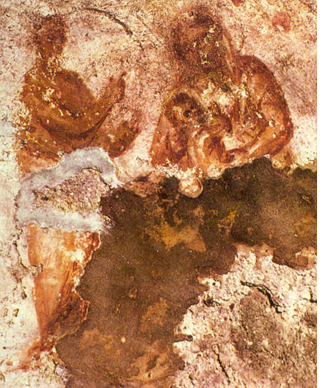
In Greek portrayals, Nike, goddess of victory, is a winged character. Eros, the god of love, also bears wings (and unlike Nike, he is generally bare all over.) In some vase paintings the Harpies are winged women. Since Greek pottery painting was generally monochromatic, we don’t have much color to go on. The earliest Christian angel portrayal comes from the Priscilla Catacomb in Rome. This angel is monochrome and wingless. The more familiar, and lavishly colored angels are Byzantine creations. Since my opinions on art history are not to be trusted, it is advisable not to make too much of this, but Byzantine art made flamboyant use of saturated hues to bring glory to God. This is part of the tradition behind Orthodox icon writing, and angels were simply following suit.

In the Middle Ages in Europe, angels were widely used to represent good and evil. It would stand to reason (if not to art-historical standards) that “good angels” would show their goodness by donning white apparel while “evil angels” would take on darker garb. This also fits with the growing tendency to represent Satan as dark red or black in color during this time period. As angels symbolized goodness, they became bleached of their former, Byzantine color. Symbolic value outweighed aesthetic sensibilities. Today angels retain their ancient legacy of Mesopotamia, Egypt, and Greece. Wings fit the view of angels as messengers, although ancient ideas of their colors depended more on the artistic conventions of the culture than any attempt to be true-to-life.

The earliest Christian angel (left)


Sobek to the Beginning

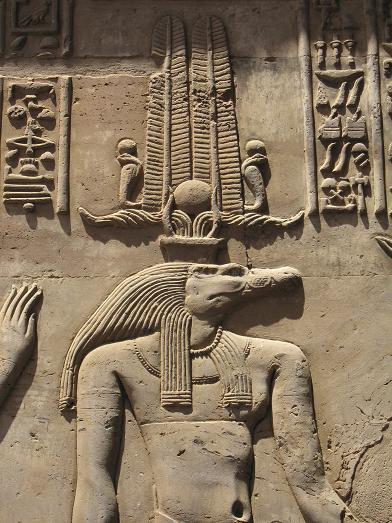
From some of my earliest reveries, Maine has been my favorite state. This strange feature had to have been gleaned from books since I never visited Maine until my early twenties. Since that time I’ve returned as frequently as possible; however, over a decade spent in Wisconsin made the trip somewhat daunting. So last night, still dealing with lingering intense emotions from the county fair, I decided to watch Lake Placid, the 1999 horro-comedy set in Maine. The movie is generally brainless escapism, and even the scenery is that of British Columbia rather than New England. It had been years since I’d seen the film, so I was surprised when Kelly Scott stated in defense of Hector Cyr that crocodiles were worshipped as gods by many ancient peoples, making them more prayed to than Jesus. This was, naturally, a healthy dose of celluloid hyperbole, yet it did bring to mind Sobek, the Egyptian deity mentioned by name in the film.

The ancient Egyptians venerated many animals as possessors of god-like qualities. Crocodiles, naturally dangerous to humans as well as to many large mammals, would suggest themselves as a form of divinity. Sobek was never a major focus of the Egyptian collective of gods, yet the mummified remains of crocodiles and the striking iconography of the deity attest his cult. The ancient Egyptians had no way of knowing that the crocodile had withstood the pressures of evolution for millions of years, a striking example of a body plan and lifestyle requiring no improvement. Few creatures have the staying power of the crocodile, an animal capable of feats more incredible than the fabricated beast in Lake Placid.

While Jesus has nothing to fear from crocodile worship (or, apparently, the Beatles), religion grasps, even unwittingly, to the unchanging. In a culture shifting so rapidly that our eyes barely have time to focus before something completely novel is thrust before them, the stable image of the crocodile may still serve as a useful symbol of something our religious forebears knew that we should continue to recollect. Stability is worthy of admiration. In a bizarre way, throwing Maine together with crocodiles may be an antidote for melancholy, but only in the right environmental conditions.


Reaping the Exodus

Strange coincidences transpire. In 2007, just after the professor in my discipline at Rutgers University retired, I showed up in the Religion Department seeking adjunct work. With the vicissitudes of “full-time” employment, at times my part-time stint at Rutgers is all I have. While covering the book of Exodus my first year there, students began asking me what I thought of The Reaping. I hadn’t seen the movie, which had been released on Good Friday of that year, but I promised my charges that I would. Still on my Hollyptic kick, I decided to rewatch it last night. The script was handled much better than that of Lost Souls, although the movie as a whole lacks credibility. It is, however, an example of how the Bible mystique continues to pulse through Hollywood’s veins.

The concept of bringing the plagues against Egypt into the bayou was a fresh one, but the satanic cult aspect has been overdone. A strong female lead in the role of a disenchanted former clergy-woman was a nice touch, and although the premise of her back-story was contrived, it was also decidedly eerie. The element of the movie that students wanted professional comment upon, however, was Katherine’s scientific assessment of the plagues of Egypt. This idea has a comparatively long history. Since critical biblical scholarship began, naturalistic suggestions for the non-historical plagues have been offered. Strangely, these offerings are intended to buttress an historical event that the theories themselves undermine. There is no archaeological or historical evidence for the exodus. Why then, are scientific explanations of the plagues necessary?

The story of the exodus is liberating; slaves liberated by a loving God forms a back-story that most oppressed people want to be true. The sad fact is that religion is more often used to repress than to liberate. Somewhere along the trajectory of human social evolution, religion became a key element in the control of the masses. This becomes clear from the merest glimpse at religion as it existed in ancient Egypt itself, or any of the other cultures contributing to Israel’s religious tradition. The Reaping, like so many films that springboard from the Bible, offers a conflicted worldview where nobody really knows who is in charge of the universe. In that aspect, it mirrors human religious experience.


Kingship Divine


All conspiracy theories and history’s mysteries aside, there are some interesting correlations between the ancient Egyptians and the pre-European “New World.” Temples, pyramids, and large ceremonial structures are among the common features they share. Perhaps it is inevitable that where a ruling class becomes oligarchic that grand structures to their greatness will follow. Some factors transcend all times and cultures. It may be no surprise then, as MSNBC announced yesterday, that tunnels have been discovered under the ancient Mexican city of Teotihuacan. The tunnels, first noticed under the temple of Quetzacoatl, may be the entry to the tombs of the royalty, not unlike Old Kingdom Egypt. This great pre-Colombian city was already abandoned by the time the Aztecs came along. They gave the city its current name, a title that may be translated as “the place where men become gods,” according to Mark Stevenson of the Associated Press.

Not being an expert on ancient Americans, it is difficult to interpret all this information. Having read extensively on the ancient Near East, however, the parallels are unavoidable. The place where men become gods may well apply to several aspects of ancient Near Eastern thought as well. Not only the Egyptians, but also most ancient peoples attributed divinity to their kings. We have no personal statements from such rulers indicating their personal satisfaction at having been considered better than their fellow citizens, although one might speculate that captains of industry and finance share those views today. The ancients, however, seem to have taken this literally. Kings were gods. When kings died, and were conveniently no longer observable, they were among the unseen realms of the divine, continuing to influence the world from beyond the grave.

Even the Bible shares, to an extent, the idea of divine kingship. David comes pretty close to the mark in the books of Samuel, and certainly the idea had appeal in the pre-monotheistic eras of ancient Israel. The place where men become gods is, however, in the imagination. The great and powerful pharaohs do not govern the affairs of modern Egypt, nor do the shades of Assyrian and Babylonian emperors protect the war-torn realities of life in Iraq. We don’t even know who built Teotihuacan. The fate of divine kings, it seems, is to grow obscure and irrelevant to all but historians and reluctant school kids. There are those who still aspire to divine kingship. They may have lives of immense wealth and power, but if they read a little more history they would glimpse their own fate in the tombs of the divine kings.


My Animal, It’s a God!

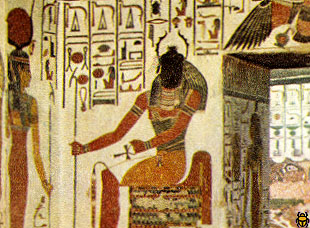
Preparing to enter the Egyptian segment of Ancient Near Eastern Religions, I always have to shift gears to their unique portrayal of the gods. Unlike the Sumerians, who preferred an anthropomorphic divine world, the Egyptians reveled in theriomorphic and Mischwesen deities. Almost earning the title of ancient hippies, the Egyptians felt a deep connection between the world and their gods – as well as living by the mantra “life, health, peace.” Their connection to the earth resulted in gods in animal form or human bodies with animal heads. Having read several attempted explanations, it still comes down to the fact that we don’t know why Egyptians mixed the divine and the animalistic.

Egypt was a culture that bloomed in harsh surroundings. Whether they fully realized it or not, their civilization was survival on the very brink of inhabitable space. Surrounded by desert, much of ancient Egypt was just that thin stretch of land within the fertilizing reach of the Nile’s flood zone. Beyond that, in the “red land,” few survived. Yet the desert is not completely barren. Animals better adapted to heat and aridity survive there. The Egyptians had an appreciation for the divine attributes of animals that are in some way more clever than humans. It is the nature of divinity to be more than human.

The Egyptian ideal of life in harmony with a fragile environment is one that the world could stand to relearn. Instead of proclaiming superiority over mere animals, they recognized that animals know some things that people have not yet learned. How better to display the mysterious power of the gods than to utilize the mystique of the animal world? Sure, a human with a beetle for a head may seem more like a horror-film gone awry than religion, but when the superiority of the scarab is realized, religion will naturally follow.


Tut-tut

King Tutankhamen is on tour in New York City at the Discovery Times Square Exposition. It is difficult to assess how he feels about this tour, but I am certain the young king would have been astounded at Manhattan. The Egyptians were impressed by monumental architecture, and whatever one’s personal likes or dislikes may be, New York is full of monumental architecture. Tut’s famous golden death-mask will, however, be absent. That never leaves Cairo anymore.

As a sometime lecturer on the Ancient Near East, I can always count on students knowing King Tut. Many can’t name his father, Akhenaton, or even say what he was famous for (a rudimentary monotheism), but all know Tut. The reasons are transparent – all that gold! It is difficult not to be impressed with that shiny yellow metal we all would like to have in abundance. Apparently Tut did. His accomplishments as king were severely circumscribed and lackluster, yet he lives on as the most famous Egyptian pharaoh because we have his gold.

Our appreciation of the superficial in the ancient world is a condemnation of our own society. We continue to be impressed by wealth at the expense of substance. Seldom do we find anything resembling true wisdom surviving from the enormous estates of CEOs. Their wealth assures their place in society, regardless of their accomplishments in moving society forward (or, more likely, not). They are living King Tuts. When ancient historians of the future turn their gaze back to our era it is most certain that the modern day Tuts are the ones who will dazzle them with their worthless gold.


Who’s Your Mummy?

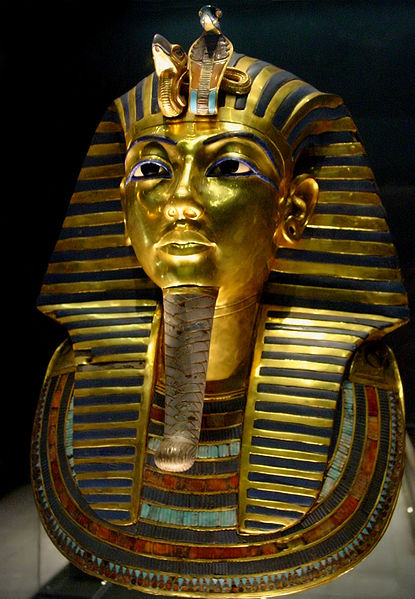
Yet another paternity suit appears in the news as promiscuous fathers try to slink off into the pages of history. This time, however, the kid is famous and his father will bask in reflected glory. Scientists in Egypt have been doing DNA tests on King Tutankhamun, “King Tut,” to determine the father of this most famous of pharaohs. Nor is this an idle bit of trivia, since it may rightfully be claimed that American interest in ancient Egypt was born with the discovery of Tut’s tomb in 1922. Art Deco styles began to emulate ancient Egypt, and even skyscrapers in Manhattan incorporated pharaonic stylings. If it weren’t for Tut’s wealth, this experiment wouldn’t garner any public interest at all.

Tut's famous visage from Wikipedia Commons

In a classic case of ancient meets modern, the paltry wealth of Tutankhamun’s burial dazzled American imaginations. Here was a guy who matched the American dream – young, exceptionally wealthy (by even today’s standards), and powerful. Not just a metaphorical god, but a literal one as well. And yet his kingdom was troubled. Was it his father (Amenhotep IV, aka Akhenaten) who launched Egypt into turmoil with an unwanted religious revolution? The state reacted strongly, foundering under this uniformity of a religion that many couldn’t accept. Young Tut was forced to recant, if he hadn’t already rejected the reforms of his predecessor, back to the “old time religion” of eternal Egypt.

We may not know for sure who his father was, but King Tut remains a symbol of the power of religion. Ancient and modern believers alike ascribe strongly to their perceptions of the true religion. No one knowingly accepts a false religion. The truth claims of religions are sometimes mutually exclusive. What seems to have brought about the collapse of the 18th Dynasty of Egypt was the insistence on a religion not widely accepted, but enforced by the government. Considering the religious outlook of the James Dobsons, Pat Robertsons and Sarah Palins of our own political landscape, such a collapse becomes comprehensible. Religion must be allowed its freedom to be sincere. Those who believe only because forced to do so will soon place their own child king on the throne, regardless of whom his father might have been.


Theophagy, Or How do you Like your God?

Ancient folk did not always want to be close to their gods. It really depended on the kind of god you worshipped. In a gross characterization we might suggest that ancient Assyrians and Babylonians preferred to keep their gods at a cautious distance unless needed. Mesopotamian deities (like their environment) were (was) unpredictable and capricious. And with moody gods, distance is on your side. The ancient Egyptians, on the other hand, with their steady and regular flooding of the Nile, felt that gods were friendly and helpful. It was good to have them near ⎯ indeed, as close as possible.

When it comes a step further than being close to a god, the options seem to be inhaling or ingesting a deity. Inspiration (breathing in) is a familiar enough religious concept today, as is theophagy, or eating deity. Theophagy is a regular practice in many branches of Christianity that believe in transubstantiation or consubstantiation. During these Eucharistic events, the communion elements are believed to either transform into or go along with the body of Christ. Christianity traces this concept to that of animal sacrifice where God was thought to consume the animal (or in very early culture, perhaps the human victim). Somewhere along the line the concept was reversed so that God could be consumed.

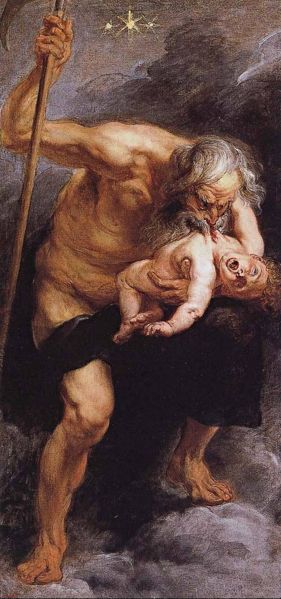
In preparing for my mythology class, I was reminded of Hesiod’s Theogany and the story of Cronus eating his children. This episode, dating from the eighth century B.C.E., has a jealous Cronos trying to prevent a takeover on the part of his kids by the extreme parenting measure of swallowing them. Not to worry, however! Zeus manages to be born on Crete and is able to free his siblings from the gut of his dysfunctional father. Cronus’ intention was to stop the gods by eating them while today theophagy is an attempt to absorb the deity. Ancient religions give us insights into modern religions, but only with a generous dose of evolution. It all depends on what you’re trying to accomplish by interacting with the gods.

Cronus has a little snack


Portrait of Poe as a Young Man

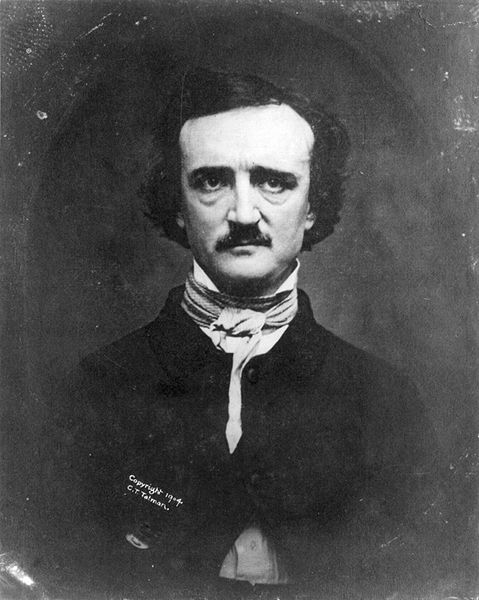
An obscure portrait of Edgar Allan Poe has come to light and is scheduled to be auctioned off. Reports indicate that the watercolor painting reveals a young man without the world-weariness of the more familiar images of Poe. He may even be smiling.

Poe has long been one of my personal muses. His writing captivated my imagination as a young man, and his sense of tragedy encased a golden nobility. Although many consider his works to be juvenile, like the slightly later stories of Sherlock Holmes by Arthur Conan Doyle, Poe grew to a mature sensibility concerning life that rivals that of Job. Intrigued, years ago I wrote a high school term paper about the writer and discovered a spiritual compatriot who couldn’t outstrip the “unmerciful Disaster [that] Followed fast and followed faster.” Now on the side of years beyond the lifespan of my muse, I begin to understand how a happy young man becomes a Qohelet in his time. In his personal difficulties, Poe was able to speak for many of us.

To me this young portrait is cast in the tint of Dorian Gray. The real image of Poe is that of a man given few breaks in life. A man of keen sight and keener insight. There have been thinkers like Poe from ancient times, but they are generally resigned to the depths rather than to be found basking in sublime sunlight. When Ludlul bel Nemeqi or Khun-Anup pour out their souls to an unhearing sky, they create a fellowship for latter day Poes and Melvilles and Lovecrafts. I hope the portrait of a young Poe finds a good home and the message of its subject rings as loudly as the bells.

Poe-ever Young


Nag Hammadi

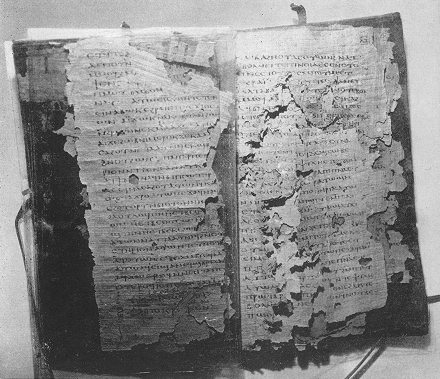
Want to create some excitement in the middle of a gaggle of scholars of ancient history? Just throw some newly discovered ancient text in their midst and sit back to watch the fun. This scenario has been (metaphorically) repeated many times in the last century and a half. New texts come to light and revolutionize what we know of ancient religions. The Nag Hammadi library represents one such flair up of excitement and intrigue. Discovered in 1945, this cache of mostly Gnostic texts has forced a new paradigm upon early Christianity. It has become clear that several flavors of early Christianity existed side-by-side until one group, claiming divine support, became the “true Christianity” (orthodox) while the others were just plain wrong. The Gnostic field of study received a shot in the arm with the publicity fair surrounding the Gospel of Judas, a Gnostic text not found at Nag Hammadi, early in the new millennium.

Good News, Gnostic Style

Discovery can be a dangerous luxury. When new evidence surfaces it can’t be ignored. When the religions of the ancient world reached their imperial stages it had already become too late to admit that mistakes may have had been made way back in ancient times. You can’t conquer a country and then just take it back. We now know that it is far more appropriate to refer to Early Christianities and Early Judaisms than to utilize their singular (if more prevalent) forms.

Nag Hammadi, a mid-size town in Egypt, has been back in the news since Coptic Christmas (just a couple of days ago) saw the death of six Copts when a Muslim extremist gunned them down on their way out of church. In turn, the Coptic community has been running riot in the town, destroying ambulances and shattering shop windows and driving Muslims off the streets. Those who hold their religions to be unchanging have the most to lose when new discoveries surface. It seems unlikely that exploration will cease; more ancient interpretations will emerge. When they do it also seems unlikely that they will find parent religions mature enough to accept their long-lost children. We could still use a little bit of secret knowledge, it seems, even today.


Compassion Divine

A very generous relative graced this holiday season with the gift of the first season of Star Trek, the original television series. I am not now, nor have I ever been, a “trekkie.” I did, however, enjoy the show as a child and have come to appreciate it even more as an adult. I can’t cite episode and scene like a trekkie can, and a surprise FBI raid would not turn up any pointy Spock ears or a model phaser (although my wife’s cell-phone looks like a sophisticated communicator). As a child the show appealed to my love of science fiction, and as an adult the morality play aspect of the original series fascinates me. Yesterday we watched an early episode where a crew member has his mind boosted by a trip beyond the edge of the galaxy (a la Forbidden Planet). As this character becomes more and more omniscient and powerful, he refers to himself as a god. Captain Kirk, in his attempt to stop his old friend calls out that gods are marked by compassion rather than strength.

I have been rereading Homer’s Iliad in preparation for a course on mythology. Quite apart from the fact that Star Trek borrowed heavily from classical mythological themes, one of the features I have especially picked up on in this reading has been the appeals to the compassion of the gods. As Diomedes, Odysseus, and Ajax (and finally Achilles) battle Hector and Paris both sides call out for the kindness of Zeus, appealing to his compassion (as well as to his baser instincts). Reflecting the ancient perception of the world, Zeus’ responses are fickle.

Biologists have been probing the origins of human sympathies ever since Darwin. Creationists used to argue that compassion, altogether lacking in the animal world, could not have evolved naturally. Many recent studies, however, have demonstrated a naturalistic base for our altruism and compassion. These traits are certainly displayed in a number of animal species, particularly mammals. The ancient Egyptians believed animals to be superior to humans in many respects, lacking our weaknesses and being more adept at survival. It seems that they were right and some of the nobler human traits evolved from our animal milieu. If so, what is divinity beyond the gospel according to Star Trek — compassion to those in need by those who find themselves in positions of power?


Death’s Door

Podcast 18 considers the perceptions of the world of the dead, according to Ancient Near Eastern sources. Specifically the question addressed is can the dead return from the underworld, based initially on the story of Samuel’s return from the dead in the Bible — this leads to a description of the underworld based on ancient sources. The Zoroastrian connection is encountered in the development of the realms of heaven and hell.


Feline Angels and Demons

Happy National Cat Day! Well, to you readers in the States in any case. October 29 has been declared National Cat Day, and as a blogger who has frequently posted on ancient cats, I feel a sense of duty to include our feline friends in today’s entry.

Elsewhere on this blog I have extolled the divine nature of cats. The Egyptians revered them to the point that killing a cat was a capital crime, but the evolution of domestication was probably very practical. Domestic cats appear in the archaeological record along with the advent of grain silos, also an Egyptian invention. When the grain attracted rats, the rats attracted cats, and the cats stole Egyptian hearts. Even before the Egyptians, however, archaeology points to associations of cats and humans in Neolithic Jericho, perhaps the oldest city in the world. As early as 9000 years ago, cats were stalking the allies of the city of the moon god. They have been among our most loyal companions.

The domestic cat’s spread into Europe only began in earnest, it seems, when Christianity reached the continent and the cat was no longer considered divine. Perhaps cats had to be profaned before being admitted to the church’s roster of approved animals. Nevertheless, under the influence of a predominantly Christian milieu, in the Middle Ages Europe had come to see cats as the demonic companions of witches and vampires. Did some memory linger of the divine cat of Egypt? Did those dark days of suspected sorcery glance back to the magicians of Egypt and their suspect pets? We will never know the answer as to why cats, long encouraged to join human households, became evil in superstitious Europe. Even my stepfather in the twentieth century America counted to ten after spotting a black cat, and followed the count with a solemn cuss each and every time.

I, for one, cast my vote on the side of the felines. I don’t have cats (allergies and irate landlords, and such), but I enjoy them when I visit those who do. Sure, they rip up furniture and bring unwanted gifts of dead things to you as a kind of feline worship, but with their loving nature I simply can’t see a devil in our everlasting cats.

Swiped from Dr. Jim's Thinking Shop

(Swiped from Dr. Jim’s Thinking Shop)


The Power of Pyramids

One of the benefits of teaching is the constant refreshment of ideas presented by students to air out the stuffy closets in minds that tend to close around academic orthodoxies. Each field of studies has its sacred shrines not to be disturbed, and none more so than the field of religious studies. That’s why I appreciate the openness of student minds. This summer I was introduced to the alleged Bosnian pyramid that I posted about some months back. Having reviewed the statements of both archaeologists and geologists it is easy to see how what looks like a pyramid might not be a pyramid at all. Some experts even theorize that the pyramids of Egypt took their inspiration from the shape of a natural desert mountain.

Wikipedia's photo of the "Bosnian Pyramid"

As we were winding up our classroom discussion of Egyptian mortuary cult and its awe-inspiring pyramids, another student asked me if I had heard of the Okinawa pyramids. I hadn’t. Back in my student days I recall a professor entering my Egyptian Religion course after having just read a book on the mystical power of pyramids wherein the author claimed that dull razors placed under a small-scale pyramid would come out sharpened the next morning and other such nonsense. We all had a good laugh and got onto the serious business of comprehending the fascinating world of Ptah and Atum. When I first heard the phrase “Okinawa Pyramids” I had to fight down the immediate flash of embarrassment of unrestrained academic laughter should I be found even considering such a proposal.

I have always, however, listened to those willing to ask about even the most anomalous incidents of history. Two years back I had a student share the “helicopter hieroglyphs” of ancient Egypt with me, despite a fully understandable reading of signs that can look like a helicopter to the uninitiated. The Okinawa Pyramids, however, were different. As the student whipped out his laptop and pulled the images up from the internet, I was intrigued. These were not pyramids, but rather monolithic blocks 60–100 feet below the surface of the ocean near Japan. My amateur study of geology has taught me that many species of rock naturally have squared fractures along various planes and facets, but the number of offset angles and the profusion of the squared edges forced my mind open just a bit. What is more striking yet is that there is no Wikipedia article on this formation at all, despite its discovery in the 1980s. Most intriguing of all is that the complex seems to have sunk at the end of the last ice age, thus predating even the pyramids of Egypt. Even the stepped pyramid of Djoser.

Is there evidence of a pre-civilization civilization under the coastal waters of Japan? I am not qualified to decide. I feel safe in saying that whatever is there is not a pyramid, but I am impressed by the photos and the relative silence about them even on the web. Since the best photos are copyright protected, I’ll provide a link for anyone wishing to creak open a dusty mind-closet and wonder about the implications.