Hiding Kirk

I recently saw—don’t ask where—a U.S. Space Force officer dressed in camouflage.  How fitting for a Trump-era agency.  I should think a Space Force uniform should be all black, maybe with little white dots on it.  Rather like my black lawn furniture that got in the way when I was cleaning my paint sprayer full of white paint.  I often wonder about our love affair with feeling safe.  Perhaps my own phobias have reached such a level that they’ve cancelled each other out.  If I was trying to hide in space, I think I’d try to look small, and dress in black.  Camouflage, which is based on colors found down here, probably wouldn’t do so well for the other planets of our solar system.  Or even the moon, for that matter.  And I personally think I might trust the aliens not to have earth-like issues.  After all, we think it’s okay to let machines think for us.

I grew up quite the sci-fi fan.  I read lots of books in that genre and enjoyed science fiction movies almost as much as my beloved monsters.  I used to watch that show, UFO in the 1970s.  The one with the interceptors with a huge missile on their noses.  I wasn’t really worried about aliens trying to invade.  Perhaps these days I think it might be better than the tedium of daily existence in the 9-2-5 world.  In any case, if we must have a Space Force, ought they not dress for the job?  I’m pretty sure I’ve got some tin foil in the kitchen with which to construct my hat.  Let’s look the part—that’s all I’m saying.

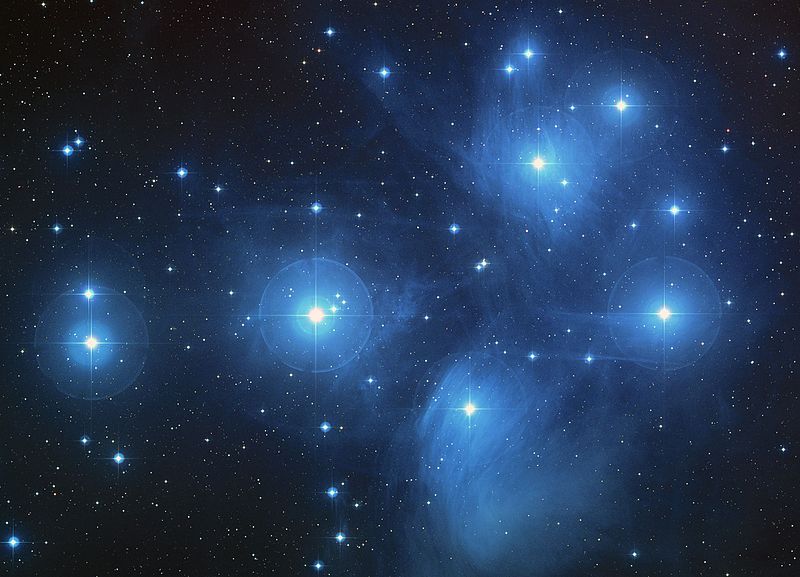
Photo credit: NASA

While all this is going on speculation has been growing about water on Mars.  There’s a good chance we may find it.  (We can always hope that if Elon Musk makes it to the red planet that he will take Donald Trump with him.)  If we are looking for invaders, though, we probably have to go further afield.  That’s alright, dynamic duo, we’ll get along without you.  Perhaps in the interim someone will realize that, dressed in earth green camouflage, our Space Force will surely stand out against the surface of Mars, or wherever they might go.   Unless it’s a planet very much like earth.  That houses intelligent life.  Maybe the beings there feel safe, knowing that their space force—for surely they will have one—is dressed in black.  Or at least, their life really is intelligent.


Ever Hopeful

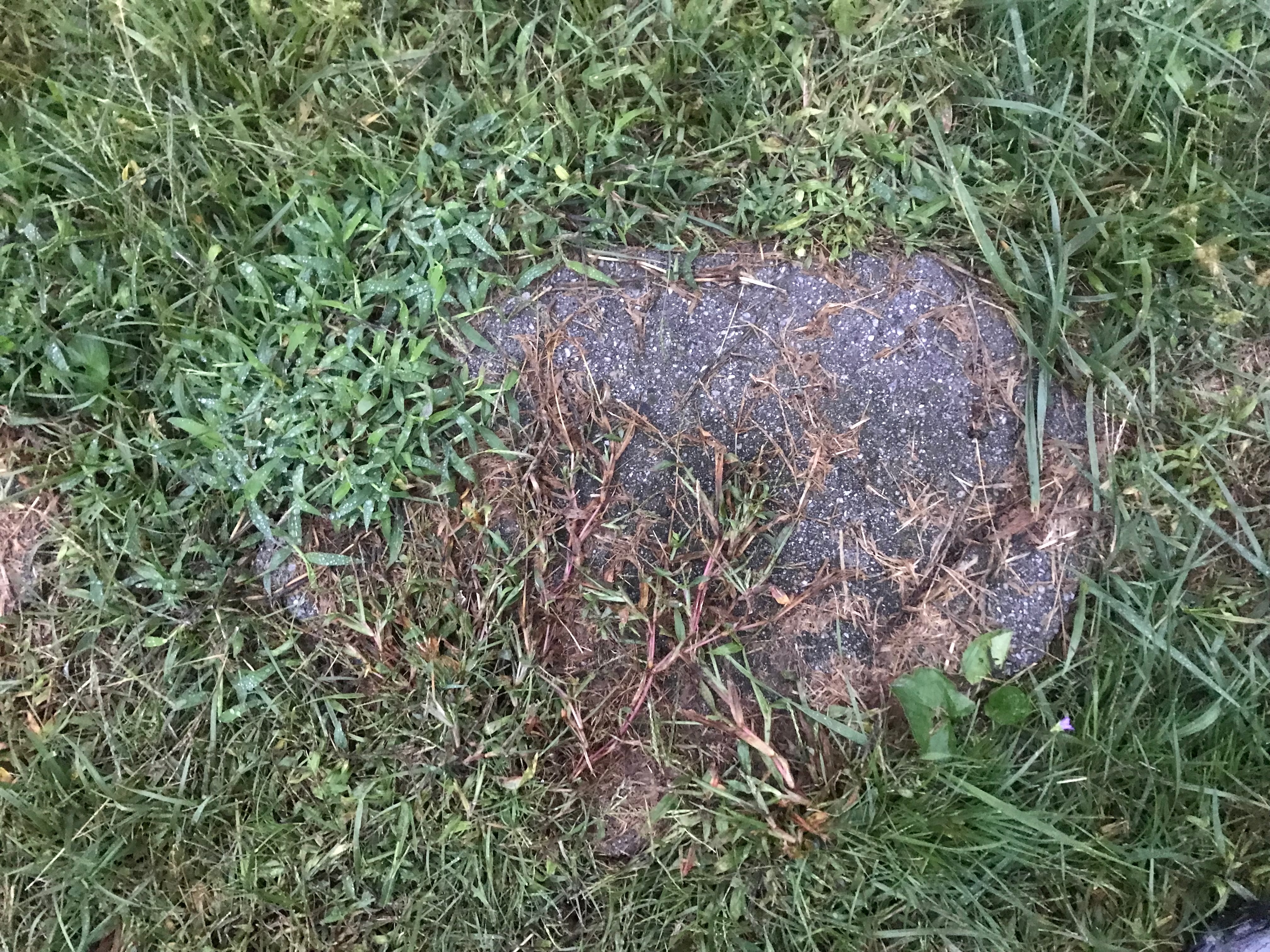
Plants are some of the most hopeful entities on the Earth.  As much as I’ve had trouble with houseplants, outside they seem to do fine.  Great, in fact.  Long-time readers will know that I struggle with lawn care.  It really didn’t enter my calculus of house buying—I was rather focused on the actual house, strangely.  We ended up with more yard than we required.  Thus, plants.  I’m not a fan of paving over greenery, but there’s a small strip of land between the sidewalk and the street—technically a “verge”—that’s difficult to mow.  Weed-eating it is also tricky because neighbors park their cars there practically 24/7 and some people don’t want a weed-eater that close to their showroom finish.  A couple years back I hauled some paving stones from our backyard out to the verge.  It decreased the grass by maybe 50 percent, but it still has to be whacked regularly.

I’ve been noticing over the summer into the fall that grass with a strong will to survive had begun growing roots over the top of the paving stones, intent on breaking them down.  That’s what plants do.  They work slowly, steadily, to achieve more room to grow.  This is always amazing to me.  Life is persistent.  Many animals see a stone as an obstacle—something to be stepped on or over.  Some plants see them as opportunities.  Our human obsession with allowing only certain kinds of plants close to our habitations, and those trimmed just so, seems an exercise in futility.  Of course, yard work isn’t my favorite activity, thus the paving stones in the first place.

After our species is done making a mess of the planet, plants will quietly take over again.  Especially anyplace near where someone once planted ivy.  We’ve got some very aggressive ivy in the back yard that I pull down year after year, and no matter how often I do it comes back with renewed vigor the next year.  And crabgrass.  That stuff won’t take no for an answer.  I can tell some former owners were trying to do some landscaping with, well, landscaping fabric and decorative gravel.  If you turn your back for a few weeks, the crabgrass gets in and its roots begin breaking the gravel down into soil.  I wonder how there’s any exposed rock in the world, or maybe my yard is a paranormal plant paradise.  I can imagine that without people here to “maintain” things, paradise (which is a garden) would return.  Perhaps there’s a parable of hope among the plants.


Another Host

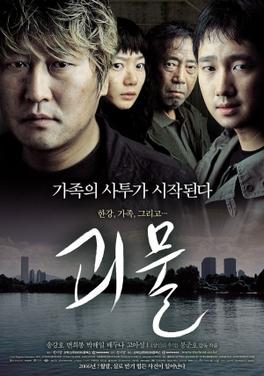
Several months ago I wrote about The Host, a movie I enjoyed but had watched by mistake.  By that I mean that someone had recommended The Host (2006) and I watched the completely unrelated The Host (2020).  (You can’t copyright titles.)  I waited long enough that the right Host became available on a service I use so it was, in essence, “free.”  This one is a Korean monster movie, directed by Bong Joon-ho.  I’d previously seen his excellent Parasite, and The Host didn’t disappoint in either the social commentary department or in the heart-felt monster tale.  In the latter department it has some common ground with Godzilla Minus OneThe Host begins with chemicals poured in the Han River causing a mutation that becomes a big problem.  This monster kills many, but the story focuses on the Park family where a ne’er-do-well father (Gang-du) disappoints his daughter and siblings.  Then the monster carries off his daughter.

The government, wishing to hide the origins of the creature (an American military facility did the chemical dumping) invent a virus story to keep people away from the river where they have trouble locating the monster.  Meanwhile Gang-du learns that his daughter is still alive, being kept as a future meal in the creature’s lair.   His father, sister, and brother all come together to try to find her, having to work around the corrupt government response to the crisis.  In other words, there’s a lot going on here.  The monster is believably rendered and its interactions with crowds of people don’t strain the imagination.  I do have to wonder if the creators of Stranger Things were familiar with this film.  Again, there’s some overlap there.  There are some holes in the plot, or it may be that I didn’t quite get everything (quite likely regardless).

It’s easy to see why the movie won so many awards.  The question that haunts me is whether this is a horror movie or not.  There are definitely horror aspects, but the overall feel is a meaningful monster movie, which isn’t really a recognized genre.  Monsters sometimes—often, in fact—bring out the best in people.  Without giving too much away, we can say that about this movie.  A family torn apart is reunited by a monster.  It doesn’t end well for them, but they have learned something by the experience.  And the movie is impressive from a cinematic perspective as well.  So now I’ve had two Hosts and although quite different from each other, both are recommended.


Liminal Time

Considering the number of people who declare autumn their favorite season, the equinox receives pretty slim press.  This year it falls on the 22nd and, as always, it is one of the four quarter days of the pre-Christian European calendar.  Even among pagans it seems not to have had the same level of celebration as the other solstices and equinox.  I sometimes wonder if that’s because things are generally good already in September.  The intense heat of summer is over but the chill of October hasn’t yet arrived.  We stop using the air conditioning and don’t have to turn on the furnace.  It’s the Goldilocks month.  It’s part summer when living is easy, and part fall when the world is beautiful.  Like its fellow quarter days it is truly a liminal time.  

Liminal periods are always good for reflection.  No matter how much I want to savor this time of year, I have a feeling that it always catches me off guard.  There are changes afoot.  Starting Monday it will be dark more than it is light, and that will hold true until the sister equinox visits us in March.  These longer nights have traditionally made room for ghosts and goblins.  If we haven’t begun to store up supplies for winter, now is the time to start.  It’s the season when we all believe in magic, if just a little bit.  I’m one of those people who finds melancholy somewhat lovely.  It’s not depression (believe me, I know!), but a kind of happy sadness that the season itself is ephemeral.  Pretty soon people will be watching scary movies, but not quite yet.

Harvest is a joyful, spooky time.  Those trees that have been green since April now put on their colorful winter coats but soon will spend the colder months bravely naked.  Snow may come.  Fall is a prophetic season, warning us of what might come.  Monsters may be set free from their chains.  And yet there will be cozy indoor holidays when we can hunker down and recollect the year that has just been spent.  There’s a wisdom to seeing the quarter days as the spokes on the wheel of the year.  Like many wheels already rolling it’s futile to attempt to stop them.  They’re moving us to the next place that we’re meant to be.  It’s true that the autumnal equinox falls on a weekend this year, but it does seem to me a natural holiday.  And a time, like all holidays, for reflection.


Not Kid’s Stuff

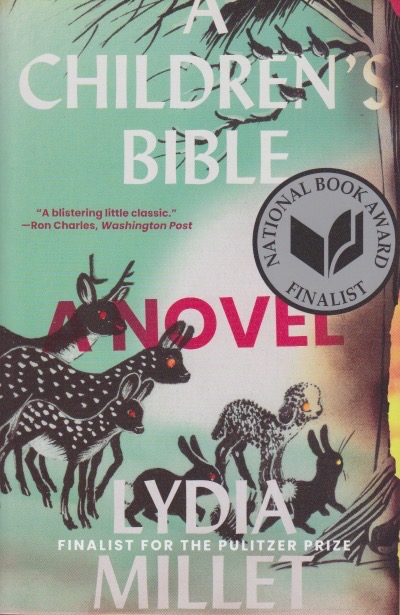
Sometimes when I go into a bookstore I don’t find anything on my list.  (My list is pretty strange, and it includes many older titles.)  I feel strongly about supporting bookstores, however, and I search for something I would like to read.  So I found Lydia Millet’s A Children’s Bible.  I hadn’t previously heard of it but it was in the speculative section and it wasn’t 400 pages or more.  It turns out that it’s set at an indefinite time but it seems to be not too far in the future, when global warming has really kicked in.  A group of kids whose parents are affluent, but not ultra-wealthy, are spending the summer at a large house on the coast.  You get the sense that this house is a lot further inland than the present east coast.  The parents are childlike in their hedonism, whereas the kids really despise their constant drinking, drug use, and general lack of care.  The kids are independent and try to make their own way, but then a massive hurricane hits.

In the aftermath, the kids run away.  Society has broken down, however, with bands of roving armed men breaking in and taking whatever supplies they want.  They find the compound the children are using, setting this almost as a horror story.  I won’t say anything more about the plot because that might give too much away.  Astute readers know that it isn’t possible to say definitively what a book is about, but I would say this is almost a parable about global warming—it has “parable” written all over it.  Irresponsible adults have let this happen and the children have to figure out solutions.  And yes, there is a Children’s Bible in the story and it plays a part in the plot.  I have to admit the the title is what first caught my attention.

I don’t know Lydia Millet’s other work, but this was not exactly an enjoyable novel, it seems like an important one.  I’m glad to have read it.  The kids in the novel, the older ones, are skeptical of the Children’s Bible when it’s introduced.  Two of the younger kids, see it as providing direction on how to survive in science-versus-nature world.  All of the kids here are incredibly prescient and precocious.  The adults are unable to adjust to the changing world and although the Bible remains with the children it leaves the reader with the haunting question of what comes after Revelation.  This is a book that would benefit from serious pondering.


August Thoughts

The other day I saw a headline on a BookRiot email blast: “August is Spooky Season Jr.”  I’ve often wondered why more horror fans haven’t emphasized this.  It’s not just that stores start putting out their Halloween merch, and it’s not that Summerween has taken hold.  No, it’s a feeling in the air.  When I was younger, August always seemed like the hottest month, the dog days of summer.  For many years now, however, I’ve begun to feel autumn’s approach in this month.  Some of the earliest trees begin to change (some start even in late July).  And if I take the time to smell the air when I step outside on an August morning, the first hints of harvest greet me.  The produce at the farmers’ markets should be a regular alert to that.  And my mind turns to the half of the year with which I most resonate.

It’s as if nature wears a mask, lulling us to suppose the weather will always be warm enough to sustain us, dropping rain in appropriate amounts at the correct time.  Yet we know that we have attacked our planet and it knows so too.  The true nature of all of this is change.  And change is scary.  A deep-seated fear accompanies autumn.  Did we store enough away for winter?  Is the house winterized?  What if the furnace breaks down?  What if the cold truly becomes too intense to stand?  I spend most of the year wearing multiple layers and fingerless gloves indoors.  Cloudy days make my office so chilly I can barely stand the lower thermostat setting until the end of the work day.  What if snow prevents me from getting to the store?  What if there truly is something scary in the dark?  All of this begins in August.

I watch horror movies year round.  I like to read creepy tales.  I even try my hand at writing a few.  Even so, I’m glad to learn that I’m not the only one whose thoughts turn toward Samhain even as Lughnasadh dawns.  A cool day in August is enough to start the chain-reaction going.  Some of us feel the respiration of fall even now.  Hear its slow heartbeat.  See its rictus grin.   Harvest tells us something about our own souls.  Our sins catch up with us as the nights grow longer.  The sun sets nearly an hour earlier than it did in late June, have you noticed?  And it rises nearly an hour later, I’ve noted.  Let spooky season jr. begin!


Deep Woods

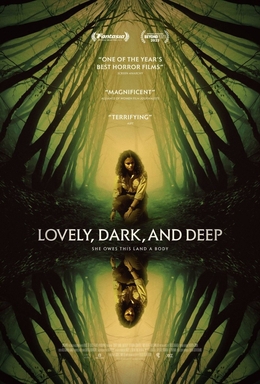
The output of female horror directors tends to be thoughtful.  And there are some legitimately terrifying scenes in Lovely, Dark, and Deep.  Nobody, however, has posted a Wikipedia entry on Teresa Sutherland.  At least not yet.  This movie is obviously aware of David Paulides’ work.  It went by a little quickly, but I think one of his books even made it into the film.  Lovely, Dark, and Deep is set in the fictitious Arvores National Park in California.  (Interestingly, the movie was filmed in Portugal.)  Lennon is a newly hired park ranger with what she thinks is a secret.  Her motivation is to search for her sister, who went missing in the park when they were kids.  If you like movies with flashlights in the forest at night, this is your film.  

Lennon discovers  that she’s not the only one with secrets.  Many people have gone missing in the park and the rangers know about it.  Some entity that they can’t identify requires people to be left behind.  There is a quid pro quo relationship involved.  If one of the taken ones is rescued, a substitute must be left.  Lennon learns that her sister was one of those taken, and once taken a person can’t come back.  They live in a nightmare world while their family and friends have to deal with the loss.  Lennon has trouble accepting this arrangement, but there is nothing to be done about it except pretend you don’t know it’s happening.

The movie gets its teeth from the fact that many people do go missing in National Parks.  And, as Paulides suggests, there is no public register kept.  Some who are found are often inexplicably miles from where they went missing, or their bodies are found in areas already thoroughly searched.  This is obviously a great concept for a horror film.  Sutherland, who wrote as well as directed the movie, has the makings of an art horror auteur.  Lovely, Dark, and Deep hasn’t received a lot of attention yet, but I think it deserves to.  Wilderness horror films have so much potential.  Particularly for people who seldom spend any real time in the forest.  Even those of us who have braved the wilds from time to time can find it frightening.  More than that, this is a movie that makes you think.  For anyone who likes to theologize films, it definitely has the theme of sacrifice running through it.  Deep is appropriately part of the title.


Spirit Storm

Some time ago, we experienced quite a windstorm.  More than wind, there was a dump of rain, thunder, hail, and all that.  My wife and I were attending a Tibetan singing bowls sound-bath with some others in the cancer support community.  I’ve described this practice before, here.  In any case, the meditation is held in a large room with a tin roof—the kind of place you don’t want to be during a tornado.  We’d just got inside when the gust front hit and knocked out the power.  The instructor still went through the meditation, but the storm sounds blended with those of the singing bowls.  Afterwards my wife asked about Job.  Specifically, God speaking from the whirlwind.  I told her that was God on a bad day, but I understood what she was getting at—there’s a spirituality to the weather.  (I was going to suggest Elijah instead, but “but the Lord was not in the wind.”  Alas.

I thought of Weathering the Psalms.  My contribution to biblical studies, had I been allowed to remain in academia, would’ve been further explorations of weather terminology in the Bible.  But the Lord was not in the wind.  I wrote that book because I noticed the juxtaposition of severe weather with daily chapel at Nashotah House.  We were required to attend, no matter what the weather.  (Such is life on a fully residential campus.)  We were reciting the Psalms one day when a storm blew the power out.  It may have happened more than once, since we’re getting on past two decades hence my memory’s a touch imprecise on the point.  In any case, the spirituality of the power of the storm fascinated me.

It still does.  The next morning, out for my jog, I marveled at the number of branches down.  Thousands in the Lehigh Valley were without power.  This is probably why the ancients considered the storm god chief of the rest.  The violence of nature is something that suggests divinity.  Other primates have been observed screeching back at the sky during thunderstorms.  It’s deep in our DNA.  That doesn’t make it any less spiritual.  There’s a lot of weather in the Bible.  I only explored a tiny piece of it by trying to tackle the Psalms.  The Good Book, however, doesn’t say much about the spirituality of weather.  It’s there nevertheless.  Anything that can snap a tree a foot in diameter like a toothpick has a spiritual message for us.  I mused on the way home—we had to take a detour because of downed trees—that had the storm claimed us as victims, dying while meditating is probably not the worst way to go.  Now I wonder, what might God’s nice words from the whirlwind be?


Or Plastic

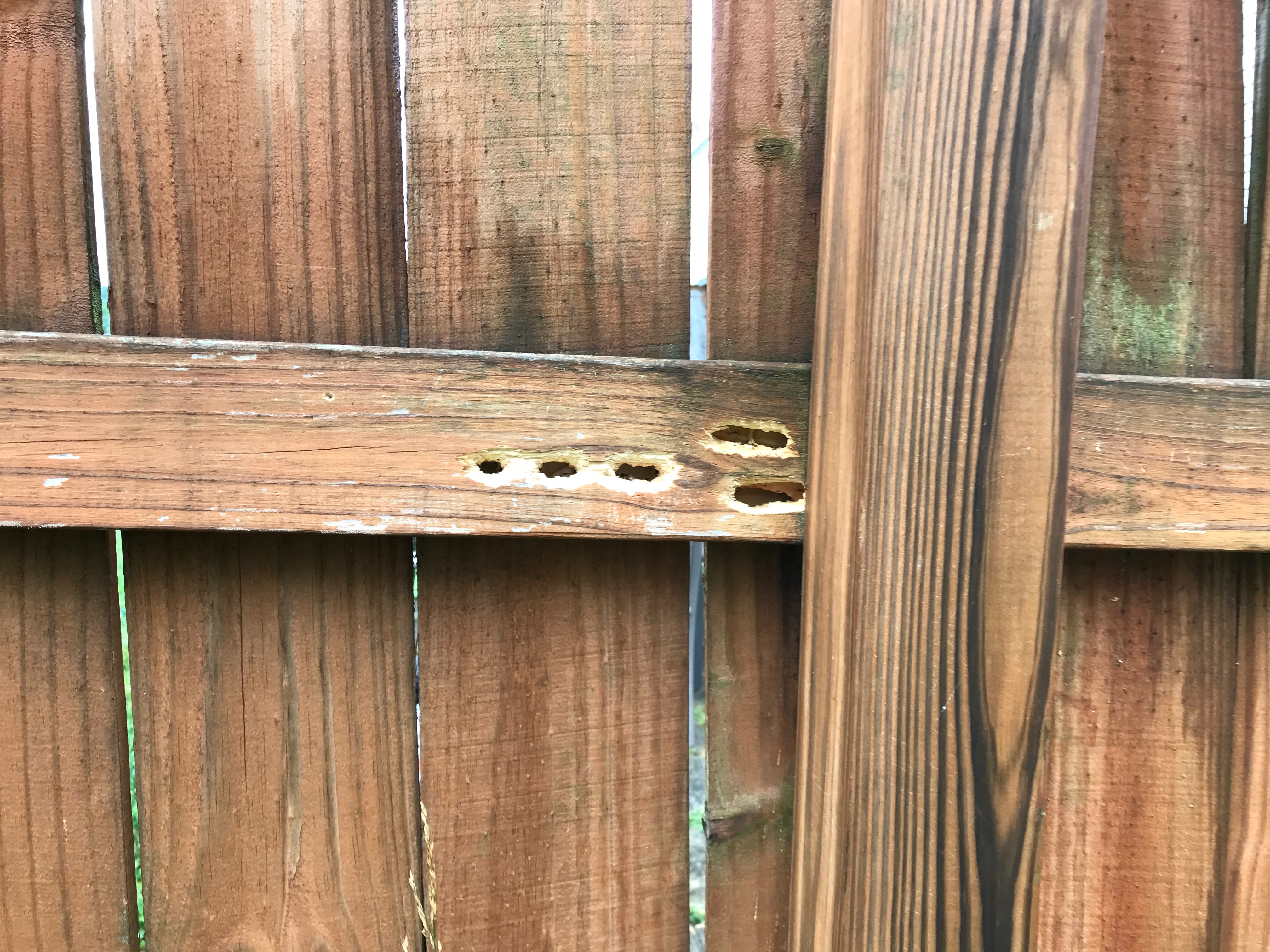
I’m no fan of plastic.  When looking for a house a non-negotiable with me was vinyl siding—nope.  In our neighborhood several houses have plastic fences pretending to be wood. I dislike materials pretending to be something else.  I was dead-set against such a thing, but our house came with a lot of neglected outdoor woodwork.  The fence was wood and had been stained, probably just before we moved in.  Then the carpenter bees arrived.  Local pest control will spray for them, but they come back each summer and unless we have the pest store on speed-dial the bees will find new things to damage.  See, the problem isn’t just the bees.  Woodpeckers, which as a kid always seemed exotic to me, love carpenter bee larvae.  I’ve watched a downy woodpecker hoping along the fence, knocking until it finds one, and then hopping a few feet further to repeat the process for another.  (If you’ve ever watched a woodpecker at work you’d not doubt animal intelligence.)

My wife and I talked it over.  The fence was in poor repair to begin with (another thing our house inspector missed).  I finally came around to seeing why plastic might be the best solution in our case.  Not for me, but for resale value.  The former owners had a thing for untreated outdoor wood.  They’d built a new back porch, but didn’t paint or stain it.  When the carpenter bees noticed, I painted it.  I couldn’t reach the ceiling, though, being short of stature.  Well, this year the carpenter bees have gone for the ceiling.  And the downy woodpeckers have followed them.  Now, when I hear knocking, I have to run downstairs to the back door to frighten off downy.  I will buy a paint sprayer to paint the ceiling, but the bees have had a head start this summer.

So I was in my office and I heard a tapping, as of a woodpecker gently rapping.  I ran downstairs and threw wide the door.  To my surprise, nobody was on the porch.  I went back to work.  Soon again I heard a tapping somewhat louder than before.  I followed my ears to the front door.  Yes, the tapping was from out front but daylight there, nothing more.  I stepped to the edge of the porch.  More tapping.  I leaned over the railing and looked down.  A rare, and large, pileated woodpecker was going at the fence post.  I was about as startled as she was.  My wife was out on an errand and when she returned home she found selfsame woodpecker working elsewhere on the fence.  I’ve learned my lesson.  While wood looks nice, and is natural, it will soon be paper thin if we don’t do something.  It’s a big fence.  And the only option to paper is, unfortunately, plastic.


Sweet Tooth

Often our luxuries come at someone else’s cost.  I personally don’t have much of a sweet tooth, but I do enjoy dark chocolate once in a while.  (Milk chocolate tends not to be vegan.)  My wife had discovered Moka Origins chocolate at a local health food store and then learned that their location is in the Poconos, just outside Honesdale.  We visited their facility, small but growing.  We learned how they’re committed to fair trade and sustainability.  And they’re gaining a reputation in a world where scale is everything and as scale increases quality declines.  We all know that to be true but we still support the big guys.  The visit to Moka Origins made me reflect, once again, how we prefer low quality and cheapness to something that’s really well made but costs more.  It’s one of the realities of our economic system.

There is a small but thriving vinyl market for sound recordings—the quality is better, and many are willing to work with the inconvenience of turntables and discs than simply streaming whatever.  I took a lesson from Moka.  The cofounder told us that large companies come into places like Africa paying low prices to buy in bulk.  They buy improperly fermented cacao beans in huge lots which probably includes some beans that aren’t even cacao.  Mixing these large lots with enough additives, they can get away with the chocolate taste most people have grown accustomed to having.  If, on the other hand, you scale down and pay attention to what you’re doing you can even tell the country of origin of chocolate by its taste.  Since Moka sells only single origin chocolate, we were given samples from three different African countries and they were obviously very different, even to someone without a sweet tooth.

Economic scale often drives quality down.  In a company where the owner comes in on a Saturday morning to personally lead a tour and where the chocolate bars they sell are literally wrapped by hand, you know you’re not in Hershey.  Or at Nestlé.  Or any other corporate candy giant.  These companies make astronomical profits.  The owners of Moka Origins spend time in Africa, developing fair trade farms to grow quality produce.  I also learned that cacao pods are technically fruits.  It’s a food.  We tend to overlook that in our quick snack culture.  This was a very educational half hour, even for someone not inclined to food tourism.  So, if you happen to be in northeast Pennsylvania on a Saturday morning, stop in to try chocolate that’s really a food.  Or you can order it online.  Just know that you’ll pay for fair pricing for those who are doing the work to raise and process cacao beans as they should be treated.  You can tell the difference fairness makes.

Oh, and I should mention they also do coffee…


Praying for Mantis

Now this is a Cold War movie.  And I mean “cold.”  The Deadly Mantis is one of those movies that hovers between “so bad it’s good” and just plain “so bad.”  I was kind of rooting for the mantis.  In any case, this was an ambitious movie for the time but it reflects the post-war paranoia in the United States.  It also makes very abundant use of stock footage, much of it military.  You almost expect a recruiting ad at the end.  (It does thank the Ground Observer Corps in the closing credits.)  Okay, so here’s the story.  A volcano in the south Atlantic causes the calving of an enormous Arctic iceberg near the North Pole.   That iceberg contains the frozen body of a 200-foot praying mantis from dinosaur times.  Even earlier.   Said frozen mantis, quite hungry after millions of years, begins attacking Arctic radar bases and flying south.  The Air Force calls in a paleontologist to help identify what they’re looking for.

The mantis is so big that it prefers people for food, although, one might note, a polar bear would’ve been easier prey.  In any case, given the technology limitations of the time, the military has trouble keeping track of the insect as it flies over the most populous part of the country.  They do get the cloudiness of the East Coast about right.  Eventually they shoot it down—actually a fighter jet crashing into it does the job—over Newark and the mortally wounded mantis crawls into the Lincoln Tunnel (called “The Manhattan Tunnel” in the film).  By this point the viewer is saying “just let the poor thing die in peace,” but they pump smoke into the tunnel, presumably to hide wires and other props, and commit a protracted insecticide.  

Now, I’m one of those people who hates to hurt any animal.  The death twitches of an insect are quite troubling, so I try to catch what I can indoors and release them.  I have trouble with the instructions to kill spotted lantern flies—it’s not their fault that they’re here.  The movie shows a bravado regarding the military and a machismo regarding the main female character that hearkens back to why it was so necessary to evolve out of the fifties.  Of course, we learned nothing from The Deadly Mantis and have catapulted back into a new Cold War and an even more robust military.  William Alland, the producer, had a real love of this genre of movie, and for that we have much to be grateful.  But even the big bug genre can produce a real groaner now and then.


Sun Day

Two holidays in a row!  Although today nobody gets off work because, well, two holidays in a row is too much.  People might come to expect a little more time off.  If you’re like most people, the summer solstice creeps up on you.  Its more somber sibling, six months from now, is more anticipated.  In December we’re light deprived (here in the northern hemisphere) but we’ve been soaking in the sun for some time already now.  Besides, nobody gets the four turns of the year off work.  Christmas is a gimme, but it comes three or four days after the solstice.  We figure Labor Day is close enough the the autumnal equinox, and thank God Easter is a Sunday, at least in the years when it’s near the vernal equinox, so nobody complains.  I feel at my most pagan these days.  Why not celebrate the turning of the wheel?

The other day I was catching up on the Vlog Brothers—John and Hank Green.  Last week they were talking about “Beef Days,” or how to reduce the amount of red meat they eat.  They proposed doing it by setting aside a few holidays a year where they would have it.  Their reason?  The biggest environmental threat to our planet is our dependence on beef.  It’s the reason rainforests are being clear cut.  It is a huge source of greenhouse gasses.  The one thing they didn’t mention, however, is the suffering of the animals themselves.  Industrial farming leads to horrible lives being raised to be consumed.  The conditions in which animals are kept is so bad that it is illegal in some states to reveal the conditions to the public.  You hide things that you’re ashamed of.  I became a vegetarian a quarter century ago, and a vegan coming up on a decade now.   I can’t live being the cause of the suffering of others.

Why not use the ancient holidays as days of some kind of indulgence?  I don’t recommend eating red meat—in fact, I agree with my Edinburgh friend that if you want to eat meat you should be required to kill it yourself.  (He’s not a vegetarian, note, but a wise man.)  In any case, although you may be stuck behind a desk at work, take a moment to ponder that light will be slowly fading from this day on until we reach that other pole that turns another year.  And we can dream of shortened work weeks, although that’s about as likely as being given the summer solstice off as a matter of course.  Speaking of which, work calls.


Planetary Thinking

It’s Monday, and I’m feeling like a holiday.  Good thing it’s Earth Day.  Many businesses (who still don’t consider Earth Day important enough to make it a paid holiday) are emphasizing being green these days.  Really, with global warming proving itself no myth it’s just good business to try to adapt to sustainable practices.  Those of us who are vegan find more and more companies offering animal-free options—our dependence on beef is a major environmental hazard.  It’s still a challenge finding shoes that aren’t leather based, but things are improving.  And more and more hybrids and electric cars are on the roads.  We are making progress.  We still haven’t, however, gone so far as to declare a day dedicated to preserving our home an official holiday.

I’m not jaded or capitalistic enough to think our only hope is to find off-world parking.  To raise the future of humanity elsewhere.  It’s just that people fall in line after bullies and bullies only think of themselves.  And who, thinking that an afternoon on the links can be counted as work, would consider giving mere employees a day off?  A day when we might shut down commuting schedules to save power?  A day to rest from the brutality of constant commerce.  After all, a typical weekend consists of a day for chores and a day for church.  (Still, that is, for many people.)  And then back to the office not really feeling refreshed but knowing that you can’t long survive in a pandemic-ridden world without more cash coming into the coffers.  Inflation may be going down but grocery prices aren’t.

From NASA’s photo library (public domain)

A day to celebrate home seems like a no-brainer.  Especially when it comes on a Monday or Friday.  Ah well, we’ll do our best to celebrate it around work, shall we?  We’re moving late into April.  There’s been a bit of sun mixed in with April showers, as is typical around here on this planet.  Days are growing longer and the trees are leafing out.  Spring welcomes us back to the outdoors (after work, of course) where green now predominates over brown and gray.  While we may not have the day off, we can at least take a moment or two to consider how we might be better to our planet.  How we might drive less, use less electricity, generate less waste, spare a few cows.  Who knows, it might become a habit?  If that were to happen maybe every day would become Earth Day.


Eclipse 2024

Eclipses.  They’re fully explainable.  Or are they?  Yesterday’s solar eclipse, with totality within driving distance of many Americans, led to an inexplicable need to see it.  April, we’re told, is the cruelest month and upstate New York is known for its “ever-changing skies.”  I admit I was skeptical.  Together with some friends we arranged to meet near the umbra, in Penn Yan, and to drive from there to totality up on Lake Ontario.  As is typical in New York, the day started out fair, with a few high clouds.  It was chilly, but this is April.  Our destination: Fair Haven Beach State Park.  The location was nice; we arrived early and found a good spot.  The clouds, however, were willful and wanted to remind us, like last week’s earthquake, that we’re not really in charge here.

As the day went on—totality for us was 3:20 p.m.—more and more people came into the park.  To its credit, with what must be a limited state budget, it absorbed many eclipse seekers without any trouble.  By 3:00 the cloud cover was heavy-ish.  Our friends had heard a sponsored eclipse speaker, however.  Totality was nothing like even 99%.  This would be of a different magnitude, even with clouds.  I remember three previous eclipses.  One in school with the pin-hole method where you really don’t see anything, one in Wisconsin after teaching one morning at Nashotah House, and the 2017 which I saw in midtown Manhattan.  None of this prepared me for totality.  Around 3:18 it started to look dusky.  We could catch glimpses (but no photos) of the crescent sun.  Within seconds it was completely dark.  It was another of those transcendent earthly things, like the earthquake three days earlier.

Perhaps I’m getting old enough to realize that you can’t really describe such feelings.  Maybe I’m getting sensible enough to understand such things are called ineffable for a reason.  All the planning, worrying, anticipating, was for this moment.  Yes, there were clouds overhead, but the park was full of cheering people.  They too had come here for something extraordinary and to my surprise I found tears in my own eyes.  I captured no photos of stunning clarity, but I had experienced something I’d heard about since childhood but had only glimpsed in the most crude of facsimiles before.  We were able to experience a kind of rebirth that comes only after night.  Conditions weren’t ideal, but are they ever?  And an encounter with the numinous always comes on its own terms.

The sun, hours before being eclipsed

Craving Stability

As memorable events go, earthquakes are right up there.  Well, we don’t get them often around here, but at 10:23 a.m. yesterday a 4.8 hit about 30 miles east of us, in New Jersey.  The whole house was shaking and it took quite a while to calm back down.  (Me, not the ground.)  The only other time I experienced an earthquake was the Virginia quake of August 23, 2011.  Yesterday’s was much closer and therefore felt much stronger.  It took a few seconds to believe it was even really happening.  Work will do that to you.  Such an event, just 3 days ahead of a total solar eclipse, has an almost apocalyptic feel to it.  And we’d just come off of a punishing super-soaker storm that left puddles in one of our bedrooms.  Those of us out east just don’t get these kinds of things happening very often.  It’s a little difficult to process and it kind of makes me wish I’d gone into geology after all.

Since apparently nobody was hurt, this goes into the category of transcendent earthly things.  Ironically, confirmation came from social media before any news networks had anything to say about it.  Big wheels turn slowly, I guess.  The first minutes after it hit were a time of confusion—did it really happen?  Was that actually an earthquake?  What else could it be?  The same was true after the Virginia quake.  I don’t want to brag about surviving an earthquake if that’s not what it was.  Funny how you want validation, even at a time like that.  Such events remind us that we’re small compared to this planet we call home.  When the earth moves there’s nothing you can do about it.

Ironically, there are no maps detailing the Ramapo Fault line that was responsible for this quake. At least there aren’t any on the web. At 5:58 p.m. we had a 4.0 magnitude aftershock, much briefer than the main event.  An end-of-the-day reminder that we rely on mother earth for just about everything.  Earthquakes are times to call certainties to question.  Time to ask what we really know.  The tri-state area (in this case New York, New Jersey, and Pennsylvania) isn’t particularly susceptible to earthquakes—or isn’t prone to them, in any case.  I grew up in Pennsylvania and never felt one, although a bolide shook my childhood house back in January 1987, I believe it was.  Such reminders serve a purpose and in that sense they’re signs and portents.  We need to listen to the earth.  If we don’t, she will get our attention.  And then we must ponder.

Nothing as bad as this! Image credit: illustration extraite Prodigiorum ac ostentorum chroniconde Lycosthène, public domain via Wikimedia Commons