Molly Picture

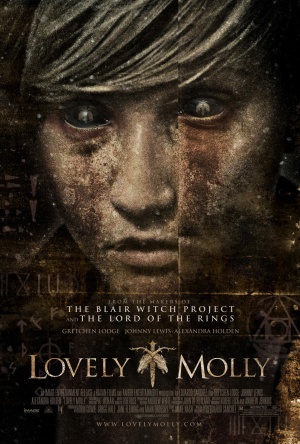
Lovely-molly-posterMaybe I’m getting out of practice with my horror movies—I don’t have time to watch them like I used to—but Lovely Molly left me a little confused. I suppose I’m more susceptible to big advertising than I’d like to admit, but I knew about Lovely Molly from the massive Times Square ads back when I was still with Routledge. I’m ambivalent about demonic possession movies, but I put it in my mental bucket list until I had a weekend evening alone to fire it up on Amazon Prime. As I’ve noted, it left me more confused than scared. Yes, watching it kept me tense, not knowing what was going to happen next (I knew nothing of the story beyond that it was a possession story) but as gruesome as a couple scenes were, the question of what’s going on never really got resolved. It’s pretty clear that Molly was abused as a child, turned to drugs to cope, and is having a breakdown after moving into her creepy childhood home. If her newlywed husband didn’t hear some of the sounds, it would seem to be a conventional breakdown story. Eduardo Sánchez doesn’t show us the monster until the very end, and even then, not clearly. I had to turn to online discussion groups to understand what I’d just watched.

While in this post-modern age no one is qualified to say what anything really means, if fans are to be believed, the DVD extra implicate the demon Orobas. I’m no expert on demons, and I couldn’t recall having heard the name before. In the “found footage” scenes where Molly eerily hums to herself while visiting the sites of childhood memory in the house, she does uncover what seems to be the symbol of Orobas. This is a horse-headed, horse-footed demon with the body of a man. Indeed, when she is being stalked by what she believes to be the ghost of her father, Molly hears horse hooves on the floor. In the final scene, she leaves a photo album for her sister to find with her father’s head covered with pictures of horse heads that she’d cut from his wall of framed pictures, apparently of prized beasts.

The real horror here, however, is in what seems to be a misogynistic implication, no matter how justified, that Molly (and her sister) are the murderers. Molly reveals that her sister killed their father, and Molly herself dispatches, it seems, the preacher, her husband, and the girl of the neighbor next door. She, however, is the one who had been victimized. If this is a case of possession, at least by implication, then the male demon is to blame, but it looks like Molly pays the price. The evidence is circumstantial and Molly disappears at the end, leaving open the room for a sequel. While I felt no need to sleep with the lights on after watching it, the movie has enough provocative material to make me think about it, trying to figure out what was supposed to have transpired. I suppose that many horror movies are more straightforward, but the more easily forgotten for being so.


Scientific Voices

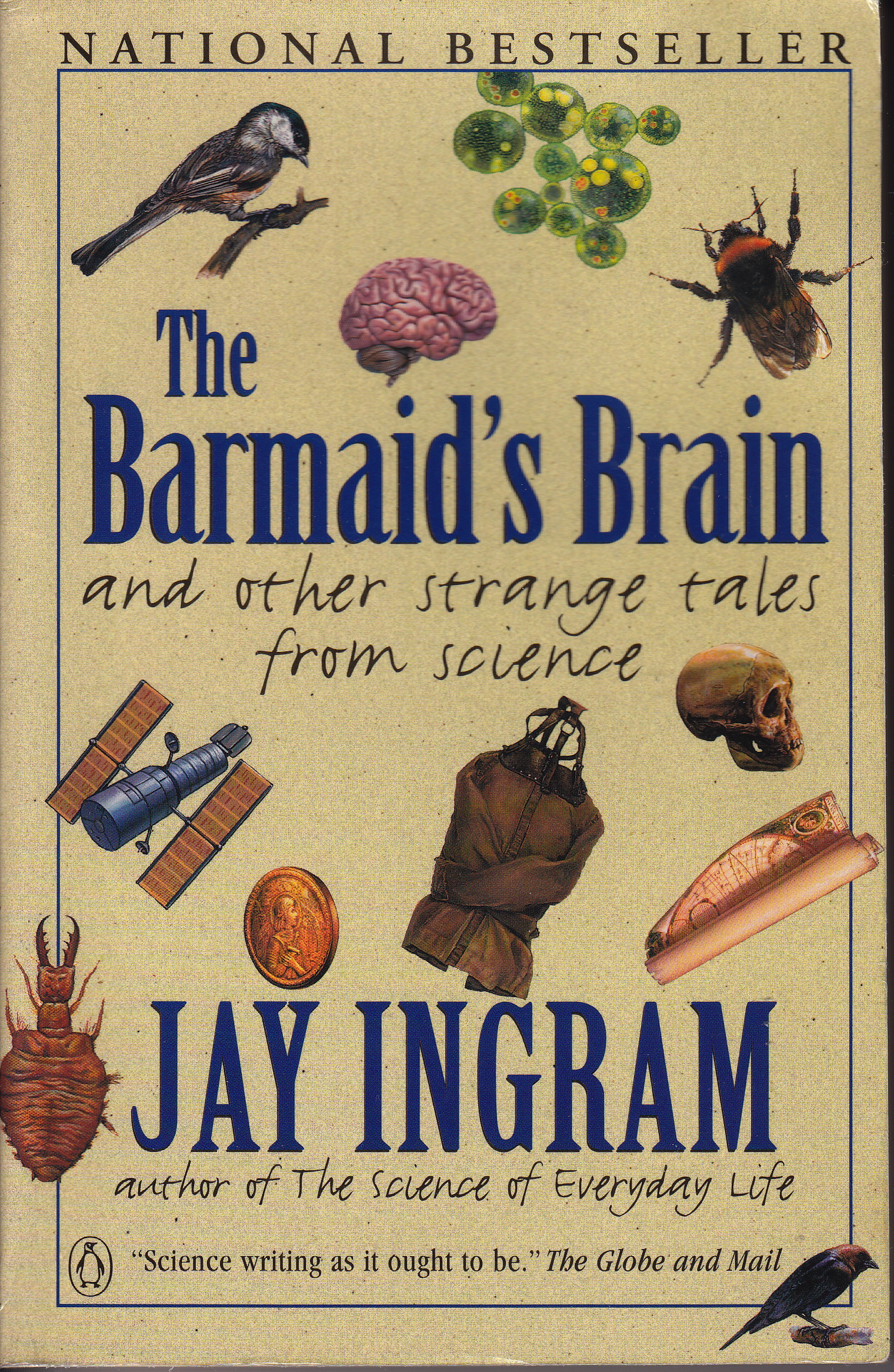
BarmaidsBrainScience requires translation. Even very intelligent people in other fields of study have trouble understanding what scientists have been saying. That’s why science writers are so important. They can distill the heady knowledge that empirical method produces into a palatable tipple for the laity. Jay Ingram’s The Barmaid’s Brain is one such digestible report. As the subtitle (And Other Strange Tales from Science) indicates, this book is about the weird world of science’s often hidden charms. We all pretty much know that quantum mechanics has turned conventional wisdom on its head. We also know (courtesy of the media) that science and religion fight like cats and dogs. What we don’t see is that scientists often disagree on how to interpret data, particularly on the weird end of things. Ingram tells many such interesting tales from nature, psychology, and technology.

The essays in the book are loosely grouped into areas with some common theme. The psychology story that struck me as being particularly appropriate for this blog was the one about Joan of Arc. Joan, as most of us learned from history, was a prodigy. Illiterate, female, and poor, she nevertheless displayed a military genius that led her to the head of a French army trying to hold off the advances of the English. When turned over to the enemy she was treated as a witch, tried for heresy, and burned at the stake. Later she became a saint. The reason that she’s in a book of science essays is that Ingram wonders what exactly was going on when she heard voices and saw visions. Neuroscientists have devised ways of peering into the brain during religious experiences, and psychologists have constructed theories of why otherwise sane people hear voices. Joan doesn’t fit into the category that used to be called schizophrenia, nor does she appear to have been in any way insane. She was religious and her religion spoke to her.

When I was growing up, it wasn’t unusual for scientists to be believers. Nothing was wrong with believing in a god and studying the physical world. Indeed, the idea went back to Isaac Newton and other scientists of the first generation of the Enlightenment. Implications eventually led to the utter absence of deity from the world. People such as Joan were understood as sadly misled by a religion that could not be distinguished from magic. Yet Joan, as Ingram well knows, would hardly be a household name without her visions and her faith. At the end of the analysis, Joan rises from the couch still a mystery. An enigma to science, and suspect to many religious. She was, it seems to me, quintessentially human. We are all, it seems, whether saints or scientists, subject to what empirical evidence will allow us to believe. Most of the time, anyway.


Cheesy History

It has been a few years since I’ve taken any courses on ancient history, but I took quite a number of them while preparing for my doctorate. Staring at my Dominos pizza box, I wonder if I must have missed class they day we covered ancient pizza. Actually, Dominos has been emphasizing cheese of late. Perhaps the least healthy ingredient in your typical pie, when you order you can “cheese it up,” and if you want breadsticks on the side, you can add cheese to those too. The box is whimsically decorated to sing the praises of cheese. Don’t get me wrong; I spent nearly a decade and a half in Wisconsin and I do like cheese. But perhaps this is just a little, well, too cheesy?

Dominos

The side panel suggests (to an increasingly gullible population) that “Ancient Egyptians might have been the original cheese experts.” The iconography depicts a man milking a cow, a man churning butter, and a man holding aloft a piece of what seems to be Swiss cheese. Maybe it’s Emmental. There are no women involved in this scene of making holy cheese. The man milking the cow has a distinctly European look. The man churning or stirring the cheese looks to my eye like a native American—are those feathers on his head? A Wisconsin Egyptian? The Egyptian holding the cheese aloft looks to be a priest or perhaps the Pharaoh. His uraeus is clearly visible. Rays emanate from the cheese like the life-giving solar disc of Egyptian myth.

I’m probably a fool for looking for footnotes on a pizza box, but I wonder whence this information comes. The mind of some ill-informed marketer? An opiate, or cheese-induced, dream of historic proportions? Perhaps those of us with training in these areas have not done due diligence in our teaching of the facts. Or perhaps I’m making a mound of cheese out of a mere crumb. It’s all in good fun, but I know that eventually it will make its way into term papers and other fast-food inspired versions of reality. We all know what to expect from the owners of the leaning tower of pizza.


Mother for a Day

In a world set on tearing itself apart because of its differences, there is one thing every single person has in common. We all have a mother. In societies enamored of domination and competition, we take one day out of the year to stop and remember those who gave of themselves so that we could live. We place this day on a Sunday, the most passive of days when it will not interfere with regular business. We give chocolates, flowers, fruit-baskets, and then go back to the same usual grind come the next day. At the risk of gender stereotyping here, I do wonder how much wisdom we must miss by relegating our mothers to the background.

Growing up, we all know, is inevitable. We need to release ourselves “from the apron strings” and learn to cope in a hostile world. Not only do those overseas, different from us, wish us harm, but even our neighbors become our competitors and although friendly, we look for a way to find our advantage. Motherhood is a reminder that there is another way. Families, at least ideally, are built on cooperation. A willingness to set aside our own personal agenda for that of those for whom we care deeply. Used to be that the largest families (before family became a weapon used by religion) were those best placed to succeed. You had a set of people who shared a common mother, who united in a cooperative venture. Capitalism has little room for such a dynamic. It’s “each man for himself.”

Although churches around the country will mention mothers in their services today, Mother’s Day is a secular holiday. Hindus, Buddhists, Muslims, and Mormons all have mothers. Many religious groups, however, do not. Just last week some Roman Catholic women were ordained as priests here in New Jersey. Of course, the “mother church” disowned them, as priesthood is a male prerogative. Mother’s Day is not on the church calendar. It grew out of the Civil War with the sad realization that, left to their own devices, men will make wars that pit brothers against one another. Although I am stereotyping again, I have a hard time imagining a mother who would do such a thing. Mother’s Day should be an opportunity. Not only should we thank or remember our mothers, we should take to heart what motherhood means. I can’t help but believe the world would be a better place for it.

DSCN1941


Two Outlooks

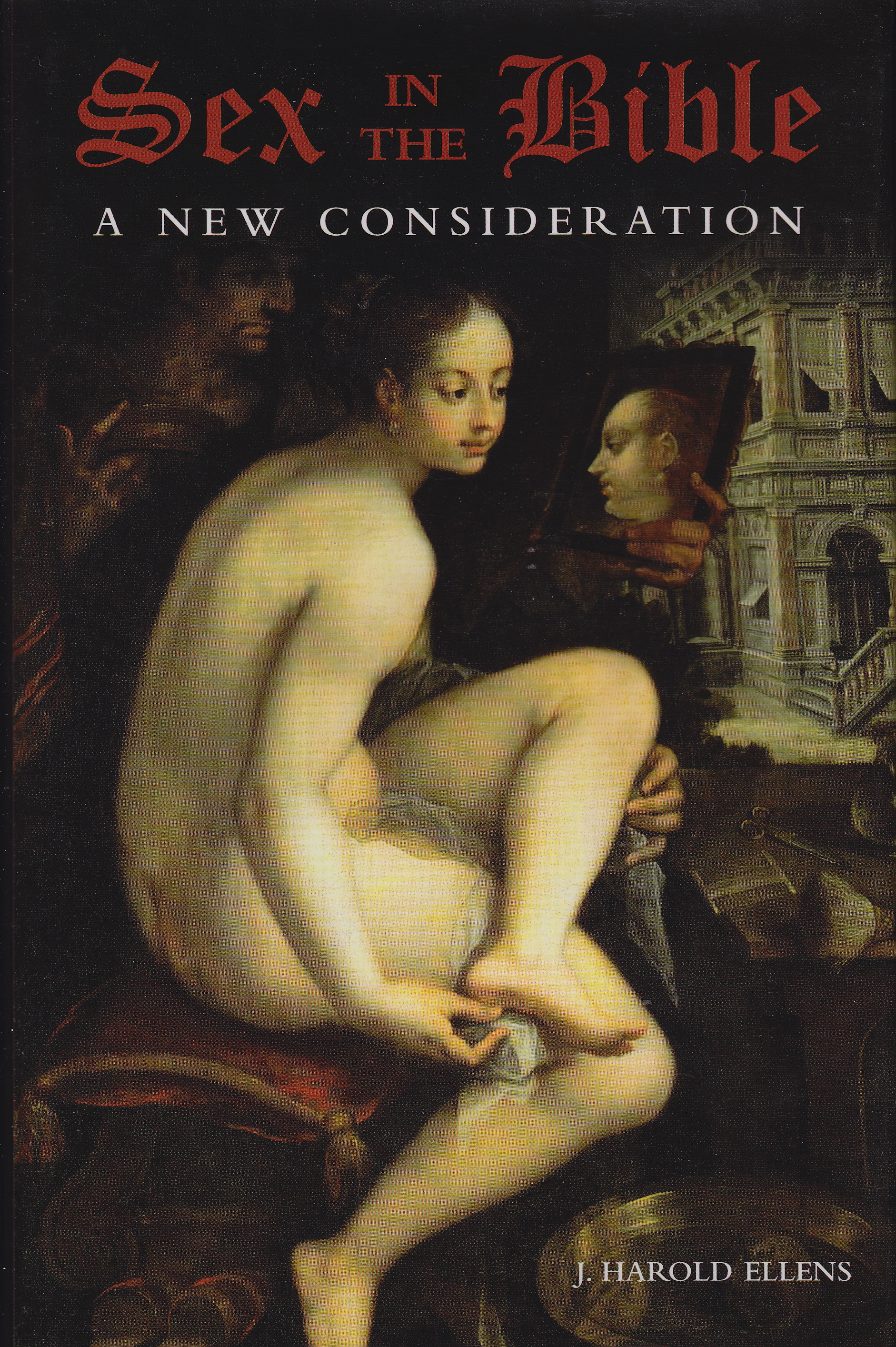
SexInTheBibleThe word polymath used to be applied more easily. In these days of highly specialized training, it is difficult to have expert knowledge in more than a couple of areas. The two areas, sexuality and scripture, dealt with in J. Harold Ellens’s Sex in the Bible: A New Consideration, are such zones of specialization. Students of the Bible have recently begun an intensive exploration of how sex fit into the ancient worldview. Ellens’s book surveys all of the biblical legislation about sexual matters and a fair number of the stories involving the same, with the sensitivity of a professional counselor. Indeed, his practical knowledge of human sexual development and psychological needs based on it should inform society’s understanding of scripture. The Bible is no pristine book. Neither is it a romance novel. Still, ancient people were not as shy about sex as post-Victorians tend to be. The Bible is often frank on the subject.

The main danger of a project like this is trying to decide where to take the Bible literally and where not. Ellens, while he has some training as a biblical scholar, falls into a familiar trap. He assumes, as parts of the Bible do, that Israel’s neighbors were sexually depraved. Not only did they condone things like bestiality, according to Ellens, but they incorporated sexual deviancy into their worship. Ancient records, readily available for decades, give the lie to that outlook. Ellens makes the case that biblical writers had no way of knowing, however, that homosexuality, for example, is a biological predisposition that can’t be changed at will. Other sexual practices that are now considered normal and healthy were perversions in the biblical period. Medical science should inform our understanding of Holy Writ.

This is an argument Ellens can’t win. Passionate though he may be about how all of this just makes sense from a scientifically informed point of view, the fact can’t be changed that the Bible does condemn some sex acts outright. Even more damaging, in my opinion, is that the Bible clearly views women as the sexual property of men, and men regulate the sexuality of their females. Anyone arguing that the Bible is a moral guidebook in regard to sexual mores must face this issue head on. There’s no tip-toeing around it, even with verified psychological pedigree. The Bible is the product of a patriarchal structure that did not tolerate sexual practice outside prescribed limits. We now understand the same behaviors from a scientific point of view, but the written text doesn’t change. It is just that dilemma that makes it very difficult to be an expert on two fields so diverse as sexuality and biblical studies.


Accept Cookies

You have probably noticed it. As expected as the warmer days of spring are also the Girl Scout cookies. A symbol of wholesome fundraising, Girl Scout cookies have some dedicated buyers, and many imitators. Like any human organization, the Girl Scouts have their troubles, but I can’t help but compare them with the Boy Scouts in which I grew up. Well, at least for a few years. We’ve watched as the media have declared on the excluding of various demographics from the Boy Scouts. To rise to the top you must not deviate from the mythic model of the perfect man. Meanwhile, as an article in Tablet notes, Girl Scouts have been tolerant of difference from the beginning. In a day when being Jewish was still suspect in the wider community, Girl Scouts were founded with early troop leaders who were Jewish, and this was in the days before the First World War and the ensuing tragedy of the Holocaust during the Second. From those early days, Girl Scouts have continued to have a policy of acceptance of those who differ in religious outlook. It erects no barrier.

The success of social progress depends on how we train our young. Prejudice has to be learned. Children are accepting of those with differences until they learn not to be. Radical groups have to recruit constantly. Fear of strangers is natural, but when it becomes a paradigm it is a pathology. One of my professors once claimed that early Christianity thrived because it was exclusive. Only true members could join, like a country club, making it desirable among hoi polloi. Further research has demonstrated the falsity of this view. There were many varieties of Christianities in antiquity. Only by declaring itself uniquely correct, and convincing Constantine of the same, did one sect become dominant. And dominance was what it was about.

Society is all about getting along. We have come together around money to build the tallest structures on the planet. The tallest buildings used to be in the United States. Then China, Malaysia, Taiwan, Saudi Arabia, the United Arab Emirates. A tower serves no purpose without a collective to take pride in it. Religions, unfortunately, often measure themselves by those who stand outside. Taking the view that it only feels good to be right if others are wrong, it is easy for such thinking to slip into a prejudice that promotes and rewards exclusivity. One percent, anyone? Many aspire to such menial goals as getting more money. For me, a life that has a box of Girl Scout cookies available is enough. And I’ll take a tall glass of tolerance with that, and hope that others will feel free to share.

DSCN5045


In Praise of Eve

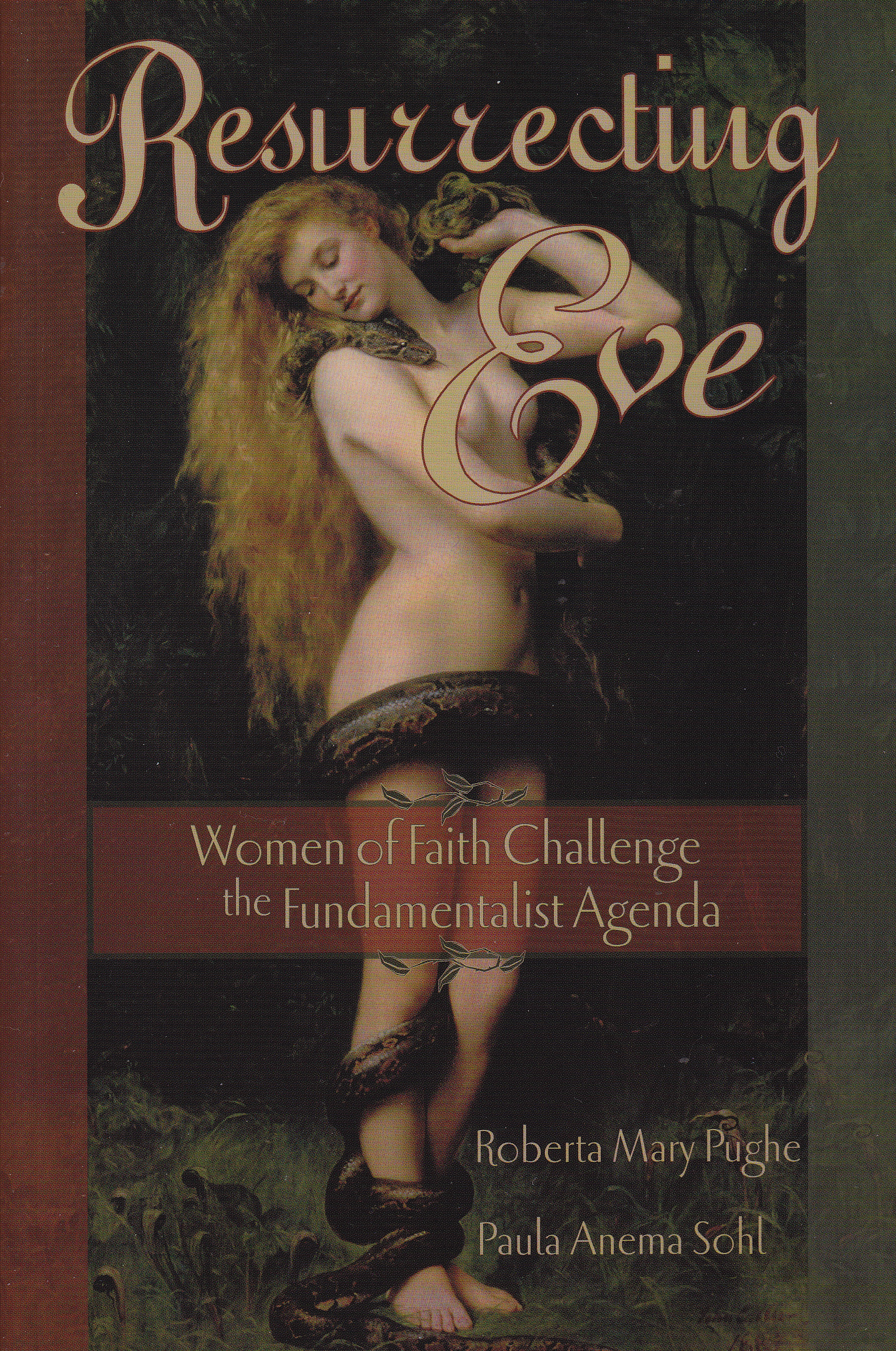
Resurrecting EveI once told some colleagues that reading even basic children’s books as Dick and Jane or The Cat in the Hat was a different experience for girls than it was for boys. Although Dr. Seuss was far more enlightened than much of the standard children’s literature from the era, there’s no doubt that the Cat is an active male, as are Things 1 and 2. The human girl (and her brother) are somewhat more passive, and thus the raring, rollicking action is mostly male. I try to stop frequently and notice how the message is still broadcast too widely that gender stereotypes contain the truth. Back when the American Academy of Religion and the Society of Biblical Literature met in San Francisco, a west-coast publisher, White Cloud Press, showed up. One of their books, Resurrecting Eve: Women of Faith Challenge the Fundamentalist Agenda, seemed appropriate for someone who’d been at Nashotah House as long as I had. Written by a psychologist and a pastor, Roberta Mary Pughe and Paula Anema Sohl, it raises many points that, while not new, again reminded me that men have to take responsibility to learn how women experience the culture that masculinity continues to dominate.

Reading stories of women who’ve suffered at the hands of a hyper-masculine fundamentalist Christianity, it is difficult not to cringe. Young girls molested by ministers in a culture where no one’s voice trumps that of the preacher, have no chance of justice. The mere thought of the few who’ve managed to build the courage to speak out suggests that far more choose to suffer in silence. The abuse isn’t always sexual. Damage to the esteem is rather a specialization of literalist groups, but males get off comparatively easy. Women and girls are provided with a unfair framework from the beginning and they often spend their entire lives conforming to it. These stories, even with the new age-ish kind of framing the book gives, must be told. More importantly, they must be heard.

In a world where our technology is so advanced as to make a Wright brother’s head spin, we still refuse to admit the equality of women. The United States comes nowhere near the top of democracies that have a significant portion of women in government positions of power. We like to think we’re advanced, but we still keep half of our people back from their true potential. We sent a satellite out of our own solar system before a woman president was ever elected. We call ourselves civilized. Of course, Pughe and Sohl are mainly concerned with fundamentalist Christianity. When we look at the demographics of government officials, however, the picture in this regard is not encouraging. Fundamentalism won’t be changed by scholars, for they are easily ignored. It will be changed by everyday men who pick up a book, perhaps because of the seductive painting of a woman on the cover, and realize that there’s far more at stake than cheap thrills and Sports Illustrated swimsuit issues. Treating women equally is merely the first step in becoming truly human.


Geneva Conventions

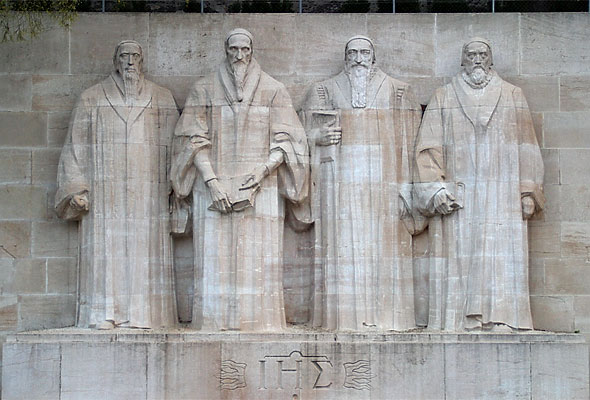
As an alumnus of Grove City College, I generally don’t have the chance to consider other colleges as unreasonably conservative. College taught me, after all, that education involves thinking things through, and that, of all things, doctrine is one of the many human constructs that wilts under close examination. Both religious and political doctrine fall under this rubric. So when an article in the Chronicle of Higher Education fingered Grove City’s near neighbor, Geneva College, I was both relieved and not really surprised. Grove City was strict, but Geneva, located down the road in Beaver Falls, was even more Reformed. Tales at the Grove said that even off-campus dancing was an infringement of the student code there, and that even a legal sip of beer with dinner, off campus, could get you expelled. You know how students talk. In any case, both cut from Presbyterian fabric, Grove City and Geneva Colleges hold out against the world and its multiple evils. So why did humble Geneva merit notice in the exalted Chronicle?

Geneva College recently sued for exemption of the contraception-coverage mandate of the Affordable Care Act. You see, in many conservative religious traditions pre-marital sex is not only from the Devil, it practically never happens among true Christians. If it doesn’t happen, why should you be forced to pay for its treatment? Denial runs profoundly through these conservative colleges. While at Grove City, in a first-floor dorm room, my roomie and I were awakened one night by a group of pretty obviously drunken frat boys from the third floor. Cursing loudly, one of them rammed his fist through our window, showering the floor with glass before stomping loudly up the stairs. When I went to the housing office the next morning, they wondered about my story. Students at Grove City, drunk? It simply did not happen. In all likelihood, I’d broken the window and made up the story so I wouldn’t have to pay. I pointed out that campus security had noted the glass was inside the room and my roommate and I were both there at the time. Reluctantly, while still withholding judgment about the drunken part, I was believed.

Conservative Christian colleges often face the specter of reality. College kids were killed driving drunk. Girls, gasp!, did get pregnant and did not always decide to keep the baby. Real world issues declared anathema by a magisterium with its hands firmly over its eyes. No matter one’s view of morality, singling women out for punishment of sexual sins is just plain unfair. The issue here is health care, not the consequences of a decision made in the heat of passion. How often the anonymous male gets to scamper off, his health fully covered. The co-ed, however, is treated like Eve holding a newly bitten apple. Students attend Christian colleges for a wide variety of reasons, and the education, apart from the theology, can actually be excellent. It is the ethical obligation of the schools to cover all the human needs of emerging adults, not just those based on a morality still mired in the Middle Ages.

Time for a Reformation?  Photo credit: Roland Zumbühl, Wikimedia Commons

Time for a Reformation? Photo credit: Roland Zumbühl, Wikimedia Commons


Our Gods, Ourselves

The near-death experience, made popular by Raymond Moody in the 1970s, has hit the cultural mainstream with movies like Heaven Is Real. The now-familiar scenario of going through the tunnel toward the light and meeting something like God is so widespread that mention of “staying away from the light” can be a metaphor for remaining alive. Although experts (one of which I’m decidedly not) disagree on interpretations, nobody doubts that the dying often report such things. Some say it is the impression left on an oxygen-starved brain about to implode, while others postulate a soul has made an actual bid for freedom only to be returned to sender. No matter what you believe, it’s hard not to be intrigued. Not all the experiences are identical, however. A friend recently sent me a story from World News Daily Report that headlines “Catholic Priest Who Died for 48 Minutes Claims that God Is a Woman.” The story by Barbara Johnson, which ran earlier this month, is an interesting variation on the standard. Often the “being of light” met at the end of the tunnel is kind of asexual. After all, there are no physical bodies there.

This story has me thinking. Traditional Christian, indeed, Judeo-Christian thought posits that God is neither male nor female. Of course, given human experience, many people find that difficult to conceive. It does occur in intersex persons, and it is actually pretty widespread in nature where some animals change gender over their lifespans. Still, when it comes to the Almighty, people want to know with whom they’re dealing. Think about it. When you walk into a doctor’s office and meet a physician for the first time, your response will differ depending on their gender. The same is true of going into a car dealership, or a daycare facility. We use gender to give us the first hint on how to respond. A genderless God, let’s admit, is somewhat disquieting. What is the message you want to send to a person without knowing their gender? Or maybe like me you’ve read a book and discovered halfway through that you had the gender of the author wrong. Doesn’t it impact how you read the rest? So, what if God is a woman?

Interestingly, the case of Father John O’neal comes from a Catholic context. Along with Evangelical Christians, Catholics are among the most likely to hold a residual maleness to God’s identity. Theology of the Trinity, always beginning with “the Father” makes it hard to escape. Perhaps what Fr. O’neal unexpectedly encountered was a God-concept without judgment. That would certainly be disorienting to a faith that has a multi-layered afterlife including limbo and purgatory as well as heaven and hell. A deity who decides the fate of souls must be a judge, and although Judge Judy rules daytime television, the church still has a traditional mensch on the bench. What if Fr. O’neal really did get to heaven? What if he found God really was female? Could human religions ever recover? I, for one, am intrigued. Still, I’m content to wait another few decades before finding out. And maybe for the time we have down here we should all start practicing by realizing that gender is always far less important than the personhood that we all share.

IMG_1858


Mother’s Night

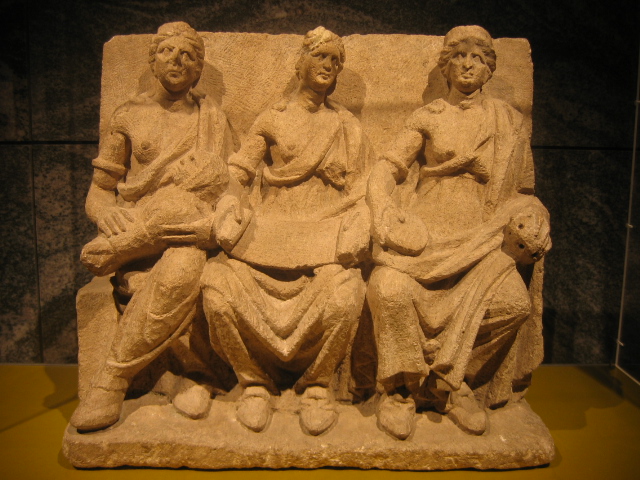
It wouldn’t be Christmas, in the Christian tradition, without Mary. Still, apart from her later enhanced role in Roman Catholicism, Mary’s part beyond Christmas is minor in the church. She seldom features in biblical accounts of Jesus’ life. It is easy to forget the female role that was so much a part of winter solstice celebrations that coalesced into our modern twelve days (really only one, for work purposes). That’s why I was glad that a friend sent me a link to a site about Mödraniht, or Mother’s Night. Honestly, I had never heard of this holiday before. Given the Germanic penchant for dramatic festivities, it comes as no surprise that Yule involved a night celebrating the feminine aspects of the season. Apart from the occasional references to Mary, we tend to think of this as the time a male son of a male God came to save mankind. What of the women without whom none of this would have been possible?

As Carolyn Emerick notes on her page, we know little about this sacred day because Christianity managed to wipe out most of the pagan traditions of northern Europe. Some, of course, survived and worked their way into Christmas. Modern holidays, being primarily days off work rather than deeply felt celebration (for we live in a world with no need for religion), have gravitated toward what had once been the male preserve of earning a living. Watching movies of Dickensian times, it is clear the women continued to work—likely even more than usual—to bring off a holiday celebration. It was the male prerogative to be the recipient of largess.

Photo credit: "Urban" WikiMedia Commons

Photo credit: “Urban” WikiMedia Commons

My concern is that gender equality may sometimes be confused with gender stereotyping, or even with patronization. How is it possibly to build equality into a system put into place by generations of men? Is civilization truly civilizing when half of the race and only a very small portion of the planet benefits? The Christmas season, even now rapidly slipping away, is a time for considering equality. Every year modern non-believers and humanists ask for equality—a dream always held at arm’s length, since the holiday earns record profits as it is, and the financial year revolves around it like a Pole Star. It is the time of year when we see if we’ve turned a healthy profit. The rules in the system were set long ago. Even with Mary in the manger, she blends into the background while shepherds, wise men, and other interested males plan to make a holiday of it.


Not Your Grandma’s Moses

Exodus Gods and Kings

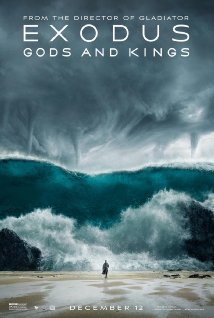
Exodus: Gods and Kings is, in many ways, a startling movie. It didn’t leave me with a strong impression of profundity, but it did make me a bit reflective. The media hype about God as an eleven-year-old boy proved to be merely hype. In fact, the boy deity was one of the most intriguing characters in the film. The role was played respectfully, and God, like a good Englishman, favored his tea. There was nothing comedic about it, however. More troubling was the agnostic Moses, à la Clash of the Titans with its unbelieving Perseus. Moses, even after meeting God, comes across as having little interior life. He hides in a cave and builds an army of terrorists making him seem like Moses bin Laden. He conceals himself while innocent Hebrews are hanged for his crimes (and did they even hang people in ancient Egypt?). When a great storm brews over Memphis, however, it is with a sense of wonder that we ponder at an eleven-year-old doing all this.

The movie plays lightly with the scholarly “explanations” that used to be doled out in seminaries about how one plague led to another. In fact, the character called “the Expert” in the credits is shown lecturing the Pharaoh on the causation scheme of clay churning up in the Nile turning it red, and killing the fish which in turn drove the frogs from the toxic water, but when they died flies came along and the flies spread disease. Then the Expert is hanged. Not so subtle a warning to biblical scholars. In fact, there seems to be a science behind much of the movie that makes miracles less acts of God than acts of nature. Even the drying of the Red Sea is understated. Its return is reminiscent of the Christmas Tsunami of 2004. God is sometimes not there when you’d expect a deity to care.

On the matter of caring, for an age of nones who have concerns for equality, the film was thin on women’s roles, making even the Bible appear to foreground them more. Sigourney Weaver—great in any context—seems only to be there to wish Moses dead. Even Miriam is given scant lines in the movie and no role in the Exodus itself. In Prince of Egypt she at least led her famous song. Zipporah is lovely but shows no sign of being as handy with a flint knife as Exodus makes her out to be. A woman of action. Miriam’s quick thinking saved the infant Moses. Overall, however, the Bible is a guy’s book, and Exodus is a guy’s flick. Opening with the battle of Qadesh on the Orontes is a way to draw men to a Bible movie. Lots of slashing, gashing, and charging horses. And the splendor of Egypt, filmed in Spain and the Canary Islands. Some miracles, it seems, are even impossible for CGI.


Magnificat

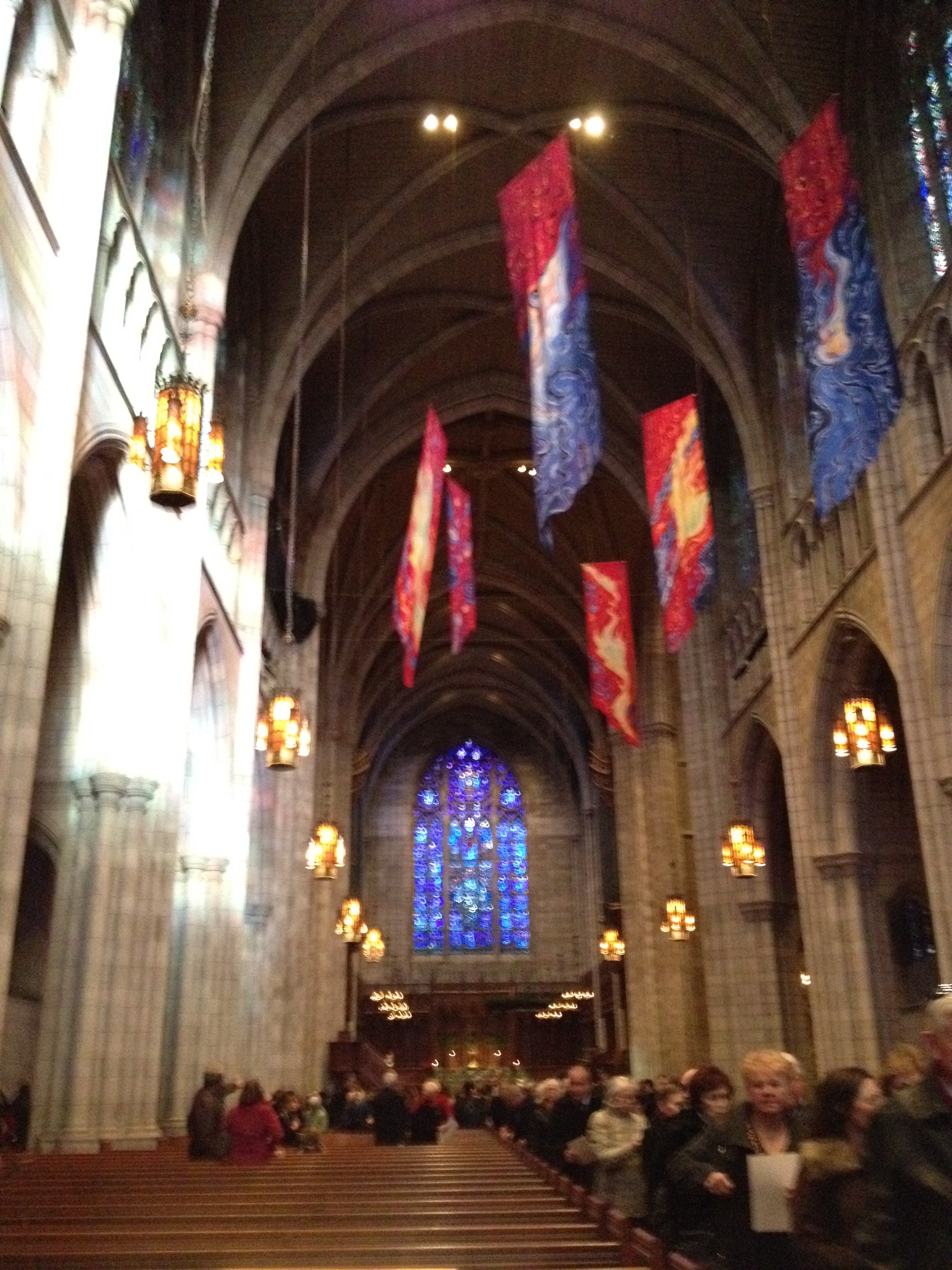
IMG_1857One of the advantages of a huge endowment is the luxury to experience culture. Although we don’t live in Princeton, we don’t live far from it, and most years we venture down to hear the free Advent Concert given by the Princeton Chapel Choir. For those of you who’ve never been to the Princeton campus, or perchance have not visited the chapel there, the setting is part of the experience. On the order of a small Medieval cathedral, the campus chapel at Princeton is by far the largest I’ve encountered, and the acoustics from the soaring stone are impressive, even to an untrained ear such as mine. Since my wife is the musical one in this marriage, she reads the program with an avidity I lack, but I do recognize striking music when I hear it. This year’s concert included a piece I recollected from a few years ago, Christine Donkin’s “Magnificat.”

I’m at the age where it is no longer surprising to find very talented people much younger than myself. Christine Donkin is in this class. A Canadian composer, she has had her music performed in major venues such as Carnegie Hall. Her “Magnificat” is the only piece with which I am familiar, but it is a powerful work that can be compared to a mystical experience in the listening. Written for women’s voices, the piece evokes a spirituality that seems to come easily to those who are submissive. The Magnificat is, by tradition, Mary’s psalm of submission to the divine will, based on 1 Samuel’s account of Hannah conceiving the prophet Samuel. In a world dominated by male humans as well as a male deity, the song of Mary is one of the subtle poems celebrating the upsetting of the entrenched power structures that have held women down. If you listen closely enough, its subversive elements become clear.

Donkin’s “Magnificat,” in a darkening cathedral on a December evening, is a moving experience. It is a piece that leaves me feeling as if I’ve temporarily been somewhere else. And that elsewhere is far from the turmoil and troubles of daily life. And there are no men involved.

Over the years we’ve heard many impressive performances in that stone edifice. None, however, it seems to me, so powerful as that of a young woman confronted with a reality beyond that of everyday life. A reality that men cannot touch, but which, when the circumstances are right, they might hear if they’re willing to listen, and in doing so might find their own burdens lightened for a few minutes on a winter’s evening.


Let It Be

CultOfTheVirginMaryWhy do people pray to Mary? The question is a complex one and answers range from a desire to find some feminine compassion in an angry masculine god to the distinctly Freudian. Michael P. Carroll, in The Cult of the Virgin Mary: Psychological Origins, falls into the latter category. Yes, the book was written in the 1980s, but even then Oedipal complexes and penis envy were deeply suspect. Still, at various points along the way Carroll had me scratching my head and muttering “there may be something to this.” For a few pages, anyway. The problem begins much further back than Mary. To start with, we can’t all agree on what religion is. From there we move to the stage where ancient religions had as many goddesses as gods—even the divine don’t like to be lonely. The heads of most pantheons were male, which likely matched most earthly political systems. Powerful females still existed, at least in mythical realms. Monotheism effectively put an end to that, but before too terribly long, Mary emerged and eventually became almost a goddess.

Indeed, early on in his book Carroll discusses how Mary differs from the goddesses of antiquity, drawing parallels with only Cybele. Mary is the virgin mother completely dissociated from sexuality. Deeper study would reveal some mistakes in Carroll’s reasoning—there were virgin mother goddesses, such as Anat, who might in some ways fill in the gaps. Indeed, arguing for the uniqueness of Mary is kind of a goddesses-of-the-gaps theology. The more we learn the less unique any deity becomes. Still, looking to the psyche to explain Mary is a logical step. Tracing Marian devotion to the ineffective-father family, where a machoism hides a longing for the protective mother, Carroll offers us a Freudian feast of options here. Still, in the light of developments in psychology over the past quarter century, his premise is a bit dated.

We simply don’t know why Mary became such a strong devotional interest in a religion with a masculine Trinity. It would seem that women might be the motive force behind it. Given that half of Christendom was displaced, by default, from the male savior, why would Mary not emerge as the mother all people crave and whom, women know, often soften the harsh decrees of martial law? Delving into the apparitions of Mary from Our Lady of Guadalupe to Fatima and Medjugorje, Carroll finds illusions and hallucinations based on strong females behind each one. Rational inquiry into the deeply spiritual. This, however, remains the proximate cause only. What is really seen can’t be known, except to the seer. And it seems that seers tend to find, amid a religion with an omnipotent man at the top, that it is the mother who appears in times of need. Unless, of course, it is a matter of healthcare where, as government shows, father knows best.


Guy Fawkes

“Remember, remember the fifth of November,” so begins the poem that haunts my every autumn with V for Vendetta. As a colonial, I never really peered too deeply into the Gunpowder Plot. We were all told that Guy Fawkes was the bad guy and that he got his in the end. Recently I delved a bit deeper and learned that this was a religious conflict. Part of a conspiracy to restore a Catholic monarch to the throne of England, Fawkes was captured as he guarded the actual gunpowder of said plot, and the rest, as they say, evolved into V. The iconic Guy Fawkes mask, sometimes sported by members of Occupy Wall Street and other protest movements, has moved away from its Catholic roots and on into the realm of wider social justice. We know that blowing up our enemies is not a viable solution (we too remember, remember the eleventh of September), but the metaphorical destruction of oppressive systems may be the only way to vindicate the demands of social justice.

Dystopias have been heavily on my mind lately. Looking across the socio-political landscape I see many concerned people with no power to displace the impacted one-percenters. Politicians court money, and sociological studies show that young people don’t bother to vote and have no interest in entering politics because it is so widely known that it is a corrupt and inefficient system. While laws are easily enacted to protect extreme wealth, social security finds itself on the block as seniors are increasing in poverty almost as fast as they are increasing in numbers. In my own life I have experienced being cut off from retirement plans because I wasn’t “vested,” which I translate as “saving money for those at the top.” Still, we blithely press on, wondering if V really exists at all. We don’t need to seek out dystopias. They will discover us.

November is that graying period between the colorful burst of vindictive playfulness that is Halloween to the long night of the solstice. During this time we will vote in vain and await a better future that never seems to come. We, like V, have been an experiment of the state over the freedoms of the individual. The market, we’re told, has recovered. The average citizen has not. Every year as the evenings grow longer and the winds begin to howl, I come back to V for Vendetta and hope against hope that corruption will meet the fate of Guy Fawkes. Ironically, few turn to religious organizations any more in the never-ending search for social justice. The trenches in which many denominations have chosen to die are those of sexuality and male dominance. Meanwhile, women and men both are aging, and the very structures we put in place to ensure they could rest after lives of hard work are being eroded. Behind every mask, it seems, hides the face of a politician.

Photo credit: Vincent Diamante, Wikimedia Commons

Photo credit: Vincent Diamante, Wikimedia Commons


Fear and Dissembling

The ConjuringLast year, when The Conjuring was released, it quickly became one of the (if not the) top earning horror films of all time at the box office. Based on a “true case” of Ed and Lorraine Warren—real life paranormal investigators—the film is a demonic possession movie that ties in the Warren’s most notorious case of a haunted (or possessed) doll, with a haunting of the Perron family of Rhode Island. (The Warrens were also known as the investigators behind the Lutz family in the case of the “Amityville Horror,” showing their pedigree in the field.) Given that Halloween has been in the air, I decided to give it a viewing. As with most horror movies, the events have to be dramatized in order to fit cinematographic expectations. Apparently the Warrens did believe the Perron house was possessed by a witch. In the film this became somewhat personal as the dialogue tied her in with Mary Eastey, who was hanged as a witch at Salem (and who was a great-great (and a few more greats) aunt of my wife). Bringing this cheap shot into the film immediately made the remainder of it seem like fiction of a baser sort.

Witches may be standard Halloween fare, but when innocent women executed for the religious imagination are brought into it, justice demands separating fact from fiction. Writers of all sorts have toyed with the idea of real witches in Salem—it was a trope H. P. Lovecraft explored freely—but there is no pretense of misappropriation here. Lovecraft did not believe in witchcraft and made no attempt to present those tragically murdered as what the religious imagination made them out to be. The Conjuring could have done better here. It reminds me of Mr. Ullman having to drop the line about the Overlook Hotel being built on an Indian burial ground. Was that really necessary? (Well, Room 237 has those who suggest it is, in all fairness.) The actual past of oppressed peoples is scary enough without putting it behind horror entertainment.

A doctoral student in sociology interviewed me while I was at Boston University. She’d put an ad in the paper (there was no public internet those days) for students who watched horror movies. I was a bit surprised when I realized that I did. I had avoided the demonic ones, but I had been in the theatre the opening week of A Nightmare on Elm Street (on a date, no less) and things had grown from there. I recall my answer to her question of why I thought I did it: it is better to feel scared than to feel nothing at all. Thinking over the oppressed groups that have lived in fear, in reality, I have been reassessing that statement. What do you really know when you’re a student? As I’ve watched horror movies over the years, I have come to realize that the fantasy world they represent is an escape from a reality which, if viewed directly, may be far more scary than conjured ghosts.