Dark and Stormy Night

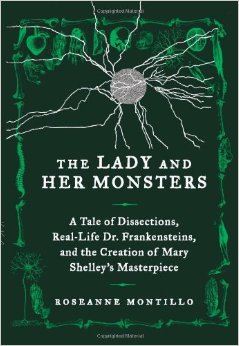
LadyAndHerMonstersI miss my monsters, especially when I stay away too long. I had eyeballed Roseanne Montillo’s The Lady and Her Monsters: A Tale of Dissections, Real-Life Dr. Frankensteins, and the Creation of Mary Shelley’s Masterpiece nearly a year ago in a busy Port Authority bookshop, and wanted to curl up with it right away. Well, work and the world intervened, but finally I found time for the beast. Although a member of the monster kid generation, as a child I never felt much kinship with Frankenstein’s creation. I think it is because there was so much human intention involved in his origins. Almost ungodly. Too godly. Vampires and werewolves, and even mummies, seemed to have come up on the wrong side of a curse and couldn’t be blamed for being what they were. Frankenstein’s monster had a willful, if neglectful, creator. A human being, and fully so. There was, it seemed, some kind of blasphemy at work here.

Montillo’s book, however, gives me pause to rethink this. I had never realized, foe example, that Shelley’s book unfolds over nine months, and that Mary Godwin Shelley had suffered as her own fate unfolded—or unraveled—after Percy Shelley’s death. Nor had I stopped to consider that in the lifetime of these young lovers scientists and poets were overlapping careers with philosophy holding them together. I also hadn’t realized that Percy Shelley also shared his beau’s enchantment with the fantastic. But Montillo gives us so much more, wandering through the seedy world of body-snatchers and scientists who experimented on the dead, often with an eye toward a secular resurrection.

Frankenstein’s monster has, of course, become an instantly recognizable fixture in our society. Indeed, it is almost the definition of monstrosity: the ultimate mischwesen while being technically only one species. A creature that crosses boundaries and is both dead and alive, a miracle and a curse, innocent and evil. Morillo places this creature in the context of a world where galvanism was thought to bring life and medical schools scrambled to find corpses to dissect and on which to experiment. A world where the Shelleys would visit Lord Byron and Polidori, literally on a stormy night, and give the world both Frankenstein and the prototype of Dracula. Where the three men of that night all died prematurely and tragically, survived by a struggling Mary who lived only to fifty-three and who gave the world one of its most memorable nightmares. Horror fiction was, and is, considered lowbrow entertainment, but there is something profound here. And we are richer, if more unsettled, for having it.


What I Mean

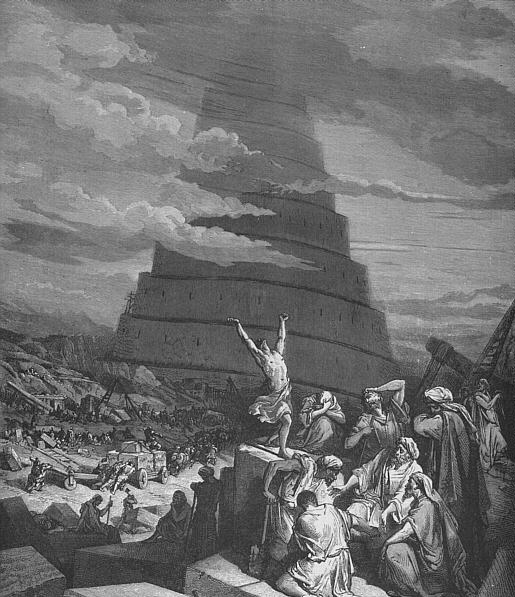
It might seem, in this world of constant misunderstanding, that we might get along better were it not for the Tower of Babel. I mean, we call it a language barrier, right? So why are some people upset about the extinction of languages? Rebecca Morelle writes of how economic success may be behind language extinction in an article on the BBC science and environment page. There are some—many entrepreneurs—who see no cause for mourning. I have to wonder, though. I cut my academic teeth studying dead languages. Koine Greek and “Classical” Hebrew are no longer regularly spoken, and really haven’t been for centuries. Then I moved on to rediscovered languages: Ugaritic, Akkadian, Epigraphic South Arabian, each sounding more exotic than the last. Would world commerce exist if we were all hampered with Sumerian? We got on fine without the wisdom of the past—why should we even care?

I see politicians, mostly male, arguing in the “most advanced” government in the world, that women shouldn’t be given the full benefits of health care because they misunderstand the Bible. It is easily done. As I told my many students of biblical Hebrew over the years, language is not just words. Languages are ways of thinking. No translation is truly perfect. If you want to understand the Bible, you must do it on its own terms: learn to conceptualize in Hebrew and Greek, then come back and tell me what you think. It is, however, much easier to let King James do the talking. A man’s man. Just don’t ask what he did after hours, right Robert Carr? Something seems to have gotten lost in translation.

Languages are more than just ways of expressing ideas. They are the basis of cultures. When languages die off, cultures soon follow. Do you suppose that everyone on Papua New Guinea goes to work wearing a tie? Just give it some time. We call it progress, and it is inevitable. It has happened even closer to home, for those bound to the States like me. It used to be that academics had a language that didn’t necessarily included economics. The rarified domiciles of words like trenchant and salient and boustrophedon soon became superannuated. What are you trying to sell here? Dictionaries? As business marches unstoppably ahead, consuming all in its path, our lesser languages quietly die. With those languages ideas also pass away. With each demise, the world becomes a poorer place. Maybe it’s time to start building a tower.

Confusion_of_Tongues


Exceptionalism

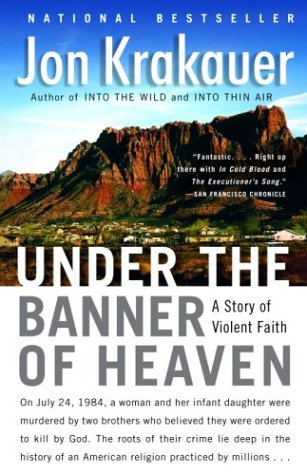
UnderTheBannerOfHeavenSome years ago I was invited to a famous person’s house along with some intellectuals—we’re all mature here, so names aren’t necessary. It’s no surprise that I ended up at the children’s table, being soft-spoken as I tend to be. The discussion had turned to international affairs, and since I can barely manage my own affairs I didn’t have much to say. Eventually it was suggested that if rule of law could take hold in the Middle East, strife would end. I finally spoke up, loudly injecting a “no” into the conversation. The problem with religious-based conflict is that the rule of law has been subordinated to the divine will. That is very well illustrated in Jon Krakauer’s Under the Banner of Heaven: A Story of Violent Faith. As Krakauer explains in his conclusions, he had set out to write a book that explored the history and background of his polite, abstemious, and law-abiding Mormon neighbors and friends. The story, however, takes a darker turn.

What Krakauer delivers is not a slam on Mormonism, but rather something far more difficult—an attempted even-handed history. As even Mormons at the various trials depose in the book, the faith has some strange beliefs. All religions do. For a religion less than 200 years old, the Latter-Day Saints also have an impressive violence in their history; parts of this book are like a fantasy novel, they seem so unlikely. Again, nothing unusual here. All religions have violent episodes. In general, religions aren’t violent—people are. The problems arise when the true believer (and there always will be) insists that religion trumps the rule of law every time. As Krakauer shows, those who violate society’s laws are not insane. They are, however, not judging the world by the same standards of the wider society. It’s just that, occurring as it does in the light of an historical period, the strangeness of how a religion starts is clearly illuminated in Mormonism. No number of apocalyptic horsemen will be able to stop the religious imagination once it is fired up. The problem with lines in the sand is that they easily move.

Perhaps the most disturbing tenet of Joseph Smith’s latter-day revelations is that of polygamy. Like a young Augustine, Smith had an eye for the ladies. Personal indulgence at the hand of a religious founder is not at all unusual. The problem is, the women in this book have been abused and traumatized in a religion, not unlike Judaism, Christianity, or Islam, that asserts (or has asserted) male superiority. Girls as young as thirteen or fourteen being married off to men three times their age to join what is essentially a harem doesn’t offer these young ladies a chance to become their own person. The majority of Krakauer’s study focuses on Fundamentalist Mormon sects, and not the mainstream Mormons who have great political power and occasionally run for president. Still, this is a very important book. It is not primarily about the Mormons. It is about those who can’t see beyond a blind faith in what would otherwise be a perfectly good piece of fantasy literature.


Men Without Hats

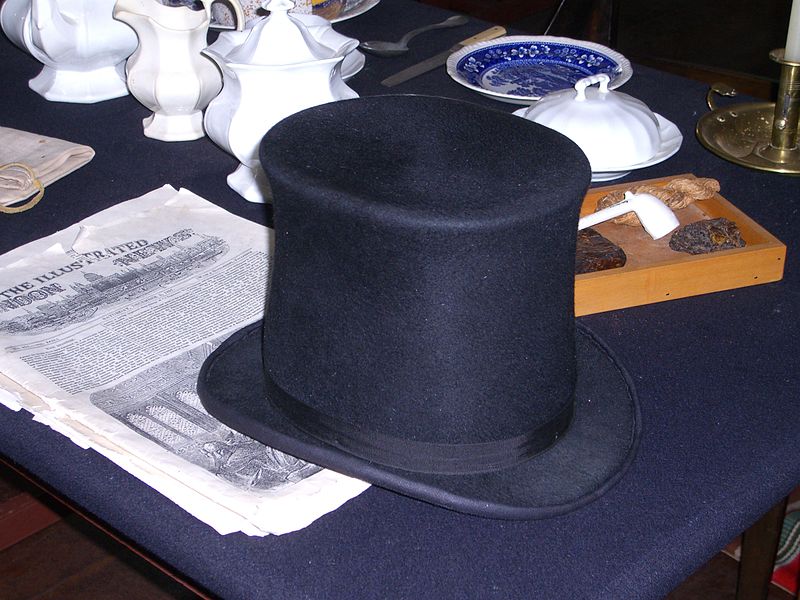
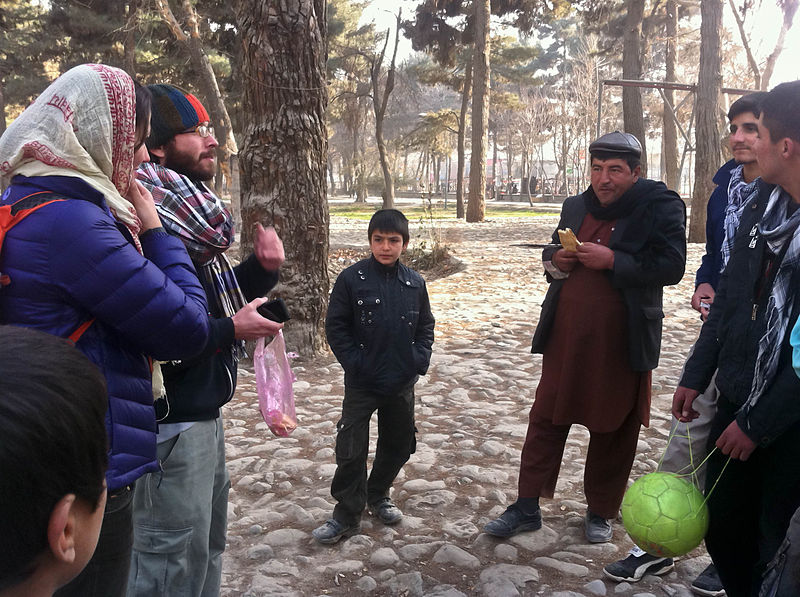
Do you want to start an argument? Mention hijab in a Christian environment. Some tempers will likely flair. The idea that a patriarchal religion would tell women to cover themselves suggests something sinister, doesn’t it? The other day I came across headcoveringmovement.com. There are, as I have come to know, many Christian groups that consider Paul’s directive for women’s headwear as, well, gospel. Commentators still spar about why Paul insisted that women cover their heads in worship. Adding “for the sake of angels” only evokes more convoluted imaginations. As any stroll through Manhattan will reveal, many Jewish men also observe head covering. What is it with bare heads, gods, and angels?

No doubt, in cultures where men are expected to restrain themselves less than women, hair can sometimes be seen as sexually provocative. (I’m not excusing, just observing.) Most men will eventually experience nature’s tonsure in some form or another, and perhaps this knowledge makes feminine hair more alluring. None of this, however, answers the question. What is so hubristic about uncovered heads? I’m not authorized to speak about fashion, but I feel confident in asserting that in many periods of human history, hats were the norm. Look at old portraits. What did Martin Luther or John Calvin look like without their ubiquitous hats? Did they serve to cover bad theological hair days? Or was it just the climate? Distinctive hats have been used to identify social classes and professions. We still use the expression “putting on my [chose a noun] hat.” So what’s all this with head covering for women?

“The wearing of fabric head coverings in worship was universally the practice of Christian women until the twentieth century. What happened? Did we suddenly find some biblical truth to which the saints for thousands of years were blind? Or were our biblical views of women gradually eroded by the modern feminist movement that has infiltrated the Church…? – R.C. Sproul.” So states Headcovering Movement’s homepage at the date of this writing. There can be little doubt about what’s behind this scheme. I recall a phase when my mother wore headscarves to church. Many years later, even in high church Episcopalian settings I’ve seen women walk in with what looked like lace doilies on their heads. Is there an agenda here? I can’t speak for Muslims, but it seems that Sproul believes the rightful place for a woman is beneath a man. Theology in the service of chauvinism. Just try to read 1 Corinthians 11 and come out without a headache. The saint’s logic here is so confused that I want to pull my hat over my eyes. Or I would, if I wore a hat.

Photo credit: Themightyquill, Wikimedia Commons

Photo credit: Themightyquill, Wikimedia Commons


Sects for You

Oxford University Press has a religion blog. (Well, who doesn’t these days?) Apart from being jealous about their numbers, I find some of the posts fascinating. A recent entry by Linda Woodhead on the approval of women bishops in the Church of England was particularly well done. Woodhead is known for her in-depth knowledge of religiosity in Britain, and she begins her post with a distinction between two types of churches that I find most helpful. She mentions the “church type” that embraces society and tends to have less trouble keeping up with social changes, and the “sect type” that insists on keeping a long distance from the evils of society. She points out how the Church of England went from the former to the latter and how its numbers have subsequently declined. Her article made me realize that for much of my life I’ve found myself among the “sect type” believers. Fundamentalists, among whom I grew up, are naturally suspicious of the world. Grove City College, where I cut my critical teeth, was dead-set against change. And Nashotah House—need I utter more than its very name?

Sects are indeed concerned about being right. Not only being right, but being the only ones who are right. I recall a New Testament class in seminary at Boston University where an unnamed professor said, “If anyone can join, what’s the draw? Barriers are important.” Christianity, he claimed, grew strong by excluding others. This professor would have a difficult time being retained by many seminaries today. The “church type” church realizes that without embracing society it will embrace empty collection plates. Unless, of course, you court conservative political causes, for which there seem to be bottomless pockets of money available. Sects thrive on the feeling of superiority. Knowing that we got it right and everyone else got it wrong is cause for great rejoicing. Others are encouraged to join, just as long as they jettison their point of view. We are the Borg.

It is no wonder that religions struggle in a world with the Internet. Too much information, 24/7. Religions you’ve never heard of are suddenly right there at your fingertips, and the believers are sincere and convinced. Some are sects and some are churches. Some are open to any belief system while others have just what the (church) doctors prescribed. To me this raises a fundamental question of religion: what is its purpose? Is it to seek the truth, or is it to exclude others and make members feel special? Truth is an expensive commodity. Indeed, nobody has a universally accepted version of it yet. While some religious believers will not rest while the search continues, others made up their minds centuries ago. And those believers use sects to get what they want.

Photo credit: Peretz Partensky, Wikimedia Commons

Photo credit: Peretz Partensky, Wikimedia Commons


The Good, Bad, and Human

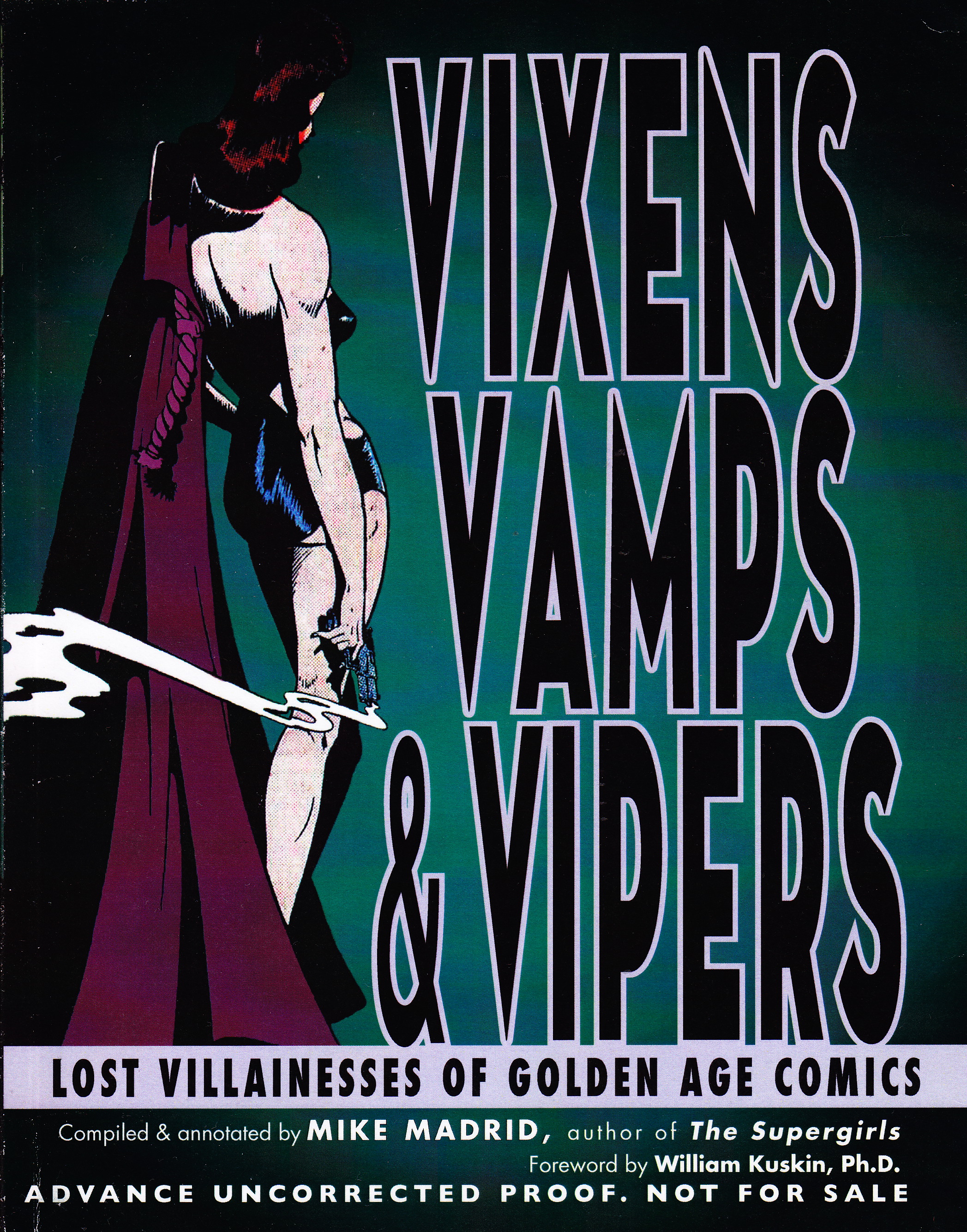
VixensVampsVipwesMike Madrid may know more about women in comics than anyone else alive. I’ve commented about his Supergirls and Divas, Dames and Daredevils, and he’s now followed up his previous successes with Vixens, Vamps and Vipers: Lost Villainesses of Golden Age Comics, due out in October. Despite the lament of many a parent that comic books are a waste of time, Madrid demonstrates through a close reading, that some of the most basic issues of society are featured in graphic format. Psychologists have long known that people are visually oriented. We have to learn to read, but we’re born with the knowledge of how to look. Comics, therefore, appeal to the young reader, illustrating the action with exaggerated pictures to underscore the tale. Although the early heroes were generally male, Madrid showed in his previous two books that girls and women were also superheroes, but, as in real life, competing in a world constructed by men for men.

Vixens, Vamps and Vipers flips the coin to see the role played by villains less known than Catwoman (whom he discusses), and torn between the human impulses to succeed and to be good. In fact, the first few pages of the book offer a profound consideration of the terms “good” and “evil” as they apply to the comic book (i.e., the real) world. As Madrid points out: if there were no villains, we would have no need of such colorful heroes. At the same time, evolution has embedded a desire to protect females in the minds of most males—Poe knew that the death of a beautiful woman was the among the most moving of literary images. Still, as Vixens, Vamps and Vipers points out, some of the villains here considered are beautiful and the allure demonstrates that something much more complex is going on beneath the surface. Despite the image of the hero, all people, male and female, constantly struggle with the impulses to do good and evil.

One of the complexities that religions attempt to codify is human nature: are we born good or evil? Are we totally depraved or inclined to strive for divinity? Any honest assessment of humanity, it seems to me, must take into account that we constantly struggle. Total depravity is totally disproved by the many good impulses shown by those of religions outside Calvinism and Christianity, let alone the tendency of humanists and atheists to help others. In fact, in many circumstances good and evil are intricately intertwined. Madrid explores this conundrum with women put in difficult, if fictional, scenarios who must decide which impulse to follow. He’s honest about this. Some will become superheroes despite the hurdles the male champions put in their way, while others will follow the trail that leads to his latest exploration of humanity through illustrated story. Look for Vixens, Vamps and Vipers and enjoy, if secretly, learning something profound about human nature.


Candle, Book, and Bell

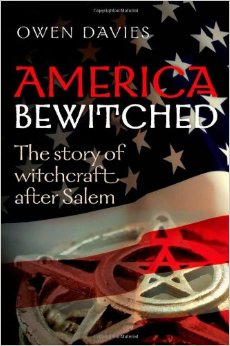
AmericaBewitchedHaving married into a family descended from the surviving relatives of women executed as witches at Salem, I have long been saddened and fascinated by the story. Not just the story, but also by the cultural milieu. We all know about the witch trials and the tragic massacre of innocents (mostly women) that took place in late Medieval and early modern Europe; the Salem miscarriage of justice came at the very end of that, after the start of the Enlightenment. Owen Davies is also fascinated by witchcraft, and his America Bewitched: The story of witchcraft after Salem is an exploration—mostly via newspapers and court trial records—of witchcraft accusations in America that continued up until about the 1950s. The coincidence of the 1950s with the “witch hunts” of McCarthyism will not escape some readers, and indeed, from the time of Arthur Miller’s nemesis on, those who vociferate against witches have kept rather quiet. Unless, of course, you count those who subsequently feared “terrorists” or any other group that might be profiled. We could learn from history, if we’d let ourselves.

Davies’s book brings together largely overlooked, nearly forgotten instances of how many cultures, including that cultural mix of Europeans who were to become “whites,” feared and sometimes killed witches. The difference from Salem was that almost all of these cases took place at the hands of self-appointed accusers (vigilantes) who hounded, punished, or killed someone suspected of being a witch. Surveys still show that a large percentage of people in the United States, although not a majority, believe in witches. It is an idea that has a primal hold on human psyches, and, as Davies points out, it is often used to explain misfortune. As I read this book I reflected how Americans come across as pretty gullible and not exactly sensible in this matter. The germanic strains of immigrants, it seems, were particularly susceptible to such beliefs. We also find witches, however, among Native Americans and African Americans as well. Misfortunate plays no favorites.

There are those who claim technology will save our culture. The other day a friend reminded me of the third of Arthur C. Clarke’s laws: “Any sufficiently advanced technology is indistinguishable from magic.” Even the most scientific of us knows, whether or not s/he will admit it, that “spooky action at a distance” does occur. It is perhaps only a matter of time before we find the hidden laws that operate the mechanism, but I can’t help but feel a little bit uncanny when I see more and more lifelike robots operating with what seem like human intentions. Of course, those intentions are programmed by humans. And it is often otherwise rational adults who with gun in hand, up until fairly recent times, accused flesh-and-blood neighbors as witches. America Bewitched can be a scary book, especially since unlike vampires, witches do cast their reflections in a mirror.


Equal Measure

Far off in the woods of Wisconsin sits a seminary. In these woods, I’m told, wolves eat little girls. That seminary has for decades distinguished itself by its stance against women priests. I knew of, and respectfully disagreed with this policy when I was hired to teach there in 1992. I didn’t make waves, but rollers have a way of finding you nevertheless. It doesn’t take much to capsize an unstable boat. Within my first year a student challenged me, “Did your life change forever on July 29, 1974?” I was unfamiliar with the code and asked what happened on that date, vaguely thinking perhaps it had something to do with the run-up to the Bicentennial. On that date, it turns out, Barbara Harris was ordained among the first female priests (the Philadelphia Eleven) in the Episcopal Church in the United States. I suppose my life should’ve changed—for the better—but I was a Methodist at the time. Perhaps my life changed then, for I was 12, but that change had little to do with what the student intended. Or maybe everything. I wouldn’t have had a problem with a woman priest in any case. In 1989, Harris was elected bishop, the first woman to hold that title in the Anglican communion. Just three years later I found myself in the lion’s den.

When I asked male students what their problem was with women priests the answer invariably pointed to three factors: Jesus had no women disciples (wrong, according to a certain sacred book they claim to have revered), the Roman Catholic church did not ordain women, and the Church of England did not ordain women. The problem with backing and filling is that filling always overtakes backing. By 1994 the Church of England was ordaining women. Yesterday, at long last, the General Synod approved of female bishops. Welcome to the twentieth century. Now only Rome stands in the way. I am confident, despite the certitude in the eyes of my Nashotah interlocutor, that Rome will eventually come around. I may not live to see it, but justice will be served.

Photo credit: ChrisO, Wiki Commons

Photo credit: ChrisO, Wiki Commons

There is good evidence that most religions, prior to the monotheistic triad, had women priests. Something about the singularity of deity seems to have contraindicated a protective mother in the psyche of male clergy. Ironically, the same day that the C of E decided to do what was right, Oxford University Press’s blog ran a post on Mormon women bloggers. Among the newest monotheistic faiths, like the traditions before it, the Church of Jesus Christ of Latter Day Saints has not recognized the sacerdotal role of women, leading some to be excommunicated for speaking out. We are told that God is a jealous god. This is, after all, the wilderness. After yesterday’s long-awaited decision the woods seem a little less dense, and the threat of the wolves may have been exaggerated all along. If religions would only see people as people all our lives might just change forever.


5 Ways to Protect Women from Exploitation

Please enjoy this guest post by Daphne Holmes:

Women’s roles in society vary from region to region, with some states exhibiting greater equality than others. In the United States, for example, shifts continue to alter women’s place within social and work culture, so American society appears to be moving in a positive direction for many women. Unfortunately, women’s rights and social justice are not always promoted elsewhere, so realizing their potential is an upward struggle for most women worldwide.
Protecting women from exploitation is a moral imperative that sets progressive societies apart from others that do not share a commitment to equal treatment for all members. The following approaches help women’s causes by addressing some of the unique issues they face and supporting a fundamental guarantee of equality.

Remove Systematic Injustice

In order to protect all members of society from exploitation, social structures must be in place to accommodate each group equally, regardless of race, color, gender or creed. Government, for example, must reflect a stance that protects women equally, supporting laws that facilitate their advancement and punish those standing in their way.
A culture of respect instills and perpetuates the correct values, so adopting tolerance for diversity is an essential first-step for raising women’s profile in society. Patriarchal societies, on the other hand, leave the door open to exploitation, because women are deemed insignificant, and their right to excel is not guaranteed.

Ensure Essential Needs

Surviving as a woman in a culture that does not acknowledge equal rights can mean diminished access to basic elements of survival. To elevate women’s position in society and protect them from exploitation, fundamental needs like food, health care services, water and shelter must be available to furnish the cornerstones of personal development.

Educate and Enlighten

In many cases, ignorance and outdated thinking are behind exploitation, so education is a powerful tool for protecting victims. The benefits of education are seen in two distinct ways. General knowledge about women’s causes and education about the difficulties they face are enlightening to members of backward societies, opening their eyes to an entirely different standard of equality. And women’s education is also an important feature of equal societies, furnishing vital information that helps women rise-up from oppression. With inroads in both areas, exploitation can be seen for what it is; increasing the likelihood women will escape its ill effects.

Stop Sexualizing Women

For specific progress to occur, general changes must be made to the way women are characterized. Movies and other media, for example, sexualize women with graphic imagery and unflattering portrayals that diminish the progress women make in real life. Valuing women for reasons other than their appearance and sexuality increases their mobility within society. By recognizing their achievements and potential, women enjoy greater opportunity for advancement and suffer less at the hands of exploitation.

Increase Accountability

Women face a number of forms of exploitation worldwide, including sexual trafficking, labor mistreatment and other abuses. Unfortunately, cultural imperatives and other influences prevent most abusers from being held accountable for exploiting women. For lasting reforms to take-hold, consistent punishments must be applied to offenses against women, establishing consequences that curb abuses. And demand must also be slowed, in order to remove the incentives for trafficking and sexual exploitation. Stiff penalties for abusers and access to justice are key features of a system committed to protecting women.

Protecting women from exploitation starts within a culture of respect, acknowledging women’s valuable place in society. Through education and programs supporting women’s rights, even regions slowed by backward thinking and outdated social structure can make positive strides protecting women’s rights. And by changing views and values about women, and enforcing penalties against exploitation, society contributes to constructive outcomes, rather than turning a blind eye to harmful practices.

Author:
Daphne Holmes contributed this guest post. She is a writer from www.ArrestRecords.com and you can reach her at daphneholmes9@gmail.com.


It’s My Body

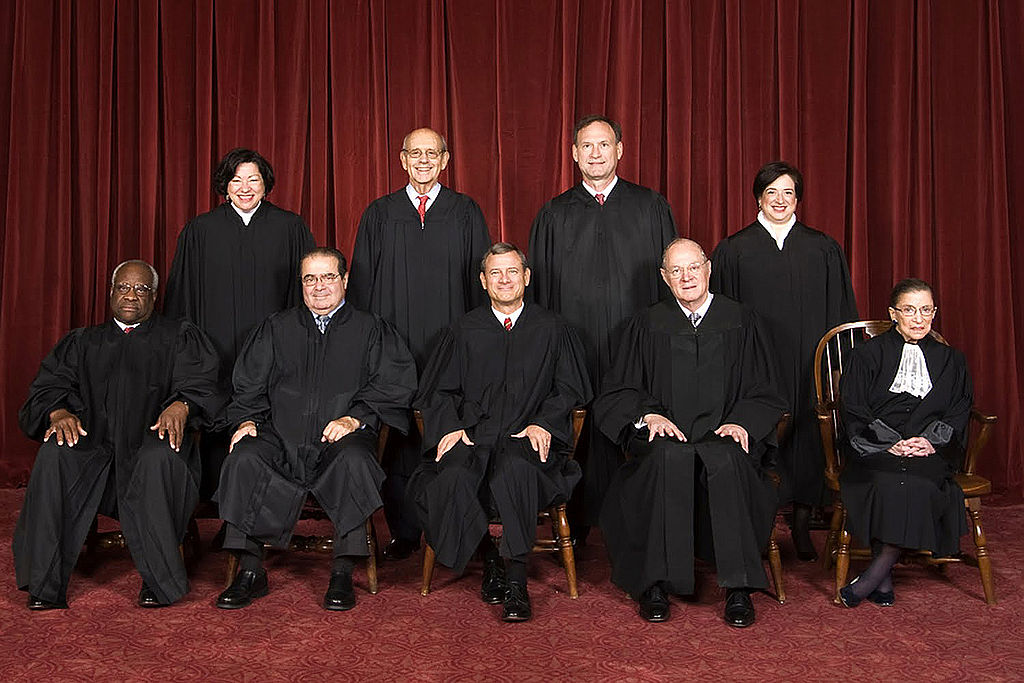
Those who believe mythology is dead have to look no further than the Supreme Court. Amid pictures of women protesting religious freedom to be told what to do with their bodies, the Court decided that employers may withhold rights to birth control under the rubric of religious belief. The ones who raise the issue, however, biologically never carried a baby to term. One gender making decisions for the other. We all know that the official stance of Roman Catholicism, closely followed by radical Evangelicalism, is that God intended sex only for procreation. Those women who find themselves on the receiving end of unwanted conception are helpless in the eyes of the law, depending on who their employer is. Blind justice indeed. Obamacare is intended to help level the playing field. Too few people have any real control over what medical treatment they can afford. I know more than one fixed-income person who suffers chronic pains due to lack of adequate treatment. I also know people who have used the system for plastic surgery before a trip to the beach. It seems that your employer now has the right to decide—but only if you’re a woman, and only if it involves what might be euphemistically called your “private parts”—what care you deserve.

Legislating morality, we religion majors debated even when I was back in college, cannot be effectively executed. If you presume there is a God, then enforced obedience is no obedience at all. Even conservative undergraduates could see that. Now our “Supreme” Court, with its male majority, has followed the lead of closely held corporations (doublespeak for certain patriarchal, Evangelically based companies) and declared that half the humans in America don’t deserve the same health care as the other half. The reason? Closely held companies don’t want women to have access to birth control. Our courts strike a blow against freedom and justice for private religious interests.

Within days of one Christian denomination declaring that gay marriage will be—should be— sanctioned, our own judiciary sides with the right of upper management in private corporations to discriminate based on gender. At least the owners of Hobby Lobby and Conestoga can sleep better at night knowing that they’ve prevented women from having their basic rights upheld. And metaphorically crawling into bed with closely held corporations are a male majority of supreme court justices who believe one man’s religion (yes, man’s) has the right to overturn the freedom of his employees. With the blessings of a male God. A situation like this prevailed, it seems to me, until 1863, also with the backing of scripture. Only in those days the argument was, I believe, that God is clearly Caucasian.

Looks balanced...

Looks balanced…


Kingdom Come

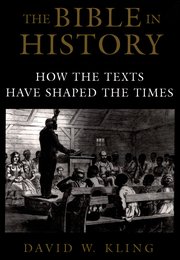
Bible in HistoryPopular media tells us the Bible is irrelevant. As someone who has struggled for years to find a non-sacerdotal job in that area of specialization, it’s not difficult to believe popular media is right. Despite all the rationales on all the religion department websites out there, there is little that you can do with your degree. It was refreshing, therefore, to read The Bible in History: How the Texts Have Shaped the Times, by David W. Kling. While not exactly what I expected it to be, Kling’s book did explore several specific pericopes (pericopae sounds too pretentious) with an eye toward showing how a single verse from the Bible could change western history. The examples go from the early monastic movement up to debates about women’s ordination that are, unbelievably, still on-going. The social movements he traces demonstrate that the Bible has been, and continues to be, more than just a book.

At several points through this volume I stopped to consider the implications. From an outsider’s point of view many of these debates must seem almost infantile. They would have no teeth at all if not for the belief that the salvation of humanity rode on their correct interpretation. Often—too often—the results were the torture and oppression of others, for the sake of the Gospel. If we’ve got this right, then we need to prove it through might. A mighty fortress is our God. So the Psalms seem to say.

Few people stop to consider just how deeply engrained in our culture the Bible is. The idea, on the surface, is almost like a fairy tale: once upon a time, God said… And yet, some of the most intelligent people the world has known have staked their very reputations on this claim. As a postscript to Kling, we can still see the Bible’s influence on politics—and therefore society—over a decade later. We still debate whether homosexuals can legally love one another. The biblical basis of this debate is thin, but it is a bulwark even today. We argue about stem cells, and although from the biblical worldview such things are mythical; yet that same Bible gives people the material with which to argue, eh, Jeremiah? And where is that female president we should’ve elected long ago? Any ideas, Paul? No matter how we may discount it, the Bible is, and will continue to be, a most influential book. Too bad we as a society don’t care to learn about it from specialists. Not when it’s so irrelevant.


Witches in History

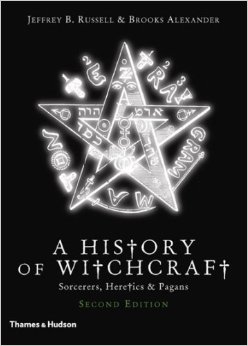
History of WitchcraftIn a rationalistic society, the concept of witches has no place. If only we knew what witches were. Sadly fascinated by the unfortunate—evil would be the more appropriate word—victimization of women in the late Middle Ages as partners of the Devil, I read Jeffrey B. Russell and Brooks Alexander’s time-honored study, A History of Witchcraft: Sorcerers, Heretics and Pagans. With its bold pentagram on the cover, I’d been afraid to take this on the bus, and so it sat in my reading pile until I figured out a way of keeping the cover from view while I perused the contents. The authors wisely spend the introduction with definitions. We define our world through lenses. For the most part, people today use the lens of science, as if that were the only way to view the universe. Still, even with that polished glass in hand, we have a difficult time knowing what “witch” is supposed to designate. Russell and Alexander suggest that it changes over time.

No doubt, witches still exist. The recognition of Wicca as an authentic religion (for tax purposes, the only true measure of a religion’s bona fides) demonstrates that. The problem is that Wicca is not in any sense a direct continuation of the witch hysteria that swept Europe, and parts of New England, centuries ago. As A History of Witchcraft demonstrates, this was a religion practiced by no one, but imagined, and feared, by many. Particularly men. Particularly religious men who had problems with women harboring hidden powers. It was a full-blown and horrible fantasy that led to many thousands dying for a religion that didn’t even exist. Modern witchcraft began in the 1930s and has become a nature religion that sees itself connected to that past, but which really only touches at the very edges.

Witchcraft was a way of looking at the world that saw all things as intimately connected. Russell and Alexander point out the similarity to chaos theory with its butterfly effect. We do see effects at a distance. Science tries to make them less spooky. Those who practiced witchcraft in ancient times, before the Middle Ages could even be dreamed, tried to bring such forces under human control. If some anthropologists are to be believed, some may have succeeded. This idea pulls at our darkest fears. Can we accept a world where we are manipulated by others in unseen ways? It happens every day. Not by spells or incantations, but by forces far more powerful than that. You don’t need to be a witch to see it. You only need to open your eyes.


Rosemary by Any Other Name

Rosemary

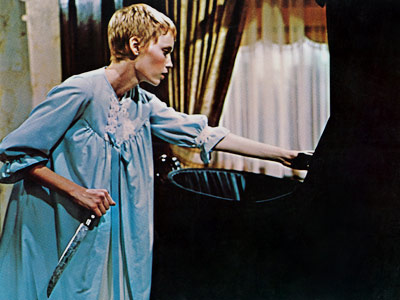
With NBC’s remake of Rosemary’s Baby into a mini-series in the news, I sat down to watch the original again. I’ve blogged about it before, but with most available funds being diverted to college, watching new movies will be a rare treat for some years to come. Besides, the original is a mishmash of religious ideas that despite their lack of coherence still leave the viewer somewhat disturbed. Since the last time I watched the movie, I’ve read several books on witches and have come to recognize the strange brew that Roman Polanski concocted for public consumption. Reaching back to the myth of diabolic witches, the original movie presents such witches initiating a new world by literally spawning Satan on a woman whose name is based on the mother of Jesus and who will ultimately care for the helpless little devil. The viewer, despite the knowledge that Rosemary is carrying evil incarnate, still sides with the vulnerable, pregnant protagonist. It’s the end of the world as we know it.

I’m not sure how you make a miniseries out of this thin plot. I suppose a nine-month pregnancy would lend itself to slow development, but haven’t we grown a little too old for witches and devils? In fact, Wicca is now a recognized religion in much of the industrial world, and the devil’s been on the run for decades. Religious movies, or at least movies based on religious themes and characters, are perennially popular, however, no matter what the secularists tell us. And why not open a series about pregnancy on the weekend of Mother’s Day? Nothing stirs the emotions like putting a young mother at risk. That’s perhaps the insidious side of the original movie—we silently side with the devil.

Rosemary is, of course, manipulated by her husband with the everyman name of Guy. This isn’t in any sense his child and, like any businessman, he stands to gain enormously from someone else’s labor. Exploitation is the cost of the continuation of the human race. It doesn’t take much to figure out that we’re watching a parable here. After all, the Time magazine cover asking if God is dead makes a cameo in Dr. Saperstein’s office. And the setting in Manhattan clues us in from the beginning that this is the place were many millions are asked to make a few very rich. There is a witchery in New York, and for those who know how to look, the devil may be found in the details.


To Thine Own Self

sexatdawnAmong the books that I would rate very important, Christopher Ryan and Cacilda Jethá’s Sex at Dawn would need to be on top, or nearly so. As I’ve often stated on this blog, religion and sex are very closely related. Every religion, in some way or another, intimates itself into sexuality. Like religious belief, however, it is something about which we blush, look at our feet, and politely change the subject. Perhaps it would be helpful to shift focus, then, to the subtitle: How We Mate, Why We Stray, and What It Means for Modern Relationships. Well, not even that reaches the depths to which this book plumbs. Ryan and Jethá actually peer back deep into prehistory and look at the changes that agricultural life brought onto humanity. Comparing that information to conclusions drawn from evolutionary theory and serious biological study, they derive a picture of a much more equitable culture for which humans clearly evolved. Agriculture, and just plain culture, changed all that.

With culture, you see, comes the materialist idea of possession. Hunter-gatherers, even today, are the best sharers in the world. Their generosity isn’t noble, as Ryan and Jethá point out, but entirely practical. In addition, their lives are longer, healthier, and happier than those of the modern, stressed-out, perpetually frustrated, “cultured” individual. We are constantly trying to get ahead, and own more. Of course, we don’t want to mention or think about the fact that when we die, all that ownership will mean nothing. We invent complex laws that so only our biological (we think) offspring will carry on that legacy until the last bit is parceled out so fine that all that remains is a name that few will remember millennia down the road. For that we suffer nearly constant frustration. I’ve not read a book in decades that made me want to throw all of this off and head out to the woods, sharpened stick in hand. (Problematic, since I’m pretty solidly vegetarian.)

Some of the larger implications, however, that Sex at Dawn doesn’t address, are the roles that religion plays in problematizing what we’ve evolved to be. Of course, sex scandals in churches are referenced, since they are such crucial evidence. What is overlooked, for the purposes of the book, is that religions have always tried to define and control sexuality, at least since the dawn of agriculture. We don’t often consider that agriculture, in addition to making us fat, and lazy, also gave us organized religion. It may be that religion came first, but it only grew into a coercive social force with the temple culture of ancient Sumer, and it has been with us ever since, dictating who may love whom, when, and for what purpose. Sex at Dawn is not for those who are set in their ways, nor for those who take a one-size-fits-all attitude toward life. For the rest of humanity, however, there is hope that perhaps we can learn to be a little more true to what nature intended us to be, and to understand that nature may be many things, but it is seldom evil.


The Lost Forest

DSCN4420

Asherah has, from lack of new material, fallen into a quiet retirement among the gods. For a while there no shortage of new books appeared, including my first, which explored many aspects of this shy goddess. While academia has pushed her to her logical limits, she has thrived in the world of popular imagination. I was reminded of this during a recent visit to Grounds for Sculpture, a whimsical park in Hamilton, New Jersey featuring the work of many artists. The appreciation of art works on many levels. A piece of sculpture can take on new meanings when viewed from different angles, and a piece that seems to make no sense can become imbued with meaning when new perspective is added. Sometimes it is the title of the sculpture. A friend had pointed out to me last year that one of the artworks was entitled, Excerpts of a Lost Forest: Homage to Ashera, by Tova Beck-Friedman. Ironically the sculpture is from the same year as my finished dissertation on Asherah, a continent away. I must have seen this sculpture many times, but without knowing what it was, had paid no attention.

DSCN4424

Asherah is often considered a goddess of trees. My research indicated, however, that such an association was premature. Of course, any discourse that has the Harvard University stamp of approval is decidedly fact, despite contrary evidence. Nevertheless, the dendrite nature of the goddess has persisted into popular culture and even into the world of abstract sculpture. The loss of a forest is, no matter whether goddesses are involved or not, tragic. Asherah has become the protectoress of trees.

DSCN4422

The nature of this particular lost forest isn’t clear. At first it might appear that a fire has gone through, claiming the vitality that once thrived in green leaves and mottled bark. I sense that something more is happening here. Asherah is, above all, the divine female. Here single-most constant role in antiquity was as the spouse to the high god. The loss of the forest still speaks to the on-going repression of women. We like to think that our society is headed toward equality, but progress is painfully slow. As usual with lack of momentum, religious institutions lead the way in conservatism. In the largest Christian body in the world, and in some of the fastest growing religions on an international scale, women are kept from leadership roles on the basis of gender alone. Monotheism declares there’s one god for two sexes. Those who experience life from the other side are like trees falling in the forest. We still don’t know if anybody hears.