October Early

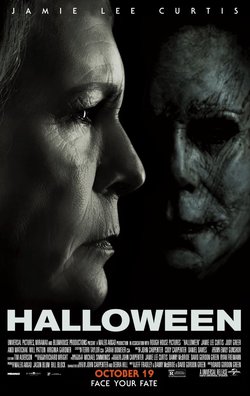
Still feeling that August is the new October, although that particular day happened to reach over ninety degrees, I watched Halloween.  Not the John Carpenter original; I’ve seen that one a few times before.  No, I watched the 2018 version only to learn it’s a retcon.  If you’re like me you’ll wonder what a retcon is.  It’s a portmanteau of “retroactive continuity.”  That’s where a sequel goes back and makes adjustments, or simply ignores, story elements from the original to take the story forward.  I haven’t followed the Halloween franchise.  There are too many movies I want to see that are original, with fresh ideas, to be spending my time trying to find my way through an emerging mythology of a serial killer.  Michael Myers, as horror fans know, inexplicably killed his sister as a child.  As an adult he terrorized Haddonfield, Illinois  one Halloween and Laurie Strode was the final girl.

What drew me to this sequel was that Jamie Lee Curtis was back as Strode, all grown up.  Michael predictably escapes again and goes for an even higher body count in Haddonfield.  Laurie, meanwhile, has gone NRA and booby-trapped her entire house in anticipation of this day.  You can see the draw, I hope.  You kind of want to see how this ends.  The original had Michael’s apparently dead body disappear at the end.  In the retcon he was arrested after that and re-institutionalized.  The thing is, you can never really kill a monster.  Original scenes and scenarios are revisited, and those familiar with the Carpenter story are rewarded by situations that subvert expectations.  Where is he hiding this time?  You always watch the credits roll wondering how “the authorities” don’t realize that a guy shot, stabbed, and incinerated and keeps coming back might be something other than human to be put in an asylum.

I should know better than to watch these kinds of movies when I’m home alone, but I don’t.  So it’s a good thing that I try to piece all these things together.  We have three strong women—three generations of final girls here, and the obligatory basis for a sequel.  (At least two, in fact, bringing the franchise up to thirteen movies.)  Laurie’s granddaughter is among the virginal, non-drinking final-girl prototypes.  Her less Puritan friends are killed off, although her worthless boyfriend survives the night.  You’ve got to love the endless self-references of such situations.  That’s why we keep on coming back.  We’ve seen it before but we still want more.  Even if it’s only August.


The Horseman

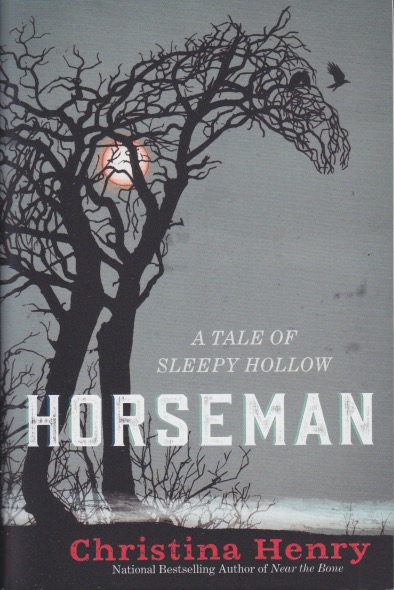
Washington Irving’s tale, “The Legend of Sleepy Hollow,” perhaps due to its being the earliest literary American ghost story, has been retold time and again.  When I saw that Christina Henry had a take on it that came out last autumn, I knew I’d be reading it.  I’d read her The Girl in Red late last year, but I couldn’t wait until fall to read this one.  Henry has a way of taking traditional stories and making them relevant.  Horseman is set two generations after Ichabod Crane and Brom Bones and Katrina Van Tassel, but they all appear in it.  According to Irving’s story—and this is often changed in cinematographic treatments—Brom and Katrina wed.  The narrator of this tale is Ben, who in today’s terms would be considered transgender.  He (his preferred pronoun) is the grandchild of Brom and Katrina.

Henry is a master of magic realism.  There really is something in the woods of Sleepy Hollow and it’s taking children’s heads.  Some influence from Tim Burton’s film version is found here, but the story has its own trajectory and inner logic.  Ben actually sees the monster, but nobody will believe him.  Not until it’s too late.  The one person who does believe is Katrina, Ben’s grandmother.  She, however, wants Ben to act like a girl because he was born female.  She wants him to stay home and learn sewing and cooking.  Ben’s hero, however, is Brom.  He’s a good man, if rowdy.  He married Katrina for love, not wealth.  Ichabod Crane does appear, later in the story, but since how he appears is a spoiler I’ll need to let you read for yourself.

Americans are often raised with the wrong-headed notion of canon as the one way a story goes.  Retelling is as ancient as writing itself.  Homer, Apollodorus, and Ovid were retelling stories.  So were many Bible writers.  People tell one another tall tales.  Washington Irving didn’t invent the Headless Horseman out of whole cloth.  Neither did the people of Tarrytown.  How the story goes is a matter for discussion.  Bet yet, it’s also a matter for retelling.  Henry’s version could be made to fit with Irving’s, but with a bit of prior assumption, some posthumous collaboration.  Hers, however, is a tale for our times.  Just like in Red, the protagonist isn’t conventional, according to conservative sexual standards.  Both are, however, authentic.  And although both may be flawed in various ways, there’s no denying that they’re heroes.


Carter’s Creations

Angela Carter was a novelist whose best known work is her short story collection, The Bloody Chamber.  Often acclaimed as both gothic and feminist, these repurposed folktales and fairytales leave the reader in a thoughtful state.  I have to admit to having not known of Carter or her work until quite recently.  I’d seen a biography about her, but there are so many writers and my time seems always so limited.  Then I saw The Bloody Chamber mentioned on a list of best gothic fiction.  I had to find out what this was all about.  The stories are indeed unlike much of the feminist literature of the seventies.  The stories are focused on women, often young, and how they deal with being treated as the property of men.

The first, and lengthiest story, “The Bloody Chamber,” is a retelling of Bluebeard from the point of view of his last wife.  It’s an extended reflection on feeling owned and boxed in—literally trapped—by men’s economic rules of property.  Carter keeps readers on edge, even if they know the base story.  This isn’t a simple retelling.  Nor is it a lament about the natural, biological unfairness of sexuality.  There’s an ambivalence here, an enjoyment tinged with melancholy that gives the story a gothic sensibility.  The women in the different stories here prefigure more recent Disney heroines that take charge of their circumstances.  And there’s also ambivalence about the setting of the stories.  There are contemporary appurtenances but still castles and baronial mansions.  You’re lost in time.

The collection has some stories, such as beauty and the beast, retold twice and ends with three versions of werewolf stories that play, to an extent, on little red riding hood.  Some were tales with which I had no familiarity.  The effect of the whole is thoughtful contemplation of the human condition.  Much of the world, it seems, has been unduly influenced by a kind of literalism—a story, whether biblical or traditional, is supposed to go like this—that has not only robbed great texts of their depth, but has entrapped human beings in a stone-chiseled certainty.  A self-righteousness, if you will.  Even writing a text in stone doesn’t prevent others from interpreting it, however.  Since none of us have all the answers, we are each interpreters.  There was no historical Bluebeard.  There have, unfortunately, been many men who embody his attitude towards women.  Carter’s genius is to remind us that every story has at least two sides.  And the woman’s side may well be the truer of the two.


July Forth

Independence Day.  What does it mean in a nation on the verge of a fascist takeover?  Supreme Court justices, themselves appointed by crooked but technically legal politics, have just struck down the independence of half the people in this country.  Independence Day for whom?  Originally a celebration of freedom from monarchy, one of our political parties has opted for authoritarianism—the objection to which was the very reason the Revolutionary War was fought.  The colonists wanted religious freedom, but now we find religiously motivated politics driving the bus off the cliff.  If you’re not a white evangelical these rulings are not for you.  Your religious freedom has been compromised by politics.  So we gather in grassy places to watch fireworks.    We celebrate the independence of the wealthy.  Those who can break the law and buy the results they want with lawyers without scruples.

I think of Independence Day from the perspective of our Black siblings.  Freedom to be shot for a traffic stop or to be publicly strangled to death for petty crime.  To be redlined and kept in poverty.  Independence from literal chains only to be shackled in bureaucratic ones.  Being sentenced to prison for things a white can easily afford to pay off.  Independence Day in a nation with over 40 million people in poverty and where just three white men own more than the bottom fifty percent of Americans.  Give them fireworks and firearms and let the bottom half work it out for themselves.  When is the last time a Supreme Court justice had to worry about having enough for both rent and food?  Freedom, those on the top tell us, is not free.  Watch the pretty lights.  Hear the loud booms.

What of American Indians, still awaiting freedom?  What is Independence Day to them?  Kept out of sight and in poverty, we don’t want to be reminded.  No, we only want freedom to get more for the white man.  As a child in the sixties I had some hope that we might be making progress.  Freedom and protest were in the air.  There was at least hope for some justice.  The privileged white leaders now give us a day off work.  The wealth can still flow upward, even if we take a brief hiatus from labor.  Women, Blacks, the poor, American Indians, and many others who make America what it is are nevertheless denied basic freedoms.  This loss of independence at least comes with a light show.  Just watch it and be grateful.


Keeping Your Head

Horror is a gift that keeps on giving.  Not many horror fans are among my regular readers, but I like to keep a finger in the pie nevertheless.  Just earlier this month it was announced that Paramount has hired Lindsey Beers to direct a new big screen Sleepy Hollow.  It’s early days, of course, and the movie hasn’t been titled, let alone filmed.  Beers is just wrapping up a prequel for Pet Sematary (not yet titled) that I’ll be eager to see.  Women horror directors tend to bring refreshing angles to the genre—and why shouldn’t they?  Women writers were crucial in developing the Gothic genre that evolved into horror as we know it.  No matter what the Supreme Court says, they are just as important—probably more—than males.

I’ve been reading quite a lot about Sleepy Hollow over the past several months, which is how I came across the intelligence about this new movie.  It’s nice to know that the Hudson Valley is evergreen.  My visits there have offered brushes with the uncanny, but nothing explicit.  A weekend near the ice caves of Sam’s Point, geocaching in the woods outside Poughkeepsie, a visit to Sleepy Hollow itself to visit Irving’s grave and tip my hat to the Old Dutch Church.  With deep family roots in upstate New York, I’ve always thought it would be a great place to live.  Alas, not on an editor’s salary.  It’s been too long since I’ve given the area a visit.

John Quidor, The Headless Horseman Pursuing Ichabod Crane, via Wikimedia Commons

There have been many takes on Washington Irving’s “The Legend of Sleepy Hollow.”  Even in the silent era movies were made of it.  In retrospect, it seems odd that it took so long for Tim Burton to bring it back to the big screen.  There were some television movies, usually with plodding plots to draw the story out to commercial length.  Disney had early on devoted half a feature to it, as if the story couldn’t support its own weight.  For better or worse, that film was probably the first introduction to the tale that many people had—the story itself was written for adults.  Of course, many written kids’ versions have come out since then.  The satirical original was meant for a somewhat sophisticated readership with a sense of humor.  The story lends itself to horror treatments, however, if they’re done well.  It may have been an early viewing of the Disney tale that set me moving in this direction.  I like to think I’ve kept my head over it, however.


Stand with Women

We like to think we’re the most advanced civilization in the world, but we allow the appointment of “justices” who still believe women are inferior to men.  Millions of women who’d been born into the modern world yesterday found themselves thrust back into medievalist thinking that now seems to reign in the Supreme Court.  Even Donald Trump, who is responsible, has expressed his doubts.  When will we acknowledge that women should have the same rights as men?  How long do we have to continue this inane struggle against religious amateurs who believe their reading of Scripture is the only correct one?  I was raised by a woman on her own.  Uneducated, with no practical job skills, she remained religious and very capably reared three sons.  She was far more capable than my father.

Democracy can be gamed, of course.  And the “angry white man” has become America’s new face to the world.  The petulant, selfish male who thinks everyone else is getting the benefits.  Even as Catholic-majority nations are declaring women’s rights, America is stepping backward in the Human Rights Index because certain senators refused to allow voting on legitimate candidates for the supreme court.  How they can go home and face their wives I do not know.  Of course, our laws do not apply to our lawmakers.  As revelations continually show, theirs is a world of “do as I say, not as I do.”  Is it so difficult to say it out loud?  Women are fully human and have an inherent claim to the same rights as men.  But then again, when have those blinded by religion ever seen clearly?

America, do you enjoy seeing your rights stripped away?  Do you enjoy justices who one day decide it’s our right to carry weapons in public and then next to say that women must remain home barefoot and pregnant?  Is this the mentality that now rules the gamed “supreme” court?  I’d like to exegete that word supreme and ask our “justices” just how deeply they’ve studied religion.  And that doesn’t mean just praying over your Bible.  The most difficult courses in the religion-philosophy curriculum are those dealing with ethics.  Days spent wrestling with the subtleties of how reason, law, and religion interact and teasing them apart to look at each with real understanding.  Or do we just vote along party lines like any beast in the herd?  It’s a shock to have been born in the sixties only to now find yourself living in the fifties with all their inherent hypocrisy.  I stand with women, not amateur theology masquerading as justice.


Pure Fear

At work we have the opportunity to say a little about ourselves on a shared document for our teams.  This is a fairly new thing, so people I’ve worked with for years have no reason to look at it.  A couple of new hires, however, have noted that I watch horror movies and this has led to some budding friendships.  Since we’re all remote workers it’s mostly a matter of a line or two in an email about whether I’ve seen this or that film.  One of those recommended was the Hulu original Pure.  It’s actually pretty good.  The idea is a bunch of teenage girls are brought to a retreat center for a purity ball with their fathers.  This kind of thing can get very creepy very fast, given the incestuous overtones for such a thing.  Not only is it a religious event, it’s based on the story of Lilith.

Collier’s Lilith

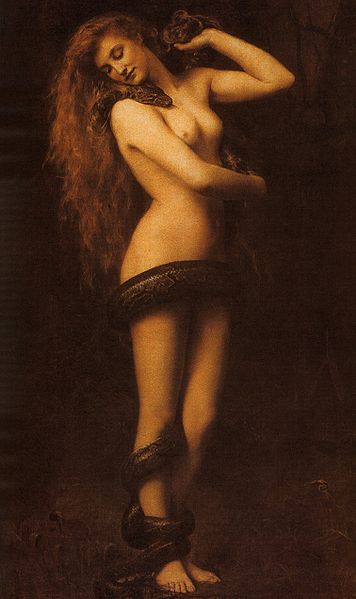
The pastor preaches his first sermon about Lilith, but the girls from cabin 4 sneak out at night to meet some guys.  (Their presence is explained at the end of the movie.)  That night the girls summon Lilith, whom the minister’s daughter says is a demon.  The summoning works.  Lilith begins to interfere with services as the girls are tempted by the guys who are hanging around.  At the end, Lilith “possesses” Shay (the lead girl) and frees them from being controlled by the men in their lives.  The message is a refreshing one, and Lilith ends of being, well, somewhat as Shay puts it, “One man’s demon is another’s angel.”  

Religion and horror make a good couple.  I’ve never seen a movie that features the story of Lilith before.  The thing is, she’s not the scary part of the movie.  The religious believers, the fathers who try to control their daughters rather than giving them support after listening to them, are.  Parenting is tough, no doubt about that.  None of us are born into life with all the answers.  We quite often find ourselves not knowing for sure what we should do.  I couldn’t imagine being a parent claiming to have the solutions for all problems.  I’m a guy who watches horror for a form of therapy!  What I do think, however, is that we can try to be reasonable, loyal, and supportive.  I learn as much from being a parent as I teach.  The same was true of being a professor.  Humility, along with a willingness to continue learning your entire life is the only way that makes sense to me.  Although not a major studio production, this was one of the scariest movies I’d seen in a long time.


Fight for Mom

The spring holidays come think and fast.  Depending on when you start spring we’ve got Valentine’s Day followed a month later by St. Pat’s.  On it’s roving schedule Easter hops along, with its precursor Mardi Gras.  There’s Earth Day, May Day, and Mother’s Day.  One thing they all have in common, apart from being holidays, is they’re not worthy enough to be days off work.  You have to wait for Memorial Day for that.  Today, in any case, is Mother’s Day.  We stop to think, as if we shouldn’t every day, about our mothers.  Women are pretty poorly represented in the holiday scheme, unless you’re Catholic (and even those aren’t days off).  Mother’s Day always comes on a Sunday so employers are eternally thankful.  A holiday with no consequences.  But should it be?

We’re only just beginning, after being “civilized” for five thousand years, to give women their due.  Only just beginning because capitalist systems are built on male fantasies of growing rich without the female humane element.  It’s not a system friendly to mothers unless we find a way to make people spend money.  Women remind us to look for cooperation and not just competition.  Working together we can make things better for everyone.  Men, left to their own devices, go to war.  Men take what they want and women act as our conscience.  Mothers sacrifice to keep us safe and alive.  Their self-denial resonates better with the Christianity suborned by men into a money-making venture.

It’s Mother’s Day.  It’s a day to put aside our acquisitive, war-like tendencies and think of someone else.  It’s a day to imagine what it might be like if we made a habit of good behaviors.  It’s like those grades they used to give in school for “deportment.”  It wasn’t all just about how well we learned our facts.  Mothers teach us what it means to set aside our own wants for the needs of another person.  Without that the human race simply wouldn’t survive.  Instead of politically stacked courts taking away women’s rights, today we recognize that without women none of us would be here.  The human experiment only succeeds when women are recognized for all that they contribute to life.  To civilization.  To society.  We may not have commodified it, so why not listen to our mothers’ wisdom?  Why not make it every day instead of just the second Sunday of May?  Don’t forget to thank your mother today.  Better yet, fight for her rights.


Sexist Instructions

The thing about cars is there’s so much that can go wrong.  And when it does it’s costly to fix it.  Yet, even when working from home, we need them.  We have two, both quite old in car years.  One is approaching twenty.  We bought it new—the first time we’d ever been able to achieve such a feat.  This was one of the new Beetles and it has had never-ending electronic issues.  Warning lights come on that seem to be a malfunction of the warning lights—if you ever wanted an existential situation that’s one right there.  How do you know if there’s something wrong with your engine or is it just something wrong with the warning light?  A worrisome one came on just as winter was settling in and we didn’t need to drive it much before inspection time and we let it sit a little too long.

The battery, naturally, died.  We have an old, seldom used battery jump-starter, which, in the cold of the garage, also died.  We’ve been trying to find time on the weekend when both my wife and I are free (rare) so that I can drive it a ways to try to recharge the battery, but with someone home who can rescue me if I get stuck.  So it was we came to buy a new jump-starter.  These new ones are the size of a cell phone on steroids—much smaller than the old kind.  Ours came from China, I’m guessing, and the instructions are sexist.  They imply that women can use this because it’s easy.  Part of the description reads “It can be used more than 30 times, giving you peace of mind, no matter where you are, if the battery runs out, you can start it without looking for women who are not smart at night in an empty parking lot, such as a college campus or forget you.”  I don’t know about you, but this sounds like the writer had a past he’s trying to deal with.

I was indeed once left stranded because of a dead car battery.  It’s a story I’m saving for my autobiography, if I ever write one, but let me assure you all the people responsible for that abandonment were men.  Men with a car that wouldn’t start while I sat in the middle of nowhere in the dark.  (This was before cell phones.)  I didn’t want to buy a sexist device.  Both men and women have batteries die and I’m always a little scared to jump-start a car.  At least now we can get the Beetle rolling again and drive toward a future where women are rightfully seen as equal to men.  And I hope that instruction writer has found some help, perhaps with therapy.


Thinking, Critically

A woman—I don’t know her name—photobombed a Russian newscast with a sign telling the Russian people that they’re being lied to.  Detained by police, her whereabouts are unknown.  I admire that woman.  She may pay with her life  in her effort to encourage what is dear to every teacher everywhere: critical thinking.  Many of the world’s problems are the result of the dearth of critical thinking.  There’s no other way to explain the election of Trump and his main squeeze Vlad.  Thick as thieves, the saying goes.  I recently gave a talk to a small group about publishing.  One of the points I was making is that critical thinking is essential in getting to the truth.  Compare sources, use reason, and never trust a snake-oil salesman.

People vote with their feelings rather than with their rational faculties.  Trump openly admires Hitler, as Putin does Stalin.  These should be signs of warning to those who think critically.  The Second World War wasn’t even a century ago and we’ve apparently forgotten all the lessons it should’ve taught us.  In high school we were shown examples of propaganda and told how to avoid it. Now we see it and can’t recognize it at all. Critical thinking is often frowned upon in modern society.  Being comfortable with the status quo is perhaps valued higher than social justice and the necessary work to get us to where it might happen.  It’s easier to hate than to think.  It’s easier to follow than to question what you’re following.  Education teaches us survival skills, and among them are the ability to think through a situation.  Authoritarianism is seldom—I’m tempted to say “never”—the way to a good result.

Perhaps the saddest irony of all is that those who run outlets like Fox News (and its Russian equivalents) are thinking critically of ways to get followers not to.  Realizing that critical thinking will lead to a more fair and equitable world, they decide to keep their positions of privilege by discouraging their followers from engaging with the basic comparison of sources and weighing of facts.  Instead, promoting “alternative facts” and emotionally outraged rhetoric, they are able to stir up crowds to try to take over the government.  Conspiracy theories are easier to believe if you don’t know how to check facts for yourself.  And the internet has made us all experts on everything.  Russia’s narrative about the war is far from the reality on the ground.  Objective observers have seen what is really happening.  One heroic woman in Russia said enough is enough.  In all likelihood nobody in the world will ever see her again.


In War’s Domain

Good for absolutely nothing, to borrow the wisdom of Edwin Starr, war has again marred Europe.  We could see it coming from afar because people keep electing autocrats and strong men always want to fight one another.  There should be international laws banning their election, but instead innocent people die because one man has to prove he’s bigger than another.  The evils of the Trump years will be with us for decades.  There’s nothing Christian about waging war.  Seems that some folks have forgotten their Sunday School.  Wasn’t the selfless, self-sacrificing carpenter from Nazareth known as the “prince of peace?”  Of course, Ukraine became Christian long before Russia did.  What deep-seated insecurity such “world leaders” have!

While not wanting to be drawn into open conflict yet again, the world has pretty much all sided with Ukraine.  It has the misfortune of being nestled next to a weary nation with a dictator who despises the west.  Who pulls down his pants and shows off his missiles when anyone starts to open their mouth.  Who isolates himself and his people in the name of self-aggrandizement.  We came close to that over here.  So close that it still makes me shiver.  We feel for the people of Ukraine.  They did nothing to provoke attack, and they probably knew other world leaders would keep their distance.  Putin, like Stalin, wants a USSR.  An empire to put the evil west in check.  Hadn’t we left that kind of thinking behind?  Hadn’t we grown up after World War Two?  Strong men learn nothing from history.  They look at it and see only a mirror reflecting only themselves.

Hitler annexed Poland.  Russia, which has more land than it knows what to do with, doesn’t need Ukraine to be part of it.  The good people of Russia are protesting, just like the women brave enough to march on Washington to protest the fascism America embraced for four years.  I’ve put off writing about this because it’s so difficult to do without dissolving into tears.  Beware of either bare-chested or chest-thumping politicians worldwide!  It’s time to end the era of the alpha male.  We need mothers to nurse us back to health.  They call it “Mother Russia” but what mother acts this way?  The women aren’t impressed, Vlad—they’re in the streets bravely protesting.  It’s International Women’s Day.  Let’s honor women. It’s time to let the women lead.  It’s time to put war behind us forever.

Photo by Jenna Norman on Unsplash

Others’ Weeping

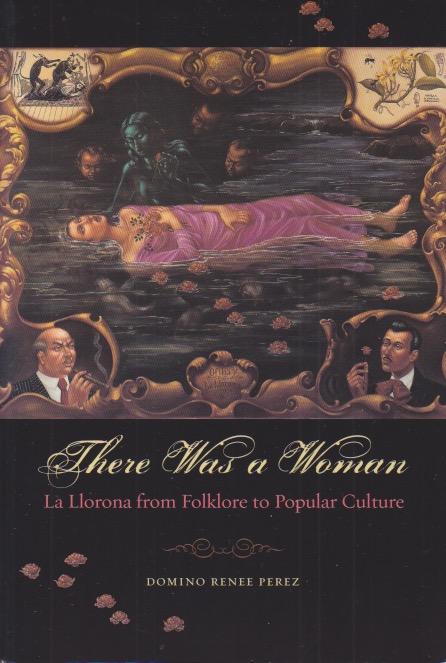
I was first introduced, consciously at least, to la llorona via the movie, The Curse of la Llorona.  The film is part of The Conjuring universe, but just barely.  It was clear from the movie that the weeping woman (la llorona) wasn’t invented for the film.  I’ve never lived in, or even spent much time in, the southwest.  Even less in Latin American countries.  In my rather strange career path, the best source of such things to penetrate my own experience tended to be my students.  (Those who think professors do all the teaching have the equation backward.)  Since becoming more isolated as an editor, my interactions are often someone approaching me with an idea mostly formed, often fully formed, and few of them have to do with ghosts or folklore.  That’s why I found Domino Renee Perez’s book There Was a Woman: La Llorona from Folklore to Popular Culture such a treasure.

As an Anglo reader endowed of white privilege, it’s important to read books where I’m clearly the outsider.  Being a kind of historian, I was curious about the origins of the tale.  As a person living in the modern world I was also interested by its reception history.  This book contains many, many examples of the latter.  It will demand that the outsider reader accept unfamiliar names and cultural conventions.  It will, in some ways, force you to stand “south of the border” and face the suffering our nation has caused and continues to cause in the name of white supremacy and its adjunct, capitalism.  There are other ways to be in this world, but when money gets involved all bets are off.

There’s much to discuss in a packed book like this, but one aspect, near the end, caught my attention.  Briefly, if you don’t know the story, la llorona is a woman betrayed by her husband.  She drowns their two children and is condemned to wander the riverbanks for eternity crying as she searches for them.  Interestingly Perez makes the connection with Rachel in the Bible.  I’ve read the Good Book many times and yet I seem to have missed Matthew’s use of Jeremiah’s interpretation of Rachel’s story.  Joseph was kidnapped and sold to slavery by his brothers but Genesis focuses on the grief of Jacob.  Rachel doesn’t live to be reunited with her lost son like Jacob does.  Perez makes the point that the stories are quite different, but it showed me once again how much I have yet to learn.  We need to pay attention to those who experience life differently.


Sects and Violence

Important books often suffer because of poor distribution.  There are really only five publishers in English (“the big five”) that can reliably get their books into commercial bookstores.  I was reminded of this when reading the very important book Sex and Religion: Teachings and Taboos in the History of World Faiths, by Dag Øistein Endsjø.  The book is virtually unknown here in the States for a number of reasons.  It was originally written in Norwegian.  The author isn’t a household name.  The publisher who bought English rights is British.  It’s not comfortably priced.  None of this, however, gainsays its importance.  This book has much to teach us about hypocrisy and how religions codify prejudices, and, despite rhetoric, still value women less than they value men.  Religion is intimately connected to sex.  As I’ve written before, no religion ignores it completely.

Endsjø offers here a reasoned, logical, and religiously expert analysis of several aspects of human (and to a degree, animal) sexuality.  Contrary to much monotheistic teaching, sex is often treated as a good thing—within limits—in world religions.  Of course, that allows monotheists to step in and claim all others are pagans and debased, a tactic as old as the Good Book itself.  Religions’ real enemy, it seems, is education.  We should be open to compare what others believe—the wisdom their elders have passed down, just like the disciples.  And we should be honest about the fact that we change the rules to suit our situation.  One of the starkest examples of this Endsjø points out is that the Bible is much more stridently against divorce (which evangelicals now freely use) than homosexuality.  But guess which is the political issue?

Religions change, no matter what any true believer says.  We adapt to all kinds of new situations and new information, except when it comes to sexual behaviors we don’t like.  Even though most religions prohibit murder, the punishment for sexual offenses is frequently more stringent.  In other words, as Endsjø points out, religions care less for human life than for their own sexual prejudices.  The fact is just about all monotheistic religions have a male god and favor males over  the other half of the human race.  It even seems likely that Muslim over-reactions to homosexuality arose from copying evangelical Christians in the west.  This is an important book and if religious leaders of all stripes read and comprehend it, we would find ourselves in a much more human, and humane, world.


Read Red

Fairy tales can be pretty gnarly.  I recently picked up a new translation of Grimm but I haven’t read it yet.  For some time I’d been aware of Christina Henry’s The Girl in Red.  As soon as I discovered it I wanted to read it.  The BISAC code says it’s science fiction but I’d call it horror.  More than that, I’d say it is the most tense book I’ve read in years.  Henry knows how to keep readers on edge.  Yes, it’s a take off from Little Red Riding Hood, but in a way that I wasn’t anticipating.  Red is a strong, believable protagonist who finds herself in a pandemic-ravaged world (imagined before Covid-19) where she has to get to her isolated grandmother’s house.  Everything between will surprise, scare, and stun.

The writing carries you along.  A government with secrets, the ever-present threat of roving groups of bandits and militias who are always on the lookout for girls, and the uncertainty of how this will all end make for a powerful tale of what people are capable of.  And not necessarily for good.  Making Red “disabled,” and black, Henry has given us a protagonist we need.  And it’s always a delight when a character finds that watching horror movies has been good training for a world where order has broken down into a Trumpian anarchy.  Scary and witty, the story has so much to like it’s difficult to know where to start beyond the recommendation to read it.

Those who analyze literature sometimes say that the great story-lines have already been taken and that the best modern writers can do is to adapt them.  There may be an element of truth to that, but even if there isn’t the clever retelling of old tales can be quite enjoyable.  This isn’t so much a retelling as a reimagining.  It’s also a poignant reminder that when things start to break down—or even in the status quo—women are put at risk.  Men too quickly resort to guns and violence.  As the story unfolds it becomes clear that Red is capable of surviving in this world, even when at a disadvantage.  There’s also no overcoming of the military.  It’s too well established and too heavily armed.  Red’s run-ins with them allow her to impress those who assume white male superiority.  In that way this is a parable within a fairy tale in a modern guise.  I’ll be reading more of Christina Henry’s books.


Devils and Witches

If you’re a regular reader (thank you!) you know that I’m currently under contract to write the Devil’s Advocates series volume on The Wicker Man.  As an editor myself I’m aware that academic series, often unlike fictional series books, tend to vary quite a bit from one another.  I want to try to get my submission close to the goal, however, so I’ve been reading volumes by other authors.  You may also know that The Wicker Man is part of an “unholy trinity” of early British folk-horror, with the other films being Witchfinder General and The Blood on Satan’s Claw.  Of the three my least favorite is Witchfinder General, so I’ve put off reading the particular volume on that film by Ian Cooper.  That has nothing to say about the author, but rather a lot to say about the base film.

The book is quite good.  Cooper is clearly aware of the controversy surrounding the movie and he points out some of the difficulties with it as well as what it does well.  His treatment is quite insightful.  The movie is violent and it’s an representation of the historical violence we thought we outgrew.  Matthew Hopkins was an historical “witch hunter” who was, in reality a serial killer,  mostly of women.  Fearing witches, while getting paid to find them, he was responsible for over 200 deaths.  As Cooper makes clear, the film lingers a bit too long on the abject nature of many of the tortures, not allowing us to look away.  For this reason many critics found the film distasteful.  I personally found it hard to watch.  Education isn’t always easy.

There’s quite a bit of film history in the book.  Cooper does a great job placing the movie in its cinematic context.  Like The Wicker Man, Witchfinder General is sometimes said not to be a horror film.  Indeed, there’s nothing supernatural about it.  Still, it fits the bill for many of those in-between movies that cross over into horror.  In this case it’s due to the violence.  For me, monsters are preferable to human monstrosity.  They’re easier to walk away from.  Although the witch hunts ended centuries ago, violence against women has remained.  Whether it’s legislative or physical or economic, women deserve better treatment than they’re offered by the male establishment.  Movies, and books about movies, like this one may be difficult to watch/read, but they carry important reminders that power continues to corrupt and it must be challenged and changed when it reverts to the mentality of Matthew Hopkins.  His spiritual kin, unfortunately, continue to thrive.