Eleventh Hour

Religion, as many a charlatan knows, makes a very good investment. History has demonstrated time and again that the confident huckster can easily siphon the money from the gullible in the name of God. What follows does not make any assertions about the character of the people involved. It is, however, a fascinating story.

Cyrus Ingerson Scofield did not have an exactly stellar career. He was raised Episcopalian (which may explain some of it), but upon being drafted into the Confederacy during the Civil War, deserted to become a lawyer in St. Louis. Scofield was forced to resign from his law post because of “questionable financial transactions” which may have included forgery. He was a heavy drinker and abandoned his wife and two daughters. The year of his divorce he remarried. Then he had a conversion experience. Conversion is the ultimate clean wiping of the slate. Any life of dissipation may be excused following a religious experience, eh, Augustine? And furthermore, in the sanctified state the motives of the former reprobate are never questioned.

Scofield went on to join the Congregational Church and to grow wealthy from his Scofield Reference Bible, still a perennial seller, despite his lack of formal theological training. This notoriety was largely because Scofield had adopted another unlikely scheme, dispensational premillennialism. This end-time scheme grew out of the work of John Nelson Darby and later evolved into what would be called Fundamentalism. The idea was that the Bible contained an esoteric roadmap to the future, culminating in the book of Revelation, whereby the blessed could figure out exactly how the end of the world would unfold. As a child I bought a literal roadmap to the end of the world, but having survived several such putative apocalypses, I have grown a tad skeptical about the efficacy of my chart.

Any number of religious leaders have a background of self-promotion and more than a whiff of Phineas Taylor Barnum about them. A converted soul, however, is never to be questioned. Cyrus Scofield adopted Archbishop James Ussher’s dating scheme for the creation of the world in 4004 “BC” and placed it in his reference Bible, forever putting the cast of scriptural authority to a date that would come up in court cases even through the twenty-first century in Dayton, Tennessee, Little Rock, Arkansas, Dover, Pennsylvania, and Washington, DC, wasting tax-payers’ money on a myth of biblical proportions. Often creationists use “stealth candidates” who don’t exactly tell the truth before school board elections. I don’t doubt the depth of the convert’s belief, but I smell money here. And once upon a time literalists believed that it was the root of all evil.
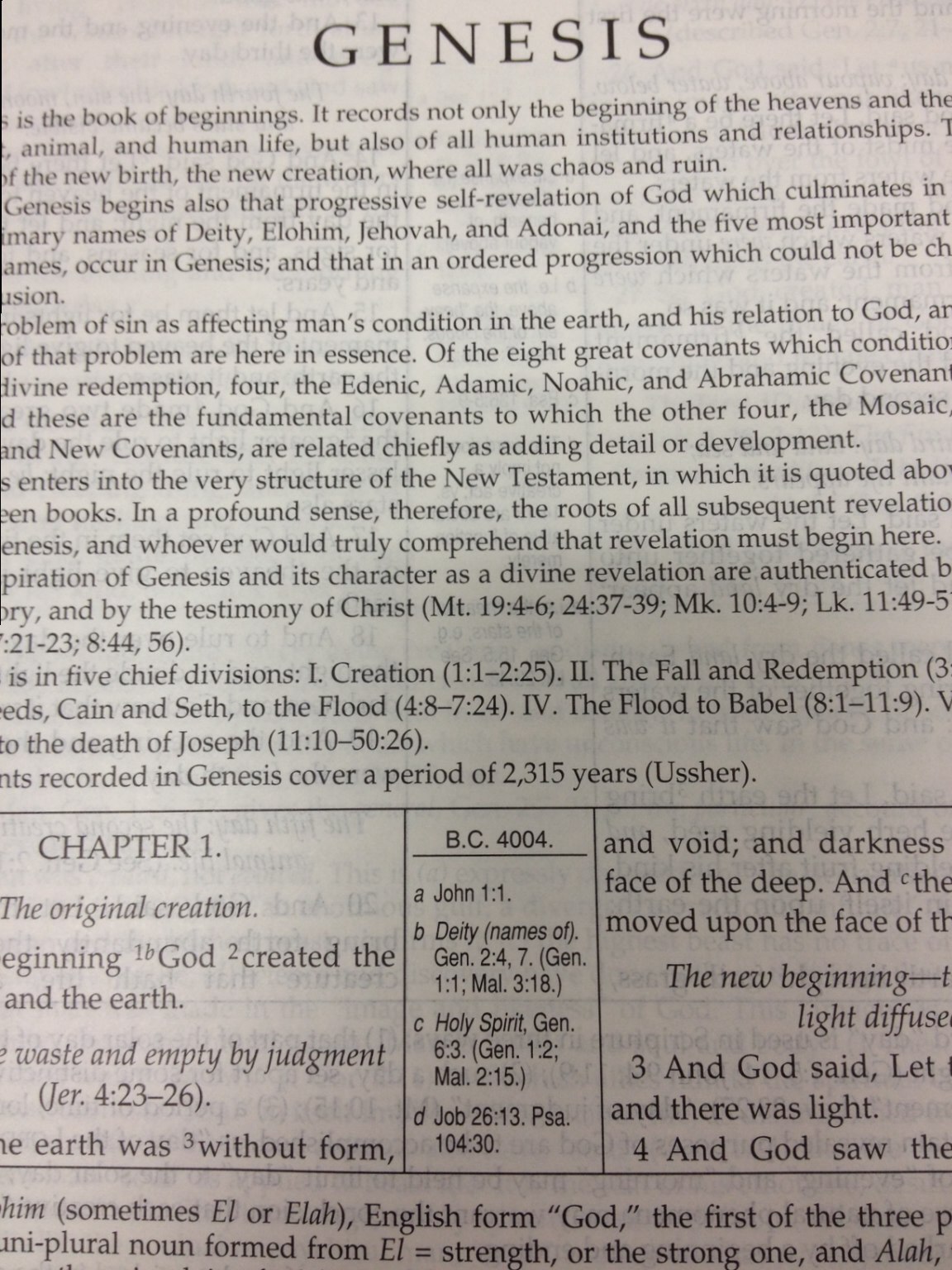
The reason most Creationists cite 4004 is Scofield...

The reason most Creationists cite 4004 is Scofield…

Sail Away With Me

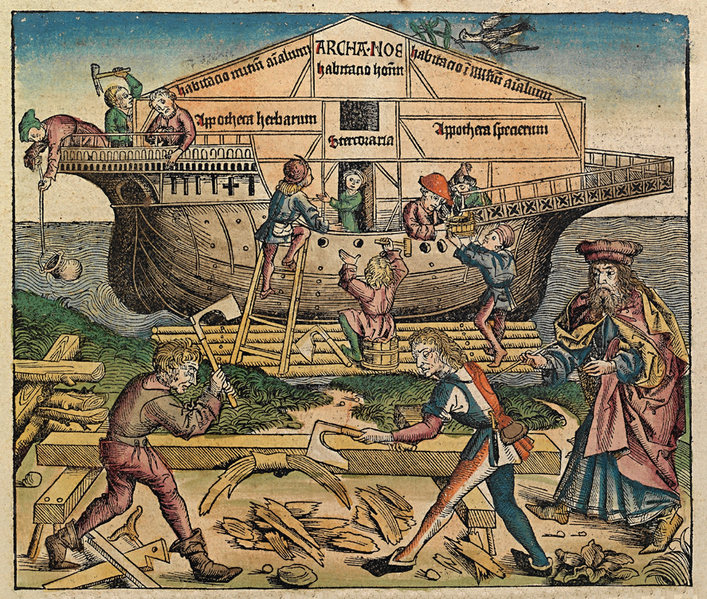
Fascination with Noah’s ark is never-ending. It represents the salvation of life in the face of deadly catastrophe, the concern of the divine for humanity, and cuddly animals we put in our children’s cribs. I suppose, however, I properly shouldn’t call it “Noah’s” ark, because the story predates Noah by some time. The Mesopotamian cultures seem to have been the original flood mythographers; more specifically, the Sumerians first gave shape to the tale. Perhaps in anticipation of his new book, Irving L. Finkel, curator of Mesopotamian artifacts at the British Museum, is quoted as saying the ark was disk-shaped. In a story that is sure to catch the attention of Ufologists, the argument is made that a newly translated text reveals the ark to have been a floating saucer. Why does Styx come to mind?

This past weekend I discovered Ancient Origins, a website purporting to give information about the ancient world. The story of the round ark appeared there recently. The author of the piece, April Holloway, suggests something that has been on some people’s minds all along—maybe the ark was real after all, but we’ve been looking for the wrong thing. Holloway doesn’t outright say that, but the article hints that this may be more than a myth. Usually the dividing line between myth and history is drawn at the biblical borders. According to those bound with faith commitments, pagan myths continue right up until Moses. Once they enter the covers of the Holy Bible they become history. We have known for decades now that the story of the ark was borrowed from other ancient cultures. We also know that the world, physically, in any case, could never be entirely flooded and come out of it looking like our world. Ours is a somewhat drier history, watered by wonderful myths.

707px-Nuremberg_chronicles_f_11r_1

Some Christian groups use the flood story as a paradigm for the rapture—the belief that Christians will be rescued, animal-like, before the worst unnatural disaster ever hits the planet. (Although “planet” may be a misnomer—no biblical writer knew that we orbited the sun on a roughly spherical rock with a molten center.) Earlier Christians saw the ark story as a metaphor for the more spiritual salvation of the faithful in a godless world. There is a strange kind of security in this story, like knowing that you don’t have to go to work for an entire week. And so we can’t let it go, even when we know it’s a myth. “I thought that they were angels, but to my surprise, we climbed aboard their starship, we headed for the skies.” We’ve done a good job polluting our planet and we want to be pulled out of this mess, like the world Wall-e’s people know, to a realm of comfort in the skies. But it is a myth after all, even if I do find myself squeezing my teddy bear and hoping against hope for a happy ending.


God Spell

I had some good news from God recently, if the Jehovah’s Witnesses are to be believed, anyway. It had been a trying week in some ways, and who wouldn’t welcome good news? Back when I was unemployed, I used to natter with the Witnesses when they came around. Like a stray that you feed one time, however, you’d better be expecting them back from time to time. I was reminded of a phone conversation I overheard (in New York City generally everything is overheard by at least someone) where a woman was saying, “I keep praying Jehovah will straighten her out.” I didn’t know who the “her” was, but I did wonder why the Witnesses keep using a name that we know is technically incorrect. “Jehovah” is actually what you get when you read the Masoretic device of using the vowels from “adonai” with the consonants for “Yahweh,” in a Germanic language. Since Jews don’t pronounce God’s name, they used this little symbol to remind the reader to use the sobriquet “lord” (adonai) instead. Some literalists lined the letters up and came up with a Teutonic-Hebraic name that was never historically used for God.

Watchtower

Well, the good news volume of the Watchtower addressed that. Sort of. Chapter 2, “Who is God?” notes “In English it [God’s name] is usually pronounced ‘Jehovah.’ But some people pronounce it ‘Yahweh.’” Historically and critically it is the other way around, but who’s counting? Orthodoxy doesn’t always make somebody a good person. In fact, most of the Witnesses I’ve met have treated me better than the majority of people in my own faith tradition. Familiarity, they say, breeds contempt. Religion often has a way of bringing out the worst in people. Since this was the good news, I decided to accentuate the positive. I turned to chapter 8 to learn “Why Does God Allow Evil and Suffering?” Theodicy is probably the largest generator of atheism that monotheism faces.

“Evil began on earth when Satan told the first lie.” Although, I wonder how you define a lie? According to Genesis 3.17, the conclusion to God’s first word to Adam was, “But of the tree of the knowledge of good and evil, thou shalt not eat of it: for in the day that thou eatest thereof thou shalt surely die.” The last part of the sentence, “surely die,” is an emphatic in Hebrew, the original language of Jehovah. But it doesn’t literally happen. Most literalists allow this infelicity to stand, or explain it away as a “spiritual death,” while the Hebrew is quite plain in its meaning. Thou shalt surely die is non-negotiable. Not exactly true, however. I’m no theologian. I’m just a reader attempting to make sense of the world I see around me. Good news is there certainly, every now and again. But that theodicy question trips me up every time. Until we can face the implications of not surely dying, I’m not sure we’ll ever find out.


Not Knowing

WhatIDontKnowAboutAnimalsBegin with a basic premise: we cannot know what a creature without language thinks. Add in the thoughtful anxieties of a post-domestic writer who knows about animals and you have What I Don’t Know About Animals, by Jenny Diski. Part biography, part science, part philosophy, wholly human. I knew from the day the book was released that I would read it since, like the author, I am one haunted by the relationship between the exploited and the exploiter. Diski’s confessions are difficult to read at times, veiling herself, as she does behind the curtains of one’s most private experiences, but she reveals plenty to those who read on. We can’t know for certain what another person thinks, so how can we know what a sentient animal thinks? Some, following Descartes and Skinner, would declare that animals don’t think, they simply do as programmed. The rest of us know that they are wrong. The evidence accumulates more each year that animals think and feel, but, as Diski repeatedly points out, we need to drive with the brakes on. We can’t get inside them to actually know if human experience corresponds at all with animal experience. We’ve shared the planet for millions of years, but we’ve lost track of our common origins.

As I suspected, the Bible came into the discussion. The book of Genesis lurks in the background of most human-animal rationalizations. The divine division into separate “kinds” must be kept discrete at all times. The problem is, nature won’t always play along with that game. One type slowly morphs into another and some biologists are even questioning the usefulness of “species” at all. Fear of bestiality, as Diski points out, is found already in the Bible. Best to keep everything in its proper pigeon-hole, whether that’s where it belongs or not. Genesis gives us the right to exploit, and so we continue to use animals for our own purposes. Although the feline, it turns out, may have figured out how to set this order on its head. In some cases.

What I Don’t Know About Animals is not a defense of vegetarianism or of radical, thoughtless abandon. Diski writing on spiders will cause many heads to nod in agreement, and her rage against the loss of the common lady-bug struck an amazingly responsive chord with this reader. The lady-bug’s demise came at human tampering, importing asian beetles as pest control—beetles that eventually edged out the harmless lady-bug, replacing the Volkswagen of beetles with a biting, omnivorous, massing pest. In Wisconsin the southern side of our faculty house was literally blanketed with them in the spring. Diski uses the same word I did then: biblical. Swarms seem to be the way that the Almighty has of telling us too much of even a good thing will go bad. Although I couldn’t agree with every statement Diski makes, I have the feeling this is a book I will reread more than once. Wisdom often comes in the form of admitting just how little we know.


Sunday Best

When my rural, northwestern Pennsylvania shows up in the news, I pay attention. An Associated Press story recently appeared concerning Rev. Chris Terbush of Bradford, Pennsylvania. Inspired by the success of Duck Dynasty (which seems poised to overtake even Apple as the most popular purveyor of popular culture), Rev. Terbush has encouraged his congregation to show up on Sunday mornings in camouflage, ready to go forth and claim dominion over nature once the service is over. I’ve been ambushed by enough clergy that the idea makes me a little nervous, I’ll have to admit. But then again, I know where he’s coming from. I grew up in a town that celebrated the first day of deer season as a public holiday, with schools closed and the hills alive with the sound of muskets. Not being a hunter, I just enjoyed the day off school. This upbringing, however, gave me a profound appreciation for the Jeff Daniels’ movie, Escanaba in da Moonlight. But I digress.

Religious services evolve, just like any other social phenomenon. When I was young, just as the sixties were wresting the color of life from the black-and-white fifties, going to church was a formal event that demanded your “Sunday best.” Only the worst of heathens would show up before the Almighty in anything less than a white shirt and tie, a jacket and uncomfortable shoes. You had to show the divine that you were willing to go that extra mile and implicate that you didn’t intend to have any fun when it was over because the sabbath is a solemn occasion. I remember the weird feeling of walking into church during the weekday wearing jeans for the first time. It felt as if I were dissing the rules of the club. It was an exclusive affair.

The “theology of dress” has become an area of scholarly investigation with the growth of embodiment issues. What we wear says something about our beliefs, and the fact that we wear clothes at all is sometimes even traced back to Genesis 3. The origin of “good clothes,” clearly, was a status issue. Those who could afford to keep some surplus clothes unsullied by labor wished to strut their stuff on occasion. And who better to impress than God? All of this has eroded over the years with many churches as casual as any man cave. Now you can camouflage yourself in church. There may be more going on here than meets the eye, both literally and metaphorically.

What happens in the woods stays in the woods

What happens in the woods stays in the woods


Atomic Girls

GirlsofAtomicCityRay Bradbury. Ray Harryhausen. Radioactive dinosaur loose in Manhattan. What’s not to like? I was inspired to watch The Beast from 20,000 Fathoms again for a single line, where Dr. Nesbitt informs the marksman his grenade has “the only isotope of its kind this side of Oak Ridge.” You see, I had just finished reading Denise Kiernan’s The Girls of Atomic City: The Untold Story of the Women Who Helped Win World War II. Atomic City, in this context, is Oak Ridge, Tennessee, a city built almost overnight with one objective: to produce uranium for the atomic bomb, then under development. The employees, many of them women, were not told the nature of their work and were not allowed to speak about the little they knew, putting many strains on marriages and human relationships. It is a captivating story, especially since Kiernan doesn’t pull any punches—the facility was in a segregated south, women scientists were belittled to their faces, and the end result was thousands of people incinerated in Japan. It is like the end of Eden, the loss of humanity’s innocence.

Growing up in the 1960s, I had heard of Oak Ridge. I knew it had something to do with nuclear stuff, but my understanding only went as far as the planetary model of the nucleus of an atom. I feared nuclear war. The height of that fear in the 1950s may have passed, but I was born just a month before the Cuban Missile Crisis began and all through the Reagan era that veiled threat of total, mutual annihilation hung heavily in the air. The religious had claimed God had created all this, but human hubris threatened to erase it all. On the eve of a friend’s wedding I sat across the Susquehanna River, eyeing Three Mile Island for the first time. Just six years earlier even those of us hundreds of miles to the northwest wondered if we would succumb to its radioactive glow. The power of the atom, as Kiernan demonstrates, was considered to be the basic power of the universe. And it was not divine.

When the war was over, a symbol of peace was erected at Oak Ridge. The International Friendship Bell was challenged as recently as 1998 by a local claiming that ringing the bell endorsed Buddhism, and it was therefore a religious symbol that had no business in a public place. For those who believe, ringing the bell is a form of Buddhist prayer. For others, it is a sign of goodwill between nations that have put their differences to rest. It is easy, sixty years after the release of The Beast from 20,000 Fathoms, to laugh smugly at Harryhausen’s famed stop-motion animation and the incessant worry about atomic fallout. But near the beginning of the movie, George Ritchie says of the atomic blast they’ve been monitoring, “You know, every time one of those things goes off, I feel as if I was helping to write the first chapter of a new Genesis.” Indeed, at least as far as chapter three. With the dawn of the atomic age, we had outgrown our need for the final chapters of Revelation as well.


Alien Bears

“And if there’s life on other planets, I’m sure that he must know, and has been there once already, and died to save their souls.” Larry Norman, one of the original Jesus Freaks, may not have been the deepest theologian, but his words come to mind as I see scientists reluctantly admitting that maybe life on earth is not so unique after all. It’s been in the news that Kepler Space Telescope’s data have been indicating that other planets like earth may be quite common. It has always amazed me that people have been so reluctant to let go of the notion that we are the only spark of intelligence in this vast, vast, cold, and dark universe. We seem to need to think we’re special. Religions generally indicate that the gods made us for some purpose or another, some love us, some are indifferent, others may be hostile. But generally, we’re unique. The Mormons have for years taught that there is life out there, but mainstream Christianity has generally been agin it, mainly owing to the crucifixion. Larry Norman, the original Christian rock artist, speculated that cosmic history repeated itself: if Jesus died for us, well then, he must’ve done the favor for them too.

Once Edwin Hubble stepped away from the telescope, stuck his famous pipe in his mouth, and said “huh,” I would’ve thought other scientists might’ve considered, like H. G. Wells, that “they” were out there looking back at us. Why this reluctance to suppose that we’re not alone? The story in the Washington Post cites the typical reason: the Goldilocks effect. Scientists, perhaps unwittingly influenced by the anthropic principle, have supposed other planets, if they existed, were either too hot or too cold to support life. We, like Goldilocks, happened to inhabit the only planet among the billions of galaxies of billions of stars, that got it just right. More like God-ilocks. The idea derives from Genesis where, it is strongly implied, we are the only ones. Religion influences culture, whether materialists want to admit it or not. The earth-only bias is inherently religious.

Who's looking back at Hubble?

Who’s looking back at Hubble?

Astronomers will gradually come around to the idea that there are other planets like ours. It will likely take decades, perhaps centuries, before they will commonly admit that life forms like ours are out there walking around. Eventually they may decide that there’s something to UFOs after all. Meanwhile, various New Religious Movements have already hitched rides on those flying saucers and they will be laughing once the rest of us catch up. We tend, under the influence of those who claim religion is always Bronze Age drivel, to forget that religion often leads the way to new territory. When the little green men and women land, we’ll find that many religions have beat science to the punchline. I’m not so sure, however, that the aliens will know who Jesus is. After all, this chair’s too hard, and this one’s too soft.


Falls Tree

The autumn trees have been absolutely transcendent the past few days. From my earliest memories fall has been my favorite time of year, and a large determinant is the trees. Some weeks back, while on the campus of Notre Dame University, I noticed the highly stylized icons of biblical tropes etched into the stone walls of the library. The marble of the walls was highly polished, making images difficult to capture, but I tried to snap one of the tree of life. The tree of life has many associations that go back even into pre-biblical times. Many people are familiar with the story from Genesis, where the tree of life is forbidden to Adam and Eve because they ate from the tree of knowledge. That tree, however, goes back to ancient Mesopotamian stories of paradise as well. Even the Sumerians considered trees foundational.

IMG_1001

I suspect that trees are impressive partially because of their longevity. From a human perspective, they long outlast us—some of the oldest trees in the world are located in western Asia. If we don’t attack them, some species have a pretty good chance of lasting hundreds of years. With roots that run deep and crowns that reach high, trees have been a rich source of symbolism for religions for a very long while. The goddess Asherah was, in some way, connected with trees. I’ve noted in some of my more academic work that the precise nature of this relationship is never really clarified, but some have suggested that the tree of life itself is a form of the goddess. Certainly in Judaism the tree of life inspired the menorah and its gift of light, to be celebrated later this month.

Looking out my window at the brilliant reds and yellows, I am glad for the solidity of trees. Much of life is much less stable than our wooden companions. The myth of the tree of life is a reminder that even if we can hold the eons in our heads, our bodies will not last so long. It is a poignant thought, best captured by the slow falling of the leaves at this time of year. The leaves had just started to change as I strolled the campus of Notre Dame, unaware that my own fall was likely already set in place. The proverbial axe, as it were, was already laid to the root of the tree. I was perhaps too busy thinking about the tree of life to notice the changes taking place around me. A good metaphor will do that to you, and it might even live as long as the tree of life itself.


The Tell-Tale Telegraph

Steampunk CityThere’s a guy next to me with a robotic arm. Women with lace umbrellas and aviator googles walk by on the arms of Victorian gentlemen with walking sticks. A couple have an effervescing water-cooled device on their backpacks. I must be in Steampunk City. The forecast had predicted rain, but it is a beautiful October day in Speedwell, New Jersey. Steampunk City, an event dreamed up by Jeff Mach to make money for local museums, draws in a good crowd of the garishly bedecked, causing my wife and me to feel desperately underdressed. I’ve read my share of steampunk fiction, and I am really thrilled to see so many people taking an interest in such a literary event. I did wonder, however, what demonology had to do with it. Kevin Meares of Delaware Valley Demonology Research is giving a talk on demons, and it’s interesting to notice how the light laughter of customers from the booths outside wafts through the door where stories of possession are being told.

It is difficult to listen to Mr. Meares and believe that he hasn’t seen some pretty strange things. A practicing demonologist rather than the armchair variety, he has accompanied priests on exorcisms and is utterly convinced of the reality of the entities. When asked where demons come from, he relies on the Bible and Bible lore. Either they are fallen angels, remnants of a prior creation (thus the discrepancy between Genesis 1 and 2), or the offspring of the Nephilim of Genesis 6. Whatever they are, he has seen them in the dark, and people have died because of their activity. Being somewhat of a skeptic, I still find myself a little creeped out, kind of wishing I was outside with the laughing, costumed fiction readers.

Steampunk is often about alternate realities. A world where technology developed in the fog of steam rather than the neat circuitry of electricity. Speedwell, ironically, (and probably intentionally) is where the telegraph was invented and first demonstrated. It is a key site in the Industrial Revolution, the development that made the modern world what it is with smart phones, air-light laptops, and iCloud. I’m in the basement of an historic building having my rational worldview threatened by stories of demons. Although I’m wearing my nonplused face, I know that things will be different in the middle of the night. I’ve got brass gears in my pockets and supernatural entities in my head. I’ve met a watch maker outside who translates Aramaic manuscripts. What hath God wrought indeed, Mr. Morse? Yes, I’m in an alternate universe, and I may decide not to come back to the work-a-day one after all.


Bible According to Batman

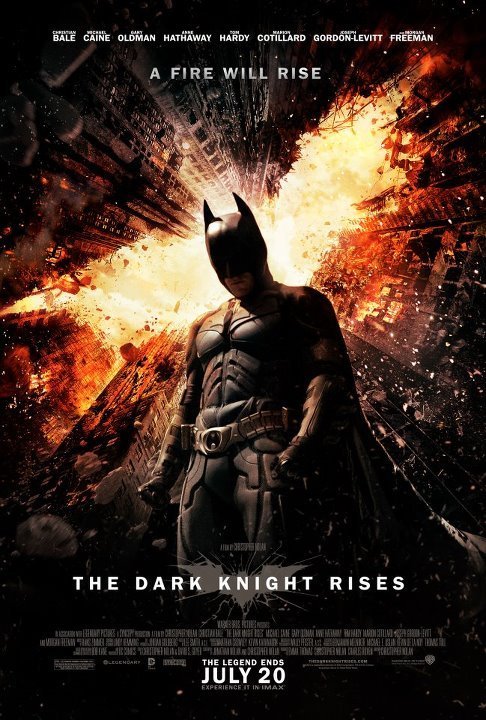
DarkKnightRises Biblical tropes are alive and well in popular culture. Many would choose the flight option rather than admit they enjoy a good Bible story. They may anyway, however, without realizing it. Although The Dark Knight Rises came out over a year ago, I only just had the chance to watch it. For a kid who grew up on the campy 1960’s television series, Christopher Nolan offers adult fare. Put the kiddie menu away and sit up straight at the table. I don’t read reviews, in general, before seeing movies because I don’t enjoy spoilers. I had no idea whether Batman would come out of this alive or not. I wasn’t really even sure who Bane was (even before The Dark Knight everyone knew who the Joker was, or thought they did). The Dark Knight Rises places the whole of Heilsgeschichte (sacred history) before the viewer with verbal cues. Unless you’re reading while watching, you’ll miss it though.

Bruce Wayne is clearly cast as the wounded healer in this final installment of the trilogy. Physically and psychologically crippled, he hobbles around in a combination of Jesus and Yoda figures, somehow supernatural yet fully human. Death and resurrection transpire twice for him in this film. When Bane breaks Batman’s back (an often fatal injury) even Catwoman thinks he might be dead. He is very much alive, however, in the prison only “Bane” escaped (resurrection one). Not only does he rise from the grave, he also ascends into heaven by escaping the well—anyone who’s read Jeremiah, or even Genesis, knows the origin of that motif. Risen, ascended, and glorified, Batman returns to beat the crap out of Bane. But the bomb is still on the loose and before Batman faces his nemesis he tells Commissioner Gordon to arrange “an exodus”—Joseph’s descendants must get out of Egypt. At the Red Sea (the Hudson River) the Pharaoh’s army blocks the exodus of the children of St. Swithun’s who, in response, bow their heads in prayer (am I the only one seeing this?)

Commissioner Gordon, found guilty of betraying the common man, receives the sentence of Exile (“death, by exile” to be precise). Again, those sensitive to Jeremiah know that exile is a kind of death, but death with a noble purpose. The Heilsgeschichte of Israel involves exodus and exile. The Christians added on death, resurrection, and ascension. Christopher Nolan put them together in one Dark Knight. But I mentioned two resurrections, no? Flying the bomb out of Gotham, Batman is definitively blown to smithereens—the blast radius was, after all, six miles. And yet, Alfred has a post-resurrection visitation, where no touching occurs (Touch me not; for I am not yet ascended to my Father) sees his savior. Was the Bat the Holy Spirit on autopilot? Is that Catwoman with him? Might I be so bold as to type Mary Magdalene? Well, I may be over a year late with my observations of The Dark Knight Rises, but as I think Christopher Nolan understands, the Bible has been lying around even longer. If the success of this movie is anything to go by, it will be around for a long time yet to come.


High Tide

While the devastating rains in Colorado this month are a very serious concern, over the past several days I heard and read the adjective “biblical” associated with them several times. Even the National Weather Service made reference to “biblical rainfall amounts.” It’s true that the Bible does contain the most famous, if not exactly original, flood story in the modern world. The tale of Noah easily goes back to the Sumerians, and there are deluge stories from around the world that rival it in most details. Even in this secular age, though, we all still know that floods are the province of providence. It is of interest, however, how the word “biblical” has taken on a distinctly negative connotation. The most noteworthy of biblical materials are high literature of optimism and potential for good—and sweet heaven when we die. And yet, floods, droughts, plagues of insects, these are the “biblical” events in our lives.

Floods can indeed be devastating. They demonstrate the illusion of solidity under which we try to assure ourselves that the high ground is the safest place to be when the globe warms up, or God grows somewhat impatient with human antics. Biology has implanted deeply in our psyches the desire for a safe haven, a place where we can store our stuff securely. In fact, the “net worth” of an individual—so noteworthy when we die—is measured in terms of the material goods which we control, or “own.” The quality of a person’s inner life is not something of their “net worth” to society; it can’t be divvied up by lawyers and investors, and, in terms of legality, is unimportant. We are valued for our things.

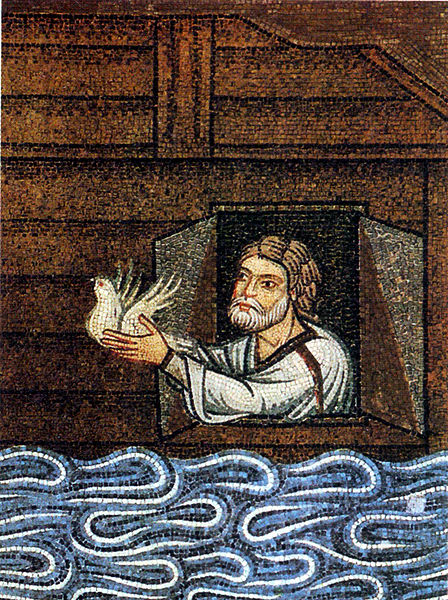
That’s why floods are so pernicious. I don’t devalue the lives that have been lost, but the headlines declare the dollar amounts more loudly. Here is where the obvious clash between the days of Noah and our own come into play. The only goods the delugonaut took aboard the ark consisted of food and life itself (although the Sun Pictures version shows his family with anachronistic metal knives and even some furniture). When the whole world is flooded, the only property valued at all is that on the deck next to you. Our society values people by what they acquire rather than by who they are. Floods wipe out the former, leaving the latter harried but hopefully intact. If we were to build arks today, no doubt as the clear-cutting of rain forests with the subsequent extinction of countless species shows, we would use the choicest wood and would cram every last square inch with our stuff, while people and other animals outside beg for entrance onto the boats that we “earn.”

448px-Noah_mosaic


Which Way to Eden?

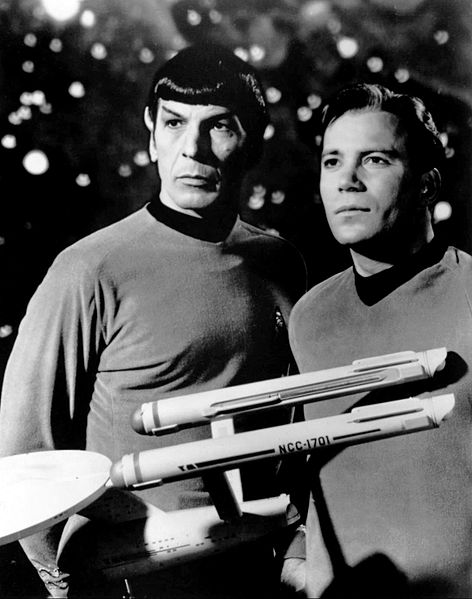
We don’t have television service, and I haven’t watched TV regularly for about two decades. Over the years, however, we’ve collected the DVDs of the shows we miss, or which we wish we’d seen so that we missed them, and use those in lean times. Feeling a bit lonesome over the weekend I downed a few Twilight Zones followed by a Star Trek chaser. On a three year mission to explore strange new worlds, my wife and I have been working our way through Star Trek, the original series. We’ve finally reached the final chapters of the final frontier. I’ve noticed as we’ve gone through the episodes just how biblically literate the series is. Even Spock quotes the Bible from time to time. Over the weekend, to keep my mind off present reality, we ended up watching “The Way to Eden.” As much as I enjoyed Star Trek as a kid, when it was still new, the overtly ’60’s-themed episodes bother me as an adult. I’m very much still a hippie at heart, but I don’t like lingo, and the alien cool cats in their weird shorts and funky hairdos chanting “Herbert! Herbert!” still really bother me. Somewhat predictably the aliens hijack the Enterprise to reach their fabled paradise.

Leonard_Nimoy_William_Shatner_Star_Trek_1968

Spoiler alert! For those of you who’ve been asleep since 1969, or have had no curiosity about the inspiration behind all those geniuses who’ve ushered in the technological revolution, I’m about to reveal some details. Eden is deadly. The landing party finds the short-pants wearing, funky guitar-strumming crooner dead under a fruit tree. “His name was Adam,” Spock laconically notes. The scene of Dr. Sevrin’s burned foot has stayed with me since childhood, and I still cringe when he leaps out of the shuttlecraft to take a bite of the poisoned fruit. It was only as an adult that I realized his name was reminiscent of Eve, indeed, a kind of blending of the words “sin” and “Eve.” In a kind of homoerotic death scene, the two male leaders end up under the tree together. Probably my overactive imagination.

Sometimes I ponder how much a biblically illiterate society misses. I frequently told my students that the Bible is foundational for our culture. Whether or not you’re aware of it, it is reinforced regularly in ways both ortho- and heterodox. Despite our very secular self-awareness, entire movies, such as The Book of Eli, can be based on the premise of biblical literacy. It is entirely possible to watch movies and television shows, and to read novels (graphic and literary) with enjoyment and not notice the allusions. The reasons they are there, however, is that despite the abuses of literalism, the Bible does have some profound things to say. It’s up there with Shakespeare and Chaucer. And even with Roddenberry and his host of staff writers. And I suspect that it still will be, in some form, in the twenty-third century.


Garden of Earthy Delights

AdmenEve I’ve self-identified as a feminist for as long as I’ve understood the word. I know that such a statement from a man must sound somewhat disingenuous, but I have never believed men are in any way superior to women. I suppose part of it may have been having men make such a poor showing in my early life, or maybe it was I simply realized people are all different from each other. Gender is just another one of those differing factors. It is always a surprise to me when I read, therefore, that feminism is no more. Some writers suggest that we are in second or third wave of feminism. I think we’re all just people, and that we should learn to treat each other that way.

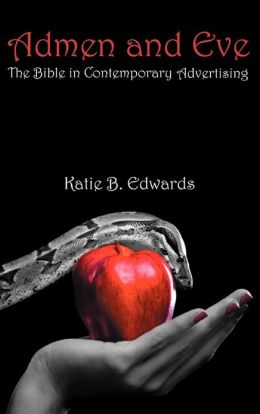
I recently read Katie B. Edwards’ Admen and Eve: The Bible in Contemporary Advertising. Edwards identifies herself with the contemporary feminism that is associated with biblical study. Reading the Bible from a woman’s perspective can’t possibly come at a cheap price. Nevertheless, Edwards focuses on the character of Eve, and specifically how she is used in post-feminist advertising. Admen who are targeting the younger demographic of women about up to thirty present Eve as a strong female, sometimes next to an insipid Adam (good-looking, but essentially brainless). Even though Eve may appear undressed, she is self-objectified, according to Edwards, and therefore is not objectified by the viewer. Along the way, Edwards also does some hermeneutical work on Genesis 2-3, and showing how the story is recast in terms of a buyer’s market.

As interesting as I found Edwards’ analysis, what stood out most strongly was the fact that advertisers have no difficulty in using a biblical character for a biblically illiterate public. Many people in the western world recognize Jesus (whether Buddy or the regular one), but of Hebrew Bible characters perhaps the only ones that readily come to mind are Eve and Adam, Noah, Moses, and David and Goliath. Some still recognize Samson. These characters, however, are almost always lifted from their contexts—they are caricatures rather than the object lessons they were originally intended to be. What Edwards demonstrates, the admen have known all along: sects sells. If you want them to buy, make the marks feel like it is a religious act. And we can almost hear the advertisers say, “Let us prey.”


Liberty and Justice for

Looks like America will be divorcing the self-proclaimed “Defense” of Marriage Act. It’s a small step, but a small step in the right direction. Religious dogma has too long held sway over politics in this land of religious freedom. It must seem astonishing to rational people the world over how a country founded for the very purposes of religious liberty has homed in on a very narrow sect of one religious tradition and used that as the basis for discriminatory laws. After all, even the Bible says very little about marriage—something about taking your main squeeze into the tent with you and voila, you’re married. The Bible never asks what they’re doing in the privacy of their own tabernacle. Now we have a political system that legislates what can legitimately turn you on. Finally we see some light beginning to dawn in the judiciary system.

I don’t take marriage lightly; those of us who are married seldom do. I also don’t take my status as being the only possible way of finding love in a world that sorely needs more of it. Every day I witness acts of uncaring and sometimes outright cruelty, often in the name of the progress of business. And until yesterday I had to live with the knowledge that it was perfectly legal to discriminate against committed couples just because their gender’s don’t fit a preconceived mold. The land of the free? Maybe, just a little bit yes, now.

Our legal system, which pours out its love on corporate culture, protecting business owners more readily than employees, shielding the wealthy whose lifestyles are beyond scrutiny, ends up telling citizens whom they may love and whom they may not. And we complain against countries with arranged marriages. Freedom for some is not freedom for all. Until we as a nation recommit ourselves to life, liberty, and the pursuit of happiness, we’ll have to take the small steps towards freedom when they come. Yesterday, for at least a little while, I was glad to see that the system can work for the good of all, when it puts its mind to it. America, you can be proud. Say it loud!

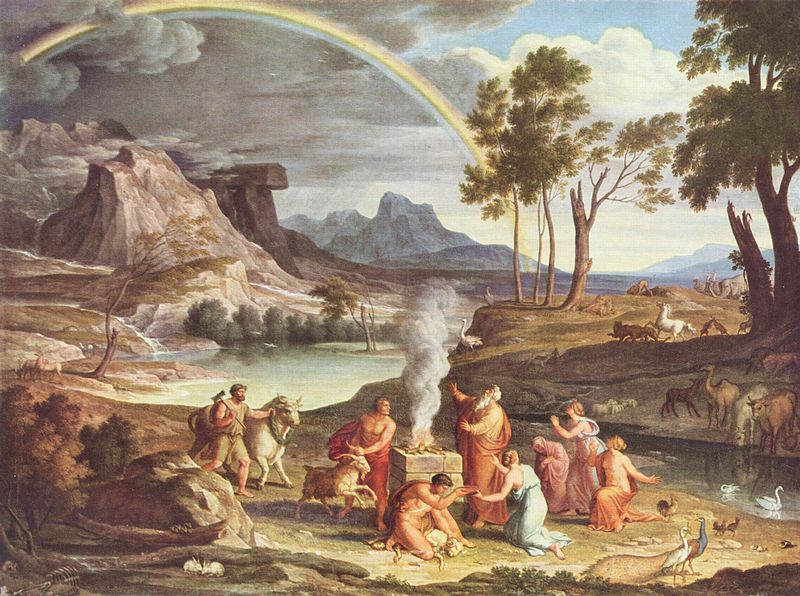
800px-Joseph_Anton_Koch_006


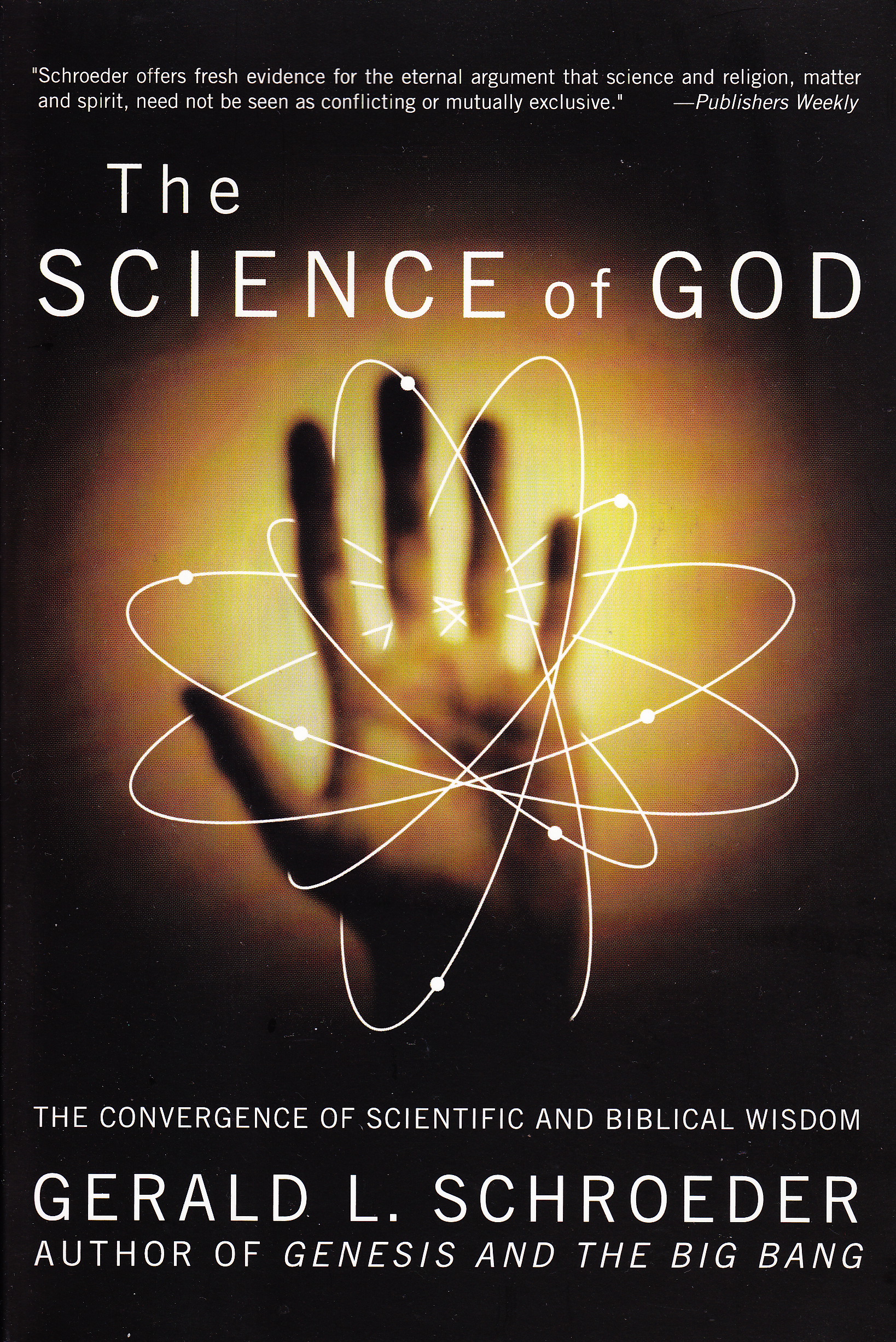
The Science of G-d

ScienceGodWhere, exactly, do science and religion come together? Since both are human mental enterprises, they must at some point at least glance off one another. Both religion and science attempt to make sense of human experience in the world, and, given the limitations of human time, being a true expert in both may be impossible. The John Templeton Foundation, as any religion scholar knows, supports research and awards handsomely those perceived to have succeeded, at least somewhat, in bringing the two together. A single lifetime, however, is not long enough for either, let alone both. Gerald L. Schroeder’s The Science of God illustrates this point. Subtitled The Convergence of Scientific and Biblical Wisdom, and produced by a major publishing house, the pitfalls of applying the Bible to a scientific worldview become apparent almost from page one.

Somewhat unusual in the field, Schroeder is an Orthodox Jew addressing the questions that the Bible raises for science. He is also a credentialed physicist. Most attempts to force religion and science into bed together come from Christian researchers—secular scientists usually have a headache—and a hidden agenda is often not too difficult to discern. I read The Science of God knowing nothing of Schroeder’s religious sensibilities. By narrowing the focus from science and religion to science and Bible, however, I knew the enterprise was doomed without even opening the cover. The Bible is one of the least scientific of all human writings. That’s not to say it has no value, but it is an honest observation by a lifelong reader of the Bible who believes science has a proven track record for making some sense of the world. Schroeder begins with that most specious of arguments, the anthropic principle. Few ideas raise such ire in my limited scientific understanding. The suggestion that the universe is fine-tuned for life is a moot point in principio. Who are we to say that life wouldn’t have emerged if the Big Bang were one degree cooler or hotter? It might have been life with different parameters, but the anthropic principle seems to point to nothing more than the tenacity of life.

While Schroeder does raise some valid points, it is clear from his challenging of the fossil record that the Bible will only ever sleep uneasily with science. For a physicist, Schroeder spends an awfully long time using God-of-the-gaps reasoning to fill in biology. In a disguised day-age “hypothesis” he gives us the creation order of Genesis 1, while skirting around Genesis 2 where humans are created before animals. And, I’m sorry, but the Bible does not mention dinosaurs anywhere. It’s a pity really. Schroeder’s book addresses some important issues, but using the Bible as a measure of scientific credibility fails every time. The science of God, it seems, is more a concluding unscientific postscript, but without the philosophical sublimity.