Holding out for a Hero

Over at Religion Link, a story about superheroes and spirituality was posted recently. I guess it should’ve been clearer to me as a child with his head in the clouds that the superheroes buzzing around up there were really gods. Well, in an ultra-thou-shalt-have-no-other-gods setting, that wasn’t really a possibility my young mind could even comprehend. They were just guys (almost always) with super powers. In the Bible they would have been miracle workers. I dared not think of Samson in the same thought as the Incredible Hulk. Heroes, after all, are about wish-fulfillment. We all want to be more than we are—I can imagine a better me (speaking strictly for myself), so why not present that self in the form of a hero? The Greeks, and before them the Mesopotamians did it. Heracles was a Europeanized Gilgamesh, perhaps through the mediation of a Levantine Melqart, after all.
Gods or heroes?

Gods or heroes?

The brief article on Religion Link points out that young people identify with gods in popular culture more than a God in the pew. A veteran of many, many hours in church, I think I can understand that. What adults say is going on in the service is arcane and not prone to any empirical verification. What child sitting in church hasn’t wanted to be home watching real superheroes fight evil on television instead? The movies of the past decade or so have shown us flawed gods. Heroes with troubles. These are the gods for the twenty-first century. Omnipotence isn’t all that it’s cracked up to be.

Scholars of religion are beginning to pay serious attention to superheroes. Books are beginning to appear offering analyses of these god-men, and a few god-women, among us. Funnily enough, some people find them more believable than the traditional gods. Perhaps that is the draw of heroes from the very beginning. Gilgamesh, after all, is asking the very human questions we still ask today. Where can I find a true companion? Why can’t it last forever? Why must we die? To find the answer Gilgamesh is sent off on an impossible task. He has fought monsters, he has defied the very gods. And when he finds the plant that offers a kind of immortality, it is stolen away by a snake. The story clearly influenced the tale of Eve and Adam in Eden. It has also inspired the more recent incarnations of superheroes, and we are beginning to realize that they often fly in the face of the divine.


Fracking Insane

Do yourself a favor. Watch this video:

I have spent most of my lifetime living the fantasy of the helpless victim. Raised in a faith that insisted I really deserve Hell, and that if I manage to escape it will literally be a miracle, I guess I just internalized it. That kind of “Christian” thinking gets reflected and refracted through the lens of experience, and soon I was reading everything in its light. My parents’ divorce? Deserved. That move at the vulnerable early teen years? Inevitable. The verbal abuse of an overly stressed step-father? It should’ve been worse. Add to that the numerous rejections after professions of true love, and being fired from two jobs for no discernible cause—you start to get the picture. So when I learn that fracking is going on all around me, it seems like this is the fate of the perpetually sinful. Destroy the planet. Do you think you deserve better?

Life-denying religions walk a very thin line. When, like Siddhartha Gautama or Rishabha, the denial is a decision made after serious, personal reflection, this may be called enlightenment. When it is cast at you by a non-negotiable, self-despising cleric freely dispensing divine damnation to those incapable of much reflection, it is quite another beast. Children, although possessing freer minds, are easily impressed by authoritative adults. If that adult talks to God, you’d better sit up at the table and listen. So it is that generations are taught that “God” gave humans—let’s be literal here—man dominion over the earth. Pillage and plunder are part of the fracking package. If it’s down here below heaven, God wants you to use it up. After all, the sign on the door says “Back in Five Minutes.” (Dated 33 C.E.)

In a moment of weakness, I must confess (and I am told by religious experts that it is good for the soul), a few weekends ago I found Jesse Ventura’s Conspiracy Theory on YouTube. It was like eating Lays; you can’t stop at one. By the end of the afternoon, besides a nasty headache, I had a noggin full of improbable scenarios, courtesy of Jesse, “the Body,” Politic. Although a good night’s sleep at the rationality of another unapocalyptic dawn washed away his most outlandish claims, fracking is more frightening than a conspiracy. It is legal, it effects everyone who lives on earth where it is being done, and its record speaks for itself. I’m not proud of having wasted a few hours on humanzees and Bilderbergers reducing the world population to 500 million. But I am afraid that, if left to its own devices, however, “dominion over the earth” may be more than even the literalists bargained for.

Yes, that looks like a good idea...

Yes, that looks like a good idea…


Neither Black nor White

What hath Rome to do with Lagos? In the portion of the newspaper where religion is freely discussed—the Sunday edition, of course—Jeff Kunerth published a thoughtful piece entitled “Black atheists might feel lonely, but they’re not alone.” Kunerth reveals a double dilemma for the African-American non-believer: strong emic social pressure to be religious and etic deconstruction of race by many atheists. I know African-American humanists, and I have been informed of the lack of attention given to humanism and race. Both, in many circles, are troubling concepts. We like to think we’d evolved to the point of “race” disappearing from the social spectrum, but we also feel pride concerning cultural achievements, some of which are tied to “race.” Where would our culture be without the influence of African-American music, story, and art? Is belief required to truly belong?

I often wonder why it is that skin tone is used to divide people. Inevitably my thought goes back to the Bible. In the ancient view reflected in the book of Genesis, all creatures, humanity included, were created with inviolable boundaries of “kind.” As mules and ligers demonstrate, however, boundaries are often only as strict as we permit them to be. “Can the Ethiopian change his skin?” Jeremiah rhetorically asks in 13.23 of his eponymous book, “or the leopard his spots?” Not only is race fixed, but gender as well. Each according to his own kind. It’s this easy division that’s troubling me. Humans of all “races” may interbreed, something not possible for the liger or mule. We are free to change our outlook. The leopard spots are in our minds.

None of this is meant to belittle the difficulties faced by black atheists, or any others who are excluded by their own “kind.” It is simply a suggestion that we might enlarge the pie, to borrow from Getting to Yes, before dividing it. Belief has to be a matter of conscience, and acceptance should be a matter of principle. Too often religious beliefs divide rather than unite. Atheists and true believers, of one “race” or many, have a common cause to make a better world for all. The prophet anticipates a negative answer to his rhetorical question. Allow me, Jeremiah, respectfully to disagree. Yes, a leopard may change its spots anywhere except in the prejudiced savannah of the human mind.

Leopard_africa


Flood Warning

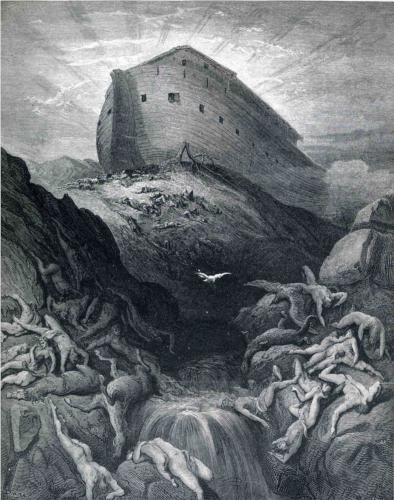
If you’re like any number of others in North America, you may be wondering when spring will arrive. Not meteorological spring—that has flown past already—but the warm, salubrious air that bears no wind chill factor. You might, like many, turn to the Weather Channel website. While you’re there you might see a story about extreme weather and Noah’s Flood. (You might need to scroll down the page to find it; the link seems to have been cursed.) The flood myth is a pervasive story. It appears in countless novels, movies (even Titanic and The Poseidon Adventure, for those who are willing to believe), and many baby’s nurseries. The weather this year has many wondering about global warming, although, honestly, we’ve known about it for years. Some are speculating that floods will become more common, and that’s almost certain. The Weather Channel, however, uses the myth to point out that people have experienced extreme weather from “the beginning.”

The trouble with this reasoning is that the story of Noah’s flood is not original to the Bible. It seems virtually certain that the writers of the biblical stories (there are two) knew the Babylonian version embedded in the tale of Gilgamesh. The writer of the Gilgamesh Epic knew the Sumerian version of the story, already centuries old by that point. And the story never really happened. At least not in historical time. Floods, yes. World-wide flood, no. The stories were told to make points, as most stories are. The point here seems to be that gods can be pretty petty if you neglect to offer them their due. Even minor sins can set you treading water for weeks at a time. Still, the Weather Channel considers the possibility that this could reveal ancient meteorology. Ancient morality is closer to the truth.

Every year around Easter the media peppers its workaday headlines with biblical tropes. It is the time to catch the quasi-religious thinking pious thoughts and click-throughs are more likely. Never mind that biblical scholars have known for many decades that this fetching tale is based more on a primitive Schadenfreude than modern science. Not that the Bible is devoid of ancient weather. I once wrote an ill-fated book about the topic. The people of ancient times knew that God has a special place in his sacred heart for the weather. It is one of the most awesome demonstrations of divine power. So it is in the story of Noah. For those of us in the twenty-first century it may still be a morality tale. This time, however, the flood is caused by human greed and lack of control. And this, when all is measured in the scales, may be among the worst sins humanity has ever committed.

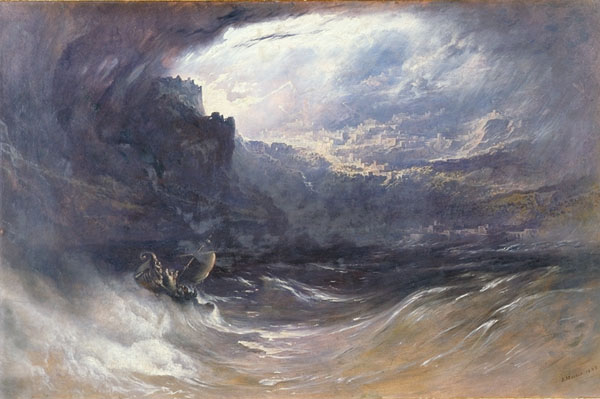
Martin,_John_-_The_Deluge_-_1834


Sacred Sexism

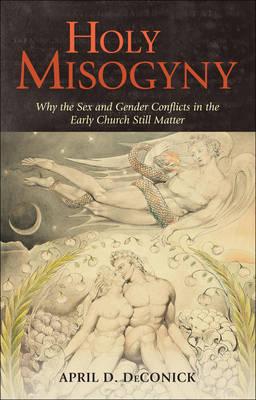
holymisogyny How terrifying to observe religion from the eyes of women! In the monotheistic traditions it begins as early as Genesis 2 and continues unbroken through to the twenty-first century. While the origin of such views seems a mystery, they may be partially understood by reading April DeConick’s Holy Misogyny: Why the Sex and Gender Conflicts in the Early Church Still Matter. Not that anyone fully comprehends the insidious idea that women are somehow less than men, but DeConick offers some insight into the issue. She suggests that sacred misogyny is, like much of life, an embodiment issue. The monotheistic traditions from the beginning have had trouble with women’s bodies. Men can’t control their urges and blame the victim. That is over-simplifying, I know, but the basic gist is about right. What can’t be missed from reading Holy Misogyny is that the idea has embarrassingly deep roots in religious thought.

The Bible starts out pretty fair. Except from the beginning the masculine pronoun is used for God, even though theologians from very early days declared God neither male nor female. How do you believe that an “it” really cares for you? Wants the best for you? Loves you? We are gender embodied. We want to know who it is that’s loving us. Genesis 1, on the human level, has man and woman created together on the same day, at the same time. The essence of their embodiment appears to be divine: “in the image of God created he him, male and female created he them.” “Human” is gendered humanity. But then the apple falls. We turn the page to find that the not yet monotheistic religion of the Bible is already pointing sticky fingers at Eve. I know that I can’t read Tertullian without wanting to hide my face when he castigates women as the source of evil.

Holy Misogyny is a disturbing book. It should be. What it does demonstrate, however, is that a wide variety of opinions and options existed for early Christianity when it came to the perception of women. Some of the Gnostic sects of Christianity came much closer to a kind of equality, but they lost out to an unremittingly masculine “orthodoxy.” The Bible itself, although written in a patriarchal world, is an ambiguous document. At points even Paul seems to indicate the genders are equal in God’s eyes, but then, he (or someone writing in his name) tells women to keep quiet in the church. Ask your husband at home. I’ve talked to a lot of church guys in my time, and Paul, I have to contest you here. Women who want to get proper instruction in matters of the soul—or of the body—would be better off reading DeConick than asking their husbands. We’ve got two millennia of unfortunate history to prove the point.


Monkey’s Uncle

T.H.Huxley(Woodburytype)

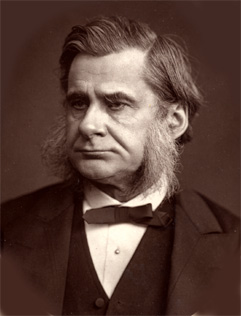
An opinion piece in Saturday’s New Jersey Star-Ledger highlights the 150th anniversary of T. H. Huxley’s Man’s Place in Nature this month. Well, Huxley may be forgiven for writing in the idiom of his day—he was Darwin’s contemporary after all—when he really meant humanity’s place in nature. The article, by Brian Regal, points out the common fallacy that evolution, as propounded by Darwin, says that we descended from monkeys. Quite apart from the insult to monkeys, Huxley was the one, as Regal notes, who made explicit something about which On the Origin of Species kept decidedly mum: the evolution of humans. People did not descend from monkeys. Nobody except religious opponents ever suggested that they (we) did. Evolution is a biological fact, and monkeys are evolved just as we are evolved. We had a common ancestor somewhere back a few millions of years ago.

This neverending story of religion (of some sorts) fighting evolution should capture the fascination of anthropologists, sociologists, and psychologists. It shouldn’t be ignored. Darwin wasn’t trying to start any fights. Huxley, well, he may have been, but with good cause. The facts, even in the 1850s, were definitely pointing to descent with modification. In fact, breeders of dogs and pigeons and other animals had known this for centuries. All that Darwin and Huxley attempted was to be intellectually honest with the evidence. It was religious believers who, reading between the lines, picked this fight. The Bible, after all, seemed to say we’d been created on day six (or day one, if you read Genesis 2 literally), and that meant science had to be wrong. Religion is used to setting its own terms. The debate is in the cathedral, not in the academy. Although by the end of the nineteenth century nearly all major branches of the church had come to some kind of understanding of the facts, the issue flared up with again around the time of the First World War with the advent of “social Darwinism.” Then, the religious objectors claimed, we did not descend from monkeys.

Funny thing is, Darwin and Huxley would’ve agreed. Instead, insidious motivation was attributed to some of the greatest minds in science. Accusations were made that everything in the lives of both Darwin and Huxley gainsaid. Natural selection made Darwin ill with its implications, but he could not shy away from the evidence. He believed in truth. Although Huxley coined the term “agnostic” to define his position, he had good reason. The biographies of these scientists are well worth reading before making accusations. So as we stand (or more likely, sit) on the sesquicentennial of Man’s Place in Nature, it might be a good opportunity to assess whence the friction is arising. We claim, in our still limited understanding, that monkeys can’t speak. (I’ve seen the movies and I know differently, nevertheless…) If they could, I imagine the debate would go something like this: “those hairless creatures who say that we are less important than they, they have the audacity to claim a common ancestor with us? Maybe evolution is a myth after all.”


Apples to Apples

Religion is all about death. Well, maybe not all, but still…

All religions deal with death in some detail. Perhaps that’s because death is such a universal experience. I think about it quite a lot—not to do so seems to be caught at a crisis without having thought through the implications—but mine are not always morbid thoughts (although, by definition, they may be). When I read Mary Roach’s Stiff a few years back, before I started this blog, I was amazed by the number of ways one could decide to have their “remains” treated. When I was a kid it seemed that there were only two options: bury them or burn them. To some religions the latter option felt a little close to Hell and was condemned as a sin. Occasionally I’ve posted here about various new methods that have made the news: having yourself morphed into a bullet or diamond.

In what I hope was not too much of a hint, my wife shared a further option with me—having yourself turned into a tree. Now while this seems what nature intended, it also feels profoundly Asherah-like. I have my doubts that Asherah was a generalized tree-goddess, but there is some kind of connection between wood and the goddess. Certainly by the Rabbinic Period of Judaism any tree in or near a sanctuary could be understood as the goddess and therefore a threat to monotheism’s hegemony. The solution: chop down the tree. Now Asherah whispers back, when you die, I can make you a tree.

People, like all animals, biodegrade when they die. Some saints apparently avoid this fate while others are pickled to a state of perfection artificially, but for us regular folk nature has a plan. Animals eat the plants, plants eat the animals. We are all consumers. Bios Urn is the brainchild of Gerald Moline and features your deceased body packaged in a biodegradable urn along with tree seeds of your choice. All you need is a post-holer and a bit of rain. Some might wish to be a redwood with their aspirations to immortality. I think I would prefer to be an apple tree. Apple trees give back year after year. Plants, by their floral nature, are givers. The apple tree gives in a way that seems especially divine. After all, many are those who claim it is the very tree of Eden.

What everyone wants

What everyone wants


Implausible Deniability

Sandy gave us a little taste of dampness under the gunnel. You see, people live by the water because it beckons to us. That was actually Rachel Carson’s idea, but nevertheless, we do find ourselves drawn to the sea around us. Historically our great cities grew in the littoral because communication across the big water was, prior to jet travel and trans-oceanic cables, the best way to stay in touch. Have a business meeting in London, but live in New York? No problem. We can get you there in two-to-three weeks. And the ship sets sail. Since that day we’ve become more electronic. Those of us who experienced Sandy near New York City know that one of the biggest problems was that salt water and electrified trains don’t mix. Of course, conservative lobbies have insisted that Congress and the White House keep their eyes firmly shut about the possibility that a more unstoppable flood is coming. We may not need an ark, but we’re going to have to take some steps back.

A story on the Weather Channel shows the “smoking gun” of global warming. Oh wait, that’s just a myth. Industrialists tell us so. But what a devastating myth! The Gulf Stream waters of yore have kept the climate mild in northern latitudes. While in Scotland we spent a wonderful weekend with some friends on the Island of Arran in the Hebrides. Palm trees growing in Scotland? Yes! The warm Gulf Stream means that much of the British Isles remains relatively temperate despite their latitude. The Gulf Stream, due to climate change, is slowing. In less than a century, climatologists now predict, the oceans will rise three feet. Looks like I’ll need to wear my gaiters to work. We’ve known for about half of my life that we’ve been changing our environment. And not for the better. Those who are too wealthy stand to lose a little so we do what we can to protect them, the poor dears. The rest of us had better learn to swim.

We don’t worry when the people of some Indonesian island point out that their entire world may submerge. Put a little ocean water in the subway and, well, that’s an entirely other story. How are the peons to get to work? Let them wear hip-boots. Word from the top one percent is that there is no global warming. If the Gulf Stream is slowing down it’s because it’s lazy. What a moocher! Suppose it will be wanting a health plan next. That’s the problem with the weather—it changes like, uh, the weather. Unlike the minds of some people that are already made up and never change, no matter what the facts. When the one-percenters start speaking, I’m glad I’m wearing my hip-boots after all.

Where can I get me one of those?

Where can I get me one of those?


Stonefaced

Railsea Imagine, if you will, life on the open sea. Back in the whaling days. Days before enlightenment really took hold. Transpose that thought onto railroads. In a day of huge moles and other underground creatures. Days when no one can imagine where the rails end. That might give you the slightest glimpse of China Miéville’s Railsea. I haven’t read too much of Miéville’s fiction, but I have read enough to know to expect a reality distorting romp through very interesting places. In this take on Herman Melville’s Moby Dick, Miéville takes some noteworthy risks in providing his characters with a native religion. Fiction authors sometimes find religion a constraining topic. Consider Salman Rushdie. More often the restraint appears to be a lack of imagination on the writer’s part—although we can’t define religion very well, we all know what it is and what it’s supposed to look like. Miéville, although in backstory, provides a new religious world where the gods are called Stonefaces and everybody believes in angels, and the explanation of where the railways came from is “theology.” Even our erstwhile Captain Ahab is chasing after her “philosophy” in the form of a giant mole that seems to have taken her arm.

With a sensitivity I’ve rarely found (the fault could well be entirely mine), Miéville utilizes religion, particularly Christianity, to construct an alternate universe. The gospel therefore appears as godsquabble, and to suggest there is anything beyond the sea of rails is literally heresy. Our protagonist Shamus ap Soorap on his voyage of discovery ends up riding to heaven on the rails only to find that there is yet even more beyond. Although religion itself is not central to the story its adjuncts are, creating an entire mythos of life on the railroad. It this world it is clear that wood and trees are related, but no one quite knows how; some suppose an evil god planted false evidence to deceive them. There’s even a healthy dose of the Odyssey thrown in, with the Medes having to pass through a mountain dwelling monster, the siller, and the Kribbis Hole.

But aren’t we really on the ark once more? For surely the bedeviled Pequod was a shadow of the same. In Miéville’s fantasy world, the open ground unpopulated by islands is dangerous. All kinds of innocuous creatures burrow out and will eat the traveler who is not safely ensconced on a train. As if to underscore the Noahic connection, Sham ends up on an actual boat on an actual endless sea. I’m pretty sure Homer never read Genesis, but the parallels between Greek mythology and the Hebrew Bible were long ago recognized by Cyrus Gordon and his colleagues. Miéville continues the tradition. Stranded on an island, Sham tries walking on the rails (read walking on the water and you’ll get the picture) until his faith fades. There are many who declare that religion has outlived its usefulness, but if an author can bring Melville, Homer, and the Bible into an intensely creative story, I think I’ll have to beg to differ.


Leviathan’s Sibling

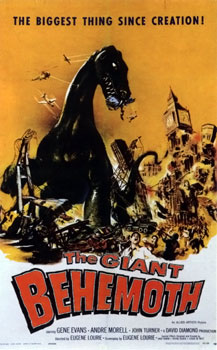
TheGiantBehemoth Formulaic to the point of plagiarism at times, 1950s science fiction movies often follow the deeply worn ruts left by countless forgettable monsters. One such film that I managed not to see until recently was the biblically entitled The Giant Behemoth. In a more biblically literate society the poster’s catchphrase “The Biggest Thing Since Creation!” may not have been necessary, even though leviathan’s lesser known companion stole the title this time. Of course the movie begins with stock footage of nuclear explosions, and although I’ve seen such renditions hundreds of times, they remain troubling to the core. Those 1950s that many consider so carefree were days of insidious freewheeling with the environment, days before human infatuation with the power over nature revealed its horrifying consequences. The behemoth, a sign of Yahweh’s great creativity in Job, here becomes the human-wrought agent of destruction.

Poor Tom Trevethan is blasted by the beast’s radioactive breath in a scene more fitting to Revelation than to Job. In the funeral scene, the priest somewhat insensitively reads a description of behemoth before Tom’s sole surviving family, his daughter Jean. So like the 1950s the minister then declares that the Bible gives comfort to those left behind, when the Lord said to Job, “Gird up thy loins like a man.” Indeed. Loin girding was a masculine activity in the days before Fruit of the Loom had been grown. Comfort for the woman comes in acting like a man. Yes, the 1950s considered the man the default model of human being. It says so in sacred writ. Genesis 3, to be exact.

When the scientists can’t figure out what killed the old man, along with thousands of fish, they ask Jean if her father said anything before he died. She tells them about behemoth. Being scientists, they have no idea what a mythical, biblical creature might be. Jean informs them, “It’s some prophecy from the Bible; it means some sort of great, monstrous beast.” Well, Job is technically not prophecy. Actually it’s not even untechnically prophecy either. In the 1950s, however, if it was biblical, it could be interpreted as prophecy. The real foretelling, though, is clearly atomic. Such films can easily be forgiven their biblical infelicity for the sake of their good intentions of reigning in human self-destructive behavior. In the end science destroys the biblical beast, but I’m left wondering if it isn’t more of a parable than a prophecy. I guess it’s time to gird up my loins and go find out.


Priests, Queens, Goddesses and Fruit

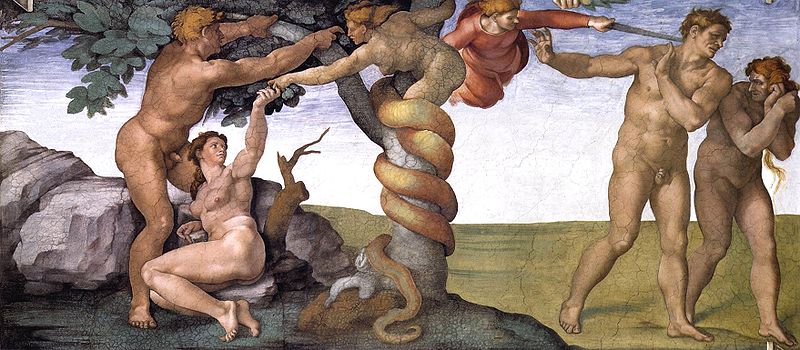
“And when the woman saw that the tree was good for food, and that it was pleasant to the eyes, and a tree to be desired to make one wise, she took of the fruit thereof, and did eat, and gave also unto her husband with her; and he did eat.” So Genesis 3.6 summarizes the most expensive meal in the history of eating out. For centuries the literally minded have wondered what the exact species of fruit might have been. The apple was long favored because its Latin name sounded suspiciously like the word for evil. In the Bible the fruit with the most theological freight, however, was the pomegranate. The high priest’s robes were designed with dangling pomegranates alternating with silver bells along the hem. Some have speculated—and it can only be speculation—that the tree of life, rather than the tree of the knowledge of good and evil (the latter better abbreviated Totkogae) was a pomegranate. For the Greeks, however, the self-same fruit led to Persephone’s entrapment in the Underworld for half the year.

Although the Bible doesn’t specify this, the apparent reason for the pomegranate’s privileged religious meaning seems to have been its numerous edible seed casings, or arils. Over time it acquired the association with fertility—not surprising with its numerous seeds. Indeed, my first experience of pomegranate was in seminary, which, like its name implies, is a place of great fertility. It is one of the more labor-intensive fruits, however, having a tough skin and plenty of inedible membrane. Even with Christianity’s inimical disdain for all things reproductive, the pomegranate survived in Christian art and symbolism, becoming a symbol of—what else?—resurrection.

Today, POM Wonderful has claimed the life-giving qualities of the pomegranate as its signature for good health and long life. This California company even has a history lesson on its website, tracing the pomegranate back to the Early Bronze Age. Interestingly, the initial picture used to illustrate this early period is a goddess, Kubaba, who was perhaps an historical remembrance of the queen by that name. The Sumerian King List gives Kubaba, the only queen on this list, a reign of a century. Well-chosen for advocating the fruit! In a relief of her eponymous goddess from Carchemish, Kubaba is shown with a pomegranate in her right hand. POM Wonderful’s website does not show, nor even mention the pomegranate on the relief. Perhaps like the pomegranate itself, this is worthy of digging in a bit deeper. Any food website that draws attention to ancient Near Eastern goddesses is doing its job exceptionally well. Who would suppose that one fruit could unite an ancient queen, an obscure goddess, and an Israelite high priest shuffling around the temple? And of course, our mother, Eve.

IMG_0540


2012 + 1

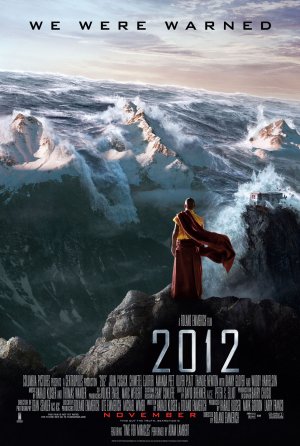
2012I just watched 2012. The conceit that the world will end last year must be getting tired by now, but I’d been curious about the movie since it came out three years back. As I suspected, there was plenty of religious banter as the putative version of us prepared for the end of the world. I noted that the little boy of the average family that managed to make it all the way to China to seek rescue bore the name of Noah. When the animals were being airlifted to the rescue station with its titanic boats meant to float out the world wide flood, it was clear that the myth of the ark was alive and well. (As I hope all of you reading this in the future are.) So this disaster movie turned out to be a bit of harmless fun, but I nevertheless shuddered at the implications. Those chosen to survive were, naturally, those who could afford to find a place onboard the secretly constructed arks. As even some of the film’s characters recognized, those who had money could buy a place on the ark, and of course they did. I do wonder what their brave new world would have been like. The whole idea of wealth has to do with the perceived value of specific commodities, and apart from our last minute stowaways, you can bet that everyone on board wanted their assets valued highest. Once the waters receded, if I recall the story at all, sacrifices would be made. Even the opening of the decks and the buzzing of helicopters like doves and ravens did Genesis proud.

The end of the world is a funny concept. Those of us who experience the world as mortals can’t really image the place without us, so I suppose it is natural enough. Nevertheless, the tone of the last four apocalypses I remember has been distinctly religious. There was a serious scare (perhaps local, because no internet existed) when I was in tenth grade. The next one I recall was Y2K, a silly episode where even priests I knew were seriously worried. With the Camping and Mayan “predictions” coming so close together, some no doubt supposed the Big Guy had it in for us all. When Christians tell the story it’s always the version with God glaring at us, belt in hand. Remember what Homer Simpson says of the song he wrote: “I’ve come to hate my own creation. Now I know how God feels.” Our cultural sense of disapprobation could be better addressed by helping those in need rather than building arks (or tax write-offs) for those who require no more to live like petty emperors. Emphasis on petty.

The world didn’t end and I wasn’t really worried that it would. The fact is we don’t need God to design an apocalypse for us because we’re very good about engineering our own. Unequal distribution of goods and services throughout a world where means exist for alleviating the suffering of countless numbers of the poor and disadvantaged has already created a purgatory on earth. We don’t need a Mayan calendar, or a New Testament whose message of compassion is overlooked in favor of its putative apocalypse, to show us the end of time. But since we made it to 2013, perhaps we should consider this a stay of execution. Let’s use our post-apocalyptic future wisely and hope humanity will live up to its name. And maybe it’s time for a new calendar.


Biblical New Brunswick

One of the true sadnesses of my life is that New Brunswick’s biggest institution, Rutgers University, couldn’t find a full-time place for a dreamer like me. Ever hopeful, I taught there for four years, counting on a miracle. Although I’ve got many good memories of my time at Rutgers, one of the side-benefits was getting to know New Brunswick a little bit. Probably not topping too many vacation must-see lists, New Brunswick, New Jersey nestles in the shadow of New York City and its train station is a place I’ve spent a bit of time. Last night I had occasion to stop in to get my bus pass so that I can start off the new year by going to work. As I climbed the stairs to the ticket window, I heard a street preacher holding forth. There he was, a young man, open Bible in hand, explaining to a mostly disinterested commuter crowd why they needed salvation. (If their experience on New Jersey Transit has been anything like mine, believe me, they already know.) Many of those in the waiting room are the homeless trying to get out of the cold for a while. New Brunswick has never struck me as a particularly religious town, although many of my students in my Rutgers days brought their religion to university with them. I didn’t have time for another conversion last night, however, as my family had another purpose for being in town.

A friend had kindly given my family tickets to Joseph and the Amazing Technicolor Dreamcoat at the State Theater. Although put on by Plays-in-the-Park of Middlesex County, being in the shadow of New York City sets a very high bar for public performances. The show was excellent and energetic and I couldn’t help connecting the dots on how the Bible had played into the evening. Andrew Lloyd Webber long ago realized that even a very secular Britain had a hunger for biblical stories. Although I am biased, given my failed choice of profession, the story of Joseph is one of the great tales of all time. Although likely half the audience couldn’t say that the story occurs in Genesis, the rags-to-riches plot of betrayal and forgiveness is so deeply embedded in human dreams that even assigning it to the wrong testament would make no difference. As Lloyd Webber knows, we all want our dreams to come true. Joseph, certainly a flawed hero, does finally see himself as the second most powerful man in the fictional world of Moses’ Egypt. It’s difficult not to root for the guy.

Outside the temperature hasn’t managed to reach 40 degrees today. A few blocks away at the train station, some of those being force-fed the Gospel were almost certainly refugees from the cold. I’ve seen this every time I have to catch a train in Newark as well. The homeless know that at least they won’t freeze in the depot, even if they are chased off the seats by security. Moving from Joseph to James a moment, we hear “And one of you say unto them, Depart in peace, be ye warmed and filled; notwithstanding ye give them not those things which are needful to the body; what doth it profit?” In other words, if you are offering the homeless words only, you’re not getting the point of the gospel at all. The homeless would benefit more from having a dream come true, I’m certain, than from having a message of salvation before being turned out to the cold for the night. The real salvation in New Brunswick is being offered at the State Theater tonight, but you do need a ticket to get inside.

Any dream will do

Any dream will do


Hallowed be thy Kane

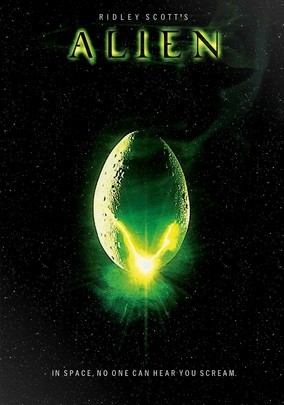
Watching the alien burst from Kane’s distended abdomen as he appeared to have eaten too much seemed somehow appropriate on Thanksgiving. I’m well aware that my taste in movies does not always match expectations and few bother to comment on my idiosyncratic observations. Nevertheless, it had been years since I’d watched Alien and on this particular holiday it felt like synchronicity. I’ve seen the film a few times before, but this is the first time since starting this blog. Not surprisingly, some biblical allusions popped out at me as I watched the crew of the Nostromo struggle with alien life. And I’d just read of NASA’s “exciting discovery” on Mars, a discovery whose official announcement for which, like Christmas, we’ll have to wait until December. Learning that the gut-busting alien was modeled on Three Studies for Figures at the Base of a Crucifixion by Francis Bacon (a contemporary one) only sweetened the analogy.

Character names hide aspects of personality and intention. Sometimes the writers may not even be aware of all the shades of gray. The alien’s first victim is Kane. On paper he seems an ordinary citizen, but on the screen the euphony with the first human child, Cain, is obvious. As Parker is lamenting how large the alien has grown in just a short time, science officer Ash whispers, “Kane’s son.” Or is it Cain’s son? Cain, the infamous ancestor of the sinful Grendel and any number of other villains of literature and cinema. Cain is, significantly, the first child born in Genesis, himself the genesis of sin in the world since his murder of his brother is the first act that the Bible declares a “sin.” The alien, born worlds away, conforms to biblical expectations.

Since Ash is actually an android and has no real feelings, he admits the alien to the ship and protects it until he is destroyed by his shipmates. He represents unfeeling science amid the horror of human bodies being invaded and rent apart. When accused of admiring the alien, the resurrected (!) science officer states, “I admire its purity. A survivor… unclouded by conscience, remorse, or delusions of morality.” Is he not really describing science itself? Religion is running rampant on the Nostromo. As Ripley sets the detonation charges and finds her escape blocked, she races back to the console and cancels the self-destruct order which the HAL-like Mother ignores. In a secular prayer Ripley calls out to Mother who, like any deity, does not answer all human pleas. And even as she escapes the detonating ship, Ripley will find that Cain’s son is still lurking in the corner of the emergency shuttle, for the science can never truly escape from Genesis.


Night of the Johnstown Flood

Floods always have a whiff of old Noah about them. I first heard of the Johnstown flood from a minister who has had a profound impact on my life. He had been in Johnstown for the 1977 flood, and that led me to learn a little bit about America’s first great natural disaster. I decided to follow up David R. Montgomery’s flood book by David McCullough’s The Johnstown Flood. Like most stories of human tragedy, this devastating flood combined elements of human culpability with nature’s own inscrutable workings. The 1889 flood came during an unusually heavy rainstorm. Some years before, an exclusive millionaire’s club had repaired an artificial dam rebuilt for the recreation of the wealthy high above the town. Records show the repairs to have been lackluster—at one point they purchased hay to act as cheap fill. Although the members knew of the danger they did nothing to avert the deadly potential a breech in the dam would inevitably cause. When the dam burst during the storm, over 2200 people died.

Wrenching, like most natural disaster accounts are, the story of human misery raises questions of theodicy and basic humanity. Members of the club were those who ran Pittsburgh in the days before their steel mills fell silent. Apart from a few like Andrew Carnegie, who gave generously to those in dire need after the tragedy, most of club members gave nothing to the relief effort for what their negligence helped cause. They hadn’t even hired an engineer to consult about their dam project when they decided to rebuild it. Lawsuits filed failed to touch them; the suffering of thousands failed to move them. Fast forward just over a century—as the towers of the wealthy came down the working class tried to save as many as they could, some at the cost of their own lives. We all know who are regarded as the heroes.

“Was it not the likes of them [club members] that were bringing in the [foreign workers], buying legislatures, cutting wages, and getting a great deal richer than was right or good for any mortal man in a free, democratic country?” McCullough’s words, explaining the sense of those who’d lost everything to the idle dalliances of the leisured class, still ring true in the world of one percenters. Often it takes a tragedy to bring society’s inequalities into focus. As a nation we’ve gone on to have even more costly disasters since May 31, 1889, but the instability built by corporate greed has kept pace, indeed, perhaps even surpassed what it was back then. “And God saw that the wickedness of man was great in the earth, and that every imagination of the thoughts of his heart was only evil continually,” or so I have it on good authority.