A Decade

Please pardon my being sentimental, but today marks one decade of blogging on Sects and Violence in the Ancient World.  I realized, thinking this over, that I used to make some interesting, perhaps even quotable statements back then.  Why not, I thought, farm those older posts to celebrate what I was thinking when I was a tenth-of-a-century younger?  So for today’s post, I’m presenting some quotable quotes from July 2009, starting with one of the zingers from my very first post.  For convenience, I’ve even provided the links to the posts so you can see them in context, if your July has somehow not filled itself up already.

Sects and Violence in the Ancient World, by the way, was the name given when one of my nieces thrust a recorder in my face and asked me what I would call a blog, if I had one.  She subsequently set this site up for me.  One aspect of the title may not have been evident: it’s a quasi-anagram for my initials.  It has been, from the beginning, mostly metaphorical.  Without further ado, then, a few of my favorite lines from a decade long gone:

“He had a sidekick called Cypher (sold separately), and arch-enemies with such names as Primordious Drool and Wacky Protestor. I marveled at the missed opportunity here — they could have called them Text Critic and Doctor Mentary Hypothesis!” First post: Bible Guy, July 12, 2009. <https://steveawiggins.com/2009/07/12/bible-guy/>

“Technology has outstripped reality.” Asherah Begins, July 13, 2009 <https://steveawiggins.com/2009/07/13/asherah-begins/>

“Black and white are not in the palette of serious religious studies.”  God is Great (not)?, July 14, 2009 <https://steveawiggins.com/2009/07/14/god-is-great-not/>

“When he [Aqhat] refuses to release it to the goddess he is unfortunately pecked to death in a hitchcockian demise by a swarm of buzzards with attitudes.” Sects and Violence, July 15, 2009 <https://steveawiggins.com/2009/07/15/sects-and-violence/>

“Indeed, one may think of them [religion and monsters] as fellow ventricles in the anatomy of fear.” Vampires, Mummies and the Holy Ghost, July 16, 2009 <https://steveawiggins.com/2009/07/16/vampires-mummies-and-the-holy-ghost/>

“Better to consider it [weather] human than to face unfeeling nature.” Changing Faces of the Divine, July 18, 2009 <https://steveawiggins.com/2009/07/18/changing-faces-of-the-divine/>

“As the gods are drinking themselves senseless (how else can the latest Bush administration be explained?)…” Drunken Moonshine, July 20, 2009 <https://steveawiggins.com/2009/07/20/drunken-moonshine/>

“As usual, we kill off what we don’t comprehend.” Not Lion, July 22, 2009 <https://steveawiggins.com/2009/07/22/not-lion/>

“A bonobo was recently documented as uttering the word ‘yes’ to a keeper’s question, officially making her more articulate than some clergy I’ve known. Even today there are churches that still call their leaders Primates!” Religious Origins, July 23, 2009 <https://steveawiggins.com/2009/07/23/religious-origins/>

“I never used a computer regularly until I began my Ph.D., and then it was only a glorified typewriter, qwerty on steroids.” Who We Were, July 27, 2009 <https://steveawiggins.com/2009/07/27/who-we-were/>

“I grew up in a blue-collar household where paying ladies for favors was itself considered a sin.” Yes, Mammon, July 28, 2009 <https://steveawiggins.com/2009/07/28/yes-mammon/>

Where do you suppose we’ll be a decade from now?


Croce’s Lament

So how much time is there?  I mean all together.  I suppose there’s no way to know that because we have no idea what came before the Big Bang.  Those who invent technology, however, seem not to have received the memo.  New tech requires more time and most of us don’t have enough seconds as it is.  Perhaps in the height of folly (for if you read me you know I admit to that possibility) I’ve begun uploading material to my YouTube channel  (I hope I got that link right!). These are cut-rate productions; when you’re a single-person operation you can’t fire the help.  I figured if those who don’t like reading prefer watching perhaps I could generate a little interest in Holy Horror visually.  (I like my other books too, but I know they’re not likely to sell.)

The question, as always, is where to find the time for this.  My nights are generally less than eight hours, but work is generally more.  What else is necessary in life, since there are still, averaged out, eight more left?  Writing has its reserved slot daily.  And reading.  Then there are the things you must do: pay taxes, get physical exercise, perhaps prepare a meal or two.  Soon, mow the lawn.  It may be foolishness to enter into yet another form of social media when I can’t keep up with those I already have.  What you have to do to drive interest in books these days!  I think of it as taking one for the tribe.  Readers trying to get the attention of watchers.

There’s an old academic trick I tried a time or two: double-dipping.  It works like this: you write an article, and another one, and another one.  Then you make them into a book.  I did pre-publish one chapter of a book once, but getting permission to republish convinced me that all my work should be original.  That applies to reviews on Goodreads—they’re never the same as my reviews on this blog—as well as to my YouTube videos.  There’ll be some overlap, sure.  But the content is new each time around.  So you can see why I’m wondering about time.  Who has some to spare?  Brother, can you spare some time?  I’ve been shooting footage (which really involves only electrons instead of actual linear imperial measures) for some time now.  I’ve got three pieces posted and more are planned to follow.  If only I can find the time.


Goddess Lore

From where I sit to write this blog in this particular season (when it’s too cold to sit in an unheated attic) I watch Venus rise in the eastern sky.  While it is still dark, I notice a bright yellow glow appearing over the top of a business located on the eastern side of the block.  It hovers there a moment before disappearing briefly behind various rooftop accoutrements of the building across the street, appearing again minutes later on the other side.  The planet rises rapidly before sunrise, and with the unnatural markers of human structures, it’s fairly simple to keep track of her progress with occasional glances out the window.  Venus is, as I’ve mentioned before, both the morning and evening “star” of antiquity.  We now know her identity as a planet rather than a goddess, but we’re becoming more attuned to planets’ roles as mothers, or at least we should be.

Some ancient peoples considered our own earth as a mother.  It is the womb in which we gestate as living beings.  Without the warmth she gives we could not survive, and even our forays into nearby space are possible only with the replication of her body heat through artificial means.  It may be metaphor, yes, but metaphors may be truer than bald statements of chemical compositions and mathematical formulas.  Scientist, politician, or theologian, none of us survive without our planetary nurture.  This thought is sobering in the light of government policies over the past two years, which have denied that human pillaging of nature is problematic.  The Republican Party, which collectively lacks respect for our earthly home, has followed thoughtlessly in the tracks of a man proud of his refusal to read.  And so I look to Venus.

Venus is beautiful.  We know, however, that her surface is hot enough to melt lead.  Soviet-era probes landed there and melted.  Planets, it seems, can unleash fury that mere humans can’t hope to withstand.  One of the forgotten graces of nature, it seems, is the warning sign.  Even as the rattlesnake warns before striking, our mother has been sending messages that we’ve been going too far.  Hurricanes are growing stronger and threaten to scour us off the very face of the land we disrespect and exploit.  Venus, it turns out, is too hot to handle.  Mars, whom the ancients feared for his propensity to irrational war, is too cold.  It’s difficult to imagine where politicians think we might go when our own mother turns us out.  I would invite them over to watch Venus perform her morning dance outside my window, but to see it you must first believe in goddesses.


Upstate Goddesses

Goddesses give you connections. Here in Ithaca, all kinds of specialty shops abound. University towns are like that. This one had lots of goddesses. Ever since writing my dissertation on Asherah I’ve been interested in female divinities. Part of the reason for this is that I fail to understand how many men don’t see the power of women in their lives and insist that men should rule. Goddesses remind us that women have as much to contribute as do men, and they should be honored and respected just the same. Deities, after all, are projections of humanity. In any case, I found myself in a shop with many goddesses. The proprietor noticed my interest and struck up a conversation. This was ironic because where I live no one asks about my academic background; I have to travel to find interested takers, I guess.

She told me of an upcoming conference that would like to hear my thoughts on the topic of Asherah. Since my book on the goddess has been plagued with high prices, it remains hidden down three or four pages on Amazon, while lower priced dissertations easily float above it. My conversation with this stranger brought out that I had planned to write on other goddesses. A friend had done his dissertation on Anat, so I began working on book on Shapshu, the Ugaritic goddess associated with the sun. Some cultures made the sun male, the people of Ugarit, however, knew the true nature of brightness. I was going to make an academic career of goddesses.

Every great once in a while an academic will ask me about Asherah. Chances are their book or article will fail to cite my work, but they do seem to know to make queries. In my hopes to get a job beyond Nashotah House I followed the advice of colleagues to write a biblical book before finishing another book on “pagan” deities. In the career vicissitudes that followed, goddesses had to fall by the wayside. Although there can be money in deities, as this shop in which I stood proved, they aren’t really a marketable commodity in the realm of making an academic living. Now that I’ve found my way back to writing books again, perhaps I’ll return to my goddesses. That brief encounter in an Ithaca store resurrected some of the fascination of learning about the inner lives of divine women. The need to remind the world, it appears, has only become greater since I first wrote about Asherah decades ago.


Moon Base

Late last year scientists announced that a tunnel they’d found on the moon (remotely, of course) would make an ideal location for a human colony. The moon, you see, is quite cold and, lacking an atmosphere, constantly exposed to naked solar radiation. It’s a tough sell, even for first-time buyers. Still, with a little hole to crawl into, and some homey touches, this might be the future of humanity. Of course, offshore relocation has been a staple of science fiction from the beginning. Technically encumbered by the whole speed of light thing, we’re left with neighboring planets and moons that are either too hot or too cold, our species having evolved on the Goldilocks of solar system real estate. Moving to the moon might sound like a good idea right about now, but it’s going to take more than Two Guys and a Truck to get us there.

Fantasies of moving abroad come in two varieties—those of optimism and those of pessimism. Either things are going so well that we want to spread the evangel of our soaring success to the universe or things are looking so terribly Republican that even the dark side of the moon seems enlightened. There’s no question which phase we’re in at the moment. The moon is relatively close after all. It has been a fairly quiet neighbor over the millennia. We’ll want some good insulation, however, and despite the Weir version of Martians, we’ll depend on those back earth-side to send us some grub every now and again.

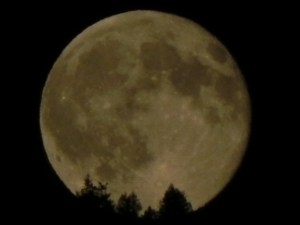
In ancient times the moon was frequently a goddess. Some ancient cultures pegged our satellite as masculine, but many saw her gentle light as more befitting a powerful female. Heading outside in the predawn hours with a full moon overhead is a pleasant, if chilly, reminder of just how bright our constant companion can be. Light without heat. Ancient desert-dwellers found the moon more benevolent than the sun, for night was relief from the fierce heat of day. Still, moving to the moon would meaning making a new world in our own image. Nothing, I suspect, would defile a goddess quicker. Our costly detritus already litters the once untouched face of Luna, and our size-nine-and-a-half prints are permanently left behind there. Heaven has always been that undiscovered country somewhere over our heads. The discovery of tunnels on the moon where we might snuggle down and be free may sound great. But we need to get things settled out on the ground first, otherwise our one and only satellite will merely become our next victim to exploit.


Rookie Mistakes

So now it’s got a stain on the cover. And it didn’t even come with a book jacket. Perhaps it’s symbolic? The year was 1993. I’d finished my doctorate at Edinburgh the year before, and, against all odds, had landed a full-time teaching position. That position was at Nashotah House, but never mind. Like all doctoral students I’d sent out my dissertation for publication. It’d been accepted by the prestigious series Alter Orient und Altes Testament, produced by the dual publisher Verlag Butzon & Bercker and Neukirchener Verlag. Most European houses print these books cloth-bound (mine in blue!), no dust jacket, straight to the library market. I was proud. I had my first copy in hand in time to show around at the American Academy of Religion and Society of Biblical Literature annual meeting. There I spied William Holladay, my Hebrew teacher, now deceased. He was sitting on the floor in a corridor, eating his lunch. I joined him and showed him my book. In his inimitable way, he snatched it (leaving a grease stain on the cover) and within seconds said, “there’s a word misspelled in your title.”

Crestfallen, I took my first copy back. I wrote to the publisher, but these things only ever receive one printing and I never heard back. How embarrassing! Your first foray into academic publishing, and you look like an idiot who can’t spel. Now, in my defense, the cover is simply what I thought was a photomechanical replication of the the title page. The world “Millennia” was spelled correctly where I’d proofed it inside. How they left out an “n” on the binding die is a mystery. I never got proofs of the cover. Besides, a book’s title is on the title page, right? Never judge a book by it’s cover! Mine has a stain on it.

The book, although on Asherah, never got much notice. It’s still routinely overlooked. One of the truly sad things, though, came from a senior scholar in the field, nameless here, who did mention my work. In his book he put a [sic] after the ailing word on the cover. That was an intentional slight. Had he looked at the title page—from which I’d been taught to take bibliographic references—he would’ve found the word spelled correctly. Many publishers do not let authors proof the binding die for their cloth-stamped covers. A senior scholar knocking down a struggling junior with an obscure three-letter word. Welcome to academia. The book did get a kind of second life when Gorgias Press reprinted it, with additional material. I still sometimes pull that first copy off the shelf, however, and wonder what can take the stain out of blue canvas. As long as someone can feel superior citing a mistake beyond a young colleague’s control, I suspect it will remain.


Wonders and Signs

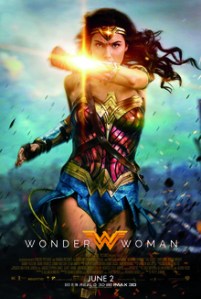
Raised by a woman who would be perhaps classified as a “single mother” these days—she was technically married except for a very brief time just before my step-father came along—I have always had great appreciation for the power of women. She didn’t have super-powers, but she raised three young boys largely single-handedly without the help a young woman has a right to expect. Wonder Woman, when I saw her on television, struck me as a very different kind of female. Strong, yes, but clearly there for men to look at. But then again, I didn’t have the benefit of Patty Jenkins’ Wonder Woman. I left the theater speechless. Apart from a few sniffles my wife didn’t have much to say until about an hour later. It’s that kind of movie.

I’ve seen many superhero movies. In fact, heroes are almost custom-made for the big screen. Comic books are basically storyboards already, and the colors and action are the very definition of spectacle. Wonder Woman, however, complicates the tale of the hero fighting for justice and truth. She fights instead for peace and love. Never supposing she’s anything but capable of defeating the evils of war, she doesn’t take orders from men. She actually shames an elderly, heavyset general for not being on the field of battle where, he acknowledges, others will die for the cause of the armistice. It’s a world inverted. Yes, the men are drawn to Diana, and can’t help but be awed by her. They don’t control her, however. She’s the first out of the trenches and she requires no man’s help when combatting the enemy.

Perhaps the most striking thing about the movie is the respect it to shows to women. Only one nude body appears in the film, and it’s male. I suspect I wasn’t the only man present made uncomfortable by the curious female gaze and the assessing questions of the goddess. Women are made to sit through countless movies as the subject of the male gaze. The embarrassment here is a reminder that making women sexual objects is the normal expectation. What if the roles were reversed? When Wonder Woman fights she is largely defensive. Men want to destroy her. She responds by declaring love will overcome war and owning her role as the “God-killer.” This is a movie with substantial subtext. It challenges the paradigm of men’s rule as wise and beneficial. A god may have to die, but the world is a better place for it. We could use some inversion about now.


The Wicked Man

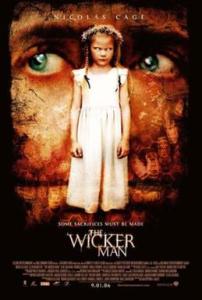
I confess, it was a moment of weakness. Or I could say that it was dedication to research. In either case, I subjected myself to watching the remake of the 1973 classic, The Wicker Man. The reviews that I’ve read over the past decade since its release had warned me not to subject myself to it. Not only did I, but I had my wife gamely watch it with me. If you plan to watch the flick but haven’t, I’ll first of all beg you to save your time and secondly warn you of spoiler alerts. So here goes.

By Source, Fair use, Link

By Source, Fair use, Link

In a movie that may be either pro-feminist or misogynistic, depending on which way you look at it, this version of The Wicker Man takes place in the United States. We’ve got all kinds of New Religious Movements in this country, so that much is believable. The film has a group of women who mute, deafen, and enslave their males moving from Salem, Massachusetts, across the country to Puget Sound where they can find an island to be left alone with their rituals. Superfluously adding an “s” to the original’s Summerisle, they come up with the sloppy-sounding Summersisle where they can raise bees. They worship the great mother-goddess, which is cool enough, but their religion appears to be cobbled together in a way that suggests those responsible for the movie didn’t do their homework. Although Sister Summersisle (five “s”es—count ‘em!) claims this to be a Celtic religion there are merely the weakest echoes of such.

To make matters worse, Edward Malus goes around beating up women when they get in his way. Yes, he is the unwitting victim—we’ve seen the original and know how this plays out—but it makes the viewer uncomfortable watching this unsympathetic protagonist punching, kicking, and even bicycle-jacking with a gun, the women of the island. A man comes ashore and the first thing he does is try to take over. Were there evidence of a deeper plot here it might suggest that this was intentionally written into it. As it turns out, however, as we enter a fearful era of the rich white man’s revenge, such scenes only suggest that Mr. Malus had it coming. Perhaps the movie is prophetic after all.

I really don’t recommend spending your time on the remake of what has become a horror classic. If you’ve seen the excellent original, you already know how it ends. And despite his brusque manner Neil Howie didn’t shout invectives at women or punch them in the face. In short, he took his fate in what might be a way that is also prophetic.


Good Goddess

This past week Asherah has been on my mind. Some of my readers will know that I wrote a book on Asherah, based on my doctoral dissertation. Those who’ve read it (admittedly few) will know that in it I lament the easy association of generic goddesses with a mythological figure with a distinct background and character. The complication has a number of sources, but became particularly acute when inscriptions reading “I bless you by Yahweh… and his asherah” were discovered at Kuntillet Ajrud a few decades back. Since then it has become neo-orthodoxy that Asherah was Yahweh’s wife and she represented trees, lions, goats, fertility, water, wisdom, and any number of other phenomena. Those who question this are called “conservatives” and evidence deniers. Those who write popular books on this assumption end up on news programs and some start appearing at conferences in very nice clothes.

Photo credit: Deror avi, Wikimedia Commons

Photo credit: Deror avi, Wikimedia Commons

So why am I thinking of Asherah? A friend sent me the news story of a female figurine discovered in an accidental find at Tel Rehov in Israel. Upon seeing the story, I was awaiting the inevitable equation with Asherah, but was surprised to read that Amihai Mazar, the archaeologist consulted, suggested it might be Astarte, or someone else. You see, figurines of naked females were quite common in ancient Israel. No consensus has arisen as to which goddess is represented, if any. They don’t have names inscribed, and they may have been like, ahem, action figures for the woman hoping for a child, or for the safe delivery of a child. We simply don’t know. The other reason I’m thinking of Asherah is that I recently read a book where it was simply assumed that Asherah was Yahweh’s wife.

Don’t get me wrong—I’d like to see Yahweh as happily married as any other god. In fact, I think it would be odd if nobody thought he was. There is a difference, however, between thinking this makes sense and grasping at minimal evidence to declare it a fact. If someone were to discover an unambiguous inscription reading, for instance, “Asherah and Yahweh sitting in a tree, k-i-s-s-i-n-g,” then I’d be the first to say mazel tov. I have no theological bias against it. The problem is we simply do not know enough about the goddesses of antiquity. We know there were many. And we know there were women who didn’t claim divinity as well. Who these figurines represent, we just don’t know. Perhaps Yahweh, even now out on a date with Asherah, is smiling down knowingly. If so, I wish them well. Until I see some unambiguous evidence, however, I will be a doubter.


Girl, Rising

It is perhaps unusual to stop and think about who you are. From the moment consciousness kicks in, our lives are a non-stop progression of stimuli and response and taking the time to stop and think what someone else must be feeling is, I sometimes fear, a dying art. Although I can’t accept the goddess hypothesis, purely on historical grounds, I am utterly at sympathy with it. I sensed that when Merlin Stone took the time to introduce herself to me at an American Academy of Religion and Society of Biblical Literature annual meeting some years back. She was one of the few who knew and appreciated my book on Asherah, and I in turn knew of her work both as a feminist and creative theological thinker. It was an honor to shake her hand. The heart of work such as that of Stone and Marija Gimbutas was that women deserve, and have always deserved, to be treated equally with men.

GirlRising

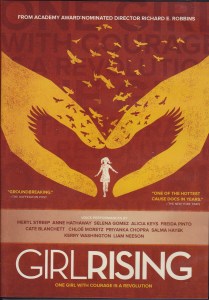
Watching Girl Rising, I was forcefully reminded of this once again. A 2013 documentary film telling the story of nine girls from “third world” countries, the movie is quite sobering. In many parts of the world women are still treated as property, although slavery has been considered a violation of human rights for well over a century. Hearing what young girls have to face in much of the world is heartrending. Hearing what certain unnamed presidential candidates have to say in this country is downright terrifying. Why is it that so many men never stop to consider what it would have been like for them, had they been born female? Would they have accepted that their lives would consist of lower pay and their healthcare would teeter in the balance every four years when a new crop of neo-cons puts the White House in its sights? And this is called the “first world.”

Having been raised by a woman who had, for many years, no support of a husband, I have been sensitive to the plight of women my entire life. I could see no reason that my mother shouldn’t be given the opportunity that other people had. Courageous, strong, and self-abnegating, she did what it took to raise her sons in a safe and loving environment. In my own experience of adulthood, full of struggles and turmoil as it has been, I wonder what life would have been like had I been a girl in similar circumstances. What if I had been born a girl in another country where my active mind would be grounds for beatings, or being shot? It is unconscionable. There may not have been an egalitarian society that centered on the worship of a goddess, but there is no reason we shouldn’t try to make such a peaceful, fair, and just society nevertheless. If only men would stop to think about how distorted a one-sided view of life inevitably becomes, perhaps the entire world would be able to claim to be “first.” It is only when women and men share rights that the world can start to be considered a just place.


Mother Divine

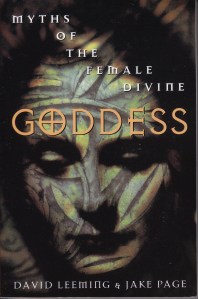
GoddessReligions, by nature, exercise a distribution of power. That power is perceived to be on several axes at once, the “vertical” is intended to represent the power of deities over humanity, and the “horizontal” is that of humans over humans. Historically all we can know is the latter dimension, and during the time of written records, that has been a male-dominated plane. Several years ago a theory developed which would be wonderful, were it true. The goddess hypothesis suggested that before male dominated civilizations took over, culture was run in a more egalitarian way and the goddess was the main deity. Since this theory sets itself before recorded history, artifacts had to be interpreted as evidence, and certainly such bits and pieces of past times have emerged. The goddess interpretation has, however, has faced severe criticism, and not just from male scholars. There are still those who find it tenable, and one such pair is David Leeming and Jake Page. Goddess: Myths of the Female Divine was a book intended to demonstrate the commonality of goddesses, but it didn’t always rise to the challenge.

No doubt, the motivation behind the book was noble. It is important to show that goddesses have been just as important as gods in the history of mythology. The problem emerges when the evidence is forced into a mold it doesn’t fit. “Goddess” is not a singular figure, any more than “woman” implies that all women are the same. Each chapter retells stories of various goddesses, and again this is problematic. Specialists in any one tradition are sure to spot errors and oversimplifications that suggest descriptions of other goddesses may not be completely trusted. There’s an overcompensation here. Men, at least some men, wish to show their support of women by suggesting that women once held esteemed places in the cult as well as in the throne room. What we know of history, however, gainsays this concept since, in one form or another, might has always made right.

Goddess is one of those little reference books whose main value lies in bringing previously disparate characters together to show some commonality. There is utility in placing goddesses side by side to form a phalanx of resistance to a hierarchy that has established itself as normative, backed by a more powerful male deity (or deities) in the sky. Goddesses have been part of religious thinking from the beginning. The early abstractions of natural powers, reason would seem to dictate, would have involved both masculine and feminine powers. We don’t know how such societies were organized, but the divine female was clearly present. By consciously acknowledging what we know, and creatively applying such knowledge, there may be a hope for the future of religions that is far more certain than a reconstructed past.


Myth Making

Beautiful.  Standing outside in the pre-dawn, looking up at the current alignment of Mars, Jupiter, and Venus in the east, I am struck by their presence.  The planets, “wanderers,” were known by the ancients to be gods.  Tales were told of how they came to have their places in the sky.  For those too busy to look up, Venus alone can take your breath away.  After the sun and moon, it is the third brightest natural object in the sky that can be seen on a quotidian basis.  It has been brilliant this month, and the peoples of ancient times were fascinated by how this morning and evening star rose high only to flee before the coming of the sun.  Myths were built around it.  Venus, it is no accident, was associated with the goddess of irresistible beauty.  She still is.

DSCN6017

Trailing behind is Jupiter. The Roman avatar of Zeus, Jupiter is the king of the gods, but not the brightest.  Following Venus, it is the fourth brightest object in the sky, followed by various stars in their unchanging positions.  Jupiter seems to be chasing Venus these days.  Sometimes I see the two of them cavorting in the light of the moon.  The object most desired by the king is no object at all, but a goddess who outshines even the power of the primal deity.  And then there’s Mars.  Mars lags farther behind, never quite the master of war, at least according to Homer, that he hoped to be.  He is nevertheless the consort of Venus, for strong emotions tend to go together.

I glance at my watch and I know I should be headed to the bus stop by now, but I dash inside for the camera.  It is a vain hope that I can capture what even these eyes can plainly see.  It is a drama acting out in the celestial sphere.  Three planets in a neat line, clear as Orion’s belt, within the length of my thumb held at arm’s distance.  I can hear the bus rumbling toward the corner, and I know I’ll have to rush, but even as I power-walk to the stop, I keep glancing over my shoulder to catch a few last glimpses of a myth in the making.  Is it any wonder that we’ve lost the magic in our lives, when we can’t even take the last moments of darkness to pay tribute to the gods?


Seeing the Trees

Into_the_Woods_film_posterI first learned of Stephen Sondheim’s musical Into the Woods while liking in the woods of Wisconsin. I was teaching a summer term course of mature students, one of whom used one of the songs to illustrate the point he was making during a presentation. Of course I don’t remember what the point was, but I did remember the movie. Then along came Shrek and fractured fairy tales were back in business. Enchanted brought Disney into the act, and a number of self-aware takeoffs from the brothers Grimm have followed. I’d seen the film of the stage show of Into the Woods before, but it had been a while. Over the weekend we decided to watch the new Disney offering of the story and as we did a couple of familiar, if obscure, ancient mythological motifs came to mind.

Cinderella, as we all know, was sorely abused by her evil step-mother and step-sisters. She seeks solace at her mother’s grave, in the woods, of course, in the movie version. While there, singing somewhere between a lament and a prayer, her mother appears to her in the tree that grew from a branch she’d planted there many years before. It’s a musical number, of course, but my mind couldn’t help going back to Asherah. Asherah is considered by many (without good reason, and I should know) to be the goddess of the trees. Yes, this was a mortal, a dead mortal at that, who spoke from the tree but the way she was presented in the movie was distinctly divine. Indeed, there is similar iconography from ancient Egypt. It was almost enough to make me go back on my own evidence that Asherah wasn’t a tree goddess.

The giant’s wife poses a real threat in this film. Jack’s beanstalk and the effects resembled those of Jack the Giant Slayer, a movie that I only vaguely remember as being one of many I watched with bleary eyes on a transatlantic flight a few years back. Nevertheless, Mrs. Giant is here stomping about the village when Jack and the baker decide to take her out at the tar pit, with the help of Little Red Riding Hood and Cinderella. The preferred weapon is a sling. As the giantess is pelted with stones, she grows annoyed until Jack, in the perfect image of David, strikes the giant between the eyes, slaying her. We all know the fairy tale version ends with the beanstalk chopped down. We’ve entered a new world, however. A world where Bible and fairy tale are harder to distinguish. And not only that, but even fairy tales no longer have the canonical status they once held.


Asherah’s Ashes

Academics are often poor communicators. The stunning irrelevance of most research should stand as a rather obvious clue to that. Of course, I’m old school in my approach to research. When afforded the opportunity to do so, I produced at least one scholarly article per year, and these were based on extensive research. One of the misconceptions about research is that it involves only that which supports your theory. My first article and first book, both on Asherah, demonstrated that rather clearly, I hope. A kind of scholarly orthodoxy had grown up around the goddess, originating largely in Frank Moore Cross’s work, but also in that of a few other scholars. Nobody challenged these results although they were clearly built on shaky ground. Before I finished my dissertation it had been decided that Yahweh was married to Asherah, and the two merrily danced together on a pathos graffito from Kuntillet Ajrud. After my work was published, I was surprised to see how completely it was ignored. I, like John Mellencamp, had challenged authority. And we know who always wins.

I recently read an article entitled “Iconism and Aniconism in the Period of the Monarchy: Was There an Image of the Deity in the Jerusalem Temple?” by Garth Gilmour, in a Routledge volume entitled Visualizing Jews Through the Ages. Gilmour uses a crudely incised sherd originally found in 1920 in Jerusalem, to build a turret on the house of cards of conjecture. The incised stick figures which, if you squint just right, may be a male and female, it is suggested, are none other than Yahweh and Asherah. Probably grooving together in the temple. Now don’t get me wrong—I’ve always found the idea of Yahweh having a consort conceptually satisfying. We know that other deities in the ancient world often paired off, and that Asherah was generally the main consort of the high god. The proof, however, was in the pithos. Seeing what you want to see is a constant danger to researchers. That’s why my bibliographies tended to be encyclopedic. Gilmour’s article does not mention any of my several works on Asherah, or even my articles on Baal. Apparently my work harshes the easy conclusions already drawn. Or is insignificant. Caution often is.

Consigned to while away my time in publishing, I’m aware that there’s far too much out there for anybody to be able to read it all. Indeed, when I have rare moments to engage in research during my busy, commuting lifestyle, I find myself increasing aware of obsolesce. New results are published before the proofs get to the author. Still, the number of books out there on Asherah are fairly small. Those supporting the unofficial scholarly consensus are many and top the rankings on Amazon. Nobody likes to be reminded that the dissenting view has logic firmly on its side. We see what we want to see. Research should, in the opinion of this disregarded scholar, involving searching again, even as its name implies. The foundations should be reexamined now and again to make sure the tower’s not about to topple. That’s old school. And old school is now, apparently, understood as merely old fashioned.

DSCN4422


Book Ideas

Call it sour grapes. When I was a young scholar, I used to wonder how to develop book ideas. You see, at a young age—twenties or thirties—even a doctorate means your understanding of the world is limited. I’d written a substantial dissertation on Asherah, and I was faced with developing several new courses from scratch at Nashotah House. My mind was focused on the immediate concerns. I did continue my research, however, into ancient Near Eastern deities, with an eye toward writing an account of celestial gods and goddesses. A substantial piece on Shapshu ended up being snatched up by a Festschrift, and colleagues began to tell me that to get hired away from Nashotah I had to write something biblical. Thus Weathering the Psalms was born. The research and writing took a few years because I never had a sabbatical, or reduced teaching load. In fact, administrative duties as registrar and academic dean were added to my remit. Still I scribbled away in the early hours and finished a draft. Then I was cast into the outer darkness.

Publishing was never my first choice of career. I’m more a writer than an editor. In publishing, however, you are not encouraged to write your own content. I can’t help myself. As I rounded the corner from my forties, I had finally read enough material—both relevant and extraneous—to have book ideas. In fact, too many. Held back by the lack of publication, I didn’t know how to channel this energy. One of the benefits of working for publishers is you learn how to come up with a viable book idea. I’ve got a backlog now. I’m currently working on a few books, but one is in the forefront of my mind and eclipses all other projects at the moment. Having watched what sells, I think this one has a real chance. Time to write, alas, barely exists. The writer, you must understand, has to build a platform. Get a fan base. Welcome to my platform.

Daily I receive the first books of young scholars. In this publish or perish—strike that—publish and perish atmosphere, even the mediocre is encouraged by dissertation advisors. Young scholars, maybe thirty, think they have something profound to say. Call it sour grapes, but I’m not getting any younger and I don’t have an institution to support me while I write what should be written. The face looking back at me in the morning has more gray hairs than I remember growing, and has wrinkles that my mind doesn’t recognize. It’s too full of books to write to pause long. The bus is coming soon and I have younger scholars’ careers to build with premiere branding. My own ideas ferment unseen in the basement. What some call sour grapes others call fine wine.

Photo credit: Dragonflyir, Wikimedia Commons

Photo credit: Dragonflyir, Wikimedia Commons