Paywall

They were my former employer, for goodness sake!  Here’s how it happened.  It begins with research.  Nobody is born knowing all they need to learn.  Research teaches you to question what you read and check sources.  That’s how bibliographies are built.  So I came across a reference to an article I needed to read.  The problem was it was behind a Taylor & Francis paywall.  (Taylor & Francis own Routledge.)  The cost to read one article in an academic journal?  $45.  That’s usually my upper limit for buying an entire book.  Working in publishing I know the reason for this.  They want you to go to your library (I don’t have one) and ask them to subscribe.  If you need access, probably somebody else will too.  This particular author isn’t on Academia.edu.  Should I risk Sci Hub? I mean the article is right there, but I’m not allowed to see it!

I did find that you can ask the author for a copy on Research Gate.  First you have to join Research Gate.  They want your institutional email.  My email doesn’t have a .edu extension.  I therefore had to go through a lengthy process of verifying that I am a researcher.  I had to claim papers I’ve authored.  I had to explain why I don’t have an affiliation.  I had to have them email me, twice.  Each time I had to provide further information.  I swear, it’s like getting a Real ID all over again.  All this so that I can ask an author for a paper that’s only available for $45 on the publisher’s website.  Every time I start a new research project I ask myself why I keep at it.  I guess I want to be part of the conversation.

The open access movement is gaining steam.  The idea is that research should be free.  Very few object to paying nominal fees for access, but often prices are extortionate.  Publishers are caught in this web because overheads are so high—they have to pay employees—and the cost of materials isn’t cheap.  Traditionally this has been overcome by passing some of the expense on to customers.  That’s why academic books are so pricy.  With journals, such as the one I need, the scenario’s a little different.  Journals are purchased by libraries via subscription.  “They wouldn’t subscribe to them,” so the argument goes, “if researchers could get the contents for free.”  Still, putting in place a free article or two before dropping the price bomb would seem to be in the best interest of actually moving knowledge forward.  Hey, T&F, don’t you remember me?


Dark Academia

Genres can be slippery things.  Those of us who dabble in fiction sometimes find it difficult to describe what we do.  Writing is individual expression and it may have elements of this and that.  Given my disposition, much of my fiction has some horror features but I tend to think of it as something else.  My wife recently sent me an article on Book Riot about the genre Dark Academia.  The piece by Adiba Jaigirdar begins by asking the question of what exactly dark academia is.  The label conjures up books about something untoward happening in the halls of learning, and that certainly qualifies.  It’s difficult to be more precise because it’s different things to different people.  Some of my fiction, in my own mind, falls into that category.  Things go wrong in higher education all the time.  Why not preserve it in fiction?

I’ve attended, and worked at some gothic places.  The contemporary university, such as Rutgers—although it’s old by American standards—has continuously modernized and although I don’t know it’s history well, I suspect gothic was never its aesthetic.  The same is true of Boston University where I went to seminary.  Edinburgh University, while also modernizing, has retained much of its gothic feel.  That’s certainly true of New College, where I studied, in the heart of the medieval old town.  There’s a gravitas to such dark settings.  They invite strangeness.  My first teaching job was at the intentionally gothic Nashotah House.  Although I didn’t agree with the politics I loved the setting.

I seem to have slipped from Dark Academia into Gothic Academia.  Indeed, it’s difficult to keep the two distinct in my mind.  When I taught I maintained the tweed jacket and somewhat disheveled look of someone who has something else besides grooming in mind (this is entirely genuine).  Indeed, that’s one of the great charms of higher education.  You need not constantly worry about each hair being in place—they’ll take care of that when they shoot the movie.  Not many people, and probably a diminishing number given the state of things, experience full-time life in academia.  It can be well lit and modern.  If done right, however, it should take you into odd places.  Discovery is generally messy.  Perhaps that’s part of the dark of dark academia.  When we use our brains we end up in unexpected places.  I’m not sure I understand dark academia, but I have a feeling that I’ve lived it even without my fiction.


Eve’s True Desire

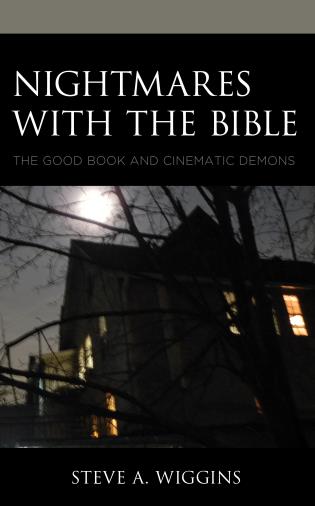
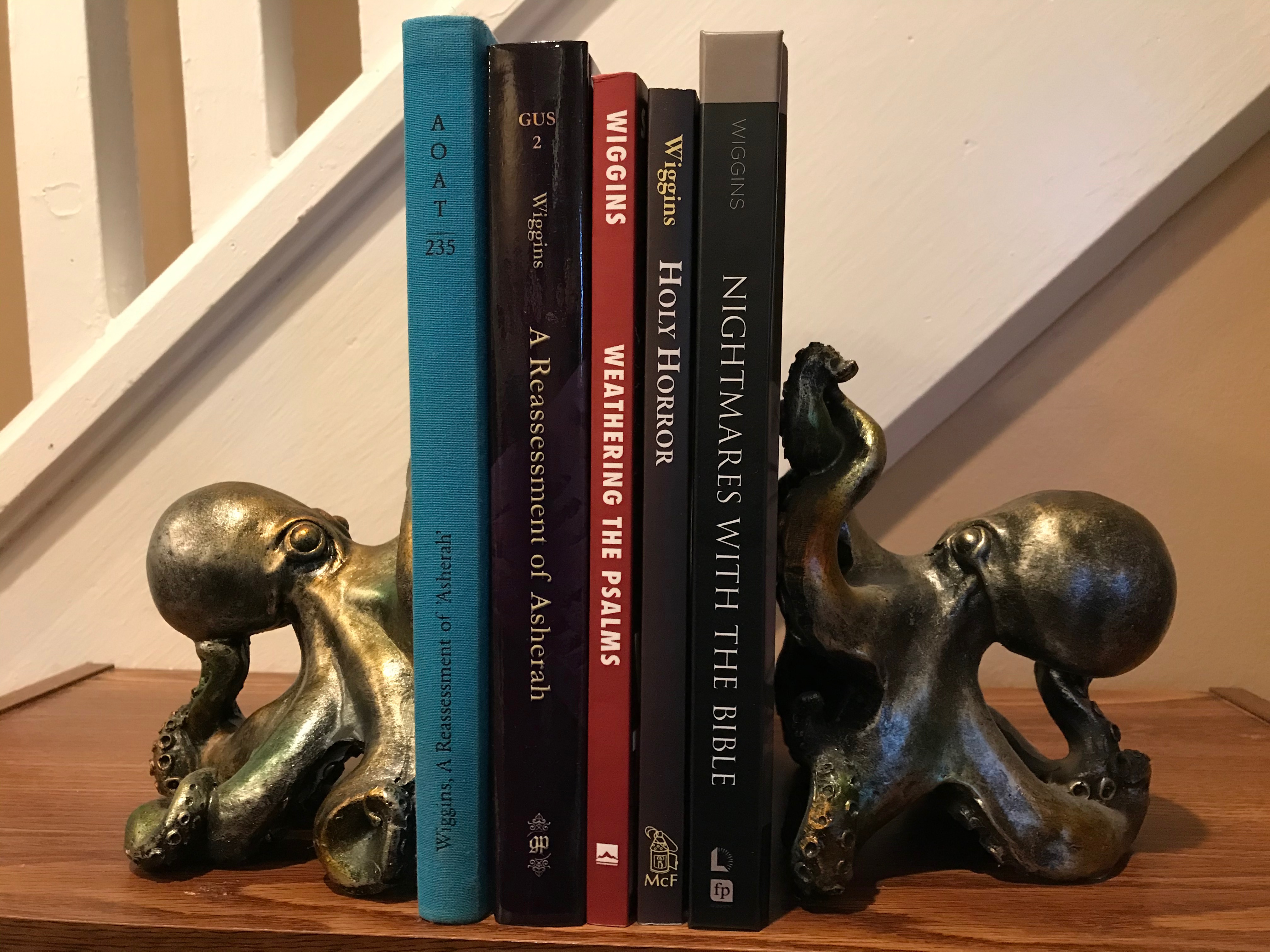
Psst—don’t tell anyone!  There is a free copy of my first book available on Academia.edu.  I thought I was kind of radical for doing that, but people who write books want people to read them.  Having a book priced $70 or more, heck, even $30 or more, means only diehards will buy it.  Nightmares with the Bible promptly sank at $100 cover price, released during a pandemic.  I’ve always admired scholars who’ve bucked conventions to make their work available.  Recently I needed to consult a book.  I won’t say what it is because I fear a take-down order will be issued where I found it.  The author, aware the book was hard to access, actually photocopied the entire book and put it on a website.  I stand up and cheer!  Photocopying an entire book is a lot of work, a labor of pure love.

Now, I’m all for authors getting royalties.  It takes a lot of time and energy to write a book.  It can cost years of your life.  You ought to get something back for it.  It seems to me, however, that a different model is required for academic books.  Why are they so expensive?  Not only that, but smaller publishers without the distribution channels often publish worthwhile books, but in small quantities and they go out of print after the initial run is sold.  The academic enterprise (knowledge for knowledge’s sake) has become a captive of capitalism.  There’s no other way to trade in that market.  Books that have willing, even eager, readers are sequestered in libraries only accessible to employees.  Is there anything wrong with that picture?

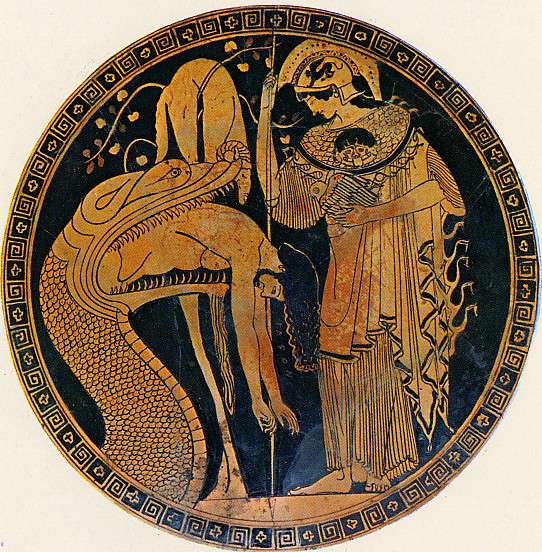
Academics at less wealthy institutions often find ways around the rules.  I did my research for Weathering the Psalms at a small seminary that had trouble getting unusual items on interlibrary loan.  Bigger schools were distrustful of this tiny enclave called Nashotah House.  Would they ever get their rare property back?  Meanwhile worldwide mail service crisscrossed with offprints sent for free from scholar to scholar.  It was like your birthday, or Christmas, when a long-awaited piece of research landed in your mailbox.  Nobody was in it for the money.  We were beguiled by learning.  Eve looking wistfully up into the tree.  Now it’s all business suits with dollar signs for eyes.  The academic who puts their book up for free on the internet is nothing less than a saint.  Seeking knowledge is never really a sin.

Tasty fruit of knowledge

Taking Part

It’s always a pleasure to be invited, even if not as a proper guest.  To an academic conference, I mean.  Most of us sit around feeling pretty obscure most of the time, even if we do write books.  I am literally genuinely surprised when sometime contacts me to tell me they’ve read my work.  It was, therefore, a complete surprise to be asked to attend the “Ancient and Modern Ideas of Possession” conference hosted by the University of Innsbruck.  I wasn’t an official participant, but the organizers, somewhat surprisingly, knew of Nightmares with the Bible and thought I might be interested in, well, possession.  Because I work “nine-to-five” and because Austria is several hours ahead of the Eastern Time Zone, I couldn’t Zoom in for all of it, but what I did hear I really appreciated.

One of my suspicions was confirmed, and that is that the idea of possession remains an outlier in academia.  The sixteen or so presenters represented several academic fields, none of which boasts of being interested in such things.  What surprised me, but then really didn’t, was that a comment or question came up several times: do any of us believe in the ontological reality of demons?  At least for the time I was able to sign in the question was never fully discussed but I had the sense that one or two of these academics were willing to lean in that direction.  We all know that individual observation is often faulty and subject to biased interpretations.  We may, however, know that many such accounts have been written by highly reputable individuals with nothing to gain by making spurious claims.  Academics should remain curious.

I learned that at least two of the presenters had written books that it would’ve been useful to have read for my own book.  Books are part of a conversation.  Seldom is any single volume the last word on a subject.  It was a privilege to be among other academics, if I may classify myself as one, even if erstwhile, that had come to a similar place in their explorations of the world of spirits.  Women and men who were willing to ask that most shunned of questions, “what if?”  Human experience moves ahead and some ideas are left behind.  That doesn’t mean those ideas should never be revisited.  Nobody at the conference mentioned my book, but at least one person in the room was aware that it was, in some form, part of the discussion.


What’s Class Got to Do with It?

As an editor you get to read synopses of nascent books across a wide variety of disciplines.  A live topic in sociology and poli-sci is class.  As in “the hidden injuries of.”  So I’ve been grinding class in the machinery of my mind and the product always seems to be a question mark.  Neither of my parents finished high school.  My father worked, when he did, as a house painter.  With three children and no money for childcare (and not even a GED), my mother was of the stay-at-home variety.  I saw neither parent, and this would include my step-father, sit down to read a book for enjoyment.  My mother read the Bible for consolation, and read us children’s books before bed, but literature wasn’t really part of our lives.  I still think of myself as working class because that’s what I learned growing up.  Working class with books.

I recently posted about a contract for my fifth book.  The previous four have earned total royalties of well under four figures (combined).  I’ve been asked why I do it.  It’s not an expectation of my job.  It takes up most of my time outside an unrelenting nine-to-five.  Where does it get me?  None of my books (so far) have sold more than 300 copies.  I can see why—they’re either expensive or obscure (perhaps both).  But I love books and reading and I want to give back.  The truth is I don’t know why I do it.  Working class folk wind down from work in different ways.  Some of us do it by writing, I guess.

Learning, for me, works best if someone shows me how to do it.  I expect that’s why I did so well as a teacher.  Explaining things works for me.  I still run into this all the time—people come at you in media res and suppose you’ll know what they’re talking about.  At work, in extra-curricular organizations, just about everywhere.  My working class response is “whoa, back up!”  There’s no better place to start than the beginning.  It’s folk wisdom, I suppose.  In this world where everyone middle class is too busy, they don’t like to stop and tell you what you need to know to get started.  I don’t know how to be middle class.  One of my early jobs involved using a sledge-hammer.  I’d never done it before and I learned by watching others.  I’m not qualified to theorize about class, but I do know that by the end of the day that blisters will accompany any new task.


Clash of the Titles

Well, it seems I may be stuck in publishing for a while.  At least it’s a place to learn.  The inside story, it turns out, would be very helpful for authors to know.  Let’s take titles for example.  An editor sees a basic misunderstanding on the part of many academic authors.  Hey, I’ve even done it myself.  To correct this misunderstanding it’s important to see that academic publishers see different basic kinds of books.  One of them is the academic monograph.  No matter what the author thinks (I know the feeling of working on a book for years and supposing everyone else will be interested in the topic) academic books are of limited appeal.  Their main buyers are academic libraries and academic librarians want to know at a glance what the book is about.  The title has to say this, even before reaching the subtitle.

We’re all used to the idea of seeing books with clever titles in the bookstore.  (Remember bookstores?)  These are trade books.  Some of them are from academic presses, but these are books that have often been worked over by editors and marketers and publicists to make them more appealing.  The title can be clever, with an explanatory subtitle, because the target buyer is a bookstore rather than a library.  It’s difficult for an author to admit that this tome that has consumed your waking life for years, and maybe even decades, is primarily something a couple hundred libraries only will buy.  And family and friends who feel they need to support your efforts.  It’s a hard reality to face, but it often comes down to title.

What are you going to call your book?  My own most recent effort, Nightmares with the Bible, was written for a trade readership.  The publisher, however, had the library market in mind.  For success in the library market, the title works against the book.  No matter how accessibly your book is written, no mere mortal will pay $100 for it.  (Some of us will feel compelled to dish out that kind of cash for a title we really must read, but we are the exception rather than the rule.)  I like my title, but it was a mistake.  It should’ve probably gone by its subtitle, slightly modified, The Bible and Cinematic Demons.  In my mind as I wrote it, I had an educated but popular readership.  The publisher had different ideas, unclear to me when the book was put under contract.  Now it’s time to give this post a popular title so that it will be read. And hopefully taken to heart.


Psychology of Religion

It’s so human.  Mistaking form for substance, I mean.  A recent piece in Wired that my wife pointed out to me is titled “Psychologists Are Learning What Religion Has Known for Years,” by David DeSteno.  As the title intimates, religion benefits individuals in many ways.  Church attendance, however, has been declining for a long time.  While not the point of the article, I do wonder how much of it is because mainstream churches are stuck in a form that no longer works and people aren’t finding the substance there.  The basic church service is premised on a specific religious outlook that no longer seems to fit how the world works.  Potential ministers go to seminary where age-old ideas are tiredly replicated, based on an incipient literalism that simply doesn’t match what people see in the world.

Wired?

I’ve experienced this myself.  Depending on who the minister is, a church can go from dynamic to dull several times in the course of a member’s life.  People still crave the substance, even if the form stops working.  The form, however, is seminary approved and seminaries are accredited by the Association of Theological Schools.  The folks are academics and academics are well aware of the developments that suggest the form doesn’t work.  Speaking as a former seminary professor, sermons just don’t do the trick when you’ve done your own homework.  As DeSteno points out, once you remove the theology science and religion tend to find themselves in agreement with one another.  For years I’ve been suggesting that secular seminaries are needed.  Churches that aren’t bound by form or doctrine.  Instead we swim in a sea of retrenched evangelicalism.

Religion is an effective survival technique.  It evolved, even while denying it did so.  Some time after the Reformation a resurgent literalism led Catholicism to modernize, removing the mystery that was perhaps the last tenuous grasp that form had to provide substance.  Religion, beleaguered as it is, still has substance to offer.  DeSteno’s article is adapted from his new book How God Works.  I haven’t read it yet, but from the summary I can see that I should.  There are religious groups that attempt what this article suggests.  From my experience, however, I see they easily get sucked into mistaking the form they settle on for the substance of what they do.  I had recently been toying with the idea of attending seminary again.  I found, however, form after form.  What I need is substance.


Rebranding

Established in 1583, Edinburgh University has been a world-class research institution for centuries.  It appears in pop culture as a place of great learning and innovation.  While the newest of Scotland’s four (in contrast to England’s two) ancient universities, it has risen to the point of greatest name recognition.  Even as a kid in rural western Pennsylvania, born into an uneducated family, I’d heard about it.  Little did I dream that I’d actually attend it one day, skulking its time-honored halls and walking the same streets as so many worthies that I couldn’t count them.  It was an inspirational place to live and learn.  While it may not get you a job, a doctorate from it will keep you curious for the rest of your life, and that’s a fantastic gift.

Just as I was preparing to graduate that venerable institution announced it had decided to rebrand.  Wait, what?  A four-centuries’ old university known world-wide felt it had to have a brand?  At great expense, they hired a consulting firm to make them more modern looking while retaining the trusted tradition stretching back to the late middle ages. It wanted to attract “modern” students (since this was in the early nineties those modern students are now adults).  I felt crushed under the commercialism of it all.  Branding?  If a kid from remote foothills of the Appalachians can know and dream of a place, why does it need to get the word out about itself?  Ah well, these wee bairn be wantin’ somethin’ flashy.

I’ve lived through other corporate rebrandings.  They seem to me a waste of good money, especially if you’ve been around for a long time.  Some people, I suppose, look at an old logo and say “looks outdated, not with it.”  Others of us fall down and worship.  You see, staying power is something rare these days.  Corporations come and go.  Even higher education institutions sometimes close down, but the old ones keep on.  You can pick up a book from 1600 and read about Edinburgh University.  It won’t have the new logo—in fact, it may not have a logo at all—but it will still be around four centuries later.  If you get something right at the beginning, why do you need to change it to impress those who think present-day branding (which will only have to be rebranded again at some point in the future) is superior?  Perhaps our ancient institutions need to learn that old lesson—trust yourself.


A Life of Writing

One problem with being a graphomaniac is forgetting what you’ve written.  I’m glad to know I’m not alone in this.  Once we had the eminent historian Owen Chadwick to our house for dinner.  We of course had invited some students as well.  At one point one of the students asked him about something in one of his books.  The famed historian shook his head, not recalling it.  “One writes so much,” he replied.  Now, I’m not comparing myself with a knighted academic of international fame, but his remark in our living room has stayed with me all these years.  There are over 4,400 published posts on this blog, over a million and a half words, by my calculation.  Not even I remember everything I wrote.  “One writes so much…”

Just the other day I was looking for something I wrote.  You see, when I get an idea for a book (which happens frequently) I start writing it.  Inevitably, since I have very little time for writing on a daily basis, given my job, it joins many other partially written books.  Unless something like a book contract happens, my interests shift from one project to another, slowly building each up to near book length.  Once a project reaches that point I try to finish it off.  This involves writing and countless edits.  Holy Horror, for example, went through fifteen rewrites, some of them extensive.  Before it was sent to the publisher other books had already been started.  A conversation the other day reminded me of a book I’d started and I couldn’t find it.

My backup discs are a jumble of projects that take up too much memory on my laptop.  I try to organize them, but when a computer warning comes on while in the middle of a project one tends to cram things aside until one has room to finish up what one’s currently working on.  All of this authorial drama takes place before the sun rises, and when enough time passes I don’t always remember which file I put that old project into.  What did I even call it?  Writing, you see, requires constant practice.  Working nine-to-five creates a sense that you owe a great deal of time to your employer.  (Ironically, in my case, helping other people get published.)  The people I talked to the other day thought that that unfound idea sounded like a viable book.  Perhaps it is, if only I could remember where I put it.  Meanwhile I remember Sir Chadwick’s words from a quarter-a-century ago.


Ancient Near Ideas

Looking backwards has its issues.  I still think about the Ancient Near East.  My reputation on Academia.edu is based entirely on it.  (From the user stats, nobody’s really interested in my horror writing there.)  Let’s face the facts, though.  If you an expert in a field (mine is Ugaritic mythology, a form of history of religions), you can’t just write things off the cuff for publication.  I need to be very precise and accurate.  I like to think that’s why my articles on Academia get attention.  To do that kind of writing you need time—when I was a professor most of my “free time” was spent reading in that field—and either research funding or an incredible library.  Professional researchers (i.e., professors) get paid to do that kind of thing.  I don’t do it anymore but that doesn’t mean I don’t think about it.

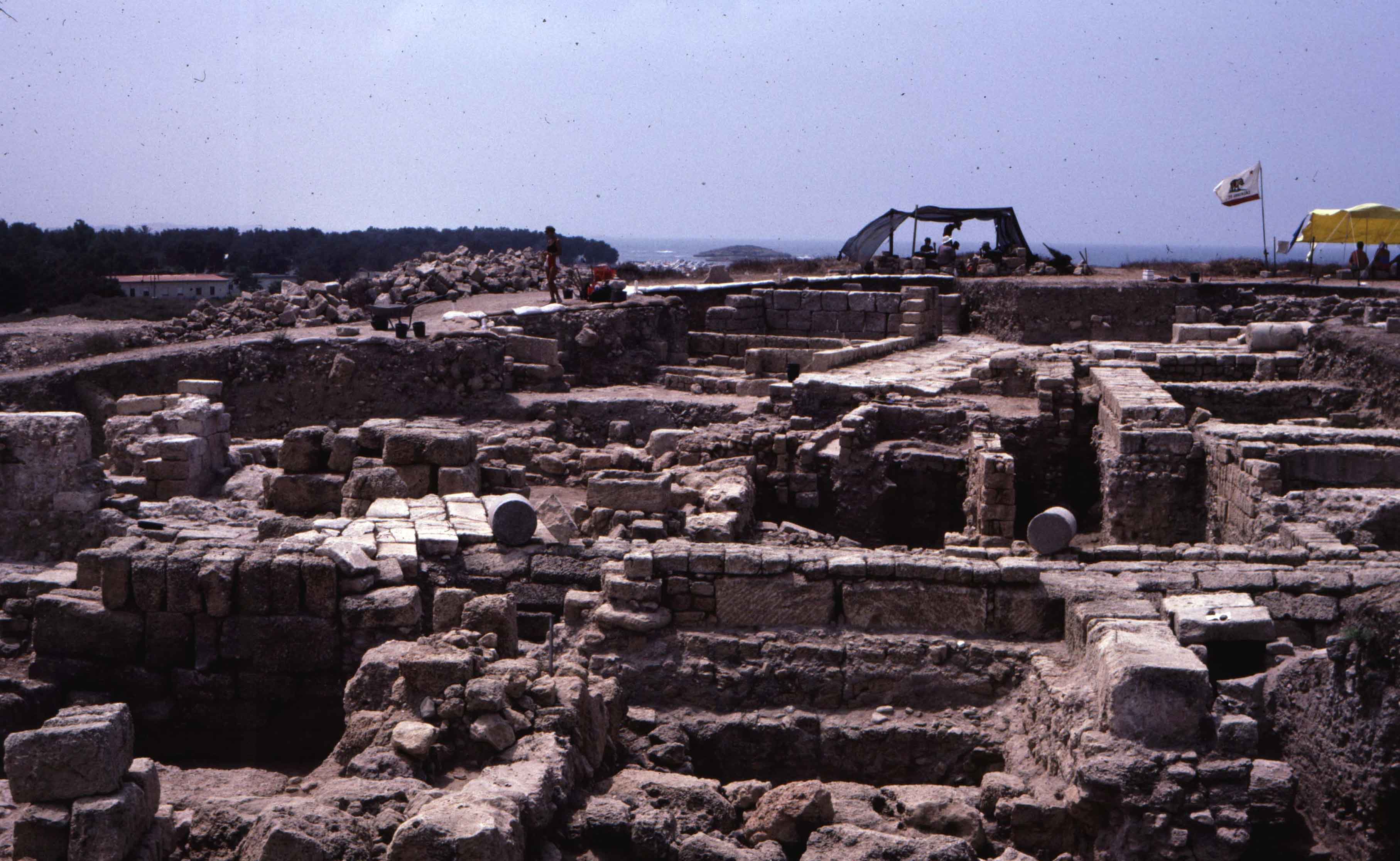
The other day I saw an article about Mehrdad Sadigh.  Although this antiquities dealer operated mere blocks away from where I worked when I commuted to Manhattan, I’d never heard of him.  It turns out that he had (has) a full-scale forging operation right in the city that never sleeps.  He has made a living, allegedly, for years by selling fake antiquities as genuine.  The story is tragic, but it underscores the point with which I began—people are interested in antiquity.  We want to be in touch with the past.  I can attest that there’s nothing quite like the thrill of being the person who unearths something on an archaeological dig.  Touching an artifact than no human hand has touched for two or three thousand years.  Looking back.

Looking back makes it easy to get distracted.  As much as I enjoy and appreciate my friends who still get to do Ancient Near Eastern studies for a living, I sometimes think how it’s good to move on.  Who knows, maybe I have another Ph.D. left in me yet.  Moving on increases the breadth of your knowledge.  Since university jobs are as mythical as the texts I used to study, doing a doctorate for a job is a fool’s errand.  Doing it to learn, however, is something I still heartily recommend.  There’s nothing like immersing yourself into a single topic for three-to-five years so that you come out with more knowledge than is practical about it.  I still think about the Ancient Near East.  I’m still tempted to buy new books that come out on the topic.  Instead, I watch horror and think it might be fun to earn a doctorate in monsters.


Classic Plural

You might think that with our modern lifestyles, looking back would become passé.  Recently an article on Hyperallergic discussed “Ancient Greece and Rome Are Hot in Animation Right Now. Here’s Why.”  The article by Chiara Sulprizio notes that themes central to history—namely, sex and violence—animate ancient mythology.  This allows modern interpreters to explore where we are by looking back.  At the same time, in higher education, such topics and departments are being cut.  The humanities in general have come under fire lately.  Where are we going to learn about such things as the classics if we cut off the only people who spend their time studying such things?  This isn’t the only instance where universities seem to misread what hoi polloi find to be of interest.

The classics have been known as such because of their formative role in our culture.  As this Hyperallergic story shows, they can bring in money (for this is the measure by which all things are assessed).  Again it seems that higher education has followed the way of the dollar, so why not invest in the study of what makes us human?  I guess I’m a bit of a curmudgeon here because it was the humanities that came up with the idea of higher education in the first place.  Universities were places to study theology and law, and even the original concept of “humanities” included arithmetic, geometry, astronomy, and logic.  Only when these topics started to split off into what we would eventually call “STEM” did the humanities begin to suffer neglect.

Looks like a good story

It was, after all, the Greco-Roman world that gave us what we call the classics.  I fully agree that we can’t constantly look back—we’d never move forward then—but our heads turn for a reason.  Understanding what it is to be human seems to be something we’ve grown less interested in since the sterile clean room has given us gadgets and toys we can’t seem to live without.  Living, however, is such a human aspiration.  We want fulfilled lives.  Mythology gives us meaning.  That’s why we keep coming back to it.  In my own lifetime I’ve seen several resurgences of interest in the classics, and experts always seem surprised.  They needn’t be, however.  People have found these stories powerful well before the Greeks and Romans gave them the shapes we recognize.  Many of them go back even further to the early civilizations of the Levant.  The classics have, in other words, earned that name.


Claim This Panel

Validation.  We’re surrounded by it.  Now that we have the internet, everyone seems to want us to verify who we are.  And we were told as kids that there are no such things as trolls!  Personally, I have no idea why a hacker would want to be me.  I mean for destabilizing the government by messing with elections, well, of course, but I mean for academic purposes.  How do you really know who I am?  I googled myself the other day—I’m curious how my most recent book is doing because I’ve heard nothing from the publisher since it appeared—and noticed that in the “knowledge panel” on Google they had the picture of the wrong person.  I guess I’d better verify myself!

The erstwhile academic (aka “independent scholar”) gets invitations via email from Google Scholar to claim their papers.  I suppose in an effort to provide competition to Academia.edu, the researcher finds her or his papers available on Google Scholar’s website.  So far, so good.  But the invitation comes with instructions to verify your “work email.”  Said email must end in a .edu extension in order to be valid.  In other words, “independent scholar” is an invalid category.  This train of logic demonstrates one of the serious problems with high education shrinkage and the industry becoming tighter and tighter with its positions.  How do you verify yourself if your email address is the same as any Jane or Joe?  You can’t.  “Scholar” is limited to those lucky enough to have picked up a very rare position, especially in some fields, such as religion.

My recent experience with the DMV was an exercise in validation.  I presented the woman my vital paperwork (which was less than I had to show to get the New Jersey license that I had to cash in to get a license in Pennsylvania) while wearing a mask.  Irony can be quite stunning at times.  How did they know I wasn’t some masked bandit stealing someone’s paperwork on the way to the DMV?  I guess they could ask me to verify by my work email.  Then they’d discover that I’m merely an independent scholar.  If they googled me they’d find the wrong person’s photo on my knowledge panel.  Won’t someone validate me, please?  It would be nice to be able to claim my own papers on Google Scholar.  But until “independent scholar” becomes a real thing, I guess you can ask that guy (who’s not me) on the “knowledge panel” that bears my name.


Monomyth Myth

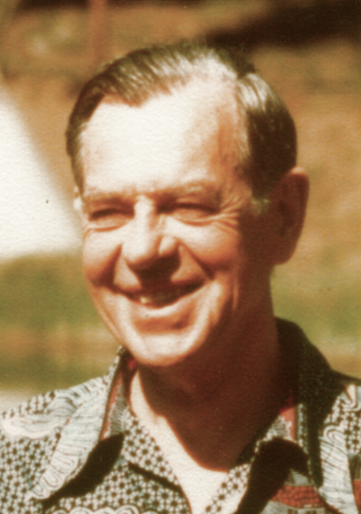
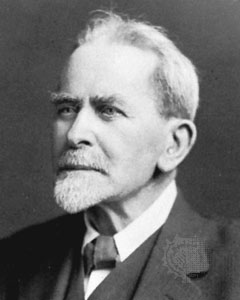
Since I’ve been exploring movies as the locus of truth, and meaning, for contemporary religious culture, I can’t avoid Joseph Campbell.  His interpretation of mythology—long discounted by mythographers of specific cultures—influenced film makers like Stanley Kubrick, the various Batman directors, and, most famously, George Lucas.  Campbell’s interviews and his eventual series The Power of Myth highlighted his work, even as specialist scholars noted the problems with it.  This is the subject of an essay in the LA Review of Books.  This story, written by a couple of professors (Sarah E. Bond and Joel Christensen), exposes the problem with Campbell’s “monomyth,” perhaps best typified by his book The Hero with a Thousand Faces.  This is stuff I realized as a postgrad student—Campbell didn’t footnote much and as Bond and Christensen note,  he “cherry picked” examples rather than looking at myths in context.

Image credit: Joan Halifax, via Wikimedia Commons (via Flickr)

One of my observations, when it comes to movies, is that people take their truths from movies, like they’re modern myths.  In other words, although Campbell’s method may’ve been faulty, he gave us Star Wars and the rest is history.  I rest on the horns of this dilemma.  My dissertation (and consequent first book) on Asherah was based on the idea of contextualizing myths.  In other words, I was arguing against a monomyth.  At the same time I’ve come to see that scholars don’t determine what people believe—culture does.  Consider how distorted the “Christianity” of Trump supporters is and you’ll see what I mean.  People don’t read scholars to find these things out.  Besides, wasn’t Campbell an academic?

Image credit: Wikimedia Commons

Without reaching out to the masses, academia turns in smaller and smaller circles.  Many of us who desperately want to be in its ranks are turned away because there just aren’t enough jobs.  At the same time, people will go to movies and they will be exposed to the monomyth, and they may even build their lives around it.  Isn’t that a way of becoming true?  Mythology, despite popular perception, is a complex subject.  There’s a lot going on in what may appear to be simple, or even naive, stories.  They have similar themes, but as I was warned—stay away from that other great popularizer of folklore, James Frazer.  His “parallelomania” was also out of control.  But Frazer and Campbell both understood something that those long in the academy often forget—people are hungry for stories that give meaning to their lives.  And these stories, even if academically questionable, become truth.


The Price of Independence

Recently I was updating my Amazon author page.  Since this is purely a self-promotional place (my books aren’t exactly priced to move) I try to approach it with a sense of humor.  I need to be in the mood to write funny, and some followers of this blog often mistake what I’m doing when I try it here.  (Satire and irony, at least to me, have quite a bit of inherent humor.)  In any case, the trick with Amazon author pages—or any internet sites really—is being an “independent scholar.”  To both the academy and to educated laity, that moniker suggests you’ve somehow failed to impress the academic establishment.  No institution wants to claim you, and why should anyone listen to someone who “blows their own horn”?  If you sell enough books you’ll gain some credibility, but at these prices?

Still, I try.  The marketers and publicists I know all talk about building a platform (“shares” and “likes” help).  Platforms require a lot of planks.  One plank I recently learned about was JSTOR (a not-quite acronym for Journal Storage).  Well, I’ve actually known about JSTOR for decades but only recently have been able to use it.  JSTOR scans and indexes academic journals.  While that may not be exciting to the average layperson, for academics (and independent scholars), this is a great tool.  Prior to JSTOR you had to spend hours plowing through various indexes to learn what had been published on a certain topic.  Then you had to go into the stacks and look the material up.  And probably end up photocopying it.  JSTOR makes all of that obsolete with a few keystrokes.  The problem was you could only get in with your university’s subscription.

I stand and applaud JSTOR because they have now made it possible for independent scholars (we are a growing demographic!) to access 100 free articles a month.  Even though “independent scholar” often means you have a nine-to-five with no sabbaticals, that’s quite a lot of articles you can now access.  While I think this is a great move, I do wonder if it’s part of the writing on the wall for higher education.  Around the world universities (except those well endowed, or supported by federal funds) are having trouble staying solvent.  Knowledge is free on the web, until you run into that paywall at internet speed.  Well, at least for now we have JSTOR and access to otherwise inaccessible journal articles.  But that’ll have to wait until after work.  And after I update my Amazon author profile.


Building Trust

Photo by Marek Piwnicki on Unsplash

Perhaps the most insidious aspect of the Trump presidency was the four years of eroding trust.  People, it seems to me, no longer trust each other.  I’ve noticed it most since the reign of a pathological liar.  It’s kind of like a nation of children of alcoholic parents—trust is a real struggle.  I regularly deal with academics.  Now, critical thinking tends to make a person skeptical, at least to a degree, but it seems to me people would trust a very old, highly regarded institution.  Lately I’ve noticed that trust eroding in various ways, and that puzzles me.  If we can’t trust those who’ve done the heavy lifting of keeping a solid reputation for centuries, well, who can you trust?  It’s a real dilemma.  Maybe it’s because we had four years of equating “my opinion at the moment” with “facts.”  The damage will take many years to repair.

The basic way that civilization works is with trust.  We tend not to pay our money for something unless we believe it’s worth what we’re spending.  Skepticism, in appropriate measure, is a good thing.  So is trust.  One way that I often see this is in the hiring of contract managers.  Yes, there is such a thing!  Many younger academics now hire companies to make sure the publishing contracts they sign aren’t cheating them.  When I was in academia you simply went by the reputation of a publisher.  Everyone knew who had a good reputation because of, well, their reputation.  What a publisher represented was well known and respected for what it was.  Perhaps I’m mistaking the desire for personal advantage for lack of trust.

Companies sometimes engage in trust-building exercises.  Getting beyond someone’s politics to the person beneath seems to be a dying art.  Deep divisions are difficult to achieve when people trust one another.  Consider the anti-vaxxers who are now feeding the delta-variation of Covid-19.  They’ve been taught not to trust the scientists and officials who offer a way to ending this pandemic.  For free.  They even don’t believe the post-presidential interview with Trump where he encouraged (far too late) his followers to get vaccinated.  Trust has to be built slowly.  Over centuries sometimes.  One man’s selfishness tore down the modicum of trust that had been slowly growing since the 1860s.  Now uninformed skeptics think critical race theory is some kind of plot.  Trust isn’t a bad thing.  It is the only way to move forward.  Trust me on this.