Classic Plural

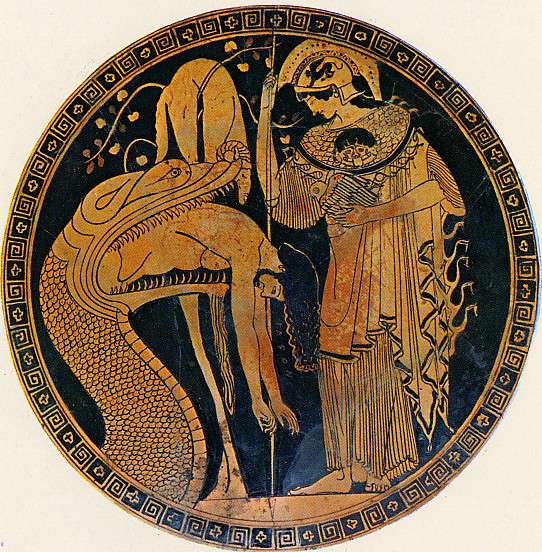
You might think that with our modern lifestyles, looking back would become passé.  Recently an article on Hyperallergic discussed “Ancient Greece and Rome Are Hot in Animation Right Now. Here’s Why.”  The article by Chiara Sulprizio notes that themes central to history—namely, sex and violence—animate ancient mythology.  This allows modern interpreters to explore where we are by looking back.  At the same time, in higher education, such topics and departments are being cut.  The humanities in general have come under fire lately.  Where are we going to learn about such things as the classics if we cut off the only people who spend their time studying such things?  This isn’t the only instance where universities seem to misread what hoi polloi find to be of interest.

The classics have been known as such because of their formative role in our culture.  As this Hyperallergic story shows, they can bring in money (for this is the measure by which all things are assessed).  Again it seems that higher education has followed the way of the dollar, so why not invest in the study of what makes us human?  I guess I’m a bit of a curmudgeon here because it was the humanities that came up with the idea of higher education in the first place.  Universities were places to study theology and law, and even the original concept of “humanities” included arithmetic, geometry, astronomy, and logic.  Only when these topics started to split off into what we would eventually call “STEM” did the humanities begin to suffer neglect.
Looks like a good story

It was, after all, the Greco-Roman world that gave us what we call the classics.  I fully agree that we can’t constantly look back—we’d never move forward then—but our heads turn for a reason.  Understanding what it is to be human seems to be something we’ve grown less interested in since the sterile clean room has given us gadgets and toys we can’t seem to live without.  Living, however, is such a human aspiration.  We want fulfilled lives.  Mythology gives us meaning.  That’s why we keep coming back to it.  In my own lifetime I’ve seen several resurgences of interest in the classics, and experts always seem surprised.  They needn’t be, however.  People have found these stories powerful well before the Greeks and Romans gave them the shapes we recognize.  Many of them go back even further to the early civilizations of the Levant.  The classics have, in other words, earned that name.

Claim This Panel

Validation.  We’re surrounded by it.  Now that we have the internet, everyone seems to want us to verify who we are.  And we were told as kids that there are no such things as trolls!  Personally, I have no idea why a hacker would want to be me.  I mean for destabilizing the government by messing with elections, well, of course, but I mean for academic purposes.  How do you really know who I am?  I googled myself the other day—I’m curious how my most recent book is doing because I’ve heard nothing from the publisher since it appeared—and noticed that in the “knowledge panel” on Google they had the picture of the wrong person.  I guess I’d better verify myself!

The erstwhile academic (aka “independent scholar”) gets invitations via email from Google Scholar to claim their papers.  I suppose in an effort to provide competition to Academia.edu, the researcher finds her or his papers available on Google Scholar’s website.  So far, so good.  But the invitation comes with instructions to verify your “work email.”  Said email must end in a .edu extension in order to be valid.  In other words, “independent scholar” is an invalid category.  This train of logic demonstrates one of the serious problems with high education shrinkage and the industry becoming tighter and tighter with its positions.  How do you verify yourself if your email address is the same as any Jane or Joe?  You can’t.  “Scholar” is limited to those lucky enough to have picked up a very rare position, especially in some fields, such as religion.

My recent experience with the DMV was an exercise in validation.  I presented the woman my vital paperwork (which was less than I had to show to get the New Jersey license that I had to cash in to get a license in Pennsylvania) while wearing a mask.  Irony can be quite stunning at times.  How did they know I wasn’t some masked bandit stealing someone’s paperwork on the way to the DMV?  I guess they could ask me to verify by my work email.  Then they’d discover that I’m merely an independent scholar.  If they googled me they’d find the wrong person’s photo on my knowledge panel.  Won’t someone validate me, please?  It would be nice to be able to claim my own papers on Google Scholar.  But until “independent scholar” becomes a real thing, I guess you can ask that guy (who’s not me) on the “knowledge panel” that bears my name.


Monomyth Myth

Since I’ve been exploring movies as the locus of truth, and meaning, for contemporary religious culture, I can’t avoid Joseph Campbell.  His interpretation of mythology—long discounted by mythographers of specific cultures—influenced film makers like Stanley Kubrick, the various Batman directors, and, most famously, George Lucas.  Campbell’s interviews and his eventual series The Power of Myth highlighted his work, even as specialist scholars noted the problems with it.  This is the subject of an essay in the LA Review of Books.  This story, written by a couple of professors (Sarah E. Bond and Joel Christensen), exposes the problem with Campbell’s “monomyth,” perhaps best typified by his book The Hero with a Thousand Faces.  This is stuff I realized as a postgrad student—Campbell didn’t footnote much and as Bond and Christensen note,  he “cherry picked” examples rather than looking at myths in context.

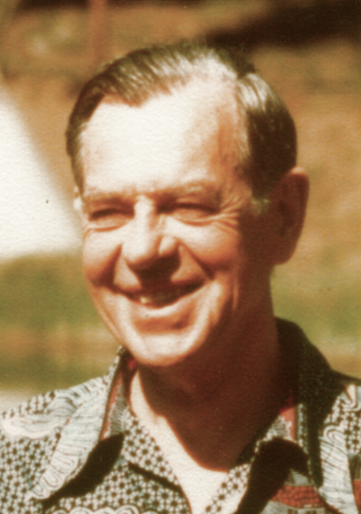
Image credit: Joan Halifax, via Wikimedia Commons (via Flickr)

One of my observations, when it comes to movies, is that people take their truths from movies, like they’re modern myths.  In other words, although Campbell’s method may’ve been faulty, he gave us Star Wars and the rest is history.  I rest on the horns of this dilemma.  My dissertation (and consequent first book) on Asherah was based on the idea of contextualizing myths.  In other words, I was arguing against a monomyth.  At the same time I’ve come to see that scholars don’t determine what people believe—culture does.  Consider how distorted the “Christianity” of Trump supporters is and you’ll see what I mean.  People don’t read scholars to find these things out.  Besides, wasn’t Campbell an academic?

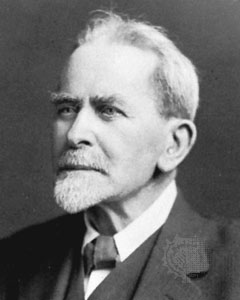
Image credit: Wikimedia Commons

Without reaching out to the masses, academia turns in smaller and smaller circles.  Many of us who desperately want to be in its ranks are turned away because there just aren’t enough jobs.  At the same time, people will go to movies and they will be exposed to the monomyth, and they may even build their lives around it.  Isn’t that a way of becoming true?  Mythology, despite popular perception, is a complex subject.  There’s a lot going on in what may appear to be simple, or even naive, stories.  They have similar themes, but as I was warned—stay away from that other great popularizer of folklore, James Frazer.  His “parallelomania” was also out of control.  But Frazer and Campbell both understood something that those long in the academy often forget—people are hungry for stories that give meaning to their lives.  And these stories, even if academically questionable, become truth.


The Price of Independence

Recently I was updating my Amazon author page.  Since this is purely a self-promotional place (my books aren’t exactly priced to move) I try to approach it with a sense of humor.  I need to be in the mood to write funny, and some followers of this blog often mistake what I’m doing when I try it here.  (Satire and irony, at least to me, have quite a bit of inherent humor.)  In any case, the trick with Amazon author pages—or any internet sites really—is being an “independent scholar.”  To both the academy and to educated laity, that moniker suggests you’ve somehow failed to impress the academic establishment.  No institution wants to claim you, and why should anyone listen to someone who “blows their own horn”?  If you sell enough books you’ll gain some credibility, but at these prices?

Still, I try.  The marketers and publicists I know all talk about building a platform (“shares” and “likes” help).  Platforms require a lot of planks.  One plank I recently learned about was JSTOR (a not-quite acronym for Journal Storage).  Well, I’ve actually known about JSTOR for decades but only recently have been able to use it.  JSTOR scans and indexes academic journals.  While that may not be exciting to the average layperson, for academics (and independent scholars), this is a great tool.  Prior to JSTOR you had to spend hours plowing through various indexes to learn what had been published on a certain topic.  Then you had to go into the stacks and look the material up.  And probably end up photocopying it.  JSTOR makes all of that obsolete with a few keystrokes.  The problem was you could only get in with your university’s subscription.

I stand and applaud JSTOR because they have now made it possible for independent scholars (we are a growing demographic!) to access 100 free articles a month.  Even though “independent scholar” often means you have a nine-to-five with no sabbaticals, that’s quite a lot of articles you can now access.  While I think this is a great move, I do wonder if it’s part of the writing on the wall for higher education.  Around the world universities (except those well endowed, or supported by federal funds) are having trouble staying solvent.  Knowledge is free on the web, until you run into that paywall at internet speed.  Well, at least for now we have JSTOR and access to otherwise inaccessible journal articles.  But that’ll have to wait until after work.  And after I update my Amazon author profile.


Building Trust

Photo by Marek Piwnicki on Unsplash

Perhaps the most insidious aspect of the Trump presidency was the four years of eroding trust.  People, it seems to me, no longer trust each other.  I’ve noticed it most since the reign of a pathological liar.  It’s kind of like a nation of children of alcoholic parents—trust is a real struggle.  I regularly deal with academics.  Now, critical thinking tends to make a person skeptical, at least to a degree, but it seems to me people would trust a very old, highly regarded institution.  Lately I’ve noticed that trust eroding in various ways, and that puzzles me.  If we can’t trust those who’ve done the heavy lifting of keeping a solid reputation for centuries, well, who can you trust?  It’s a real dilemma.  Maybe it’s because we had four years of equating “my opinion at the moment” with “facts.”  The damage will take many years to repair.

The basic way that civilization works is with trust.  We tend not to pay our money for something unless we believe it’s worth what we’re spending.  Skepticism, in appropriate measure, is a good thing.  So is trust.  One way that I often see this is in the hiring of contract managers.  Yes, there is such a thing!  Many younger academics now hire companies to make sure the publishing contracts they sign aren’t cheating them.  When I was in academia you simply went by the reputation of a publisher.  Everyone knew who had a good reputation because of, well, their reputation.  What a publisher represented was well known and respected for what it was.  Perhaps I’m mistaking the desire for personal advantage for lack of trust.

Companies sometimes engage in trust-building exercises.  Getting beyond someone’s politics to the person beneath seems to be a dying art.  Deep divisions are difficult to achieve when people trust one another.  Consider the anti-vaxxers who are now feeding the delta-variation of Covid-19.  They’ve been taught not to trust the scientists and officials who offer a way to ending this pandemic.  For free.  They even don’t believe the post-presidential interview with Trump where he encouraged (far too late) his followers to get vaccinated.  Trust has to be built slowly.  Over centuries sometimes.  One man’s selfishness tore down the modicum of trust that had been slowly growing since the 1860s.  Now uninformed skeptics think critical race theory is some kind of plot.  Trust isn’t a bad thing.  It is the only way to move forward.  Trust me on this.


To Write in Black and White

It can be seen as a black and white issue: either you’ve written a book or you haven’t.  Many people do write books.  Many more want to.  In a survey I saw sometime in the past few months—I can’t recall exactly where—a survey indicated a high percentage of Americans wanted to write a book.  What exactly does that mean?  There are many different kinds of books and several motivations for writing them.  And, depending, your work may or may not be taken seriously, even if you publish.  As someone who’s published four nonfiction books, all of them obscure, I often think about this.  Working in publishing I have some privileged access to the ins and outs of how this works, but that doesn’t necessarily help in writing success.  So what are the motivations?  Is there any way to tell the difference?

Obviously, I can’t speak for others’ motivations but I can see the results.  Most of the writers with whom I work are academic writers.  Their books are generally written for fellow academics and they’re the result of years of research in specialized libraries often off-limits to non-academics.  Those are pretty easy to tell at a glance.  Another class of nonfiction writer is the journalist.  It’s assumed by the industry that someone who majored in journalism is a talented writer.  If, after reporting on a topic for a few years, a journalist wants to write a book based on experience, that frequently gets a publisher’s interest.  The results may not be academically reliable.  I recall that as a grad student it was assumed there were even certain established publishers not to trust—mainly those that weren’t university presses, but not exclusively.

The self-published book has a more difficult trajectory to trace.  Some authors, no matter how good or insightful, just can’t get a standard publisher’s attention.  Others are convinced of their own wisdom and now have an easy route to become a published author.  Yet others realize some money can be made from writing (although making a living at it is very hard work).  I’ve been reading a book by a journalist that has lots of factual errors in it.  I try not to judge, but I do wonder when I know it’s shelved as nonfiction.  Now, these aren’t the kinds of errors that will cost a life if dosed incorrectly or will set off a war between dominant personalities that are heads of state.  I also know that most books do contain inadvertent errors—books are written by humans and we don’t have all the answers yet.  Still, I think of the readers and how we define nonfiction.  What counts as a book anyway?  Things are seldom black or white.

Writing my first book

Used or New?

A recent post on a used book got me to thinking.  Back when I was acting like a trained researcher my reading was very specialized and focused.  Even so, my personal reading was eclectic.  I think that’s the result of having been raised poor.  With no bookstore in our town, and no Amazon (or Bookshop.org), book purchasing was catch as catch can.  Since my fortunes haven’t dramatically increased in life (long story), my purchasing habits have remained pretty much the same.  I’ll buy used books or movies if I can.  Since these are about the only things I buy, they loom large in my mind.  And the thing about buying used is that it’s often opportunistic.  I can pretend it’s intentional and say I’m trying to be well-rounded, but the fact is I try to save money where I can.

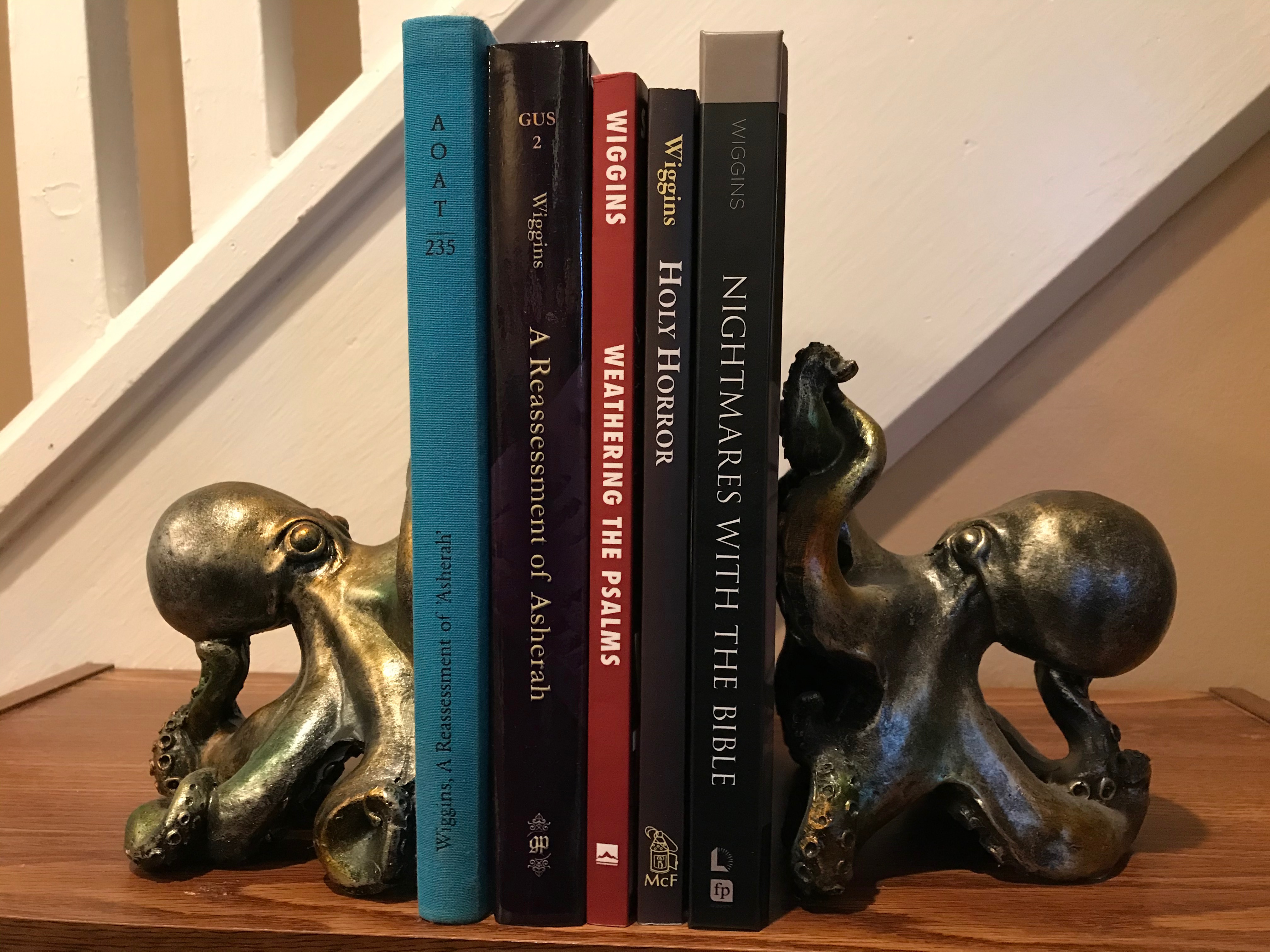
This really struck me as I was reading something written by a film maker.  Now, I’ve penned two books about horror films, and I tend to watch them quite a lot.  What struck me about what I was reading was just how many films the writer knew.  Academics can be that way—knowing everything about a subject.  When researching my first book, A Reassessment of Asherah, I read everything I could find in pre-internet days about the goddess.  That is a thoroughly researched book.  When you’re a graduate student your job is to become as familiar as possible with your subject, no matter the language of the research (within reason).  As just an editor my movies and my books are a matter of what I find in my eclectic life.

I often imagine what my life would be like if I could’ve remained a professor.  In those days I read fewer full books—research is often a matter of reading only the parts relevant to your project—and certainly less fiction.  I was never a well-paid academic, teaching at a small school that considered on-campus housing a large part of the compensation package.  I didn’t buy many books then, either.  Some of the most important ones were, you guessed it, used.  I wonder if I would’ve ever have shifted my interest back to horror.  During those days I didn’t need horror (it was a gothic campus and I was beginning family life).  Since then I’ve become an even more eclectic person.  My fascination with geology began then and still comes back when the stars are just right.  And even they, I suspect, might be remnants of even older, used stars.

Photo credit: NASA

Irony

It’s a funny old world, as the saying goes.  I don’t deal, as an editor, with many agents.  In fact, having been in publishing for nearly a dozen years it’s only happened three times.  The most recent agent is one to whom I sent a pitch for Holy Horror and from whom I never heard back.  The book he sent me isn’t too different from what I was doing in said volume.  That’s the way it goes, you say.  Indeed, I don’t disagree.  But who doesn’t like a dose of irony in an otherwise stainless steel world?  As I’m reading through the proposal I see that it cites the interest in the subject because of the great popularity of the Religion and Monsters sessions at the American Academy of Religion.  I was responsible for getting those sessions started.

Since irony loves company, none of the people I recruited to get that session rolling read my blog.  I’d been meeting with various scholars over the years and started to notice a common interest in religion and monsters, which I personally share.  I suggested to one of these gainfully employed scholars that we should apply for such a session.  She agreed and we invited another gainfully employed academic to join us.  I wrote the initial proposal.  The session was approved (the proposal being helpfully revised by my colleagues) for three years running.  Now it was being cited as objective proof of an idea that this very agent had dismissed when I presented Holy Horror to him.  Our society very much thinks having a university post means you have something to contribute.  No post?  No interest.

I’ve been working on religion and monsters for (conservatively) a dozen years.  I’ve written two high-priced books on the subject and I’ve received almost no traction in the field because I can’t put a university, or college, or seminary, behind my name.  I was formerly an associate professor, but who you are speaks louder than who you were.  Institutions speak even louder—much louder—than individuals.  The thing about privilege is that it works.  So in this funny old world I’m bemused to be watching my own idea helping propel a colleague’s case for an agent.  I’m working on my fifth book, and I sincerely hope this one will retail for less than thirty dollars.  That’s difficult to do without an agent’s intervention.  I know agents are swamped with proposals.  I know they’re very selective.  And I also know that the irony of being a biblical scholar interested in monsters will catch their attention.  Only, however, if you have an institution behind your name.  Funny, isn’t it?

Even the monster smiles

Online Research

Given my current lack of a university library, and my continued rapaciousness for research I’ve had to sample internet offerings.  There’s a reason academics are skeptical of the internet’s research reliability.  Just about anything you want to verify brings you up against a paywall where you can sometime buy an article you could read for free if you were a professor, for about $15 or $20.  The privileging of academic information.  (Hey folks, I give it away here!)  In any case, I often run into websites on the topic on researching that give “facts” with a breezy assurance that isn’t followed up with footnotes, making me wonder where they got their information.  Who was the publisher?  Who says they know what they’re talking about?  No wonder alternative facts rule the day.

One of the things I learned in the course of my doctoral work is that those three insignificant letters, if applied correctly, indicate that you know how to do research.  Earning a doctorate is often considered (and sometimes is) a matter of becoming a specialist.  Those willing to peel back the top layer realize that underneath what’s going on is a transformation of your way of thinking.  You can find facts, but you can also weigh them in the balances.  You take no one’s word for it.  Unless, of course, they’re published by a prestige press.  And even then, if the lesson really sunk in, you’ll have your doubts.  The internet is a frustrating place to try to find reliable information.  Oh, it’s great for looking up phone numbers, and even for getting directions.  Just don’t trust it with history.

Currently at work on my fifth book, I’m finding research somewhat of a hurdle.  I’ve reached out to local universities and they seem only to want to let you in if you’re an adjunct (which is considered a conflict of interest in my current post).  You’re therefore locked out of knowledge.  I recently learned that JSTOR may be offering a fixed number of free articles to independent scholars.  If so, that is a great and farsighted boon.  You see, the problem is you need to look at the footnotes to know which articles are actually based on solid research.  There’s a move afoot that makes academic presses shudder.  The move for free information.  It’s the business of academic presses to sell it, of course—that’s where the money comes from.  So I sit here facing another paywall and I wonder is wisdom can ever truly be free.

Photo by Sharon McCutcheon on Unsplash

Caring for the Future

Some people have it really bad.  Living in war-torn countries, many former academics find themselves scrounging for a living.  In the United States academics tend to have it good—at least those who get jobs do.  In my line of work it’s not unusual to hear them complaining of overwork, or of various aspects of academic life that are a strain.  I know that can be true—I’ve been there.  However, a recent story about Adnan Al Mohamad on iNews, tells how the Syrian professor had to flee and become a waiter and farm helper in Turkey.  Until CARA found out.  CARA is a British charity—Council for At-Risk Academics.  They were able to secure Al Mohamad a university post so that he could achieve his potential.

Of course, academia isn’t perfect, as my many colleagues who’ve succeeded in it can tell you.  But it is good for the world.  Those of us taught to think deeply about a subject often feel what might be called a moral obligation to pass it on.  Interestingly, in the “developed world” academic positions are on the decline and education is seen as an expensive option instead of the way forward.  I may have been sidelined, but I’ve been watching this happen for decades now.  Instead of organizations like CARA (many academics are at risk) those encouraged to go on by their teachers and colleagues end up disappearing in obscurity with crippling bills to pay for many years down the road.  There are no safety nets and western society has decided education is a luxury rather than the path to a better future.

Somewhere along the line, as progress became equated with electronic gadgetry, we lost the desire to think deeply.  Books are “products” that can be thrown onto a plastic screen and soon forgotten after read.  We can gossip 24/7 through social media and never spend hours delving deep into a subject.  We can move the economy ahead without stopping to think about the consequences.  The world needs organizations like CARA.  Better yet, governments should take on that role.  Politics for some (most, of a particular party) is a means of enriching oneself rather than bettering the society that allows them to do so.  Wouldn’t it be better for everyone if education were the number one priority?  Isn’t that what a rational society would do?  Creating a world in which those who’ve personally invested in continuous learning could share it?  Instead, we live in a world where academics increasingly require rescue.


Ever-Changing Skies

The weather is something we like to think is trivial.  We’ve got more important things to do than worry about it.  Yet even our most important ways of dealing with life’s issues have to take the humble weather into account.  The fact that I was awoken by a thunderstorm at around 1:30, and, given my schedule, thus began my day, perhaps has something to do with it.  And perhaps so does a conversation I overheard on a trip to Ithaca.  Now, upstate New York isn’t known for its cooperative weather.  In fact, the alma mater of Binghamton University includes the phrase “ever-changing skies.”  I was in a public place and a conversation was being had between two men who were strangers to me.  My ears perked up when I realized they were discussing higher education.

This should surprise none of my regular readers.  Higher education has been the stand-offish lover in my life.  In any case, as one guy was explaining to the other, he worked at Cornell University—one of the Ivy League schools—and he opined that the reason it had trouble recruiting faculty was, well, the weather.  Now, I’m one to sometimes take weather personally.  (I’m still wondering what the point of last night’s thunderstorm was.  Anything that wakes me after midnight essentially personally ends my night’s sleep.)  In any case, being one of those under-employed academics I had to think about this.  I’d be glad for a university post—would I turn one down because of the weather?  Is meteorological preference really that strong?  Especially since in polite conversation the weather is considered the shallowest of topics.

Weather is vitally important.  Perhaps because of its ubiquity we tend to overlook it.  Think about rain on a wedding day.  Or a moving day.  In the latter case it can be more than inconvenient.  Sports events can be cancelled due to weather (baseball is especially prone to this).  Extreme weather (which is becoming more common) can shut everything down.  Is is just me, or does every thunderstorm now come with a “severe” warning attached?  Weather is more than just inconvenient; our lives depend upon it.  Thoughts not unrelated to these were in my mind as I wrote Weathering the Psalms.  I’ve only ever lived in rainy climates.  I realize many others aren’t nearly so lucky.  The drought in our western states is troubling.  Perhaps higher education might be able to rise above it?  Or will the most educated turn down jobs because of the inconvenience of ever-changing skies?


Last Baptist?

The Southern Baptist Convention is the largest Protestant denomination in the United States.  It’s the core of a powerful voting bloc that gave electoral (but not popular) victory to Donald Trump.  It’s also the location of an attempted takeover by a fascist faction that wants to make Christianity the most oppressive religion in the history of the world (moreso than it has already been).  This past week the Convention narrowly avoided this by electing a moderate president for the year.  The struggle was real and the consequences very deep.  The true cost of Trump’s presidency will continue to emerge for years to come.  Permission was given for extremists to be vocal and validated and bad behavior was relabeled as “Christian.”

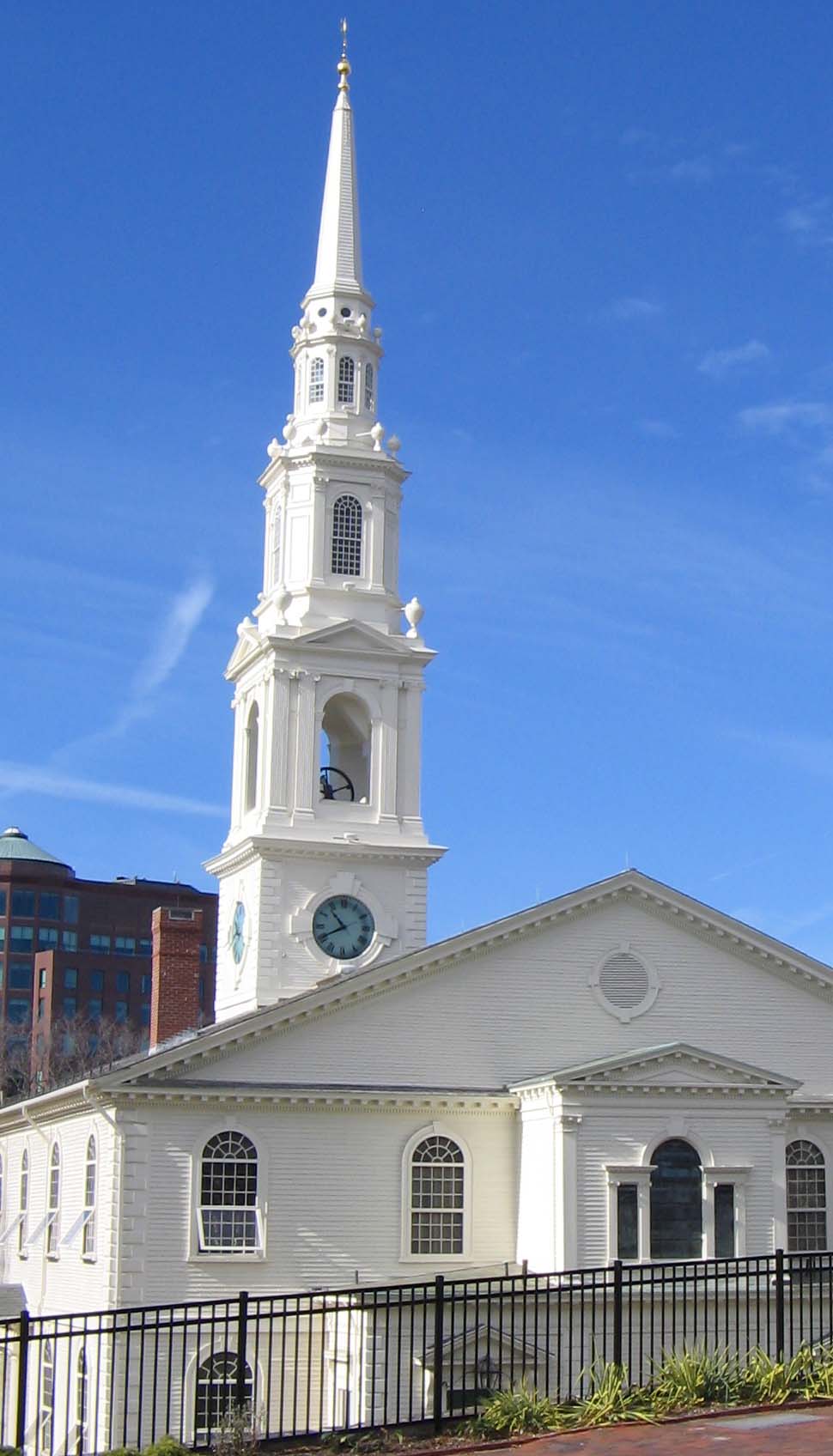
Roger Williams’ first Baptist church (in the country)

We, as a society, have a bad habit of ignoring things we don’t believe in.  Just because many educated people have come to see the lie behind much of what “Christians” say, they assume they don’t need to pay attention to them.  Years of ignoring the insidious actions of many conservative Christian groups has led us to a political precipice where many months after the fact some people who can’t count still believe 232 is greater than 306.  While some may wonder how we’ve come to this point the answer is obvious—there are groups of “Christians,” organized and well funded, who’ve been active in politics for many decades.  The Southern Baptist Convention wanted, in some sectors, to make that official.  They wished to be Trump’s own party.  They wanted white supremacy to be the norm, women to be chattels of men, and those whose sexuality differs to be criminals.  And they nearly won.

We ignore religion at our peril.  A recent study by the British Academy has shown that in the United Kingdom the study of religion is in decline.  I know of no similar study this side of the Atlantic, but anecdotal evidence suggests the same, if not worse here.  Those who study religion from within other disciplines such as sociology, history, or psychology, don’t really address the question of what religion truly is.  People experience religion as extremely urgent.  Misguided leaders instruct them that their version of God has endorsed the very tactics the Bible itself excoriates.  When the largest Protestant denomination is nearly taken over by political extremists, we should be paying attention.  A troubling template was, despite the majority vote, forced upon us in 2016.  So much so that it feels like it was a decade ago and we suffered from it for longer than we have.  And the kettle is still boiling, only this time those dancing about it claim to be Christian.


Hybrids

Photo by Maria Lupan on Unsplash

Hybrids.  They’re everywhere these days.  From hybrid cars to the modified foods we eat, mixed forms seem to be in style.  I can’t think of myself as anything other than a hybrid.  A person not welcome in academia isn’t expected to research and write books, but I just can’t seem to help myself.  There a rare excitement in finding, and loving, a new idea.  Academic writing I can do without, but the writing up of ideas, that is intoxicating.  I’m afraid I can’t always share such things here since I don’t have release time for research and publication and it can take me considerable time to gather all my sources and write up the results.  Meanwhile I’m just a working stiff like anybody else.  A hybrid working stiff.

Describing the elation of a new idea is difficult.  Knowing that something nobody else has noticed before is coming into focus, and that someone might want to publish it is thrilling.  Okay, so many people find other things like sports or dangerous activities exciting.  That’s fine.  For me an afternoon in a museum or library can do it.  You see, after finishing a big project like a book, it’s normal for me to go through a slump.  People ask “what are you working on next?” and although I have many ideas racing along it can sometimes take up to a year before a front-runner emerges.  When it does, however, all bets are off.  Ideas like this can buoy my mood for days at a time.  Now if only I had a classroom to test them out.

I mentioned The Glass Menagerie the other day.  Plays can be, and often are, mirrors of reality.  In high school we had to read Arthur Miller’s Death of a Salesman.  Although that was approaching forty years ago I still remember our teaching pointing out the real tragedy was that Willy Loman had real skills that were evident to those who knew him.  Circumstances, however, had compelled him to become a salesman.  There is a difference between a job and a calling.  Callings, however, are no protection against an economy based on greed.  Perhaps we’re all being channeled into salesmen positions.  Even if that’s the case, however, we know what brings us our sense of meaning in life.  Although there’s no inherent reason that a person can’t research and write on their own, it can be a costly and time-consuming venture without institutional support.  But a hybrid does things a little bit differently.  And hybrids are everywhere these days.


Whose DNA?

The name Francis Crick will forever be associated with the discovery of the double helix of the DNA molecule.  Indeed, he co-won a Nobel Prize for that particular insight.  Of course I didn’t learn about Crick when I was growing up—we weren’t an educated family.  I first learned about him in college when his book Of Molecules and Men was required reading for one of our religion classes.  This book is highly critical of religion, and Christianity in particular.  We read it not to assent to his logic, but rather to have it picked apart in class.  (Grove City was a conservative Christian college then, but less so than it is today.)  Although it has been over three decades since I’ve read it (I found my copy again when we moved three years ago) the sharp critique has remained.  Crick was a staunch materialist.

Image credit: brian0918, via Wikimedia Commons

Although I appreciated his contribution to science, I really didn’t have too much cause to think about Crick after that.  I’m not a geneticist and there are certainly a lot of people out there who make sharp criticisms against religion.  What brought Crick back to mind was when I recently read that he had later come to the conclusion that human DNA was too complex to have evolved by chance.  The piece I was reading used the unfortunate term “intelligent design” so I had to follow up.  Francis Crick hadn’t become a Fundamentalist, had he?  No, it turns out.  Crick had come to believe in “directed panspermia.”  Panspermia is the concept that life isn’t isolated on earth—it exists in space and was brought to our planet by space dust, or some such means.  The “directed” part was what caught my attention.

For a vocal critic of religion, Crick had come to believe that extraterrestrial intelligences had engineered at least human DNA.  This is of particular consequence because until recently the idea of extraterrestrial intelligent life was a laughing flashpoint among scientists and skeptics.  In fact, it’s still regularly labelled as “paranormal.”  I was surprised to learn that a scientist of Crick’s stature had come to this conclusion while being so utterly critical of religion.  Of course, views can change over a lifetime.  No one is born with all the correct knowledge.  It is interesting that Crick believed human DNA to require some outside intervention to become what it is.  Some religious believers share this outlook, but with quite a different origin source in mind.  It just seems to me that our collegiate discussion of his work seems to have been woefully incomplete.


Outside Subjects

As an erstwhile biblical scholar—the lines of time separating things are sometimes not easily discerned—I have to keep reminding myself to pay attention to those outside the academy.  That was, after all, the point of Holy Horror.  Academics assume that because they study a subject more deeply that only other scholars have insight into it.  Pop culture, however, begs to differ, particularly when it comes to the Good Book.  Far more people watch movies, surf the net, and read novels than ever pick up a copy of the Journal of Biblical Literature.  To learn what the Bible means to people you need to listen to people.  I had to remind myself of this repeatedly when finally watching Chris Bennett’s documentary, “Kaneh Bosm: The Hidden Story of Cannabis in the Old Testament” on YouTube.  I’ve never used marijuana, although I know many people who have, and I have no interest in starting now.  But still, this film led to a kind of revelation.

Biblical scholars, on their own, are unlikely to explore such “outsiders’” claims, like those who find references to cannabis in the Bible, do.  Clearly cannabis was known in the ancient world and people then didn’t have our modern filters of “the war on drugs,” or, as Bennett makes clear, prohibition, to tell them drugs were bad.  In fact, traditional cultures around the world believed natural hallucinogens were sacred, or at least gateways to sacred experiences.  Bennett presents an overarching revisionist view of the Hebrew Bible (including the Apocrypha).  There are many parts where my scholarly spidey-sense was tingling—one of the first things you learn in the academy is that connections have to be tested and retested and run by other scholars for their approval before they can be deemed valid—but overall it’s clear a lot of research went into this.

The academic heart that still beats in this weary chest says, “but wait, too many connections are made and it all fits into too tidy a package.”  The reason, I suspect, that I was contacted about this video is that I had written about cannabis before, and because I wrote a widely available book on Asherah.  And yes, Asherah is part of this tidy package too.  There are some very interesting ideas here.  While scholars argue about J, E, D, and P and their possible non-existence, others have already moved on to some interesting conclusions based on a fiery cup and its contents.  I was ousted from the academy for being too liberal in a conservative environment.  I have watched how the academy behaves for at least thirty years now.  It seems to me that we should pay attention to what those outside, who have larger followings than those in ivory towers do, are saying.