Online Research

Given my current lack of a university library, and my continued rapaciousness for research I’ve had to sample internet offerings.  There’s a reason academics are skeptical of the internet’s research reliability.  Just about anything you want to verify brings you up against a paywall where you can sometime buy an article you could read for free if you were a professor, for about $15 or $20.  The privileging of academic information.  (Hey folks, I give it away here!)  In any case, I often run into websites on the topic on researching that give “facts” with a breezy assurance that isn’t followed up with footnotes, making me wonder where they got their information.  Who was the publisher?  Who says they know what they’re talking about?  No wonder alternative facts rule the day.

One of the things I learned in the course of my doctoral work is that those three insignificant letters, if applied correctly, indicate that you know how to do research.  Earning a doctorate is often considered (and sometimes is) a matter of becoming a specialist.  Those willing to peel back the top layer realize that underneath what’s going on is a transformation of your way of thinking.  You can find facts, but you can also weigh them in the balances.  You take no one’s word for it.  Unless, of course, they’re published by a prestige press.  And even then, if the lesson really sunk in, you’ll have your doubts.  The internet is a frustrating place to try to find reliable information.  Oh, it’s great for looking up phone numbers, and even for getting directions.  Just don’t trust it with history.

Currently at work on my fifth book, I’m finding research somewhat of a hurdle.  I’ve reached out to local universities and they seem only to want to let you in if you’re an adjunct (which is considered a conflict of interest in my current post).  You’re therefore locked out of knowledge.  I recently learned that JSTOR may be offering a fixed number of free articles to independent scholars.  If so, that is a great and farsighted boon.  You see, the problem is you need to look at the footnotes to know which articles are actually based on solid research.  There’s a move afoot that makes academic presses shudder.  The move for free information.  It’s the business of academic presses to sell it, of course—that’s where the money comes from.  So I sit here facing another paywall and I wonder is wisdom can ever truly be free.

Photo by Sharon McCutcheon on Unsplash

Caring for the Future

Some people have it really bad.  Living in war-torn countries, many former academics find themselves scrounging for a living.  In the United States academics tend to have it good—at least those who get jobs do.  In my line of work it’s not unusual to hear them complaining of overwork, or of various aspects of academic life that are a strain.  I know that can be true—I’ve been there.  However, a recent story about Adnan Al Mohamad on iNews, tells how the Syrian professor had to flee and become a waiter and farm helper in Turkey.  Until CARA found out.  CARA is a British charity—Council for At-Risk Academics.  They were able to secure Al Mohamad a university post so that he could achieve his potential.

Of course, academia isn’t perfect, as my many colleagues who’ve succeeded in it can tell you.  But it is good for the world.  Those of us taught to think deeply about a subject often feel what might be called a moral obligation to pass it on.  Interestingly, in the “developed world” academic positions are on the decline and education is seen as an expensive option instead of the way forward.  I may have been sidelined, but I’ve been watching this happen for decades now.  Instead of organizations like CARA (many academics are at risk) those encouraged to go on by their teachers and colleagues end up disappearing in obscurity with crippling bills to pay for many years down the road.  There are no safety nets and western society has decided education is a luxury rather than the path to a better future.

Somewhere along the line, as progress became equated with electronic gadgetry, we lost the desire to think deeply.  Books are “products” that can be thrown onto a plastic screen and soon forgotten after read.  We can gossip 24/7 through social media and never spend hours delving deep into a subject.  We can move the economy ahead without stopping to think about the consequences.  The world needs organizations like CARA.  Better yet, governments should take on that role.  Politics for some (most, of a particular party) is a means of enriching oneself rather than bettering the society that allows them to do so.  Wouldn’t it be better for everyone if education were the number one priority?  Isn’t that what a rational society would do?  Creating a world in which those who’ve personally invested in continuous learning could share it?  Instead, we live in a world where academics increasingly require rescue.


Ever-Changing Skies

The weather is something we like to think is trivial.  We’ve got more important things to do than worry about it.  Yet even our most important ways of dealing with life’s issues have to take the humble weather into account.  The fact that I was awoken by a thunderstorm at around 1:30, and, given my schedule, thus began my day, perhaps has something to do with it.  And perhaps so does a conversation I overheard on a trip to Ithaca.  Now, upstate New York isn’t known for its cooperative weather.  In fact, the alma mater of Binghamton University includes the phrase “ever-changing skies.”  I was in a public place and a conversation was being had between two men who were strangers to me.  My ears perked up when I realized they were discussing higher education.

This should surprise none of my regular readers.  Higher education has been the stand-offish lover in my life.  In any case, as one guy was explaining to the other, he worked at Cornell University—one of the Ivy League schools—and he opined that the reason it had trouble recruiting faculty was, well, the weather.  Now, I’m one to sometimes take weather personally.  (I’m still wondering what the point of last night’s thunderstorm was.  Anything that wakes me after midnight essentially personally ends my night’s sleep.)  In any case, being one of those under-employed academics I had to think about this.  I’d be glad for a university post—would I turn one down because of the weather?  Is meteorological preference really that strong?  Especially since in polite conversation the weather is considered the shallowest of topics.

Weather is vitally important.  Perhaps because of its ubiquity we tend to overlook it.  Think about rain on a wedding day.  Or a moving day.  In the latter case it can be more than inconvenient.  Sports events can be cancelled due to weather (baseball is especially prone to this).  Extreme weather (which is becoming more common) can shut everything down.  Is is just me, or does every thunderstorm now come with a “severe” warning attached?  Weather is more than just inconvenient; our lives depend upon it.  Thoughts not unrelated to these were in my mind as I wrote Weathering the Psalms.  I’ve only ever lived in rainy climates.  I realize many others aren’t nearly so lucky.  The drought in our western states is troubling.  Perhaps higher education might be able to rise above it?  Or will the most educated turn down jobs because of the inconvenience of ever-changing skies?


Last Baptist?

The Southern Baptist Convention is the largest Protestant denomination in the United States.  It’s the core of a powerful voting bloc that gave electoral (but not popular) victory to Donald Trump.  It’s also the location of an attempted takeover by a fascist faction that wants to make Christianity the most oppressive religion in the history of the world (moreso than it has already been).  This past week the Convention narrowly avoided this by electing a moderate president for the year.  The struggle was real and the consequences very deep.  The true cost of Trump’s presidency will continue to emerge for years to come.  Permission was given for extremists to be vocal and validated and bad behavior was relabeled as “Christian.”

Roger Williams’ first Baptist church (in the country)

We, as a society, have a bad habit of ignoring things we don’t believe in.  Just because many educated people have come to see the lie behind much of what “Christians” say, they assume they don’t need to pay attention to them.  Years of ignoring the insidious actions of many conservative Christian groups has led us to a political precipice where many months after the fact some people who can’t count still believe 232 is greater than 306.  While some may wonder how we’ve come to this point the answer is obvious—there are groups of “Christians,” organized and well funded, who’ve been active in politics for many decades.  The Southern Baptist Convention wanted, in some sectors, to make that official.  They wished to be Trump’s own party.  They wanted white supremacy to be the norm, women to be chattels of men, and those whose sexuality differs to be criminals.  And they nearly won.

We ignore religion at our peril.  A recent study by the British Academy has shown that in the United Kingdom the study of religion is in decline.  I know of no similar study this side of the Atlantic, but anecdotal evidence suggests the same, if not worse here.  Those who study religion from within other disciplines such as sociology, history, or psychology, don’t really address the question of what religion truly is.  People experience religion as extremely urgent.  Misguided leaders instruct them that their version of God has endorsed the very tactics the Bible itself excoriates.  When the largest Protestant denomination is nearly taken over by political extremists, we should be paying attention.  A troubling template was, despite the majority vote, forced upon us in 2016.  So much so that it feels like it was a decade ago and we suffered from it for longer than we have.  And the kettle is still boiling, only this time those dancing about it claim to be Christian.


Hybrids

Photo by Maria Lupan on Unsplash

Hybrids.  They’re everywhere these days.  From hybrid cars to the modified foods we eat, mixed forms seem to be in style.  I can’t think of myself as anything other than a hybrid.  A person not welcome in academia isn’t expected to research and write books, but I just can’t seem to help myself.  There a rare excitement in finding, and loving, a new idea.  Academic writing I can do without, but the writing up of ideas, that is intoxicating.  I’m afraid I can’t always share such things here since I don’t have release time for research and publication and it can take me considerable time to gather all my sources and write up the results.  Meanwhile I’m just a working stiff like anybody else.  A hybrid working stiff.

Describing the elation of a new idea is difficult.  Knowing that something nobody else has noticed before is coming into focus, and that someone might want to publish it is thrilling.  Okay, so many people find other things like sports or dangerous activities exciting.  That’s fine.  For me an afternoon in a museum or library can do it.  You see, after finishing a big project like a book, it’s normal for me to go through a slump.  People ask “what are you working on next?” and although I have many ideas racing along it can sometimes take up to a year before a front-runner emerges.  When it does, however, all bets are off.  Ideas like this can buoy my mood for days at a time.  Now if only I had a classroom to test them out.

I mentioned The Glass Menagerie the other day.  Plays can be, and often are, mirrors of reality.  In high school we had to read Arthur Miller’s Death of a Salesman.  Although that was approaching forty years ago I still remember our teaching pointing out the real tragedy was that Willy Loman had real skills that were evident to those who knew him.  Circumstances, however, had compelled him to become a salesman.  There is a difference between a job and a calling.  Callings, however, are no protection against an economy based on greed.  Perhaps we’re all being channeled into salesmen positions.  Even if that’s the case, however, we know what brings us our sense of meaning in life.  Although there’s no inherent reason that a person can’t research and write on their own, it can be a costly and time-consuming venture without institutional support.  But a hybrid does things a little bit differently.  And hybrids are everywhere these days.


Whose DNA?

The name Francis Crick will forever be associated with the discovery of the double helix of the DNA molecule.  Indeed, he co-won a Nobel Prize for that particular insight.  Of course I didn’t learn about Crick when I was growing up—we weren’t an educated family.  I first learned about him in college when his book Of Molecules and Men was required reading for one of our religion classes.  This book is highly critical of religion, and Christianity in particular.  We read it not to assent to his logic, but rather to have it picked apart in class.  (Grove City was a conservative Christian college then, but less so than it is today.)  Although it has been over three decades since I’ve read it (I found my copy again when we moved three years ago) the sharp critique has remained.  Crick was a staunch materialist.

Image credit: brian0918, via Wikimedia Commons

Although I appreciated his contribution to science, I really didn’t have too much cause to think about Crick after that.  I’m not a geneticist and there are certainly a lot of people out there who make sharp criticisms against religion.  What brought Crick back to mind was when I recently read that he had later come to the conclusion that human DNA was too complex to have evolved by chance.  The piece I was reading used the unfortunate term “intelligent design” so I had to follow up.  Francis Crick hadn’t become a Fundamentalist, had he?  No, it turns out.  Crick had come to believe in “directed panspermia.”  Panspermia is the concept that life isn’t isolated on earth—it exists in space and was brought to our planet by space dust, or some such means.  The “directed” part was what caught my attention.

For a vocal critic of religion, Crick had come to believe that extraterrestrial intelligences had engineered at least human DNA.  This is of particular consequence because until recently the idea of extraterrestrial intelligent life was a laughing flashpoint among scientists and skeptics.  In fact, it’s still regularly labelled as “paranormal.”  I was surprised to learn that a scientist of Crick’s stature had come to this conclusion while being so utterly critical of religion.  Of course, views can change over a lifetime.  No one is born with all the correct knowledge.  It is interesting that Crick believed human DNA to require some outside intervention to become what it is.  Some religious believers share this outlook, but with quite a different origin source in mind.  It just seems to me that our collegiate discussion of his work seems to have been woefully incomplete.


Outside Subjects

As an erstwhile biblical scholar—the lines of time separating things are sometimes not easily discerned—I have to keep reminding myself to pay attention to those outside the academy.  That was, after all, the point of Holy Horror.  Academics assume that because they study a subject more deeply that only other scholars have insight into it.  Pop culture, however, begs to differ, particularly when it comes to the Good Book.  Far more people watch movies, surf the net, and read novels than ever pick up a copy of the Journal of Biblical Literature.  To learn what the Bible means to people you need to listen to people.  I had to remind myself of this repeatedly when finally watching Chris Bennett’s documentary, “Kaneh Bosm: The Hidden Story of Cannabis in the Old Testament” on YouTube.  I’ve never used marijuana, although I know many people who have, and I have no interest in starting now.  But still, this film led to a kind of revelation.

Biblical scholars, on their own, are unlikely to explore such “outsiders’” claims, like those who find references to cannabis in the Bible, do.  Clearly cannabis was known in the ancient world and people then didn’t have our modern filters of “the war on drugs,” or, as Bennett makes clear, prohibition, to tell them drugs were bad.  In fact, traditional cultures around the world believed natural hallucinogens were sacred, or at least gateways to sacred experiences.  Bennett presents an overarching revisionist view of the Hebrew Bible (including the Apocrypha).  There are many parts where my scholarly spidey-sense was tingling—one of the first things you learn in the academy is that connections have to be tested and retested and run by other scholars for their approval before they can be deemed valid—but overall it’s clear a lot of research went into this.

The academic heart that still beats in this weary chest says, “but wait, too many connections are made and it all fits into too tidy a package.”  The reason, I suspect, that I was contacted about this video is that I had written about cannabis before, and because I wrote a widely available book on Asherah.  And yes, Asherah is part of this tidy package too.  There are some very interesting ideas here.  While scholars argue about J, E, D, and P and their possible non-existence, others have already moved on to some interesting conclusions based on a fiery cup and its contents.  I was ousted from the academy for being too liberal in a conservative environment.  I have watched how the academy behaves for at least thirty years now.  It seems to me that we should pay attention to what those outside, who have larger followings than those in ivory towers do, are saying.


Perhaps You’d Like…

Back in the early days of the internet I recall wondering how it could be used for research.  I was teaching at Nashotah House at the time and knew of no online resources that couldn’t be had in print.  All of that has changed, of course, with the web becoming the collective brain of humanity.  I tend to use it for research for my fictional tales.  Need to remember a detail about some obscure location you once visited in Scotland?  Check—either Ecosia or Google will take you right there.  Memory problem solved.  For some kinds of facts, however, it’s still a struggle.  There’s the infamous paywall, for example.  Your search brings you right to the info, but you have to pay for the privilege of reading it.  Commercial sites require a subscription that, although it has a cancellation policy, you know you’ll end up paying for forever.  University library websites are even more jealous of guarding their secret knowledge.

Fiction research often involves trying to find general information.  What some specific object is called, for example, or whether there was actually a Burger King in the location about which you’re writing, at the time your story is set.  Fiction writing is an exercise of the imagination, but verisimilitude can make all the difference.  Just because it’s fiction doesn’t mean it can’t be factual.  Here’s where another limitation arises.  If your query can be commodified, it will.  You’ll find yourself wading through pages and pages of vendors trying to sell you stuff, as if knowledge for knowledge’s sake is moribund.  Even WordPress gets into the act.  If your Premium plan fills up, you’re only option is to  “upgrade” to Business or E-Commerce, where you make money on your account.  (This blog remains free.)

I don’t make any money off this blog.  I use it to share the little I’ve figured out by looking deeply at the world—quite often involving observations about religion or books—over half-a-century.  Like many academics I believe knowledge should be free (ah, but they get paid for keeping it within the walls of the university with the occasional free cookie outside.  Or better yet, a paying engagement).  I don’t go to websites to be sold anything.  I maybe want to remember what a Quisp box looked like in 1969 without wanting to special order a box.  For sure, the web is a great place to buy the things you need.  At times, however, all you’re looking for is information.  At that point your price will be the time it takes to scroll through countless pages that assume you’re here to buy, not just to browse.

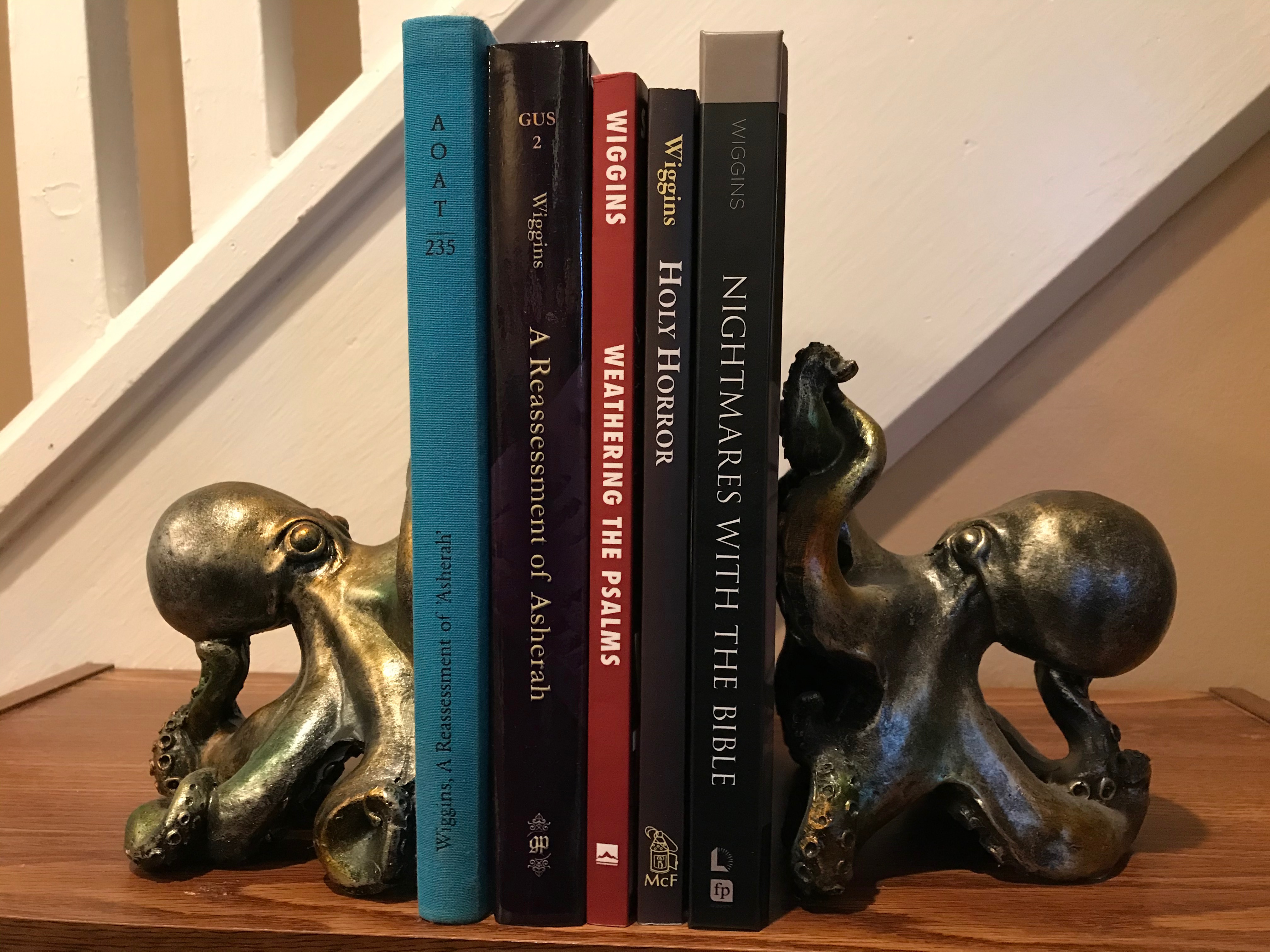
Photo by Sharon McCutcheon on Unsplash

Pricing out of Business

Maybe you’re like most normal people and don’t pay much attention to who the publisher of a book is.  If you read a lot, and can get behind the glitz and glam of an Amazon page, you might come to trust certain publishers over others.  The fact is, despite the difficulty some of us have getting published, there are a lot of presses out there.  Some are clearly self-publishing vehicles, but many are small, independent houses that focus on specialized topics.  The sheer numbers can be bewildering.  I was looking for a reputable book on a certain subject the other day and, given my job, I always check the publisher.  Several in a row came up that I had never even heard of before.  I guess there is money to be made in publishing yet, if only one could find the matching pieces.

With academic publishing you can spend five or more years of your life writing a book and you’ll earn royalties that literally won’t cover a month’s rent when you’re done.  Even while this is happening there are people who make a living publishing books with presses you’ve never heard of.  They know how to get average citizens to buy their books.  I’ve been working in publishing for over a decade now and I guess I still don’t have it figured out yet.  It’s complex, and even with online publishing helps like agent-finding sites or Duotrope, you’ll find that each day brings its own changes.  I’ve learned through personal experience that many publishers simply don’t last.

What many of these fly-by-night publishers understand better than established academic presses is that price matters.  Well, let me put that in more precise terms, for all publishers need money—fly-by-night publishers know that average people will buy only the books they can afford.  These presses I’ve never heard of sell books for the industry standard of about sixteen bucks.  My least expensive book sells for about twenty-two and I’ve been told more than once that it’s too expensive for most mortal budgets.  Collectively, my four books cost almost $250, averaging out at sixty per pop.  Two of them were written for general readers who have no hope of being able to afford them.  I tried to find an agent for one of them, and the other was a series book (no agent will touch such a thing).  Perhaps I should’ve tried a lesser-known press that could afford to offer my books at affordable prices.   You could do worse.


Literary Life

Trying to live a literary life is, I suppose, irresponsible.  Especially if your efforts and writing bring basically no money.  It takes considerable effort to make daily time to read and write, and so much else remains to be done.  At times I feel guilty for trying.  My books have all been published, for various reasons, with academic publishers.  Academic publishers don’t try to sell many copies of an individual book, relying as they do on the long tail philosophy.  Most academics have good paying jobs that expect research and writing in return.  For the outsider, however, there are other pressing matters.  The nine-to-five being the largest among them.  And any social organizations you join to keep you sane and connected.  Then there’s social media to take your time.  And the lawn’s ready for mowing.

I’ve always believed lack of time was (is) a theological problem.  I came up with that when I was an academic and had time to ponder such things.  Unlike many of my colleagues, I did research and write.  Now I want to move into that world where you might earn a little from all the effort.  And yet, that old Protestant guilt has a way of getting its talons around you.  You’re reading?  Shouldn’t you be doing those minor repairs you can handle without a contractor?  (Or at least think you can handle?)  Or maybe shouldn’t you be looking for a job that pays enough to hire someone to do such things?  And don’t you dare let that word “retirement” anywhere near your head.  What are you, irresponsible?

Reading takes commitment.  I try to read, on average, at least a book a week.  It requires a lot of time.  And a literary life includes giving back.  You want to share your writing with the world.  Hoping that either your fiction or nonfiction might eventually bring you some notice.  That’s the plan anyway.  The starving artist paradigm doesn’t feel so comfortable when you’ve got a mortgage.  Still, the imagination refuses to be tamed.  I’ve often said I could be content on a desert island as long as I had a huge stack of paper and never-ending supply of pens.  But that’s not the reality I inhabit.  That mortgage pays for a roof over my books and writing computer, always complaining it’s full.  It may not be glamorous.  In fact, it’s about the exact opposite of that.  But it is, after all, a literary life.


Learned Ghosts

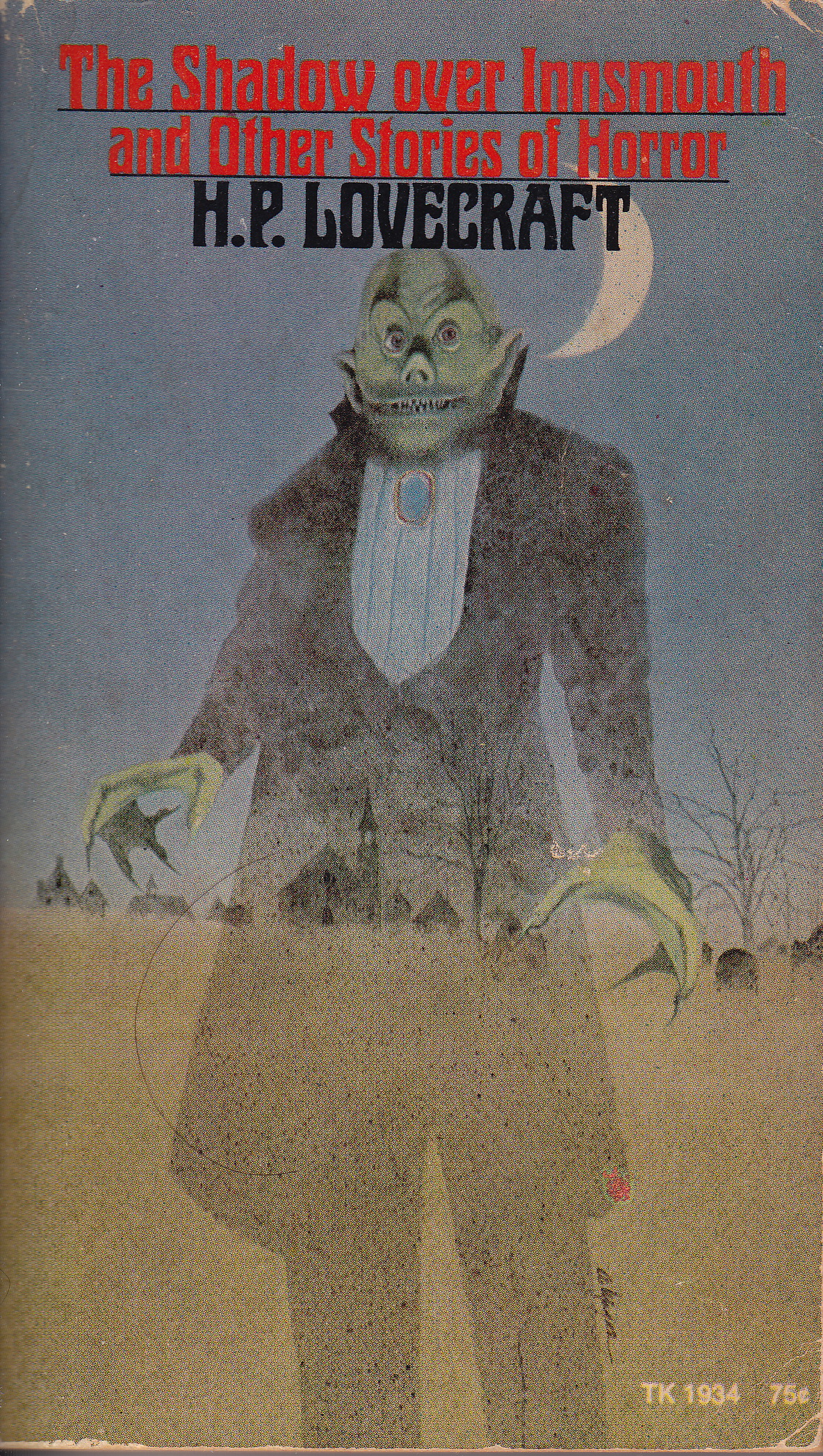
For one memorable year of what I call a career, I taught at the University of Wisconsin Oshkosh.  One in a series of near misses, this came close to becoming a full-time job.  Apart from a couple of rather humorless colleagues, the department was welcoming and an enjoyable place to be.  I even got to know the dean, now elsewhere, and planned on working on a project with him.  It was a memorable year in many respects.  One was its inherent strangeness.  I was living away from home while teaching there, and saw some odd things on my drives through the Wisconsin countryside.  It also happened to be at Oshkosh that I first discovered H. P. Lovecraft, so the weirdness was, in a word, enhanced.

Students like to tell ghost stories.  A recent article by Jocelyne LeBlanc on Mysterious Universe caught my eye because it tells of students in Oshkosh that live in a haunted dorm.  These kinds of stories are ubiquitous and Oshkosh is in no way singular here.  Students, whose brains haven’t yet ossified, are often open to new experiences.  Most of them, however, don’t possess the research skills to get behind the origins of some such tales.  Sometimes there’s an explanation.  Other times there’s not.  At Grove City College, when I was there, students told of a haunted playing field.  It was the site, it was said, of a former gymnasium.  What made it haunted was the death of a basketball player who’d smashed through a glass gymnasium door during a game and bled out before help could arrive.  It sounds improbable and I never had time to research it.

We all, I suspect, have a longing for the supernatural.  We want to believe that there’s more to this world than physics and earning money.  And strange things do happen.  I never saw any ghosts in Oshkosh, but the things I did see helped to make up for that particular lack.  Edinburgh, where I studied for my doctorate, is widely rumored to be among the most haunted cities in the world.  Although I saw no ghosts there, people flock to the ghost tours.  In fact, one stopped right below our first apartment’s window every night during the tourist season.  By the time we moved out we had every word memorized.  The haunted dorm story is a revered tradition.  Thinking about it makes me wish I could afford to be a student again.


Street Teaching

When I’m out on the street—not so often these days—I’m sometimes accosted with strange questions.  This has happened to me quite a few times over the years.  Recently, when I was taking the recycling out for my daughter on a weekend visit, I saw a couple guys in a car right by the receptacle.  I was wearing a mask, due to, you know,  Covid, so I wanted to keep social distance.  The one in the driver’s seat asked if I was going to dump the recycling and when I said I was his partner said “I’ll take care of that for you.”  They had a plastic bag full of cans and were loading glass bottles in their trunk.  I thanked them for their help and turned to go.  As I was walking away one of them called out.

“Hey!  Are you a teacher?”  I get asked that a lot.  Only the academy refuses to recognize it.  I acknowledged that I used to be.  “What level?” they asked.  I allowed as I used to be a college professor.  “Where?” I told them most recently at Rutgers.  “What’d you teach?”  This is where it always gets interesting and I start to sweat a little.  I told them religious studies.  I also said that’s why I couldn’t find a teaching job.  “The best information we ever had on religion came from a six-year old.  You know what the F in faith stands for?”  I shook my head.  “Forgiveness.  Without that the rest of religion means nothing.”  I told them I could accept that.

Then as I was turning to go they called out, “You know the acronym for Love?  Living our values every day.”  I told them they were now the teachers and I was the student.  They responded by telling me that they’d just sold a song they co-wrote for a million and a half dollars.  I expressed surprise at that.  They told me the title and said it was recording in Nashville this week.  I congratulated them and finally was able to be on my way.  This made me reflect on the several such strange conversations I’ve had on the street.  They often begin with “Are you” and not infrequently end with “a professor.”  This is usually followed up with some kind of intelligent question.  People, it seems to me, are eager to learn.  Maybe not in the classroom, but in what is referred to as the “university of life.”  Perhaps that’s all the schooling we ever really need.


Free Knowledge

I was struck with an idea.  Not just any idea—an academic one.  I find myself out of practice, and wondering where to find sources when I have no access to an academic library.  I’ve spent my precious writing time for the past several days trying to bang out a respectable academic article.  It represents an area that my personal library does not cover adequately.  The fully employed academic has a library and interlibrary loan to support ideas that won’t let go.  It’s a bit more tricky for the independent scholar.  I’ve contacted local schools but during these pandemic times there is no public access.  Nor electronic access—thanks to all the fancy deals publishers make to try to keep the industry profitable.

The past few academic publications I’ve had were difficult to write, particularly the footnotes. Something the garden-variety academic doesn’t understand is that the university library is a privilege.  I read a lot.  Probably more now than when I was a professor.  Still, research leads you in directions you’d never anticipate.  It’s quite a wild ride, actually.  So with my current project (I can’t tell you what it is because someone with library access would easily be able to scoop it) I’ve had to buckle up.  As I was reading an obvious connection became clear.  It reminded me of the thrill of discovery.  The researcher has a drive for new knowledge—a treasure-hunter of the mind.  It is wonderful to be reminded that there’s more out there still to be discovered.

I’d almost forgotten how an insistent idea can push other projects out of its way.  I have any number of projects going simultaneously.  They get a few minutes’ attention before the work day starts and some of them mature enough to be sent for publication.  At any given time there’s a lot more standing behind those ideas that actually show up on this blog, or in a journal, or even in the fiction venues in which I publish.  But that idea just won’t let me go.  Even while I’m at work it lurks in the back of my mind.  The professorate, for all its limitations, doesn’t pin you down to a nine-to-five schedule even when the time would be better used otherwise.  The thing is, you can’t tame ideas.  Who would want to live in a world where you could?  So I keep working away, hoping to find a library or at least electronic access.  It’s just an idea I have.


Getting into SHAPE

The British Academy, in cooperation with a publisher or two, has taken the initiative to promote SHAPE. Social Sciences, Humanities, and the Arts for People and the Economy (SHAPE) may never match the steam of STEM, but the idea is an important one.  Science, Technology, Engineering, and Mathematics have driven society (and the job market) for many years now.  It’s sometimes easy to forget that we’re human beings and we act irrationally from time to time.  (Consider the last four years in these Untied States.)  Higher education was founded on the premises that the Humanities wouldn’t get studied on their own.  Business keeps us too busy.  Either that, or the egos of rulers lead us into war after war.  What gets left behind is the study of what makes us who we are.  The liberal arts college, learning for learning’s sake, has fallen on hard times.  What’s the profit in it?

SHAPE suggests a society suffers if it doesn’t promote social sciences—the so-call “soft sciences” that state humanity the proper study of humans—the humanities, and the arts.  The acronym itself contains a lesson “for people and the economy.”  The dismal science does, in some sense drive the initiative since we live in a world where tech does most of the work we used to.  We’re left with the non-paying business of being human.  Caring for an aging population where people live longer but aren’t given jobs that pay well enough to retire.  Looking in the mirror to see that the economy’s fruits go unfairly to those who already have too much.  The rest of us, are left to survive as, well, humans do.  Why not celebrate—and better yet, value—what people do?  Or humans for humans’ sake?

I’ve long felt that the priorities of capitalism are badly skewed.  The value of gold is artificial, one assigned by human beings and their love of shiny metals.  Our entire society is set up to, as we’re told, pursue wealth.  There is far more to life.  We humans, we love to create.  We love to socialize.  We love to help one another out.  These aren’t paid activities.  They don’t have to be commodified.  The one who goes home with the most stuff isn’t always the winner, especially when the majority of humans are left without enough.  It’s too early to tell if SHAPE will catch on, but I applaud the effort.  It is time we stopped exchanging the warmth of being human for the coldness of numbers and calculation.


Knowing Everything

Of all the jobs I’ve held, being an editor is the only one where strangers send random emails trying to convince me of God’s reality.  Granted, part of that may be because email is now so common as to be passé among the younger crowd.  When I myself was younger it was still just catching on.  Still, part of these strange emails is likely based on the evangelical compulsion to make others see things their way.  Someone who edits biblical studies books might seem like a good target.  I got another such email just last week, and as always, I wondered over it.  What kinds of assumptions must random strangers make about biblical studies specialists?  One of these assumptions, it’s clear, is that they suppose we are atheists.  They know this without even asking.

Technology has made such blindsiding communication easier.  It didn’t invent it, though.  It took a lot more effort to write up a letter, address it, buy a stamp, and mail it than it does to sit down at a keyboard, click, and they start proselytizing away.  In my earlier days, in other incarnations of a career, I received unexpected missives from time-to-time.  And certainly as a seminary professor you had students who had already figured everything out by the time they’d gotten to matriculation.  Many of them were coming to seminary to teach rather than to learn.  Such can be the arrogance of faith.  I fear that many of them graduated with their biases intact.  Education, perhaps, doesn’t work for everyone.

Photo credit: NASA

Having it all figured out is something many of us strive for.  We want things to make sense.  We want our spirituality to fit into this increasingly materialistic world.  Some of us go to seminary and/or graduate school to help us make sense of things.  We encounter minds further along the journey than our own, and, if we’re open, we learn from them.  For me, it’s difficult to understand how education isn’t always a humbling experience.  Oh, I get emails from academics who think they’ve figured it all out as well.  Such communications always make me sad.  The human enterprise, such as it is, has spanned millennia and true progress has only been made when people were humble enough to admit that they didn’t know everything.  They would eventually invent the internet and email.  Then those who already knew all the answers could send them to strangers to convince them of their own great learning.